Anmelden
Papyria playthrough and rules by „Expedition Gaming“
15. Juni 2026 um 07:54
» 06|15 2026: Papyria playthrough and rules by „Expedition Gaming“ (Video – EN).

» 06|15 2026: Papyria playthrough and rules by „Expedition Gaming“ (Video – EN).
» 15.06.2026: Papyria durchgespielt und Anleitung von „Expedition Gaming“ (Video – EN).
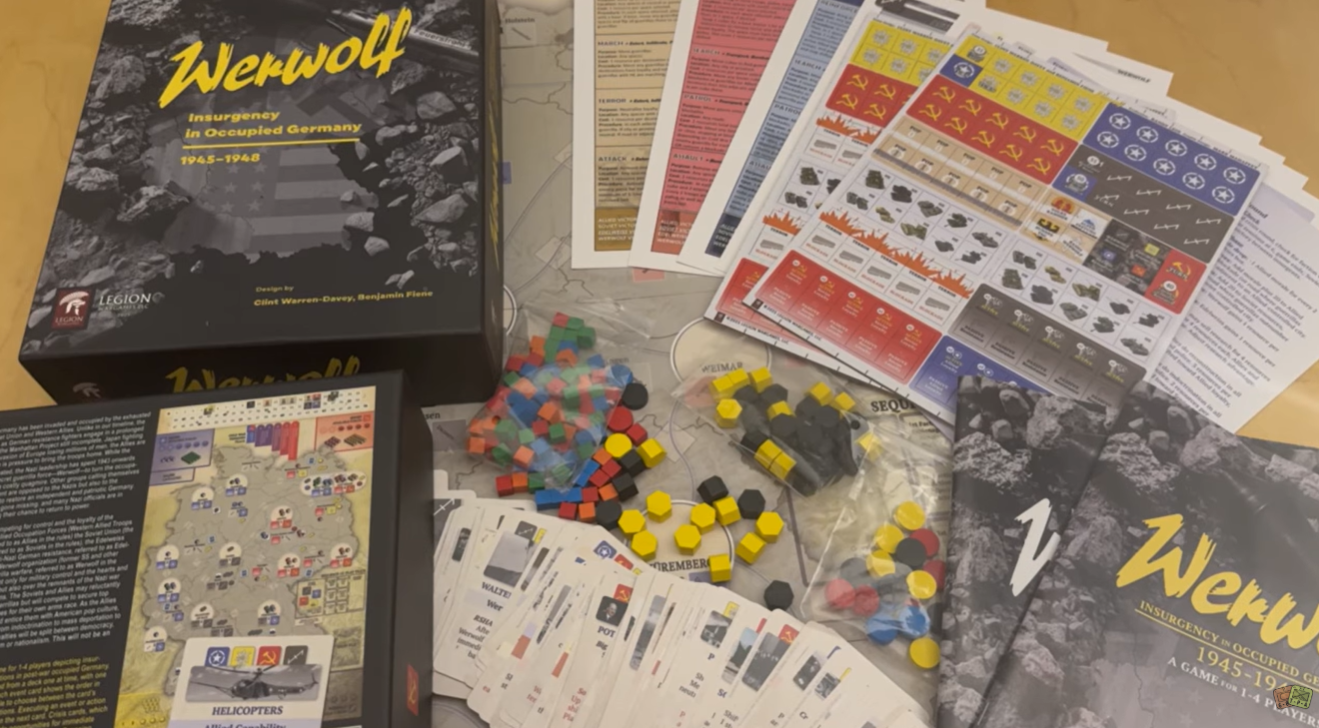


Werwolf: Insurgency in Occupied Germany, 1945-1948 from Legion Wargames is a COIN Series inspired, alternate history wargame with 4 totally different factions. Werwolf was a real underground guerrilla group, comprised of SS and Hitler Youth members. It was intended to lead an insurgency against the invading Allies and Soviets when it became clear that Germany was losing the war in a conventional sense in the mid-1940’s. They did in fact have a few successes and American intelligence officer Frank Manuel said that the Werwolves were prepared “to strike down the isolated soldier in his jeep, the MP on patrol, the fool who goes a-courting after dark, the Yankee braggart who takes a back road.”
-Grant

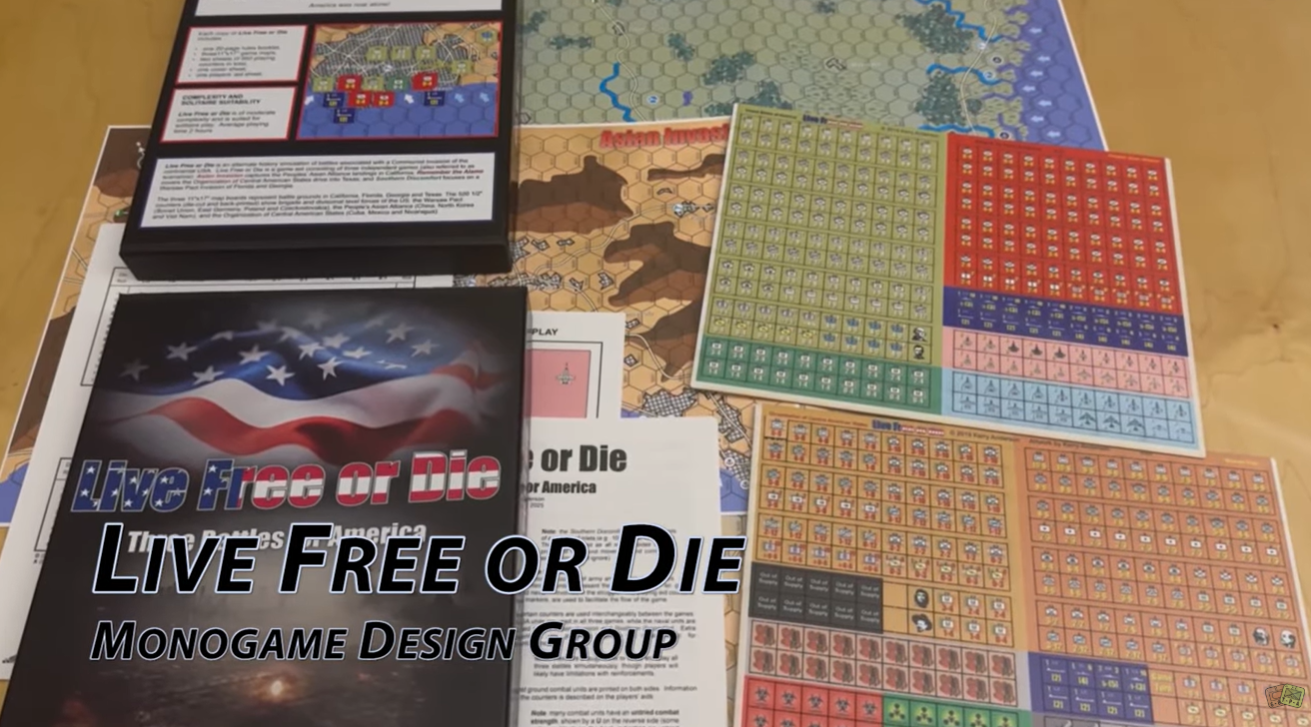
Following the successful deployment of missiles on Cuba in 1962, the Communists gained much ground in Latin America. Western Europe became less convinced of American commitment to defend the continent. This led to the NATO alliance being dissolved and replaced by a neutral bloc.
America was now alone!
Live Free or Die is an alternate history simulation of battles associated with a Communist invasion of continental USA. Live Free or Die is a game set consisting of three independent games:
The Basic Game focuses on ground combat, providing a quick, entertaining game. The Advanced Game introduces air and naval units as well as additional specialized units like cruise missiles, laser defenses and political troops. And beware, there are rules for nuclear, biological and chemical warfare!
-Grant
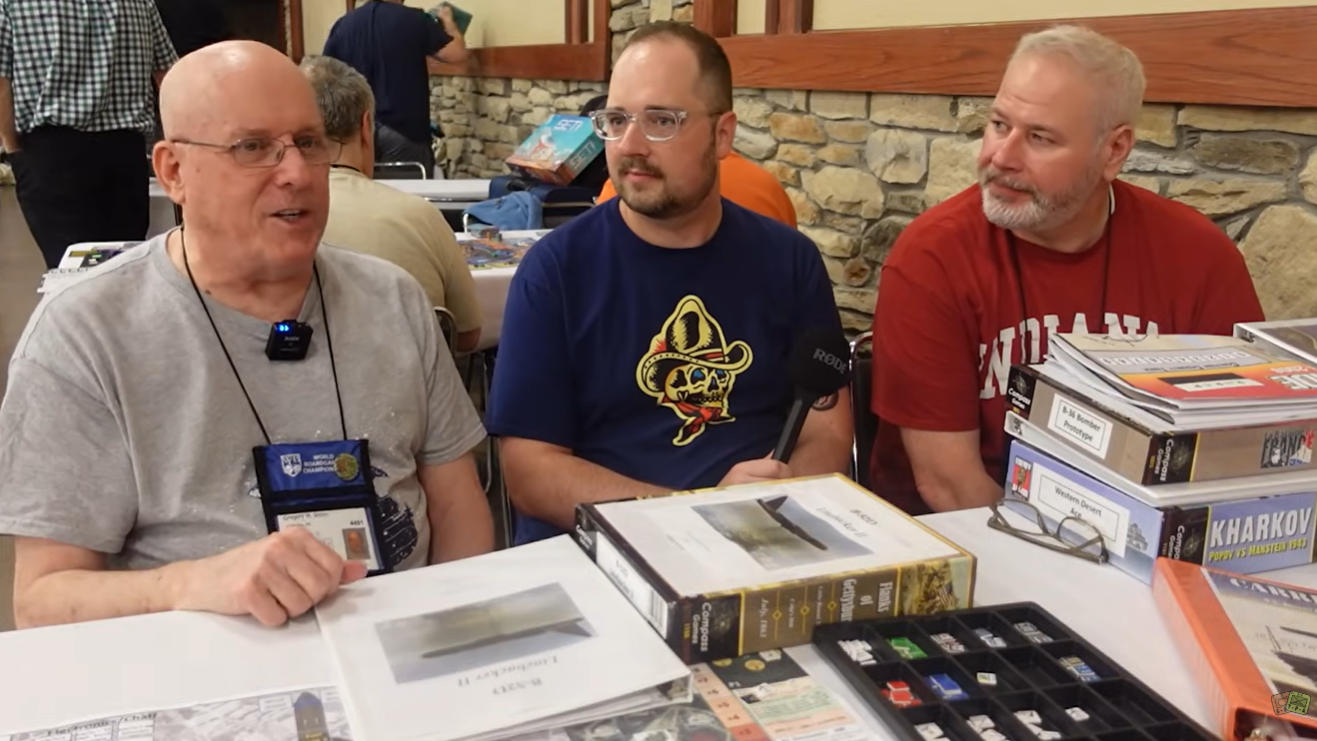
Last year, while attending the World Boardgaming Championships in Pennsylvania, we had the chance to sit down separately with 2 wargaming icons in Gregory M. Smith and Mark Herman and shoot interview videos.
The first is with Greg and covers his ongoing list of in-design games:
The second was with Mark and covered his now recently released Army of the Potomac from GMT Games:
-Grant
The post Throw hands, collect teeth, defend your community with the dexterity game Antifascist Tooth Fairy appeared first on Graphic Policy.
Hello comrade. Fascists are in our streets terrorizing our communities. Join our resistance efforts and kick them out of the neighborhood in this challenging co-op dexterity game.
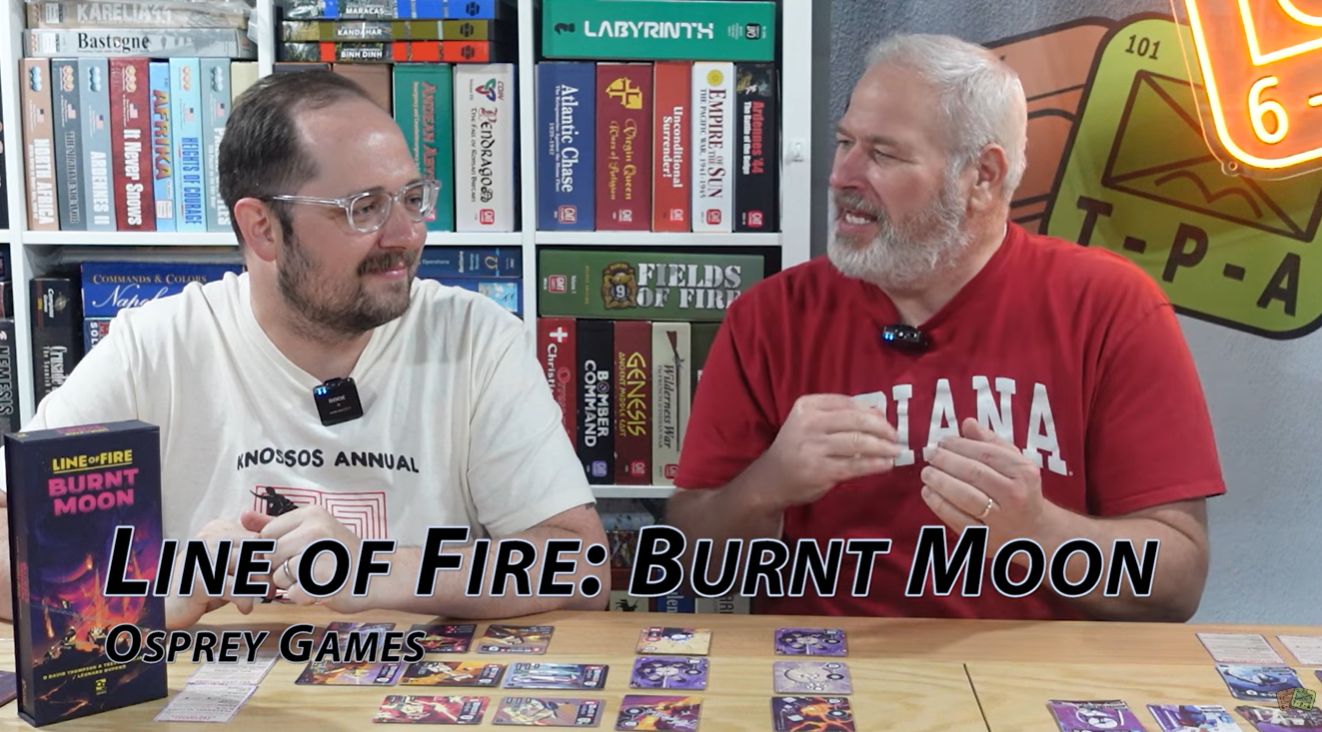
A group of black-hat hackers known as POSIWID plots to hijack the moon Io and hold the entire Jovian power grid to ransom. Standing in their way are the ultra-corporate LFA, the constructors of the lunar energy facilities. Both sides have engaged a fleet of ROV – advanced remotely-operated robots — to battle across the treacherous landscape.
The machines are activated. Initiate combat sequence. The battle for Io has begun.
Line of Fire: Burnt Moon is a standalone 2-player card game that fuses the lean deck-building of the award-winning Undaunted Series with fast-paced lane battling. Sharp decision-making and clever positioning combine in a nail-bitingly tense, endlessly replayable, and lightning-fast experience.
-Grant
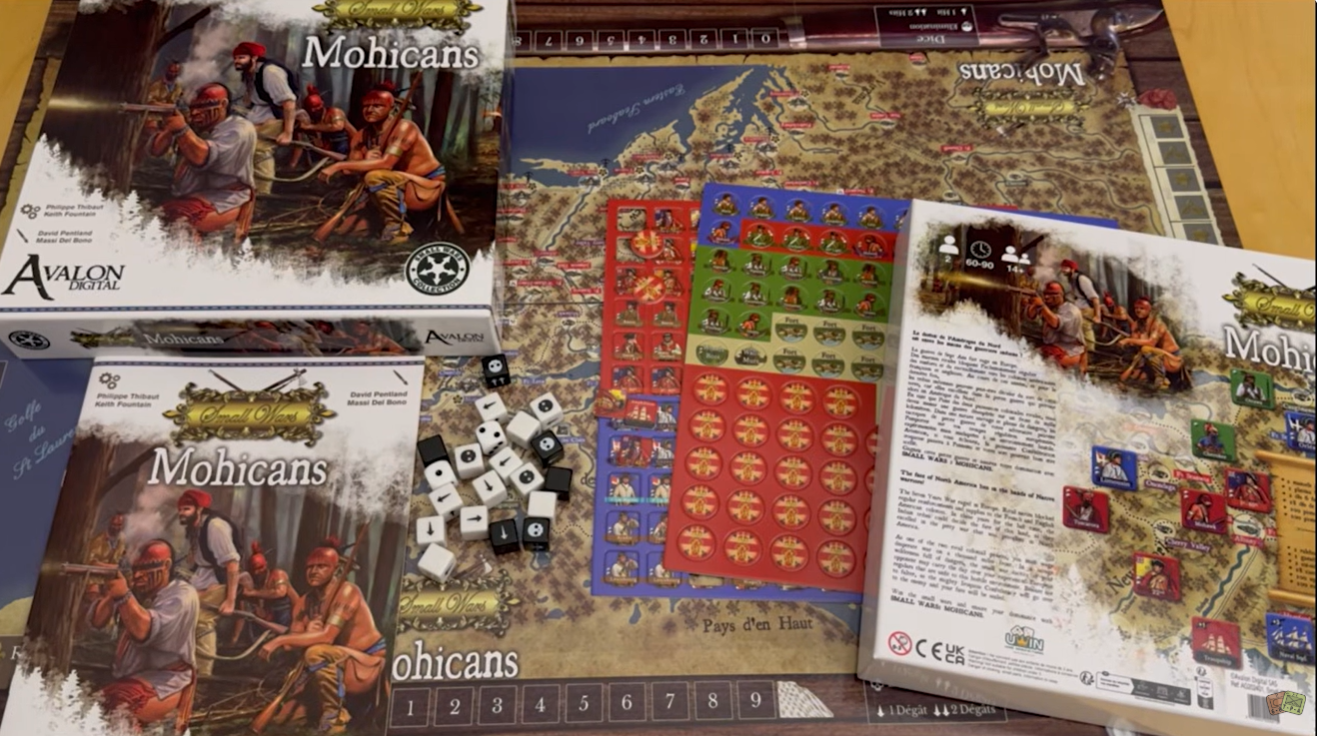
Small Wars: Mohicans is the first game of the Small Wars Series and covers the French & Indian War of the mid-18th century, and is based on a popular 1983 Canadian boardgame called Mohawk. Mohicans starts in 1754 and continues to 1760, which historically was the year after the conquest of Quebec by British forces (a founding event in the creation of modern Canada).
In Mohicans, the powerful regular forces of Britain fight for control of north-eastern North America against the mixed regular and irregular forces of the French and their local allies. The forces of both sides are bolstered by local militia units and other irregular forces, such as the famous French Couriers des Bois or British Rangers, and the arrival each year of more regular reinforcements from Europe.
While the British have the edge in firepower and numbers, the French have better mobility and their Indigenous allies can make effective use of terrain, particularly the massive forests that covered eastern North America at the time. The British are also more vulnerable to having their supply lines cut off.
Both sides seek to curry favour with the powerful but neutral Iroquois Confederacy, as an alliance with them is an enormous strategic advantage. With each major victory on the battlefield, one of the six tribes of the Iroquois will offer its support to the winning side. Get the support of all six tribes, and the Iroquois will join the fight.
To win the game, the British must hold three of the French cities and towns of Louisbourg, Frontenac, Duquesne, Montreal and Quebec (and at least one must be Montreal or Quebec). If they don’t do this by 1760, the French win by default.
The French can also win by holding the British cities of Albany and either New York, Boston or Philadelphia. This will be a tall order for the French but they can take comfort in the fact that the British, like NATO 250 years later have the watches, but the French have the time…
Combat occurs at the different locations, after the seasonal movement has been processed. It covers different battles, such as ambushes in woods, landings, raids on enemy villages and towns, field battles or forts assaults.
During the Winter between each of the 7 years of the war, reinforcements are received, militias and Indians are mustered and forts can be built.
-Grant
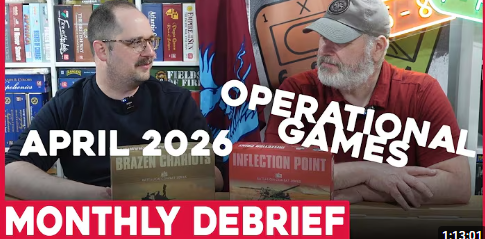
The April 2026 Monthly Debrief Video, which is the 4th episode in Season 6 of this series, saw us discussing Operational Level Wargames to fill out our video trilogy on Tactical (November 2024 Season 4 Episode 11), Operational and Strategic (July 2023 Season 3 Episode 7) games.
Also, as usual, we covered the games we played in April as well as the games we plan to play in May.
We will remind you here that we are fortunate to be continuing our relationship with Noble Knight Games as the sponsor for our Monthly Debrief Video series. In case you don’t know, Noble Knight Games specializes in hard to find games but also carry all the new releases. But what makes them truly unique is that you can find some of the rarest games, long out of print games, hand made games, imported games from overseas, etc. Thanks to them for their sponsorship and we hope that you will consider them first when looking for the games we cover.
-Grant
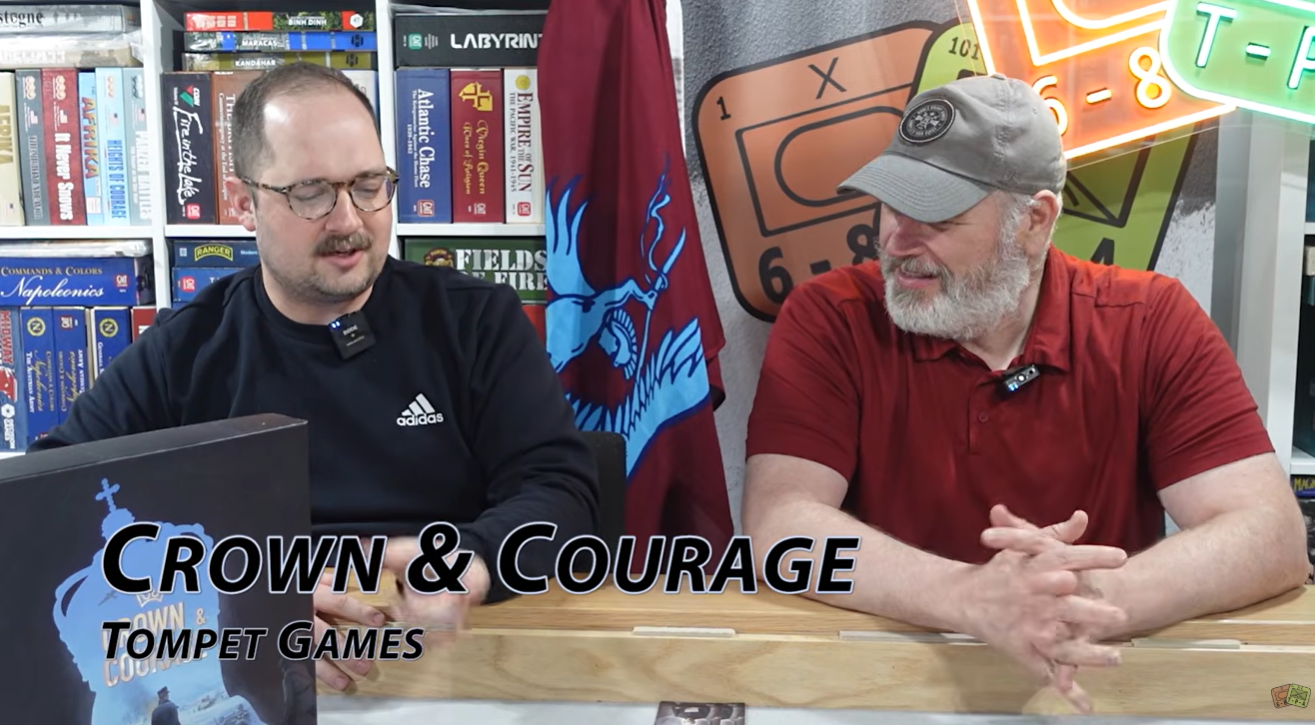
We have played 2 of Tompet Games’ previously released games with the only not having been played called Kill the King from 2016. First was Donning the Purple, which is an asymmetrical king of the hill game with a bit of worker placement that deals with the players managing the glory of wealthy and powerful Roman families, and their second game called Halls of Hegra, which is a solitaire-only wargame in the same vein as Euro-based games such as Robinson Crusoe, This War of Mine and Dead of Winter. The mechanics include worker placement, bag building, and area control/tower defense and the goal of the game is to survive wave after wave of German troops as they assault the secluded mountain fortress at Hegra.
Both of these games are excellent and they are now embarking on their fourth game called Crown & Courage that tells the story of the German invasion of Norway in 1940 and the royal family’s defiance and ultimate escape from the country to avoid capture and funding of the German war machine.
The Kickstarter campaign is set to launch on Tuesday, June 2nd and you can learn more about the project by visiting the Kickstarter game page at the following link: https://www.kickstarter.com/projects/tompet/crown-and-courage
-Grant
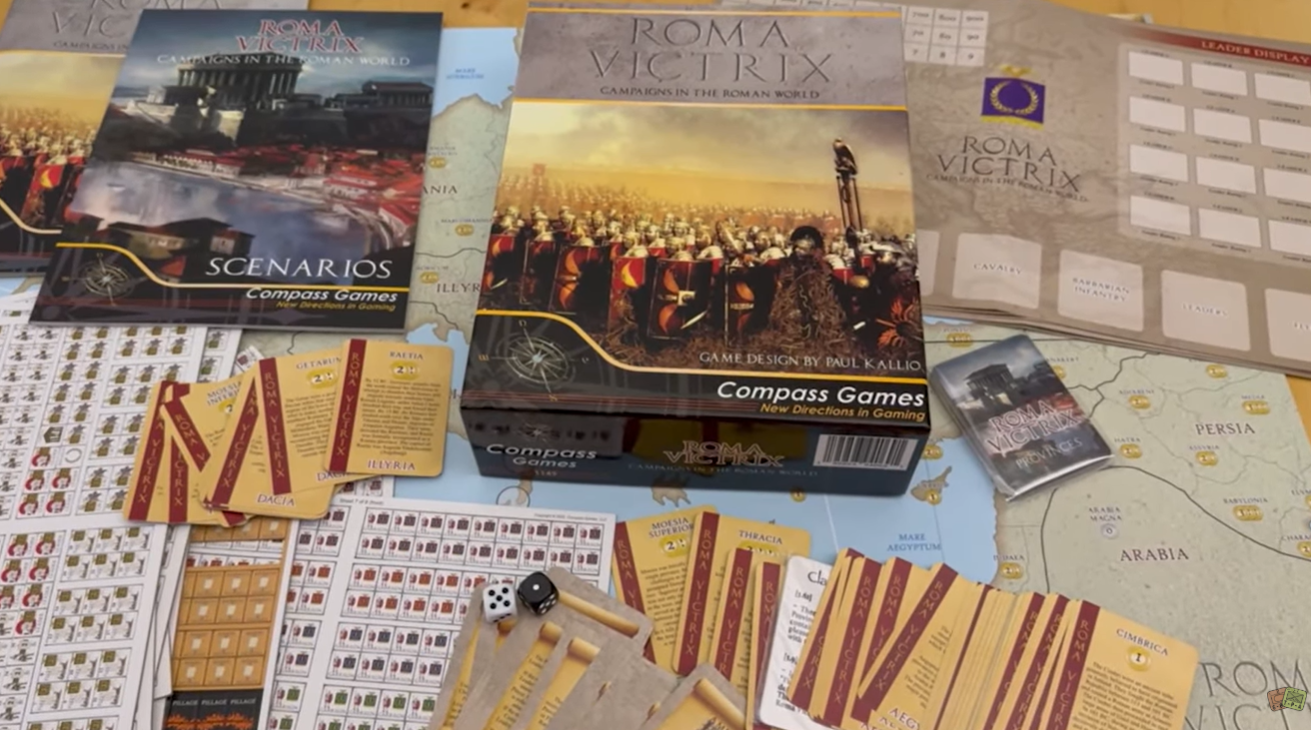
Roma Victrix is a grand strategic, moderate complexity wargame covering a time period ranging from 218 BC to 533 AD in twenty separate historical and hypothetical scenarios.
Roma Victrix is a game which endeavors to re-create the conflicts between Rome and her neighbors to achieve and maintain that dominance. A simple interactive sequence of play guides each player through the process of revenue collection, recruiting and maintaining military forces, conducting land and naval operations, diplomacy, field battles and sieges. Special rules are included to emphasize the importance and effects of leadership, cavalry superiority, mobility and attrition. Random events are also represented, adding an element of unpredictability to even the best laid plans and the likelihood that no scenario will ever play the same.
We posted an interview on the blog with the designer Paul Kallio and you can read that at the following link: https://theplayersaid.com/2022/05/23/interview-with-paul-kallio-designer-of-roma-victrix-campaigns-of-the-roman-world-from-compass-games/
-Grant
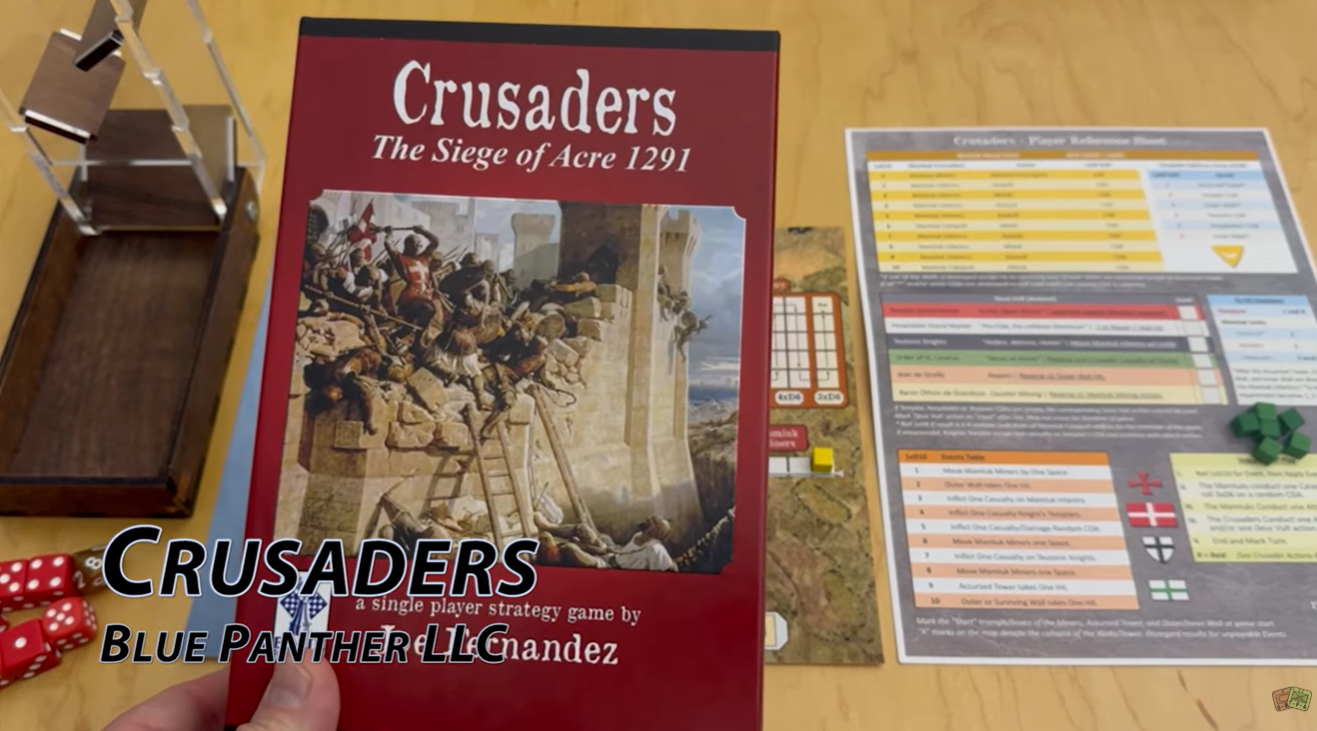
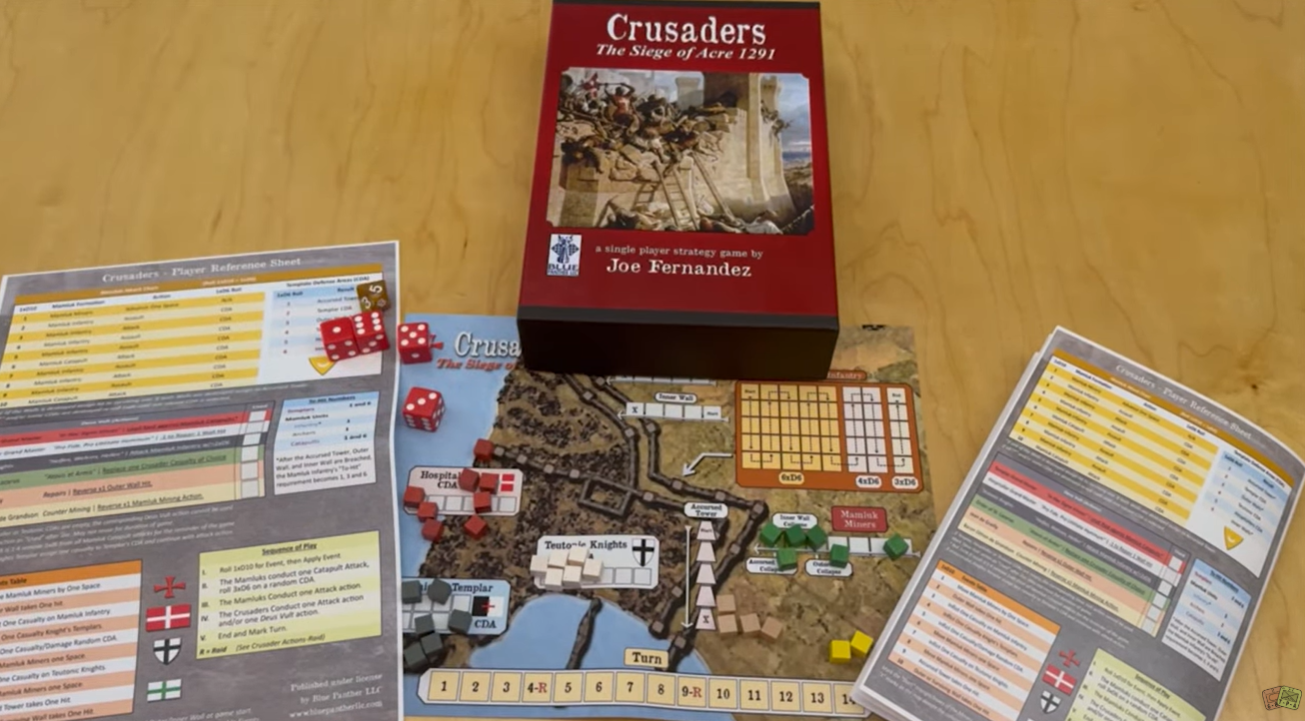
“In Signo Hoc Vinces”. Dive into history and heroism with Crusaders: The Siege of Acre 1291, a Tactical level Solitaire-Only board-wargame that immerses you and lets you experience the last stand of the Knights Templar and the Crusaders in the Holy Land. Relive the courageous stand of some 15,000 Crusader soldiers, Knights Templars, Teutonic Knights, and Hospitallers as they defend Acre, the critical port city in the Holy Land, against a massive Mamluk army of some 80,000 soldiers armed with siege engines and catapults during the Ninth Crusade.
Crusaders is a dice rolling, tower defense, solitaire game. Players take the role of Crusaders and try to defend Acre from the Mamluk attackers. Players win or lose depending on if the walls are breached and enough defenders survive.
-Grant
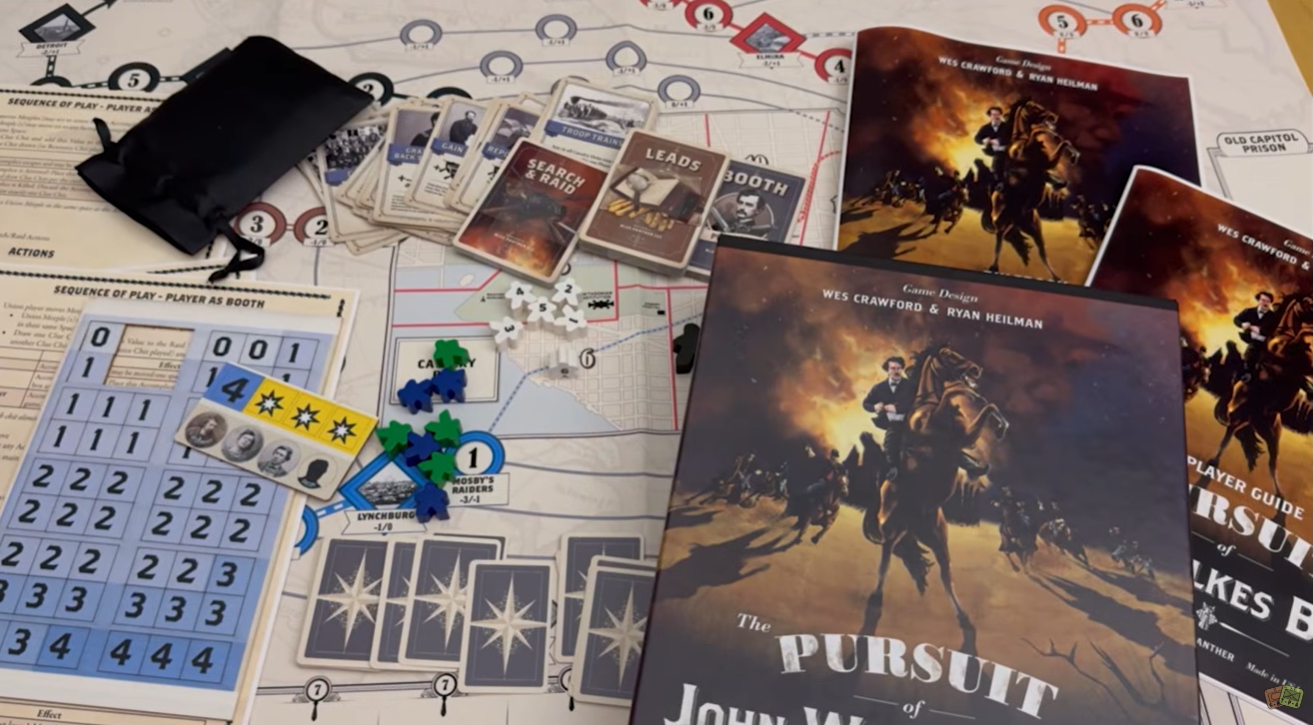
A few years ago, while attending the WBC, I had the chance to meet Wes Crawford who was demoing his upcoming game Engine Thieves. He was a very nice guy and his game was pretty interesting as well. Since that time, he has another game that has been released designed in partnership with Ryan Heilman in The Pursuit of John Wilkes Booth published by Blue Panther. I had a chance to play the game solitaire (with Wes overseeing the game and giving me guidance and pointers) at WBC in 2024 and have since played the game on my own several times and had a really great time with it. Great little solo game with several other modes where the player uses resources like police and detectives to search for clues in the hunt for Lincoln’s assassin after the events at Ford’s Theater on the evening of April 14, 1865. Definitely not a subject that has been gamed before and it is really refreshing to be able to experience this history in an interesting and engaging game. There really is a lot to like with the way that clues are found and chits are blindly drawn to verify clues from a bag. There is also a great little movement mechanic with police and detectives to try to acquire more clues.
We were able to post an interview with Wes Crawford on the blog and you can read that at the following link: https://theplayersaid.com/2024/12/03/interview-with-wes-crawford-designer-of-the-pursuit-of-john-wilkes-booth-from-blue-panther/
Here also is a link to our video interview after playing the game with Wes at WBC:
-Grant
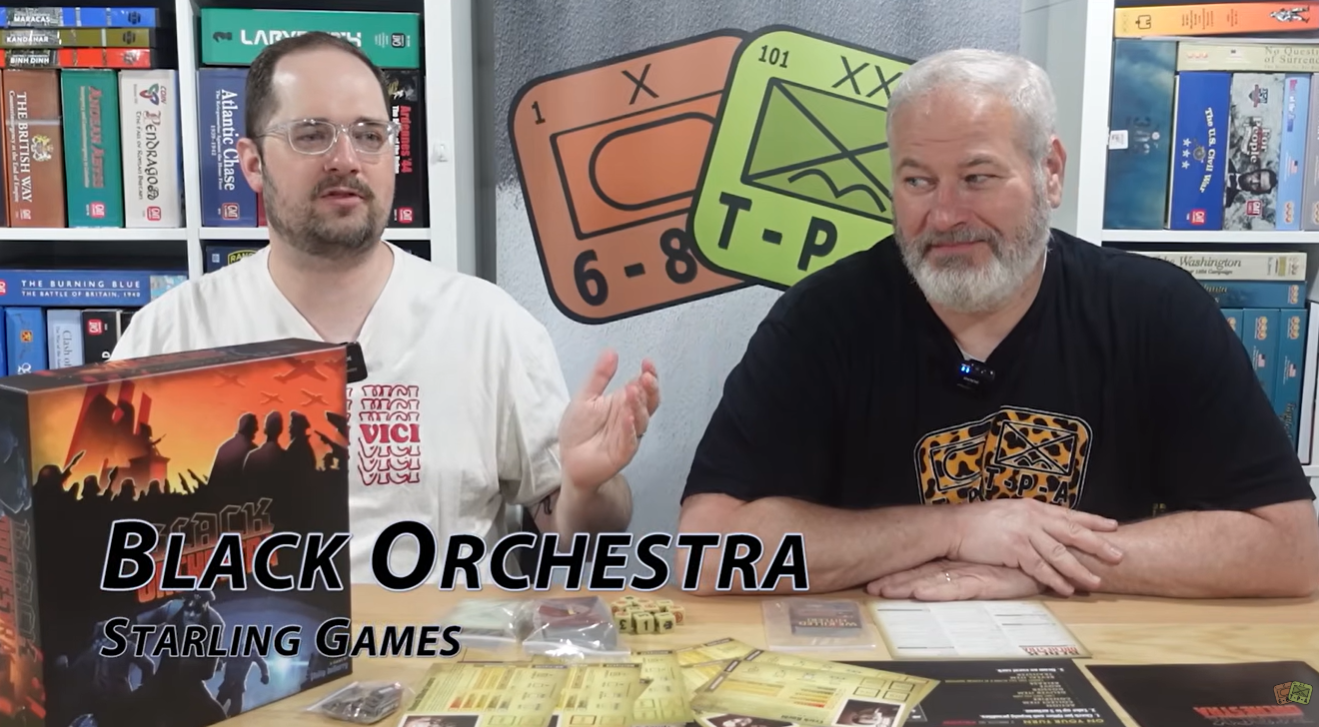
Black Orchestra begins with each player choosing a historic figure involved in the conspiracy against Hitler. In this dark and dangerous pursuit, motivation is perhaps your greatest weapon. If you can stay true to your convictions in the face of overwhelming threat and inspire your comrades, then you will be able to use your special ability, attempt plots, and even become zealous (necessary for some extremely daring plots).
But every move you make may also increase the suspicion of the authorities. The Gestapo will make routine sweeps, and any players with high suspicion will be arrested and interrogated (possibly resulting in other players being arrested). If you are all arrested or if the Gestapo finds your secret papers, you lose. And the suspicion placed on each conspirator will increase the chances their plots are detected.
On a turn, players may take three actions, such as moving, searching for an item, or drawing a card; or, at the cost of one action per die, roll the dice in an attempt to gain even more actions — at the risk of attracting the suspicion of the gestapo. This dice rolling “Conspire” action allows players to make bold moves when most needed.
-Grant
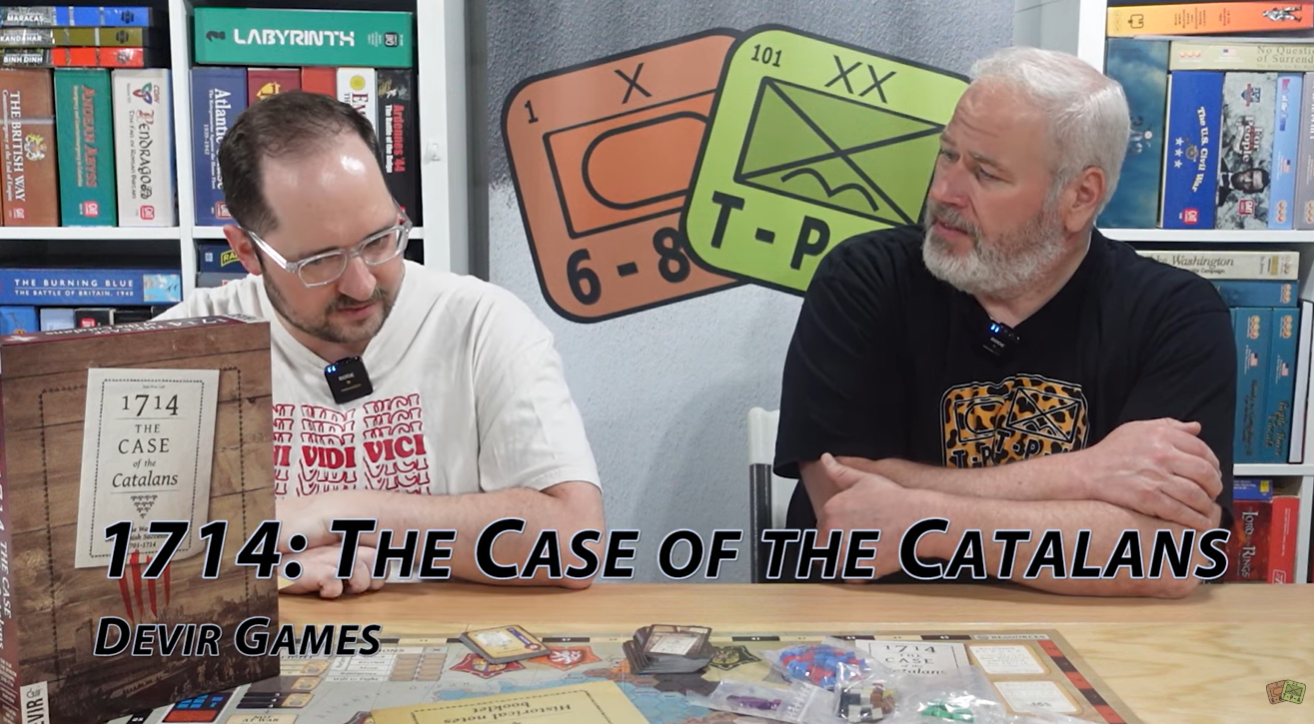
Europe, 1702. The death of king Charles II of Habsburg left the throne vacant and started a war all over Europe to settle the matter of the Spanish Succession. The Archduke Charles III of Austria, the Habsburg heir, was discarded by the last will of Charles II, signed almost on his deathbed, in favor of Phillip of Anjou, Louis XIV’s grandson, the Bourbon heir. The Grand Alliance has been formed, by the Treaty of Den Haag, by Great Britain, the Dutch Republic, Austria, Portugal and Savoy to preserve Europe’s balance of power and reclaim the throne for the Archduke Charles.
The players, representing the powers of the Grand Alliance, will fight the Bourbon forces composed by French, Castilian and Bavarian troops. Their goal, defined by a hidden agenda, is to obtain the best commercial and territorial concessions, and conquer the Bourbon territories. But this is no cooperative game: the winning player will need strategy and negotiation skills to achieve the best deals with the enemy and thus be the country with the most benefits thanks to the Peace of Utrecht.
In previous turn reverse order, each player decides how to play one of the seeded cards for the current turn. The players may pay from their resources to use the card’s text or may prefer to “sell” the card to execute one action. Each action is available only once for each turn and the players cannot execute the same action in two consecutive turns. The available actions are Recruit troops, Move them across the map or Attack the enemy in adjacent areas. Other choices include obtaining Resources or paying attention to their own countries Public Opinion (a.k.a. Will to Fight), for this will decide the order in which the new Concessions will be dealed. The card deck, composed by the most relevant battles, events and characters throughout the war, includes the exploits of the Bourbon armies to counter the player’s actions.
-Grant
“In Signo Hoc Vinces”. Dive into history and heroism with Crusaders: The Siege of Acre 1291, a Tactical level Solitaire-Only board-wargame that immerses you and lets you experience the last stand of the Knights Templar and the Crusaders in the Holy Land. Relive the courageous stand of some 15,000 Crusader soldiers, Knights Templars, Teutonic Knights, and Hospitallers as they defend Acre, the critical port city in the Holy Land, against a massive Mamluk army of some 80,000 soldiers armed with siege engines and catapults during the Ninth Crusade.
Crusaders is a dice rolling, tower defense, solitaire game. Players take the role of Crusaders and try to defend Acre from the Mamluk attackers. Players win or lose depending on if the walls are breached and enough defenders survive.
-Grant
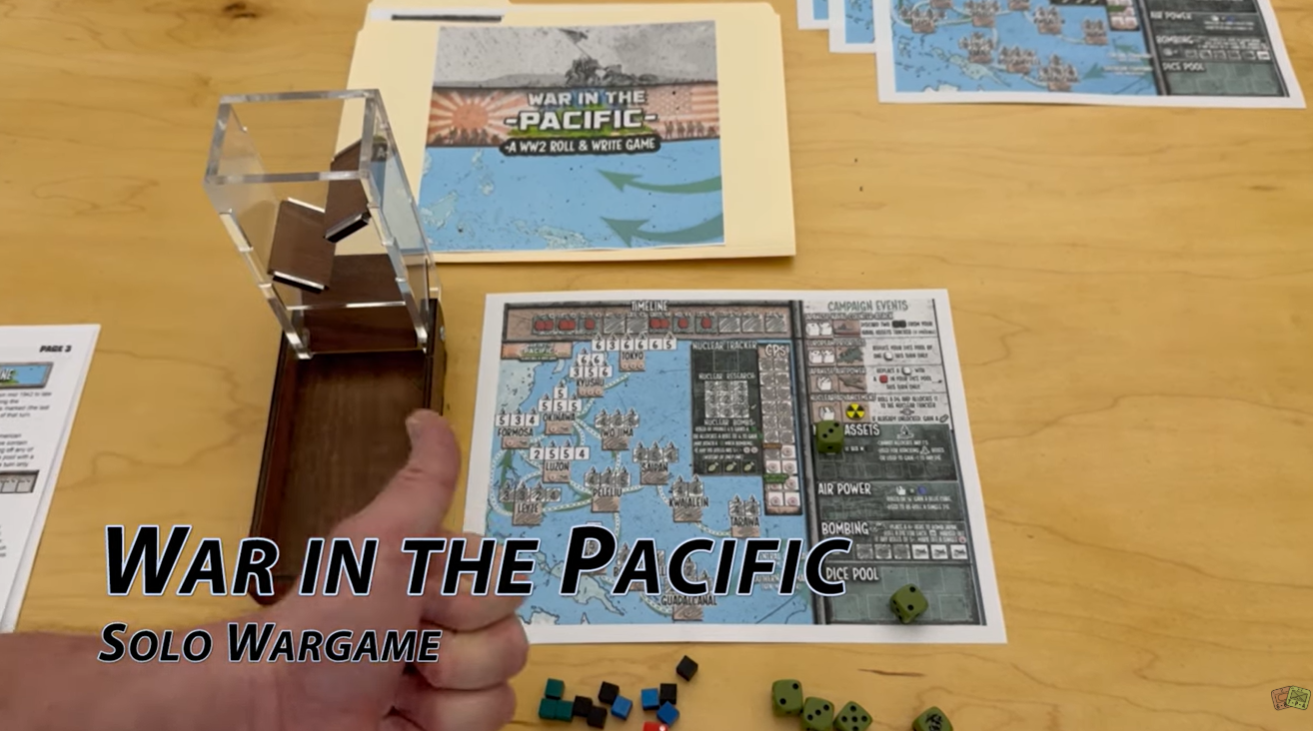
The year is 1942. Japan has rapidly expanded across the Pacific, bombing Pearl Harbor, capturing key territories, and threatening to dominate Asia. The United States, determined to halt this advance, begins a daring island-hopping campaign to weaken Japan’s hold and force their surrender. Can you lead the American forces to victory, or will the Japanese resistance force the United States to a negotiated settlement?
In War in the Pacific, you’ll allocate limited resources to launch attacks, conduct strategic bombing, maintain supply lines, and seize key islands. Your strategy must be swift and decisive, targeting objectives like Guadalcanal, Iwo Jima, and Okinawa. As the war intensifies, you can divert critical resources to the
Manhattan Project, researching and developing nuclear weapons. The race to build atomic bombs could be the key to ending the war. Can you balance the demands of the Manhattan Project with the immediate needs of your campaign?
Once you’ve gained a foothold, you’ll face a crucial choice: invade mainland Japan in a costly land assault, or use strategic bombing and nuclear weapons to force Japan’s surrender. Each option is risky as an invasion could end the war quickly, but at great cost, while bombing and nukes may hasten Japan’s
surrender, but could come too late.
With fast-paced dice allocation, resource management, and mounting pressure, every decision could mean the difference between victory or failure in your quest to force Japan’s capitulation.
-Grant
The March 2026 Monthly Debrief Video, which is the 3rd episode in Season 6 of this series, saw us discussing the games of David Thompson. David Thompson burst onto the board game design scene with his 1st game released in 2018 called War Chest, followed closely by the release of Pavlov’s House. His actual first game designed was For What Remains, which is a tactical skirmish game set in a futuristic post-apocalyptic wasteland where factions fight each other for supremacy, but it was not released until 2020 after a successful Kickstarter. Pavlov’s House was his first foray into the historical board game genre and its success has spawned several follow-up games in the Valiant Defense Series. David is a very conscientious designer and wants to put the time in to make sure his games are not only realistic in their play but representative of the time period covered. David also established Digital Capricorn Studios to support his board game design habit and on that website you can learn more about his design philosophy and check out his numerous games.
Also, as usual, we covered the games we played in March, which included the 14 games we played at Buckeye Game Fest.
We will remind you here that we are fortunate to be continuing our relationship with Noble Knight Games as the sponsor for our Monthly Debrief Video series. In case you don’t know, Noble Knight Games specializes in hard to find games but also carry all the new releases. But what makes them truly unique is that you can find some of the rarest games, long out of print games, hand made games, imported games from overseas, etc. Thanks to them for their sponsorship and we hope that you will consider them first when looking for the games we cover.
-Grant
» 05 | 12 2026: Papyria „playthrough“ and rules at Un Monde de jeux (Video – FR).
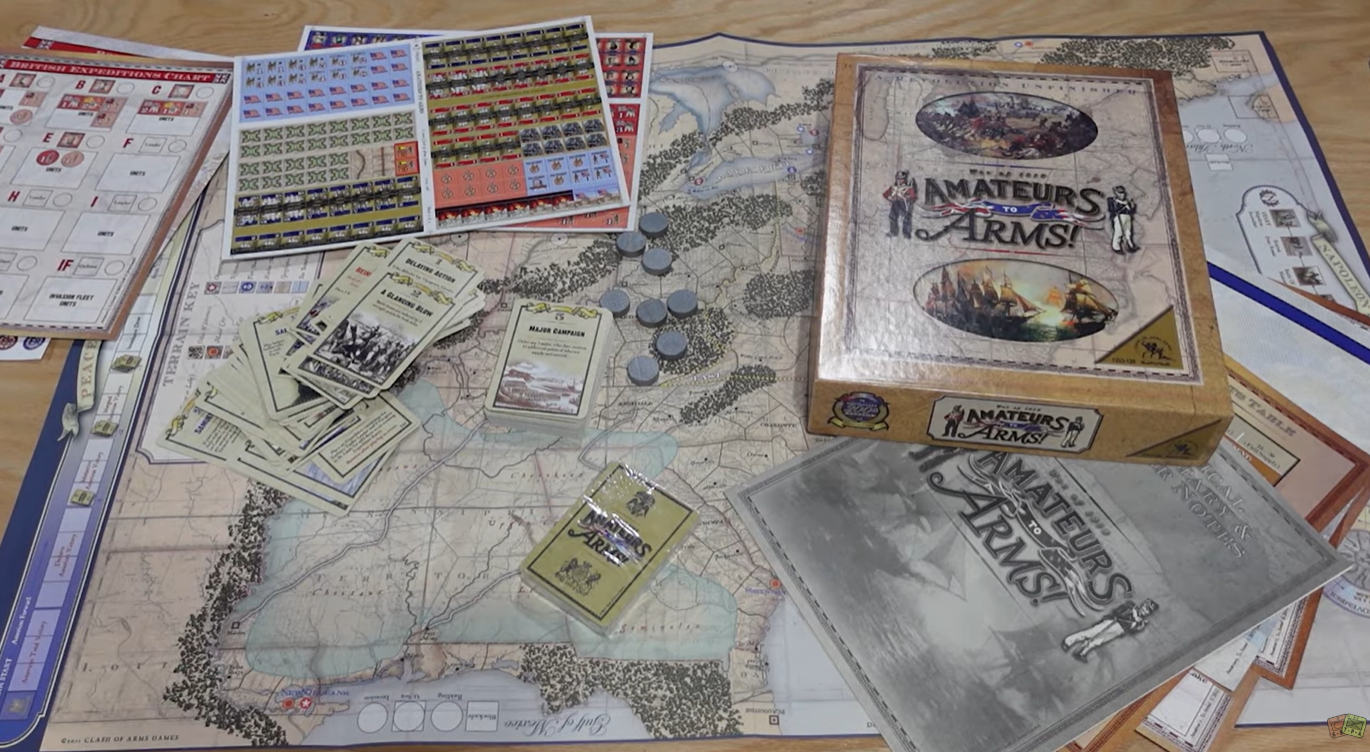
Amateurs to Arms! is a historical simulation game of the War of 1812. One player assumes the role of the British (including Canadian) forces, and the other plays the Americans. This often-overlooked conflict ended in a draw historically, but this was not the only possible outcome. The Americans clearly wished to annex Canada to their young nation, while the British wanted to teach their former colonies a lesson. The game includes all of the theaters of battle from the war: the US/ Canadian border and the Great Lakes (of course) but also the wilderness of the old Northwest, the Atlantic coast of the US, the Civilized Indians of the south, and the site of the final conflict at New Orleans.
Each turn represents a few months of time (depending on the season). A typical turn consists of dealing out to each player the number of cards indicated on the turn track. The winter and spring turns require a few special tasks. The Americans will have more resources to commit to the war- until Napoleon is defeated in Europe, and the English player can focus more resources on their efforts in North America. Each card can be played for the event described on the card, or for the card’s Operations Points, to move Expeditions, build ships and fortifications, or raise troops.
Events on the cards and on the map will cause the markers on the Peace Track to move forward. This represents the war weariness of each side’s people: bad events will cause your people to demand peace. Most events push inexorably towards peace; only a few rally your people for a longer war. When the two markers meet on the Peace Track, the game proceeds to the negotiations at Ghent, and the winner is determined. Oh yes, and then each player plays one more card, while news of the peace travels across the Atlantic!
-Grant