Asmodee has ramped up its reignited acquisition strategy by buying Japon Brand from CMON, anchoring the board game giant’s push into a “currently untapped market” for the company.
Japon Brand was instrumental in bringing Japanese designs such as Love Letter and Machi Koro to international markets, after being inspired by the surge in novel games from home-grown designers in the early 2000s.
The company will form the cornerstone of Asmodee’s new Japanese design studio, Nekuma, which will look to find games from local designers that it can release globally, as well as helping Asmodee bring its existing titles to Japanese players.
Asmodee CEO Thomas Koegler said, “Japan is one of the most creative and culturally influential markets in the world. With Nekuma and the integration of Japon Brand, we are building a long-term platform that connects Japanese creators with players globally.
Asmodee CEO Thomas Koegler
“True to Asmodee’s entrepreneurial and bold DNA, this capital-light and agile initiative allows us to invest where creativity is thriving while positioning Asmodee for sustainable growth in Asia.”
Asmodee has grown into a board game publishing and distribution giant thanks to the heavy expansion the business undertook after being bought by private equity firm Eurazeo in 2014.
But the vast bulk of the company’s revenue comes from its operations in Europe, which accounted for more than 76% of its €1.6bn net sales in 2025.
The United States contributed about 13.1% of 2025 net sales, while the company’s entire ‘rest of the world’ net sales – covering every country outside of Europe or the Americas – made up less than 5%.
Asmodee currently has offices in South Korea, China and Taiwan following an expansion to the continent in 2021, with those teams having developed and published localised titles including Splendor Pokémon, Love Letter Cookie Run, Pokémon Chips, and Love Letter Fox Spirit, as well as making use of crowdfunding platforms across the region.
The company said Nekuma would “integrate and expand” that activity under interim head of studio Frederic Nugeron, Asmodee’s current global senior vice president – route to market for the Asia Pacific region.
It said Nekuma would lead game sourcing “to identify and support the most promising Japanese and Asian tabletop game designers”, while Asia-focused publishing will be managed by the company’s existing Korea team.
Nugeron said, “Our ambition with Nekuma is very concrete: be present on the ground, listen to designers, understand cultural nuances, and build trusted relationships within the Japanese ecosystem.
“By combining local expertise with Asmodee’s global reach, we can support creators more closely and bring distinctive Asian games to a worldwide audience.”
Asmodee said Japon Brand would continue to operate with its existing expertise and relationships, with “no impact” on current partnerships or contracts.
But the company has faced a punishing financial situation since, posting losses of $3m across 2024 and nearly $7m for the first half of 2025 – figures which dwarf the overall $4.2m profit it had managed to make over the previous nine years combined.
But the revived M&A process is yet to fully mirror Asmodee’s private equity-fuelled buying spree from the latter half of the 2010s, during which it acquired more than 40 companies and IPs.
That heavy expansion included the company adding more than 20 game studios, including Days of Wonder, Fantasy Flight Games, Lookout Games, Catan Studio and Z-Man Games.
Asmodee CEO Thomas Koegler was asked during the company’s quarterly results presentation last month whether the company was ready to make “more meaningful” acquisitions rather than small bolt-on deals.
He said in response, “Without being specific, the activity in the pipeline is in accordance with our plan. The smaller acquisitions are faster. IP acquisitions and asset deals are faster to execute. I’m satisfied.”
The board game giant’s overall net sales jumped 22.2% across October to December 2025 compared to the same period a year earlier, with the performance of products it distributes for other companies surging more than 50%.
Net sales for games published by Asmodee itself fell almost 13% year-on-year in the quarter, however, weighed down by US net sales slumping 23% to €70.4m.
That drop saw the US fall behind both France and the UK in Q3 in terms of the company’s highest-performing countries for net sales, with France surging 47% year-on-year to over €111m, and the UK growing 41% to €82.7m.
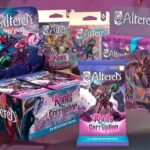
Publisher Equinox scrapped the crowdfund for Altered’s Roots of Corruption expansion yesterday after raising more than €420,000, having launched the campaign last week with a €50,000 target – a figure it described on the project page as a “technical necessity” in order to use Gamefound’s stretch goal system.
Equinox said in an update yesterday that it had also collected €680,000 through retailer pre-orders for the expansion – but added that the €1.1m total was “far too far” from the €2m the company required “to guarantee the future of the game”.
The statement said, “It would be dishonest to tell you that we can still turn the tide by Friday evening. We must face reality: the numbers simply aren’t there.
“It is with a heavy heart that we have decided to cancel the Roots of Corruption campaign. As we committed to doing, all backers – both players and retailers – will be reimbursed in full. This is the cornerstone of our responsibility toward you, and it is the most obvious decision to make.
“This campaign does not only mark the end of a crowdfunding project; unfortunately, it also marks the end of the Altered adventure.”
Altered shattered the crowdfunding record for a TCG on Kickstarter through its debut campaign in 2023, pulling in more than €6.2m (about $7.1m) from about 15,000 backers.
Altered aimed to stand out from high-profile competitors such as Magic: The Gathering through its focus on exploration and bringing heroes together, rather than battles between characters and monsters, as well as innovations such as a print-on-demand and a digital marketplace for cards.
That digital marketplace also made it difficult for retailers to offer the TCG staple of being able to buy, sell and trade single cards, and the game’s powerful early momentum waned as the title struggled to go toe-to-toe with offerings based on hugely popular IPs.
Equinox returned to crowdfunding for Altered’s fifth expansion, Seeds of Unity, in October last year – but faced similar problems to the most recent crowdfund in reaching its necessary totals.
That campaign hit the €50,000 goal set by Equinox in less than nine minutes, but an update from the publisher two weeks later revealed that the actual amount needed to create the game was €2.5m – a figure which if it did not reach, “the adventure will come to an end, and both backers and retailers will of course be refunded”.
Noting the €50,000 crowdfunding goal for that project, and the message on the Gamefound page describing it as more than 1,000% funded, Equinox made no mention of it being a technical necessity for the stretch goal system.
It said at the time, “The funding goal displayed on Gamefound is symbolic, as it usually is in crowdfunding campaigns.
“It’s chosen to help build early momentum but doesn’t reflect our actual needs. Setting the bar too high sometimes makes a project feel out of reach, while a more accessible goal helps get the collective energy moving right from the start.”
That campaign ultimately collected almost €900,000 after being extended for several days, with another €1.4m coming through retailer pre-orders.
Equinox said at the conclusion of that campaign, “While we haven’t reached the objective of €2.5m mentioned initially, we’re not that far off our goal, and with some adjustments on our part (which includes reviewing some budgets and determining new production processes) we believe we can cover that difference.”
Equinox had come under fire from some Altered players for launching its Roots of Corruption campaign before Seeds of Unity had been fully delivered to backers.
The company said in an update to Seeds of Unity backers that while it aimed for a four-month cycle per set, production delays meant that it “no longer [had] the flexibility to push dates back”.
Uncertain Future
Equinox founder Régis Bonnessée acknowledged in the latest update announcing the end of Altered that players would inevitably have questions about the future of their digital collections, the game’s availability on Board Game Arena and “the legacy of this universe”.
He said, “We are not going to leave you in a vacuum. We simply need some time to digest this moment, to properly close this chapter, and to provide you with clear and respectful answers. Thank you for every card played, for every smile exchanged, and for everything you put of yourselves into this adventure. It was an honor to imagine it with you.”
Bonnessée added, “I have experienced the end of projects before – cycles that come to a close. But today feels different. Tonight, we feel a profound sadness as we reflect on what Altered has become for all of us.
“Tonight, we are thinking of you – our players, our community, our ambassadors. To everyone who accompanied us, supported us, and sometimes challenged us. Altered managed to create something rare: a sincere, kind, and committed community.
“We say this because we met you time and again. You often surprised us. We are sad tonight because we realize what this game represented for many of you. And because we also realize all that we failed to achieve.
“We are thinking of the game stores. To those who believed in the game before it was a certainty, who championed it to their customers, and who ordered stock on a gamble. Running a game store is an act of faith in itself; betting on an independent French TCG with an original universe and no established license to lean on… that deserves to be acknowledged. Thank you to them.
“We are thinking of our artists. Altered is a universe, a visual identity—something recognizable at a single glance. This world did not exist until they drew it. Thank you to them for giving substance to all of this.
“We are thinking of our partners—those we call such for lack of a better word, because “partner” describes a contract but not the relationship. For their advice, for what they taught us by their side, for the moments they believed in the project even more than we perhaps deserved. We grew together, and that cannot be erased.
“And of course, on a personal level, my thoughts are with the team. To the women and men who continued to believe, even when the headwind became exhausting. To their resilience in the face of invisible obstacles, to their total dedication. They have been extraordinary. I know that word can feel worn out, but here, it takes on its full meaning. Thank you to them for allowing this universe to exist, if only for a time.”
US-based tabletop game and card manufacturer AdMagic is shuttering its popular Print and Play arm, with company founder and CEO Shari Spiro telling BoardGameWire the operation had been a “financial burden” to the rest of the business for several years.
Spiro told BoardGameWire it had been a “difficult and sad decision” to close the company, which had provided prototypes, promos and components for a string of big-selling titles, as well as fast turnaround print and play services for budding developers and designers.
Print and Play, which was bought by AdMagic in 2015, will close its doors on March 27, with any existing orders “received, printed and put into our standard turnaround production queue”, according to its website.
Spiro would not say whether any Print and Play employees would be kept on in other areas of the business after next week’s closure. The division had 12 employees on March 6, according to the team page on its website at the time.
Spiro told BoardGameWire, “My team invested a lot to keep Print and Play open as long as we could, but unfortunately, the amount of hand work and the time it takes to do the high quality of work done through a small company like Print and Play, costs more than we could actually sell the jobs for.
“In addition our endeavor to cover employees 100% with full health insurance, a 401(k), a robust paid personal time off program, a move to a state of the art brand new facility a few years ago to get the team out of an office building (which was inappropriate for that type of work), two new laser [printers] in the past two years and the associated lease payments for all of the above, in addition to the rising costs of materials all added up.
“Additionally we are not owned by private equity so we don’t have the kind of big money other companies have supporting us. Keeping Print and Play open was putting the rest of our team at risk.
“The financial strain to Ad Magic became overwhelming and so this is why we reached this difficult and sad decision. Moving forward this will help Ad Magic and Breaking Games as it will remove the financial burden which has been borne by the rest of the team for several years now.
“Although our model for prototype services will shift, we will still be able to accommodate our clients through our Ad Magic/Breaking Games divisions.”
Games in which Print and Play has had a hand in producing prototype materials for over the years || Photo Credit: Print & Play
The company’s services were also well used by designers looking to put together early versions of games to pitch to publishers, as well as for creating review and demo copies for companies to send out to content creators and other partners.
Gil Hova, the designer of games including Wordsy and The Networks: PrimeTime, posted to BlueSky yesterday, “Found out during Unpub that Print & Play, one of the best board game POD companies out there, is closing their doors in a couple of weeks.
“I used them extensively in my Formal Ferret days to make prototypes. Their turnaround time was unrivaled. Sad to see them go.”
AdMagic, which Spiro founded in 1998, has grown to become one of the largest independent tabletop printing companies in the US.
The company scored big successes in the early 2010s thanks to the rising wave of Kickstarter projects, working on huge-selling titles such as Cards Against Humanity and Exploding Kittens.
AdMagic launched its own board game publishing arm, Breaking Games, in 2015 on the back of that success, and has gone on to publish titles including Dwellings of Eldervale, Rise of Tribes and Letter Tycoon.
GameHead, which rebranded from GamerMats two years ago as part of a push into board game publishing, has expanded its team with a pair of senior hires.
Ryan Schoon, a veteran presenter at the Man vs Meeple YouTube channel, joins Gamehead as marketing manager, while former Ludo Fact USA account executive Mark Burke comes on board as operations manager.
GameHead said Schoon would help expand GameHead’s presence within the tabletop gaming community using his experience in communications, content creation, brand management, and community and sales growth.
Schoon has spent almost a decade producing reviews and previews as part of Man vs Meeple, which has about 77,000 subscribers. He was also formerly a key account manager at tabletop crowdfunding specialist Gamefound from 2020 to 2022, and later spent almost two years as marketing manager with Japanime Games.
Burke joins Gamehead from the US arm of European board game manufacturing major Ludo Fact, where he worked for two years as an account executive.
He previously spent two years as a wholesale account executive at Unstable Games/TeeTurtle, was store manager at Indiana-based retailer Moonshot Games, and also worked for almost a year managing social media for Western Legends publisher Kolossal Games.
GameHead said Burke will be responsible for the day-to-day operations of the company while directing the sales team.
The company expanded into board game publishing in 2024 after more than a decade specialising in tabletop game mats and accessories, and rebranded from GamerMats to GameHead as part of that process.
GameHead’s publishing arm is led by creative director Paul Salomon, the designer of Elf Creek Games-published Honey Buzz and Stonemaier Games title Stamp Swap.
The publishing arm was launched to focus on party games for six or more people, casual games suitable for players of all ages, and ‘thinky games’ with strategic elements and replayable decision making.
GameHead’s releases to date include Rocco Privetera’s animal-themed set collection title Trinket Trove and Taiki Shinzawa’s bank heist-themed trick taker No Loose Ends.
Editor’s note: GAMA is one of the sponsors of the BoardGameWire newsletter
Tabletop game industry trade organisation GAMA‘s board of directors have apologised for some of its elected leaders being “rude and disrespectful” during a “heated” annual general meeting at the recent GAMA Expo trade show.
Multiple members of the organisation expressed their disgust during the AGM that board members had suggested people only attended because free food was provided, while others were upset at the way they were shouted at and talked over during a fiery discussion on changes to the non-profit’s bylaws.
On one of the occasions the free food claim was mentioned by a member during the AGM, board member Matt Loter, also known as Matt Fantastic, said, “That was me, you can just blame me, that’s fine. No one else on this board.”
GAMA’s board had proposed lowering the quorum requirement for membership meetings from 25% to 10%, saying that the high thresholds coupled with the organisation’s heavy growth in recent years had made “adapting our organization to changing circumstances all but impossible”.
It also proposed allowing amendments to pass via a simple majority of voting members at a properly called membership meeting, calling the existing process “too rigid”. The board had said that “even small corrections require cumbersome organizational campaigns, which slow down the organization from becoming more efficient and providing more robust service to our members”.
Those changes had received pushback from some members prior to the AGM, with several raising concerns the move would make it too easy for the larger member groups, such as retailers, to push through changes to GAMA laws.
Other members both ahead of and during the AGM suggested that better communication was needed instead of lowering the quorum, with the onus on GAMA to encourage members to participate.
It also emerged during the meeting that not all of the board members were in favour of the amendments, or the extent of the shift to the new quorum percentage.
Both amendments were set to go to a vote following the March 2 meeting, but the board has since postponed the process, saying it would “re-evaluate, and be more mindful before making further proposals”.
The GAMA board also released a statement a week after the AGM which said, “During the meeting, discussion on changes to the bylaws became heated; and there were members of the board of directors who were rude and disrespectful to the membership who came to the event to voice their concerns.
“This was out of order, unacceptable, and should have been shut down immediately. We, the members of your board of directors, apologize to all our members. We pride ourselves in serving GAMA’s members and advocating for our industry. Unfortunately, on Monday [March 2] that passion manifested in a way that was unbecoming of a board.
“We also recognize this apology could have come sooner, but we wanted to discuss as a board what happened, and the best opportunity for that was during our spring planning session that convened on Friday, March 6, the day after GAMA Expo officially closed.”
The board added that it wanted any official meeting of GAMA members to be “a safe space for discourse”, especially when organisation-wide changes like bylaws amendments are being considered.
GAMA president Nicole Brady
It said, “We expect the person(s) leading such meetings to maintain order and insist upon decorum from anyone who is taking part, and that includes members of the board of directors.” The meeting was chaired by GAMA president Nicole Brady.
GAMA’s board also acknowledged that there had been confusion about the proposed bylaw amendments, saying “We met the letter of the bylaws in regard to publishing the amendments in a timely manner; however, we could have done much better in spirit. We acknowledge that the timetable for the vote on the amendments gave the impression of being rushed, despite it again heeding the letter of the bylaws. This impression, and the passionate feedback on those amendments, are what led us earlier to announce that we were postponing the vote.”
It added, “Finally, we owe an apology to GAMA staff for fueling a discussion that distracted from their spectacular success. GAMA Expo 2026 was our biggest and best to date thanks to their hard work and dedication.
“We believe GAMA, as a whole, should also be the best possible industry association it can be. We take your feedback seriously and will work to address our shortcomings as a board in order to ensure you, as members, get what you need out of GAMA. We look forward to working with you on that.”
More than 3,820 attendees showed up to this year’s event in Louisville, Kentucky, up almost 12% on last year’s previous record of 3,425 – which had already left the show pressed for space across the exhibition hall and its extensive programme of seminars.
MingYang Lu’s puzzle fighter-style board game Re;MATCH has had a storming start to its Kickstarter campaign, picking up almost $250,000 from over 1,250 backers with half of the month-long crowdfund still to go. In this sponsored interview, Lu talks about why his design looks to derive fun from game mastery rather than discovery, the importance of conventions for small publishers, and why AI art “cheapens creativity”.
Hi Ming!A big part of your design philosophy for Re;MATCH is centred around the difference between ‘mastery’ and ‘discovery’. Can you give an overview of what you mean by those terms?
Yeah! So I’ve developed this personal philosophy about the different types of fun designers can incorporate into hobby board games, and I currently feel there are two main types.
First is Discovery, which is the fun you get from being presented with new information to respond to. This could mean seeing new cards revealed in a shop for an engine or deck builder game, or encountering a new enemy or event card in a miniatures game.
Second is Mastery, which is instead the fun derived from realizing new combos or optimizations with the options you already have. This could involve learning the optimal strategies in a roll-and-write game, or realizing the political intricacies between the factions in Root.
I don’t think these two types of fun are mutually exclusive. In video games, particularly single player ones, both are almost mandatory for a great experience.
Can you give us an overview of Re;MATCH, its design and mechanisms, and how that sets it towards either mastery or discovery?
Happily! Re;MATCH a 1 vs 1 competitive fighting game inspired by Puzzle Fighting games. Players take turns pulling connected and matching marbles from a tray of marbles, and the color and number of marbles you pull will resolve a corresponding attack on your character’s move list.
In the same vein as my first game, Re;ACT, it is a skill expression game that focuses primarily on mastery type fun. All of your abilities are shown upfront, and you must figure out how to use these options to win. There are no event decks to shake things up mid game, and no new options to consider as you play. The fun in Re;MATCH is more about seeing the floor of possibilities open up as you start to understand the system and the characters.
This is pretty standard for fighting video games though. In those games, after selecting your character, you can immediately pause to see the massive list of your abilities and combos, and it’s up to you to learn how to use them to win.
Re;MATCH being demonstrated at PAX Unplugged in December 2025
How do you think mastery relates to complexity? And what are the design challenges for a game like Re;MATCH, in terms of getting that balance right?
Mastery and complexity are not directly related in my mind. Most abstract games provide fun exclusively through mastery. From Chess to Hive, the complexity might be low, but the potential for skill expression is high, leading to repeated plays being the source of joy in the game.
How do you see mastery vs discovery-style titles doing in the current board game hobby landscape, especially when it comes to crowdfunding campaigns and online marketing?
I’ve noticed that in recent years, hobby game releases – games that aren’t party games and generally cost $30 or more – tend to focus on discovery rather than mastery. With so many games being sold on vibes and people posting their opinions or reviews after just a few or even only one playthrough, it’s more important than ever to make sure that first game experience is as smooth and perfect as possible.
Games that front load too much information typically don’t have a smooth first game experience, so you want to slowly drip out the options a player can take. Giving a player a deck of cards with a ton of variety and telling them not to worry about what’s inside that deck upfront is a great way to do this, as you’ll discover new and cool options every single time you draw a different card. However, such randomness can make one group’s first game wildly different from another’s. So this wide variety of cards that feel different actually needs to produce very consistently similar outputs, ensuring that most first games deliver as optimal of an experience as possible.
I think this meta has produced a lot of games that feel incredibly satisfying on your first playthrough, constantly offering new options to explore or challenges to overcome, but don’t really hold that spark after repeated playthroughs.
Of course there are games that successfully offer lots of both types of fun, and I think those are the games that we remember. All of the most replayable deck building games are great examples of games that offer both!
I’ve already seen this game shared on social media, especially from people spotting it at Pax Unplugged last year – and I think part of that is its use of bright colours, those attention-grabbing marbles and that it generally doesn’t look like most of the other board games out there. Was that an intentional decision, in terms of potential marketing, or is this just how you wanted the game to be?
The artstyle was certainly intentional. The hardest part of selling games, or anything really, is getting people to even notice it in the first place. For Re;ACT, featuring very large acrylic standees with bases that can hold tokens was driven by what would make people stop and look when passing by the game at a convention.
Re;MATCH, however, is a really old design. When I first came up with the very first iteration of Re;MATCH, I was inspired by my favorite game at the time, Battlecon, with its very asymmetric characters and fully open information, brain-burning game play, and the idea of using marbles as a component due to the popularity of Potion Explosion and Gizmos at the time.
But after learning many lessons with Re;ACT, I realized that Re;MATCH needed a much more colorful and eye catching art style to match the energy of the marble tower.
The game board for Re;MATCH character The DJ
How did you find artists PsyOptima and machimile, and what was your process in terms of getting to the final artwork? Did you have strong ideas early on, and how much were you guided by those artists / were they guided by you as the process progressed?
Both of them were actually artists on my previous fan projects! Just between Anna’s Roundtable, Genshin Tarot, and Star Rail Tarot, I’ve commissioned over 400 artists. My vision for Re;MATCH was a much bolder and funkier aesthetic compared to Re;ACT, and both of these artists were perfect for that.
Having worked with so many artists over the years, I’ve also grown pretty comfortable acting as an art director for my teams. I’m certainly no drawer, but I’ve learned how to communicate effectively to guide my team towards my visions.
You’ve been very frank online in your opinions about AI generated imagery being used within the board game industry. Why do you think some publishers are leaning into it, despite the well-publicised concerns around copyright, ethics and the environmental impact?
I’ve become increasingly frustrated about the use of genAI to replace or supplement artists in games. To me, the issue is very existential. I am not surprised that already massively successful publishers are leaning into using AI art. There have always been companies trying to squeeze profit out of any artistic medium, from movies to books and beyond. But AI slop feels different from just disingenuous cash grabs. Environmental impacts and stolen work is one part of it, but the idea of letting AI produce the art we consume really cheapens creativity as a whole.
The joy of creativity is so fundamental to life, and the spark of inspiration passed from one person to the next is so vital for human progress. If people continue to consume these things, be it AI art in games, AI written screenplays, or AI generated music, I fear that the very light of human existence will dim.
What would you say to smaller publishers and solo operators who believe they can only bring their projects to completion by leaning on AI generators?
I can see the argument from new designers who want to make games but feel like AI is the most effective way to make their games ready for sale, either because they can’t find a publisher or they can’t afford to pay for art. To these people I would ask: Why do you want to make games? Why do you play games yourself?
I think games can be art, just like novels, music, and movies can be art. The reason I enjoy any of these things is intrinsically tied to the shared human experience I feel when consuming them. A board game’s only component other than rules are its visuals, so I believe the human intentionality behind how the game looks is just as important as how it plays. The artists who want to paint are just as passionate as the designers who want to make good games, so don’t cut them out of the process! There are tons of affordable artists on VGen, and you can always just pick up a pen and make simple drawings yourself! “The enemy of art is the absence of limitations,” so let the limitations of your budget or your art skills be part of your creative process. Just look at how Stardew Valley or Undertale were made!
In aiming for the mastery experience, does that mean you’re not too concerned about expanding this game? Because it looks to me to be ripe for expansions, especially in terms of new fighter characters. How does that fit into your mastery and discoverability theory?
I definitely want to keep adding more characters to both Re;ACT and Re;MATCH! In fact, receiving new characters and discovering their interactions with existing ones is the main source of discovery type fun in these games. This is similar to TCGs, where every new set front loads you with a ton of new options to tinker with.
But the cost of a new character for these games is much higher than just adding more variance to a deck of cards or more enemies in a miniatures game. Not only does each character require a ton of assets, but every new character is exponentially more difficult to balance and integrate successfully into the game. This is why I’ve made additional characters our primary stretch goal targets back during Re;ACT and now Re;MATCH!
Re;MATCH designer MingYang Lu
Can you give us a little background about your time in the board game industry – where did you start out, and how did you get to here?
Sure! I guess I first started experimenting with making card games like many other kids: my friend (Eric Zeringue, who still helps me with game design today) and I designed our very own very bad TCG. In college, I took things a bit more seriously by designing my own pretty bad deck builder based on isekai anime, and then I designed a not so bad fan game based on the indie video game Crawl (one of my favorite indie games of all time).
I then just kept making fan games, and eventually, I made one for Fire Emblem and posted it on Reddit. This one kind of blew up, and Kotaku even wrote an article covering it. I then just kept making print and play fan games and posting them online. I did one for Code Geass, Darling in the FranXX, and Persona 5, among several others that never saw the light of day.
Right around the time I designed the Darling in the FranXX game, I also designed the very first version of Re;MATCH. I brought it to a prototyping convention, posted it to YouTube, entered it into a design competition, and eventually signed it to the publisher Penguin and Panda, who renamed it Sento. After that, I met Chris Lin, who had his very own design for TCG that I enjoyed the core of. While Sento progressed with Penguin and Panda, I started working with Chris to completely redesign his TCG into a board game instead of a TCG, which eventually became Re;ACT.
After Covid hit, it became clear that Penguin and Panda wouldn’t be able to publish Sento, so I focused entirely on Re;ACT, brought it to several conventions, obtained my US citizenship, funded it on Kickstarter, and then quit my job to pursue board games full time.
You’ve run several Kickstarter campaigns before, for Re;ACT – The Arts of War in 2024 as well as several for dice and standee collections and other accessories. What were your big lessons learned through those campaigns, and how are they applicable to running the campaign for Re;MATCH?
Honestly, I’m still figuring things out myself [laughs]. But I will say that the most important thing for me is to always be authentic and only make things I would want to buy myself. Doing something purely to make money is a slippery slope, and I constantly remind myself that if I wanted to just make money, I would’ve stayed at my comfortable 9 to 5 desk job.
But if someone asked me for some more practical advice, specific to running a board game Kickstarter, I would say to just get your game in front of as many eyes as possible beforehand. Bring it to conventions, post playthroughs, and do whatever you can to make it eye-catching. Obviously the game needs to be good for people to stick around, but no one will know if it’s a good game if they don’t sit down to try it first! For Re;ACT, I brought it to Pax Unplugged, Gen Con, and ProtoATL two years in a row before we launched. Re;MATCH moved a bit faster, with me taking it to Pax East, Origins, Gen Con, and Pax Unplugged all in the same year.
An early version of Re;MATCH being demonstrated at the ProtoATL convention in 2018
That’s a lot of conventions! I think there’s a feeling among smaller publishers that it’s a big financial hit to attend multiple cons a year, and it can be hard to stand out against the competition on show floors. What advice would you give for attending conventions as a small publisher yourself?
Definitely agreed that cons are expensive, and I started small as well! In 2023, I attended Gen Con by myself and just offered ticketed event demos. Two of the people who played my games loved them so much that they ended up helping me teach demos at Gen Con in 2024 and 2025! Hosting events at Gen Con is free (outside the cost of travel), and in 2023 I stayed together with over 20 other indie designers and publishers in a big Airbnb to save on cost.
Another cheap option is prototyping and protospiel conventions. I attend ProtoATL nearly every single year, and its by far one of my favorite weekends every year. Many of the early prototype photos of Re;MATCH come from ProtoATL! The badges are very cheap, and you get your prototype ripped apart and rebuilt so many times that you make more progress in three days than you would have in three months. You also make so many meaningful connections with other designers and publishers, who are often avid supporters of games themselves!
I recommend exhibiting at a consumer convention only after gaining experience pitching games to strangers. Prototyping cons and hosting events lets you practice with a captive audience, but working at the booths of established publishers is a great way to practice pitching to passing customers. (I’m always hiring as well!) Another great opportunity is the Indie Games Night Market, which New Mill Industries has hosted at Pax Unplugged for the last two years. This event gives indie designers a single table to sell a small print run (think five to 50 copies) of their game, often with homemade elements.
Once you are ready, Pax Unplugged is by far the best choice as an indie publisher to exhibit at. Unlike Gen Con, Pax really cares about indies (see Indie Games Night Market), has a strong culture of inclusivity, and doesn’t allow AI grifters into their show! Standing out at a convention is definitely very hard though, and I’m still figuring that step out for myself. My booths are pretty basic looking still, but working with really great artists has worked out very well for me, so I’d recommend that as well!
I saw that you’re providing access to the full game on Tabletop Simulator for free. How important do you think that will be for discoverability, and how do you think that balances against the chance some people will just use the digital version and not back the physical campaign?
Super important. Personally speaking for board game Kickstarters, if I don’t see a playable demo, I am very unlikely to pledge. Even if I don’t have the time to personally try it, not allowing backers to try the game before they buy signals to me that the publisher lacks confidence in the game. A good game should make players want to buy it after playing it, end of story.
Not to mention the benefit of getting so many more eyes on your game to tell you what is bad about your game before you hit the irreversible button to start printing! For me, there are absolutely no downsides to having the game fully playable for free digitally during a Kickstarter, and I try really hard to ensure it’s available long before that as well.
What are your ideal goals for this campaign – what does a success look like for you, and how do you ideally see the rest of the year panning out?
For me, I’d like to surpass the number of backers I had on Re;ACT and POND as a minimum. Re;ACT had 1,730 backers, and POND had 1,900 backers. If Re;MATCH hits at least 2,200 backers, that will indicate a consistent growth trajectory for me as a publisher, so that is my real goal.
After Re;MATCH, I’ll be working on Season 2 of Re;ACT, along with several unannounced secret projects I’ve been working on for quite some time now, so please look forward to them!
Editor’s note: GAMA is one of the sponsors of the BoardGameWire newsletter
North America’s biggest board games industry trade show, GAMA Expo, has sealed another record attendance as it prepares a move to Baltimore to contend with rapidly growing demand.
More than 3,820 attendees showed up to this year’s event in Louisville, Kentucky, up almost 12% on last year’s previous record of 3,425 – which had already left the show pressed for space across the exhibition hall and its extensive programme of seminars.
The shift to Baltimore next year will be GAMA Expo’s second new home since 2023, when it was relocated from Reno, Nevada after the growing attendance numbers eclipsed their pre-pandemic highs.
GAMA Expo’s attendance this year is more than double its pre-pandemic record of 1,800 set in 2019, and up more than 87.5% compared to the event’s final Reno show in 2023.
A presentation at this year’s GAMA Expo
GAMA initially signed a three-year contract in Louisville for 2024 to 2026, but agreed to extend that for a year after the KICC helped GAMA shift the dates of last year’s Expo, when the trade organisation realised it had outgrown the footprint available across its original dates.
The organisation later decided to bring its move to Baltimore forward to 2027 as demand continued to grow, paying a fee to break the KICC contract a year early.
GAMA told BoardGameWire last year it had earmarked 300,000 sq ft of exhibit space for year one in Baltimore – almost double the roughly 176,500 sq ft of this year’s vendor hall, and with room to grow to 500,000 sq ft by year three or four at the new site.
Chicago and Minneapolis were also in the mix as potential destinations, with Baltimore being praised by GAMA’s site selection committee for its selection of hotel options, reasonable convention centre rate and incentives to bring the show there.
Several publishers BoardGameWire contacted after this year’s GAMA Expo were all positive about how busy it had been, with two first-time exhibitors both particularly excited about how the event had gone for their companies.
BoardGameWire asked GAMA on March 9 for a breakdown of this year’s attendance for its respective member groups, which it provided last year to show the growth of individual areas, but is yet to receive those figures.
One complaint which has been emerging post-Expo revolves around GAMA’s plan to get rid of ‘priority points’, which have rewarded repeat exhibitors with the ability to exert more power over where their booths are positioned within the vendor hall.
That system has been scrapped for both next year’s Expo and this year’s Origins trade fair, GAMA’s long-running tabletop gaming convention set to take place in Columbus, Ohio in June.
Some frequent exhibitors have expressed dismay at the decision, which came to light as a bullet point in the renewal documents for next year’s event rather than being highlighted for discussion with members ahead of GAMA implementing the policy.
The vendor hall at GAMA Expo in Louisville
GAMA president Nicole Brady said of this year’s GAMA Expo, “Every year, GAMA staff and volunteers strive to make GAMA Expo better than the year before. That was evident this year in various areas such as the extensive educational programming, overflowing interest at networking events and engagement during game nights. Beginning with registration on the first day to exhibit hall tear down on the last, GAMA Expo 2026 was top notch.
“This would not have been possible without the tireless efforts of the staff, the community members who brought their passion to the event and, of course, the sponsors that supported the various events and initiatives.
“Throughout the week and beyond, I’ve heard or read on social media countless people praising the event. Many comments about the ability to conduct business with others in the industry. This annual event is the place to be and people are already making plans for next year in Baltimore!”
Zaria Davis, GAMA’s interim executive director, added, “As a first timer at GAMA Expo and someone still very new to this industry, I was blown away by the experience. I loved getting to meet members face to face, ask questions, and better understand how the business side of tabletop games really works.
“Having the chance to share my own insights in sessions made me feel welcomed and valued, and I’m leaving excited, inspired, and eager to come back.”
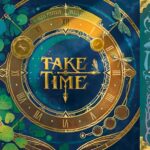
Co-operative puzzle challenge game Take Time has triumphed in this year’s Swiss Gamers Award, which is voted on by members of board game clubs, game and toy libraries and gaming associations from across the country.
Alexi Piovesan and Julien Prothière’s design sealed top spot above Eric Olsen’s Flip 7 – which won the separate family game prize – and also finished in third place in the family-weight category.
The win is the second year in a row a game from Asmodee studio Libellud has won the Swiss Gamers Award, following last year’s success for nature-themed tile-laying game Harmonies.
Take Time, designed by Alexi Piovesan and Julien Prothière
The game fought off tough competition in the family game category this year from titles including Paolo Mori and Alessandro Zucchini’s Toy Battle, the winner of the 2026 As d’Or.
This year’s Swiss Gamers Award featured an expert game category for the first time, which was won by Yeom Cheolwoong’s design Wondrous Creatures – a strategy title based around players building fantasy animal reserves.
Wondrous Creatures, designed by Yeom Cheolwoong || Photo Credit: Bad Comet
The Swiss Gamers Award has been held every year since 2010, following the demise of the Schweizer Spielepreis in 2006.
Although the award is given by gamers living in Switzerland, all games published in the prior year can be nominated, regardless of the nationality of their authors and publishers.
This year’s award marked the third in a row presented to a relatively light game, following Harmonies last year and Faraway in the 2023 awards (presented in 2024).
The far more heavyweight Ark Nova triumphed in 2022, and mid-weight euro The Lost Ruins of Arnak won in 2021.
The award is organised by Ludesco, Switzerland’s biggest board game festival, in partnership with the Swiss Federation of Toy Libraries and the Swiss Game Museum.
Swiss Gamers Awards full results 2025
Main Award Winner: Take Time, designed by Alexi Piovesan, Julien Prothière (Published by Libellud) 2nd Place: Flip 7, Eric Olsen (Catch Up Games, Kosmos) 3rd Place: Zenith, Grégory Grard, Mathieu Roussel (PlayPunk)
Family Award Winner: Flip 7, Eric Olsen (Catch Up Games, Kosmos) 2nd Place: Toy Battle, Paolo Mori and Alessandro Zucchini (Repos Productions) 3rd Place: Take Time, Alexi Piovesan and Julien Prothière (Libellud)
Expert Award Winner: Wondrous Creatures, Yeom Cheolwoong (Super Meeple, Strohmann Games) 2nd Place: Endeavor: Deep Sea, Carl de Visser and Jarratt Gray (Super Meeple, Board Game Circus) 3rd Place: Eternal Decks, Hiroken (Pixie Games, Strohmann Games)

 Anmelden