 Anmelden
Pandasaurus Rides in with Bohnanza, Greylune, Saboteur, and More
28. Mai 2026 um 21:00
Three AMIGO titles have been picked up by this U.S. publisher



Three AMIGO titles have been picked up by this U.S. publisher
For a game I rarely play, I think a lot about Magic the Gathering. It’s particularly been on my mind recently due to a combination of the new Covenant podcast/livecast, the excellent Distraction Makers YouTube channel, and some correspondence with the creator of the Alkem series of gear and bags designed to hold trading card games.
 Magic recently opened sales for a Secret Lair Goblin Storm Commander deck with special art by Dakota Cates. Within 34 minutes, the entire print run had sold out (I’ve only seen speculation as to the quantity made, not confirmed numbers, with estimates ranging from a few thousand to 50,000).
I can see why people are really frustrated by this. They’re passionate about a game, and they want a chance to buy that game. This is why I’m so against crowdfunding exclusives: If you’re making a game to withstand the test of time, why would you limit your ability to make and sell any portion of it to the first few people who learn about it?
However, rarity and scarcity are also core to Magic’s existence. The reason they can consistently sell 15 slim pieces of cardboard for $5 is because of the chance a card is worth a lot more than $5 on the secondary market (whether or not you actually sell that card). This is why it’s exciting to open a booster pack or even to own a limited edition goblin art pack.
I’m not justifying this model. At Stonemaier Games, we’re specifically not selling scarcity. If a product is out of stock and there appears to be demand for us to make more, we’ll happily make more. This is how we serve our customers.
What’s interesting to me is that because Magic is inherently about selling rarity and scarcity, I can see how they believe they are serving customers by making a limited quantity of Goblin Storm Secret Lair sets. I also understand that they, like any publisher, have to make production quantity decisions many months before they know how many people will actually pay for the product.
I think there may be a better way, though, even within Magic’s constraints of selling scarcity. In discussing this topic on yesterday’s livecast, @redwlfjsc shared an idea that I modified just a touch: Magic could make, say, 10,000 units of a Secret Lair and put them on their webstore for 3 weeks. If the product sells out within that time period, their order system switches to preorders for a single reprint of that Secret Lair on which they will start production after the 3-week period ends.
This is exactly what Gamefound offers with Express Crowdfunding. It serves those who want the product right away while leaving a limited door open for those who are willing to wait a bit. It respects collectors and players without losing control to bots and quick flippers.
Magic’s model is so successful that entire brands have been created specifically to serve those who play Magic and other TCGs (casually, at local game stores, and at tournaments). I heard recently from the team at Alkem Gear about their product launch Kickstarter. Our conversation led in a few different directions that you’ll see in some upcoming posts, but I wanted to briefly mention it today because it demonstrates both the value of user-focused design and that even 30-year-old games still have room to improve.
This is from Tim Heck, the founder of Alkem:
“After moving to Riverside, California, I became deeply involved in communities centered around D&D, board games, and trading card games like Magic: The Gathering and Pokémon. One thing I noticed immediately was that people were carrying thousands of dollars’ worth of cards and gear in setups that felt like an afterthought. A lot of the products marketed toward TCG players seemed to be repurposed camera bags or generic storage solutions. That was really the starting point for Alkem.
Our products are intentionally built around the way gamers actually travel and play. The backpack, for example, was designed specifically around deck box dimensions and gaming accessories. The vault section fits six deck boxes or roughly 1,200 cards, while the upper compartment can hold an additional 1,800 cards. At the same time, we didn’t want the bag to only serve card players, so the internal geometry is intentionally square and structured to also accommodate board games, D&D books, dice trays, playmats, notebooks, snacks, and other essentials people bring to game nights and conventions.”
After spending time designing flexible storage solutions like the Wingspan Nesting Box and Viticulture’s Wine Crate, I have a high level of appreciation for what Tim has created at Alkem.
Just so it’s perfectly clear, Alkem has not sponsored this post and I have no connection to them other than a pleasant and informative email conversation. I hear from creators all the time, and if they share interesting stories that are relevant to topics I’m covering, I sometimes include them in these articles.
What do you think about how a company that sells rarity and scarcity in a game like Magic can best serve customers?
If you gain value from the 100 articles Jamey publishes on this blog each year, please consider championing this content! You can also listen to posts like this in the audio version of the blog.
Every now and then, I sit down to play a game with no expectations whatsoever. I anticipate neither excitement nor despair. I am absolutely ambivalent, a perfect blank slate. I think of this as a true neutral response, but it occurs to me that I generally enjoy trying new games, so ambivalence is in fact a moderately negative response. I’ll process this on my own time.
Ambivalence was very much the case with Got Five!, a deduction game from designer Yoann Levet and publisher Blue Orange. I picked up a review copy because it was the slow season, I knew it wouldn’t take long to play, and I liked the tiles. I don’t know which of the two credited artists, Mathieu Clauss and Simon Douchy, is responsible for them, but those colorful bakelite tombstones with expressive eyes are hard to resist.
Don’t be fooled. Their friendly exteriors harbor terrible secrets, by which I mean numbers between 1 and 60. If you think that doesn’t sound so bad, you probably like math. During setup, each player takes one tile in each of the five colors and stands them up so the numbers are visible to everyone else at the table. It is extremely important that you not see the numbers on your own tiles, since the goal of the game…
The post Got Five! Game Review appeared first on Meeple Mountain.
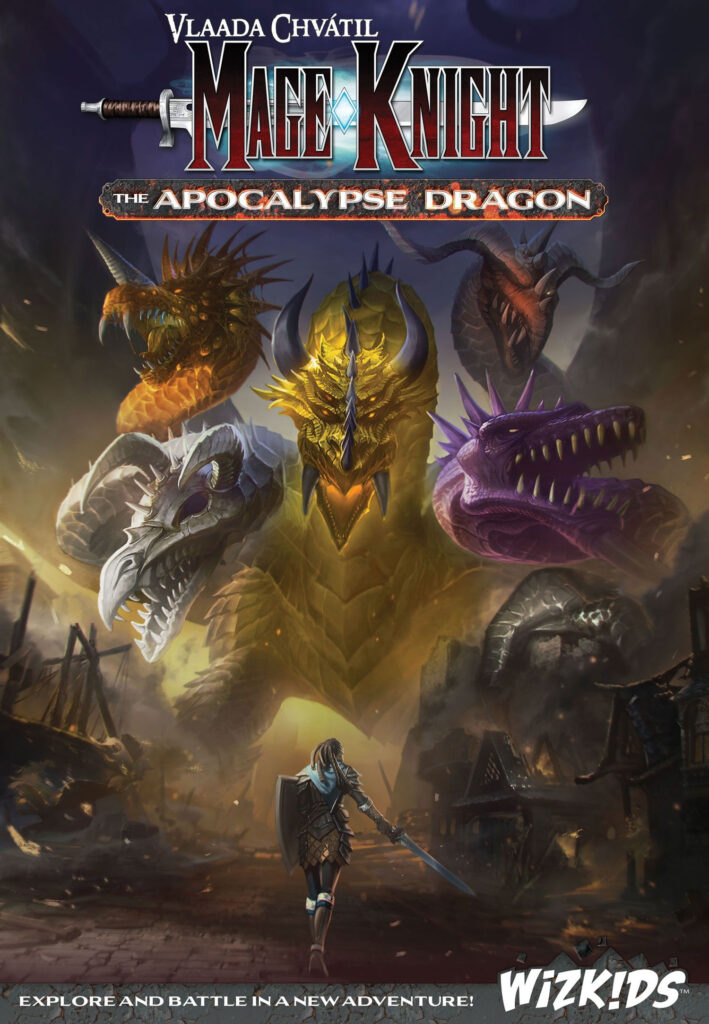
It’s been 8 years since Mage Knight Ultimate Edition was released, way back in 2018. That was supposed to be it. No more content, everything in this one enormous box. But then it just kept selling. And selling! And selling! And all that treasure awakened a terrible Draconic Power. Now the Apocalypse Dragon is wreaking […]
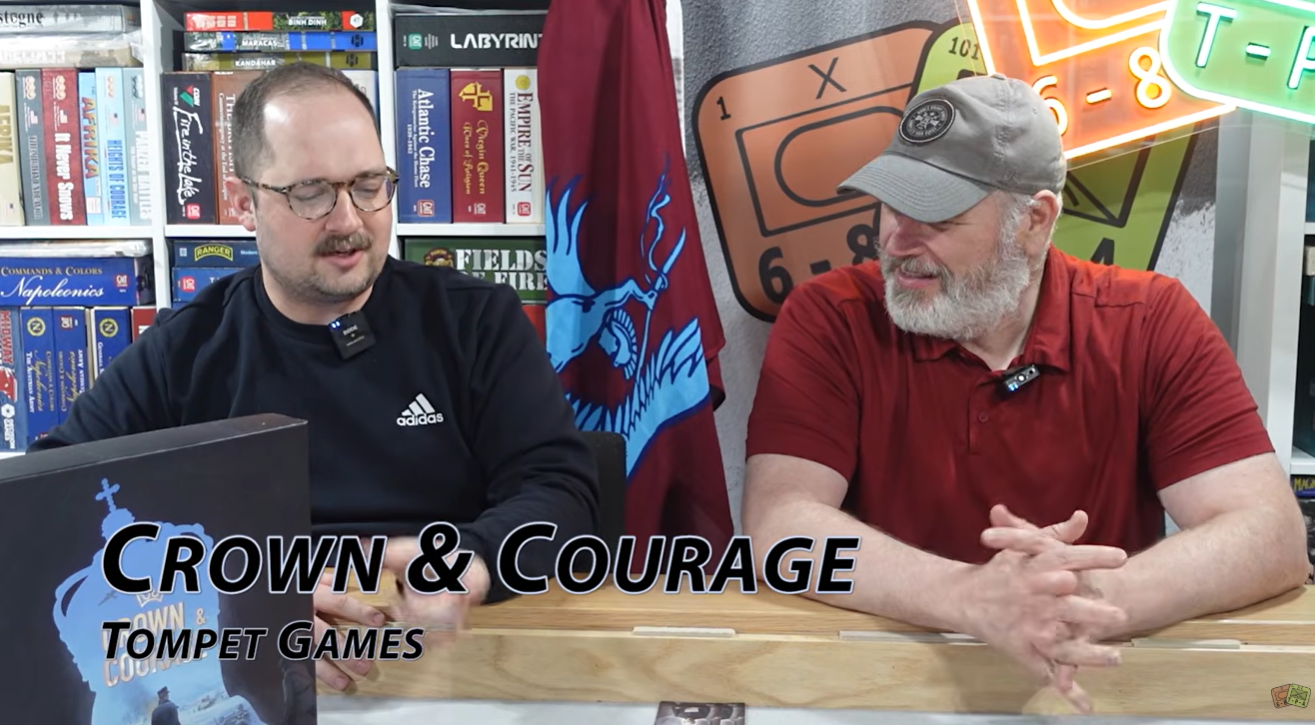
We have played 2 of Tompet Games’ previously released games with the only not having been played called Kill the King from 2016. First was Donning the Purple, which is an asymmetrical king of the hill game with a bit of worker placement that deals with the players managing the glory of wealthy and powerful Roman families, and their second game called Halls of Hegra, which is a solitaire-only wargame in the same vein as Euro-based games such as Robinson Crusoe, This War of Mine and Dead of Winter. The mechanics include worker placement, bag building, and area control/tower defense and the goal of the game is to survive wave after wave of German troops as they assault the secluded mountain fortress at Hegra.
Both of these games are excellent and they are now embarking on their fourth game called Crown & Courage that tells the story of the German invasion of Norway in 1940 and the royal family’s defiance and ultimate escape from the country to avoid capture and funding of the German war machine.
The Kickstarter campaign is set to launch on Tuesday, June 2nd and you can learn more about the project by visiting the Kickstarter game page at the following link: https://www.kickstarter.com/projects/tompet/crown-and-courage
-Grant
(Also April, which didn’t have many because …. I was busy).
Arnold Kling discusses the Moral Dyad.
Bryan Caplan wrote an RPG one-shot called “Badger and Skinny Pete,” based on the characters from Breaking Bad?! (Discovered in a profile of Dwarkesh Patel)
A thorough comment explaining why price transparency in health care is nigh impossible.
The Illuminati game in real life might be stranger than the game. Sure, the CIA controls the Orbital Mind Control Lasers, but you’ll be surprised who runs the Weather Satellites! Do Fungi control the weather?1
Every Frame a Painting (with TCM) — Ozu in Color. EFAP (With Criterion) — The Visual Comedy of Isle Of Dogs.
I played HF4A solitaire and wrote a summary on BGG. (Part 1, Part 2)
I had noticed a bunch of AI videos on Youtube (I no longer trust new channels) but it’s even hit Sumo. Spiffy calls them out. But if people think there is money to be made creating slop in such a niche product, I assume that’s another marker as to how cheap video creation (etc) has become. Incidentally, I remember that Neal Stephenson predicted that the internet would be overrun with slop in Anathem, and Fall, or Dodge in Hell2.
Corporate Sanity? Part 1 — Is Agile finally being sent to a farm upstate? (One can hope). Some signs in the Fidelity re-org.
Part 2 — Bolt CEO fires entire HR team for “creating problems that didn’t exist.” (There was one company I worked for that I considered quitting on day one, the HR dept was so messed up …. I was still considering it when the founders fired the head of HR and read the rest of them the riot act3).
A Spa …. for stuffed animals. (Stuffed animal cleaning and repair).
A Peter Watts talk from 8 years ago …. the part from 15:00ish to 24:00 ish where he talks about writing Blindsight were of particular interest if you’ve read the book (but all of it was of interest to me).
Anton Petrov covers the recent advances in Project Ceti (decoding whale language) …. including when unrelated Sperm whales were captured (video and audio) coordinating helping midwife a birth.
Philosophical ideas that were behind their time (in that, you are surprised how late it was proposed).
Japan runs out of Robot Wolves in Fight Against Bears. I await the Guillermo del Toro movie. (A decade ago, I would be awaiting eagerly, but now … eh).
I’ve never heard of Jon Peterson, but he’s an expert on the history of wargames and RPGs? An interview with him — What Playing Games can teach us about simulating the future.
In many languages, the word for “night” is the letter “N” plus the word for “Eight” (give or take).
The Modern Passport System has eliminated Fraud, Forgery …. and heroes who bend the rules to save lives.
RIP Christian Freeling (abstract game designer).
︎︎︎
Sample the wide range of creative works by these honored designers
by Steph Hodge
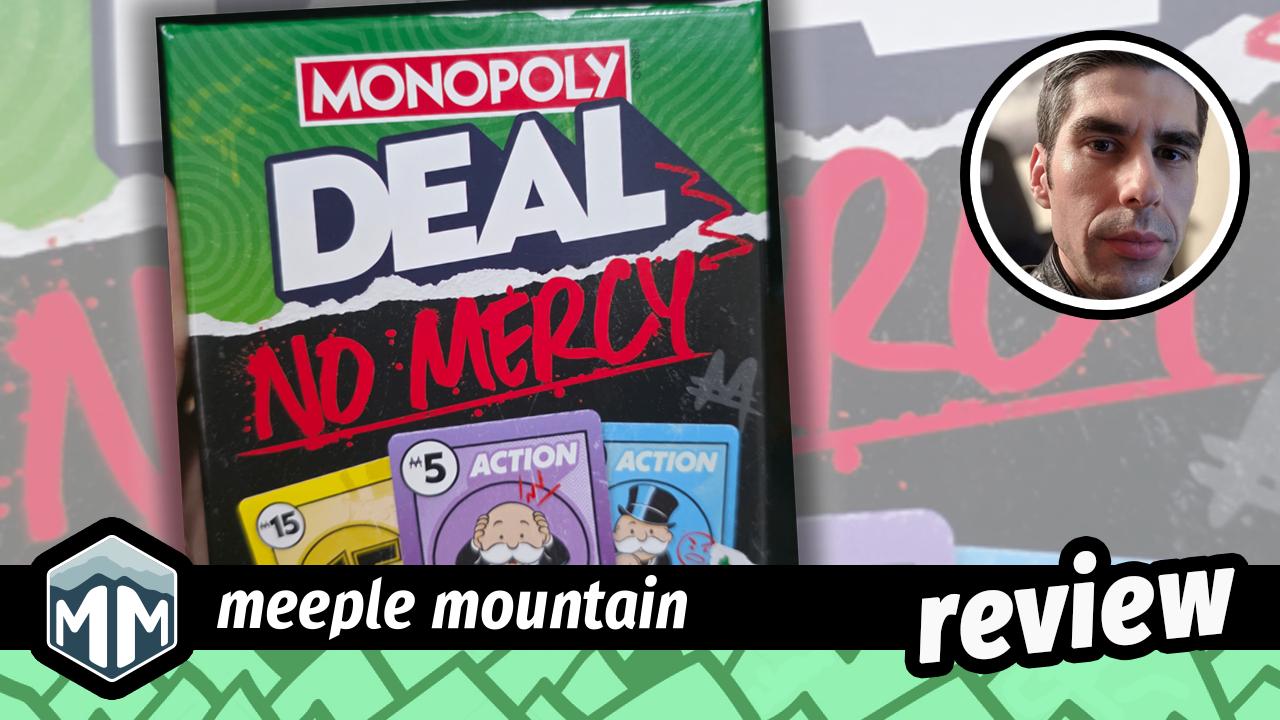
Gen Con quickly approaches, and I have already gotten a bunch of emails promoting their August and Summer releases. Here are just a handful of games coming soon!I have a secret to tell you. I like Monopoly Deal. Not love, not champion, just like. In the crowded basement of casual card games, it earns its keep. Put it this way, given the choice between Monopoly Deal, Exploding Kittens, and UNO, Deal is getting picked every time.
Yet there is a trend quietly taking over the casual card game space where publishers are releasing meaner, nastier versions of their existing games. UNO Show 'Em No Mercy, Flip 7 with a Vengeance, and now Monopoly No Mercy are all cut from the same cloth. More take-that and suffering for the people sitting across from you. Where this trend is coming from, I genuinely have no idea.
The goal hasn't changed from the original. Collect three complete property sets, build your own portfolio while raiding everyone else's, and be the first to get there. What has changed is the action cards, some of which would qualify as war crimes in certain jurisdictions, and the addition of debt chips.
Debt chips are the most radical departure from the original formula. Money flows in and out fast in Monopoly No Mercy, and there will be moments where you simply cannot cover what you owe. That is…
The post Monopoly Deal No Mercy Game Review appeared first on Meeple Mountain.
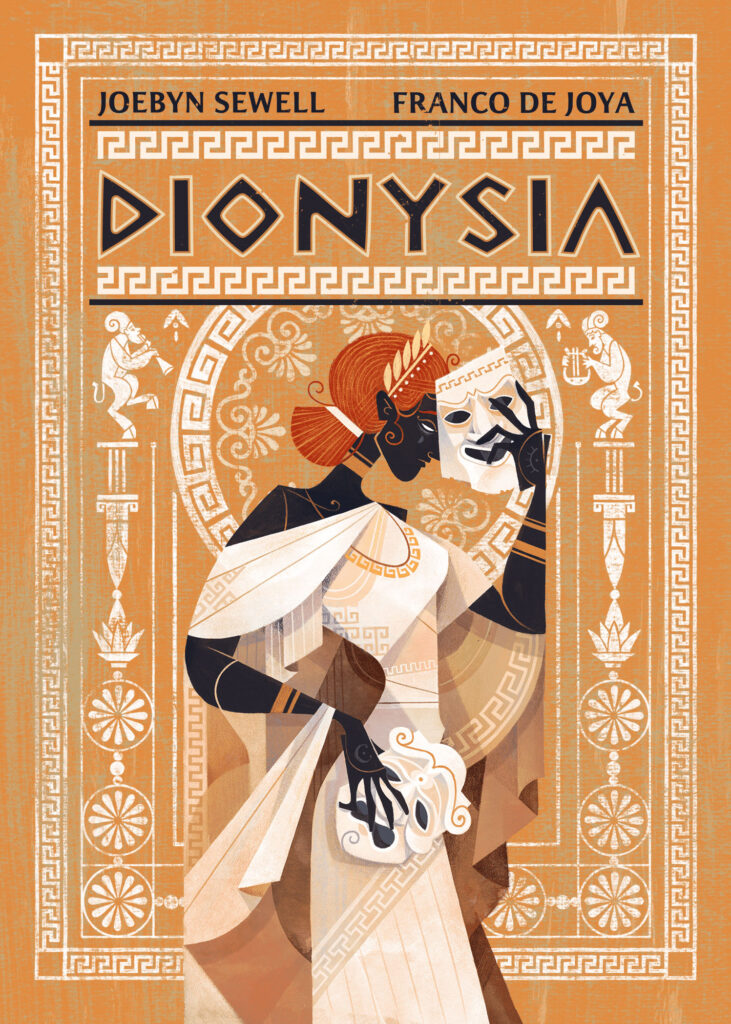
Western theater traces its roots back to Ancient Greece, with famous titles including Antigone, Medea, and Oedipus entertaining audiences with fun plotlines of suicide, infanticide, and incest/murder, respectively. We’ve come oh-so-far since then, with the likes of SpongeBob SquarePants the Musical gracing the most esteemed stages. Well, now, dear gamer, it’s your turn to create […]
An Impossible War: The First Carlist War in the North, 1834-1838 from Bellica Third Generation is a block wargame that recreates the First Carlist War in the North of Spain which was a civil war between the Carlists who supported the succession of the late king’s brother Carlos de Borbón and the progressive and centralist supporters of the regent Maria Christina acting for Isabella II of Spain who were referred to as the Liberals. The game uses blocks representing units but also includes counters and uses cards. I was able to play the game about a month or so ago with Francisco Ronco who owns the publishing company Bellica Third Generation and very much enjoyed the game and how it represented this interesting struggle.
In Action Point 1, we took a look at the Game Map, discussing the point-to-point movement configuration, the various spaces and the delineation of the Carlist versus the Liberal Zones, as well as explained the use of the Rest of Spain smaller map. In this Action Point, we will examine the units available to both sides and cover the importance of Supply.
Units
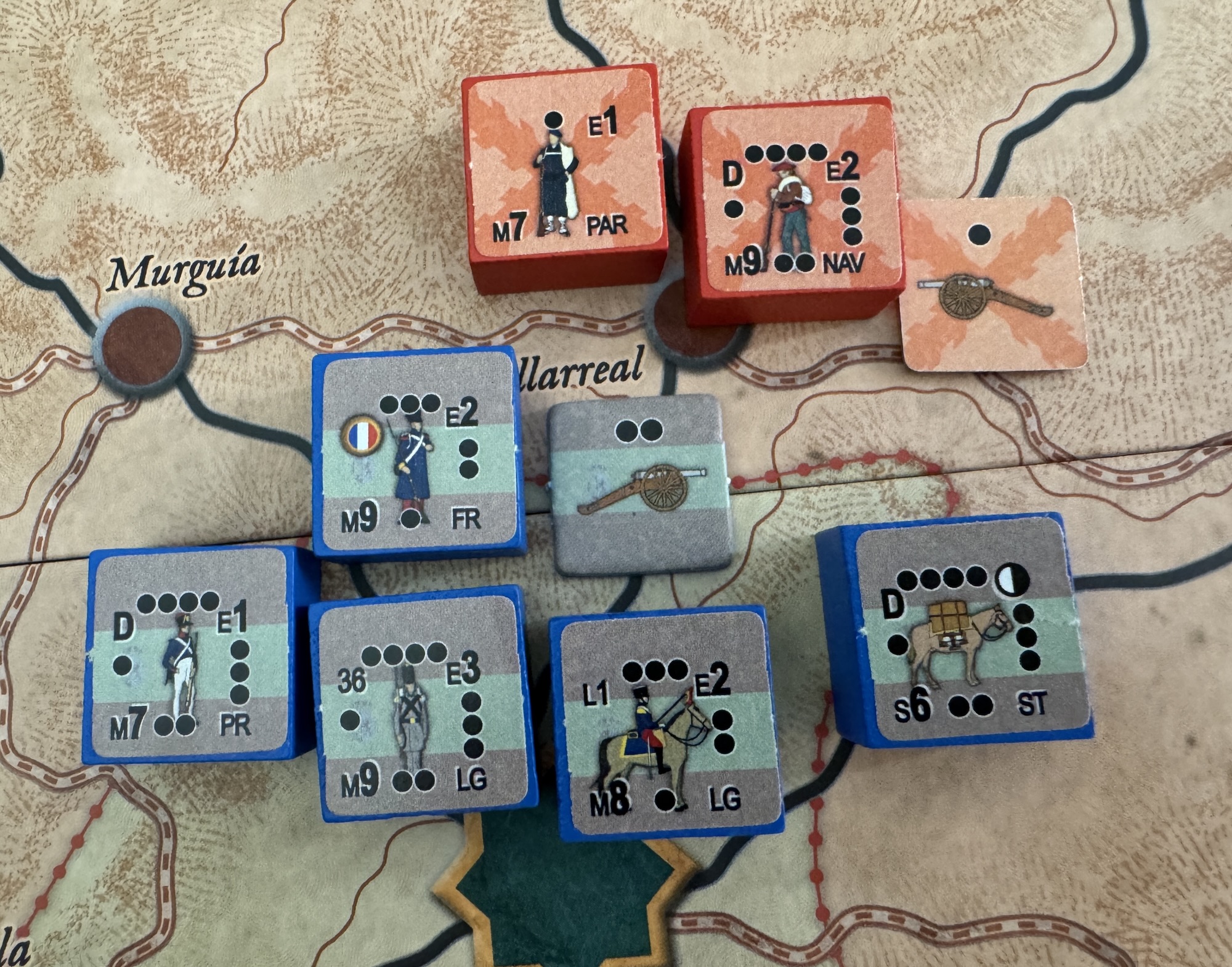
Units in the game represent Carlist (red) and Liberal (blue) armed forces, as well as the logistics needed for these troops to operate in hostile territory. Most of the units are wooden blocks including Infantry, Cavalry, and Supply Trains but there are also cardboard counters representing Artillery, both Field and Mountain, and Knapsack units, which are limited and temporary supplies that are transported by the soldiers themselves.
Let’s first take a look at the scale of the game and the units. With Infantry, a single Strength Point is roughly equivalent to a battalion consisting of between 500 to 800 fighting men. The only difference in the Infantry scale between the sides is a Carlist Partida unit, which represents a variable number of local guerilla fighters who are loosely organized in the amount of about a hundred men. For Cavalry, a Strength Point is equivalent to a squadron consisting of about 100 horsemen. For Artillery, a Strength Point is equivalent to 1 or 2 batteries made up of between 4 to 12 cannons of different calibers. The Supply units for the game are a very interesting and granular approach to supply and I very much enjoyed the juggle of keeping these units in good shape and with large moving armies. A Supply Train, which is represented by a block unit with the picture of a pack horse on it, represents a group of carts and pack animals that transport the needed supplies to keep an army in the field including food, munitions, and baggage. On a smaller scale are the Knapsacks that represents the food and munitions carried by the soldiers themselves.
As a Block Wargame, the Infantry and Cavalry Blocks used have various dots located along the edges of the blocks. Some blocks have 4 steps while others have less but usually no less than 3 steps. The exception to this general rule is the Partida units that only have 1 step. The current combat strength of the units determines how many 6-sided dice will be rolled in combat. During combat, for each hit that a unit receives, its strength is reduced by 1, which is shown by simply rotating the block 90 degrees counterclockwise. If a block is reduced below 1 strength then it will be eliminated.
Supply Train Blocks also have pips located on the block which represent the units ability to provide supply to other units. When the Supply unit provides supply to friendly units located in its space, its strength will be reduced by 1 pip by rotating the block 90 degrees counterclockwise. If the block is reduced below 1 strength then it is eliminated. No dice are rolled for a Supply Train in combat as it is solely a logistics unit rather than a combat unit. Supply Capacity is indicated on the units by the letter “S” and a number, such as S6 or S2. The number is the amount of friendly Infantry and Cavalry units that a Supply Train or Knapsack can supply during the Supply Check. A Supply Train with S6 can supply up to 6 friendly Infantry and Cavalry units in its space. A Knapsack with S2 can only supply a maximum of 2 units
Artillery counters show the current strength with the number of pips on the visible side of the counter. The strength determines how many dice are rolled in a Skirmish and how many points of Artillery it will contribute to
a Battle. Artillery units do not receive hits in combat, but they can be eliminated or captured if their side is defeated.
Now that you know the makeup of the units and the various forces represented, let’s take a very quick look at the statistics of each side’s combatants. Before we go any further, I am very hesitant to provide these details as I have gone over them about 10 times and am sure that I miscounted or left out certain units and their abilities. But, this look should give you an overall feel for the differences between the units and their general fighting abilities.
Carlist Units
The Carlist player will have access to a total of 26 units. These include 4 Cavalry, 21 Infantry, amongst this number are a total of 3 Partida units, and 1 Supply unit. The Effectiveness Rating for these units, which as described above equates to their fighting prowess with the higher the number the more likely they are to hit in combat, are shown in the below table with 5 units with an ER1 (20.0%), 16 units with an ER2 (64.0%) and just 4 units with an ER3 (16.0%). Keep in mind that Supply units do not have an ER as they are non-combatants.
Liberal Units
The Liberal player will have access to a total of 48 units. These include 10 Cavalry, 35 Infantry and 3 Supply units. The Effectiveness Rating for these units, which as described above equates to their fighting prowess with the higher the number the more likely they are to hit in combat, are shown in the below table with 12 units with an ER1 (26.6%), 29 units with an ER2 (64.4%) and just 4 units with an ER3 (8.9%). Keep in mind that Supply units do not have an ER as they are non-combatants.
By way of comparison, you can see that the Liberal Units have a slightly better average Effectiveness Rating (1.82 per unit) as compared to the Carlist Units (1.64). This difference is a bit deceiving though as the Carlist player actually has the same amount of ER3 units (4 for the Carlist player vs 4 for the Liberal player) but as a percentage of their total units they have 16.0% of their units as ER3 as compared to just 8.9% ER3 units for the Liberal player. This means that the Carlist units are a bit better and will generally have better units making up their forces than the Liberal player in any given battle.
The real comparison, and where the difference between the 2 sides stands out, is in the area of Morale. Morale is indicated by the letter “M” on the units and is shown as a number, such as M7, M8 or M9. This Morale number is the maximum result of the sum of 2d6 that gives a success in a morale roll. Each time during an activation that a unit receives 1 or more hits, it must then roll a Morale check. Morale checks are only made in Battle and never in a Skirmish, Assault, Pursuit, or Rout. If the Morale check fails, the failing unit will immediately be moved to the Demoralized Units Box. Morale is also key for Infantry that are being charged by Cavalry as they will make a Morale check and if they succeed they can initiate a counter charge. If they succeed the check then the attacking Cavalry will be spent and do no damage but if failed the attacking Cavalry unit fires and adds +1 to its Effectiveness Rating.
The Liberal player has an Average Morale value of their 45 units of 7.97 as compared to the Carlist player Average Morale value of their 25 units of 8.76. While not a huge difference, this slight edge to the Carlist player means that their units will be able to more often counter charge and stay on the battlefield as they will not break and become Demoralized as often.
Also, if you remove the 3 lowest value Carlist units, the 3 Partida units who each have a Morale Value of 7, this average becomes much higher at a 9.0 and really starts to show the significance of the Carlist advantage in Morale. In my play with Franciso Ronco, I felt like he definitely had the advantage on the battlefield, at least value wise in the area of Morale, but all it really took was for 1 of his better units to be demoralized and the odds became much more even.
The other advantage that the Carlist units hold is that they are typically fighting on their home turf and supply is much less stringent on their forces. The Liberal player must make consistent campaigns in the Carlist Zone of the board and this will require them to invest more into Supply units such as Supply Trains and Knapsacks.
I very much enjoyed the asymmetry between the Carlist and Liberal forces. It made for a very interesting tactical challenge for both sides as they have to play to their strengths and not get too overly concerned with the numbers. The Carlists will be much more mobile in their defense and look to exploit every gap in a supply line to move around and stay away from the numerically superior Liberal forces, whereas the Liberal player will have to move more methodically to take outlying towns and settlements to be able to shore up their lines and create less opportunities for end arounds by the Carlists. The disparity in the forces was a very interesting choice by the designer David Gómez Relloso and I am sure is reflective of the historical reality of the First Carlist War.
If you are interested, we posted an interview on the blog with the designer and you can read that at the following link: https://theplayersaid.com/2025/07/14/interview-with-david-gomez-relloso-designer-of-an-impossible-war-the-first-carlist-war-in-the-north-1834-1838-from-bellica-3rd-generation/
I also was able to shoot a fairly short video summary of my game play with Francisco Ronco who is the owner of Bellica Third Generation and you can watch that at the following link:
In Action Point 3, we will take a look at the Carlist Uprising Phase and what it means for the game.
-Grant
BGI 421 The One About Small Publishers Getting Tolkien Licenses
Board Games Insider – Join our Guild on Board Game Geek Guild | Like us on FB
Social media:
Ignacy Trzewiczek / Portal Games: website | FB | Twitter | Youtube
Corey Thompson / Above Board TV: website | Youtube
Stephen Buonocore / “The Podfather Of Gaming”: website | FB | Twitter | Youtube
Intro Music: Happy Rock – Bensound.com
Use the seven deadly sins to achieve victory in Compile: Main 3
Another big unboxing! Peter checks out everything for Grimcoven, the new boss battler from Awaken Realms!
Before I say anything more, yes, someone did point out to me I pronounced ‘Grimcoven’ incorrectly throughout this entire video, and I’m deeply ashamed about it. We all make mistakes! But anyway, there’s a lot of exciting stuff to check out here, in my first video about this challenging new game from Awaken.
Grimcoven is a gorgeous looking game with enough boss battling goodness to last you many years, so let‘s get into it!
Don’t forget to download my rules & reference (and of course it’s also on Tabletop Codex), and good luck!

It’s been thirteen years since the original release of Jamey Stegmaier’s Euphoria: Build a Better Dystopia. I would say it doesn’t feel like thirteen years, but I’d be lying. Between the pandemic and five or six successive generations of board game iteration, it’s been an eternity. Long enough for a retrospective, certainly.
Speak of the devil. Euphoria: Essential Edition is a remake of the original game, plus some of the stuff from the expansions, minus a few love handles and splotchy moles. Let’s see how the old dystopia has held up after all these years.
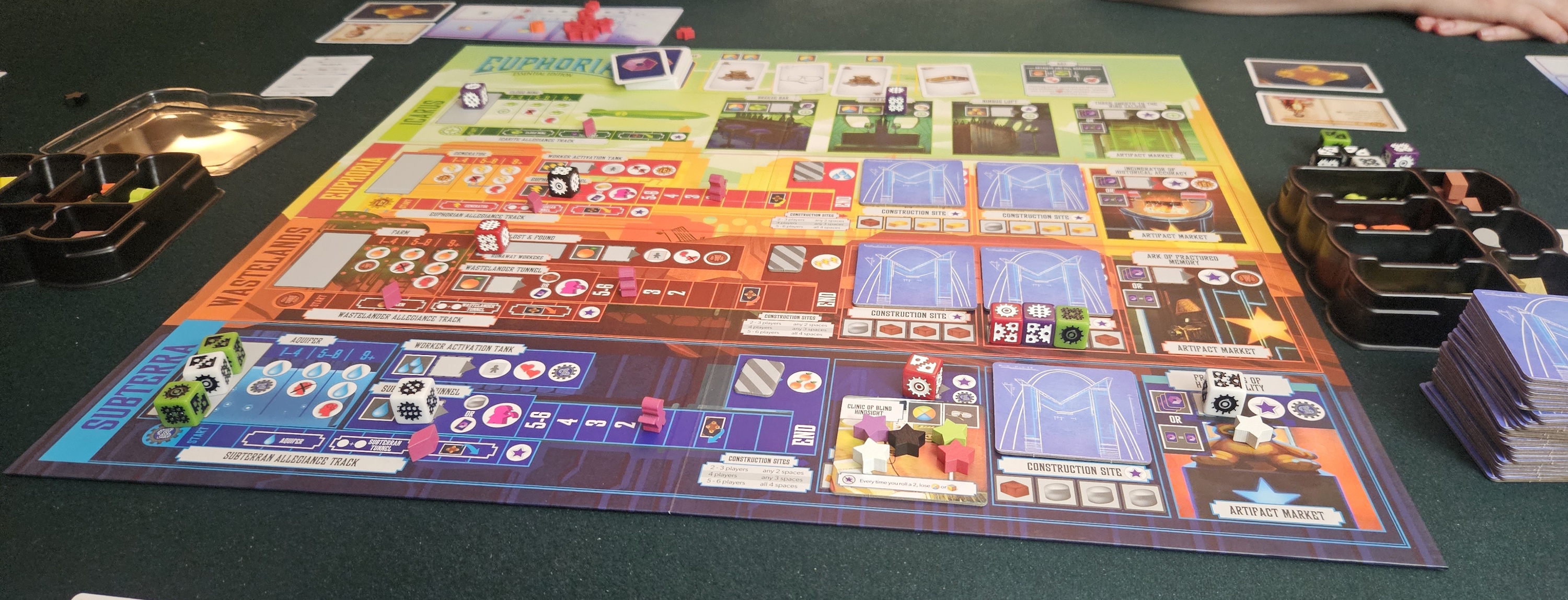
The new board, not quite the same as the old board.
Short version, there’s rebar showing through the concrete.
As before, Euphoria is about your efforts to thrive in a dystopian society. Relatable. Maybe that’s why the intervening decade hasn’t flown by. But I digress. In Euphoria’s case, that dystopian society is divided into four strata, each offering different spaces for your workers to run errands. There are the Euphorians, folks who generate electricity by marching on hamster wheels, Wastlanders who labor in orange groves, Subterrans who pump water through the cracked bedrock, and Icarans… Icarids? Icaruses? Whatever. These guys cook future-meth for keeping everyone’s workers drowsy and compliant.
The status of those workers is never far from mind. At the time of the original game’s release, rolling dice to determine the relative knowledge of one’s workers was a clever touch. If nothing else, it functioned as one of the hobby’s earliest meta-commentaries on the blank slate that was the worker-placement worker. Roll too high, and one of your workers gets wise to the situation and flees from your grasp. Roll too low, and…
… and there’s no penalty for rolling too low. What you really want is to roll doubles. That way, you can spend some morale to place an extra worker, earning two turns in a single go.
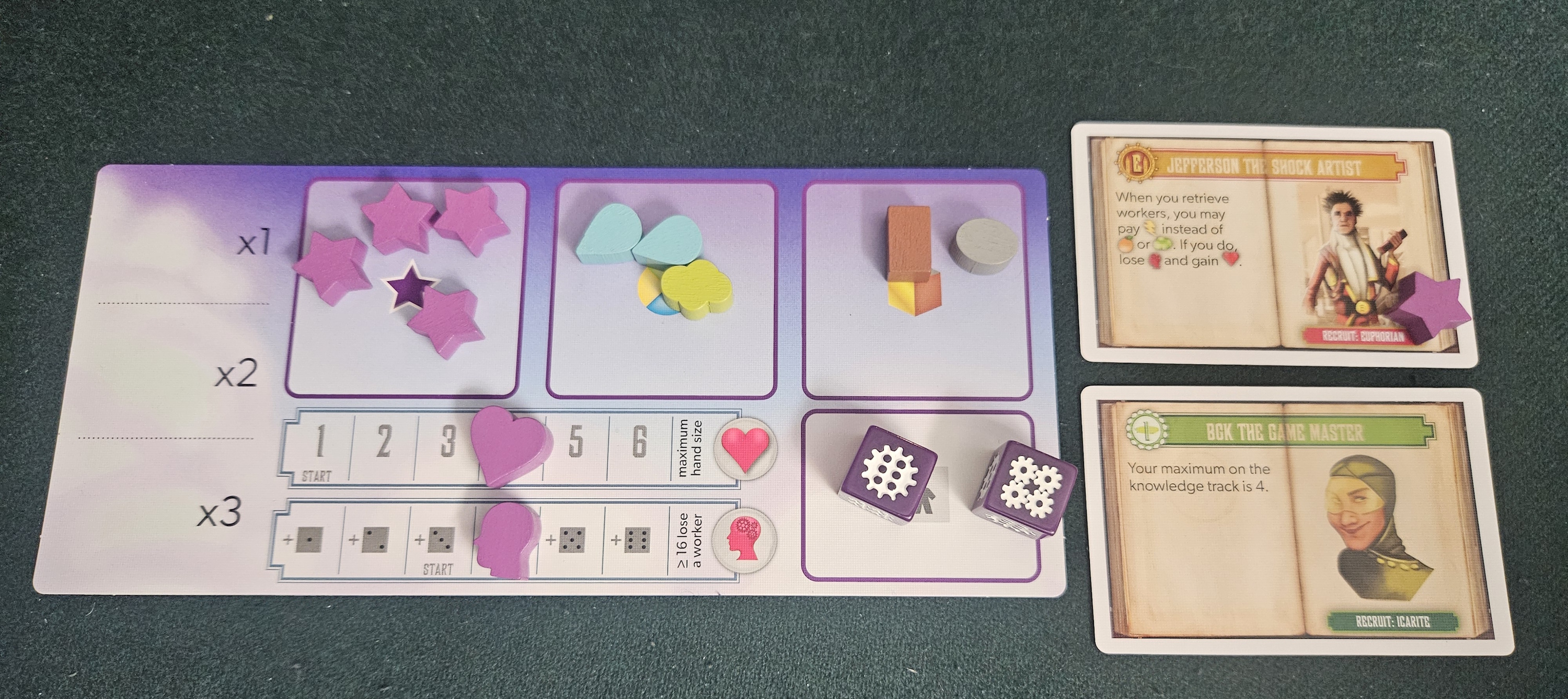
Euphoria: meek in the streets, freak in the spreadsheets.
At the time of the original game’s release — there’s a phrase I’ll probably say more than twice — it was easier to overlook the chanciness of the whole thing. Sure, rolling high means losing a worker, and rolling doubles means earning a twofer. But rolling low, I suppose, means you can send a worker to one of the game’s resource production zones without worrying about them learning the shape of their culture. Except, wait, that’s another benefit for rolling low. Darn it.
Okay, so Euphoria is full of luck. Always was, still is. The problem isn’t so much that luck is the sole determiner of whether you succeed, but rather that it’s just enough to prove frustrating. As a genre, Eurogames included more chance in 2013 than they do today. Personally, I miss a bit of chance. But in general, those earlier forms of chance were about mitigation. Even placing towns in Settlers of Catan was about spreading around the odds so that you’d always earn something. In Euphoria, the system feels out of place, and not only among the determinists of 2020s nu-euros.
But let’s set that aside. How has the rest of the game borne the timelapse?
Again, the short version is that it works perfectly well, but never quite eases its grandfatherly creaks and groans. Most actions are tit-for-tat resource conversions. First you send a worker to a resource generator to earn one or two commodities. Then you send them to a tunnel to spend a commodity for a building block. Maybe you spend a wad of commodities for an extra worker. Then you build special markets, which let you exchange commodities, blocks, and artifacts for stars, the game’s victory condition. Repeat. Repeat. Repeat.
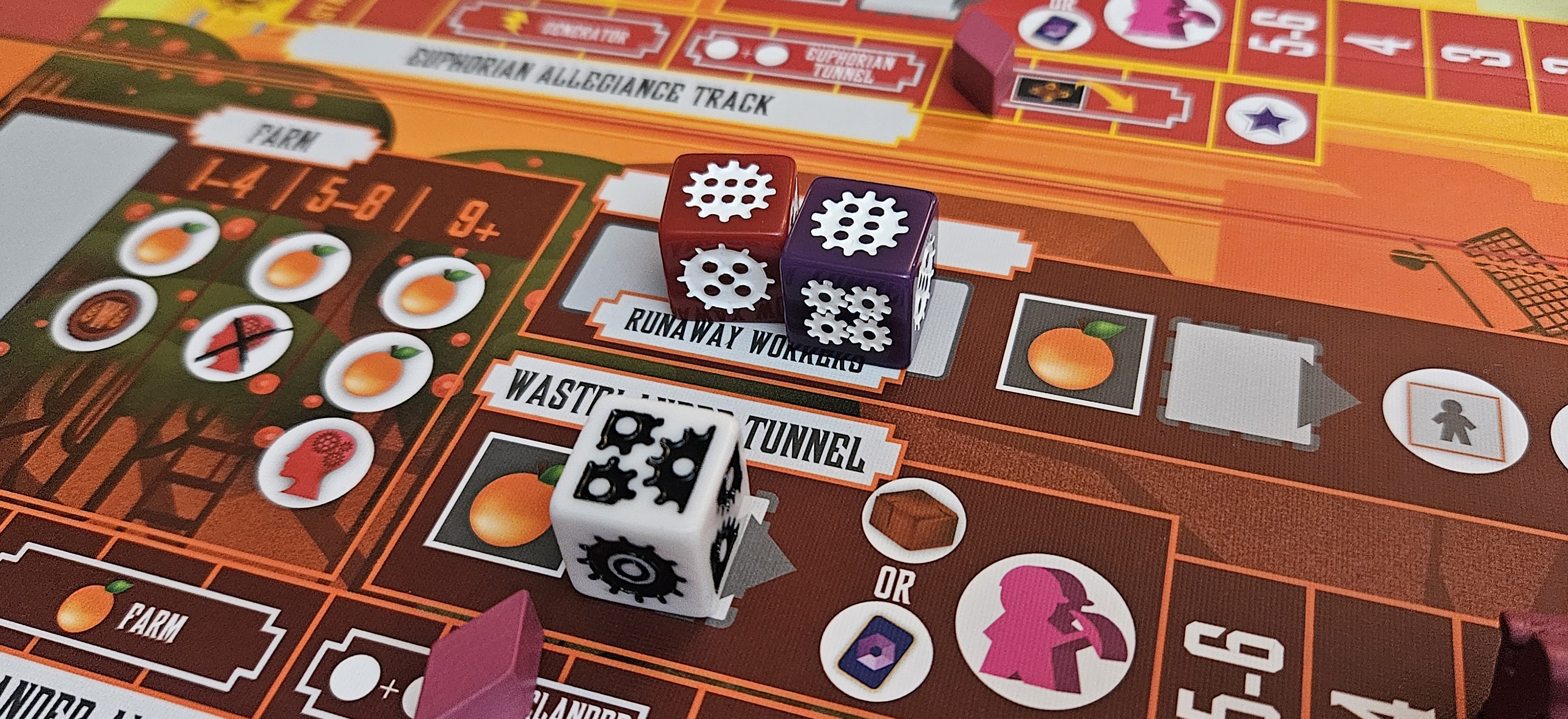
“Runaway workers” sure is a loaded term.
It doesn’t help that the Essential Edition sometimes comes across as more of a Pruned Edition. The board is more legible, but has shed the original map’s sense of place. Just look at that perfect goofball illustration. The new map feels like a spreadsheet setup for a spreadsheet game. Which is fine, as those things go. This is a resource-conversion worker-placement game, after all. You could even make the argument that this new edition has shed the original game’s pretense, including the ethical dilemma cards that, let’s face it, didn’t always add much to the game systems-wise. But, again, they mattered to Euphoria’s sense of place, the notion that players were being forced to compromise their values in order to get ahead. Thanks to the intervening years, a few subtractions, and this updated visual design, it’s easier than ever to see the wires and mirrors behind the illusion.
The remaining good parts are still as good as ever. For example, those markets. As before, building a market means spending a bunch of building blocks, not to mention putting your laborers in a holding pattern until other players join in. This created a certain degree of cooperation, one that could be turned against you at a moment’s notice. Having even a single worker hanging around at a job site is a real sacrifice, fostering opportunities for players to bicker and cajole. That’s great.
Furthermore, the markets themselves are nasty little things. When built, every player who didn’t contribute to its construction is forced to suffer a penalty until they pay a penalty at the new market. Sometimes these are negligible; other times they pose biting impositions that must be rectified as soon as possible. Or even both at once. The Theatre of Endless Monotony reduces how many commodities you earn, but only to a minimum of one. The Institute of Orwellian Optimism treats all your 1s and 2s as 3s when it comes to checking your dice for thoughtcrime. The Courthouse of Hasty Judgment makes it harder to spend artifacts for stars. That sort of thing.
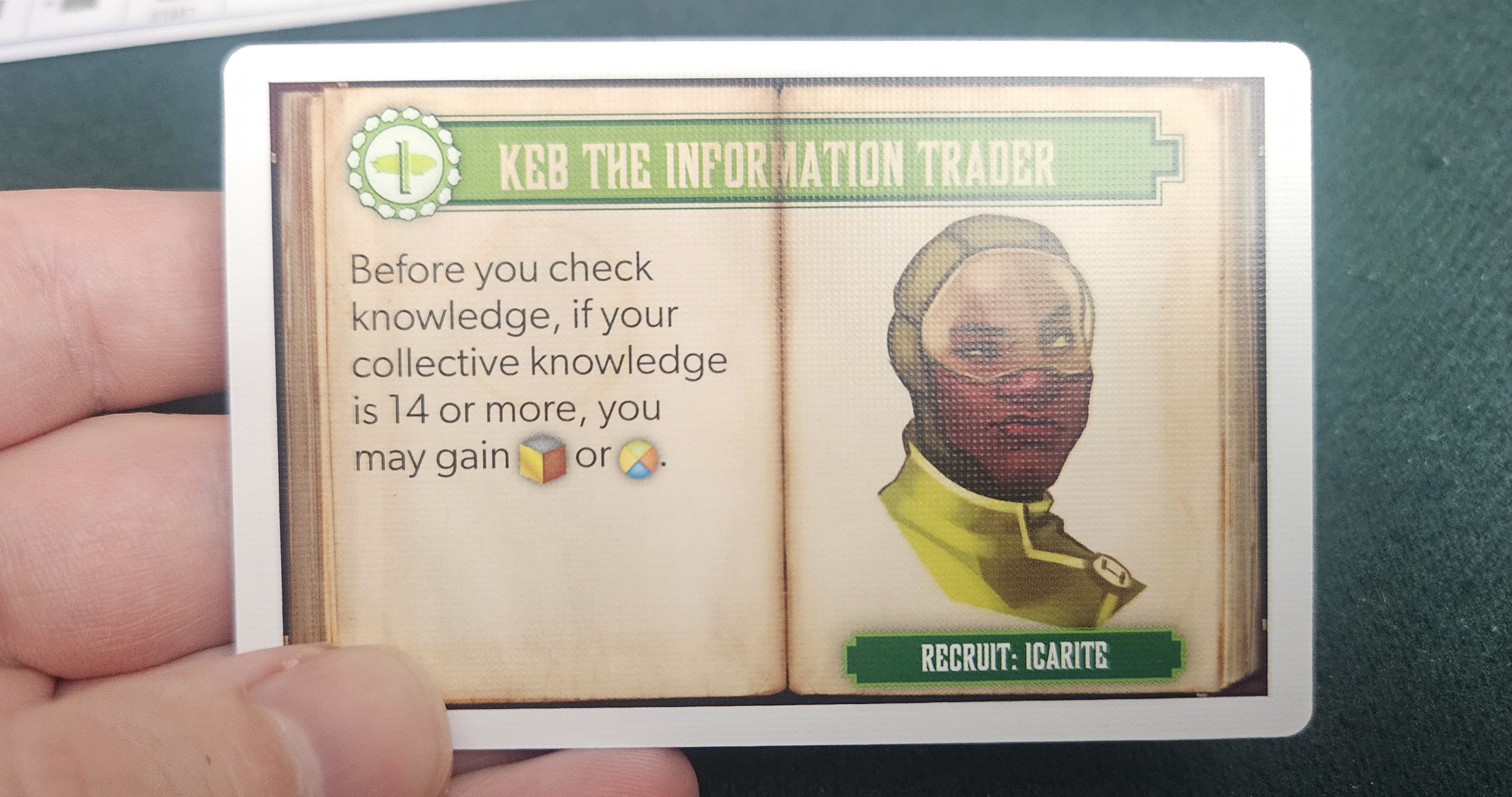
This guy is a cool dude.
There are some real whoppers in there, too. In one case, we revealed the Apothecary of Productive Dreams. This market prevents some players from sending workers to Icarus. At all. Which effectively locks them out of a full quarter of the board’s spaces. Worse, buying into an already-built Apothecary requires bliss, the very same drug peddled by the Icaroopsies. Not only were some players locked out of Icarus territory, this locking-out was effectively permanent. Was this a fair turn of events? Hardly. But it was interesting. Textured, we might call it. Abrasively textured, sure, but it was refreshing to play a game that would offer such overt penalties rather than ensuring everything ran smoothly all the time.
Between these and the heaps of recruit cards, there’s always something happening on the board. Some market being constructed (or ruining your day), some recruit tweaking the rules to your benefit, some haggling over at the construction site. That’s all great.
The downside is that it never quite breaks free of its shackles. Board games have largely moved on from worker placement, at least in such a straightforward cube-pushing sense. And Euphoria always feels like cube-pushing. Every segment of its dystopia is more or less identical to its peers. The same resources exchange rates. The same methods for hampering one another. The same costs at the artifact markets. And now those four segments are placed side by side so you can see just how closely they align.
In a sense, the Essential Edition is a worthwhile experiment because it highlights just how far game design has come over the past decade. But it’s only a worthwhile experiment for me, a total sicko for how board games change and develop over time. For somebody looking to spend their hard-earned cash, there are better options out there. If I’m going to place dice-shaped workers and suffer random consequences, I’d much rather play Connie Vogelmann’s Apiary, and that’s limiting our selection to titles from the same publisher.
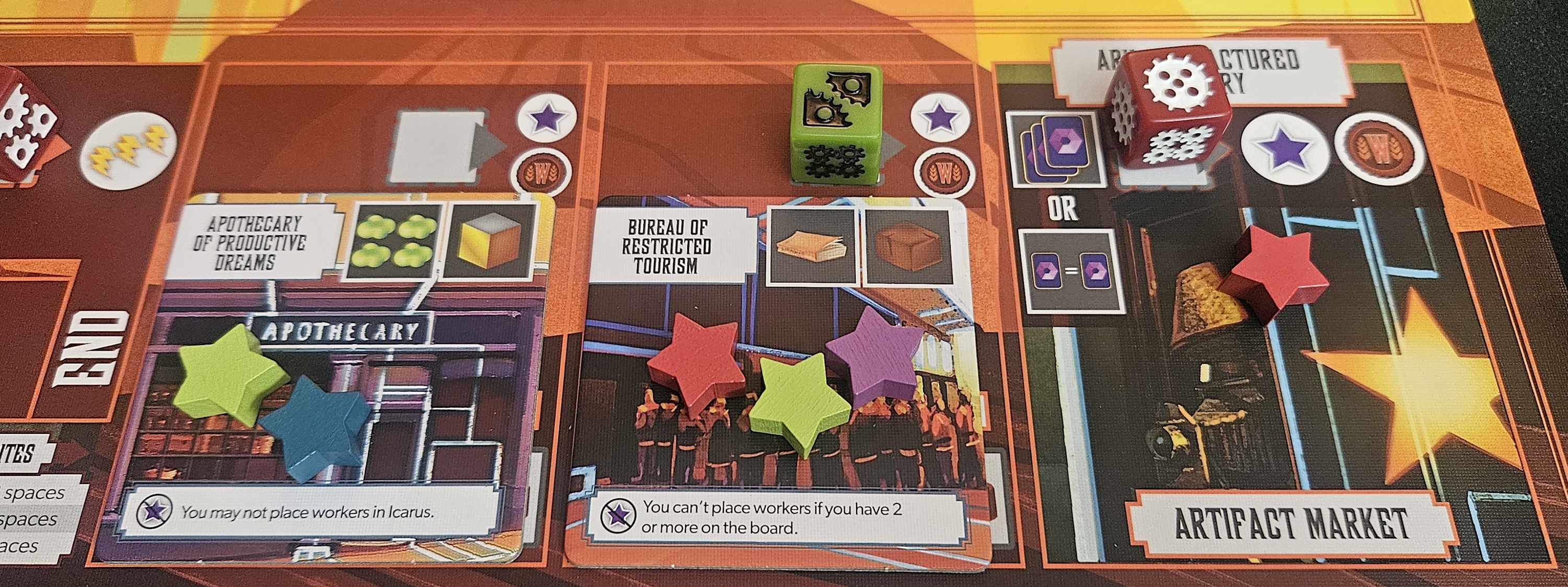
E:EE is full of little textures. Some of them are abrasive.
Because Euphoria has been left behind. By board games as an iterative artform. By our hobby’s collective taste in the role of chance. By an Essential Edition that leaves some of its most interesting ideas in the dustbin. By a culture that’s grown weary of dystopias.
Speaking only for myself, I think it’s time to tunnel through to the other side.
A complimentary copy of Euphoria: Essential Edition was provided by the publisher/designer.
(If what I’m doing at Space-Biff! is valuable to you in some way, please consider dropping by my Patreon campaign or Ko-fi. Right now, supporters can read my first-quarter update of 2026: the best board games, movies, books, and more!)
With this My Favorite Wargame Cards Series, I hope to take a look at a specific card from the various wargames that I have played and share how it is used in the game. I am not a strategist and frankly I am not that good at games but I do understand how things should work and be used in games. With that being said, here is the next entry in this series.
In case you didn’t know, I love Liberty or Death: The American Insurrection! This is my 2nd favorite volume in the COIN Series and is such a fantastic game filled with the history of my favorite historical period the American Revolutionary War. Liberty or Death was the COIN Series’ first foray into non-modern warfare and takes us to the 18th Century and the days of the Brown Bess musket, the 18 pound siege cannon and nice and tidy formations better suited for a gentleman’s war. The focus of the game is the struggle of the American Patriots against their mother British government as they have made their intentions clear to become independent with the Declaration of Independence. The game is a multi-faction treatment of the American Revolution, which includes the Patriots and their allies the French against the British and their reluctant allies the Indians.
Liberty or Death is a 1 to 4 player game focused on all aspects of the struggle including financing operations with Rabble Rousing, infiltrating British held cities to Skirmish, blockading major cities with the mighty French fleet, Raiding the frontiers with the Indian nations, the spread of propaganda to build support for the revolution, fort building and small scale battles. So, with this short description you can see that this game is not a “traditional” wargame but does contain some armed conflict. So a game about the American Revolution that isn’t focused on battle you say? How can that be? Well, I will tell you that this game is probably a perfect representation of the multifaceted struggle that wasn’t necessarily decided on the field of combat, but by the little actions of many behind the scenes characters. Yes battle will decide the control of major areas of the board and decide the fate of troops as they must be concerned about being in supply through a network of forts but the game is so much more than just rolling some dice and consulting a CRT!
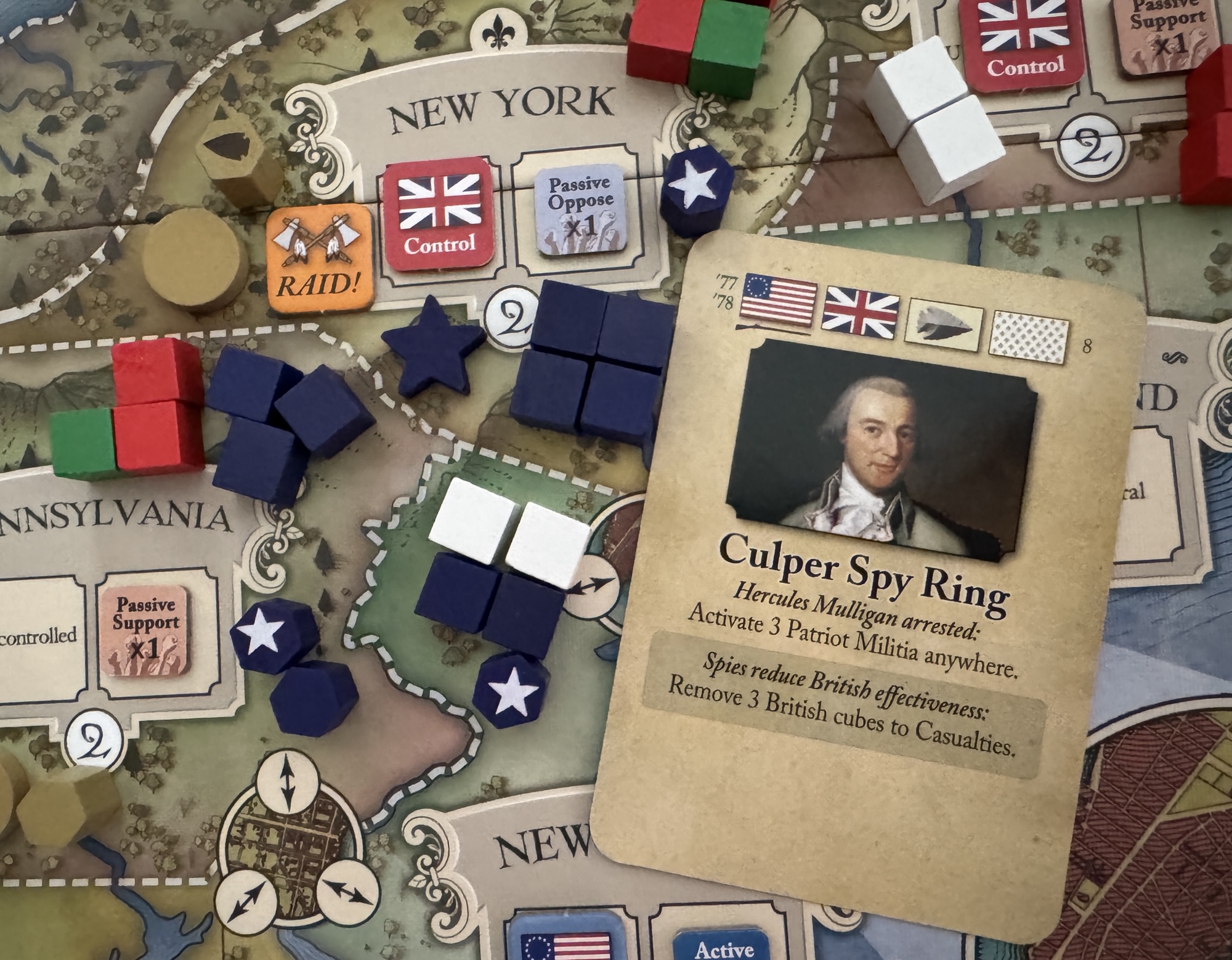
In today’s entry, we are going to take a look at a very interesting card called Culper Spy Ring. I very much enjoy the connection of this card to the history of the American Revolution as it deals with one of the more important aspects of the war being that of reconnaissance and spying to gain intel on the enemy’s plans and the makeup and disposition of their forces. The Culper Spy Ring card allows the British/Indian players to Activate 3 Patriot Militia pieces anywhere on the board. These pieces do not have to be located together in the same space but can be in 3 different spaces if the players chooses. This is a very powerful event as the Patriot Militia are generally only able to perform their actions if they are Underground meaning hidden from the British. Typically their Commands and Special Activities for things such as Rabble Rousing (create Opposition to Crown rule), Persuasion (get Resources) and Partisans (attack Royalist pieces), require at least 1 Underground Militia piece be in the space and typically requires that they be Activated or turned face up with their embossed star icon showing. The process of turning up these Militia pieces normally involves a British March Command into a space with Underground Militia but the process of removing them requires an additional step by taking either a Skirmish Special Activity or a Battle Command. This card allows for these turncoats to be discovered and then removed in a later action. If you also read the card above the action description you will notice that it says “Hercules Mulligan arrested”. Hercules Mulligan was an Irish-American tailor, spy, and founding member of the Sons of Liberty. Operating in British-occupied New York City, he used his high-end tailor shop to befriend British officers, gather critical intelligence, and covertly pass military secrets to General George Washington. Mulligan is credited with twice saving General Washington from capture or ambush. He sent secret messages, often via his trusted assistant Cato, warning Washington of planned British traps. I love the history here and am very glad that the design and development team gave a shout out to this little known American hero who risked his life to perform these spy activities in New York City.
The bottom half of the event is for the Patriot/French player and has an immediate powerful effect that can change the odds of an upcoming Battle or wrest control of a key province from the British at an inopportune time. The event simply allows the removal of 3 British Cubes from the board, consisting of British Regulars or Tories, and then placing them into the Casualties Box. This is a key action because it can cause the shifting of the delicate balance for the British between Combined Rebellion Casualties (CRC) versus Combined British Casualties (CBC). This difference is 1 of the 2 parts of the British Victory Condition and the CRC must be higher than the CBC. I also love the text above this benefit as it states “Spies reduce British effectiveness”. This is an homage to the critical work of these spy rings as they often lead to more beneficial and favorable Patriot outcomes to Battles as they were better prepared or knew the British plans before the battle event took place.
The Culper Spy Ring was an American intelligence network established in 1778 by Major Benjamin Tallmadge and General George Washington. Operating primarily in British-occupied New York City and Setauket, Long Island, the ring provided vital reconnaissance on British troop movements, notably exposing Benedict Arnold’s treasonous plot to surrender West Point. The network utilized a chain of trusted individuals rather than trained military spies from all walks of life. Some of the more famous spies in this vital ring included:
Agent 355: An anonymous female member within the ring whose true identity remains unknown, though she is credited with providing crucial insights
Benjamin Tallmadge (alias “John Bolton”): The spymaster and director of intelligence who managed the flow of information.
Abraham Woodhull (alias “Samuel Culper Sr.”): The primary gatherer of intelligence in Setauket, who oversaw the ring’s daily operations.
Robert Townsend (alias “Samuel Culper Jr.”): A Manhattan merchant and journalist who operated within British circles, collecting firsthand intelligence on the enemy.
Caleb Brewster: A daring whaleboat captain who transported the messages across the treacherous Long Island Sound.
Austin Roe: A Setauket tavern keeper who acted as the primary courier, frequently riding the 55 miles between Setauket and New York City.
The Culper Spy Ring is widely considered one of the most successful intelligence networks of the American Revolution. Its greatest achievements included preventing a surprise British ambush on incoming French forces in Rhode Island and securing the intelligence that led to the capture of British spy master John André. The secrecy maintained by Tallmadge was so effective that the true identities of the spies were not discovered by historians until the 20th century.
This Culper spy network was the feature of a television series on AMC called TURИ: Washington’s Spies that aired from April 2016 through August 2017 and spanned a total of 40 episodes.
The story of the drama covers events from 1776 to 1781 and features a farmer from Setauket, New York and his childhood friends who form an unlikely group of spies called the Culper Ring, which eventually helps to turn the tide during the American Revolutionary War. The series begins in October 1776, shortly after British victories, including the recapturing of Long Island and the Port of New York for the Crown, leaving General George Washington’s army in dire straits. The first episode opens with the following introductory text:
Autumn 1776. Insurgents have declared war against the Crown. Following a successful naval landing, His Majesty’s Army has forced Washington’s rebels into the wilderness. New York City serves as a military base of operations for the British. The Loyalists of nearby Long Island keep vigilant watch out for sympathizers and spies.
I very much enjoyed the tv show and loved watching each episode to see the hidden historical details of the Culper Spy Ring be revealed that have been discovered over the past few hundred years since the events of the American Revolution. Just an amazing example of a grass roots and loosely organized group of Patriots who risked their lives and families to ensure that the cause of Liberty prevailed.
In the next entry in this series, we will take a look at Rome Offers Settlement from Barbarians at the Gates, The Decline and Fall of the Western Roman Empire 337 – 476 from Compass Games.
-Grant
by David Gordon




/pic9429176.png)


/pic8999350.jpg)
