❌

Lese-Ansicht

Woodrow Wilson (Presidential Ratings, #5)

We’ve been assessing the merits of political leaders in (more or less) democratic countries, illustrated by a single board game each, on this blog for a few years now. Today’s subject is another US president – domestic reformer turned foreign policy prophet Woodrow Wilson. And which game could be more appropriate for him than Versailles 1919 (Geoff Engelstein/Mark Herman, GMT Games)?

If you want to read more ratings of historical leaders like this, I strongly recommend you subscribe to the blog – all new posts in your inbox right when they go live!

The Rating System

Some caveats ahead: The presidents will be rated by the knowledge of their time. If they or their contemporaries could not have known about the effects of something, I will not use my hindsight to mark it as a mistake of theirs. The assessment is focused on their conduct as president, but includes their life after holding the office (in which they will still be regarded in the public eye as (ex-)presidents).

Now, to the system itself: There are three policy field categories (foreign, domestic, and economic policy) and three more general ones (vision, pragmatism, integrity). A president can earn from one to five stars in each category (for a total sum of up to 30). In detail, the president is assessed as follows:

Foreign policy: Did the president increase US influence in the world and the security of Americans at home? Did the president wield US power responsibly and with positive results for the regions affected (the latter counting for a greater deal in times of US power being great)?

Domestic policy: Did the president increase the liberty of Americans to express themselves and to participate in the political process? Did the president promote domestic security and shape the framework for fair justice dealing with offenses?

Economic policy: Did the president facilitate the prosperity and economic security of Americans (including in the mid- and long-term)? Was the president’s economic policy based on mutual benefit of those involved or did it unduly burden one side?

Vision: Did the president have an idea of what the United States and the world (the latter counting for more in times of US influence being great) should look like beyond the immediate future? Did the president’s policies steer the United States (and, if applicable, the world) in this direction?

Pragmatism: Did the president succeed in seeing his policy through from inception to completion? How well did the president manage the support from Congress, society, the administration, the media (the latter counting for more in more recent years)?

Integrity: Did the president understand the office as a means to benefit himself, special interest groups, the entire country, or another community? Did the president respect the boundaries of the office?

Wilson’s Life

Receiving and Providing Education

Thomas Woodrow Wilson was born on December 28, 1856 as the son of a Presbyterian pastor in Staunton, Virginia. Wilson grew up in several states of the American South before, during, and after the Civil War. He would be the only American president who had been a citizen of the Confederacy.

Wilson became a lawyer, but found it not to his liking. Instead, he pursued graduate studies in political science with a dissertation on Congressional government at Johns Hopkins University. His PhD, awarded in 1886, makes him to this day the only US president with such an academic distinction. Even though Wilson had never bothered to take a trip from Baltimore to Washington, D.C., to see the object of his study in action, his dissertation was well received. Atypically for a southerner, he advocated for a strong federal government. At the end of his graduate studies, Wilson married Ellen Louise Axson, who came from a southern clergy family like himself.

Wilson’s academic career led him to teach at several universities. Eventually, he became president of Princeton University in 1902. He took the university out of the grip of Presbyterian traditionalists, appointed the first Catholic and Jewish professors, but worked vigorously against the enrolment of Black students. Wilson turned Princeton into one of America’s leading teaching and research institutions, fueled by the large contributions of outside donors which he attracted. At the same time, Wilson advocated – in often fiery rhetoric – for the independence of the university; a contradiction he could never resolve. Both his administrative reforms and his powerful oratory aroused interest in him political circles; and Wilson put out feelers to the Democratic Party.

To the Presidency

The Democrats, perennially shut out of national office since the Civil War, were in dire need of fresh candidates. Wilson seemed like an ideal fit to party bosses due to his reputation as a natural conservative with progressive credentials. He ran for governor of New Jersey in 1910 and was the first Democrat to be elected to the office in 18 years.

Woodrow Wilson was consistent in his support for labor reforms.

Anyone who believed Wilson to be a conservative at heart was swiftly disabused of the notion once he took office. He directed his energy to labor, electoral, and education reform. Within his first two years in office, Wilson had gained nationwide fame as a progressive leader.

That made him a contender for the 1912 presidential election. His campaign was ably run by the Texas businessman Edward M. House, and Wilson entered the 1912 Democratic National Convention second only to Speaker of the House James “Champ” Clark. When Clark gained the support of New York’s Tammany Hall political machine, that threw the liberal wing of the party, led by three-time presidential nominee William Jennings Bryan, into Wilson’s arms. Wilson gained his party’s nomination and went on to run against a split Republican Party in the general election: Incumbent president William H. Taft represented the party’s conservative wing, former president Theodore Roosevelt mounted a progressive challenge. As the Republican vote split, Wilson’s 42% of the popular vote were enough to give him a landslide victory in the electoral college.

Edward M. House ran Wilson’s election campaign, would conduct European diplomacy on Wilson’s behalf during and after World War I. He took great liberties in his diplomatic assignments and would be summarily sacked.

Reforms and Interventions

Wilson started the presidency where he had left off the governorship – with an ambitious domestic reform program. To clinch the reforms, he broke with the tradition that separated the executive and legislative branches of the American government: Wilson was the first president to appear before Congress since John Adams, a precedent which has since become standard practice. In another momentous move, Wilson focused his efforts to build legislative majorities on mobilizing his own party (which held both the Senate and the House), ignoring the Republican opposition. With these measures, Wilson enacted far-reaching economic reforms:

  • He replaced tariffs with a federal income tax as the chief source of federal revenue.
  • He established the Federal Reserve system to stabilize the heretofore decentralized, fragile American finance world.
  • His Antitrust Act clarified that unions and collective bargaining did not constitute a breach of freedom of contract.

Other Wilsonian reforms were less progressive: Wilson introduced segregation in several federal institutions including the Navy Department and the Post Office.

The worst imaginable day for Woodrow Wilson: Having to speak not one, but two people of color with opinions!

Wilson’s belief in a racial hierarchy also carried over into his foreign policy. During his presidency, the United States intervened in Mexico (twice), Nicaragua, the Dominican Republic, and Haiti (where a new constitution imposed on the country reintroduced the forced labor of corvée). The most momentous of these interventions took place in Mexico, where a US-backed coup had brought the authoritarian Victoriano Huerta to the presidency shortly before Wilson’s own accession to power. Wilson opposed Huerta and first imposed an arms embargo on Mexico, then landed forces in the Mexican port of Veracruz. The intervention did not shift the political situation in Mexico, and US forces left Veracruz after seven months of occupation in November 1914.

Wilson’s rhetoric accompanying the intervention was based on lofty principles, but he applied them rather flexibly: He argued both for imposing and for lifting the arms embargo with the “standards of neutrality”; and he justified both beginning and ending the intervention on moral grounds – the former with his commitment to constitutional government, the latter with Mexico’s right to national self-determination.

Self-determination – easy to define in the Americas (no intervention in other countries’ domestic affairs), but a thorny issue in the often ethnically diverse European countries at the Versailles peace negotiations.

Neutrality, Honor, and Prosperity

While the United States had been busy in Mexico, a much bigger conflict had erupted in Europe – the Great War. Over the next years, Wilson pursued a course which would allow the United States to maintain three competing objectives – neutrality, honor, and prosperity.

Wilson was driven by an honest desire to keep the United States out of the war. That did not mean that he was indifferent to its outcome. His sympathies lay clearly with the Allies. Every few months, his administration launched a peace initiative which would invariably come to nothing as they demanded very different things from the belligerents: The Allies were given the idea that Wilson wanted them to win victories before a peace should be negotiated, the Central Powers presented with unacceptable demands (like the cession of Alsace-Lorraine from Germany to France as a precondition for a peace conference).

Honor was an even trickier business than neutrality. Wilson demanded that the belligerent parties adhered to the London Declaration concerning the Laws of Naval War (which none of them had ratified), but in practice complied with the British violations of the Declaration – the harassment of neutral (including American) trade and the blockade of the German coast – while he denounced the German violations – submarine warfare. When a German submarine sunk the British ocean liner Lusitania shortly before it arrived in Liverpool with its cargo of ammunition for the Western front as well as over a thousand passengers – 128 of them American citizens – Wilson was outraged. He declared in a note to the German government that he would hold Germany responsible for any damages to American citizens and property. Secretary of State William Jennings Bryan resigned after the incident, believing Wilson endangered American neutrality with his hardline insistence on German (but not British) respect for trade rights.

“Global Trade” is a mildly isolationist strategy card in Versailles 1919: You focus on industrial growth (icon to the left), your own national happiness (third icon from the left), and try to not have the world blow up (bonus for regions with low unrest, icon to the right).

That brings us the third leg on which Wilson’s stool rested: While he never mentioned prosperity (much unlike neutrality and honor), it was a major motive for his wartime policies. In August 1914, Wilson had publicly opposed bonds for the Allies to be raised by American banks, but when the banks started issuing them, he did not contest it. Consequently, the American economy was effectively mobilized for the Allied cause: US goods were bought with money from US bonds. Allied victory thus became a national interest for the United States to see the bonds repaid.

In the short term, Wilsons’s hard line was successful. He forced Germany to comply with his notions of naval law while the American economy boomed from the war trade to the Allies. America reaped all the benefits of the war at none of the costs.

That made Wilson a strong contender for re-election in 1916. The Democratic Party touted his foreign policy success with “He Kept Us Out of the War” (a slogan which had been adopted without consulting Wilson). Still, Wilson’s main advantage of 1912 – the split Republican field – had evaporated. To beat his Republican opponent Charles Evans Hughes, he had to make inroads in states where Democrats had not fared well over the last decades. As Wilson feared that the new women voters in many of the western and midwestern states might take objection to his marriage to Edith Bolling Galt – just a year after his first wife Ellen had died – he tried to balance it out with publicly supporting women’s suffrage. While we do not have electoral statistics by gender for 1916, Wilson’s strong showing (for a Democrat) in the West and Midwest indicates that his strategy worked. In the end, Wilson’s victory in California by the hair’s breadth of 3,773 voters decided the presidential contest in his favor.

Women’s suffrage remained in the waiting room for a long time thanks to Wilson.

Into the War

In Wilson’s second term, his three-way balancing act between neutrality, honor, and prosperity became ever more precarious. One of them had to give – and the most likely candidate seemed neutrality, whose meaning Wilson had stretched beyond recognition anyway. Ironically, that happened just as Wilson made his first attempt to put pressure on the Allies (by withholding bonds if they did not agree to a peace conference).

Germany, unaware of any rifts between the US and the Allies, played the elephant in the diplomatic China shop again in January 1917: The German Foreign Secretary Arthur Zimmermann secretly instructed the German embassy in Mexico to sound out the Mexicans for an alliance in case the United States entered the war. Two weeks later, Germany resumed unrestricted submarine warfare in the British home waters again. Wilson felt he could not honorably back down from his hardline position of American trade and travel rights which he had taken in 1915, and broke off all diplomatic relations to Germany. A few days later, British naval intelligence relayed the contents of the “Zimmermann Telegram” to Wilson. Its release helped inflame American public opinion against Germany, but the essential decision had been made already: America would enter the war as an “associated power” on the Allied side. Congress voted in favor of a declaration of war at Wilson’s request on April 6, 1917.

Militarily, the United States was a dwarf in 1917. Safe itself due to large oceans and weak neighbors, its armed forces had been minuscule since the end of the Civil War. Expanding and training them would take time. And economically, the awesome might of America had been mobilized for the Allied cause anyway. Thus, the American war entry mattered little for the course of the war in the short term.

It did, however, have immediate domestic repercussions: On the one hand, government spending exploded. The expenses which the federal government accrued in the 19 months of war from April 1917 to November 1918 would exceed those of almost 130 years since the founding of the country. And Wilson cracked down on perceived opponents of the war: The Espionage Act made interference with military operations or recruitment illegal, which in practice meant that any kind of anti-war activism could – and often did – send the protester to prison.  “Illoyal” publications were banned from postal transport which made them practically unavailable at any distance from their printing.

Preparing for the Post-War World

In the meantime, the war raged on. Wilson’s initial lofty rhetoric of a “war without victory” by which the world would be “made safe for democracy” had been largely superseded by the gritty requirements of military buildup and diplomatic compromises with the Allies. The day-to-day realpolitik of the Allies suffered a heavy blow when the October Revolution took Russia out of the Allied coalition in late 1917; and Wilson was subsequently also replaced as the leading visionary by a certain Vladimir Lenin whose radical rejection of imperialist war (along with capitalism as a whole) proved popular with the European masses after three years of carnage – and they set Russia to seal a deal with Germany and leave the war for good.

The second-worst imaginable day for Woodrow Wilson: Having to speak to a person of color with opinions and being usurped as the leading thinker on peace!

Wilson countered by laying out his vision for the post-war world before Congress on January 8, 1918: The Fourteen Points contained a mix of specific territorial changes and universal principles – the freedom of navigation and trade, disarmament, the rejection of secret diplomacy, and the founding of a “general association of nations”.

Wilson’s views condensed into one strategy card: Bonuses for containing Germany, self-determination to various nations, having Japan and Italy sign the Treaty of Versailles (and presumably joining the League of Nations), and for controlling issues pertaining to the League of Nations.

By summer 1918, American forces had arrived in Europe in substantial numbers. They contributed to turning the tide on the Western Front, and their ever-growing numbers (which matched the British and neared the French) and excellent supply situation convinced the German High Command that the war could not be won anymore. The German generals abandoned the sinking ship. Their civilian successors applied for a peace on the basis of the Fourteen Points.

Wilson, meanwhile, urged the American voters to consider the 1918 midterm elections as a plebiscite on his policies, especially the post-war order he had formulated. The voters soundly rejected him by giving majorities in both houses to the Republicans for the first time in eight years.

Germany and the Allies agreed to an armistice on the Western Front on November 11, 1918. While Germany’s new parliamentarian leaders dealt with the turmoil in their new republic, the Allies met on the outskirts of Paris to negotiate the peace treaty, chief of them the “Big Four” France, Britain, Italy, and the United States. Wilson attended the Versailles negotiations in person, which made him the first US president to leave the country on official business. After he had alienated the Republicans by his adversarial rhetoric before the 1918 midterms, he snubbed them even further by not including a single Republican senator in his delegation.

The Big Four on the cover of Versailles 1919. Image ©Rodger B. MacGowan.

Versailles 1919

All of Wilson’s political goals merged at the Versailles peace negotiations. He wanted a new world order which would provide for long-term peace: “I am playing for a hundred years hence”, he told those who asked him why he would forgo short-term American gains. And the US was indeed different as the country did not angle for territorial enlargement – unlike the other major countries, which sought colonial expansion (especially Britain and France in the Middle East and Africa) or direct annexations of regions bordering their mainland (especially France along the Rhine and Italy in the Alps and on the Dalmatian coast). Wilson held mixed views on the territorial changes in Europe, but supported colonial expansion, especially where it benefitted European imperial powers rather than imperial Japan (another expression of his racial views).

Japan, the only non-white major nation at the Versailles peace conference, pushed hard to include a racial equality clause in the League of Nations. Wilson would have none of it.

Make no mistake: The US had direct material interests at stake as well. On the one hand, Wilson’s interest in free trade aligned with American business wanting to sell goods in the European markets, on the other, American finance expected the war bonds to be repaid. In the view of the European debtors, that required large reparations from Germany, so that the vanquished would pay for the costs of the war.

The Iron Bank… er, J.P. Morgan will have its due.

Wilson’s most cherished goal, however, was the establishment of that “association of nations” outlined in the Fourteen Points. In an ironic repudiation of the other principles of the Fourteen Points, Wilson engaged in the secret diplomacy horse-trading of Versailles, making large concessions to the wishes of the other Big Four nations for territorial enlargement, to get them to agree to what would become the League of Nations.

Here the card does not quite grab the nuances of the issue: The “One State, One Vote” camp at least partially had a special notion of it – Britain pushed hard (and eventually was confirmed) in securing a vote not only for its European part, but also for the four settler dominions Canada, Australia, New Zealand, and South Africa, as well as for its colonial possession India. Wilson, a supporter of the British Empire, was sympathetic to this arrangement.

In June 1919, the negotiations were concluded and the Treaty of Versailles presented to Germany. The Germans engaged in some naïve protests and then signed anyway, as the only alternative of resuming hostilities was utterly impossible for the country. Wilson’s task now was to convince his own countrymen that America must join the League of Nations.

The Struggle for Ratification

Initially, popular support for the League was high in America. However, the Senate which needed to ratify the Treaty for America to join the League was not on board with Wilson:

  • A small part of the senators, the “Irreconcilables”, was adamantly against the Treaty. Some of the Irreconcilables were adherents to America’s traditional isolationist foreign policy, others came from (or were supported by) groups which had been against the United States’s entry into the war (chiefly German-Americans and Irish-Americans), a third subset were Republicans eager to get back at Wilson for the hostility he had shown them at least since 1918.
  • A larger, but not sufficiently large group were Wilson’s loyal supporters, who wanted ratification of the Treaty without any changes.
  • Lastly, the largest group were not opposed to the Treaty as such, but wanted changes which would confirm Congress’s sovereignty on foreign policy decisions, ensure that no territorial mandates could be forced on the United States, and that the Monroe Doctrine would be confirmed and its interpretation left to the United States alone.
The fear that America could be forced into militarily intervening on behalf of the League enraged the skeptics of the Treaty of Versailles, but Wilson was adamant on the issue.

Wilson once more relied on public pressure. He embarked on a speaking tour to advocate for the Treaty. When a bipartisan majority of senators, led by Republican Henry Cabot Lodge, put forward a proposal for a Treaty with amendments in November 1919, Wilson rejected it, and the proposal could not find a two-thirds majority in the senate against Wilson’s allies and the Irreconcilables. By then, Wilson had suffered a stroke and was physically unable to partake in competition for hearts and minds in either the Senate or the public arena. The Treaty of Versailles would never be ratified, and America never joined the League of Nations.

The Final Years

Wilson prepared for another presidential run in 1920 (the Twenty-second Amendment limiting presidents to two terms would only be passed under Harry S. Truman). His party, however, had enough of him and chose Ohio governor James M. Cox as their candidate – a mixture of a turn from Wilson’s policies and the simple truth that his poor health made him barely able to discharge the duties of his office in the present, let alone for another four years. Wilson, undeterred by his defeats in 1918 and 1919, framed the 1920 election once more as a plebiscite on his policies, specifically the League of Nations. The American voters had enough of them and gave the Republican party in the person of Warren G. Harding the presidency and enlarged its majorities in both the House and the Senate. The end of Wilson’s presidency also marked the end of the Progressive Era of sweeping in the United States.

Isolationism, or, as Wilson’s successor Warren G. Harding phrased it, “normalcy”, consisted in a retreat to domestic happiness (right), a booming economy (left), and not getting too involved with other countries (bonus VP for self-determination icons and Japan and Italy not signing the Treaty). Notice that Self-Determination appears both on this strategy card and the 14 Points one, which represent diametrically opposed views within American politics.

Four years later, Woodrow Wilson considered another presidential run. Yet just a few days after he had laid out his program, he died on February 3, 1924.

The Rating

Foreign policy:

Woodrow Wilson really pushed America on the global stage with the entry into World War I. From then on, no matter of great importance in the world has been decided without the United States, very much in line with Wilson’s programmatic thinking. His practical policies, however, were disjointed. His interventionism in Latin America infringed on the locals’ freedoms (up to the point of practically reintroducing slave labor in Haiti), but did not come at a high cost for the United States. The entry into World War I, on the other hand, prioritized export opportunities and especially the travel rights of the affluent few over the lives of the American soldiers who then had to defend those rights and opportunities. Despite all these costs, it is hard to find a positive foreign policy outcome for the United States besides its increased global stature.

Rating: 2 out of 5.
John Maynard Keynes is well-known for his scathing criticism of the economic provisions in the Treaty of Versailles, but he also had a few choice words for Wilson’s negotiating skills at Versailles: “[T]he President had thought out nothing; when it came to practice his ideas were nebulous and incomplete. He had no plan, no scheme, no constructive ideas whatever for clothing with the flesh of life the commandments which he had thundered from the White House. He could have preached a sermon on any of them or have addressed a stately prayer to the Almighty for their fulfillment; but he could not frame their concrete application to the actual state of Europe. […] [H]is mind was slow and unadaptable. […] There can seldom have been a statesman of the first rank more incompetent than the President in the agilities of the council chamber.”

Domestic policy:

By 1920, most Americans were less free than they had been eight years before. Wilson’s expansion of segregation shut down opportunities for African Americans, his wartime policies of censorship and oppression limited the traditional American freedom of expression. Women’s suffrage, the great enfranchisement, was brought about during Wilson’s time, but his support for the cause was minimal.

Rating: 1 out of 5.

Economic policy:

Wilson’s early economic reforms (federal income tax replacing tariffs, the Federal Reserve System, and the Antitrust Act) benefitted consumers, workers, and the economy as a whole. Later, Wilson’s interpretation of neutrality meant that the United States enjoyed a long war boom as a supplier of goods to the Allies. This prosperity came with risks, as it relied on the Allies winning the war and eventually being able to repay their loans, which would become a major matter of contentment after the war and endanger both the American and the global economy.

Rating: 4 out of 5.

Vision:

Wilson redefined the presidency. He strengthened the executive and established the president as lawmaker-in-chief, a change which has held up until today.

He looked far beyond the day-to-day issues of politics. While his idea of a liberal internationalist global order was discredited when he left office, and remained so for the next twenty years, it was rehabilitated by Franklin D. Roosevelt and Harry S. Truman. As these later presidents had more political common sense than Wilson, they were able to form them into a bipartisan consensus which only eroded in recent years.

Rating: 4 out of 5.

Pragmatism:

Wilson parlayed his electoral triumph in 1912 into a sweeping reform agenda, which he got through Congress by mobilizing his own party and cowing the opposition with the force of his public oratory. He later found out that there were limits to speaking from the bully pulpit. His electoral success ran out in 1918, and his stubborn intransigence made it impossible for him to reach compromise in Congress. Wilson would rather be right and achieve none of his goals than concede a little and receive a lot – a distinctly unpolitical trait for a politician.

Rating: 2 out of 5.

Integrity:

Wilson was driven by an honest commitment to better his country, and through the means of it, the world. His practical politics were not always this clean. His appointments were often based on loyalty rather than merit, he treated his political opponents as enemies and traitors, and he clung to power even when his health limited his ability to discharge the duties of his office to the point that even his cabinet pondered if to declare him unfit.

Rating: 2 out of 5.

Overall:

Woodrow Wilson was one of the greatest visionaries in the White House. The completion of his visions was left to others due to his own lack of political skills. The great principles for which he strove – prosperity for all, free trade, eternal peace – were mixed with his authoritarian tendencies and his hostility to his political opponents as well as non-whites. His presidency contains the sublime and the ignoble, and calling it middling is charitable.

  1. Abraham Lincoln 28/30
  2. Franklin D. Roosevelt 25/30
  3. Friedrich Ebert 25/30
  4. Winston Churchill 25/30
  5. Robert Walpole 24/30
  6. Willy Brandt 23/30
  7. Konrad Adenauer 22/30
  8. Harry S. Truman 21/30
  9. John F. Kennedy 17/30
  10. Hermann Müller 17/30
  11. Wilhelm Marx 17/30
  12. Woodrow Wilson 15/30
  13. Ludwig Erhard 12/30
  14. Paul von Hindenburg 10/30

How would you rate Wilson? Let me know in the comments!

Further Reading

The most recent full-length biography of Wilson is O’Toole, Patricia: The Moralist. Woodrow Wilson and the World He Made, Simon & Schuster, New York City, NY 2018.

For a snappy, but nuanced biography, see Berg, Manfred: Woodrow Wilson. Amerika und die Neuordnung der Welt. Eine Biographie [Woodrow Wilson. America and the Reshaping of the World. A Biography], C.H. Beck, Munich 2017 (in German).

As always when it comes to American presidents of the 20th century, see the respective chapter in Leuchtenburg, William E.: The American President. From Teddy Roosevelt to Bill Clinton, Oxford University Press, Oxford 2015, pp. 70-116.

  •  

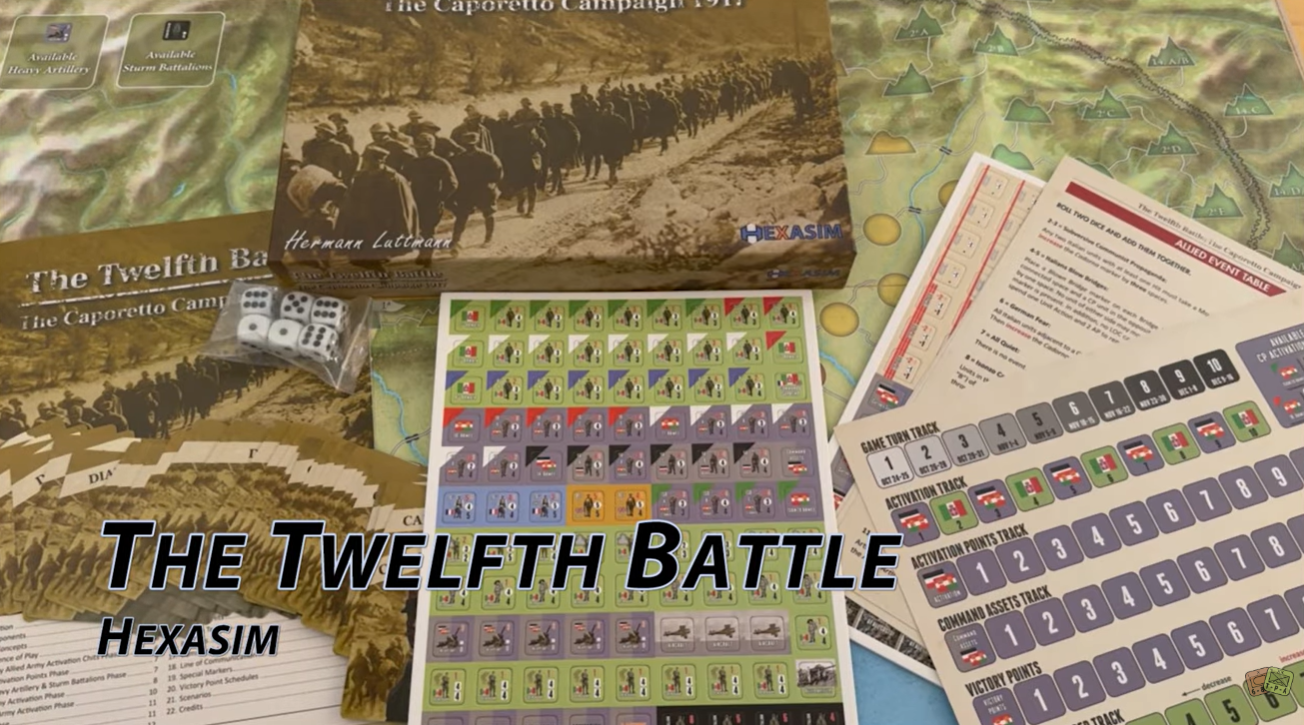
Unboxing Video: The Twelfth Battle: The Caporetto Campaign 1917 from Hexasim

The Twelfth Battle is a solitaire wargame that simulates the Central Powers offensive in Italy that began on October 24, 1917, with an all-out assault around the town of Caporetto. Using gas and stormtroopers, German and Austro-Hungarian formations assaulted the Italian defensive lines along the Isonzo River and around the town of Caporetto, creating a huge breach in their positions. Hundreds of thousands of Italian troops, demoralized and fatigued from the first eleven attritional battles along the Isonzo, were made casualties or surrendered.

We previously published an interview with the designer Hermann Luttmann on the blog and you can read that at the following link: https://theplayersaid.com/2025/05/05/interview-with-hermann-luttmann-designer-of-the-twelfth-battle-the-caporetto-campaign-1917-from-hexasim/

-Grant

  •  

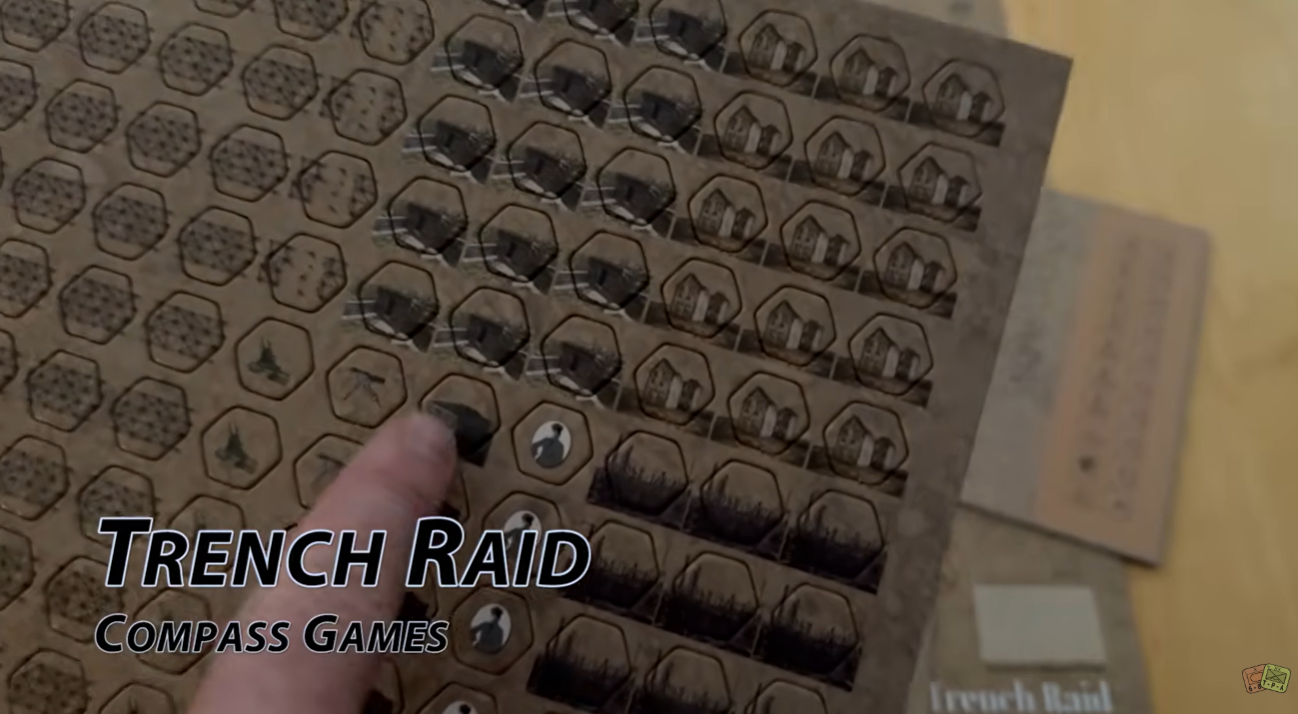
Unboxing Video: Trench Raid: Solitaire Patrol Command on the WW1 Western Front from Compass Games

Trench Raid is a single-player game set on the Western Front in World War One. The player assembles a group of 10 raiders and plots their course on a map towards the enemy lines on the other side of No Man’s Land. With 12 different raid objectives and 20 random events that can take place during the crossing, no two playthroughs will be exactly the same.

The game also includes rules for campaign play — whether their raid was successful or not, the soldiers who make it back to their trench lines relatively unscathed will steadily get better at raiding, learning through experience how to survive.

-Grant

  •  

Best 3 Games with…Designer Maurice Suckling!

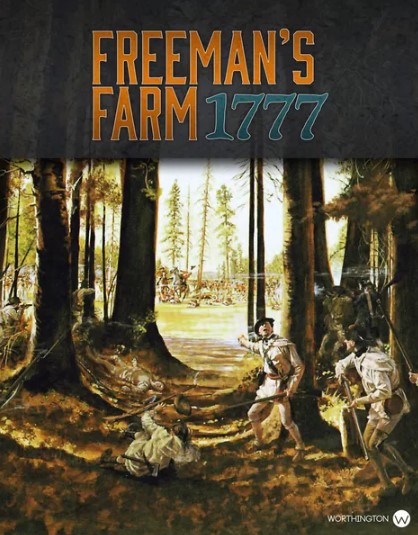
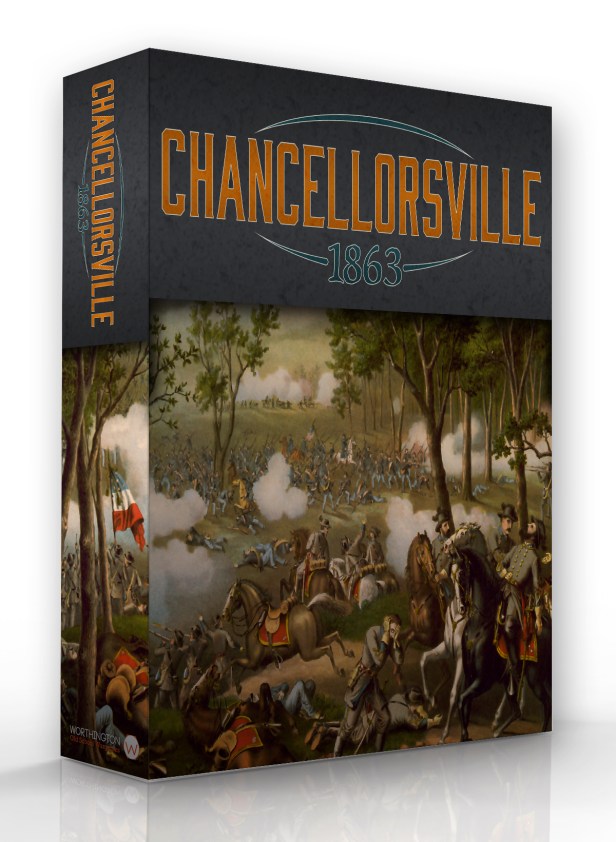
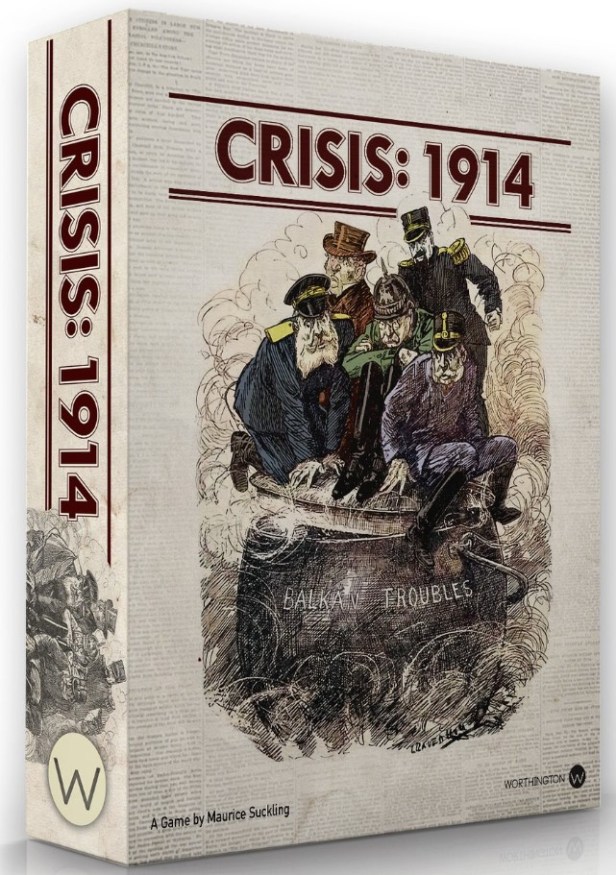
During the summer of 2019, we were introduced to Maurice Suckling and his very interesting design Freeman’s Farm 1777 from Worthington Publishing and really enjoyed the mechanics and how they all came together to create an interactive and interesting look at the Battle of Saratoga during the American Revolution. I was very impressed with Maurice and his appraoch to design and we have followed him every since and played many of his great designs. including Hidden Strike: American Revolution, Chancellorsville 1863 and 1565 Siege of Malta and Crisis: 1914. In this entry in the Best 3 Games with…Series I wanted to highlight the games of Maurice Suckling and share those that I have had the best experience with.

3. Freeman’s Farm 1777 from Worthington Publishing

Freeman’s Farm 1777 is the first in the Battle Formations Series from Worthington Publishing that are designed for both solitaire and two players. The focus of the system is on the individual formations that appeared on the battlefield and places the players in the role of overall commander to make decisions about which formations to activate and how to use those formations to position themselves to attack the enemy. The key to these decisions is the morale of those formations as each command utilizes one of their levels of morale and if pushed too far, through attacking or being attacked, the formation will be forced to take a morale test to see if it will break.

There are a couple of things that I really liked about this one as I felt it told the story of the style of fighting of the time and incorporated some elements that were very important. This series has centered the focus on formations and how they can interact with each other on the battlefield. It simply looks at how the relative positioning of the formations opens up opportunities for attack or provides advantages or disadvantages to one side or the other. If you are above an enemy formation on high ground or have a superior firing angle on a formation in battle, shouldn’t you gain an advantage? And furthermore, if you are relatively inexperienced green forces and are facing the smoking gun barrels of your enemy’s cannons, don’t you think that your attempts to return fire will be less effective than if firing with hardened troops from cover? This spatial element is a major inclusion in the design and really feels right and makes your choices as commander that much more difficult as you decide how to activate your troops to take advantage of the situation. I really have enjoyed this spatial relationship during my plays of the game and think that the approach is very novel.

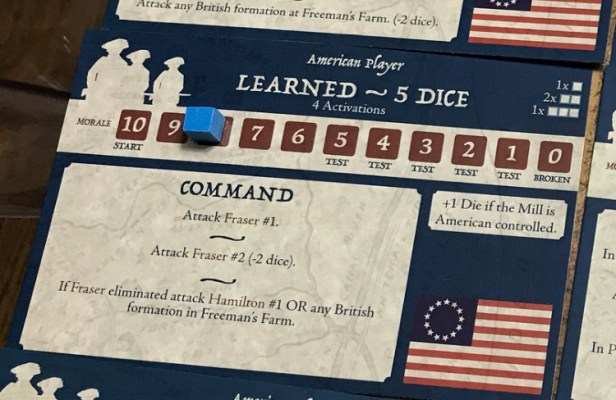
The other element that I really enjoyed was the concept of morale. The design has the player controlling several different Formation Cards that represent their troops on the battlefield and each has their own set of actions they are able to take. The key for these Formation Cards is that each time they are activated through the play of the corresponding Activation Card they have to pay for this activation. The payment comes in the form of paying 1 point of Morale from the Morale Track by moving the cube marker down one space. The formation may also lose Morale as they attack and are attacked throughout the game. The moment that a formation’s morale reaches 5 on the Morale Track they have to conduct a Morale Test to see if they will break and leave the field. This Morale Test is conducted by rolling a single d6 with any modifiers from Tactics Cards that the player controls and then comparing that result to the current Morale of the formation (i.e. where the Morale marker is currently on the Morale Track). If the die roll is higher than the marker location, the formation has failed the test and becomes broken. If the roll is equal to or less than the marker location, the formation passes the test and remains on the battlefield. Each successive reduction in the Morale of that formation will trigger another test which will be harder and harder to pass as the number decreases. Soldiers spend their strength and will to fight in each skirmish and as they are pushed more and more, and in the face of losses and exhaustion, reach a point where their will to fight is gone and they break. I like how the design dealt with this issue and it feels right.

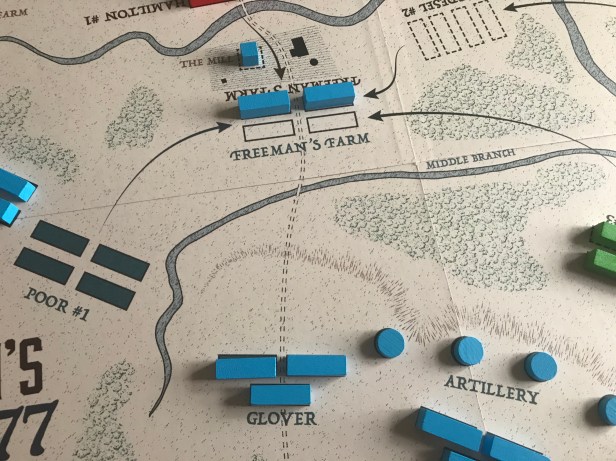
Freeman's Farm Glover Reinforce Poor

The game uses wooden cubes, disks and sticks to mark formations on the board and it looks like those pictures in text books showing the location of troops during these historical battles. This was a nice thematic touch for me and helped me to get into the mind set of a Revolutionary War battle.

I wrote a series of Action Point posts covering the various aspects of the game. You can read those at the following links:

Action Point 1 – Game board that represents the locations and roles of both sides’ formations as well as their relative positions on the battlefield.

Action Point 2 – Formation Cards and how the Activation Cards are used to command and how Morale Tests work.

Action Point 3 – Momentum Cubes and how they are used to purchase the all important Tactics Cards.

Action Point 4 – Examples of combat and discuss the way the dice are used.

Here is a look at our video review of the game:

2. Chancellorsville 1863 from Worthington Publishing

While the next game on this list uses the same system, this entry in the series is definitely improved and matured and I very much liked the blind movement aspect which was added. Chancellorsville 1863 covers the Battle of Chancellorsville during the American Civil War using a similar system to Freeman’s Farm 1777.

At the start of the game some units on each side are visible, which is mostly because they are adjacent (units adjacent to enemy units are always visible on the main map.) Other units are hidden, placed on spaces on their respective mini map hidden behind a screen, in one of a variety of spaces. The mini map is a smaller representation of the main map, with the same movement arrows and nexus points but with the same scale for ‘spaces’ so the same blocks fit on both maps. Each side has their own mini map. If units move into a space on the mini map that is adjacent to a space occupied by a unit on the main map, that unit becomes visible and is transferred to the main map.

There are also some spaces found deep inside the enemy’s lines of communication and moving onto those spaces on the mini map compels an immediate transfer to the main map. In addition, there are some spaces where the lead Union units are visible. This represents Jeb Stuart’s cavalry tracking the Union advance on the Confederate left. This added aspect really makes the game and creates a sense of tension for the players as they simply don’t know where all of the enemy units are located and have to play for those units coming up on their rear even as they are engaged in major battles along the front lines.

Activations are also slightly different from the Freeman’s Farm game as each side only has 15 activations per game but each activation card identifies at least 2 commanders to activate and move. This is very necessary because the Union side has more units to move, and farther to move them to put pressure on objective locations. This has been balanced with the addition of fortifications that allow the defender to set one die per combat at the number desired. This makes for some very interesting decisions about whether to attack or not and how. I have really enjoyed this one as the system is obviously evolving and introducing new elements. I am glad that the designer has decided to take the system to the next level as there are lots of opportunities and applications to various battles for the system.

We published an interview on the blog with Maurice and you can read that at the following link: https://theplayersaid.com/2020/02/04/interview-with-maurice-suckling-designer-of-chancellorsville-1863-from-worthington-publishing-on-kickstarter-now/

Here is a look at our video review of the game:

1. Crisis: 1914 from Worthington Publishing

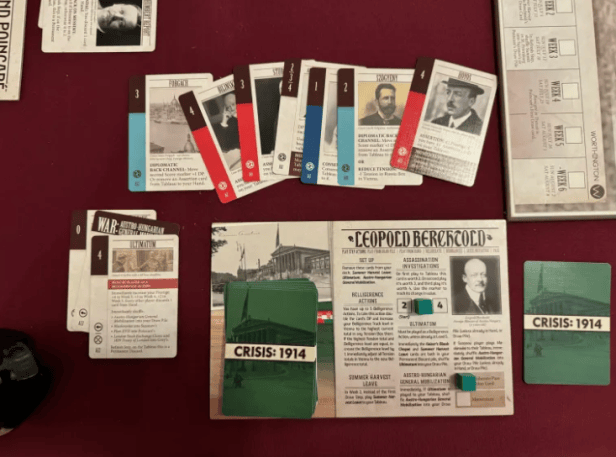
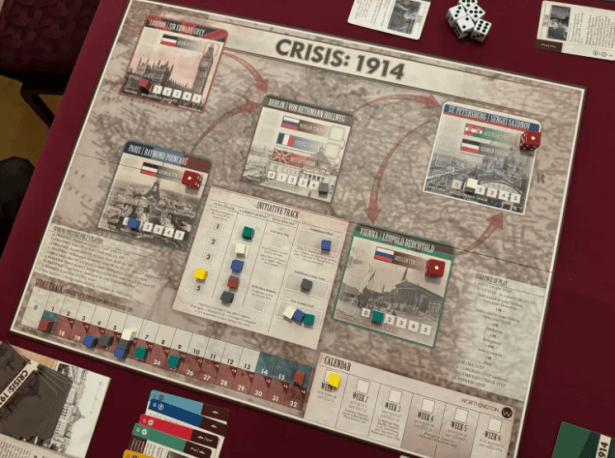
Crisis: 1914 is a game of international brinkmanship meaning if you back down too soon, you lose. If you back down too late you lose. But you have hawks and doves in your cabinet and in your government, and out of these conflicting views you must somehow formulate a coherent response to the crisis to win the day and prevent war. The game is played with players building a tableau of event cards that will score them a certain number of points, some building off of each of the type of cards played, with some of the cards increasing the Tension level of Europe at the time. If the Tension gets too high The Great War will break out and the player causing it by the play of a card will lose with the others winning based on their total Prestige Points. It sounds really simple, and the game is not overly complex, but there is a lot of strategy to how you play your cards, when you play them and how are you are willing to push your luck each round.

There are 3 concepts at the heart of Crisis: 1914 including Prestige, Tension and Diplomatic Pressure. Diplomatic Pressure is how you score Prestige and reflects the skill at which you play your cards to keep your faction moving ahead of the others while simultaneously balancing the level of Tension. Tension is how you lose. Every card has a DP value and you apply DP by playing cards. The player with the most Diplomatic Pressure at the end of a turn earns Prestige points. There are other ways of scoring Prestige points too, but this is the most important one. Prestige is how you win. The player with the most Prestige at the end of the game is the winner.

I have played this one 3 times now and and I cannot wait for the next opportunity to play. It is best with 5-players so make sure you get the right group and give yourselves a chance to really learn the game as each faction’s deck is completely asymmetrical and repeated plays will help you understand each faction’s strengths and strategies. While this game is not necessarily a wargame, but more of a war themed Euro game with a bit of negotiation and tension as you build your tableau of cards, we had a great time with it and really feel that the game is a bit under the radar of folks and should be one of those games that is played at conventions as it seats up to 5 players and is really quite good.

We published an interview on the blog with Maurice and you can read that at the following link: https://theplayersaid.com/2023/07/12/interview-with-maurice-suckling-designer-of-crisis-1914-from-worthington-publishing-currently-on-kickstarter/

Also, in a lead up to the game’s release, I worked with the Maurice to do the following Event Card Spoiler posts:

Crisis: 1914 Event Card Spoilers with Designer Maurice Suckling – Series Introduction and General Mobilization Cards

Austria-Hungary, Part One

Austria-Hungary, Part Two

Russia, Part One

Russia, Part Two

Germany, Part One

Germany, Part Two

France, Part One

France, Part Two

Britain, Part One

Britain, Part Two

Britain, Part Three

Here is a link to a RAW video we did after our 2nd play while attending Buckeye Game Fest in 2024:

There you have it. My Best 3 Games with…Designer Maurice Suckling! He has done so many good games and the narrative and historical immersion of all of them are top notch. He is definitely a designer to keep an eye on and I know that he has multiple games currently in design including Rebellion: Britannia from GMT Games, Peace 1905 from Fort Circle Games (we played a prototype of this one at SDHistCon a few years ago and it is top notch) and The Emperor’s Choice from Worthington Publishing (I played a short game of this at WBC and it is very good).

What are your favorite games from Maurice Suckling?

-Grant

  •  

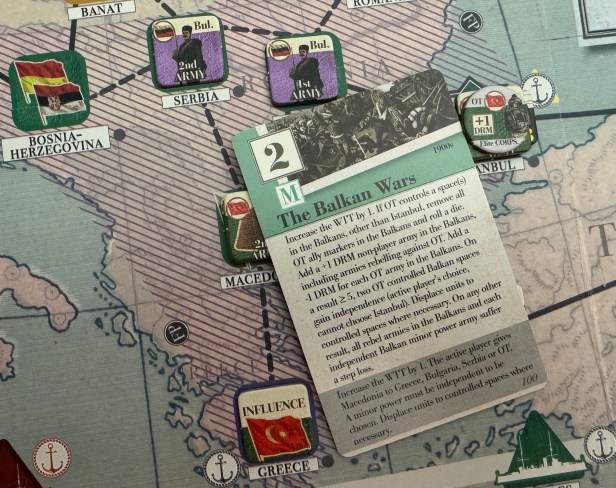
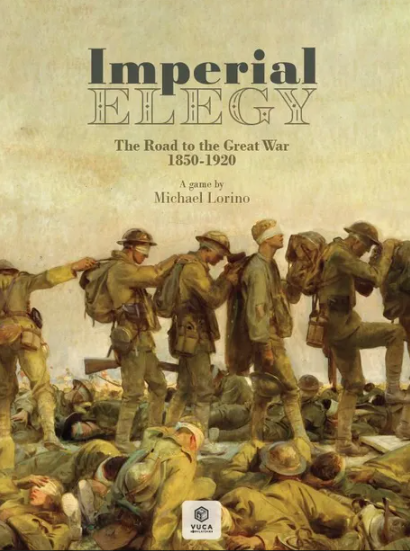
My Favorite Wargame Cards – A Look at Individual Cards from My Favorite Games – Card #98: The Balkan Wars from Imperial Elegy: The Road to the Great War 1850-1920 from VUCA Simulations

With this My Favorite Wargame Cards Series, I hope to take a look at a specific card from the various wargames that I have played and share how it is used in the game. I am not a strategist and frankly I am not that good at games but I do understand how things should work and be used in games. With that being said, here is the next entry in this series.

#98: The Balkan Wars from Imperial Elegy: The Road to the Great War 1850-1920 from VUCA Simulations

Imperial Elegy: The Road to the Great War 1850-1920 is a massive card driven game that blends diplomacy, warfare, and statecraft and feels a bit akin to games like Here I Stand and Virgin Queen from GMT Games, which are both grand scale sweeping epics that play multiplayers and take a day to play. Players play as 1 of 6 major powers in the game including Germany/Prussia, the United Kingdom, France, Austria-Hungary, Russia and the Ottoman Empire. The game is quite grand and ambitious as it covers 70 years near the end of the Victorian Era and the Progressive Ear and sees quite a lot of global change and competition between the great powers of the time. The game is a Card Driven Game and uses Action Cards as a type of currency to spend for their Command Points or the printed event to take actions such as recruiting armies and navies, industrialize, moving fleets and armies around the globe, influencing minor powers and establish colonies in Africa, India and the Pacific Ocean. The cards are all tied to the history of the period but the game can be played very much as a sandbox allowing players to explore strategies by trailblazing new horizons or following history.

Before we dive into today’s chosen card The Balkan Wars, I want to first make sure you know about Mandatory Event Cards in the game and how they work as they work slightly differently from normal Action Cards. Mandatory Event Cards are all lime green colored and bear a large block “M” just under the CP Value listed in the upper left hand corner. Mandatory Events, as the name suggests, must be played for their events. However, when playing a Mandatory Event Card, players trigger the event and also receive the CP to spend on various actions. The events on Mandatory Event Cards are always resolved first before the CP are utilized. If a Mandatory Event Card is discarded, the event will immediately trigger. There is no way around these cards and they are included in the game to drive the action historically and interject the various special circumstances that drove the rise and decline of these Victorian Age empires. The player that discarded the card resolves the event as if they were the active player. If two such Mandatory Event Cards are discarded in the same impulse the events are resolved in turn order.

Some of the events that occurred historically prior to 1914 were ultimately precursors to The Great War in many ways. The Balkan Wars were two conflicts fought in 1912 and 1913 that stripped the Ottoman Empire of almost all its remaining European territory and directly set the stage for World War I. The Balkan Wars saw similar levels of carnage as machine guns and artillery equipped with hydraulic recoil mechanisms were used in large numbers. Politically, they highlight the volatile nature of international politics in the Balkan Peninsula and are included as a Mandatory Event to ultimately drive up the World Tension Track on a path toward the outbreak of World War I. When played, the World Tension Track will increase by +1 and if the Ottoman player controls any territory in the Balkans other than Istanbul, or has Diplomatic Influence with countries, they will have a chance to lose their control there as a result of the chaos of the First and Second Balkan Wars. If these checks fail, and they will incur a -1 DRM for each Ottoman Army that is located anywhere in the Balkans, non-player armies will be placed in those locations and will increase the difficulty for the Ottomans to gain a foothold in this area. According to the designer Michael Lorino, mechanically this event causes all kinds of trouble in the Balkans, as intended. Similar to the Mandatory Event Card Empire of the Sun, the original event was a bit more involved and had players fight an actual war. In an effort to keep the game in the playable zone, he decided to abstract these wars through a die roll.

I very much enjoy the concept of a Mandatory Event, although they are never convenient for someone at the table as they typically have negative effects for at least 1 faction. But I very much like the approach taken here with The Balkan Wars with the -1 DRM for control of a territory and its thematic connection with the Ottoman Empire’s presence in the region generating tension and setting off these Balkan Wars.

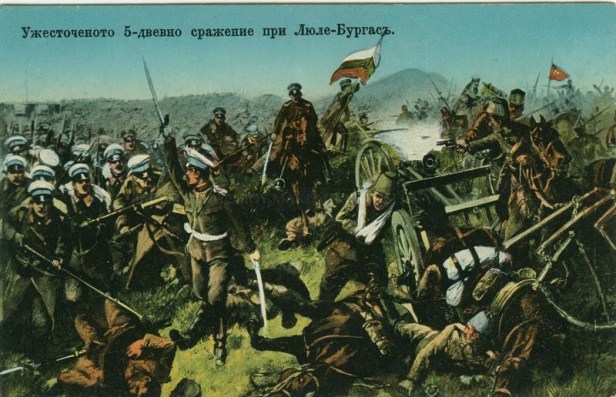
A Bulgarian postcard depicting the Battle of Lule Burgas.

The Balkan Wars were two conflicts that took place in the Balkan states in 1912 and 1913. In the First Balkan War, the four Balkan states of Greece, Serbia, Montenegro and Bulgaria declared war upon the Ottoman Empire and defeated it, in the process stripping the Ottomans of their European provinces, leaving only Eastern Thrace under Ottoman control. In the Second Balkan War, Bulgaria fought against the other four combatants of the first war. It also faced an attack from Romania from the north. As a result of these wars, the Ottoman Empire lost the bulk of its territory in Europe. Although not involved as a combatant, Austria-Hungary became relatively weaker as a much enlarged Serbia pushed for union of the South Slavic peoples. The Balkan Wars set the stage for the July Crisis of 1914 and was a prelude to the First World War.

We have put out several pieces of content covering Imperial Elegy and find it to be a fantastic game. These include written posts and videos. You can visit those by following the links below:

Unboxing Video:

Video Review:

Summary of Solitaire Bots presented by our friend James:

Written First Impressions Post on the blog: https://theplayersaid.com/2026/05/06/first-impressions-imperial-elegy-the-road-to-the-great-war-1850-1920-from-vuca-simulations/

In the next entry in this series, we will take a look at Truman Doctrine from Twilight Struggle: The Cold War, 1945-1989 from GMT Games.

-Grant

  •  

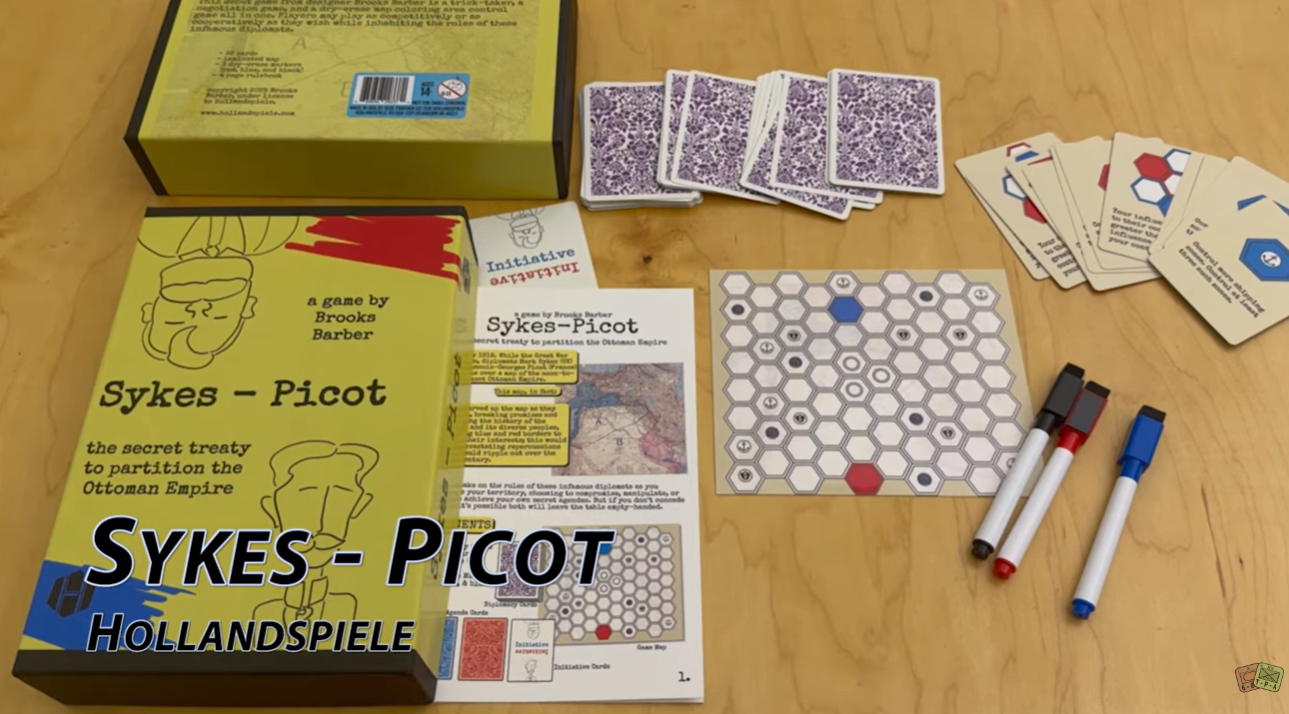
Unboxing Video: Sykes-Picot from Hollandspiele

During the First World War, the British and French made a secret agreement to carve up the Ottoman Empire – literally drawing on a map in red and blue ink – without respect to the peoples, culture, or history of the region. This would have devastating effects over the next century.

In Sykes-Picot, two players take on the roles of infamous diplomats Mark Sykes and Francois Georges-Picot, using red and blue markers to carve out territories to control and to influence on a dry-erase map. Trick-taking card play and table-talk negotiations drive the proceedings, with the winner of each trick choosing one of the two cards to implement, and the loser consoling themselves with the remaining card. Each player has a set of hidden objectives they’re trying to achieve. Players may be as co-operative or as competitive as they wish in pursuit of these goals.

Tonally, the game is light, reflecting the distance and cavalier attitude of these imperialist powers. We feel there’s something horrifying in that, and this approach captures some of that horror.

-Grant

  •  

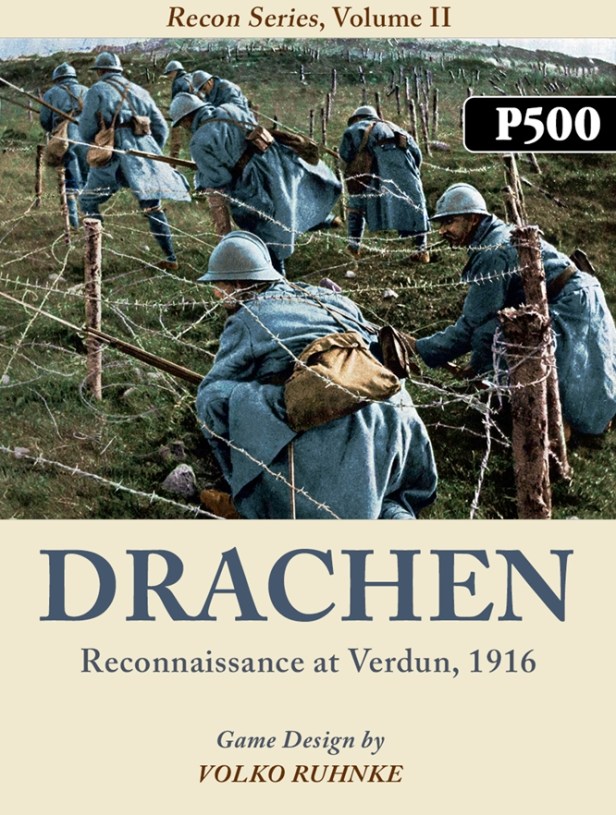
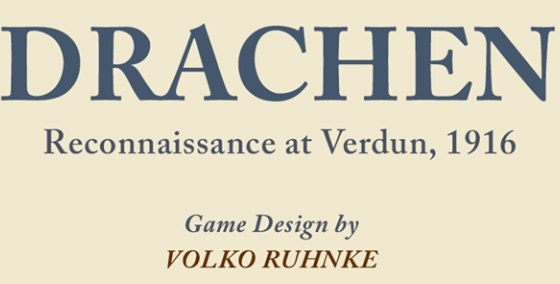
Interview with Volko Ruhnke Designer of Drachen: Reconnaissance at Verdun 1916 from GMT Games

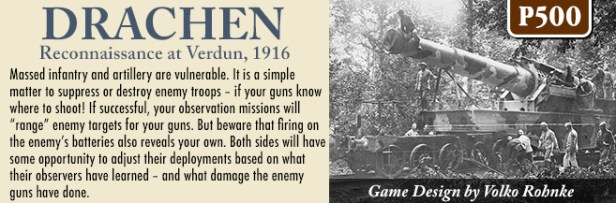
I think that every single wargamer knows the name Volko Ruhnke. He has designed several great series in the COIN Series, that has now stretched to a full 15 volumes, and then more recently Levy & Campaign Series, which has an astounding 5 released volumes with several others that are announced and about a dozen more in design. He can make a good game for sure! One of our first experiences in wargaming and the first Volko design we played was Wilderness War. He is now at it again with a new design in a continuing newer series called the Recon Series that uses hide and seek elements and hidden blocks to tell the story of the Allied intelligence efforts during World War I during the campaigns around Verdun in 1916. The game is called Drachen: Reconnaissance at Verdun, 1916 and looks to be very interesting and we reached out to Volko to get a look into the design.

Grant: Volko welcome back to the blog. What is your new upcoming game Drachen about?

Volko: Hi Grant & Alex! Thank you for this opportunity. I love what you guys do.

Drachen continues my new Recon Series, following on to the series’ recently released first volume, Coast Watchers. Volume II – Drachen – is about the struggle for reconnaissance information in a World War I trench battles, specifically, Verdun in 1916.
Grant: What does the title mean and why did you want to use it for this game?

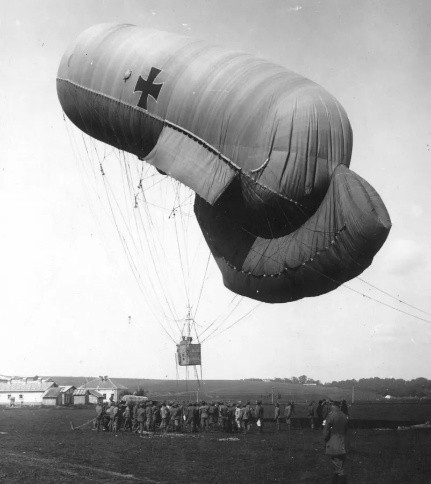
Volko: “Drachen” means “kite” in German and is simply short for “Drachenballon” – kite balloon. The tethered observation balloons famous as targets for balloon-busting fighter aeroplane missions were really the queens of the battlefield in their ability to see what the enemy was up to and guide artillery fire onto enemy targets. They were in effect hydrogen filled kites in that they faced into the wind for stability. On a clear day, even a windy one, a spotter with binoculars in a kite balloon could provide information on enemy movements and positions up to 15 miles away. Tethered to the ground, unlike observer aeroplanes with either no radio or early transmitters only, balloons had instant and secure communications with friendly headquarters or batteries to coordinate fire.
Grant: This is Volume II in the Recon Series. Why does this subject fit your vision for the series?

Volko: I’m looking for the Series to visit settings in which secrets and their discovery really mattered to the outcome of a conflict. The advent of trench warfare on the Western Front was a remarkable moment in land battle because the age-old means of reconnaissance – the horseman – could no longer roam. For the first time, you would know nothing of the enemy beyond the next ridge unless you got up in the air. We gamers have tended to focus on ace-versus-ace duels in the sky. I wanted to explore what all the dogfighting was really about: winning the right to peer down upon your enemy.

Grant: How has your experience with series games assisted you in the development of this Recon Series?

Volko: OK, that’s a big question! I do try to learn, and I have developed some principles for series design:

1) Openness – Make room for other designers to take the series where you never imagined.

2) Complexity – Bigger is not always better. I wrote about this in depth in C3i Nr29.

3) Variety – Make it familiar, not samey. I wrote about that in C3i Nr30.

Regarding variety within a series, it helps to articulate a focus to guide selection of topics, what you keep the same, and what you vary for each setting.

  • For the COIN Series, that was the premise that counterinsurgency and other popular conflicts were multifactional, that factional relations were key.
  • For Levy & Campaign, it was that medieval warfare was equally complex as modern but in distinct ways, especially regarding command and logistics.
  • For the Recon Series, then, it is that secret information – which side protects it or discovers it better – can decide the outcome, at least for certain conflicts.

That said, for me, principle 1) above trumps the other two. Other designers certainly have taken COIN and Levy & Campaign to places beyond my original intent. I hope the same for the Recon Series.

Regarding “bigger is not better” for Drachen in particular, that meant being sure that Volume II did not just add subsystems like more ornaments on a Christmas tree. Rather, I try to drop something unneeded out for every new thing added in. For example, Drachen gets much deeper into resolution of combat than does Coast Watchers, but then Drachen has a much simpler resolution of who won the struggle: just most of 3 Objective cards fulfilled, rather than Volume I’s “victory point salad”.

To keep Drachen “familiar but not samey”, we keep not only the location blocks and open versus secret spotting but also two chit cups for resolution, for example. Where Coast Watchers has Delivery and Patrol cups, Drachen features Air and Group cups to resolve clashes in…well, you can guess where for each.

Grant: What did you need to make sure to model from aerial reconnaissance in WWI?

Volko: The key historical dynamics that I was able to find and felt were important to incorporate in the game include:

  • The main purpose of fighter aeroplane engagements as clearing the way for friendly observers and countering enemy observers.
  • The difference between just spotting something and being able to loiter long enough to cooperate with guns or take photos.
  • Which observation activity would be known to the enemy and which would be secret.
  • The importance of attrition in aircraft to observation dominance.

Grant: What sources did you consult to get the historical details correct? What one must-read source would you recommend?

Volko: I scarfed up all I could about Great War trench warfare in general, including the nature and use of observation balloons, how aeroplanes cooperated with artillery, the purposes of trench raids, and so on. Naturally, I particularly dug into how things worked in the Battle of Verdun, which was a great learning laboratory for both sides.

My two key secondary sources were The First Air Campaign by Eric and Jane Lawson, which discusses the evolution of air power in World War I and the special juncture that Verdun was in its development, and Alistaire Horne’s The Price of Glory, still for me the best of the several English-language works on the iconic battle.

Grant: What is your overall design goal and thesis with Drachen?

Volko: The design goal is to take apart how reconnaissance worked in trench battles, with the premise that winning the reconnaissance struggle set up the possibility of winning the kinetic part, the fire and assault.

Grant: Why do you feel that blocks and chit pull are the best ways to tell this story?

Volko: Blocks are an age-old but powerful way to manage secret information on the tabletop, without writing or referees. The Recon Series uses blocks in a new way: not as units that the opponent can see massing and moving across the map but as location information about which you start out seeing nothing and have to act to gain any knowledge of.

Chit pull gives me as designer an ability unparalleled by dice to subtly manipulate probabilities – and to give the players abilities to influence those probabilities – in a relatively simple and inexpensively produced way.

Grant: What other mediums did you consider or explore?

Volko: One question was whether to use “record” markers for players to log what they find. The Japanese player in Coast Watchers has such markers on the board as reminders of what is known of Allied blocks that have stood up hidden again.

In Drachen, there is even more to keep track of: various sizes and types of units and fortifications. And some of what players spot they do so secretly. So Drachen provides a record sheet reproducing the battlefield in miniature, but with room to take notes, plus screens to hide that record, if players want to use them. I considered providing record markers to place on the sheet, but the variety of items to spot mean that it would have been a mess, a big pile of counters to sort through – not worth it when a pencil works fine!

Grant: What different units are available to the players?

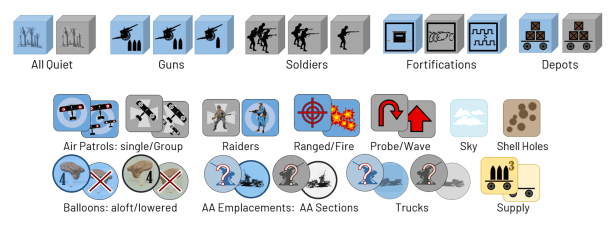
Volko: Here is a look at the blocks and counters, including the units represented. By the way, no real art exists yet – these are just my homemade prototypes.…

The standup blocks represent the guns, soldiers, fortifications, and depots that fight out the duels between gun batteries and the offensive’s barrage and assault. They build up hidden and are the targets for enemy observation missions. Positioning your hidden blocks will be critical both to make them harder to spot and to get the best use out of them in your plan for combat.

The counters represent those forces carrying out or supporting reconnaissance. They build up openly on the battlefield, except for anti-aircraft emplacements that may be AA sections or just harmless trucks. (Other counters here are markers that support various missions and actions.)

Grant: What is the role of Depots?

Volko: Depot blocks – if they survive unsuppressed – during the offensive resupply guns to fire again or fire at double strength. If the attacker exploits an advance, the depots refill and can again supply guns.

Grant: What are the All Quiet blocks and what do they represent from history?

Volko: “All Quiet” blocks (also nicknamed “trees”) represent just the usual presence of defenses at a side’s positions. So they do not mean empty, rather nothing special to see and shoot at. There are some troops garrisoning the line in what are probably battered trench works, perhaps some wire or field guns. If attacked, at least a few machineguns hidden there will answer.

Grant: What different air assets are available to players?

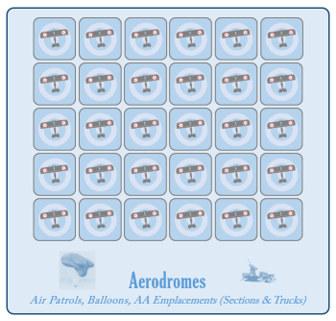
Volko: The workhouse in the air is the “Air Patrol” – either single or group, the latter more effective but uses up more airframes. Each player has a supply of Air Patrols at their aerodromes (on their mat) and sends them on specific fighter and observer missions or puts them into the Air Cup to add generally to the density of friendly aircraft prowling and protecting the skies over Verdun. Air Patrols suffer loss in action, so you can run out if you don’t manage the air battle carefully, potentially requiring you to recall counters from the cup or the map.

Of course we have balloons too, aloft over friendly positions behind the front line. Enemy balloon-busting fighter missions can destroy them or, more commonly, force them to lower. As noted above, these Drachen are highly effective observers, in the game reaching out to a distance of 4 positions, spotting secretly – you won’t know where your opponent’s balloons are looking unless they range guns in on your blocks – and unlike aeroplane observers automatically succeed in spotting their targets.

On the ground but protecting your balloons and blocks against enemy Air Patrols, you get antiaircraft emplacements – “AA Sections” or dummy “Trucks”. These will make any enemy air missions at or adjacent to them more dangerous. They also occasionally can cause a loss among your own nearby defensive air patrols, representing friendly fire.

The counters for Balloons and AA Emplacements are round to signify that these units can built up, adjusted, and used for free – whereas use of Air Patrols and trench raiders cost actions.

Grant: How are the serial assets used to perform recon? How does this work?

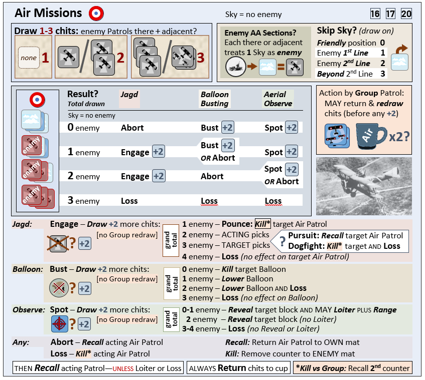
Volko: As reconnaissance and the efforts of fighters to stop it are the focus of the sim, most Air Missions as well as Trench Raids use an articulated chit-pull procedure accounting for a wide range of circumstances.

On the Air Missions table, you can see that we account for the presence of the enemy’s defensive Patrols and AA, how deep behind enemy lines you are flying, whether you are using an Air Group, and how many enemy chits you are likely to draw.

Various Asset cards, like “Boelke & Immelmann”, can further affect these results.

Grant: Why do you feel this is so important to the game?

Volko: Most trench warfare games either focus on the assault by infantry and perhaps tanks or cover the air duels going on overhead. But before those assaults and the barrages supporting them kick off, there would have been a critical period in which the sides were struggling to figure out what the enemy was up to and where they were massed. And that is when most of those aerial dogfights would be going on. Drachen pulls all that together to try to illuminate just HOW reconnaissance got done and would then set the course of a “big push”.

Grant: What is the layout of the game board and the purpose of the different shaped fortifications?

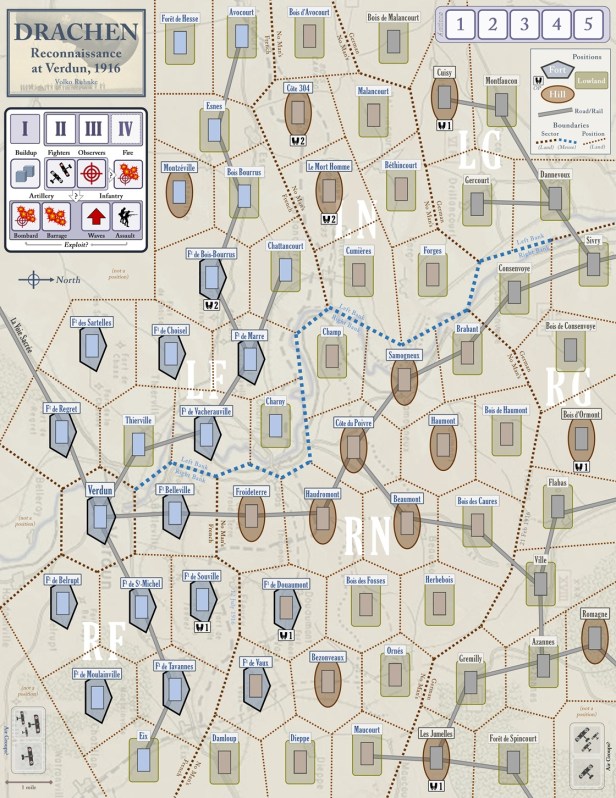
Volko: The game board shows the battlefield of Verdun. Area spaces, called “positions”, each hold a single block hiding the forces or fortifications there.

Terrain is either Lowland, Hill, or Fort – the latter effectively on hills too but tougher to crack. Hills and Forts enable guns on them to shoot a little farther, are harder to take by infantry assault, and often are the very targets that the attacker is assigned to seize.

A road and rail network spans the battlefield. Its effect is to limit where depots can be built up.

Land and Meuse River segments separate the positions. Little wooden stick pieces will mark the front along these segments. Positions group into sectors, such as “Left French”, to guide setup and solo play.

A final feature of the map positions is that some are observation posts. They function much like balloons but with far more limited reach, and they can be suppressed by artillery fire.

Grant: What is the general Sequence of Play?

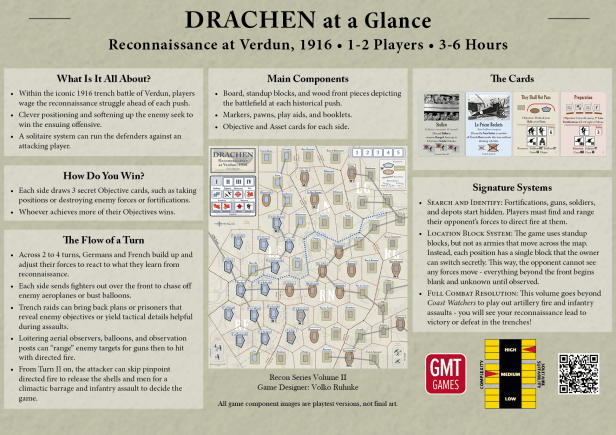
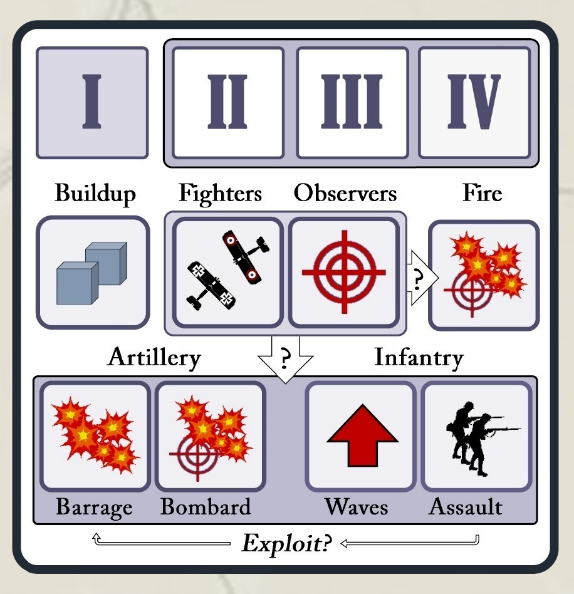
Volko: In each of between 2 and 4 turns total, each side first builds up forces (blocks and counters). Buildup limits are most lenient on Turn I, so players generally need to set a plan of attack or defense then and just adjust positioning on later turns. On Turn II and thereafter, revealed (face up) blocks hide again (stand back up) unless suppressed by enemy fire or under loitering air surveillance. On Turn III and IV – if the attacker has not yet launched an offensive – the defender receives reinforcement in the form of an added block.

The main part of the turn follows buildup, “Reconnaissance” activity by Fighters then Observers. That includes mounting defensive “Barrier Patrols” and offensive “Jagd” against enemy Air Patrols plus Balloon Busting, then Aerial Observation, Trench Raids, and spotting by Balloons and OPs.

After that, the sides will exchange “Directed Fire” by their guns onto previously “Ranged” targets. Or, on Turn II or later, the attacker can instead launch the offensive that will resolve the game.

Grant: How is victory achieved?

Volko: After the offensive, or after Turn IV in the rare case that the attacker never launches one, Victory depends on who has fulfilled more of their 3 drawn Objective Cards.

Grant: What are the purpose of the Attacker & Defender Objective Cards?

Volko: The simulation premise of the Objective Cards is that reconnaissance is trying not only to discover where the enemy is but what they are up to – what matters to them? Will the attack go for a breakthrough, or are they just trying to pin our forces in place and divert our attention from some other part of the front? Or even less, are they for now just trying to grind down our forces and soften up our fortifications? Is the defender set to hold everything at all cost? Or do they just want to bloody us as we advance?

A second set of questions concerns how big an enemy buildup we are dealing with. The Objective Cards give players more robust forces to carry out the more ambitious task. So that too is an essential element of information that reconnaissance is trying to gauge – what are we up against?

The Objective Cards provide a neat and easy way to set out that secret information. Through recon successes, such as finding out how your enemy’s fortifications or troops are deployed, you can discern what your opponent’s cards may be. And if you invest in trench raiding, your raiders might reveal one or more enemy Objectives for certain.

Grant: What are the various hidden objectives?

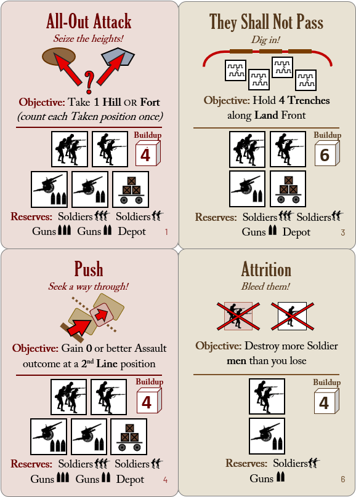
Volko: Attacker and Defender each draw 3 cards from up to 9 Objective Cards, most of which are unique tasks hidden from the opponent. Each card not only sets out a task to be achieved but also provides added blocks to that side’s “Reserves” and specifies a number of blocks that the player can build up on the map on Turn I.

One twist is that you don’t have to use a card’s specified forces for that task: the blocks just add to your total available.

A second twist is that particularly successful trench raids can obtain “Plans” that reveal your opponent’s Objective Cards to you: potentially highly useful, as you win not only by achieving your own Objectives but by impeding your enemy’s.

Grant: What different types of these cards are there?

Volko: There is a separate set each for Attacker and Defender. In sets of 3, they go from least to most ambitious/robust, for the Attacker, “Preparation”, “Push”, “All-Out Attack”; for the Defender, “Retrenchment”, “Attrition”, “They Shall Not Pass”. Different scenarios then might limit some of these sets for one or the other side to reflect that stage in the longer Battle of Verdun.

As you can see by the examples, the cards are specific as to their tasks and forces. Generally, the Attacker is either destroy certain defenses, mount strong attacks, or take key positions. The Defender generally is to hold key positions or destroy substantial attacking forces.

Grant: How do players go about accomplishing these?

Volko: A key premise of the game is that reconnaissance success unlocked success of an offensive push. So in the game, you won’t earn VP or whatever for how you run your reconnaissance effort. Rather, knowing what your enemy has where – and “Ranging” those targets for accurate fire by your gun – will set up the combat success that you will need to fulfill more of your own Objectives.

But you will need to add to that skillful positioning of your forces and fortifications to make use of the information that you gather, and then the right decisions when and where to uncover your guns to fire or send your infantry waves into assaults and counter-assaults.

So the game is about reconnaissance but also how that feeds into running trench war combat.

Grant: What challenges does each side face in their objectives?

Volko: Since fulfilling your Objectives flows from how you handle the entire Sequence of Play, they really distill all the game’s challenges. But specific challenges to do with the cards include that the easier tasks come with skinnier forces to fight with, and that you start out unaware of what your opponents Objectives are. That latter can be critical, as even decent performance against the goals in front of you may not be enough to win if your opponent does even better at their secret tasks.

Grant: How do offensives work?

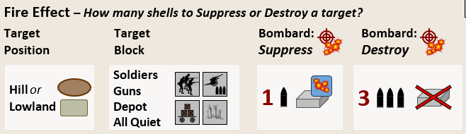
Volko: When the Attacker decides to launch the Offensive, both sides first get to recover some of their suppressed positions. Then each side’s guns, Attacker first, can “Barrage” to suppress enemy positions without needing Ranging by observers, just using more shells. Then each side can “Bombard” Ranged targets to Suppress them more efficiently or destroy them outright (as in the earlier “Directed Fire” phase).

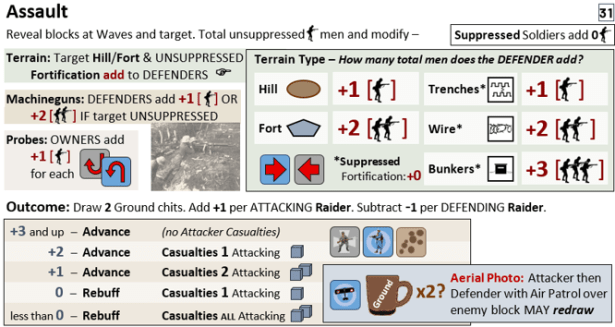
Then players place “Wave” markers to commit where infantry Assaults and counterattacks will occur. For the Attacker, these will attempt to take the defender’s frontline positions. Those get resolved rather simply, including a draw from the Ground cup to give at least some chance for a weaker attack or defense to succeed.

If any such Assault does succeed in taking ground, the attacker may “Exploit” – meaning one more round of Artillery and Infantry combat, usually to try to seize a 2nd-Line position.

Grant: How many players is the game designed for? Is there a solitaire mode?

Volko: Drachen is a 2-player game. A larger number of players, divided into 2 teams, has worked well at the many demos that I have done.

There is a solitaire mode that enables a solo player to take the Attacking side in all the scenarios, whether German or French. It uses instructions and scenario setups found in the Playbook, a “Defenses” display to guide hidden block buildup, and a deck of 18 “Army HQ” Cards to help run Defender actions.

Grant: What opportunities for deception and signaling are there?

Volko: Great question! A point of the Recon Series is to feature not only secret information but both open and secret collection of that information – in part to enhance such opportunities for deceptive signals.

In Drachen, you will have plenty of secret information about which to mislead your opponent. And, critically, you will have potentially or automatically open information that you can transit selectively in order to mislead. Some ideas…in the game, you can:

  • Put a few Soldiers to get spotted where you do not intend to assault, or fortifications that suggest Objectives that you did not draw.
  • Range targets that you cannot actually or do not intend to Bombard.
  • Deploy air defenses in areas that are unimportant to you.

And so on. Circumstances and your imaginings are the only limits!

Grant: What do you feel the game models well?

Volko: I am quite pleased with how the flow of the game models trench warfare’s set-piece buildups, the contest for control of the skies, the danger and importance of busting balloons and launching trench raids, the tit-for-tat artillery duels, including the danger of firing and exposing your batteries too soon, and more. In short, Drachen plays out on the table my mental model of WWI trench battles.

Grant: What are you most pleased about with the design?

Volko: The biggest thrill for me is that the design has held the interest of a talented corps of testers for many moons and many plays – and that it seems to get universally positive reactions at con demos. Ted Raicer has done wonders to bring out the fascinating aspects of the Great War, but even now trench battles don’t get the spotlight among us wargamers that I feel they warrant. And Verdun does not even have British or Americans (outside some volunteer fliers). So I’m proud that Drachen is adding to our hobby’s examination of WWI’s Western Front in between the famous mobile phases of 1914 and 1918.

Grant: What other designs are you contemplating or already working on in this series?

Volko: I already have a playable prototype for Volume III, and it even has seen some playtests. I call it Masher and it is set in Vietnam. Perhaps a topic for another visit here!

Thanks again for this opportunity to talk about the Recon Series!

I think that this new series, and this game particularly, look really interesting and I am all in on the subject matter and the approach. Also, the game offers 8 main scenarios and a solo learning situation spanning German and French offensives within the titanic 10-month Battle of Verdun. I did just receive my copy of Volume I in the Recon Series called Coast Watchers but have not had a change to get it to the table as of yet. I will rectify that sooner rather than later.

If you are interested in Drachen: Reconnaissance at Verdun, 1916, you can pre-order a copy for $79.00 from the GMT Games website at the following link: https://www.gmtgames.com/p-1162-drachen.aspx

-Grant

  •  

Discussion Thread: In-Game Retribution…is that a thing that is acceptable?

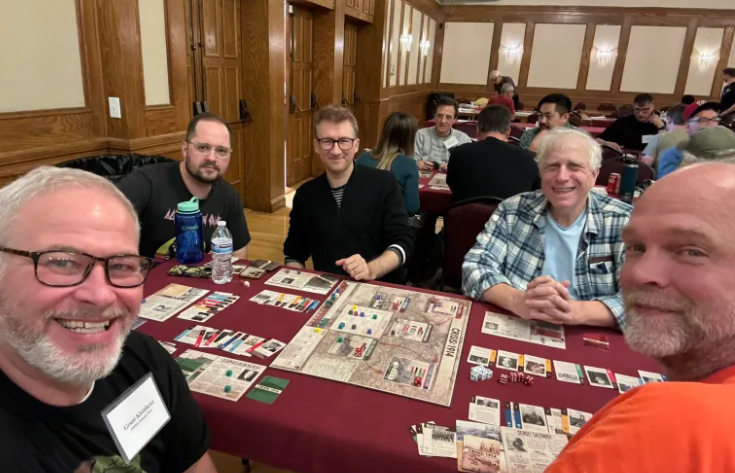
I am going to start this new feature on the blog called Discussion Thread where I pose a question or a situation and seek your input and comments on the issue to gain greater understanding and to encourage thoughtful feedback. I think this will only be successful if we get lots of opinions and queries so please speak up and let me know your thoughts. Big or little. Nothing is out of bounds. I also feel that this series will be a bit therapeutic for me and my mental health. I am not sure how often I will post these type of things but wanted to see how it goes and also to share something that happened to me recently in a game that got my gears a grinding.

*All names have been changed or omitted to protect the privacy and identity of those involved.

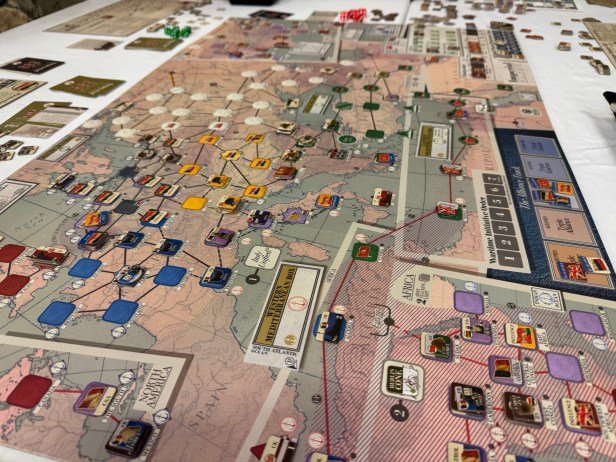
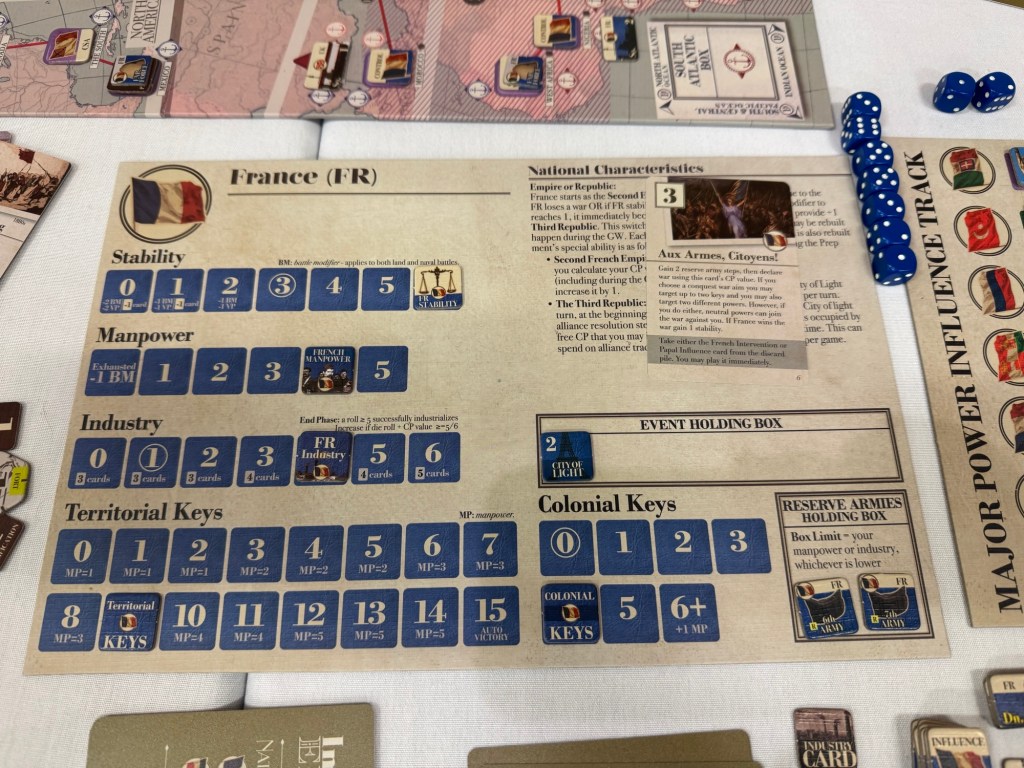
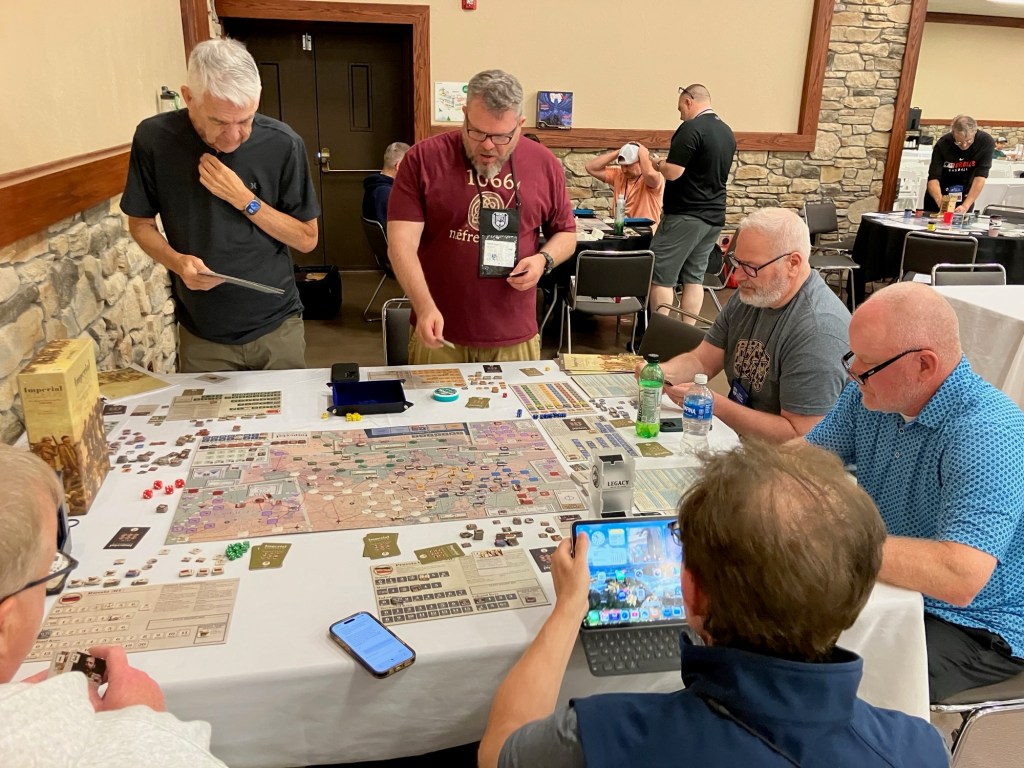
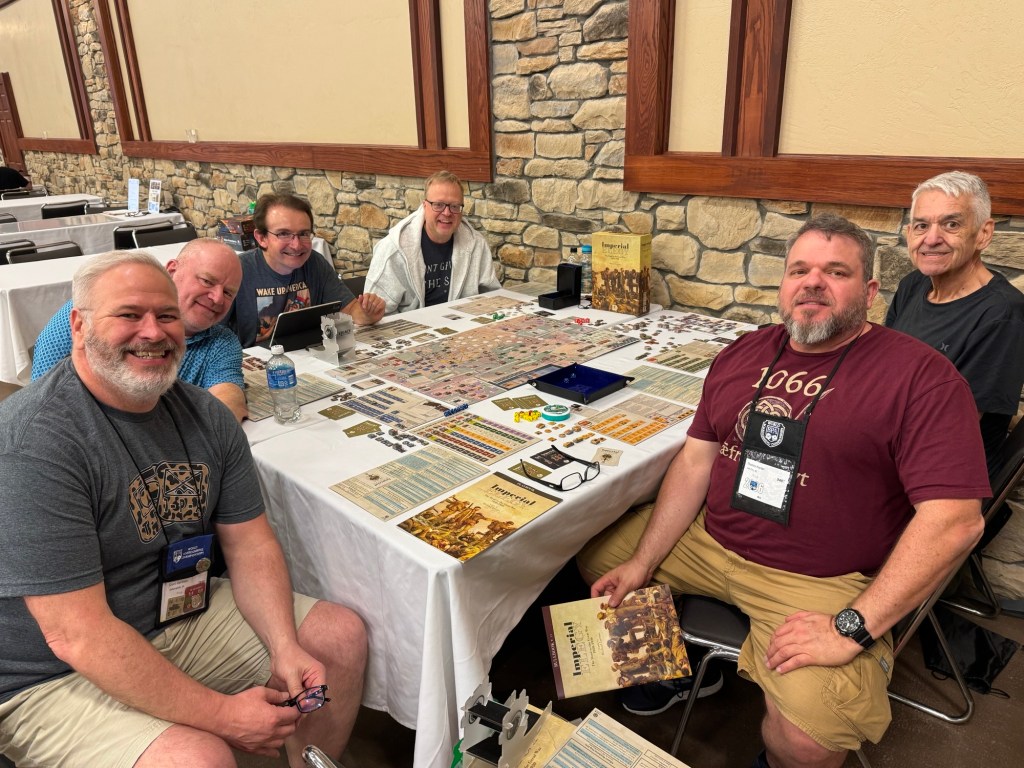
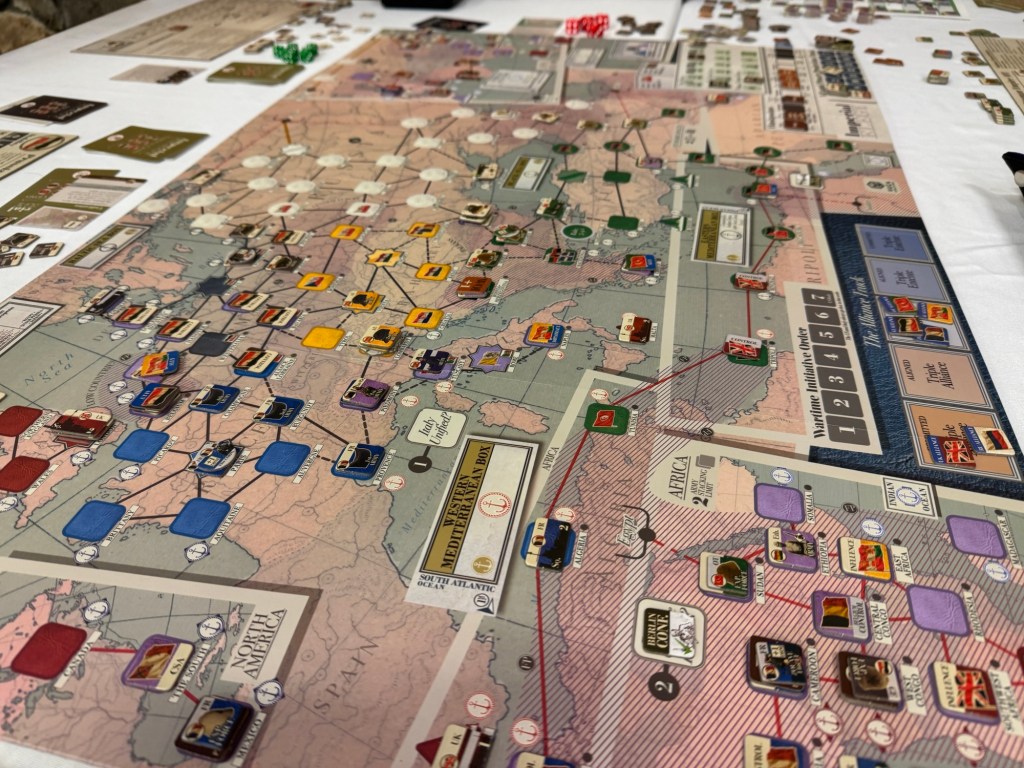
But first, I am going to have to set the scene for you. As you know, we really enjoy attending conventions and playing large multi-player wargames such as Here I Stand, Virgin Queen, War Room, Alliance and many other titles. Over the years, we have absolutely had a blast at these conventions and they are the best places to play these large 5+ player wargames. Recently, while attending the World Boardgaming Championships in Seven Springs, Pennsylvania. This year I attended alone, as Alexander was on vacation in the south of France with family, and I was able to coordinate a full 6-player game of the amazing Imperial Elegy: The Road to the Great War 1850-1920 from VUCA Simulations. This game was released in late 2025 and we have since played it 3 times, including this play at WBC. Imperial Elegy is a is a card driven game that blends diplomacy, warfare and statecraft and feels a bit akin to games like Here I Stand and Virgin Queen from GMT Games. Like those games, IE is a grand scale sweeping epic that play multiplayers and take a day to play (literally 12-14 hours to see the game through to the bitter end). The game covers the dying throes of the colonial and imperial powers of the 17th and 18th century as they deal with local colonial uprisings, attempts to unify fractured countries, build alliances for protection and to aid in their own expansion and economic concerns of population growth and industrialization. Players will take on the roles of 1 of 6 unique major powers in the game including Germany/Prussia, the United Kingdom, France, Austria-Hungary, Russia and the Ottoman Empire. This is a really deep and involved game and frankly after 3 plays I am finally grasping what it is that I should be focused on, how to go about building alliances and the benefits that I must get from those to have a chance at survival. But I am still learning and have only played as the German/Prussian Empire and France, so there is a lot yet to learn and explore.

While playing a 6-player game at WBC recently, I was the French. Previously I had played as the German/Prussian Empire and this was going to be a new experience where I could see what another faction was about and begin to understand their motivations, goals and objectives. A fellow player, who was playing as the UK, which is a natural ally of the French, saw my taking of some actions that didn’t sit well with him and he was actively trying to find ways to punish me for doing what he didn’t agree with. Keep in mind he never said anything about his reasoning at the time of taking the action, because it made zero sense at the time in the state of the game, nor did it make any sense in the game for the UK’s long term strategy. It was simply odd and I was searching for understanding as to why he would choose to do what he did.

In the game, I had just agreed with Germany to voluntarily give up Alsace Lorraine because I had no way to prevent him from coming in and destroying my 1 army there. He had 2 full armies, one of which had an Elite Corps. as well as an adjacent army supporting it on the board. So I decided I would sue for peace and try to avoid a prolonged battle that would waste my resources and that would ultimately, at least in my opinion, lead to me losing the location. The German/Prussian Empire is trying to unify their country and must control a certain number of countries on the board marked with a German flag, of which Alsace Lorraine is one. As a concession with the German player, I was able to convince him to give me 2 cards from the deal, which were randomly drawn as you cannot simply give over a specific card, and they were both 1’s. Bummer. But, I now had 2 extra cards to perform a few more actions that turn and that was a good trade off for me.

I was planning to go hard into colonies in Africa, Asia and even into North America to get to 6 Colonial Keys to accomplish one of my National Goals and to gain an extra +1 Card and +1 Manpower. I had already made good progress by taking Algeria and gaining traction in Morocco in North Africa and controlled 1 of the spaces on the Africa sub map.

That’s when he played a 3 Ops Card called Folie de Grandeur for the event which allowed him to place a revolt in a French controlled colony in Africa, Asia or North America and he went behind me to take out Algeria which meant I would have to go back and move an Expeditionary Force there and spend 3-4 impulses to Pacify it and get it back under my control. It sucked. The event also forced me to lose a Stability and take a -1 Card marker. This was a devastating and mean card to play at that time.

I asked him why he would play this card, as we were moving toward becoming allies and had discussions about how things should and could go, and I had done nothing to him but had been simply trying to do what France should do by going into City of Light points, intervening in Italy and their unification and building colonies. I was admittedly a bit upset and kept pestering him about his reasoning through the whole game. He said at the time he played that card, he had a good hand with several large Ops cards and didn’t need the extra 3 from this card (I call BS as you can always use more Ops). Plus I actually watched his final card plays that round and he didn’t have good cards but had a middling hand with several 2 OPs cards. I was taking notes.

So we played out the game and he actually screwed me over later with another stupid event (man there are a ton of those Mandatory little events that make taking colonies very dicey) and he was absolutely not in the game at all. He had only scored 2 VP from his National Goals and had only a few colonies with just 2 in South Africa. Later that evening over dinner, I asked him again why and told him his reasons used at the table were BS. He said to me straight faced that I had pissed him off with my move with Germany and he was punishing me. Punishing me? In a game that I am still exploring to learn and understand the buttons to push and levers to pull. As mentioned, I have only played 3 times with Germany/Prussia and France. He was PUNISHING me! Are you kidding me?!? Geeze. This has still bothered me to this day and I wanted to share to have you either talk me down off the ledge or give me some reasoning to make it all make sense.

I want to clarify that this person is a good friend. We have played games together for years and we are always mixing it up. I plan to continue playing games with him and I am sure will have many other experiences to share over the years.

So what are your thoughts? Was I misguided in my angst? Did I take it too personally? Was he justified in his actions? What do you do when you have a situation like this in a game? Thanks for reading and for sharing your thoughts. I will come up with a few more of these posts over the next few months to share and I hope to see lots of comments and reaction.

In the meantime, we have put out several pieces of content, including written posts and videos. You can visit those by following the links below:

Unboxing Video:

Video Review:

Summary on Solitaire Bots presented by our friend James:

Written First Impressions Post on the blog: https://theplayersaid.com/2026/05/06/first-impressions-imperial-elegy-the-road-to-the-great-war-1850-1920-from-vuca-simulations/

My Favorite Wargame Cards – A Look at Individual Cards from My Favorite Games – Card #85: Hydraulic Recoil: https://theplayersaid.com/2026/07/07/my-favorite-wargame-cards-a-look-at-individual-cards-from-my-favorite-games-card-85-hydraulic-recoil-from-imperial-elegy-the-road-to-the-great-war-1850-1920-from-vuca/

-Grant

  •  

World Boardgaming Championships 2026 Daily Debrief Series – Day 6

I am nearing the end of my time here at WBC and I’m starting to get a bit sad. I have tomorrow but I will be leaving 1 day early on Saturday and just am not ready for it to be over. I have had a great time, played a lot of games, 13 by my count, and also seen old friends and made new ones. I have also done 6 videos but have had some technical difficulties with the camera as the batteries keep prematurely dying even though they have been fully charged. Bit I have made great memories and I am happy with that.

Today, we got in a full 6-player game of the excellent Imperial Elegy from VUCA Simulations. Imperial Elegy: The Road to the Great War 1850-1920 is a card driven game that blends diplomacy, warfare, and statecraft and feels a bit akin to games like Here I Stand and Virgin Queen from GMT Games. Grand scale sweeping epics that play multiplayers and take a day to play. Players play as 1 of 6 unique major powers in the game including Germany/Prussia, the United Kingdom, France, Austria-Hungary, Russia and the Ottoman Empire.

The game is somewhat of a sandbox style game as you have so many options and choices about what to do during the course of the game. Obviously, your faction has some direction about what you should be doing but really it is up the player to spend their resources how they will to accomplish their ultimate goals and score Victory Points. I truly love that aspect about this game and as we played we saw that sandbox and the asymmetry between the various factions. Particularly at the start, each country has some specific goals that they have drawn from the National Goals Deck that are a source of Victory Points, in fact a major source of Victory Points, and players will need to prioritize these cards and decide which ones to attempt to go after from the start. With only 7 turns, they will have to make progress on these National Goals if they have any hope of actually achieving them.

I have now played 3 times and very much like the grand scale of the game. It is a tad long, todays game took us about 11 hours to play, and I am starting to have concerns with the ability of France and Germany to team up and dominate the game and the Great War. I played as France today and did fairly well scoring 9 VP’s from my National Goals and doing really well in Africa and Asia with colonies as well as breaking into Mexico. I was getting 8 cards near the end of the game because I had done well in my colonial keys and my stability. This gave me lots of options with my cards and I also built up a sizeable army with 5 full Armies on the board and 5 reserve armies with 5 squadrons on the high seas and several naval bases in the east, Africa and the Mediterranean.

I think the game is a tad bit long. This is because players have at least 5-7 cards each and the Battles are very long and are their own little sideshow with a war budget and multiple movements and attacks allowed. I like the game. Love it in fact but am beginning to think it is just going to be hard to get to the table often. Here I Stand is similar in scope and scale and uses the same system but can be played in 6-9 hours versus 10-14 hours for IE.

In the end, France, Germany and the Ottomans were teamed in the Triple Entente while UK and Russia formed the Triple Alliance even though Austria and Italy were left out in the cold. The TE won the game as they just had too much muscle. I look forward to the next time I can play but it might be a while.

I was then able to watch a few minutes of play of the new upcoming Here I Stand Series game called The Night Watch: European Global Conflicts 1618-1648 from GMT Games, which focuses on the Thirty Years War. Just a prototype of the game but it looks epic and those playing seemed to enjoy it!

I was able to then go down to the vendor hall and bought quite a few games including The Alamo from Art of Wargames (solitaire), Sails at War from B2M Games, Year of the Rat Vietnam 1972 Deluxe Edition from Decision Games, Fortress of Oblivion from White Dog Games (solitaire), Le Conqueste from White Dog Games (solitaire), Model’s Counterattack from Dissimula Edizioni, On To Berlin from Multi-Man Publishing and Strike Counter Strike from Multi-Man Publishing. I was gifted a new copy of Assault Red Horizon ‘41 Revised Edition from Assault Games. Lots of great stuff to explore over the next several months.

I then met up with Bob Tkach designer of the upcoming Above the Trenches: The Fokker Scourge 1915-1917 from Flying Pig Games coming to Kickstarter this fall. This is a 2-player aerial dogfighting wargame that combines tactical, operational, and strategic elements of World War I air combat on the Western Front into a fast playing and fun game. The game focuses on the early years of WWI aerial warfare and the German-versus-British air battles.

The players will have to deal with the strategic board that has sector based objectives that will provide Victory Points and then place out their air units on the operational board where they will focus on height and positioning of observation balloons and fighters to protect them and finally will duel using cards on the innovative and very interesting combat wheel system for tactical positioning.

The players will draw a hand of technology cards, maneuver cards, speed cards and ace cards that all have numbers and some written events and will then play them to move the plane counter around the wheel and its various areas to take shots with front or rear based guns, avoid contact by maneuvering out of harms way and then starting over until one side or the other wins.

This game is not just about the dogfighting but players will be faced with the management of their squadrons, taking out of service planes to upgrade and repair them, give training to pilots to learn new skills and also to build new and upgraded planes.

A very fun and exciting game. As I was playing, I could really fell the excitement and tension building and very much loved what this one was trying to do. After playing, I was able to shoot a 30 minute video with the designer Bob and his developer Rich and I could feel their passion for the subject and the game.

After finishing up, I then met up with Uwe Wallentin from Sound of Drums to get a look at their upcoming lineup of games which includes many great looking titles such as Neither King Nor God Expanded Edition, No Retreat! The Russian Front Designer’s Edition, Battles of Napoleon Volume II: QUATRE BRAS 1815 / WARTENBURG 1813, Iron Cross Army Group North and Iron Cross Kharkov.

Uwe is a great guy and Sound of Drums is doing a great job of designing playable games with fantastic graphic design and artwork. I very much enjoyed our chat and we did a 30 minute video that’ll be up later on the channel.

That was it and I landed in bed around 10:30pm and need to get some rest for our final day tomorrow where we are playing Here I Stand from GMT Games.

Hope to see you back tomorrow night!

-Grant

  •  
❌