❌

Lese-Ansicht

Anthropic cracks down on AI game cloning as risk of unauthorised digital copies, reskins grows

AI giant Anthropic has introduced new restrictions which attempt to stop its Claude coding software from recreating existing games, amid generative AI providing the capability to quickly spin up unauthorised digital clones and reskins.

The changes were spotted in Claude Code’s instructions around October 27, with two new sentences telling the software: “Do build original games, games in a genre, and games from the user’s own designs and assets”, and “Don’t build a recreation of a specific existing game, even if it is renamed or called original”.

Anthropic technical staff member Addy Osmani confirmed the changes in a post on X, saying the company had introduced the restrictions because using Claude to infringe intellectual property rights was already against its usage policy.

Board games are vulnerable to AI-generated imitations because their underlying gameplay mechanics generally cannot be protected by copyright – while generative AI also makes it easier to reproduce those systems digitally, and create alternative imagery and text without directly copying the original game’s protected material.

The potential danger to tabletop publishers was highlighted last year when US software development company Sembit used Claude Code to produce a browser-based version of Catan within four minutes – although that rapidly-assembled version suffered from significant bugs and some non-functioning gameplay features.

Unauthorised online versions of board games are not a new phenomenon, with publishers having faced challenges controlling digital recreations of their titles long before AI coding tools became widely available. But generative AI potentially makes such recreations much easier to produce, lowering the technical expertise, time and cost needed to turn an existing tabletop game into a playable digital version.

Colonist.io, which was launched in 2017 as Katan.io before rebranding in 2019, openly markets itself as a free alternative to Catan, closely reproducing the original game’s rules, gameplay and visual layout while using different artwork. The platform reported 60 million games played and 3.6 million active players across 2025.

Colonist.io states clearly on its website that it has no association with Catan, and argues that its game is legal under US law, citing guidance from the US Copyright Office that gameplay methods cannot be protected by copyright.
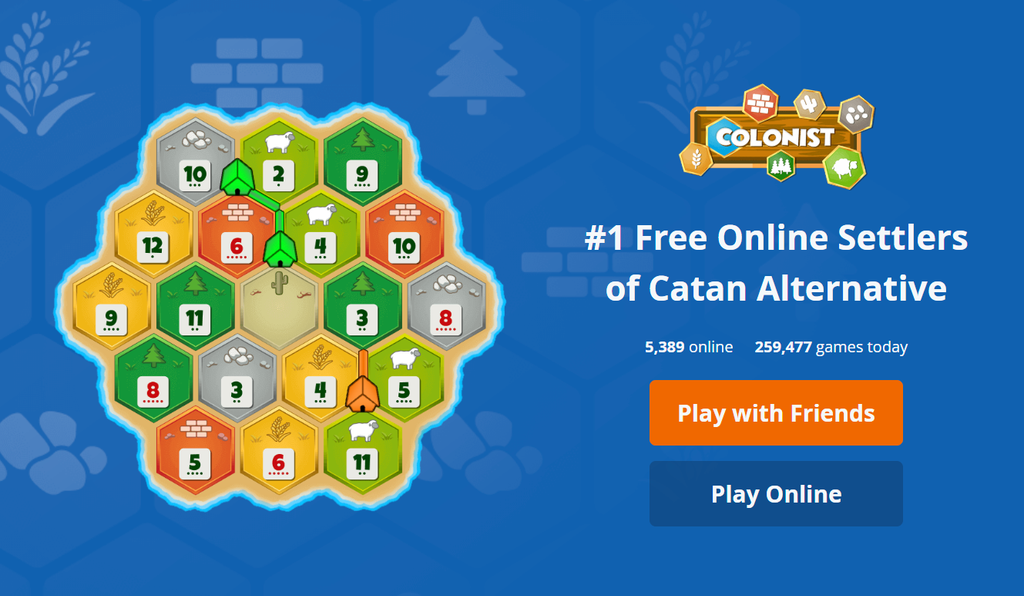
The Colonist.io homepage

A 2022 study published in the Iowa Law Review highlighted the Catan rights holders’ apparent decision not to pursue legal action against Colonist.io, contrasting it with an earlier incident in which an Android imitation called Island Settlers was withdrawn following a cease-and-desist notice from Catan’s lawyers in 2011.

Companies which have taken action against unauthorised digital adaptations include Disney, which prompted the closure of the unofficial Disney Lorcana simulator Pixelborn in 2024 over its use of the game’s protected card imagery. Pixelborn creator Pavel Kolev said more than 6.5 million games had been played on the platform before it was shut down.

Anthropic’s new intervention follows controversy over AI-generated video game clones, including cases where developers have withdrawn public demonstrations over concerns that their games could be copied before release.

The new restrictions have already affected attempts to recreate published tabletop games, including a Claude Code user who reported being refused help to build a private online version of an unnamed, commercially released co-op board game.

The user wanted to create a password-protected version allowing friends to play remotely, including one unable to attend in-person sessions, and to introduce AI-controlled players to study the game’s strategy.

Claude refused despite the user specifying that the adaptation would not be publicly distributed, instead offering to help develop an original game using similar co-op and limited-information mechanics.

A separate complaint came from wargame publisher Raymond Weiss, whose Conflict Simulations business has released around 30 tabletop titles since 2017- including three nominees for the Charles S Roberts Awards, one of the longest-running awards honouring conflict-focused tabletop games.

Weiss says he has been using AI-assisted coding to create unlicensed digital versions of other publishers’ wargames for paying customers, calling them private, “personalized builds” for people he says already own the physical version of games which do not already have a digital adaptation. He charges between $400 and $800 per project, according to his website.

He reported on GitHub that Claude Code had begun refusing to continue work on adaptations it previously supported, although he acknowledged that he did not hold licences from the publishers whose games were being adapted.

The restrictions are, of course, limited to Anthropic’s own software. In a November 2 blog post, Weiss said he had already resumed the work interrupted by Claude’s refusals using rival AI coding tools OpenAI Codex and Kimi.

The post Anthropic cracks down on AI game cloning as risk of unauthorised digital copies, reskins grows first appeared on .

  •  

CMON to give up The Adventurers ownership to get delayed project delivered as it works to stabilise finances

CMON has found a route to getting one of its delayed projects into customers’ hands without having to fund the remaining costs itself, as the financially-troubled publisher continues its attempt to recover from almost $23m of losses across 2024 and 2025.

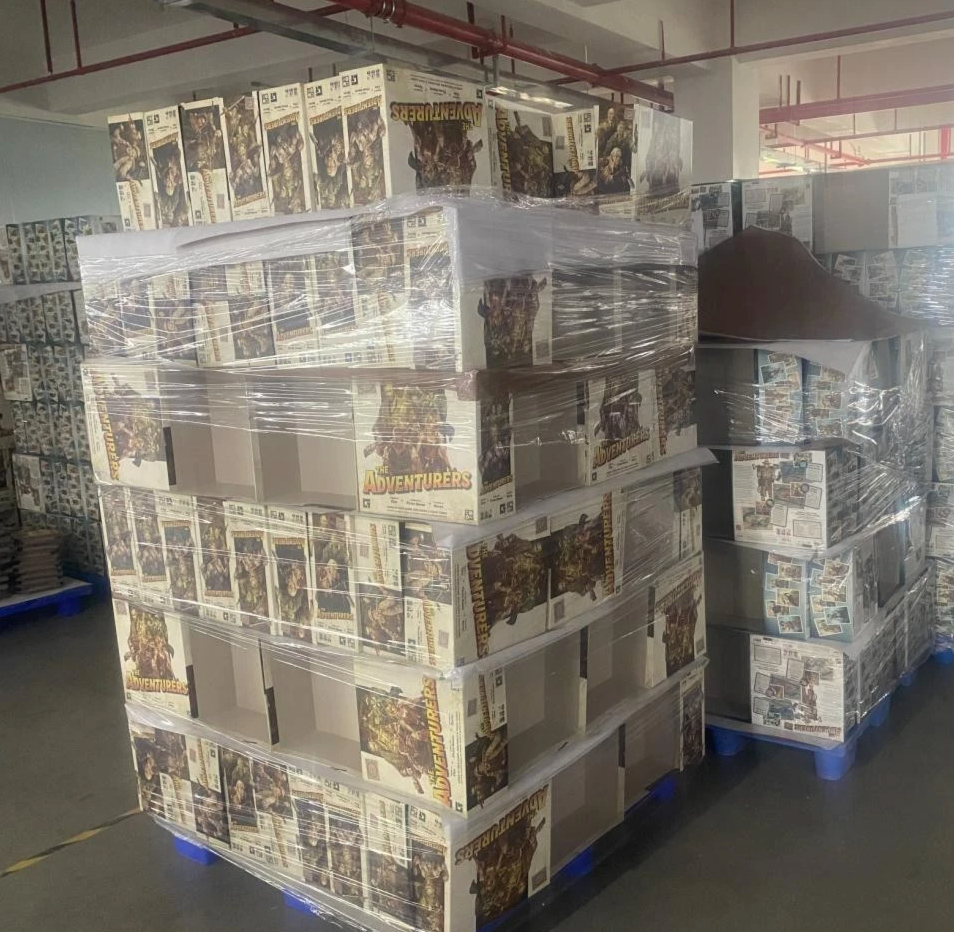
Long-time CMON manufacturing partner Top Games has agreed to take ownership of The Adventurers in exchange for covering the remaining production and fulfilment costs for the pre-order title, with CMON continuing to “provide support”, a joint statement from the pair said.

They added that production of The Adventurers had now been completed, with finished games packed at the factory and ready for shipment.

Copies of The Adventurers ready for shipment || Photo Credit: CMON / Top Games

CMON said in January that IP sales and licensing deals were among the routes it was pursuing to secure fulfilment of its large backlog of outstanding projects, as part of its efforts to stabilise its finances.

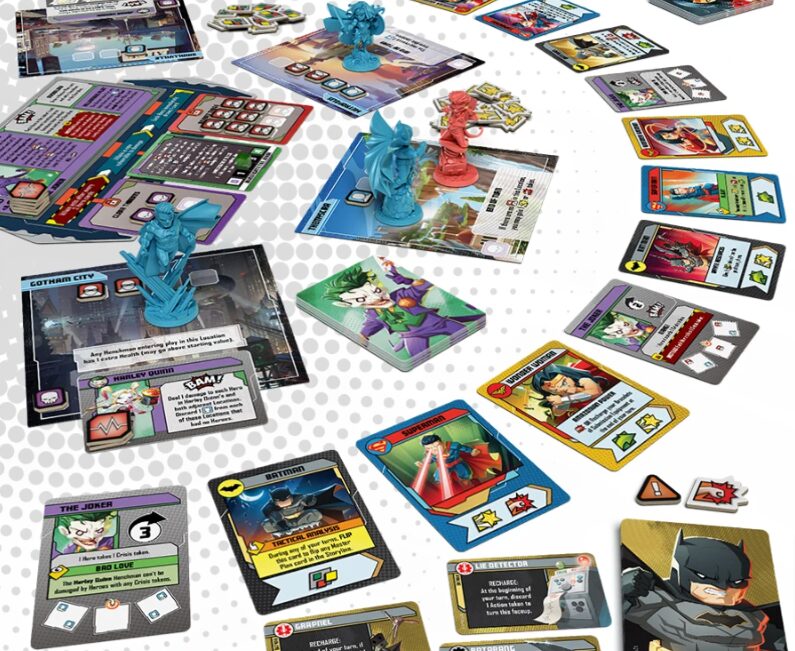
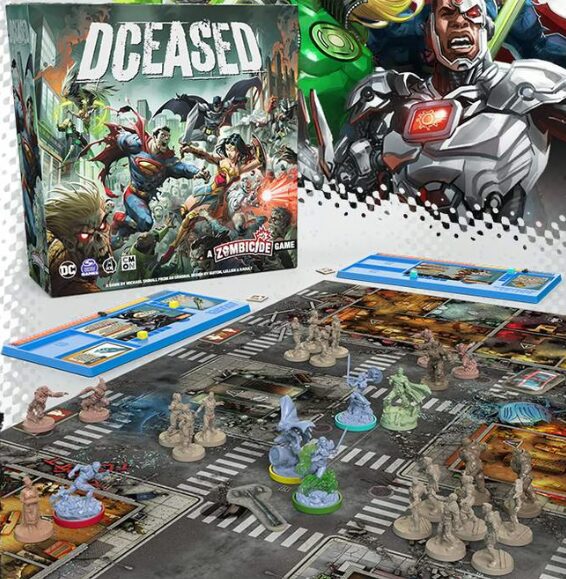
Those undelivered projects comprise eight crowdfunding campaigns which raised more than $14m, including DC Super Heroes United, DCeased and Massive Darkness: Dungeons of Shadowreach, and four pre-order campaigns including The Adventurers.

CMON warned in the summer that its core business was suffering a “prolonged structural downturn” and was still consuming more cash than it generated, despite a drastic restructuring which has seen the company halve its workforce, sell off some of its biggest game IPs and halt new crowdfunding campaigns.

But the publisher received a major financial boost last month by completing a $19m capital raise – having entered August with just $368,000 in bank and cash balances.

That new funding is needed for far more than clearing its project backlog, however. About 40% has been earmarked for “working capital” over the coming 12 months, including staff costs, royalties, shipping and distribution, while another 20% is set to go towards repaying borrowings and other liabilities.

Another 25% of the new money is slated for expansion in existing and new markets, while 15% will go towards potential acquisitions as part of a push into digital gaming.

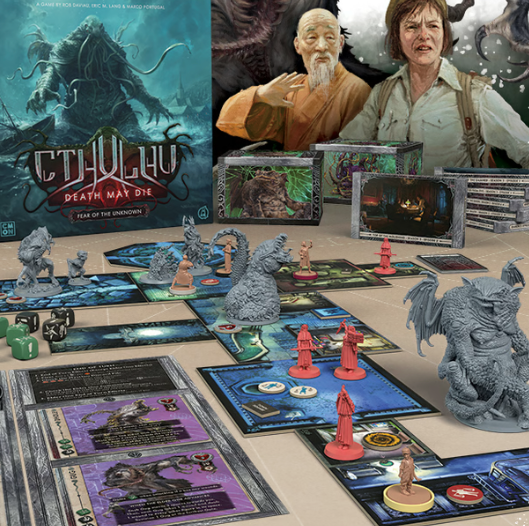
Top Games has been a major manufacturing partner for CMON over the years, working on more than a dozen of its games including Cthulhu: Death May Die – Fear of the Unknown, Massive Darkness 2: Hellscape and Zombicide: Undead or Alive, as well as Project: ELITE, Munchkin Dungeon and Starcadia Quest.

Its team has worked in tabletop manufacturing since 2009, and the Chinese company established its own plastics manufacturing facility in Dongguan in 2018.

Cthulhu: Death May Die – Fear of the Unknown || Kickstarter image

Top Games stressed in the announcement that manufacturing will remain the foundation of its business, and said its involvement with The Adventurers had the specific goal of getting the project completed and delivered to customers.

The Adventurers is CMON’s revival of the adventure game series from Guillaume Blossier and Frédéric Henry, which began with The Adventurers: The Temple of Chac in 2009 – originally published by AEG and Dust Games. That title was followed by followed by Dust Games and Fantasy Flight Games’ The Adventurers: The Pyramid of Horus in 2011.

CMON launched a Gamefound pre-order in March 2025 featuring new editions of both games alongside a new entry in the series, The Adventurers: Tomb of the Pirate Queen, with delivery of the project estimated for December that year.

Just a month later, however, the publisher announced it was laying off staff and halting new game development and campaign launches, citing the ongoing unpredictability in US tariffs.

A week after that, CMON revealed it had slumped to a loss of more than $3m in 2024 – a figure subsequently dwarfed by the publisher’s 2025 losses, which spiralled to nearly $20m.

Those losses are almost 5.5-times the company’s profits from the preceding nine years combined – although the company’s recent restructuring efforts have seen its losses for the first half of 2026 narrow sharply, to just over $2m.

CMON’s revenue has fallen dramatically from its pandemic-era highs, dropping to $9.9m in 2025 from between $37m and $45m in each of the previous four years.

The company has blamed that decline on factors including a slowdown in crowdfunding, weaker consumer demand and disruption from US tariffs, leaving it trying to cut costs and reshape a business built around significantly higher sales.

Massive Darkness: Dungeons of Shadowreach, which completed a $2.85m crowdfund on Gamefound early last year, was CMON’s last before it scrapped its future crowdfunding plans two months later.

The company has pivoted in the interim to releasing several smaller-box games direct to retail, including Collect!, Peanuts Talent Show, Fairy Perfume, Rocket Punch and Yokai Carnival.

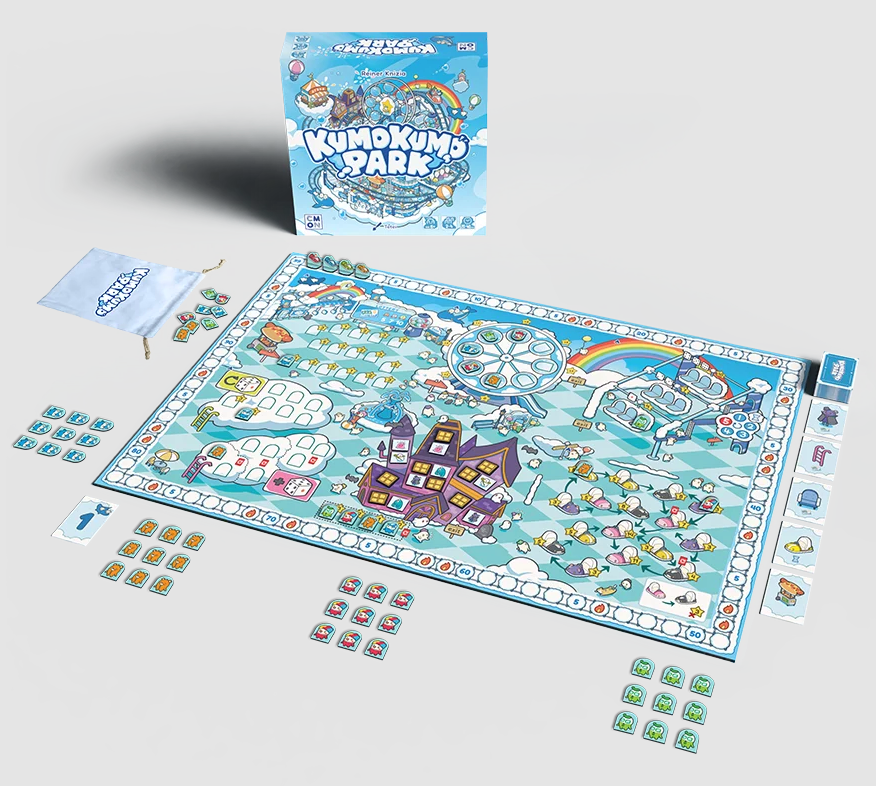
Its 2026 releases continue that trend via Renier Knizia design KumoKumo Park and Atrah from Jérémy Ducret and Johannes Goupy, while the company has also highlighted Grow Sky as another release it says is ‘coming soon’.

KumoKumo Park, designed by Reiner Knizia || Photo Credit: CMON

The company has not completed fulfillment of a crowdfunding project since Zombicide: White Death in mid-2025, but did manage to deliver pre-orders for Cthulhu: Dark Providence, Marvel United: Witching Hour and Dune: Desert War in the first half of this year.

CMON said in March that it planned to resume crowdfunding in the second half of 2026 – although its latest financial report stopped short of repeating that commitment, saying instead that new titles would be launched selectively depending on market conditions, available financial resources and project readiness.

The post CMON to give up The Adventurers ownership to get delayed project delivered as it works to stabilise finances first appeared on .

  •  

CMON succeeds with $19m capital raise in major boost to financially-troubled publisher’s turnaround

Financially-troubled board game publisher CMON has secured a $19m injection of new capital as it battles to turn around years of heavy losses and dwindling cash reserves – which had left it with just $368,000 in bank and cash balances at the start of August.

The huge investment from new shareholders gives the crowdfunded board game giant much-needed financial breathing room, as it continues its attempt to recover from losses of almost $23m across 2024 and 2025.

CMON warned in the summer that its core business was suffering a “prolonged structural downturn” and was still consuming more cash than it generates, despite a drastic restructuring which has seen the company halve its workforce, sell off some of its biggest game IPs and halt new crowdfunding campaigns.

Those efforts dramatically reduced its losses, with the company reporting a loss of just over $2m for the first half of this year, compared to almost $7m for the same period in 2025.

But CMON’s balance sheet remained under pressure at the end of June, with $7.34m more in short-term liabilities than short-term assets, up from $6.89m at the end of 2025.

A significant part of CMON’s liabilities relates to eight crowdfunded games whose campaigns raised $14m from backers, but which the company has yet to deliver – including DC Super Heroes United, which raised more than $4.4m, and DCeased, which brought in over $2.5m.

DC Super Heroes United, designed by Andrea Chiarvesio || Crowdfunding image

CMON’s directors in its H1 report that the liabilities position had caused the company’s directors to give “careful consideration to the future liquidity and performance of the group and its available sources of financing in assessing whether the group will have sufficient financial resources to continue as a going concern”.

The directors added that they believed CMON would be be able to continue operating – but central to that assessment was the success of the planned share sale, which was designed to raise up to HK$150.5m, or about $19m.

Existing shareholders agreed to buy just 7.76% of the new shares offered to them by the August deadline, leaving CMON looking to raise more than $17.5m from other investors through the rights issue – a figure approaching 2.5-times the valuation of the entire company implied by its last share sale in February this year.

But the company has now revealed that placing agent Yuen Meta managed to sell every remaining share on offer, giving the business the full $19m it had been seeking – a significant mark of belief in the beleagured business.

That capital injection is more than 50-times CMON cash balance from early August, and almost double the $9.9m in revenue CMON generated across the whole of last year, although it pales in comparison to the $37m to $45m revenues it posted each year between 2021 and 2024.

CMON said it plans to use 40% of the newly-raised money to fund its day-to-day operations across the next 12 months, including staff costs, royalties, shipping and distribution, professional fees and other administrative and operating expenses.

Of that slice, about 30% – which works out to $2.28m – was set to go towards staff costs including salaries, bonuses and allowances, 30% towards selling and distribution expenses, and 35% towards general administrative and operating expenses, including its sales operation, utilities, insurance, government registration and filing fees, listing fee, repairs and maintenance. The the final 5% was earmarked for paying professional fees

That news could provide some relief to the tens of thousands of backers still waiting for their games via CMON’s heavily-delayed crowdfunding campaigns – although the publisher has not specified exactly how much of the capital will be used to deliver the overdue titles, or whether the capital is enough to ensure all eight will be fulfilled.

Zombicide: White Death

CMON has not completed fulfillment of a crowdfunding project since Zombicide: White Death in mid-2025, but did manage to deliver pre-orders for Cthulhu: Dark Providence, Marvel United: Witching Hour and Dune: Desert War in the first half of this year.

Four other pre-order titles: Assassin’s Creed Role Playing Game, The Adventurers, The Dead Keep and Super Fantasy Brawl Reborn, all remain undelivered, although the first of those is currently slated for completion in Q3.

GameAmount raised
Number of backers
Fundraise completedInitial delivery estimateLatest delivery estimate (as of September 24, 2026)
Mordred$669,9765,687July 2023August 2024Q4 2026
Masters of the Universe: The Board Game – Clash for Eternia$719,6644,182January 2024November 2024Q1 2027
DCeased$2,564,78912,787December 2023April 2025Q1 2027
DC Super Heroes United$4,478,98914,040August 2024August 2025Q1 2027
God of War$832,9454,388May 2024June 2025Q2 2027
Massive Darkness: Dungeons of Shadowreach$2,854,5539,842February 2025March 2026Q3 2027
A Song of Ice & Fire: Tactics$1,886,5096,406February 2024February 2025Q3 2027
Degenesis: Clan Wars$339,7421,232June 2024July 2025n/a
Total Dollars$14,347,167

About 20% of CMON’s newly-raised capital is earmarked for repaying debts and other outstanding liabilities, including $2.46m owed to a CMON director and $385,000 of unsecured advances from employees, as well as outstanding production, shipping, royalty and other operating costs.

CMON has slated 25% of the new money for expansion in existing and new markets, including strengthening the company’s presence in Europe through marketing and potential attendance at events including Spiel Essen and Cannes, as well as targeting growth in Japan and the Philippines.

The company added that it plans to put 15% of the new capital towards potential acquisitions as part of a push into digital gaming, although said it had not yet identified any targets.

CMON said it intends to look for between one and three businesses, primarily in Asia-Pacific, valued at between about $1.3m and $2.5m each, which could help it develop digital adaptations of its existing games, companion apps and other digitally-enabled features.

The publisher stressed that it intends to retain physical tabletop games as its core business, with the digital push designed to complement rather than replace them.

CMON’s capital raise has also radically reshaped the ownership of the company, with chairman and CEO Ng Chern Ann ceasing to be the largest shareholder after his overall stake was diluted down from about 20% to just over 5%.

The capital raise has made investor Yip Ka Ki Cherry CMON’s largest disclosed shareholder with a roughly 19% stake, personally and via her investment holding company Legend One.

Yip was already an investor in CMON before the rights issue, with a stake of about 4.8%. Her other previous investments through Legend One include Japanese entertainment business TryHard Holdings.

CMON has also strengthened its board following the capital raise, appointing two new independent non-executive directors – veteran financial management, corporate governance and audit executive Chan Ka Kit, and corporate communications, marketing and investor relations specialist Claire Luk.

The post CMON succeeds with $19m capital raise in major boost to financially-troubled publisher’s turnaround first appeared on .

  •  

CMON warns of ‘prolonged structural downturn’ as it seeks up to $17.5m from investors

CMON has warned that its core business is suffering a “prolonged structural downturn” and is still consuming more cash than it generates, despite a drastic restructuring which has seen the board game crowdfunding major halve its workforce, sell off some of its biggest game IPs and halt new crowdfunding campaigns.

The warning comes amid an extraordinary period of upheaval for one of tabletop gaming’s biggest crowdfunding publishers, which suffered losses of almost $23m across 2024 and 2025 and is still working to deliver a string of heavily-delayed campaigns that raised more than $14m from backers.

CMON has spent the past 18 months attempting to stabilise its finances by cutting staff and other costs, selling high-profile IP including Zombicide, Blood Rage and Cthulhu: Death May Die, divesting its Singapore office and raising fresh money from investors.

Those efforts have now dramatically reduced its losses, CMON’s newly-released H1 financial report shows – with the company reporting a loss of just over $2m for the first half of this year, compared to almost $7m for the same period in 2025.

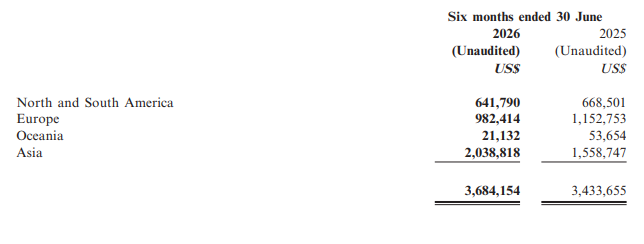
CMON’s revenue also rose more than 7% year-on-year in H1, up to $3.68m from $3.43m in the first six months of 2025, while its selling and distribution expenses more than halved from $1.83m to $859,000, and its general and administrative expenses fell from $4.37m to $2.37m.

But that improvement has failed to make the underlying business self-sustaining. CMON’s cash reserves, which stood at $3.9m at the end of 2022, had fallen to $2.1m by the end of 2024, and slipped again to just over $900,000 by June 2025.

CMON revealed last month that it had about $368,000 in bank and cash balances as of August 4, which it described as enough to cover less than a month of its daily operating expenses.

Crowdfunding Commitments

Despite the sharp reduction in its losses, CMON’s balance sheet remained under pressure at the end of June – with $7.34m more in short-term liabilities than short-term assets, up from $6.89m at the end of 2025.

A significant part of CMON’s liabilities relates to eight crowdfunded games whose campaigns raised $14m from backers, but which the company has yet to deliver.

They include DC Super Heroes United, which raised more than $4.4m, and DCeased, which brought in over $2.5m. Both of those campaigns were initially due to be delivered last year, but fulfillment has been pushed back several times since and both are now scheduled for the first quarter of 2027.

CMON has not completed fulfillment of a crowdfunding project since Zombicide: White Death in mid-2025, but has managed to deliver pre-orders for Cthulhu: Dark Providence, Marvel United: Witching Hour and Dune: Desert War in the first half of this year.

Four other pre-order titles: Assassin’s Creed Role Playing Game, The Adventurers, The Dead Keep and Super Fantasy Brawl Reborn, all remain undelivered, although the first of those is currently slated for completion in Q3.

Funding Push

CMON said in its H1 report that the liabilities position had caused the company’s directors to give “careful consideration to the future liquidity and performance of the group and its available sources of financing in assessing whether the group will have sufficient financial resources to continue as a going concern”.

Those directors believe CMON will be able to continue operating – but central to that assessment is a major share sale designed to raise up to HK$150.5m – about $19m.

CMON first announced the rights issue fundraise in June, proposing to offer existing shareholders the opportunity to buy three new shares for every share they already owned in an attempt to raise the capital.

The plan was approved by shareholders in late July and the formal offer opened in mid-August – but existing shareholders took up just 7.76% of the new shares offered to them by the August deadline.

That leaves CMON looking to raise more than $17.5m from other investors through the rights issue – a figure approaching 2.5-times the valuation of the entire company implied by its last share sale in February this year.

CMON said it plans to use 40% of the money raised to fund its day-to-day operations for roughly the next year, including staff costs, royalties, shipping and distribution, professional fees and other administrative and operating expenses.

Another 20% is earmarked for repaying debts and other outstanding liabilities, including $2.46m owed to a CMON director and $385,000 of unsecured advances from employees, as well as outstanding production, shipping, royalty and other operating costs.

CMON has earmarked 25% for expansion in existing and new markets, including strengthening the company’s presence in Europe through marketing and potential attendance at events including Spiel Essen and Cannes, as well as targeting growth in Japan and the Philippines.

Digital Ambitions

The company added that it plans to put 15% of the new capital towards potential acquisitions as part of a push into digital gaming, although said it had not yet identified any targets.

CMON said it intends to look for between one and three businesses, primarily in Asia-Pacific, valued at between about $1.3m and $2.5m each, which could help it develop digital adaptations of its existing games, companion apps and other digitally-enabled features.

The publisher stressed that it intends to retain physical tabletop games as its core business, with the digital push designed to complement rather than replace them.

That announcement comes just a few weeks after CMON terminated its planned $2.1m investment in NFT video game maker Blissful Link, an investment it had previously said formed part of a digital shift necessary to remain “relevant” in the games industry and expand its revenue stream.

That plan had included transitioning the company’s titles such as Massive Darkness and Super Fantasy Brawl Reborn into “high-quality digital assets” – with CMON saying the group would “continue to supplement this digital transformation as physical games would still offer a ‘screen break’ for individuals as well as foster direct face to face interaction”.

The proposed investment would have valued Blissful Link at more than $95m. Blissful Link made a loss of about $197,000 in 2024, on revenues of just over $408,000, and had net liabilities of about $889,000, according to unaudited figures provided by CMON in April. It did not include finances for 2025.

CMON said in the rights issue offer, “Under prevailing high-interest lending conditions, traditional bank borrowings and debt financing carry heavy interest and securing such financing would severely strain the group’s remaining liquidity.

“Accordingly, equity financing via the rights Issue is the most viable strategic path to recapitalize the group’s capital base without increasing debt distress.”

The directors’ assessment that CMON can remain a going concern also takes into account continued financial support from some of its directors, progress fulfilling its outstanding contract liabilities and further restructuring aimed at reducing cash outflows.

Revenue Collapse

CMON’s latest figures also reveal the scale of the collapse in its North American and European revenues over the past five years, transforming the geographical make-up of what remains of its business.

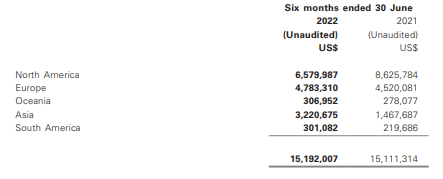
North America alone generated more than $8.6m for CMON in the first half of 2021, making up 57% of its roughly $15.1m H1 revenue. By the first half of this year, however, revenue from North and South America combined had fallen to just $642,000.

Europe has undergone a similarly dramatic contraction, with revenue from the region falling from about $4.5m in the first half of 2021 to just $982,000 in the latest six-month period.

Asia has consequently become CMON’s largest market by a considerable margin, generating more than $2m in the first half of this year and accounting for about 55% of its total revenue, compared with less than 10% in the same period of 2021.

That reversal has not been driven by Asian growth, however. CMON generated $3.22m from Asia in the first half of 2022, marking a roughly 37% decline since – but a far more resilient performance than the steep falls recorded in North America and Europe over the same period.

The publisher said in its H1 2026 report, “The group intends to continue developing its distribution and market presence in Asia while supporting its established markets in Europe.

“The group will also continue to monitor trade and tariff conditions affecting the US market, and maintain a prudent approach to allocate resources to markets and projects.”

CMON said in March this year that it intended to resume crowdfunding in the second half of 2026, but its latest interim results stop short of repeating that commitment, saying instead that new titles will be developed and launched selectively depending on market conditions, available financial resources and project readiness.

The final result of the rights issue is due to be announced on September 15.

The post CMON warns of ‘prolonged structural downturn’ as it seeks up to $17.5m from investors first appeared on .

  •  

“Our attempts to do things ‘different from the others’ came back to bite us”: Plaid Hat’s Colby Dauch on The Monolith’s Kickstarter failure and rapid turnaround

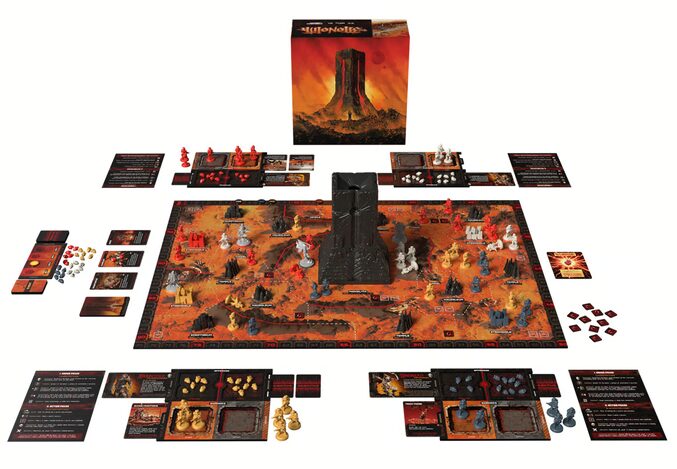
Plaid Hat Games launched its Kickstarter for The Monolith in June with a trio of successful crowdfunding campaigns under its belt – only to pull the project three days after launch when pledges unexpectedly ground to a halt, despite quickly beating its $20,000 goal. Less than two months later the revamped campaign is back, and has already pulled in almost four-times the amount the cancelled campaign managed in the same amount of time. In this first-person piece for BoardGameWire, Plaid Hat founder and CEO Colby Dauch explains why The Monolith exposed flaws the publisher’s previous campaigns had masked, what he believes it got wrong, and why the changes made for the relaunch appear to be working.

Plaid Hat Games is relatively new to crowdfunding and we’ve experience our first major setback in that arena. We launched our fourth ever crowdfunding campaign back in June, this time for a new game called The Monolith.

By the second day of the campaign the pledges had fully stalled out. It was self-evident that we had made mistakes, so we pulled the campaign with the intention to relaunch it after analyzing what had gone wrong, and doing what we could to address it.

As I write this article, I don’t know if our hunches will turn out to be correct. This article is scheduled to be posted as we relaunch the campaign, so I suppose we are all going to find out together! I’m more than a little nervous. Allow me to provide some background essential in understanding how we’ve come to make the choices we’ve made.

Plaid Hat founder and CEO Colby Dauch

We’ve been around since 2009 and watched from the sidelines as crowdfunding took hold and grew into a large part of the board game industry.

For many years we swore off crowdfunding. Internally we were critical of it for a number of reasons. My biggest reservation was that it felt dishonest to me that an established company would tell its customers “we need your help to make this product”, when they had already proven previously that they were capable of putting together the funding necessary to launch a new product onto the market, without requiring the customer to buy said product a year or more in advance of its release.

However, things have changed over the years in more ways than one and honestly, it has been a bad business decision to hold out on the crowdfunding model for as long as I have.

When we did finally enter the crowdfunding space a couple of years ago I told myself, and others, that there was clearly no longer an expectation that the companies going to crowdfunding needed to be there. I believed it to be understood that it was more akin to a pre-order system and that the consumer knows that. I even said as much in the article I was interviewed for on this very site, posted on June 30th, about us pulling the Monolith from Kickstarter. It’s not true. I had only convinced myself that it was.

I’m in the midst of reflecting on every decision I’ve made that led to a failed campaign, and what that failure means for my company, the people I employ and my family, if I’m not able to correct course. The reality is that we moved to crowdfunding because the things that made us successful in the past aren’t working anymore and we were growing desperate for a solution.

Getting attention on a board game release announcement isn’t free anymore. It’s not news. At best it’s a bullet point on a long list of new release announcements for the week. The traditional method we’ve long employed of selling to distributors who sell to retailers who sell to players, sadly seems to be falling apart for us, and I suspect for most publishers.

So we found ourselves trying to incorporate crowdfunding into our business model while simultaneously telling ourselves we could do it different – better. Our approach:

  • We will severely limit the use of exclusives. We don’t want people feeling like they HAVE to buy the product now or they will be missing out.
  • We aren’t seeking to punish the people who have long supported their local board game shop by purchasing our products through them.
  • Most of all we don’t want to manipulate our customers by preying on their fear of missing out.
  • We will reduce the long wait between the time you back a game and the time you get that game by being fully ready to go to production at the time of the Kickstarter.

There were flaws in this approach. Flaws that I believe were masked in our first three campaigns because they all had something else big going for them.

Wandering Galaxy was the latest installment in a series of games we had released that had gotten a lot of attention for their amazing storytelling and voice acting (in a companion app).

Ashes Ascendency was a reinvigoration for a game that has ten years worth of glowing reviews to put in front of people and a dedicated fanbase.

Super Auto Pets Card Battle was based on an amazing and charming digital game, and we were able to rely on the attention of fans from that.

The Monolith had no predecessor.

The Monolith || Kickstarter image

This is why I believe our attempts to do things ‘different from the others’ has come back to bite us:

We wanted to limit FOMO.

A crowdfunding campaign must be compelling beyond the presentation of the game itself. You are asking the customer to pay for a game long before they can expect to have it in their hands. We need to give them a compelling reason to do that.

In the Super Auto Pets Card Battle campaign, the most popular pledge was by far the ALL-IN pledge, because it was the most compelling. You got all of the sets, all of the add-ons and in a storage box that would organize it all and only be available during the campaign.

I took away the wrong lesson. What I decided was that what those results were telling me was just that people want all the stuff, so with The Monolith let’s just make the core product all of the stuff.

We wanted to reduce the wait time on the game.

This is the one where I really messed up with The Monolith. As I established, the reality is that we needed to make changes to how we were doing things and I allowed myself to miss out on a key advantage to crowdfunding: measuring demand.

In an effort to shorten the window on how quickly we could deliver on a campaign, and further spurred on by a yearning to have a line at our booth for a new game release at GenCon or Essen (that feeling is the highest of highs), I started having plastic molds for the game well before the campaign so that they wouldn’t delay production – and remember this game was going to have all the upgrades packed in, so it was a lot of plastics and a lot of mold costs.

Further compounding the issue was that the mold costs were so high, to get the cost per unit down, I felt like I needed to be prepared to produce 10,000 copies. And like the molds, I got that production started before the campaign even started.

It was the exact kind of risk we had always needed to take when producing a game, but crowdfunding should have given me a chance to mitigate that risk, and in doing so really been a fulfillment of the core concept of crowdfunding to begin with: Asking the player to help be a part of bringing the game to the market.

So here is what we are doing differently with the relaunch of The Monolith campaign to try to address what went wrong with the initial campaign:

  • Creating a 1-2 player mini-expansion.
  • Lowering the retail price of the game and offering a larger discount on that already lower price for backers.
  • Creating a 6th shaman character add-on.
  • Creating glass blood tokens add-on.
  • Creating a metal first player and surge tokens add-on.
  • Creating an All-In tier with all of the add-ons included at a lower price than purchasing them separately.
  • Different marketing partner and strategy.

Finally, here are my take aways for how we will do campaigns differently in the future:

  • When possible, create a version of the game that focuses on lower price and a version that focuses on maximum bling.
  • Be more willing to compete with the price point that we and everyone else knows online retailers are going to put on our games.
  • Give the campaign a chance to communicate what the demand is. We will still be production ready, but I won’t be putting the cart directly in front of the horse again.
  • Better leverage the community-based systems that already exist to support crowdfunding.

Follow Up

As I write THIS bit, the campaign has relaunched about 24 hours ago and is doing much better this time!  By a large margin, backers are opting for the pledge level that includes all the add-ons. So I believe this supports the theory that the add-ons were essential for a successful campaign. 

It is hard to quantify exactly how much each of our changes contributed to the better result, but overall, the adjustments seem to be working.  I’m so grateful to everyone who has backed.

The Kickstarter for The Monolith, which is designed by Phil Gross, is set to run until September 17.

The post “Our attempts to do things ‘different from the others’ came back to bite us”: Plaid Hat’s Colby Dauch on The Monolith’s Kickstarter failure and rapid turnaround first appeared on .

  •  
❌