Normale Ansicht

Hermann Müller (Weimar Chancellor Ratings, #1)

17. Mai 2026 um 17:04

We’ve been assessing the merits of political leaders in (more or less) democratic countries on this blog for a few years now. Today, we’re returning to German chancellors… but not the way you know it. After a few chancellors from the Federal Republic of Germany (founded in 1949), we’re assessing for the first time a chancellor from the Weimar Republic, Germany’s first attempt at parliamentary government – Hermann Müller. And which game could be more appropriate for him than Weimar (Matthias Cramer, Capstone Games/Skellig Games/Spielworxx)?

The Rating System

Some caveats ahead: The chancellors will be rated by the knowledge of their time. If they or their contemporaries could not have known about the effects of something, I will not use my hindsight to mark it as a mistake of theirs. The assessment is focused on their conduct as chancellor.

Now, to the system itself: There are three policy field categories (foreign, domestic, and economic policy) and three more general ones (vision, pragmatism, integrity). A chancellor can earn from one to five stars in each category (for a total sum of up to 30). In detail, the chancellor is assessed as follows:

Foreign policy: Did the chancellor increase German influence in the world and the security of Germans at home? Did the chancellor wield German power responsibly and with positive results for the regions affected?

Domestic policy: Did the chancellor increase the liberty of Germans to express themselves and to participate in the political process? Did the chancellor promote domestic security and shape the framework for fair justice dealing with offenses?

Economic policy: Did the chancellor facilitate the prosperity and economic security of Germans (including in the mid- and long-term)? Was the chancellor’s economic policy based on mutual benefit of those involved or did it unduly burden one side?

Vision: Did the chancellor have an idea of what Germany and Europe (the latter counting for more in times of German influence being great) should look like beyond the immediate future? Did the chancellor’s policies steer Germany (and, if applicable, Europe) in this direction?

Pragmatism: Did the chancellor succeed in seeing their policy through from inception to completion? How well did the chancellor manage the support from parliament, society, the administration, the media?

Integrity: Did the chancellor understand the office as a means to benefit themselves, special interest groups, the entire country, or another community? Did the chancellor respect the boundaries of the office?

Note: If you have read my UK prime minister or US president ratings, you will remember that I rated them on the global impacts of their vision as well. As the rating system is only really applicable to democratic leaders and no democratic German leader ever had the chance to conduct a truly global policy, I only assess their vision on national and European grounds.

Müller’s Early Life

Hermann Müller was born in Mannheim (in the southwest of Germany) on May 18, 1876. His father ran a small sparkling wine company, but died when Hermann was still a teenager. Thus, instead of taking over the company or going to university, the young Hermann Müller trained to become a clerk. He soon became involved with the socialist movement and joined the Social Democratic Party of Germany (SPD) in 1893. After some years working for social democratic newspapers, he was elected to the leadership board of the SPD in 1906. Müller was often charged with liaisons to other socialist parties in Europe – including a doomed trip to Paris in July 1914, trying to negotiate a joint refusal of French and German socialists to support their respective countries’ impending war with each other.

Müller was elected to Imperial Germany’s parliament in a by-election in 1916. Soon after, the German Social Democrats split between the Majority Social Democrats (MSPD, including Müller) who supported the war effort, and the Independent Social Democrats (USPD), who did not. When the war was lost in November 1918 and the monarchy swept away by revolutionary soldiers and workers, the MSPD soon took control of the revolution and steered a moderate course towards parliamentary democracy.

The Compiègne card (referring to the armistice between Germany and the Allies on November 11, 1918) contains the setup instructions for Weimar. Look at all the orange crisis tokens to be placed! Image ©Capstone Games/Skellig Games/Spielworxx.

The New Republic

The revolution of 1918/1919 transformed the (M)SPD from the pariah party of Imperial Germany to the most important pillar of the new republic. As the Social Democrats were no longer barred from the positions of power, they needed scores of cadres to fill them. The general upswing also brought a promotion for Müller, who was elected co-chairman of the MSPD in 1919. Government came with its own challenges: The lost war, the ongoing Allied naval blockade, and the weak position of the new government made it imperative to conclude a peace treaty with the Allied powers. The provisions of the Treaty of Versailles, with which the Allies presented Germany, seemed unacceptable to most Germans – including many Social Democrats. Chancellor Philipp Scheidemann resigned rather than take responsibility for the treaty. He was succeeded by Gustav Bauer (also SPD) whose new administration Müller joined as foreign minister in June 1919. In this role, it fell to him to sign the treaty. From there, Müller sketched the outlines of a new foreign policy – one in which Germany would cooperate with the Allies, use its economic and cultural rather than its military strength to influence world events, and thus overturn the harsh provisions of the Treaty of Versailles.

The Treaty of Versailles is not too attractive for the first government parties in Weimar, as it strengthens their nationalist (DNVP) rivals (black icons)… but at some time, you will have to bite the bullet to remove the Allied blockade which might otherwise topple the republic. Image ©Capstone Games/Skellig Games/Spielworxx.

The Bauer administration resigned after the Kapp-Lüttwitz coup of March 1920. Müller took over the chancellorship as a caretaker – elections were scheduled for June 1920. He was unable to tackle most of the many challenges which beset Germany (chiefly the agreement with the Allies on the details of the German reparations, the tensions over the German-Polish border, and the threat of right-wing terrorism and insurgency (as in the Kahr coup in Bavaria)). The only crisis which was dispelled during his time in office was the dissolution of the Red Ruhr Army, a left-wing militia which had formed in opposition to the Kapp-Lüttwitz coup and, after its failure, had continued their struggle for a council republic on the Ruhr. Their uprising was put down by army and Freikorps units and over a thousand workers (with more or less connection to the uprising) summarily executed.

The Red Ruhr Army can give the Communists a powerful push in the game… and make the Republican parties more forgiving of the Nationalists taking over army units (black units in Essen).

The first one and a half years of democratic government in Germany had proven a disappointment for many voters, including those who generally were in favor of the new republic. The three government parties (the SPD, the Catholic Center (Zentrum), and the liberal German Democratic Party (DDP)) all suffered heavy losses in the 1920 election. The SPD was particularly hard hit, as its handling of the Kapp-Lüttwitz coup and the Ruhr Uprising disenchanted many left-leaning workers. Both the USPD and the pro-business, conservative-liberal German People’s Party (DVP) gained a lot of votes.

With the majority for the government coalition lost, Müller attempted to broaden the government by including the USPD. Due to his handling of the aftermath of the Kapp-Lüttwitz coup, he was brusquely rebuffed. As he did not see potential to cooperate with the DVP, he led the SPD into opposition.

The Opposition agenda card in Weimar strengthens the SPD in parliament and allows the party to (re-)gain a minor ally (the USPD or DDP).

Opposition and Return to Government

Müller’s own inclination was to return to government responsibility, but he prioritized first the reunification of the SPD with the USPD (concluded in 1922) and then the prevention of another rupture. However, the SPD supported the bourgeois minority government (Zentrum, DDP, and DVP) in matters of foreign policy, which was conducted by the guidelines which Müller had laid out as foreign minister and chancellor in 1919 and 1920.

The reparations issue, however, remained unresolved. As tensions over it with the Allies heated up, France occupied the Ruhr again, to which the government responded with encouraging the population of the Ruhr to cease cooperation with the occupiers. This “passive resistance” relied on the national government funding the livelihood of millions of people and thus fueled inflation. As these interconnected crises escalated, it became clear that the government did not have the parliamentary and public support to deal with them. Government needed to rest on a broad basis. The first “Grand Coalition”, led by DVP chancellor Gustav Stresemann and including SPD, Zentrum, DDP, and DVP was inaugurated in August 1923. Four Social Democrats became ministers. Hermann Müller, however, was none of them as he was deemed indispensable to maintain control of the fractious SPD parliamentary group (whose vote to join the government had been on the narrowest of margins).

Stresemann’s re-roll ability makes him an excellent ally in any kind of crisis – coups, foreign policy, presidential elections.

While the Stresemann government successfully ended both the passive resistance (and French occupation) and the inflation crisis, the way there was rocky. It included challenges from both the left wing in Saxony and Thuringia (which were put down by the armed forces once the Communist Party entered a parliamentary government) and the right wing (a nationalist power grab in Bavaria was left unanswered as the loyalty of the army to the republic seemed suspect; an attempt to radicalize Bavaria even further led by a young demagogue named Adolf Hitler collapsed when it met resistance by the nationalist authorities). This uneven treatment convinced the SPD to leave government after only three months. Stresemann, thus without a majority, soon was toppled as chancellor, but remained foreign minister.

The SPD, despite being the largest party in parliament (and being confirmed in this status in 1924), would spend the next five years in opposition. Attempts to form another Grand Coalition failed in 1924 and 1925 (because the DVP preferred to cooperate with the nationalist DNVP and the new, monarchist, president Paul von Hindenburg), and in 1926, because Müller’s SPD engaged in the fool’s quest of pursuing a plebiscite to expropriate the former princes – the plebiscite failed to meet the quorum as expected, but it set the SPD on a path of confrontation with the bourgeois parties which ruled out any cooperation with them.

“Fürstenenteignung” (Princes’ Expropriation) is a Communist card in Weimar, reflecting that it was the KPD which initiated the plebiscite. Should the SPD player get too embroiled in it, it might damage their relationship with the Zentrum. Image ©Capstone Games/Skellig Games/Spielworxx.

That did not mean that cooperation was impossible: The SPD continued to back the cooperative-revisionist foreign policy of the government, and also supported budget compromises. Thus, the party agreed to a budget for the year 1928 which included a first payment for new armored cruisers to modernize the navy. It then campaigned for the March 1928 elections on the slogan “Meals for Children instead of the Armored Cruiser”. The electorate returned the SPD with its best showing since 1919. Müller was able to form a government (once more including Zentrum, DDP, and DVP) and was elected chancellor for the second time.

Müller at work in his preferred arena – that of parliamentary debate, not of street action. His event often allows the SPD player to shift the issues decisively in their favor.

The Second Chancellorship

The contradiction between parliamentary action and campaign promises immediately backfired for Müller. The budget for the new fiscal year was due, and as agreed, included funds for the naval modernization. Müller belatedly realized that the decision had been made already, that the SPD had agreed to it, and that his government partners would expect the SPD to stick to its previous course. While Müller and the SPD ministers voted in favor of the budget in cabinet, the SPD parliamentary group revolted against the budget and forced them to vote against it in parliament. It did the rebels no good, as they could not find another majority for an alternative budget, but the revolt was a catastrophe for Müller’s authority.

The Armored Cruiser event/issue is likely to sow discord between Zentrum and SPD. Only a very trusting partnership between the two can allow each to shine. Image ©Capstone Games/Skellig Games/Spielworxx.

The economic situation was similarly unpromising: When the trade unions of the Ruhr heavy industry proposed a pay raise by 15 pennies per hour, the employers responded by pre-emptively handing hundreds of thousands of workers their notice. Unions and employers then agreed on mediation, but when the employers did not like the result, they backtracked and disputed the legality of the process. Thus, 240,000 iron workers were laid off. Müller had a second mediator make a new proposal, which was suitably employer-friendly (with pay raises ranging from one to six pennies per hour). The employers contentedly saw that playing hardball paid off. Their confrontational stance would increase with the growing unemployment after the 1929 stock market crash.

The good times are over: The 1929 stock market crash marks the beginning of the tumultuous last two rounds of Weimar. Government, once a coveted source of victory points, will now be less fruitful, and, at the same time more detrimental to the involved parties’ parliamentary strength. Image ©Capstone Games/Skellig Games/Spielworxx.

For the time being, Müller enjoyed the greatest success of his tenure: He negotiated a new reparations agreement (without Stresemann, who died in October 1929), the Young Plan (named after Owen D. Young, who represented the American side). The negotiations were a great step forward for Germany (as the reparations were much reduced and payment put on a realistic basis), but a mixed blessing for Müller: On the one hand, the agreement was very unpopular (as it stipulated German payments for the next 58 years) and thus maligned by the right wing (which campaigned against it on the slogan “Enslaved for three generations). On the other, the combination of the undoubted necessity of the negotiations and their unpopularity meant that the moderate right-wing parties held off their assault on Müller for the moment, as they wanted him to take the blame.

The combo of the Young Plan and the petition against it may place up to three new crisis markers on the board. Müller really threaded the needle by successfully negotiating the reparations agreement and then fending off the referendum against it.

It was only a short reprieve. By January 1930, the Young Plan negotiations were concluded. The same month, the DVP, not being held back by the pro-government Stresemann anymore, had secretly decided to break the coalition if the SPD did not agree to radical pro-business reforms. The party had received encouragement from president Hindenburg, who also intimated to Zentrum leader Heinrich Brüning that he would support a Brüning-led bourgeois minority cabinet with presidential executive orders.

A key legislative initiative for the SPD: The Unemployment Insurance event gives victory points in the short run and (via the Unemployment Insurance society token, yellow square) will reduce poverty over a few rounds, thus providing a major boost to the SPD’s program. Image ©Capstone Games/Skellig Games/Spielworxx.

The showdown came in March 1930 over the reform of unemployment insurance. Müller had negotiated a compromise with Paul Moldenhauer (DVP), the minister of finance. However, the DVP parliamentary group refused to accept the compromise. Müller then tasked Brüning to work out another proposal which would be acceptable to all parties in government. Brüning’s suggestion – which would have postponed the issue by another year without solving it – found agreement in the DVP, Zentrum, and DDP parliamentary groups, but, despite Müller’s urging, not that of the SPD. The second Müller administration thus ended on March 27, 1930.

The stern look of a-parliamentary government. Image ©Capstone Games/Skellig Games/Spielworxx.

Müller had hoped that president Hindenburg would support an SPD-led minority government with executive orders. Instead, Hindenburg turned to Brüning whose chancellorship began the slide into government not backed by parliamentary majorities. The SPD, however, supported Brüning on key issues of economic and foreign policy lest the president find excuses to turn even more authoritarian. It was to no avail: Hindenburg and his camarilla got tired of Brüning in 1932 and replaced him in turn with Franz von Papen and Kurt von Schleicher who enjoyed even less parliamentary support, before it seemed like a smart move to them to ally their nationalist elites to the popular movement of the Nazis in January 1933, ending German democracy altogether. Müller did not live to see his democratic republic destroyed: He had never been of strong health, had campaigned and governed against the advice of his doctors who counselled rest, and died on March 20, 1931.

The Rating

Foreign policy

Müller developed Weimar’s foreign policy in his first term in government (as foreign minister and chancellor), which aimed at proving to the Allies by faithful cooperation that Germany was willing to do its part in reconciliation (but had economic limits in what it could do) and would thus be re-admitted on an equal footing to the international community, which would allow the country to revise key portions of the Treaty of Versailles. While the theory was sound, its application ran into practical problems – for Müller as well as the other chancellors and foreign ministers of the Weimar Republic: French revisionism of the Treaty (France felt short-changed in the matters of annexations and would have liked to incorporate the entire left bank of the Rhine as under Napoleon), and the constant charges from the German right that international cooperation under the Treaty of Versailles was akin to betrayal of the nation.

Rating: 4 out of 5.
Müller’s foreign policy provided the basis for that of the Weimar Republic up to 1932… but it was always vulnerable to nationalist attacks on it. Image ©Capstone Games/Skellig Games/Spielworxx.

Domestic policy

Müller never gave much attention to the existing inequities during his two terms as chancellor. That he was aware of them is proven by his record as foreign minister, in which he massively overworked the diplomatic service (which had been almost exclusively staffed by nobles heretofore), opening it for applicants from all backgrounds. Similar reforms of the judiciary or the military, two other institutions still personally and mentally clinging to Imperial Germany, did not make it to Müller’s chancellor agenda, even though the atrocities committed on the Ruhr in 1920 while the army could not be used to deal with the Bavarian regime at all showed the necessity of these institutional changes.

Rating: 2 out of 5.
Think this might justify removing anti-democratic elements from the army? Image ©Capstone Games/Skellig Games/Spielworxx.

Economic policy

Müller’s handling of economic policy was incremental and cooperative – a bad fit to deal with his counterparts in business and the government (DVP) who wanted radical changes through confrontation. Müller’s stance may have been the more reasonable. But Müller lost.

Rating: 2 out of 5.

Vision

Müller’s vision of a Germany based on constructive parliamentary debate and government compromise, cooperating with other countries on an equal footing, is compelling. However, Müller was not always successful in advancing these goals, as he prioritized party unity over compromise with others at times.

Rating: 3 out of 5.
The illustration for the State Visit event card of the SPD is Müller’s second cabinet. Müller himself is seated, second from the left. Image ©Capstone Games/Skellig Games/Spielworxx.

Pragmatism

Müller failed to see most of his policy initiatives through. He kept neither his coalition nor his own parliamentary group in check. However, Müller prevented another rupture of his party, and as a skilled electoral campaigner, achieved the first place for the SPD in every national election with him at the helm of the party.

Rating: 2 out of 5.
The SPD was generally successful at the ballot box, but the party – and Müller – often failed to parlay this popular support into policy success. Image ©Capstone Games/Skellig Games/Spielworxx.

Integrity

Müller was fair and even-handed in his conduct as a chancellor. As a Social Democrat, he considered the workers his natural constituency, but was always willing to include the interests of other groups in the compromises he forged. His only fault was to hope for the a-parliamentary executive order minority government which, in the end, was given not to him, but Brüning.

Rating: 4 out of 5.

Overall

Hermann Müller’s chancellorship is traditionally considered a failure based on the collapse of the Weimar Republic soon after. Yet the Republic did not end with his tenure, and it was destroyed not by his actions, but by those of others. Müller’s most enduring contribution was the invention of the Weimar formula of foreign policy, his biggest weakness his inability to impose authority on his friends, partners, rivals, and foes. He failed because he was a middling chancellor in a hostile world.

  1. Abraham Lincoln 28/30
  2. Franklin D. Roosevelt 25/30
  3. Friedrich Ebert 25/30
  4. Winston Churchill 25/30
  5. Robert Walpole 24/30
  6. Willy Brandt 23/30
  7. Konrad Adenauer 22/30
  8. Harry S. Truman 21/30
  9. John F. Kennedy 17/30
  10. Hermann Müller 17/30
  11. Ludwig Erhard 12/30
  12. Paul von Hindenburg 10/30

How would you rate Müller? Let me know in the comments!

Further Reading

For short overview essays on all German chancellors from Bismarck on, see Sternburg, Wilhelm von: Die deutschen Kanzler. Von Bismarck bis Merkel [The German Chancellors. From Bismarck to Merkel], Aufbau-Verlag, Berlin 2006 (in German).

The only full-length biography of Müller is Reichel, Peter: Der tragische Kanzler [The Tragic Chancellor], dtv, Munich 2018 (in German). Unfortunately, the book suffers from the author’s misguided attempt to assign blame for the end of the republic on the SPD for an alleged lack of willingness to compromise, which runs through the entire book.

A revisionist, but insightful short treatment of Müller is Behring, Rainer: Hermann Müller (1876—1931) und die Chancen der Weimarer Republik [Hermann Müller (1876—1931] and the Chances of the Weimar Republic], in: Brandt, Peter/Lehnert, Detlef: Sozialdemokratische Regierungschefs in Deutschland und Österreich. 1918—1983, Dietz, Bonn 2017 (in German).

For the broader context, see: Herbert, Ulrich: A History of Twentieth-Century Germany, Oxford University Press, Oxford 2019.

Tipp um Tipp – Brettspiel-Quiz (30)

17. Mai 2026 um 06:00

In unserem Format „Tipp um Tipp“ laden wir euch ein, mit uns zu quizzen. Wir beschreiben Euch einmal pro Woche in 15 bis 20 Hinweisen ein Brettspiel. Wie schnell bekommt Ihr es heraus? Am Ende gibt es direkt die Auflösung. 

Schreibt uns gerne, wie Euch das Quiz gefällt oder sagt einfach hallo.… [Weiterlesen]

Sanibel – REVIEW | Rezension Brettspiel

Von: Carina
12. Mai 2026 um 09:24

Paul Hargrave, dem Vater von Elizabeth, haben wir die Idee zum Brettspiel Sanibel zu verdanken. Er hat seine Tochter mit einem Spiel zum Sammeln von Muscheln inspiriert und konnte vor seinem Tod noch den Prototypen testen. Der Geist dieser schönen familiären Einbettung ist auch während des Spiels zu spüren. Sanibel ist wie ein Kurzurlaub am Meer – perfekt, wenn man […]

Tipp um Tipp – Brettspiel-Quiz (29)

10. Mai 2026 um 06:00

In unserem Format „Tipp um Tipp“ laden wir euch ein, mit uns zu quizzen. Wir beschreiben Euch einmal pro Woche in 15 bis 20 Hinweisen ein Brettspiel. Wie schnell bekommt Ihr es heraus? Am Ende gibt es direkt die Auflösung. 

Schreibt uns gerne, wie Euch das Quiz gefällt oder sagt einfach hallo.… [Weiterlesen]

Rebirth: Neue Spielhilfe verfügbar!

Von: Stefan
08. Mai 2026 um 17:16

Ab sofort findet ihr in unserem Download-Bereich und der Produkt-Seite von Rebirth eine neue Spielhilfe.

Jetzt downloaden!

Auf dieser werden alle Missionskarten des Schottland-Spielplans und die Gleichstandsregel für die Burgen noch mal mit nachvollziehbaren Beispielen erklärt.
In zukünftigen Auflagen des Spiels wird die Spielhilfe bereits enthalten sein. Wir werden sie aber auch in gedruckter Form kostenlos auf Messen dabei haben. Sprecht uns einfach am Stand darauf an und nehmt eine mit!

Der Beitrag Rebirth: Neue Spielhilfe verfügbar! erschien zuerst auf Frosted Games.

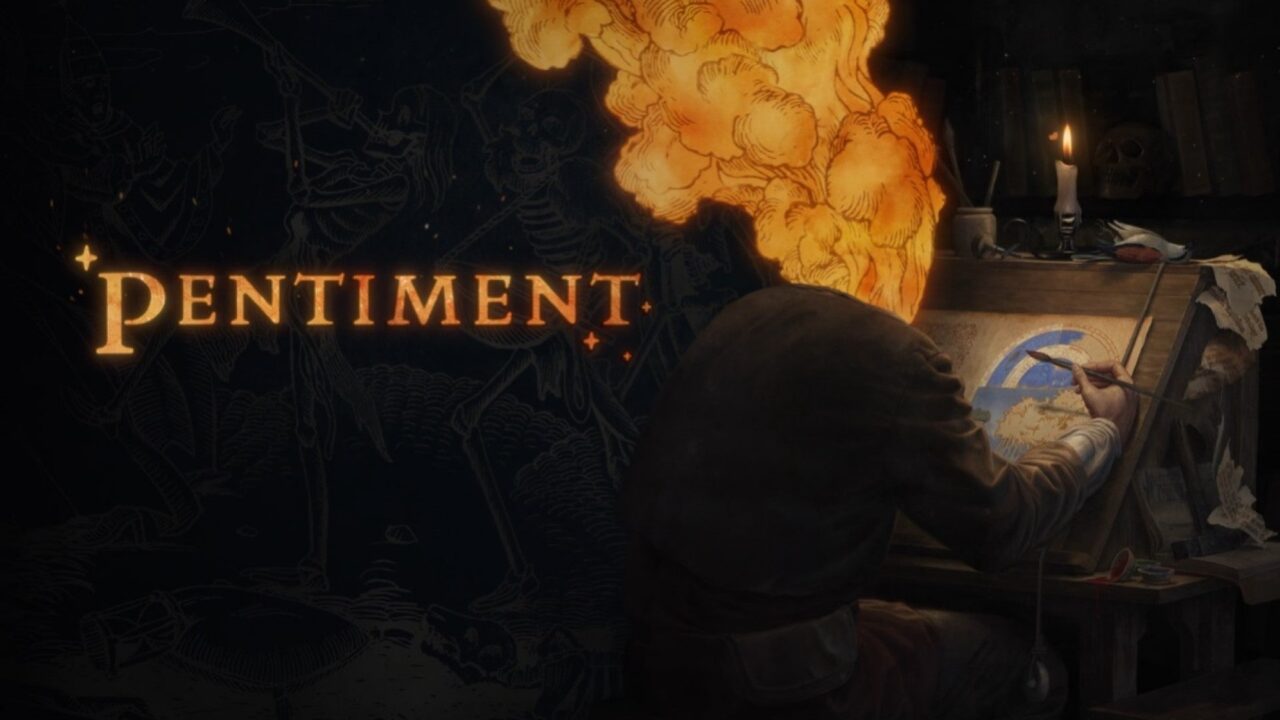
Pentiment

07. Mai 2026 um 15:10

Die Welt ist im Umbruch. 

Es ist das Jahr des Herren 1518. Wir sind Andreas Maler, angehender Meister-Illustrator aus Nürnberg, und wir befinden uns im fiktiven Kloster Kiersau der fiktiven bayrischen Stadt Tassing … im Auge eines heraufziehenden Orkans. 


„Das Alte stirbt und das Neue kann nicht zur Welt kommen: Es ist die Zeit der Monster“.
(frei nach Antonino Gramscsi) 

Die Alte Welt, die scheidet, das sind Kloster, Bücher die per Hand kopiert werden und einem Feudalismus dem das Geschäftsmodell flöten geht. Die neue Welt, die im Werden ist, sind  Reformation, der Buchdruck, die keimende Renaissance und allenthalben Bauernaufstände. 

Inmitten dessen spielen sich Dramen zwischen Kloster, Stadt und dem Bergidyll über einen Zeitraum von 25 Jahren ab. Wir sind stets mitten drin. 
Pro-Tip für ein entspanntes Abendessen: unbedingt Politik und Religion ansprechen. Herr Baron von Rothvogel erwischt gerade zwei Fliegen mit einer Klappe.
Das Spiel ist das Herzensprojekt von Obsidians Spieldirektor Josh Sawyer, der lange Zeit damit verbrachte die Welt des Heiligen römischen Reichs deutscher Nationen zu studieren. Das spürt man in jedem Pixel. 
Prächtiges Artwork: ein Spiel über die Liebe zu Büchern spielt „im Buch“. Und selbiges wird genutzt, um die Welt des 16. Jahrhunderts zu erklären.
Spielerisch haben wir es aus einem Hybrid aus Murder Mystery und einer digitaler Novelle zu tun. Du wirst bei dem Spiel lesen müssen. Sehr. Viel. Lesen.

Ein liebevolles Detail ist, dass die Schrift der Protagonisten ihre Herkunft und Bildung wiedergibt. Von der den gotischen Minuskeln der Klosterbewohner, über die deutlich klare Schrift der gebildeten Herrschaften, den effizienten Buchdruck-Buchstaben der technologischen Avantgarde bis zu den eher kruden mit einigen Fehlern behafteten Schreibschriften des Bauernvolks. Da das Spiel keine Sprachausgabe verwendet wird durch dieses Stilelement viel vom Charakter der Protagonisten transportiert.  
Kloster Kiersau Murder Mystery. Whodunit?
Die Mordfälle, die wir untersuchen sind dramatisch inszeniert und geben dem Spieler einen gewissen Druck schnell den/die MörderIn zu finden … ohne dabei einen tatsächliches tickendes Zeitlimit im Nacken zu haben.

Man tut gut daran sehr aufmerksam alle Orte zu besuchen und wirklich mit allen zu sprechen. Hatte ich schon gesagt, dass man viel liest? 
Dabei lebt man im Rhythmus des klösterlichen Alltags, unterbrochen mit Mittag und Abendessen, die man mit ausgesuchten Menschen verbringen kann (um am besten mehr oder minder geschickt an ein paar Informationen zu den Fällen zu kommen). Dabei kosten normale Gespräche keine Zeit, andere Aktionen schon. Nur erklärt das Spiel einem leider zu Anfang eher unzureichend welche Aktivitäten tatsächlich viel Zeit kosten, was dadurch andere Handlungen ausschließt.  

Dies erzeugt dann doch einen gewissen Druck die verschiedenen Fährten zu verfolgen. Und man wird schnell gewahr, dass nicht alle rechtzeitig zu en Verhandlungen zu einer Conclusio zu bringen sind. Das bringt uns zu einem moralischen Problem: jeder Fall hat Verdächtige mit guten Motiven und ausreichenden Gelegenheit der/die TäterIn zu sein. Man wird sich nicht sicher sein, ob man den/die Richtige/n anklagt. Das Spiel erwartet von einem diese Antwort und zeigt dann direkt die blutige Konsequenz. 
Wunderschön: philosophische Gespräche werden gerne direkt „im Buch“ geführt.
Als thematische Klammer über den Morden lauert eine sich schon früh zeigende Verschwörung, die einen bis zum Schluss vor dem Monitor hält. 

Das Leben des ausgehenden Mittelalters ist geprägt von Abschieden und Trauer.  In den Zweitsprüngen des Spiels erwische ich mich, wie ich rastlos durch Tassing laufe in der Hoffnung, dass meine liebgewordenen Freunde noch unter uns weilen. Das tun sie nicht immer. Zu viele Kinder werden beerdigt werden. Nur der eine alte Rochen der Stadt hält sich als purer Antipathie am Leben.    
So sehr die Alpenstadt auch im Griff der katholischen Kirche ist … alter Glauben und Bräuche haben sich bewahrt.
Über die Jahren nagen auch Dämonen an meinem Charakter. In einer für ihn/mich kathartischen Szene zum Ende des Spiels lief mir eine Träne über die Wange, als ich nur die zwei Worte las: „gute Nacht“.  So ein eindrückliches Strory- und Worldbuilding habe ich seit Langem nicht mehr er- und durchlebt. 
Das Spiel lässt sich Zeit, um auch Nebenstränge der Handlung auszuleuchten. Hier erzählt Bruder Sebhat aus der koptischen Kirche über seine Heimat.
Leider fällt das Spiel im abschließenden 3. Akt leider im Pacing und in zwei bis drei Logikthemen deutlich ab.
Die letzten 3 Stunden Spielzeit fühlten sich für mich eher nach Arbeit an. Die Motivation hinter die Verschwörung zu kommen hält mich aber an der Stange. Dass man zu Endes seiner Reise  ein so befriedigendes wie herzerweichendes Ende bekommt, konnte mich wieder versöhnen. 
Nahe dem Finale: 25 Jahre sind vergangen. Zeit langsam Abschied zu nehmen. Frohe Weihnachten Ihr Lieben.
So blieb ich leicht wehmütig mit dem Gedanken zurück: wann war die Welt einmal nicht im Umbruch und haben wir nicht alle für unser kurzes Leben sehr ähnliche Hoffnungen, Wünsche und Sorgen? Alles ändert sich und nichts ändert sich. 

Ich bin sehr froh nach Tassing aufgebrochen zu sein. Ich werde euch vermissen
Score Atmosphäre & Worldbuilding: 9,8

Score Gameplay: 6,5

Stubenscore: 8,5

Paper Tales Ultimate: Die Legende kehrt zurück!

06. Mai 2026 um 16:39

Eben noch in der Vorbestellaktion, nun ist es schon soweit: Das epische Reich von Paper Tales kehrt in seiner glanzvollsten Form zurück. Paper Tales Ultimate ist ab sofort offiziell erhältlich und bringt das preisgekrönte Kartenspiel-Erlebnis inklusive aller Erweiterungen direkt auf euren Spieltisch!

Direkt zum Shop

Was macht die Ultimate Edition so besonders?

Paper Tales von Masato Uesugi hat sich über Jahre einen festen Platz in den Herzen von Strategie-Fans erarbeitet. Das Besondere: Eure Einheiten bleiben nicht ewig. In jeder Runde altern eure Truppen und verlassen schließlich das Spielfeld, um Platz für neue Legenden zu machen. Dieser einzigartige Mechanismus zwingt euch, ständig umzudenken und euer Königreich über Generationen hinweg zu planen.


Die Ultimate Edition ist das Rundum-sorglos-Paket für alle Fans und Neueinsteiger:

  • Das komplette Erlebnis: Enthält das Grundspiel sowie die beiden Erweiterungen „Die Tore zur Unterwelt“ und „Was Legenden schmiedet“.

  • Massig Inhalt: Viele Einheiten, neue Gebäude und Artefakte sorgen für hohe Wiederspielbarkeit.

  • Schlachten in allen Größnordnungen: Spielbar mit bis zu 7 Personen – oder im herausfordernden Solo-Modus gegen den „König der Unterwelt“.

  • Premium-Ausstattung: Alles kommt in einer schicken Big Box mit optimiertem Inlay, damit ihr euer Imperium in Rekordzeit aufbauen könnt.


Holt euch euer Königreich!

Egal, ob ihr eure alte Sammlung aufwerten wollt oder zum ersten Mal in die Welt der alternden Helden und prunkvollen Gebäude eintaucht – jetzt ist der perfekte Zeitpunkt.

Paper Tales Ultimate ist ab sofort im gut sortierten Fachhandel und natürlich direkt bei uns im Frosted Games Shop verfügbar.

Jetzt bestellen

Der Beitrag Paper Tales Ultimate: Die Legende kehrt zurück! erschien zuerst auf Frosted Games.

Brettspielbox – Spiel des Jahres 2026 Orakel

06. Mai 2026 um 11:38

Das Brettspielbox-Orakel hat gesprochen! Björn, Carina, Christoph, Nina, Tanja und Tim haben sich intensiv mit den Nominierten für Spiel und Kennerspiel des Jahres beschäftigt und verraten in zwei kurzen Videos, welche Titel sie überzeugt haben. Neben unseren persönlichen Top-3-Listen und einer Gesamtwertung werfen wir auch einen Blick auf weitere Spiele des Jahrgangs, die uns begeistert […]

Wispwood – REVIEW | Rezension Brettspiel

Eine Katze nachts im Wald umgeben von possierlichen Waldgeistern: Das Cover vom Brettspiel Wispwood finde ich schön anzusehen. Das hinter dem Cover befindliche Plättchenlege-Spiel gefällt mir allerdings nochmal deutlich besser. Björn In Wispwood legen wir in drei Runden Wald- und Waldgeister-Plättchen aus, startend mit einem 4×4 Raster bis zu einem 6×6 Raster in der dritten Runde. Dazu […]

Jetzt abstimmen: Unsere Spiele beim Deutschen Spielepreis 2026

Von: Service
04. Mai 2026 um 12:14

Gleich mehrere unserer Spiele stehen auf der Nominierungsliste für den Deutschen Spielepreis!

Was ist der Deutsche Spielepreis?

Der Deutsche Spielepreis ist eine der wichtigsten Auszeichnungen für Brettspiele im deutschsprachigen Raum, bei dem die Community selbst den Sieger bestimmt. Spielerinnen und Spieler stimmen jedes Jahr darüber ab, welches Spiel sie am meisten überzeugt hat.

Ein kleiner Rückblick: Im letzten Jahr konnte sich unser Spiel Endeavor: Die Tiefsee den zweiten Platz sichern.

Diese Spiele stehen zur Wahl:

Für den aktuellen Preis könnt ihr unter anderem für folgende Frosted Games-Titel abstimmen:

  • Aquatica
  • Astro Knights
  • Das Phönix-Projekt
  • Dead Cells
  • Fate Flip – Mein Königreich
  • How to Save a World
  • Leviathan Wilds
  • One-Hit Heroes
  • Rebirth
  • Star Trek Captain´s Chair
  • Thunder Road: Vendetta – Maximum Chrome
  • Too Many Bones – Aus Der Tiefe

Wenn euch eins (oder mehrere) dieser Spiele begeistert hat, freuen wir uns über eure Stimme. Jede Abstimmung zählt und hilft uns!

Jetzt abstimmen

Danke für eure Unterstützung!

Der Beitrag Jetzt abstimmen: Unsere Spiele beim Deutschen Spielepreis 2026 erschien zuerst auf Frosted Games.

New York City in History & Board Games – Part 1

03. Mai 2026 um 19:03

Everything seems to get ever bigger. Cars. Phones. Board game boxes. And the cities whose history and board games we explore are no exception: We started with Venice, moved on to Amsterdam, and today, we’re starting with New York. I say starting, because unlike the previous two cities, there is no way to do the vast number of board games set in New York’s history justice in a single post. Thus, this will be a mini-series with (tentatively) three instalments.

If somebody asked you what New York is, you’d probably start by saying it’s a city in the United States. Today, we’re looking at it before it was that – first, when the area which is today New York was settled by Native Americans, then, when the first Europeans founded an outpost there, and finally, when this little settlement received the name it bears until today.

The First Settlers

Names are given by people. “New York” was what the English called the settlement they took over in 1664, but the place had been inhabited by thousands of years before. While that is thus technically not the history of New York, we’ll take a short look at it.

We don’t know very much about the first humans to live in what would become New York: The indigenous people did not keep written records. Archaeology is hard to do in a place which is almost entirely covered in buildings and streets today. And the oral tradition of the Indians was largely destroyed when the westward expansion of the European colonists pushed them out of their native homes, broke up their communities, and finally confined them to reservations.

Five hundred years ago, several thousand Lenape Indians inhabited an island they called Mannahatta (“island of many hills”). They lived off slash-and-burn agriculture, hunting, and fishing. I am not aware of any board game which depicts their lives before the arrival of the first Europeans, but I think it would be a nice change of perspective while still retaining the familiar geography which draws many board gamers (of course, especially those from New York and its surroundings) to games about the city.

In 1524, Giovanni da Verrazzano, an Italian explorer employed by the king of France, sailed into what would be called New York Bay. There, he met a group of Lenape in their canoes. He called the area New Angoulême to honor the French royal house of Valois-Angoulême. For the next century, European fur traders would occasionally visit the Lenape, but not attempt to build a permanent presence.

Nieuw Amsterdam

Only in the 1620s did the Dutch, by then the premier commercial and maritime country of Europe, decide to colonize parts of North America. They resolved that this colony should include Mannahatta to take advantage of the rich beaver population whose pelts were much sought after in Europe, and put the merchant Peter Minuit in charge of the operation.

Minuit arrived on May 4, 1626. He met with some of the Lenape, and, according to his written report to Europe, purchased the southern tip of Mannahatta from them for trade goods worth 60 guilders. Even though nobody knows any details beyond Minuit’s own account, the deal is the founding story of New York. One thing that stands out about it is that it was a business transaction. Unlike other cities in North America, New York was not founded by a royal agent or religious refugees, but in the spirit and through the means of commerce (which has since remained the supreme political order and religious faith of New York). In that sense, Minuit’s purchase is either a very smart business move – after all, a large tract of land in such a prime position was surely worth more than the trade goods he handed over – or the hostile act of an unscrupulous merchant taking advantage of the less business-savvy (both actions hallmarks of New York’s commercial culture until today). Beyond the foundational myth, the transaction mostly shows different ways of thinking about land – the Lenape only accepted the right to temporarily co-use it, whereas the Europeans subscribed to the tenet of permanent, exclusive ownership.

While the Dutch colonized the whole mid-Atlantic coast of what is today the US, their settlement on Mannahatta was meant to be its center – as evidenced by its name of Nieuw Amsterdam (New Amsterdam), after the Dutch capital. Nieuw Amsterdam grew into a trading hub based on its deep natural harbor, the best on the Atlantic coast. The fur trade was soon complemented by Dutch farms which extended ever further north on Mannahatta, which triggered conflicts with the Lenape. This period is represented in New Amsterdam (Jeffrey D. Allers, White Goblin Games), which casts its players in the shoes of Dutch traders who will gather resources and expand New Amsterdam (at the expense of the Lenape).

Skeptical looks at the newcomers: Cover of New Amsterdam, ©White Goblin Games.

Nieuw Amsterdam already contained the seeds of some characteristic New York traits: Its demographics diversified (Africans lived in Nieuw Amsterdam in 1626 already, an Italian followed a few years after); and the municipal council established in 1653, the first of its kind in America, was the start of the great democratic tradition of the city.

The English Colony

The Dutch colony did not last long. When the commercial and maritime rivalry with England flared up again, an English fleet seized Manhattan in 1664. To honor the heir presumptive, James, Duke of York, they renamed the city New York. The Dutch briefly recaptured the city in the next Anglo-Dutch war, but had to cede it permanently in 1674.

New York’s fine deep-water harbor was as valuable to English as it had been to Dutch traders, and the city continued to grow larger and more prosperous. When the British parliament imposed taxes on the American colonies from the 1760s on, the merchants of New York found themselves in a bind: On the one hand, like all entrepreneurs, they resented being parted from money. On the other, a rupture between Britain and its American colonies would cut off trade entirely – much worse than having to pay a moderate due. New York became thus both a hotbed of anti-British activism and one of the places in the American colonies which least wanted a war with the British motherland.

Fierier heads than those of the New Yorkers prevailed. War between Britain and the colonies erupted in 1775. Once George Washington had expelled the British from Boston in the first major action of the war, he moved his headquarters to New York. The city was thus the biggest possible prize for the British smarting from their first defeat. If they could beat the colonials there soundly, force Washington to surrender with his army, they could still quash the rebellion quickly… or so they thought. The amphibious campaign against New York would become the biggest operation of the entire War of Independence. While the British defeated Washington’s army and took the city, the wily colonial commander extricated most of his forces and lived to fight another day. The city of New York, however, would remain under British occupation for the rest of the war.

George Washington kept the American rebellion alive with his escape from New York in 1776. From the Vassal implementation of Liberty or Death (Harold Buchanan, GMT Games).

The British occupation cut New York off from its sister colonies. Many New Yorkers fled to towns which were under control of the American rebels. The loyalists left the town when Britain recognized American independence. In 1783, New York’s population had fallen by 60% compared to the pre-war number of 30,000. From then on, however, the city would know nothing but spectacular growth for over a century… but that’s a story for next time.

Games Referenced

New Amsterdam (Jeffrey D. Allers, White Goblin Games)

Liberty or Death (Harold Buchanan, GMT Games)

Further Reading

For a concise introduction, especially focused on local politics, see Lankevich, George J.: New York City. A Short History, New York University Press, New York City, NY/London 1998.

If you want a treatment which is both more in-depth and more journalistic (and lavishly illustrated) and don’t mind its history practically ending around 1970, see the book version of the 17-hour PBS documentary from 1999: Burns, Ric/Sanders, James/Ades, Lisa: New York. An Illustrated History, Knopf, New York City, NY 2001.

Kinder Brettspiel Box: Eindrücke 1/26

30. April 2026 um 18:26

Nachdem die erste Folge so viel positives Echo hinterlassen hat, gibt es nun die nächsten sechs Brettspieleindrücke von Kinderspielen. Unsere beiden Expertinnen Tanja und Nina berichten dabei von Ihren Erfahrungen als Kindererzieherin und Mutter mit den Brettspielen. Auch in dieser Folge haben die beiden auf Klassiker sowie Brettspiel Neuheiten zurückgegriffen, um euch Tipps für interessante […]

Logikrätsel und Denksport: Spiele-Sammlung für helle Köpfe

Logikspiele haben sich längst vom klassischen Solo-Knobelspaß emanzipiert und sind heute ein spannender Teil der Brettspielwelt. Sie fordern nicht nur das räumliche Denken heraus, sondern verbinden Tüfteln, Ausprobieren und manchmal sogar Zeitdruck zu überraschend abwechslungsreichen Spielerlebnissen. Mal müssen wir mit wenigen Teilen stabile Konstruktionen erschaffen, mal knifflige Aufgaben aus unterschiedlichen Blickwinkeln lösen oder unter hohem Tempo Muster erkennen und richtig kombinieren. Gerade diese Mischung aus Konzentration, Haptik und cleveren Aha-Momenten macht den Reiz vieler moderner Logikspiele aus.

Dabei zeigt sich, wie vielseitig das Genre inzwischen geworden ist. Manche Titel funktionieren als ruhige Denkaufgabe, bei der jeder Zug gut überlegt sein will, andere bringen Wettbewerb, Kommunikation oder sogar kooperative Elemente ins Spiel. Wenn plötzlich mehrere Personen gleichzeitig an einer Lösung tüfteln, entsteht oft eine Dynamik, die weit über klassisches Puzzeln hinausgeht. Aus einem stillen Logikproblem wird dann schnell ein gemeinsames Spielerlebnis.

Besonders spannend ist dabei, wie unterschiedlich aktuelle Spiele ihre Herausforderungen inszenieren. Mal spielen physikalische Prinzipien wie Balance oder Schwerkraft eine Rolle, mal stehen geometrische Formen und Perspektivwechsel im Mittelpunkt. Andere setzen auf magnetische Bauteile, raffinierte 3D-Aufbauten oder Aufgaben, bei denen nur gutes Abstimmen in der Gruppe zum Ziel führt. Gerade diese kreativen Ideen zeigen, wie lebendig und innovativ moderne Denksport-Spiele inzwischen sind.

Wir haben uns deshalb eine Reihe Neuheiten und Klassiker angesehen, die mal entspanntes Grübeln, mal hektisches Knobeln und oft beides zugleich bieten. Ob allein, zu zweit oder in der Runde mit Familie und Freunden – diese Spiele fordern Köpfchen, überraschen mit cleveren Ideen und zeigen, wie unterhaltsam Logik auf dem Spieltisch sein kann.

Unsere Logikspiele-Sammlung: los geht’s:

Colour up

Colour Up (Huch) ist ein wunderbar typisches Logikpuzzle: Aus farbigen Holzelementen entsteht ein Turm, doch kein Teil darf seitlich oder oben herausragen. 74 Aufgaben sorgen dabei für reichlich Futter – von schnell lösbaren Einstiegsrätseln bis zu Herausforderungen, bei denen man mehrere Züge vorausdenken muss. Reizvoll ist vor allem, dass nicht einfach ausprobiert wird, bis etwas passt. Die ersten Teile eines Rätsels sollen in einer vorgegebenen Reihenfolge eingesetzt werden, die restlichen muss man sich selbst erschließen. Genau daraus entsteht dieser typische Tüftel-Sog: kurz grübeln, etwas drehen, umdenken, neu ansetzen – und plötzlich fällt die Lösung ins Auge. Durch das wertige Holzmaterial und die angenehme Haptik wirkt das alles wie ein kleines Denkspiel zum Anfassen. Gerade in Familien kann „Colour Up“ gut funktionieren, weil sich die Aufgaben nach und nach steigern. Wer Spiele mag, bei denen räumliches Denken und logische Kombinationen im Mittelpunkt stehen, findet hier ein sehr zugängliches, aber keineswegs anspruchsloses Puzzle.

Sea Stax

Mit Sea Stax (Huch) tauchen wir tief in das bunte Treiben der Weltmeere ab, wobei das Ziel so simpel wie fordernd ist: Eine bunte Schar aus Meeresbewohnern muss exakt auf einer vorgegebenen Rasterfläche platziert werden. Das Thema wird durch die zwölf charmant gestalteten Kunststofffiguren wie Hai, Krake und Seepferdchen lebendig. Die Spielerinnen und Spieler wählen eine der 48 Aufgabenkarten und legen die darauf abgebildeten Tiere bereit. Nun gilt es, die Meeresbewohner so zu drehen, zu wenden und zu verschachteln, dass am Ende kein Teil über den Rand ragt und das gesamte Gitter lückenlos gefüllt ist. Die besondere Finesse offenbart sich in den höheren Leveln, wenn die Aufgaben zweistöckig werden. Wir stapeln beispielsweise den Aal in der zweiten Ebene quer über den Wal und stellen die Krabbe hochkant daneben, um die exakte Höhe zu erreichen. Diese vertikale Komponente fordert das räumliche Vorstellungsvermögen massiv heraus.

Roll on

Bei Roll on! (Huch) kommt ordentlich Bewegung in die Denksport-Ecke, denn hier ist die Schwerkraft unser wichtigster Verbündeter – oder unser größter Gegner. Auf einer geneigten Spielfläche schicken wir kleine Kugeln auf die Reise durch ein Labyrinth aus Barrieren; manche sind vom Level vorgegeben, andere müssen wir erst noch einstecken in das gerasterte Spielfeld. Das Ziel ist klar: Die Murmeln müssen punktgenau in den markierten Zielfeldern landen. Wir stehen also vor der Herausforderung, die Barrieren so geschickt zu platzieren, dass jede Kugel ihren vorbestimmten Weg findet. Dabei ist Köpfchen gefragt, denn oft müssen wir um die Ecke denken. Wir isolieren eine überzählige Kugel in einer Sackgasse oder nutzen den Schwung einer rollenden Murmel, um eine andere überhaupt erst in Bewegung zu setzen. Wenn wir schließlich den mechanischen Hebel betätigen und das Klackern der Kugeln durch den Raum schallt, folgt der Moment der Wahrheit. Rollt alles wie geplant? Dieses haptische Erlebnis macht physikalische Zusammenhänge greifbar und sorgt für eine tolle räumliche Antizipation, die besonders bei Kindern für leuchtende Augen sorgt.

Dot to Dot

Das Logikspiel Dot to Dot (moses. Verlag) basiert auf 80 Aufgabenstellungen. Das Spielprinzip nutzt sechs transparente Schablonen mit Liniensegmenten, die auf Aufgabenkarten so angeordnet werden müssen, dass eine durchgehende, kreuzungsfreie Verbindung zwischen allen markierten Punkten entsteht. Die Mechanik erlaubt das Drehen und Wenden der Bauteile, wobei die Komplexität durch die Anzahl der einzusetzenden Schablonen und die Variabilität ihrer Ausrichtung skaliert. Strukturell überzeugt das System durch ein minimalistisches Design. Die kognitive Anforderung liegt in der räumlichen Deduktion und der systematischen Kombination der Fragmente. Während die Einstiegslevel eine geringe Hürde bieten, erfordern die fortgeschrittenen Aufgaben ein hohes Maß an abstraktem Vorstellungsvermögen. Das Spiel ist vor allem für Solospieler ab acht Jahren interessant; es fördert die Konzentrationsfähigkeit und setzt analytische Ausdauer voraus.

Turing Machine

Das Deduktionsspiel Turing Machine (Huch) überträgt das Prinzip mechanischer Rechenmaschinen in eine analoge Brettspielform. Die zentrale Aufgabe besteht darin, einen dreistelligen Code durch systematische Ausschlussverfahren zu ermitteln. Die technische Realisierung erfolgt über ein System aus Lochkarten, die durch physische Überlagerung logische Abfragen ermöglichen. Spieler:innen testen pro Runde Hypothesen gegen spezifische Prüfkriterien – etwa zu Parität oder Summenwerten –, wobei das System binäre Rückmeldungen liefert. Analytisch betrachtet handelt es sich um ein puristisches Logikspiel mit hoher kognitiver Dichte. Der Spielablauf ist weitgehend solitär, was eine ausgeprägte Affinität zu mathematischen Problemstellungen voraussetzt. Eine ergänzende Web-Datenbank gewährleistet eine massive Skalierbarkeit der Aufgabenstellungen und sichert so die Langzeitmotivation für die Zielgruppe.

Rush Hour

Welt-der-Form, Wiki

Der Klassiker: Bei Rush Hour manövriert eine Person ihr Auto durch einen Stau, indem sie andere Fahrzeuge aus dem Weg schiebt. 40 Aufgabenkarten in vier Schwierigkeitsstufen geben die Ausgangspositionen des roten Autos und der anderen Fahrzeuge vor. Jede Karte ist eine neue Herausforderung, denn die Aufgaben werden immer schwieriger – aber nur so viel, dass man sie mit etwas Überlegen lösen kann. Wir schieben den gelben Bus zur Seite und befreien die Fahrbahn für unsere Flucht aus dem Verkehrschaos. Der Denk- und Tüftelspaß ist ideal für eine Person und bietet einen schnellen Einstieg.

By The Book

By The Book (HCM Kinzel) ist ein haptisches Puzzle, bei dem zwölf farbige Holzbücher sowie eine Katzenfigur präzise zwischen zwei Regalböden angeordnet werden müssen. Kernziel ist die Herstellung einer waagerechten Ausrichtung des oberen Regalbretts. Wir stapeln die Bücher so, dass sie als Stützen dienen, und platzieren die Katze an der richtigen Stelle. Die Aufgabenkarten definieren jeweils das zu verwendende Material und etwaige Beschränkungen. Wenn dir dieses Spiel gefällt, könnte auch Sea Stax interessant sein. Das Spiel stellt kognitive Anforderungen an räumliches Vorstellungsvermögen und logische Deduktion, während es im Regal auch noch dekorativ aussieht.

Magnefix

Für das Reaktionsspiel Magnefix (Amigo) benötigt ihr vor allem ein gutes Auge und müsst euch einem hektischen Wettkampf gegen die Tischnachbarn stellen. Hier kommen die originalen, quadratischen Magformers-Bauteile zum Einsatz – ein magnetisches Konstruktionsspielzeug, das bei Kindern ohnehin extrem beliebt ist. Autor Roberto Fraga hat daraus ein rasantes Bauspiel auf Zeit gemacht, das Familien vor eine echte Herausforderung stellt. Jede Spielerin erhält einen eigenen Satz Magformers in fünf verschiedenen Farben. Sobald die oberste der 55 Aufgabenkarten umgedreht wird, beginnt das große Wuseln: Alle versuchen gleichzeitig, die abgebildete Konstruktion so schnell wie möglich nachzubauen.

Wer zuerst fertig ist, klatscht schnell die Hand auf die Aufgabenkarte. Ist alles korrekt zusammengesetzt, wandert die Karte als Belohnung in den eigenen Vorrat. Wir merken schnell, wie die Nervosität steigt, wenn die Mitspieler bereits fast fertig sind. In der Hektik ist fixes Antizipieren gefragt, denn wenn ein Magnet mal wieder falsch herum angebaut wird und sich prompt vom Rest der Konstruktion abstößt, kostet das wertvolle Sekunden. Magnefix ist ein klassisches Generationenspiel, das man beim Besuch der Oma genauso gut auf den Tisch bringen kann wie beim Kindergeburtstag. Es bietet einen sofortigen Einstieg ohne langes Regelstudium und sorgt für reichlich Action am Spieltisch.

Das verrückte Haus

„Das verrückte Haus“ (Game Factory) ist die grafisch überarbeitete Neuauflage des Klassikers „La Boca“ von Inka und Markus Brand. In wechselnden Zweier-Teams stapelt ihr bunte Holzklötze auf einem kleinen 4×4-Raster aufeinander, wobei die Spielschachtel kreativ in das Geschehen integriert wird. Das Ziel ist es, gemeinsam eines der über 100 Gebäude so schnell wie möglich zu errichten. Die besondere Herausforderung liegt in der asymmetrischen Sichtweise: Ihr sitzt euch gegenüber und jeder blickt auf der im Fundament steckenden Karte nur auf seine eigene Seite des Bauplans. Da sämtliche Steine verbaut werden müssen, ist ein ständiger Austausch zwischen den Partnern unerlässlich.

„Kann ich den blauen Stein hier links ablegen?“, fragen wir uns laut, während das Gegenüber einwendet, dass dort nur ein schwarzer Block sichtbar sein darf. Je schneller ihr die Aufgabe meistert, desto mehr Punktechips dürft ihr euch am Ende nehmen. Wer mag, nutzt die kostenlose App zum Spiel, die mit schneller werdenden Beats den Zeitdruck akustisch untermalt. Der Reiz liegt im kommunikativen, semi-kooperativen Gameplay, das Kinder ab acht Jahren und Erwachsene gleichermaßen motiviert. Für das perfekte Spielerlebnis solltet ihr auf gute Lichtverhältnisse achten, da die Pastellfarben der Steine bei schwachem Kunstlicht schwer voneinander zu unterscheiden sind.

Block and Key

In Block and Key schlüpfen wir in die Rolle ehrgeiziger Archäologen, die einen vergessenen Tempel voller Hieroglyphen erforschen. Das Herzstück ist ein erhöhter 3D-Spielplan auf einem Kartonrahmen, an dem bis zu vier Personen Platz nehmen. Das Besondere: Jede Seite des Tempels bietet eine völlig andere Perspektive auf das Geschehen. Das Ziel ist es, Blockmuster zu bilden, die exakt den Vorgaben der eigenen Auftragskarten – den sogenannten Schlüsseln – entsprechen. Da man nur aus der eigenen Sichtposition auf die Architektur blickt, ist ein quadratischer Spieltisch ideal, damit alle nah am Geschehen sitzen und die beste Sicht auf die Blöcke haben.

In deinem Zug hast du zwei Optionen: Entweder ziehst du drei neue Blöcke aus der Auslage oder du platzierst einen deiner Steine auf dem Tempelboden. Dabei gelten strikte Bauvorgaben, etwa dass nur gerade Brücken erlaubt sind und keine Lücken entstehen dürfen. Wir setzen beispielsweise einen massiven Block so geschickt, dass er aus unserer Perspektive gleich mehrere Schlüsselkarten auf einmal „entsperrt“. Taktische Tiefe entsteht dadurch, dass man die Absichten der anderen erahnen und ihnen gezielt die Sicht verbauen kann. Das Spiel endet, sobald jemand acht Karten erfüllt hat, wobei Punktesammler auch in einer Solovariante vom Trainee zum „Expert Archaeologist“ aufsteigen können. Einziger Kritikpunkt ist die teils schwierige Farbdifferenzierung bei gedämpftem Licht. Wer Ubongo 3D oder Project L schätzt, findet hier eine gelungene Herausforderung.

Der Beitrag Logikrätsel und Denksport: Spiele-Sammlung für helle Köpfe erschien zuerst auf .

SPIEL DOCH 2026 – Erlebnisbericht

28. April 2026 um 08:00

Die Brettspiel Messe SPIEL DOCH 2026 in Dortmund ist zu Ende gegangen. 18.000 Besuchende waren vor Ort und haben einen neuen Rekord aufgestellt. Dabei war die Halle 4 mit 8.300 Quadratmetern erstmalig komplett in Beschlag genommen. Die Nachfrage ist so groß, dass im nächsten Jahr die Fläche der Messe vergrößert werden soll und Teile der […]

Tipp um Tipp – Brettspiel-Quiz (27)

26. April 2026 um 06:00

In unserem Format „Tipp um Tipp“ laden wir euch ein, mit uns zu quizzen. Wir beschreiben Euch einmal pro Woche in 15 bis 20 Hinweisen ein Brettspiel. Wie schnell bekommt Ihr es heraus? Am Ende gibt es direkt die Auflösung. 

Schreibt uns gerne, wie Euch das Quiz gefällt oder sagt einfach hallo.… [Weiterlesen]

Wir sind auf der Spiel Doch! in Dortmund

Von: Stefan
23. April 2026 um 23:03

Besucht uns and unserem Stand (C0.9) auf der Spiel Doch! in Dortmund. Von Freitag 24.4. bis zum Sonntag 26.4. erwarten euch viele Angebote, exklusive Einblicke in kommende Neuheiten und die Möglichkeit, unsere Spiele zu testen.

Zum ersten Mal könnt ihr am Stand Entropy, Wuselige Wiesen, Stibitzt, Das Voynich Mysterium, Space Lab, Tir Na Nog, Paper Tales und Horologium sehen, zum Teil sogar schon in finaler Produktionsversion. Ein paar dieser Titel werden sogar auf unseren Spieltischen zum direkten Ausprobieren liegen.
In der Spieleausleihe der Meeplebox findet ihr noch weitere Spiele aus unserem Programm. Eine ausreichende Menge an Rebirth, Endeavor: Die Tiefsee, One Hit Heroes und Astro Knights sollte da für euch zur Verfügung stehen.

Im Verkauf haben wir die aktuellen Titel aus unserem Verlagsprogramm.
Die Highlights sind die neuen Artikel zu Too Many Bones.
Wir haben Aus der Tiefe, 40 Wellen von Daelore, Dart, Laborratten und Gearloc Kind dabei. Dazu gesellt sich noch das Grundspiel von Too Many Bones, das zum ersten mal seit 2024 wieder auf einer Messe verfügbar ist.
Wir haben auch noch die letzten Exemplare von Star Trek Captain´s Chair inkl. Promo dabei. Wenn die weg sind, ist das Spiel verlagsseitig komplett ausverkauft. In letzter Minute hat uns auch noch eine winzig kleine Menge unserer Neuheit Paper Tales Ultimate erreicht.
Wie immer haben wir auch wieder das komplette Sortiment an Promos dabei.

Bei den Angeboten erwarten euch unter anderem:
Townsfolk Tussle  80€
TT Neue Nachbarn 70€
TT Toller Trödel 35€
Frostpunk 80€
Aeon´s End Legacy 50€
Chu Han 10€
Beide Fateflip Titel im Bundle für 20€

Zusätzlich haben wir noch ein paar Reste und B-Ware aus unserem Keller dabei. Darunter finden sich auch ein paar Dinge, die schon lange nicht mehr verfügbar sind, wie zB die letzten Exemplare von Cooper Island.

Wie ihr seht, haben wir eine Menge vor! Kommt vorbei und sagt hallo.
Vom Verlag sind Fabian, Vincent und Hesy vor Ort und freuen sich immer darüber, Menschen aus unserer Community mal in Person kennenzulernen.

Der Beitrag Wir sind auf der Spiel Doch! in Dortmund erschien zuerst auf Frosted Games.

Dito! – REVIEW | Rezension Brettspiel

22. April 2026 um 07:00

Manche Wortspiele brauchen lange Erklärungen oder leben stark von Sprachwitz. Dito! geht einen anderen Weg. Das Spiel ist schnell verstanden, sofort auf dem Tisch und lebt vor allem davon, dass die Runde in ähnliche Richtungen denkt. Genau daraus entsteht ein lockeres, kommunikatives Spielerlebnis, das immer wieder für überraschende Treffer und viel Gelächter sorgt. Christoph Bei […]

The Life & Games of Quintus Fabius Maximus Verrucosus (Cunctator), #1

19. April 2026 um 17:47

We have done quite a few board game assisted biographies on this blog. Today, we are going farther back in time than ever to cover the life & games of the Roman statesman whose life is half shrouded in myth: Quintus Fabius Maximus Verrucosus. You might know him as Fabius Cunctator – Fabius the Delayer. Without further delay, we’ll get right into the first part of his life – his origins, early career, and, when he was already one of the pre-eminent Roman statesmen of his time, the defining event of his life: The war against Hannibal in which he took on an extraordinary office. Let’s go!

If you want to read more posts of this kind, I strongly recommend you subscribe to the blog – all new posts in your inbox right when they go live!

The Aristocrat: Origins

You may have wondered about Fabius’s long name above. This is a good opportunity to look at Roman naming customs, which tell us a little about Fabius, and a lot about the Romans. Quintus was his given name (the Romans used only around 20 given names for boys, and the five most common names (Quintus being one of them) already made up more than three quarters). Fabius was his family name, marking him as a member of the gens Fabia. The three remaining names were various kinds of nicknames – Maximus (“the greatest”) was a name he had inherited from an ancestor, Verrucosus (“the warty one”) he had received himself for a wart on his upper lip, and Cunctator (“the Delayer”) he earned for… well, we’ll get to that.

The Romans were big on family, and so the second name would have been the most important one to them. We’ll thus stick to calling our protagonist Fabius. He might have been even prouder of his family than the average Roman, as his was the patrician gens Fabia, one of Rome’s great aristocratic families. From his birth around 280-275 BCE on, Fabius was thus destined for a political and military career.

We do not know much about his early life. Fabius’s ancient biographers assert that he was deliberate to the point of slowness, but this seems like projecting his later fame of “delaying” back to his youth to maintain unity of character. In any case, Fabius was anything but slow in his career.

Young Roman nobles were expected to gain some military experience. Fabius could do so in the First Punic War, a protracted struggle (264-241 BCE) with Carthage over the control of Sicily and Sardinia. Rome won, mostly due to the almost bottomless manpower from which it could recruit – in addition to the city itself, Rome had founded many colonies all over Italy, and was allied to almost every other city on the Italian mainland. Fabius’s insights into generalship and Rome’s system of alliances would come in handy later.

Rome’s manpower advantage over Carthage is represented by the many Allied Auxiliaries cards in Hannibal & Hamilcar (Jaro Andruszkiewicz/Mark Simonitch, Phalanx).

Cursus Honorum: The Early Career

Well-born Roman men with ambitions could not but go into politics. The Republic offered several elected offices for which they competed. Usually, these were taken one after another in a fixed sequence (the cursus honorum (“course of honors”)), but the rules were not as fixed in Fabius’s 3rd century BCE as they would become later. Thus, Fabius was elected to the lowest office (the quaestorship, responsible for financial administration) twice (first in 237), but, after climbing the second rung on the ladder (the aedilate), he skipped the third (the praetorship) altogether. Instead, he ran the highest office (the consulate) only four years after his quaestorship. The people of Rome elected him consul for the year 233. Fabius had fulfilled all ambitions which a regular Roman noble could have.

Fabius as represented in The Republic of Rome (Richard Berthold/Don Greenwood/Robert Haines, Avalon Hill): While his military value of 5 is excellent, his influence of 3 is only middling (and probably underestimates the sway Fabius held over the Republic for two decades). From the Vassal implementation.

Yet Fabius was not content to be just any Roman noble. While his domestic pursuits were unremarkable – he unsuccessfully opposed a law introduced by the tribune of the plebs Gaius Flaminius which distributed lands in northern Italy to military colonists – he defeated the Ligurians during his consulate and was awarded a triumph for it. That was an extraordinary honor, rarely bestowed. Given that his victory was won against a rather minor enemy, that spoke of Fabius’s political clout.

The triumph was the greatest honor that could be bestowed on a victorious Roman general – and it affirmed the Roman belief in the righteousness and victoriousness of their cause.

Fabius left his consulate as one of the first men in Rome. He consolidated his political power even further, attaining the censorship (an office elected only every five years and correspondingly rare, even amongst former consuls) in 230 BCE, and, in contradiction to traditions prohibiting the repetition of high offices, became consul again in 228. Then, he used his good contacts to the Greek world to ensure that Romans could, for the first time, participate in the Isthmian Games. Two consulates and a censorship would ensure Fabius’s political primacy for the rest of his life.

Ten years after the end of his second consulate, Hannibal invaded Italy.

Invasion: Hannibal in Italy

Carthaginian-Roman relations had remained difficult after the end of the First Punic War. With Rome in control of the islands, the Carthaginians had diverted their energy to Spain. Their leading family, the Barcids, had carved out a large and prosperous colonial empire there. To avoid conflict with Rome, the two empires agreed on a division of spheres of influence. When the Carthaginians clashed with the city of Saguntum, it applied to Rome for help. The Romans resolved to aid Saguntum, even though the city lay in Carthage’s sphere of influence. Some of the ancient authors report that Fabius led a senate faction which favored negotiations over war with Carthage, others – like the generally reliable Polybius – oppose this interpretation. In any case, the hawks prevailed and war was declared on Carthage. The Romans sent an army to Spain, but the Barcid commander Hannibal seized the initiative by skirting the Roman force and crossing the Alps into Italy. Hannibal defeated a Roman army under Publius Cornelius Scipio (the father of Scipio Africanus) at the Trebia river and allied himself with the Gallic tribes in upper Italy. Fabius counseled that Rome avoid engagement with Hannibal and instead rest on its superior strength to wear him out.

In the second year of the war, the two Roman consuls (one of them Gaius Flaminius, Fabius’s opponent from his first consulate) each awaited the Carthaginian army in defensive positions on either side of the Apennine mountains, ready to support each other. Yet Hannibal snuck through the mountains, got into Flaminius’s back, and annihilated his army in a surprise attack on the shores of Lake Trasimene.

Setup for the Lake Trasimene scenario from Commands & Colors: Ancients (Richard Borg, GMT Games): You can see the Romans pinned against the shores of the Lake when the Carthaginians began to emerge from their covered positions in the hills and forests north of the lake. Image from CommandsAndColors.net.

One of Rome’s consuls was dead, the other cut off from the city by Hannibal’s army. The Romans resorted to this leadership crisis with an emergency measure: There was one office whose holder did not have to consult with a colleague – the dictator. Now was the time for such a man.

Dictator: Fabius vs. Hannibal

Traditionally, a dictator would be appointed by the two consuls. Yet one of them was dead and the other cut off from Rome. The remaining senators took matters into their own hands and had the popular assembly elect Fabius dictator. Having an additional experienced general in a crisis offers some advantages, as the Roman player in Hannibal & Hamilcar (Jaro Andruszkiewicz/Mark Simonitch, Phalanx) can attest: The Dictator event places an additional general (whose requirement of a strategy/battle rating of 3-3 makes it likely that it will be Fabius, as there is only one other general of this kind in the game) in Rome, and, as the advantages of unified command are lost in a game which has unified command (the player) anyway, also gives three combat units as a boon.

Another perspective on the office is found in The Republic of Rome (Richard Berthold/Don Greenwood/Robert Haines, Avalon Hill): As all players represent individual Roman factions, putting a dictator in charge can save the Republic from all too many military challenges – but it also runs the risk of making the dictator too powerful to be contained in the political competition of the republic.

Fabius, for one, was all taken up by the current crisis when he was named dictator. He identified the crisis as not only military, but also psychological: The catastrophe at Lake Trasimene had shaken the Romans’ confidence that they would eventually win through their own courage, the help of their allies, and the benevolence of the gods. Fabius began at the latter end. As the highest public official, he was also responsible for attending to religious rites, and he made sure to give them immaculate attention. His ostentatious piety included vowing large public sacrifices to the gods in the coming season, and personally, he promised to build a temple to Venus Erycina, a goddess associated with the gens Fabia.

The religious aspect of Roman life is rarely well understood by modern, secularized, audiences. Board games also don’t get it right very often. The Republic of Rome includes priesthoods which can be conferred on characters (the historical Fabius was a member of the priesthood colleges of both the augurs and the pontifices), but the in-game effect is abstract – it just increases their voting power. Only the pontifex maximus (Rome’s highest priest, literally the “greatest bridge-builder”) has an additional function, as he can veto political proposals (on the grounds that the omens are not favorable). Omens are also the only way in which religion features in Hannibal & Hamilcar: The Good Omen event allows the player to manipulate a die roll.

Religion, the foundation of ancient culture, as a one-time effect.

The two games thus present two differing interpretations: Republic of Rome’s priests are – much like any other Roman aristocrat, from whose ranks they are recruited – concerned with the political advancement of their faction and will use their religious powers as an other tool in this political competition. Hannibal & Hamilcar’s recipient of “good omens” seems to be in fact blessed by the gods (as the omens can manipulate the impact of crossing a difficult mountain pass or the likelihood that a Carthaginian fleet carries reinforcements over the Mediterranean Sea). Neither the former opportunism nor the latter true belief captures the social and cultural importance of ancient religion (without subscribing to the particular Roman form of polytheism) fully, pointing to a certain blind spot in board games.

Fabius’s religious restoration has found less attention among modern readers than his military response to the crisis at hand. In short, after the defeats at the Trebia and Lake Trasimene, Fabius refused to meet Hannibal in a pitched battle. Instead, his army shadowed Hannibal’s, hoping to chip away at his supplies. Such a gradualist, but tenacious approach continues to be referred to as a “Fabian strategy” until today.

Despite Rome’s bad experiences with field battles against Hannibal, the strategy was unpopular. Romans were used to fighting – and winning – battles. Refusing them smacked of defeatism, if not straight-up cowardice. Fabius’s nickname Cunctator (“the Delayer”) stems from the early days of his dictatorship, and it wasn’t meant as a compliment.

The strategy was also initially not successful. Closely observing Hannibal’s army from unattackable positions did nothing to the counter the desolation the Carthaginians visited on the lands of Rome’s allies whose loyalty to Rome now faded. And the one time when Fabius had Hannibal cornered at the plains of Ager Falernus (in September 217 BCE), the Romans were duped: Hannibal feigned a nocturnal attack on the pass by tying wooden torches to the horns of 2,000 oxen, lightly guarded by some of his troops. which resembled an advancing army at night. The Romans, led by Fabius’s second-in-command Marcus Minucius Rufus, engaged in a confused melee in the dark (against Fabius’s explicit command) while Hannibal slipped away by another route with his main force.

Fabius’s reputation reached its nadir after the battle of Ager Falernus. Minucius Rufus was among the Dictator’s many critics. Fabius’s tenuous political position is evidenced by the senate practically appointing Minucius Rufus his co-dictator with an independent command of part of the army – but both parts were to operate in conjunction. Minucius Rufus eschewed Fabius’s careful positioning of the army on the hills to avoid battle and moved into the plains at Geronium to engage Hannibal. He got his wish… but not the way he wanted: Hannibal’s small force at Geronium turned out to be bait, and the reinforcements which Hannibal had hidden nearby started mauling Minucius Rufus’s army. Fabius swept down from the hills with his army. Now Hannibal was under attack from both sides and retreated. While Minucius Rufus’s army had suffered outsized casualties, the battle had not turned into a third disaster.

With Minucius Rufus taken down a few notches – he had to come to Fabius’s camp after the battle and hail him as his second father for the gift of his life – the challenge to Fabius’s authority was met. Yet Fabius was still not popular, and after his six-month term as dictator expired, he returned to private life.

You know who didn’t return to private life? – Hannibal, that’s who. And thus we’ll have a second post on Fabius’s life!

Games Referenced

Hannibal & Hamilcar (Jaro Andrusziewicz/Mark Simonitch, Phalanx)

Commands & Colors: Ancients (Richard Borg, GMT Games)

The Republic of Rome (Richard Berthold/Don Greenwood/Robert Haines, Avalon Hill)

Further Reading

Plutarch’s biography of Fabius (which prizes unity of character over historical accuracy) can be found in an English translation here.

Polybius’s Histories which deal with the rise of Rome in the Mediterranean including the Second Punic War are online in an English translation here.

Fabius has found remarkably little attention by modern biographers. If you read German, I recommend this short, but insightful piece on him: Beck, Hans: Quintus Fabius Maximus. Musterkarriere ohne Zögern [Quintus Fabius Maximus. Model Career without Delaying], in: Hölkeskamp, Karl-Joachim/Stein-Hölkeskamp, Elke: Von Romulus zu Augustus. Große Gestalten der römischen Republik [From Romulus to Augustus. Great Characters of the Roman Republic], Beck, Munich 2000.

❌