❌

Normale Ansicht

Designer and Developer's Diary: Chronocritters

Von: sucd
12. September 2026 um 16:00

by Vladimir Suchy

DESIGNER'S DIARY - TRISTAN

BEGINNINGS

Hello everyone, I am Tristan Geeraert, and I’m happy to share that my first board game Chronocritters is being published by Delicious Gamesand will be released later this year at SPIEL. The design of Chronocritters started eight years ago (somewhere in 2018), more or less one year after I started to get really engrossed in the board gaming hobby. By that time, I had already developed a preference for euro games and especially those that use worker placement (with a twist) and dice manipulation as mechanics. To me, the main advantage of worker placement (beside liking the mechanic itself) is that games incorporating this mechanic are, for a large part, self-explanatory, because turns are straightforward (placing a figure on the board) and the effect of the different action spots can often simply be read from the board. I think that such a rigid core leaves room to go a little deeper into the intricacies between different actions and certain sec-ondary effects, without ending up with an overly complex ruleset.


Initially the idea to create a game of my own was purely a passion project, something I wanted to create for myself as a personal challenge and which I could share with family and friends when finished. However, while getting more and more caught up into the hobby, the desire grew to make my game into an official product that could be published and brought into the market. During the first two years of working on the game, I created laser cut MDF game boards and player boards which felt advanced (at least for a prototype) and which led to very tangible playtests. While the game looked cool and beautiful, it was not very practical from a design point of view. Whenever certain things changed, I often had to redesign components which was much more of a hassle than if I had just worked with print and play prototypes. However, I enjoyed the creation process, so I didn’t mind it back then. After all, there was no publisher in the picture with whom I had to share a prototype yet. But the desire to approach a publisher started to grow.

CONTACTING THE PUBLISHER

Fast-forward to autumn 2021: I still hadn’t approached any publishers, but I had done some research on which publishers nearby (in Belgium or the Netherlands) would be possibly interested in the heavy euro game that I had created. At that time, the game was still called "Test of Time" instead of Chronocritters. Without any specific reason, I suddenly decided that it was time, so on that same day – two weeks before SPIEL 2021 would start – I contacted the owner of the Belgian publishing company, Game Brewer, through a DM. I introduced myself, asked if I could show them my prototype during the fair and send them some photos of my latest MDF game board. Looking back at it and acknowledging that my way of communication might not have been the most professional, it was very extraordinary that my request was accepted nonetheless and that I indeed had a chance to present my game. After a playtest by the Game Brewer team, they expressed their interest but indicated that the game was still too complex and contained too many items. Back then the game consisted of eight rounds with five workers per player (not counting two additional unlockable workers) and almost 100 dice. Streamlining and cutting out certain mechanics was of the essence. There were simply too many components to make it feasible to produce the game and too many rules for the game’s own good. Luckily, the Game Brewer team had fun, and they indicated that they were open to revisit the game once I did make sufficient changes.

So, I went back to the drawing board and intensively worked on the game for an additional four months before asking for a second chance. A new playtest followed and a couple of days later I signed my first contract. What a great feeling that was! It was clear that a lot of things still had to change, but I looked forward to the development process and improving the game even further. It is not a secret that Game Brewer ceased operation two years later. Test of Time had been pushed back a couple of times and after it ultimately went through a development process in the winter of 2023, I got the news that the game – which was renamed Chronocritters in the meantime – would no longer be crowdfunded due to the cessation of Game Brewer.


The rights of the game reverted back to me and I wanted to get back to work on it as soon as possible. However, I realized that to reach different publishers it would be helpful to have an online playable version of my game. Luckily, my brother helped me out and created a Tabletop Simulator version of Chronocritters in no time. At this time, I had again revised the game slightly. During the Game Brewer development, the game was reshaped into a very tight 16 action game (four rounds instead of eight with four workers) and I preferred to make it a little more loose again. Yet, some ideas that originated during the Game Brewer development lived on in the latest iteration of the game. To me, this was the best of both world: a collection of ideas and mechanics that I liked the most combined with some clever streamlining thanks to Game Brewer.

I contacted some of the publishers that I valued very highly based on games from them that I had played. One of them was Delicious Games as I was very impressed by Vladimir’s games I had played up until that point. In the summer of 2024, I got a reply stating that usually Delicious Games only publishes Vladimir’s own designs (or sometimes a co-design) but that they were nonetheless interested in the game after reading the rules. They asked me to send the files so that they could assemble a prototype for themselves and test the game. They preferred to test the game in a physical manner instead of through Tabletop Simulator, and while the latter option would certainly have been faster to get a first impression, it can sometimes be hard to get a good grasp of a game’s real potential. So of course I send the files to the Delicious Games team.

A couple months went by and in the weeks leading up to SPIEL, I was happy to learn that Delicious Games was still interested in the game after undertaking some tests. They had certain remarks about the current state of the game and pointed out things that needed to change. One of the bigger changes they requested was removing one of the initial four starting workers that each player had. Knowing that the initial prototype in 2018 had six different workers per player which was brought back to four already before the Game Brewer collaboration, the idea to now – two years later – cut out another worker felt almost impossible. Especially since my entire game was built around the fact that each of the four workers had a special passive ability that was an essential factor in deciding where to place it on the board. At this time, each player started the game with a hare, fox, beaver and eagle. The (fast) hare performed a double action when placed, the (cunning) fox could flip a die to its opposite side, the (craftsman) beaver could perform a special Dam build-ing action among other things and the (flying) eagle could reach parts of the board inaccessible to other non-flying workers. The exercise to cut out one of these abilities was not an easy thing to do.

Nonetheless, I got back to work and tried to incorporate Vladimir’s feedback. I removed a worker (the eagle) and made other changes based on his suggestions and quickly became aware that the game had improved significantly. Not for the first time I was confronted with the fact that as a designer you can sometimes end up having tunnel vision regarding certain game ideas, making it very helpful to let an external person shine their light on the overall game. The latest feedback I received was very positive and with a feeling of hope I met with Delicious Games at SPIEL 2024, presenting the new revision. It was then discussed that Delicious Games wanted to do some more test before taking a decision. And then something unexpected happened…

Out of the blue I received a contract to sign the game from Final Frontier Games (who was one of the other publishers to whom I had sent an email back in the summer). I had once shown them the game through Tabletop Simulator, but didn’t hear back from them until now. They were very enthusiastic about the game I had submitted and wanted to fast forward with developing and producing it without any significant changes. However, there was one “problem”. The prototype as reviewed by Final Frontier Games (FFG) was the previous one (with four workers) and in the mean-time I was convinced that the prototype with the changes based on Vladimir’s suggestions was superior. While it was very nice to hear of their interest, I asked for some time to think about this turn of events as I didn’t want to rush into a decision which I would later regret. I wanted to allow Delicious Games to perform their additional tests, and I was also slightly conflicted about the fact that FFG indicated no changes were necessary. Because even though it can be hard for a designer to change or cut out some things from your own game, it is often worthwhile to remove superfluous parts. Ultimately, Delicious Games sent word that they wanted to publish the game, but that it would require further changes. While the enthusiasm of the FFG team was undeniable, I think Vladimir had already convinced me of my preference for Delicious Games due to his recent suggestions.

One thing was clear when comparing feedback from Delicious Games, FFG, Game Brewer, and a couple of other publishers who reviewed the game: the time travel mechanic and the dice grid were considered the standouts of the game and the varying worker abilities were often praised. Once the contract was signed, Delicious Games started to work on the game and introduced changes to intertwine both the time travel mechanic and the dice grid mechanic even further. A long development period followed where many revisions were made and many mails were sent with suggestions, feedback and updates. It was great to know that the game was being continuously polished. What followed were many great improvements, streamlining exercises and clever ideas. Ultimately, it also led to a very hard decision to cut out the different passive animal abilities. These abilities had formed the core of the worker placement decision pattern since the con-ception of the game, but they were removed in an attempt to enhance the focus on the time travel and dice grid mechanics. The game was also further reshaped in order to align more with the tastes of Delicious Games’ audience. This meant removing random factors like dice rolls and card draws wherever possible. While I personally like games to feature some randomness (in the form of widely varying card abilities and – albeit modifiable – dice rolls) this was less the case for the growing testing audience who preferred the game to be more strategic with fewer luck inducing factors. Luckily, Delicious Games know their audience and acted accordingly. In the end, Vladimir and his team were able to make Chronocritters into a beautiful product that retains the time travel and dice grid mechanics which I created all these years ago and I am very excited to see the release draw closer. I am looking forward to seeing players discover the many strategies woven into the game.


DEVELOPER'S DIARY - VLADIMIR SUCHÝ


In July 2024, Delicious Games received a game proposal from Tristan Geeraert. We do not actively seek out new games, so we usually reply immediately stating that we do not accept game submissions as we have a full publishing plan, or sometimes, the proposal just doesn’t fit into our portfolio of games. However, this particular prototype intrigued us for two reasons: the story behind the game's release (it had originally been slated for publication but the project was abandoned when the publisher ceased operations) and the mechanics and theme, which appeared innovative.

We therefore decided to test the prototype, with the understanding that the decision on whether to publish it would be made after testing. While online testing platforms can have their merits at times, we still consider them to provide limited insight, especially when deciding whether to publish a game or not. Consequently, we requested the physical files so that we could build a prototype to playtest.

Our initial impression from testing was positive; we saw great potential in the game. We were particularly impressed by the time-travel system - where certain action spaces were inaccessible in time but could be opened up by creating time portals (which also involved a crucial "decay" factor) - and by the dice grid used to complete quests, which created an original puzzle-like mechanic for dice manipulation. The dice in this grid could be used as a resource for other actions, yet they also needed to be collected to fulfill objectives.

These two core mechanisms remained the backbone of the game throughout its subsequent development, right up until the point at which development concluded. From the very beginning, we identified several areas where we wanted to steer the game's development. After our initial contact, we requested some modifications specifically to shorten the game (by reducing the number of animals/actions) prior to further testing. However, to make a final decision on the future of the game, we needed to gather insights from play-ers and testers.

Further playtesting took place, during which Tristan informed us of a new contract offer for the game. We asked for some additional time, and after further testing, we recognized the game's strong potential and decided to offer the author a publishing contract with Delicious Games.


The game after the first graphic and gameplay adjustments at Delicious Games

Initially, we had envisioned this game being developed alongside another title that I would author or co-author. However, we subsequently decided to capitalize on the fact that we had a prototype ready in the autumn of 2024 and so a game that could be released in 2026. This allowed us to adjust our release schedule and workflow at Delicious Games.

Previously, the process typically involved me finishing a prototype (either solo or in collaboration) during the summer of one year, followed by intensive playtesting, with the game’s release scheduled for the following year, specifically in time for the SPIEL Essen fair. This tight schedule created significant time pressure, particularly regarding the rules, which often had to be finalized shortly before the game's release.

Incorporating a game by an external author (Chronocritters) into our schedule allowed us to extend the entire process; we are now aiming to finalize the prototype two to three months earlier in the spring, while also gaining about a year and a half for playtesting and graphic design. This provides more room to work on the game and reduces stress. We have postponed the release of the game we are currently developing with Ross Arnold, who is the same designer behind Woodcraft, from the original 2026 release date to 2027.

After taking over the game for testing, I identified the following key areas requiring change:
   
• Managing, or potentially shortening, the game's duration. This was resolved by removing one round, a change that fit well with the game's structure, logic, and action sequencing.
   
• Introducing elements that fostered engine-building. This involved adjusting how mines operate, adding animal development mechanics, and modifying ability cards.
   
• Eliminating elements with a high degree of randomness specifically dice rolling, event draws (which were ultimately removed entirely), and the luck factor involved in drawing scoring cards.
   
• Removing elements that relied on negative incentives (mechanisms that punished players for failing to meet a requirement) and replacing them with positive incentives. During further development, for instance, the game eliminated penalties for insufficient participation in specific areas (such as the dam) and the requirement to "charge up" workers before they could perform any actions. These negative mechanics were replaced with positive ones: players can now gain turn order advantages and various bonuses at the dam, while critter development provides both extra actions and enhanced capabilities and bonuses when deploy-ing upgraded critters.

The final area targeted for improvement was the integration of the game's various components. Previously, the different parts were largely isolated, allowing players to focus on just one are - an approach that tended to make gameplay repetitive. The integration of the various components was achieved primarily by introducing colors for the hard disc quests (tasks arranged in a grid) and implementing a scoring system based on color matching. This feature now effectively motivates players to engage with all parts of the game.

I endeavored to implement these elements into the game gradually. This process involved frequent consultations with Tristan, particularly during the initial phase. Once the core components were finalized and the game was nearing its definitive state, we conducted numerous additional playtests, primarily to fine-tune the balance. During this stage, I incorporated insights gained from testing sessions with Katka and other testers, as well as a series of observations provided by our external tester, Štěpán Peterka, based on his own playthroughs and analysis.

Theme

One key insight from the testing phase concerned the game's theme. The original concept featured a rather broad fantasy narrative starring animal workers. However, due to gameplay adjustments, this premise largely lost its justification, and the scenario lacked intuitiveness. Acting on the testing feedback, Štěpán proposed shifting the game to a post-apocalyptic setting while retaining the animal characters. We decided to adopt this theme. Following this decision, we selected artistVlad Ricean to create the game's illustrations and cover art; his work, which was complemented by the contributions of illustrator and graphic designer Anna Zvocová, elevated the game's visual style exactly as we had envisioned.


Individual characters beautifully crafted by Vlad Ricean

Solo Mode

Once the mechanics were solidified, I implemented a solo mode. As always, the goal was to minimize the administrative overhead required to manage the "automa". Given the game's complexity, the rules and setup are somewhat more extensive than usual, yet the actual gameplay management remains, in my view, just as straightforward as in other DG titles; the objective, as with our other games, is to beat your own high score.

Finally, as with other projects, we had to establish the rules. This is usually a rather tedious process, though this time we (Vladimír and Katka) are creating them ourselves.


plan without graphic additions

Changing Actions in Seasons

After the game’s balance had been refined, the final adjustment involved introducing a system for the random drafting of season actions over time. As previously mentioned, one of the game's key innovations is the time-limited availability of actions and re-sources - a constraint that applies primarily to "engine-building" actions. Randomly drawing these tiles ensures a unique experience in every session, requiring players to adapt their strategies and thereby enhancing the game's replayability.

I believe we have succeeded in creating another Euro-style game that, while offering fresh, intriguing concepts from a new designer, stands proudly alongside the best titles from Delicious Games. It excels not only through its original elements but also through its sheer fun factor, offering a vast array of strategies, action combinations, objective fulfillment, and diverse development options that blend into a highly entertaining and innovative mix.

Final version of the game - Chronocritters

Nemi: The Strawberry Festival Game Review

We’re in the middle of a war in our garden. It’s all based around the strawberries we have foolishly attempted to grow. Those strawberries are not making it into our bowls. Someone is getting to them first. We were almost convinced it was our regular visitor, Howard the Hedgehog. There isn’t much that Howard won’t scoff. Put a net over ‘em, you say? Yeah, we did that. Then, one super early morning (deeply unusual for me) I happened to squint out of the kitchen window, and what did I spy? Why, a particularly nimble squirrel, scoffing our strawberries. The little son of a nutcracker had torn and chewed a squirrel-sized hole in the netting, and was sharing his rewards with some happy starlings. I think I’ve had two of those strawberries. Two. Not exactly a festival. Not even enough for breakfast.

So let’s head to Nemi where we can enjoy a strawberry festival! (Scout’s honor, every word of that odd little tale is true.)

In Nemi: The Strawberry Festival, players immerse themselves in the charm of an Italian summer by drafting wild strawberries, baking mouthwatering desserts, and decorating the town with vibrant garlands. Designed by Valeria Cavasin and Edoardo Eibenstein, this 2–4 player game plays over 4 rounds, featuring…

The post Nemi: The Strawberry Festival Game Review appeared first on Meeple Mountain.

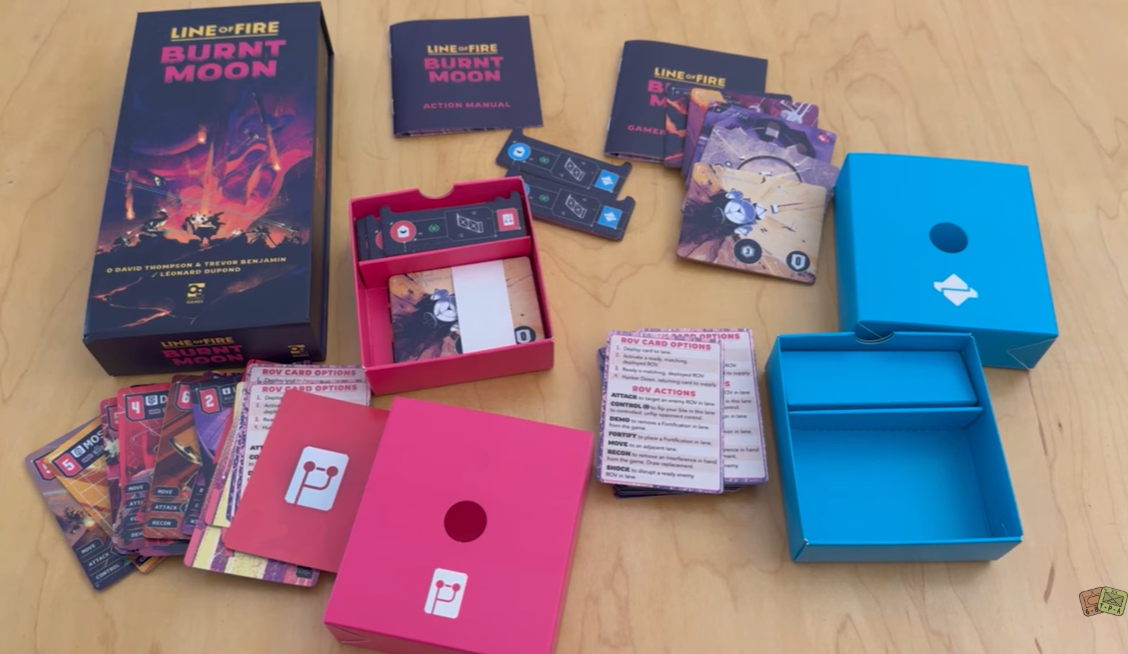
Unboxing Video: Line of Fire: Burnt Moon from Osprey Games

Von: Grant
12. September 2026 um 14:00

A group of black-hat hackers known as POSIWID plots to hijack the moon Io and hold the entire Jovian power grid to ransom. Standing in their way are the ultra-corporate LFA, the constructors of the lunar energy facilities. Both sides have engaged a fleet of ROV – advanced remotely-operated robots — to battle across the treacherous landscape. The machines are activated. Initiate combat sequence. The battle for Io has begun.

Line of Fire: Burnt Moon is a standalone 2-player card game that fuses the lean deck-building of the award-winning Undaunted Series with fast-paced lane battling. Sharp decision-making and clever positioning combine in a nail-bitingly tense, endlessly replayable, and lightning-fast experience.

-Grant

Bus & Stop (Saturday Review)

12. September 2026 um 12:43

The morning rush is already gathering. Passengers wait patiently at the stop, each with somewhere to be, while your little bus rolls into position. You have room for ten, perhaps eleven if you are feeling optimistic, although optimism has consequences when every seat matters. A group of passengers heads for the tennis courts, another bunch has somewhere else to go, and the temptation to wait for one more traveller is almost irresistible. Sometimes patience pays handsomely. Sometimes the bus simply gets fuller. Yet, for you as the driver, it's always the same: Bus & Stop by Saashi from Saashi & Saashi with art by Takako Takarai.

The post Bus & Stop (Saturday Review) appeared first on Tabletop Games Blog.

10 to Leave

This game will probably always be called the mosquito game. This is a game from Taiwan, and players play the role of mosquito families trying to attack a sleeping guy and then escape without getting squashed. I certainly have not played any other game with this premise.  Everyone starts with the same set of cards with exactly the same distribution. The only

Aspens Game Review

Aspens is a two-player game of arboreal expansion and domination. Each player is given a bag of trees. On a player’s turn, they will roll the game’s two dice to determine the limitations of their actions. One die controls how many trees each of the players receive from their bags, and the other controls in which direction they are able to expand their holdings. On their turn, a player may expand outwards (filling in more spaces with their own trees), bolster their current holdings (increasing their odds of receiving new trees when the dice are rolled), or some mixture of both. Their goal is to get as many of those trees onto the playing field as they can so that when final calculations are performed at the end of the game, they’ll occupy more real estate than their opponent and thereby win the game.

This, of course, is an oversimplification of the game (although, as you’ll soon see, not much of one). If you’re just interested in what I think about the game, feel free to skip ahead to the Thoughts section. Otherwise, read on as we talk about how to play Aspens.

Setup

First, assemble the game board. The board is divided into seven segments. When fully assembled, you’ll be left with a vaguely cross-shaped playing area composed…

The post Aspens Game Review appeared first on Meeple Mountain.

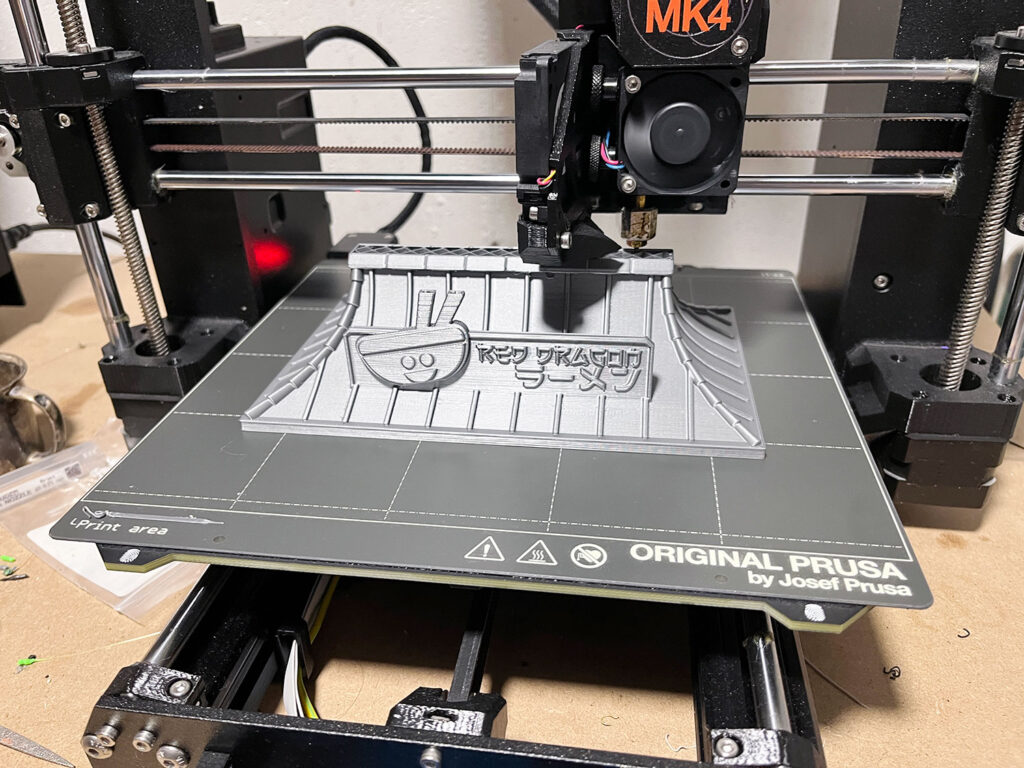
A Board Gamer’s Guide to 3D Printing

11. September 2026 um 14:52
3D PrinterSo one hobby wasn’t enough, huh? Now you need a hobby within a hobby? Welllll… me too, so follow me down the rabbit hole of 3D Printing for Board Gamers. What is 3D Printing? 3D printing, also called additive manufacturing, is the construction of a three-dimensional object from a CAD model or a digital 3D […]

Source

Feedspot Top 100 Best Board Game Blogs to Follow 2026 – The Players’ Aid Comes in at #12

Von: Grant
11. September 2026 um 14:00

Every year or so, we find out that our little blog has entered a list or climbed up a few ranks. I am always interested in these lists, as frankly I put a lot of time and effort into the blog, spending hours each week writing and editing content, and feel very proud of its presence on the internet and in our hobby and it is nice to receive some recognition for that work. About a week ago, I received an email from Feedspot that informed me that The Players’ Aid Blog had again appeared on their Top 100 Best Board Game Blogs to Follow list. As I opened the email, I found that we had moved into the #12 spot (moved up on the list since 2025 when we were found in the #20 spot). There are a lot of very well known and well followed blogs on that list and I was very surprised to see us move up to nearly the Top 10.

So what the heck is Feedspot? Feedspot is an online data base that categorizes global media outlets and content creators to make them easy to discover, follow and contact for those that utilize their services. From their site, you can access the creators by following them, emailing them or viewing their sites. Their lists cover things such as media outlets including blogs, podcasts, magazines and news websites as well as creators on platforms such as Instagram, Twitter, YouTube and TikTok.

Here is a look at a picture of the listing for The Players’ Aid:

As I was reviewing the list this year, I noticed a few things. First off, the data that they were using for our social media only included our Facebook, Twitter (X) and Instagram social media platforms. We also are active on Blue Sky and Mastodon. I also noticed that their reported numbers of subscribers was a bit off as we have 3,921 Followers on Facebook (they reported just 3.7K), 8,749 Followers on Twitter (X) (they reported 8.2K) and we have 1,258 Followers on Instagram (they reported a higher rounded off total of 1.3K). Not a big deal but not quite accurate!

Second, they referenced this concept of Domain Authority in their list and I had to do some research to better understand what this metric was measuring. What I found out was that Domain Authority (DA) is a metric that predicts how well a website will rank in search engine results pages (SERP’s) and is measured on a scale of 1 to 100 with higher scores indicating greater ranking potential. This DA is influenced by quality content that is shared and creates backlinks to the content. The Players’ Aid DA is currently at 37 (was at 36 in 2026). Some other relative DA scores on the post were Inside GMT at 36, Space Biff at 37, The Dice Tower at 49, Shut Up & Sit Down at 55 and Board Game Geek at 82.

The other wargame content creators that appeared on the list included Beyond Solitaire at #23 (great work Liz!), Clio’s Board Games at #40 (great work Clio!), The Boardgames Chronicles at #41 (great job Michael!), Big Board Gaming at #55 (I like your stuff Kevin especially the new WARNO feature!), Dude Take Your Turn! at #61 (way to go Dave!) and Board Game Meeple Lady at #62 (awesome BGML!).

I don’t put a lot of stock in these type of lists but was honored that we appeared on it. I know that I care greatly about our corner of the interweb and our little blog and love providing new and fresh content to be consumed by those that follow us. I also see what we do as somewhat of a service as I try to make sure that wargamers know about the products that are incoming and in spreading the news about new publishers, particularly smaller publishers, new games and new crowdfunding campaigns.

If you are interested in reviewing the list and learning more about the content creators that appear on it, you can read the post at the following link: https://bloggers.feedspot.com/board_game_blogs/?feed_id=4778036&_src=f1_newcampaign#h4778036

Thank you for all of the support that you give to us! You reading our blog means the world to us and we appreciate it.

-Grant

TOBE Game Fair Taiwan 2026

TOBE (Taiwan Original Boardgame Expo) will be held in Taipei 25-27 September 2026. This will be my first time exhibiting in Taiwan. I got into this beautiful hobby in 2003 when I lived in Taipei. 23 years ago, I could not have imagined that 23 years later I will be exhibiting at a game fair in Taipei as a game designer and indie publisher. Who's in Taipei that weekend? Come play with me! 

Bits and Bobs: 5 Recent Thoughts About Tabletop Publishing

10. September 2026 um 21:50

14 years ago today–on September 10, 2012–Viticulture reached its funding goal on Kickstarter. I consider this the official day that Stonemaier Games was born, and I’m so grateful for those original backers for giving birth to that game and this company.

September 2012 is also around the time that I started posting articles on this blog about my thoughts, observations, data, mistakes, and lessons learned. That would approximately make this my 1456th article on this blog!

I don’t have a monumental topic today; rather, I have a few bite-size topics on which I’ve ruminated recently. I’d love to hear your thoughts about any of them.

  • Games on ships: I recently went on a cruise around Iceland, and every evening we would end the day by playing games in some of the quieter places on the boat. I was pleasantly surprised to see that quite a few other people did the same. Lots of portable card games. The ship itself did not have many games, just a few decks of cards and a dozen copies of mahjong in the library. I’m reaching out to a few cruise lines to see if we could contribute some of our smaller games to their collections. What types of games do you see people playing when you travel?
  • Mentioning a tip: During the Iceland cruise, we went on a number of excursions. Sometimes people tipped the tour guides, sometimes not. But I noticed that tips increased significantly at the end of an excursion to an isle of puffins. The difference was that at the end of the trip, the tour guide (one of several) thanked their coworkers and verbally invited people to share their loose change as a tip on the way out. Quite a few guests did that, and not just with coins. It was a reminder of the power of a clear, simple call to action. Have you recently responded to a call to action (and if so, what inspired you to actually take action)?
  • Out of print: In a recent interview with a retailer on The Bits podcast, roughly around the 90-minute mark, a retailer (Kylie of Games Unlimited) says that he wishes publishers would let retailers know–specifically, retailers who have bought or consistently buy a product–if a currently-in-stock product is going out of print or will be out of stock for a while. All it takes is a mention in your retailer newsletter: Hey, X product with only 100 units remaining has been slow to sell and we’re not going to reprint it for a while, so now is the time to get it if the game has sold well in your store. I thought it was great feedback from Kylie that we will act on at Stonemaier Games. Do other retailers relate to this?
  • Memorable moments: Earlier today I read an article listing common misses in Euro games (games with high agency, minimal randomness, and skewing towards perfect information). I don’t agree with some of the items on the list, but one stood out to me. I agree that some of the best Euro games include big memorable moments. Perhaps the moment when you play a difficult card requiring multiple steps (e.g., an elephant in Ark Nova), the moment when you complete a spatial goal (e.g., fill an island in A Feast for Odin), or the moment when you do something incredibly powerful (e.g., go to space in Tapestry). What’s your favorite memorable moment in a Euro game?
  • The invitation of closure: Recently a friend recommended a 7-book series around the same time that someone suggested a 10-season TV show. The good news about a long-running series is that if I love it, I can immerse myself in that world for a long time. The bad news–as I often feel when I hear about a long-running series–is that I’m daunted by how much of a commitment it is. Plus, if it has existed for that long, I wonder if I’ve missed out on the peek of the series when people were the most excited to talk about it (the community aspect). I can see this happening with games with lots of expansions, and it’s one of the reasons I like aiming for a moment of closure with our games (e.g., 3 expansions for Scythe–though I later added Duel of Meloch, 1 expansion per continent for Wingspan, 3 expansions for Tapestry). Does the scope of a series of games impact your desire to try the game in the first place?

Thanks for reading and/or joining the conversation, whether it’s for this article or any of the 1455 articles that preceded it!


If you gain value from the 100 articles Jamey publishes on this blog each year, please consider championing this content! You can also listen to posts like this in the audio version of the blog.

Merchant of Venus

10. September 2026 um 20:37

I played another game of Merchant of Venus last night, and it has quietly moved up from “Once every few years” to “Two or three times a year is fine, more would probably be fine” on my list. Part of my appreciation might have come from writing an appreciation, and the 5p game I played last night was perhaps a touch too long, but I also liked that there were a variety of strategies I saw used, including the “Buy a freighter” strategy, which is rarely seen, but won.

I have little to add; but my rating is solidly a Suggest.

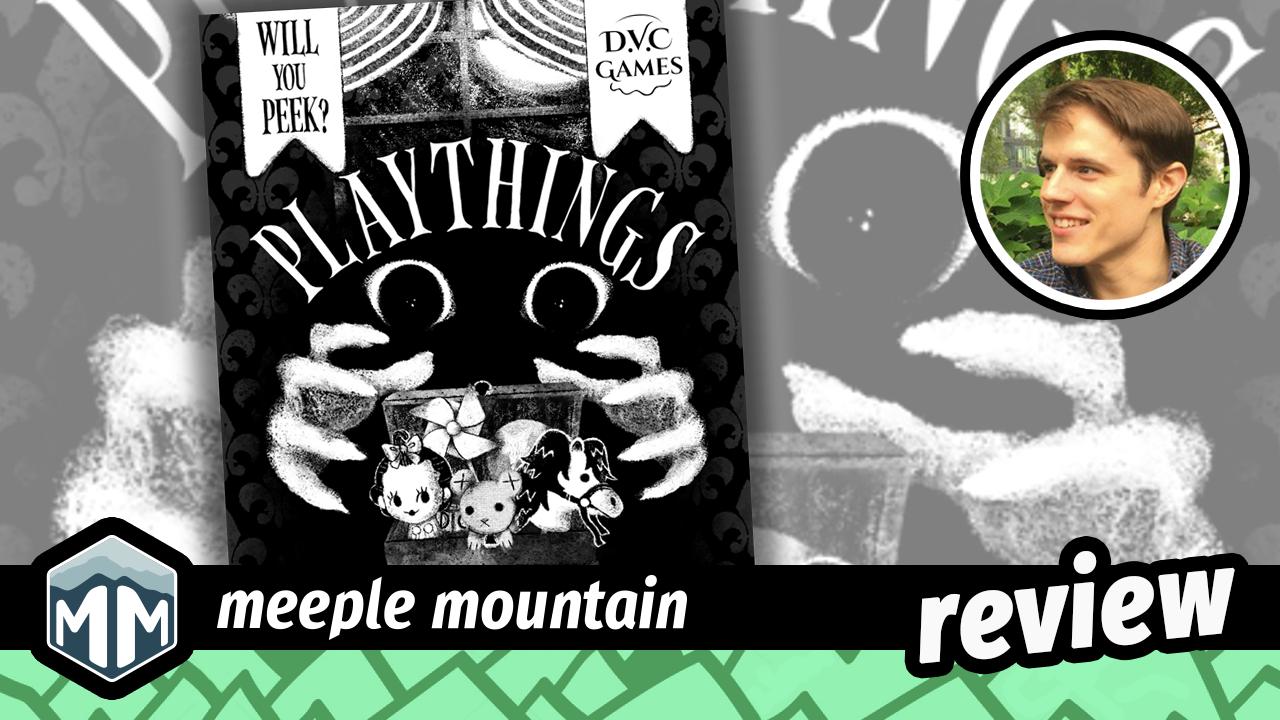
Playthings Game Review

It’s rare that a published game feels organic, but I guess that makes sense. Most authored works, regardless of medium, do not feel organic. The closest most games come is “intuitive,” which is not the same thing. “Intuitive” as applied to game criticism is more about the rules making sense and flowing. You use it when you’re talking about something that’s easy to teach and easy to learn and easy to play, about games that just. make. sense. In order for something to be intuitive, it has to build on what has come before, on a shared cultural reference or two.

That is not the case with “organic,” a word which I cannot say I have ever wanted to apply to a board game before. Strap in, folks. We’re developing a new theory. “Organic” can be as free-form as it wants. That’s probably a key feature, right? I mean, who tells an heirloom tomato how to grow? Nobody, that’s who.

A group of hands and arms float in space above the cloth Playthings board.

When I say Playthings is organic, I mean that it feels like something a group of Victorian children would come up with whilst whittling away the unending hours of the day. It feels improvised, even as…

The post Playthings Game Review appeared first on Meeple Mountain.

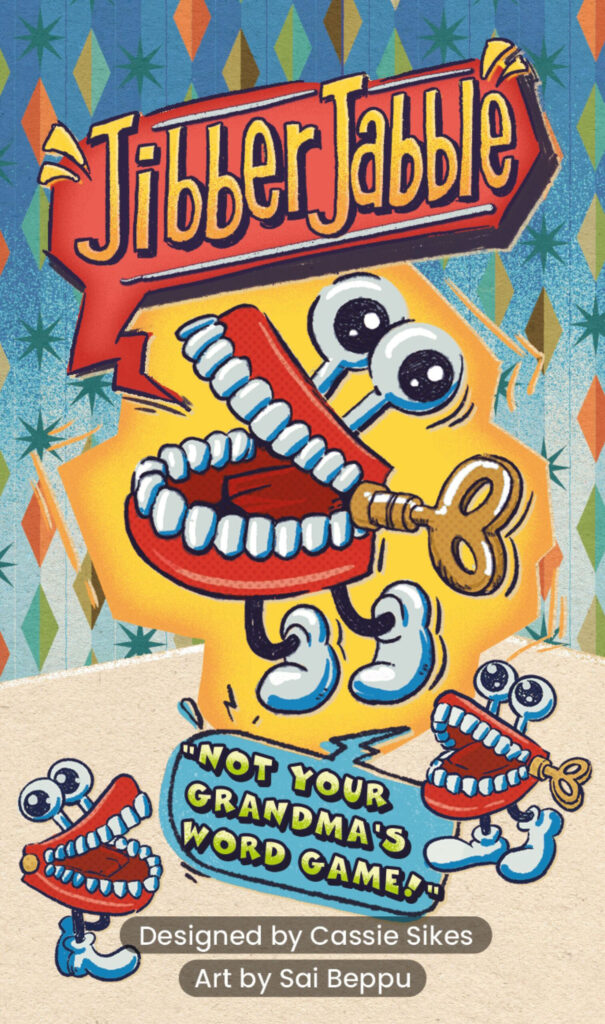
Jibber Jabble Review

10. September 2026 um 14:52
Jibber JabbleEvery year, Allplay seems to dig up the most random games for their Gen Con releases. They are tiny boxes that sell for $9, and yet they are also some of our most talked-about games at the convention. Fellow BGQ reviewer Brand already gave his thoughts on Stonk Market (which I absolutely love), but today […]

Source

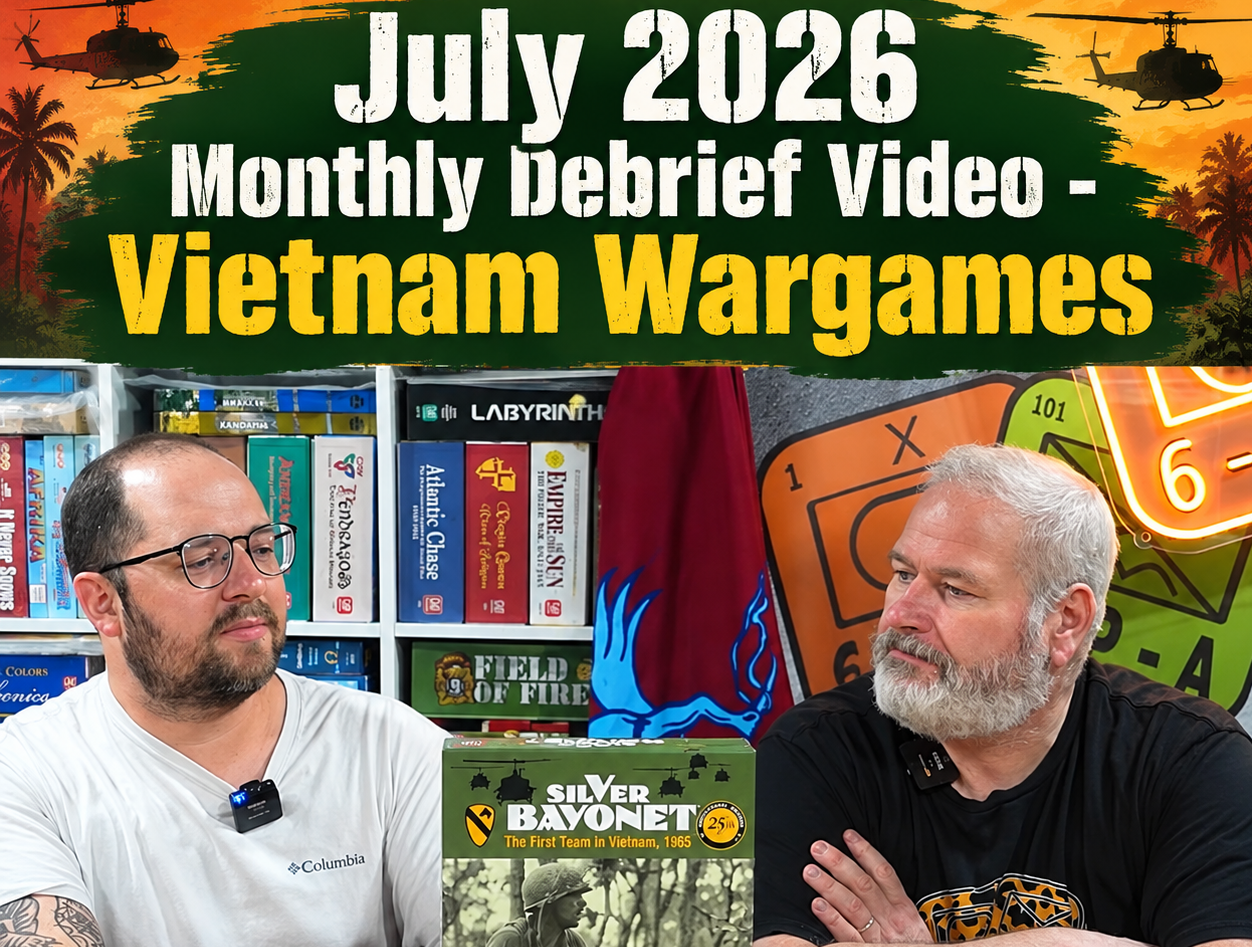
July 2026 Monthly Debrief Video – Vietnam Wargames

Von: Grant
10. September 2026 um 14:00

The July 2026 Monthly Debrief Video, which is the 7th episode in Season 6 of this series, saw us discussing Vietnam Wargames. One of my favorite wars to game is that of the Vietnam War. Part of that is because I was born in the early 1970’s and heard a lot about this war for the rest of that decade and throughout my teenage years. I remember watching the short lived television series Tour of Duty. I also read the graphic novel series The ‘Nam from Marvel Comics. But, my interest really grew after watching movies such as Apocalypse Now and Platoon. I always asked myself, how are you expected to fight a war where you don’t know who the enemy is? But also part of the attraction for me is that the war is anything but conventional. We share several big and well known games and some that are more niche.

Also, as usual, we covered the games we played in July as well as the games we plan to play in August.

We will remind you here that we are fortunate to be continuing our relationship with Noble Knight Games as the sponsor for our Monthly Debrief Video series. In case you don’t know, Noble Knight Games specializes in hard to find games but also carry all the new releases. But what makes them truly unique is that you can find some of the rarest games, long out of print games, hand made games, imported games from overseas, etc. Thanks to them for their sponsorship and we hope that you will consider them first when looking for the games we cover.

-Grant

Maestro Media opens its crowdfunding, manufacturing, retail infrastructure to other publishers and designers

10. September 2026 um 13:34

Maestro Media is opening up the publishing, licensing, manufacturing and retail infrastructure behind its own games to outside designers and publishers, including companies looking for a North American publishing partner.

The Binding of Isaac: Four Souls and Clash of Clans: The Epic Raid publisher has launched Overture by Maestro Media, through which it plans to co-publish games from other companies, partner with them during development or production, or potentially acquire titles outright.

Maestro founder and CEO Javon Frazier said, “The hardest part of this industry has never been the ideas. It is everything after them. Getting your design in front of a publisher, funding the development, entering distribution, landing it on a shelf.

“We built a machine to do that for our own titles alongside some of the largest licensors in the world. Overture by Maestro Media opens that machine to everybody else.”

Maestro says Overture will allow other companies to use its existing operations for areas including development and licensing, production, manufacturing, crowdfunding, direct-to-consumer sales and retail distribution.

The company has already struck several deals along those lines, including announcing in the summer that it would publish a new North American edition of Zoch Verlag’s Ghost Blitz from January 2027.

It is also partnering with Nighthawk Interactive on Richard Garfield and Ken Jennings’ trivia game Half Truth: Second Guess, and working with Brazilian tabletop publisher D20 Culture to co-publish The Lord of the Rings: Foes of Middle-Earth and the Justice League Unlimited RPG worldwide and in multiple languages.

Frazier said of the Ghost Blitz deal ahead of unveiling the game at this year’s Gen Con, “Ghost Blitz has sold more than one million copies in 20-plus languages over 15 years. Most North American families have never seen it on a shelf. That’s not a demand problem. It’s a distribution problem.

“That’s the gap we built Maestro Media to close. Crowdfunding, direct-to-consumer, and retail working as one engine, with distribution partners already in place across North America.”

Peterson Rodrigues, CEO of D20 Culture, said, “We’re excited to work with Maestro because we see the same opportunity they do: great games shouldn’t be limited by borders.

“Bringing these titles to players around the world, in their own languages and through partners who understand their markets, is exactly the kind of collaboration we want to be part of.”

Game designers will get their first opportunity to pitch original tabletop games via the new operation through a month-long submission window running from January 1 to 30 next year.

Maestro made its name in tabletop through its 2018 Kickstarter for The Binding of Isaac: Four Souls, which raised more than $2.6m, followed three years later by a further $6.7m for its Requiem expansion.

The company says it has worked with more than 40 licensed properties to date, and shipped more than 400,000 products, while Frazier has raised more than $16m across 16 crowdfunding campaigns – although almost 60% of that total comprises the two Binding of Isaac projects.

Maestro has expanded its distribution network significantly in recent years, signing an exclusive deal with Asmodee last year covering its English-language products in the US, UAE and South Africa, followed by an agreement making Zatu Games its exclusive distributor in the UK and Ireland.

The company added that Ryan Lumax has been promoted to vice president and head of games at the company, having joined last year after almost eight years at Canadian distributor Lion Rampant Imports.

Lion Rampant was acquired by Asmodee in 2019, when Lumax was working as head purchaser. He became a purchasing manager at the business in 2023.

Lumax said, “I spent eight years on the buying side, and the games that didn’t make it were almost never the bad ones.

“They were good games whose creators ran out of road somewhere between the prototype and the pallet. That is the gap Overture by Maestro Media closes.”

The post Maestro Media opens its crowdfunding, manufacturing, retail infrastructure to other publishers and designers first appeared on .

❌