Normale Ansicht

Uchi no Heya

17. Juli 2026 um 20:20

During a Sumo stream, the streamer I watch mentioned he was playing “Manage your stable” game in his browser, so I checked it out.

Uchi No Heya (“Inside the stable”) is … OK. I mean, I played for several hours. The game is still in Beta, with several issues (including seeing several “NaN”s where numbers should be), but the idea is sound. You recruit and coach young rikishi (sumo wrestlers) and guide their training; the matches are auto-battlers1. You can watch it play out or just hit “Quick” to see the days results.

Most decisions occur during the 8 weeks between tournaments. Random events, assign stat points, manage money.

Last year I started sketching out a game with a similar idea (A board game, not a computer game, but the idea stands). And in a total coincidence, I played shortly after I wrote up ,my 20th Century Project on PB(E)M games, where I talk about the Soccer Simulation League I ran for a season or two (CMU-EFL). So having this come out is up my alley.

I. Have. Opinions.

Some things Uchi no Heya gets right:

  • There is morale and personalities, and sometimes personalities clash. This is a big deal. Baseball and Basketball games often have synergistic players … Sumo wrestlers live together. Imagine the impact of conflicting personalities. I could see making that practically the sole game (Like New Orleans Big Band) where your entire result is based on recruiting, and the tournaments are a minor part of the game. (Perhaps one die roll or card flip for everyone!). From what I’ve seen of Sumo, this is entirely reasonable.2
  • I love the idea of “Who is the main cook during the tournament, and how much did you spend on ingredients?” The wrestler (effectively) brews Chanko potions, and can get better at it.
  • When you scout recruits you have a rough idea of his maximum stat (via error bars).
  • I don’t mind the graphics, but they are old school.

But Many things are frustrating:

  • Most decisions seem minor. Given that its an autobattler, I’d like to “Quick resolve” the entire tournamen (with interruptions for “Should you pull a person who is battling through injury?” or “Who gets the potion?”
    • The personalities clash system? Seems relegated to some random events.
    • The Chanknabe potions affect a stat by a few percent for one match. (The fatigue and morale improving potions do carry across matches, etc).
    • Managing finances / when to grow the stable seem important, but planning isn’t a big deal. Random events can give or take away multiple months worth of expenses.
    • Some events are “Dispute between two wrestlers” where you have no basis for resolving, because it’s a “A said, B said” thing, or there is no information.
    • Some events have “Do it,” “Skip it,” “Raise the stakes” (with a bigger risk/reward), but the chances of winning for “Do it” vs “Do it all out” are the same.
  • I’ve played through several years; none of my wrestlers have voluntarily retired. Just feels wrong. A bunch of people coming in for a few years and deciding they can’t cut it is a big part of the sport, and I’d like to see “Who do you encourage to stay, and who do you let go?”
  • It seems odd to me that you can dump 4+ points into one stat (like Weight!) in a month, instead of slow progress.

Overall the game has lots of insignificant decisions. After a few hours I got the definite feeling of a grindy freemium game (which is what struck me after writing up the PBM article). “Numbers go up.” And …. that’s it.

What I’d have liked to see:

To fit the theme, you are assumed to help all your students, but with limited resources for “special help” and “resolving problems.” (For example, students should train their own points automatically instead of you assigning them, but you do get to do specials sessions to allocate bonus).

Grinding has been done (much better) in other games, why not try for an Ultima style Dilemmas? Or have a system like Blood Royale where you have to work with what you get (in terms of stats) or Divine Right where the personalities/quirks are revealed slowly3. So you get “Star Recruit” but it turns out he has anger issues, etc…

Anyway, I might still pick up the steam game when it releases (it has other modes of play, which might be better … for example many of the mechanisms might work well if you were focused on a single wrestler … and for a few bucks I’d like to see more Sumo games created, so sure ).

But I’m also thinking about how I’d do it again … and I might take another crack at it. OK, unless I get really inspired I doubt anything will come of it, but whatever. I’m thinking about it as a background task.

RatingIndifferent (if you like Sumo, or are looking for a numbers go up kind of background game), avoid otherwise.

Update — The game is out on Steam and the designer has indicated that the bug I mentioned above was indeed fixed.

  1. Wrestlers have 8 trainable stats, plus frame size, etc, and can learn techniques. ↩
  2. Many larger stables have people in them for a decade or two, and it is clear they are never going to get anywhere near a .500 record, much less a pro level, but they are affable, good cooks, etc. ↩
  3. I only played maybe half a game of Divine Right in my first semester of college, so I have nothing more than a vague memory of “the rulers had personalities, but they weren’t revealed up front.” ↩

Solo play is now one of board gaming’s defining mechanisms, university research of 104,000 titles finds

17. Juli 2026 um 16:06

Solo board gaming has surged from a niche feature to a major component of modern hobby board gaming in just a few years, according to a new academic analysis of more than 104,000 titles spanning almost a century of board game design.

The research, published in the journal Simulation & Gaming, analysed metadata from BoardGameGeek’s vast trove of titles, covering games published between 1930 and 2025.

It found that solo play ranked as the third most prevalent component in games released between 2020 and 2025, behind only dice rolling and hand management – a trend boosted by many publishers treating a dedicated solo mode as a commercial necessity over the past few years.

Co-op play also loomed larger in recent years, appearing in 2.9% of game listings in the 2010s and 3.7% between 2020 to 2025, having not appeared in the top ten mechanisms across any of the preceding eight decades.

The report also noted the extraordinary growth in games present in the BGG database since the turn of the millennium.

It said the number of titles published per decade grew about 22%, to about 9,400, from the 1980s to the 1990s, before more than doubling to over 21,000 titles in the 2000s, and surging to more than 38,000 in the 2010s.

Image Credit: Azael Herrero

The report, titled Monopoly to Ark Nova: An Empirical and Cultural History of Modern Board Game Design (1930–2025), was created by members of the LudIA research group at the European University Miguel de Cervantes, together with a researcher from the University of Valladolid.

Study co-author Azael Herrero, who posted a long summary of the research and the team’s conclusions to BoardGameGeek, said, “One result that I find particularly interesting is the stability of the median maximum player count.

“It remains four players in every historical period. Despite enormous changes in production, mechanisms, themes, and audiences, four players continue to represent a central configuration in board game design.

“The mean maximum player count nevertheless increases in recent periods, suggesting greater representation of party games, large-group games, and titles offering more flexible player ranges.”

While solo gaming provides the study’s clearest illustration of how the hobby has evolved, the broader picture is one of increasing diversity in game design.

The researchers found the number of documented mechanisms expanded from 69 during the 1930s to 192 in the 2020s, suggesting designers have dramatically broadened the range of tools available to them.

Rather than replacing older ideas, however, modern games increasingly combine multiple established mechanisms into hybrid systems – a trend the study says is reflected in the changing role of dice.

Image Credit: Azael Herrero

Roll-and-move dominated games throughout the 1930s to the 1960s, appearing in roughly a quarter of all titles in those decades, before steadily declining to the point where it no longer features among the ten most common mechanisms in the 2020-2025 period.

Dice themselves remain widespread, of course, but are now more commonly used for action selection, resource production, drafting, risk management and other strategic systems than for simply determining player movement.

The research also traces the changing influences that have shaped modern hobby gaming.

Simulation and wargames introduced mechanics such as hex grids, movement points and simultaneous action selection during the 1970s and 1980s, before the Eurogame boom of the 1990s and 2000s saw hand management, tile placement, set collection, drafting, auctions and area majority become increasingly common. Solo gaming, cooperative play and variable player powers then rose sharply during the 2010s and early 2020s.

The researchers also found BoardGameGeek ratings have increased over time, alongside modest rises in complexity and playing time, although they cautioned that these trends should not be interpreted as evidence that modern games are objectively better than earlier designs.

Instead, they point to factors including the site’s hobby-focused audience, changing player expectations, greater visibility and recency bias for newer releases and the influence of marketing and self-selection.

The post Solo play is now one of board gaming’s defining mechanisms, university research of 104,000 titles finds first appeared on .

Most Anticipated Board Games of Gen Con 2026

17. Juli 2026 um 14:40
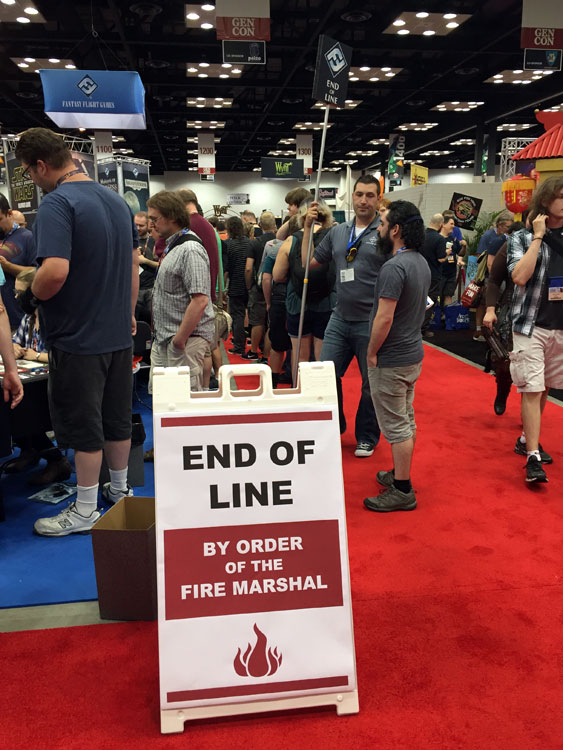
Gen Con LinesGen Con is fast approaching, and along with the annual Essen convention, it’s one of the biggest times for new board game releases. As of this writing, there are over 500 new tabletop games either being released or demoed at the convention. That’s a lot of new content. For those curious about which games to […]

Source

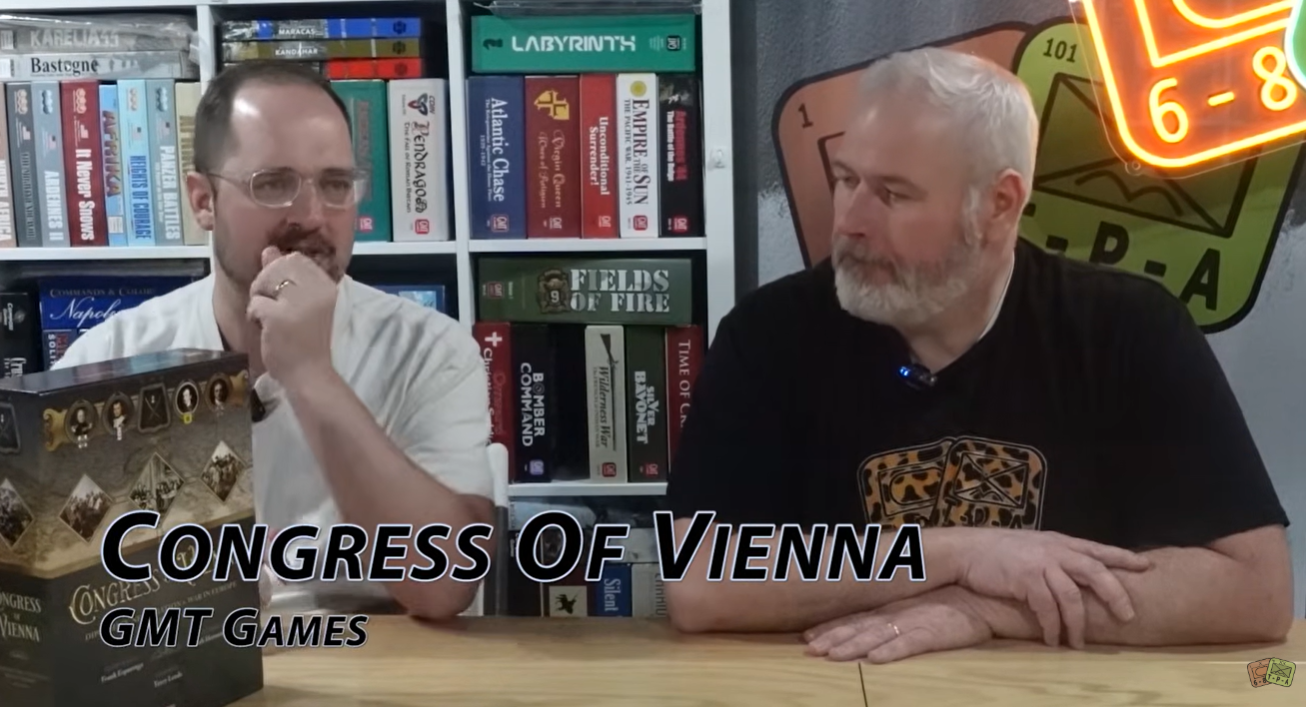
Video Review: Congress of Vienna from GMT Games

Von: Grant
17. Juli 2026 um 14:00

A few years ago, after playing all of the games in the Great Statesmen Series, we heard of a new game in the series from a designer not named Mark Herman and I was immediately interested and intrigued as we have had so much fun with ChurchillPericles and Versailles 1919Congress of Vienna from GMT Games is a diplomatic card driven wargame based on Churchill and is the 4th game in the Great Statesmen Series. The game is set during the years of 1813-1814 and sees players take on the role of the main characters of the struggle between the Napoleonic Empire and the coalition of Russia, Austria, and Great Britain with their Prussian, Spanish, Portuguese, and Swedish allies. We played the game twice last year at Buckeye Game Fest and at the World Boardgaming Championships and absolutely were amazed at the changes and innovations to the system introduced by the designer Frank Esparrago.

I posted a fairly in-depth overview of the game in my First Impression post and you can read that at the following link: https://theplayersaid.com/2025/08/06/first-impressions-congress-of-vienna-from-gmt-games/

-Grant

The 22 Most Anticipated Games of Gen Con 2026

The summer heat is intense, but it’s not as hot as Gen Con 2026. Soon gamers from all over the world will descend on Indianapolis for North America’s largest board game convention. Just like in past years, hundreds of new board games will make their debut – over 600 this year, an overwhelming number. But never fear, the Meeple Mountain team is here to help you find the gems among the coal. Our staff have scoured through the upcoming titles to select our most anticipated games of Gen Con 2026! So without further ado, here are our picks!

Check our past recommendations and see how we did!
Gen Con 2025 | Gen Con 2024 | Gen Con 2023 | Gen Con 2022 | Gen Con 2021

Andy Matthews

Class of '89

As someone who graduated from high school in 1989 I am, as the marketing literature says, “the target audience” for this upcoming release from Paverson Games. Class of ‘89 is set back in time when hair was…

The post The 22 Most Anticipated Games of Gen Con 2026 appeared first on Meeple Mountain.

Valor Mountain challenges hobby game publishing’s “safe bet” mentality as it ramps up ambitions

16. Juli 2026 um 18:36

After years spent engaging with publishers and designers – both at Capstone Games and through his Board Again Gaming podcast – Christopher High believes the several thousand new board games and expansions released each year are pushing publishers towards commercially safer bets. Now he’s wagering his company Valor Mountain Games can succeed by taking chances on the kinds of titles other publishers are passing over.

High, who spent the past two years as a product manager at Ark Nova and Gaia Project publisher Capstone, co-created Valor Mountain in 2023 alongside Tim Densham as an offshoot of the latter’s historical games-focused publisher Catastrophe Games.

He became sole owner of Valor Mountain in May after buying out Densham’s share of the business – and now plans to expand the company from creating small side projects into a business targeting five or six traditional print-run releases a year.

High told BoardGameWire he is “putting his own money on the line” betting on a strategy built around taking chances on games other companies might reject – saying he believes the hobby industry has become increasingly focused on commercially safe decisions, leaving opportunities to back more unusual designs and under-represented creators.

Christopher High and Tim Densham from Catastrophe Games

He said, “Generally publishers make safe decisions. And that’s their job. As far as breaking the mold, I rarely see a game anymore that truly ‘wows’ me in this sense.

“It happens, it just seems like our industry defaults a lot to what they think will sell a game rather than being willing to take a risk”, adding that he highly rates the kinds of designs currently being put out by publishers such as DVC, Hollandspiele and CMYK.

He added, “There are tons of games that get passed over in traditional publishing because they aren’t safe bets. I want to be a smart business person, but I also want to take some risks on designs and designers that are doing interesting things.

“There are literally thousands of products that come out each year which are just iterations of previous designers, maybe smashed together in a new way. It would be fantastic to give some games a chance at a larger audience which would be too risky for other publishers.

“I also want to give voice to more artists and designers who may be from overlooked or under-represented communities. As to genres, I would love to see a truly branching narrative euro game that isn’t afraid to let you push the limits of what’s acceptable in that genre.”

Asked whether his comments about ignoring what other publishers are doing reflected increasing “trend chasing” within hobby games, he replied “Yes”, adding “I have to do my own [thing].

“….What I do need is community and art. I want these things and my values to drive what we do as a company, not the market. The market is and will always be fickle.”

High’s new strategy has seen Valor Mountain seal a partnership with Pink Troubadour Games, which will see it bring several of the European publisher’s titles to the North American market – including Pilgrims: Curious Adventures, Movie Fight, Loony Clues and Dirt & Glory.

High’s previous employer Capstone partnered with Pink Troubadour while he was with the US company, to bring SETI creator Tomáš Holek’s design Galileo Galilei to North America.

High told BoardGameWire, “I had a good working relationship with the Pink Troubadour team when I worked for Capstone. However, I reached out after I was done working at Capstone to see if there were new ways I could work with them. 

“I am planning on taking steps to foster our relationship as I see their trust as essential, since in some ways we are a new company to the market.”

High added, “It’s exciting, and it came about because I reached out to them since I saw that these games were not available in the North American English market.  They are a wonderful team to work with, and it is my hope to do more games in the future with them as our capacity increases.”

High seems especially enthusiastic about bringing family-weight competitive movement puzzle game Pilgrims: Curious Adventures to North America, saying, “I played the video game it is based on and it is super quirky. The board game, like the video game, is very straightforward.

“If I had to describe it in one word: chill. I think it is that perfect type of game for those who want to explore board games without diving in too deep, it feels like you are doing something without being overwhelmed.

“It’s one of those bridge games between gamers and non-gamers and has delightful artwork from Amanita Design.”

Valor Mountain has also dipped its toes into crowdfunding again, following campaigns for a trio of small-box titles in 2023 and roll and write game Birdsong in August last year – all of which raised between about $1,300 and $3,000.

The new campaign features a trio of trick-taking titlesSupercollider, Growing Groves and The Franciscan Diamond, the latter of which High said was a great example of the kind of Valor Mountain release other publishers might not take a chance on.

He said, “Trick-taking games are probably past the zenith of recent popularity, plus this game has a super obscure scoring system. It’s by an unknown designer, but it is really clever.

“I love it. Will anyone else? Maybe? I think it’s going to be a divisive game though.”

He added, “I hope to eventually move away from crowdfunding. There are lots of reasons I don’t like it. However, with all of the capital outlay I have right now, I need just a little more to ensure I can do everything I want to do this fall.

“My project goal on there is a true goal, it helps ensure the proper operational flow of putting these games out.”

High also credited years of conversations with designers and publishers through the Board Again Gaming podcast with shaping his approach to publishing, and helping “keep my curiosity alive”. 

He said, “I love talking to and hearing from designers. It reminds me how little I know and how much there is to learn.

“The world is a big place and people have so much creativity. I want to help bring more of that to a wider audience.”

For High, that curiosity may ultimately be Valor Mountain’s defining characteristic. Whether betting on unusual designs proves commercially successful remains, by his own admission, an open question.

Asked whether a publisher can succeed by deliberately pursuing games larger companies pass over, High said: “I don’t know. I guess I will find out as I put my own money on the line.”

Valor Mountain’s latest Kickstarter campaign runs until August 10.

The post Valor Mountain challenges hobby game publishing’s “safe bet” mentality as it ramps up ambitions first appeared on .

Launch Day Results: Wingspan Pocket, Duel of Meloch, and Heroes & Villains

16. Juli 2026 um 17:28

A full day has now passed since we launched 3 new products (plus 2 accessories) on the Stonemaier Games webstore, so I thought I’d share a few observations about the launch and sales data collected for each product.

All of these products are currently in stock at our 4 fulfillment centers, and shipping is underway. The launch discounts will last through July 19.

US Store | Europe Store | Canada Store | Australia/NZ/Asia Store


Product Summary

Wingspan Pocket (details): Create and activate a single row of cards on every turn in this swifter, smaller, and streamlined version of Wingspan. The cards are all double sided: a food side and a bird side. Bird powers are primarily indicated by icons instead of text, and they include a new type of power, ongoing (green) benefits.

Duel of Meloch (details): Clash head-to-head on a tight map in a race to victory in this standalone game of Scythe vs Expeditions (it is also an expansion for those games, and the content in those games is duel-compatible). The duel takes place in a tight space on a new double-sided map—only 10 locations and 2 lakes—in a race to 4 stars on a new double-sided Triumph Track, so every turn is crucial.

Origin Story: Heroes & Villains (details): Triple the number of heroes (and villains) to become in Origin Story! Just shuffle these 21 new superhero–and supervillain–cards into the original deck to vastly increase replayability.


Data

The following 24-hour sales data spans our 4 consumer webstores and our 1 direct-to-retailer webstore:

  • Wingspan Pocket: 11,046 units sold
  • Duel of Meloch: 4,479 units sold
  • Origin Story: Heroes & Villains: 2,359 units sold

We have also sold 2,007 metal mech packs and 2,533 airship add-ons for Duel of Meloch.


Observations

Wingspan Pocket: I anticipated that we would hear from a few people who struggled with the behavioral psychology of paying $10 shipping for a $20 product (or $18, as is the launch price for Wingspan Pocket). I totally understand, and that’s why I largely view Wingspan Pocket as a game for local retailers (mid-August release).

It’s for this psychological barrier that we often launch lower-price products along with other products–with our flat-rate shipping, it’s still $10 even if the order is more robust. In truth, the shipping fee we pay for Wingspan Pocket (postage, packaging, and labor) is $14, so we’re already subsidizing this on behalf of customers.

Despite all that, I’m happy to see how many people have embraced Wingspan Pocket on launch day, whether they’re buying a single copy or several copies (I think it makes a great gift).

Duel of Meloch: I’m a little surprised sales aren’t stronger so far. There are over 600,000 copies of Scythe in circulation worldwide, and for years Scythe fans have asked me to make another expansion. Maybe it will just take a little time for people to see how much this adds to Scythe (and to Expeditions, and as a standalone dueling game).

Origin Story: Heroes & Villains: I wasn’t sure what to expect from this expansion’s initial sales, but so far I’m excited that so many people are giving this mini-expansion a chance. We really wanted to have Origin Story itself back in stock in the US in time for this launch, but worldwide freight shipping is currently quite tumultuous. Many of the restocks we were hoping to have for this launch aren’t arriving until mid-August or early September.


I’m curious to hear your thoughts, questions, and analysis of this launch. What would you like us to learn from it, and what might other creators learn from it?

US Store | Europe Store | Canada Store | Australia/NZ/Asia Store


If you gain value from the 100 articles Jamey publishes on this blog each year, please consider championing this content! You can also listen to posts like this in the audio version of the blog.

Huddle: The Fantasy Football Game Review

As a longtime manager and commissioner of fantasy football leagues for American football, I approach the process of drafting and curating a team throughout the season much like a chef might approach a new recipe. From the jump, I feel like I know the flavors of each ingredient, but I never know exactly how it'll turn out until all the pieces are working together at the end. Sometimes it pans out and you have a delightful scone in your hands, and other times you're left with a gelatinous mess. I was curious to see if Huddle: The Fantasy Football Game could replicate that feeling of accomplishment.

Huddle: The Fantasy Football Game: Take a Chance on Me

Just like traditional fantasy football, Huddle includes a preseason draft, a season of head-to-head matchups, and then a championship game between the two best teams to determine the ultimate winner. Matchups are quick enough that the other Managers aren't left out if they aren't in the title game, otherwise they can play consolation games to determine places 3-6 for a full table.

During the Draft, Managers get 20 poker chips to bid on players in one-minute rounds. Players are represented through decks of cards, one each for Quarterback (QB), Wide Receiver (WR), Running Back (RB), Tight End (TE), Kicker (K), and Defense/Special Teams…

The post Huddle: The Fantasy Football Game Review appeared first on Meeple Mountain.

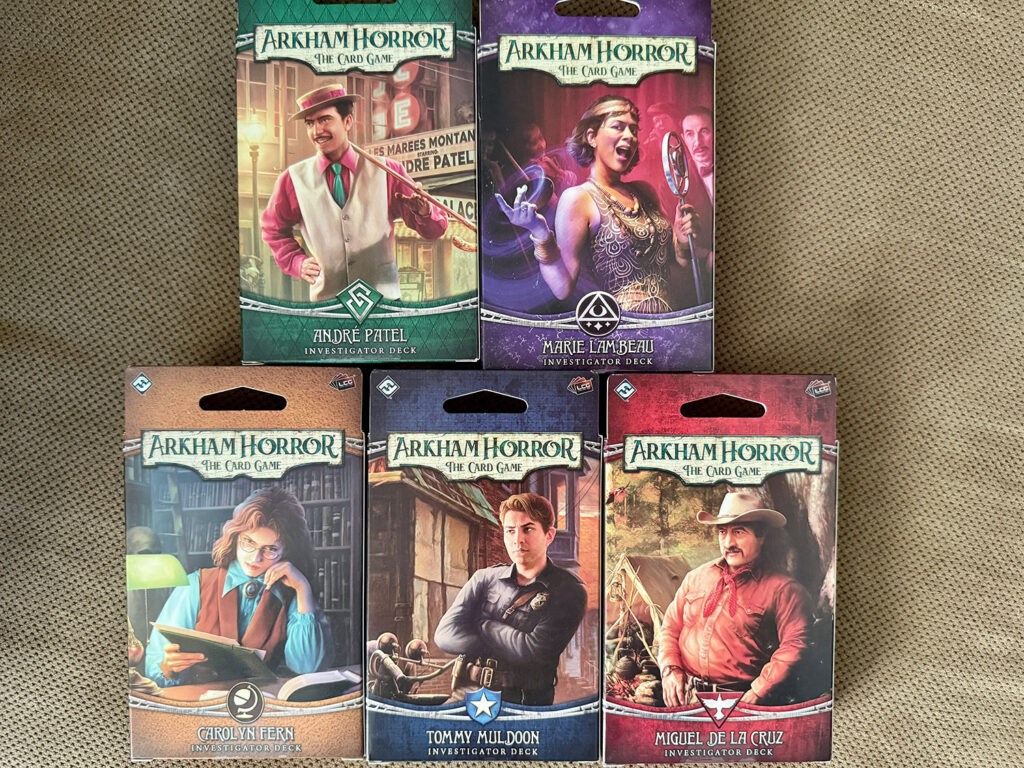
Arkham Horror: The Card Game – Investigator Starter Decks Review

16. Juli 2026 um 14:21
Arkham Horror InvestigatorsChapter two of Arkham Horror: The Card Game (AH: LCG) is currently in its early stages. With a new core set released and the next campaigns on the horizon, Fantasy Flight Games is ahead of the curve with a new batch of starter investigators. These five pre-built, ready-to-play decks are ideal for those seeking to […]

Source

RAW Video: With the Hammer: Thomas Müntzer & The German Peasant War in Thuringia from Conflict Simulations Limited

Von: Grant
16. Juli 2026 um 14:00

With the Hammer is an asymmetric wargame covering the German Peasants War in Thuringia in 1525 along with the exploits of one of its most famous protagonists – Thomas Müntzer. With the Hammer comes with wooden pieces, counters, 2 rulebooks, and historical commentary by Professor Andrew Drummond, and a 22×17 inch map.

Each player is a peasant or a noble; the peasants win as a team, or the nobles win as a team. There is no true solitaire system, but like most wargames, it can be soloed two-handed.

We published an interview on the blog with the designer Raymond Weiss and you can read that at the following link: https://theplayersaid.com/2025/01/06/interview-with-raymond-weiss-designer-of-with-the-hammer-thomas-muntzer-the-german-peasant-war-in-thuringia-from-conflict-simulations-limited/

-Grant

Play Something Old: Citadels

Von: Adam
16. Juli 2026 um 12:14

The latest in my Play Something Old series is one of my favourite games – Citadels. Citadels paved the way for a slew of games that take its core concepts and build on them It’s a game of set collection, hidden roles, drafting, bluffing and a delicious amount of take-that. I think that everyone should have a copy of Citadels in their collection, so let me justify that.

Source

Dirty Work

Dirty Work is a party game from Thailand. This is a simultaneous action selection game, and it is very much about guessing your opponents’ intentions. You are all miners mining gold, contributing to a stash of gold, one nugget at a time. Sooner or later someone will be tempted to steal from the stash. However such thieves can be caught by miners who decide to play guard. So these are the

Blorpassonne

16. Juli 2026 um 04:11

of course I did a high-effort header for a game I won't remember in two weeks

In my quest to find activities that will hold the interest of children with a five-year age gap, I routinely find myself playing board games that normally wouldn’t register more than a fraction of my attention. Blorp!, for example.

What is Blorp!, you ask? Apart from being a noise my offspring produce when they don’t want to empty the dishwasher or hang up their towels, a blorp is apparently the answer to what Dr. Seuss would animate for a David Cronenberg flick. These are queasy creatures in three colors that communicate by, uh, farting confetti at one another. Garth Kaufmann, who both designed and did the illustrating, sure has a knack for tongues, eyeballs, and tendrils, I’ll tell you that much.

and I think this game is about their mating season.

Blorps are, um, they’re, like, these blobs that, um, they live in a briny solution and, uh

Blorp! is a tile-laying game. In the vein of many tile-laying games, it traces its DNA back at least to Carcassonne, with its mutable borders, emphasis on joining like-minded edges, and the need to complete one of the titular creatures in order to score it.

But the similarities end there, the byproduct of considerable mutation in the intervening generations. Perhaps foremost, Blorp! assigns each player their own arrangement of confetti-stuffed monsters. There’s no sharing blorps. Not that you’d want to.

Speaking broadly, your objective is to make very large blorps. One of each color, in fact. Completed blorps score a point per tile, but your largest blorps double that value. Which still doesn’t ensure that high of a tally, but keeps the kiddies in the running. Special tiles, such as floating spores, earn points when hemmed in on all sides, while trumpets and confetti…

Okay. Look. Trumpets and confetti might require some explanation.

Making a big blorp isn’t as easy as it sounds. Often, the only tiles available on the table will be better-suited to pinching off a blorp than pushing out an even bigger one. So you tie the knot, but where does that leave you? With a nuggety, low-scoring blorp, that’s where.

sex ed

Blorps communicate via confetti trumpets.

Enter trumpets. By sticking these things into your blorps’, ahem, orifices, and then directing them to toodle in one another’s direction, you can expand its size even across the buoyant saline that is their substrate. In the image above, there are two red blorps that have merged into one through apocalyptic toodling, with a third that might join the bacchanal if only it gets finished in time.

That isn’t all of it. Some tiles show puffs of confetti. Trumpets can re-route through these, making it possible for blorps to congeal despite the absence of a straight vector between them. It’s even possible to use trumpets to trace blorp adjacency — blorpjacency, a term I just invented — through other-colored blorps. I haven’t actually made this work, but it’s there for real blorp-maxxers.

Probably it sounds like I despise Blorp!, but that isn’t the case. It’s a fine game. Clever, even, at times, with the trumpets that blast into each other’s mouths and make weird adjacencies a genuine possibility. My kids find it amusing. We’re required by blorp law to comment upon each grotesque feature. Sometimes my seven-year-old will decline to take a beneficial tile because it scares her. I get it, kid. Rather than focusing on her score, she tries to gather as many of the green blorp appendages, the ones that seem to be sharting ball-pit balls into the aether. She thinks that’s a hoot.

And it is a hoot, if more for the sheer improbability of its illustrative style than because the tile laying is particularly interesting. And it isn’t as though the game is so competitive that pursuing a sideline in ball collecting presents that much of a ding to anybody’s score. Which makes the game a good enough choice for the kiddos.

Until the novelty of those blorps wears thin, anyway.

nor for this

I don’t have one for this.

I can feel it coming. That moment of escape. The first couple of times, the girls were eager to see what other misshapen lumps they might schlorp together. After only those two plays, they’re more hesitant. I hope the end is in sight. Despite liking Blorp! well enough, there are better games out there, even if they’re slightly more competitive or tricky. Even if they don’t feature monsters with misplaced holes. Especially then.


A complimentary copy of Blorp! was provided by the publisher.

(If what I’m doing at Space-Biff! is valuable to you in some way, please consider dropping by my Patreon campaign or Ko-fi. Right now, supporters can read the next installment in my series Talking About Games, this time tackling the topic of what makes a good list! Naturally, the piece includes a list.)

Take to the Skies and Journey On!

by Steph Hodge

▪️ Panorama from Scorpion Masqué is already available now! This is a delightful tile-drafting game where you will create your landscape panorama. It uses a time track mechanic so the further you move ahead, the longer you have to wait before your next turn. For 2-4 players, this is a breezy 20-minute game.

From the newsletter:
Put your panorama together one tile at a time, making sure to line tiles up to create large areas of the same land type. At the end of the game, you’ll score points based on the number of animals and flowers in each type of terrain.

Games stay fresh and replayable through the common objectives that can be switched out for every game, such as the longest river or the sky with the fewest clouds.

This adorable game is sure to delight the entire family!


[imageid=9667654 medium rep]▪️ A recent hit at my table have been Sky 5 from Druid City Games. I am drawn to the bright, bold colors, and there is even a rainbow die included in the box. How cool! This is a push-your-luck card game for 2-6 players and plays in 15-30 minutes. This game will have a limited release at Gen Con 2026 and will be officially released later this year!

From BGG:
In Sky 5, players push their luck as they build a tableau of colorful sky cards, trying to assemble one of each of the five colors to complete a Sky 5. Each turn presents a simple but tense decision: draw a card to grow your tableau, or roll the die to try to bank the cards you already have.

Drawing cards helps you work toward the perfect five-color collection, but it comes with risk. If you reveal a color you already have, the card may end up helping your opponents instead. Rolling the die offers a chance to secure your points, but only if the result does not match any value in your tableau. If it does, you bust and lose the cards you were hoping to score.

Quick to learn and full of nail-biting decisions, Sky 5 is a lively push-your-luck game where timing is everything. Build the right collection, roll at the right moment, and bank your points before the sky turns against you.


▪️ Horrible Guild just announced The Amazing Journey for release this October with first looks at Gen Con 2026. This has a travel theme where you will move around the board and make connections and memories. This game plays 2-4 players in about 45-60 minutes.

From the newsletter:
In The Amazing Journey, you'll travel across the world optimizing routes based on which types of transportation are available on a given date in your location.

This brand new title combines easy rules with meaningful decisions, creating an experience that's accessible to new players while remaining engaging for seasoned explorers. Along the way, you'll collect memories, complete objectives, and build your own tale of discovery.


▪️ Winds of Numa Sera was announce from Good Games Publishing as releasing soon. This is a big game that plays 3-4 players and has a play time at 90-120 minutes. Seems epic!

From the newsletter:
Ethera is a continent without mercy. In this deeply asymmetric kingdom-building strategy game, you'll forge your line of succession, equip your heroes, master powerful skills, and clash with rival factions in a race to complete two of four paths to victory.

4 asymmetric factions — each plays entirely differently
Build a line of succession across 3 unique heroes
Deep progression: items, skills, classes & faction ability trees
Multiple win conditions — no two games the same

Four factions. One world. No mercy.


How competitive TCG accessories are influencing hobby retail strategy in Europe: Sanseking [Sponsored]

15. Juli 2026 um 17:30

As trading card games continue to drive growth across the tabletop industry, hobby retailers are increasingly looking beyond games themselves to the accessories that support organised play and competitive communities. In this sponsored article, TCG and board game accessories maker Sanseking explains how changing player behaviour is influencing retailers’ approach to inventory, merchandising and long-term store strategy, and why competitive accessories are becoming a more important part of the European hobby market.

A growing crossover between board gaming and trading card games is beginning to reshape hobby retail strategy across Europe according to TCG, board game, and collectible accessories maker Sanseking, with competitive accessories emerging as an increasingly important category for stores.

What was once a relatively clear divide between casual board game retail and competitive TCG communities has evolved into a far more interconnected ecosystem, the company says, where stores are expected to serve multiple types of players simultaneously.

Sanseking production manager Ding Guang

That shift is particularly visible in the accessories market according to Sanseking production manager Ding Guang, who says retailers are increasingly treating competitive sleeves and protective products as core components of long-term business planning rather than simple add-on purchases.

“Accessories used to be viewed mainly as supplementary sales,” Guang told BoardGameWire. “But competitive communities create repeat purchasing behaviour that changes how retailers think about stability, inventory, and customer retention.”

Hobby retailers now commonly operate within a mixed environment that includes casual board gamers, organised play communities built around titles such as Magic: The Gathering, Pokémon and Yu-Gi-Oh!, and players who actively move between both spaces.

That convergence has become especially visible at events such as Spiel Essen, where accessory brands increasingly exhibit alongside publishers and competitive card players mix naturally with broader tabletop audiences.

But for retailers, the two customer groups behave very differently.

Board games typically generate one-off purchases tied to seasonal launches or major releases, while competitive TCGs create recurring engagement cycles through tournaments, deck rebuilding, league play and shifting formats – and those cycles also generate consistent accessory demand.

Competitive players replace sleeves far more frequently than casual players, Sanseking points out, adding that frequent shuffling, tournament preparation, the need for consistency and sensitivity to tactile feedback all contribute to repeat purchases.

That rise in accessory demand has also been driven by the stellar growth of TCGs more generally, with long-time heavyweights such as Pokemon, Magic: The Gathering and Yu-Gi-Oh! joined more recently by a flurry of other successful entrants to the market, including One Piece, Disney Lorcana and Star Wars Unlimited.

That demand pushed the overall value of the global TCG market to $7.8bn last year according to veteran research firm BCC, which projects the segment will reach $11.8bn by 2030 with a CAGR of 7.9%.

In many European hobby stores, tournament nights now represent some of the most reliable recurring foot traffic. Players attending weekly organised play events increasingly view accessories not as optional extras, but as part of their competitive equipment.

According to Guang, that recurring demand can help retailers smooth revenue fluctuations during slower periods in the board game release calendar. But at the same time, competitive players also tend to be far more selective.

“They pay attention to things casual players may never think about,” Guang said. “Edge structure, shuffle consistency, durability over repeated use, and manufacturing consistency between batches all matter.”

The Growing Importance of Segmentation

That growing attention to performance characteristics is also pushing retailers to rethink how accessories are presented in-store, according to Sanseking.

Historically, sleeves were often treated as largely interchangeable products differentiated mainly by colour or price point.

But as organised play communities mature, stores are increasingly recognising that accessories serve multiple functional segments, ranging from casual ‘kitchen table’ play, to hobby-level regular play and competitive or sanctioned environments.

Retailers that fail to distinguish between those categories can create unnecessary friction, Sanseking says.

The company points out that a product optimized for softness and casual handling may not satisfy a competitive player seeking predictable shuffle feedback. Conversely, a structure-focused sleeve may feel unnecessarily rigid or specialized for a board gamer.

As a result, some retailers are beginning to adopt more structured merchandising approaches, using clearer pricing tiers, competitive-focused shelving, and staff recommendations tailored to different player types.

“The stores performing well are usually the ones creating clarity,” Guang said. “Not necessarily carrying the most SKUs, but helping customers understand which products fit which type of play.”

Risk, Inventory, and Shelf Strategy

From a commercial perspective, competitive accessories also offer several advantages compared to boxed games, including lower unit cost, a smaller shelf footprint, faster turnover when tied to active communities and strong repeat purchase potential.

Retailers can still perceive the category as niche, however – particularly when shelf space is limited. According to Sanseking, the most effective approach is usually a balanced one – not one that offers endless fragmentation, but a core range which covers general use, alongside clearly identified competitive-focused options for players who care about performance.

The importance of organised play also continues to shape purchasing behaviour, with competitive events a significant driver of repeat store visits, even amid wider economic pressure on hobby spending.

Within those communities, accessory choices increasingly function as part of player identity.

“Players often become loyal to specific performance characteristics rather than just aesthetics,” Guang said. “That creates opportunities for retailers to position themselves as serious competitive venues.”

Some stores are already leaning into that approach by highlighting ‘competitive-ready’ accessory sections, aligning certain products with tournament nights, and using more technical product descriptions instead of purely visual merchandising.

The growing overlap between board game audiences and competitive TCG players is also accelerating the trend, according to Sanseking’s experience of the market.

The firm said that many customers who first enter hobby stores through board games gradually become exposed to organised play environments, while competitive card players often purchase board games for more social settings.

Accessories sit directly at the centre of that crossover, with protective products one of the few categories that naturally serve both audiences while still supporting different performance tiers, it added.

For retailers, that makes accessory strategy not just an operational decision, but a bridge between communities, Sanseking says.

As Europe’s tabletop market continues to evolve, Guang believes accessories will become more strategically significant across the retail landscape.

“Players are becoming more informed about performance trade-offs, and retailers are having to serve more diverse communities across the same limited shelf space,” he said. “Clear segmentation and clear communication are becoming much more valuable.”

For brands, that means designing products with defined use cases rather than relying on broad universal claims. And for retailers, Guang argues, success may depend less on scale than structure.

“In a market where casual and competitive audiences increasingly overlap, clarity is often more important than simply offering more products.”

Anyone interested in working with Sanseking can visit their website for more details about what they offer, and contact them here.

The post How competitive TCG accessories are influencing hobby retail strategy in Europe: Sanseking [Sponsored] first appeared on .

❌