Where are you going, so full of hope? THERE IS NO HOPE!
In this fantastically cinematic tabletop battle report, Peter and Will play the Necromunda: Ash Wastes scenario Cargo Run!
Will is back! It’s been way too long since my old gaming buddy has visited me to play some games, but the day is finally here. Let’s kick off this mini-season of fun battle reports with a spectacular game of Necromunda: Ash Wastes.
Will and I have played quite a bit of Necromunda over the years, going way back to the time of the original edition. It’s a rules system that’s really showing its age, and if you ask me, Games Workshop is really missing a big opportunity to create a brand new edition that streamlines and speeds up the game, but it’s still possible to have a really fun game if you’re willing to play a bit fast and loose – as we do in this battle report!
I’ve been meaning to use my big Cargo-8 Ridgehauler model in a game for some time now, and this is the perfect opportunity. So start your engines, spray your face with silver paint, and let’s get rolling!
Making high quality tabletop gaming content at the EOG takes time and money. Please consider becoming a Patreon supporter or making a donation so I can continue this work! Thankyou!
In this standalone cooperative game based on the hit Netflix series, work together and race against the clock to complete adventures on the high seas—but watch out for unpredictable challenges.
Everyone knows Rock Paper Scissors. How many times have you played it in your life? But if the hand gestures start to shift, will you be able to keep up?
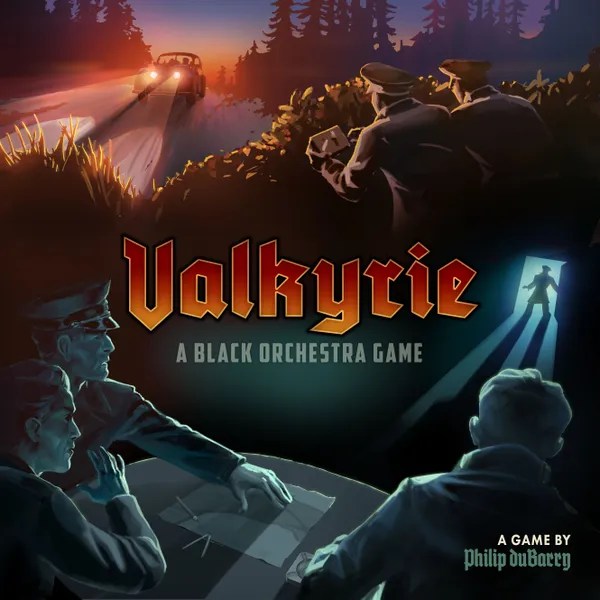
There are few acts of violence more righteous than killing Adolf Hitler. On July 20th, 1944, German Colonel Claus Von Stauffenberg attempted to do just that. Not to spoil the 2008 Bryan Singer film, but von Stauffenberg failed thanks to the leg of an oak table. The 2016 board game Black Orchestra allows players to…
It’s Women’s Day! A great opportunity to look pair a book and a game on the American women’s suffrage struggle: The Woman’s Hour (Elaine Weiss) and Votes for Women (Tory Brown, Fort Circle).
The Woman’s Hour was published in 2018 by Viking Press. It focuses on the campaigns for and against Tennessee to ratify the 19th Amendment which enshrined women’s suffrage in the US constitution – as the 36th, and decisive, state to do so.
Votes for Women was published in 2022. It is Tory Brown’s first published board game. The card-driven game can be played in a solo or cooperative mode with the player(s) representing the American suffrage movement from 1848 to 1920 against an automated opposition, or with two to four players facing off against each other (half of them for, the other against women’s suffrage). In either case, the suffrage players must win 36 states (either by shoring them up decisively during the game, or in the final vote on ratification of the federal amendment) to win.
Connections & Conclusions
At first look, book and game seem to have very different scopes. After all, Votes for Women sets in with the Seneca Falls Convention (at which women’s suffrage was first voiced as a political demand in the United States) in 1848 and covers the following 72 years, whereas The Woman’s Hour begins with the arrival of activists Carrie Chapman Catt, Sue White, and Josephine Pearson at the Nashville station in the sweltering summer of 1920. Yet as the narrative progresses, background stories are woven into the tapestry – on the context of the 1920 presidential election, suffragists’ previous efforts to gain voting rights for women in the states and to lobby for a federal amendment, the women’s suffrage movement’s relationship with abolitionism, and all the way back to Seneca Falls (and a little bit of Abigail Adams’s “Remember the Ladies”). If you have played Votes for Women, you will recognize many of the people and events on the cards from the early and middle periods of the game when reading The Woman’s Hour.
The Seneca Falls Convention is the Start card for the suffragist player with which any game of Votes for Women kicks off, following the tradition laid out by protagonist Elizabeth Cady Stanton that this was the starting point of the American women’s suffrage movement.
What unites book and game is their focus on procedural politics. Historical change does not simply happen, nor is momentarily decided upon. Instead, it is brought into effect by the “strong, slow drilling into hardwood boards with passion as well as sound judgment” (Max Weber). The drills used come in both cases from the toolbox of political activism:
The Woman’s Hour details how suffragists (suffs) and anti-suffragists (antis) lobbied the Tennessee lawmakers, how they organized in associations and clubs to channel their activists’ time, funds, and energy, and, of course, how they campaigned for public opinion to win the hearts and minds of the American people with newspaper articles, public speeches, great processions, and all kinds of civil disobedience.
Votes for Women makes these the three actions from which the players choose on a given turn: Lobbying (for and against the 19th Amendment in Congress), organizing (to gain the crucial buttons which are the currency for some powerful in-game effects and die re-rolls), and campaigning (which spreads influence cubes and thus eventually decides if enough states come out in favor of ratification of the 19th Amendment or not).
Early in the game: There are still a lot of orange Opposition cubes, but the women’s suffrage movement has made some inroads (yellow and purple cubes). The large round buttons represent the movement’s organizational strength, the white columns (one already placed on the track under the picture of the Capitol) the willingness of Congress to pass the women’s suffrage amendment.
As we’ve mentioned civil disobedience already: The women’s suffrage movement was no monolithic bloc. One of the great dividing lines was that of styles: The more conventional part of the movement, organized in the late 19th and early 20th century in the National American Women’s Suffrage Association (NAWSA) led by Carrie Chapman Catt, paid close attention to appear as respectable as possible (knowing full well that their demand for equal suffrage was enough of a provocation to the male public opinion of the time). Others adopted a more radical style, inspired by the British suffragettes: The Women’s Party, led by Alice Paul (and represented in Tennessee by Sue White) referred to the president as “Kaiser Wilson” in reference to the German war enemy, burned him in effigy, and (successfully) provoked the police into arresting activists over minor infractions. The dainty young women and respectable matrons who served some prison time then embodied the injustice of depriving women of their vote.
The Woman’s Hour details these fractions within the movement, as NAWSA and the Women’s Party led entirely separate campaigns for Tennessee’s ratification of the 19th Amendment. While infighting was avoided, the reader is left to wonder if the movement could have been more effective if not for these parallel structures – or if the split between a more moderate and a more radical wing was able to compel a broader spectrum of audiences by working in parallel.
Votes for Women depicts the multifaceted character of the women’s suffrage movement by splitting the suffragist player into campaigner figures and influence of cubes of two colors (yellow/gold, the traditional color of the American women’s suffrage movement, and purple, a color which Alice Paul had coopted from the British suffrage movement). As several Opposition event cards target the highest concentration of one or the other color, the Suffragist player is well-advised to aim for an even spread of colors in the individual states.
The pluralism of the women’s suffrage movement is exemplified by the two colors… and a plethora of Opposition events which target only one or the other.
Votes for Women also tackles another split in the women’s suffrage movement which is outside the scope of The Woman’s Hour – that on strategy. After the initial push for women’s suffrage as a part of a great campaign for equal suffrage regardless of sex and race had failed in the aftermath of the Civil War, the suffragists disagreed on how to proceed: Some pushed for a federal amendment to the Constitution (like the 15th Amendment had codified the voting rights of black men), others wanted to win voting rights in the individual states first. While the struggle for women’s voting rights was eventually won with the ratification of the 19th Amendment in Tennessee, the voting rights advances in the individual states had laid the groundwork: Wyoming had established women’s suffrage as early as 1869, Montana sent Jeannette Rankin as the first woman to Capitol Hill, and by 1917, women in 19 states – mostly in the West and Midwest – had won the right to vote (sometimes only in a limited fashion, like voting in local elections).
Votes for Women’s stance is that it needs both – after all, the game is lost for the suffragist player if their lobbying fails to get the federal amendment through Congress, but to win, they need the strength amassed in dozens of local campaigns to have the amendment ratified in enough states. The game, however, makes a statement about timing: While it is possible for the suffragist to have Congress pass the 19th Amendment in the mid-game already, that is a decidedly risky strategy which gives the Opposition a lot of opportunity to snatch individual states and rack up the necessary 13 rejections which mean the failure of the amendment. The ideal move for the suffragist is to build up the strength in the states as much as possible before pushing Congress into action as late as possible. While that is not without its risks (Opposition can still try to throw wrenches in the wheels of congressional action), it spreads them more evenly between federal and local action.
As mentioned above, equal suffrage spread from the American West and Midwest. It had a much harder time in the Northeast and in southern states – like Tennessee. The southern states were not only more conservative in general, suffragists also faced specific obstacles there: Many southern whites remained committed to the cause of white supremacy after the defeat of the Confederacy in the Civil War. Enfranchising women would give the right to vote to black as well as white women, and in the mind of the white supremacists, white women would be much less likely to actually exercise it (be it because they, as “proper” women, would rely on their men to represent them, or because they would not go to a polling station where they might meet with Black Americans). Others, while generally in favor of women’s suffrage, resented the method: After the Civil War, the 13th, 14th, and 15th Amendments had enshrined certain rights (including male voting) for Black Americans in the Constitution. Federal amendments were thus unpopular with many southern whites.
As The Woman’s Hour details, this provided for a lot of traction for the anti movement in Tennessee. Activists like Nina Pinckard and Josephine Pearson railed against carpet-bagging outsiders swooping down from the North to meddle with Tennessee’s affairs, warned of impending “negro domination”, and appealed to the chivalry of southern men to rescue their women from being thrown into the dirty cesspit of politics. That they themselves were knee-deep in that cesspit – after all, they were political activists! – bothered them as much as modern-day “tradwives” are bothered by the fact that their plea for women to be submissive to and dependent on their men is at odds with their often successful social media enterprises.
Somewhat counter-intuitively, many women opposed women’s suffrage on moral or political grounds. Votes for Women does a great job in showing the multi-facetedness of the anti movement beyond the male political and business establishment.
Inherent contradictions aside, the antis’ arguments needed to be countered by the suffs. Many of the white suffragists were willing to make rhetorical or substantial compromises: One of NAWSA’s most-cited statistics in the Tennessee campaign was that the number of white women in the south exceeded that of black men and women combined. Enfranchising women, so the more-or-less subtle subtext, would thus not threaten white supremacy – it might even strengthen it. In the end, the tacit agreement was like that found after the Reconstruction amendments designed to protect Black Americans’ rights in the South: The women’s suffrage amendment made its way into the constitution. Yet voting rights were overseen by the individual states, and federal institutions looked the other way about the blatant disenfranchisement of black voters in the South until the Voting Rights Act almost half a century later.
Neither The Woman’s Hour nor Votes for Women shies away from this uncomfortable part of the women’s suffrage movement: The protagonists of the movement are not portrayed as infallible saints in the book. While they held wildly progressive views for their time on women’s suffrage, their stances on issues of race and class were often more in keeping with those of their contemporaries. They also made tactical mistakes, like Carrie Chapman Catt railing against outsiders trying to influence Tennessee – a charge that was immediately turned against her, a Northerner herself, and restricted her visibility for the remainder of the campaign. And most of them were willing to make compromises for the cause of women’s suffrage – sometimes with themselves (Carrie Chapman Catt supported the US effort in World War I against her pacifist convictions lest the women’s suffrage movement be branded unpatriotic), and sometimes at the expense of others. In short, they were human.
Would the 19th Amendment have passed in Tennessee if the suffragists had been less willing to assuage the fears of southern whites about “black domination”? – Probably not – maybe another state could have become the decisive 36th then, but all likely options had been exhausted before. Did the Black Americans in the South, men and women, suffer from the continued disenfranchisement after 1920? – Undoubtedly.
The South is notoriously tough for the suffragists. Placing a ton of cubes there (plus some additional perks) is a tempting proposition.
Suffragist players in Votes for Women face the same strategic and ethical question (of course, with infinitely lower stakes): One of the most powerful cards in the game is The Southern Strategy which places an immense amount of suffragist influence in the South (representing the union between suffragists and white supremacists). It does open the suffragist for some counter-plays from the opposition, though. Savvy suffragist players might hold the card from turn to turn to play it as late as possible, as an uncounterable stratagem in the final struggle for women’s suffrage. Victories won that way have an odd aftertaste, I assure you.
Since Votes for Women has been released, it’s been in the top 5 of games I have played most often. And while I rarely re-read books, especially non-fiction (because there are always intriguing new books to read), I have come back to The Woman’s Hour and have now both read the physical book and listened to the (excellent) audiobook production. Besides all their worthy exploration and analysis of history, that speaks to both the game and the book being excellently crafted, incredibly engaging pinnacles of their respective medium.
Surf was up. We had already checked out Mavericks, Praia do Norte and Mullaghmore Head. All that was left was to ride the big breakers at Pipeline. We couldn't wait to show off our best tricks and compete with each other to score the most admiration. It was time to swim out and get on the next Big Wave by Daniel Kenel from Little Dog Games with art by Justin Santora.
To celebrate our Spring 2026 issue of Casual Game Insider, we're giving away amazing prizes worth $550 to 31 lucky winners! Don’t miss your chance to win—enter today!
It’s 1998. Goldberg is dominating the only wrestling league that matters. The Wolfpac is running wild, and that damn cattle prod is about to make an appearance at Starrcade. But that hasn’t happened yet. Right now, a Totino’s pizza is crackling to life in the oven. My buddy Chris is spending the night, and we…
I’ve now played High Frontier, 3rd Edition, High Frontier 4 All and I owned Rocket Flight (aka Lords of the High Frontier). I’ve never played 2nd Edition, but as far as I know, there was no second edition, but I’m sure a comment will correct me. I’ve gone from “indifferent” to “suggest” back to “indifferent” and I’m back to “suggest.”
Not a blanket suggest …. I see a yearly game that involves all of the expansions1 and that 10 hour behemoth is not for me. High Frontier has a snowball growth. The first exo-factories give you better patents (hopefully) which means your second rocket has first opportunity to explore and exploit key sites.
This may not be true of the most experienced players (several of which are in that yearly game). but it’s certainly true at my level and in one of my three games so far this year I busted site after site in my first hour, squandering my early launch advantage. If I had rolled well, though, I would have snowballed in a positive way. Like many of Phil Eklund games, HF is more simulation than game, with scoring tacked on. That sounds too harsh — the scoring scheme is actually reasonable. Quite often the ‘winner’ is the person that objective observers would say “Yeah, that space agency did the best.” But me personally, when I’m getting snowballed, it’s can be a bit of a drag. Three hours is often enough to determine that.
There is also the brain-burn factor. High Frontier isn’t as complex as Magic Realm, although the fact that its in the same conversation is telling. No, High Frontier’s brain burn is the paradox of choice. In the Realm, you start of with a world where you are going to wander around for a bit … the great treasures could be anywhere. Sure if you are hunting dragons you will have some preferred destinations, but the early game is exploration. In space, we’ve got decades of exploration done before the first mission launches. The map is known, and cosmically complex.
Even ignoring anything past the asteroid belt2, your first mission has plenty of options limited by hydration, distance in burns and/or time, landing thrust …. and also preferences relating to spectral type and risk management. Then you have to calculate fuel, and High Frontier’s ingenious implementation of Tsiolkovsky’s rocket equation take some time to think about. Even initiates with a few games under their belt (such as myself) have to ponder mission planning.
After about three hours, I’m tired.
That being said, I’d like to learn the Bernal and TW thruster rules (some modules in HF4), so I watched the heavy cardboard rules video (and am watching the playthrough) and I’ve set up a solo game (of HF3) which I might play off and on. A solo game has the “I can get up and come back to it tomorrow” advantage.
So, High Frontier is back into the suggest rating. I’ve re-caught that particular bug.
Possibly including expansions still under development ︎
Possibly a mistake, and I also typically ignore Mercury and Venus (a definite mistake) ︎
Ryan Dancey was, until last Wednesday, the Chief Operating Officer at Alderac Entertainment Group (AEG). On LinkedIn, the self-help site for managers who want to tell each other how great they are and how little their subordinates/customers appreciate them, Dancey published a post (link to a photo of the post, because I do not link to LinkedIn) in which he explained that he is firmly convinced that AI (or rather the LLMs that are usually labelled as AIs) will, in just a few years, be as useful as any employee.
Cards were wildly flying through the air. People were taking turns aiming their cards at the target in the middle of the table. It all looked frightfully confusing, but everyone was happy. Choosing the best card was hard enough as it was, but flicking it correctly seemed impossible. For the cards, it was certainly a Tricky Landing by Mike Petchey from Huff No More with illustrations by Edie Petchey.
Sextus, you ask how to fight an idea. Well I’ll tell you how… with another idea!
Peter showcases the amazing range of epic scale Gothic Sector pre-painted terrain from Gale Force Nine!
I do love a bit of tabletop terrain, and if it’s pre-painted so I don’t have to do any extra work, so much the better! Gale Force Nine just sent me this incredible range of epic-scale terrain from their Gothic Sector range, and I’m blown away. At last, great trees and roads for games like Armoured Clash, Adeptus Titanicus, Epic 40,000, and Legions Imperials, and Epic Warpath. Check it out!
Making high quality tabletop gaming content at the EOG takes time and money. Please consider becoming a Patreon supporter or making a donation so I can continue this work! Thankyou!
Historical board games occupy an awkward space in our hobby. They are usually not designed to teach history in any formal sense, and they are also not entertaining in the sense of being fun. These games stop short of education, offering no syllabus, no claims of being a detailed treatise of their setting, and no obligation to explain themselves. The subject matter historical board games draw on, war, exploitation, inequality, famine, and systemic violence, doesn't suit the lightness or escapism people often expect when playing board games as a leisure activity. The result is a form of play that somehow feels serious but incomplete. In this article, I want to explore this in more detail.
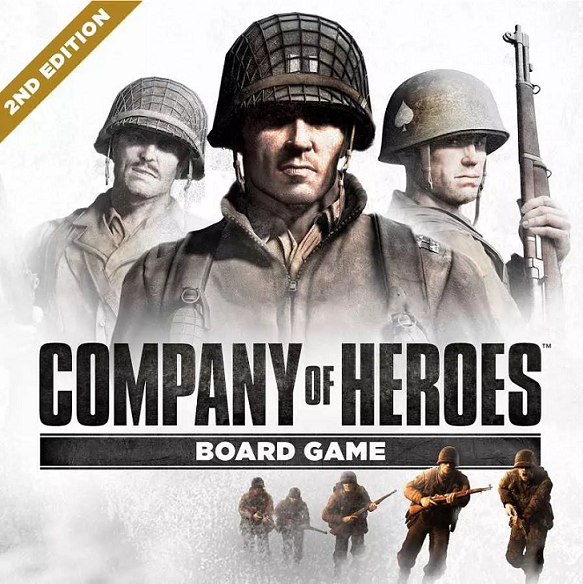
I find it hard to believe the Company of Heroes board game is five years old. This splendid adaptation of the popular real-time strategy PC game was a story in 2021. My review contained a healthy amount of enthusiasm, and it occupied a key position in my top 10 of the year. A lot has…
Two weeks ago, we’ve looked at the first period of Soviet liberalization under Nikita Khrushchev from the 1950s on. While these reforms ended the era of Stalinist totalitarianism, they petered out when Khrushchev lost interest in them and was eventually overthrown and replaced by the more conservative Leonid Brezhnev. It would take another generation until a new Soviet leader, Mikhail Gorbachev, would undertake another broad reform program. These reforms – like last time, in the realms of domestic, foreign, and economic policy – are the subject of this article. Of course, you’ll also find a few board games in it!
Freer Press, Freer Elections
The Soviet Union’s political landscape had ossified under Brezhnev. This stagnation (or, if you want to phrase it more positively, hyperstability) also ruled out any experiments after Brezhnev’s death in 1982, and so the Politburo selected his loyal lieutenant Yuri Andropov. Unfortunately, Andropov was already 68 and severely ill then. He died in 1984, to be succeeded by another Brezhnevite stalwart, Konstantin Chernenko, who was similarly afflicted and even older (72 at his accession). Chernenko died in 1985. The rapid succession of aging Soviet leaders is poignantly captured in the contemporary joke: Margaret Thatcher calls Ronald Reagan: “It’s a pity you didn’t come to the funeral of the Soviet general secretary. Marvelous. A great spectacle. I’m totally going again next year.”
Cover of the English-language edition of Kremlin. Unfortunately, fake Cyrillic was once more irresistible, and so the R in Kremlin has been replaced with a Я (which would make the word Kyaemlin).
Another quasi-contemporary (1986) satirical take on the Soviet gerontocracy is Kremlin (Urs Hostettler, Fata Morgana): Players support the various Politburo members in the hopes of advancing those they have influence with to the top jobs, but many a hopeful candidate will die of stress and old age before realizing their ambitions.
After Chernenko’s death, even the most conservative Politburo members saw the need for a different tack: They elected Mikhail Gorbachev as their new leader in 1985, a real baby at age 54. Gorbachev’s reformist leanings were well-known, but he proceeded cautiously in his first year. As with Khrushchev, the big programmatic changes were first announced at a Party Conference of the Communist Party of the Soviet Union.
Gorbachev’s first slogan for his reforms was glasnost (openness). That included sweeping changes to Soviet citizens’ freedom of expression: Gorbachev encouraged the Soviet press to scrutinize politics instead of simply parroting the party line. Dissidents were released from prison. Even non-state-sponsored demonstrations were allowed – a powerful tool to express malcontent with the government. Of course, these reforms undermined the power base of the Communist Party – but Gorbachev hoped that he could steer the ship of state in the new environment and might even benefit from a freer populace.
Even more radical were Gorbachev’s institutional reforms, usually referred to as perestroika (restructuring): The Communist Party’s monopoly on power was cut off by establishing the Congress of People’s Deputies as an independent parliament, and while the first elections in 1989 were not fully free, it was the first time that Soviet citizens could select from several candidates in a contested election. Gorbachev himself chose to base his power no longer on his role as General Secretary of the Communist Party, and instead was elected President of the Soviet Union by the Congress of People’s Deputies in 1990.
This nascent democratization drive – eventually rather envisioned than enacted – makes for the most powerful card in the last phase (1985—1991) of the Cold-War-in-a-nutshell which is Twilight Squabble (David J. Mortimer, AEG): It’s a bit of speculation on the internal and external legitimacy and attractiveness a more democratic Soviet Union could have enjoyed.
Speaking of external legitimacy and attractiveness: Gorbachev’s policies (and he himself) would prove immensely popular in the West… after he had weathered the initial suspicion. Gorbachev began to advocate for a return to détente soon after he assumed office, but US president Ronald Reagan assumed this to be a Soviet ploy. Only after Gorbachev had met Reagan at the 1986 Reykjavík summit did the president believe Gorbachev’s intentions to be genuine.
In the following years, the two of them agreed on far-reaching mutual disarmament, most notably the Intermediate-Range Nuclear Forces (INF) Treaty. Gorbachev’s immutable advocacy for arms reduction is reflected in Wir sind das Volk! – 2+2 (Richard Sivel/Peer Sylvester, Histogame) as his event card cannot be used for the arms race.
Besides the lofty realms of nuclear arms reduction, Gorbachev also had more grounded problems to deal with: The Soviet Union had invaded Afghanistan in 1979 to prop up the failing pro-Soviet government there and had been embroiled since then in a costly and futile counter-insurgency. As the Soviet military could not present Gorbachev with a convincing roadmap on how to win the war, he decided to pull the Soviet forces out in 1988. By that time, the unsuccessful war had undermined the Soviet government’s legitimacy which had rested on its status as a military superpower, exacerbated by the new avenues of political expression open to disaffected citizens – the mothers of Soviet soldiers who fought (or had died) in Afghanistan were among the first to form associations, to pressure the government, and to protest.
In that sense, it is surprising that the withdrawal from Afghanistan can still net the Communist player points in 1989 (Jason Matthews/Ted Torgerson, GMT Games) – but the general principle holds true: The later the Soviets withdraw, the more their failure in Afghanistan becomes an asset to the opponents of Communist power.
Finally, Soviet power was the rock on which the Communist governments in Eastern Europe rested. Whenever they had been challenged – most importantly in Hungary in 1956 and Czechoslovakia in 1968 – Soviet tanks had quashed the dissent. This limited sovereignty within the Eastern bloc had been the central tenet of Soviet foreign policy, after 1968 named the Brezhnev Doctrine. Gorbachev adopted a new approach: He would not militarily intervene in Eastern Europe anymore. Instead, the countries of the Warsaw Pact were free to “do it their way” – thus humorously called the Sinatra Doctrine.
Finally, Gorbachev’s reform agenda of perestroika also aimed to transform the Soviet economy. All Soviet leaders had engaged in some kind of economic reforms, so Gorbachev’s activity did not seem very surprising… until observers inside and outside of the Soviet Union realized how radically it would change the tenets of the Soviet economy, traditionally based on central planning, large state-owned companies, and very limited contacts with the outside world.
First, Gorbachev gave the state-owned companies much more leeway over what to produce and how to set prices. These market incentives were supposed to improve efficiency, but clashed with the existing structures.
Undeterred, Gorbachev went a step further and loosened the restriction on private enterprises. More Soviet citizens could start their own store or workshop and offer goods and services at their own responsibility.
Then, Gorbachev allowed for joint ventures with Western companies (provided the Soviet part owned a majority share), and even let them set up dependencies in the Soviet Union – the famous first McDonald’s restaurant in the Soviet Union opened in January 1990.
The End of the Cold War and the Collapse of the Soviet Union
Gorbachev’s daring move to end hostilities with the West was an unqualified success. In late 1989, he and US president George H.W. Bush could merrily declare together that the Cold War was over.
The consequences of Gorbachev’s foreign policy reverberated through the Eastern Bloc: The allied Communist regimes of Central and Eastern Europe were swept away in 1989.
Early in a game of 1989: The Democrat (blue) has already taken power in Poland and Hungary. It will be difficult for the Communist (red) to stop the ever-growing blue tide. From the Rally the Troops! implementation.
The Perestroika and Glasnost event in Wir sind das Volk! – 2+2 neatly shows the way in which Gorbachev’s reforms put stress on the system: On the one hand, it increases Soviet dominance and makes socialism more attractive (lower two icons). However, it also increases unrest in East Germany (fist icons).
Within the Soviet Union, the political freedoms granted allowed citizens to demand more freedoms. These centrifugal effects became particularly visible as most of the non-Russian republics soon had nationalist independence movements which began to eat away the Soviet Union from its ethnic fringes. Gorbachev responded by proposing a looser federation between the Soviet Republics.
The political reforms also had negative interaction with the economic reforms: On the one hand, the flurry of changes created new inefficiencies; on the other, the increased freedom of the press highlighted economic problems no matter if they were new or had existed for centuries. As Soviet economic performance thus both objectively worsened and also became more obvious to the average citizen, Gorbachev’s legitimacy eroded.
Hardliners within the Communist Party couped against Gorbachev in August 1991 to prevent the loose federation between the Soviet Republics. A coup might also spell the end for the player in the solo game Gorbachev: The Fall of Communism (R. Ben Madison, White Dog Games). It’s a States of Siege game with a twist: Whenever the marker on any of the five paths (four of which refer to various ethno-national groups in the Soviet Union, the fifth represents the Communist Party) reaches the center, the game is not lost immediately, but a coup is staged: If Gorbachev has enough elite support to weather it, he goes on to fight another day.
In history, that was not the case: While the coup failed, it made Gorbachev a lame duck. The supporters of reforms turned away from him and toward his erstwhile ally Boris Yeltsin (who had cut a much more dashing figure during the coup), and away from the Soviet Union and toward their respective ethno-national identities. Gorbachev resigned as president and the Soviet Union was dissolved in December 1991.
The most influential work on Gorbachev’s time in office and his policies remains Brown, Archie: The Gorbachev Factor, Oxford University Press, Oxford 1996.
A magisterial mosaic of Soviet social, economic, and cultural life is Schlögel, Karl: The Soviet Century. Archaeology of a Lost World, Princeton University Press, Princeton, NJ 2023.
For the age of hyperstability before Gorbachev (and the discussion if it was an age of stability or stagnation), see the essays (in German, but with English abstracts) in: Belge, Boris/Deuerlein, Martin (eds.): Goldenes Zeitalter der Stagnation? Perspektiven auf die sowjetische Ordnung der Brežnev-Ära, Mohr Siebeck, Tübingen 2014.
On the transformative last third of the 20th century in Russian history, see Kotkin, Stephen: Armageddon Averted. The Soviet Collapse, 1970-2000, Oxford University Press, Oxford 2001.
On the end of the Cold War, see Dockrill, Saki Ruth: The End of the Cold War Era. The Transformation of the Global Security Order, Hodder, London 2005.
For the Soviet intervention in Afghanistan, see Braithwaite, Rodric: Afgantsy. The Russians in Afghanistan, 1979—1989, Oxford University Press, Oxford 2011.
The sea relentlessly froze around our convoy, tightly squeezing the ships' hulls, as if it was testing our resolve. The other ships were holding formation, their tall masts and limp sails dark against the brooding grey sky. We had been entrusted with mapping new shores and documenting new species, financed by men who expected their names to be remembered forever, with ours only featuring as footnotes. Yet, our minds only thought about fuel and food, and storms that could spoil both. We each commanded our own ship, yet we were bound together by the same horizon, as we made our way Through Ice and Snow by Fernando Eduardo Sánchez from 2Tomatoes Games with art by Pedro A. Alberto and Araceli Martín.

 Anmelden