❌

Normale Ansicht

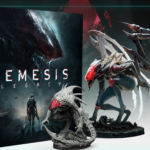
Nemesis: Legacy breaks board game crowdfunding record amid blockbuster year for sector – but publishers warn of rising costs, growing risks

13. November 2026 um 12:50

Nemesis: Legacy has become the highest-funded board game crowdfunding campaign of all time, raising more than €13.2m from almost 35,000 backers through its Gamefound campaign – and helping propel tabletop crowdfunding to a record-breaking year in which dollars raised has already comfortably surpassed the total for the whole of 2025.

Data from crowdfunding tracking site Tabletop Analytics shows that board game, RPG and tabletop accessories projects across Kickstarter, Gamefound and BackerKit have attracted more than $416m in 2026 so far, up almost 49% on the $280m raised throughout the entirety of last year.

Campaigns in the site’s narrower ‘tabletop’ category, which excludes RPGs and accessories, have raised almost $266m in the year to date, compared with $196m across the entirety of 2025 – with average funding per project climbing from $113,000 to almost $152,000.

Kickstarter has seen a particularly huge surge for ‘tabletop’ in the first ten months of 2026 according to the data, attracting $148.4m – up 65% from the $89.8m raised over the same period last year.

Rival crowdfunding heavyweight Gamefound also saw a continuation of its rapid growth, Tabletop Analytics shows, with $107.3m pledged between January and October, compared with $73.7m a year earlier.

A Gamefound spokesperson told BoardGameWire that campaigns across its platform raised $111.3m in the first ten months of 2026, up 14.8% from $97m over the equivalent period last year, excluding late pledges and pledge-manager sales.

The platform’s own figures use a different reporting basis from Tabletop Analytics – reflecting quirks such as whether campaigns are recorded in the period they launch or the period they close.

But the respective numbers suggest tabletop crowdfunding’s ongoing growth is being accompanied by a significant recovery at Kickstarter – which had suffered three consecutive years of declining funding as rival Gamefound expanded its share of the market.

Kickstarter’s tabletop funding fell from a pandemic-era peak of $270m in 2021 to about $220m in 2024, with annual declines of 12.4%, 4.3% and 2.7%, respectively. That decline came despite the number of successfully funded projects continuing to rise, with the average amount raised per successful campaign falling to $41,400 in 2024 – its lowest level in a decade.

Gamefound, meanwhile, has been growing rapidly since launching as a fully-fledged crowdfunding platform in 2022. The platform’s campaign funding doubled from $28.3m that year to $56m in 2023, before jumping another 49% to over $85m a year later.

The platform, which began life as a Kickstarter pledge manager in 2015, rapidly grew into a major crowdfunding destination in its own right, particularly for established publishers launching expensive, large-scale games with multiple boxes, expansions and plastic miniatures.

Gamefound hosted five of the ten highest-funded board game projects in 2023, six of the biggest tabletop campaigns in 2024 and nine of the ten highest-funded board game campaigns in 2025 – and has since extended its ambitions beyond tabletop gaming, acquiring veteran crowdfunding rival Indiegogo last summer.

Nemesis: Legacy is the third board game crowdfunding campaign this year to enter the all-time top ten for dollars raised, alongside Flashgitz’s Space King ($9.3m) and Roxley Games’ Brass: Pittsburgh ($9.1m) – with all three drawing on established franchises or large, dedicated audiences to attract huge amounts of pledges.


Game
PublisherYearPlatformAmount Raised
Nemesis: LegacyAwaken Realms2026Gamefound€13.23m ($14.8m)
FrosthavenCephalofair Games2020Kickstarter$12.97m
Kingdom Death: Monster 1.5Kingdom Death2017Kickstarter$12.39m
The Witcher: LegacyGo On Board2025Gamefound€10.45m ($12.3m)
Nemesis: RetaliationAwaken Realms2024Gamefound$12.2m
Space KingFlashgitz2026Kickstarter$9.35m
Brass: PittsburghRoxley Games2026Gamefound$9.11m
Marvel Zombies: A Zombicide GameCMON2022Kickstarter$9.03m
Exploding KittensExploding Kittens2015Kickstarter$8.78m
The Witcher: Old WorldGo On Board2021Kickstarter€6.84m ($8.29m)
Largest board game crowdfunds of all time

That rash of blockbuster campaigns has been replicated across the wider tabletop industry, with space opera D&D campaign setting Neon Odyssey pulling in more than $16.1m, the Dungeon Crawler Carl RPG and Unstoppable board game raising $13.3m, and the Cyberpunk TCG becoming the highest-funded tabletop gaming crowdfunding campaign of all time at $28.3m – almost doubling the previous $15.1m record set by the Cosmere RPG in 2024.

But despite the extraordinary sums pouring into tabletop crowdfunding, interviews carried out by BoardGameWire with publishers, designers and crowdfunding industry professionals at Spiel Essen last month revealed growing concerns over rising marketing costs, unpredictable campaign results and the impact of high-profile publisher failures on backer confidence.

Two publishers told BoardGameWire they had deliberately decided against crowdfunding their latest games – despite featuring the premium components often associated with successful campaigns – amid concerns about the financial risks and long-term viability of the model for smaller businesses.

They cited rising marketing costs, growing uncertainty over whether campaigns would attract enough backers to justify their investment, and concerns that backers were becoming increasingly reluctant to pay for games they might not receive for several years.

“I think people are more anxious about spending their money,” one publisher said, arguing that customers were increasingly inclined to wait for retail releases rather than commit to expensive campaigns with lengthy fulfilment schedules.

Those concerns have been exacerbated by a string of high-profile crowdfunding failures and financial crises among large, established publishers in recent years – a situation multiple industry professionals told BoardGameWire had made some long-time crowdfunding backers wary of committing money to new projects.

Mythic Games, publisher of the Darkest Dungeon board game, was officially liquidated in October 2025 after raising more than $19m through crowdfunding over five years. The company’s demise left a string of projects undelivered, including the $2.2m Hel: The Last Saga and $1.3m Monsterpocalypse campaigns.

Miniatures from the Darkest Dungeon board game || Photo Credit: Mythic Games

Former crowdfunding powerhouse CMON, meanwhile, lost almost $23m across 2024 and 2025, halved its workforce, sold major intellectual properties including Zombicide and Blood Rage, and has halted new crowdfunding campaigns.

The Hong Kong-listed publisher reported a further loss of just over $2m in the first half of 2026, while continuing to work towards delivering eight delayed crowdfunding campaigns that collectively raised more than $14m.

CMON has attributed part of its financial difficulties to weakening demand for its crowdfunded games, with revenue from crowdfunding projects falling by almost a quarter in 2024. The company subsequently blamed softer crowdfunding and wholesale demand, particularly in North America following US tariff increases, for its worsening financial performance in 2025.

UK publisher Steamforged Games cut about a third of its workforce this year and scaled back new board game crowdfunding activity – and has seen mounting complaints from backers about delayed updates and unresolved refunds relating to nine outstanding campaigns worth almost £19m, including late pledges.

Steamforged investor Foresight said earlier this year that the publisher had experienced “a few disappointing crowdfunding campaigns over the last 12 months” and was looking to move away from the model towards its higher-margin Iron Kingdoms business.

Some smaller publishers have also struggled. Final Frontier Games closed in April 2025 with three crowdfunding campaigns worth almost $1.4m unfulfilled, while Assassin’s Creed: Brotherhood of Venice publisher Triton Noir shut down later that year after cancelling its final campaign.

Triton Noir founder Thibaud de la Touanne blamed growing competition for backers and disappointing crowdfunding results for contributing to his company’s demise, saying most of its Kickstarter campaigns had fallen short of expectations – forcing smaller production runs and higher manufacturing costs.

Final Frontier said unexpected pandemic-era shipping costs of more than $350,000 had wiped out its profits from Merchants Cove, leaving it struggling financially for years. But it also blamed CMON’s alleged failure to pay for a Chinese-language edition of the game as the “final nail” in its closure, although CMON disputed that account.

Belgian publisher Game Brewer, whose crowdfunded titles included Gugong and Paris, announced its closure in June 2024 after struggling to remain profitable in an increasingly competitive market. It subsequently delivered almost all pledges for its final three crowdfunding projects, although some backers were still reporting outstanding deliveries in 2026.

And French publisher Funforge closed in August 2025 after years of financial difficulties, including pandemic-related manufacturing and shipping costs which left it more than $250,000 out of pocket on its delayed Monumental campaign. Company CEO Philippe Nouhra had previously told BoardGameWire that crowdfunding’s business model was “globally broken”, arguing that the financial risks were too great for publishers and backers.

Former FunForge CEO Philippe Nouhra at Spiel Essen 2024

Other industry professionals interviewed by BoardGameWire at Spiel Essen questioned how much of the additional money currently surging into crowdfunding was benefiting smaller and mid-sized publishers, and whether the rising costs of attracting backers were making crowdfunding increasingly difficult to sustain.

One warned of a “compression of the middle tier”, arguing that larger, established publishers were able to easily outspend mid-sized competitors on advertising and convention appearances, crowding them out in the competition for backer pledges.

“I think we’re getting to a time where you need to be spending more, to be making more,” they said. “I think it’s more difficult than ever for mid-sized publishers who are having to spend money to have a bigger team to try and develop and grow.”

The problem agreed on by several industry professionals BoardGameWire spoke with is not necessarily that smaller publishers cannot attract any crowdfunding support – but that the cost of reaching enough backers to make a campaign commercially worthwhile is becoming increasingly difficult to manage.

Steamforged Games CEO Rich Loxam voiced similar concerns in an interview with BoardGameWire last year, warning that the biggest crowdfunding publishers were setting expectations that could be difficult for mid-sized businesses to meet.

He pointed to longer production lead times, higher shipping costs, growing competition for manufacturing capacity and increasing localisation demands as factors adding to the cost and complexity of delivering crowdfunded games.

Acorn Dobrovolskyy, the founder and CEO of Ukrainian publisher Boardova, offered a highly critical assessment of the model, arguing that publishers’ success was becoming increasingly dependent on their ability to market products rather than the quality of the games themselves.

“It’s a broken system,” he told BoardGameWire. “It rewards marketing companies, not board game companies.”

Boardova founder and CEO Acorn Dobrovolskyy

Dobrovolskyy argued that companies offering relatively inexpensive games were competing for many of the same potential customers as those selling large, premium-priced products – without necessarily having the same revenue available to afford to advertise to them.

“We see Kickstarter ads every day. All of us are competing for the same guy. So it doesn’t matter if you are selling the $15 game or the $100 game – but if it doesn’t matter, you better be selling the $100 game. But that doesn’t benefit the end customer.”

Dobrovolskyy said he would prefer to move away from crowdfunding altogether, but said Boardova continued to rely on campaigns “because we need the cash flow”.

He said, “Our goal is to become a company that carries the risk of printing and promoting our own games, and doesn’t do crowdfunding because it’s a lot of stress for buyers. It’s a lot of stress for us.

“You spend almost as much… okay, not as much time on a crowdfunding as on creating a game, but it’s comparable, basically. And we could make either better games, or more of them, if we didn’t have to go crowdfund.

“But on the other hand, I understand why it exists still in a market this overcrowded. But I still believe that there are better ways, especially for bigger players, to go about it.”

Despite those difficulties, other publishers argued that crowdfunding remained essential to their businesses because of the greater share of sales revenue they could retain compared with selling through traditional retail distribution.

One publisher with several large crowdfunding projects under their belt told BoardGameWire that paying for staff, game development, logistics and future projects all become much harder to justify when a substantial share of the selling price goes to distributors and retailers.

But they also questioned whether the model could remain sustainable as backers became increasingly reluctant to commit large amounts of money to games that might take years to arrive.

“I do think that … asking for a large crowdfunding splash is going to become less and less of a reasonable ask in the hobby,” the publisher said.

They added that publishers might need to experiment with more conventional retail launches, direct sales and pre-orders, while shortening the time between announcing games and delivering them to customers.

Other publishers interviewed by BoardGameWire said they were already becoming more selective about which products they take to crowdfunding, with the model’s emphasis on deluxe editions, exclusive components and extensive stretch goals not always suited to games intended for wider retail distribution.

One publisher said crowdfunding backers increasingly expected “everything deluxe”, creating products and price points that did not necessarily translate well into conventional retail channels.

But even the largest, most expensive crowdfunding campaigns are not immune to rising costs – with publishers also facing continued uncertainty over US import tariffs and volatile international shipping prices.

Those risks are particularly acute for crowdfunded games, where publishers can commit to prices years before manufacturing and delivery, leaving them exposed to unexpected increases in costs they may struggle to pass on to backers.

One board game crowdfunding professional pointed out that publishers producing large, component-heavy games face particularly substantial freight bills, and cautioned against assuming that expensive deluxe editions necessarily generated correspondingly high profit margins.

“Their margins are already smaller, despite the fact I think a lot of people think that those campaigns with the really deluxe tiers that are really expensive … they’re getting a ton of margin,” the representative said. “Not always.”

The concerns about smaller businesses being squeezed out of the market are clearly weighing on many board game publishers – but currently, those fears are not reflected in a straightforward decline in funding for newcomers.

Tabletop Analytics’ figures show that projects by new creators across all its crowdfunding categories have raised more than $151m so far this year, compared with $90m throughout 2025 – an increase of 68%.

Their share of overall funding has also risen from 32% to 36%, while the number of projects launched by new creators has increased from 2,001 across all of last year to 2,211 already in 2026.

But those figures naturally do not show how many of those newcomers will go on to build lasting publishing businesses – or whether they will encounter the same difficulties with rising costs, marketing and fulfilment that some of the industry’s established names are now struggling to overcome.

The post Nemesis: Legacy breaks board game crowdfunding record amid blockbuster year for sector – but publishers warn of rising costs, growing risks first appeared on .


“It is clear that Take Time won’t be a one-hit wonder”: Asmodee hit passes 325,000 copies after record-breaking launch

24. September 2026 um 16:29

Huge demand for Asmodee‘s co-operative puzzle game Take Time has seen the publishing giant print more than 325,000 copies less than a year after release – outstripping even the company’s high expectations which surrounded its record-breaking launch.

Asmodee printed a massive 145,000 copies of Alexi Piovesan and Julien Prothière’s design for its worldwide launch last October, citing heavy enthusiasm from its distribution teams, board game media and pre-release playtesters.

Game line manager Auguste Lecoeur told BoardGameWire, “As soon as the game’s prototype was shown to us and signed, it became an internal priority, with resources and manpower being redirected from other projects to Take Time.

“Huge credit goes to everyone involved in the project for getting it done so quickly while maintaining such a high level of quality, especially considering that the game went through only around six months of visual development.

“When the game was first presented to Asmodee’s distribution units and partners, the enthusiasm was immediate as well, with Take Time being flagged as a key new release for Libellud.

“The same enthusiasm was shared by media outlets and players that were able to test the game prior to its release, so we had multiple positive signals ahead of launch.

“In that sense, we were definitely expecting a strong first print run, but you can never realistically expect to reach 145,000 copies. It was a very pleasant surprise and clearly exceeded our expectations, even though we were prepared for strong numbers.”

Every major reprint of the game since has topped 60,000 copies, Lecoeur said, with Asmodee currently planning another two to three global print runs of the same size each every year to keep up with demand.

Lecoeur said, “At this point, it is clear that Take Time won’t be a ‘one-hit wonder’, a game that enjoys a high initial print run but then quickly fades. Instead, the game is maintaining a strong sales pace and continues to perform well across markets.”

He added, “The game gained strong visibility and positive feedback at conventions such as Cannes’ FIJ and Spiel Essen, while also achieving higher-than-usual numbers online, thanks in part to its visual appeal and the buzz surrounding it.

“More broadly, the game was quickly validated by the core and specialist market, as well as by opinion leaders, critics and content creators within the board game community. It received strong critical acclaim – it is now ranked [in] the top 95 family games on BGG – and was nominated for multiple awards, which played a huge part in its success.

“Sure, we would have loved to win the As d’Or and Spiel des Jahres (who wouldn’t?), but I guess we’re being picky here!”

Success Story

Part of the game’s powerful performance has been down to it penetrating well beyond the specialist board games market, with Asmodee saying its distribution is now relatively evenly split between hobby stores, mass-market retailers and e-commerce.

Lecoeur said, “I’m convinced that this wouldn’t have been possible if the game hadn’t first been embraced by the core gaming community. Their strong support and enthusiasm for the game helped open the door to other distribution channels much more quickly.”

He added that part of Take Time’s wider appeal was down to the game’s compact size and “accessible price point”, as well as its “high level of replayability and substantial gameplay content”.

Those first two elements have become increasingly important amid ongoing financial strain for people in some of Asmodee’s core markets, such as France, Germany, the UK and US, with rising food and energy prices and ongoing economic uncertainty putting pressure on their purchases.

Take Time || Photo Credit: Asmodee

Other successful initiatives which helped boost Take Time’s appeal included what Lecoeur described as an “unusual” cardboard demo kit, with detachable cards and clocks, which could be ordered by distribution units to give players a taste of the game’s core mechanisms.

He said the kit “generated strong enthusiasm at launch”, but added that the format was not something which could be replicated for every one of its releases.

Award nominations also helped drive sales, especially in Germany and France, which Lecoeur said had been two of the strongest markets for the game from day one.

He said Take Time’s Spiel des Jahres recommendation was followed by a higher-than-usual reprint demand from Germany of 30,000 copies – and added that the impact of other ‘smaller’ awards “should not be overlooked”.

Take Time triumphed in this year’s Swiss Gamers Award and also took the Austrian game of the year prize, in addition to its ‘recommended’ nod in the Spiel des Jahres and nomination in France’s As d’Or.

Lecoeur also believes Take Time benefitted from the success of Libellud’s previous release Harmonies, which also picked up a Spiel des Jahres recommendation and the Swiss Gamers Award, as well as a Golden Geek – and was highlighted by Asmodee CEO Thomas Koegler as having had a strong launch.

Lecoeur said, “The fact that Libellud’s previous release, Harmonies, had been a hit certainly helped. It raised expectations around the studio’s next title and put the spotlight on its launch.

“It’s clear that each publisher develops its own reputation and ‘brand’ image based on its releases (among other things) and that this plays a significant role in the confidence they receive from retailers and, to some extent, from players.

“The success or failure of each release will inevitably have an impact on the games that follow, particularly when it comes to forecasts and initial orders.”

Time After Time

Asmodee is now beginning to turn Take Time into a wider product line, with debut expansion Mirage set for release next month, and the company having “many more ideas we’re currently working on for the range”.

Lecoeur said, “As soon as we received the first feedback on the game and it became clear that the launch was going to be massive, the first discussions about an expansion began in April 2025 with Alexi Piovesan and Julien Prothière, the game’s designers, to explore the possibilities for additional content.

Take Time: Mirage

“They worked on it and presented an iteration that led to a contract being signed in November 2025, as the first market feedback started coming in and multiple markets were selling out.

“However, this timeline was only possible because the designers were fully confident that the game offered enough design space to support an expansion, and because they presented an idea that genuinely excited the team, both mechanically and thematically.

“We’re not releasing expansions simply for the sake of releasing them or to get a marketing boost. If an expansion is published, it’s because we believe it genuinely adds something to the game and offers players a meaningful new experience.”

He added, “Mirage’s format also played an important role. It is a compact expansion, with a €7.99 MSRP, that introduces a new chapter while also adding a new gameplay twist that can be used to replay the entire base game in a different way.

“It isn’t a large expansion that takes up a significant amount of shelf space in stores or represents a massive financial commitment; instead, it is designed to complement the base game and extend the experience without overshadowing it. Its difficulty is also carefully tuned so that players can enjoy the expansion even if they haven’t finished the base game.

“Regarding expansions and product lines, there is a balance to strike between fully trusting your game and not overcommitting. You want to anticipate demand for expansions and reprints in order to avoid out-of-stock situations or a lack of releases and support that could hurt a game’s prospects in the medium to long-term.

“At the same time, a game needs to demonstrate commercial stability before being turned into a full-fledged product line and treated as such.

“It’s no secret that overproducing a game is one of the easiest ways for a publisher to get into financial trouble, and we’re doing our best to avoid that. We want to support successful games and build on their potential while remaining disciplined about production and inventory.”

A Board Game Arena version of the base game is also due for release in Q4 of this year.

The post “It is clear that Take Time won’t be a one-hit wonder”: Asmodee hit passes 325,000 copies after record-breaking launch first appeared on .

UK Games Expo creators prep for giant show’s future without them by bringing in AireCon co-founder Mark Cooke

17. September 2026 um 16:35

After 20 years growing the UK Games Expo into one of the largest tabletop gaming conventions in the world, founders Richard Denning and Tony Hyams are preparing for their eventual exit by bringing in AireCon co-founder Mark Cooke as operations director.

Cooke joins following another record year for UKGE, which has seen its annual unique attendance surge almost 65% since 2023 to reach more than 51,000.

The show has already well surpassed Gen Con in terms of trade hall size, with the British event now spanning about 44,000 sq m – about 40% larger than Gen Con’s trade hall area – and hosting around 900 exhibitors in 2026.

That soaring growth has put increasing pressure on the small organising team at UKGE, with Denning telling BoardGameWire last year that the show had strained a full-time workforce which stood at just six people – although UKGE also relies on more than 200 volunteers, GMs, umpires and other helpers to deliver the convention each year.

Cooke is no stranger to growing a UK board game convention, having co-founded and built AireCon with Ben Clarkson from a 28-person gaming weekend in his flat a decade ago into England’s second-largest board game con, with about 5,000 attendees this year.

His hire by UKGE comes just three weeks after AireCon revealed that despite its own soaring growth, its 2027 show in Harrogate would be its last – saying a combination of factors had “made it increasingly challenging to run AireCon in a way that preserves the character and spirit that made it so special in the first place”.

More than 5,500 people are expected at the final AireCon – which has been nicknamed Airemageddon – with Cooke set to continue working on that final show before moving to UKGE full time.

A statement from UKGE emphasised the hire was part of a phased transition for UKGE’s organisers, and was “not a sudden change of leadership or direction”.

UK Games Expo 2026

It said Cooke would work alongside Denning and Hyams “over the next few UK Games Expo events”, ensuring that knowledge, experience and responsibilities the pair have built up over the last 20 years are handed over “gradually and thoughtfully”.

Denning said, “As UKGE has expanded to now one of the world’s largest shows we have gradually grown our team, adding event managers, administrators and logistics support.

“Bringing in Mark as operations director is the next logical step as we put in place plans to ensure UKGE can run far into the future.

UK Games Expo co-founder and director Richard Denning

“We have known Mark through AireCon and other industry roles for many years now and he is an ideal choice bringing both event management experience, energy and fresh ideas to the team as well as a safe pair of hands as and when Tony and I eventually step away from the show we have built together with others.”

Cooke added, “I’m incredibly excited to be joining the UK Games Expo team and to have the opportunity to play a part in the next chapter of such an important event for the tabletop gaming community.

“I have huge respect for what Richard and Tony have built over the years, and I’m looking forward to working alongside them over the coming events.

“This will be a gradual transition, giving us plenty of time to share knowledge, ideas and experience. My aim is to build on the fantastic foundations already in place while helping UKGE continue to grow and thrive for many years to come.”

Denning and Hyams launched UK Games Expo at Birmingham’s Clarendon Suites in 2007, when the convention attracted about 1,000 visitors.

It moved to Birmingham’s National Exhibition Centre in 2013, and had grown to more than 25,000 unique attendees by 2019 before the Covid-19 pandemic interrupted its run of physical events.

Its growth has accelerated since returning, with unique attendance passing 31,000 in 2023, 39,000 in 2024 and 42,000 last year, before jumping beyond 51,000 at its 20th anniversary event this summer.

UK Games Expo attendance figures since launch. Note: no physical show took place in 2020 due to the Covid-19 pandemic

Denning told BoardGameWire last year that building a world-class trade hall in the UK had been a personal ambition stretching back almost two decades, adding at the time that UKGE was “now fully on the world stage of ‘mega-cons'”.

Despite this year’s record attendance, Denning told BoardGameWire after the show that there was still room for further expansion, particularly around the roughly 500 events taking place during the convention.

The next UK Games Expo is scheduled to take place at Birmingham NEC from June 4 to June 6, 2027.

The post UK Games Expo creators prep for giant show’s future without them by bringing in AireCon co-founder Mark Cooke first appeared on .

Gen Con tops 74,000 attendees as record-breaking show preps for much-needed venue, hotel expansion

05. August 2026 um 15:30

North America’s biggest tabletop gaming convention, Gen Con, has continued its record-breaking run after more than 74,000 attendees left this year’s sold-out show bursting at the seams.

Gen Con’s latest hefty attendance figure extends its steady post-pandemic growth, following record crowds of 70,000 in 2023, 71,000 in 2024 and almost 72,000 last year – which all broke the 2019 pre-pandemic high.

But the convention, which has sold out before opening for three consecutive years, is operating at a hard capacity ceiling at the Indiana Convention Centre. Gen Con president David Hoppe told the Indianapolis Business Journal last year that the show’s growth had left it “capacity constrained”, saying: “We fill every nook and cranny of this downtown core area.”

Gen Con attendance figures since the show moved to the Indiana Convention Centre in 2003

He added in that interview that he would love to get 80,000 attendees at the show some day – and Gen Con is set to take a step closer to that goal for its 60th anniversary show next year thanks to a significant floor space expansion and opening of a new Signia by Hilton hotel.

That expansion includes an extra 143,500 sq ft of floor space – roughly the size of 2.5 American football fields – and 800 new hotel rooms.

Indianapolis already claims to have the most hotels and hotel rooms connected by enclosed skywalks into a city centre in the US – and the new expansion will boost that capacity to more than 5,200 rooms.

Gen Con’s organisers did not say how many extra exhibitors or attendees the expansion is expected to accommodate, how much of the new space will be devoted to the exhibition hall.

Exhibitor and vendor numbers reached almost 800 at the packed out four-day event, Gen Con said. The show reported a then-record 575 exhibitors showcasing their wares last year, although the inclusion of “vendors” makes it unclear if the 2026 figure is directly comparable.

Gamers playing at Gen Con 2026

BoardGameWire contacted Gen Con’s press office earlier this week for confirmation on how much additional capacity next year’s expansion will create, and for clarity on exhibitor numbers in 2026, but is yet to receive a response.

This year’s convention also faced an unexpected operational test after severe thunderstorms prompted a tornado warning on Saturday evening, and caused water to shower down into parts of the Indiana Convention Center.

The worst affected areas were the convention’s playtest area and part of Exhibit Hall B, with attendees told to relocate to safer parts of the building while the warning was in place.

Exhibitors affected included Tycoon Games, with managing director Ben Rathbone telling the Indy Star, “As we were doing our demos and tournaments, drop of rain started coming through the ceiling up there.

“We immediately started pulling our stuff back, then there was a deluge came down, flooded the whole floor there, and we had to move all our games and store them out of the way.”

He added that the publisher’s games had been damaged “only a little bit”, saying that most of them were out of the way.

Gen Con said staff responded quickly to ensure safety and make repairs, adding that there was “minimal disruption” to the convention due to the leak.

This year’s event was also impacted by heavy amounts of construction work taking place around the convention site, leading to large build-ups of foot and vehicle traffic.

Gaming taking place in the Lucas Oil Stadium at Gen Con 2026

Gen Con president David Hoppe said of this year’s event, “Even through construction and thunderstorms, Gen Con 2026 was bigger and better than ever, with a record-breaking number of attendees gathering in Indianapolis for the best four days in gaming.

“We can’t thank Indy enough for hosting us, and we’re already looking forward to our 60th anniversary convention in an expanded Indiana Convention Center next year.”

Next year’s Gen Con is scheduled for August 5 to 8, with badges set to go on sale in early 2027.

The post Gen Con tops 74,000 attendees as record-breaking show preps for much-needed venue, hotel expansion first appeared on .

❌