Es geht mitten rein in den Kaninchenbau. Folgt mir auf meinem Erfahrungsweg mit der SPIEL 2026 Neuheit vom Verlag Combo Games aus Spanien, die vom Erfolg auf der diesjährigen Messe überrollt wurde. Am Messe-Sonntag war Queen Alice nicht mehr ausgestellt und ein Anspielen war nicht mehr möglich; ausverkauft war es sowieso schon längst. Deshalb in privat-entspannter Dreierrunde kennengelernt, und diese Mitspielerzahlbegrenzung hatte gute Gründe.
Queen Alice wirkt und ist überladen. Rein optisch, aber auch von den Spielmechanismen her. Ein zentraler Spielplan wird von vier weiteren thematischen Aktions-Spielbrettern aus der Welt von Alice im Wunderland begleitet. Jeweils aufgeteilt in eine rote und weiße Seite. So verhelfen wir entweder der roten oder weißen Königin auf den Thron, um damit Siegpunkte einzusammeln. Hoffentlich der Seite, die uns nach unserer Spielweise die meisten Bonuspunkte einbringt, die in jeder Partie als Wunsch-Marker neu ausgelegt werden.
Denn so thematisch Queen Alice auf den ersten Blick auch aussieht, es ist ein Euro-Optimierspiel um Siegpunkte. Jeder für sich selbst und im Wettstreit gegeneinander. Die Mitspieler sind dabei nur Störfaktoren, die für Chaos sorgen, die eigene Planung erschweren und einem selbst einmalig vorhandene Spielelemente wegnehmen. Vier Mitspieler verlängern die Kennenlernpartie nur und sorgen für mehr Downtime, ohne dass es einen spielerischen Vorteil hat. Deshalb haben wir auch nur zu dritt gespielt, wie es das Rating auf Boardgamegeek empfiehlt. Mehr als 63% lehnen dort eine Partie in Vollbesetzung ab, während eine Mehrheit sogar das direkte Zwei-Spieler-Duell bevorzugt. Ein Schicksal moderner Eurogames, das Queen Alice mit dem hervorragenden Drillers von CGE teilt. Aber das ist eine andere Geschichte für einen anderen Brettspieltag.
So umfangreich und platzraubend der Spielaufbau ist, so vielschichtig zeigt sich auch die Spielerklärung. Da gibt es für Erstspieler eine Menge an Details zu beachten und zu erinnern. Denn hilfreiche Spielübersichten beschränken sich nur auf die möglichen Zugbewegungen der Schachfiguren und eine Grobübersicht des allgemeinen Zuges sowie der Aktionsfolgen auf den vier Spielbrettern. Leider arg reduziert und vollkommen in Icons gehalten, die ich zunächst mal für mich verstehen musste.
Die 42 verschiedenen Lesezeichenplättchen listet leider nur die Anleitung im Anhang auf. Wer optimiert spielen will, muss diese wie auch die Wunschplättchen im Überblick behalten. Wer diese Lesezeichen wie ich in meiner Erstpartie eher spontan ohne langfristigen Plan gegen seine Buchmarker tauscht, der muss sich hingegen mit weniger Siegpunkten begnügen und spielt nicht um den Gewinner der Partie mit. Das musste ich eindrucksvoll kennenlernen. So wurde ich in der Endwertung gnadenlos von meinen Mitspielern überholt, obwohl ich im Spielverlauf zeitweise weit vorne auf der Punkteleiste lag. In der nächsten Partie weiß ich es besser.
Die vier verschiedenen Minispiele auf den vier Aktionsbrettern wollen ebenso erklärt werden. Die unterscheiden sich zwar thematisch und in den Mechanismen und Auswirkungen, aber alle haben gemeinsam, dass wir Ressourcen in aufsteigende Positionierungen tauschen. So klettern wir diverse Leisten empor oder besetzen Plätze auf den Aktionsbrettern mit unseren Markern im Wettstreit. Am Ende heißt es immer Buttettoast oder Kirschkuchen sowie Tee gegen Stufenanstiege und langfristige Vorteile einzutauschen. Mal bekommen wir Siegpunkte, dann mal wieder Zugriff auf neue Aktionskarten in Bronze, Silber oder Gold. Mal einmalige Vorteile oder dauerhafte Effekte oder solche, die erst am Spielende wirken und Bonuspunkte einbringen. Das alles will koordiniert und optimiert werden. Viel zu tun in einer Erstpartie.
Gesteuert wird das alles über Handkarten. Eine spielen wir als Karte aus und legen eine davon ab. Beide Teilaktionen lösen andere Aktionen auf der Handkarte aus; je wertvoller in Bronze bis Gold, desto effektiver sind diese Aktionen. Deshalb wollen wir unsere Handkarten auch verbessern, indem wir unbeliebte Karten aus dem Spiel nehmen, was thematisch als Einladung zum Bankett erklärt wird. Rein mechanisch betrachtet schieben wir diese Karten unter unser Höflingsbrett, auf dem zu Spielbeginn diverse Marker platziert und unsere Ressourcen verwaltet werden. Am Spielende bekommen wir für eingeladene Karten Siegpunkte und haben deren schwächere Aktionen aus dem Weg geschafft. Deckbuilding kommt als Mechanismus also dazu und das sollte man aus eigener Erfahrung nicht vernachlässigen.
Aber warum auch einfach? Unsere Handkarten agieren nicht direkt, sondern zusätzlich zu den Ablege- und Ausspiel-Aktionen über die abgebildete Schachfigur. Die bewegen wir, in Rot oder Weiß wie aufgedruckt, über das verkleinerte gemeinsame Schachbrett. Die Zielposition bestimmt, auf welchem Aktionsbrett wir agieren dürfen und was wir an Ressourcen bekommen. Unnötig kompliziert und umständlich zugleich, weil damit eine weitere Denkebene eingeführt wird, die wir in unserem Spielzug beachten müssen. So gilt es im eigenen Spielzug zu überlegen, auf welchem Aktionsbrett wir uns weiter engagieren wollen, welche Schachfigur über welche Handkarte das ermöglicht und was wir nebenbei als Ablege- und Ausspiel-Aktionen zusätzlich bekommen. Das braucht etwas Zeit und wenn auch noch Bedenkzeit dazukommt, wird klar, warum man Queen Alice am besten in kleineren Spielrunden kennenlernen sollte.
Dabei habe ich von den zwei verschiedenen Katzenleisten in Rot und Weiß genauso wenig erzählt wie von der Gefangenschaft geschlagener Schachfiguren, den Details der Aktionsbretter und der Ressource Zeit für Zugwiederholungen. Queen Alice ist komplex aus Selbstzweck und zusätzlich kompliziert verzahnt, damit wir ordentlich Optimierungspotential haben. Einmal verstanden ist alles schön logisch, nur braucht es auch diese Kennenlernpartie, um das alles haptisch in ihren Ausführungen zu begreifen. Schnellmerker schaffen es hingegen, schon die Erstpartie zu optimieren. Was allerdings auf Kosten der Bedenkzeit geht, während die Mitspieler hoffen, dass die eigene Vorausplanung weiterhin möglich sein wird, bis man selbst agieren und ins Spielgeschehen eingreifen darf.
Ein wahres Fest für Eurogame-Optimierer. Mir hingegen hat vor allem die thematische Einbindung gefallen, vom Garten der lebenden Blumen über den Königsboten in Person des verrückten Hutmachers und des Märzhasens. Der Baum von Tweedledum und Tweedledee ist ebenso dabei und wir begleiten die beiden bei ihren Geschichten aus der Spiegelwelt, die während des Banketts erzählt werden sollen. Aber keine Angst, hier wird rein gar nichts fabuliert, sondern nur Lesezeichen-Marker aus der Auslage gekauft. Mit Humpty Dumpty errichten und erklettern wir seine Mauer, um thematisch die Hauptstadt zu verteidigen. Wer die Geschichte von Alice im Wunderland kennt, kann hier eine Menge wiederentdecken. Zum Preis, dass sich die Spielgrafik eher wimmelig statt übersichtlich präsentiert.
Eine Warnung zum Schluss: Setzt Euch als dritter Mitspieler nicht an die Seitenansicht-Seite der fünf Spielpläne auf dem Spieltisch. Denn dann blickt Ihr nur auf die einfarbige Seite Eurer Spielfiguren auf den Aktionsbrettern und könnt nicht erkennen, ob diese nun der weißen oder roten Seite zugeordnet sind, und die Schachfiguren könnt Ihr aus dieser Perspektive auch nur schwierig auseinanderhalten. Setzt Euch stattdessen gegenüber, wobei die Hälfte der Mitspieler dann auf den Kopf die kleinteiligen Icons erfassen muss. Aber das bekommt Ihr schon hin, sofern Ihr überhaupt zur Zielgruppe von Queen Alice gehört.
Ich selbst spiele nach meiner Kennenlernpartie gerne wieder mit, aber selbst erklärt muss ich diesen Eurogame-Brocken nicht auf den Tisch bringen. In Summe ein gutes Spiel für Optimierer, aber an der Grenze der überladen-verschachtelten Mechanismen. Ob Ihr das oder eines der anderen komplexen Eurogame-Neuheiten der SPIEL 26 spielen mögt, oder eher einfachere-übersichtlichere Kost wie Nacht im Zoo bis Drillers bevorzugt, liegt an Euch. Wirklich falsch macht Ihr mit Queen Alice nichts, außer Ihr habt ausschließlich Viererrunden, die an Analyse-Paralyse-Denkblockaden leiden.
Spiel Essen has broken its visitor record for the fourth consecutive year by hitting a record 230,000 attendance – with publishers reporting bumper sales despite increasingly fierce competition for attention from more than 2,000 new releases.
The world’s largest board game fair once again sold out all four days this year, drawing 10,000 more visitors than in 2025 after expanding into an eighth exhibition hall and taking over the entirety of the Messe Essen exhibition centre – its home for over 40 years – for the first time.
Almost 1,000 exhibitors from 53 countries packed into the 2026 show – up 5% compared to last year – while the event’s floorspace grew to a record 81,200 sq m – larger than 15 American football fields.
But that ability to squeeze in larger and larger crowds has now reached its limit, Merz Verlag managing director Carol Rapp confirmed to BoardGameWire, with any further growth set to come via new events and experiences rather than increased attendance or exhibition space.
She said, “It will stay at 230 [thousand]”, adding that although the show was technically below its “legal maximum” attendance, the current levels allowed for visitors to make their way around the already crowded show floor more easily.
A shortage of exhibition space, however, has already been a recurring problem for Merz Verlag – which has been forced to introduce waiting lists for prospective exhibitors in each of the last three years, despite repeatedly expanding the show.
Organisers had to repeatedly rearrange hall layouts ahead of the 2024 show in order to accommodate as many publishers as possible while keeping safe amounts of aisle space. Expanding out into Hall 7 last year failed to eliminate the problem, and despite another expansion into Hall 8 this year, all available stands were booked up ahead of the April 30 application deadline.
That leaves the organiser facing the prospect of turning away more prospective exhibitors in future years, with no further exhibition halls available to accommodate them.
BoardGameWire reported in March this year that Spiel organiser Merz Verlag had “no intention” of relocating the show away from Essen in order to continue its expansion, saying that the event would remain in its current home “for the foreseeable future”.
Rapp has now doubled down on that sentiment, saying, “We are well aware that we are pushing Messe Essen to its absolute limits. But to immediately dispel any rumors: A relocation is not on the table.
“Our focus now is on continuing to refine and develop Spiel at the Essen location in the coming years.”
Expanded Focus
That development had already been apparent in recent years, with Spiel beginning to break out from its long-time status as a game-buying fair and opportunity for business meetings by adding a series of new events.
They include introducing Games Workshop’s Golden Demon miniature-painting competition in 2024, running a world record-setting game of Catan – Connect with more than 1,100 people in 2025, and adding the TCG Awards and Warhammer 40,000 laser tag this year.
The organiser also launched Essen spielt! in 2026, a partnership with the city which brought gaming events to venues across Essen during the fair – and said it plans to develop the initiative further in 2027.
Other new developments for 2026 included a business matchmaking platform aimed at helping publishers, designers, retailers and other industry professionals find potential business partners and arrange meetings before arriving at the fair.
Rapp told BoardGameWire she was pleased with how this year’s expansion had worked out – particularly the addition of a new northern entrance, which noticeably helped spread visitors more effectively across the exhibition halls, and helped reduce the vast queues which have formed at the start of each day in previous years.
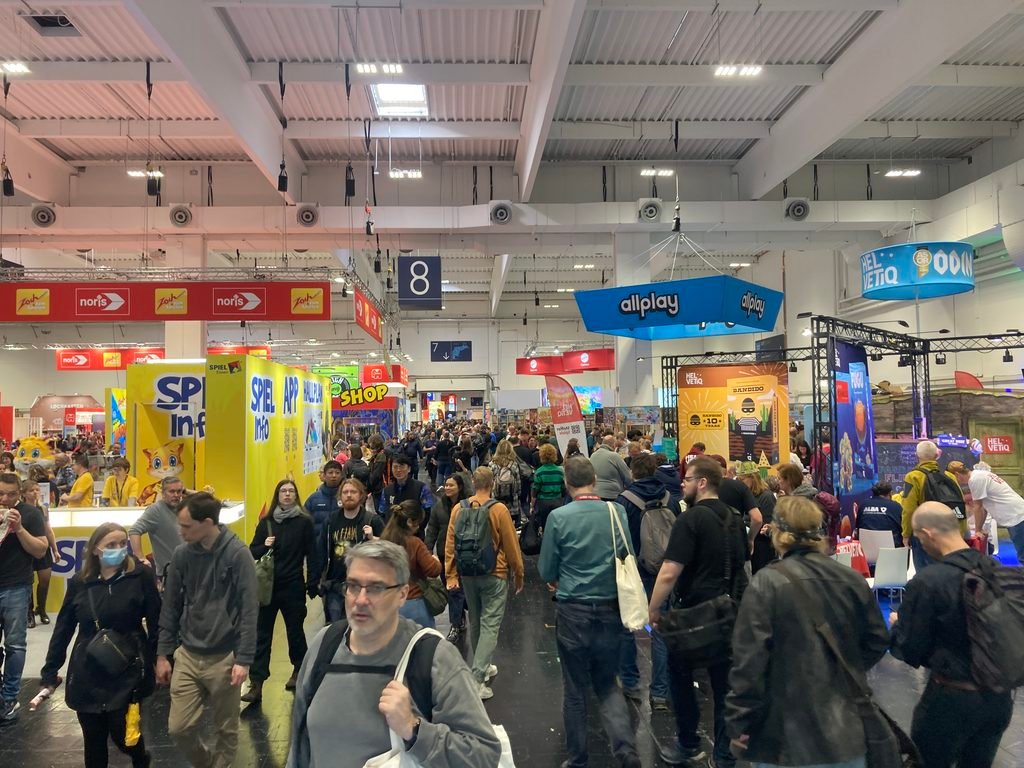
She added that the new Hall 8 had also exceeded expectations, despite initial uncertainty about how exhibitors would make use of the slightly unusually-shaped space.
US publisher Allplay took Spiel up on an offer to move into a central position in the new Hall 8 – and COO Joe Wiggins told BoardGameWire that shift had paid off handsomely, with sales up 40% compared to the previous year’s show, marking the publisher’s most successful Spiel to date.
He picked out Enchanted Ivy as one of its big hits of the show, saying demand for the 450 copies of the title it brought was “non-stop” until the game was sold out at 3pm on opening day.
Wiggins said sales were good across its portfolio, from light titles to heavier strategy games – adding that the new location right at the show’s main entrance meant visitors were far more likely to discover its booth.
That interest was capitalised upon by Allplay through its decision to run a large number of demo tables as part of its booth, with Wiggins saying seeing games in action had helped draw people in, even if they weren’t a “typical” Allplay customer.
German publisher Pegasus Spiele also reported stronger-than-expected sales, despite arriving at Essen with relatively conservative expectations.
Company co-CEO Karsten Esser told BoardGameWire on Friday afternoon that sales were already ahead of the equivalent point in 2025, even without the benefit of a single major award-winning release driving demand.
Pegasus brought more than 40 new releases to the event, and said the breadth of its portfolio had helped compensate for the absence of an obvious blockbuster title.
Other exhibitors BoardGameWire spoke to also reported substantial sales increases, while the consensus generally was that last year’s busy Friday, Saturday and Sunday were added to this year with a Thursday which felt like a return to pre-Covid crowds.
Spiel Squeeze
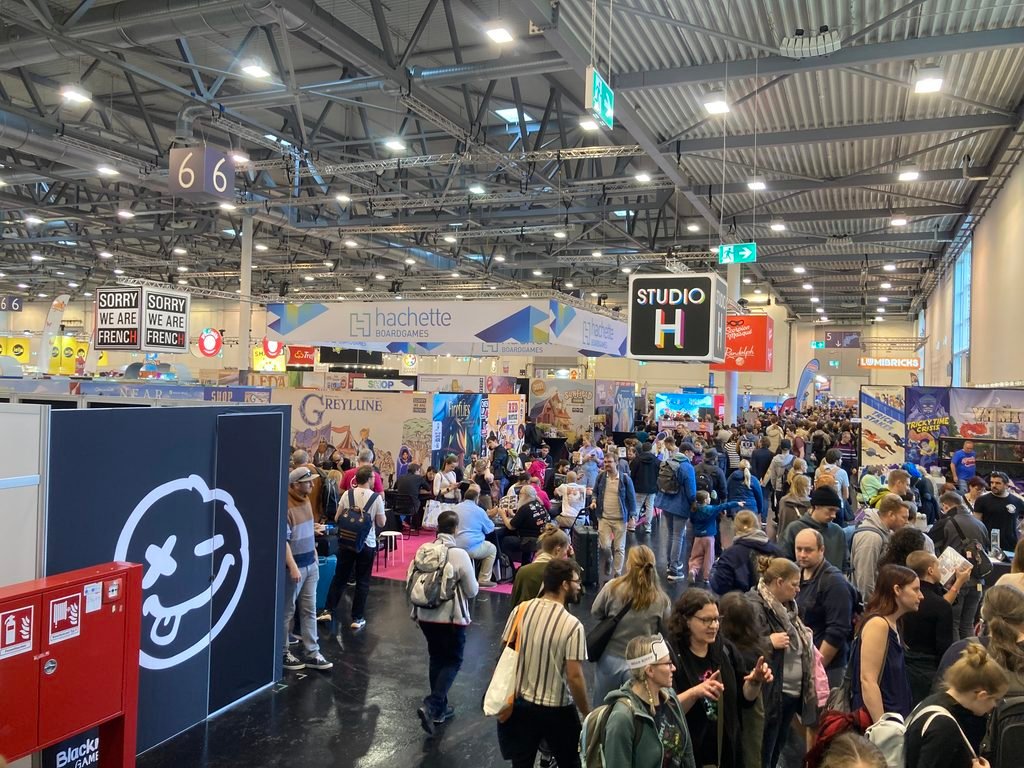
While most halls saw attendees flowing easily, if slowly, around them during the fair, the long and narrow Hall 3 once again proved the trickiest to get around – especially given the enormous queues which formed at several different booths during the show.
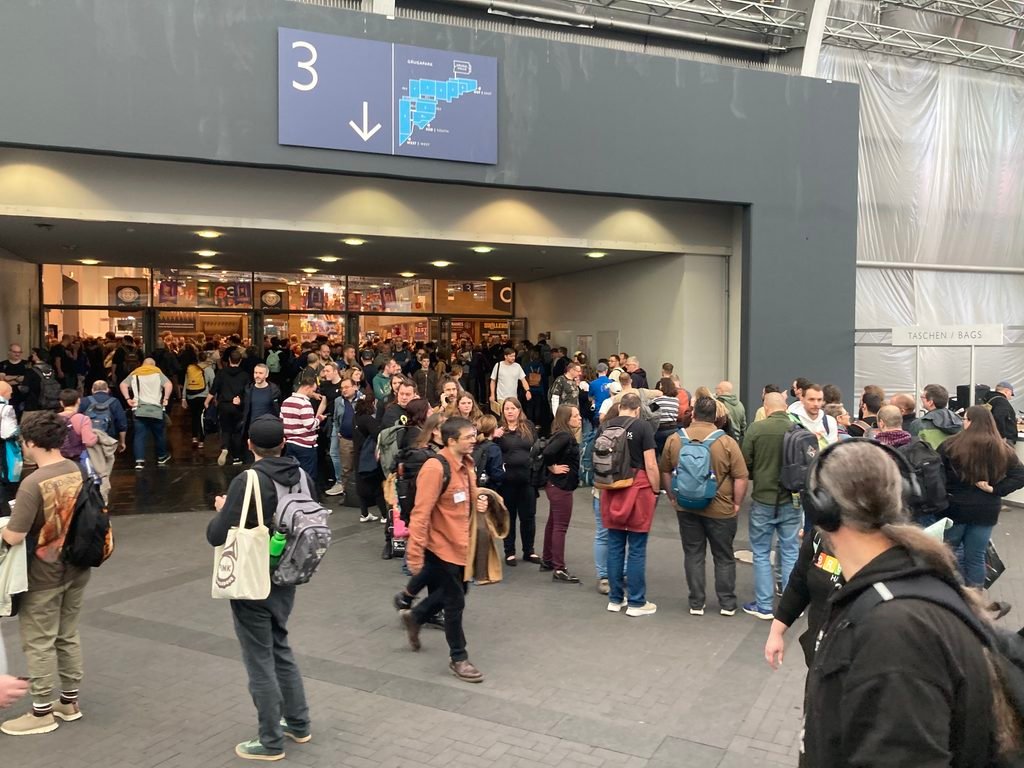
Chief among those were the queues at Spanish publisher Combo Games, which snaked along one whole end of the hall and out of the doors – creating a line Carol Rapp said was among the longest she had ever seen at the show.
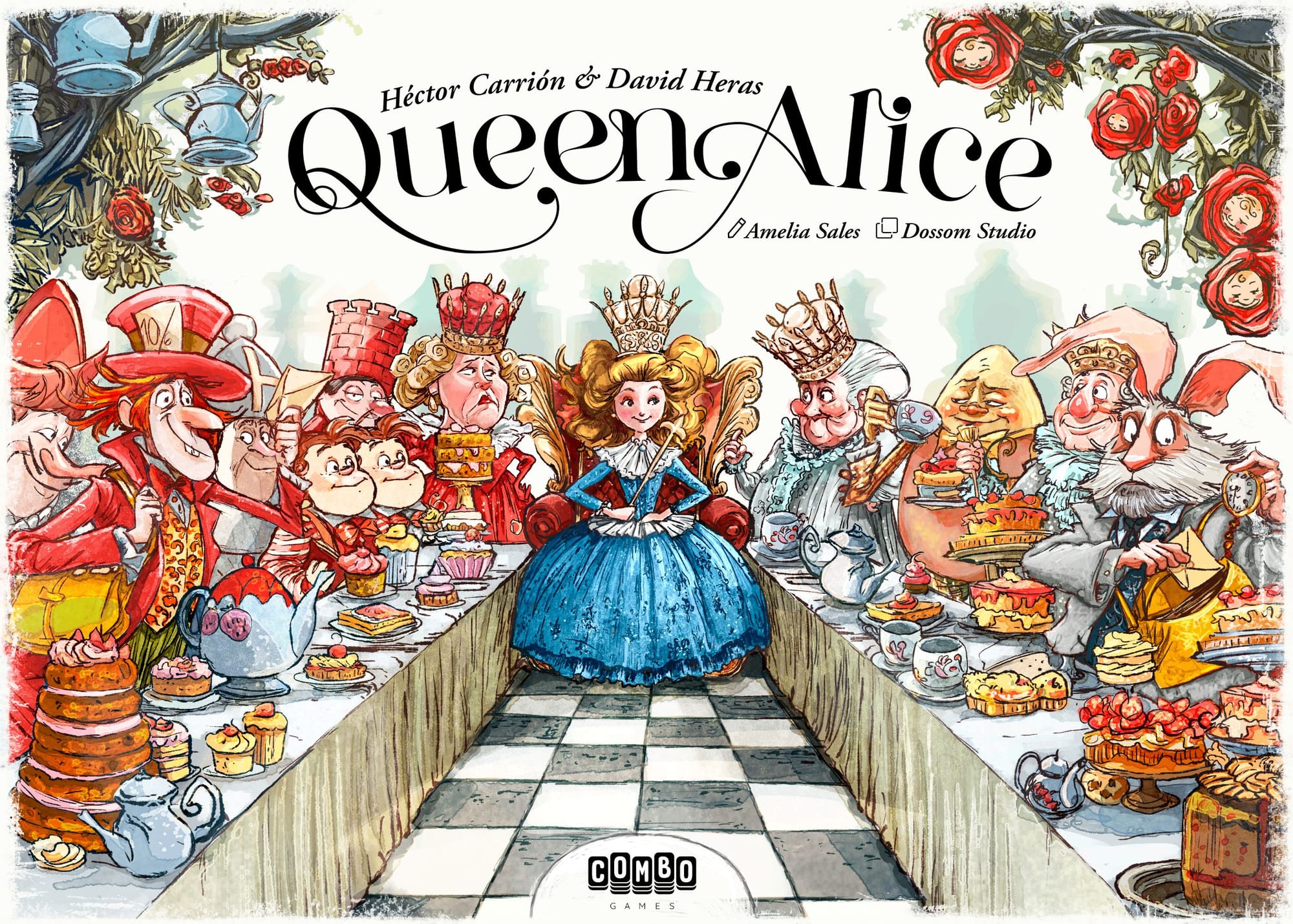
Combo had benefitted from its new release Queen Alice, which combines elements of chess with eurogame mechanics and an Alice in Wonderland-inspired setting, being the ‘most-thumbed’ title on BoardGameGeek’s Spiel Essen preview – leading to a sea of attendees trying to reach the booth to get their hands on the game.
The queue for Queen Alice publisher Combo Games at Spiel Essen 2026, snaking out of Hall 3 and into the Galeria food court
Company co-founder Antonio Guillamó told BoardGameWire on the show floor that it had brought about 2,000 copies of the game to Essen, including stock earmarked for fulfilling Gamefound pledges, but had sold out by around lunchtime on Friday.
Demand was so intense that the Combo team was forced to concentrate purely on sales rather than demoing its games – and the huge buzz created other problems for the publisher.
Guillamó told BoardGameWire that Spiel had been “fighting” the publisher over the long queues, which ended up blocking access to other booths such as the nearby Dice Throne.
Rapp told BoardGameWire Spiel had provided advice on how to guide the queue to avoid it blocking other booths, as well as providing extra security from Messe Essen – which Combo had to pay for – to help manage the line.
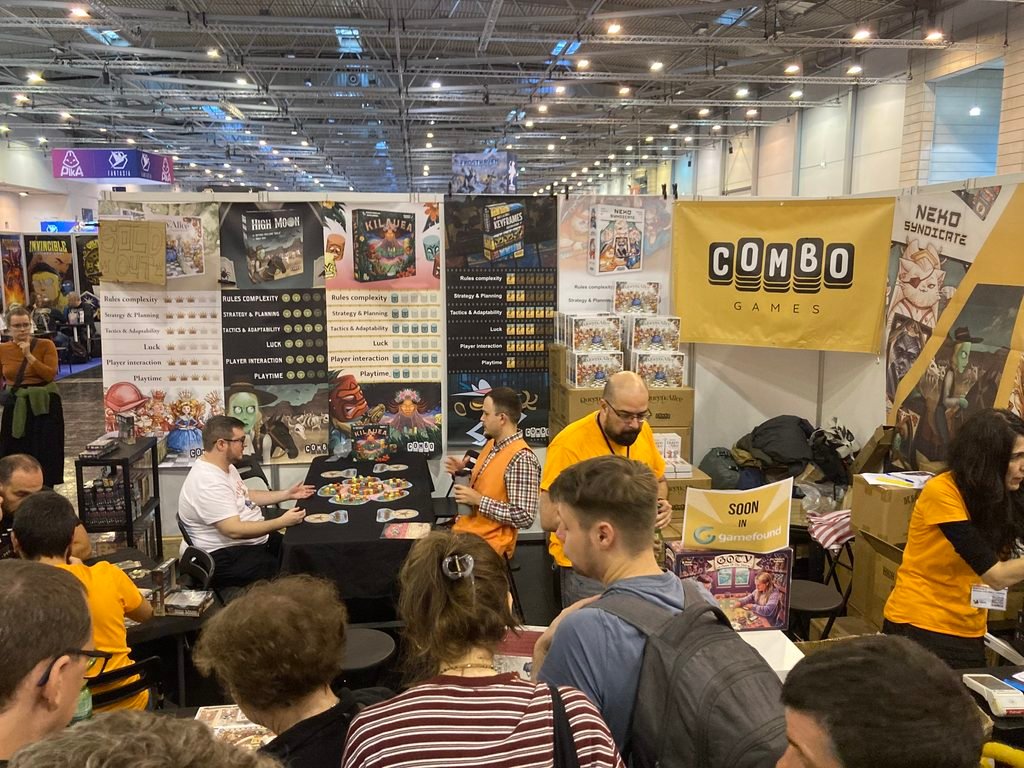
The Combo Games team demoing and selling some of their other titles after Queen Alice had sold out
She said, “They had one of the hottest titles of the show, and nobody can plan for that. I get that, and the team gets that. But if the crowd waiting to buy is turning into a safety issue, then we have to do something.”
Rapp said her team was always “counting the seconds on the first day” to find out where the biggest queues were emerging, in order to step in quickly and help prevent any blockages.
She added that another blockage at the 2026 event had arisen at Pegasus Spiele, with large groups of people congregating by the booth after buying their games – saying that Pegasus was told to fix the issue or their booth would be closed. That problem was sorted the next morning by introducing a guard rail, she said.
Rapp said in an interview with German board game channel Brettspiel-Kollektiv that one exhibitor had repeatedly ignored instructions intended to keep queues under control, leading organisers to prohibit further sales for the remainder of the day. The publisher involved was not identified.
She stressed to BoardGameWire that managing congestion was essential to keeping the event safe and enjoyable, particularly as the number of visitors and exhibitors continued to grow.
“As long as the people are moving, everything is fine,” she said. “As soon as you have a block, a cluster or whatever, in the aisles, and it’s taking too long, people will go crazy.”
The pressure of accommodating record numbers at Spiel also extended beyond the exhibition halls, with severe crowding on Essen’s public transport system each morning in the run-up to the show opening.
Standing Out
The growing scale of Spiel has also brought fresh challenges for publishers trying to stand out among the thousands of games competing for attention.
This year’s 2,012 new releases represented another increase on the prior record, with the volume of new titles becoming a significant consideration for companies deciding when and how to launch their games.
The head of one large board game publisher who spoke to BoardGameWire at the show suggested that while smaller publishers often needed the exposure provided by major events such as Spiel, the rising competition on site might make it more beneficial for them to spread releases more evenly through the year.
He argued that publishers should consider whether launching at a quieter time of year might make it easier for their games to attract attention – particularly given that consumers were increasingly buying board games year round rather than concentrating their purchases around Christmas.
The challenge was echoed by other industry figures at the event, who described an increasingly crowded market in which the quality of new games continued to improve, but with individual releases potentially struggling to establish themselves.
Value Judgement
For publishers, however, Spiel’s value continues to extend well beyond the opportunity to sell games directly to consumers – something especially crucial given the high cost of running even a small booth at the event.
While the base cost of the smallest booth option – 15 sq m – comes in at about €1,500, that figure can easily balloon to several thousand euros after adding mandatory charges for booth partitions, waste disposal, and the cost of transporting, paying for and accommodating even tiny numbers of booth staff.
Pandasaurus Games told BoardGameWire ahead of the event that it had heavily downsized its Spiel Essen booth this year, having previously spent more than €50,000 ($57,000) attending Spiel with its larger setup.
The US publisher shifted to using European Player Network, Asmodee‘s specialist English-language sales and distribution operation in the region, to handle its stock and sales at the giant German show this year – removing the need for Pandasaurus to transport and store hundreds of games, staff its own retail operation and devote much of its booth to selling them.
Pandasaurus CEO Nathan McNair estimated to BoardGameWire that the costs under its current model would fall between $20,000 and $25,000, with the expectation of selling similar numbers of games under the new setup.
Archona Games, the publisher of titles including Small Star Empires and Pest, told BoardGameWire at the event, “Our focus here isn’t the sales so much. It’s always nice to sell, and I mean, I’d love to have the success of some of the other currently hot games out there – I wouldn’t say no!
“But I think for us, the strategic sort of part of it is really what we do with our community as well as our partners.”
They said in-show meetings with potential partners had already created promising opportunities for 2027, and added that demoing games, gathering feedback and building customer relationships were all key reasons for attending the fair.
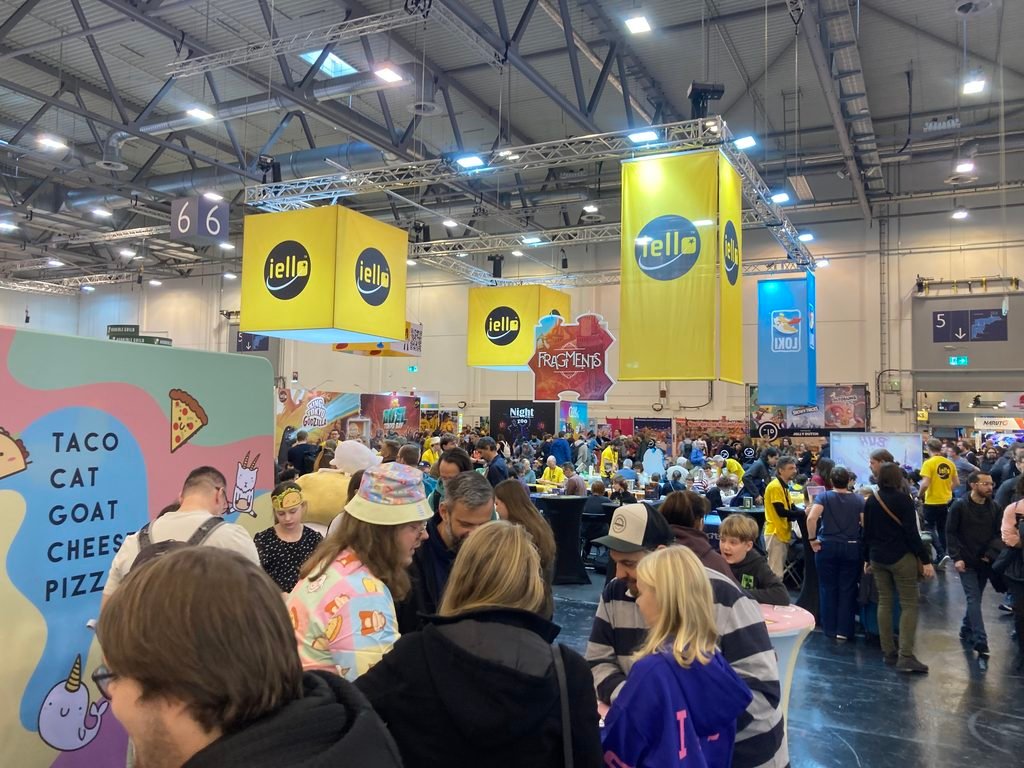
French publisher IELLO’s large booth and demo area at Spiel Essen 2026
IELLO communications manager Roger Anthony-Gerroldt told BoardGameWire at the show that it had brought six staff dedicated to scouting new games and localisation opportunities, with three project managers seeking new designs for its main catalogue, two looking for titles to bring to the French market, and another representing its children’s games brand Loki.
He told BoardGameWire the team spent much of the event moving between meetings with designers and publishers, hoping to discover games capable of becoming long-term commercial successes.
He said, “They just take meetup after meetup after meetup, and they look at a lot of designs, and they hope that they find the diamond that will take the place in the market and stay here.”
But he acknowledged that identifying those potential hits was increasingly difficult, with IELLO typically finding only one or two games each year that met its ambitions – and some promising projects ultimately failing to make it into the company’s catalogue.
That challenge has become more pronounced as the number of new releases continues to grow, Anthony-Gerroldt said, with even successful titles increasingly struggling to maintain sales beyond their first year or two.
Ukrainian publisher Boardova, meanwhile, described its first experience running a booth at Spiel as a valuable opportunity for promoting its games and building relationships – while stressing that the costs of attending meant the event should be viewed as a wider marketing investment rather than simply a sales opportunity.
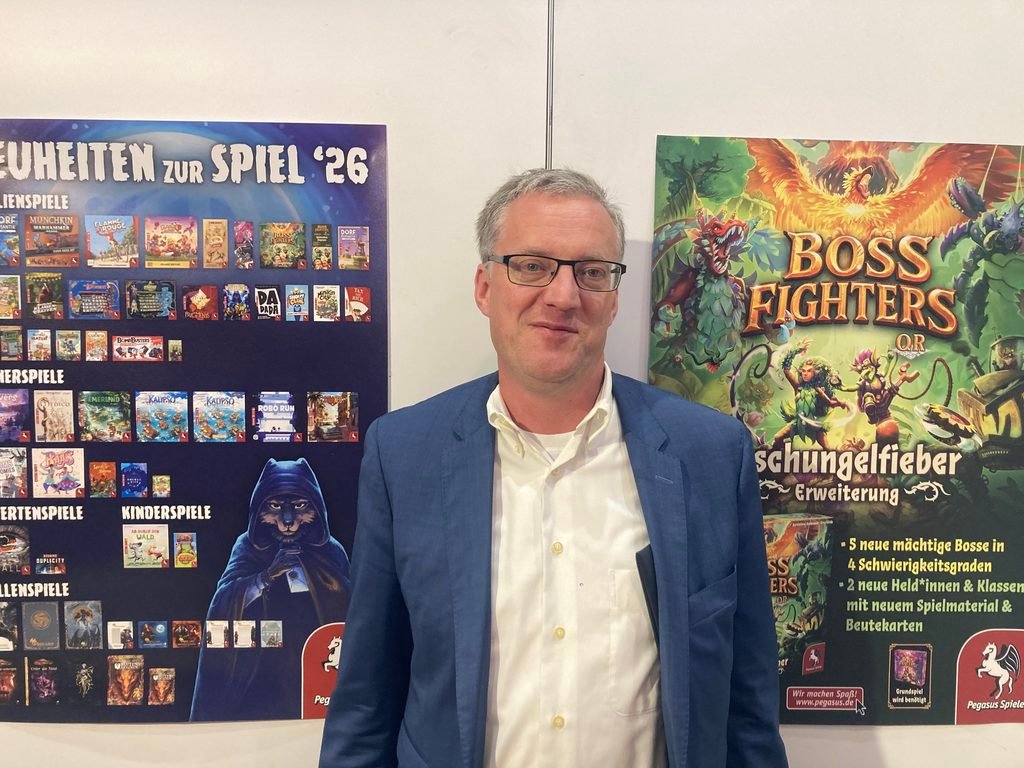
Pegasus Spiele co-CEO Karsten Esser
Pegasus Spiele co-CEO Karsten Esser told BoardGameWire that direct sales at Spiel remained an important part of covering the company’s costs of attending, saying, “Well, to be honest, we run the company because we want to earn money. Of course, we love games, but we are also interested in earning money. I have to say, therefore, yes – the number of games that we sell here do matter, and they help us to break even. And maybe we can even reach a surplus. We will see.”
But he added that the longer-term value of the fair came from the market intelligence it provided, particularly the opportunity to gauge consumer demand across the company’s new releases, and identify which titles might become future commercial successes.
AI Divide
The ongoing debate over the use of generative AI in tabletop gaming was also visible at this year’s Spiel, with an anti-AI sign campaign from Neon Hope publisher Hopeful Games taking place, while some publishers and accessories sellers were clearly making use of generative AI for their artwork.
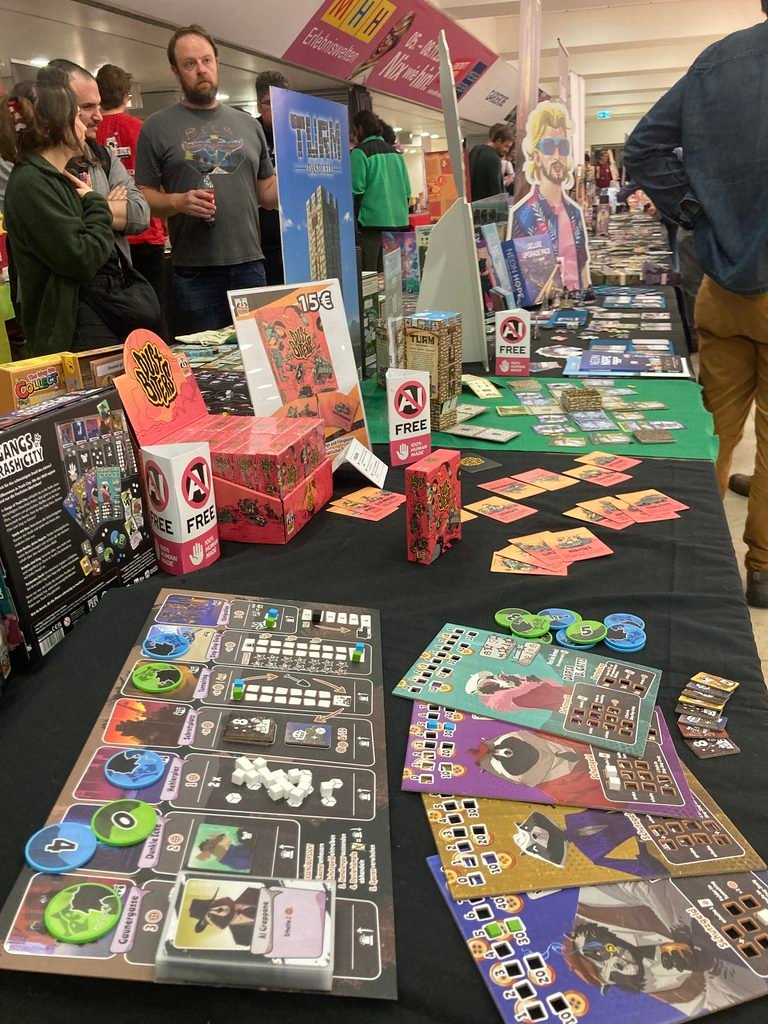
AI-Free signs at the Press Preview event at Spiel Essen 2026
Spiel organiser Merz Verlag has yet to introduce restrictions on exhibitors using AI-generated artwork, in contrast to several other major tabletop conventions which have adopted explicit policies in the past year.
UK Games Expo introduced a strict AI policy several weeks ago, prohibiting exhibitors from displaying or selling products created wholly or substantially using generative AI, while PAX Unplugged bans the sale of products incorporating substantial AI-generated content.
Origins Game Fair also requires products sold or distributed at the event to be created by human artists and creators. Gen Con, meanwhile, prohibits AI-generated imagery in its Art Show, although it has not introduced an equivalent general ban for exhibitors.
Rapp told BoardGameWire at the time that the organiser had reconsidered its approach following the backlash, but did not believe it was Spiel’s place to make decisions about the wider industry’s use of AI.
The absence of a general exhibitor ban three years later leaves Spiel as an outlier among the major tabletop game conventions.
BoardGameWire contacted Merz Verlag in September with a series of questions about whether the show planned to follow suit with its own AI policy, but was told by a spokesperson that the topic was too wide ranging to be able to address while preparations for this year’s event were taking place.
Future Plans
With its exhibition halls full and visitor numbers now capped, Spiel’s organisers face the challenge of finding new ways to develop the event without increasing its physical footprint.
Rapp told BoardGameWire during the show that Merz Verlag was still exploring what that might look like, with the company due to hold its annual planning workshop this month.
“Maybe it’s focusing more on events, like you said, or celebrating the industry. I don’t know yet, but we will have some good stuff coming up next year,” Rapp said.
Spiel Essen 2027 is scheduled to take place from October 21 to 24.
Queen Alice steht heute auf Platz 10 der BGG-Hotness-Liste (Stand: 30. September 2026), obwohl die Gamefound-Kampagne des spanischen Kleinverlags Combo Games bereits seit dem 24. März 2026 abgeschlossen ist. 693,6 Prozent des Finanzierungsziels holte der Titel ein, 208.081 Euro von 2462 Unterstützer:innen. Einen deutschen Verlag listet BGG weiterhin nicht.
Schachfiguren als Engine, Late Pledge läuft weiter
In Queen Alice aktivieren Spielende Aktionen über Schachfiguren und deren klassische Zugmuster, verbessert durch ein karten-getriebenes Deck-, Bag- und Pool-Building-System, das der Verlag „Chess-building“ nennt. Design stammt von Héctor Carrión Benavent und David Heras Pino beim spanischen Kleinverlag Combo Games aus Albacete. Gespielt wird von 1 bis 4 Personen ab 14 Jahren in 30 bis 120 Minuten, BGG-Komplexität 3,9 von 5, bei einer für einen so jungen Titel ungewöhnlich hohen Wertung von 8,51 (292 Stimmen).
Trotz „1 bis 4 Spielende“ führt BGG keine eigene Solo-Mechanik. Ob ein Automa existiert, bleibt offen. Die Hauptkampagne ist zwar vorbei, Gamefound führt aber weiterhin aktive Late-Pledge-Stufen, von der Einzelbox für 52 Euro netto (regulär 69 Euro inklusive Steuern) bis zu Händlerpaketen mit sechs Exemplaren.
Sprache und Liefertermin bleiben unklar
Die Händlerpakete auf Gamefound nennen die Spielsprachen explizit: Englisch, Spanisch, Deutsch und Französisch, eine deutsche Fassung ist damit direkt vom Verlag bestätigt. Zusätzlich nimmt der Berliner Händler Gamer's HQ ein eigenes „Queen Alice: Bundle“ für 109,95 Euro zur Vorbestellung an. Der Shop nennt dafür „September 2026“ als Liefertermin, was angesichts des heutigen Datums fraglich wirkt: Ein französisches Crowdfunding-Trackerforum notierte im März noch Dezember 2026 als Liefertermin, eine aktuelle Fachvorschau vom 24. September spricht dagegen von einem europäischen Marktstart rund um die SPIEL Essen 2026 im Oktober, mit Abholmöglichkeit für Unterstützer:innen vor Ort. Welcher der drei Termine am Ende zutrifft, ist damit offen.

 Anmelden