Sea Salt & Paper is one of my favorite small card games. Not only does it have beautiful and unique art, but the gameplay is a very nice balance of strategy and luck that works well for me. I added the Extra Salt expansion to my copy when it came out and always play with […]
I made a huge intentional shift in my life in 2011. I’m now 45 years old, and looking back I realize how distinctly different my life was before and after my 30th year (mostly for the better).
If I had the chance to speak to my 30-year-old self, here are a few things I might say:
1. Creativity thrives in the small windows of free time, not the big ones. For most of my 20s I hoped for big gaps in time that were completely clear of other responsibilities–weeks and months–when I could write a novel. But the two times I had a big gap of time (the summer after college and when I was between jobs), I mostly just played and procrastinated. When I turned 30, I decided to spend 2 hours every night writing the novel, and I was done in 2 months while still maintaining my day job, friendships, and other hobbies. Realizing I could do that motivated me to also spend those small windows of time to design a game, Viticulture. This is one of the biggest changes I’ve ever made in my life, and my career with Stonemaier Games wouldn’t exist without this shift.
2. A change in location won’t make me a different person. I’m an introvert with a rather crippling social anxiety regarding approaching people. I romanticized the idea of going somewhere completely new by myself to see if a different, fearless version of Jamey would emerge, so I booked a solo trip to Ireland for a few days in 2011. Not only did I learn that I much prefer to travel with at least one other person, but also found that I’m still myself–for better or worse–even in a different country where everyone is a stranger. Another way to put this is: For the things about myself that I most want to work on, there’s no magic bullet.
3. There is so much to learn after formal education. I’m incredibly grateful for the all the teachers and professors who guided me from kindergarten through college. But there’s a whole world of knowledge outside of the classroom. I’ve learned so much about game design, for example, by listening to podcasts, reading articles, and watching videos (along with actually playing and designing games).
4. Healthy living starts to take effort after a certain age. I’ve been physically active my entire life, and I was blessed with a great metabolism, so for many years I didn’t feel the need to eat with intention. That was all fine and dandy until I started running Stonemaier Games in my early 30s, a job that often involves sitting at a desk for 12 hours a day. I was no longer playing sports as regularly, yet my diet was the same as ever (and it wasn’t even terrible–I ate fruits and vegetables every day). My body changed incrementally, and before I knew it, I was 20 lbs heavier than I’d ever been. Fortunately I realized it’s never too late to change, but I wish I could tell myself what I was doing to my body and how even 20 minutes of exercise every day can make a huge difference.
5. I don’t want kids, and I’m not alone. For most of my life, I thought I wanted to have kids–I never questioned doing the same thing my parents did (I have a brother and sister). It wasn’t until my early 30s that started to realize that the creative, nurturing, and compassionate sides of myself were fulfilled and challenged better in other ways (game design, friends, cats, etc). But when my siblings and college friends started to have kids, I struggled sometimes to feel like an “adult.” But then I started to make some wonderful friends who were just as happy not having kids as I was–and I found a partner in Megan who also doesn’t want kids–and I’m so grateful for those relationships (they even helped the relationships I had with friends and family who do have kids).
me at 45
6. Money well spent makes a big difference. For the longest time, if I wanted a chocolate bar, I’d spend $0.50 at checkout at the grocery store. But one day I was shopping with a friend, and they said, “You love chocolate, right? If you love something, it’s worth paying for the best.” So I shelled out for a $5 chocolate bar, and it was amazing. This isn’t to say that I don’t still enjoy a Snickers, Kit-Kat, or Hersheys Almond from time to time. But I give myself permission to spend money on the things I love. Similarly, I’ve learned to pay for things that last–I have shoes and jeans that have lasted over a decade.
7. Every job before my career was a good use of time. I think there was a time when I didn’t believe this; I wished I could have found my path earlier in life. But whether it was waiting tables, project managing medical textbooks, or managing a nonprofit staff and fundraiser, I was learning indispensable skills and habits that have had a direct impact on Stonemaier Games’ success.
8. Loving a pet requires compassionate discipline. I adopted my beloved cat Biddy in 2007 when he was a tiny kitten, and raising him from beginning to end is one of the greatest joys of my life. Biddy loved to eat, and I gave him open access to cat food (and sometimes human food). At one point he tipped the scales at 20 lbs. He developed diabetes and required twice-daily insulin shots for the rest of his life. He died of intestinal cancer when he was 16 years old. While I don’t know if I could prevented any of Biddy’s ailments, I wish I had known earlier that I could have made Biddy’s life better overall by denying him a portion of the thing he wanted the most (kibble). Not enabling someone’s worst habit is a core part of loving them. I would truly do anything to have another month or year with Biddy–I miss him every day.
9. There is no rule that says everything must remain the way it’s always been. This applies to relationships, habits, routines, beliefs, hobbies, diet, behaviors, even our bodies. For example, for as long as I can remember, I had large protruding mole at the base of my back. I didn’t like it, but I figured it was too close to my spine to be removed. But then I asked a dermatologist about it, and she said, “Oh, sure, we can remove that right now.” Five minutes later, something that had bothered me for years was gone forever. I wish I could have known earlier that if there is any persistent element in my life that I could cut or add that would make me happier (and those around me), it’s never too late to choose to make that change.
10. Try a lot of different things to continually discover new passions. At 30, I thought I only enjoyed specific types of games and that I didn’t like party games…until I tried Telestrations, Just One, So Clover, Blob Party, and Caution Signs. At 30, I thought I enjoyed blogging as my only form of content creation…until I filmed a “my favorite mechanism” video for YouTube, tried a Facebook livecast, posted an Instagram photo, or recorded a podcast. At 30, I thought ultimate frisbee was the only disc-related sport I enjoyed…until I started playing disc golf during the pandemic and now play every week. The world is full of potential passions I have yet to try, and I won’t know if they’re for me until I actually try them!
I wasn’t sure where this list would take me, but I appreciate the opportunity to share. I’d love to hear if any of these resonate with you or if there’s something you wish you knew before you turned 30.
Welcome to this week’s batch of crowdfunding campaigns. We have a variety of offerings here, so we hope you will find something that catches your eye. Also, if you want to chat with the BGQ team, join our Discord Server where we talk about games, movies, sports, and other fun stuff. Check it out and […]
It’s still early in 2026, but I think I’ve already played the game that will end the year with the widest array of opinions within my review crew.
Wunderwaffen was one of my targets at SPIEL Essen 2025, so I was eager to get it home and put it in front of my team. I was attracted to the game for a few reasons, chief amongst them the game’s publisher. Ares Games has done great work in steadily tight packages, from the Quartermaster General series to family-friendly fare such as TEDOKU and Builders of Sylvan Dale. Ares’ reprint of the Mega Civilization series, Mega Empires, didn’t hurt the cause.
Wunderwaffen is a fragile system, one that worked wonderfully for some players while landing badly for others. But as a very straightforward game that plays in about an hour at its full player count, it is certainly worth a look, especially for wargame lovers looking for a weeknight game they can table with both hobbyists and casual players.
Nazis, You Say?
Wunderwaffen looks, on the surface, like a one-versus-all wargame for strictly two OR four players. There are four playable factions in the box: Germany, the United Kingdom, the United States, and the Soviet…
Rubén Hernández’s Dodos Riding Dinos was one of those games people talked about. The kind of nutty activity that combines a longstanding tabletop genre with silly dexterity elements. I mentally associated it with killer titles like SEAL Team Flix, PitchCar, and Space Cadets. These games marry the frivolous kinetic energy of flicking with a more…
A few years ago, we became acquainted with Andrew Rourke through his Coalitions design from PHALANX that went on to a successful crowdfunding campaign and has recently been delivered. He has since been a busy guy with starting his own publishing company called Form Square Games and also publishing the first 5 designs in a new series called Limits of Glory that will take a look at the campaigns of Napoleon and other contemporary conflicts. In Campaign I, which is called Bonaparte’s Eastern Empire, the game is focused on the campaign of the French in Egypt between 1798 and 1801. Campaigns II, III and IV was Maida 1806 and Santa Maura & Capri. Campaign V was Donning the Sacred Heart, which covers the Vendee Civil War, and just recently fulfilled as I have my copy sitting on my gaming table awaiting an unboxing video.
And now, recently, Form Square Games has announced the next entry in the series which is a two-fer with Campaigns VI and VII called Jersey New Jersey and is set during the American Revolutionary War but also including a 2nd game called A Strong War set during the French & Indian War. I think that these games are well timed with this year being the 250th Anniversary of the signing of the Declaration of Independence and I look forward to playing and exploring both of these games. I reached out to the designer of Jersey who is Peregrine Nicholls about an interview to give us a look inside the design and get more information and he was interested in answering our questions.
Grant: Peregrine welcome to our blog. First off please tell us a little about yourself. What are your hobbies? What’s your day job?
Peregrine: I have been a wargamer ever since my Dad came home with a 1912 1st edition of Little Wars by H G Wells, when I was 8. I have very fond memories of us playing toy soldiers on the floor using these rules and firing matchsticks at each other’s troops from toy artillery pieces. I still have the book and even recently bought a Britains 25pdr gun on eBay to add to my display shelf! Wargaming ballooned from there and today 50 years later I have almost 25,000 miniatures and over 400 board games!
Apart from reading (mainly history books or historically based novels), my main other hobby is following my beloved Leeds United, an English football team, whom I always watch on TV and also manage to get to 4-5 homes fixtures per year – a 500 mile round trip from where I live now in south west England.
My day job is working in the family property business, where with my wife & son we buy, sell, manage and develop property.
Grant: What motivated you to break into game design? What have you enjoyed most about the experience thus far?
Peregrine: Andy, that is Andy Rourke of Form Square Games. I was being shown one of his games at a convention and after he had soundly beaten me, we had a beer and I told him about a game idea that had been sitting in my filing cabinet for almost 40 years! After boring him to death for 20 minutes, he said “I’ll publish that!” – at which point I was speechless! But two years later now here we are, at the Gamefound funding stage!
The most enjoyable part of the process has been rediscovering the history. A lot of reading was needed and now having the internet as a tool, (when previous work on the topic was pre-word processing software!), was a massive advantage and led me down countless rabbit holes of historical threads and narratives.
Grant: What is your upcoming game Limits of Glory Campaign VI: Jersey about?
Peregrine: I am responsible for the Jersey game, not the New Jersey game, which is Andy’s baby.
The Isle of Jersey is the biggest of a small group of islands just off the coast of France in the English Channel. When William the Conqueror (as Duke of Normandy, of which Jersey was a part) invaded England in 1066 the Channel Island become part of the English crown. When Bad King John (he of Robin Hood fame) lost Normandy to the French in the early 1200’s, the Channel Islands decided to remain English and they have been ever since – they are now self-governing British Crown Dependencies.
The French did try to capture them during medieval times, but it was half-hearted as the islands really had no particular value at that time. This changed when England and France became constant enemies in the early 1700’s as by then Jersey had quite a merchant fleet (because of its trade with its colony New Jersey) and like all merchantmen when war came, privateering beckoned.
Jersey then became a real thorn in the French side, massively disrupting French coastal trade; after the first year of the American War of Independence the Jersey fleet had captured and brought back to the island over 200 “prizes”. This is what led the French to the two invasion attempts; the 1779 aborted landing and the 1781 successful landing.
The game covers both these actions, with the 1779 scenario allowing a campaign to develop as if the French had actually landed and the 1781 scenario allowing the player to recreate the actual very brief campaign to see if they get the same or a different outcome.
Grant: Why was this a subject that drew your interest?
Peregrine: That’s easy – I grew up in Jersey! The Battle of Jersey was something we learned about, although since I left the island in the early 1980’s its anniversary has been elevated locally to include uniformed re-enactors in the town square and all the trimmings!
Grant: What is your design goal with the game?
Peregrine: To give the player an enjoyable game on a topic about which 99.9% of them will know nothing! That is one of the things I love about our hobby, discovering history, stories, narratives and personalities from military history about which one would have been ignorant, without our hobby.
Grant: How have you modified the Limits of Glory System to fit the American Revolutionary War?
Peregrine: I have not really had to change anything about the series. Andy and I have added lots of small flavor elements, but fundamentally the game will be very familiar to anyone who has played other games in the system.
Grant: How has designing a game in a tested and established system been? How constrained did you feel?
Peregrine: A little, but not hugely, as Limits of Glory is after all a very clever and innovative system, particularly the Event Clock and the Glory concept – so there was lots to work with.
Grant: What elements do you feel is most important to model in a game set in the American Revolutionary War?
Peregrine: The Jersey game really doesn’t have the feel of the AWI, in the sense that it is set in Europe, without all the quirks (terrain, native Americans, divided loyalties, etc.), that the fighting in America involves. It was coincidental really that the French decided to attack Jersey during the AWI, it could have easily been in a period during say the War of the Austrian Succession or the Seven Years War – or in the French Revolutionary & Napoleonic Wars that followed.
We have included John Paul Jones though – so there is an American link!
Grant: What sources did you consult for the historical details? What one must-read source would you recommend?
Peregrine: Lots of sources. The Societe Jersiaise was most helpful with access to the online resources, some of the contemporary documents were brilliant.
For example, we found a set of standing orders (in Jersey French – a local Normandy dialect) issued by the Colonel of a Jersey Militia regiment, specifying what his men were to bring to the muster point (the parish church) at that time when invasion alert was sounded. Once I had found a connection in Jersey, through an old school friend, who could translate it for us, (although there were a few words in the old copperplate hand writing that alluded us), we had a real flavor for the situation and it even led us to introduce a special rule into the game for 1779 – “harrows” – but you’ll have to buy the game to find out what they are and how they can be used by a player to frustrate his opponent!
One “must read” source? The Battle of Jersey by Richard Mayne, Phillimore Press 1981. There are still second-hand copies floating around on the web bookstores.
Grant: What was it about the French invasion of the Island of Jersey that made you believe the Limits of Glory System would work well modelling the campaign?
Peregrine: The Limits of Glory System is a very open one in campaign terms so fitting Jersey into its strategic mechanics was actually very easy.
Grant: What different units are represented in the game and what advantages do they bring to the battlefield?
Peregrine: In Jersey there are only four types – British Regulars, Jersey Militia, French Nassau Legion infantry and French Royal Regular infantry. There is also some light artillery floating about as well.
The troops were all of a similar standard, although the Legion was an inferior unit, represented by their stats on the Combat table.
We did of course incorporate contemporary doctrine, so you will find that a Jersey Militia officer cannot issue command to British Regular forces – “After all Sir, the cheek of the fellow!”.
Grant: What challenges does this campaign bring to the system? How did you address them?
Peregrine: Great question. There were several:
Tides – how were we to represent that Jersey has one of the most difficult tidal systems in the world (it’s tide range is in the top 5 on the planet), and it frustrated the 1779 attempt to invade and had an affect in 1781 also.
Alarm – in 1781, the island was asleep when the French landed, so we had to bring in rules for how the alarm would be sounded, spread, and how local troops would muster, etc.
Hopefully players will feel we have successfully dealt with these issues, with some simple and innovative mechanics.
Grant: What area does the map cover? Who is the artist and how does their style assist in creating theme and immersion?
Peregrine: It covers the whole island. Jersey is not a big place, approximately 45 square miles, so this was not difficult. We also have a separate “break-out” map showing key locations in the capital, St Helier, which will be the focus of the fighting in 1781.
The artist is from 1795! We were lucky that a contemporary map – The Richmond Map – has been digitized by the Societe Jeriaise and is available through their web portal, so were able to use that. Andy worked his usual graphic magic to clean up the color and tones and we are really pleased with the result. Little details like the fact that we have put the parish crest by the church for each of the 12 Jersey parishes (very important in the cultural & contemporary heritage of the island), is very pleasing and really adds to the period feel.
Also, the picture on the box cover and superimposed behind the map & the player aids is contemporary too – being the painting The Death of Major Pierson by John Singleton Copley which was created in 1782-3 and now hangs in the Tate Britain gallery in London.
The Death of Major Pierson by John Singleton Copley which was created in 1782-3 and now hangs in the Tate Britain gallery in London
Grant: What purpose do the various numbers appearing in each space on the board serve?
Peregrine: These are “difficulty” ratings – the lower the number the more difficult it is going to be to move your forces out of an area. You will notice that the Jersey map has some land and sea spaces that are rated “0” – we built some special rules in for those!
Grant: For those that are not familiar, what is a Glory Rating? What role does it play in the game?
Peregrine: It is a major part of all the Limits of Glory Series games – every Leader has a glory rating. It represents the ability, resources, luck and circumstance of each Leader and is used by them to mitigate failures or to turn success into better success. It becomes intuitive to use after a few game turns.
Grant: What was the process like assigning these ratings to the commanders on both sides?
Peregrine: Fun and difficult! Glory must be set to be playable as well as accurate, so we tinkered and play tested until it felt right.
Grant: What Commanders are included for each side? Are there any real interesting personas here?
Peregrine: Lots – I’m not quite sure where to start, so I’ll give you a few from 1781.
Major Pierson – the British hero, who has a St, Helier street and a pub named after him. At 24, he was young for a Major and because the two Colonels on the island were in England on Christmas leave when the French landed (12th night, 6 January, 1781), he found himself the most senior British officer on the island. He defied a written instruction to surrender his troops from the Governor of the Island (who had been captured by the French), mustered his men and some militia, assaulted St Helier, won, and was killed at the climatic moment of the final assault! Hollywood where are you!
Baron de Rullecourt – the French commander in 1781, who had been the 2IC for the 1779 expedition also. Not a Baron at all, but rather a clever charleton & adventurer who had ingratiated himself in the right circles and persuaded these people to let him command the invasion and had secured a promise he would become the new Governor on the island if successful. A good planner, he pulled off the daring night landing and marched to the capital without detection, capturing the governor in his nightgown! At this point though success went to his head and he assumed all the Jersey & British forces would just surrender as ordered – they didn’t! He was also killed in the climatic battle, at about the same instant as Major Pierson. Some very interesting artifacts were found in his travelling trunk after the battle – I’ll leave the reader hanging here!
Emir Said – a mysterious Indian Muslim “prince”. He accompanied De Rullecourt, dressed in full flowing Arab style dress, turban, the “works”, including a nasty looking large scimitar on his belt. He stood behind De Rullecourt making unintelligent but threatening noises during the surrender negotiations. We have brought him into the game as an NPC – he is fun and unpredictable!
John Paul Jones – a single source identifies the AWI hero as the commander of the naval flotilla for 1781, (following his success at the Battle of Flamborough Head), so of course we had to include the “Father of the American Navy” in the game!
Grant: What is the makeup of the Combat Table?
Peregrine: It is pretty standard for the Limits of Glory System with different troop types (British Regulars, Jersey Militia, Nassau Legion & French Regulars) being given different abilities and success ratings.
Grant: How does combat work in the design?
Peregrine: Again, pretty standard for the Limits of Glory System – although that said there may be some slight changes to reflect the continual nature of the running fights, in what is a truly small campaign in terms of time span.
The big change for Jersey is that there are no sieges. The time span of the campaign is tiny where compared to other games in the system. The actual 1781 campaign lasted less than 1 day; and had 1779 resulted in a landing, 1-2 days would have brought the campaign to a conclusion. That doesn’t mean there are not castles & forts in the game however – we just have a different way of them possibly being captured!
Grant: What is the general Sequence of Play?
Peregrine: If the player has played any Limits of Glory Series game they will be right at home.
Each turn starts with an event, followed by momentum rolls, followed by alternate turns for the players to move or initiate combat, until both players run out of momentum.
Grant: What multiple strategic decisions are presented to the player every turn in this campaign?
Peregrine: Like all Limits of GlorySeries games the player must focus in on the objective and get cracking with their plan or they will run out of time.
Who do I move? Where do I move them to? Can I risk it? Have I got the Glory to mitigate a failure? Where do I muster forces? Do I go and attack the French now, or do I wait until I can rouse more militia out of their beds?
Decisions, decisions, decisions!
Grant: How is victory achieved?
Peregrine: In 1781 the key to the whole game is Royal Square in the center of St Helier (this is where the real climatic battle took place) and whoever holds this location when the time clock runs out, wins.
In 1779 taking overall control of the island is the objective for the French and denying this to them is the Jersey players goal.
Grant: What are some basic strategies for the French and the British players?
Peregrine: That is probably too detailed to go into here, but Andy has promised that I can have multiple pages in the rulebook to walk players thorough some basic ideas for strategies for both games.
In essence though the French must successfully negotiate the tides & coastline to get their force ashore in a concentrated way and then either push for St Helier with the Governor & Royal Square as their prizes in 1781; or spread across the island capturing & holding militia mustering points & forts, whilst also beating the resident troops in battle in 1779.
For the Jersey player it is all about getting your troops mustered and then into strong enough groups to deny the French their objectives – in the words of Wellington, “give them a damned good thrashing!”
Both sides have equal chances of winning the game and with the fluid nature of the Limits of Glory System, replayability is high.
Grant: What type of an experience does the game create?
Peregrine: Tense, with an increase in this tension as the game proceeds – and hopefully fun! This has certainly been the experience of the scores of play testers we have played it with.
Grant: What are you most pleased about with the design?
Peregrine: All of it! The idea to bring a game about my childhood home to market has sat in my filing cabinet for almost 40 years, so brushing the dust off and making it a reality has been a dream come true for me. To think that the history of this obscure, globally unimportant, battle will be available to a wider audience is fabulous, as it has a fascinating and vibrant narrative with great characters and heroes that deserves to be better known.
I particularly love the map and the use of the John Copley painting in the game also, as a copy of this painting has hung in my home for as long as I can remember.
Grant: What other designs are you working on?
Peregrine: Wow, give me a chance! Just working on this one has been a major task! Let the dust settle on JerseyNew Jersey and I’ll cogitate from there!
Cucumber Catastrophe Designer: Michael Feldkoetter Publisher: dv Games Players: 3-6 Age: 8+ Time: 20 mins Played with review copy provided by publisher Players compete over four hands of ten rounds each. A round is a trick where all … Continue reading →
One of the rules we have here at Casa de Bell is absolute: if the kids want to play a game from the adult game closet, I always say yes. (There’s only one game off-limits around here: Voidfall. That’s because I’m not teaching it…yet.)
One of the beauties of having kids who are now 12 and 9 is that many of the games in the adult game closet are drifting into the family game closet. As the kids get older, it’s been such a joy introducing new concepts and mechanics that were a bit dense even two or three years ago.
The nine-year-old was the one asking about Thunder Road: Vendetta. He was interested for two main reasons: first, he wanted to play the base game with the Carnival of Chaos expansion, because he loves the arena-style nature of that expansion map.
The second reason is why he really wanted to play: my boy was hoping to have another chance to beat down his dad.
In our first play of Carnival of Chaos, he acquired a “Super-Weapon” called Li’l Sammy, then used said Super-Weapon to shoot down my chopper—normally, choppers are invulnerable—on his way to a dominant victory where he wiped out all my cars.
(Yes, TR:V superfans, you are correct—there is a different scoring system in Carnival of Chaos, tied to “scrap”, the in-game cash that can be earned for damaging opponents. However, my son and I are simple with our approach to this game—the score is all about car kills. He won that first matchup three eliminations to one.)
After his victory, my son spent the next few days gloating about his victory.
At dinner: “Daddy, can you pass me…the Li’l Sammy?” Before bed: “Hopefully you can beat other players to make up for your loss to me in Thunder Road.” Walking to school: “I kinda want to play Thunder Road again to see if I can get the Li’l Sammy card. It was so cool shooting down your chopper.”
And on and on. For better or worse, my kids like variety; over the next few weeks, they kept asking to play other games. Weeks turned into months, and while I had the chance to play Thunder Road: Vendetta with other adults during that timeframe, I didn’t break out the expansion again until last week. That’s when my son walked into the game closet, saw the handsome red all-in Maximum Chrome edition copy of Thunder Road, and remembered Li’l Sammy.
“Daddy, can we play Thunder Road: Vendetta? Hopefully, I can get Li’l Sammy again.”
***
After I finished up the work day, I set up the Thunder Road: Vendetta base game with Carnival of Chaos on our kitchen table.
I insist upon using the Choppe Shoppe expansion content. That’s because I—well, now, both my son and I—love using the crew leaders and the car upgrades. The leaders use alternate “command boards”, the dashboard that accommodates each round’s extra die to trigger powers like nitro or the chopper, with asymmetric powers.
My son selected Bumpo the Clown as his crew leader for this play, a spooky-looking character who reminds me of Sweet Tooth from the Twisted Metal car combat games on PlayStation. Bumpo’s power is fine—he can reroll the direction die when his cars move in a slam—but his command board includes the Bump power, which triggers on 6s and allows Bumpo to move the other car on the first slam that turn, even if Bumpo has the smaller car in that slam.
I went with Machine Gun Joe, Esq. to lead my crew. Joe has a somewhat overpowered ability (at least, in the eyes of the nine-year-old, who has a tendency to call everything “OP” if it is not his own powers) to reroll the shoot die once during every attack action.
While I love the crew leaders, the best part about the Choppe Shoppe expansion is the car upgrades. During setup, each of a player’s three cars get outfitted with their own individual powers. For this game, I had a couple of simple upgrades—the Boost Switch, which gave me a +1 on movement, and the Heavy Frame, which grants the assigned car an extra damage slot (three slots instead of the normal two).
But I also had the Onboard Computer, which allowed me to ignore the effects of damage tokens when I assigned it to my large car (The large car is always the one that takes the most damage). So while I would still take damage during the game, it wouldn’t turn ugly, like things tend to do during a Skid or a Blast-Off.
With setup complete, we got rolling. The way the Terrordome (whoops, “Carnival of Chaos”) works, players drive their cars from three different entry-point track pieces outside the arena directly inside, then spend the game navigating pop-up hazards in the form of traps known as “Killer Pillars” that can eliminate cars through various game effects.
Of course, there are other hazards like those pesky opposing cars bent on using all manner of Super-Weapons and their Choppe Shoppe upgrades to take you out. There are a bunch of ways to get wiped out in the ring, and in my experience, games of Carnival of Chaos are a little quicker than the base game, especially at higher player counts.
Thanks to six Super-Weapon tokens scattered around the board, players are always gunning for the best stuff in the game. And while both my son and I were hoping Li’l Sammy would show up so that we could build on its legend, both of us drew cards that represented a bunch of fun toys that we tried to use to take each other out.
Unfortunately for my son, I got my hands on the Super-Weapon goodies first. Sometimes, love is a beatdown.
***
My first Super-Weapon pickup was the BFG…no, not that one. Here, the Big Friendly Gun (complete with a picture of what looks like a big chain gun with a smiley-face balloon on top) deals an extra face-down damage token each time the gun’s owner shoots and hits. I used that to deal two damage to my boy’s small car (the Doom Buggy) on a single turn, making it inoperable.
The Big Friendly Gun made more friends later in the game, when I used it to shut down my son’s medium car, the Avenger. My boy fought back. He grabbed a Super-Weapon token that became the Laser Kebab, which can shoot from the front arc of its assigned car any number of spaces, not just the one-space range of spaces directly in a car’s front arc. He poked holes in two of my cars the next two times he had the chance during his turns from across the arena. Damage, yes, but no inoperable status plays or eliminations.
Slams of inoperable cars into Killer Pillars and a Blast Off that shot one of his cars into the arena walls got me to a place where I was running a 3-on-1 break for the rest of the game. (Thunder Road: Vendetta vets, be honest: isn’t it a blast to watch what happens during a Stunt Die roll of a Blast Off? Goodness gracious, it’s hard to beat those moments in any game!)
Later, I picked up the Auto-Cannon for one of my cars, which lets a player shoot, move, then shoot again. My final Super-Weapon pick-up was the Torsion Dynamo, which removes a car’s guns but guarantees that the opposing car always moves in a slam. (Putting the Dynamo on my small Doom Buggy made that puppy a force!)
None of that mattered though…because as it turned out, I found an opportunity to take out my son’s last car with flair, using maybe my favorite elimination method in the game.
On my final turn, I was able to slam my son’s final car, the Eliminator, forward one space…right into the same space as his chopper, which he had tried and failed to use on his previous turn to take out my medium-sized Avenger.
Any car that ends its turn in the same space as any chopper is automatically eliminated. My son grew up in that final moment, and took his defeat like a man, ending our run of chaos (ahem, Chaos, with a capital C), with daddy taking home a three-to-nothing victory.
Even though Li’l Sammy never reared its ugly head, my son and I had a blast. Chucking those dice and talking a little smack and kitting out our cars and trying, but failing, to use our choppers, nicknamed “Blue Thunder” and “Airwolf” to wipe each opposing set of cars off the grid…it was all kinds of fun, win or lose.
I love playing games with the kids. I’m loving the chances I have now to get in more plays of the games I prefer, creating more memories along the way. And, I don’t mind handing out the occasional beatdown, especially when I can avenge an earlier loss.
That’s because I know what’s coming. The kids love wiping the floor with daddy from time to time, and giving them more chances just means playing more board games.
The 2026 game title from Cili Padi Games will be Pilgrim Poker. This will be my fifth game published under the Cili Padi Games label. I have been making one game a year since Dancing Queen in 2022. Edwin Chong has been my artist since my first game, and continues to be my artist for this year's project. This above is the concept art for Pilgrim Poker. Since the game uses the theme of the
We have done quite a few board game assisted biographies on this blog. Today, we are going farther back in time than ever to cover the life & games of the Roman statesman whose life is half shrouded in myth: Quintus Fabius Maximus Verrucosus. You might know him as Fabius Cunctator – Fabius the Delayer. Without further delay, we’ll get right into the first part of his life – his origins, early career, and, when he was already one of the pre-eminent Roman statesmen of his time, the defining event of his life: The war against Hannibal in which he took on an extraordinary office. Let’s go!
If you want to read more posts of this kind, I strongly recommend you subscribe to the blog – all new posts in your inbox right when they go live!
You may have wondered about Fabius’s long name above. This is a good opportunity to look at Roman naming customs, which tell us a little about Fabius, and a lot about the Romans. Quintus was his given name (the Romans used only around 20 given names for boys, and the five most common names (Quintus being one of them) already made up more than three quarters). Fabius was his family name, marking him as a member of the gens Fabia. The three remaining names were various kinds of nicknames – Maximus (“the greatest”) was a name he had inherited from an ancestor, Verrucosus (“the warty one”) he had received himself for a wart on his upper lip, and Cunctator (“the Delayer”) he earned for… well, we’ll get to that.
The Romans were big on family, and so the second name would have been the most important one to them. We’ll thus stick to calling our protagonist Fabius. He might have been even prouder of his family than the average Roman, as his was the patrician gens Fabia, one of Rome’s great aristocratic families. From his birth around 280-275 BCE on, Fabius was thus destined for a political and military career.
We do not know much about his early life. Fabius’s ancient biographers assert that he was deliberate to the point of slowness, but this seems like projecting his later fame of “delaying” back to his youth to maintain unity of character. In any case, Fabius was anything but slow in his career.
Young Roman nobles were expected to gain some military experience. Fabius could do so in the First Punic War, a protracted struggle (264-241 BCE) with Carthage over the control of Sicily and Sardinia. Rome won, mostly due to the almost bottomless manpower from which it could recruit – in addition to the city itself, Rome had founded many colonies all over Italy, and was allied to almost every other city on the Italian mainland. Fabius’s insights into generalship and Rome’s system of alliances would come in handy later.
Well-born Roman men with ambitions could not but go into politics. The Republic offered several elected offices for which they competed. Usually, these were taken one after another in a fixed sequence (the cursus honorum (“course of honors”)), but the rules were not as fixed in Fabius’s 3rd century BCE as they would become later. Thus, Fabius was elected to the lowest office (the quaestorship, responsible for financial administration) twice (first in 237), but, after climbing the second rung on the ladder (the aedilate), he skipped the third (the praetorship) altogether. Instead, he ran the highest office (the consulate) only four years after his quaestorship. The people of Rome elected him consul for the year 233. Fabius had fulfilled all ambitions which a regular Roman noble could have.
Yet Fabius was not content to be just any Roman noble. While his domestic pursuits were unremarkable – he unsuccessfully opposed a law introduced by the tribune of the plebs Gaius Flaminius which distributed lands in northern Italy to military colonists – he defeated the Ligurians during his consulate and was awarded a triumph for it. That was an extraordinary honor, rarely bestowed. Given that his victory was won against a rather minor enemy, that spoke of Fabius’s political clout.
The triumph was the greatest honor that could be bestowed on a victorious Roman general – and it affirmed the Roman belief in the righteousness and victoriousness of their cause.
Fabius left his consulate as one of the first men in Rome. He consolidated his political power even further, attaining the censorship (an office elected only every five years and correspondingly rare, even amongst former consuls) in 230 BCE, and, in contradiction to traditions prohibiting the repetition of high offices, became consul again in 228. Then, he used his good contacts to the Greek world to ensure that Romans could, for the first time, participate in the Isthmian Games. Two consulates and a censorship would ensure Fabius’s political primacy for the rest of his life.
Ten years after the end of his second consulate, Hannibal invaded Italy.
Invasion: Hannibal in Italy
Carthaginian-Roman relations had remained difficult after the end of the First Punic War. With Rome in control of the islands, the Carthaginians had diverted their energy to Spain. Their leading family, the Barcids, had carved out a large and prosperous colonial empire there. To avoid conflict with Rome, the two empires agreed on a division of spheres of influence. When the Carthaginians clashed with the city of Saguntum, it applied to Rome for help. The Romans resolved to aid Saguntum, even though the city lay in Carthage’s sphere of influence. Some of the ancient authors report that Fabius led a senate faction which favored negotiations over war with Carthage, others – like the generally reliable Polybius – oppose this interpretation. In any case, the hawks prevailed and war was declared on Carthage. The Romans sent an army to Spain, but the Barcid commander Hannibal seized the initiative by skirting the Roman force and crossing the Alps into Italy. Hannibal defeated a Roman army under Publius Cornelius Scipio (the father of Scipio Africanus) at the Trebia river and allied himself with the Gallic tribes in upper Italy. Fabius counseled that Rome avoid engagement with Hannibal and instead rest on its superior strength to wear him out.
In the second year of the war, the two Roman consuls (one of them Gaius Flaminius, Fabius’s opponent from his first consulate) each awaited the Carthaginian army in defensive positions on either side of the Apennine mountains, ready to support each other. Yet Hannibal snuck through the mountains, got into Flaminius’s back, and annihilated his army in a surprise attack on the shores of Lake Trasimene.
Setup for the Lake Trasimene scenario from Commands & Colors: Ancients (Richard Borg, GMT Games): You can see the Romans pinned against the shores of the Lake when the Carthaginians began to emerge from their covered positions in the hills and forests north of the lake. Image from CommandsAndColors.net.
One of Rome’s consuls was dead, the other cut off from the city by Hannibal’s army. The Romans resorted to this leadership crisis with an emergency measure: There was one office whose holder did not have to consult with a colleague – the dictator. Now was the time for such a man.
Dictator: Fabius vs. Hannibal
Traditionally, a dictator would be appointed by the two consuls. Yet one of them was dead and the other cut off from Rome. The remaining senators took matters into their own hands and had the popular assembly elect Fabius dictator. Having an additional experienced general in a crisis offers some advantages, as the Roman player in Hannibal & Hamilcar (Jaro Andruszkiewicz/Mark Simonitch, Phalanx) can attest: The Dictator event places an additional general (whose requirement of a strategy/battle rating of 3-3 makes it likely that it will be Fabius, as there is only one other general of this kind in the game) in Rome, and, as the advantages of unified command are lost in a game which has unified command (the player) anyway, also gives three combat units as a boon.
Another perspective on the office is found in The Republic of Rome (Richard Berthold/Don Greenwood/Robert Haines, Avalon Hill): As all players represent individual Roman factions, putting a dictator in charge can save the Republic from all too many military challenges – but it also runs the risk of making the dictator too powerful to be contained in the political competition of the republic.
Fabius, for one, was all taken up by the current crisis when he was named dictator. He identified the crisis as not only military, but also psychological: The catastrophe at Lake Trasimene had shaken the Romans’ confidence that they would eventually win through their own courage, the help of their allies, and the benevolence of the gods. Fabius began at the latter end. As the highest public official, he was also responsible for attending to religious rites, and he made sure to give them immaculate attention. His ostentatious piety included vowing large public sacrifices to the gods in the coming season, and personally, he promised to build a temple to Venus Erycina, a goddess associated with the gens Fabia.
The religious aspect of Roman life is rarely well understood by modern, secularized, audiences. Board games also don’t get it right very often. The Republic of Rome includes priesthoods which can be conferred on characters (the historical Fabius was a member of the priesthood colleges of both the augurs and the pontifices), but the in-game effect is abstract – it just increases their voting power. Only the pontifex maximus (Rome’s highest priest, literally the “greatest bridge-builder”) has an additional function, as he can veto political proposals (on the grounds that the omens are not favorable). Omens are also the only way in which religion features in Hannibal & Hamilcar: The Good Omen event allows the player to manipulate a die roll.
Religion, the foundation of ancient culture, as a one-time effect.
The two games thus present two differing interpretations: Republic of Rome’s priests are – much like any other Roman aristocrat, from whose ranks they are recruited – concerned with the political advancement of their faction and will use their religious powers as an other tool in this political competition. Hannibal & Hamilcar’s recipient of “good omens” seems to be in fact blessed by the gods (as the omens can manipulate the impact of crossing a difficult mountain pass or the likelihood that a Carthaginian fleet carries reinforcements over the Mediterranean Sea). Neither the former opportunism nor the latter true belief captures the social and cultural importance of ancient religion (without subscribing to the particular Roman form of polytheism) fully, pointing to a certain blind spot in board games.
Fabius’s religious restoration has found less attention among modern readers than his military response to the crisis at hand. In short, after the defeats at the Trebia and Lake Trasimene, Fabius refused to meet Hannibal in a pitched battle. Instead, his army shadowed Hannibal’s, hoping to chip away at his supplies. Such a gradualist, but tenacious approach continues to be referred to as a “Fabian strategy” until today.
Despite Rome’s bad experiences with field battles against Hannibal, the strategy was unpopular. Romans were used to fighting – and winning – battles. Refusing them smacked of defeatism, if not straight-up cowardice. Fabius’s nickname Cunctator (“the Delayer”) stems from the early days of his dictatorship, and it wasn’t meant as a compliment.
The strategy was also initially not successful. Closely observing Hannibal’s army from unattackable positions did nothing to the counter the desolation the Carthaginians visited on the lands of Rome’s allies whose loyalty to Rome now faded. And the one time when Fabius had Hannibal cornered at the plains of Ager Falernus (in September 217 BCE), the Romans were duped: Hannibal feigned a nocturnal attack on the pass by tying wooden torches to the horns of 2,000 oxen, lightly guarded by some of his troops. which resembled an advancing army at night. The Romans, led by Fabius’s second-in-command Marcus Minucius Rufus, engaged in a confused melee in the dark (against Fabius’s explicit command) while Hannibal slipped away by another route with his main force.
Fabius’s reputation reached its nadir after the battle of Ager Falernus. Minucius Rufus was among the Dictator’s many critics. Fabius’s tenuous political position is evidenced by the senate practically appointing Minucius Rufus his co-dictator with an independent command of part of the army – but both parts were to operate in conjunction. Minucius Rufus eschewed Fabius’s careful positioning of the army on the hills to avoid battle and moved into the plains at Geronium to engage Hannibal. He got his wish… but not the way he wanted: Hannibal’s small force at Geronium turned out to be bait, and the reinforcements which Hannibal had hidden nearby started mauling Minucius Rufus’s army. Fabius swept down from the hills with his army. Now Hannibal was under attack from both sides and retreated. While Minucius Rufus’s army had suffered outsized casualties, the battle had not turned into a third disaster.
With Minucius Rufus taken down a few notches – he had to come to Fabius’s camp after the battle and hail him as his second father for the gift of his life – the challenge to Fabius’s authority was met. Yet Fabius was still not popular, and after his six-month term as dictator expired, he returned to private life.
You know who didn’t return to private life? – Hannibal, that’s who. And thus we’ll have a second post on Fabius’s life… soon.
Plutarch’s biography of Fabius (which prizes unity of character over historical accuracy) can be found in an English translation here.
Polybius’s Histories which deal with the rise of Rome in the Mediterranean including the Second Punic War are online in an English translation here.
Fabius has found remarkably little attention by modern biographers. If you read German, I recommend this short, but insightful piece on him: Beck, Hans: Quintus Fabius Maximus. Musterkarriere ohne Zögern [Quintus Fabius Maximus. Model Career without Delaying], in: Hölkeskamp, Karl-Joachim/Stein-Hölkeskamp, Elke: Von Romulus zu Augustus. Große Gestalten der römischen Republik [From Romulus to Augustus. Great Characters of the Roman Republic], Beck, Munich 2000.
The design that became The Golden Blade was the first game I ever designed, and the first iteration of it was way back in the autumn of 2017. I should also be clear that I didn’t set out to design a card game version of Diplomacy; that just kind of happened along the way. I hope you will enjoy this story of how we ended up there.
Background It might be helpful to first explain the original Diplomacy. Diplomacy was first self-published in 1959 and is a war game that contains almost no random elements. Each player is a Great Power in Europe prior to World War I, with the ultimate goal of controlling a majority of territories known as “Supply Centers” to win. Players must first negotiate with each other during a turn before secretly writing the Orders for their units. All the negotiations between players are non-binding, and it has a reputation as a “friendship killer” when one player betrays another to win. It was frequently advertised as John F Kennedy’s and Henry Kissinger’s favorite game. Diplomacy was inducted into the BGG Hall of Fame in 2025.
Origination At this point in time, I had never played (or heard of, to be honest) Diplomacy. Although I had been playing a lot of the BGG Top 100 games for a few years, I never tried to design one all by myself… except for that one time in 2013 that I made a set of cards for some vague concept to fix a game we were playing that had people building a city with power level cards of 1/2/3. Fast forward to 2017, when a friend invited me to a monthly board game play testing event.
Luckily, I remembered that I had this set of cards at home in a box. The 1/2/3 cards I uncovered came in three different types of city aspects, and the idea was something along the lines of upgrading your 1s to 2s to 3s or maybe drawing them randomly, but the 3s were rare, and the 1s were common with the 2s in between. (Sadly, these city cards are lost to time, as is the game that they were meant to be a fix for.)
First Version With the play testing event rapidly approaching, the pressure was on. I needed a game to test with friends before I embarrassed myself in public. I eventually settled on the concept that you built your power such that the first investment got you to power level 1, two more to get to power level 2, and three more to get to power level 3. This power grid concept in the game has never changed. The first person to reach power level 3 in any area is the winner.
As you can see in the image, I moved away from a city, and it became focused on being a country that was trying to win a military, political, or financial victory. Although I wasn’t cognizant of it at the time, looking back, I can see the shadow of influence in this game from 7 Wonders. The idea that your military power level only affected your left and right neighbors.
The missing piece was how to affect your neighbors and how to build your power. I don’t remember specifically, but cards that affect your hand or let your draw cards seem obvious – as well as ones that let you build faster or attack your enemies. Below are the first set of action cards. Looking at the structure of these cards, I can clearly see the influence of decades spent playing Magic: The Gathering. Type-specific cards and type-specific counters feel very natural in this context. Each turn, players would secretly choose one of these actions to play against their left-hand neighbor and one to play against their right-hand neighbor.
One of the pieces of the design that I’m most proud of is the action validity system. I had a thought early on that you can’t bring a knife to a gun fight. So what if you always had access to all your actions, but you were limited by your power level and the power level of that neighbor? What this means in practice is that if you have a power level 1 military, you can’t play military (red actions above) actions against a neighbor with a level 2+ military. Equal is okay, but if they are higher, you lose access to those actions on this side this turn. Even more so, this is separately true for all three areas of influence. Maybe you can’t play military cards on your right, but could still play political or financial actions there, and maybe you can still play military actions on your left.
Finally, I had a game to test. I was able to grab three friends for an impromptu test at my house, and the game played really well, especially given that this was the very first play test. Time to embarrass myself publicly!
Into the Deep End The first public play test actually went well, and players seemed to enjoy it. My friend asked me if I had an Unpub (a play testing organization) slot for PAX Unplugged. I had no idea what any of this meant, but I was ready to dive in headfirst. I went home and bought a ticket to PAXU, which luckily is only an hour train ride from where I was living. Steven Cole of Escape Velocity Games had posted on Twitter that he was taking pitches at PAXU, so I set up a meeting. Unpub was all booked up, but we met after hours, and I showed him my game with all the pride of my first child. Steven thought it had some potential but would need some changes to fit his product line. More importantly, he told me that he ran a monthly play testing group in Baltimore.
I now had access to lots of play testing to improve my game, and when Unpub Prime was scheduled for March 2018, I signed up for several testing blocks. Play testing with the public is a lot different than play testing with other designers. Throughout the weekend, players kept commenting that the game was kind of like Diplomacy. Later, while I was waiting for testers and talking to my friend (the one who launched me down this rabbit hole), someone walked by and asked about my game. I explained how it worked, and his comment was, “Oh, so basically Diplomacy, the card game. I remember someone asking me to design a version of that.” After he walked away, my friend said “Do you know who that was?” I was oblivious. He was flabbergasted. “That was Geoff Engelstein!” (designer of Space Cadets, Super-Skill Pinball and many more) Later on that weekend, I went up to him to see if he could remember who had asked him to create that design. He eventually remembered that it was Zev Shlasinger (of Z-Man and WizKids fame and currently running Play to Z Games).
Long Slow Wait As I continued to test the game, I began to introduce it explicitly as Diplomacy: The Card Game. Most players saw a lot of the similarities, but one play testing friend from the Baltimore group named Jeff suggested that I was missing something. There wasn’t a way to betray other players. He had a point. I set off to design another set of three actions that required adjacent players to cooperate, or their action on that side did nothing. Besides the loss of the action you were banking on, there is also the opportunity to be attacked directly via your hand or your power levels.I also decided that these cards should be able to be played regardless of your power levels, since they require you to be vulnerable. Below is the first set of what later became the Promise cards:
Another card that changed during this time, as a version of Trade Pact moved out of financial and into the backstabbing set, was that I added a new card called Resupply to the financial set. Despite a card game already implying the importance of hand management, lots of players were being overzealous with University (Proliferation in the final version) and ending up card-locked. While Resupply only draws you one card, it also can never be blocked, so it can be a good choice if you think this opponent might try to play a blocking card this turn. It also lets you start rebuilding your hand.
One thing that became clear while testing – This game plays like a combination of Rock, Paper Scissors and a bluffing game, but in three dimensions at the same time. What actions does this player have access to? Which one are they likely to choose? Which side are they likely to play it on? What if THEY know that YOU know that is what you should do for an optimal strategy? In my experience, players generally have this same epiphany about halfway through their first game, and it usually goes something like “Ahhh, I get it now. I’ve made so many poor decisions. There are so many things I will do differently next time!” This is one of my favorite things when demoing this game.
I now had an improved and more Diplomacy-like game, and I was off to ProtoATL in 2019 (another Protospiel type testing event in Atlanta). One of the main reasons I wanted to attend was that Zev (with WizKids at the time) was also going to be in attendance. I met up with him and recounted my conversation with Geoff, and he remembered that it had been someone inside Wizards of the Coast (part of Hasbro) who had reached out to him and asked him to source or create a card game version of Diplomacy. This was incredibly exciting because if Wizards were already looking for this game, that would be one less hurdle to getting it published. He asked me to write up a document describing what was the same (familiar onboarding) and what was different (unique selling points). I also realized while talking with him that if I was going to keep calling it Diplomacy: The Card Game, then I needed to make it look more and more like the original. Before I sent him my document, I moved to a military, political, and naval victory as the goal. Blue made more sense as the Navy so the colors got shuffled around, too. If you are not familiar with the original, you control Army units and Fleet units around Europe as you compete for the win. I felt that Votes still captured the political capital you use during your negotiations with other players as you jockey for power.
I had a design where the flavor more closely aligned with the original. I came up with a list of what I thought best positioned the game for success: This is what I sent to Zev:
How is it the same? Your action selection is still focused on negotiation, bribery, lying, bluffing, and backstabbing. When someone deceives you or reneges on a deal, it has unfortunate consequences. You develop your land and sea power with armies and fleets. You still have neighboring countries that you can attack directly. You do maintain the ability to negotiate and create alliances that let you attack those that are further away. To build and maintain your power, you must work together with your neighbors to set up conditions of treachery. You have the ability to play a more offensive, a more defensive, or a hybrid strategy. Your action selection still resembles: “I should do A, but they'll do B. Instead, I'll do C, but then they'll do D., but if they do D, I should do A.”
How is it different? Plays a variable number of players from 3-7 with no substantial change to the 5-minute setup. It plays about 15 minutes per player, instead of seven hours. No one is eliminated; everyone plays the whole game; it is quite possible to go from last to first. All starting positions are the same -- no one starts with either an advantage or a disadvantage. You only have to plan two actions each turn; there is no overload trying to figure out which ten actions to take. The map and units have been abstracted and distilled into a player power board that exhibits your strength. It is currently designed as predominantly cards with a player power board, but could easily move to an all-card game. In addition to developing and breaking alliances with other players, you also develop your political power in the game element. Attack resolution is simple and straightforward -- there is no need for a game master or complicated initiative rules.
Zev sent the information along to his contact and we waited. Well, to be fair, it was probably just me. I’m sure he had far more important things on his mind than this. I would see Zev at conventions like Origins or PAXU and ask if he had heard anything, but he hadn’t. I do remain extremely grateful for the time and effort he spent on my behalf to get this game published. While my wait continued, the world stopped. Covid interrupted everything.
A New Hope In 2023, it was announced that Renegade was releasing a new edition of Diplomacy. I immediately emailed Dan Bojanowski at Renegade and asked if they might be interested in a card game version. I knew that they weren’t going to have a booth at Origins, but suggested meeting up to demo it to anyone in attendance. He got back to me the next day, and we set up a time for me to demo it to Andrew Lupp (VP of Sales) and Thomas Haver (former World Champion and all around Diplomacy advocate/judge/tournament runner). Incidentally, and unknown to me at the time, Thomas was already working as a designer and developer of Diplomacy: Era of Empire, which is a re-imaging of Colonial Diplomacy.
We met at Origins and played a full three-player game. They both thought it had a lot of potential, and Thomas in particular wanted to play it with other Diplomacy players in his network. So I gave them my only copy and hoped for the best. This was a very exciting step forward in the process, and it was great to have an internal champion for the game in Thomas. He has always believed in this game from the beginning, and it would never have been made without his help.
In the fall of 2023, Thomas asked for a digital version to help expand his ability to test with other players. I hopped onto Screentop.gg and created a 3-4 player room and a larger one that would accommodate up to 5-7. However, things stalled a little bit after this. I know Renegade was working on Era of Empire as well, and I’m sure there was some discussion around how much appetite the community might have for new Diplomacy titles. The original has remained a classic for over 60 years for a reason, and the last thing anyone wanted was for any of these new titles to feel like a cash grab.
Dan reached back out in May 2024 and said they were internally discussing a Diplomacy card game again and wanted to run an online test. I did some cleanup of my digital Screentop implementations and was ready to go. In July 2024, we set up a play test with four people internal to Renegade. The playtests went great, and three days later, Dan informed me that they wanted to move forward. However, they first needed to get approval from Hasbro. The game was approved, and I couldn’t have been more excited! However, Hasbro had one request: The game needs to play 2-7 players because all the other Diplomacy titles have a two-player variant.
Home Stretch Umm, how do you create a two-player game based on negotiation? The two-player variant for the original turns the game into a bidding game where players bid to create their initial positions on the map. One thing I decided from the start was that I wanted to find a way to make the two-player experience resemble the 3+ player experience as much as possible. Since negotiation was out, how do I create the same tension with only one neighbor? Additionally, I’d lost the ability to have players have different access to actions on the left versus the right since you have only one opponent. I decided that what if, instead of a single “conflict” being resolved on each side, players now had to fight two battles on each front? What action is on what side, and the order they resolve in, could create a space for a lot of mind games and second guessing. I had an initial version by December, but was still making tweaks. The big question was whether players were forced to commit each action to a single battle, or were they allowed to respond with either action in response or something else. I tried different versions of these, but they felt too complicated or too obvious. I finally settled on a system where each player had to commit to a vanguard action on their left, and they then “attack” either action their opponent had on this side. This added more bluffing and limited the complete control players had before. Below is the final version:
I created a two-player Screentop room so others could start testing this variant, and then Thomas and I were able to play it again at GAMA 2025. He liked what it was doing and thought we could pull in the France vs Austria name for this variant, which is already the name of a two-player variant in the original Diplomacy. It was also around this time that I got introduced to Marcus Burchers, who runs internal play testing for Renegade. We started running play tests at all player counts using Screentop and collecting feedback.
As we continued testing, one thing that became clear pretty quickly was that the two-player version needed some adjustments. Being only a few months old, it makes sense that it needed more development. While it should be clear that the Promise cards aren’t used with two players, I also chose to remove Invasion (later Stab) for a new card that blocked either type of action but came with a drawback. Part of this was so that there was a blocking card in all three areas, and I also wanted to see what cost players were willing to pay to block anything. As we started receiving feedback, one play tester had an interesting idea: what if Resupply drew cards equal to your power level for Fleets instead of just one? This was quite interesting, but I knew that would imbalance Resupply in the base game, so Convoy was born as the second action card that is swapped out for two-player games. Additionally, I had always thought that Espionage was slightly underpowered, and it dawned on me that this was the fix. It now lets you swap based on your Army power level, and it does that for all player counts. The two-player game was now feeling great.
Next up was fixing the rulebook. Like most designers, writing rulebooks is not my idea of fun nor my greatest skill. However, we all know how a bad rulebook can ruin a good game, so we set out to make it as good as possible. Additionally, Thomas was key in moving the flavor of the game to be maximally aligned with the original. We wanted seasoned Diplomacy players to immediately grok things as much as possible. Actions became Orders. Resources became Units. Deploy became Build. Destroy became Disband. Order cards were renamed to capture flavor. Then we started through at least 12 iterations of full document edits on the rulebook. Most of the rules of the game are very straightforward, but there are a few that can cause a bit of confusion, so we refined them often to get to the most concise and clear verbiage we could.
We also had to start making some component changes to keep the price point and box size that was needed. Initially, I used standard cards for the Units, but we had to move to half-size cards to lower costs and weight. Part of this is that to support a full seven player game, there needs to be quite a lot of the Unit cards so players don’t run out. If you look back to the original prototype, you’ll see that I used to have thin player boards to make the grid for each player's power grid. Those would be way too big to fit in any box. I worked back and forth with Dan a lot before we found the solution. Players now have six chipboard tokens that make the layout on the left and top to create the rows and columns of the power grid without explicitly having them designated. See below:
Final Thoughts It has been a dream come true having this design get published, but it has been even more fulfilling watching people react to it in person. Thomas and I were at Battlefront: Dayton in the fall of 2025, and we ran the first-ever Diplomacy triathlon with The Golden Blade being the final game. I was running a pre-production copy, so no one in the group had ever played before. It was quite an exciting game. In the first two turns, players completely ganged up on the one very strong player and totally destroyed his hand and power grid. However, after that, they were all much more focused on their own plans. In the end, this player used Proliferate to claim a victory in the game on the last turn. That player ended up tied in the Diplomacy Triathlon event, which had to resort to a second tiebreakers to determine a champion. It was that close! Everyone involved had a great time.
Diplomacy: The Golden Blade even won the Ignis Award for best new game at the event! I’m looking forward to running demos and tournaments at major conventions this year. Come and join me and try this new addition to the storied Diplomacy franchise.
I think many of us in the tabletop media space have a particular set of rules when it comes to reviewing games; everyone takes a different approach.
One of my big things is to get my three, maybe four, plays of a review copy with different groups as often as I can, ideally at different player counts. This is especially true with new game properties (expansions are a little easier to cover, and usually I have superfans of a base game who are better equipped to share their thoughts on an expansion if they know the original game).
I played the upcoming Mighty Boards game Yotei (up on crowdfunding now) with three different groups: my review crew on a Monday, then three friends from my Wednesday gaming group, then my nine-year-old on Saturday. That meant three plays with three different groups spread across six days in the same week, thanks to a tighter-than-normal turnaround time to get this review up.
As a result, I had a range of opinions to measure against my own. Here’s the only thing everyone agreed on: the card and token illustrations by Maria Kato are absolutely gorgeous.
But after that?
Please Pass the Potatoes
Yotei is a tableau-building set collection game for 2-4…
“Welcome to Yellowstone Park, the home of many wild animals. Impressive geysers spray their hot fountains into the blue sky. The players go on a trip through the park, which is shown on the game board. Each player has a hand of animal cards with different colors and numbers. During the game the players try to put their cards down as skillfully as possible on the game board to avoid penalty points.”
Yellowstone Park is played on a 7x7 grid laid on top of an illustrated overhead view of the titular park. The rows are numbered from 1 to 7 in ascending order, starting from the lowest row and moving upwards. There is a score track running along the left side of the grid. Each player’s score marker begins at the number 5 spot on this track.
There is also a deck of 56 Animal cards. Each card is one of four colors (red, green, yellow, blue) and one of seven numbers (1 through 7). For each number, there are two copies of that number + color pair (two copies of green 1, for instance). Every card features a cartoonish image of an animal, but these illustrations are unimportant for the purposes of the gameplay.
Frosted Blooms Designer: Bruno Cathala, Ludovic Maublanc Publisher: Synapses Games Players: 1-4 Age: 8+ Time: 25-40 mins Amazon affiliate link: https://amzn.to/4rPnrfm Played with review copy provided by publisher Welcome to Frosted Blooms – In the soft dawn of … Continue reading →
In early 2024, Worthington Publishing announced a unique 2-pack of games on Kickstarter that were marketed as easy to play travel friendly solitaire games. And you know that I love a good solitaire wargame! And when I heard that these games were small, even portable, then I was even more interested. One of the games covered the Pacific Theater of WWII called Pacific War 1942 Solitaire and the other covers the War of 1812 called (you guessed it) War of 1812 Solitaire. These games are designed by Mike and Grant Wylie and each game has 4 pages of rules, a beautiful mounted board and double sided counters. I played both and really very much enjoyed the experience.
I've been designing board games for more than 10 years but it all started from fun. I had an opportunity to go to SPIEL Essen and I went and I felt like a kid entering the chocolate factory. I was completely blown away. I was there with a couple of guys that pitched their board games. So, I thought if they can do it, why shouldn't I at least try it too.
Thus I started designing more and more and I finished a board game that I wanted to pitch at Essen. That was in 2017. I had lots of meetings but I had no success. In my opinion, I had good games but nobody was interested enough to publish them. Little by little, I started to loose my enthusiasm for designing games and I told myself that I needed to take a break from game design but I couldn't, new ideas just came to me all the time.
Then, I designed a game just for myself. A friend saw it and he said that I have an excellent game. I didn't plan to pitch it but finally I did it and I signed the contract. However, it took several years for that game to be published (you will read about that game in my next designer diary).
Meanwile, a design group was organized in my hometown and we also had a panel discussion. That's where I met Vedran and we went together on the next SPIEL Essen. I didn't know that he was planning to open a publishing house. Then I showed him my prototype for Choconnect and he liked it. In 2024, he opened the publishing house Snovid Games and it debuted at SPIEL Essen with three games: Galebari,To be continued.. and my game Choconnect.
So, how did I come up with Choconnect? I often play board games with my two kids. One day we played the game Labyrinth and it crossed my mind that that game has an interesting mechanic which is very rarely used. Usually, I start with the mechanics and then I add a suitable theme when I design my board games. I was thinking what to do with that mechanic from Labyrinth. So, I thought of something like Connect 4 but different so that you put tiles instead of chips on all sides of the board and then you slide it so that everything changes all the time which means that you need to think ahead. And that's how the idea for Choconnect was born.
As the game is very abstract I needed to find a suitable theme and I though of my first time at SPIEL Essen and how I felt like a kid in a chocolate factory so a box of chocolates came to my mind. When I told my wife about that she happily approved since she's a proper chocoholic.
Choconnect is an abstract tile laying/pushing game where you are in the role of a chocolatier and you want to arrange chocolates in the best possible way. In Choconnect, you draw randomly a tile from the cloth bag (there are three different types of tiles) and you put it on the board. But the twist is that you can put a tile only on the outer part of the board and if there is already a tile you slide that other tile but it cannot go over the board. You want to make a line of chocolate tiles of the same type either orthogonally or diagonally. It depends on the type of chocolates (three in a row for dark chocolate, four in a row for milk chocolate and five in a row for white chocolate). Whoever succeeds in creating the line first wins the game.
Maja Benčić made a great job with the illustrations and graphic design so you have to be careful not to confuse my board game with an actual box of chocolates. Thank you Maja.
The Fox in the Forest predates the contemporary trick-taking craze by a few years. It was an early harbinger of what was to come, of the deluge with which we have subsequently been blessed, and it proved successful. Successful enough that now, almost a decade after its initial release, Joshua Buergel’s two-player trick-taking game is getting the Deluxe treatment.
For those who’ve never played, The Fox in the Forest distinguishes itself from the bulk of trick-takers in two ways. Way the first: all of the odd-numbered cards in this non-traditional deck have special powers that trigger when played. Normally, I try not to get bogged down in the weeds when reviewing a game, but I do think the powers here are illustrative: The 1 in each suit lets you lead the next trick even if you lose, the 3 lets you change the trump suit, the 5 lets you draw one of the cards that weren’t dealt that round before discarding any card from your hand, the 7 is worth a point for whoever wins it, the 9 is always considered a trump card, and the 11 forces your opponent’s highest card in the same suit.
If you are at all familiar with the ebb and flow of trick-taking games, you can imagine well the sorts of shenanigans…
Taking its roots from SPI’s Central Front and NATO: Division Commander, In a Dark Wood is the fourth module of the C3 series, focused on Command, Control and Communication and pioneered by Less Than 60 Miles – one of the five nominees for the 2019 Charles Roberts Awards as Best Post-WW2, Cold War, & Hypothetical Era Board Wargame.
Several typical wargame mechanics have been reinterpreted, and both sides must fight three equally dangerous foes: the enemy, their own plan and time. Even a simple action can quickly turn into a disaster when facing an opponent using more efficiently the real key to victory: the OODA Loop theorized by John Boyd in the early ‘80s and used today as the basis for several military doctrines.

 Anmelden
 Sea Salt & Paper is one of my favorite small card games. Not only does it have beautiful and unique art, but the gameplay is a very nice balance of strategy and luck that works well for me. I added the Extra Salt expansion to my copy when it came out and always play with […]


 Welcome to this week’s batch of crowdfunding campaigns. We have a variety of offerings here, so we hope you will find something that catches your eye. Also, if you want to chat with the BGQ team, join our Discord Server where we talk about games, movies, sports, and other fun stuff. Check it out and […]
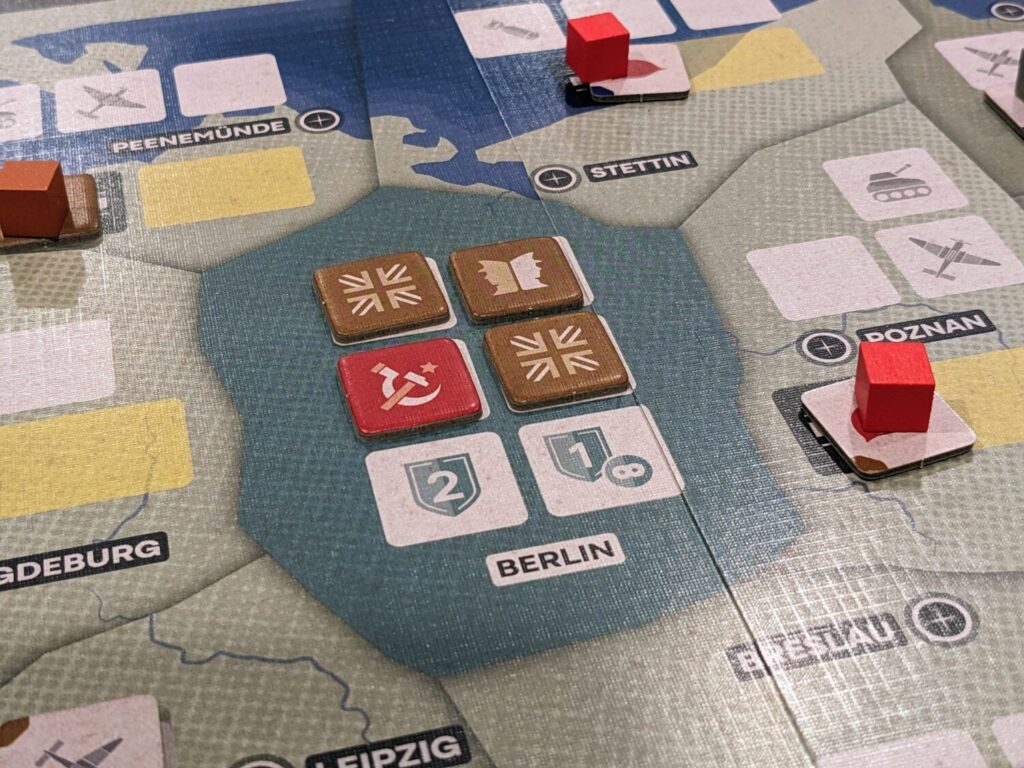
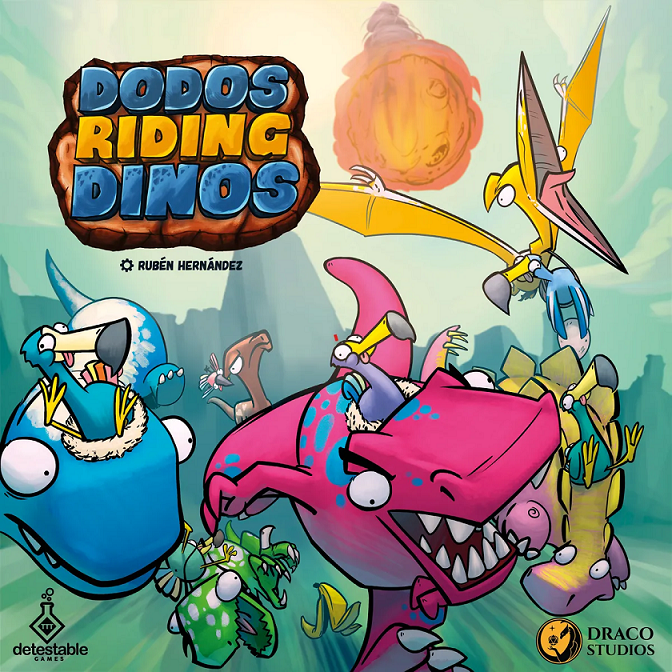

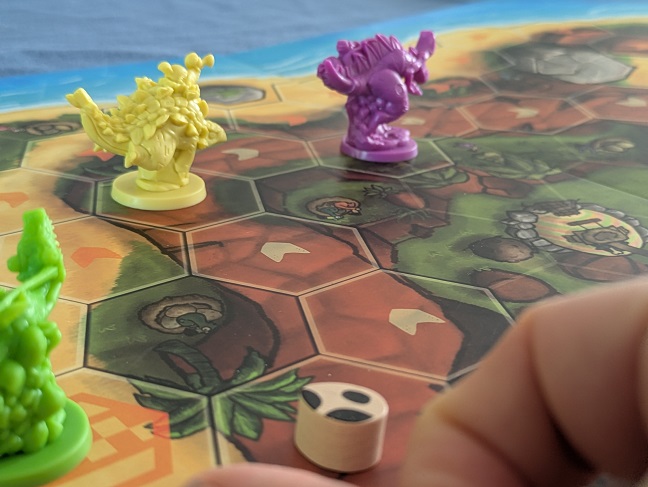
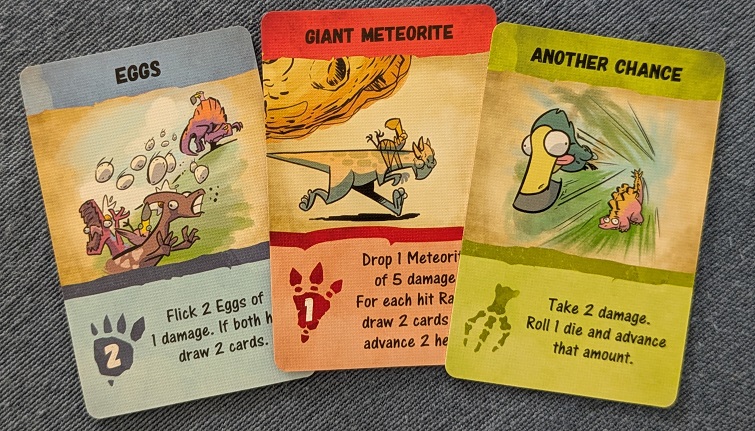
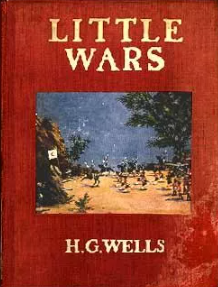
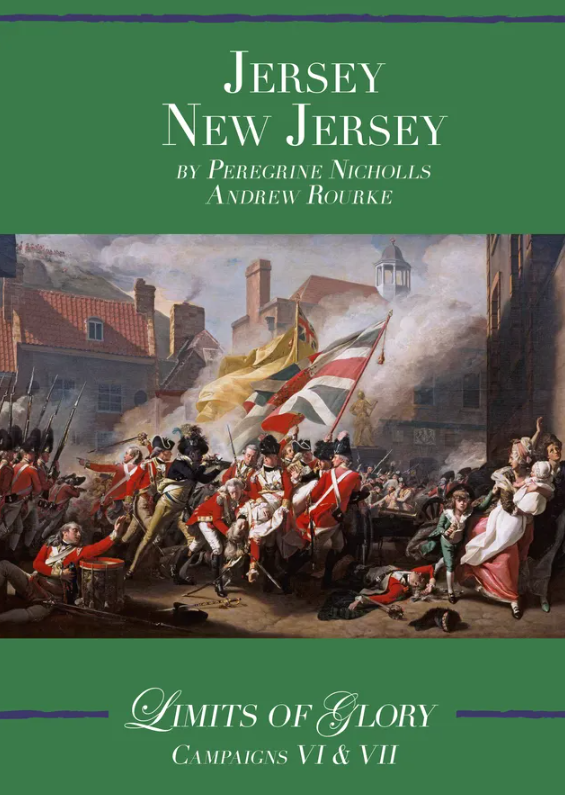
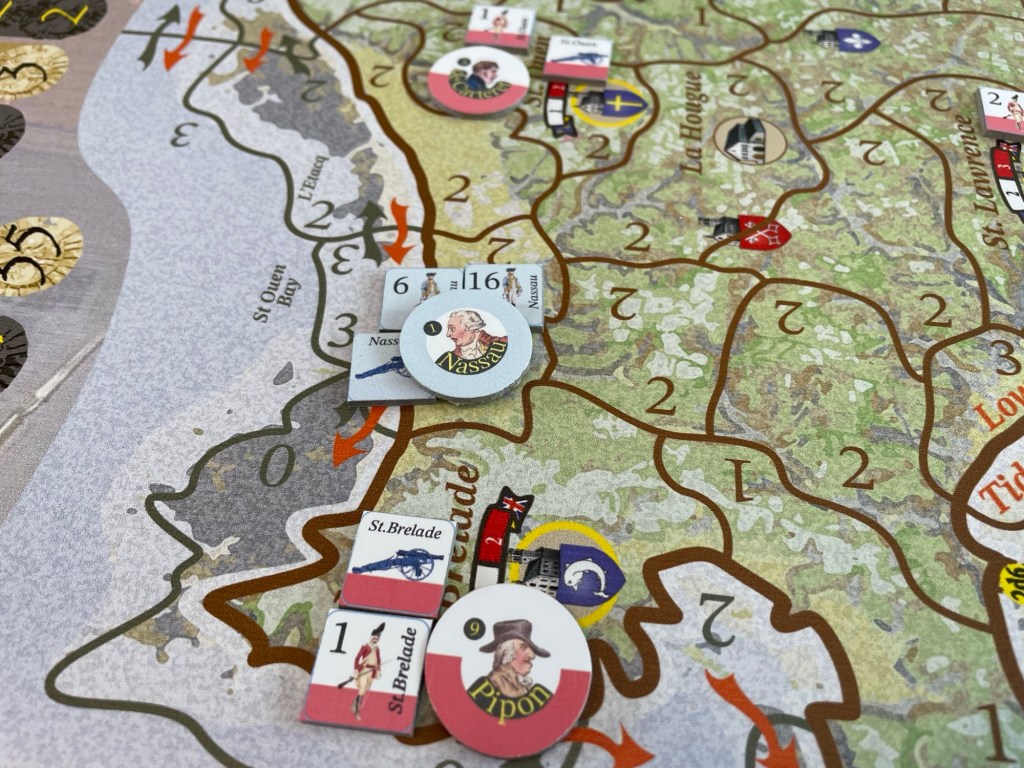
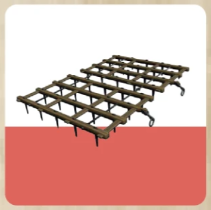
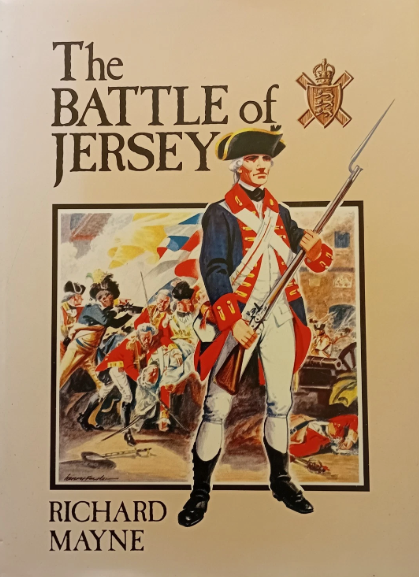

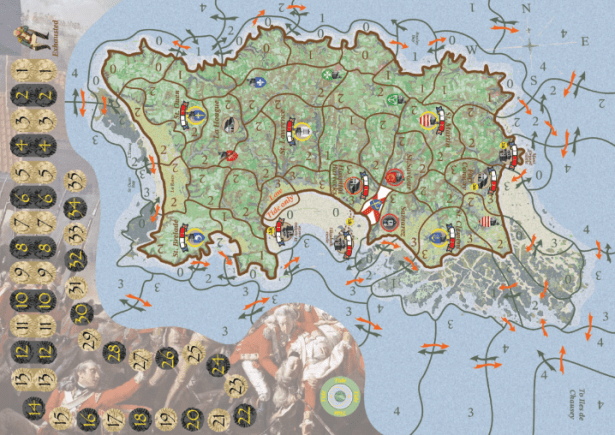
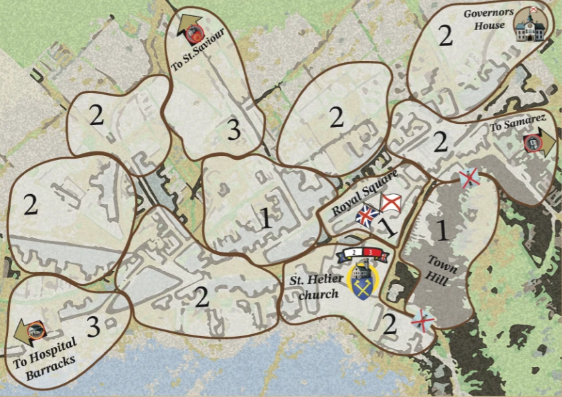
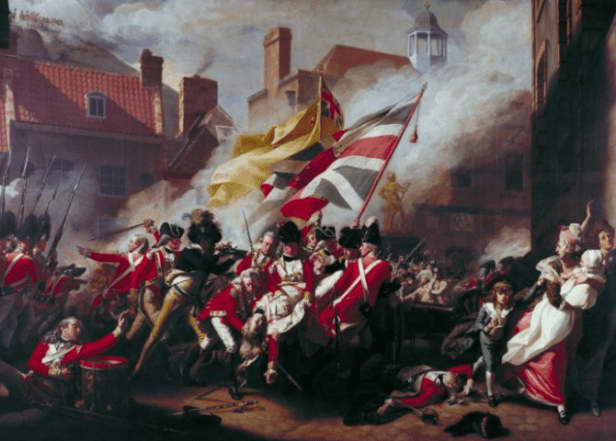
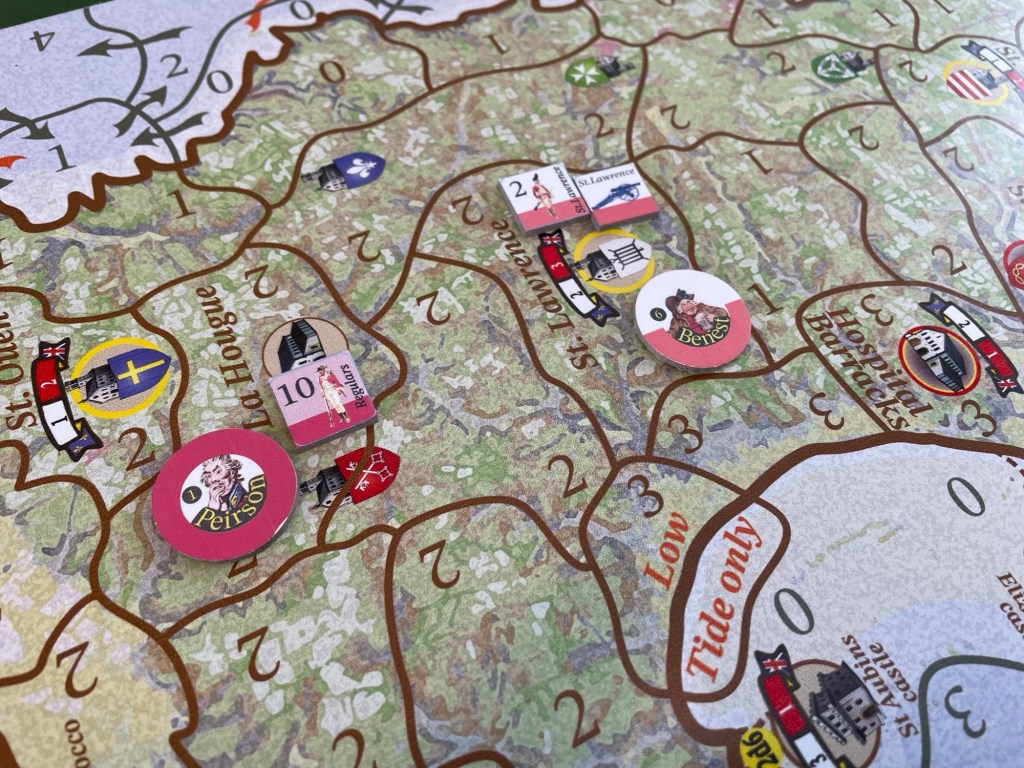

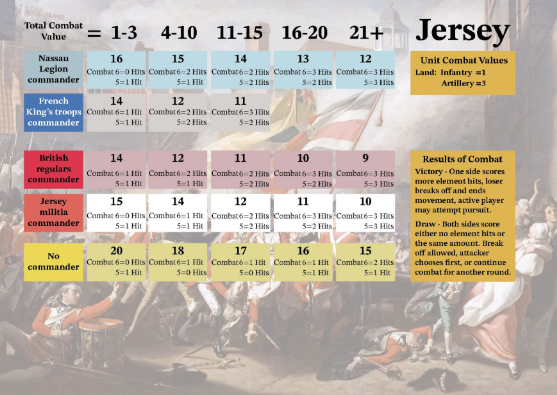


/pic9536215.jpg)


/pic9149607.jpg)
/pic9514890.jpg)
/pic9514891.png)
/pic9514892.png)
/pic9514893.png)
/pic9514894.png)
/pic9514895.png)
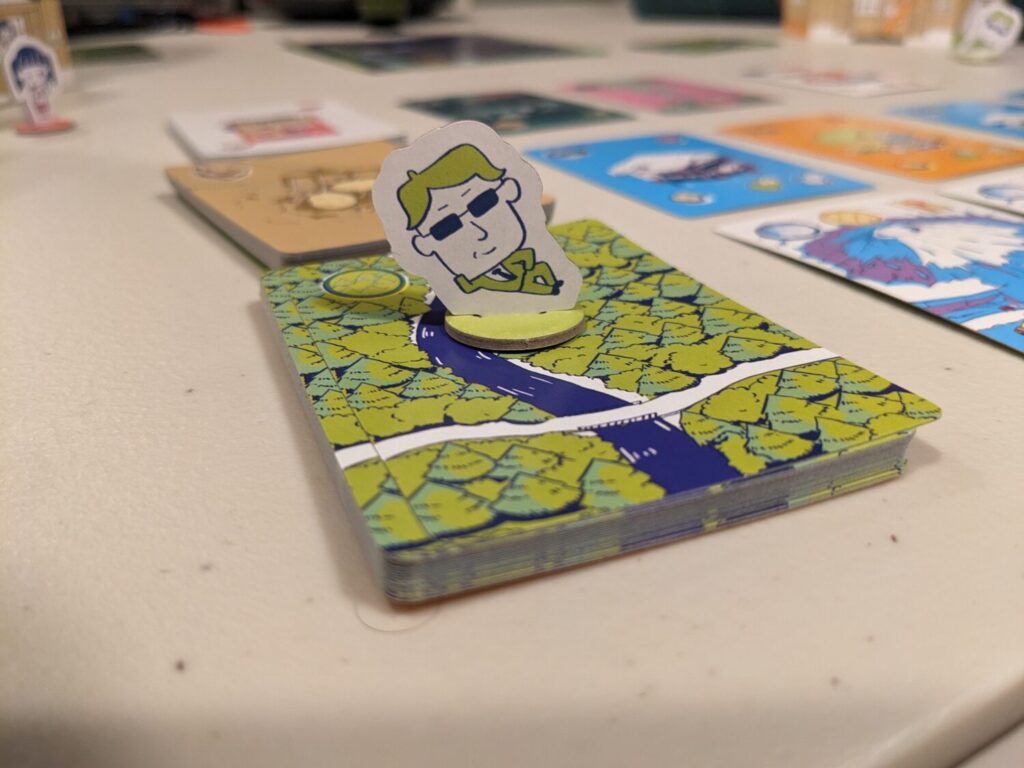
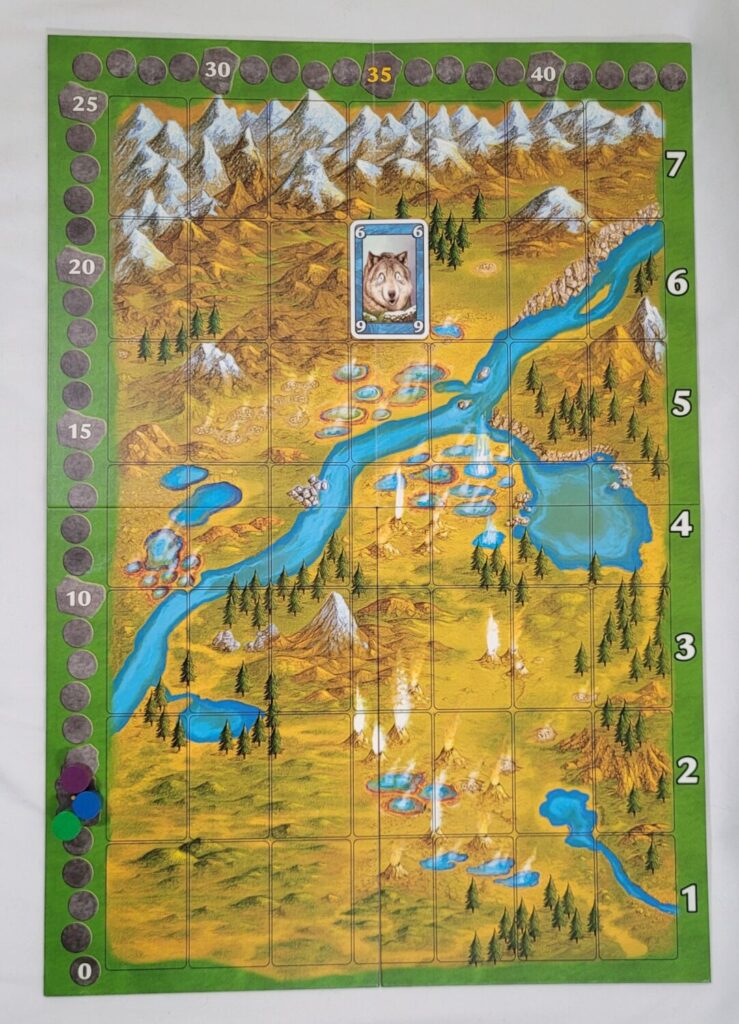
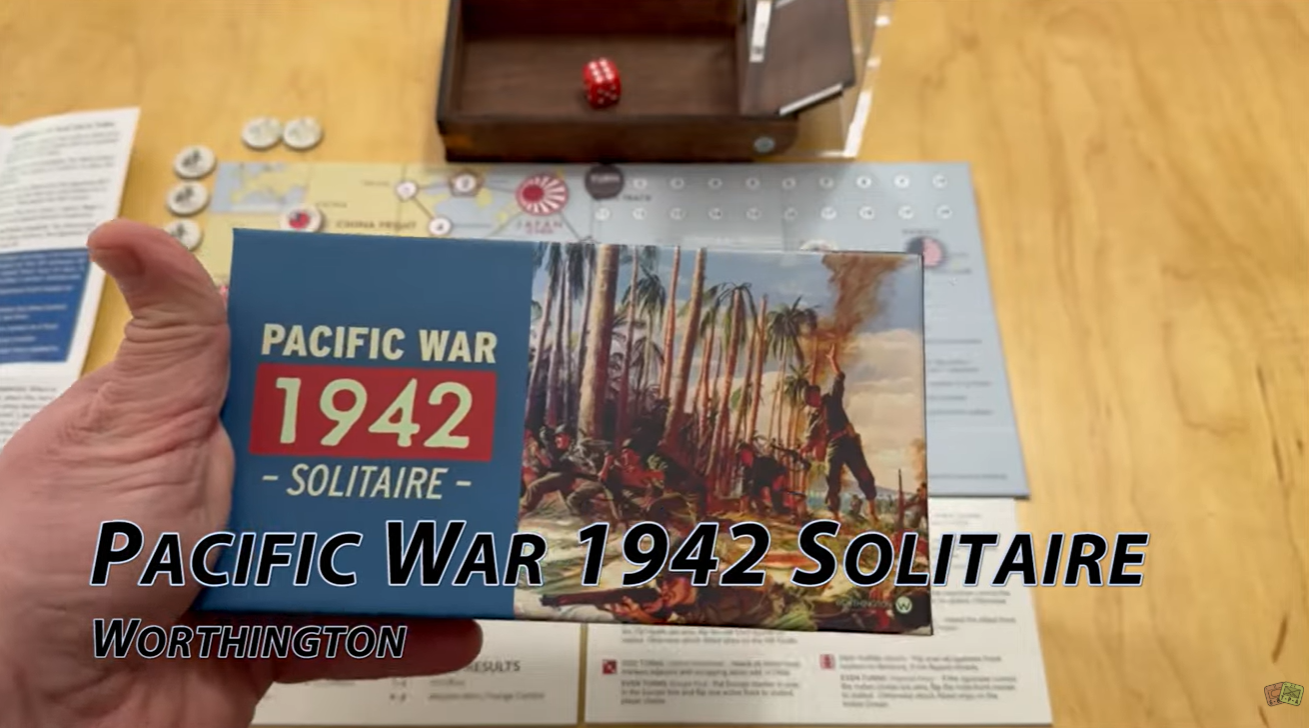
/pic8105651.jpg)
/pic9498571.jpg)
/pic8545754.jpg)
/pic8448365.jpg)