Warum immer nur am Tisch spielen? Wie viele andere auch, spielen wir sehr häufig online, vor allem bei Board Game Arena. In dieser Folge stellen wir Euch jeweils unsere Top 5 im vergangenen Jahr meistgespielten Spiele vor. Große Klopper oder kleine Perlen?… [Weiterlesen]
Back to our board game assisted biography of Fabius Cunctator! In the first part, we’ve seen where Fabius came from, how his career was already illustrious before Hannibal’s invasion, and how he was then called to Rome’s highest emergency office – the dictatorship. Today, we’re covering the turning point of the war against Hannibal, Fabius’s later campaigns, and his final years – as always, with board games.
If you want to read more posts of this kind, I strongly recommend you subscribe to the blog – all new posts in your inbox right when they go live!
“The Man, Who by His Delaying Restored the State to Us”
After Fabius had laid down the dictatorship, the consuls returned to the traditional method of Roman warfare: Lucius Aemilius Paullus and Gaius Terentius Varro were ready to offer battle to Hannibal once more. Hannibal’s third major battle in Italy ended for the Romans even worse than the clashes at the Trebia and Lake Trasimene: At Cannae, the Roman center advanced, their wings gave way, and the entire army was caught in the double envelopment. Rome lost 50,000 soldiers in a single day, including consul Paullus.
The catastrophe at Cannae made Fabius the obvious choice to lead Rome. While he did not take any formal office immediately, his authority, encouragement, and – once more – attention to religious rites calmed the Romans and rekindled their belief in victory.
Fabius was now at the height of his political, military, and religious authority – and he used them. The Romans elected Marcus Claudius Marcellus and Lucius Postumius Albinus as consuls for 215. When the latter was killed in action before he could assume the office, the college of augurs (of which Fabius was a member) vetoed the by-election of Tiberius Sempronius Gracchus, citing religious reasons against having two plebeians as consuls. Instead, the patrician Fabius was chosen to be consul alongside Marcellus. Fabius would be co-opted into the second important priesthood, the college of pontifices, expanding his religious authority even further.
The two consuls of 215 were both seasoned commanders – just what Rome needed in such dire times. At least Fabius would have thought so. When the elections for the consuls of the year 214 were almost completed, Fabius as the presiding magistrate annulled the elections, claiming that the chosen candidates were no match for Hannibal. The elections were held again, and this time, Fabius and Marcellus were returned for another year (contrary to the Roman prohibition of consecutive terms in office).
In any case, Fabius and Marcellus worked well together. They contained Hannibal in 215 in southern Italy, allowing him no more successes in peeling off Roman allies. In 214, Marcellus went on the offensive in Sicily, while Fabius continued to shadow Hannibal’s army and punish Rome’s unfaithful allies. Their division of labor had them soon known as “the sword [Marcellus] and shield [Fabius] of Rome”. When their terms ended in 213, both of them were confirmed as pro-consular commanders.
As Hannibal’s forces dwindled away, his attempt to destroy the Roman alliance system was failing. Even those cities which had joined him were slowly retaken by the Romans. Marcellus conquered Syracuse, the biggest city on Sicily, in 212. Fabius went for a prize of similar importance, besieging Capua, the biggest Italian city after Rome. Hannibal knew he could not defeat Fabius with his shrunken army. Instead, he tried to save his last major ally by marching on Rome, hoping to lure Fabius away from Capua.
Fabius, however, was as phlegmatic as ever and called Hannibal’s bluff by continuing to siege Capua. Rome held, Capua fell. Hannibal’s war was all but lost. The edge of the Carthaginian invasion had been blunted by Fabius’s patience and tenacity, until Rome’s almost-inexhaustible supplies of soldiers allowed it to take the initiative. Fabius’s contemporary, the poet Ennius described him as the “man, who by his delaying restored the state to us”.
The Last Campaigns
Hannibal had lost, but Rome had not yet won. The cities who had broken faith with Rome in Italy had to be re-taken. Rome still had need of Fabius. He was elected consul once more for 209, and also named princeps senatus (“first of the Senate”), an honorary title which by tradition would have been bestowed on the most senior senator who had served as censor.
Bedecked with these honors, Fabius set out against Tarentum, the last major city in Italy which still supported Hannibal, while other Roman generals kept Hannibal busy. Fabius secretly negotiated with the leaders of the city. They broke with Hannibal and opened the city gates to the Roman army – but Fabius had them slaughtered to veil that he had gained the city by treason.
Not a good time to be Tarentine. From Hannibal & Hamilcar.
Tarentum was plundered. Fabius had a colossal statue of Hercules brought to Rome and placed it next to a statue of himself on the capitol, emphasizing his connection to the divine ancestor which he claimed.
Eclipsed
Hannibal was still in Italy, but Rome was firmly on the offensive. The young Publius Cornelius Scipio invaded Spain and expelled the Carthaginians and proposed to invade the Carthaginians’ African seat of power. While Fabius still argued for a defensive strategy which would contain Hannibal, his word did not count for as much as it used to: He may have been the nominally most influential senator, but his strategy had outlived itself. It had been necessary lest Rome suffer defeat, but it could not deliver the ultimate victory.
Scipio found support in the senate and sailed to Africa. Hannibal was promptly recalled by the Carthaginians and made his way back to Africa as well. Scipio met Hannibal at Zama and defeated him in a bloody battle of attrition. Carthage sued for peace soon after. Fabius did not live to see it. He had died a few weeks before the battle of Zama.
Plutarch’s biography of Fabius (which prizes unity of character over historical accuracy) can be found in an English translation here.
Polybius’s Histories which deal with the rise of Rome in the Mediterranean including the Second Punic War are online in an English translation here.
Fabius has found remarkably little attention by modern biographers. If you read German, I recommend this short, but insightful piece on him: Beck, Hans: Quintus Fabius Maximus. Musterkarriere ohne Zögern [Quintus Fabius Maximus. Model Career without Delaying], in: Hölkeskamp, Karl-Joachim/Stein-Hölkeskamp, Elke: Von Romulus zu Augustus. Große Gestalten der römischen Republik [From Romulus to Augustus. Great Characters of the Roman Republic], Beck, Munich 2000.
In unserem Format „Tipp um Tipp“ laden wir euch ein, mit uns zu quizzen. Wir beschreiben Euch einmal pro Woche in 15 bis 20 Hinweisen ein Brettspiel. Wie schnell bekommt Ihr es heraus? Am Ende gibt es direkt die Auflösung.
Schreibt uns gerne, wie Euch das Quiz gefällt oder sagt einfach hallo.… [Weiterlesen]
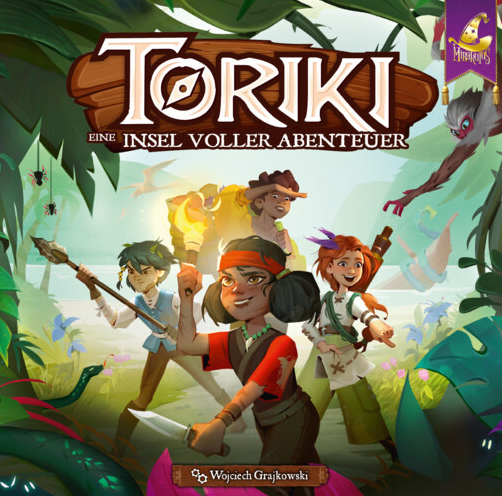
Toriki (Autor: Wojciech Grajkowski) habe ich erst entdeckt, als es jetzt auf der Empfehlungsliste zum Spiel des Jahres 2026 aufgetaucht ist. Da ich Spiele mit App-Unterstützung mag, gab es einen Impulskauf. Hier nun meine Kritik.
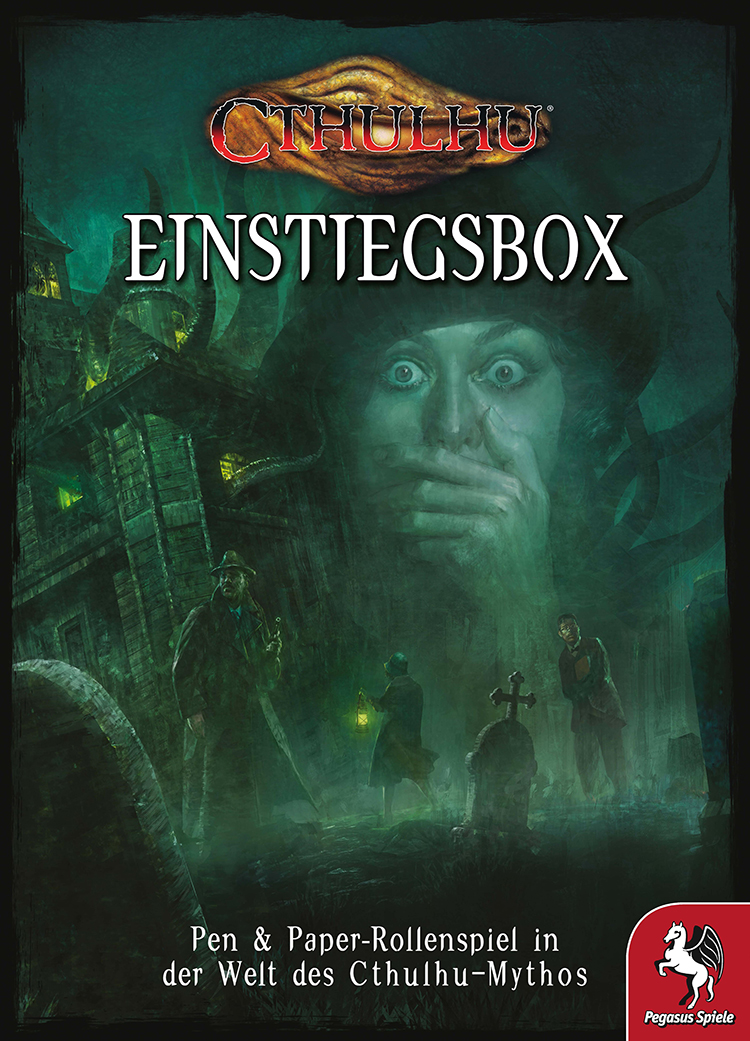
Über 30 Jahre sind vergangen, seitdem ich das letzte mal Spielleiter bei einem RPG war. So dachte ich mir es wäre mal wieder an der Zeit sich dieser Herausforderung zu stellen. Thematisch war klar für mich, dass ich mich gerne wieder dem Cthulhu Mythos widmen möchte. Das Thema fand ich schon seit jeher spannend und eine Einsteigerbox gibt es auch.
Einstiegsbox der 7.Edition
Die Einsteigerbox für 25 Euro beinhaltet 3 Abenteuer, ein Solo und zwei Gruppenabenteuer sowie ein Grundregelwerk mit vereinfachten Regeln, einen Spielleiterschirm, blanko Charakterbögen, 5 vorgefertigte Charaktere und einen Satz mit mystischen Zeichen verzierter Würfel. Insgesamt ist der Inhalt sein Geld Wert, im gegensatz zur US Version gibts sogar einen SL-Schirm.
Inhalt der Box
Das Solo-Abenteuer „Allein gegen die Flammen“ mit über 250 Textabschnitten dient dazu, sich erstmal mit dem Grundregelwerk vertraut zu machen, was auch gut gelingt.
Nach diesem kurzen Abenteuer machte ich mich an das Gruppenabenteuer „Am Rande der Finsternis“. ( Ich war dann doch überrascht wie lange die Vorbereitungszeit dafür ist und man hat immer das Gefühl man hätte noch mehr machen müssen.)
Cthulhu in der 7.Edition funktioniert Würfel-technisch vertraut. Alle Würfelproben laufen gleich ab, mit zwei zehnseitigen Würfeln eine Zahl von 1–100 würfeln und den eigenen Fertigkeitswert unterbieten. Je niedriger das Ergebnis, desto besser.
Es gibt dabei drei Erfolgsstufen: regulär (unter vollem Wert), schwierig (unter halbem Wert) und extrem (unter einem Fünftel des Wertes). Fehlgeschlagene Proben können forciert werden – mit verschärften Konsequenzen bei erneutem Fehlschlag.
Die Spieler*innen übernehmen die Rollen von Ermittler*innen (sogenannten Investigator*innen), die übernatürliche Bedrohungen aufdecken. Der Hintergrund basiert auf den H.P. Lovecraft-Geschichten der 1920er bis 1930er Jahre.
Das Abenteuer „Am Rande der Finsternis“ handelt von einem bösen Dschinn, der vor vielen Jahren von einer Gruppe jugendlicher frei gesetzt wurde. Die Aufgabe der Spieler ist es diesen Dschinn wieder zu bannen. Anders als in vielen anderen Rollenspielen ist der Kampf bei Cthulhu sehr gefährlich und kann ausserordentlich schnell zum Tod führen. Im Gegensatz zu den meisten RPGs ist Kampf in Cthulhu keine bevorzugte Lösung. Schon ein einzelner Angriff kann eine schwere Wunde verursachen (Verlust von mehr als der Hälfte der Trefferpunkte in einer Runde), die ohne sofortige Erste Hilfe tödlich endet. Es gibt aber keine Regeneration im Kampf, keine Heiltränke, keine Wiederbelebung. Tote bleiben tot. So verbringen die Investigator*innen damit Dokumente und Hinweise zu lesen und daraus Schlüsse zu ziehen wie sie Monster ohne Kampf besiegen können. Im Falle unseres Dschinns geht es darum, diesen durch ein Ritual aus unserer Welt zu bannen. Auf dem Weg dorthin spielt die eigene Geistige Stabilität eine zentrale Rolle. Jede Begegnung mit dem Übernatürlichen erfordert einen Stabilitätswurf. Bei Verlust drohen Wahnvorstellungen, Phobien oder temporärer Wahnsinn. Die Stabilität sinkt dauerhaft und Charaktere können im Verlauf einer Kampagne psychisch labil werden. In unserem Fall haben sich die Investigator*innen dann aber doch wacker geschlagen und nur geringfügig Schaden genommen.
Was am Anfang alle etwas verwirrt hat, waren die vielen Fertigkeiten, die jeder Charakter hat. Viele von den Fertigkeiten kamen leider nicht zum Einsatz. Dies war natürlich auch meiner Unerfahrenheit als SL und dem Abenteuer, was Einsteigerfreundlich gestaltet ist, geschuldet. Dies Fähigkeiten sind aber der zentral Punkt der Weiterentwicklung der Charaktere. Die Steigerung der Fertigkeiten erfolgt nur wenn diese erfolgreich eingesetzt wurden und auch dann nur mit Glück, da sie höher als den aktuellen Wert würfeln müssen, was schwerer wird je höher der Wert selbst ist.
Herauszuheben ist noch die Fertigkeit Cthulhu-Mythos-Wissen. Dies Fertigkeit wächst durch Begegnungen mit dem Übernatürlichen – und senkt dabei die maximale Stabilitätsgrenze. Mehr Wissen bedeutet mehr Gefährdung.
Das Wissen über die „Großen Alten“ schadet dem Charakter messbar. Je mehr ein Investigator über den Mythos lernt, desto geringer wird seine maximale geistige Stabilität.
Fazit:
Nach einer Session als Spielleiter kann ich sagen: Der Wahnsinn hat mich wieder. Im besten Sinne.
Cthulhu ist kein 0815 Rollenspiel. Es nimmt deine Charaktere, zieht sie durch arkanes Grauen, und schickt sie – wenn sie Glück haben – mit zitternden Händen und einer neuen Phobie nach Hause. Tote bleiben tot und Wissen macht krank.
Das Regelwerk belohnt Vorsicht, Recherche und Teamwork – und bestraft den Spieler, der glaubt, er wäre in Dungeons & Dragons.
Es ist so weit: Ab sofort kannst du das magische keltische Drafting- und Legespiel Tír na nÓg bei uns im Shop vorbestellen! Bis zum 22. Juni 2026 gibt es dafür ein besonderes Vorbestellangebot.
Denn das Reisen in die Anderswelt soll sich lohnen: Während des gesamten Aktionszeitraums bestellst du das Spiel versandkostenfrei zusammen im Bundle mit einer exklusiven Promo!
In Tír na nÓg schlüpfst du in die Rolle eines keltischen Geschichtenerzählers. Über fünf Runden hinweg setzt du deine Figuren geschickt in die zentrale Auslage – die Anderswelt –, um die wertvollsten Begegnungskarten zu ergattern. Aus diesen Karten webst du in deiner Auslage deine ganz persönliche Saga.
Doch Vorsicht: Deine individuellen Geas-Karten erlegen dir Bedingungen auf, und am Ende wollen auch die größten zusammenhängenden Farb-Regionen auf dem Tisch gewertet werden. Ein hocheffizientes, interaktives Optimierungsspiel für 1 bis 5 Personen!
Bereit für die Reise? Schau jetzt schon rein!
Damit du nicht die keltische Katze im Sack kaufen musst, haben wir schon jetzt alles vorbereitet! Frisch zum Start der Aktion gibt es ein Unboxing-Video auf unserem YouTube-Kanal:
Weitere Möglichkeiten, wie du dich über das Spiel informieren kannst:
Auf Boardgame Arena kannst du (mit englischem Spielmaterial) direkt eine Runde spielen!
Solo Let’s Play folgt: Etwas später im Verlauf der Kampagne veröffentlichen wir noch ein separates Solo-Let’s Play, in dem wir dir zeigen, wie du dich dem bösartigen Häuptling Balor im Automa-Modus stellst.
Nutze die Gelegenheit bis zum 22. Juni, spare Versandkosten und sichere dir die Promo direkt dazu!
Es ist so weit: Ab sofort kannst du das magische keltische Drafting- und Legespiel Tír na nÓg bei uns im Shop vorbestellen! Bis zum 22. Juni 2026 gibt es dafür ein besonderes Vorbestellangebot. Denn das Reisen in die Anderswelt soll sich lohnen: Während des gesamten Aktionszeitraums bestellst du das
Das neue Deckscape „Die magische Akademie“ ist da und ab sofort bei uns im Onlineshop verfügbar!
Eure Abschlussprüfung beginnt bei Sonnenuntergang. Zeigt, dass ihr Zaubersprüche meistern und die Macht der Runen bändigen könnt.
Aber seid auf der Hut: Eine dunkle Macht lauert im Verborgenen!
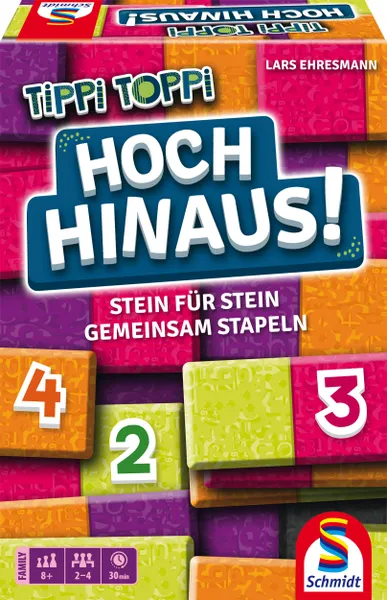
Das Kartenspiel Tippi Toppi aus dem Jahr 2019 gehört bei mir schon zu den Klassikern. Es ist eines der wenigen Spiele, die ich schon mal solo gespielt habe und welches ich immer an Einsteiger ins Hobby weiterempfehlen würde. Daher war ich sehr gespannt, was Tippi Toppi – Hoch hinaus! als neue Variante bringen würde. Klar, hier kommt im wahrsten […]
In unserem Format „Tipp um Tipp“ laden wir euch ein, mit uns zu quizzen. Wir beschreiben Euch einmal pro Woche in 15 bis 20 Hinweisen ein Brettspiel. Wie schnell bekommt Ihr es heraus? Am Ende gibt es direkt die Auflösung.
Schreibt uns gerne, wie Euch das Quiz gefällt oder sagt einfach hallo.… [Weiterlesen]
Die Nominierungen und Empfehlungen zum Spiel des Jahres 2026 und Kennerspiel des Jahres 2026 stehen fest. Wir gehen sie mal durch und ich gebe einen Tipp ab, wer gewinnt.
Heute gibt es wieder eine neue Episode unseres Schreibtischblick Podcasts!
Es geht es natürlich um die Nominierungen der Spiel des Jahres e.V. Jury.
Als Gast haben wir diesmal Melanie Riese dabei, die uns etwas über das Erstellen von 3D-Rendergrafiken für Brettspiele erzählt.
Und weil Ben&Hesy viel zu selten über Spiele reden, haben sie beide jeweils ein interessantes Nicht-Frosted Games Spiel mitgebracht, die sie euch vorstellen wollen.
Hoffentlich können wir damit eurer Familie die lange Autofahrt in den Pfingsten-Kurztrip erheitern.
Am 19. Mai 2026 haben Harald Schrapers und Christoph Schlewinski im Livestream (LINK) die Nominierungen zum Spiel des Jahres 2026 bekanntgegeben. In diesem Stream fiel eine Aussage von Harald Schrapers, dem Vorsitzenden der Jury, die seither für Diskussionen sorgt: Manche Spiele würden von der Jury nur einmal gespielt, bevor eine Entscheidung über ihre Qualifikation getroffen […]
Wir wachsen weiter – und suchen Unterstützung im Bereich Buchhaltung!
Du arbeitest gerne mit Zahlen, denkst strukturiert und möchtest Verantwortung übernehmen? Dann haben wir vielleicht genau die richtige Stelle für dich.
Als Buchhaltungsfachkraft (m/w/d) bei Frosted Games bist du weit mehr als nur für die laufende Buchhaltung zuständig: Du hilfst dabei, Prozesse weiterzuentwickeln, Transparenz in unsere Finanzwelt zu bringen und gemeinsam mit der Geschäftsführung die Zukunft unseres Verlags mitzugestalten.
Das bringst du idealerweise mit:
• Erfahrung in der Finanzbuchhaltung
• Strukturierte & selbständige Arbeitsweise
• Freude an Verantwortung und digitalen Prozessen
• Teamgeist und Interesse an der Brettspielbranche
Standort: Bayreuth
Home-Office an 2–3 Tagen möglich
Start: ab sofort
Neben spannenden Aufgaben erwarten dich ein motiviertes Team, gemeinsame Spieleabende und natürlich jede Menge Brettspiele.
Klingt spannend? Dann freuen wir uns auf deine Bewerbung!
Es ist offiziell: Unser Plättchenlegespiel REBIRTH: AUFBRUCH IN EINE NEUE ZEIT wurde von der Jury zum Kennerspiel des Jahres 2026 nominiert! Wir sind unglaublich stolz auf diese Anerkennung. Ein riesiges Dankeschön und herzliche Glückwünsche gehen an den legendären Autor Reiner Knizia sowie an unseren Partnerverlag Mighty Boards. Damit ist Frosted Games zum zweiten Mal hintereinander von der Jury Spiel des Jahres für diese Auszeichnung bedacht worden, welche wir im Vorjahr bekanntlich mit ENDEAVOR (und unserem Partner Boardgamecircus) als Kennerspiel des Jahres 2025gewinnen konnten.
In ihrer Begründung zur Nominierung hebt die Jury genau das an REBIRTH hervor, was uns auch von Anfang an begeistert hat: REBIRTH kombiniert spielerische Eleganz mit einem lebendigen und interaktiven Erlebnis, das von einem einfachen Grundprinzip ausgehend eine Vielzahl taktischer Möglichkeiten eröffnet. Mehr zur Jury-Begründung erfahrt ihr hier.
Jetzt heißt es Daumen drücken! Die offizielle Preisverleihung findet am 12. Juli statt. Bis dahin werden wir wohl jeden Tag ein bisschen mit fiebern.
REBIRTH fast ausverkauft, aber Nachschub ist unterwegs
Wie es das Schicksal so will, hat die Nachricht, dass REBIRTH zum Kennerspiel nominiert ist, uns zu einem Zeitpunkt erreicht, an dem unser Lager fast leer gefegt ist. Wer REBIRTH sofort spielen möchte, sollte schnell im Fachhandel vorbeischauen, egal ob online oder stationär – dort könnten noch einige Exemplare schlummern. Für alle anderen: Die nächste Auflage ist bereits auf dem Weg und wird voraussichtlich Ende Juni oder Anfang Juli bei uns eintreffen.
Bis dahin könnt ihr es natürlich auch in unserem Shop vorbestellen! Die neue Auflage wird dann bereits mit unserer neuen Spielhilfe in der Schachtel ausgeliefert werden.
If you enjoy playing Flamme Rouge (solo), especially with the Grand Tour expansion, you have likely come across the Specialist Bots variant published on BoardGameGeek by Fredrik Stahre. Fredrik designed a system to make the automated riders use all the new specialist powers. However, playing this solo variant requires printing and cutting out a large number of cards. It takes up significant table space and adds a layer of administrative overhead that can distract from the actual race.
To solve this, I developed a web-based companion app*. It digitally simulates the drawing and playing of Energy Cards for the Specialist Bots, allowing you to compete against up to five automated teams without the clutter of physical card decks.
My approach to building this app was highly pragmatic: I wanted to eliminate the deck management while keeping the tactile joy of the board game intact. I designed the application strictly as a client-side tool using HTML, CSS, and native JavaScript. The app runs entirely in your browser. It performs no server-side calculations and requires no database. Instead, it saves your ongoing stage or tour directly to your browser’s local storage. This lightweight architecture guarantees fast performance, respects your privacy, and keeps the technical footprint incredibly small.
Screenshots: Specialist Bots App
Screenshot Homepage
Screenshot Energy Card
Screenshot Exhaustion
Over several development iterations, I refined the features to support the nuanced solo rules. I added a dedicated Breakaway Phase logic for the first round of a race, an optional extended stage and integrated manual reshuffling options. Finally, I added three difficulty levels (Easy, Medium, Hard) to properly scale the challenge, carefully tweaking the bots‘ abilities to ensure they push you to your limits throughout the entire stage.
The app takes over the complete card management for all available specialist types. Before you hit the starting line, you set up your race:
Choose between a Single Race or a Grand Tour.
Draft up to five bot teams, assigning exactly one Rouleur and one Sprinteur to each.
Assign team colors to match your plastic cyclists.
Once the race begins, the app handles the heavy lifting. It simulates the draw decks, manages the discard and recycle piles, and automatically shuffles in Exhaustion Cards when necessary. If you ride a Grand Tour, the app calculates the carry-over at the end of a stage and keeps exactly half of each bot’s Exhaustion Cards for the next race.
How to Use the App at the Table
This digital tool does not replace the physical board game. You still build the track, place your riders, and move the plastic figures by hand. The app strictly replaces the paper decks of your automated opponents.
During a round, you simply call up the active bot riders in turn order on your screen and draw their virtual cards. You use the solo rules‘ color logic (green, yellow, red) to determine if the bot moves immediately or draws a second card to weigh its options. Once you resolve the movement on the physical board, you click „Done“ in the app. The system automatically sorts the used and unused cards into the correct virtual piles.
This hybrid approach keeps your focus exactly where it belongs: on the race track and your own tactical decisions, rather than on shuffling tiny stacks of paper.
Enhance the Code: The code for this app is licensed under Creative Commons and is available on GitHub. Feel free to adopt or contribute suggestions to this project.
This is an unofficial, fan-made web app intended strictly for private, non-commercial use. I am not commercially associated with the game’s author or publisher. All credits for the Flamme Rouge board game belong to designer Asger Aleksandrov Granerud and publisher Lautapelit.
Credits & Disclaimer
This web app is based on a fan-made solo version published on BoardGameGeek by Fredrik Stahre. Fredrik’s aim was to make the Flamme Rouge Bots use all the new rules included in the Grand Tour expansion (specialist powers).
* developed with the assistance of AI to help streamline the coding and bring the project to life.
In May 2026, I completed an eleven-stage Grand Tour in Flamme Rouge to evaluate the new Specialist Riders across diverse terrains and to run a live trial of my custom-built companion app. I wanted to observe exactly how asymmetric rider abilities alter the peloton’s dynamics and test whether the software effectively streamlines the race management.
I played as the white Visma-Lease a Bike team (Jonas Vingegaard and Wout van Aert), competing against a full peloton of five bot teams.
Here is my full review, including the match breakdown, the race results, an analysis and my observations.
Tune in to experience the thrilling duel of my Flamme Rouge Grand Tour in a completely new and immersive audio format! Two AI voices conversing and analyzing the action as if they were live commentators right at the race!
Stage Results
Stage 1
Stage 1 Results (Team Time Trial) + General Classification:
Stage 2
Stage 2 Results:
General Classification after stage 2:
Stage 3
Stage 3 Results:
General Classification after stage 3:
Stage 4
Stage 4 Results:
General Classification after stage 4:
Stage 5
Stage 5 Results:
General Classification after stage 5:
Stage 6
Stage 6 Results:
General Classification after stage 6:
Stage 7
Stage 7 Results:
General Classification after stage 7:
Stage 8
Stage 8 Results:
General Classification after stage 8:
Stage 9
Stage 9 Results:
General Classification after stage 9:
Stage 10
Stage 10 Results:
General Classification after stage 10:
Stage 11
Stage 11 Results:
General Classification after stage 11:
Tracking the Specialists: Stage-by-Stage Performance
Analysis: What I learned
What a blast! At the heart of the Grand Tour I played was a phenomenal duel between two giants from my dominant Visma | Lease a Bike team. We witnessed an epic battle between the climbing specialist (Grimpeur) Jonas Vingegaard and the incredibly versatile powerhouse (Polyvalent) Wout van Aert. The Yellow Jersey changed hands multiple times throughout the race. From van Aert’s early dominance to John Degenkolb’s surprise two-stage stint in the overall lead as a classic Flandrien, the tension never dropped.
But it all came down to a nail-biting finale on the final mountain stage! In a spectacular display of endurance, Vingegaard snatched the ultimate victory, securing the Yellow Jersey by a mind-blowing margin of just 2 seconds!
The fierce competition extended to the other classifications as well. Van Aert rewarded his consistent brilliance by taking home the Green Jersey with 10 sprint points, while the explosive Puncheur Julian Alaphilippe conquered the grueling climbs to claim the Polka Dot Jersey with 13 mountain points.
Whether you’re a die-hard cycling fan or a newcomer to the peloton, this Grand Tour was a perfect showcase of strategy, grit, and the incredible dynamic between Sprinteurs and Rouleurs.
Bots tend to dominate the stage beginning
Let’s take a look of how the bot teams performed!
If you have raced against bots over a multi-stage tour, you might have noticed a specific pattern: they tend to absolutely dominate the first half of a stage, only to completely bonk and fall apart in the finale.
After running 11 stages of a Grand Tour with an early version of the app, I dug into the math behind the decks to figure out why this happens. The core issue lies in how the red an yellow movement points—the triggers that let a bot draw a second card—are distributed. In the original design, these colors are often attached to the highest value cards. Early in the race, when the deck is perfectly clean, the bots will constantly hit these triggers. They draw two cards, filter out the weaker ones, and burn through their top speeds immediately. But once the mid-game hits and their draw piles get clogged up with Exhaustion cards, all those valuable suffixes are sitting in the discard pile. The bots have no lifeline left to skip a bad draw, leading to a massive drop in performance just when the sprint to the finish line starts.
To fix this for the new Medium and Hard difficulty levels of my app, I didn’t just blindly inflate the numbers. Instead, I re-engineered the trigger system. I stripped the red and yellow values from the absolute peak cards and strategically moved them to the mid-tier values (like the 5s and 6s).
I think this changes the pacing. In the first half of the race, the bots now play their top speeds straight up without filtering their deck too fast. The start is slightly more controlled. But in the crucial final stretches, when their decks are heavily diluted with Exhaustion, drawing a mid-tier card now triggers a second draw. This gives the bots a much higher chance to bypass an Exhaustion card right when it matters most, keeping them consistently competitive until the very end.
More realistic bot movements
I also realized that simply adding a flat +1 movement to every card to create a „Hard“ mode breaks the game. If a bot gets more than a dozen extra movement points per deck cycle, no human player managing standard cards and slipstreams can catch them over a 70-square stage.
Because of this, the Easy level remains Fredrik Stahre’s balanced original baseline. For Medium and Hard, the base speeds of the bots remain grounded so the peloton doesn’t instantly shatter. The difficulty scales entirely through targeted tactical spikes. The bots get significantly higher peaks on their specific terrain—like a Super Sprinteur hitting a massive 13 on the final straight, or a Grimpeur surviving a steeper Uphill limit—making them incredibly dangerous exactly where their real-world counterparts would attack.
We’ve been assessing the merits of political leaders in (more or less) democratic countries on this blog for a few years now. Today, we’re returning to German chancellors… but not the way you know it. After a few chancellors from the Federal Republic of Germany (founded in 1949), we’re assessing for the first time a chancellor from the Weimar Republic, Germany’s first attempt at parliamentary government – Hermann Müller. And which game could be more appropriate for him than Weimar (Matthias Cramer, Capstone Games/Skellig Games/Spielworxx)?
The Rating System
Some caveats ahead: The chancellors will be rated by the knowledge of their time. If they or their contemporaries could not have known about the effects of something, I will not use my hindsight to mark it as a mistake of theirs. The assessment is focused on their conduct as chancellor.
Now, to the system itself: There are three policy field categories (foreign, domestic, and economic policy) and three more general ones (vision, pragmatism, integrity). A chancellor can earn from one to five stars in each category (for a total sum of up to 30). In detail, the chancellor is assessed as follows:
Foreign policy: Did the chancellor increase German influence in the world and the security of Germans at home? Did the chancellor wield German power responsibly and with positive results for the regions affected?
Domestic policy: Did the chancellor increase the liberty of Germans to express themselves and to participate in the political process? Did the chancellor promote domestic security and shape the framework for fair justice dealing with offenses?
Economic policy: Did the chancellor facilitate the prosperity and economic security of Germans (including in the mid- and long-term)? Was the chancellor’s economic policy based on mutual benefit of those involved or did it unduly burden one side?
Vision: Did the chancellor have an idea of what Germany and Europe (the latter counting for more in times of German influence being great) should look like beyond the immediate future? Did the chancellor’s policies steer Germany (and, if applicable, Europe) in this direction?
Pragmatism: Did the chancellor succeed in seeing their policy through from inception to completion? How well did the chancellor manage the support from parliament, society, the administration, the media?
Integrity: Did the chancellor understand the office as a means to benefit themselves, special interest groups, the entire country, or another community? Did the chancellor respect the boundaries of the office?
Note: If you have read my UK prime minister or US president ratings, you will remember that I rated them on the global impacts of their vision as well. As the rating system is only really applicable to democratic leaders and no democratic German leader ever had the chance to conduct a truly global policy, I only assess their vision on national and European grounds.
Müller’s Early Life
Hermann Müller was born in Mannheim (in the southwest of Germany) on May 18, 1876. His father ran a small sparkling wine company, but died when Hermann was still a teenager. Thus, instead of taking over the company or going to university, the young Hermann Müller trained to become a clerk. He soon became involved with the socialist movement and joined the Social Democratic Party of Germany (SPD) in 1893. After some years working for social democratic newspapers, he was elected to the leadership board of the SPD in 1906. Müller was often charged with liaisons to other socialist parties in Europe – including a doomed trip to Paris in July 1914, trying to negotiate a joint refusal of French and German socialists to support their respective countries’ impending war with each other.
Müller was elected to Imperial Germany’s parliament in a by-election in 1916. Soon after, the German Social Democrats split between the Majority Social Democrats (MSPD, including Müller) who supported the war effort, and the Independent Social Democrats (USPD), who did not. When the war was lost in November 1918 and the monarchy swept away by revolutionary soldiers and workers, the MSPD soon took control of the revolution and steered a moderate course towards parliamentary democracy.
The revolution of 1918/1919 transformed the (M)SPD from the pariah party of Imperial Germany to the most important pillar of the new republic. As the Social Democrats were no longer barred from the positions of power, they needed scores of cadres to fill them. The general upswing also brought a promotion for Müller, who was elected co-chairman of the MSPD in 1919. Government came with its own challenges: The lost war, the ongoing Allied naval blockade, and the weak position of the new government made it imperative to conclude a peace treaty with the Allied powers. The provisions of the Treaty of Versailles, with which the Allies presented Germany, seemed unacceptable to most Germans – including many Social Democrats. Chancellor Philipp Scheidemann resigned rather than take responsibility for the treaty. He was succeeded by Gustav Bauer (also SPD) whose new administration Müller joined as foreign minister in June 1919. In this role, it fell to him to sign the treaty. From there, Müller sketched the outlines of a new foreign policy – one in which Germany would cooperate with the Allies, use its economic and cultural rather than its military strength to influence world events, and thus overturn the harsh provisions of the Treaty of Versailles.
The Bauer administration resigned after the Kapp-Lüttwitz coup of March 1920. Müller took over the chancellorship as a caretaker – elections were scheduled for June 1920. He was unable to tackle most of the many challenges which beset Germany (chiefly the agreement with the Allies on the details of the German reparations, the tensions over the German-Polish border, and the threat of right-wing terrorism and insurgency (as in the Kahr coup in Bavaria)). The only crisis which was dispelled during his time in office was the dissolution of the Red Ruhr Army, a left-wing militia which had formed in opposition to the Kapp-Lüttwitz coup and, after its failure, had continued their struggle for a council republic on the Ruhr. Their uprising was put down by army and Freikorps units and over a thousand workers (with more or less connection to the uprising) summarily executed.
The Red Ruhr Army can give the Communists a powerful push in the game… and make the Republican parties more forgiving of the Nationalists taking over army units (black units in Essen).
The first one and a half years of democratic government in Germany had proven a disappointment for many voters, including those who generally were in favor of the new republic. The three government parties (the SPD, the Catholic Center (Zentrum), and the liberal German Democratic Party (DDP)) all suffered heavy losses in the 1920 election. The SPD was particularly hard hit, as its handling of the Kapp-Lüttwitz coup and the Ruhr Uprising disenchanted many left-leaning workers. Both the USPD and the pro-business, conservative-liberal German People’s Party (DVP) gained a lot of votes.
With the majority for the government coalition lost, Müller attempted to broaden the government by including the USPD. Due to his handling of the aftermath of the Kapp-Lüttwitz coup, he was brusquely rebuffed. As he did not see potential to cooperate with the DVP, he led the SPD into opposition.
The Opposition agenda card in Weimar strengthens the SPD in parliament and allows the party to (re-)gain a minor ally (the USPD or DDP).
Opposition and Return to Government
Müller’s own inclination was to return to government responsibility, but he prioritized first the reunification of the SPD with the USPD (concluded in 1922) and then the prevention of another rupture. However, the SPD supported the bourgeois minority government (Zentrum, DDP, and DVP) in matters of foreign policy, which was conducted by the guidelines which Müller had laid out as foreign minister and chancellor in 1919 and 1920.
The reparations issue, however, remained unresolved. As tensions over it with the Allies heated up, France occupied the Ruhr again, to which the government responded with encouraging the population of the Ruhr to cease cooperation with the occupiers. This “passive resistance” relied on the national government funding the livelihood of millions of people and thus fueled inflation. As these interconnected crises escalated, it became clear that the government did not have the parliamentary and public support to deal with them. Government needed to rest on a broad basis. The first “Grand Coalition”, led by DVP chancellor Gustav Stresemann and including SPD, Zentrum, DDP, and DVP was inaugurated in August 1923. Four Social Democrats became ministers. Hermann Müller, however, was none of them as he was deemed indispensable to maintain control of the fractious SPD parliamentary group (whose vote to join the government had been on the narrowest of margins).
Stresemann’s re-roll ability makes him an excellent ally in any kind of crisis – coups, foreign policy, presidential elections.
While the Stresemann government successfully ended both the passive resistance (and French occupation) and the inflation crisis, the way there was rocky. It included challenges from both the left wing in Saxony and Thuringia (which were put down by the armed forces once the Communist Party entered a parliamentary government) and the right wing (a nationalist power grab in Bavaria was left unanswered as the loyalty of the army to the republic seemed suspect; an attempt to radicalize Bavaria even further led by a young demagogue named Adolf Hitler collapsed when it met resistance by the nationalist authorities). This uneven treatment convinced the SPD to leave government after only three months. Stresemann, thus without a majority, soon was toppled as chancellor, but remained foreign minister.
The SPD, despite being the largest party in parliament (and being confirmed in this status in 1924), would spend the next five years in opposition. Attempts to form another Grand Coalition failed in 1924 and 1925 (because the DVP preferred to cooperate with the nationalist DNVP and the new, monarchist, president Paul von Hindenburg), and in 1926, because Müller’s SPD engaged in the fool’s quest of pursuing a plebiscite to expropriate the former princes – the plebiscite failed to meet the quorum as expected, but it set the SPD on a path of confrontation with the bourgeois parties which ruled out any cooperation with them.
That did not mean that cooperation was impossible: The SPD continued to back the cooperative-revisionist foreign policy of the government, and also supported budget compromises. Thus, the party agreed to a budget for the year 1928 which included a first payment for new armored cruisers to modernize the navy. It then campaigned for the March 1928 elections on the slogan “Meals for Children instead of the Armored Cruiser”. The electorate returned the SPD with its best showing since 1919. Müller was able to form a government (once more including Zentrum, DDP, and DVP) and was elected chancellor for the second time.
Müller at work in his preferred arena – that of parliamentary debate, not of street action. His event often allows the SPD player to shift the issues decisively in their favor.
The Second Chancellorship
The contradiction between parliamentary action and campaign promises immediately backfired for Müller. The budget for the new fiscal year was due, and as agreed, included funds for the naval modernization. Müller belatedly realized that the decision had been made already, that the SPD had agreed to it, and that his government partners would expect the SPD to stick to its previous course. While Müller and the SPD ministers voted in favor of the budget in cabinet, the SPD parliamentary group revolted against the budget and forced them to vote against it in parliament. It did the rebels no good, as they could not find another majority for an alternative budget, but the revolt was a catastrophe for Müller’s authority.
The economic situation was similarly unpromising: When the trade unions of the Ruhr heavy industry proposed a pay raise by 15 pennies per hour, the employers responded by pre-emptively handing hundreds of thousands of workers their notice. Unions and employers then agreed on mediation, but when the employers did not like the result, they backtracked and disputed the legality of the process. Thus, 240,000 iron workers were laid off. Müller had a second mediator make a new proposal, which was suitably employer-friendly (with pay raises ranging from one to six pennies per hour). The employers contentedly saw that playing hardball paid off. Their confrontational stance would increase with the growing unemployment after the 1929 stock market crash.
For the time being, Müller enjoyed the greatest success of his tenure: He negotiated a new reparations agreement (without Stresemann, who died in October 1929), the Young Plan (named after Owen D. Young, who represented the American side). The negotiations were a great step forward for Germany (as the reparations were much reduced and payment put on a realistic basis), but a mixed blessing for Müller: On the one hand, the agreement was very unpopular (as it stipulated German payments for the next 58 years) and thus maligned by the right wing (which campaigned against it on the slogan “Enslaved for three generations). On the other, the combination of the undoubted necessity of the negotiations and their unpopularity meant that the moderate right-wing parties held off their assault on Müller for the moment, as they wanted him to take the blame.
The combo of the Young Plan and the petition against it may place up to three new crisis markers on the board. Müller really threaded the needle by successfully negotiating the reparations agreement and then fending off the referendum against it.
It was only a short reprieve. By January 1930, the Young Plan negotiations were concluded. The same month, the DVP, not being held back by the pro-government Stresemann anymore, had secretly decided to break the coalition if the SPD did not agree to radical pro-business reforms. The party had received encouragement from president Hindenburg, who also intimated to Zentrum leader Heinrich Brüning that he would support a Brüning-led bourgeois minority cabinet with presidential executive orders.
The showdown came in March 1930 over the reform of unemployment insurance. Müller had negotiated a compromise with Paul Moldenhauer (DVP), the minister of finance. However, the DVP parliamentary group refused to accept the compromise. Müller then tasked Brüning to work out another proposal which would be acceptable to all parties in government. Brüning’s suggestion – which would have postponed the issue by another year without solving it – found agreement in the DVP, Zentrum, and DDP parliamentary groups, but, despite Müller’s urging, not that of the SPD. The second Müller administration thus ended on March 27, 1930.
Müller had hoped that president Hindenburg would support an SPD-led minority government with executive orders. Instead, Hindenburg turned to Brüning whose chancellorship began the slide into government not backed by parliamentary majorities. The SPD, however, supported Brüning on key issues of economic and foreign policy lest the president find excuses to turn even more authoritarian. It was to no avail: Hindenburg and his camarilla got tired of Brüning in 1932 and replaced him in turn with Franz von Papen and Kurt von Schleicher who enjoyed even less parliamentary support, before it seemed like a smart move to them to ally their nationalist elites to the popular movement of the Nazis in January 1933, ending German democracy altogether. Müller did not live to see his democratic republic destroyed: He had never been of strong health, had campaigned and governed against the advice of his doctors who counselled rest, and died on March 20, 1931.
The Rating
Foreign policy
Müller developed Weimar’s foreign policy in his first term in government (as foreign minister and chancellor), which aimed at proving to the Allies by faithful cooperation that Germany was willing to do its part in reconciliation (but had economic limits in what it could do) and would thus be re-admitted on an equal footing to the international community, which would allow the country to revise key portions of the Treaty of Versailles. While the theory was sound, its application ran into practical problems – for Müller as well as the other chancellors and foreign ministers of the Weimar Republic: French revisionism of the Treaty (France felt short-changed in the matters of annexations and would have liked to incorporate the entire left bank of the Rhine as under Napoleon), and the constant charges from the German right that international cooperation under the Treaty of Versailles was akin to betrayal of the nation.
Müller never gave much attention to the existing inequities during his two terms as chancellor. That he was aware of them is proven by his record as foreign minister, in which he massively overworked the diplomatic service (which had been almost exclusively staffed by nobles heretofore), opening it for applicants from all backgrounds. Similar reforms of the judiciary or the military, two other institutions still personally and mentally clinging to Imperial Germany, did not make it to Müller’s chancellor agenda, even though the atrocities committed on the Ruhr in 1920 while the army could not be used to deal with the Bavarian regime at all showed the necessity of these institutional changes.
Müller’s handling of economic policy was incremental and cooperative – a bad fit to deal with his counterparts in business and the government (DVP) who wanted radical changes through confrontation. Müller’s stance may have been the more reasonable. But Müller lost.
Rating: 2 out of 5.
Vision
Müller’s vision of a Germany based on constructive parliamentary debate and government compromise, cooperating with other countries on an equal footing, is compelling. However, Müller was not always successful in advancing these goals, as he prioritized party unity over compromise with others at times.
Müller failed to see most of his policy initiatives through. He kept neither his coalition nor his own parliamentary group in check. However, Müller prevented another rupture of his party, and as a skilled electoral campaigner, achieved the first place for the SPD in every national election with him at the helm of the party.
Müller was fair and even-handed in his conduct as a chancellor. As a Social Democrat, he considered the workers his natural constituency, but was always willing to include the interests of other groups in the compromises he forged. His only fault was to hope for the a-parliamentary executive order minority government which, in the end, was given not to him, but Brüning.
Rating: 4 out of 5.
Overall
Hermann Müller’s chancellorship is traditionally considered a failure based on the collapse of the Weimar Republic soon after. Yet the Republic did not end with his tenure, and it was destroyed not by his actions, but by those of others. Müller’s most enduring contribution was the invention of the Weimar formula of foreign policy, his biggest weakness his inability to impose authority on his friends, partners, rivals, and foes. He failed because he was a middling chancellor in a hostile world.
How would you rate Müller? Let me know in the comments!
Further Reading
For short overview essays on all German chancellors from Bismarck on, see Sternburg, Wilhelm von: Die deutschen Kanzler. Von Bismarck bis Merkel[The German Chancellors. From Bismarck to Merkel], Aufbau-Verlag, Berlin 2006 (in German).
The only full-length biography of Müller is Reichel, Peter: Der tragische Kanzler [The Tragic Chancellor], dtv, Munich 2018 (in German). Unfortunately, the book suffers from the author’s misguided attempt to assign blame for the end of the republic on the SPD for an alleged lack of willingness to compromise, which runs through the entire book.
A revisionist, but insightful short treatment of Müller is Behring, Rainer: Hermann Müller (1876—1931) und die Chancen der Weimarer Republik [Hermann Müller (1876—1931] and the Chances of the Weimar Republic], in: Brandt, Peter/Lehnert, Detlef: Sozialdemokratische Regierungschefs in Deutschland und Österreich. 1918—1983, Dietz, Bonn 2017 (in German).
For the broader context, see: Herbert, Ulrich: A History of Twentieth-Century Germany, Oxford University Press, Oxford 2019.
In unserem Format „Tipp um Tipp“ laden wir euch ein, mit uns zu quizzen. Wir beschreiben Euch einmal pro Woche in 15 bis 20 Hinweisen ein Brettspiel. Wie schnell bekommt Ihr es heraus? Am Ende gibt es direkt die Auflösung.
Schreibt uns gerne, wie Euch das Quiz gefällt oder sagt einfach hallo.… [Weiterlesen]
Paul Hargrave, dem Vater von Elizabeth, haben wir die Idee zum Brettspiel Sanibel zu verdanken. Er hat seine Tochter mit einem Spiel zum Sammeln von Muscheln inspiriert und konnte vor seinem Tod noch den Prototypen testen. Der Geist dieser schönen familiären Einbettung ist auch während des Spiels zu spüren. Sanibel ist wie ein Kurzurlaub am Meer – perfekt, wenn man […]
In unserem Format „Tipp um Tipp“ laden wir euch ein, mit uns zu quizzen. Wir beschreiben Euch einmal pro Woche in 15 bis 20 Hinweisen ein Brettspiel. Wie schnell bekommt Ihr es heraus? Am Ende gibt es direkt die Auflösung.
Schreibt uns gerne, wie Euch das Quiz gefällt oder sagt einfach hallo.… [Weiterlesen]

 Anmelden