Wizardry 7 Crusaders of the Dark Savant


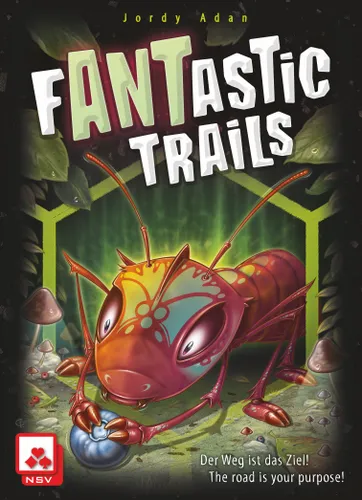
Ameisen sind derzeit Trendtiere für Spiele und so spielen sie auch in FANTastic Trails eine Hauptrolle, wo wir die Aufgabe haben, möglichst lange Ameisenstraßen zu bauen. Eine Ameisenstraße dient der Verbindung des Ameisennestes mit einer Nahrungsquelle und davon gibt es in Fantastic Trails ziemlich viele: Kürbisse, Beeren, Pilze, Fallobst – es gibt eine ganze Menge zu essen und hungern […]
You love board games. You probably also like music. Let’s combine the two into an immersive playlist for Imperial Struggle (Ananda Gupta/Jason Matthews, GMT Games). Have it gently play in the background during your next session of Imperial Struggle for the full period immersion!
First things first: Here’s the playlist!
Before we dive into the content of the playlist, some general observations:
Now, what awaits you in the playlist?
Imperial Struggle begins after the age of the great confessional wars in Europe, but religion still played an important role in people’s lives, from the lowliest peasants all the way up to kings. Their week culminated in a Sunday service and their year was interspersed with religious events. Composers wrote pieces specifically for a religious holiday (like Bach’s “Christmas Oratorio” from which #2 is taken), or were dedicated to comprehensive religious teaching (like Händel’s “Messiah”, premiering on Easter 1742 in Dublin, from which #3 is taken).
The Baroque saw music as universal. Religious and secular followed the same conventions, and thus the same composers wrote pieces for the church and for worldly courts, like Baroque grandmaster Johann Sebastian Bach (Toccata and Fugue in D minor, #4 and Cello Suite No. 1 in G Major, #6) or Georg Friedrich Händel (Sarabande from Suite No. 11, #5). The classical (in the narrower sense) music from the mid-18th century on left this universal view behind. Composers now focused on either one or the other, with most of them following the more fashionable and more lucrative secular path.
Some composed for a court whose lavish entertainments always required music (like the 1773 wedding of the French prince Charles Philippe, the later king Charles X, for which François Francœur arranged the music from which #9 is taken – thus the title Symphonie du Festin Royal (Symphony of the Royal Feast)). Others became freelance musicians (like Mozart, who could (for some years) live of the proceeds of his concerts and operas, #10-12).
Not everyone went to a church where the latest compositions were played on Sundays, and of course most people were far removed from attending any court festivities, let alone royal weddings. But people made and listened to music. The easiest, most affordable way to do so was to sing. The 18th century is rich with folk songs, some originally written at the time (like Frère Jacques (“Brother James”), #15 or “Ye Jacobites by Name”, #16), others older, but first put down to paper at the time (Au Claire De La Lune (“By the Light of the Moon”, #13, and Over the Hills, and Far Away (#14)).
We’ve heard in #16 already how political events seeped into popular songs. Others were written specifically to rouse patriotic feeling, an emotion which came into its own in the 18th century: “Rule, Britannia” (#17) expressed confidence and pride in the Royal Navy to protect British freedoms, “The British Grenadiers” (#18) praised the courage of their counterpart by land.
That these songs could be re-interpreted and turned against their original intent shows “Free America” (#19), written in 1770, which uses the same tune as “The British Grenadiers”, but its lyrics extol America’s freedom (which turned out to be freedom from Britain).
Finally, national anthems also came first into existence in the 18th century: Brits sang “God Save the King/Queen” (#22 – I took the liberty of choosing a not-quite-traditional version). France only got its first anthem (La Marseillaise, #23) with the French Revolution which bookends Imperial Struggle… at least until Ananda Gupta and Jason Matthews get around to do a Revolutionary and Napoleonic Wars expansion!
Thanks to Jason for suggesting songs #5, #14, and #21!
If you like immersive playlists, I’ve done one for Weimar: The Fight for Democracy (Matthias Cramer, Capstone Games/Skellig Games/Spielworxx)!
If you want to dive a bit deeper into the times of Imperial Struggle, here’s a book recommendation.
And if you’re looking for strategic direction in Imperial Struggle, I’ve also got you covered.
What’s your favorite song from this playlist? Let me know in the comments!

You love board games. You probably also like music. Let’s combine the two into an immersive playlist for Imperial Struggle (Ananda Gupta/Jason Matthews, GMT Games). Have it gently play in the background during your next session of Imperial Struggle for the full period immersion!
First things first: Here’s the playlist!
Before we dive into the content of the playlist, some general observations:
Now, what awaits you in the playlist?
Imperial Struggle begins after the age of the great confessional wars in Europe, but religion still played an important role in people’s lives, from the lowliest peasants all the way up to kings. Their week culminated in a Sunday service and their year was interspersed with religious events. Composers wrote pieces specifically for a religious holiday (like Bach’s “Christmas Oratorio” from which #2 is taken), or were dedicated to comprehensive religious teaching (like Händel’s “Messiah”, premiering on Easter 1742 in Dublin, from which #3 is taken).
The Baroque saw music as universal. Religious and secular followed the same conventions, and thus the same composers wrote pieces for the church and for worldly courts, like Baroque grandmaster Johann Sebastian Bach (Toccata and Fugue in D minor, #4 and Cello Suite No. 1 in G Major, #6) or Georg Friedrich Händel (Sarabande from Suite No. 11, #5). The classical (in the narrower sense) music from the mid-18th century on left this universal view behind. Composers now focused on either one or the other, with most of them following the more fashionable and more lucrative secular path.
Some composed for a court whose lavish entertainments always required music (like the 1773 wedding of the French prince Charles Philippe, the later king Charles X, for which François Francœur arranged the music from which #9 is taken – thus the title Symphonie du Festin Royal (Symphony of the Royal Feast)). Others became freelance musicians (like Mozart, who could (for some years) live of the proceeds of his concerts and operas, #10-12).
Not everyone went to a church where the latest compositions were played on Sundays, and of course most people were far removed from attending any court festivities, let alone royal weddings. But people made and listened to music. The easiest, most affordable way to do so was to sing. The 18th century is rich with folk songs, some originally written at the time (like Frère Jacques (“Brother James”), #15 or “Ye Jacobites by Name”, #16), others older, but first put down to paper at the time (Au Claire De La Lune (“By the Light of the Moon”, #13, and Over the Hills, and Far Away (#14)).
We’ve heard in #16 already how political events seeped into popular songs. Others were written specifically to rouse patriotic feeling, an emotion which came into its own in the 18th century: “Rule, Britannia” (#17) expressed confidence and pride in the Royal Navy to protect British freedoms, “The British Grenadiers” (#18) praised the courage of their counterpart by land.
That these songs could be re-interpreted and turned against their original intent shows “Free America” (#19), written in 1770, which uses the same tune as “The British Grenadiers”, but its lyrics extol America’s freedom (which turned out to be freedom from Britain).
Finally, national anthems also came first into existence in the 18th century: Brits sang “God Save the King/Queen” (#22 – I took the liberty of choosing a not-quite-traditional version). France only got its first anthem (La Marseillaise, #23) with the French Revolution which bookends Imperial Struggle… at least until Ananda Gupta and Jason Matthews get around to do a Revolutionary and Napoleonic Wars expansion!
Thanks to Jason for suggesting songs #5, #14, and #21!
If you like immersive playlists, I’ve done one for Weimar: The Fight for Democracy (Matthias Cramer, Capstone Games/Skellig Games/Spielworxx)!
If you want to dive a bit deeper into the times of Imperial Struggle, here’s a book recommendation.
And if you’re looking for strategic direction in Imperial Struggle, I’ve also got you covered.
What’s your favorite song from this playlist? Let me know in the comments!


Ich mag Spiele von Space Cowboys und Dewan ist ihr neuestes Werk. Wir haben es angespielt und sagen unsere Meinung. Inzwischen habe ich es auch mehrfach noch gespielt und die Meinung hat sich gefestigt.
Happy new year, everybody! I hope it will bring you much joy. I also hope it will bring you board games (which is basically the same thing). The question is, however: Which games? – Here are a few 2026 releases which look most intriguing to me. Long-time readers of this blog will notice that this year’s list is a bit longer than usual – there are just so many fascinating games scheduled for release this year!
As always, don’t take this as a shopping list (neither for you nor for me). Your taste in games and your discretion how many new games you want to chase decide what will end up in your shelf (and, hopefully, on your table)!
After that reminder, on to the games. As all of them are set in human history, they are ordered from most ancient to most recent.

1-3 players, up to 90 minutes
Once the greatest Roman politician-generals outgrew to confines of the republican power-sharing agreement, the Republic was bound to fall. Yet it was not predestined that it would fall to Caesar. In fact, two of his associates/rivals, Pompey and Crassus, might as well have taken the diadem… if they had played their cards better.
Triumvir casts its players as the three mightiest power brokers of the last years of the Roman Republic. They will attempt to parlay their wealth, popularity, and military force into political success (in an adaptation of the negotiation mechanic from Engelstein’s and Herman’s previous cooperation Versailles 1919). Whoever settles the issues in the senate in their favor and deals best with the challenges in the rebellious provinces is poised to become the First Man in Rome…forever.
You can still pre-order Triumvir at the P500 price of $60.00 (regular price: $101.00). Release is expected for March.

4 players, 60-120 minutes
I have a fondness for the early modern period, this time when so many old certainties in Europe were shattered by revolutionary new developments – from the printing press over the discovery of America to the Reformation.
Neither King Nor God focuses on the struggle over military, religious, and commercial supremacy in Western Europe, with the Pope, the Holy Roman Emperor, and the Kings of England and France as the four protagonists. The players will send their courtiers to the big cities of Europe. These courtiers range from merchants over generals to assassins, each with their own action, forming a neat stack in each city. Once all courtiers are placed, each city’s courtier stack is resolved top to bottom – so, the last courtier placed is the first one to resolve! There are a lot of tactical considerations involved in which courtier you’d like to trigger early or late, and as they are placed face-down, also a good deal of bluffing.
I had the opportunity to play Neither King Nor God at last year’s SPIEL in Essen. Our Holy Roman Emperor attempted to spread Protestantism in Germany and waged war against the Pope for control of Venice, while France and England expanded their commercial networks on the continent and clashed over Normandy. Everyone had a great time!
The limited pilot edition of Neither King Nor God can be ordered for € 69.00 and will be shipping in mid- or late January. Sound of Drums aims to have the full epic edition ready for SPIEL in October 2026.

2 players, 150-180 minutes
The European revolutions of 1848/49 are generally considered failures. After all, the ancient régimes had returned to power everywhere but in France, and even there the Second Republic was soon overthrown by Louis-Napoleon Bonaparte. Yet for months it looked like all of Europe could shed the old order in favor of liberalism, nation-states, and maybe even – gasp! – democracy. And even when the revolutionaries were defeated, they had changed the way the game was played: From then on, politics was conducted in public, with parliaments, parties, and newspapers, and the forces of liberalism and nationalism had to be taken into consideration by even the most conservative of monarchical governments.
Despite the impact of the revolutions, barely any games have covered them. Jules Félisaz’s 1848 seeks to rectify that in an ambitious manner, covering the political, military, intellectual, and social dimensions of the revolutions in all of Europe. Félisaz relies on a mix of tried-and-true CDG mechanics – the “mandatory opponent events” from Twilight Struggle, the spatial layout of societal groups from 1989, and the escalation through decks from Paths of Glory, adding its own twists where appropriate (for example, overlapping scoring regions based on nationality (German, Polish, Italian…) and empire (Russian, Prussian, Austrian).
You can still pre-order 1848 at the P500 price of $46.00 (regular price: $72.00). Release is expected for March.

1-3 players, 30-45 minutes
Let us not say there are only wargames on this list. Look, here’s a peace game!
Making peace is generally a complex business, and so it was in the case of the Russo-Japanese War (1904/05): The Japanese, emboldened by their military success on land and sea, demanded a large financial indemnity as well as the cession of Sakhalin. The Russian tsar refused to consider either. Yet with revolution rampant in Russia and the Japanese government close to financial collapse, both sides needed to end the war. Their delegates at the US-mediated peace conference of Portsmouth had to figure out how to balance peace, national interest, and saving face.
In the classic two-player mode, the opponent players represent the delegates of Japan and Russia at Portsmouth who negotiate over Japan’s demands. Their hands of cards represent diplomatic approaches – listening or emphasizing, acquiescing or threatening. More aggressive stances are more likely to carry the day on any given issue, but the more lopsided a round of negotiations is, the more tensions will rise on the side of the loser. If they are pushed too hard, they will resort to war – and the other side will bear the blame for not being ready to compromise.
Other player counts see US president Theodore Roosevelt join as either as a third player or the solo role. In either case, Roosevelt is an “honest broker” whose goal it is to find an equitable resolution to the conflict.
Peace 1905 awaits its Kickstarter campaign in the second quarter of 2026. The game will be released in late 2026.

1-4 players, 120-180 minutes
Hammer and sickle are, of course, the symbols of communism. Yet ideology aside, they speak of the material basis of modern societies – the food that everyone needs to eat, and the industrial production that is required for everything from building houses to waging war.
This economy underlies Hammer and Sickle, a multiplayer treatment of the Russian Civil War after the October Revolution: The industrial cities (mostly in the north and west of the collapsing Russian empire), marked by hammers, produce Firepower – provided that their workers are fed with Food (from the sickle-marked rural provinces in the south). Otherwise, the workers start to rebel.
The result is a delicate balance between Food and Firepower, exacerbated by the factions’ asymmetries: The Bolsheviks, for example, have easy access to a lot of hammers, but might find themselves short of sickles; but the opposite might be true for the White Army operating from the south. In addition to the game’s (loose) two alliances of Revolutionaries (Bolsheviks and Anarchists) and Counter-Revolutionaries (White Army and New Nations), new alignments might develop…
Alex Knight has shown his ability to turn a complex political-military struggle into a compelling board game with the Spanish Civil War in the intriguing Land and Freedom. I’m sure he’ll do the same with Hammer and Sickle.
You can pre-order Hammer and Sickle at the P500 price of $62.00 (regular price: $97.00). Release is expected not before the third quarter of 2026… which might turn into 2027, but I wanted to include the game here anyway because it just seems so fascinating.

1-2 players, 20-40 minutes
Matthias Cramer has got the range. He has designed great epics like Weimar: The Fight for Democracy, but he is also a master of the short form. His Watergate is a knife fight in a phone booth… and Lenin’s Legacy promises to be cut from the same cloth.
Vladimir Ilyich Lenin was the dominant figure of the new Bolshevik government of Russia, but his health started to fail him soon after the October Revolution. Behind the scenes, his lieutenants jockeyed for position to succeed him – and the two likeliest candidates were Leon Trotsky and Joseph Stalin. While they differed in their politics – Trotsky wanted to advance the “world revolution”, Stalin advocated for “socialism in one country” – and their power bases – Trotsky was the creator of the Red Army, Stalin controlled the Communist Party – they had one thing in common: Their drive to take power.
Lenin’s Legacy lets its players fill their shoes and struggle over the army, the party, and the regions and politicians of the Soviet Union in a card-driven game with a twist: Almost all cards are selected from an open market. The players hold only one card each… but they can gamble on playing the opponent’s card (without knowing what it is)!
You can still pre-order Lenin’s Legacy at the P500 price of $37.00 (regular price: $59.00). Release is expected for March.

1-2 players, 30-45 minutes
Many of the games in this post are very zoomed-out, grand strategic affairs. The counters you push move armies, the cards you play shake nations. Yet there is also something very charming about games operating on the micro level, and you get exactly that with Night Witches.
You are on the Eastern Front of World War II, serving in the all-women 588th Night Bomber Regiment of the Soviet Air Forces. You have no more than two biplanes at your command in every mission… and they are old, slow, and vulnerable. Still, your goal is to harass the invading German forces with these low-flying, hard-to-detect, and hard-to-engage craft every night, do damage as much damage as you can (or, at least, wear the enemy out with constant nocturnal attacks), and make it back safe.
You can play each mission separately or in a ten-mission campaign which allows you to carry over upgrades, and either solo or as a two-player cooperative effort.
Night Witches awaits its Kickstarter campaign in the second quarter of 2026. The game will be released in late 2026.

1-4 players, 60-480 minutes
This game has been long in the making. I’ve referenced it as ready for pre-order eight years ago, and have been intrigued by its premise since then. The Berlin Airlift was the largest airborne logistics operation ever, and for it to render the Berlin Blockade (on the ground) void, hundreds of planes had to arrive every day in Berlin with fuel, food, spare parts, and medical supplies, notwithstanding the limited infrastructure, the often rough weather, and every so often, Soviet interference.
This immense logistical task fell to the US Air Force and the Royal Air Force, each of which is represented by two “squadrons” (players) in the game. The players strive to contribute the most to the effort with their squadron, but their internal competition sometimes has to take the backseat when a joint effort is required to confront Soviet interference or keep the morale of the Berlin population up.
John Poniske’s original design has been taken on by Terry Simo. The Berlin Airlift is now ready for production. It can still be pre-ordered here at the reduced price of $55.00 (later MSRP estimated $75.00). Publication is expected for the third quarter of 2026.
And which 2026 games look most exciting to you? Let me know in the comments!

Happy new year, everybody! I hope it will bring you much joy. I also hope it will bring you board games (which is basically the same thing). The question is, however: Which games? – Here are a few 2026 releases which look most intriguing to me. Long-time readers of this blog will notice that this year’s list is a bit longer than usual – there are just so many fascinating games scheduled for release this year!
As always, don’t take this as a shopping list (neither for you nor for me). Your taste in games and your discretion how many new games you want to chase decide what will end up in your shelf (and, hopefully, on your table)!
After that reminder, on to the games. As all of them are set in human history, they are ordered from most ancient to most recent.

1-3 players, up to 90 minutes
Once the greatest Roman politician-generals outgrew to confines of the republican power-sharing agreement, the Republic was bound to fall. Yet it was not predestined that it would fall to Caesar. In fact, two of his associates/rivals, Pompey and Crassus, might as well have taken the diadem… if they had played their cards better.
Triumvir casts its players as the three mightiest power brokers of the last years of the Roman Republic. They will attempt to parlay their wealth, popularity, and military force into political success (in an adaptation of the negotiation mechanic from Engelstein’s and Herman’s previous cooperation Versailles 1919). Whoever settles the issues in the senate in their favor and deals best with the challenges in the rebellious provinces is poised to become the First Man in Rome…forever.
You can still pre-order Triumvir at the P500 price of $60.00 (regular price: $101.00). Release is expected for March.

4 players, 60-120 minutes
I have a fondness for the early modern period, this time when so many old certainties in Europe were shattered by revolutionary new developments – from the printing press over the discovery of America to the Reformation.
Neither King Nor God focuses on the struggle over military, religious, and commercial supremacy in Western Europe, with the Pope, the Holy Roman Emperor, and the Kings of England and France as the four protagonists. The players will send their courtiers to the big cities of Europe. These courtiers range from merchants over generals to assassins, each with their own action, forming a neat stack in each city. Once all courtiers are placed, each city’s courtier stack is resolved top to bottom – so, the last courtier placed is the first one to resolve! There are a lot of tactical considerations involved in which courtier you’d like to trigger early or late, and as they are placed face-down, also a good deal of bluffing.
I had the opportunity to play Neither King Nor God at last year’s SPIEL in Essen. Our Holy Roman Emperor attempted to spread Protestantism in Germany and waged war against the Pope for control of Venice, while France and England expanded their commercial networks on the continent and clashed over Normandy. Everyone had a great time!
The limited pilot edition of Neither King Nor God can be ordered for € 69.00 and will be shipping in mid- or late January. Sound of Drums aims to have the full epic edition ready for SPIEL in October 2026.

2 players, 150-180 minutes
The European revolutions of 1848/49 are generally considered failures. After all, the ancient régimes had returned to power everywhere but in France, and even there the Second Republic was soon overthrown by Louis-Napoleon Bonaparte. Yet for months it looked like all of Europe could shed the old order in favor of liberalism, nation-states, and maybe even – gasp! – democracy. And even when the revolutionaries were defeated, they had changed the way the game was played: From then on, politics was conducted in public, with parliaments, parties, and newspapers, and the forces of liberalism and nationalism had to be taken into consideration by even the most conservative of monarchical governments.
Despite the impact of the revolutions, barely any games have covered them. Jules Félisaz’s 1848 seeks to rectify that in an ambitious manner, covering the political, military, intellectual, and social dimensions of the revolutions in all of Europe. Félisaz relies on a mix of tried-and-true CDG mechanics – the “mandatory opponent events” from Twilight Struggle, the spatial layout of societal groups from 1989, and the escalation through decks from Paths of Glory, adding its own twists where appropriate (for example, overlapping scoring regions based on nationality (German, Polish, Italian…) and empire (Russian, Prussian, Austrian).
You can still pre-order 1848 at the P500 price of $46.00 (regular price: $72.00). Release is expected for March.

1-3 players, 30-45 minutes
Let us not say there are only wargames on this list. Look, here’s a peace game!
Making peace is generally a complex business, and so it was in the case of the Russo-Japanese War (1904/05): The Japanese, emboldened by their military success on land and sea, demanded a large financial indemnity as well as the cession of Sakhalin. The Russian tsar refused to consider either. Yet with revolution rampant in Russia and the Japanese government close to financial collapse, both sides needed to end the war. Their delegates at the US-mediated peace conference of Portsmouth had to figure out how to balance peace, national interest, and saving face.
In the classic two-player mode, the opponent players represent the delegates of Japan and Russia at Portsmouth who negotiate over Japan’s demands. Their hands of cards represent diplomatic approaches – listening or emphasizing, acquiescing or threatening. More aggressive stances are more likely to carry the day on any given issue, but the more lopsided a round of negotiations is, the more tensions will rise on the side of the loser. If they are pushed too hard, they will resort to war – and the other side will bear the blame for not being ready to compromise.
Other player counts see US president Theodore Roosevelt join as either as a third player or the solo role. In either case, Roosevelt is an “honest broker” whose goal it is to find an equitable resolution to the conflict.
Peace 1905 awaits its Kickstarter campaign in the second quarter of 2026. The game will be released in late 2026.

1-4 players, 120-180 minutes
Hammer and sickle are, of course, the symbols of communism. Yet ideology aside, they speak of the material basis of modern societies – the food that everyone needs to eat, and the industrial production that is required for everything from building houses to waging war.
This economy underlies Hammer and Sickle, a multiplayer treatment of the Russian Civil War after the October Revolution: The industrial cities (mostly in the north and west of the collapsing Russian empire), marked by hammers, produce Firepower – provided that their workers are fed with Food (from the sickle-marked rural provinces in the south). Otherwise, the workers start to rebel.
The result is a delicate balance between Food and Firepower, exacerbated by the factions’ asymmetries: The Bolsheviks, for example, have easy access to a lot of hammers, but might find themselves short of sickles; but the opposite might be true for the White Army operating from the south. In addition to the game’s (loose) two alliances of Revolutionaries (Bolsheviks and Anarchists) and Counter-Revolutionaries (White Army and New Nations), new alignments might develop…
Alex Knight has shown his ability to turn a complex political-military struggle into a compelling board game with the Spanish Civil War in the intriguing Land and Freedom. I’m sure he’ll do the same with Hammer and Sickle.
You can pre-order Hammer and Sickle at the P500 price of $62.00 (regular price: $97.00). Release is expected not before the third quarter of 2026… which might turn into 2027, but I wanted to include the game here anyway because it just seems so fascinating.

1-2 players, 20-40 minutes
Matthias Cramer has got the range. He has designed great epics like Weimar: The Fight for Democracy, but he is also a master of the short form. His Watergate is a knife fight in a phone booth… and Lenin’s Legacy promises to be cut from the same cloth.
Vladimir Ilyich Lenin was the dominant figure of the new Bolshevik government of Russia, but his health started to fail him soon after the October Revolution. Behind the scenes, his lieutenants jockeyed for position to succeed him – and the two likeliest candidates were Leon Trotsky and Joseph Stalin. While they differed in their politics – Trotsky wanted to advance the “world revolution”, Stalin advocated for “socialism in one country” – and their power bases – Trotsky was the creator of the Red Army, Stalin controlled the Communist Party – they had one thing in common: Their drive to take power.
Lenin’s Legacy lets its players fill their shoes and struggle over the army, the party, and the regions and politicians of the Soviet Union in a card-driven game with a twist: Almost all cards are selected from an open market. The players hold only one card each… but they can gamble on playing the opponent’s card (without knowing what it is)!
You can still pre-order Lenin’s Legacy at the P500 price of $37.00 (regular price: $59.00). Release is expected for March.

1-2 players, 30-45 minutes
Many of the games in this post are very zoomed-out, grand strategic affairs. The counters you push move armies, the cards you play shake nations. Yet there is also something very charming about games operating on the micro level, and you get exactly that with Night Witches.
You are on the Eastern Front of World War II, serving in the all-women 588th Night Bomber Regiment of the Soviet Air Forces. You have no more than two biplanes at your command in every mission… and they are old, slow, and vulnerable. Still, your goal is to harass the invading German forces with these low-flying, hard-to-detect, and hard-to-engage craft every night, do damage as much damage as you can (or, at least, wear the enemy out with constant nocturnal attacks), and make it back safe.
You can play each mission separately or in a ten-mission campaign which allows you to carry over upgrades, and either solo or as a two-player cooperative effort.
Night Witches awaits its Kickstarter campaign in the second quarter of 2026. The game will be released in late 2026.

1-4 players, 60-480 minutes
This game has been long in the making. I’ve referenced it as ready for pre-order eight years ago, and have been intrigued by its premise since then. The Berlin Airlift was the largest airborne logistics operation ever, and for it to render the Berlin Blockade (on the ground) void, hundreds of planes had to arrive every day in Berlin with fuel, food, spare parts, and medical supplies, notwithstanding the limited infrastructure, the often rough weather, and every so often, Soviet interference.
This immense logistical task fell to the US Air Force and the Royal Air Force, each of which is represented by two “squadrons” (players) in the game. The players strive to contribute the most to the effort with their squadron, but their internal competition sometimes has to take the backseat when a joint effort is required to confront Soviet interference or keep the morale of the Berlin population up.
John Poniske’s original design has been taken on by Terry Simo. The Berlin Airlift is now ready for production. It can still be pre-ordered here at the reduced price of $55.00 (later MSRP estimated $75.00). Publication is expected for the third quarter of 2026.
And which 2026 games look most exciting to you? Let me know in the comments!

Now the year truly comes to a close. Let’s look back at the eighth full year of this blog.
You can read all of the Farewell 2025 posts here:
The overall blog statistics are pretty meaningless – both last year and this year are skewed by WordPress sending my Farewell 2024 – Historical Fiction! post out to a bajillion people (from Dec 26 to Jan 8), which makes it easily the most popular post of each year (providing more than a fourth of my total views this year). If you factor that out, 2025 has been a good year on the blog, but slightly behind the (organic) record of 2023.
The posts doing particularly well have been the usual suspects, that is, the Most Anticipated Historical Board Games post in January, and the evergreen strategy posts for several games published over the last year. It was nice to see that a few of my research-intensive posts in the American Revolution and the Wallenstein series also did well.
Most of my readers come from the United States (also skewed by the Historical Fiction anomaly, but not entirely), as well as other Anglophone (UK, Canada, Australia) or European (Germany, the Netherlands, Spain, and France) countries. Especially the Dutch have made a leap up… maybe because of my post on the history of Amsterdam? Welkom, anyway.
New arrivals in the top 10 of the countries from which most views stem are Sweden and Poland in a joint Baltic effort.
If you compare views with population numbers, there are possibly no more loyal readers of this blog than the fine people of Ireland, closely followed by Hong Kong, whose views eclipse those of huge countries like Japan, Brazil, or India. The Irish have been devoted to history, board games, and history in board games for some years now, for which I am grateful. The Hongkongers are new in their excitement for the blog – welcome! If you are from Hong Kong, leave a comment below!
I can only speculate what brought people to this blog (but maybe you can enlighten me with a comment, especially if read this blog, but don’t comment often or ever). Here is, however, what I think was the finest which I published this year – as per usual, with six instead of three entries, and without crowning a winner. Let’s go!

Most of the history articles on this blog are about what people in the past did – the politicians, merchants, soldiers of times past. Yet I also like to dwell on what they thought, and thus I’m very happy to have written this post on the political philosophy of the American Revolution, its core value of liberty, and the promise and limitation of that idea. It was also an opportunity to engage with the still-compelling documents of the Revolution – Common Sense and the Declaration of Independence.

It’s been a wild year politically. Almost forgotten by now is the Great Tariff Rollercoaster of April 2025, in which the American federal government announced tariffs on imports from almost all other countries and then engaged in a flurry of raising, lowering, and holding off on them that made everyone’s head spin. By now, the 145% tariff on Chinese goods imported by US buyers is long gone, but at the time it seemed like an existential threat to US board game companies manufacturing their games in China (so, almost all of them), and given that the current US administration will still be in office for another three years, one worth revisiting.

This blog often gives me the opportunity to learn about new subjects. Wallenstein was one of them. I approached the post about his life with not more than a general knowledge about his role in the Thirty Years’ War… and then was sucked into a research rabbit hole in which I read over 2,000 pages about the guy. The result is a four-part series and the longest, most detailed board game assisted biography I have ever written about anyone.

…and this blog also allows me to re-visit topics and games with which I have engaged for years (and sometimes decades) now. Frederick II of Prussia is such a person, and Friedrich (Richard Sivél, Histogame) such a game. Reflecting on their insights on Frederick’s campaigns, the command and control exercised, and Frederick’s psychology was a delight.

Amsterdam is one of the iconic cities of the world. It is a symbol of art, commerce, and progress, and unique in its canal-structured urban layout. Unsurprisingly, these characteristics have also inspired board game designers. I have told Amsterdam’s 750-year history through the lens of the many board games set in Amsterdam – which gives a glimpse into what the city stands for in the popular imagination. As both this and my earlier Venice post were so much fun to write, I should do more city histories!

One of my brighter new ideas was to link historical board games to period music. Of course, that works particularly well from the 20th century on – the age of the music record. I started with an immersive playlist for your next game of Weimar (Matthias Cramer, Capstone Games/Skellig Games/Spielworxx), full of everything that was hot at the time – from traditional songs to jazz, from movie tunes to workers’ songs. It will surely not remain the only such playlist.
And thus concludes the year 2025 on this blog. I hope you had as much fun reading it as I had writing.
I wish you all an excellent year 2026, full of joy, health, and success!

Now the year truly comes to a close. Let’s look back at the eighth full year of this blog.
You can read all of the Farewell 2025 posts here:
The overall blog statistics are pretty meaningless – both last year and this year are skewed by WordPress sending my Farewell 2024 – Historical Fiction! post out to a bajillion people (from Dec 26 to Jan 8), which makes it easily the most popular post of each year (providing more than a fourth of my total views this year). If you factor that out, 2025 has been a good year on the blog, but slightly behind the (organic) record of 2023.
The posts doing particularly well have been the usual suspects, that is, the Most Anticipated Historical Board Games post in January, and the evergreen strategy posts for several games published over the last year. It was nice to see that a few of my research-intensive posts in the American Revolution and the Wallenstein series also did well.
Most of my readers come from the United States (also skewed by the Historical Fiction anomaly, but not entirely), as well as other Anglophone (UK, Canada, Australia) or European (Germany, the Netherlands, Spain, and France) countries. Especially the Dutch have made a leap up… maybe because of my post on the history of Amsterdam? Welkom, anyway.
New arrivals in the top 10 of the countries from which most views stem are Sweden and Poland in a joint Baltic effort.
If you compare views with population numbers, there are possibly no more loyal readers of this blog than the fine people of Ireland, closely followed by Hong Kong, whose views eclipse those of huge countries like Japan, Brazil, or India. The Irish have been devoted to history, board games, and history in board games for some years now, for which I am grateful. The Hongkongers are new in their excitement for the blog – welcome! If you are from Hong Kong, leave a comment below!
I can only speculate what brought people to this blog (but maybe you can enlighten me with a comment, especially if read this blog, but don’t comment often or ever). Here is, however, what I think was the finest which I published this year – as per usual, with six instead of three entries, and without crowning a winner. Let’s go!

Most of the history articles on this blog are about what people in the past did – the politicians, merchants, soldiers of times past. Yet I also like to dwell on what they thought, and thus I’m very happy to have written this post on the political philosophy of the American Revolution, its core value of liberty, and the promise and limitation of that idea. It was also an opportunity to engage with the still-compelling documents of the Revolution – Common Sense and the Declaration of Independence.

It’s been a wild year politically. Almost forgotten by now is the Great Tariff Rollercoaster of April 2025, in which the American federal government announced tariffs on imports from almost all other countries and then engaged in a flurry of raising, lowering, and holding off on them that made everyone’s head spin. By now, the 145% tariff on Chinese goods imported by US buyers is long gone, but at the time it seemed like an existential threat to US board game companies manufacturing their games in China (so, almost all of them), and given that the current US administration will still be in office for another three years, one worth revisiting.

This blog often gives me the opportunity to learn about new subjects. Wallenstein was one of them. I approached the post about his life with not more than a general knowledge about his role in the Thirty Years’ War… and then was sucked into a research rabbit hole in which I read over 2,000 pages about the guy. The result is a four-part series and the longest, most detailed board game assisted biography I have ever written about anyone.

…and this blog also allows me to re-visit topics and games with which I have engaged for years (and sometimes decades) now. Frederick II of Prussia is such a person, and Friedrich (Richard Sivél, Histogame) such a game. Reflecting on their insights on Frederick’s campaigns, the command and control exercised, and Frederick’s psychology was a delight.

Amsterdam is one of the iconic cities of the world. It is a symbol of art, commerce, and progress, and unique in its canal-structured urban layout. Unsurprisingly, these characteristics have also inspired board game designers. I have told Amsterdam’s 750-year history through the lens of the many board games set in Amsterdam – which gives a glimpse into what the city stands for in the popular imagination. As both this and my earlier Venice post were so much fun to write, I should do more city histories!

One of my brighter new ideas was to link historical board games to period music. Of course, that works particularly well from the 20th century on – the age of the music record. I started with an immersive playlist for your next game of Weimar (Matthias Cramer, Capstone Games/Skellig Games/Spielworxx), full of everything that was hot at the time – from traditional songs to jazz, from movie tunes to workers’ songs. It will surely not remain the only such playlist.
And thus concludes the year 2025 on this blog. I hope you had as much fun reading it as I had writing.
I wish you all an excellent year 2026, full of joy, health, and success!

Games + History = Life.
Here are the three that gave me most life this year!
You can read all of the Farewell 2025 posts here:

I love a good ancient game. The Greeks and Romans provide not only ample literary and archaeological sources (which are the basis for any decent scholarship, and consequently, for games which take their history seriously), but also the right touch of drama to go with it. Yet while everyone know about the drama of the Greeks defying the Persian Empire or Rome’s struggle with Hannibal, late antiquity gets short shrift in popular media, games included. Time of Crisis does its part to remedy that, shedding light on the crisis of the third century in the Roman Empire which saw no fewer than 19 emperors in the fifty years the game covers (with several dozen co-emperors, emperors of secessionist empires, and anti-emperors who never gained legitimacy on top).

Time of Crisis is by no means a simulation. However, it does give you an idea of the sheer chaos of civil war, external invasions, social and economic upheaval, and quasi-constant usurpation… and it does so in a very entertaining way, daring you to wreck the Roman Empire in an enjoyable short evening.

Did I say I love ancient games? Here’s exhibit B.
Julius Caesar takes two players to the final years of the Roman Republic, when Caesar and Pompey struggled for mastery of Rome. While the rules are the same for both sides, they play very differently: Caesar commands high-quality veterans of his Gallic campaigns, concentrated in Gaul (both transalpine and cisalpine), whereas Pompey’s more numerous, but greener troops are spread out all over the Mediterranean. Caesar will thus have an edge attacking… and attack he must, as the initial score (measured by control of objective cities) is 7-1 in Pompey’s favor.

That does not mean, though, that Pompey is only digging in. Pre-emptive movements to take victory cities and move to more defensible positions are indispensable, and the edge of Caesar’s attacks can often be blunted by spoiling attacks or distractions elsewhere… and should Caesar take the lead, Pompey must take more risks and go on the offensive anyway. Either way, Julius Caesar is always a thrilling experience.
And my favorite historical game of the year was…

Here I Stand is no newcomer to these lists. In fact, it has been on there a record five times already, winning in 2018 and 2020. I guess that means that Here I Stand is doing a few things right… for example:

And what were the historical board games that you most enjoyed this year? Let me know in the comments!

Games + History = Life.
Here are the three that gave me most life this year!
You can read all of the Farewell 2025 posts here:

I love a good ancient game. The Greeks and Romans provide not only ample literary and archaeological sources (which are the basis for any decent scholarship, and consequently, for games which take their history seriously), but also the right touch of drama to go with it. Yet while everyone know about the drama of the Greeks defying the Persian Empire or Rome’s struggle with Hannibal, late antiquity gets short shrift in popular media, games included. Time of Crisis does its part to remedy that, shedding light on the crisis of the third century in the Roman Empire which saw no fewer than 19 emperors in the fifty years the game covers (with several dozen co-emperors, emperors of secessionist empires, and anti-emperors who never gained legitimacy on top).

Time of Crisis is by no means a simulation. However, it does give you an idea of the sheer chaos of civil war, external invasions, social and economic upheaval, and quasi-constant usurpation… and it does so in a very entertaining way, daring you to wreck the Roman Empire in an enjoyable short evening.

Did I say I love ancient games? Here’s exhibit B.
Julius Caesar takes two players to the final years of the Roman Republic, when Caesar and Pompey struggled for mastery of Rome. While the rules are the same for both sides, they play very differently: Caesar commands high-quality veterans of his Gallic campaigns, concentrated in Gaul (both transalpine and cisalpine), whereas Pompey’s more numerous, but greener troops are spread out all over the Mediterranean. Caesar will thus have an edge attacking… and attack he must, as the initial score (measured by control of objective cities) is 7-1 in Pompey’s favor.

That does not mean, though, that Pompey is only digging in. Pre-emptive movements to take victory cities and move to more defensible positions are indispensable, and the edge of Caesar’s attacks can often be blunted by spoiling attacks or distractions elsewhere… and should Caesar take the lead, Pompey must take more risks and go on the offensive anyway. Either way, Julius Caesar is always a thrilling experience.
And my favorite historical game of the year was…

Here I Stand is no newcomer to these lists. In fact, it has been on there a record five times already, winning in 2018 and 2020. I guess that means that Here I Stand is doing a few things right… for example:

And what were the historical board games that you most enjoyed this year? Let me know in the comments!

History is about people. And so, my three favorite historical non-fiction reads were all biographies – but of very different kinds.
You can read all of the Farewell 2025 posts here:

Josef Mengele’s life can be neatly divided in two parts. The first saw him rise to prominence in Nazi Germany for his medical research on “racial hygiene” and his subsequent human experiments at the Auschwitz concentration camp. After 1945, Mengele faded into obscurity, living a simple, but comfortable and unperturbed life in South America. Betina Anton covers both from a multitude of perspectives, including a plethora of interviews with the survivors of Mengele’s cruel experiments as well as those who knew him in Brazil, and even a documentary find of Mengele’s private letters. The book thus adds especially to the under-researched second half of Mengele’s life, giving a full picture of the casual and organized support for Nazis in hiding.
Mengele’s quiet life in South America contrasts starkly (and purposefully) with the continued suffering of his victims and their dependents, as well as with his own much more dramatic life before the end of the war, making you ask yourself how the world could allow such a man to go scot-free.

I have written a lot about Wallenstein this year. Obviously, that means I have also read a lot about him, and no book better than Geoff Mortimer’s biography. Despite its subheading, the book is concerned with dispelling the Wallenstein myth, created by his opponents after his death and re-interpreted (affirmatively or negatively) by historians for centuries. Instead, Mortimer presents Wallenstein as a not uncommon man of his time whose actions were rooted in his concern for the safety of his estate, and, when it came to choosing sides, his imperial-Catholic loyalty. Wallenstein was thus tied to the emperor, but needed peace to have his fiefs (gained from emperor Ferdinand’s expropriations in Bohemia and Mecklenburg) confirmed for good. When Ferdinand lost trust in Wallenstein, he was turned from a beneficiary to a victim of the same method – murdered and expropriated.
And my favorite historical non-fiction read of 2025 was…

Frederick II of Prussia remains of the most fascinating historical personalities to me – as a politician, a writer, and, of course, as a general. Duffy’s biography focuses on this last aspect and does so in admirable depth and clarity. Of course, Frederick’s wars are covered (on a tactical, operational, and strategic level), but also his activities as a military administrator and organizer. It is in these latter fields where Duffy finds most fault with Frederick, whom he credits with having inherited the finest military force in Europe upon his accession and leaving his own successor a mediocre army. While Duffy thus does not shy away from pointing out Frederick’s mistakes and oversights, he also presents him as a very capable commander, whose battle plans were both daring and practical, whose rapid marches allowed him to contend with three great-power foes at the same time, and whose strategic resilience made him last long enough until his enemies’ exhaustion forced them to make peace with him – all of this in smooth, flowing prose, and with 50 detailed maps of all major battles and campaigns.
What were your favorite history books read in 2025? Let me know in the comments!

History is about people. And so, my three favorite historical non-fiction reads were all biographies – but of very different kinds.
You can read all of the Farewell 2025 posts here:

Josef Mengele’s life can be neatly divided in two parts. The first saw him rise to prominence in Nazi Germany for his medical research on “racial hygiene” and his subsequent human experiments at the Auschwitz concentration camp. After 1945, Mengele faded into obscurity, living a simple, but comfortable and unperturbed life in South America. Betina Anton covers both from a multitude of perspectives, including a plethora of interviews with the survivors of Mengele’s cruel experiments as well as those who knew him in Brazil, and even a documentary find of Mengele’s private letters. The book thus adds especially to the under-researched second half of Mengele’s life, giving a full picture of the casual and organized support for Nazis in hiding.
Mengele’s quiet life in South America contrasts starkly (and purposefully) with the continued suffering of his victims and their dependents, as well as with his own much more dramatic life before the end of the war, making you ask yourself how the world could allow such a man to go scot-free.

I have written a lot about Wallenstein this year. Obviously, that means I have also read a lot about him, and no book better than Geoff Mortimer’s biography. Despite its subheading, the book is concerned with dispelling the Wallenstein myth, created by his opponents after his death and re-interpreted (affirmatively or negatively) by historians for centuries. Instead, Mortimer presents Wallenstein as a not uncommon man of his time whose actions were rooted in his concern for the safety of his estate, and, when it came to choosing sides, his imperial-Catholic loyalty. Wallenstein was thus tied to the emperor, but needed peace to have his fiefs (gained from emperor Ferdinand’s expropriations in Bohemia and Mecklenburg) confirmed for good. When Ferdinand lost trust in Wallenstein, he was turned from a beneficiary to a victim of the same method – murdered and expropriated.
And my favorite historical non-fiction read of 2025 was…

Frederick II of Prussia remains of the most fascinating historical personalities to me – as a politician, a writer, and, of course, as a general. Duffy’s biography focuses on this last aspect and does so in admirable depth and clarity. Of course, Frederick’s wars are covered (on a tactical, operational, and strategic level), but also his activities as a military administrator and organizer. It is in these latter fields where Duffy finds most fault with Frederick, whom he credits with having inherited the finest military force in Europe upon his accession and leaving his own successor a mediocre army. While Duffy thus does not shy away from pointing out Frederick’s mistakes and oversights, he also presents him as a very capable commander, whose battle plans were both daring and practical, whose rapid marches allowed him to contend with three great-power foes at the same time, and whose strategic resilience made him last long enough until his enemies’ exhaustion forced them to make peace with him – all of this in smooth, flowing prose, and with 50 detailed maps of all major battles and campaigns.
What were your favorite history books read in 2025? Let me know in the comments!

On to the next category – non-historical games! This year, we see a mix of the new(-to-me) and a very old favorite.
You can read all of the Farewell 2025 posts here:

One of my more recent discoveries… and it is all about discovery itself: You want to discover the other player’s secret identity, which you do by catching up to them on the circular track. Of course, your opponent wants the same, and so both of you try to go as fast as they can by enlisting the most helpful of your suburban neighbors (all of which are anthropomorphic animals) to your cause. Yet you must always select two cards from your hand for recruiting, place one of them face-up and the other face-down – and then your opponent gets to select one of them (and discover if they made the right choice).

Can you bait them with the great face-up card and take the even better face-down card for yourself? Or can you trick them into thinking that this is just what you want them to do, so they select the face-down card which turns out to be utter trash? Such are the thoughts of retired agents.
Let’s not even get into the intricacies of the instant victory (by enlisting enough codebreakers) or instant defeat (by enlisting too many daredevils), or the special equipment you can buy from the black market in the advanced version. Agent Avenue has you outwit, outbluff, and sometimes outluck your opponent in 10 to 20 breezy minutes.

I have sung Heat’s praises in general in the farewell post on new-to-me games. Here, let me expand on the Schwerpunkt of its mechanics – heat management. Heat represents the strain on your car. In game terms, that’s heat cards clogging up your hand. They cannot be played (ugh) and not even discarded (double ugh), thus costing you both raw power and flexibility. The only way to get rid of them is to shift down and let your machine recover in low speeds… while watching everybody else get ahead of you.

So, should you avoid heat at any cost? – No! You will to take a certain amount of it to win. Sometimes you need to crank up your speed quickly, sometimes you want to boost a movement to put yourself in a position where you can slipstream past opponents. If you have a low-gear stretch soon after taking on the heat, you might be able to shed the heat before it did any damage. The intriguing gamble of how much heat you can incur and how to get rid of it without sacrificing speed is the heart of Heat.
And my favorite non-historical game of the year was…

The Catan Card Game has a special place in my heart. It was the first board game I ever played with my friend F., and after F.s death left only M. and me as two sides of our original Magical Triangle, the Catan Card Game turned into a mainstay of our meetings. We used to play the Expanded Basic Game but tried the Tournament Game this year – which means instead of having all the cards from the base game and potential expansions at your (aleatory) disposal, players use a pre-constructed deck of 33 cards.

That provides plenty of personalization. We used a university-based deck and one which aims for fast city construction and trade dominance – two very different approaches which both worked well (one victory per deck). And the joy of playing is complemented with the joy of deck construction. I already have some ideas on my mind for a future deck.
And what were your favorite non-historical games this year? Let me know in the comments!

On to the next category – non-historical games! This year, we see a mix of the new(-to-me) and a very old favorite.
You can read all of the Farewell 2025 posts here:

One of my more recent discoveries… and it is all about discovery itself: You want to discover the other player’s secret identity, which you do by catching up to them on the circular track. Of course, your opponent wants the same, and so both of you try to go as fast as they can by enlisting the most helpful of your suburban neighbors (all of which are anthropomorphic animals) to your cause. Yet you must always select two cards from your hand for recruiting, place one of them face-up and the other face-down – and then your opponent gets to select one of them (and discover if they made the right choice).

Can you bait them with the great face-up card and take the even better face-down card for yourself? Or can you trick them into thinking that this is just what you want them to do, so they select the face-down card which turns out to be utter trash? Such are the thoughts of retired agents.
Let’s not even get into the intricacies of the instant victory (by enlisting enough codebreakers) or instant defeat (by enlisting too many daredevils), or the special equipment you can buy from the black market in the advanced version. Agent Avenue has you outwit, outbluff, and sometimes outluck your opponent in 10 to 20 breezy minutes.

I have sung Heat’s praises in general in the farewell post on new-to-me games. Here, let me expand on the Schwerpunkt of its mechanics – heat management. Heat represents the strain on your car. In game terms, that’s heat cards clogging up your hand. They cannot be played (ugh) and not even discarded (double ugh), thus costing you both raw power and flexibility. The only way to get rid of them is to shift down and let your machine recover in low speeds… while watching everybody else get ahead of you.

So, should you avoid heat at any cost? – No! You will to take a certain amount of it to win. Sometimes you need to crank up your speed quickly, sometimes you want to boost a movement to put yourself in a position where you can slipstream past opponents. If you have a low-gear stretch soon after taking on the heat, you might be able to shed the heat before it did any damage. The intriguing gamble of how much heat you can incur and how to get rid of it without sacrificing speed is the heart of Heat.
And my favorite non-historical game of the year was…

The Catan Card Game has a special place in my heart. It was the first board game I ever played with my friend F., and after F.s death left only M. and me as two sides of our original Magical Triangle, the Catan Card Game turned into a mainstay of our meetings. We used to play the Expanded Basic Game but tried the Tournament Game this year – which means instead of having all the cards from the base game and potential expansions at your (aleatory) disposal, players use a pre-constructed deck of 33 cards.

That provides plenty of personalization. We used a university-based deck and one which aims for fast city construction and trade dominance – two very different approaches which both worked well (one victory per deck). And the joy of playing is complemented with the joy of deck construction. I already have some ideas on my mind for a future deck.
And what were your favorite non-historical games this year? Let me know in the comments!

On to the next post in my Farewell series! Today, it’s all about works of historical fiction. Here are the three I liked best this year.
You can read all of the Farewell 2025 posts here:

Long-time readers of this blog know my infatuation with Colleen McCullough’s Masters of Rome series. I have been reading the series since 2018 at the appropriately epic pace of one book per year (and last year, I skipped). Masters of Rome reading was always a highlight of my literary year – the high drama, the broad historical canvas painted with a myriad of characters, events, and microplots, and, most of all, McCullough’s readiness to engage the ancients on their own terms, with ever so many pages dedicated to this legislation or that campaign.
McCullough had planned to end the series after the sixth instalment (The October Horse, which covers the years 44 to 42 BCE). Only her fans’ pleas convinced her to write Antony and Cleopatra. Maybe that shows a little bit – the book takes a long time (say, the first 200 pages) to hit its stride, and never quite reaches the heights of previous instalments. Yet that mostly shows how good these books were (peaking with novel #5, Caesar), as this conclusion to the drama of the late Roman Republic was still one of my favorite historical novels in 2025.

I’m continuing my re-read of the Aubrey-Maturin series, that delightful panorama of life at sea (and land!) during the Napoleonic Wars. Among the Aubrey-Maturin novels which I read this year, my favorite was #15 – Clarissa Oakes.
Jack Aubrey and Stephen Maturin want just one thing: Leave New South Wales and its mixture of brutal government (instigating clashes between the officers and men) and anti-Irish fervor (which gets Stephen into trouble). However, when the ship is out at sea, they realize that one of the younger officers has smuggled out a convict from the penal colony – an enigmatic young woman, who is bound to attract the attention of several of the men. No other book in the series makes so good on the premise of the characters being confined to a small ship, unable to avoid each other. And Clarissa, the escapee, is not just a plot device, but a complex and compelling character in her own right.
And my favorite historical novel of this year was…

„Where is it now?“, asks the poem which kicks off the book – “it” being purpose. Having been written after the failed Russian revolution of 1905, the poem is widely seen as a call to action and inspires Russia’s revolutionaries… and thus they do not sentence the aristocratic author Count Alexander Rostov to death when he returns to Russia after the October Revolution. Under house arrest at the Hotel Metropol in Moscow, he will spend the next thirty years rethinking and rediscovering his purpose. It will not count as a spoiler that he finds it in putting his abilities to good use and connecting with his fellow human beings – of course he does. Yet the point of the book is not the goal, but the winding way there, told with grace, nuance, and originality.
While the ending might be a bit kitschy, the unique protagonist, the cast of intriguing side characters and the delightful prose made this my favorite historical fiction read of the year.
Have you read any of these books – and, if so, what did you think? And what were your favorite historical novels of the year? Let me know in the comments!

On to the next post in my Farewell series! Today, it’s all about works of historical fiction. Here are the three I liked best this year.
You can read all of the Farewell 2025 posts here:

Long-time readers of this blog know my infatuation with Colleen McCullough’s Masters of Rome series. I have been reading the series since 2018 at the appropriately epic pace of one book per year (and last year, I skipped). Masters of Rome reading was always a highlight of my literary year – the high drama, the broad historical canvas painted with a myriad of characters, events, and microplots, and, most of all, McCullough’s readiness to engage the ancients on their own terms, with ever so many pages dedicated to this legislation or that campaign.
McCullough had planned to end the series after the sixth instalment (The October Horse, which covers the years 44 to 42 BCE). Only her fans’ pleas convinced her to write Antony and Cleopatra. Maybe that shows a little bit – the book takes a long time (say, the first 200 pages) to hit its stride, and never quite reaches the heights of previous instalments. Yet that mostly shows how good these books were (peaking with novel #5, Caesar), as this conclusion to the drama of the late Roman Republic was still one of my favorite historical novels in 2025.

I’m continuing my re-read of the Aubrey-Maturin series, that delightful panorama of life at sea (and land!) during the Napoleonic Wars. Among the Aubrey-Maturin novels which I read this year, my favorite was #15 – Clarissa Oakes.
Jack Aubrey and Stephen Maturin want just one thing: Leave New South Wales and its mixture of brutal government (instigating clashes between the officers and men) and anti-Irish fervor (which gets Stephen into trouble). However, when the ship is out at sea, they realize that one of the younger officers has smuggled out a convict from the penal colony – an enigmatic young woman, who is bound to attract the attention of several of the men. No other book in the series makes so good on the premise of the characters being confined to a small ship, unable to avoid each other. And Clarissa, the escapee, is not just a plot device, but a complex and compelling character in her own right.
And my favorite historical novel of this year was…

„Where is it now?“, asks the poem which kicks off the book – “it” being purpose. Having been written after the failed Russian revolution of 1905, the poem is widely seen as a call to action and inspires Russia’s revolutionaries… and thus they do not sentence the aristocratic author Count Alexander Rostov to death when he returns to Russia after the October Revolution. Under house arrest at the Hotel Metropol in Moscow, he will spend the next thirty years rethinking and rediscovering his purpose. It will not count as a spoiler that he finds it in putting his abilities to good use and connecting with his fellow human beings – of course he does. Yet the point of the book is not the goal, but the winding way there, told with grace, nuance, and originality.
While the ending might be a bit kitschy, the unique protagonist, the cast of intriguing side characters and the delightful prose made this my favorite historical fiction read of the year.
Have you read any of these books – and, if so, what did you think? And what were your favorite historical novels of the year? Let me know in the comments!

As the year comes to a close, I’ll do my usual end-of-year posts: My personal top three in a range of categories. As tradition commands, we’ll begin with the games that I played for the first time this year. Here are the best three.
You can read all of the Farewell 2025 posts here:

I’m not much of a Formula 1 fan – from my point of view, nothing much happens during the races (after the start, that is), and in many years, even the championship as such is a bore because one driver/car combo is just too dominant. (This year has been excitingly different in that regard.)

Heat, however, takes just the exciting parts of racing and puts them together in an enthralling package of evocative mechanisms – downshifting before corners (and upshifting afterward), and the delicate balance of how to deal with the psychological stress on the driver and the physical stress on the car (the eponymous heat). And as the main planning phase is done simultaneously, there’s minimal downtime even with the full six players.

I’m excited to learn new things from and with games. One topic I knew next to nothing about is the 14th century in India. That, however, has changed a bit now due to Vijayanagara, a COIN-lite treatment of the collapse of the Delhi Sultanate’s hegemony under the challenge of invasion from the north (Timur’s Mongols) and centrifugal forces in the south (the nascent Bahmani Kingdom and Vijayanagara Empire). Every game of Vijayanagara tells a variation of that story.

I was happy to play several games of this intriguing debut design with my fellow board game bloggers Dave from Dude! Take Your Turn and Michal from The Boardgames Chronicle.
And my favorite new-to-me game of the year is…

Chaos – some games hate it, others, like Time of Crisis, embrace it. Whoever wants to be Roman emperor in the tumultuous third century must be prepared to deal with a whole whirlwind of challenges: Angry mobs want to drag your governors into the gutter, Barbarian tribes stand ready to cross the border into your provinces, and, worst of all, the rest of the Roman elite wants to be emperor, too, and will gleefully take whatever you possess.

I have been thwarted in my imperial aspirations by my fellow bloggers Alexander and Grant from The Players’ Aid as well as Dave and Michal, and have been loving every minute of it. Time of Crisis has been my most-played game overall this year (with 14 individual plays of it), and rightly takes the crown in this category.
What were your favorite new-to-me games this year? Let me know in the comments!