❌

Normale Ansicht

Masters of the Universe film writers reportedly picked to helm Catan live-action Netflix movie

10. November 2026 um 12:01

Netflix has reportedly brought in two writers behind this year’s $200m Masters of the Universe film to write and direct its live-action Catan movie, in the first major development since the streaming giant secured sweeping adaptation rights to the 50 million-selling board game last year.

Brothers Aaron and Adam Nee have been tapped to bring the landmark Klaus Teuber design to the screen according to Deadline, which cited sources it said were familiar with the project.

The news comes just over a year after Netflix struck an agreement with Asmodee and Catan Studio for the exclusive worldwide rights to develop live-action and animated films, scripted and unscripted television series and video games based on Catan.

That deal was followed by a string of other high-profile moves by Asmodee aimed at expanding its best-selling board game brands beyond the tabletop.

In February this year the publisher inked a separate agreement with Netflix covering film and television adaptations of its 20 million-selling Ticket to Ride franchise.

Several weeks after the Netflix Catan announcement, meanwhile, Asmodee secured a promotional partnership with NBA team Minnesota Timberwolves, and followed that with a similar deal with NHL franchise Ottawa Senators in September this year.

Netflix first teamed up with Asmodee in 2022, when the board game giant worked in the other direction to create a trio of titles based on Netflix shows Squid Game, Stranger Things and Ozark. Those games have been followed by a Bridgerton-themed version of Love Letter.

The streaming giant also brought its own adaptation of Werewolves of Miller’s Hollow to the screen in 2024 with the French film Family Pack.

That same year Asmodee saw the launch of Canal+ TV show Loups-Garous, based directly on the gameplay of its 25-year-old board game The Werewolves of Miller’s Hollow. That show landed an International Emmy nomination in September this year.

Fellow Asmodee title Exploding Kittens has already made the transition to the screen, with Netflix launching an adult animated series based on the hit card game in 2024.

Asmodee has already seen evidence that screen adaptations can translate into increased revenue from its physical games, with sales of The Werewolves of Miller’s Hollow surging 150% year-on-year during the launch week of Loups-Garous in 2024.

Company CEO Thomas Koegler made clear in an earnings call earlier this year that its primary goal from film and television licensing deals was to boost awareness and sales of its physical games, rather than generate significant revenue from the adaptations themselves.

He said, “It’s really the brand exposure and the ability for consumers to enjoy their favorite brands in various ways of entertainment.”

Catan is already one of the few modern hobby board games to have broken out into wider popular culture, attracting a following among celebrities and professional athletes, making appearances in popular television shows and becoming a regular pastime for players across several major US sports leagues.

Players from NFL teams including the Green Bay Packers, Buffalo Bills and Kansas City Chiefs, as well as baseball’s Minnesota Twins, have all been reported as playing the game.

Asmodee’s push to expand the game’s exposure and player base even further has recently included holding a promotional game night with rock band Linkin Park, while Kosmos, the German publisher of the game, recently named international handball player Juri Knorr as a Catan brand ambassador.

Netflix’s Catan adaptation is being produced by Asmodee’s Darren Kyman, Catan Studio’s Pete Fenlon, Klaus Teuber’s sons Guido and Benjamin Teuber, and Roy Lee of Vertigo Entertainment.

The Nee brothers’ other previous work has included directing 2022 action comedy The Lost City, starring Sandra Bullock and Channing Tatum, and writing an upcoming Netflix spy film starring Kevin Hart and Henry Cavill.

Other publishers exploring adaptations based on their games include CMYK, which launched US television game show The Perfect Line last year, inspired by Wolfgang Warsch’s Illusion. That show proved successful enough to return for a second season in September this year.

CMYK CEO Alex Hague previously told BoardGameWire that the company had received dozens of approaches each year about developing a TV version of its million-selling party game Wavelength.

BoardGameWire revealed in 2023 that Kung Fu Panda animated series writers Ben Mekler and Chris Amick had prepared a movie pitch for Leder Games hit Root, although progress on that was interrupted by the writers’ strike. Mekler and Amick are now attached to Netflix’s Ticket to Ride feature film.

More hobby board game screen adaptations have been mooted over the years, but struggled to make it beyond the development stage.

The screen rights to the Terraforming Mars board game were bought by production company Cobalt Knight in 2022, while DreamWorks Animation picked up the movie rights to Mice and Mystics way back in 2018, although both are yet to materialise.

The post Masters of the Universe film writers reportedly picked to helm Catan live-action Netflix movie first appeared on .

Board games targeting adult players see 20% sales surge in Germany, publisher optimism grows – survey

09. November 2026 um 15:46

Games aimed at adult players were a major driver of growth in Germany’s sizeable tabletop market this year, with sales surging more than 20% in the first nine months despite the country’s ongoing economic difficulties.

The rise helped Germany’s combined games and puzzles market grow 8% over the period, compared with 3% across the wider toy industry, according to figures from market research company Circana released by German board game publishers’ association Spieleverlage.

That result continues strong growth in the German board games market, which previously rose 22% between January and mid-September 2025. That was driven heavily by collectable card games such as Magic: The Gathering and Pokémon – although even excluding collectables, the games segment grew by more than 6%.

German board game publishers are also becoming more optimistic, with 90% of companies surveyed by Spieleverlage expecting their revenues to remain stable or grow this year.

More than four-fifths of respondents predicted stable or growing sales across the wider board game, card game and puzzle market, while 86% expected Christmas trading to match or exceed last year’s performance.

Circana representative Joachim Stempfle said games and puzzles had been among the toy industry’s leading revenue growth drivers this year, with the category it calls ‘adult games’ recording growth of more than 20% during the first three quarters.

Hitster, designed by Marcus Carleson and published by Jumbo

That was helped by the popularity of an unnamed music-based party game – likely Marcus Carleson’s Hitster, published by Jumbo, which had sold more than one million copies in Germany alone by the beginning of 2025. Jumbo recorded 87% growth in Germany last year, with the company identifying Hitster as a major contributor.

The growth in games aimed at adult players follows a sharp rise in sales of adult-oriented party and knowledge games in 2024, when Spieleverlage reported growth of more than 50% in those categories.

Spieleverlage chairman Hermann Hutter said, “With the pandemic six years ago, our industry experienced an unprecedented surge in popularity, which could not continue at that pace.

“However, developments over the past two years show that the trend toward games remains unbroken and that the industry has succeeded in appealing to new target groups.

“The trend could be stronger if the economic conditions in Germany were better and consumers had more money in their wallets for leisure activities at the end of the day.”

Germany’s economy has struggled with sluggish growth in recent years, weighed down by high energy costs, weak industrial activity and subdued consumer spending.

Households have faced pressure on their disposable incomes following several years of inflation, while businesses have complained of high operating costs, excessive bureaucracy and slow progress on economic reforms.

Some 69% of surveyed publishers said the so-called ‘kidult’ market was important or very important to the industry’s future, with card games identified as an important growth driver by 48% of respondents, followed by family and adult games at 38% and party games at 33%.

Separate research from Germany’s Stiftung für Zukunftsfragen also suggests the popularity of tabletop gaming has remained well above pre-pandemic levels.

Its 2026 Freizeitmonitor study found that the proportion of people regularly playing board and card games each week had risen from between 6% and 8% in the mid-2010s, to around 13% to 14% since 2020.

Publisher Pressure

Despite the positive sales figures and improving confidence, German publishers remain heavily critical of the country’s economic and regulatory environment.

Spieleverlage’s survey found that 94% of respondents believed reforms introduced so far were insufficient to support sustained economic growth, while 62% identified bureaucracy and regulation as major challenges. Weak consumer confidence was cited by 57% of companies.

Publishers are facing high energy costs, taxation and increasing compliance requirements, with Spieleverlage singling out the EU’s Packaging and Packaging Waste Regulation as a source of costs and bureaucracy.

Those concerns have not stopped companies investing in expansion, however, with 50% of surveyed publishers putting money into international growth and 44% investing in new games.

More than 60% of publishers identified specialist bricks-and-mortar retailers as important places for consumers to discover and try games, while the association pointed to the potential for a major book retailer to increase the visibility of tabletop products through its physical stores.

That comes despite Spieleverlage’s survey last year revealing a significant shift towards online sales, with six out of ten publishers reporting an increase in internet purchases and almost half experiencing falling sales through physical retailers.

Spiel Essen also remained an important part of publishers’ commercial plans, with 78% of respondents attaching high or very high importance to the convention for their year-end sales and as an opportunity to test new games.

This year’s event attracted a record 230,000 visitors across a sold-out four days – although its ability to squeeze in larger and larger crowds has now reached its limit, Merz Verlag managing director Carol Rapp told BoardGameWire at the show.

The post Board games targeting adult players see 20% sales surge in Germany, publisher optimism grows – survey first appeared on .

Regicide: Legacy Game Review

I’ve already shared my thoughts on 2020’s devilishly difficult card game Regicide…and, even 30 or 40 plays later, I still like what the base game is going for. I also love that you could play Regicide with a normal deck of cards if you don’t want to plop down the cash for a more handsome deck instead, using just the rules released by the game’s publisher, Badgers from Mars.

Regicide is great. If you’ve never heard of it or want a primer on the rules, check out my review of Regicide. Today, we’re going to discuss 2025’s Regicide: Legacy, which I picked up at Gen Con and excitedly got to the table.

The legacy game has 12 chapters, positioning your deck as a crew of adventurers who have a mystery to solve in a faraway land. Although Regicide: Legacy does have a world built around its systems, I’ll admit that I cared less about the worldbuilding and more about the gameplay. I have three thoughts that will hopefully steer you towards—or, away from—this very thoughtful legacy experience, in a spoiler-free format!

You Better Really, Really Love Regicide

The game’s first chapter, “A Call to Arms”, is essentially base Regicide. If you’ve never played the game, expect to…

The post Regicide: Legacy Game Review appeared first on Meeple Mountain.

Buried Memories Game Review

The very first review copy I discussed here at Meeple Mountain was Fossil Canyon, a “digging” game where players would dig for fossils by turning over cards in a central dig site area created by dumping and table-shuffling cards in the middle of the table.

I was reminded of that experience when reading the rules for the new dig site game Buried Memories (2026, Aporta Games), designed by Kristian Østby and his son, Aleksander Østby. Between the Studio Ghibli-style artwork by illustrator Nathan Lemonnier and the very family-friendly rules, Buried Memories will likely land best as a title for parents looking to introduce “push-your-luck” gaming elements to children in the 6-8 year-old range, in addition to having light campaign-style elements thanks to gated unlockables earned through grinding the base game.

Using about 50 tiles—a mix of gemstones, broken statue tiles, and broken vase tiles—players will dump tiles into the base of the emptied game box to simulate a dig site. On a turn, players can grab any completely free tile (one that is not partially covered by any other tiles) and turn it in their play area to ensure that the creature symbol on that tile is visible to all players.

Players can continue drafting tiles from the…

The post Buried Memories Game Review appeared first on Meeple Mountain.

Tenpenny Parks: Winter Lights & Spooky Nights Expansion Review

Back for Another Ride

A few years ago, Justin covered the base Tenpenny Parks, praising its simplicity while offering gamers of all experience levels a thinky, Tetris-like puzzle akin to A Feast for Odin, only significantly shorter.

I'm largely in agreement with his assessment. The base Tenpenny Parks is a smooth, quick, and charming ride, which feels appropriate given the theme park setting.

As the leaves change color and the nights grow cooler, it only feels right to inject some holiday-themed fun with the Winter Lights & Spooky Nights expansion. Aside from its wonderfully rhyming name, either or both halves of the expansion can be integrated into the base game alongside any other modular expansions you may have (Innovation, Fast-Pass, etc.).

Bonus points for fitting all the expansion components into the base box. Space is a precious commodity in my small Chicago condo!

What's New?

Both expansions introduce exciting new rides and additional components rooted in their respective holiday themes. From the spooky Pirate Ghost Ship and Ghoulish Grimoires to the holly-jolly Sleigh Ride and North Pole Plunge, these attractions come in unique new shapes for your spatial puzzling enjoyment.

Each seasonal expansion replaces one ride from each attraction type, with the new additions simply shuffled…

The post Tenpenny Parks: Winter Lights & Spooky Nights Expansion Review appeared first on Meeple Mountain.

Carcassonne Labyrinth Game Review

Mashup? Remix? It’s hard to put a finger on what I would call the new Ravensburger title Carcassonne Labyrinth, because three plays in, I’m still amused that someone behind the scenes was sitting in the Ravensburger design lab one day and had some version of the following conversation.

“Here’s what I’m thinking,” Sally said. “We reach out to the guy who designed Carcassonne, Klaus-Jürgen Wrede, and see if he would be willing to put a new spin on our game Labyrinth by working with that game’s designer, Max Kobbert.”

“Sally, that’s ridiculous. Who’s looking for a game that takes the tile-laying magic of Carcassonne and smashes it into the tile-pushing, luck-driven treasure-hunting mechanic we already have with Labyrinth?” responded Teddy.

“And what’s the market for that?” screamed Hal. “Are people looking for another version of titles that have sold well for 20–”

“--I think you mean 30–”

“--actually, 40 straight years???”

The three imaginary design lab techs probably looked at each other at that point. “Wait,” they must have all thought, “this idea is bulletproof, because a new version of Carcassonne comes out almost every year, and we’ve been slapping popular licenses on Labyrinth for decades. That clown from Meeple Mountain even wrote about the one we did with Nintendo!!”

From this conversation—or something very, very similar—Carcassonne Labyrinth was…

The post Carcassonne Labyrinth Game Review appeared first on Meeple Mountain.

The Amazing Journey Game Review

Two or three turns into my first play of The Amazing Journey, I knew we had a winner.

A take on the Jules Verne novel Around the World in 80 Days, players take on the role of exceptionally well-illustrated animals who are trying to make an around-the-world trip in 80 days or less. Each turn, a player must take at least two actions and be at or ahead of other players on the action space track…a track which (of course) runs around the outside of the board with 80 total spaces.

Each action uses time, and based on the player’s current location, they have access to certain routes on the main board: travel by bus, train, balloon, or other forms of transportation that align with a specific time cost to navigate.

This turns The Amazing Journey into a moderately thinky, point-to-point connection game that was enjoyed by both gamers and casual players in equal measure. That’s because the movement system is such a treat.

The game’s main board comes in two flavors: regular, and fast. Even on regular speed, The Amazing Journey played in about an hour, so fast truly is for a player who is under a major time constraint. The random board setup has three checkpoints that…

The post The Amazing Journey Game Review appeared first on Meeple Mountain.

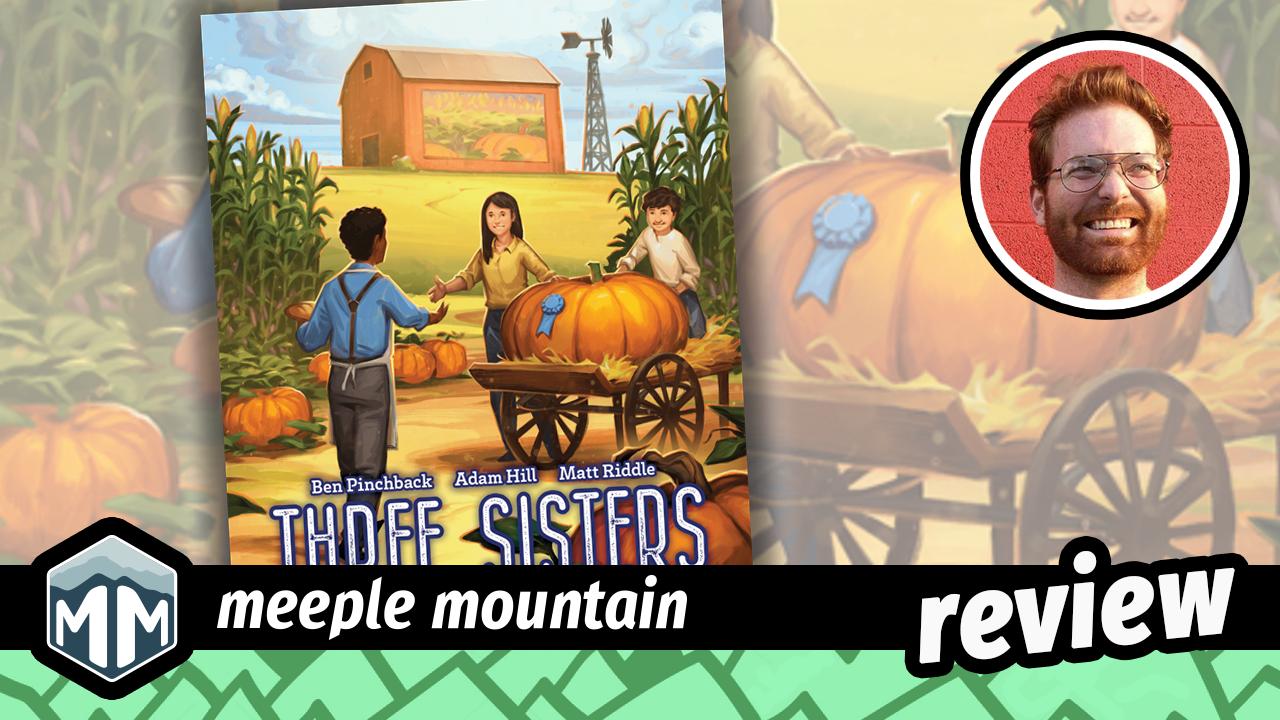
Three Sisters Harvest Edition Review

I love farming games. I grew up working on farms, and there is a special kind of bucolic pleasure that comes from tilling the earth without actually having to till the earth. Farming and gardening are actually very difficult, and as my graveyard of houseplants can attest, it’s best if this aspect of my life is kept in the realm of fantasy.

Three Sisters: Harvest Edition is a re-release of the roll-and-write game Three Sisters, where you manage a little farm and grow various vegetables and fruits. It’s charming and well-executed, though it is still essentially a game where you check things off on a pad of paper, so if that’s not your jam, it’s not going to blow your hair back.

Checkboxes: this time, with plants

Three Sisters comes out the gate strong. This isn’t a roll-and-write for the weak-wristed. There are two notepads for you to scribble on. One features a large garden area with a whole bunch of boxes, while the other has your orchard/shed area, which houses upgrades and special powerups (AKA berries and trees).

Each round, all of the dice are rolled and placed in same-numbered groups, starting from a wooden pawn and going around the spaces of a circular track that I won’t call a rondel because it’s just a circular track…

The post Three Sisters Harvest Edition Review appeared first on Meeple Mountain.

Restoration Games to revive Chaos in the Old World as Games Workshop eyes shared universe for reimagined classics

06. November 2026 um 11:10

Restoration Games has struck a multi-year licensing deal with Games Workshop to revive the long out-of-print Chaos in the Old World and two other discontinued titles – with all three being “reimagined” in a universe Games Workshop is building around its classic Talisman board game.

The agreement will see Restoration revive Eric Lang’s highly sought-after 2009 design alongside Space Hulk: Death Angel and Warrior Knights, almost a decade after the games disappeared from Fantasy Flight Games’ catalogue due to the end of its long-running licensing partnership with Games Workshop.

All three games will be reimagined within Gravemarch, a new fantasy world Restoration is developing for Games Workshop’s Talisman Realm brand – replacing the original Warhammer Fantasy and Warhammer 40,000 settings of the first two titles.

The deal forms part of Games Workshop’s wider plans for Talisman Realm, launched last year to expand the fantasy world of its 1983 Talisman board game to encompass reimagined versions of other titles from its back catalogue.

Games Workshop’s 1987 release Chainsaw Warrior

Fury of Dracula, Curse of the Mummy’s Tomb and Chainsaw Warrior have all been named by Games Workshop as being part of the initiative, which the company hopes will serve as an interconnected universe for its classic titles.

The first game to return under the new agreement will be Chaos in the Old World, with original designer Eric Lang returning to work on the new edition alongside Restoration’s design team.

The game has maintained a strong following despite being out of print since 2017, and currently sits among BoardGameGeek’s 250 highest-ranked games.

Secondhand copies continue to command substantial prices, with BoardGameGeek’s GeekMarket recording several selling for between $200 and $350 this year.

Lang said, “I think Chaos in the Old World is my most requested reprint from the most dedicated fans. Restoration is the perfect match to bring this game into 2026. I started this project excited, now I’m beyond thrilled.”

The new version, titled Devastation in the Dread World, will retain the original’s asymmetric factions and area-control gameplay while introducing changes including scenario-based play in place of random events.

Restoration plans to launch the game through crowdfunding in the first quarter of 2027, with a retail release to follow.

Two further titles are provisionally scheduled for 2028: Dungeons of Gravemarch: The Card Game, based on Corey Konieczka’s 2010 co-operative game Space Hulk: Death Angel, and Warrior Knights, which was originally published by Games Workshop in 1985 before receiving a revised Fantasy Flight edition in 2006.

The agreement revives part of a catalogue left dormant following the end of Fantasy Flight Games’ eight-year licensing partnership with Games Workshop, which saw FFG cease selling those titles in early 2017.

That split affected a substantial range of board games, card games and roleplaying products, including Forbidden Stars, Warhammer 40,000: Conquest and Blood Bowl: Team Manager.

Several of those titles have since returned through other publishers, including Fury of Dracula, which received a new edition from WizKids in 2018. Talisman itself was relaunched by Games Workshop shortly after the Fantasy Flight split, before Pegasus Spiele published the revised fourth edition in 2019 and Hasbro’s Avalon Hill released a fifth edition in 2024.

Samuel Bailey’s highly regarded Forbidden Stars has also been recently reworked under a different IP, with Chaosium raising almost $770,000 from nearly 3,000 backers through a crowdfund for Call of Cthulhu: Old Ones Origins last month.

Restoration Games has built its business around securing rights to discontinued games and bringing updated versions back to market, with previous high-profile successes including Return to Dark Tower and Thunder Road: Vendetta.

Its recent The Lord of the Rings: The King’s Gambit crowdfunding campaign raised $2.58m from 8,325 backers for a reworking of the long out-of-print Star Wars: The Queen’s Gambit, replacing the original Star Wars IP with another major entertainment licence.

The multi-year deal with Games Workshop also allows for the possibility of Restoration developing further titles within Gravemarch or other Talisman Realm settings, although no additional projects have been confirmed.

The post Restoration Games to revive Chaos in the Old World as Games Workshop eyes shared universe for reimagined classics first appeared on .

GAMA moves quickly to name Foam Brain Games boss Andrew Zorowitz acting executive director after sudden Prickett exit

05. November 2026 um 15:14

Editor’s note: GAMA is one of the sponsors of the BoardGameWire newsletter and an advertiser on the site.

Hobby games trade body GAMA has moved swiftly to appoint Foam Brain Games boss Andrew Zorowitz as acting executive director, just nine days after interim head Melinda Prickett revealed she was leaving the organisation.

Zorowitz’s appointment came in the wake of a “rapid response meeting” called by GAMA’s board on October 26 after it learned of Prickett’s impending departure – which left the association facing another unexpected leadership change amid its ongoing struggle to appoint a permanent executive director.

GAMA said Zorowitz will take on the role for six months, overseeing day-to-day operations and preparations for both GAMA Expo and Origins Game Fair while the organisation’s board continues its search for a permanent executive director.

His appointment marks a departure from GAMA’s approach to executive leadership over almost two decades, during which its two long-serving executive directors, John Ward and John Stacy, and more recent interim heads Prickett and Zaria Davis all had backgrounds outside the tabletop games industry.

Zorowitz, by contrast, is an active industry professional who has run tabletop accessories business Foam Brain Games full-time since 2010. The company is a GAMA member and regular exhibitor at its conventions, and has financially supported its events, including sponsoring the Origins Trade Day programme earlier this year.

He has also been closely involved in GAMA’s events for several years, contributing to educational programming at both GAMA Expo and Origins, and serving on the GAMA Expo Site Selection Committee which helped decide on the trade show’s move to Baltimore.

GAMA said Zorowitz would step away from many of his responsibilities at Foam Brain Games during his tenure, although it has not specified which duties he will retain or what arrangements, if any, will govern potential conflicts between his two roles.

The organisation’s elected board is responsible for selecting the executive director, rather than the appointment being determined through a vote of GAMA’s wider membership.

GAMA has not said whether Zorowitz was selected through a competitive process, whether he will be eligible for the permanent position, or whether his six-month appointment could be extended.

Zorowitz’s term as acting executive director is currently due to end in early May 2027, after GAMA Expo’s debut show in its new Baltimore home, but before Origins Game Fair takes place in June.

His appointment came two days before Prickett’s scheduled departure on November 6 – less than 14 months after she joined GAMA as its first chief operating officer, and just under six months after she stepped up to become interim executive director.

GAMA’s former interim executive director and COO Melinda Prickett

She had emerged as a key figure in stabilising GAMA’s operations and finances following the resignation of long-serving executive director John Stacy last year, and was understood by BoardGameWire to be under strong consideration for the permanent executive director position.

Zorowitz’s arrival means GAMA has now had four people leading its executive operations in the space of a year, following Stacy’s departure, the appointment of leadership consultant Zaria Davis as interim executive director in November, and Prickett’s subsequent assumption of the role in May. GAMA initially said it expected to find a permanent replacement for Stacy by spring 2026.

GAMA board president Meredith Placko and secretary Tiffany Reid told BoardGameWire last week that the board was working through a short list of people to bring in a new interim executive director “very soon”, adding that the goal was to “make sure GAMA Expo and Origins are a success, and the overall day to day running of the organization is met”.

They added that the board had also interviewed “a strong candidate” for the permanent position and had been in negotiations with them, but said that “ultimately it did not work out”.

“Because of that we will need to begin the search again”, they said, adding that the board was seeking RFPs from firms specialising in hiring executives in the trade association and member organization sectors.

The pair said at the time that they could not comment on why Prickett’s notice period was so short, or whether she had been a formal candidate for the permanent executive director role.

Zorowitz’s appointment comes at a particularly important time for GAMA’s two major conventions.

The organisation’s professional trade show, GAMA Expo, has experienced rapid growth in recent years and is in the midst of preparations for its first show in a larger venue in Baltimore after three years in Louisville, Kentucky.

Origins Game Fair, which is set to return to Columbus in June, has struggled to recover its pre-pandemic attendance, however, with visitor numbers falling 2.5% this year to 18,700 – the show’s first annual decline since Covid-19, and still below its 2019 record of 20,642.

That event could face further pressure next year from the launch of PAX Unplugged Houston, a new tabletop gaming convention scheduled to take place just 12 days after Origins, which could potentially force publishers and exhibitors to choose between the two shows.

Zorowitz said of his new role, “I’m excited to work with the GAMA team and support two shows that have been an important part of my own experience in this industry.

“GAMA Expo and Origins both mean a lot to me, and I know they mean equally as much to our members. I’m looking forward to helping make GAMA Expo’s move to Baltimore a success, prepare for Origins and support a strong transition when a full-time executive director is hired.

“I’ve had the pleasure of working with many of the fantastic GAMA staff members over the past several years, and I am excited to help lead them as the board looks for a new permanent executive director.

“I think Melinda and the board have built a great foundation of what this organization should strive to be, and I am glad I get to continue to help keep the ship moving forward steadily in the interim.”

GAMA’s latest leadership shake-up on the executive side also follows a period of significant change for the organisation’s elected board.

Former president Nicole Brady lost her re-election bid in April to publisher representative Meredith Placko, who had previously served as GAMA vice president.

Ross Thompson, who was elected as vice president following Placko’s elevation to president, has now also resigned from the board after just over six months in the position.

Thompson only joined GAMA’s board in October last year, winning a special election to replace former secretary Monica Rasso, who had stepped down after five years as a director.

His resignation means the organisation will now hold its second special election for the same Media & Events board seat in little more than a year.

The post GAMA moves quickly to name Foam Brain Games boss Andrew Zorowitz acting executive director after sudden Prickett exit first appeared on .

Gold Country Game Review

Gold Country, the latest Reiner Knizia resurrection from publisher Bitewing Games, looks like it should come with prospector costumes. To pull it off the shelf for the first time is to expect dirt under your nails and spit in your spittoon. It presents as a game for salt of the earth types, for those with a history of good, honest blue collar work.

The reality is quite different. Gold Country’s collar is as white as it gets. This is a stocks game, perfect for the MBA candidate in your life. It’s all about buying low, selling high, and churning out dividends. It’s about shorting the market to your benefit. This humble, enjoyable, forty-minute experience would make a great warm-up, filler, or cool-down for the people in your life who make Excel spreadsheets for 18XX games.

The real miracle is that this is a stock game just about anyone—and I do mean anyone—would be happy to play. It may be the most approachable stock game in the history of the medium.

A game board sits in the middle of a table. It is covered in hexes, which themselves are covered with tiles of various valuations.

Mine Every Mountain

The titular gold in that titular country is harvested from four mines, each…

The post Gold Country Game Review appeared first on Meeple Mountain.

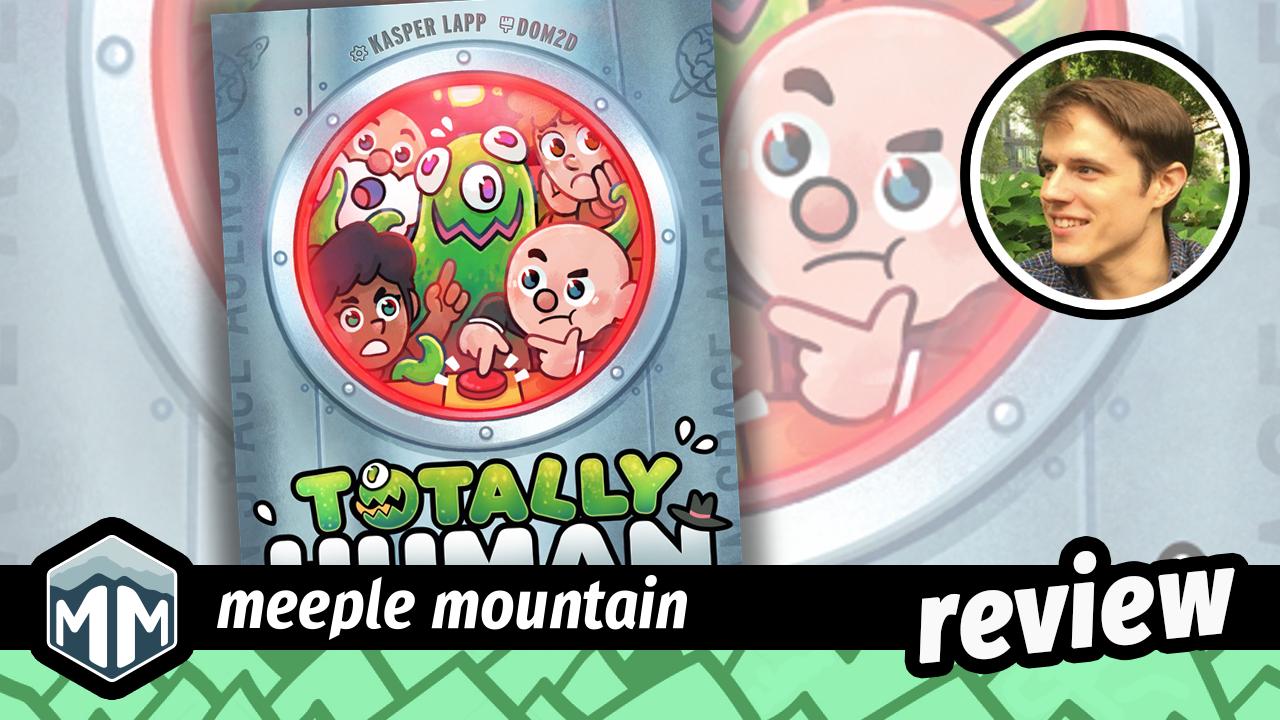
Totally Human Game Review

Totally Human, from designer Kasper Lapp and publisher Bitewing Games, is a bit of an odd one. The idea draws from the same well as A Fake Artist Goes to New York and The Chameleon, social deduction games that use a secondary activity to make people try to blend in or suss one another out. A Fake Artist has everyone add one line to a shared drawing, but the faker doesn’t know what the drawing is. The Chameleon uses a word game to similar effect. The first smart choice for both was the decision to center their games around activities that are already fun on their own. People love collaborative drawings and word association. For its central activity, Totally Human employs everyone’s favorite style of exam, the multiple choice question.

At the beginning of the game, which lasts a breezy 10-20 minutes at most, everyone is dealt three cards. For most players, these cards will be irrelevant. They only matter to you if you receive one or more of the cards that designate you as an alien. Once everyone has had a moment to look at their cards, the first of three multiple choice questions is revealed to the table. The questions themselves are benign, broad, uninteresting in the way that these sorts of games’s questions often are: “What…

The post Totally Human Game Review appeared first on Meeple Mountain.

Despite global hits, Japan’s board game industry faces overseas publishing skills shortage, Arclight warns – and leads government-backed drive to tackle it

04. November 2026 um 18:06

Japanese board game heavyweight Arclight has warned that the country’s tabletop industry faces a shortage of specialists capable of developing internationally competitive games and securing overseas publishing deals, despite a string of existing global successes – and is leading a government-backed initiative to tackle the problem.

Arclight, a major publisher and distributor of games across Japan and organiser of the country’s biggest tabletop gaming convention, is heading up a two-year programme to train Japanese creators in international game development, licensing and commercial expansion.

About 20 creators are set to be recruited through the Japan Tabletop Advancement Network, which Arclight is running alongside board game publisher and café operator Pizzicato Design and specialist Japanese hobby retailer Yellow Submarine.

Arclight said that while overseas demand for Japanese board games and international licensing opportunities had been growing rapidly, the country’s domestic industry remained heavily reliant on “individual passion and doujin activities,” and faces a structural challenge of lacking “core specialists” capable of developing intellectual property “to international standards” and successfully expanding overseas.

The warning comes despite a string of breakout successes for Japanese publishers and designers, including several titles which have sold hundreds of thousands or even millions of copies worldwide.

Arclight itself revealed in July that its co-operative card game Ito from Mitsuru Nakamura had surpassed one million copies sold across Japan and overseas, with the series now available in 11 languages.

Ito – Photo Credit: Arclight Games

Fellow Japanese publisher Oink Games has also established a significant presence in European and North American markets in recent years through successful releases including Deep Sea Adventure, Scout and A Fake Artist Goes to New York.

Oink revealed to BoardGameWire in 2024 that Deep Sea Adventure had passed 300,000 copies printed, while its Spiel des Jahres-nominated Scout managed to secure a dedicated edition for US retail giant Target the same year.

Other Japanese publishers to have built substantial international success include Kyoto-based Saashi & Saashi, which told Japanese outlet 4Gamer in 2022 that overseas sales accounted for about 70% of its business.

Japanese designs have also become major global hits through international licensing deals – most famously Seiji Kanai’s Love Letter, which had sold more than three million copies worldwide by 2022, and Machi Koro, which passed one million copies sold by 2021.

Those two games were among international successes helped by Japon Brand, the long-running collective established to introduce Japanese tabletop designs to overseas publishers.

Japanese version of Love Letter, published by Arclight Games

Board game giant Asmodee acquired Japon Brand from CMON earlier this year as part of a renewed push into the Japanese market, incorporating the collective into a new studio called Nekuma to identify promising Japanese designs for international release.

J-TAN is scheduled to run from February 2027 until March 2029, combining domestic training and game development with up to four overseas industry placements over the two years.

Arclight said participants will receive mentoring in international market trends, publishing and business development, alongside opportunities to present their designs to overseas publishers, obtain feedback and establish industry contacts.

The provisional programme lists potential training destinations including Spiel Essen, UK Games Expo, Gen Con and GAMA Expo, although the organisers have stressed that the final destinations are yet to be determined.

Domestic training will include four sessions a year in Tokyo, covering overseas publishing and the development of internationally competitive games, with participants also receiving practical playtesting support.

Participants will be able to attend the training and overseas placements free of charge, including travel costs, although places on individual international trips may be limited. Both independent creators and people already employed by game companies are eligible, while applicants will retain the rights to their existing designs.

The programme is being supported financially by Japan’s Creator Support Fund, established within the government-funded Japan Arts Council to support the development of creative talent and the infrastructure underpinning the country’s cultural industries.

Arclight was acquired by entertainment conglomerate Kadokawa in April 2024, with international expansion and the development of new intellectual property already identified as priorities for the business.

The deal brought Arclight into the same stable as video game maker FromSoftware, famous for hit titles including Elden Ring, Bloodborne and the Dark Souls series. Kadokawa, which has a stock market valuation of about $3.4bn, also has extensive interests in book and manga publishing, film and anime, and specialises in developing intellectual property across multiple media.

Arclight also runs Game Market, Japan’s biggest tabletop gaming convention, which attracted 32,000 visits across two days in October this year, with a record 1,425 exhibition booths.

J-TAN’s organisers have not specified how much government funding has been allocated to the initiative, or set numerical targets for overseas licensing agreements or sales totals.

Applications for the first cohort close on November 30, with successful candidates due to be announced in late January 2027.

The post Despite global hits, Japan’s board game industry faces overseas publishing skills shortage, Arclight warns – and leads government-backed drive to tackle it first appeared on .

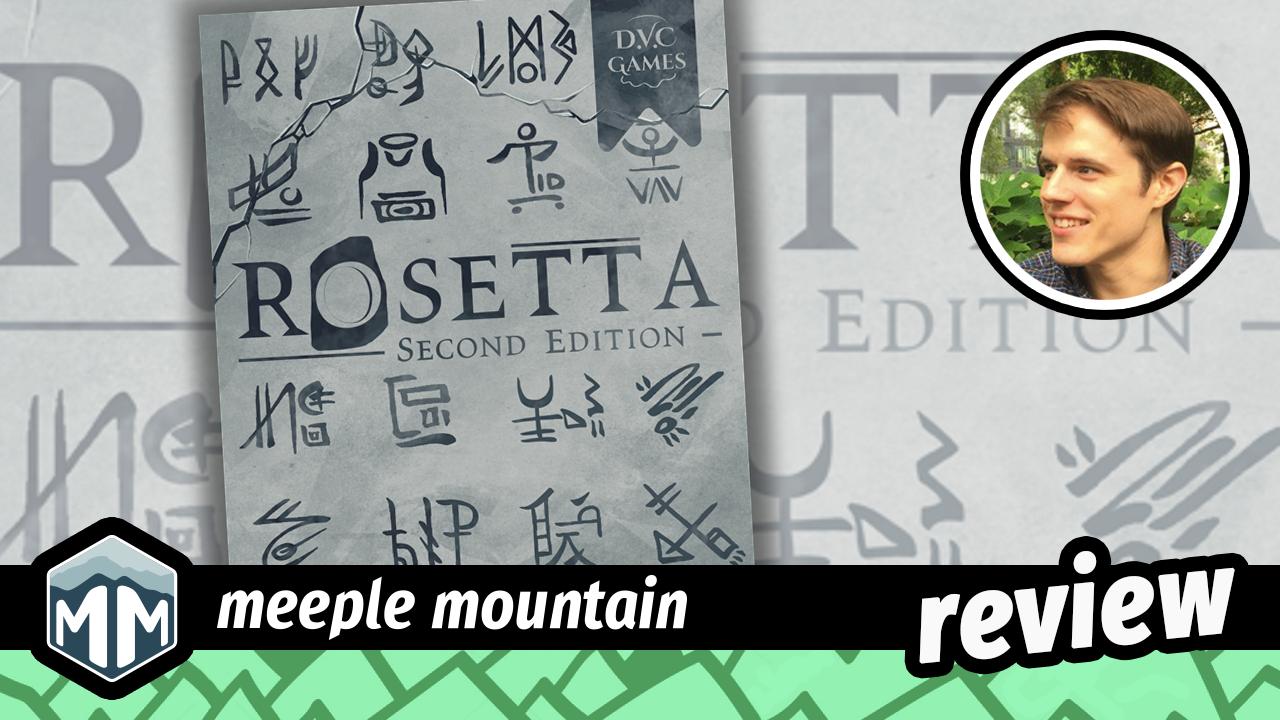
Rosetta: Second Edition Game Review

I’m an easy mark for Rosetta, publisher DVC’s entry in the spontaneous language creation subgenre. It tickles the same part of my brain as Gibberers, which is a brilliant and singular experience, but Rosetta is much more approachable. Gibberers is a game in which you create a language and speak only in that language. It demands a good deal of time and the space for a tremendous cognitive load. Rosetta is significantly faster, and, rather than create and speak a new language, you work together to decode a logographic writing system for a language you never once have to speak.

One player takes on the role of the Author, the voice—albeit a mute one—of the lost civilization with which this writing system originated. They draw a random Inscription and Location, and set both out on the table for all to see. The Location is there for inspiration and to provide a little bit of context and grounding. The Author secretly picks a meaning for the Inscription associated with what they see in the landscape. You can’t pick something that is visible on the Location card, though it’s best to choose something directly related to what you see. A field of wheat may lead the Author to choose “farmer.” A snowy mountain might suggest “avalanche.”

At this point, everyone…

The post Rosetta: Second Edition Game Review appeared first on Meeple Mountain.

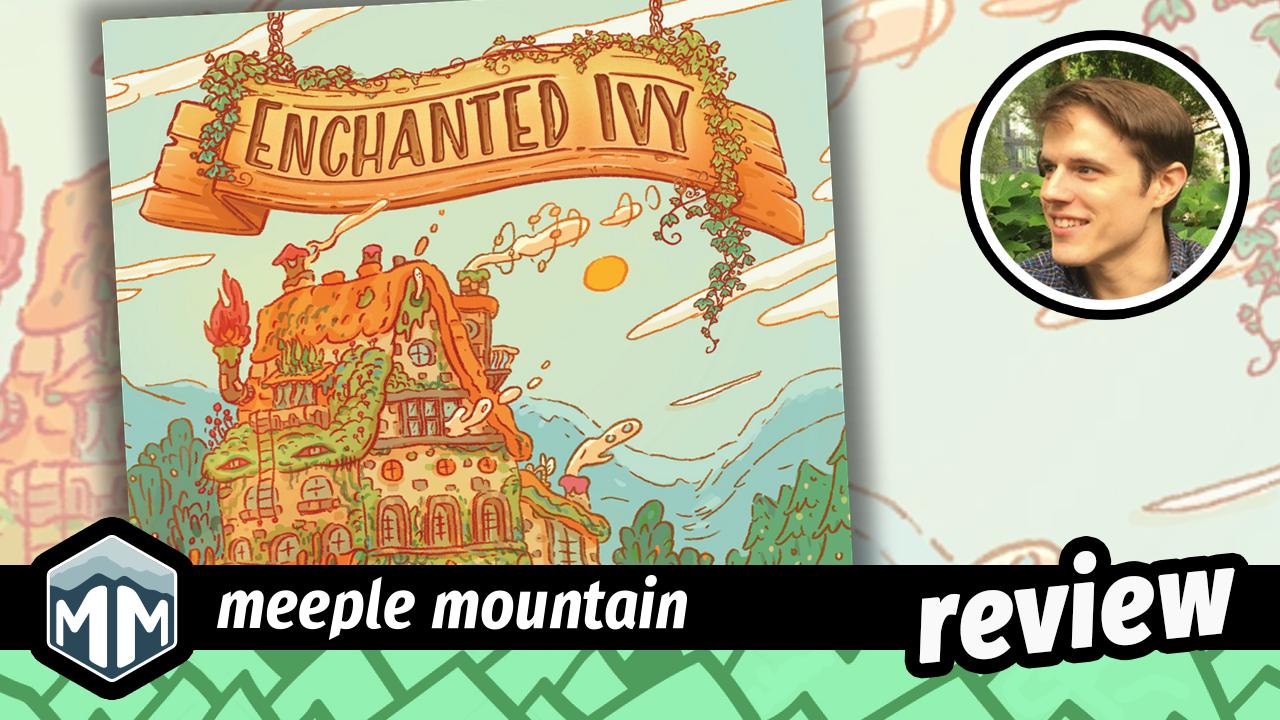
Enchanted Ivy Game Review

It isn’t often that a puzzle game succeeds in evoking a strong sense of place. Place is the main thing Enchanted Ivy, a solo game from designer Sarah Joshua and publisher Allplay, has going for it. That is no small compliment. To sit down for a session of this spatial puzzle is to feel the sunshine in the clearing, to hear the chatter of guests coming and going. It’s an easy game to get lost in.

Every session, whether playing a standalone game or digging into the charming campaign, you must build your inn, accommodating guests as you go. Draw two cards and place them however you wish, so long as they are contiguous with everything you’ve played so far and they don’t break the pre-determined boundaries of your inn for that game. The vine pattern on each side of each card is identical; the only difference is that one side has a window and the other doesn’t. Each turn, you place one card window-side-up. Into the room upon which that window opens, you must place one of two guests.

These guests are both the ludographic and spiritual heart of Enchanted Ivy. They elevate what would be an enjoyable but somewhat dry exercise into a poignant and individual experience. Their room preferences drive the bulk of the decisions you…

The post Enchanted Ivy Game Review appeared first on Meeple Mountain.

Space-Cast! #61. Perished & Published

03. November 2026 um 19:34

Wee Aquinas has agreed to a documentary about his life. His life in Machu Picchu. He doesn't really know what a documentary is.

Wiñay Kawsay isn’t your usual board game about history. For one thing, it’s actually about history — not just a historical topic, but the craft of history, from the biases and egos of historians to the damage done to archaeological sites whenever artifacts are removed from the soil. Today, we’re joined by Alison Collins to discuss the making of her game, what history can and should be, and what it’s like to explore Machu Picchu.

Listen here or download here. Timestamps can be found after the jump.

TIMESTAMPS

00:55 — introducing Alison Collins and Wiñay Kawsay
9:16 — visiting Machu Picchu
19:25 — making a medium-weight game about history
32:05 — demonstrating historical malpractice in a board game
38:47 — three types of historian
51:02 — the meaning of wiñay kawsay
59:40 — historical consultancy


(If what I’m doing at Space-Biff! is valuable to you in some way, please consider dropping by my Patreon campaign or Ko-fi. Right now, my third-quarter newsletter is open to all.)

💾

SPIEL Essen defends security measures after six thefts during setup and dismantling, including €14,000 publisher loss

03. November 2026 um 15:33

Security arrangements at the world’s biggest board game fair have come under scrutiny after six thefts were reported during setup and dismantling at this year’s Spiel Essen – including €14,000 of stock and equipment being stolen from a publisher overnight.

Show organiser Merz Verlag told BoardGameWire all six incidents are believed to have occurred when access to the exhibition halls was restricted, despite Messe Essen venue security being in place throughout those periods.

The thefts have prompted complaints from affected businesses about security at Spiel Essen and the assistance they received – while Merz Verlag has stressed that exhibitors are responsible for protecting their own property, even outside public opening hours.

French tabletop games company Tossit was among the worst affected exhibitors this year, claiming that about €14,000 of merchandise, equipment and tools disappeared from its stand in Hall 6 overnight following the convention’s final day.

Company co-founder Gaëtan Ekszterowicz said in a LinkedIn post that his team left the stand at around 10.45pm on Sunday, October 25, intending to finish dismantling the following morning – but returned at 8am to discover more than 500 units of merchandise and other equipment had disappeared.

That included tools stored inside the stand furniture, leaving the company without even the equipment needed to complete dismantling its booth.

Ekszterowicz estimated that removing the stolen goods would have taken at least 35 to 45 minutes, raising questions about how such a large quantity of merchandise could have been removed from an exhibition hall overnight.

Another exhibitor, tabletop accessories seller The Rolling Inn, said €4,000 in cash – representing its entire convention takings – was stolen during dismantling on Sunday evening.

A third theft was reported by Julian Hill of board game media outlet Boxed Meeples, who said on Instagram that his bag was taken from the Paverson Games stand during a team meeting on Wednesday October 21, the day before SPIEL opened to the public.

Hill said the bag contained money, payment cards, camera and sound recording equipment, as well as recordings of interviews he had already conducted at the convention.

The Paverson Games booth, left, in Hall 4 of Spiel Essen 2026

Spiel Essen’s organisers have also been criticised by Tossit’s Ekszterowicz and The Rolling Inn for their response to the thefts.

Ekszterowicz claimed representatives of SPIEL Essen and Messe Essen laughed at its team and failed to take their complaints seriously – as well as alleging that a member of staff attempted to grab a phone from his company’s marketing manager during an exchange about the incident.

“No representative of Merz Verlag laughed at members of Tossit’s team or grabbed a phone,” a Merz Verlag spokesperson told BoardGameWire.

They said, “Tossit wanted to film an exchange between them, Messe Essen and Merz Verlag which members of Messe Essen denied due to them not wanted to be taped, referring to personal rights.”

Asked about allegations from Tossit and The Rolling Inn that they received little or no assistance, the spokesperson said, “The team of SPIEL Essen takes every reported theft seriously and helps in the best of our abilities and in making contact to the police.

“Our team was also on site and talked with exhibitors. At the moment we are collecting information to may be able to help further.”

Merz Verlag said police had been informed of the incidents, and that it was cooperating with investigations.

The spokesperson added, “In total six thefts were reported to us this year, ranging from tablecloths, to some cases of games, to cash and equipment, the examples you mention already included. 

“To our knowledge these cases took place during set-up or dismantling. In 2025 fewer incidents have been reported, none in the scale we see with Tossit. “

Merz Verlag said venue operator Messe Essen provided security throughout setup and dismantling, with access restricted to exhibitors, people holding setup and dismantling passes, event staff and security personnel.

It added that exhibitors were regularly reminded that they were responsible for protecting their own property, and could pay for dedicated guards to secure their stands outside public opening hours.

Ekszterowicz said in his LinkedIn post, “I don’t expect organizers to prevent every theft. But at the very least, I expect them to take this kind of situation seriously and have cameras installed inside the entrance halls. The complete absence of surveillance cameras is also shocking.”

The Merz Verlag spokesperson confirmed to BoardGameWire that no CCTV was covering the booths which suffered thefts.

Wargamer also received a response from Tom Kraayvanger, the press leader at Spiel Essen venue operator Messe Essen, who said the venue operator was taking into account “data protection requirements and the privacy rights of the many people present on the exhibition grounds during an event and its set-up and dismantling phases”.

He said: “When large numbers of people are moving goods, material and equipment at the same time, camera footage does not make it possible to distinguish between the legitimate removal of items and their unauthorized removal”, adding that “comprehensive video surveillance could not guarantee complete protection against theft”.

The incidents also follow a series of reported thefts at SPIEL stretching back at least a decade – including more than $20,000 in combined losses reported by six publishers in 2018, when affected companies called for improvements to security.

Japanime Games, Artipia Games, Folded Space, Gotha Games, Greenbrier Games and Hub Games reported cash, games and personal belongings were stolen during the convention that year, with Japanime alone claiming losses of more than $10,000, according to contemporaneous reporting by BoardGameGeek. The affected publishers subsequently launched fundraising efforts to help compensate for their losses.

Two years earlier Greek publisher LudiCreations had about €3,500 stolen from its cash box during Spiel Essen, prompting it to create and launch Steal This Game on Kickstarter to help recover its losses. R&R Games also reported a cash-box theft at that year’s convention.

More recently, thefts have been reported since 2023 by Thailand-based Hexa House, game marketing studio DinaSaidSo and Pillars of Heracles designer Tamàs Olàh – the latter of whom said about $400 of painted miniatures were stolen at Spiel Essen while unattended overnight.

Asked whether the latest incidents would prompt changes to security arrangements for SPIEL Essen 2027, Merz Verlag said it was still evaluating the situation.

“We are gathering information and evaluate the situation,” the spokesperson said. “At this early stage we cannot say anything regarding future arrangements.”

Spiel Essen broke its visitor record for the fourth consecutive year at its 2026 event by hitting a record 230,000 attendance – with publishers reporting bumper sales despite increasingly fierce competition for attention from more than 2,000 new releases.

The world’s largest board game fair once again sold out all four days this year, drawing 10,000 more visitors than in 2025 after expanding into an eighth exhibition hall and taking over the entirety of the Messe Essen exhibition centre – its home for over 40 years – for the first time.

But that ability to squeeze in larger and larger crowds has now reached its limit, Merz Verlag managing director Carol Rapp confirmed to BoardGameWire, with any further growth set to come via new events and experiences rather than increased attendance or exhibition space.

SPIEL Essen 2027 is scheduled to take place from October 21 to 24.

The post SPIEL Essen defends security measures after six thefts during setup and dismantling, including €14,000 publisher loss first appeared on .

Railways of the Lost Atlas: Landmarks of the Lost Atlas Game Review

I’m tailor-made to enjoy “weeknight” 18xx-style economic route building games.

I heaped praise on the game Railways of the Lost Atlas in my 2024 review, with the (at the time) new publisher Asterisk Games doing yeoman’s work with a system some people think of as stodgy, tired, and certainly bland-looking. “ROTLA”, as it is known here at home, is one of the best-looking productions in my collection and comes with a heaping amount of variety thanks to its flexible player count, short and long-form play format, and a hex map that is literally built by the players each time the game hits the table.

If you haven’t heard of Railways of the Lost Atlas, please read my previous review. When the game’s first expansion, Landmarks of the Lost Atlas, was announced, I didn’t even reach out for a review copy…I ponied up the cash to get the expansion along with updated versions of the game’s base rules and a solo mode rulebook, developed after the release of the base game.

If you liked Railways of the Lost Atlas, you have already backed and are working through the goodies in Landmarks of the Lost Atlas. And if you have not tried either, my feelings haven’t changed: for anyone who loves a good Euro and wants to wade into…

The post Railways of the Lost Atlas: Landmarks of the Lost Atlas Game Review appeared first on Meeple Mountain.

Jingle Bell Roll Game Review

Here’s my early assessment of the Chris Couch Games catalog: comfy.

Jingle Bell Roll is the second game I’ve reviewed from Chris Couch, after my foray into the garden with Garden Club a few weeks ago. Jingle Bell Roll is holiday Yahtzee, both in terms of feel and in terms of its ruleset, as players try to score the most points across five rounds by using sets of gingerbread cookies, milk, gifts, bells, holiday wishlists and stockings to put together winning rolls.

Designed by Marcus Ross—a co-designer of the 2023 Ravensburger title The Lord of the Rings Adventure Book Game—Jingle Bell Roll is so cozy that the word “cozy” is used in the BGG description of the game. Across plays with my family and with my “review crew”, Jingle Bell Roll announces itself as a light, friendly filler right away.

Each player is given a cute, well-illustrated character card with a once-per-round power. When one player scores gift rolls, other players get bonus action cards. Players who roll exactly two Santa’s List faces can score seven points…because “he’s making a list, and checking it twice”, as the song goes. There are so many ways to generate rerolls in this game that it’s surprising how…

The post Jingle Bell Roll Game Review appeared first on Meeple Mountain.

Anthropic cracks down on AI game cloning as risk of unauthorised digital copies, reskins grows

03. November 2026 um 12:27

AI giant Anthropic has introduced new restrictions which attempt to stop its Claude coding software from recreating existing games, amid generative AI providing the capability to quickly spin up unauthorised digital clones and reskins.

The changes were spotted in Claude Code’s instructions around October 27, with two new sentences telling the software: “Do build original games, games in a genre, and games from the user’s own designs and assets”, and “Don’t build a recreation of a specific existing game, even if it is renamed or called original”.

Anthropic technical staff member Addy Osmani confirmed the changes in a post on X, saying the company had introduced the restrictions because using Claude to infringe intellectual property rights was already against its usage policy.

Board games are vulnerable to AI-generated imitations because their underlying gameplay mechanics generally cannot be protected by copyright – while generative AI also makes it easier to reproduce those systems digitally, and create alternative imagery and text without directly copying the original game’s protected material.

The potential danger to tabletop publishers was highlighted last year when US software development company Sembit used Claude Code to produce a browser-based version of Catan within four minutes – although that rapidly-assembled version suffered from significant bugs and some non-functioning gameplay features.

Unauthorised online versions of board games are not a new phenomenon, with publishers having faced challenges controlling digital recreations of their titles long before AI coding tools became widely available. But generative AI potentially makes such recreations much easier to produce, lowering the technical expertise, time and cost needed to turn an existing tabletop game into a playable digital version.

Colonist.io, which was launched in 2017 as Katan.io before rebranding in 2019, openly markets itself as a free alternative to Catan, closely reproducing the original game’s rules, gameplay and visual layout while using different artwork. The platform reported 60 million games played and 3.6 million active players across 2025.

Colonist.io states clearly on its website that it has no association with Catan, and argues that its game is legal under US law, citing guidance from the US Copyright Office that gameplay methods cannot be protected by copyright.

The Colonist.io homepage

A 2022 study published in the Iowa Law Review highlighted the Catan rights holders’ apparent decision not to pursue legal action against Colonist.io, contrasting it with an earlier incident in which an Android imitation called Island Settlers was withdrawn following a cease-and-desist notice from Catan’s lawyers in 2011.

Companies which have taken action against unauthorised digital adaptations include Disney, which prompted the closure of the unofficial Disney Lorcana simulator Pixelborn in 2024 over its use of the game’s protected card imagery. Pixelborn creator Pavel Kolev said more than 6.5 million games had been played on the platform before it was shut down.

Anthropic’s new intervention follows controversy over AI-generated video game clones, including cases where developers have withdrawn public demonstrations over concerns that their games could be copied before release.

The new restrictions have already affected attempts to recreate published tabletop games, including a Claude Code user who reported being refused help to build a private online version of an unnamed, commercially released co-op board game.

The user wanted to create a password-protected version allowing friends to play remotely, including one unable to attend in-person sessions, and to introduce AI-controlled players to study the game’s strategy.

Claude refused despite the user specifying that the adaptation would not be publicly distributed, instead offering to help develop an original game using similar co-op and limited-information mechanics.

A separate complaint came from wargame publisher Raymond Weiss, whose Conflict Simulations business has released around 30 tabletop titles since 2017- including three nominees for the Charles S Roberts Awards, one of the longest-running awards honouring conflict-focused tabletop games.

Weiss says he has been using AI-assisted coding to create unlicensed digital versions of other publishers’ wargames for paying customers, calling them private, “personalized builds” for people he says already own the physical version of games which do not already have a digital adaptation. He charges between $400 and $800 per project, according to his website.

He reported on GitHub that Claude Code had begun refusing to continue work on adaptations it previously supported, although he acknowledged that he did not hold licences from the publishers whose games were being adapted.

The restrictions are, of course, limited to Anthropic’s own software. In a November 2 blog post, Weiss said he had already resumed the work interrupted by Claude’s refusals using rival AI coding tools OpenAI Codex and Kimi.

The post Anthropic cracks down on AI game cloning as risk of unauthorised digital copies, reskins grows first appeared on .

❌