Normale Ansicht

Pandasaurus makes significant cut to SPIEL Essen booth size, says lower-cost shift to EPN delivers similar sales volume

22. September 2026 um 23:22

Pandasaurus Games has heavily downsized its Spiel Essen booth this year, after finding it can still sell similar numbers of its hit games through Asmodee arm EPN while slashing its overheads and logistical workload.

The US publisher has shifted to using European Player Network, Asmodee‘s specialist English-language sales and distribution operation in the region, to handle its stock and sales at the giant German show – removing the need for Pandasaurus to transport and store hundreds of games, staff its own retail operation and devote much of its booth to selling them.

Pandasaurus had run substantial booths at Spiel – the world’s biggest board game fair – for several years following the Covid-19 pandemic, but told BoardGameWire its experience using EPN last year persuaded it to heavily scale back its own footprint for the 2026 show in October.

CEO Nathan McNair said Pandasaurus previously spent more than €50,000 ($57,000) attending Spiel with its larger setup, compared to between $20,000 and $25,000 under its current model.

He said games Pandasaurus expects to be hits still sell similar numbers of copies – typically 300 to 500 – under the new setup – although added that Pandasaurus now receives roughly half as much revenue per sale.

“The revenue is lower because obviously EPN will get a portion of the proceeds, but our cost is so much lower that the overall cost to revenue ratio is very similar,” McNair said.

This year EPN will handle the company’s stock and sales operation and host three Pandasaurus demo tables within its booth, while the publisher’s own, smaller stand will be focused largely on meeting space and additional demos of upcoming games.

Titles being shown off by Pandasaurus this year include Alex Cutler design Sandcastles, Machi Koro: Life from Masao Suganuma and embroidery-focused card game Fadenfroh from Jordy Adan and Alexander Pfister.

Pandasaurus’ previous large booth at Spiel Essen

McNair said, “The show is very expensive to get to and logistically trying to run a large booth half a world away is a lot. Running a show like GenCon is already a lot – but finding booth staff for the show when we need to staff 20 or more demo tables, stock games, sell games, figure out how to legally import/pay VAT/collect cash/deposit the cash in the US bank or get a correct license to take credit cards in Europe is a logistical nightmare.

“So, what we found is a way to more economically attend the show, get some marketing done, sell games to players, make sure we are demoing games and getting the meetings we need without having to spend €50,000 or more on the show itself.

“Our cost to attend with this model is roughly 1/3rd as much overhead, and while we make less per order when a game is sold our sales are actually just as strong, so players are still getting the games they want – we come close enough to ‘breaking even’ and it’s just a lot less work for us.”

McNair said US publishers “typically have a smaller footprint in continental Europe than we like to think”, and questioned the need for some English-language publishers to operate such large stands at Spiel.

“A lot of us run booths but I find it a bit strange given our limited sales in the region that so many have large booths,” he said.

“Some of course do sell and distribute in German (or other languages) themselves so that makes more sense – but for English only US publishers continental Europe isn’t our core market.

“If you look at US trade shows for the most part the only European companies with booths tend to be those that sell themselves in the US.”

He added, “I don’t want to tell other folks how to run their business and I’m a big believer that the folks with larger booths probably know more about their situation than me – so they may have found that this is really effective for them.

“I would absolutely prefer this model – it’s just a lot less work – besides the money difference I mentioned has taken the workload of prep and running the show to a fraction of what it was to try and run a larger booth in Germany.”

Part of the European Player Network booth and demo space at Spiel Essen

Pandasaurus’ decision to cut back on the size of its booth comes as Spiel itself continues to move in the opposite direction – with an expansion into all eight main halls at the Messe Essen exhibition centre for the first time expected to see the event challenge its record 220,000 attendance set last year.

Spiel said earlier this year that it had reached the reached the limits of its expansion at its long-time home after boosting floor space to 81,200 sq m – larger than 15 American football fields – amid what it called “overwhelming interest” from exhibitors.

Merz Verlag said demand for the additional space was coming both from existing exhibitors wanting significantly larger stands and an unusually high number of first-time exhibitors, with all available stands booked before the April 30 registration deadline.

And Pandasaurus’ smaller presence does not mean it sees less value in attending, according to McNair.

He said, “For me I really like to focus on meetings, seeing friends, trying to check out some games and building awareness of the new titles at the show – and I think the setup we have works really well for just that at a much lower lift,” he said.

“Essen is a much more international show in a lot of ways than most other board game conventions, so we know there are fans there who want to check out our new games really badly and I want to make sure they can – but if I can do it in a way that is less work and less risk for us I prefer that strongly.”

Spiel Essen 2026 takes place at Messe Essen from October 22 to 25.

The post Pandasaurus makes significant cut to SPIEL Essen booth size, says lower-cost shift to EPN delivers similar sales volume first appeared on .


Gen Con 2026 – Tycoon Games, Smirk & Dagger Games, Snapship Tactics

22. September 2026 um 19:18
I enjoy the Tiny Epic line of games published by Gamelyn games. Now owned by Tycoon Games, I was excited to see more of my favorite in the line, Tiny Epic Dungeons. Tiny Epic Dungeons Adventures keeps the same lightweight … Continue reading

V6.17: Social sharing update

Von: eerko
22. September 2026 um 19:10

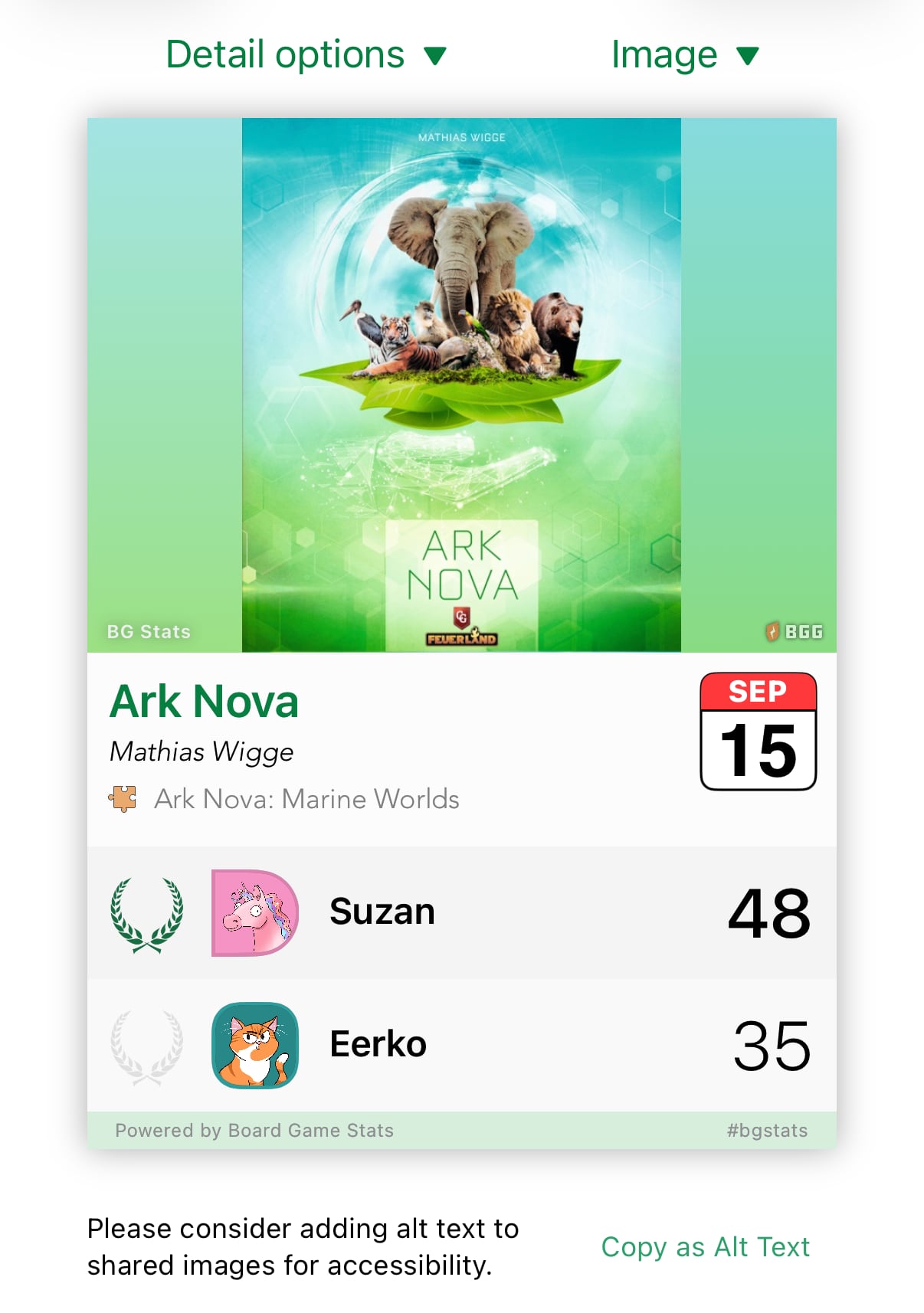
This version introduces a Play Overview Image, to share all your play details in one nice overview. Perfect for sharing via social media! The image can include played expansions, board/variants, players with roles and scores, and more. You chose!

It also contains an update of the 3×3 Image creator. You can now customize the layout with 1 to 12 columns or rows, set a border color, and choose a color for custom items yourself.

The Play Overview Image

To access the Play Overview Image, tap the Share button on a play’s overview screen.

We’ve cleaned up the menu that appears from this button, to offer clear choices for sharing to socials, and exporting the play. We’ve also made all sharing options work better with a wider range of apps.

Choose Play Overview Image from this menu to open the new view.

The old sharing option (previously called “Social Share…“) is now available via the Text and Image, Image only and Text only choices. When selecting Image only the sharing text is copied to the clipboard automatically.

Play Overview Image options

The Play Overview Image displays the image for the game, or one of your own play images of your choice. You can choose from two different styles of backgrounds.

Next to the game name, the date of play is displayed. All other data is optional: Designers, Expansions, Boards/Variants and Play duration can all be added to the view.

The bottom optionally list all players, or a summary of the number of players and best score. When listing the players, you can choose to show or hide the player names, avatars, and roles.

Configure the view to your liking with the Detail options and Image dropdowns. Settings are remembered for your next share!

You can read all details about this new screen on our new explanation page.

The updated 3×3 Image

We’ve updated the 3×3 Image screen with a cleaned-up layout and new options.

At the top you’ll find options to set the number of Columns and Rows for the grid, from 1 to 12. Next to that you’ll find the Badge dropdown.

At the bottom you’ll find other options. New, next to the Border size, is the Border color. This dropdown lets you choose between black, white, a random color, and a color you select yourself from the color picker.

Custom items you add to the grid and games without images have a new option as well: you can now select their background color from the color picker too!

You can read all about the 3×3 Image screen on our updated explanation page.

Designer Diary: How 'Sixty Below' Came to Be

Von: eilafju
22. September 2026 um 16:00

by Peter Prinz


... or: How to Spend Almost Six Years Developing a Game When All You Wanted Was to Improve a Prototype

Hi, I'd like to give you a little glimpse into how Sixty Below came to life.
In the second half of the 2010s, Alex Pfister established a group of Vienna-based game designers that met weekly at Café Sperlhof, a traditional gaming café in Vienna's 2nd district. Ideas were born there, prototypes were tested, games were torn apart, and sometimes even improved.


Cafe Sperlhof in 2019


Then came March 15, 2020.

With Austria's first nationwide COVID lockdown, the café closed its doors. And, as it later turned out, forever. So we had to improvise.
Alex Pfister, Wolfgang Warsch, Tino Jokic, and I quickly decided to move our regular meetings to my basement. For about two years, week after week, we tested, debated, discarded, improved, and started over again.

During that time, we created or completed, among other things, Cloud Age (the first game published by Tino's new company nanox.games), Wolfgang's The Same Game and Quacks Dash, my own Comet, Alex's Boonlake, and numerous other projects. Some of them may eventually be published. Others will probably never see the light of day.

Wolfgang and Alex playtesting in my basement

Tino and me during a playtesting break playing something else

At some point during those basement sessions, I asked Alex whether he'd be interested in taking a space-themed prototype we'd already tested a few times, one that worked "well enough," and turning it into a good game.
A really good game.
An exceptionally good game.
What followed turned out to be a journey that lasted longer than originally planned.
Much longer.
Although, to be fair... we never really had a plan.

Early Prototype

Another Early Prototype


79 Versions Later
In autumn 2024, after four and a half years of development and a total of 79 versions, we were convinced:

Sixty Below was finished.
All that remained was the final balancing.
For those of you who don't know:
The phrase "all that remains is balancing" belongs in roughly the same category as "I'll only need five more minutes" when you're packing up an entire apartment for a move.
In other words: the finish line was close, but somehow never got any closer.
What did get closer was SPIEL 2025. And then, seemingly without warning, autumn 2025 arrived and we still weren't completely satisfied.
So we kept working.
And working.
And then a little more.
Sometime in February or March of 2026...

Done !!!!!

The final change.
At least for the time being.
SPIEL 2026, here we come.

From the Basement to a Hotel, and from Paper to a Computer

The first two years of development took place almost entirely in my basement. Every month brought two or three new versions. For each of them, new cards, new tiles, and new rulebooks had to be printed.

The same four testers.
Sometimes only three.
Sometimes only two.
But always the same discussions.
And pizza.
Lots and lots of pizza.

After the COVID years ended, we found a new home in the lobby of a Vienna hotel. At the same time, Alex revived the Vienna game designer gatherings, which finally allowed us to test the prototype with people outside our regular group. Suddenly publishers, fellow designers, heavy gamers, and many other wonderful people were sitting at the table. That brought countless new perspectives. And at least as many new problems to light.

By that point, my printer had probably produced well over 1,000 pages for this prototype alone.

Alex playtesting a later version at Hotel Bassena

Eventually, at Alex's suggestion, we switched development to Tabletop Simulator. We still created a few printed versions until we were certain the game worked properly on a real table, but from then on the development process became almost entirely digital. My printer was very grateful, and I suspect Alex's printer was too.

Alex and Tino playing the final printed version together with Markus Slawitscheck and Stefano di Silvio

A Thematic World Tour
The game's theme also went on a remarkable journey.
It started in space … then it moved to Earth … then into the future … then into the desert.
And finally into the past, or more precisely, Antarctica.
From the outside, that may sound somewhat chaotic.
From the inside, it looked exactly the same.
In fact, almost everything changed during development.

The Sole Survivor
Mechanically speaking, there is only one major element that survived the entire development process: The Expedition Track as it exists today.
In earlier versions it was called the Research Track, later the Technology Track, and probably a few other names we no longer remember. At its core, however, it always remained the same thing. Everything else was eventually replaced, improved, simplified, or reinvented entirely.

The Key Elements
If you asked me today which three elements define Sixty Below, I'd probably answer:
The simultaneous action system combines deckbuilding with tactical decisions about how many cards to play each round, while keeping luck to a minimum.
The fact that workers (which we call Explorers) remain on the spaces where they are placed until the end of the game, continuing to serve a function and permanently shaping the landscape of the board.

The fact that, despite having 240 cards, the game contains no hand of cards. New cards can only be purchased from a personal, open Project Display.
Although... there is also the connection between buying cards and discovering new terrain … and the fact that deckbuilding works in only six rounds because new cards are always purchased directly onto your draw pile … and the limitation of only five additional workers for the entire game, which prevents an "extra worker strategy" from dominating … and the fact that, despite being a central part of the experience, the game doesn't make building large numbers of stations particularly easy ...

Okay, that was definitely more than three. So what …

The Publisher
Shortly before Christmas 2023, we still had no idea where this prototype's journey would eventually lead. At exactly that moment, Tino offered to publish the game through nanox.games. The decision was made remarkably quickly.

On one hand, we've been friends for years. On the other hand, we knew that in this setup the three of us would be able to accompany the entire editorial and development process together until completion.

Looking back, it was probably one of the easiest decisions of the whole project.

The Artist
As the illustrator, Tino once again teamed up with Martin Mottet, with whom he created the outstanding Evenfall in 2023. The artwork for Sixty Below speaks for itself.

Some card design drafts

3D Rendering of final game

3D Rendering of final cards

3D Rendering of player board including rewood meeples


Today
Today, nearly six years separate the first space prototype in my basement from the finished version of Sixty Below.
Those years contained countless playtests, 79 versions, well over a thousand printed pages, probably hundreds of hours of discussion, and a very large number of phone calls between Alex and me.
And the result is a game.
Just a game.
A game.
Game, game, game...
And if these six years have proven one thing yet again, it's this:
A game is only truly finished when absolutely nobody can think of another improvement. Which is usually about two weeks after publication.
Coincidentally, in this particular case, that would fall almost exactly on my birthday

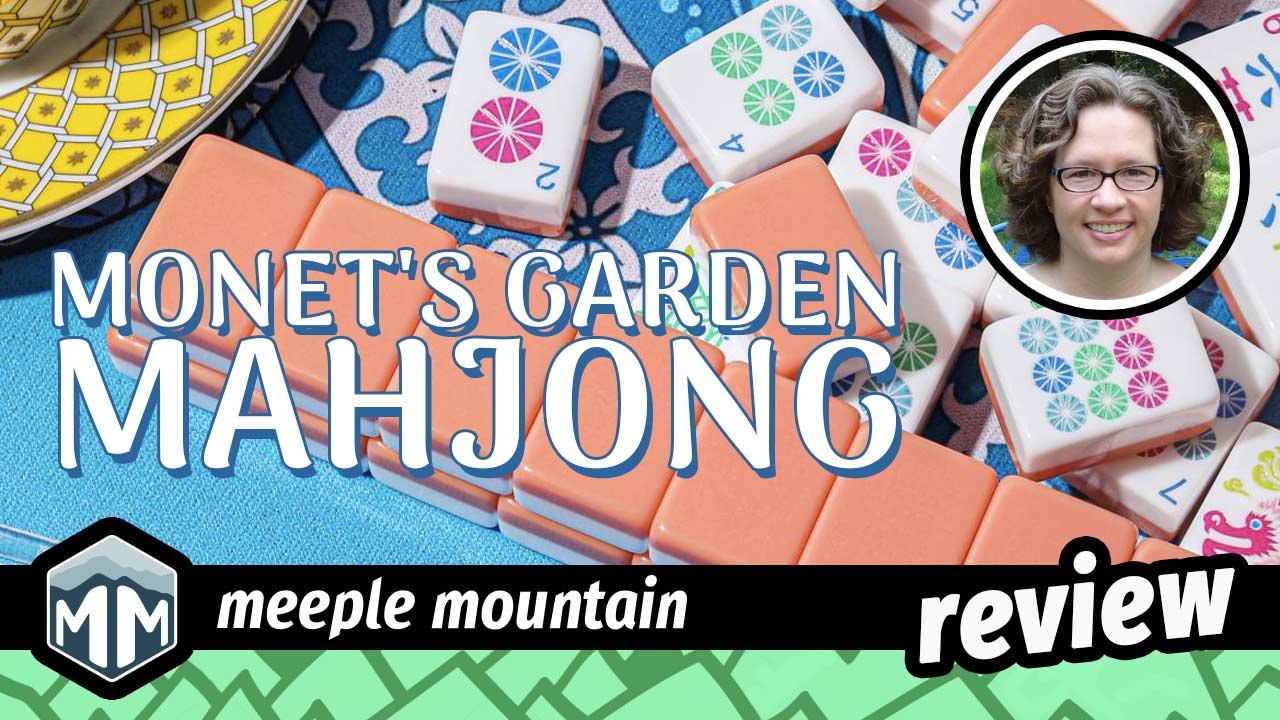
Monet’s Garden Mahjong Tile Set Game Review

(Note that this tile set is for American mahjong, not Chinese mahjong. While the games are similar and share the same roots, the tile sets required to play each are slightly different.)

Editor: Please read to the bottom for a discount code on Monet's Garden Mahjong set.

The Mahjong Moment

Mahjong is a traditional game that’s having a modern moment. Like chess, it’s a game that has long had its followers but has never quite become part of the mainstream hobby scene. Now both games are experiencing renewed popularity.

In the tabletop world, we saw a big boom in gaming during and after Covid. The need for entertainment and escape, coupled with a need to engage in-person after being isolated drove renewed interest in modern board games. The same is true of role-playing games, chess, and, yes, mahjong.

Suddenly mahjong is everywhere. Social media is bursting with pictures and meetups. I don’t even live in a major city and I see flyers advertising mahjong classes, playgroups, and tournaments all over town. Hallmark even made a mahjong movie and matching Christmas ornament!

Monet's tiles

With all of this interest comes a flood of products designed to capture every possible dollar. Mats, racks, lamps, tile sets, tables, carrying bags and more are all…

The post Monet’s Garden Mahjong Tile Set Game Review appeared first on Meeple Mountain.

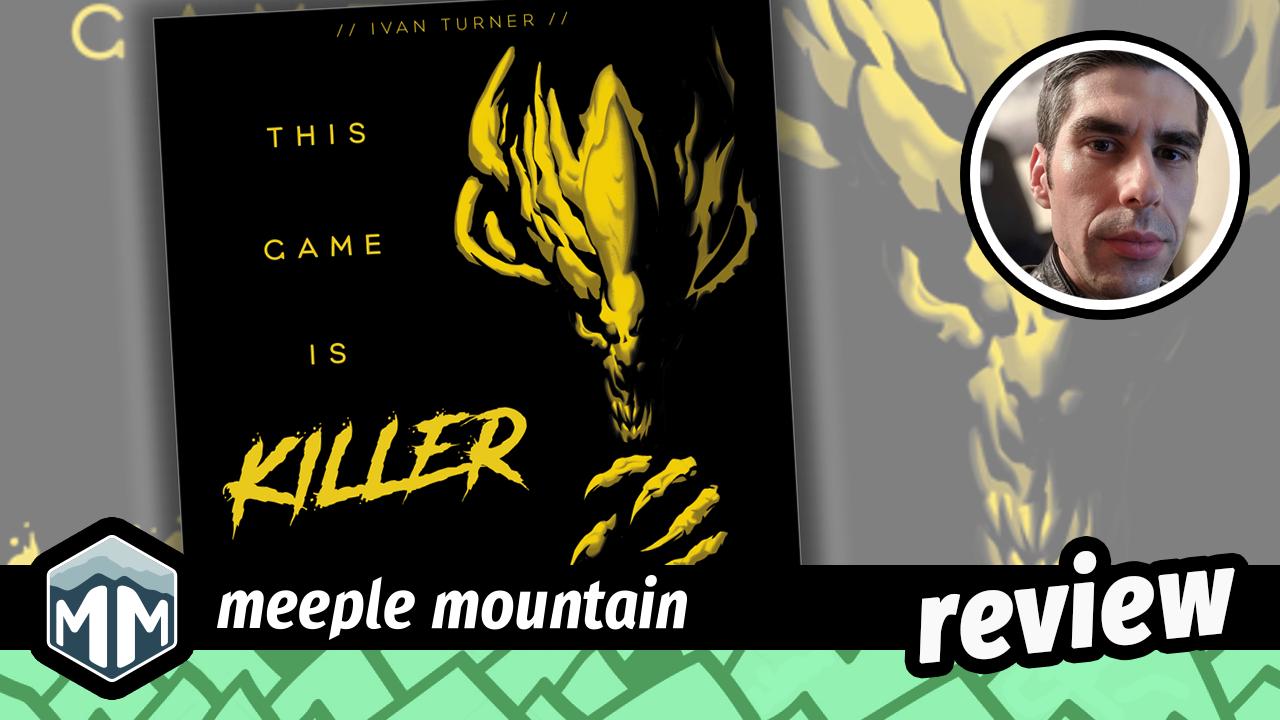
This Game Is Killer: Alien On Board Game Review

If you asked me many moons ago whether the horror genre would be a good fit for a party game, my answer would have been a straight-up no. Sure, Murdery Mystery party games exist, but horror is on another level. Horror has a body count, and it ain’t no lead pipe in the library nonsense here. The corpses, more often than not, don't remain particularly intact.

Yet three years ago, I did take a look at the Scream board game by the now-defunct Funko Games. It was a surprisingly fun game that somehow made a real-time set-collecting card game with an app work. Not exactly the best game I'd ever played, but it was different, and more importantly, it was good enough to hit the table quite a few times at my local game meetups.

So when I heard about This Game is Killer (great name!), which could handle up to 10 players, lasted around 15 minutes, and used the Aliens franchise as its setting, curiosity got the better of me. And since I'm no cat, I wasn't too worried about where that curiosity might lead.

Wake From Cryosleep

The premise of the game is pretty simple: there is an alien on board causing problems, as aliens tend to do,…

The post This Game Is Killer: Alien On Board Game Review appeared first on Meeple Mountain.

LA-1 Review

22. September 2026 um 14:58
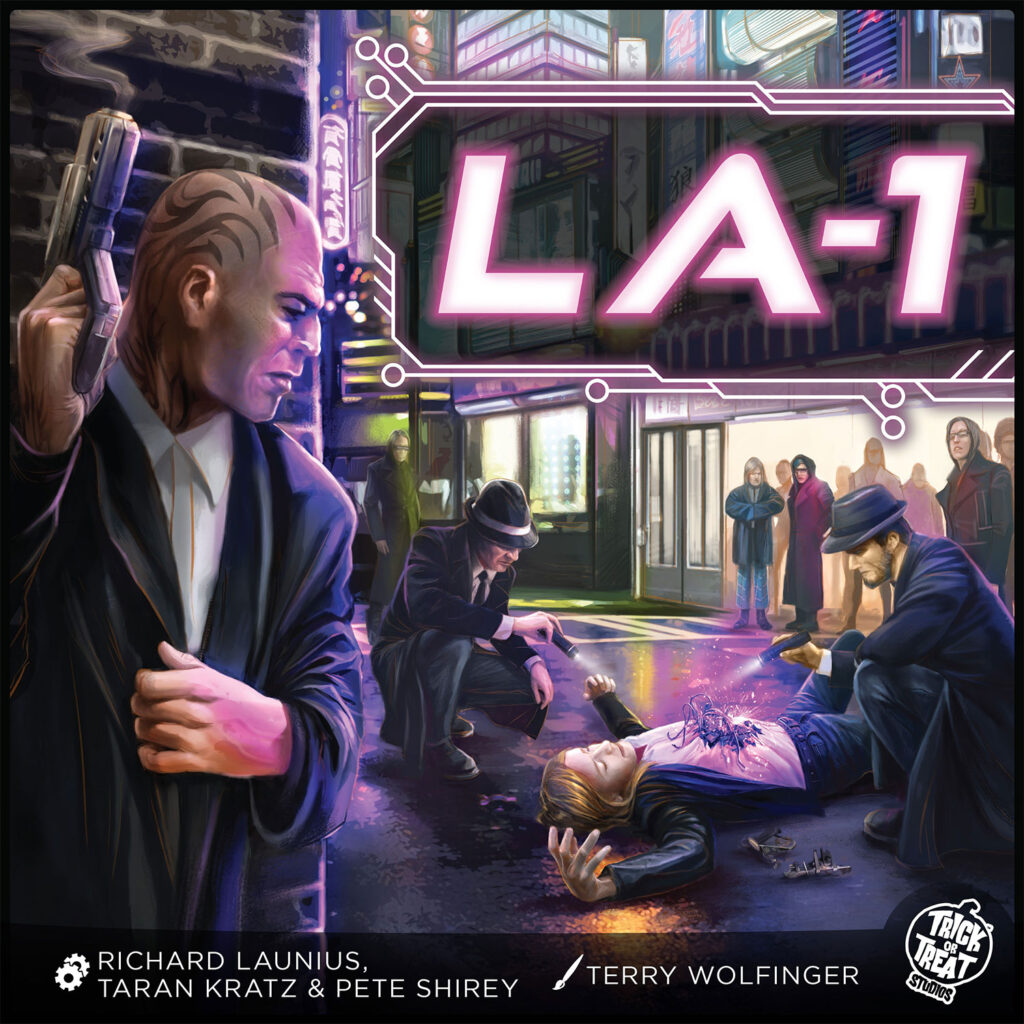
LA-1When Trick or Treat Studios (Nightmare Productions) decided to tap veteran game designer Richard Launius to codesign (along with Taran Lewis Kratz and Pete Shirey) their new cooperative adventure game, I was intrigued. I have many fond memories of playing his Arkham Horror board games, and then once I found out it was set in […]

Source

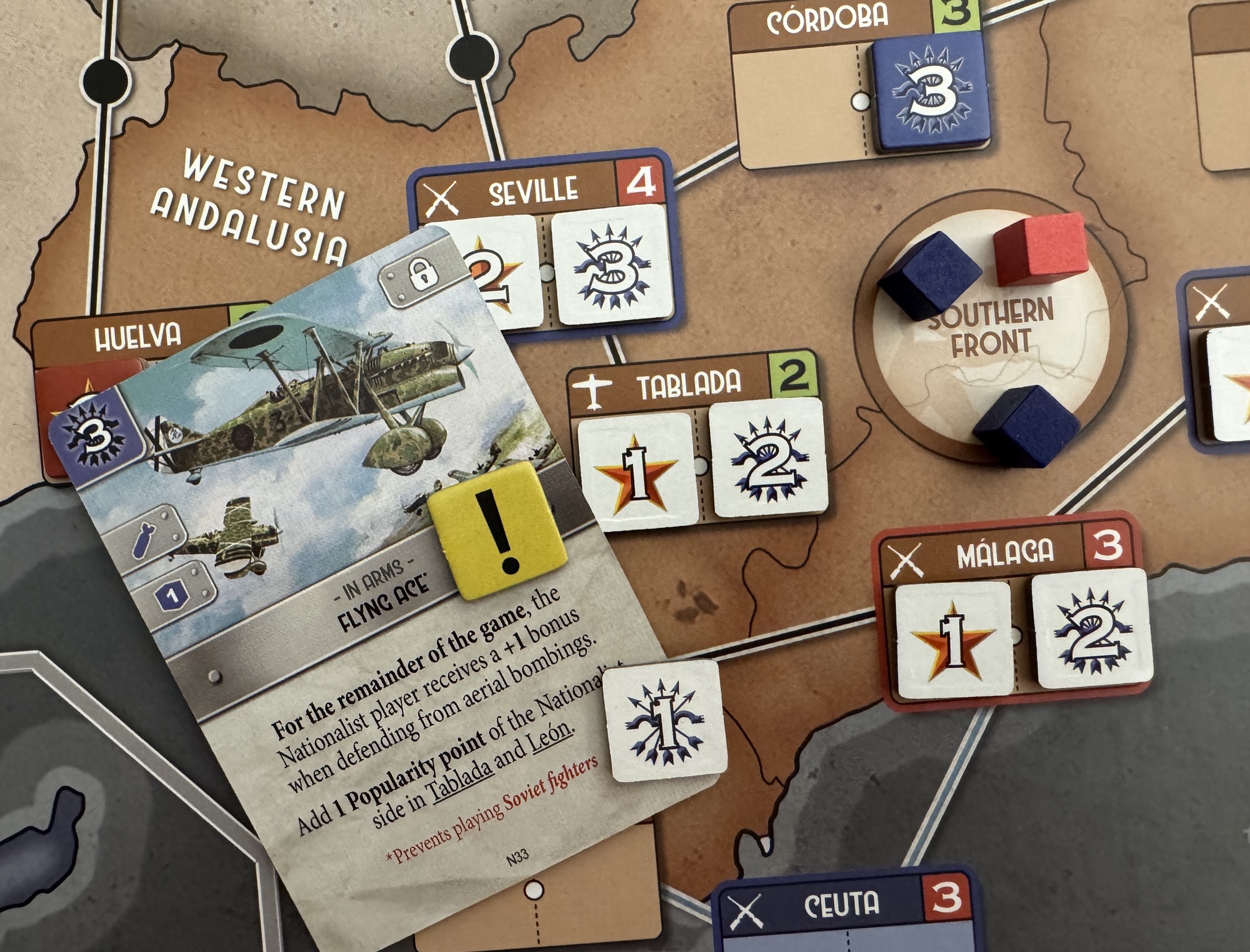
My Favorite Wargame Cards – A Look at Individual Cards from My Favorite Games – Card #95: Flying Ace from The Republic’s Struggle: Battle for the Republic, Spain 1931-1939 from NAC Wargames

Von: Grant
22. September 2026 um 14:00

With this My Favorite Wargame Cards Series, I hope to take a look at a specific card from the various wargames that I have played and share how it is used in the game. I am not a strategist and frankly I am not that good at games but I do understand how things should work and be used in games. With that being said, here is the next entry in this series.

#95: Flying Ace from The Republic’s Struggle: Battle for the Republic, Spain 1931-1939 from NAC Wargames

The Republic’s Struggle is a thematic Card Driven Game that tells the story of the historical events that took place in Spain after the resignation to the throne of King Alfonso XIII, and the proclamation of the II Spanish Republic in 1931. With the creation of the new regime, the struggle for power between the different social, political and ideological sectors increased, which gave rise to continuous changes of political power, alterations of public order, armed uprisings and violent acts, carried out by the numerous ideological factions of the moment; which culminated in 1936, in a failed military uprising. The failure of this coup d’état was the origin for the Spanish Civil War.

The Republic’s Struggle is based on Twilight Struggle from GMT Games and uses the same concepts of area control while adding in some actual combat with units represented on the board. During the game, the Republican player and the National player, will be able to recreate events of the period to increase their popularity in the localities by carrying out political propaganda, recruiting troops or militias, generating revolts or assaults, establishing diplomatic relations or carrying out bombardments. All this will be done by playing their hand of cards in an alternative way, either by using the events or by playing the action points or icons to perform any of the other actions available to the players.

As you probably know, the Spanish Civil War was a bloody and vicious affair. With the advent of air planes and advancement of other weapons technology there was no army that couldn’t be touched. In The Republic’s Struggle players can use their cards and Operation Points to perform an aerial bombing on enemy units that are found on the various fronts. The Bombardment Process is executed by spending the Operation Points (OP’s) of a card, provided the card features a special bomb icon in the upper left hand corner near the Op Points. If a card displays both a bomb icon and a combatant cube icon, you may only choose to execute one of the options and not both. These Bombings target combatants located in specific Fronts, which are represented by circular spaces where army cubes may be placed through card play. In order to perform an aerial bombing, the player must have control of n Air Base Location on the Front that they wish to attack. The attacking player will add the Operation Points of the card played and adds a D6 while the defender will also roll a D6 but will add in the Defense Value that was determined at the outset of the turn by the play of a card and +1 for each of their cubes in the Front. If they have played a card such as Flying Ace, they will get to add a +1 to this total and then results are compared and a winner is determined and losses are the difference between the Attack and Defense Value.

That is the real power in the Flying Ace card as this +1 can be a huge boon in these aerial bombings and allow them to put up a stiffer defense and hold onto more of their units on these Fronts. The game instructs players to utilize the Exclamation Point markers to remind themselves of these type of benefits as the player should place the played card in front of them with the marker to be able to remember the benefit later in that turn.

But the Flying Ace Card provides another smaller but important benefit as it allows the Nationalist player to place 1 Popularity Point in Tablada and León to continue to build their influence and control of these key regions for scoring purposes. And finally, another benefit is that the play of the Flying Ace Card will prevent the Republican player from being able to play their Soviet Fighters Card which has a similar benefit. The thinking here is that the first player to get this card out controls the skies and has air superiority.

Aerial bombing during the Spanish Civil War marked a dark turning point in military history, serving as a lethal testing ground for the aerial terror tactics later unleashed in World War II. An estimated 15,000 people died from air raids during the conflict, with the vast majority of victims being civilians targeted by Nationalist forces backed by Nazi Germany and Fascist Italy. One of these horrific events was that of the Bombing of Guernica on April 26, 1937. Carried out by Nazi Germany’s Condor Legion and Fascist Italy’s Aviazione Legionaria, this raid destroyed a massive portion of the Basque town and killed hundreds of civilians. It became the ultimate global symbol of the brutality of war, immortalized by Pablo Picasso’s famous painting Guernica.

In the next entry in this series, we will take a look at Henry Knox Continental Artillery Commander from Washington’s War from GMT Games.

-Grant

Klang, MYBOGADECO and other notes

I participated in a mid autumn festival event on Sat 19 Sep 2026. This was not a boardgame specific event, but several Malaysian game designers and retailers were invited to showcase and sell their games. The event was in Pandamaran, Klang, which is an hour drive west of Kuala Lumpur. The event was 5pm to 10pm, and we were asked to come set up booth by 3pm. I had something else on that day which

Political Correction – why we forgive problematic games (Topic Discussion)

22. September 2026 um 12:43

As we all know, there are a good number of board games that haven't aged well, if I may put it like that. In the past, games happily made colonialism their central setting and gameplay, gave women little or no place in their worlds, or treated cultures through the eyes of the oppressor. Yet, these games remain in people's collections and come back to the table. In this article, rather than asking whether we should still play these problematic games, I explore why we don't just choose different games from the large swathe of new releases.

The post Political Correction – why we forgive problematic games (Topic Discussion) appeared first on Tabletop Games Blog.

Dale Yu: Review of Gunsen: The Battle for Toshi Ranbo

Von: Dale Yu
22. September 2026 um 10:48
    Gunsen: The Battle for Toshi Ranbo Designers: Ben Rosset and Matthew O’Malley1  Publisher: OfficeDog Players:  Age:  Time:  Amazon affiliate link: https://amzn.to/4wvg7rB Played with review copy provided by publisher In Gunsen: The Battle for Toshi Ranbo, Rokugan teeters on … Continue reading

Teh Tarik Game

Teh Tarik Game by Ray Tan was the winner of the 2025 Malaysia Design & Play game design competition, of which I was one of the judges. The winner's prize was either a publishing deal, or a cash prize. Ray decided to take the cash prize and publish the game himself. He did all the planning and the art. The game was released this year. I got myself a copy. I was part of this game's journey,

Fort, Thine Name Is Brute

22. September 2026 um 01:52

gaaaaaaaaaaaaaaaaah (complimentary)

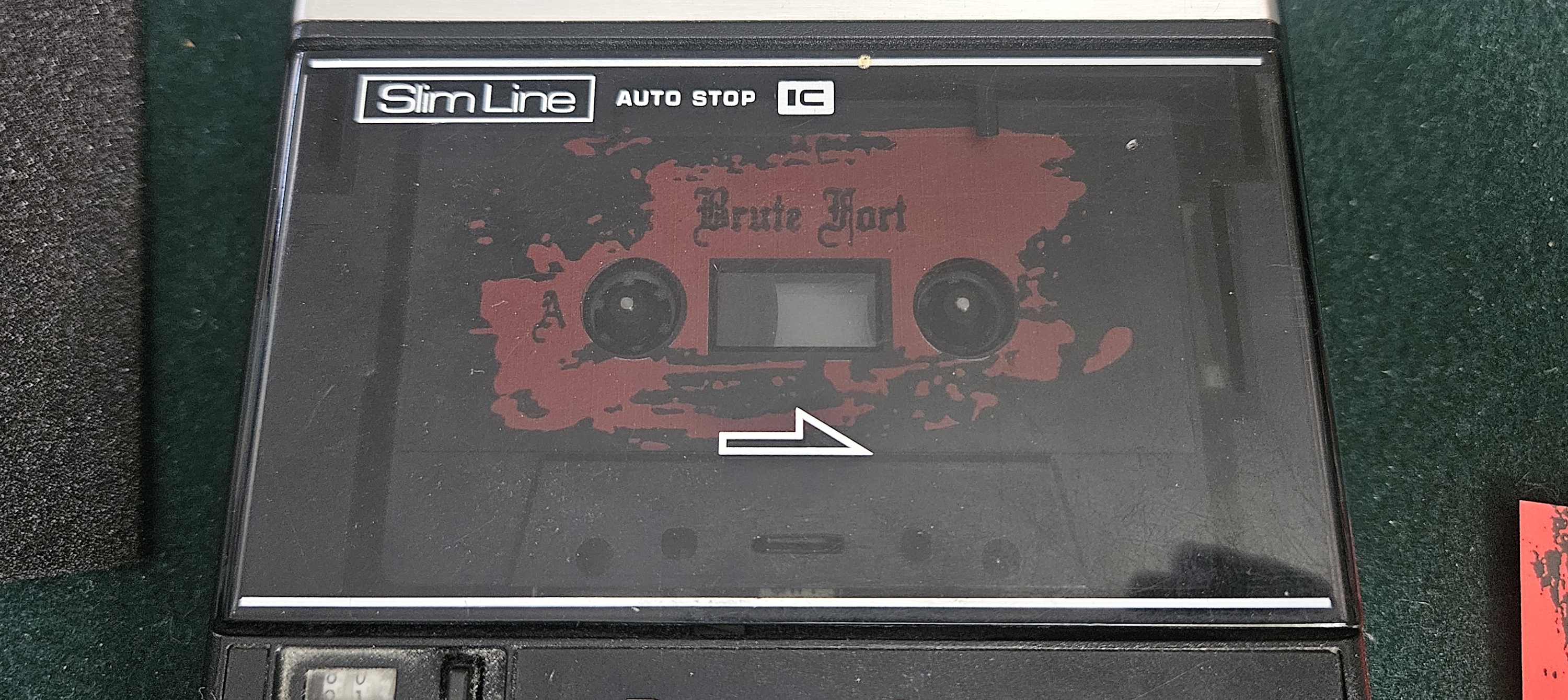
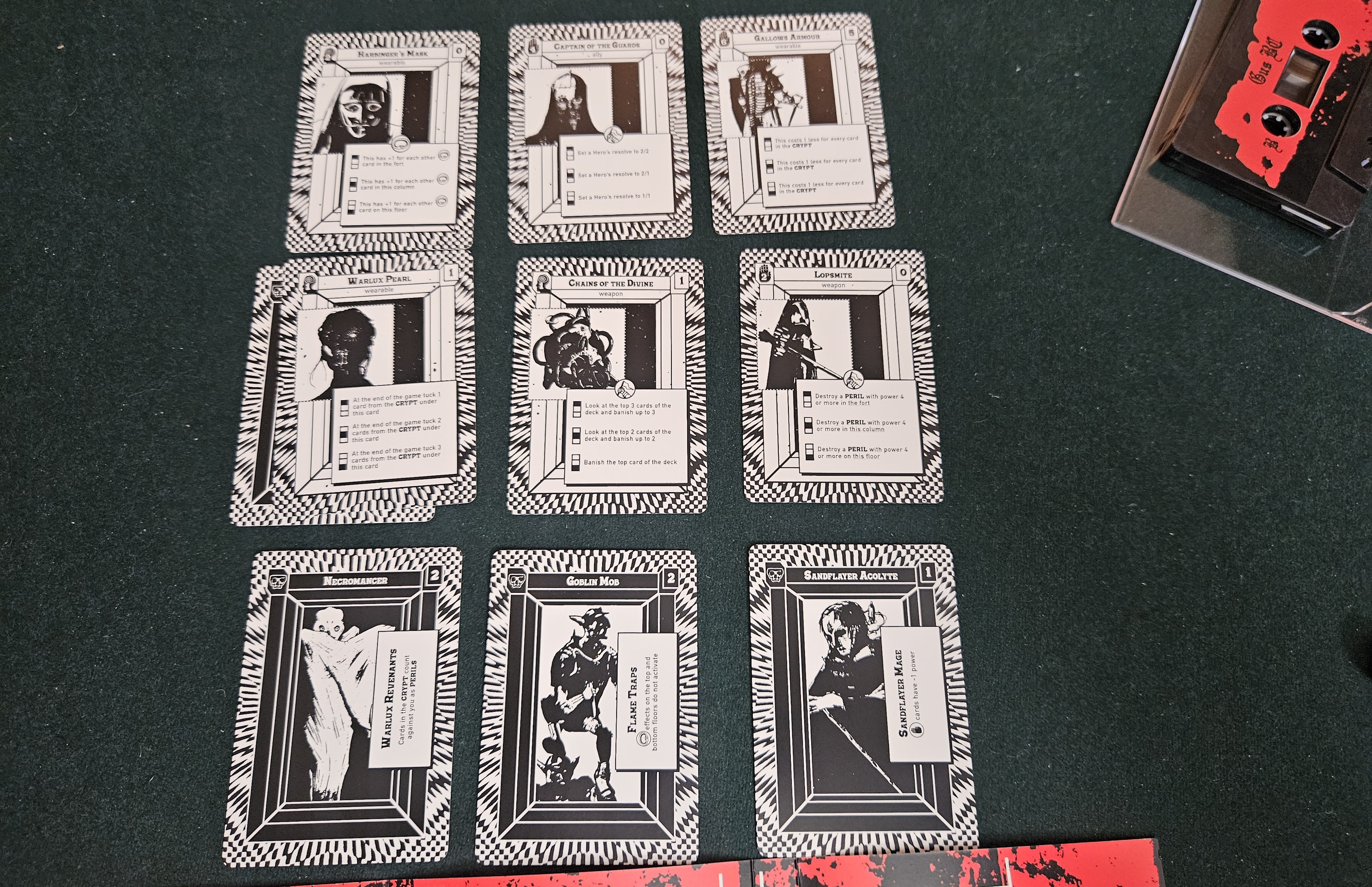
For its size, I would classify Brute Fort as maximalist. Which perhaps sounds contradictory, given it’s a microgame that runs on only 18 cards and comes in a plastic cassette case. But each of those details unfurls into something more. The cassette case is double-wide, necessary for holding the synth soundtrack alongside the cards. And the included dice, concealed under the tuckbox, can be used to generate the rooms of a haunted fort in a TTRPG.

What’s more, the microgame within is hand-drawn in garish inkstrokes that wouldn’t be out of place in a game like Cave Evil or The Restless. This is my first attempt at a game by Alfred Vale, but it’s solid enough to make me sit at attention and consider the other entries in his catalog. Maybe, for instance, the solitaire zine that requires you to spin a coin while you complete drawing minigames.

But for now, I’m contenting myself with Brute Fort. This thing doesn’t quite fit the Button Shy model. It’s way too metal.

...and find yourself wondering why it's called a "foot" and not a "foundation." Does the fort know something you don't? Is it a living thing? Does it intend to lean forward and consume you?

You stand at the foot of a shrouded fort…

Brute Fort is about sacrifice.

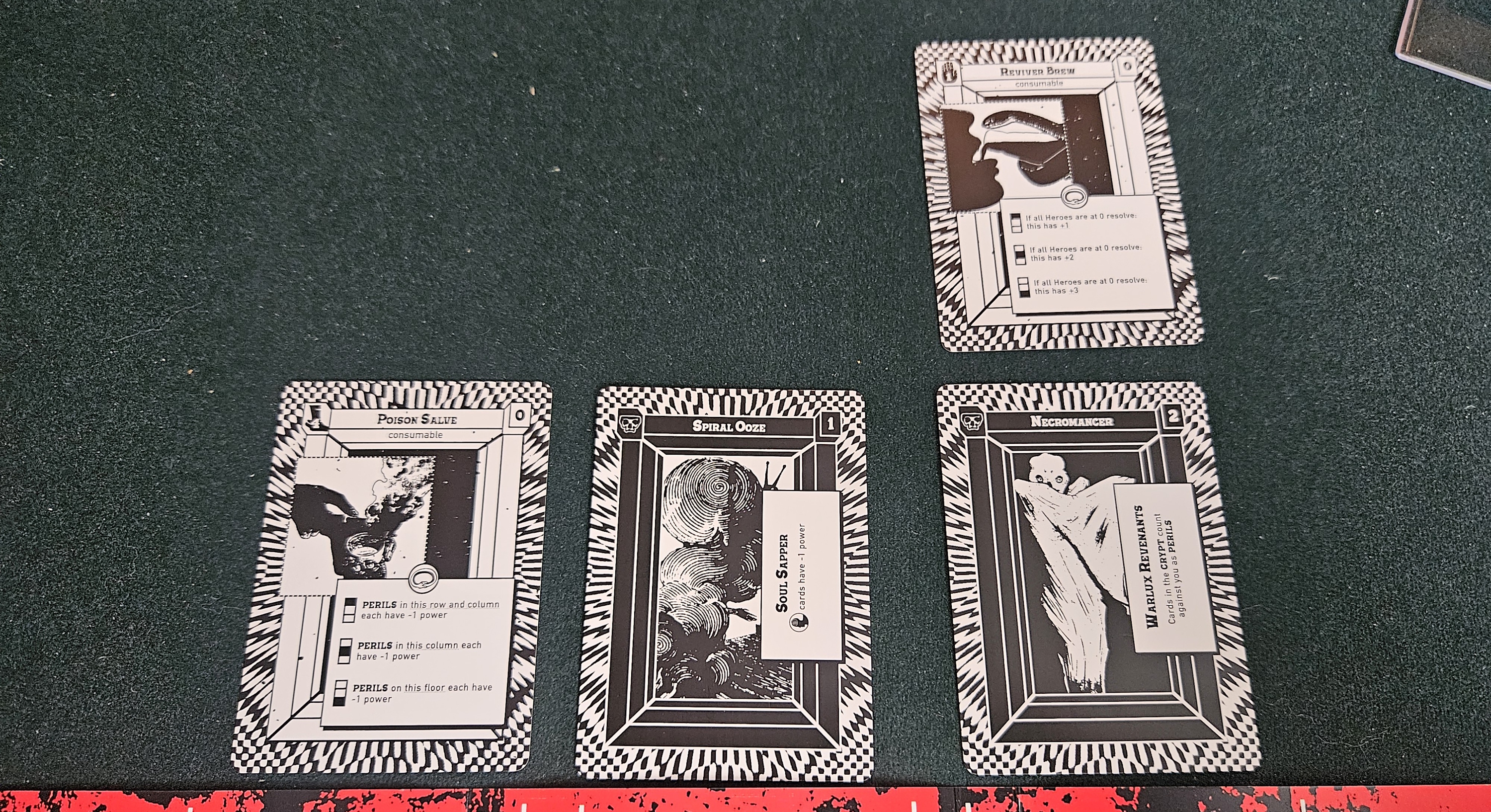
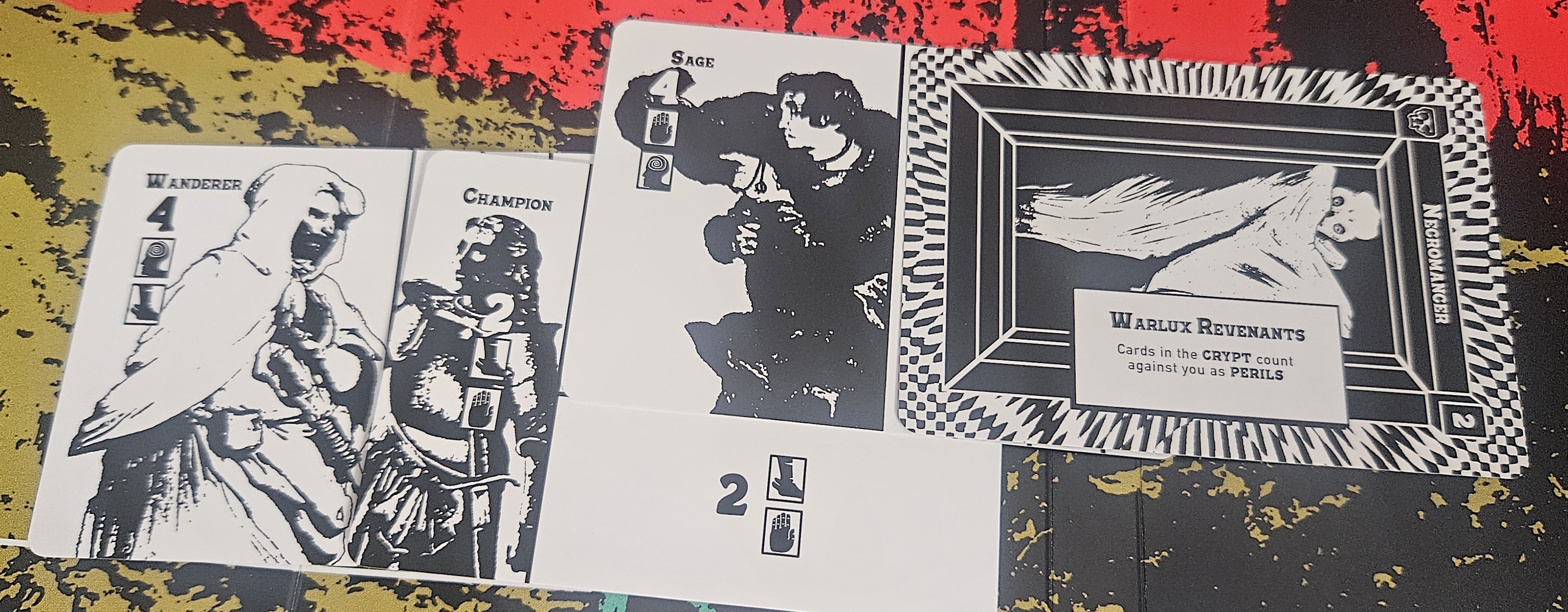
When the game begins, you have three heroes: the Wanderer, the Champion, and the Sage. Each hero is arranged so that it partially covers the one next to it. A fourth card, drawn at random from the main deck, covers the last hero, and in the process also imposes some penalty on your session. The Gloomswiller destroys artifacts the instant they’re played. The Demon Imp threatens to flip more cards against you. The Warlux Revenant transforms any dead cards in the crypt into your enemies.

But it’s the heroes who are the important part, at least right at first. Each hero begins fresh with four points ready to be spent. You draw a trio of cards from the deck. Each one costs some amount of those points. You might, for example, be holding a Poison Salve (poisons enemies — not quite a salve, but fine), a Harbinger’s Mask (grows stronger near specific other items), and a Cursed Banner (also makes you stronger when placed near certain items). All useful in their own way.

Except most of these items don’t cost four points. In fact, only one of them does. The Poison Salve, in case you were wondering. But the Harbinger’s Mask costs two and the Cursed Banner costs one.

Now, normally this wouldn’t be a problem. But in Brute Fort, your heroes don’t give change. If you spend any of the Sage’s four points, the remainder is gone. All that effort, spent to place a single card. What’s an adventuring party to do?

I'm entering my angry ink illustration phase.

Heroes can be spent for resources, or divided to stretch those resources a little further.

In this case, you divide your attention. By adding one of the cards from your hand to the fort, but doing so in the fort’s favor — flipping it over to its evil side — you’re allowed to divide a hero’s resources in half. Now instead of your Sage having four points, he has two bundles of two points. Only, uh oh, the Harbinger’s Mask has transformed into an Infernal Seer. Now it will be even harder to overcome the fort.

Later, you might make another sacrifice. More time, another baddie, to divide your points yet again. Now your Sage’s two and two becomes two and one and one, the latter half halved again. Now you can play that Cursed Banner without losing out on any points. The only problem is that between the Infernal Seer and the Iron Talon Raptor you just added, the fort is starting to look rather tough indeed.

Brute Fort continues like this. One sacrifice after another. Cards transforming into monsters. Resources rationed and dwindling. At the right moments, your own cards — items and allies and artifacts, all that stuff — coming into play to slowly raise your own score to hopefully trounce that of the fort. In the end, it’s a simple tally. Your strength versus the fort’s strength. Only nine cards in the fort itself, plus some tucked cards maybe for a bonus here or there.

I had to talk to my mother for this.

The sacrifices I make to review board games.

It’s all very microgame-like, although it doesn’t feel anything like the fare you’d get from Button Shy. I don’t mean that as an insult. It’s just that Brute Fort is a little darker than the titles in that catalog. There’s the art, obviously, which is a far cry from the cartoonier style that usually fills those wallets. But also in the sense that Brute Fort feels a little wilder, a little less ultra-tuned. Some cards offer obvious combos. Others require more massaging. There are some I’m not sure can be made to work, not for any shortage of trying.

As for the feel of the game, it’s tradeoffs all the way down. Every card feels like a tangible sacrifice to the dark gods that inhabit this place. Even the ones you actually purchase might wind up in the wrong spot, with each one offering slightly different abilities depending on where in the fort they get placed. This is the remedy to the danger of Brute Fort growing rote: since cards are more powerful lower in the fort, you’re encouraged to make at least one or two purchases at suboptimal exchange rates, sacrificing a hero’s strength before parceling it all the way down to its constituent fragments.

And then there’s that soundtrack. I even had my mother scrounge a cassette player from some undusted corner of her castle so I could listen while I played. I’ll confess I don’t understand the return to tape, despite being a fervent advocate for physical media in this age of rented art. But as the deck scraped to life, some part of me was taken back to an earlier time. To listening to books on tape on long car trips, only to abscond with the rest of the set when our time on the road didn’t quite conclude the latest Tony Hillerman or Michael Crichton novel. Listening to them in my bedroom, in the dark, on the boom box I owned mostly for Green Day CDs, but which included a tape deck because there were still a fair few cassettes floating around in those days. The scratch and whine complemented the narrator’s voice the way the rotating spindles complemented John Darnielle’s early albums, and I’ll be damned if the crackle didn’t evoke a sputtering torch here.

just in time for spooky season

A completed tableau full of both good and evil cards.

It isn’t often that I play a game that feels quite this complete. Brute Fort works, and it works because it has such a zine sensibility, merging art and media and even disparate types of play without seeming like it’s even thinking about how it’s crossing boundaries. I have a little corner of my collection for microgames. Most of them inhabit plastic wallets. I’m delighted to now have a double-wide cassette case misfitted among them.

Brute Fort is available over on Alfred Valley’s itch page.


A complimentary copy of Brute Fort was provided by the designer/publisher.

(If what I’m doing at Space-Biff! is valuable to you in some way, please consider dropping by my Patreon campaign or Ko-fi. Right now, supporters can read the next installment in my series Talking About Games, this time tackling the topic of what makes a good list! Naturally, the piece includes a list.)

Spending Big Bucks on Prelaunch Ads: Worth the Squeeze?

22. September 2026 um 01:00

On Wednesday we will reveal our final new game for 2026, a big Euro game called Braided Skies. We’ll share information about the game with people who already follow Stonemaier Games, but that’s a fraction of the people who could potentially enjoy this game. So starting soon after the reveal, we will run some ads on Facebook and Instagram to invite people to sign up for a notification when the ready-to-ship game launches on our webstore in mid-October.

This is a common practice among crowdfunders, though from recent reports they are spending exponentially more than I would expect: Some publishers are investing $20,000-$40,000 on prelaunch ads (compared to our prelaunch ad spend of $1,000, which is augmented by organic reach from our YouTube channel, Instagram, Facebook, newsletter, Bluesky, etc).

It seems to me that spending $20-$40k prelaunch can dig creators into a deep hole, shifting the focus from serving backers to getting enough backers (that you at least break even). I talked to Tamas at Lemery Games about this topic, and he shared that he spent less than $3,000 on a recent prelaunch campaign for Caravanserai.

Cleverly, Tamas uses these ads to evaluate the market for the game using click per lead (CPL) as the key metric. If the CPL climbs too quickly into the ad campaign without generating a significant quantity of signups, that’s a sign that (a) the game or its presentation isn’t ready, (b) the format of the project isn’t resonating with people, or (c) the timing of the campaign isn’t ideal. This is an opportunity to step back and make key adjustments, not push through with another $20,000 in ad spend.

That’s the first step. If the ads are resonating with people, I think it’s reasonable to spend up to $5,000 (or maybe $10,000 for a much bigger project) on prelaunch ads, with the goal of reaching those who are genuinely interested in the product. I think it’s fine to have an extra hook (e.g., Tamas offered an expansion with a miniature to anyone who signed up for Caravanserai in advance and ended up backing a core pledge), but I personally think that pairing the right game with the right person is what matters most.

Tamas provided some data: “For Caravanserai, 695 people signed up on a dedicated pre-campaign landing page, and 1 week into the campaign 16% of them pledged. For a game with a higher entry point (rewards range from $45 to $89), the average CPL was $2.60, which is still a good number at 695 sign-ups.”

Maciej at Gamefound recently shared some related data with me as well. Their average CPL via AdFound is $3.10, and they’re seeing a 22.6% conversion rate (these are prelaunch followers who become backers).

Again, I think it’s really important to keep Tamas’ observation in mind: The math isn’t linear, and nothing is guaranteed. $3,000 spent on ads with a consistently low CPL is a good sign that you’ll see around a 20% conversation rate after the project launches. But $30,000 spent on a swiftly increasing CPL is money you may never make back.

For other creators, what is your total prelaunch ad spend, and what have you learned from running those ads?


Also read:

If you gain value from the 100 articles Jamey publishes on this blog each year, please consider championing this content! You can also listen to posts like this in the audio version of the blog.

❌