The nights are drawing in, shorts are condemned to the back of the drawer for another 9 months, and you’re teetering on the edge of turning the central heating back on. That’s right – it’s Autumn, or Fall for my transatlantic friends. Time to hunker down with warm, comfy things, and that includes games. The overuse of the word ‘cosy’ in the last few years drives me batty. Don’t get me wrong…
Over the weekend I was playing a game, Takenoko, which I hadn’t played in a while. I had a rule question about gardener and panda movement, and I did what I often do if I can’t find a question in the rulebook: I pulled out my phone and Googled the question.
These days, Google shows the AI answer at the top of the page, so I see that first before scrolling down to look at the sources, most of which are BoardGameGeek threads. 99% of the time when I have a rule question and use this method, I find the answer, which is made possible by people who ask questions in permanent public places (versus private messages).
At Stonemaier Games, we’ve found that the AI answers aren’t always correct (this is why I look at the sources too). We rarely have a good way of replicating the question and/or fixing incorrect answers, so we found a web app that enables those features.
On Portal, we feed our rulebooks (and other applicable files) into the app, ensuring that it sources the official files. Anyone can choose a game and ask a question, and Portal will find the answer in the rulebook, including visual citations. You can try it right now.
As a publisher, I have access to the back-end dashboard for our games on Portal, where I can see a list of questions all in one place. I can improve answers and use the “confidence” metric to improve rulebooks for reprints. I see a lot of potential value in it, and the developer (Will) is very responsive.
However, many questions about games are less urgent and more geared towards discussion. Sometimes they’re not even questions. The community around our games is driven by threads about specific cards, house rules, fan-made components, opinions, and photos. For those, we recommend using any of the following:
For the first time, all of these options are now found in one convenient location on our website (“Rule Questions”, at the top of the page).
How do you ask rule questions? Are you satisfied with the answers? What other types of questions or posts do you make about tabletop games (when you’re hoping for other perspectives)?
In this team-based word party game, give three carefully selected clues to your teammates so they can guess the secret message — but make sure your opponents can’t sniff it out before all three clues are revealed.
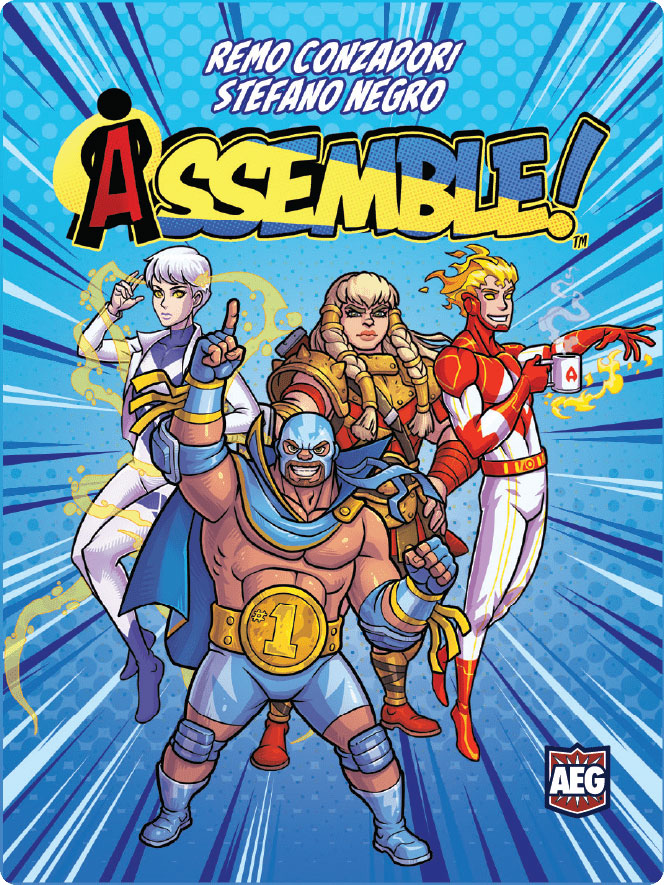
Professor X. Nick Fury. Magneto. What do these people all have in common? They assembled their superhero (or villain) teams. Much like playing Kickball in grade school, someone needs to be the captain and put the team together. That’s your job in Assemble!. In this quick filler game from publisher AEG, you’ll be assembling a […]
“You are a winemaker in the heart of Bordeaux, guiding your vineyard from grape to glass. Every good winemaker knows time itself is an ingredient, and patience is as vital as ambition.
This philosophy shapes every decision you make in Bordeaux. Over 13 years (turns), you will assign Workers to Make Wine or Gain Resources, choosing a duration of 1, 2, or 3 years. Longer commitments mean more powerful actions, but it will take longer for that worker to be ready again.
As your wines mature, you chart a curated wine tour, connecting estates and guiding bottles into restaurants and shops where patrons can taste your craft.
When the final year has passed, your legacy is uncorked. Score points for your wines and resources, and discover which winemaker’s careful timing has produced the most celebrated vintage.”
Bordeaux defies easy categorization. There’s no card flipping, no dice rolling, no bag drawing. There’s just you, your available workers, the thing the game allows you to do, and the thing you or your opponents have decided you’ll have the ability to do. If you’re well-positioned, you may be able to do both. But chances are you’ll have to choose between one or the other. Everything you do is in the pursuit of victory points and, after 13 turns, the…
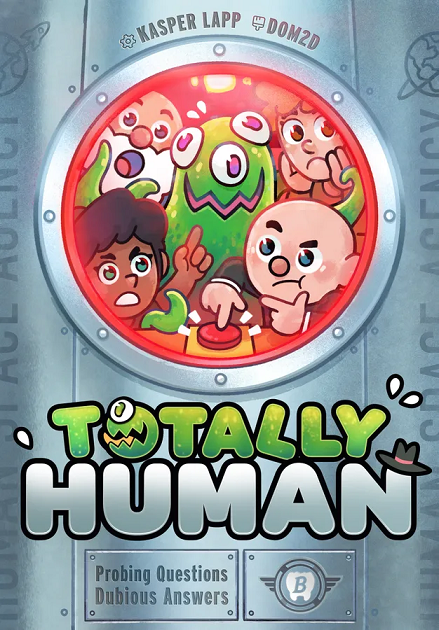
Kasper Lapp, Voight-Kampff test, 10-minute social deduction game is the kind of pitch I hope to hear when riding the elevator. Lapp previously designed quirky hits like Magic Maze and That’s Not a Hat, so his brand of silly seems uniquely appropriate for this sort of nonsense. When it works the playful interrogation is both…
Welcome to this week’s batch of crowdfunding campaigns. We have a variety of offerings here, so we hope you will find something that catches your eye. Also, if you want to chat with the BGQ team, join our Discord Server where we talk about games, movies, sports, and other fun stuff. Check it out and […]
Trial of the Forest Designer: Giancarlo Spinelli Publisher: Rebel studio Players: 2-4 Age: 12+ Time: 60-120 min Amazon affiliate link: https://amzn.to/3Tpm9MK Played with review copy provided by publisher Embark on a journey deep into the ancient forest of … Continue reading →
We have played several games designed by Adam Starkweather in his Company Scale System (CSS). These games are really good solid chit draw systems that really puts some unknown in what groups of units can activate and even when they will activate. There are also events and if the chit cup runs dry before all of the units can activate due to the end round chit then you are just sore out of luck. You have to prepare for this inevitability and I love the concept of prioritizing your activations and making sure you activate what you absolutely have to before doing those units that would be beneficial to activate. Now Adam has created his own publishing company called Bring it on Games and they have announced their first pre-order game in a new system called Advanced Company Scale System Game One:Anzio: A Lost Opportunity. This is a huge wargame and includes 10 large maps, 20 counter sheets and tons and tons of charts, tables and player aids. This is a MONSTER wargame…no doubt about it but it looks really good. I reached out to Adam to see if he could provide us some additional insight into the game and he was more than willing to discuss with us.
If you are interested in Advanced Company Scale System Game One:Anzio: A Lost Opportunity, you can pre-order a copy for $350.00 from the Bring it on Games website at the following link: Shop — Bring it on Games
Grant: Adam welcome to our blog. First off please tell us a little about yourself. What are your hobbies? What’s your day job?
Adam: First off, my hearty thanks to The Players’ Aid crew for giving me the opportunity to introduce myself and tell you about my new adventure.
As my waistline will attest, my hobbies and interests are decidedly sedentary. I love watching basketball and baseball (go Knicks – had a great year). And several years ago, I decided to rekindle – ha! – my love of reading. For many years, for work, I read non-fiction. But now, every night before I crash, I read for fun for a half hour. Currently, I’m reading both for work and for fun as I am journeying through Stephen King’s multiverse with a goal of making a game on it. I have an inside to get to King, and I’m hoping I can get him to glance at it and spark some interest. It will be decidedly war gamey in its presentation.
Believe it or not, for over 20 years, I have been blessed that wargame design has been my main gig and what I do for work. With over 50 titles that I’ve designed, developed, or project managed, it has been a productive period for me in the hobby.
Grant:What motivated you to break into game design? What have you enjoyed most about the experience thus far?What have you learned about design over the years?
Adam: A day I remember well. 3 friends and I were playing SPI’s Highway to the Reich, and it just fell apart while we were playing it. Things were happening that just didn’t make sense, and it wasn’t balanced. Once that suspension of disbelief is done, we wargamers just bail on a game. We thought we could do better. All four of us started making a Market-Garden game, but only I kept with it, and my first design The Devil’s Cauldron, was the result 7 years later. As for enjoying what I do, there are occasional hiccups, of course, but I have a dream job. I’m like a professional NBA player – doing something that is tons of fun, and I get paid to do it. I’m the luckiest man in the world.
As for what I’ve learned, of course, I’ve learned how to design – often under tremendous time pressure, but if I had to name one thing, it is knowing what I’m good at and when I need help. I’m great at coming up with new concepts and innovative mechanics, but I can’t research worth a damn nor do I have the patience to rewrite rules again and again. With my new company Bring it on Games, I have both the time and assets to attack my weaknesses and focus on what I do well – and love doing. I have dedicated researchers, dedicated rules editors, and dedicated playtesters. I finally have the time to do a game the right way.
Grant: What is your upcoming game ACSS Anzio about?
Adam: My first game for my new company is on the Battle of Anzio. It is at company level and at 500 meters a hex. It has two campaign games in the box – one for Operation Shingle (the landing and advance inward to the furious German counterattack) and Operation Buffalo – the final breakout and advance to Rome. The middle months in which a World War One type situation happened is not in the game. Two massive campaign games and some 20 smaller scenarios are included.
Grant: What does the subtitle “A Lost Opportunity” represent from the history?
Adam: It is likely for such a famous operation that most people reading this know that Anzio presented an opportunity to end the Italian Front with an aggressive approach to the battle. Instead, the General in charge (Lucas) was tentative and did not advance with the aggression needed. In all my research, I have found that it wasn’t entirely his fault, but it wasn’t a time to be tentative. In the Campaign game, you can try and defeat the Germans with the hand you were historically dealt, or there is an alternative scenario (aptly called “Killer Whale”) where the restrictions on your aggressiveness are removed, and perhaps you can end the Italian battle in two weeks.
There were also missed opportunities in the second campaign in the box. The Allies went for the glory to capture Rome but allowed the Germans to retreat from the Gothic Line mostly intact. The war in Italy was allowed to continue, but again, it didn’t have to be that way. As with Operation Shingle, there is an alternative campaign game in which glory is set aside for a few weeks, and you as the Allies attempt to cut off the German forces and end the war in Italy.
“We were hurling a wild cat on the shore, but all we got was a beached whale.” -Winston Churchill
Grant: Why was this a subject that drew your interest?
Adam: Why Anzio? As is often the case, the subject matter of a game is about work that has already been done. Why start from scratch if months of work have already been done? My historian worked on a game for another designer several years ago and had a great Order of Battle for the game. There was plenty of game in the battle, so Anzio it became. Utah Beach is likely next up for my company as I’ve already made the Grand Tactical Series game on the battle. So I have a complete order of battle and map already made. After that, or before that, might be Salerno. A gamer has already made the game using another system, but the conversion would be easy enough. And of course, a game for ACSS will be on Market-Garden. I have already made a game at this scale. Years of work have already been done. This also gives me time to start fresh on new topics like Omaha Beach or Gela – they become the game with work already done and join the conga line.
Grant: What is your design goal with the game?
Adam: Oh that’s easy. I want to finally be able to make the best company level game I can make. GTS was made when I was a novice and CSS was made when I was under tremendous time pressure. I have both the expertise and the time to do it right this time.
Grant: How have you modified the Company Scale System to become “Advanced”?
Adam: I started work on this a few years back and called it ACSS. The name stuck with me, and I kept it. It keeps Eric Smith’s brilliant combat system and is a chit pull, but much has also been improved and changed. I think I answer much of the realism issues of both systems with ACSS.
I have the rules available online for anyone to read – simply go to rules and you can read it and see where we are at. 3-4 more edits still to go, but it is more complete than anything I’ve made before, even as it sits now.
As for new stuff and mechanics that my playtesters have said they’ve never seen in a game before – I have two standouts. Situational Awareness matters in this game as does an orders system that influences what and how you do things. They are in the above rules so I won’t go deeply into it – but it has a novel way of presenting Fog of War but still allows for solitaire play. There is much, much more that is new – but those two are mentioned by my playtesters the most.
Grant: What elements do you feel are most important to model from World War II and the Allied invasion of Italy?
Adam: I make wargames, so to me, the most important aspect is to get the history correct and honor those that fought and risked their lives to make a better world for me and my children to live. So the history has to be right and fully immersive. In addition, playing a game on a battle is a different, albeit as involved as reading a book on the battle – but it is also a game. It should have decisions and fun aspects in it to make it fun to play.
Grant: What sources did you consult for the historical details?
Adam: If you go to my website at https://bringitongames.com/, you’ll find everything you need to play an introductory scenario using my system – but if you have a look at the end of the scenario book you can download, you’ll see the extensive bibliography for the game. As an aside, over the last 25 or so years of game design, it is really interesting to see how the web has become indispensable in researching military topics.
Grant: What one must-read source would you recommend?
Adam: I asked this very question of my historian a few months ago. He suggested:
Anzio 1944, The beleaguered beachhead, Osprey Publishing Campaign #155, Steven J. Zaloga, 2008, ISBN 978-1-84176-913-4
Although I’m partial to:
Fatal Decision, Anzio and the Battle for Rome, Carlo D’Este, 2008, ISBN 978-0-06-057649-3
A more involved read and perhaps not as great for wargamers as the Osprey volume, but I think the added effort is worth the trouble.
Grant: What is the scale of the game? Force structure of units?
Adam: As with my other company level systems, ACSS is 500 meters a hex, mostly company level units, and each turn is 2 hours. It is a scale I’ve used for two decades and I’m comfortable at this level. In addition, I fell in love with this scale because it offers both tactical mechanics but you can play an entire battle (although you’ll need space and time of course).
The system uses a chit-draw method to activate units and this is at division level. You draw a chit and do things with an entire division and then move to the next chit.
Grant: What are the differences between the playable factions of the Allies and Axis powers?
Adam: At this level of company actions, the difference between the two armies is quite evident. The Germans have fantastic equipment but are brittle, while the Allies have so much firepower at their disposal. To show one example of what you can show at this scale: the Germans based their tactical dogma on their excellent MG 42 machine gun, while the Americans based their tactics on the excellent Garand rifle. They each operated differently – and I can show this at this scale. Many other aspects from more effective counter-battery fire to specialized tactics are also there. Check out the rulebook above and you’ll see.
Grant: What is the layout of the board?
Adam: Almost all monster games focus on the campaign game, and the scenarios are snippets of the larger campaign game. That is certainly true of my large games. For me at least, it was always a matter of speed. I could test scenarios while I tested the campaign game. My scenarios often started when the campaign game started. There are a few exceptions to this where the scenarios are the primary game, and the campaign game is the added bonus. Games like Pacific War by Victory Games are like this.
I, however, want to have both scenarios and the campaign games have equal importance. Each scenario has its own counter set and its own map. The map size goes from 8 1/2 inches for the introductory scenarios, to one map for the majority of intermediate and advanced scenarios, to two maps for a larger game experience. Finally, there are the two full campaign games, which each have 4 full-sized maps and two half maps – a total of 5 maps. But there are some ten double-sided maps in the game (a total of 20 maps) – this is a map for each scenario and a campaign game map.
“The Rock” Scenario map.
Grant: How are units activated? Why do you feel chit-pull is such an effective method?
Adam: I love chit-pull as a mechanic and have used it for decades. It has the advantage of being great for solo play. There is the drawback that if you have a lot of players, you might have to wait for your turn to come up – although there are ways around this that I talk about in the rulebook, I find the great advantage of board games over computer games is the social aspect of playing them.
Grant: What is the general Sequence of Play?
Adam: A great question. When I first open a game, there are two things I look at first. The Sequence of Play and the victory conditions. They tell me more about the general concepts behind the game than anything else. Of course, a far more complete Sequence of Play is in the rulebook that you can download, but the basic SoP that is used in the VASSAL module is:
But check out the rules for a much more exhaustive Sequence of Play.
As for victory conditions, I blatantly steal from great designers that have great victory conditions – in concept. Some designers just know how to make victory conditions that drive a game and allow for incredible excitement in play. There are some 21 scenarios in the game, and I use different types of victory conditions in each and every one. I did the same thing to a lesser degree in my Greatest Day game. But whatever type of game you like, I’ll have you covered in one or more of the scenarios and the campaign game.
As for how the basic mechanics work, I have a ton of examples in the game for you to have a read and see how things work. Check them out.
Grant: Tell me about Bring it on Games. How are you different from other game companies?
Adam: I changed The Players’ Aid’s last question to talk about this a bit. I take the slogan “A Game Company run by Gamers” seriously. As we have aged, what we expect from games has changed. The games are expensive, but while we all, hopefully, have more money now, we have less time and less patience. I used to love reading rules, but now it is like pulling teeth – it is painful to get into a game. This game and all that follow are about making the games convenient and easy to approach. It is expensive for sure for all of this added stuff that you haven’t seen before – but again, we have more money but less time. You’ll see things here that will make you wonder why all the companies don’t do this.
Also, I don’t want to be GMT or MMP. I want to make games. I won’t have a warehouse, so only orders will be printed. Once I go to press, the game will be out of print. I’ll also limit the total number of orders I will accept. I like making the games. I don’t want to spend my time with all the company stuff. Trust me when I tell you that the owners of all the game companies aren’t having as much fun in the hobby as you are – they are busy running a company, tracking inventory, and all that stuff. I don’t enjoy that very much. So I’ll give up selling games after they print and keep having fun.
I hope you’ll go to my website at www.bringitongames.com and download the sample rules and Vassal set – and see if it’s your thing. I’d love your support. You can also subscribe to my newsletter. And I apologize in advance if you, as more than a few gamers have said to me, “you’ve ruined GTS and CSS for me”.
If you have any questions or comments, you can reach me at:
Thanks so much for your time in answering our questions Adam. I am very much looking forward to this system and wish you the best of luck in bringing it across the finish line. I have very much enjoyed my experience with the Company Scale System (Saipan: The Bloody Rock and The Enemy is at the Gates: Battle for Berlin, 1985 both from Compass Games) as well as the Grand Tactical Series (Devil’s Cauldron and Where Eagle’s Dare both from Multi-Man Publishing) and very much enjoy the feel of the game and the combat system.
If you are interested in Advanced Company Scale System Game One:Anzio: A Lost Opportunity, you can pre-order a copy for $350.00 from the Bring it on Games website at the following link: Shop — Bring it on Games
Ants, the debut release from designers Renato Ciervo and Andrea Robbiani, has scored its first board game award by picking up this year’s Jogo do Ano, the Portuguese game of the year prize.
Vital Lacerda design Speakeasy, Dave Beck and Abe Burson’s Luthier and Toni López creation Ada’s Dream were also nominated for the annual prize, which is organised by the non-profit board game association Spiel Portugal.
The Jogo do Ano, which has been presented since 2006, tends to skew towards the heavier end of board gaming, with recent winners including SETI, Nucleum, Barrage and Imperial Struggle.
Spiel Portugal says the type of game it looks for is “strong, spirited, dense, and stimulating”. Each member of the organisation initially selects ten games, with the resulting five finalists played again and scored according to a weighted set of criteria.
Half of the final score is based on what Spiel Portugal calls “time/fun”, with production accounting for 15%, theme, mechanics and replayability each worth 10%, and player interaction making up the remaining 5%.
Ants, designed by Renato Ciervo and Andrea Robbiani
The title was originally published by Italy-based Cranio Creations, and has since been picked up for localisation by publishers including US-based Capstone Games and Germany’s PD-Verlag.
Ants is the sole design to date from chemist Renato Ciervo, who also works with Italian publishers as a game developer, according to his BoardGameGeek page.
His Ants co-designer, engineer Andrea Robbiani, has subsequently created Maestro – themed around the fierce rivalry between Leonardo da Vinci and Michelangelo – and co-designed Timeless Journeys: The Italian Grand Tour with Nestore Mangone.
There’s still more to talk about in the gaming hall. It really is a big mix of trading card game, miniatures, and boardgames from big and small publishers. A new publisher, Resurrection Games, had a very nice setup showing … Continue reading →
After a recent business trip, I returned home and made a few updates in my home office before shutting down the laptops. I walked out of my office and took a peek to my right, into the game closet.
My closet is a small nook with an actual door (I don’t want visitors to necessarily see the depths of my obsession) that includes the hookups for a washing machine, tile floors, and just enough shelf space to hold my collection. It’s also the room where I keep the two halves of my Game Topper game table and the Costco folding table it lives on top of when I host game nights.
Between a smaller shelf facing the entryway and a larger set of shelves to the right, I’ve got space for a mix of about 200 games, depending on box size. But space is getting tight. If you ask my wife, space is already pretty tight. I only keep about 10% of the review copies I get each year and I already have a sizable personal collection, so we are almost completely in “one in, one out” territory.
It is time to make hard decisions. Only the cream of the crop is going to stick around when I’m done with the current purge.
I have visited friends who own game collections that number in the hundreds. I have a couple friends with collections that exceed a thousand titles. I have an industry connection who has north of two thousand games. I’m sure someone will respond to this article with thoughts on why they will never part with a single member of their three or four THOUSAND game collection.
Many of you are collectors, an impressive hobby in and of itself. I know many people buy games with the express goal of never playing most of their games, adding boxes purely to have them live on their shelves. Sadly, they never hear the voices coming from the boxes.
“Please, play me!” the box seems to be saying. “I thought you bought me to love me.”
“In a way, I did,” you say. “I bought you to love you, but only to look at you, to admire you from afar. No one will ever shuffle your cards, or manipulate your components, or unfurl your board. No, handsome $82 board game product, you will remain here, on shelf 134 of my room-wide Kallax, for eternity.”
“But, I was made for play! I was produced in a factory far from here to be appreciated by the players, on a table! This shelf will not do!”
“Quiet down, handsome $82 board game product,” you reply. “The decision is final. My shelves are a museum, and I look forward to seeing your smiling side box art staring back at me when I walk past you on the way to the kitchen.”
At my house, I only possess games for the purposes of semi-regular play. When those games are not getting enough play, I move them out. It’s strictly business. Some people have a library of hundreds of books that collect dust; others, a liquor cabinet full of spirits that never get consumed. To each their own.
My collection is reaching a breaking point. I used to believe that I needed to own no more than 52 games, because I play games often enough to get at least one of my own games tabled every week. Reviewing games has changed that calculus, because now most of my game nights are either review game nights, family game days, play con events, or instances where I enjoy the collections of others. Thankfully, there is a lot of crossover for the latter, so when someone wants to table a game that I also own, I nod in approval…I’d love to play your copy of Orléans, because I haven’t played my copy all year.
This has helped me focus on the current exercise. I want to winnow these 200 games (technically, 205 games, per the BGG link to my collection) down to about a hundred this year. That mix will mean about 50 family/party games and about 50 hobby games. That means the games in the Maybe Pile are going to go soon, and I’ll be a little pushier to ensure those get played quickly.
The games that I think I love enough to keep, but don’t ever suggest tabling, have to go, too. If it’s a game that is out of this world, truly the cream of the crop, best in class for its respective category, it stays.
If I love the game, and anyone else I know also loves it and plans to keep their copy, my copy is a goner. If a game is not on the personal Mount Rushmore of a category, that game is gonna hit the streets. For example, I count on five specific titles to keep me happy on the nights I vote for party games: Wavelength, Just One, Codenames, Caution Signs, and Decrypto. Those games are more than enough. But what about Belratti? OK, alright, fine…I can make room for six.
The Lacerda collection previously held as many as ten slots in the collection, and now it is down to seven. No purging needed there; the current selection is tight. Sitting in the same zip code as the Lacerda games lies Carnegie, my #2 game of 2022. I think Carnegie is genius, but even writing this paragraph gives me pause: I haven’t put Carnegie on a table in more than two years.
I’ve played Carnegie a few times on Board Game Arena, a place where I KNOW I will play it more than I will play my physical copy at home. That means Carnegie and its expansion are getting moved to the donation pile. This hurts my soul, but I know it’s the right move. While I love the beauty of that board and the satisfying nature of play, it doesn’t come out enough to justify its space in my collection even a moment longer.
Maybe that’s it, then. It’s not only the fact that a game has to be the cream of the crop. It has to draw enough attention that I NEED to play a physical version of it at least once or twice a year.
That made the purge exercise even easier.
Valeria: Card Kingdoms? Exceptional, and my favorite of the “roll dice, get stuff” genre. And, a goner, because I haven’t felt the emotional connection to table it in a couple years now. Ayar: Children of the Sun? A personal top-10 pick from 2025…and, a game that I have not played since I wrapped up my review plays, so it is getting moved into the donation pile. Illiterati? Love it. But word games don’t surface as often in my house any more, so 1973’s Montage will be the only title I need to fit the word game/association bill for the time being. That means it is time to find a new home for Illiterati.
The exercise continued deep into the night I began drafting this article.
Huge fan of The Red Cathedral. But its expansion, Contractors? It was a mixed bag in my play groups, and I haven’t integrated the expansion content in the plays it has gotten since. So, the expansion has to go. The Mombasa redux, Skymines? A blast. The card system is something I still admire. I just haven’t admired it enough to put Skymines back on the table, and every time I go back to re-read the rules, I find myself more enamored with something else that I want to table instead. Love the game, love those storage tuckboxes, love that the game got a retheme. But Skymines is moving out.
For years, I screamed to the masses that designer Martin Wallace’s most underrated design was the skirmish game Wildlands. I still think the game is badly underrated. Those feelings haven’t helped me push the game to the table more, so it’s a goner too.
Magnate: The First City? Love it. It’s hard to find a legitimately fun city builder that plays in about an hour, even at the full player count. But the box is a behemoth, and more importantly, a friend in my local playgroups is never getting rid of his copy. If I can play his, I don’t need mine. The third shelf actually thanked me when I moved the Magnate box off the shelf.
“Thanks,” Shelf Three said. (I think I heard its voice, but that may have been the cocktail I had earlier that evening.) “I wouldn’t mind some card games living on top of me for the next few months. My back is killing me.”
All in, I pulled 33 games off the shelves. I took a moment to stare at the now-former members of my collection because I wanted to be sure. Am I really going to move these games out? It felt like the right decision, but I wanted to give the games one last chance to tell me that I am wrong.
Sometimes, there’s the pull of sunk cost. A couple of these games cost a pretty penny at the time, and maybe I don’t want to see them go just yet. In other cases, a portion of a game is something I love even if the complete package is an up-and-down affair. For example, maybe one game mechanic really sings to me, such as the rondels of Sabika, the real-time play of Wildstyle, and the engine-building magic of Raising Robots. But in each of these cases, I haven’t really made eye contact with these boxes in at least a year.
After piling all the purged games back in my office, I walked back into my game closet to stare at the remaining games one more time. Is each one a game I can really see myself trying to push the table if I get to pick something for an upcoming game night?
One by one, I revalidated my feelings. I still have some work to do, to clear some more space. But for now, the collection is all cream. Now I just have to clear more time to play my favorites.
Tanglung is a 2-player abstract game by Mark William, published by
Malaysian publishing house Luma. "Tanglung" refers to Chinese lanterns which
are carried during the Mid Autumn Festival.
I absolutely love the production of the game, especially the attention to
detail. The insides of the box are decorated. I adore the art!
A game is set up

 Anmelden




/pic9805510.jpg)

