Normale Ansicht

Party Up, Party Down

16. September 2026 um 05:52

felt! very nice.

UFO 50 was one of the coolest gaming artifacts of the past few years, a collection of fifty unique video games by Derek Yu, Jon Perry, and a handful of other developers that pitched itself as a digital excavation of a long-lost 8-bit console. The collection was special for many reasons, but my favorite trick was the way its creators employed modern design principles that contrasted the system’s hardware and input limitations.

For example, Party House. Designed by Jon Perry, this was a full-fledged solitaire deck-building game that fictively predated Dominion by over two decades. Now, in a design ouroboros, Perry is shifting Party House to tabletop.
I hang with aliens.

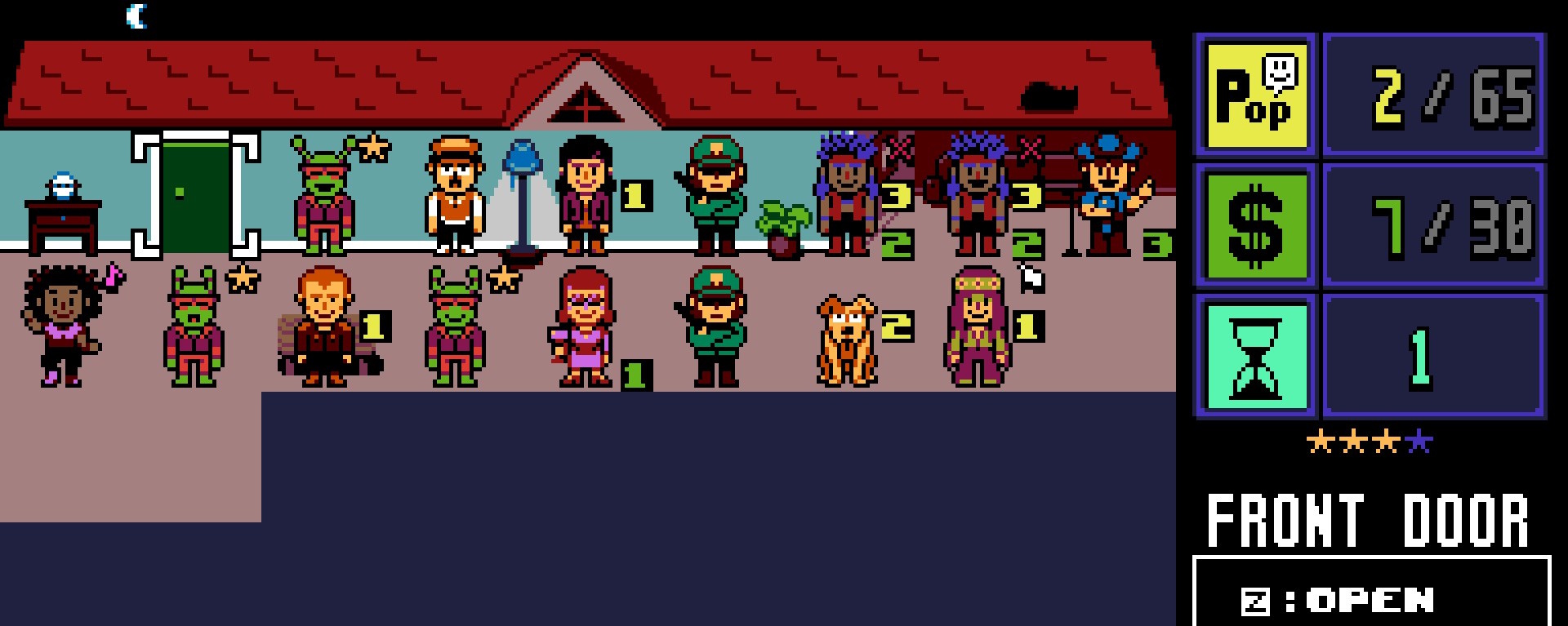
Check out my sick group of friends. (UFO 50 version)

If nothing else, Party House is more relatable than most gamified topics. You want to throw a party. A big party. But you also don’t want the cops and/or the fire marshal to bust up the festivities. In the UFO 50 original, that meant building out your Rolodex, expanding your apartment to accommodate more bodies, and then randomly drawing guests until you decided you’d had enough. Or until the door got kicked in.

Basically, the whole thing was a merger of Dominion-style deck-building and press-your-luck gameplay. Good guests awarded popularity and cash, while rowdy guests egged your neighbors into taking matters into their own hands. Others served as utilities: bouncers for tossing out troublemakers, private investigators who could drag the right people to the party, college mascots for nostalgic gatherings of old friends. Special guests like aliens and mermaids, meanwhile, served as objectives, awarding the stars that proved you had mastered a particular set.

That’s the gist of the physical version as well, although Perry has made a number of changes, some delicate and others structural.

The biggest alteration is Party House’s format. Because the UFO 50 version was a solitaire game, it presented a series of challenges, each offering a pre-built selection of guests and objectives. Tackling these levels required some luck, but the game’s core concern was more with finding the right build order for your Rolodex than responding to dynamic problems. The result wasn’t quite a puzzle with a set solution, but it was closer to that side of things than one might expect.

For the physical edition, Perry has tossed all the digital game’s goodies into a single box. Gone is the set marketplace. Instead, players are presented with three rows of guests that are constantly refreshing as they’re befriended with popularity and cash. Gone are the puzzle-style levels. In their stead is a race to earn a certain number of stars before anybody else at the table. Gone is the apartment limit. Now your place can hold as many guests as possible. Provided the party doesn’t end prematurely, that is.
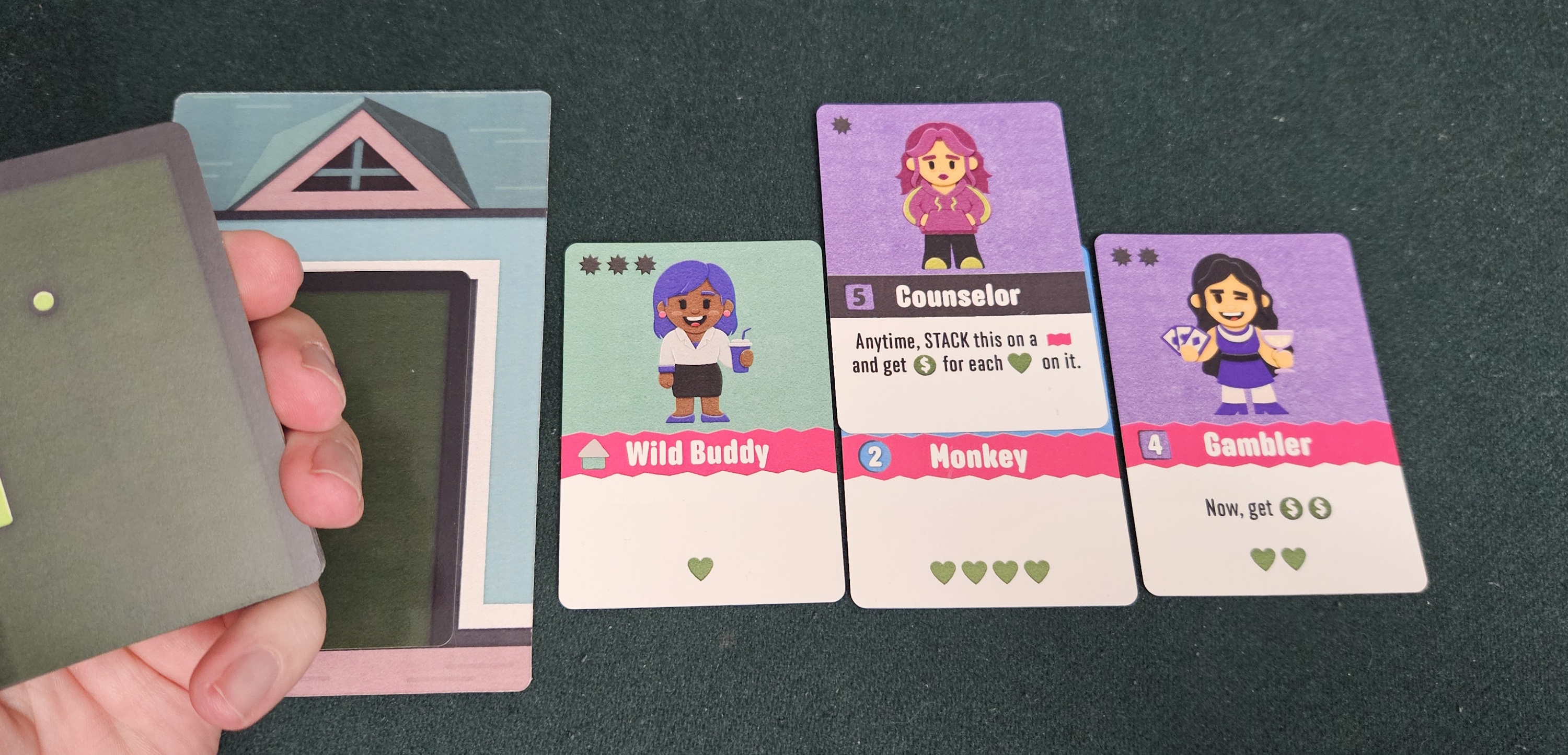
They're also better when you're made out of felt. Like my evening pants.

Parties are better in person.

On the topic of premature ejection, troublemakers have received a significant facelift. Previously, the police would crash the party as soon as three troublemakers were clomping around the living room. Now every guest — or nearly all of them — produces some amount of noise. As soon as you hit eight points of ruckus, the party’s over. Worse, you skip the Rolodex phase entirely. And unlike in the original game, popularity fades each round. Only money can be hoarded. Fortunately, these twin currencies are interchangeable. What one lacks in charisma they can make up for with Benjamins.

As a side note, there’s a nice balancing mechanism where a crashed party puts an accessory card in your deck. Accessories are always positive, just not as positive as a good guest. Still, a charcuterie board or karaoke machine is handy in a pinch. It’s a nice concession for the occasional stroke of rotten luck. Failing players stay in the game, but with less control over how they assemble their guest list.

Perhaps most importantly, the whole thing is fast. You hold your deck in your hand the entire round. A turn takes maybe twenty seconds at most. And cards flip at a rate comparable to the typewriter clatter of FlipToons, but with the occasional mid-turn decision to prevent it from feeling quite so rote. Actually, the comparisons don’t end there. Party House feels like FlipToons with considerably more direct control. Whether it’s the ability to peek at cards mid-party via spies and superheroes, cover your loudest offenders with cute dogs and counselors, or deploy occasional cards that directly confront your opponents, your Rolodex is a bespoke assemblage that can be bent to your will.

The other big point of inter-player friction arrives in the form of party cards. Each game puts two of these on display, then asks players to jostle for control by fulfilling their stated objectives. This allows for some distinction between sessions. Hosting a Class Reunion feels different from a Legendary Rager, with the former favoring gatherings of old friends while the latter requires you to ride the line with plenty of troublemakers. Importantly, these cards can be stolen, encouraging players to one-up each other over the course of the game.
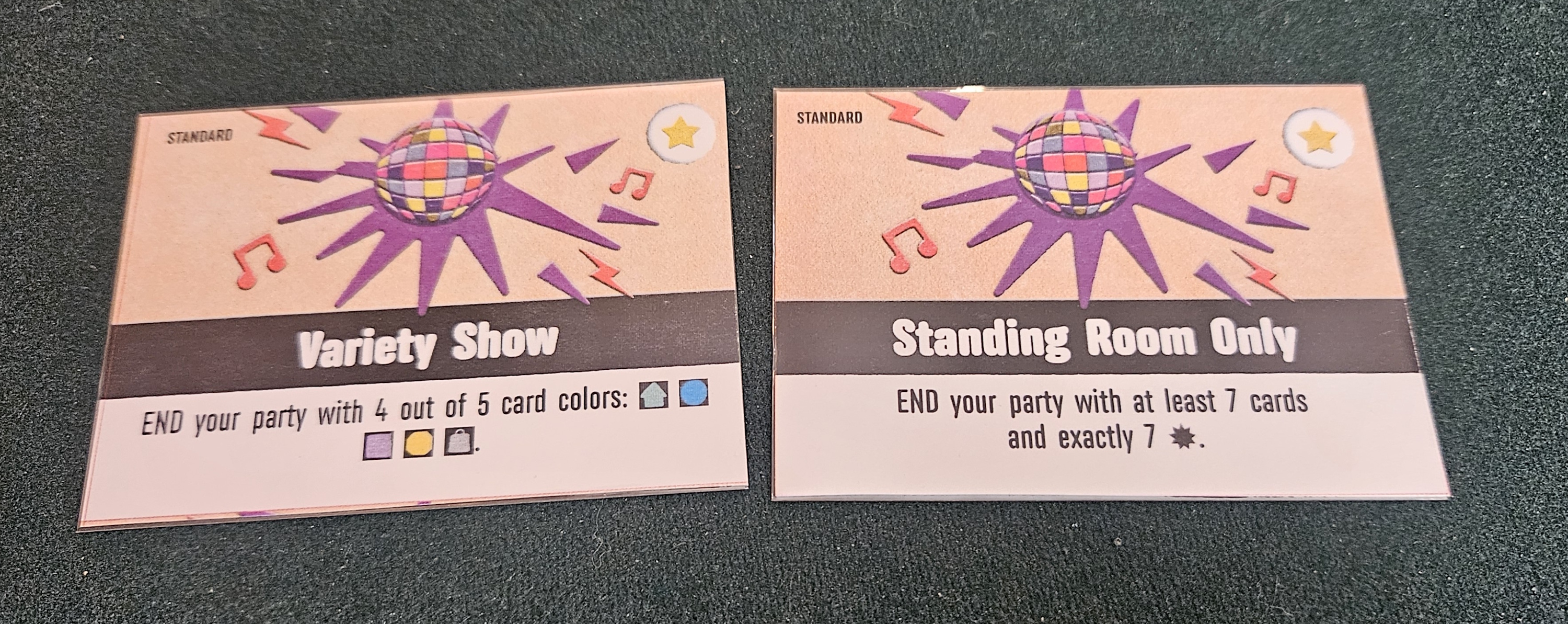
HIT HIT HIT

Different party types can also award stars.

On the whole, Party House does an admirable job of translating the version that existed in UFO 50. It captures the spirit of the original, incorporates more players, and expands the decision space, while also keeping the play punchy and pacey. There are even little touches that speak to Perry’s deep mastery of how a hand of cards can and should be handled, such as the single guest that must be peeled from your deck to become the “door” (read: discard pile) of your apartment, a trick he pulled in Hot Streak to prevent players from developing too robust of a predictive mental model of their deck.

I’d also be remiss to forget Daniel Profiri’s illustrations, which resemble felt board cutouts and are a perfect way to depict the guests’ retro appearance without defaulting to pixels.

At the same time — and keeping in mind that I’ve only played the prototype — Party House comes across as a minor title in Perry’s ludography. It isn’t as subversive as some of his other hits, lacking the emotional range of Scape Goat, the genre-redefining nature of Air, Land, & Sea, or the family breadth of Spots. To be sure, this isn’t to say that Party House has to be revolutionary, and there’s a tyranny to expectations that can prevent us from appreciating what’s right in front of us. But by and large, my experience with Party House has been a gentle one, a pleasurable process of revealing and shifting cards that still feels largely automatic. Where the version found in UFO 50 fit that collection’s 8-bit limitations, here it lands somewhat more thinly.

Then again, there’s a lot to be said for pleasurable physical processes, and that’s where Party House succeeds best. With the right group, it’s the sort of game that gets people chanting “Hit, hit, hit!” And the game upsets genre formulas in subtler ways. For instance, this is one of the few deck-builders to shrug off the absolutism of the five-card hand. Here a party might consist of three guests or ten, all depending on chance and how well you’ve assembled your Rolodex. It’s a smart little thing. Just be aware that it’s littler than you might expect.
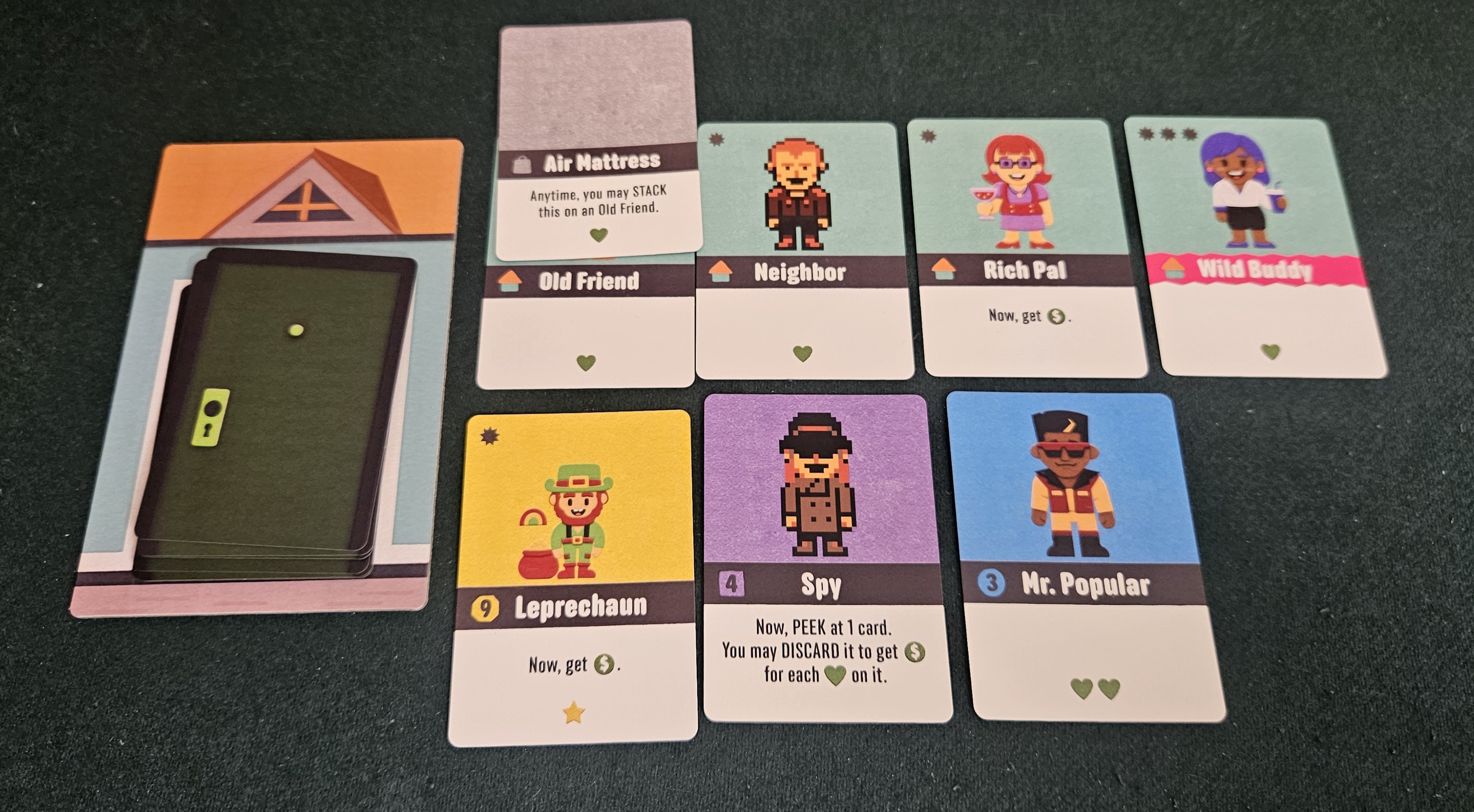
Here's another downside: the game can end very suddenly thanks to a lucky draw. It's always abrupt.

The bigger the party, the more likely the cop roll-by.

Where does that leave Party House? On the threshold, I suppose. Playing prototypes is always a risk. Sometimes you get Baba Is You, which feels poised to become an instant cult classic. Other times you get a game that’s still finding its identity. That’s where I would put Party House. Class Reunion or Legendary Rager — we’ll see next year which party this shindig shapes up to be.


A prototype copy of Party House was temporarily provided by the publisher.

(If what I’m doing at Space-Biff! is valuable to you in some way, please consider dropping by my Patreon campaign or Ko-fi. Right now, supporters can read the next installment in my series Talking About Games, this time tackling the topic of what makes a good list! Naturally, the piece includes a list.)

Baba Is Boss

15. September 2026 um 01:14

I achieved 100% in Baba Is You. The video game. That's right. I am a Baba genius. Tell your friends. Tell r/boardgames. Tell them all that I'm comin'. And hell's comin' with me.

If you haven’t heard of Baba Is You, grab hold of the nearest guardrail, because you’re about to be hit by a wrecking ball of descriptors. Here goes: released in 2019, Baba Is You was a mind-bending box-pushing syntax-making meta-puzzle video game by Arvi Teikari. It was hard. Famously so. Especially if you’re anything like me and not really into Sokoban-style box-pushers.

Baba Is You is now also a board game, albeit one whose pedigree doesn’t only belong to Teikari. The analog adaptation was done by Peter C. Hayward, and in many ways it feels like a riff on his abstract comedy game That Time You Killed Me. Although somehow, improbably, it’s even better — provided you have the right mind for it.

Is Baba bi-curious? Pretty sure Baba has no gender. I'm not even sure Baba is a mammal. Baba might be a mushroom. In which case, Baba would have one of a few thousand genders.

Baba Is Sometimes Confounding. In a good way.

You are Baba. Baba is a dog… sheep… cat thing. Baba likes to push boxes around a ten-by-ten grid. Baba can also pull boxes, one of the board game’s main concessions to its non-digital format. Mostly, this is to prevent everything from piling up on the edges and corners until the board has screwed inward like an ingrown toenail. Boxes can also be placed next to Baba, brought from off-map to alter the game’s progress.

You are also Keke. Or, well, your opponent is Keke. Because unlike the video game, Baba Is You: The Board Game is not a solitaire affair. This is a duel, alternating players and pairs of actions. I take two actions, split as I choose between moving Baba and placing boxes. Then you take two actions, moving Keke this time and maybe also placing boxes.

What sets this apart from any number of other games is that there is no win condition. Not right away. Your goal is “to win.” I mean, obviously. That’s why we’re playing games, isn’t it? To win? But in order to win, you must construct a way for that win to occur. For example, by placing and pushing boxes. “Rock.” That’s one such box you can place on the map. “Is Win.” That’s another. Put them next to one another and you spell out the phrase “Rock Is Win.” Now if somebody steps onto a rock, they win.

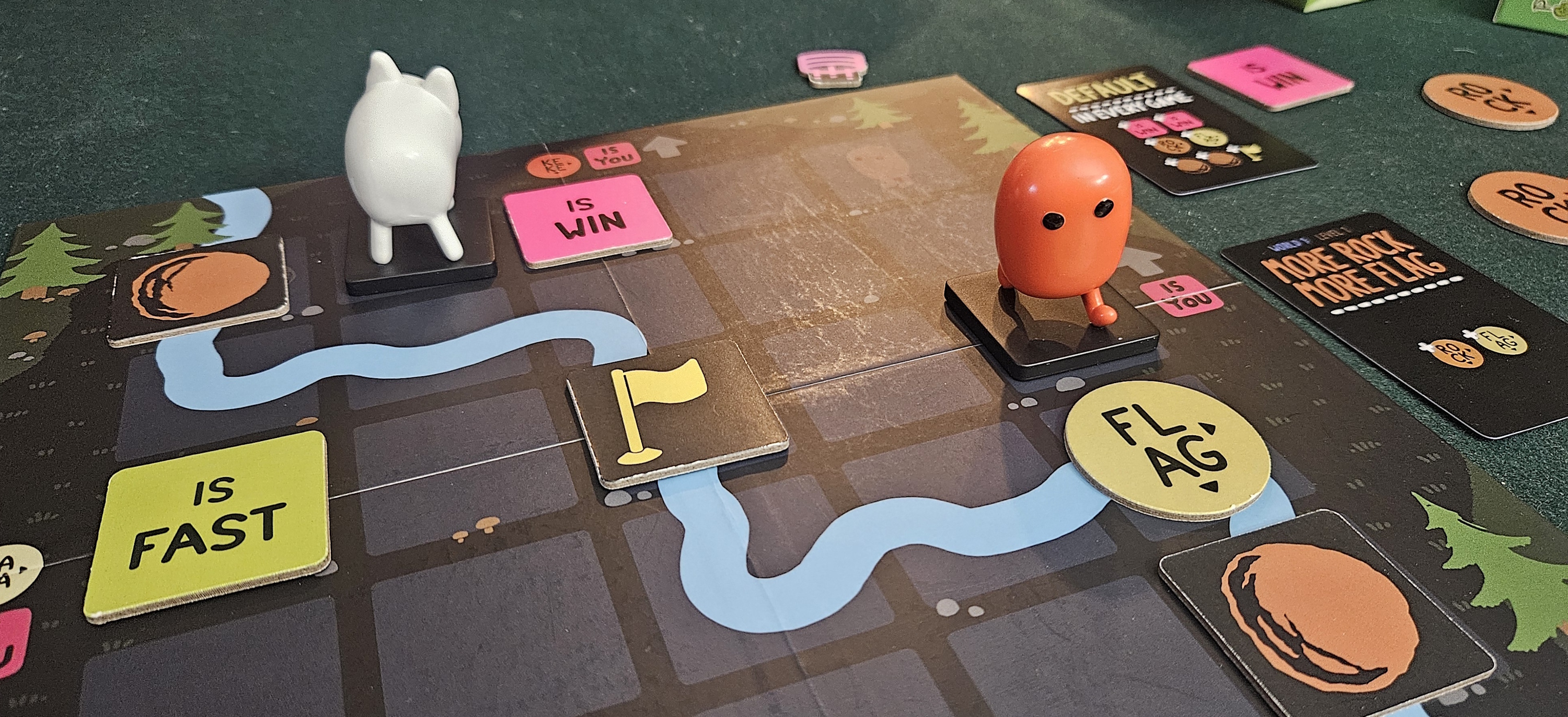
Baba likes to keep it high and tight.

Baba Has Lots of Options. But not too many at any given time.

It doesn’t take long for this rubric to turn pretzels and loop-de-loops and barrel rolls on itself.

For one thing, there’s a lot you can do with a few basic phrases. Put “Rock” next to “Is You” and suddenly “Rock Is You.” Now instead of only moving Keke, you can also move any rock as though you were the rock. Spell out “Rock Is You” and “Rock Is Win” at the same time and you might be able to win by stepping one rock onto another rock — because you’re a rock and also rock is win. Or you could do things more simply by just spelling “Rock Is Win” and having Keke, who is you, step onto the rock. Fewer steps that way.

At the same time, fewer steps isn’t always better, because both you and your opponent are messing with the integrity of these phrases. Usually by pushing and pulling, but other tricks eventually reveal themselves as well. As a rock, maybe you push apart the phrase “Flag Is Win.” Now the flag isn’t win, so your opponent, Baba, who was one turn away from stepping on the flag, cannot win. At least not without somehow putting that phrase back together or creating another. Or by layering the game’s syntax and box-pushing puzzles over the top of each other so that your rival is checkmated into permitting your win.

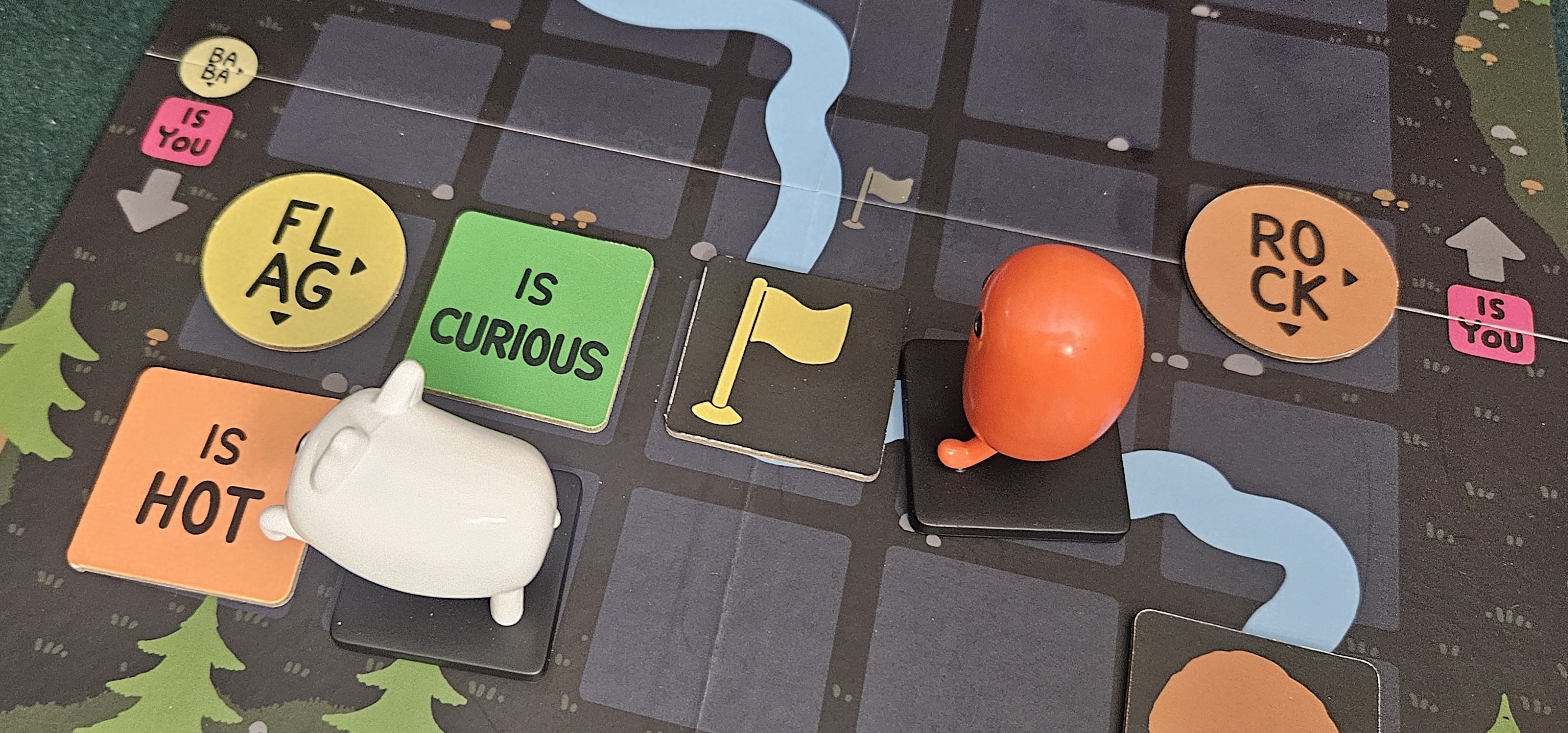
Also, there are heaps of these phrases, all capable of jumbling together to create dynamic new rulesets. For example, maybe something on the board becomes “Curious.” This means that anything that moves into its row or column will cause that thing to come wandering over to see what’s snuffling about. Or perhaps Baba becomes “Thirsty,” inclined to scoot over to the river spaces at the end of each turn. Or the river decides to begin to flow downhill, potentially whisking items off the board altogether.

Sometimes these rules can have unintended consequences. Such as when a “Hot” item comes in contact with a “Melt” item, which destroys the latter. It’s possible that you will even be destroyed. You as in Baba, or you as in Keke, depending on which side you’re playing as right now. If you are something else on the board — a rock, a flag, an errant piece of syntax uplifted to temporary sentience — then you can continue to function, maybe even calling your destroyed body back onto the board, until such time as the rule is broken into pieces.

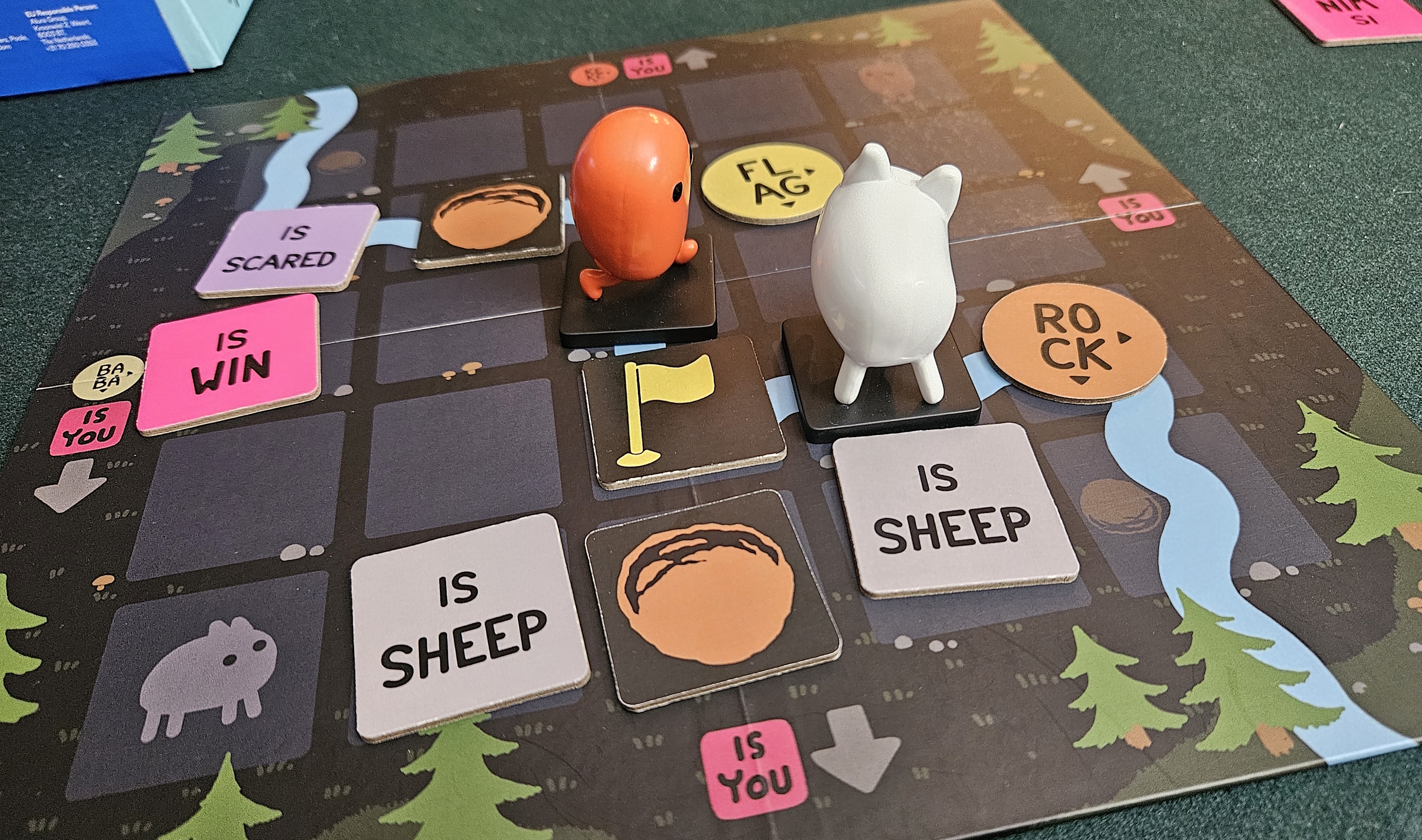
I needed at least one image that showed the scale of the entire board.

Baba Took A Wide Angle Shot.

There are three main things I would impress upon you about Baba Is You: The Board Game.

The first is that it’s incredibly funny. I mentioned that Baba recalls Hayward’s earlier effort, That Time You Killed Me, another notably funny game. Their commonalities are many. Both are short abstract games with ever-shifting rules. Both are tight two-player duels on claustrophobic boards. Both allow precisely two actions per turn, which is just enough to get something done but not enough to accomplish everything you need. Also, if played in an obnoxious manner, both can result in little I-step, you-step conundrums that aren’t especially interesting to resolve.

But where Baba Is You differs from That Time You Killed Me is crucial. These are dramatically different games in scope and process. Moves are harder to undo than those in That Time You Killed Me, with boxes usually sticking around for the duration of the match. Also, the comedy doesn’t arise from the prose. There’s none to speak of anyway. Here, Baba and Keke’s misadventures are pure slapstick. It’s the joy of assembling a mousetrap only to trigger it in your own face.

Which is also to say, the game is hard. At least it’s hard for me and the people I’ve played it with. I came into the game forearmed, having played Teikari’s original video game. But when introduced to newcomers, I found it often perplexed them. Four different opponents bounced off its systems. The combination of box-arranging and word-making is no easy thing to get a handle on.

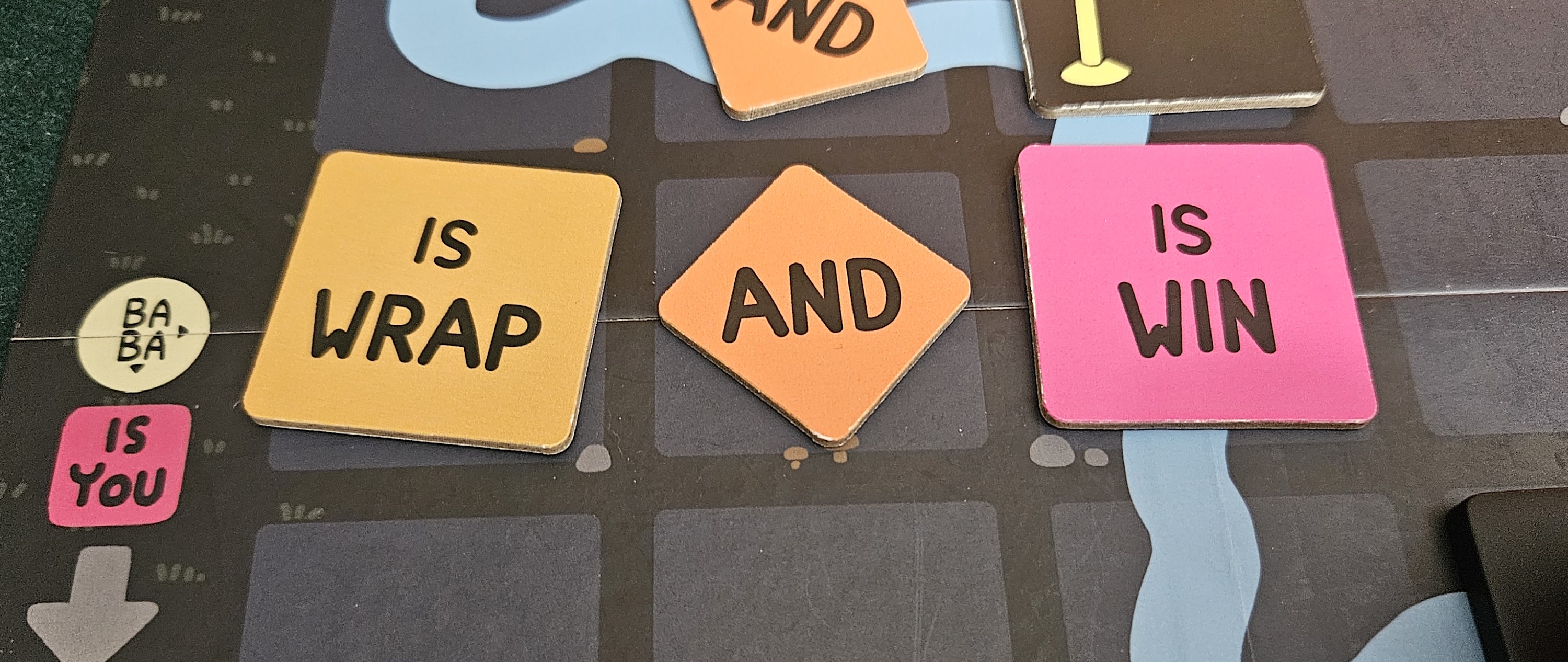
Baba Refusing Is Grammar to Understand.

Baba Wishes To Understand Grammar.

Then my seven-year-old requested a try. She’d watched me try it with her older sister and Summer. I figured there was no harm. She plays all sorts of games that are beyond her level, so she’s a good sport whenever something doesn’t match her expectations.

Except she took to it immediately. To her, the syntax puzzles were a joy, a constant wellspring of experimentation. The box-pushing was tougher, especially when she developed some creative interpretations of which boxes could be pulled. But making innovative new phrases became her favorite thing. She began to request it every day before school, insisting on new chapters with their punch-boards of nouns and adjectives. When we would walk to class afterward, she would bounce along, singing about the different combinations of words she had made. “Daddy, I’m floating, like Baba! Daddy, watch out, I’m gonna melt you! Daddy, the hole in the grass over there is win!” Sharing the various ways she had discovered to upset reality.

Which is another way of saying that Baba Is You doesn’t fit every brain. But when it fits, it fits with a satisfying click.

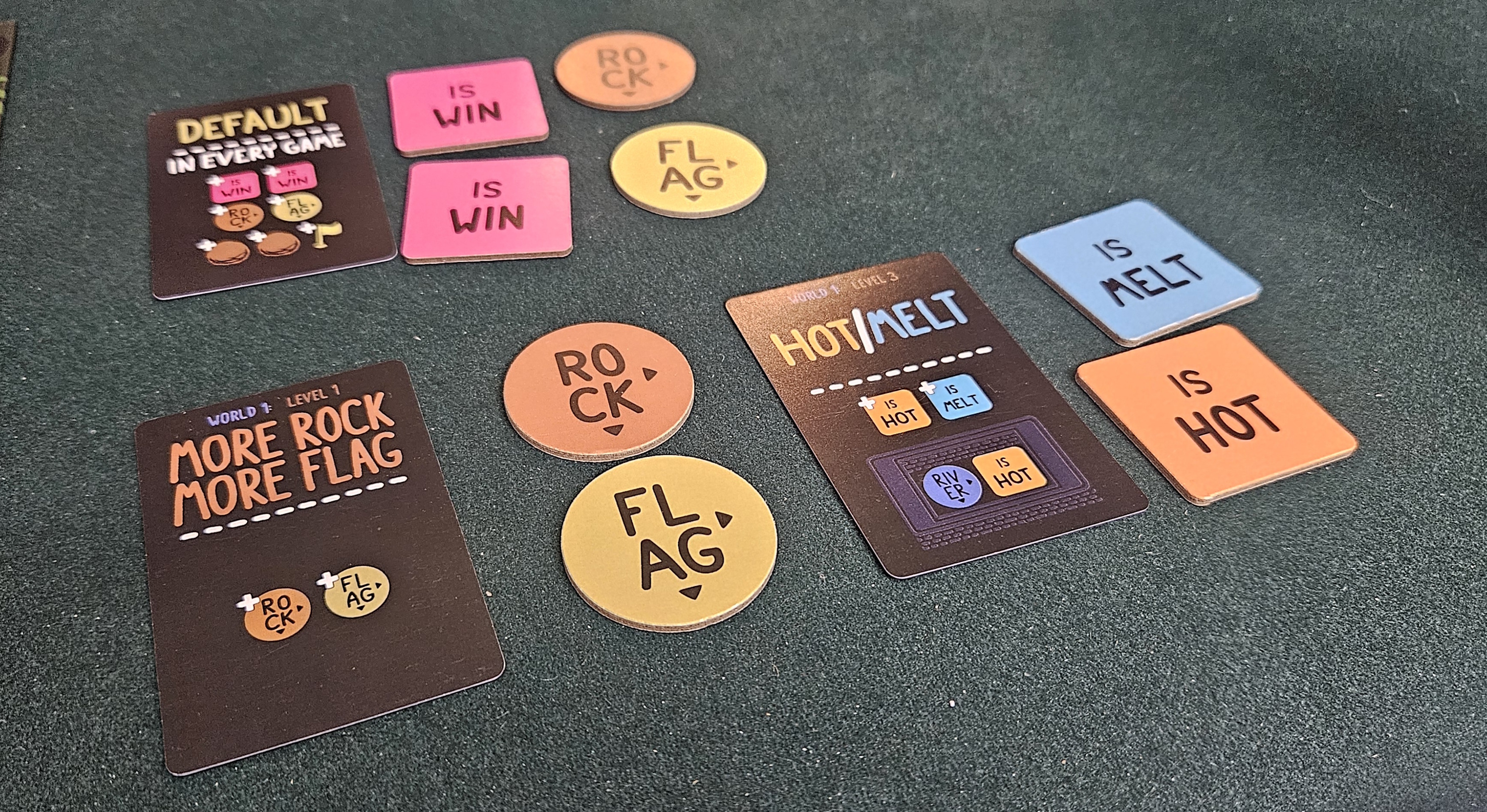
To the designer’s credit, there’s some secret sauce in the recipe… and it’s basically mayonnaise. As in, not the most exciting to talk about, but an essential splash of flavor nevertheless. The way it works is that you play a match with only a couple of keywords. Then, when that’s over, you add a new keyword and the loser gets to decide which older word is removed. This keeps the game lively and defangs the threat of losing. Rather than wagering everything on a single session, Baba Is You is played as a flight of five, seven, or possibly more matches, each building on what came before. Little metagames develop, instances where both parties want to see a keyword used to greater effect, or perhaps someone gets fed up with a Fast Baba zipping around the board and deletes the “Fast” keyword from existence altogether. It’s a dang smart way to approach the game as a whole, encouraging experimentation and risk-taking instead of putting all that weight on a single bundle of moves.

I didn't take a picture of BABA IS BOSS, but that would have done good too.

Baba Is a Perfect Outro.

Put together, Baba Is You: The Board Game becomes more than the sum of its parts. It’s a comedy game that’s genuinely thinky, a thinky game that bounces off some brains but burrows into others, and a technical achievement that always feels one step ahead of both players. When it works — and for some, that won’t happen — it’s one of the funniest, most generous titles of the year, a constant reinvention of what it means to be Baba.


A prototype copy of Baba Is You was temporarily provided by the publisher.

(If what I’m doing at Space-Biff! is valuable to you in some way, please consider dropping by my Patreon campaign or Ko-fi. Right now, supporters can read the next installment in my series Talking About Games, this time tackling the topic of what makes a good list! Naturally, the piece includes a list.)
They’re Just Questions, Leon – A Totally Human Review

14. September 2026 um 15:00
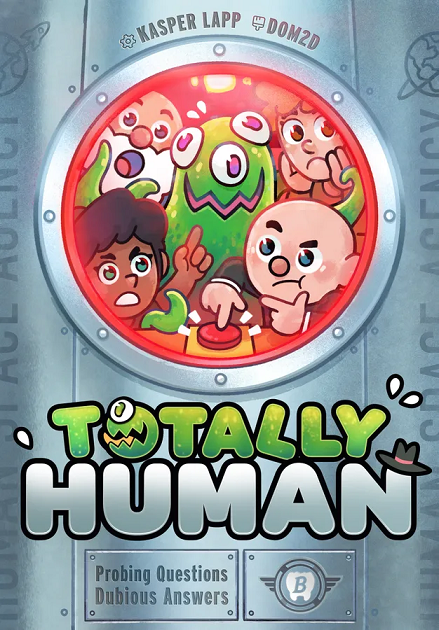
Kasper Lapp, Voight-Kampff test, 10-minute social deduction game is the kind of pitch I hope to hear when riding the elevator. Lapp previously designed quirky hits like Magic Maze and That’s Not a Hat, so his brand of silly seems uniquely appropriate for this sort of nonsense. When it works the playful interrogation is both…

Read more →

After making its name with Knizia, Bitewing Games is looking to video games for its next big hits

09. September 2026 um 17:30

“Nobody, and I mean NOBODY, trusts two random dentists to make a fantastic board game.”

That was the problem facing Nick Murray and Kyle Spackman, two friends who fell down the board game rabbit hole while at dental school together, when they decided to launch publisher Bitewing Games in 2020.

Bitewing’s efforts to reach out to designers ultimately provided what might have seemed an ambitious solution to that credibility problem: work with one of the biggest names in board games, prolific German designer Reiner Knizia.

Knizia and his team presented the fledgling publisher with seven prototypes to choose from, three of which became its first publishing project: the Criminal Capers Collection.

It proved the start of a defining relationship. Bitewing has since published 16 Knizia games across more than five years, building a particular reputation for digging through the legendary German designer’s enormous back catalogue for overlooked titles it believes can be successfully reworked for today’s market.

Those successes have included Zoo Vadis, Cascadero, Cascadito, Iliad, Ichor, Silos, Ego and Orbit – with Bitewing’s campaigns featuring Knizia titles among games from other designers having raised more than $2.2m between them.

But after a run of six Knizia releases last year, Murray believes Bitewing has now found “most, if not all” of the hidden gems that suit the company’s catalogue – and is increasingly looking towards video games as another route to finding potentially long-lasting hits.

Bitewing Games co-founder Nick Murray

He told BoardGameWire, “There was a period of time where Bitewing was finding some phenomenal hidden gems in Knizia’s catalogue and inspiration struck for how to evolve them, and we were fortunate that Reiner was up for revisiting them with our development goals in mind. That all culminated in a truly wild run of 2024 and 2025 Knizia releases… an explosion that I don’t expect we’ll ever see again.

“Of course we are still finding a few here and there like Gold Country, Eureka, and Escar-GO, but after playing over 200 different Knizia games (and researching hundreds more) I’ve increasingly felt that we’ve found most (if not all) of the hidden gems that are a great fit for Bitewing.

“The other thing worth noting about re-implementing older games is that you are immediately fighting an uphill battle. You see it from gamers, critics, localization partners, and retailers, especially those who have been in the industry for enough years – if a game is perceived as “old”, even it is entirely new to them and dramatically updated, they lose interest.

“Even when we go to great lengths to show how the original designer has improved the gameplay and the art team has enhanced the presentation, helping a game evolve into something even more special and exciting (at least in my opinion), it’s sometimes not enough for certain folks.

“Entirely new games have a huge psychological advantage over reprints, rethemes, and reimplementations – unless that old game is considered a major classic like Ra or Cyclades.”

Successful Roll

Bitewing’s push into video game-inspired titles began with Balatro-inspired Rolling Deep, whose Kickstarter campaign alongside Eureka raised more than $700,000 this summer – more than double the revenue of any of Bitewing’s previous 12 crowdfunding projects.

The publisher is now pushing further into video games with adaptations of two established indie releases – most notably acclaimed 2019 puzzle game Baba Is You, which picked up a string of major industry awards on its release and has sold hundreds of thousands of copies through digital PC distribution platform Steam alone.

Launching alongside it is Party House, one of the breakout games from highly regarded 2024 retro videogame collection UFO 50. Its creator Jon Perry is also designing Bitewing’s tabletop adaptation, adding to a board game CV that already includes Air, Land & Sea, Spots and multiple awardwinning 2025 release Hot Streak – Murray’s favourite board game of last year.

The shift forms part of a significant new phase for Bitewing, which also saw Murray step away from dentistry this year to work on the publisher full-time – making the commercial success and longevity of the games it chooses increasingly important.

Murray told BoardGameWire, “The most deliberate change we are making is shifting our focus from many small passion projects to more carefully selected heavy hitters. Especially now that I’ve stepped away from dentistry this year to go full-time on Bitewing, I want to make games that have the best potential to last more than one or two print runs.

“My family’s livelihood depends on me making smart decisions with the projects we take on. So we’re not only trying to reach new audiences (like the solo gaming community with our Table For One Series, Rolling Deep and Eureka), but we’re also trying to find and create the very best experiences in each genre.”

Murray told BoardGameWire that despite his long interest in video games – he says he has owned every major Nintendo console and handheld since the NES was released in the mid-1980s – making board game adaptations of digital titles “wasn’t really something we were actively seeking”.

He said, “Obtaining licensing rights for established IPs is a rather intimidating challenge. Plus that’s only half the battle – having a great IP to slap onto a game box doesn’t automatically make it a great board game. But we were lucky enough to have a huge opportunity land in our laps, and we’ve fully embraced it.

“The two projects that have really blown the doors open for us have been Rolling Deep and Baba Is You: The Board Game, which are both designed by Peter C Hayward. So if anyone deserves the credit for being a catalyst to Bitewing’s strategic evolution, it’s Peter.

“As a huge fan of Balatro and Baba Is You, and a very capable board game designer, Peter set out to pay homage to Balatro with a dice-crafting roguelike adventure and adapt Baba Is You to a 2-player strategy game, in collaboration with the developer of Baba Is You. When Peter pitched these designs to us, I was hooked. I’m already a huge fan of Balatro and Baba Is You, so those were an easy sell for me.

“With Rolling Deep, I realized that this was also a perfect opportunity to use a watercolor rubber hose animation style for the game – reinvigorated by Cuphead, which I’m also a huge fan of. So the first artist I reached out to was Caitlin Russell [the background artist of Cuphead], and we were extremely fortunate to have her join the project.

“From my perspective, we’re simply doing what we’ve always done… which is pouring all of our passion and excitement as fans of these types of games into the biggest opportunities we can find.

“Of course, despite Reiner Knizia being perhaps the world’s biggest board game designer, even he is eclipsed by so much of the video game industry. So I’m not blind to the fact that titles like Rolling Deep, Baba Is You, and Party House have a much bigger reach straight from day one.

“The longer I’m in the board games industry, the more I realize just how important it is to stand out. With over 5,000 new games releasing each year, it’s no wonder that so many great games are easily overlooked or quickly forgotten.

“While many publishers like Bitewing are fortunate to be sustained by an amazing fanbase, we’re all hunting for that next huge hit. Having one or more ‘evergreen’ titles in your catalogue allows for so much more security and growth.”

Finding Hits

Murray added that Rolling Deep’s success especially had affected how he thinks about selecting future releases.

He told BoardGameWire, “Rolling Deep has proven to me that for designers and publishers, you are much better off starting with something that is popular or widely loved and building a game or product on that.

“That doesn’t necessarily mean that it has to be an established IP or a direct homage to a specific game (like Balatro). Many huge hits have taken one or more popular ingredients and presented them in a thrilling new way: Dune Imperium combines deck building with worker placement (two very popular mechanisms). Magical Athlete takes wacky player asymmetry (another popular board game mechanism) and maximizes it in a highly approachable racing game. Wingspan takes bird watching (an immensely popular hobby) and turns it into the ultimate game for bird fans.

“In the case of Rolling Deep, the concept was ridiculously easy to get folks excited about with just one sentence: A Balatro-style roguelike solo adventure featuring dice crafting and artwork inspired by Cuphead.

“To me, Rolling Deep and other hits like the ones mentioned above have become the gold standard for how marketable we want all of our games to be.”

Murray hopes to continue that success with Party House and Baba Is You, which are due to launch together on Kickstarter on September 15 – and the campaign is already showing signs of reaching well beyond Bitewing’s existing board game audience.

He told BoardGameWire at the end of August that pre-launch follower numbers were tracking alongside Rolling Deep, while trailers for the two games had generated unusually high viewing figures.

The Baba Is You board game trailer alone has generated more than 240,000 combined views across Bitewing Games’ and Baba Is You video game creator Hempuli’s YouTube channels – far more than any of the publisher’s previous game trailers or videos.

That contrasts with Murray’s experience of the games’ reveal at Gen Con, where he said few of the board game media attending had played either original video game.

He told BoardGameWire, “My expectation is that we’ll see a huge percentage of our backers for this project be from the video game community rather than the board game community. And I’ll be thrilled if our adaptations help any of those people fall in love with board games.

“I firmly believe that board games are for everyone! Anyone who says otherwise just hasn’t found the right game for them (yet).”

But Murray added that attracting an audience from outside the traditional board game market also puts greater importance on getting the adaptations themselves right – preserving what people like about the original games without attempting to reproduce them wholesale on the tabletop.

He said, “I think a lot of adaptations make the mistake of trying to perfectly simulate or mimic the experience of the IP they are based on.

“Instead of embracing the strengths and mitigating the weaknesses of our tabletop medium, they try to cram a square peg into a round hole. Or they take the opposite approach and merely slap a popular brand on a board or card game without much meaningful connection between the two.

“Of course there are many phenomenal exceptions – see Slay the Spire, Mechs vs Minions, and Wilmot’s Warehouse, to name a few.

“With anything IP related, my goal is to wow both the fans and the creators of that IP. The adaptation should preserve the spirit of that IP, but it should also fully embrace and respect its form as a tabletop game.

“And it should stand on its own as an incredible board game experience, even for people who have zero familiarity with the IP.”

Murray added that he hopes Baba Is You, Party House, and Rolling Deep are enough to “get the ball rolling” for other video game adaptations.

The push into videogames does not mean Bitewing is moving away from Knizia, however, with Murray saying its long partnership with the designer “will continue” – adding that the company’s wider slate is also expanding through work with designers including David Thompson, Trevor Benjamin, Brett J. Gilbert, Kasper Lapp and Perry.

Murray said, “Folks will always regard Bitewing and Knizia as close partners, and we’re proud of it! But I’m always seeking opportunities to work with my favorite creators.”

The Kickstarter for Party House and Baba Is You is set to launch on September 15.

The post After making its name with Knizia, Bitewing Games is looking to video games for its next big hits first appeared on .

Rolling Deep: Solo-Würfel-Roguelike auf Kickstarter

28. Juni 2026 um 13:21
Rolling Deep: Solo-Würfel-Roguelike auf Kickstarter

Rolling Deep ist ein reines Solospiel und ein Balatro-inspiriertes Würfel-Roguelike: Sie führen ein Trio von Würfelkopf-Abenteurern durch einen unruhigen Vulkan hinab zum Erdmittelpunkt. Auf Kickstarter hat der US-Verlag Bitewing Games sein Finanzierungsziel schon um rund das 25-Fache übertroffen. Hinter der Hype-Zahl steckt allerdings vor allem ein Dice-Building, bei dem Sie Ihre Würfel über viele Läufe Stück für Stück umbauen.

Eckdaten

  • Spielerzahl: 1 (reines Solospiel)
  • Spielzeit: 45 Minuten (Verlagsangabe)
  • Alter: ab 10 Jahren
  • Komplexität (BGG-Gewicht): 2,5 von 5
  • Designer: Peter C. Hayward
  • Illustration: Alexandra Preda, Caitlin Russell
  • Verlag: Bitewing Games
  • Erscheinung: 2027

Was Sie im Spiel tun

Jede Runde würfeln Sie mit den Würfeln Ihres Teams, die für dessen Aktionen beim Abstieg stehen. Sie entscheiden, wann Sie handeln, also einen Wurf werten, und wann Sie es auf einen neuen Versuch ankommen lassen. Mit Reroll Potions werfen Sie einzelne Würfel neu, bevor Sie sich festlegen. Werten Sie einen Wurf, bringt sein Wert Sie näher an die Zielpunktzahl der aktuellen Etappe. Zwei Ressourcen steuern Ihr Vorgehen: Zeit legt fest, wie viele Wertungen Ihnen pro Runde bleiben, Reroll Potions bestimmen, wie oft Sie Ihr Glück herausfordern dürfen. Das ist klassisches Push Your Luck, denn das Scheitern kennt nur eine Richtung: Verfehlen Sie in einer Runde die Zielpunktzahl, verlieren Sie sofort (Sudden Death). Dieses ständige Abwägen kennen Solo-Fans etwa aus Mini Rogue: The Council, einem weiteren Solo-Roguelike mit Push Your Luck.

Kapitel, Bosse, Shop

Der Abstieg gliedert sich in fünf Kapitel mit je drei Runden. Mit jedem Kapitel steigt die Schwierigkeit, und die letzte Runde eines Kapitels ist ein Boss, der die Regeln genau dieser Runde verändert. Solche Bossbegegnungen, die mitten im Lauf die Regeln umschreiben, kennt man auch von Solo-Titeln wie Jason and the Argonauts. Zwischen den Runden besuchen Sie den Shop. Dort geben Sie Münzen für zweierlei aus: für permanente Würfel-Upgrades, die einzelne Würfelseiten verändern, etwa indem sie neue Werte zeigen oder beim Werten Münzen und Reroll Potions erzeugen, sowie für Verbrauchs-Ausrüstung. Wer alle fünf Kapitel übersteht und den finalen Boss bezwingt, erreicht den Kern des Vulkans und gewinnt.

Dice-Building als Herzstück

Strategisch lebt Rolling Deep von eben diesem Umbau der eigenen Würfel. Über viele Läufe hinweg formen Sie aus Standardwürfeln eine Maschine, die Münzen, Neuwürfe und Punkte aufeinander abstimmt. Konkret tauschen Sie etwa eine schwache Würfelseite gegen eine, die beim Werten Münzen abwirft, und finanzieren damit im nächsten Shop das nächste Upgrade; oder Sie setzen auf Seiten, die Reroll Potions erzeugen, und spielen dadurch aggressiver auf hohe Würfe. Über Achievements schalten Sie nach Verlagsangabe Hunderte weiterer Karten frei. Die Tiefe eines einzelnen Laufs bleibt dabei überschaubar; der Wiederspielreiz entsteht laut Verlag vor allem aus diesem wachsenden Fundus an Karten und Herausforderungen. Genau diese Verzahnung aus Würfelwürfen, Risikoabwägung und langfristigem Aufbau ist die Anleihe bei der Videospiel-Vorlage Balatro.

Der Verlag

Bitewing Games wurde von den beiden Zahnärzten Nick Murray und Kyle Spackman gegründet; der Name spielt auf eine zahnmedizinische Röntgenaufnahme an. Der Verlag fiel zuvor mit Titeln wie Trailblazers und dem von Reiner Knizia gestalteten Zoo Vadis auf. Designer Peter C. Hayward hat sich zuvor vor allem mit kompakten, ideenreichen Spielen einen Namen gemacht. Rolling Deep ist der erste Titel der neuen Solo-Reihe Table for One.

Zwei Spiele in einer Kampagne

Die Kampagne bündelt zwei eigenständige Solospiele. Neben Rolling Deep steckt mit Eureka! ein zweites, laut Verlag Yahtzee-inspiriertes Würfelspiel in den Pledges, in dem Sie Edelsteine schürfen und Ihren Würfelvorrat verwalten. Für Rolling Deep selbst gibt es zudem die Erweiterung Rolling Deeper, die in den Premium-Pledges enthalten ist und laut Verlag vor allem zusätzliche Karten und Achievements ergänzt.

Pledges: Was bringt welche Stufe?

Wichtig vorab: Der mit 15 US-Dollar günstigste Eintrag ist ein reiner Händler-Pledge (Retailer) und kein Einstieg für normale Unterstützer. Für Backer beginnt es so:

  • Eureka! allein: ab 25 US-Dollar.
  • Rolling Deep als Basisspiel: ab 59 US-Dollar, inklusive des gratis Swip Swap Promo Packs und der Kickstarter-exklusiven Ultimate Achievement Box.
  • Standard-Bundle beider Spiele: 84 US-Dollar, also vor allem der Zugewinn eines kompletten zweiten Spiels.
  • Red Hot Edition: 129 US-Dollar. Spielerisch zählt hier die enthaltene Erweiterung Rolling Deeper; der Rest (Deluxe-Upgrade-Pack, Deluxe-Würfelturm, Metallfolien-Box) ist Komponenten-Aufwertung.
  • All-In 2-Game Deluxe Bundle: 149 US-Dollar, die Red Hot Edition plus Eureka! Diese Stufe wählten mit Abstand die meisten Unterstützer.

Die Zusatzinhalte trennen sich damit sauber: spielverändernd sind die Erweiterung Rolling Deeper, das Swip Swap Promo Pack und die über Achievements freigeschalteten Karten; rein kosmetisch sind die Deluxe-Komponenten und die Metallfolien-Box.

Finanzierung mit Augenmaß

Seit dem 23. Juni 2026 ist die Kampagne live. Stand 28. Juni 2026 stehen 375.586 US-Dollar von 3.104 Unterstützern zu Buche, rund 2.500 Prozent des mit 15.000 US-Dollar bewusst niedrig angesetzten Ziels. Mitgründer Nick Murray feierte den Auftakt als den nach eigener Aussage größten Launch-Tag in der Geschichte des Verlags. Laut Kampagne schaltete eine Vormerk-Marke von 8.000 Followern die Ultimate Achievement Box frei, die nun gratis und Kickstarter-exklusiv in allen Rolling-Deep-Pledges liegt. Die Kampagne läuft noch bis Mitte Juli 2026. Weitere laufende Kampagnen sammeln wir in unserer Crowdfunding-Wochenschau.

So beeindruckend die Zahlen sind: Eine hohe Finanzierungsquote belegt Nachfrage, nicht Qualität. Rolling Deep ist noch nicht erschienen, eine unabhängige Wertung steht aus.

Für Solo-Fans im DACH-Raum

Eine deutsche Ausgabe ist bislang nicht angekündigt; BGG führt allein eine englische Edition. Die Kampagne läuft auf Englisch, Bitewing versendet weltweit. Für Solo-Fans aus Deutschland, Österreich und der Schweiz heißt das: ausreichende Englischkenntnisse und internationalen Versand einplanen.

Biffing Balatro

22. Juni 2026 um 22:42

Somebody do Wee Aquinas in noodle-arm mode.

Ready for a confession? I didn’t love Balatro, the roguelike poker deck-building game from a couple years back. Don’t get me wrong, the number-go-up part of my brain adored Balatro. But the rest, the foam of consciousness so certain it’s in control of the mammalian beast, the me suspicious of anything hypnotic, found the whole process incredibly off-putting. Which, of course, is why I played it for (oh no) 76.9 hours, about which I cannot tell you a single anecdote. Which, incidentally, is also why I hate it.

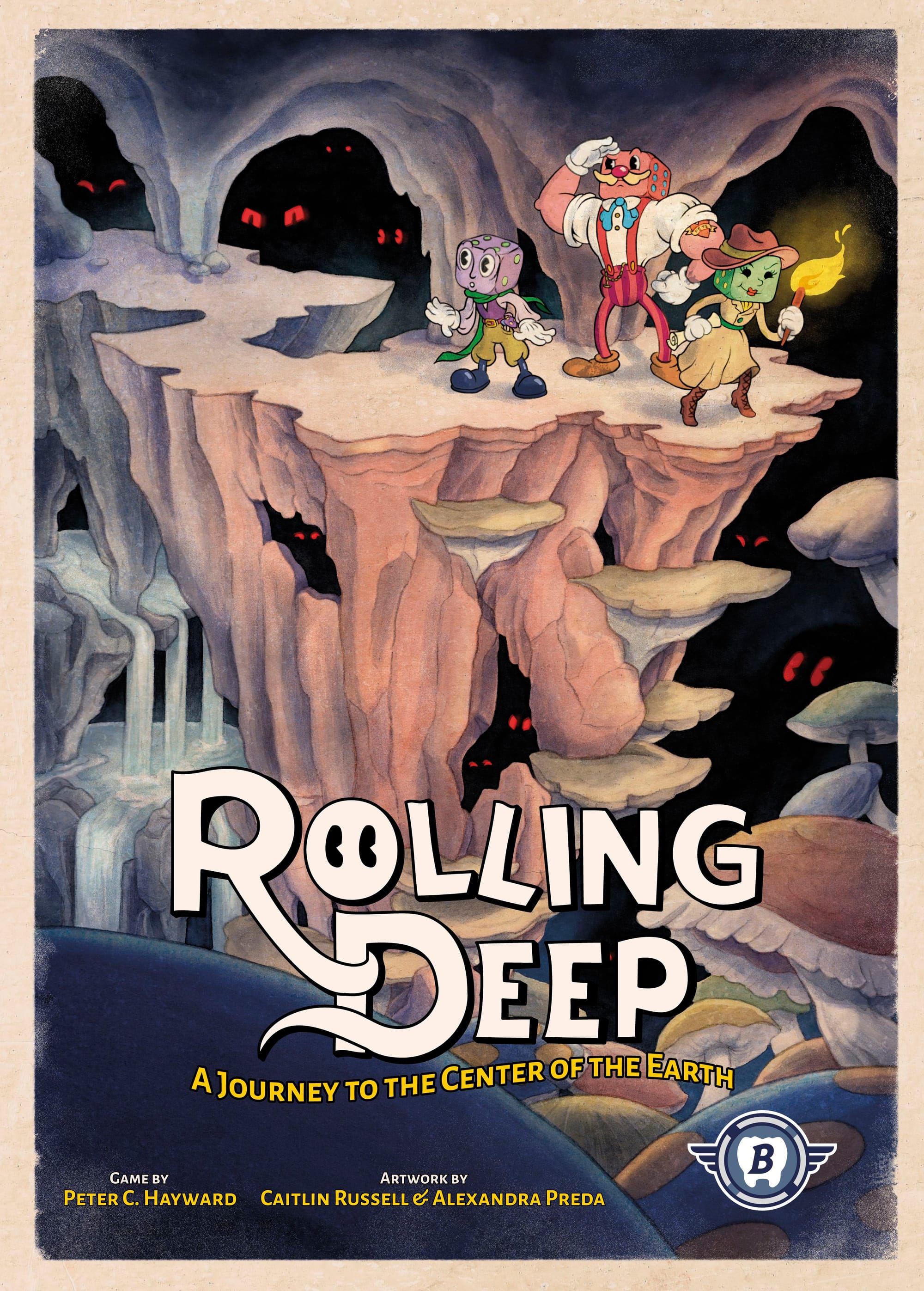
Rolling Deep is the forthcoming solitaire board game by Peter C. Hayward. Given his explicit efforts to emulate Balatro, which he’s detailed at length in a series of design diaries, one might suppose that Rolling Deep is not my jam. The Anti-Dan, as it were. But having played it a handful of times, I’ve come away with the opposite impression. Yes, this is more or less Balatro: The Board Game. But it’s so much more than that.

It’s better than Balatro, for one thing.

Warning: You cannot take away their FACES, just their faces. Their non-FACE faces.

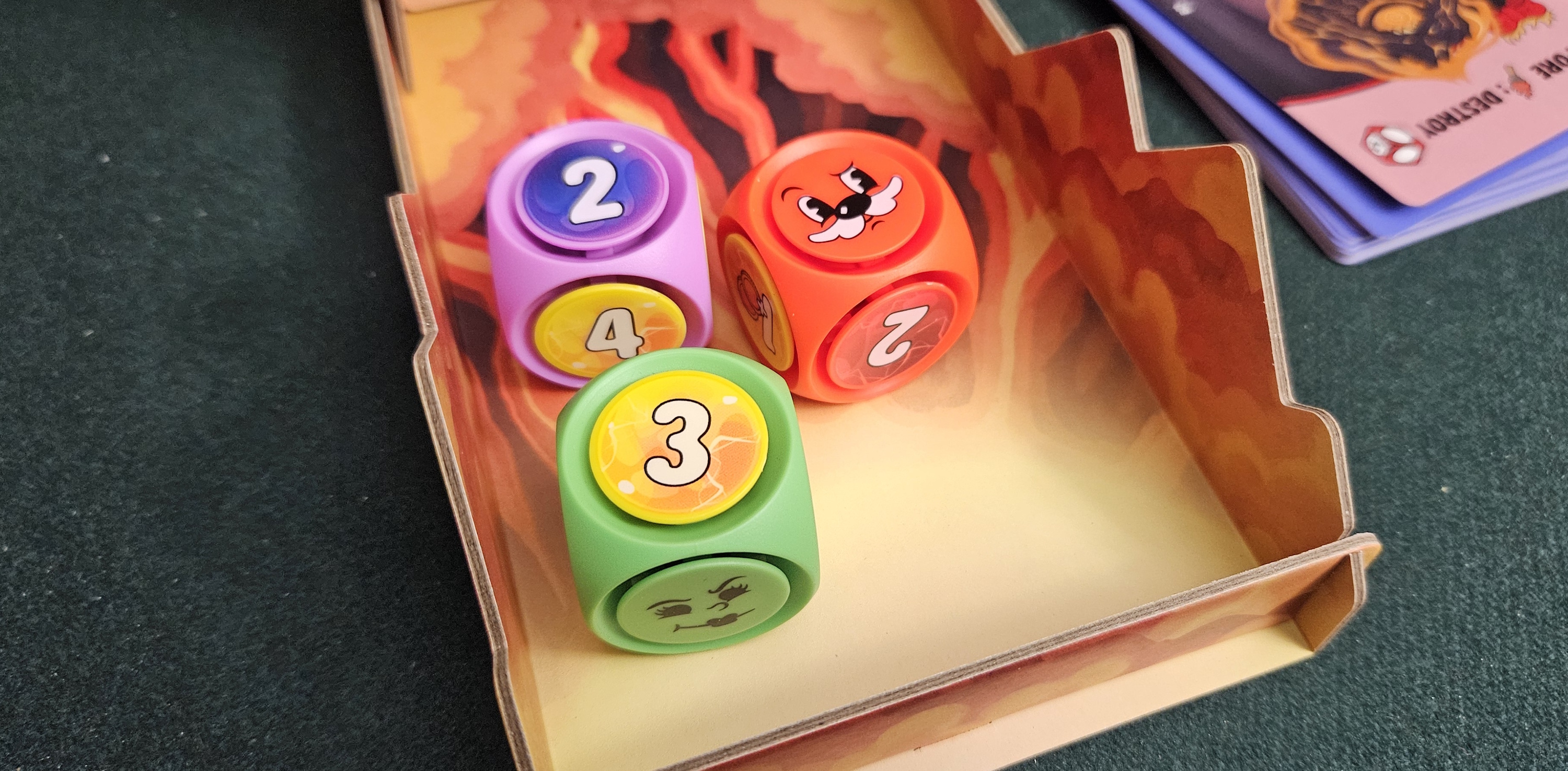
Gosh, I love being able to change a die’s faces.

What so many people in this medium call “theme” is a funny old thing. Rolling Deep is the sort of game with a “theme,” in the sense of being this discrete veil divorced from and layered atop the game’s mechanisms. What is that theme? It doesn’t matter. I mean, it matters in the sense that it provides some context for the game’s actions, looks pleasant with its Cuphead-esque homage to early Disney and Fleischer Studios animation, and justifies a portion of the game’s budget. But it simultaneously doesn’t matter to the story being told by the artwork or the proper nouns in the rulebook. At no point did I flip a card and say, “Oh no! An evil mushroom!” Instead, the story is wholly mechanistic. At the card’s turn, I would say, “Oh no! How am I going to deal with this new probabilistic conundrum?”

That might sound like a bad thing, especially given my usual emphasis on the stories that arise when we play games. But, to be clear, this is a story. It just doesn’t happen to be a story about how three dice-headed adventurers reached the center of the Earth.

Instead, Rolling Deep is the story of how I transformed three meager dice into powerhouses that rolled seventy-nine in a single go. This moment was a triumph of careful resource management, broken combo-building, sly damage mitigation, and no small amount of luck. It was exciting, tangible, and, in the game’s sharpest departure from its inspiration, memorable.

What a jerk!

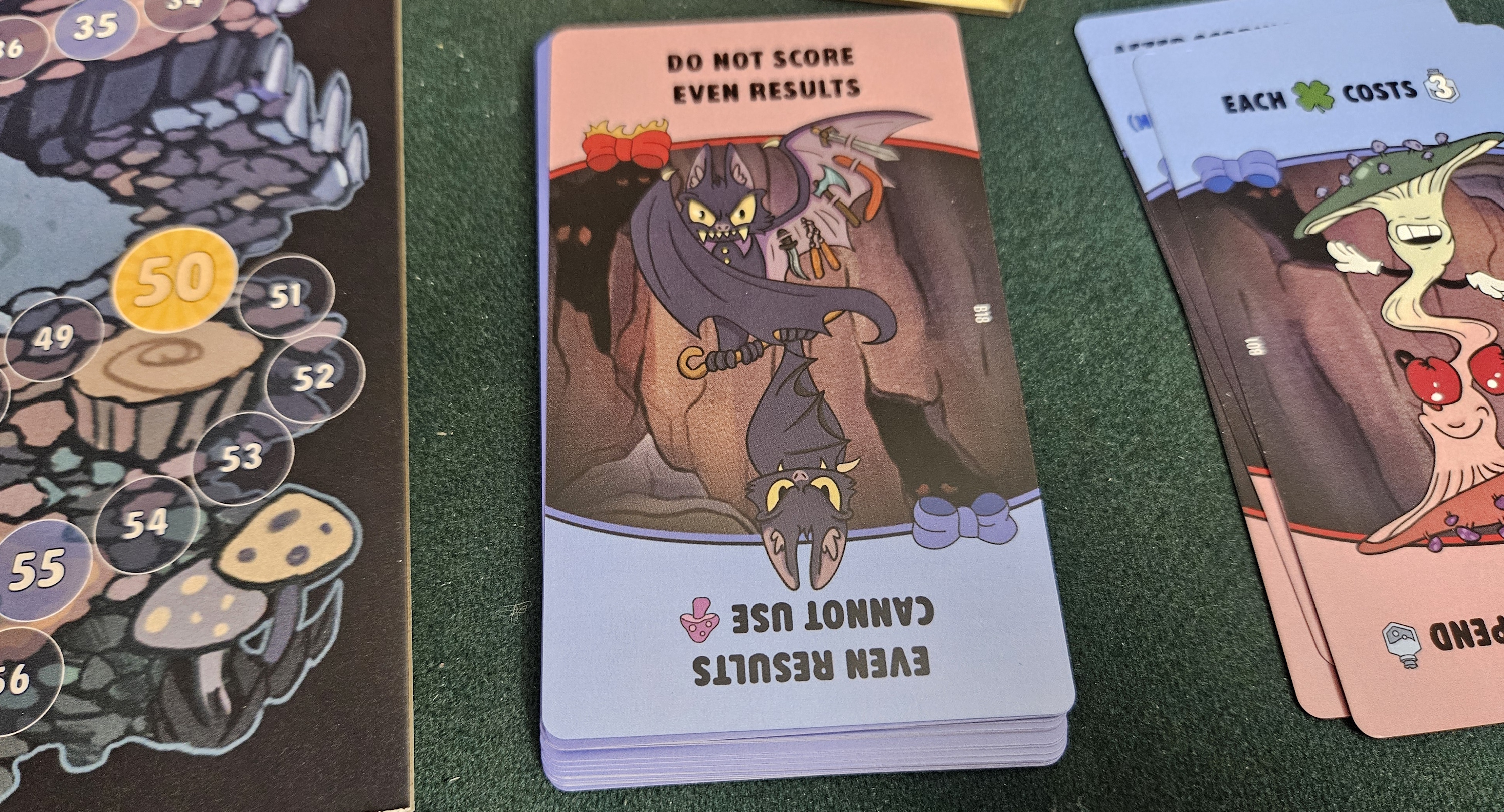
Each boss sets the tone for the round.

Every round in Rolling Deep goes like this. You’re facing a challenge that happens to be a number. Say, twenty-three. Last round, the number was lower. Twenty. Next round, it will be higher. Twenty-seven. Steadily it climbs, round by round, increasing the pressure at a steady pace, like a numerical hyperbaric chamber.

You have three rolls, all summed together, to meet that number.

But there’s a problem. At the game’s outset, reaching those later targets is impossible. These dice, you see, have rather low digits. At best, you can roll a 2. More likely, you’ll roll a 1 or even a 0, albeit perhaps a 1 or 0 that also grants you a coin or a reroll potion. Over three rolls, that means you can maybe hit a target of eighteen. And that’s with some pretty extreme luck.

Fortunately, there are two solutions to this problem.

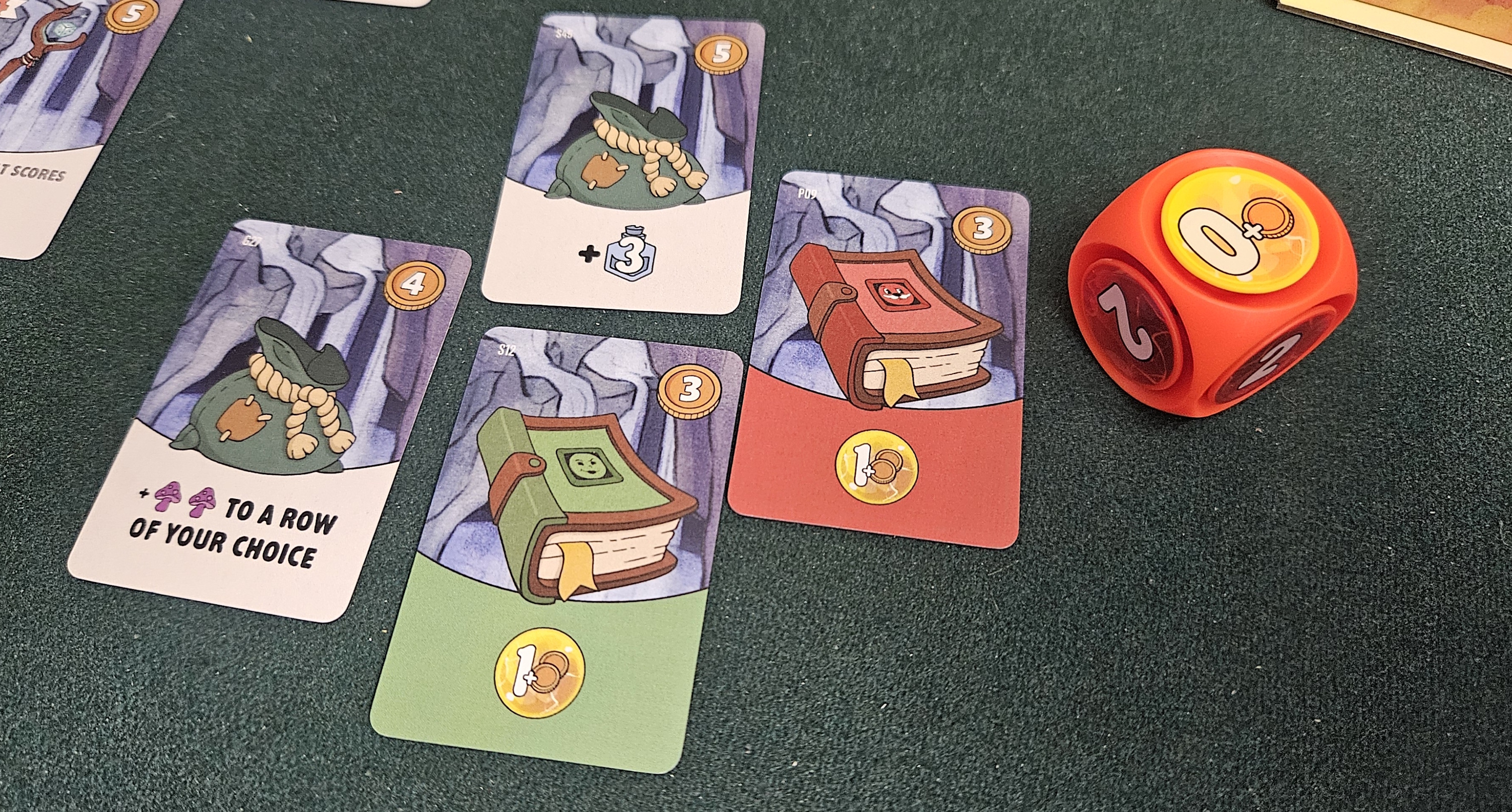
First, the faces of your dice have custom faces that can be swapped out. Picture the dice from Tom Lehmann’s Dice Realms, but way easier to handle, without the weird LEGO-breaker tool for prying faces away from the frame. Here everything clicks into and out of place with a breezy snap. Out with the 0, in with a 2 plus a potion. Click. Sayonara 1 with a pity coin, hello whopping 5. Click. Oops, now you’re rolling too high — yes, that might be a thing — so let’s turn that 5 into a 3 with a coin. Click.

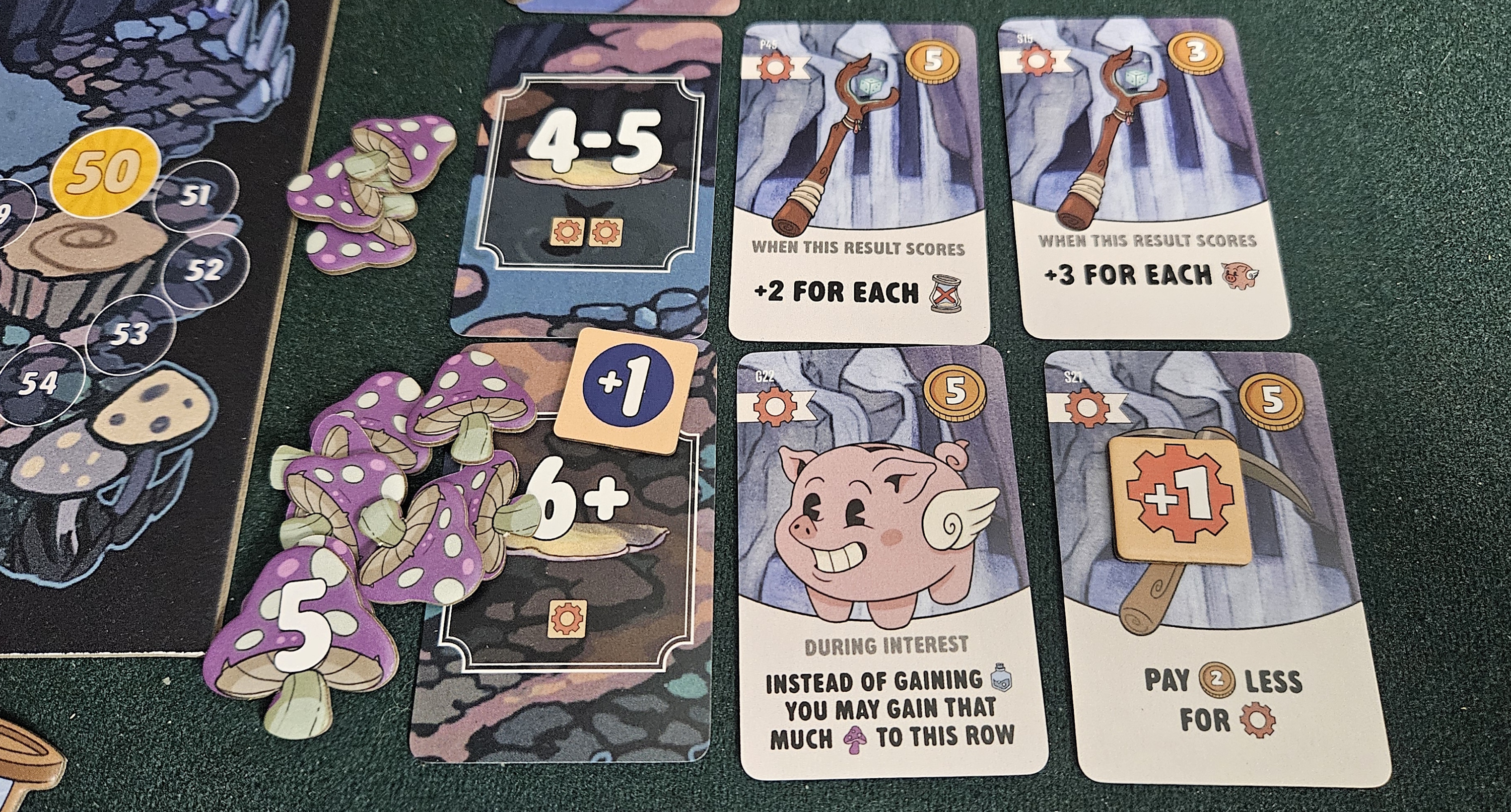
Second, the way you purchase these new faces also offers a way to improve your performance by other means. By a lot of means. You could purchase an upgrade that gives a permanent +2 to every roll. That’s the easy stuff. You might also earn a wand that only triggers with a natural roll of 4-5, and awards +3 for every piggy bank ability. Now you have a synergy going. That wand, plus as many piggy banks you can afford from the market.

That piggy gave me a zillion mushrooms by the last few rounds.

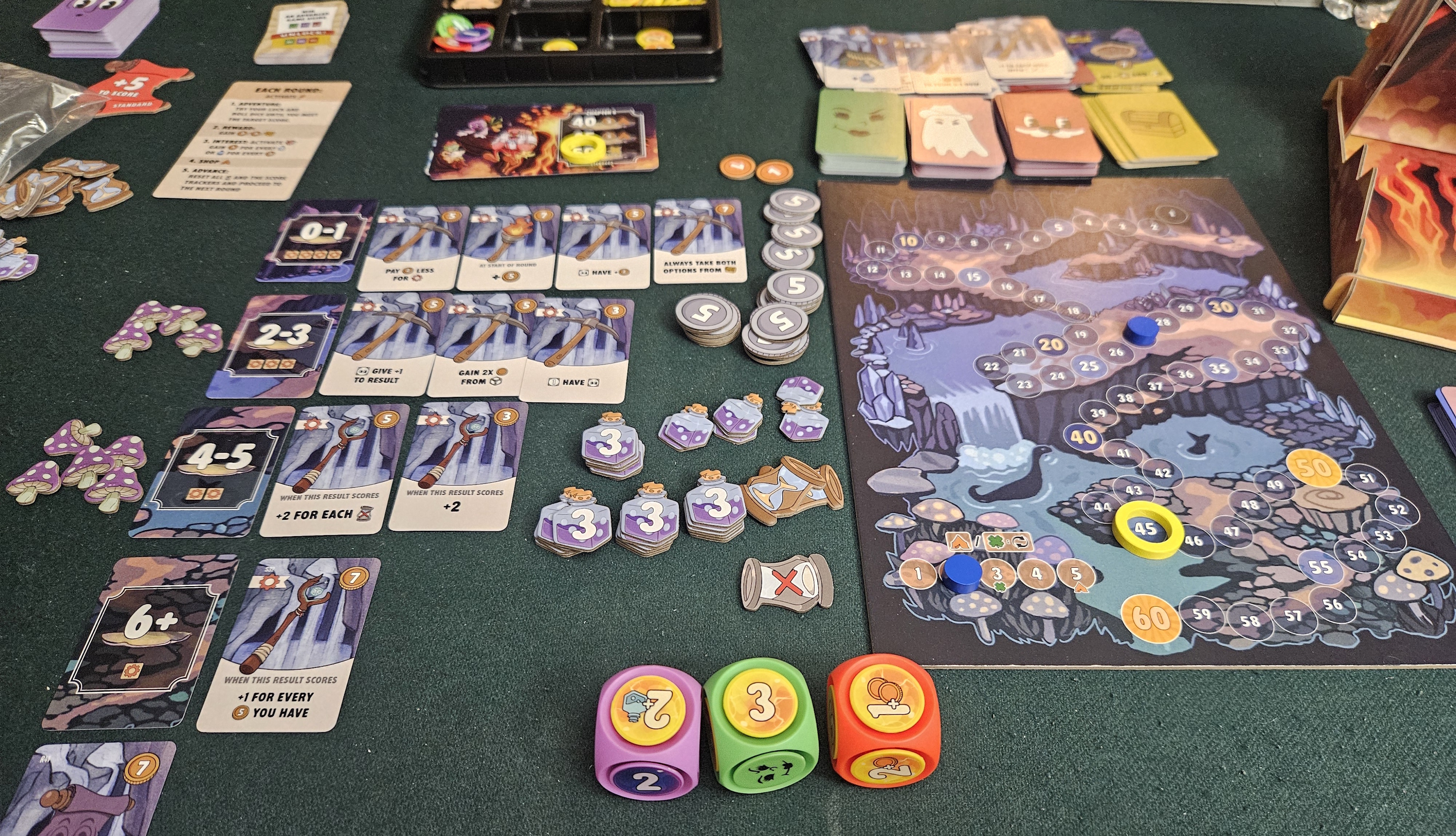
Little by little, your cards produce an engine. (Hopefully.)

Thus the game’s irresistible tempo. You roll, perhaps spend potions or use your upgrades to massage the numbers, and add that total to your sum. If you reach the target number after three tries, you gain a prize, earn interest on any leftover cash and potions, reveal and purchase upgrades from the market, and then do it all over again with a higher target number.

Every third round, you face a boss with an obnoxious special ability. Like, for example, a cartoon bat who prevents you from scoring results that are even. Or a cartoon mushroom that makes it harder to spend potions for crucial rerolls. Or a different cartoon mushroom that destroys some of your upgrades. Nasty stuff, but nasty stuff you see coming for a couple rounds before it hits you. Nasty stuff you can prepare for.

If this sounds like Balatro — well, look, Hayward isn’t concealing Rolling Deep’s influences. The dice faces are your poker deck. The upgrades are jesters. The mushrooms that boost your sum before withering are… I guess multipliers? There aren’t actual multipliers in Rolling Deep, probably because the game’s numerical targets increase linearly rather than exponentially. The possibility of expanding how many upgrades you can hold are akin to Balatro’s spectral cards. It’s all familiar. It even has achievements and unlocks. Beat the game on easy mode, you earn access to tougher delves. Break the game in one way, you gain tools that are a little weirder than the starting kit. I won’t spoil the wilder unlocks, but they’re in there for the sickos.

But if this is all so familiar, why do I say it’s better than Balatro? I knew you’d ask.

Are there other games with these dice now? They're such a massive improvement over the ones from Dice Realms.

Buying new options at the market.

For one thing, the medium itself demands a very different sort of attention from a digital game. Where Balatro hypnotizes, Rolling Deep focuses. Sure, I suppose I could zone out. But as soon as I’m asked to shift my tally along the target track, flip some upgrade cards, or shift resource tokens from one place to another, my feet are given purchase on solid ground again. If that doesn’t do it, sure as shooting the alteration of a die face will. Click.

This breeds an entirely different headspace. At no point did I awaken from a three-hour binge. Instead, the processes — the ones that are concealed behind the dazzling lights of Balatro — are entirely my responsibility. I must count the numbers or nothing happens. I must pay attention to my bonuses lest I lose them. There’s no option to glaze over and make number go up. Every upgrade must be considered, weighed against my tableau’s current strengths and gaps, and ultimately purchased or discarded. Very quickly, the physical actions that are automated in a video game become loci of concentration and even pleasure. It helps that Hayward has developed this game until it’s smooth as cream. But the remaining points of friction, some of them inherent to the medium, give me purchase in the real world.

And that extends to the gameplay itself. Because Rolling Deep is more grounded in the real, its challenges are presented as tangible, applied things, rather than wholly abstract. It’s the difference between being told some measurements and shown them against the wall or along the motor’s belt. When I assess my odds, I physically heft one of those chunky plastic dice and turn it around in my fingers. When determining where to slot an upgrade, I slot the card into a physical representation of where my rolls have aggregated. The medium becomes the gameplay and vice versa.

It helps, too, that Rolling Deep’s limited format gives it a more intimate edge. It never disappears into n-space, its numbers beyond intuitive human comprehension. My dumb animal brain grasps the gap between 23 and 41 better than that of 23,749,011 out of 41,000,000, even though they’re fundamentally similar. By scrapping the sky-high escalations of Balatro, Hayward turns Rolling Deep into a puzzle that doesn’t slide off the brain like so much oil.

There are spoilers in this picture, so don't look too closely if you care about that sort of thing.

For such a wild game, Rolling Deep never spirals into too much complexity.

And it is memorable. I mean that. Not as much as a story, not as much as something with characters or relatable confrontations. But thinking back on my sessions with Rolling Deep, I can remember specific problems and the solutions I forged to face them. I could never tell you what had happened in any given session of Balatro even a few minutes after it ended. Something about a banana? Getting a shiny joker? Opening a few card packs?

Rolling Deep is excellent. It’s a very particular kind of excellent, to be sure, a mathematical solitaire game that’s long on odds and probabilities and sums rather than story beats. But within that window, it not only matches the ambition of its inspirations, but exceeds them. Balatro who? This is Rolling Deep, baby.


A prototype copy of Rolling Deep was temporarily provided by the publisher.

(If what I’m doing at Space-Biff! is valuable to you in some way, please consider dropping by my Patreon campaign or Ko-fi. Right now, supporters can read the next installment in my series Talking About Games, this time tackling the topic of what makes a good list! Naturally, the piece includes a list.)
❌