Dynamite Entertainment has been publishing Army of Darkness comic books for two decades, feeding hungry fans with further tales featuring Ash Williams and the entire extended mythos.
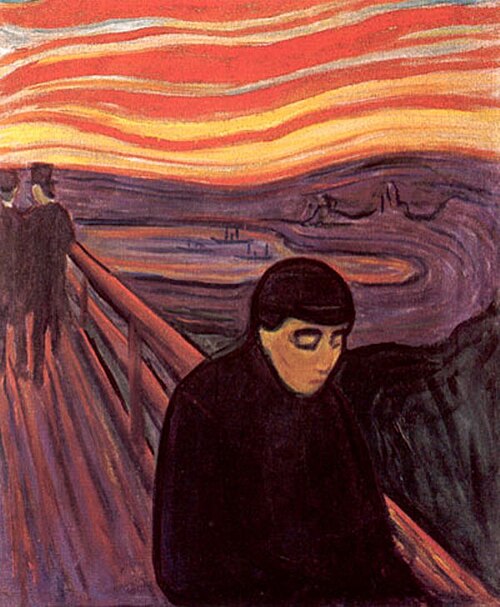
Philosopher Mara van der Lugt’s 2025 book Hopeful Pessimism challenges ideas of motivation and the role of despondency. It’s a revelation of sorts, especially for those plagued with eternal pessimism. That’s me. A relentless worrywart, down to my bones. Van der Lugt argues that it’s possible, nay encouraged, for those suffering from pessimism in a…
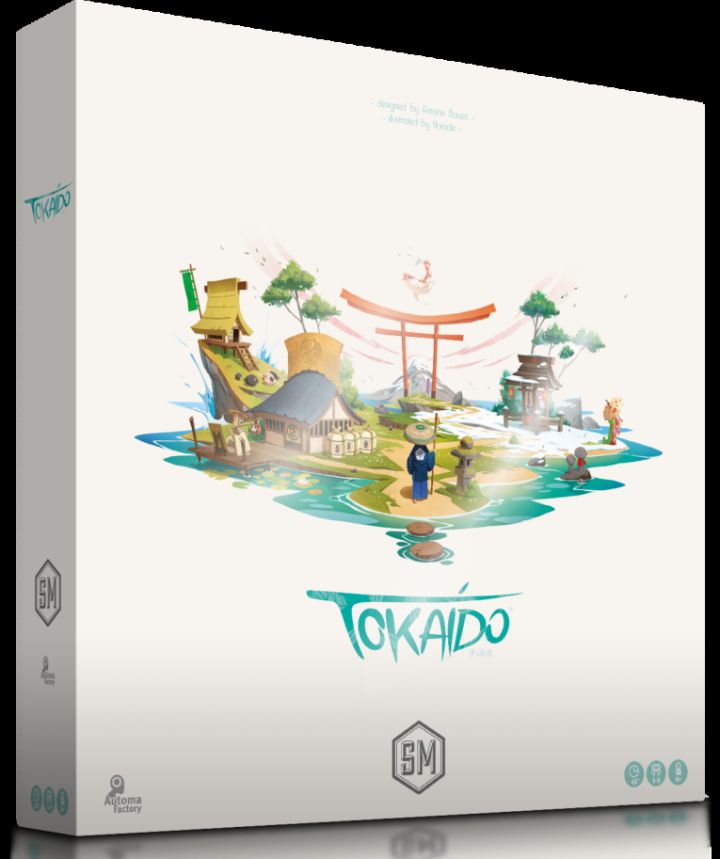
As usual with these games that Stonemaier bring into the fold this is a beautiful game. You are out exploring Japan’s East Sea Road between Kyoto and Edo, as you explore the beautiful road you will discover amazing places including hot springs, gorgeous vitas and culinary delights to explore and gain points.
The person who is furthest back near the start will always be the next to go so you open the board as you play. Each place can only be visited once unless you are playing a four or five player game then some of the locations have a round disc on their road then you can go up the road to the next open disc the point furthest from the end, you can only travel in one direction and toward the rods end. As you play you can gain points and coins, so good luck!
This is a very beautiful game that plays very easily, It also is a game that you can play quite fast 45mins plus which means that you can play this with another quick game or play it multiple times. This is a lovely game that is both beautiful and a lot of fun.
I have been asked, what are the differences between the original game and this one re-made by Stonemaier games. While the gameplay is the same, Stonemaier Games have revised the rulebook to provide more clarity. As well as producing reference cards for each players as adding some text on the cards so you don’t have to refer to the rulebook so often. They have also increased the card thickness to their standard 310gsm. Also as with other Stonemaier Games they have brought in an automa solo mode. You can order this from us at: https://www.bgextras.co.uk/other-games/other-board-games/tokaido-board-game
On October 4, 2010, I published my first post here on Boards and Bees – my overview of a then-upcoming game I was excited about, 7 Wonders. Now, 15 years and over 1200 posts later, here we are.
Seems about as good a time as any to announce my retirement. Effective immediately, Boards and Bees is done.
This blog was actually my third. The first two were OK, but I eventually found myself needing to hit the reset button and try again. This is the one that finally stuck, and it grew out of my desire to talk about board games when there weren’t many people around to talk about them with. I was still relatively new to the world of board games, having only been really interested in hobby games for about three years (my BGG birthday is August 30, 2007). I found myself fascinated by what was coming out, and found that a good way to really decide if something needed to be on my personal radar was to write about it.
I started out just writing about games I was interested in. That grew into writing reviews, and later into making lists, looking at Kickstarter, and other things. And I had a lot of fun doing it. I got overwhelmed a few times and needed a small reset to get myself going again.
And then came COVID. A lot of things changed in 2020. One big thing for me was that we had our second baby, but even before that happened, I found myself pulling back from the blog. Burnout was starting to affect me, and I started giving myself permission to take breaks. Those breaks have come more and more frequently. Eventually, I stopped taking on reviews. It was just something I wasn’t feeling passionate about anymore. I still love playing games, and playing new ones, but I’ve found myself less excited about trying to wade through the onslaught of new stuff every year, and have mostly been just enjoying playing the stuff I have.
Around mid-August of this year, I realized that I hadn’t posted in over a month. And I also realized that I didn’t really miss it. Which then led to the realization that it was probably time to hang up my spurs and ride off into the sunset on whatever metaphorical form of conveyance might apply here.
Back when I first started, video wasn’t nearly as big as it is now. YouTube itself had only been around for five years, but there were really only a few people doing videos. There was of course the godfather, Scott Nicholson and his groundbreaking series Board Games With Scott, and Tom Vasel had been transitioning out of doing written reviews into his more well-known video format for the Dice Tower (which wasn’t nearly the empire it is now). There were a few others, but now it is not only the most common format, it seems like it is the most preferred. And I understand it – videos are a great way to convey visual information about games, and see the games in action rather than just play them.
With the rise of video came the decline in readership. It used to stress me out – at my height, I was getting 100-200 views a day, and now it’s a good day if I can break 20. And I know there are other blogs out there with higher readership – I just don’t have the time or resources to make this into a destination site. It has always been a one-man operation on a free site I opened. I did eventually stop caring about it – I’m just putting my voice out there into cyberspace, and whoever stumbles upon it is welcome to peruse my content.
I have experimented with some video content in the past (in particular for Argent: The Consortium and Impulse). They were hard to do, even in the rough format that I was attempting, so I have a lot of respect for the people that can take the time to put together video content and make it look good. I’ve thought about trying some more in my retirement, possibly in a TikTok format, but who knows. I may just rest on my laurels for a while.
OK, let’s wrap this up. It’s been a genuine pleasure to write this blog for the last 15 years. I’m not removing it – it will stay here as long as WordPress leaves it up. I may even drop in every now and then to do a post. I’d still like to do my annual best new-to-me games, and I don’t think I can just quite on an 0-3 year with Kinder-Kenner-Spiel des Jahres predictions, so I may be back for that. But I wouldn’t expect much else.
If you’re interested in contacting me for whatever reason, I’ll leave the contact form open at the top of the page. Otherwise, my username is asutbone on BGG, and you’re welcome to reach out to me there. I welcome all comments, unless you’re a robot. You know who you are.
Hey, thanks so much for being there for me over the last 15 years. And I think I’ll close this out with my traditional closer from the very early years of the blog…
The universe itself keeps on expanding and expanding.
Peter talks about something none of us like to think about – what will happen to all of our games when we’ve shuffled off this mortal coil?
Recent events have got me thinking – what is going to happen to this room full of games and miniatures after I’m gone? It’s not the cheeriest of subjects, but it’s worth giving a bit of thought to – especially since none of us want to leave a loved one with the huge burden of selling off our esoteric collections. Let’s have a chat about the subject, shall we? I’m interested in your thoughts.
Making high quality tabletop gaming content at the EOG takes time and money. Please consider becoming a Patreon supporter or making a donation so I can continue this work! Thankyou!
Peter reviews the Commonwealth Faction Battlegroup for Armoured Clash by Warcradle Studios.
More Armoured Clash! Warcradle keep churning out great models, ensuring that your favourite faction will be fully geared up in no time. This month it’s the turn of the Commonwealth, the wintry Russian troops armed with cryogenic weapons and a gigantic drill-tipped armoured infantry or tank carrier. Check it out. And of course don’t forget to download my Armoured Clash rules & reference before playing your own games – it’s in Tabletop Codex too!
Making high quality tabletop gaming content at the EOG takes time and money. Please consider becoming a Patreon supporter or making a donation so I can continue this work! Thankyou!
I live in Colorado, which is home to fifty-eight 14ers. What is a 14er, you ask? It’s a mountain that rises over 14,000 above sea level. We have the most 14ers in the United States, and they’re very popular with hikers who want to test their skills. And now there’s a game about them!
image provided by designer
14ers is an upcoming 1-4 player game designed by Zach Sullivan to be published by Grazing Bear Games. It’s a card game where players are trying to build their hiker’s skills by conquering 14ers. The game is coming to Kickstarter in October.
The game comes with 60 tarot-sized. 39 of these are climb cards, each showing a different peak and divided into Classes I-IV. These are all shuffled separately, then stacked with Class I on the top, followed by Class II, then III, then IV on the bottom. Three are drawn and placed in a line next to the deck. A random accolade is chosen, which gives a scoring condition for the player who gets the most of a particular thing. Each player gets a hiker card, and you’re ready to play.
setup on TTS
On your turn, you’ll first revel a new climb from the deck so there are four to choose from. You’ll then choose one of the cards based on how many boots and axes you have versus the requirements of a card. Some cards have hazard requirements, which are just an extra condition you have to meet beyond boots and axes. You’ll then tuck your chosen card under your hiker, but you tuck it in such a way that only one side is visible.
If you tuck it under the bottom of your hiker, you’ll be using it as a training card, which will give you more boots and axes to use on other cards.
If you tuck it on the left side of your hiker, it’s now gear which gives you extra benefits and rule breaking abilities.
If you tuck it on the right side of your hiker, it’s now a plan that gives you extra point-scoring opportunities.
If you tuck it under the top of your hiker, it’s a capstone that scores a flat number of points.
If you really want a card and can’t afford it, you can always discard a previously taken card to hire a guide. This allows you to ignore one requirement of a card – either all boot and axe requirements, the hazard condition, or the current weather effect (if you’re playing with weather cards). Guides are put in a personal discard pile, because those with cameras get you an extra point at the end of the game.
The game last nine rounds, which means each player will end up taking nine cards. Then you will score – determine the winner of the accolade points, then add all the points you got from plans, capstones, and camera guides. The player with the highest score wins.
There is a variant of the game where a different weather effect takes place each round. These could make climbs harder by increase their cost, block certain sides from adding climbs, or do nothing. The game also has a solo variant with an automated hiker you’re competing against, and more advanced hiker options.
image provided by designer
As I mentioned, I do live in Colorado. I’m not a native (but, as the bumper stickers say, I got here as fast as I could). I’ve also never done a 14ers – not in NEARLY good enough shape for that. But I am really glad to see a game about these fabulous mountains, and was really excited to check it out.
My play of this game was on Tabletop Simulator rather than with a physical copy, so I can’t speak entirely to component quality. The art was nice, being provided by Hinterland Outdoors, a company that makes all kinds of gear based on the Colorado 14ers. Graphic design seemed pretty good, though it’s really hard to tell on TTS with all the zooming in you have to do. It can be a challenge to design stuff in this type of tableau building through tucking game, but I think things are laid out pretty well. The game comes with some cards that can be used to help track how many boots and axes you have available, and though these are optional, they can be helpful.
Thematically, I think the game makes a lot of sense. I think it’s important to realize that the game is not about climbing 14ers, it’s about upgrading your hiker so you can summit the harder peaks. You’re basically gaining experience with each climb, and that gives you more skills you need to finish off the Class IV beasts. The only thing that doesn’t make a whole lot of sense to me thematically is the weather variant. I’m not saying weather isn’t a factor in summiting a 14ers, because it absolutely is. I am saying that it’s a little strange that you know exactly what the weather will be for every round (which is apparently over the course of two months). Having lived in this state for nearly nine years at this point, I can say with absolute certainty that only thing predictable about Colorado weather is how unpredictable it is. This variant might be a little better thematically with a weather deck of some kind (possible expansion idea there).
The game has fairly simple mechanics. Basically, on your turn, you draft a climb card, then you tuck it somewhere on your hiker. You have to decide whether you want it to improve your hiker (training or gear), or for points at the end of the game (plans or capstones). It uses a tucking mechanism based on games like Glory to Rome and Innovation, which are two of my favorite games so I’m all for that. All four sides of the card have the potential to do something different, and where you tuck the card determines which side is visible and will activate.
With being able to include four uses of each card, the game has a very minimal aesthetic, which again is a good thematic choice – one thing I know about hikers is that they don’t want to carry any more than they absolutely need. As such, this game doesn’t take up a lot of space either on the table or in your pack. It’s a tableau builder, but not one of the sprawling ones like Race for the Galaxy. Your tableau is your hiker, and all the cards are getting tucked under him/her. Plus, you’re not going to have more than ten cards with your hiker by the end (and possibly fewer). Card count is low, with only 39 climbs included. All in all, it’s a nice small game.
Luck is going to play a role in the game as you don’t know exactly what climbs are going to come out and when. All cards are used in the four player game, but not with fewer, so you don’t know precisely which cards are in play. And because they come out in random order, it’s hard to strategize in advance. At least you know that the Class I cards will come out before the IIs, and so on, so you can work on building however you wish to prepare. Still, luck of the draw can affect things.
The game is quite light. Mechanics are easy to understand, the game plays quickly, and the strategy is fairly light. It makes sense for the kind of game it is. I do wonder about long-term replayability, but it’s a game that presents itself different depending on how the cards come out, so I don’t think that would really be an issue.
IS IT BUZZWORTHY? I enjoy 14ers as a quick and light experience. It’s really nice to have a game about some of the stunning topography in Colorado, and I think the game works very well. If you’re looking for a quick small-footprint tableau builder, I’d say check it out. The game should be going up on Kickstarter in October, so check out the page and follow to know when it goes live.
Thanks again to Zach Sullivan for guiding me through a playthrough, and thanks to you for reading!
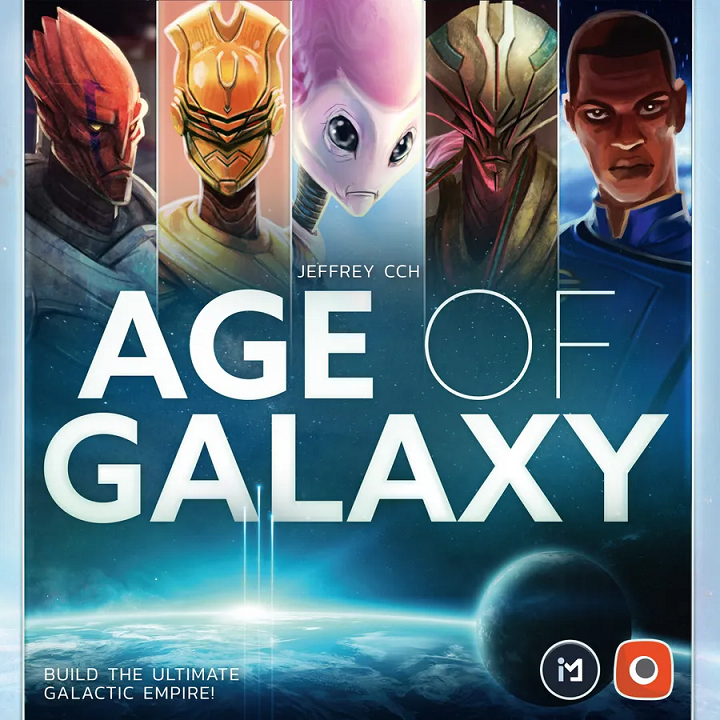
Jeffrey CCH, founder of Hong Kong publisher ICE Makes, has produced some wonky designs. Eila and Something Shiny is a narrative-driven card game that is emotionally poignant, Inheritors remains one of my favorite offbeat small box designs, and Terrorscape looks menacing and sharp, although I haven’t had the opportunity to play it. Age of Galaxy…
The ability to add an expansion to a New play from the Score Sheet page
A short cut to adding a Custom Player image was added when viewing an Avatar
Plays are now marked as updated when a Player or Location in that play are updated.
This last change has the unexpected effect that updating Player’s avatars (or Player image) will also set plays for this Player as needs to be updated. We are working on an update to prevent this.
Multiple select
You can post all unposted and updated plays to BGG in one go with Multiple Select:
Go to the Plays screen
Tap on the gear icon and tap on “Select all Unposted plays“
What does the green bullet or open circle mean on the Plays list? A filled green circle means: the play is not posted to BGG. An open green circle means: the play is posted to BGG, but updated in the app since then. You can enable display of the circles in the BGG settings in the app.
How can I see all changes in this update?
You can go to the Version History on our site, or check the Version History in the app through: Settings –> Help, About and Contact –> Version History
Ares Games and Colossus Games have announced two new epic games in the Mega Empires series: Mega Empires: The Far East North and Mega Empires: The Far East South
Frederick the Great. A Military Life was published in 1985 by Routledge. It is a biography of Prussian king Frederick II (the Great, 1712—1786) dedicated to the military dimension of his life – not only his wars (on a tactical, operational, and strategic level), but also his activities as a military administrator and organizer.
Friedrich was published in 2004. Richard Sivél’s first published board game is a highly abstracted operational treatment of the Seven Years’ War in central Europe, focusing on Prussia’s desperate struggle for survival against the overwhelming odds of the Austrian-Russian-French alliance, personified by the eponymous king (Friedrich is the German form of Frederick). Five years later, a prequel on the War of the Austrian succession was published which uses the same basic system: Maria (Richard Sivél, Histogame).
Connections & Conclusions
My first contact with Duffy’s book was via Friedrich – it is one of the books referenced in the bibliography contained in the rulebook. A good choice, as it is the first treatment of the military dimension of Frederick’s life since imperial German times (and remains the definitive work on the subject until today).
Obviously, the book is more encompassing – after all, it treats not only the Seven Years’ War, but the entire 74-year life of Frederick. Yet the chapter on the Seven Years’ War makes up almost half of the book – testament to the importance of the war for Frederick (whom it turned from an energetic man in his prime into a hollowed out, aged king who had lost most of his pleasures along with many personal friends). The toll the war took on Frederick is showcased in many anecdotes both in the book and in the “small events” in the game.
Glum times for Frederick! Other event cards show him as energetic and decisive, but this one embodies his worst impulses.
Frederick represents a watershed in history. On the one hand, he expanded and modernized the Prussian bureaucracy which is so symbolic for the modern, often impersonal state. On the other, he was a roi-connétable, a king-warlord, one of the last monarchs to personally lead his troops into battle – those after him who did so had usually used their military success to also take political power which was then based on their continued martial prowess (like Napoleon). Yet in an age when the kings of Britain, France, or Russia remained at court and sent their generals to fight whichever war needed fighting, Frederick rode at the head of his main army, entrusting detachments to his generals only because he could not be everywhere at once.
And Frederick did his best to be everywhere. One of the most striking characteristics of Frederick’s campaigns is his masterful use of the interior lines, on which he performed sweeping forced marches from one theater of the war to another. The most impressive example is found late in the campaign of 1757: After Frederick’s offensive in Bohemia had failed, and France’s victory over the Hanoverian army in northwestern Germany opened the way for a French invasion of Prussia. Frederick marched his army to western Saxony, where he beat a combined French/Imperial army at Roßbach on November 5. The Austrians had used the opportunity to invade Silesia which had only been held by secondary Prussian detachments and were in the possession of almost the entire province… until Frederick’s army showed up, having marched 400 kilometers in a month, and expelled the Austrians from Silesia at Leuthen, the site of his greatest tactical victory.
Frederick’s forced march from Roßbach (battle on November 5, 1757) to Leuthen (December 5, 1757) on the Friedrich map.
These sweeping operational and tactical maneuvers are detailed by around 50 maps in Duffy’s book. Whoever is interested in the wars of Frederick will pore over them for a long time during the read and probably flick back and forth between the map section and the text to follow a battle description. While Friedrich prizes maneuver, it has to scale down the distances covered – the march from Roßbach to Leuthen would take five turns on the map (an entire game typically takes around 20 turns).
Operational map of the forced march from Roßbach to Leuthen (top) and tactical map of the battle of Roßbach (bottom right) in Frederick the Great. A Military Life. I’d love to say the book is in this slightly banged up condition because I read it so often, but the unromantic fact is that I bought it used at a library sale (at the bargain price of four bucks).
Thus, there is a certain disconnect between general Friedrich [the pieces are all named in the German fashion] moving on the map and the player role of Frederick: The general Friedrich is much less important than the historical Frederick-the-general. His piece starts in Saxony, which makes it likely that he will only ever do battle with Austria and their minor ally, the Imperial Army, but never venture far enough to fight against France or even Russia and its ally Sweden. If he remains in Saxony and Prussia elects to focus its defense against Austria in Silesia, Frederick might command only a small detachment, avoiding battle while pinning down Austrian forces and taking unglamorous retreats if he is engaged.
Friedrich (Frederick) is keeping Karl von Lothringen (Charles Alexander of Lorraine) busy in Saxony while the main forces of Prussia and Austria, stacked to impressive height, face off in Silesia.
The player role of Frederick, however, oversees the entirety of the Prussian war effort (as well as that of Prussia’s minor ally Hanover, ruled in personal union by the king of Britain). The player has control over the maneuver of their generals of which Frederick could only have dreamt: News of a victory or defeat in East Prussia would have reached his army camp in Bohemia only weeks after the event, whereas in Friedrich the player can position the general in charge of defending East Prussia exactly where they want and have him surrender, retreat, or fight for his life according to the overall strategic plan.
Maximilian Ulysses von Browne has moved boldly in the first turn… and might face Friedrich/Frederick’s wrath (and superior power) in the second.
Nonetheless, the game is very effective at conveying Friedrich’s psychological state: In the early game, the player might be elated by their power and success. As Frederick moves and draws cards first in the round, an aggressive player can attack their foes with overwhelming force – for example, a second-round attack on Austria means that Prussia has drawn its seven cards per round twice already (so, fourteen in total), whereas Austria has only drawn its five cards per turn once. This corresponds with the quality advantage of the Prussian troops early in the war which Duffy notes frequently. Yet Duffy also argues that this advantage was lost by the heavy casualties the Prussian army endured in 1757 and would never be regained. (Duffy contends that Frederick inherited the finest military force in Europe upon his accession to the throne, but left his own successor a mediocre army – this long-term criticism of Frederick is, of course, beyond the scope of the game.)
Correspondingly, the Frederick player will soon find that the time to play defense has come (if it hasn’t been from the beginning of the game). And as their once-impressive card hand dwindles under the repeated attacks from all foes, elation will give way to gloom. Whenever an anecdote is read as the end-of-round event, showing the historical Frederick at turns defiant, melancholy, or self-pitying, the Frederick player will be able to relate – as they will as Austria’s allies, one after another, falter and peace is made. Frederick might have won the game, but it will surely have taken a toll.
Prussia barely holds on to the last Austrian and Russian objectives… let’s hope for Frederick that the Tsarina dies soon!
In that sense, Frederick the Great. A Military Life and Friedrich are a perfect match – the analytic and the immersive, the intellectual and the emotional. Give both a try!

 Anmelden