Normale Ansicht

Buzzworthiness: 14ers

26. September 2025 um 17:00

I live in Colorado, which is home to fifty-eight 14ers. What is a 14er, you ask? It’s a mountain that rises over 14,000 above sea level. We have the most 14ers in the United States, and they’re very popular with hikers who want to test their skills. And now there’s a game about them!

image provided by designer

14ers is an upcoming 1-4 player game designed by Zach Sullivan to be published by Grazing Bear Games. It’s a card game where players are trying to build their hiker’s skills by conquering 14ers. The game is coming to Kickstarter in October.

The game comes with 60 tarot-sized. 39 of these are climb cards, each showing a different peak and divided into Classes I-IV. These are all shuffled separately, then stacked with Class I on the top, followed by Class II, then III, then IV on the bottom. Three are drawn and placed in a line next to the deck. A random accolade is chosen, which gives a scoring condition for the player who gets the most of a particular thing. Each player gets a hiker card, and you’re ready to play.

setup on TTS

On your turn, you’ll first revel a new climb from the deck so there are four to choose from. You’ll then choose one of the cards based on how many boots and axes you have versus the requirements of a card. Some cards have hazard requirements, which are just an extra condition you have to meet beyond boots and axes. You’ll then tuck your chosen card under your hiker, but you tuck it in such a way that only one side is visible.

  • If you tuck it under the bottom of your hiker, you’ll be using it as a training card, which will give you more boots and axes to use on other cards.
  • If you tuck it on the left side of your hiker, it’s now gear which gives you extra benefits and rule breaking abilities.
  • If you tuck it on the right side of your hiker, it’s now a plan that gives you extra point-scoring opportunities.
  • If you tuck it under the top of your hiker, it’s a capstone that scores a flat number of points.

If you really want a card and can’t afford it, you can always discard a previously taken card to hire a guide. This allows you to ignore one requirement of a card – either all boot and axe requirements, the hazard condition, or the current weather effect (if you’re playing with weather cards). Guides are put in a personal discard pile, because those with cameras get you an extra point at the end of the game.

The game last nine rounds, which means each player will end up taking nine cards. Then you will score – determine the winner of the accolade points, then add all the points you got from plans, capstones, and camera guides. The player with the highest score wins.

There is a variant of the game where a different weather effect takes place each round. These could make climbs harder by increase their cost, block certain sides from adding climbs, or do nothing. The game also has a solo variant with an automated hiker you’re competing against, and more advanced hiker options.

image provided by designer

As I mentioned, I do live in Colorado. I’m not a native (but, as the bumper stickers say, I got here as fast as I could). I’ve also never done a 14ers – not in NEARLY good enough shape for that. But I am really glad to see a game about these fabulous mountains, and was really excited to check it out.

My play of this game was on Tabletop Simulator rather than with a physical copy, so I can’t speak entirely to component quality. The art was nice, being provided by Hinterland Outdoors, a company that makes all kinds of gear based on the Colorado 14ers. Graphic design seemed pretty good, though it’s really hard to tell on TTS with all the zooming in you have to do. It can be a challenge to design stuff in this type of tableau building through tucking game, but I think things are laid out pretty well. The game comes with some cards that can be used to help track how many boots and axes you have available, and though these are optional, they can be helpful.

Thematically, I think the game makes a lot of sense. I think it’s important to realize that the game is not about climbing 14ers, it’s about upgrading your hiker so you can summit the harder peaks. You’re basically gaining experience with each climb, and that gives you more skills you need to finish off the Class IV beasts. The only thing that doesn’t make a whole lot of sense to me thematically is the weather variant. I’m not saying weather isn’t a factor in summiting a 14ers, because it absolutely is. I am saying that it’s a little strange that you know exactly what the weather will be for every round (which is apparently over the course of two months). Having lived in this state for nearly nine years at this point, I can say with absolute certainty that only thing predictable about Colorado weather is how unpredictable it is. This variant might be a little better thematically with a weather deck of some kind (possible expansion idea there).

The game has fairly simple mechanics. Basically, on your turn, you draft a climb card, then you tuck it somewhere on your hiker. You have to decide whether you want it to improve your hiker (training or gear), or for points at the end of the game (plans or capstones). It uses a tucking mechanism based on games like Glory to Rome and Innovation, which are two of my favorite games so I’m all for that. All four sides of the card have the potential to do something different, and where you tuck the card determines which side is visible and will activate.

With being able to include four uses of each card, the game has a very minimal aesthetic, which again is a good thematic choice – one thing I know about hikers is that they don’t want to carry any more than they absolutely need. As such, this game doesn’t take up a lot of space either on the table or in your pack. It’s a tableau builder, but not one of the sprawling ones like Race for the Galaxy. Your tableau is your hiker, and all the cards are getting tucked under him/her. Plus, you’re not going to have more than ten cards with your hiker by the end (and possibly fewer). Card count is low, with only 39 climbs included. All in all, it’s a nice small game.

Luck is going to play a role in the game as you don’t know exactly what climbs are going to come out and when. All cards are used in the four player game, but not with fewer, so you don’t know precisely which cards are in play. And because they come out in random order, it’s hard to strategize in advance. At least you know that the Class I cards will come out before the IIs, and so on, so you can work on building however you wish to prepare. Still, luck of the draw can affect things.

The game is quite light. Mechanics are easy to understand, the game plays quickly, and the strategy is fairly light. It makes sense for the kind of game it is. I do wonder about long-term replayability, but it’s a game that presents itself different depending on how the cards come out, so I don’t think that would really be an issue.

IS IT BUZZWORTHY? I enjoy 14ers as a quick and light experience. It’s really nice to have a game about some of the stunning topography in Colorado, and I think the game works very well. If you’re looking for a quick small-footprint tableau builder, I’d say check it out. The game should be going up on Kickstarter in October, so check out the page and follow to know when it goes live.

Thanks again to Zach Sullivan for guiding me through a playthrough, and thanks to you for reading!
Buzzworthiness: 14ers

26. September 2025 um 17:00

I live in Colorado, which is home to fifty-eight 14ers. What is a 14er, you ask? It’s a mountain that rises over 14,000 above sea level. We have the most 14ers in the United States, and they’re very popular with hikers who want to test their skills. And now there’s a game about them!

image provided by designer

14ers is an upcoming 1-4 player game designed by Zach Sullivan to be published by Grazing Bear Games. It’s a card game where players are trying to build their hiker’s skills by conquering 14ers. The game is coming to Kickstarter in October.

The game comes with 60 tarot-sized. 39 of these are climb cards, each showing a different peak and divided into Classes I-IV. These are all shuffled separately, then stacked with Class I on the top, followed by Class II, then III, then IV on the bottom. Three are drawn and placed in a line next to the deck. A random accolade is chosen, which gives a scoring condition for the player who gets the most of a particular thing. Each player gets a hiker card, and you’re ready to play.

setup on TTS

On your turn, you’ll first revel a new climb from the deck so there are four to choose from. You’ll then choose one of the cards based on how many boots and axes you have versus the requirements of a card. Some cards have hazard requirements, which are just an extra condition you have to meet beyond boots and axes. You’ll then tuck your chosen card under your hiker, but you tuck it in such a way that only one side is visible.

  • If you tuck it under the bottom of your hiker, you’ll be using it as a training card, which will give you more boots and axes to use on other cards.
  • If you tuck it on the left side of your hiker, it’s now gear which gives you extra benefits and rule breaking abilities.
  • If you tuck it on the right side of your hiker, it’s now a plan that gives you extra point-scoring opportunities.
  • If you tuck it under the top of your hiker, it’s a capstone that scores a flat number of points.

If you really want a card and can’t afford it, you can always discard a previously taken card to hire a guide. This allows you to ignore one requirement of a card – either all boot and axe requirements, the hazard condition, or the current weather effect (if you’re playing with weather cards). Guides are put in a personal discard pile, because those with cameras get you an extra point at the end of the game.

The game last nine rounds, which means each player will end up taking nine cards. Then you will score – determine the winner of the accolade points, then add all the points you got from plans, capstones, and camera guides. The player with the highest score wins.

There is a variant of the game where a different weather effect takes place each round. These could make climbs harder by increase their cost, block certain sides from adding climbs, or do nothing. The game also has a solo variant with an automated hiker you’re competing against, and more advanced hiker options.

image provided by designer

As I mentioned, I do live in Colorado. I’m not a native (but, as the bumper stickers say, I got here as fast as I could). I’ve also never done a 14ers – not in NEARLY good enough shape for that. But I am really glad to see a game about these fabulous mountains, and was really excited to check it out.

My play of this game was on Tabletop Simulator rather than with a physical copy, so I can’t speak entirely to component quality. The art was nice, being provided by Hinterland Outdoors, a company that makes all kinds of gear based on the Colorado 14ers. Graphic design seemed pretty good, though it’s really hard to tell on TTS with all the zooming in you have to do. It can be a challenge to design stuff in this type of tableau building through tucking game, but I think things are laid out pretty well. The game comes with some cards that can be used to help track how many boots and axes you have available, and though these are optional, they can be helpful.

Thematically, I think the game makes a lot of sense. I think it’s important to realize that the game is not about climbing 14ers, it’s about upgrading your hiker so you can summit the harder peaks. You’re basically gaining experience with each climb, and that gives you more skills you need to finish off the Class IV beasts. The only thing that doesn’t make a whole lot of sense to me thematically is the weather variant. I’m not saying weather isn’t a factor in summiting a 14ers, because it absolutely is. I am saying that it’s a little strange that you know exactly what the weather will be for every round (which is apparently over the course of two months). Having lived in this state for nearly nine years at this point, I can say with absolute certainty that only thing predictable about Colorado weather is how unpredictable it is. This variant might be a little better thematically with a weather deck of some kind (possible expansion idea there).

The game has fairly simple mechanics. Basically, on your turn, you draft a climb card, then you tuck it somewhere on your hiker. You have to decide whether you want it to improve your hiker (training or gear), or for points at the end of the game (plans or capstones). It uses a tucking mechanism based on games like Glory to Rome and Innovation, which are two of my favorite games so I’m all for that. All four sides of the card have the potential to do something different, and where you tuck the card determines which side is visible and will activate.

With being able to include four uses of each card, the game has a very minimal aesthetic, which again is a good thematic choice – one thing I know about hikers is that they don’t want to carry any more than they absolutely need. As such, this game doesn’t take up a lot of space either on the table or in your pack. It’s a tableau builder, but not one of the sprawling ones like Race for the Galaxy. Your tableau is your hiker, and all the cards are getting tucked under him/her. Plus, you’re not going to have more than ten cards with your hiker by the end (and possibly fewer). Card count is low, with only 39 climbs included. All in all, it’s a nice small game.

Luck is going to play a role in the game as you don’t know exactly what climbs are going to come out and when. All cards are used in the four player game, but not with fewer, so you don’t know precisely which cards are in play. And because they come out in random order, it’s hard to strategize in advance. At least you know that the Class I cards will come out before the IIs, and so on, so you can work on building however you wish to prepare. Still, luck of the draw can affect things.

The game is quite light. Mechanics are easy to understand, the game plays quickly, and the strategy is fairly light. It makes sense for the kind of game it is. I do wonder about long-term replayability, but it’s a game that presents itself different depending on how the cards come out, so I don’t think that would really be an issue.

IS IT BUZZWORTHY? I enjoy 14ers as a quick and light experience. It’s really nice to have a game about some of the stunning topography in Colorado, and I think the game works very well. If you’re looking for a quick small-footprint tableau builder, I’d say check it out. The game should be going up on Kickstarter in October, so check out the page and follow to know when it goes live.

Thanks again to Zach Sullivan for guiding me through a playthrough, and thanks to you for reading!

Three Cards, Four Xs – An Age of Galaxy Review

25. September 2025 um 15:00
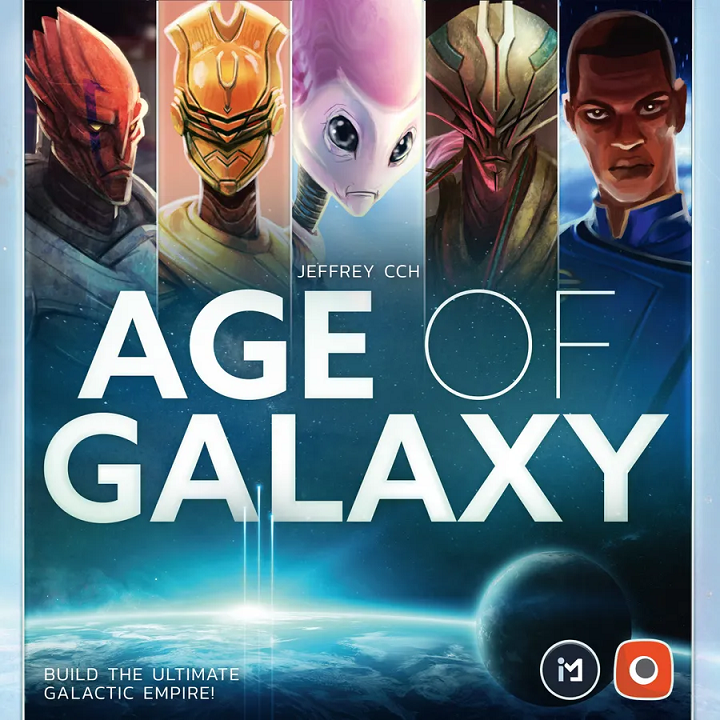
Jeffrey CCH, founder of Hong Kong publisher ICE Makes, has produced some wonky designs. Eila and Something Shiny is a narrative-driven card game that is emotionally poignant, Inheritors remains one of my favorite offbeat small box designs, and Terrorscape looks menacing and sharp, although I haven’t had the opportunity to play it. Age of Galaxy…

Read more →

V6.2 a lot of small visible and invisible improvements

Von: Suzan
25. September 2025 um 11:38

The most noticeable updates are

  • The ability to add an expansion to a New play from the Score Sheet page
  • A short cut to adding a Custom Player image was added when viewing an Avatar
  • Plays are now marked as updated when a Player or Location in that play are updated.

This last change has the unexpected effect that updating Player’s avatars (or Player image) will also set plays for this Player as needs to be updated. We are working on an update to prevent this.

Multiple select

You can post all unposted and updated plays to BGG in one go with Multiple Select:

  • Go to the Plays screen
  • Tap on the gear icon and tap on “Select all Unposted plays
  • Tap ‘Share… ‘
  • Tap ‘Post or Update to BGG‘.

How do I see if a play is updated?

From our FAQ:

What does the green bullet or open circle mean on the Plays list?
A filled green circle means: the play is not posted to BGG.
An open green circle means: the play is posted to BGG, but updated in the app since then.
You can enable display of the circles in the BGG settings in the app.

How can I see all changes in this update?

You can go to the Version History on our site, or check the Version History in the app through: Settings –> Help, About and Contact –> Version History

BGI 387 The One About A Bridge Over Troubled Waters”

25. September 2025 um 09:03

BGI 387 The One About A Bridge Over Troubled Waters”

Board Games InsiderJoin our Guild on Board Game Geek Guild | Like us on FB

Social media:

Ignacy Trzewiczek / Portal Games: website | FB | Twitter | Youtube

Corey Thompson / Above Board TV:  website | Youtube

Stephen Buonocore / “The Podfather Of Gaming”: website | FB | Twitter | Youtube

Intro Music: Happy Rock – Bensound.com

💾

Frederick the Great. A Military Life / Friedrich (Book & Game, #4)

21. September 2025 um 17:22

It’s been a minute three years since we last had a book & game pairing on this blog!

Today, we’re looking at Prussia in the Seven Years’ War (1756—1763). Our book & game for this topic are Frederick the Great. A Military Life (Christopher Duffy) and Friedrich (Richard Sivél, Histogame).

Check out my previous Book & Game posts here:

Eastern Front: Russia’s War and No Retreat! The Russian Front

Reformation Era: Four Princes and Here I Stand

The Second Hundred Years’ War: The Rise of the Great Powers 1648—1815 and Imperial Struggle

The Book & Game

Frederick the Great. A Military Life was published in 1985 by Routledge. It is a biography of Prussian king Frederick II (the Great, 1712—1786) dedicated to the military dimension of his life – not only his wars (on a tactical, operational, and strategic level), but also his activities as a military administrator and organizer.

Friedrich was published in 2004. Richard Sivél’s first published board game is a highly abstracted operational treatment of the Seven Years’ War in central Europe, focusing on Prussia’s desperate struggle for survival against the overwhelming odds of the Austrian-Russian-French alliance, personified by the eponymous king (Friedrich is the German form of Frederick). Five years later, a prequel on the War of the Austrian succession was published which uses the same basic system: Maria (Richard Sivél, Histogame).

Connections & Conclusions

My first contact with Duffy’s book was via Friedrich – it is one of the books referenced in the bibliography contained in the rulebook. A good choice, as it is the first treatment of the military dimension of Frederick’s life since imperial German times (and remains the definitive work on the subject until today).

Obviously, the book is more encompassing – after all, it treats not only the Seven Years’ War, but the entire 74-year life of Frederick. Yet the chapter on the Seven Years’ War makes up almost half of the book – testament to the importance of the war for Frederick (whom it turned from an energetic man in his prime into a hollowed out, aged king who had lost most of his pleasures along with many personal friends). The toll the war took on Frederick is showcased in many anecdotes both in the book and in the “small events” in the game.

Glum times for Frederick! Other event cards show him as energetic and decisive, but this one embodies his worst impulses.

Frederick represents a watershed in history. On the one hand, he expanded and modernized the Prussian bureaucracy which is so symbolic for the modern, often impersonal state. On the other, he was a roi-connétable, a king-warlord, one of the last monarchs to personally lead his troops into battle – those after him who did so had usually used their military success to also take political power which was then based on their continued martial prowess (like Napoleon). Yet in an age when the kings of Britain, France, or Russia remained at court and sent their generals to fight whichever war needed fighting, Frederick rode at the head of his main army, entrusting detachments to his generals only because he could not be everywhere at once.

And Frederick did his best to be everywhere. One of the most striking characteristics of Frederick’s campaigns is his masterful use of the interior lines, on which he performed sweeping forced marches from one theater of the war to another. The most impressive example is found late in the campaign of 1757: After Frederick’s offensive in Bohemia had failed, and France’s victory over the Hanoverian army in northwestern Germany opened the way for a French invasion of Prussia. Frederick marched his army to western Saxony, where he beat a combined French/Imperial army at Roßbach on November 5. The Austrians had used the opportunity to invade Silesia which had only been held by secondary Prussian detachments and were in the possession of almost the entire province… until Frederick’s army showed up, having marched 400 kilometers in a month, and expelled the Austrians from Silesia at Leuthen, the site of his greatest tactical victory.

Frederick’s forced march from Roßbach (battle on November 5, 1757) to Leuthen (December 5, 1757) on the Friedrich map.

These sweeping operational and tactical maneuvers are detailed by around 50 maps in Duffy’s book. Whoever is interested in the wars of Frederick will pore over them for a long time during the read and probably flick back and forth between the map section and the text to follow a battle description. While Friedrich prizes maneuver, it has to scale down the distances covered – the march from Roßbach to Leuthen would take five turns on the map (an entire game typically takes around 20 turns).

Operational map of the forced march from Roßbach to Leuthen (top) and tactical map of the battle of Roßbach (bottom right) in Frederick the Great. A Military Life. I’d love to say the book is in this slightly banged up condition because I read it so often, but the unromantic fact is that I bought it used at a library sale (at the bargain price of four bucks).

Thus, there is a certain disconnect between general Friedrich [the pieces are all named in the German fashion] moving on the map and the player role of Frederick: The general Friedrich is much less important than the historical Frederick-the-general. His piece starts in Saxony, which makes it likely that he will only ever do battle with Austria and their minor ally, the Imperial Army, but never venture far enough to fight against France or even Russia and its ally Sweden. If he remains in Saxony and Prussia elects to focus its defense against Austria in Silesia, Frederick might command only a small detachment, avoiding battle while pinning down Austrian forces and taking unglamorous retreats if he is engaged.

Friedrich (Frederick) is keeping Karl von Lothringen (Charles Alexander of Lorraine) busy in Saxony while the main forces of Prussia and Austria, stacked to impressive height, face off in Silesia.

The player role of Frederick, however, oversees the entirety of the Prussian war effort (as well as that of Prussia’s minor ally Hanover, ruled in personal union by the king of Britain). The player has control over the maneuver of their generals of which Frederick could only have dreamt: News of a victory or defeat in East Prussia would have reached his army camp in Bohemia only weeks after the event, whereas in Friedrich the player can position the general in charge of defending East Prussia exactly where they want and have him surrender, retreat, or fight for his life according to the overall strategic plan.

Maximilian Ulysses von Browne has moved boldly in the first turn… and might face Friedrich/Frederick’s wrath (and superior power) in the second.

Nonetheless, the game is very effective at conveying Friedrich’s psychological state: In the early game, the player might be elated by their power and success. As Frederick moves and draws cards first in the round, an aggressive player can attack their foes with overwhelming force – for example, a second-round attack on Austria means that Prussia has drawn its seven cards per round twice already (so, fourteen in total), whereas Austria has only drawn its five cards per turn once. This corresponds with the quality advantage of the Prussian troops early in the war which Duffy notes frequently. Yet Duffy also argues that this advantage was lost by the heavy casualties the Prussian army endured in 1757 and would never be regained. (Duffy contends that Frederick inherited the finest military force in Europe upon his accession to the throne, but left his own successor a mediocre army – this long-term criticism of Frederick is, of course, beyond the scope of the game.)

Correspondingly, the Frederick player will soon find that the time to play defense has come (if it hasn’t been from the beginning of the game). And as their once-impressive card hand dwindles under the repeated attacks from all foes, elation will give way to gloom. Whenever an anecdote is read as the end-of-round event, showing the historical Frederick at turns defiant, melancholy, or self-pitying, the Frederick player will be able to relate – as they will as Austria’s allies, one after another, falter and peace is made. Frederick might have won the game, but it will surely have taken a toll.

Prussia barely holds on to the last Austrian and Russian objectives… let’s hope for Frederick that the Tsarina dies soon!

In that sense, Frederick the Great. A Military Life and Friedrich are a perfect match – the analytic and the immersive, the intellectual and the emotional. Give both a try!

Frederick the Great. A Military Life / Friedrich (Book & Game, #4)

21. September 2025 um 17:22

It’s been a minute three years since we last had a book & game pairing on this blog!

Today, we’re looking at Prussia in the Seven Years’ War (1756—1763). Our book & game for this topic are Frederick the Great. A Military Life (Christopher Duffy) and Friedrich (Richard Sivél, Histogame).

Check out my previous Book & Game posts here:

Eastern Front: Russia’s War and No Retreat! The Russian Front

Reformation Era: Four Princes and Here I Stand

The Second Hundred Years’ War: The Rise of the Great Powers 1648—1815 and Imperial Struggle

The Book & Game

Frederick the Great. A Military Life was published in 1985 by Routledge. It is a biography of Prussian king Frederick II (the Great, 1712—1786) dedicated to the military dimension of his life – not only his wars (on a tactical, operational, and strategic level), but also his activities as a military administrator and organizer.

Friedrich was published in 2004. Richard Sivél’s first published board game is a highly abstracted operational treatment of the Seven Years’ War in central Europe, focusing on Prussia’s desperate struggle for survival against the overwhelming odds of the Austrian-Russian-French alliance, personified by the eponymous king (Friedrich is the German form of Frederick). Five years later, a prequel on the War of the Austrian succession was published which uses the same basic system: Maria (Richard Sivél, Histogame).

Connections & Conclusions

My first contact with Duffy’s book was via Friedrich – it is one of the books referenced in the bibliography contained in the rulebook. A good choice, as it is the first treatment of the military dimension of Frederick’s life since imperial German times (and remains the definitive work on the subject until today).

Obviously, the book is more encompassing – after all, it treats not only the Seven Years’ War, but the entire 74-year life of Frederick. Yet the chapter on the Seven Years’ War makes up almost half of the book – testament to the importance of the war for Frederick (whom it turned from an energetic man in his prime into a hollowed out, aged king who had lost most of his pleasures along with many personal friends). The toll the war took on Frederick is showcased in many anecdotes both in the book and in the “small events” in the game.

Glum times for Frederick! Other event cards show him as energetic and decisive, but this one embodies his worst impulses.

Frederick represents a watershed in history. On the one hand, he expanded and modernized the Prussian bureaucracy which is so symbolic for the modern, often impersonal state. On the other, he was a roi-connétable, a king-warlord, one of the last monarchs to personally lead his troops into battle – those after him who did so had usually used their military success to also take political power which was then based on their continued martial prowess (like Napoleon). Yet in an age when the kings of Britain, France, or Russia remained at court and sent their generals to fight whichever war needed fighting, Frederick rode at the head of his main army, entrusting detachments to his generals only because he could not be everywhere at once.

And Frederick did his best to be everywhere. One of the most striking characteristics of Frederick’s campaigns is his masterful use of the interior lines, on which he performed sweeping forced marches from one theater of the war to another. The most impressive example is found late in the campaign of 1757: After Frederick’s offensive in Bohemia had failed, and France’s victory over the Hanoverian army in northwestern Germany opened the way for a French invasion of Prussia. Frederick marched his army to western Saxony, where he beat a combined French/Imperial army at Roßbach on November 5. The Austrians had used the opportunity to invade Silesia which had only been held by secondary Prussian detachments and were in the possession of almost the entire province… until Frederick’s army showed up, having marched 400 kilometers in a month, and expelled the Austrians from Silesia at Leuthen, the site of his greatest tactical victory.

Frederick’s forced march from Roßbach (battle on November 5, 1757) to Leuthen (December 5, 1757) on the Friedrich map.

These sweeping operational and tactical maneuvers are detailed by around 50 maps in Duffy’s book. Whoever is interested in the wars of Frederick will pore over them for a long time during the read and probably flick back and forth between the map section and the text to follow a battle description. While Friedrich prizes maneuver, it has to scale down the distances covered – the march from Roßbach to Leuthen would take five turns on the map (an entire game typically takes around 20 turns).

Operational map of the forced march from Roßbach to Leuthen (top) and tactical map of the battle of Roßbach (bottom right) in Frederick the Great. A Military Life. I’d love to say the book is in this slightly banged up condition because I read it so often, but the unromantic fact is that I bought it used at a library sale (at the bargain price of four bucks).

Thus, there is a certain disconnect between general Friedrich [the pieces are all named in the German fashion] moving on the map and the player role of Frederick: The general Friedrich is much less important than the historical Frederick-the-general. His piece starts in Saxony, which makes it likely that he will only ever do battle with Austria and their minor ally, the Imperial Army, but never venture far enough to fight against France or even Russia and its ally Sweden. If he remains in Saxony and Prussia elects to focus its defense against Austria in Silesia, Frederick might command only a small detachment, avoiding battle while pinning down Austrian forces and taking unglamorous retreats if he is engaged.

Friedrich (Frederick) is keeping Karl von Lothringen (Charles Alexander of Lorraine) busy in Saxony while the main forces of Prussia and Austria, stacked to impressive height, face off in Silesia.

The player role of Frederick, however, oversees the entirety of the Prussian war effort (as well as that of Prussia’s minor ally Hanover, ruled in personal union by the king of Britain). The player has control over the maneuver of their generals of which Frederick could only have dreamt: News of a victory or defeat in East Prussia would have reached his army camp in Bohemia only weeks after the event, whereas in Friedrich the player can position the general in charge of defending East Prussia exactly where they want and have him surrender, retreat, or fight for his life according to the overall strategic plan.

Maximilian Ulysses von Browne has moved boldly in the first turn… and might face Friedrich/Frederick’s wrath (and superior power) in the second.

Nonetheless, the game is very effective at conveying Friedrich’s psychological state: In the early game, the player might be elated by their power and success. As Frederick moves and draws cards first in the round, an aggressive player can attack their foes with overwhelming force – for example, a second-round attack on Austria means that Prussia has drawn its seven cards per round twice already (so, fourteen in total), whereas Austria has only drawn its five cards per turn once. This corresponds with the quality advantage of the Prussian troops early in the war which Duffy notes frequently. Yet Duffy also argues that this advantage was lost by the heavy casualties the Prussian army endured in 1757 and would never be regained. (Duffy contends that Frederick inherited the finest military force in Europe upon his accession to the throne, but left his own successor a mediocre army – this long-term criticism of Frederick is, of course, beyond the scope of the game.)

Correspondingly, the Frederick player will soon find that the time to play defense has come (if it hasn’t been from the beginning of the game). And as their once-impressive card hand dwindles under the repeated attacks from all foes, elation will give way to gloom. Whenever an anecdote is read as the end-of-round event, showing the historical Frederick at turns defiant, melancholy, or self-pitying, the Frederick player will be able to relate – as they will as Austria’s allies, one after another, falter and peace is made. Frederick might have won the game, but it will surely have taken a toll.

Prussia barely holds on to the last Austrian and Russian objectives… let’s hope for Frederick that the Tsarina dies soon!

In that sense, Frederick the Great. A Military Life and Friedrich are a perfect match – the analytic and the immersive, the intellectual and the emotional. Give both a try!

Dune v2

18. September 2025 um 23:54

Here I am, here I remain.

Explore all the factions with your Dune v2 rules & reference!

I don’t usually draw attention to incremental updates once I’ve launched a rules & reference (though there’s a section down below on the home page that calls new ones out, if you’re interested), but this update to my sheets for the Gale Force Nine version of Dune is a biggy, adding all the variants and faction expansions to the core rules. Enjoy!

Why I’m Selling The Lord of the Rings: Fate of the Fellowship

17. September 2025 um 23:34

It’s a pity Bilbo didn’t kill him when he had the chance.

Peter reviews The Lord of the Rings: Fate of the Fellowship by Z-man Games.

Review time! There’s been a lot of high praise for The Lord of the Rings: Fate of the Fellowship, the latest in Matt Leacock’s Pandemic spin-offs. And while I think it’s a clever game that lots of people will enjoy, it just wasn’t for me and I decided to sell it after just two plays. Watch the video to get a rules overview, and find out why!

Making high quality tabletop gaming content at the EOG takes time and money. Please consider becoming a Patreon supporter or making a donation so I can continue this work! Thankyou!

BGI 386 The One About The Good, The Bad, and The Crazy

17. September 2025 um 13:57

BGI 386 The One About The Good, The Bad, and The Crazy

Board Games InsiderJoin our Guild on Board Game Geek Guild | Like us on FB

Social media:

Ignacy Trzewiczek / Portal Games: website | FB | Twitter | Youtube

Corey Thompson / Above Board TV:  website | Youtube

Stephen Buonocore / “The Podfather Of Gaming”: website | FB | Twitter | Youtube

Intro Music: Happy Rock – Bensound.com

💾

Off the Shelf #50: Park and Shop

16. September 2025 um 17:00

It’s the fiftieth post in this Off the Shelf series, where I look at games on my shelf. And today, it’s time for

image by BGG user Meander

Park and Shop is a game designed by Donald Miller and first published by Milton Bradley in 1952. You can play with 2-6 players, and the object of the game is that you have a shopping list that you need to complete before you head home. The first player that does wins.

This was my grandparents’ game. When I was a kid and would visit them, I would often pull this out, set it up, and play by myself. There aren’t solo rules and I wasn’t really playing to win, I just wanted to play. I enjoyed walking around the city, shopping, and seeing how fast I could go through every card in the game. I had fun. When they passed, the game was part of my inheritance. It’s still on my shelf. I hardly ever pull it out because, if I’m being honest, it’s not really a very good game. But it scores high on nostalgia.

The game is played on a big square board, but I’m happy to report that it’s NOT a simple Monopoly ripoff. There’s not one track to move around, but rather a bunch of rectangles representing the streets of this town. Each player starts the game with up to 7 yellow shopping list cards, but everytime we would play, we’d use the whole deck.

You start the game at your house, one of the spots around the edge of the map. You can pic your own spot, and usually you’ll be trying to pick on that’s relatively close to a parking lot. You’ll roll a die and move that many spaces until your car ends up in a lot. At this point, you switch to your pedestrian piece and start rolling two dice every time you want to move? Why? Well, it’s obvious – you roll one die in your car because it only has one engine, but you roll two while walking because you have two feet. I’m not even joking, that is the actual rule.

You’ll look at the top card of your shopping cards, then find it on the map. Sometimes, there are several locations scattered around, but other times, it’s just one. You’ll need to walk there. You don’t need to land on a shop by exact count, but landing there does end your turn. Other standard roll and move rules apply – no backtracking, roll doubles and get an extra turn, but roll three doubles and go to jail, that kind of thing.

There are a bunch of gray spots along your route, and if you land on one, you have to draw a pedestrian card. These can be good (take an extra turn, move directly to your next stop, etc.) or horribly bad (lose a turn, add extra stops to your list, etc). There is an extra turn space in the middle of the board, so you can aim for that if you’re in the vicinity.

Once you have completed all your shopping items, head back to your car. But oh no, even though you were parked in a clearly marked lot, you have received a parking ticket! The parking tickets aren’t really penalties, just an extra task you have to do before heading home. So you’ll drive to that stop (using only one die) and drawing motorist cards for landing on those gray spaces.

Once that’s complete, you can head home. But even though you don’t have to land on shops by exact count, you DO have to land on your home by exact count. That means you can be in the space right next to it, but if you can’t roll a one, you’ll just be sitting there suffering until you finally get lucky enough to park in your own garage. The first one to do so wins.

There is a variant of the game I never played with that uses money – you actually have to pay for stuff. You start the game with $150, and every time you buy something or go somewhere that you’d have to pay, you roll dice to see how much it cost you. With this variant, you can go broke before the game is over because there’s no way to make money.

This game has a lot of problems. First, it’s roll and move, which is definitely an out-of-style mechanism these days. One person is rolling 12s and 11s to get next door while another is rolling 3s and 4s to get all the way across the board. There’s no skill, it’s really all just about rolling better and drawing better. The money variant doesn’t add any choice, just adds the possibility of getting randomly eliminated.

Another big problem is that the game is VERY dated. There’s a cool retro look to it, but some of the cards…

But still, I love the IDEA of this game. It’s a big shopping map, and the idea of moving around from store to store to get what you need is fun. It’s a lot better than just endlessly moving around a track, and I think that with some tweaking, this idea has legs today. Maybe set it in a mall with different obstacles around (survey takers, disruptive youths, security, mall walkers, etc), and you have to visit different stores. I don’t know. But the game concept works for me, it just fails in execution.

My enthusiasm for the game has everything to do with nostalgia, I know. If I hadn’t grown up with it, I’d probably laugh it off and never think about it again. But, it is an extremely important game to me – I even listed it in my old list, The Eleven: Games That Turned Me Into A Gamer. Nevertheless, objectively, I have to put it at #49 on my Off the Shelf rankings. (You may notice that it’s still above Apples to Apples. 😁)

Anyway, that does it for this edition of Off the Shelf. Thanks for reading!

Off the Shelf #50: Park and Shop

16. September 2025 um 17:00

It’s the fiftieth post in this Off the Shelf series, where I look at games on my shelf. And today, it’s time for

image by BGG user Meander

Park and Shop is a game designed by Donald Miller and first published by Milton Bradley in 1952. You can play with 2-6 players, and the object of the game is that you have a shopping list that you need to complete before you head home. The first player that does wins.

This was my grandparents’ game. When I was a kid and would visit them, I would often pull this out, set it up, and play by myself. There aren’t solo rules and I wasn’t really playing to win, I just wanted to play. I enjoyed walking around the city, shopping, and seeing how fast I could go through every card in the game. I had fun. When they passed, the game was part of my inheritance. It’s still on my shelf. I hardly ever pull it out because, if I’m being honest, it’s not really a very good game. But it scores high on nostalgia.

The game is played on a big square board, but I’m happy to report that it’s NOT a simple Monopoly ripoff. There’s not one track to move around, but rather a bunch of rectangles representing the streets of this town. Each player starts the game with up to 7 yellow shopping list cards, but everytime we would play, we’d use the whole deck.

You start the game at your house, one of the spots around the edge of the map. You can pic your own spot, and usually you’ll be trying to pick on that’s relatively close to a parking lot. You’ll roll a die and move that many spaces until your car ends up in a lot. At this point, you switch to your pedestrian piece and start rolling two dice every time you want to move? Why? Well, it’s obvious – you roll one die in your car because it only has one engine, but you roll two while walking because you have two feet. I’m not even joking, that is the actual rule.

You’ll look at the top card of your shopping cards, then find it on the map. Sometimes, there are several locations scattered around, but other times, it’s just one. You’ll need to walk there. You don’t need to land on a shop by exact count, but landing there does end your turn. Other standard roll and move rules apply – no backtracking, roll doubles and get an extra turn, but roll three doubles and go to jail, that kind of thing.

There are a bunch of gray spots along your route, and if you land on one, you have to draw a pedestrian card. These can be good (take an extra turn, move directly to your next stop, etc.) or horribly bad (lose a turn, add extra stops to your list, etc). There is an extra turn space in the middle of the board, so you can aim for that if you’re in the vicinity.

Once you have completed all your shopping items, head back to your car. But oh no, even though you were parked in a clearly marked lot, you have received a parking ticket! The parking tickets aren’t really penalties, just an extra task you have to do before heading home. So you’ll drive to that stop (using only one die) and drawing motorist cards for landing on those gray spaces.

Once that’s complete, you can head home. But even though you don’t have to land on shops by exact count, you DO have to land on your home by exact count. That means you can be in the space right next to it, but if you can’t roll a one, you’ll just be sitting there suffering until you finally get lucky enough to park in your own garage. The first one to do so wins.

There is a variant of the game I never played with that uses money – you actually have to pay for stuff. You start the game with $150, and every time you buy something or go somewhere that you’d have to pay, you roll dice to see how much it cost you. With this variant, you can go broke before the game is over because there’s no way to make money.

This game has a lot of problems. First, it’s roll and move, which is definitely an out-of-style mechanism these days. One person is rolling 12s and 11s to get next door while another is rolling 3s and 4s to get all the way across the board. There’s no skill, it’s really all just about rolling better and drawing better. The money variant doesn’t add any choice, just adds the possibility of getting randomly eliminated.

Another big problem is that the game is VERY dated. There’s a cool retro look to it, but some of the cards…

But still, I love the IDEA of this game. It’s a big shopping map, and the idea of moving around from store to store to get what you need is fun. It’s a lot better than just endlessly moving around a track, and I think that with some tweaking, this idea has legs today. Maybe set it in a mall with different obstacles around (survey takers, disruptive youths, security, mall walkers, etc), and you have to visit different stores. I don’t know. But the game concept works for me, it just fails in execution.

My enthusiasm for the game has everything to do with nostalgia, I know. If I hadn’t grown up with it, I’d probably laugh it off and never think about it again. But, it is an extremely important game to me – I even listed it in my old list, The Eleven: Games That Turned Me Into A Gamer. Nevertheless, objectively, I have to put it at #49 on my Off the Shelf rankings. (You may notice that it’s still above Apples to Apples. 😁)

Anyway, that does it for this edition of Off the Shelf. Thanks for reading!

Going the Distance – A Magical Athlete Review

16. September 2025 um 15:00
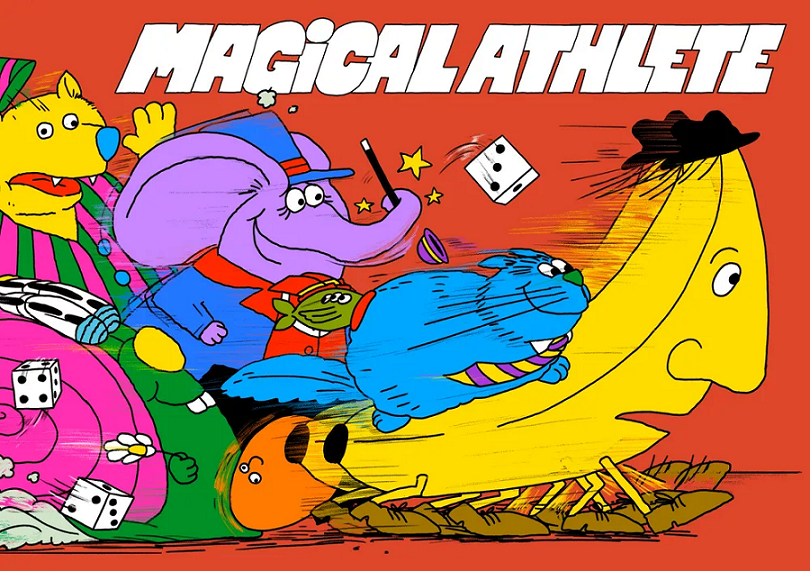
Takashi Ishida’s Magical Athlete is a quirky game about a cast of misfits in a foot race. First released in 2003 by Z-Man Games, its oddball nature and prototype-level production resulted in a large shrug from audiences. It was the typical Tanga title, dumped on a deep discount website and banished to the shelves of…

Read more →

The Lord of the Rings: Fate of the Fellowship v1

16. September 2025 um 06:42

… and I like less than half of you half as well as you deserve.

Keep it secret! Keep it safe! The Lord of the Rings: Fate of the Fellowship rules & reference!

The Pandemic system has spawned quite a few games now, and while I’m not a big fan of co-operative games, I hoped that The Lord of the Rings: Fate of the Fellowship would be different enough to offer a new and, for me, better, experience. And all the elements are here to make a more compelling game – it just seems that co-ops still aren’t for me.

The Lord of the Rings: Fate of the Fellowship boils the books down to a series of objectives you must complete before the final push to drop the Ring into the Crack of Doom. These can be mixed and matched to create scenarios that concentrate on various parts of the tale – for example, the taking of Isengard and the battles in Rohan – or you can just choose a random set of them. Each player controls two characters and must complete 4 actions with one, and 1 action with the other, on each of their turns. Your hand of region cards has icons on them that allow you to pay for some of those actions or get dice re-rolls. At the end of each player’s turn, a number of shadow cards are drawn according to the threat level, and these cards dictate the movement of troops along battle lines on the board as they head inexorably towards the strongholds of the good guys, or move the Eye of Sauron and the Nazgûl around the map. Occasionally, Skies Darken cards will pop up that, among other things, instruct you to shuffle the shadow card discards and put them back on top of the deck, in true Pandemic fashion.

I appreciate that this game is an interesting and very thematic evolution of the Pandemic system, but unfortunately I find the constant maintenance required by that system – moving the troops around the map in little conga lines, shuffling the cards back on top of the deck – pulls me out of the game’s theme. I sometimes found myself in situations where I had nothing I could do with my characters (probably my poor playing, but still…) Crucially, I simply can’t seem to get excited about winning or losing against a game system rather than real-life opponents. And finally, while the included dice tower is a solid, attractive bit of gimmickry, I found the game’s graphic design lacking a unified direction and a little bit amateurish. So in the end, while I can definitely see why this game has been reviewed so well and why so many people will love it, after a couple of plays, I realised it just wasn’t for me and I decided to sell it on to someone who would enjoy it more.

For more detail, check out my video review! And of course, you can find this summary in my amazing rules app, Tabletop Codex.

❌