
 Anmelden

Two games, two Deutscher Spiele Preis wins: Ark Nova designer Mathias Wigge takes second title with Sanctuary


German board game designer Mathias Wigge has pulled off an impressive feat at the Deutscher Spiele Preis – Germany’s biggest community-voted board game award – by winning with both of his first two standalone games, Ark Nova and Sanctuary.
Sanctuary claimed top spot in the annual award ahead of Pegasus Spiele’s commercial hit Boss Fighters QR and space tourism-themed worker placement title Galactic Cruise, which has already scored a string of major award wins.
The win also cements Feuerland Spiele‘s position as the most successful publisher in the Deutscher Spiele Preis since the company was founded in 2012, with four victories – twice as many as any other publisher over that period.
Feuerland scored an early DSP victory with Terra Mystica in 2013, before a flurry of three wins in eight years via Wingspan in 2019, Wigge’s debut design Ark Nova in 2022, and Sanctuary this year.
Feuerland managing director Stefan Rink told German broadcaster WDR after this year’s award ceremony that Sanctuary had already sold 20,000 copies in Germany, with the publisher hoping the award would provide a further sales boost.
The game, released in Germany as Artengarten last year, aims to offer a shorter and more accessible take on Ark Nova’s zoo-building and wildlife conservation theme, replacing much of the original’s card-driven gameplay with tile placement.
Feuerland also positioned the game at a lower price point than Ark Nova, with a recommended German retail price of €49.90 against €64.90 for the original.
The DSP victory is Sanctuary’s first major award success, having previously picked up a recommendation in this year’s Kennerspiel des Jahres prize and a nomination as Medium Game of the Year in BGG’s Golden Geek awards.
The win follows huge critical and sales success for Wigge’s predecessor design Ark Nova, which had sold more than 300,000 copies worldwide and racked up over 10 million plays on Board Game Arena according to a report from German newspaper Der Patriot in February this year – as well as being ranked in second place among all the titles on BoardGameGeek.
Runner-up Boss Fighters QR, designed by Michael Palm and Lukas Zach, has become a big sales success for Pegasus Spiele, which reportedly ordered the largest initial print run in its history for the game’s launch at Spiel Essen last year – and followed up with another record-sized print run to meet demand.
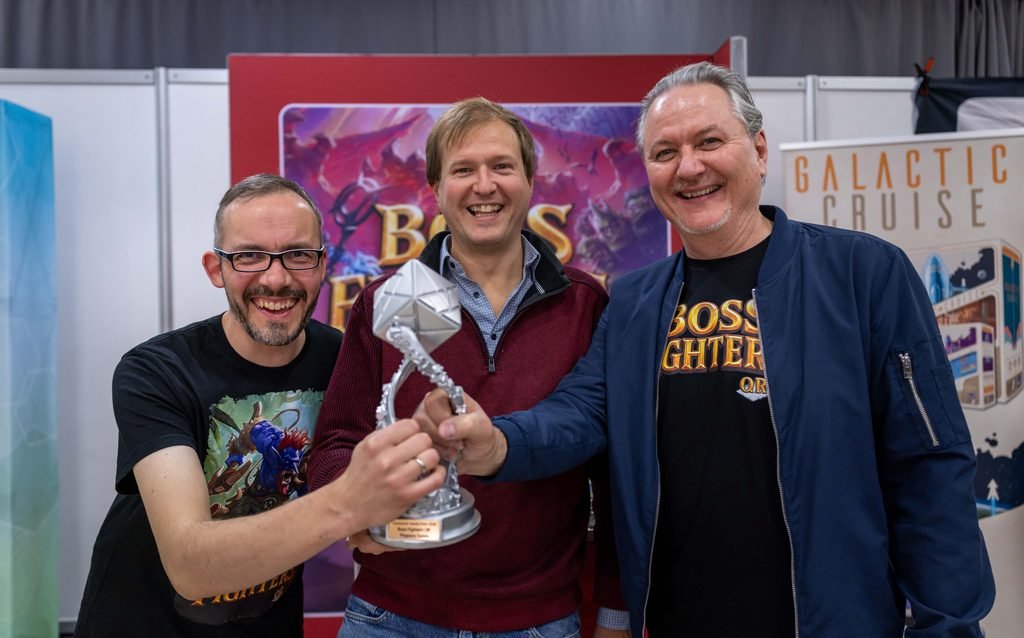
That title has already sold more than 100,000 copies in 17 countries according to German board game journalist Johannes Blumenberg, who runs the website Ministerium für Brettspielspaß.
The app-driven cooperative game spent six years in development, with Palm and Zach revealing that extensive work was needed to ensure its QR code scanning technology operated reliably and to develop the digitally controlled bosses.
The designers previously won the 2023 Spiel des Jahres with Dorfromantik: The Board Game, which also finished runner-up in that year’s Deutscher Spiele Preis behind Planet Unknown.
Boss Fighters QR was also nominated for this year’s Kennerspiel des Jahres, alongside Moon Colony Bloodbath and eventual winner Rebirth.
Galactic Cruise’s third place finish follows a striking awards run for the game, which was the first major release from US publisher Kinson Key Games.
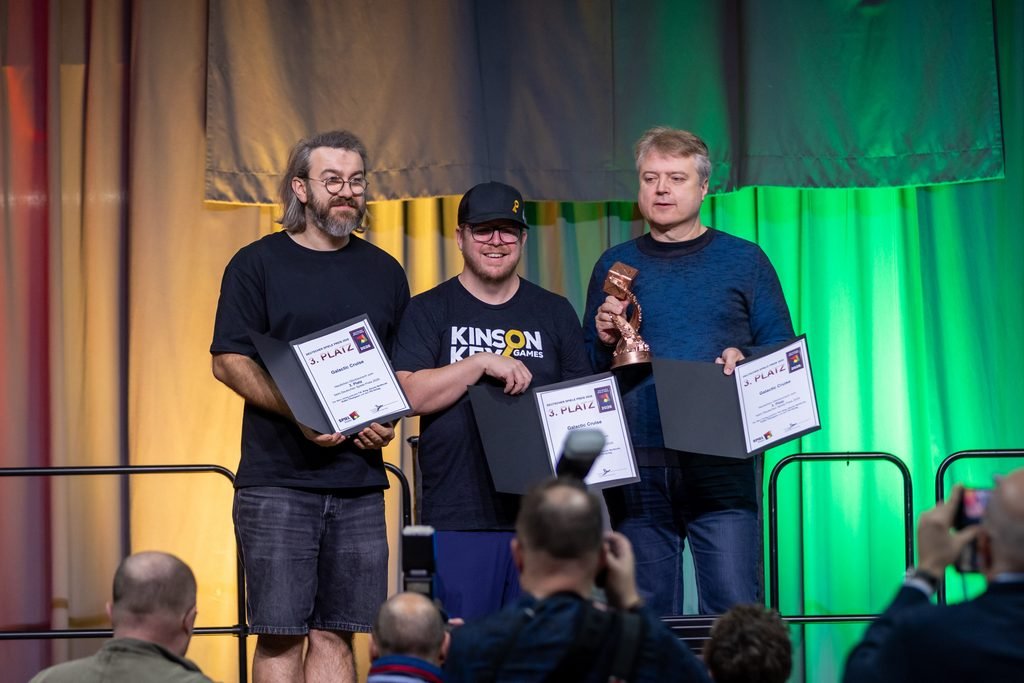
The title, designed by TK King, Dennis Northcott and Koltin Thomson, had already been crowned Heavy Game of the Year at BoardGameGeek’s Golden Geek Awards in May, before taking Game of the Year, Best Strategy Game and Best Game from a New Designer at the Dice Tower Awards in August.
Galactic Cruise was a significant crowdfunding success for Kinson Key, raising more than $807,000 from over 8,000 backers through its original Kickstarter campaign in 2024, before securing another $769,000 for an expansion and reprint earlier this year. The game is published in German by PD-Verlag.
Last year’s Deutscher Spiele Preis went to Tomáš Holek’s space exploration game SETI, published by Czech Games Edition, which took top spot ahead of Endeavor: Deep Sea and Bomb Busters.
Other winners over the past decade have included Forest Shuffle, Planet Unknown, Lost Ruins of Arnak, The Crew and Azul.
Board game publishing and distribution giant Asmodee secured four places in the top ten of this year’s DSP – with Fate of the Fellowship, Take Time, Cozy Stickerville and Forest Shuffle expansion Dartmoor – although none of its releases broke into the top three.
Germany’s Frosted Games was represented twice, through Reiner Knizia’s Kennerspiel des Jahres winner Rebirth in sixth place and Star Trek: Captain’s Chair in ninth, while Kosmos took eighth with River of Gold.
This year’s children’s Deutscher Spiele Preis went to Wojciech Grajkowski’s Toriki: The Castaway Island, published by Mirakulus, ahead of Mooki Island and Paleolino.
The Deutscher Spiele Preis, which has been presented since 1990, is decided by public voting among players in Germany, Austria and Switzerland, rather than a specialist jury.
Organisers said “many thousands” of players took part in this year’s voting. Eligible games were released in German between May 1, 2025 and April 30, 2026, with the winners announced at the Spiel Essen game fair.
The post Two games, two Deutscher Spiele Preis wins: Ark Nova designer Mathias Wigge takes second title with Sanctuary first appeared on .


