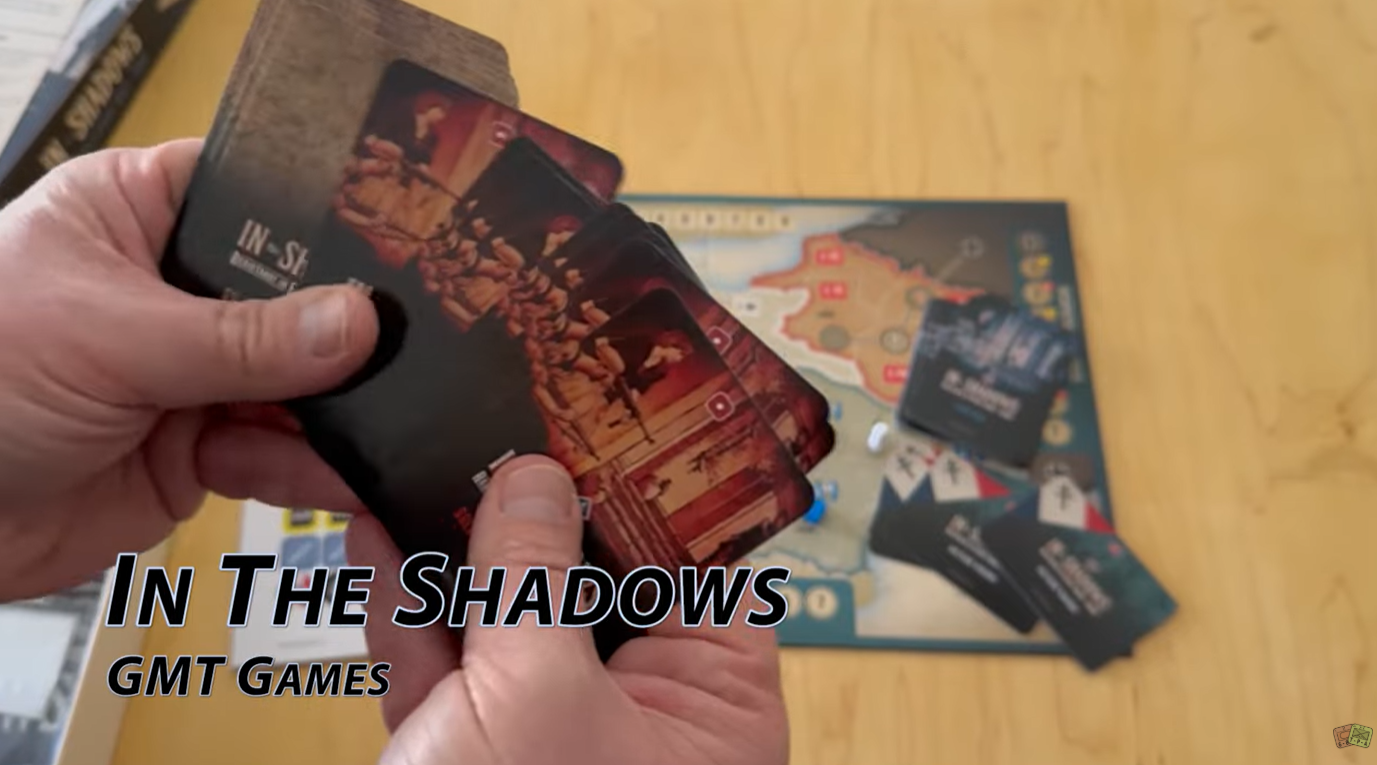
In the Shadows: Resistance in France, 1943-1944 from GMT Games is a 2-player card-driven game about the desperate struggle of the French Resistance against the occupying Nazi and collaborating French forces between January 1943 and June 1944. In the game you will play as either the Resistance or the Occupation in a fight over the hearts and minds of the French People. The game strives to have players better understand the nuances of the resistance and the clandestine nature of the fight that led to the founding of the fourth French Republic.
The gameplay of In the Shadows is driven by Event cards and Actions based on suits. The game relies on three different suits (the Resistance Cross, the Victory Cross, and the Iron Cross) to determine the cost and effectiveness of your Actions. Narratively, this is meant to represent the vital importance of local networks and resources. You may be working with resources in Paris but need to perform Sabotage Actions in Vichy. In this way, the game can better replicate the choices that the leaders of the Occupation and Resistance needed to make.
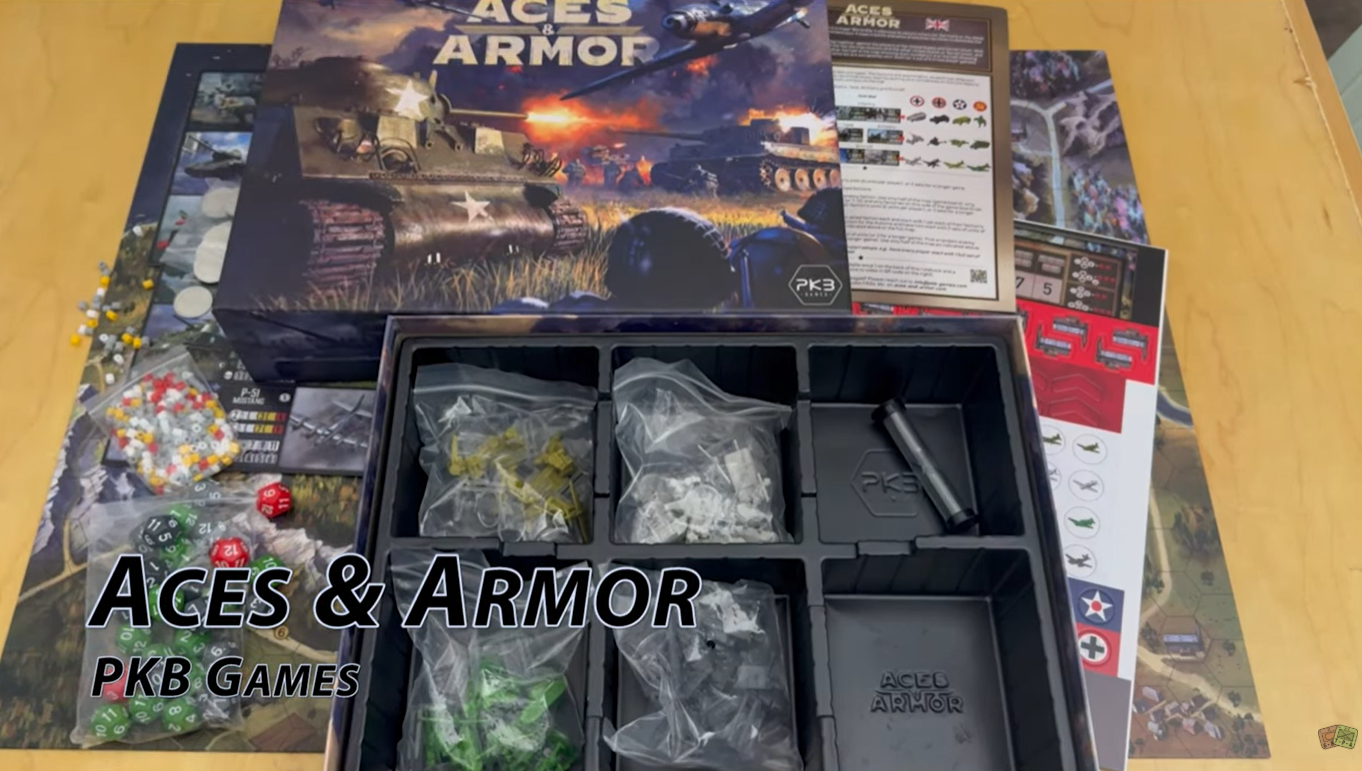
Take the role of a general (United States, Russia or Germany) in Aces & Armor, which is a complex (but easy to learn) strategy game. In addition to attack strength and armor of your troops, their tactical setup, combat experience, damage and terrain have a decisive influence on the outcome of the battle. Since each unit brings its own strengths, you must cleverly assemble your army to win the victory over your opponents.
Cooperative or competitive
Solo mode
Detailed miniatures with many different unit types
High re-playability due to the variable start setup
Complex combat system that depends on type of unit, combat damage, experience, strategic formation, terrain and armor (known from highly rated game Trench Club)
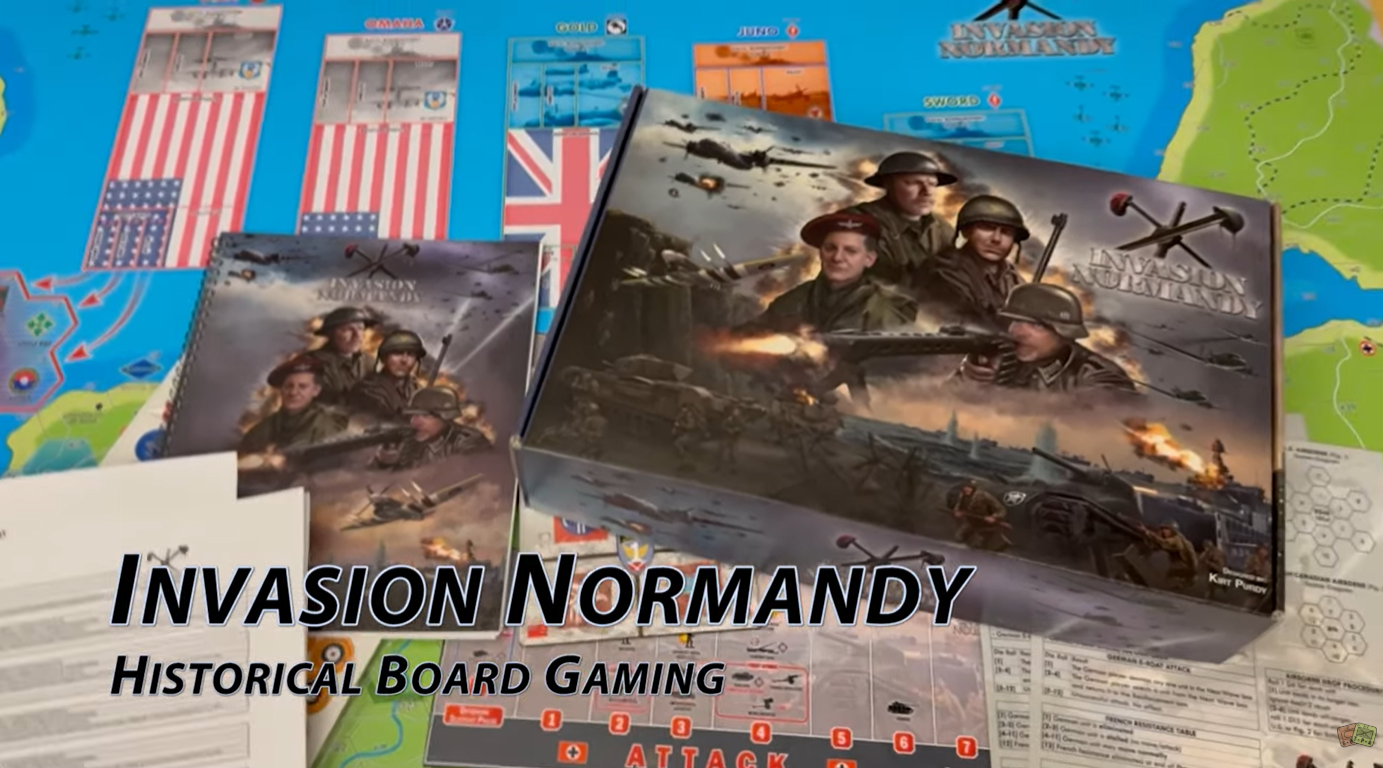
Invasion Normandy by Historical Board Gaming, designed by Kirt Purdy, is a historically accurate D-Day board game developed over three years of design and playtesting. This WWII strategy game immerses players in the Allied invasion of Normandy, featuring a detailed map in three sizes, battleboards for combat resolution, wire-bound rulebooks, reference sheets, and cardstock roundels and markers for strategic gameplay. Plastic pieces are not included, allowing players to use their own game components.
Experience the challenge of commanding forces during one of the most pivotal battles of World War II!
In an effort to keep our content varied and most importantly interesting, we have in the past reached out to Graphic Design Artists to provide them an opportunity to talk about their craft and their works. I for one love a good looking game as much as a well designed game and feel that the visual element to wargames can make them successful or hold them back. Prior interviews with Graphic Design Artists that have appeared on our blog have included Antonio Pinar Peña, Nicolás Eskubi, Ilya Kudriashov, Ania Ziolkowska, Matt White and Iván Cáceres. In this interview, we talk to an up and coming artist who has actually done a lot of really great looking graphics for several wargames over the recent years in Wouter Schoutteten.
Grant: First off Wouter, please tell us a little about yourself. Where do you live? What are your hobbies and interests? What types of games do you enjoy playing?
Wouter: I’m Wouter Schoutteten, I live in Belgium, I’m married with 2 kids. I have many interests and hobbies! Gardening, reading, grilling, walking, baking sourdough bread, drawing and being creative all around, collecting music… But my main interest is playing board games. I play all kinds: I play a lot of wargames obviously, but I also play Euro games and last year I really got into TTRPG’s as well. I play a lot solo too – almost every evening, something I enjoy a lot.
I really appreciate games that are very tight, that have limited mechanics. Games where every decision just is really important. The White Castle is one I like a lot.
As for wargames, ironically I have more affinity with history before WWII. Though I play WWII games too, and mostly on a tactical scale.
I’m now diving a bit into the ACW and one game that really stood out for me is Mark Herman’s Rebel Fury. What a clever game, one that I’m blessed to play with my 8-year old.
Grant: What is your full time profession? How did you get into wargame graphic design?
Wouter: I work as a graphic designer and illustrator. I do a lot of illustration in the field of branding and marketing. I’ve been working independent close to 10 years now.
One day during holiday, I was reflecting on my career as an artist and about the kind of jobs I did so far.
I always feel like an artist should set his own goals and should create something he wants to create. You know, something you as an artist would like to put into the world. And it dawned on me I could probably involve my hobby in my profession. I mean, I loved spending time tinkering with boardgames, making my own stuff, laying out little playaids I shared on BGG… But is there such a thing as an artist working in the wargame niche? I felt it would enable me to create something myself and at the same time give something back to the hobby.
So I first created the art for Corvette Command, got in touch with Allen Eagle (the designer) next and presented the art to a couple of publishers and that got the ball rolling!
Grant:What is your favorite part about the graphic design/art process? Conversely, what do you struggle with or find to be the greatest challenge?
Wouter: My favorite part about it is really pretty early on in the process. Reading up, doing the research and spending a couple of days diving into the topic, looking for documentaries, listening to podcasts and get some understanding of what the topic is about. Something I did with Volko Ruhnke when we were starting on Coast Watchers – We sat together and played a single turn of the game, just so I got an understanding of the basic ideas and hearing from the designer what he is trying to convey, what he thinks the ideal experience for the player should be like.
So what is my greatest challenge? In 2025 I started taking on more and more commissions, which was very exciting. I did a lot more work in the war game space than I ever did before. Then I learned that mapping the workload and working out my schedule really is a nightmare! These games can take a long time to develop. There’s a lot of going back and forth and to get everybody on the same line, that could mean a lot of iterations. So working on my planning skills this year!
Grant: If you are given strict design parameters for a specific game, does this stifle your creativity?
Wouter: Not really! As long as the parameters aren’t really about the look and feel of the game, I’m okay with that. Usually being creative is easier within constraints. Starting from a blank canvas, that’s often a bit paralyzing. It’s nice to have some parameters like “we are looking to bring this kind of a feeling” or “this one should really feel like 1600”. These kinds of parameters work really well to spark creativity.
Grant: How long does it usually take to fully design the graphics for a wargame? What is the starting point for the whole process?
Wouter: The starting point really is doing research, reading up on the topic, talking with the designer about his vision, what he’s trying to convey, what the players should experience while playing the game. Once I have that, I start with mood boarding, looking for inspirational or similar graphics that I like. Also digging into the whole BGG catalog, looking for other games on the same topic, taking inspiration out of that. Then usually I design a couple of components to get a general look and feel. Then I hope to get the green light from both publisher and designer. Once we have that, I work out everything and usually there’s a couple of iterations that are going back and forth between me, the publisher and the designer.
Grant: Where do you obtain information from to ensure the accuracy of your subjects, whether it be uniforms, insignia, equipment, maps, terrain, etc.?
Wouter: So when I say mood boarding it’s more than just finding an esthetic. It’s also about collecting reference images from the appropriate period, so that I will be working on the right uniform, the right insignia and things like that. I like to have at least a couple of different sources. Online groups with miniature painters for exemple are excellent for this, these guys are experts. Also museums, books, documentaries,…
Wargamers can be really picky about details. And rightly so. I remember a talk from Adrian Goldsworthy, the historian, on historical accuracy in movies. But the same applies to games as well: We create these visuals as a representation of history and they are passed from generation to generation and we expect them to be accurate. Now there’s a big risk in that if we make something inaccurate, not many people will be able to tell. So it’s important for us to try and tell the history as accurately as possible. I like to think of wargames as another form of education, a way of studying history. But also as a way of preserving stories and keeping them alive.
1920: Nest of Eagles from PHALANX.
Grant: What role does a good map play in a proper wargame? How does it help tell the narrative of the battle depicted?
Wouter: One of the things a map does is conveying the feeling of the era. It can also tell a part of the story in itself. Like the board I did for 1812: Napoleon’s Fateful March from VUCA Simulations, if you look to the right top corner, where Moscow is, you will see the colors there are paler and they’re almost white, as opposed to the lower left, where the colors are more green-ish. This is because the French invasion started from these countries with a more mild climate. And as the French marched on toward Moscow, winter was setting in. Once they retreated from Moscow, they had to do so in terrible conditions, freezing severely. For this game, we couldn’t create two maps just for the sake of the narrative. So I worked with this color gradient so the French player would feel, the more he’s moving towards Moscow, the harsher the terrain is, the harsher the conditions are becoming.
Another one is the map for the upcoming Merville Battery from Dan Verssen Games that I am working on. For the raid on that French coast battery during D-Day, British paratroopers were dropped very early in the morning. By the time they attacked the battery, the sun was almost coming up, so the sun would have created these very long shadows. I visited the site of the battery in person to see how the site looked, but also what kind of colors we have there. I also checked with photo’s from tourists there that were taken early dawn, to really simulate those colors. In my first designs I tried dark blue tones to give it that night ambiance, but we settled for a version with a lot of dark greens with some pastel-like hues, some pink and soft purple. A peculiar color scheme, but one that gives that sense of early dawn on the map.
Grant: How does the design process for counters compare to the process for maps? What is your goal with the look of counters?
Wouter: Oh I enjoy drawing counters! I make illustrations based on reference images like photos from miniatures. Counters are drawn by hand. Usually I do a couple of tests to see if they work well when printed small. They have to be clear when used so very tiny. One thing I like about counters when placed on the map is when they really pop out. That’s something I keep in mind, to keep the colors of the map rather subdued and work with brighter colors for the counters.
Personally, I like if the counters are a bit of a narrative as well. I’m not a fan of NATO symbols because I feel they are too abstract and I lose that emotional connection with the people that were involved in the action.
Nightfighter Command from War Diary Publications.
Grant: What wargame companies have you worked with in the past? What games have you been involved with?
Wouter: I’ve been blessed to work with a very wide roster of publishers in such a short time. Lately I’ve been working with GMT, with VUCA Simulations and with Sound of Drums. But I also work with DVG, Nuts! Publishing and have worked for PHALANX, Fort Circle and War Diary Publications.
Grant: What games have you been involved with?
Wouter: 1812: Napoleon’s Fateful March, 1920: Nest of Eagles, Assault Red Horizon 41: Revised Edition and Primosole Bridge Expansion, Corvette Command, Nightfighter Command, Merville Battery, Coast Watchers: Allied Field Intelligence in the South Pacific, 1942-1943 (to be released), The Far Seas (to be released), 1813: Napoleon’s Struggle for Germany (to be released), A House Divided: Designer Edition (to be released) and my own Dreaded Flags: Naval Conflict in the Age of Piracy 1568-1720.
Grant: How would you classify or describe your distinct graphics style?
Wouter: I try to inject little bits of innovation in my art, something a bit different at least for the wargame scene. I like clear iconography, clear typography. I’m not a big fan of a lot of drop shadows and special effects. So I think you would classify it more as a bold, flat, very graphic style with some elements of the Franco-Belge comic, DIY and print techniques such as screenprinting, copier effects and lithography. I think these are some common elements you’ll find with other European artists as well. Is there something as a European wargame look?
Grant: What game’s graphics are you most proud of? Is there one game that you would like another crack at to improve or simply do differently?
Wouter: I really like the whole package of 1812 and how everything in that box works together. I’m also pretty proud at the humble Corvette Command. It’s published by War Diary Publications and it’s a game by Alan Eagle and more of a narrative-style game in the line of B-17: Queen of the Skies. Usually in these games, you haven’t many visual components in front of you. So for this type of game, I really wanted to create something different, something new, a strong visual game. I like the box art of Corvette Command. I tried a couple of new techniques in there.
Grant: What graphic designers/artists out there have influenced your style? Do you spend a lot of time studying other’s work?
Wouter: No, I try not to look too much to other artists. I’m a bit of a perfectionist, prone to tinkering with my own art. And, like many artists, I struggle with the infamous ‘imposter syndrome’. Nothing is ever good enough, especially if you compare it to work made by people who are way more experienced than me. “Comparison is the thief of joy” is a mantra I need daily. Of course, there are artists I admire a lot and if I buy a game, usually it’s because I like the look of it! Work by Nils Johansson, Marc Von Martial, Iván Cáceres, Roland MacDonald, Donal Hegarty, Rick Barber, Albert Monteys, Javi de Castro… Sure, I’m now forgetting many… So many talented artists.
Grant: What games are you currently working on?
Wouter: We have the Kickstarter running for Merville Battery by Vince Cooper for DVG. I’m also finishing up Coast Watchers with GMT Games before I start working on A House Divided. I’m also working on 1813 which is the follow-up on 1812, and the next volume in that series. There is this big rework of The Far Seas I’m finishing for Vuca. With Sound of Drums I’m working on their ‘Assault’ line and with Nuts! on a game on the Battle of Borodino. And some other as well, but that’s too early to say anything about!
Grant: Where do you see your wargaming graphic design career in 5 years?
Wouter: Difficult question because honestly I didn’t think there was such a thing as an artist career in wargames, because it’s so niche. Something I started to realize is that working in a niche industry is incredibly valuable. It’s very powerful for an artist to find a niche, one where you feel welcome and validated. It gives you focus in your artistic choices and it gives your work longevity. But that being said, I’m incredibly grateful for being able to work in this space and I didn’t expect it to go that fast. Something I really like to do in the future is to be able to work on a medieval or ancients game, because it would be so different to work on. And perhaps break in the TTRPG scene because there are a lot of illustrations used there.
Grant: What type of software and hardware do you use for design?
Wouter: Part of my work is deliberately done analog, pen and paper style. Most of the work however is done on computer in Photoshop, Illustrator and some InDesign. Drawings I do analog and a lot on iPad as well. At the moment I’m trying a couple of new things. I’m trying to introduce my scanner and my analog work back into the digital space, combining it with photobashing, which is a very exciting technique to create fast but unique visuals that sit somewhere between photograhpy and illustration.
Thank you Grant, for taking the time to listen to me. And thanks a lot to you and Alexander for doing The Players’ Aid these past 10 years or so. I think it’s one of the pillars of the hobby and of this wonderful community. I’ve been following the blog for as long as I can remember. It’s how I have been staying in touch with new games, how I discovered a lot of games and the joy of solo gaming too. The blog and YouTube channel has given me so much joy in this hobby. Thank you!
Thanks for your time Wouter. I know that you are busy working on several new projects but appreciate that you were willing to share your story and give us a little bit of insight into the life of a graphic designer. You have a very impressive list of games that you have done graphics for and I look forward to enjoying your work for years to come.
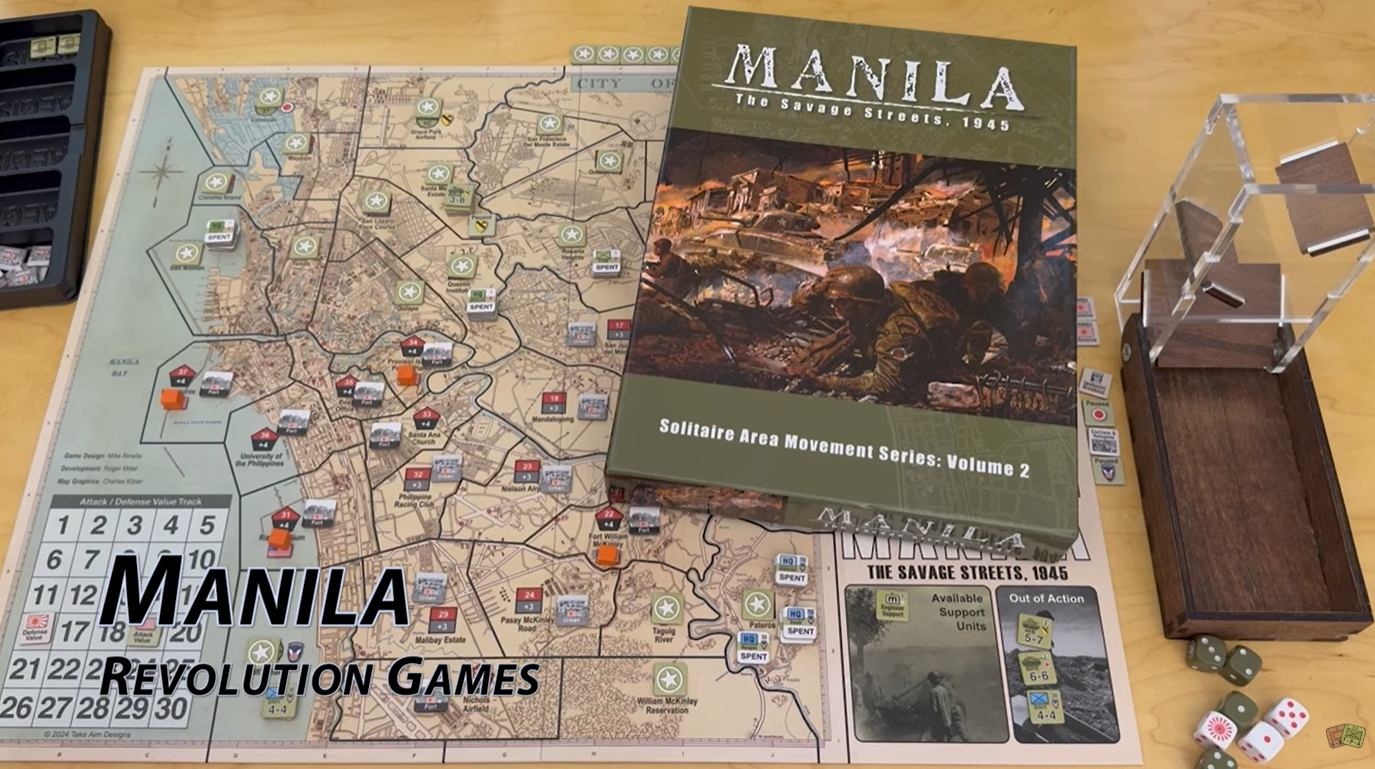
Manila: The Savage Streets, 1945 puts the player in charge of the attacking and far more mobile American side while the game system handles the defending and largely static Japanese side. No two games will ever be the same. Each turn presents new and unique challenges for the player in the form of random events, uncertain supply deliveries, and unknown Japanese area strengths and defensive strategies.
The primary game is a nine-turn campaign covering the American assault on the city during February and March 1945. The deeper American forces advance, from the city’s less developed periphery to its urban business district and fortress-like government buildings, the greater Japanese resistance becomes. The number of American units fought to exhaustion, effectively out of action, mounts. American determination to secure a rapid victory for Supreme Allied Commander General Douglas MacArthur, represented as “morale” in the game, gradually decreases. The player wins by equaling or exceeding historical American gains and loses if they fail to do so, or if morale falls too low.
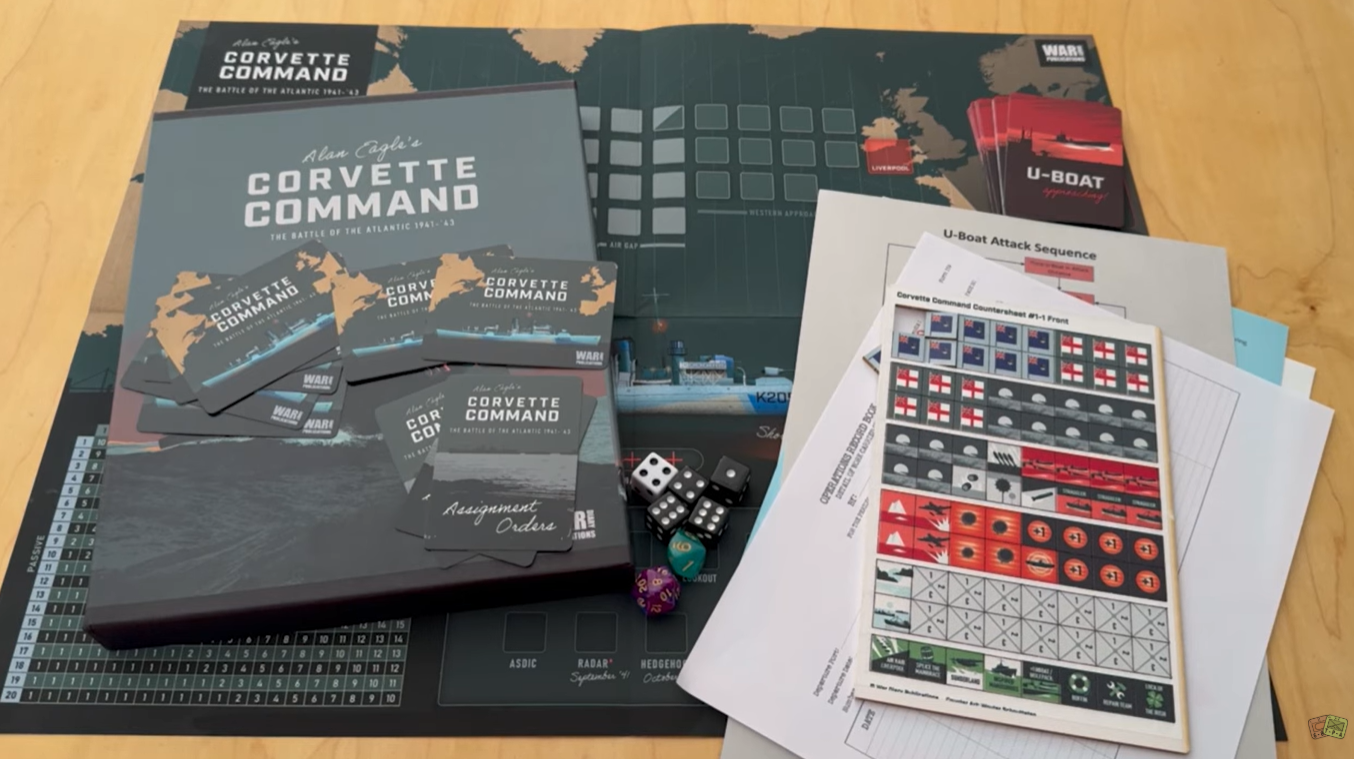
Corvette Command is a dedicated solitaire wargame that places the player in command of a Flower class corvette, guarding desperately needed supplies being transported across the North Atlantic during the early years of the Second World War. Fighting both the harsh weather and the continual threat of German U-boat attack, mission success – and perhaps even the eventual outcome of the war – hinges on the successful passage of the transports.
This one surprised me a bit! Initially, I really had just a tad bit of interest and when I got a copy and started to play, it felt a lot like a chart flipper that can be repetitive. But, as I kept at it the game opened up and I really started to love the mechanics, the dice and how they are used, the crew development over time and then I just fell in love playing it.
Several years ago, we posted an interview with Matt White, who is a very talented graphic artist and budding game designer, that focused on his artistic talents and love of tanks. He has since designed several very interesting small scale wargames, with his most recent series being a World War II tactical wargame series for 1-2 players pitting the British Airborne versus the German Wehrmacht called Until the Bitter End. He then designed the next entry in that series called Until the Bitter End – US Airborne followed by Until the Bitter End – Tanks. He has also done a few others including Would Be Aces,Operation Biting and Today Another Battle that have done very well. Recently, a new game appeared on Kickstarter from Matt called Saving Angels WWII Solitaire Wargame Print and Play, which is a wargame based on the American and guerrilla raid of the Japanese held Los Baños prison camp in World War II. We reached out to Matt and he was more than willing to share on the project.
Matt: My new Solitaire game is called Saving Angels and it covers the bold US Airborne and allies, raid of the Japanese held Los Baños prison camp during WWII.
Grant: What was your inspiration for the name? What do you want it to convey about the design?
Matt: I came across the history of this subject, whilst researching the Operation Biting game (which is also an Airborne raid, only British) and the name refers to the US 11th Airborne Division, as they were described by the prisoners, who they rescued.
The main element of the design is that you command the paratroopers and guerrillas on this daring rescue mission. With most wargames, the mission is often defeat the enemy or hold a point, etc., but with this design the rescuing of the prisoners is your objective.
Grant: What about this historical event made you want to create this game?
Matt: The main inspiration really was the story, but from the prisoners point of view. They had been treated terribly, for the most part, from their captors. The prisoners were from all walks of life, civilians rather than soldiers who had been captured. I felt it was important to cover this story from WWII, which has not really been covered before.
Grant: What research did you do on the subject?
Matt: I read a lot of history subject books so naturally I read as much as I could on the subject. There are also a few really good videos on YouTube that are also well worth watching.
Grant: Is this the start of a new series of games?
Matt: This is my third game in my Raid Series – the other games covering the British paratroopers, with this one being the first game in that series featuring US forces and where the main objective is the rescue.
Grant: What games have inspired your design?
Matt: To be honest, the biggest inspiration really is the history side rather than other wargames. I think also the first two games in the series was a natural source.
Grant: I know the design is a Print and Play offering. Why do you feel this model is best suited for your designs?
Matt: I like making print and play games as it forces you, as the designer, to make every component count and making the most of the physical space on a sheet of paper. I find that challenge one of the most interesting parts of the creative process.
Grant: I know you are not only the designer but you do the art as well. Please show us a few examples of your great art.
Matt: Here are several different pieces from the game.
Grant: How do you create your art? What is the process and what graphics tools do you use?
Matt: I use a variety of tools such as Sketchbook and Photoshop. I pretty much draw in a traditional method, just using a Wacom pen and laptop.
Grant: What difficult decisions do players have to make in the game?
Matt: The player must try and maximize their units to the best of the counter’s abilities. Each unit will have strengths and weaknesses so coordinating your units is crucial for success.
Grant: What dangers and threats meet the players with their airborne and amphibious landings?
Matt: As the player pushes towards the prison they may encounter Japanese enemy threat but also the risks associated with such landings.
Grant: What objectives does the player have to accomplish?
Matt: The player’s goal is to get to the camp, free the prisoners and then escort them back to the pick-up zone to make good their escape. This was a daring mission as the Japanese defended the area and the player will have to fend off Japanese reinforcements as the player makes good on their escape.
Grant: What is the purpose of the 2 different maps?
Matt: The game comes complete with 2 maps. The first map is for the approach to the Prison Camp and features both Airborne and amphibious landings. The second map is the Prison Camp itself where the player must locate and rescue the prisoners before escaping back across the first map.
Approach map.
Prison camp map.
Grant: How do players control these units and give commands?
Matt: During the game’s turn the player controls movement of their Units whilst the game’s AI will control the enemy Japanese.
Grant: What is the goal of the game? How is victory obtained?
Matt: Get to the camp, rescue the prisoners and escape, whilst fending off the Japanese enemy. It will take co-ordination of the player’s units, using them to the best of their abilities and a bit of luck!
Grant: What are you most pleased about with the design?
Matt: I really wanted to create the strong narrative experience, that’s quite tense, of having multiple objectives (with rescuing all the prisoners) whilst dealing with an unrelenting enemy.
Grant: What kind of an experience does the game create?
Matt: For me, the game creates the idea that sometimes you have to be bold, push your luck and try and achieve success by utilizing the resources you have to the best of their abilities.
Grant: What other designs are you currently working on?
Matt: I have a plate of other games I am working on, mostly WWII! I’d like to cover more of these historical daring raids whether they are land, sea or air.
Thanks to Matt for his time in answering our questions and for his great little print and play games. I love it when one of these new games is brought to light as I get to oodle over the art and see what new things he has created!
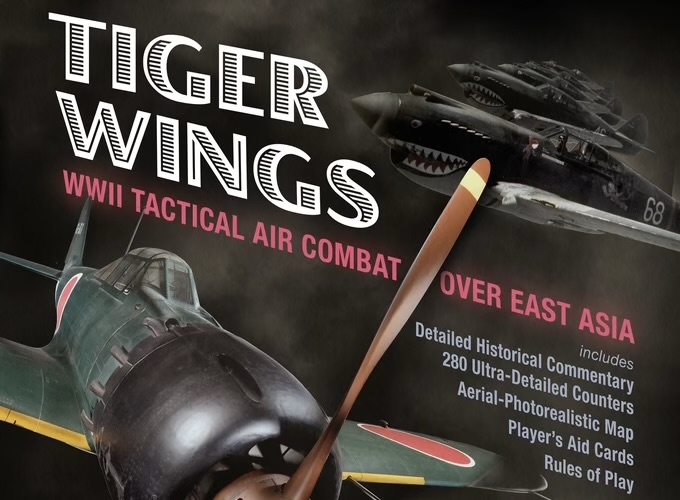
I love air war games! They are always supremely interesting and I really like the tactical nature of maneuvers and positioning. A few years ago, we covered the Buffalo Wings Reprint in our Wargame Watch feature and recently saw an announcement about a new volume in the Fighting Wings Series called Tiger Wings designed by J.D. Webster. We reached out to J.D. to get some inside information about the design and he gave us plenty.
Grant: J.D. welcome to our blog. First off please tell us a little about yourself. What are your hobbies? What’s your day job?
J.D.: Thank you to the gentlemen at The Players’ Aid blog for this opportunity to share a little bit about myself and my time in our wonderful history hobby. I’m 69 years old, and a retired Military and Commercial aviation pilot and my number one love in life has been flying. Like many of us, I started young in traditional board wargaming, starting with Avalon Hill’s Afrika Korps as a kid in high school. At the time I was already a history buff, and my father, a civilian pilot had imbued a love for airplanes in myself at an early age. Growing up, my hobbies were building model airplanes, plastic, balsa, foam, etc., and I read everything I could get my hands on regarding WW-I and WW-II air combat. Naturally, that morphed into a desire to be a military aviator myself. In college, I joined Navy ROTC, got commissioned and went on to become a Naval Aviator, flying A-7 Corsair attack jets with VA-195 off the USS Ranger in the mid-1980s. My second tour was as a Navy jet flight instructor in the late late 1980s. In 1990, my life shifted, and I left the Navy to become a commercial airline pilot, but, at the same time, I did an inter-service transfer into the Air National Guard, flying Air Force A-7D Corsair jets with the 124th TFS and then, F-16C Fighting Falcons for a brief stint (Wonderful plane, BTW).Along the way, I built up a personal library of over 600 aviation books, becoming, as I would call it, an “amateur subject matter” expert. I apologize but this long-winded information is going to be relevant to your following questions. Of course, throughout this entire time I stayed an avid wargamer, picking up on all aspects of the hobby and, naturally, I was most excited when someone put out a game on aerial combat. I also, was most interested in “tactical” level games, squad vs. squad, tank vs. tank, ship vs. ship and airplane vs. airplane. Which brings us to your second question.
Grant: What motivated you to break into game design? What have you enjoyed most about the experience thus far?
J.D.: Although, I was active in other parts of the gaming hobby in my youth and early college days, aviation games excited me the most. I loved Richthofen’s War, Luftwaffe and the Air Force / Dauntless Series games, all of which I played until they fell apart. By the time, I was actually learning to fly in the Navy, I got hold of David Isby’s Air War, and struggled to learn it. By then, I knew enough about flying to realize, IMO, that these other game designers, talented as they were, were not themselves flyers, and the game models they were producing did not have the correct approach. Some designs were simpler than others, most were fun, but they did not model three dimensional air combat in the right ways, or worse, in an engaging way that would bring the gamers back around for multiple playings. I felt I could do better on my own – so in 1986, I designed Air Superiority, which was published by GDW. This was followed by Air Strike two years later, also published by GDW. Mark Miller and Frank Chadwick were wonderful mentors to a budding rules writer and those two games went on to very successful sales. To be honest, Air Superiority was really, me doing a game about my day job at the time, flying jets in the Navy.
As a young hobbyist in his early twenties, it was pretty cool to become a published “game designer” and naturally, I got interested in doing more. I moved over to Clash of Arms in the 1990’s, and they published The Speed of Heat, my first tome, on the history of jet air combat, using an upgraded version of the Air Superiority rules. As an active duty military person, however, I couldn’t go forward much without touching upon classified topics, so I decided to go backwards and build a game to model WW-II air combat instead. This led me to create the Fighting Wings Series of games, all of which share the same family of rules, and, of which, there have been four boxed volumes, and multiple magazine supplements made. Briefly, they are:
Over the Reich, published 1991 by COA. / FW volume 1 boxed
Achtung Spitfire, published 1993 by COA. / FW volume 2 boxed
Whistling Death, published 2003 by COA. / FW volume 3 boxed
Buffalo Wings, published 2010 by ATO Magazine. / supplement
Top Cover #1, Darwin’s Spitfires, published 2013 by COA. / supplement
Wings of the Motherland, published 2019 by COA. / FW volume 4 boxed.
My mission, and what gives me the most satisfaction in this effort, is knowing that my game rules, though sometimes considered complex, actually do an accurate job of modeling what the real important factors of air combat are, and that the airplanes perform correctly, in terms of their historical abilities relative to each other. Of course, one quick thing to mention, of importance is that Buffalo Wings, featured a simplified set of game rules, more of an introductory version of the general Fighting Wings rules set. Buffalo Wings, was reprinted just a few years ago.
Grant: What is your upcoming game Tiger Wings about?
J.D.: Every Boxed game and supplement I’ve done for the Fighting Wings, Buffalo Wings family of WW-2 air combat games has filled in some significant portion of the history the air war in WW-2 and Tiger Wings is yet another area of historical significance, seldom touched upon or previously explored in wargaming, which is that of the successful air campaigns waged by the Japanese Army and Naval air arms in the first six months of the war, when they swept across the Far East conquering Malaya, the Philippines, the Dutch East Indies and Burma in just six months. What is unique about these campaign are the various myths involved with them. There is this idea that Japanese air power was overwhelming and that their airplanes were far superior to those of the Allies, but the truth is different. Qualitatively, Allied aircraft were better, and they were not heavily outnumbered, the problem was Allied air power was ineptly used and frittered away in a most incompetent way as will be covered and explained by the historical articles included with the Tiger Wings campaign study magazine game. For example, the famous AVG Flying Tigers, as heroic as they fought, and despite being effective defenders, were ground out of existence and disbanded within six months of entering battle. They were defeated in Burma and pushed back to China, where, they disbanded to be replaced by the newly formed 14th Air Force. This isn’t the way history normally portrays them, but it is realistic, and one of my goals with every Fighting Wings related product is including the real history behind the situations.
Grant: What is being updated with the system or improved with this entry in the series?
J.D.: Tiger Wings is targeted both at my existing fan base, in terms of adding new planes to the game system and dozens of new scenarios to explore, but also to entry level players, who want to try the system for the first time, but without the extra details and complexity of the “full” level Fighting Wings rules. As such, the Tiger Wings rules are the Buffalo Wings beginner’s rules, cleaned up, and revised slightly, with all the second printing BW expansion rules for air-to-ground combat added in. We also plan to include a “quick start” player’s guide to facilitate understanding how to play the game. So Tiger Wings is a passport into the Fighting Wings game system. Players who like TW may want to delve further, trying the full rules products for even greater realism, but if not, I’m pretty sure they will be fascinated with Tiger Wings as a stand alone item, just as it is.
Grant: Why was this a subject you wanted to create a game on?
J.D.: Back in 1966, Martin Caidin, a famous pulp aviation author of the day wrote a book called the The Ragged Rugged Warriors, which is largely about air combat from the Spanish Civil War era through the end of the Flying Tigers era in mid-1942, which talks a lot about the Far East campaign and the fall of Malaya, etc. I was twelve years old when I first read the book in 1968 and my fascination with American pilots fighting against the odds at great sacrifice, to hold the line against the merciless Japanese, until the tide of the Pacific War changed in favor of the Allies never left me. It has always been on my to-do list since first designing the Fighting Wings Series and now, 34 years into my quest, I’m finally getting it done.
Grant: What are the unique features with the Fighting Wings System used for the game?
J.D.: This is a broad question. But for the unfamiliar, the key is to understand with my designs are that the FW, BW, and TW game scale is specifically designed to model not aircraft flight, per se, but what a fighter pilot can reasonably accomplish in what is known as a standard “OODA” loop cycle. Whether you were a fighter pilot flying Sopwiths in WW-1, or jet aircraft in the Korean War, forty years later, the one thing that hasn’t changed, is the “OODA” cycle. “OODA” stands for “Observe-Orient-Decide-Act”. It’s an actual mental process, first recognized and codified by Eric Hartmann, the most famous and successful German fighter pilot on the Russian front in WW-2. It has been taught at Top Gun and the USAF Fighter Weapons School, but under different names. You will often hear or read about the term “Situational Awareness” or SA. Guess what, SA is derived by OODA looping. In short, the OODA loop works this way – it’s a four second cycle, on average – and it is a continuous never ending loop, constantly changing, evolving, and getting modified as the fighter pilot maneuvers his way through a life and death air battle. It takes about one second of visual inputs, for a pilot to OBSERVE as much as he can. It then takes another second of time for the pilot to interpret and sort all the visual, aural and physical forces information assaulting his eyes brain and body to ORIENT himself to his situation. Based on that orientation, the pilot must then DECIDE what to do to attack or defend himself (about a one second process) and then the fourth second is taken up with the ACT of placing the aircraft controls in a position to start moving the airplane where he needs it to go. As his fighter’s flight path starts to change, he will be observing the changes, and reorienting to the changes etc. It should be understood that the OODA cycle in not sequential in nature. You don’t Observe-Orient-Decide-Act and then start over. It’s layered, each piece responsible for starting another cycle. Kind of like how a staggered “Row-row-row the boat song is sung.” As the OODA cycle progresses each piece is being observed by the pilot for its effects and that requires Orienting anew, deciding anew, Acting…etc.
Observe Orient Decide Act <<< OODA cycle 1
Observe Orient Decide Act <<< OODA cycle 2
Observe Orient Decide ACT <<< etc.
Grant: What is your design goal with the game?
J.D.: Quite simply, to immerse the gamer into the accurate historical context of the Far East Air Campaign as fought in 1941 and 1942 and let him have some fun, while flailing about the map board solving the situations he himself creates while moving his aircraft in plane-on-plane tactical air combat.
Grant: Who is your developer Terry Simo? What does he bring to the design?
J.D.: I’m proud to say that Terry is one of my great life-long friends, a fellow Military Aviator, and he brings to the design his own instincts as a successful air game designer himself, having developed and even published his own air combat designs with GMT Games. With regards to rules balance, scenario play balance and a critical eye for ensuring that a “non-pilot” gamer that has never had any flight instruction will be able to understand the rules concepts put forth by myself to fly in the game – Terry has been invaluable. I can’t thank him enough for his efforts. BTW Terry and I met back in the late 1980’s during my jet combat game design era and he’s also been a life long Fighting Wings System player since that series was first published.
Grant: What was unique about aerial combat in the CBI Theater of WWII? How did you model this?
J.D.: Technically, Tiger Wings covers more than the CBI (China-Burma-India) theater. It covers the air fighting over Malaya, Sumatra, Java, the Philippines etc., with Burma, being just one portion. My approach to the game scenarios that is unique is to try to explore both the reasons for the many Allied failures and their few successes in these campaigns, in terms of highlighting what the tactical errors were and how the successful flyers, such as the Flying Tiger pilots were different in their approach to fighting the Japanese.
Grant: What various planes are included in the game? What is unique about their statistics?
J.D.: Tiger Wings has an eclectic and fun group of early warplanes to push around. On the Allied side for fighters, there is the Hawk 75, Brewster Buffalo, Curtiss Wright Demon, Hawker Hurricane, the Curtiss P-40 Tomahawk and the P-40E Warhawk. The Japanese Army Air Force pretty much only has Ki.27 obsolete fixed gear Nates and the newer Ki.43 Oscar fighter to work with, while the Imperial Japanese Navy shows up with the outstanding A6M2 Zero fighter. For the most part, all of the Japanese fighters are agile, but fragile, and woefully under-armed, except for the Zero. Almost all of the Allied fighters are much more robust, armored and well armed, and even faster than the Japanese planes, yet they were still defeated in detail by the Japanese flyers, and the reason goes to the use of good tactics by the Japanese and bad tactics by the Allies, exacerbated by the very poor experience and training levels of the Allied pilots facing the Japanese veterans of the air war in China.
Grant: What is the anatomy of the counters? What information is included?
J.D.: Each aircraft counter in the game represents a single aircraft. It will have a top view, a type name and an ID number and nothing else. Everything else about the fighter’s performance is kept noted on an aircraft log sheet, since the aircraft’s pitch angle, bank angle, speed and height can constantly change during play. All of the aircraft’s performance capabilities at different altitudes is summarized on each aircraft’s data card, known as an ADC. Here is a sneak preview of the Dutch CW-21 Demon fighter.
Grant: What information is included on the Aircraft Data Cards?
J.D.: As you can see from the Demon Aircraft Data Card example, everything you need to fly the plane on the game map is summarized on the Aircraft Data Card. For different altitude bands, each about 6,000 feet thick, there is a listed minimum level speed, maximum level speed and maximum safe diving speed and the numbers are in terms of “Hexes of movement”. So if an aircraft has a current speed of 6.0, it can move six hexes in a game turn. Each point of speed equals 50mph of scale speed, so Speed 6.0 equals 300 mph of speed, and so on.
Grant: How does combat work in the design?
J.D.: In the FW, BW and TW game system, standard war game odds tables are used along with a percentile die roll to resolve combat. Aircraft firepower diminishes with range, reflecting a loss of accuracy as range increases, and aircraft have a defense factor, which is increased by the angle of deflection of the attacker, to reflect the increased difficulty of a hitting a target from the side as opposed to from the rear. Ideally, the best shots occur if the attacker is directly behind the target with no deflection shooting required and at a close range. Damage is inflicted in terms of “hits” with multiple hits sometimes resulting in special “critical damage” events such as causing an aircraft to lose its wings or explode from a fuel tank hit. The combat system is one of the most popular parts of the entire series often creating entertaining story telling as you play. “There I was, wing on fire, engine sputtering, pilot wounded…. And so on”.
Grant: What do you feel the game models well?
J.D.: Obviously I’m biased. It models how three-dimensional maneuvering impacts a dogfight’s overall geometry very well. There is a good reason to attack from above in a dive, because of the extra energy you’ll get from diving, and thus the extra speed, that may well then let you zoom out of a bad situation. Speed is life. Get slow…not good, you can stall and spin out if that happens in the game.
Grant: What has been the experience of your playtesters?
J.D.: Terry and I ran two different groups of playtesters through the rules and through multiple varieties of scenarios. In Terry’s group there were two players who had never played a FW or BW game before. They did fine. We also had experienced Fighting Wings players who – obviously had no issues with the beginner version rules. As far as I can tell, the playtesters, themselves, were entertained by the process. A good sign.
Grant: What are you most pleased about with the design?
J.D.: The beauty of the game counters, and the game map, thanks to the fantastic talent of our counter Artist, Ian Wedge from England and our map artist, David Friedrichs from the USA.
Grant: What other designs are you contemplating or already working on?
J.D.: None at the moment, my plate is full, but on my to-do list…I’m contemplating how to best do a WW-I air combat game design.
Well, gentlemen, thank you so much for letting me blab a bit about this new product. I hope this will provide some interesting insights for your readers.
Thank you J.D.! It was a pleasure getting to know you a bit and we appreciate you doing this little interview on such short notice. Good luck with the Kickstarter!
If you are interested in Tiger Wings: WWII Tactical Air Combat Over East Asia in Against the Odds Magazine Campaign Study No. 2, you can back the project at the Kickstarter page at the following link: https://www.kickstarter.com/projects/atomagazine/tiger-wings?ref

 Anmelden