Bargello designs are built from vertical stitches, laid in sequence so that colours rise and fall, creating flowing waves, shifting flames, or soft gradients that almost seem to move across the fabric. Used in ornate upholstery in 17th-century Italy and applied to chairs and other furniture, these patterns require precision and concentration. Even a single misplaced stitch will completely break the rhythm. As a highly-skilled embroiderer, it is up to you to make sure your needle is correctly Threaded: A Game of Needles and Points by Ellie Dix from Osprey Games with art by Maria Surducan.
Have you ever bought a mystery box, a blind booster pack, or a subscription with an unknown assortment inside?
In the early days of COVID, Megan and I signed up for Universal Yums, a treat box subscription service. Every month we would open a new box together and do a taste test of the various sweet and salty treats, and we’d often pair it with a thematically related movie. It was a delight.
I’ve also purchased my fair share of Magic booster packs over the years, most often to draft with friends, not to collect, sell, or compete in tournaments. I can’t deny the thrill of opening a booster and looking through the contents for the first time.
Yet that’s probably the extent to which I’ve engaged with mystery boxes. I don’t like most surprises, and I’m selective about the things I buy–quality and specificity over quantity.
Recently I asked livecast viewers what they thought about mystery boxes. Reactions were mostly mixed at best, and many were fairly negative, with people talking about how blind buys play into gambling compulsions and how they can cheapen a brand.
However, many people also acknowledged that they have enjoyed at least one mystery box (across a wide range of categories): Specific IPs they enjoy, category-specific subscription boxes (tea, chocolate, etc), and when they were just starting a new hobby.
So I’m curious what you think: Have you ever had a good experience with a mystery box, blind booster pack, or surprise subscription?
On the Game overview screen an extra statistics section has now been added to the Stats Segment: Score margins!
The Score Margins sections shows the win and loss margins for plays of a game. Details about Score Margins can be found here: Score Margins.
Also new on the Game overview:
Tap bar chart data
For all relevant bar charts it is now possible to tap on it to view the related play(s). You can recognise these lines by the > at the end. This option is available with the Power expansion.
Dropdown menu for Stats Segment
Tap the name of the Stats Segment to access the drop-down menu and quickly switch between sections.
A friend recently mentioned a statistic (that I’ve since verified according to multiple studies) that most people–over 80%–who have purchased a bottle of wine have made their decision largely based on the label. Not taste or research, just a label that spoke to them.
Have you ever purchased something based on its packaging? I absolutely have. Wine, games, books, chocolate, coffee, disc golf discs…sometimes the packaging draws me in and inspires me to learn more, but sometimes it’s almost the entire decision (i.e., I want this because of how it looks).
I mentioned this topic on a recent livecast, and viewers had even more examples: beer, hot sauce, restaurants, cereal boxes, and more. It also came up on a recent podcast episode of Unit Economics about how Byte’m brownies focused their packaging on a delicious-looking brownie instead of on their high-quality ingredients.
In the tabletop game space, box covers have a huge impact. It isn’t just about their marketing appeal; publishers try to make boxes that people are proud to display, that are compelling both at a game store and in an online thumbnail, and that function from different angles.
For all those reasons, at Stonemaier Games we pay far more for the box illustration than any other individual piece of art in the game (only a detailed game board comes close). I often look to other games for inspiration (thank you, BoardGameGeek!), and I always like to get at least 3 concept sketches from the artist before pursuing one of them in detail.
Then there’s another set of decisions to make about the labeling on the box: The size and position of the game name, the names of the designer(s) and artist(s), and the inclusion of key information like player count and playing time on all 6 sides.
There’s also the presentation on the back of the box, where we’ve traditionally placed a 3D setup image. We’re starting to pair that with 1/2/3-style explanation speech bubbles so a potential customer can quickly grasp what the game is about.
It’s always a work in progress, and I’m always learning from other publishers–it feels like every week there’s a new game announced with a truly stunning, evocative box. Whenever I go to a local game store, I try to pay close attention to which boxes grab my attention; I also recently went to Barnes & Noble for this specific purpose.
Have you ever bought a product based on its box, label, or cover? What would you like game publishers to learn from your experience?
This is a board game blog. Board games are a medium which can help us understand – for example, they can provide a uniquely active perspective on history. Yet which other medium can provide a fresh perspective on board games? – This is where novels come in handy. Today, we’re going to look at The Third Reich (Roberto Bolaño), a study in obsession as well as gaming and history.
Spain in the 1980s. Udo Berger, a young German, has just arrived in a small seaside town for a vacation with his girlfriend Ingeborg. Yet Udo’s mind is not on the beach. He has just won the national championship at the wargame The Third Reich (clearly based on Rise and Decline of the Third Reich (Don Greenwood/John Prados, Avalon Hill)) and plans to use his vacation to write an article on his new strategy for the Axis. Ingeborg, however, has more traditional vacation activities in mind, and so they spend some of their swimming, tanning, and partying, through which they befriend another German couple, some locals, and the enigmatic paddleboat renter who is only known as El Quemado (The Burned One) for the burn marks which cover his body. When the vacation comes to an end, Udo remains in Spain, supposedly to help in the case of an acquaintance lost at sea windsurfing… yet the real reason is the game of Third Reich which he plays against El Quemado.
Chilean novelist Roberto Bolaño wrote the novel in 1989. Since he turned his hand-written first draft into a typoscript (and later typed the first 20% into his first computer), it is assumed that he wanted to eventually publish it, but he didn’t do so before his death in 2003. When the novel was found among his papers, it was posthumously published in 2010. In addition to the original Spanish (El Tercer Reich), the book has been widely translated. I read the German translation.
Warning: Spoilers for the plot of The Third Reich ahead – but frankly, this is not a book you read for plot, you read it for the vibes.
Obsession: Conquest, Validation, Control
Udo Berger is wargame-obsessed, but the book is not a study of how an outsider has outsider fixations. On the one hand, Berger’s obsession with conquest and domination sets him by no means apart from his peers – just that they usually direct their respective urges to amorous exploits. On the other, our protagonist does not only want to conquer in the game either. In addition to his girlfriend, he also pursues the hotel manager Frau Else (who has been his crush when he was vacationing in Spain as a teen), and the underage chambermaid Clarita. And maybe most of all, Berger is fixated on being respected by his wargame peers, which he can only imagine obtaining by finding strategies (and publishing articles about them) which will obliterate all conventional wisdoms about the game.
As Berger is acutely aware of his lack of linguistic sophistication, he decides to practice by writing a diary during his vacation (which is what we read in the novel). The development of this diary reflects the changes in the writer: Originally, his daily entries are very structured (one per day, headlined by the date), and mostly concerned with banal reports on what he did, what he ate, and what he has in mind for the game/article). As Berger is drawn more and more into his duel with El Quemado, the diary gets more confused: He jumps from one level of narration to another within the same paragraph, extensive passages are solely dedicated to what’s happening in the game (down to which counters are placed on which individual hex numbers on the board), and the chapters are not only named after the dates, but also entitled “With El Lobo and El Cordero [his Spanish acquaintances]”, “Spring 1942” or “My Favorite Generals”.
Berger’s inability to focus also dooms his conquests (ludic and erotic): He sets out to prove that opening a second front early is not a liability, but an asset, and enthusiastically reports early in the game to a friend at home that it’s “Blitzkrieg on all fronts”. Yet as he conducts an amphibious assault of Britain at the same time as he invades the Soviet Union, his forces are overstretched and his Axis collapses before the historical date. And broadcasting his erotic attention over Ingeborg, Frau Else, and Clarita, does not further his relationship with either of them.
As things slide out of his grip, his attitude to control changes: Initially, Berger is fixated on the superior strategy. He notes down the exact moves – which corps need to occupy which hex in which turn to win. This chess-like approach collapses after the turning point of the game: Once El Quemado begins his counter-attack, Berger mentions for the first times that there are die rolls in the game (and how they favor his opponent) – not unlike many board gamers I have seen.
Gaming and History
Besides the main theme of obsession, the novel also offers many glimpses on gaming, history, and the relation between the two.
Berger arrives in Spain with his life compartmentalized between the gaming and the “normal” part – his girlfriend and the office job. This compartmentalization is already eroding with his plan to write the strategy article (which immediately chafes against the confines of a conventional vacation – the hotel employees are bewildered by his request for a large table to be set up in his room, and Ingeborg demands he come to the beach) and fully collapses over the course of the book, when he even unilaterally extends his vacation to play the game (and gets fired for it).
The shadow of history hangs over Berger. Our protagonist does not only play games about World War II, he also reads “patriotic” literature of the era, knows about the lives and deeds of the German generals (especially those of the SS), and the only of his wargamer friends for whom he has a certain reverence is a veteran of World War II. Despite this clear fascination for the history of Nazi Germany, Berger twice disavows being a Nazi himself (having been asked by El Quemado and Clarita). Once he even calls himself an “opponent of the Nazis”, but does not expound on it. His personal politics do not factor into the novel – Berger, having been born around 1960 in democratic, liberal, prosperous post-war Germany enjoys the luxury of only engaging with history at his leisure. He thus remains at the surface of it…
…unlike his gaming opponent. El Quemado comes from South America, and it is rumored among his Spanish acquaintances that the scars he bears are the result of torture (by one of the many right-wing regimes which took power in the 1970s). History has thus seeped into his body and gives him the strength to withstand the ludic assault of the experienced player Berger.
Bolaño himself was arrested after the 1973 coup in Chile and, to his own wonder, was released after eight days without having been tortured (he ascribed it to two of the detectives having attended school with him). He then emigrated to Spain where he worked odd jobs in the tourism industry like El Quemado.
Another allusion to Chile is made in a much-misunderstood scene: On September 11, everyone is out at the beach to celebrate the Catalan national holiday. Yet when a plane flies overhead, an eerie sense of dread overcomes the spectators. Many reviewers see this as a revision which Bolaño must have made after the September 11, 2001 terrorist attacks (or, as an odd coincidence) – but I think the likeliest reason for the scene is that the coup in Chile began on September 11, 1973 with the rebelling air force bombarding the presidential palace in Santiago.
Verdict
Roberto Bolaño’s The Third Reich starts with the innocent concept of a beach vacation. As it grows darker, the novel develops a hypnotic pull. The author’s own deep knowledge of wargames allows him to paint a vivid picture of the game itself – and of the hold it can have over its players.
The inner courtyard goes completely quiet as dusk falls. Lantern light flickers softly against white walls and dark timbers. Servants move soundlessly like a gentle breeze, tending to gravel paths and manicured trees. Deeper inside the fortress, careful whispers of politics and ambition drift through the great halls. Everything feels deliberate, and every offering is carefully chosen to seek favour in a world where position is everything. Beneath that calm surface lies quiet competition, subtle manoeuvring, and the constant need to prove one's own worth within The White Castle by Isra C.and Shei S. from Devir with art by Joan Guardiet.
So uh, what’s it like, having such a short life cycle?
Peter and Will play Epic Warpath over some really incredible Gale Force Nine terrain!
My mini-season of battle reports from Will’s recent visit continues, and this time it’s an incredible game on probably the most spectacular tabletop of terrain I’ve ever had the good fortune to play on. That’s mostly thanks to Gale Force Nine, who sent me several boxes of their amazing pre-painted Gothic Sector epic scale terrain. You can see my unboxing of it all in this video.
The game is Epic Warpath by Mantic Games, and I’ve got to say I’m really impressed with this pretty streamlined, easy-to-use, and fun system for epic-scale scifi wargaming. I’m looking forward to getting my hands on some different factions and painting them up too! While panting epic armies can be a bit of a chore, the results, as you can see, are undeniably stunning, and the scale makes for big, beautiful games. So enjoy this session, where we show off Epic Warpath at its absolute best, and have a lot of laughs at the same time!
Making high quality tabletop gaming content at the EOG takes time and money. Please consider becoming a Patreon supporter or making a donation so I can continue this work! Thankyou!
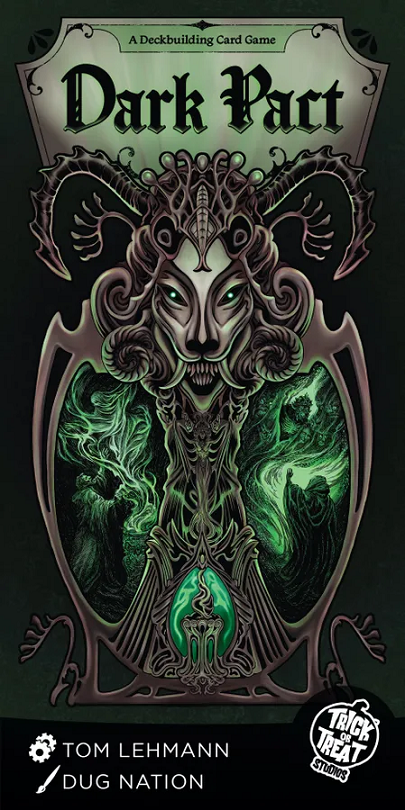
Tom Lehmann is one of the sharpest card game designers in the biz. Responsible for highly regarded engine builders such as Race for the Galaxy, Jump Drive, and Res Arcana, he has branched off to ply his trade in the somewhat creaky deckbuilding realm. The result is a mashup of traditional aspects riffing on Dominion…
The salty air filled our lungs as gulls circled above the quayside. The harbour was alive with excited voices and the clinking of coins. Ships came and went, their hulls heavy with stories of distant islands and dangerous encounters. Somewhere beyond the horizon lay our opportunity to make our fortune through trade, charm, or even force. As we stood at the edge of the dock, we mapped our routes as we were Islebound: Emerald Edition by Ryan Laukat from Red Raven Games with art by Ryan Laukat.
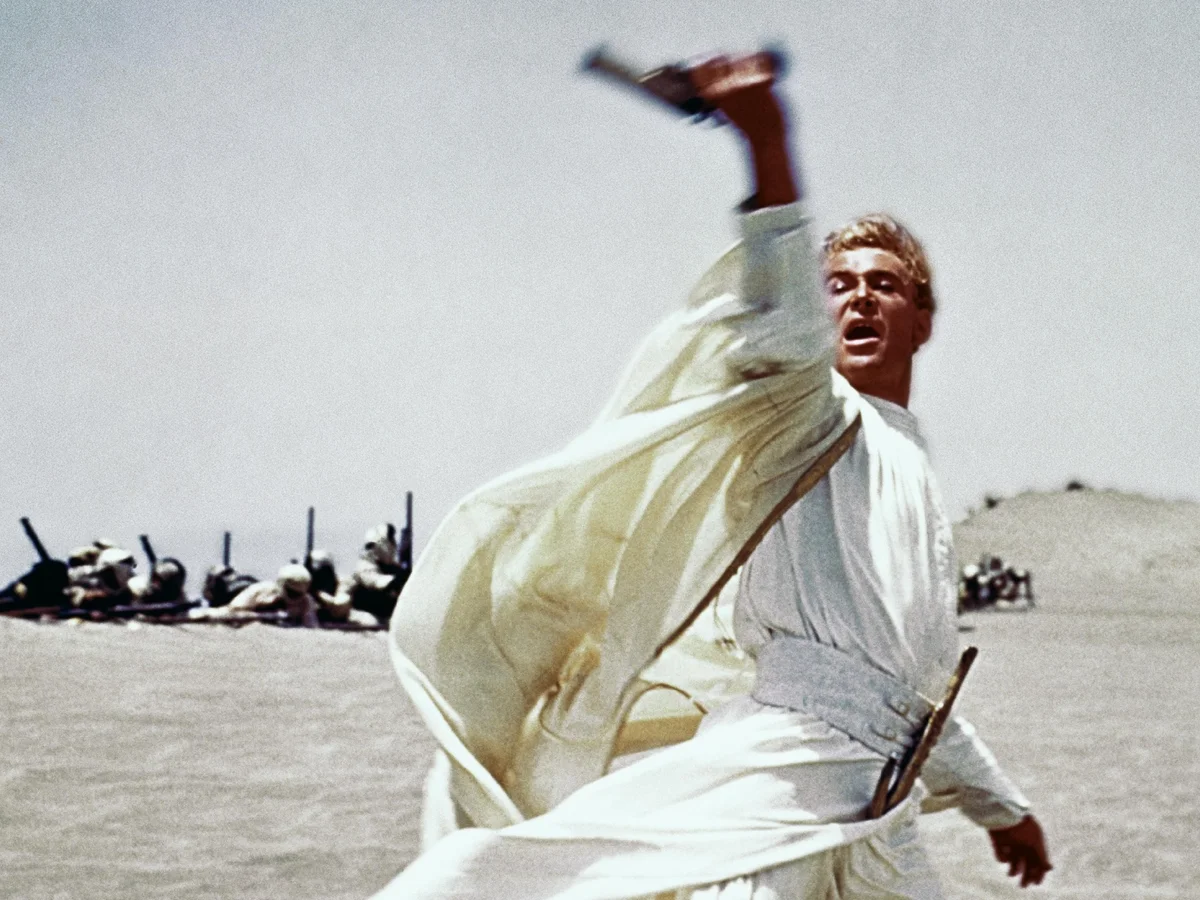
One thing a board game will never formally have, is an overture. The three hour and 47-minute epic Lawrence of Arabia begins with a four-minute piece that encompasses a medley of themes pertaining to the film’s atmosphere, setting, and characters. It sets the stage for the powerful cinema you are about to experience. The closest…
Be victorious on the battlefield with your Kings of War rules & reference!
I’ve been covering a lot of Mantic Games lately (especially since a certain other company decided they didn’t want the support of content creators), and I’ve been very pleasantly surprised by their offerings. The new Epic Warpath is a great system with a wide range of classic scifi factions to play with, and Halo: Flashpoint is coming into its own as the range of available models increases. But the one game of theirs I haven’t explored yet is Kings of War. It’s perfect timing then, because the new 4th edition has just been released!
Kings of War is a classic ‘rank and flank’ fantasy tabletop miniatures game, in the tradition of the old Warhammer Fantasy Battle (now Warhammer: The Old World). It’s been interesting to see these old regimental games enjoy a resurgence of popularity – Hobgoblin and Conquest: Last Argument of Kings are two others – and there’s certainly something very satisfying about pushing around trays of warriors in neat rectangular formations. Kings of War commits completely to the concept because you actually model the miniatures attached to the base, rather than have them individually standing on it. It may mean a lot more modelling – building and painting 10 miniatures to make a single unit is a big job – but it certainly looks spectacular when you have a full army on the field.
As for the rules themselves, they’ve been cleaned up from previous editions. I haven’t played yet (I’ve been busy painting, which is now all done – watch out for a tips video), but will film a game when I do so you can see how it goes; but Mantic have a habit of making very solid rules systems, so I have high hopes. The new starter set Claws in the Sand is a good introduction box for new players and features two unusual small armies – the aquatic Trident Kingdom and the Medieval Japanese-syled dogmen of the Xirkaali Kingdom.
In the meantime, here’s my rules and reference to make your games easier and smoother – and of course you can also find it in my rules app Tabletop Codex!
Looney Labs has a new card game coming soon, Czech Games Edition has announced a new fully cooperative Codenames, and Plaid Hat Games will be releasing Super Auto Pets Card Battle.
Our dear cat Penelope has died. Thus, the history today is personal.
Penelope’s early life is shrouded in mystery. She lived on the streets, but we do not know for how long and if she had been in a human household before. In 2016, she was found and taken to an animal shelter. For the next three years, nobody wanted to adopt her… until we came there and found her to be a somewhat reserved, but very sweet middle-aged lady.
She integrated into the family immediately: One day after her adoption, she already strategized how to blunt the Prussian invasion of Bohemia.
From then on, she was our constant companion. She read with us…
…celebrated Halloween…
and Christmas with us…
…rid our place of provocative ribbons…
…tested all boxes for their sitting qualities…
…and had secret admirers who sent her bouquets.
She even found the time to adopt a secret second identity as quirky nanny Purry Poppins.
Her love for board games remained undiminished. Sometimes we suspected that she considered herself to be a board game.
The only thing she could not abide was me going for business trips. Big-eyed protests were staged on my suitcase.
Yet when I came back and played a game with her, everything was forgiven.
While she certainly enjoyed the games…
…the most important part to her was spending quality time with her family – for example, sitting on my lap while I sorted counters into trays.
Penelope was with us during tumultuous years. No matter if Covid forced us to stay at home or Putin threatened to cut off our energy supply, it was always a comfort to have a furry, affectionate companion with us.
As Penelope aged, her health deteriorated. She succumbed to a lung edema on March 11. She will be greatly missed.
A cold wind carried the smell of ash across the fields as the last light of day faded behind the hills. Villages that once echoed with laughter now stood silent, their streets empty. Travellers spoke of strange sights on gloomy roads, shapes moving in the mist, and friends who no longer recognised each other. Somewhere in the land of Aelrathia, a dark mind gathered strength, raising the fallen and bending the living to its purpose. If the rumours were true, an army of the dead would soon march across the land. There was only one thing left to do. We had to venture out and face the Legion of the Necromancer by James Gill from Hammerforge Chronicles with art by James Isaacs.
This is stupid. We should be f***ing and drinking by now.
Peter and Will play the hilarious drunk-ass orcs game, Space Gits!
Mike Hutchinson is one of the great independent creators who is putting the fun back into tabletop miniatures games, and giving us all alternatives to staid, old, boring, clunky games like those released by certain huge corporate companies that will go unnamed. Cough. Space Gits is a fast (gasp!), fun, hilarious game about drunk-ass space orcs grabbing caps on a planet when all the competent orcs are away, and it brilliantly combines tabletop miniatures and dexterity game rules! I was lucky enough to be sent an example of the new scenarios Mike is concocting for his new Kickstarter campaign, which expands the base game (and allows you to grab a copy of the original game if you missed out the first time). But enough of my lacking, watch the video, then go back the Space Gits: here Come The Bastards Kickstarter. You won’t regret it!
Making high quality tabletop gaming content at the EOG takes time and money. Please consider becoming a Patreon supporter or making a donation so I can continue this work! Thankyou!

 Anmelden


 Have you ever bought a mystery box, a blind booster pack, or a subscription with an unknown assortment inside?