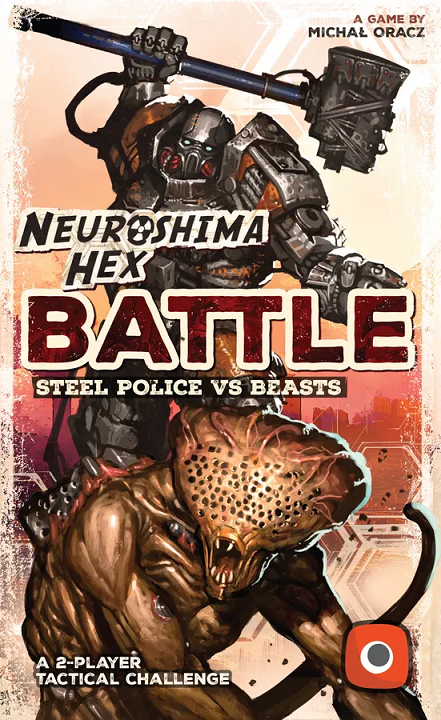
In another life, I was infatuated with Neuroshima Hex. Almost exactly 10 years ago, I wrote this soliloquy at Fortress Ameritrash extolling the virtues of Michal Oracz’s design. The game was already nearly a decade old at that time. This thing is grizzled as hell. The truth is I no longer play Neuroshima Hex. While…
For the fourth time we have awarded our annual Most Popular New Game Award. This year the award went to Johan Benvenuto for his game Harmonies!
This year the award could not be handed over at Spiel, so it was send to the designer in France.
Congratulations to the winner Harmonies, designer Johan Benvenuto, and the whole team behind creating this game!
Harmonies box with the BG Stats award and a golden BG Stats button
How is the winner of the Award determined?
Games that are released in 2024 are eligible. The popularity of the game is determined as follows: we looked at the unique users that logged at least one play of a game between 7 October 2024 and August 2025. The new game that was logged by the most unique users, Harmonies in this case, won. This means it doesn’t matter how many times a user played the game, or how many people were in the game.
You say „board game fair“, I say “SPIEL” at Essen. It’s the Mecca for the tabletop gaming faithful. Four days of playing, trying, and buying. 200,000+ visitors. I’ve been therea few timesover the last yearsfor two days each and found it an intensive board game experience. I’m looking forward to going again this year!
As always, this is not meant as a „must buy“ list or whatever other consumptionist term some people use. It is likely that I will buy only one or two of these games. Why? Because I have quite some good games already, and I like to make them count before I plunge into new adventures. Generally, there are no musts in buying. And there are no musts in attending board game fairs or conventions – obviously those can come as pretty big expenses for travel and accommodation. Bottom line: No musts. You do you.
One note beforehand: Board gaming is getting ever more international, and this list shows it: The six designers come from six different countries, and, for the first time in the nine years I’ve been making this list, none of them is from Germany or the United States.
Without further ado, on to the games! They are sorted by location on the fairgrounds.
1-6 players, 60-150 minutes, for sale, MSRP: 50.00 €
Many games have great nations compete on the global stage. Yet Limit is different. Few games of this kind have a robust section of domestic affairs beyond the usual political-economic-military competition. Fewer dare to zoom out so much that the game spans not years, but generations over two centuries. And barely any are based on a model that neither promises eternal improvement for everyone nor zero-sum competition between the powers, but rather the limits of industrial development. If you think you have heard of the latter before: Yes, this game is based on the World3 model of the Club of Rome’s The Limits to Growth. All of these uncommon features combine into a game which I expect to feel unique.
Designer Alexandre Poyé will be at the booth to teach the game (not all around the clock, but you have a reasonable chance to meet him there).
Archaeology is a popular setting for board games, and I’m here for it. While I love the civilizations of the ancient Mediterranean as much as the next person, I’m happy to see games shedding light on less-known cultures – like the Marajoara from the Amazonian island of Marajó (in modern-day Brazil), famous for their distinctive style of pottery. You will excavate, restore, and display vases while maintaining the finances of your museum. Mechanically, the game combines inspiration from (peg) solitaire with dice movement. I would have loved the game to lean a bit harder on the unique visual style of the Marajoara pottery (mostly limited to the cover art and the large vases), but I’ll take what I can get!
3-6 players, 45-60 minutes, for sale, MSRP: 35.00 €
If your main takeaway from watching Conclave was how exciting it would be to elect a pope, Pako Gradaille has you covered. Habemus Papam puts you in the Roman curia at the time of a papal election which you aim to influence according to your public (an old pope! An innovator! Someone from the New World!) and private (finish the election early! Have a pope who is exactly like yourself!) goals. You will expend your curial influence to advance the cause of candidates whom you like (or hamper those you don’t), but conserving influence is also valuable in its own right. Whoever balances their competing interests best takes the victory. Sacramental wine and vapes are not included in the box.
1-4 players, 45-60 minutes, for sale, MSRP: 35.00 €
We turn from the wealth and austerity of the Catholic Church to the poverty and indulgence of fin de siècle Parisian artists! You chase the inspiration for artistic achievements by living life to the fullest, crafting exquisite days by skillfully combining activities as varied as wandering aimlessly through the city, discussing philosophy, meeting a muse, or losing yourself in your work. Speaking of work: You’ll have to do some of that, too – mean labor to support yourself lest you avoid the hardships which come with the life of a free spirit (which range from poor hygiene over abject poverty to syphilis). Bohemians is a mechanically light, but thematically rich deck-builder, and, as befits a game about artists, is strictly gorgeous.
2 players, 90-150 minutes, for sale, MSRP: 69.00 €
In 1920, the old world of European empires had been shattered. What the new world would look like was still up for contention, as in this struggle of two nascent states: On the one hand, new nation-states came into being – like the (Second) Polish Republic, the first independent and united Polish state in over a century. On the other hand, ideology transcended nations, and the Soviet Republics (of which the Soviet Union would spring soon after) were emboldened by their success in the Russian Civil War against the old monarchist forces. As Poland reached for the east, the World Revolution got ready to spring to the industrial centers of western Europe. The two sides were to clash in one of the most mobile conflicts in history.
1920: Nest of Eagles is a re-implementation of Rok 1920 (published in 1995 by Encore) which has received the typical Phalanx treatment of pairing wargame mechanics with euro production quality.
I’m a sucker for a Faustian bargain… literarily speaking, I mean. My soul is still mine. Why would you even ask me that? – Anyway, Faust vs Mephisto takes the man and his devil and puts them on even ground (maybe like in the Study II scene of Goethe’s Faust): Mephisto tries to dominate by winning all tricks in a given round – or tempt Faust by winning none of them. Anything in between is a success for Faust. If Mephisto manages to pull it off twice in four rounds, he wins, otherwise Faust has proven that “A good man, through obscurest aspirations // Has still an instinct of the one true way.” Faust vs Mephisto seems like a snappy little card game to play before or after a more involved game – or whenever you have a little bit of spare time with a fellow gamer.
What are the games you are anticipating most eagerly? Let me know in the comments!
Is Batman a better superhero than Superman? And where does Green Lantern fall in that lineup? Which card will win the trick when there are truffle mushrooms and Agatha Christie on the table?
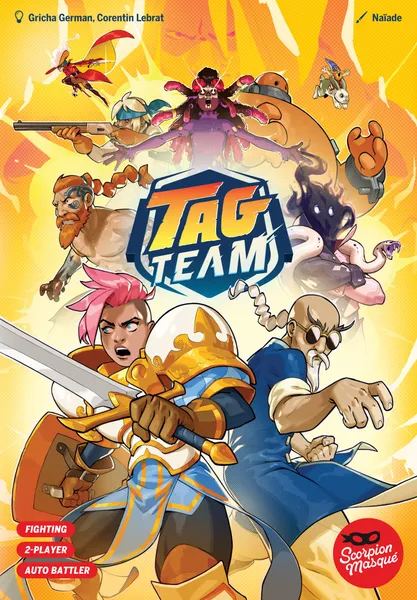
I’m a child of the 90s, so when I hear the words tag team, I think of the Bushwhackers, Harlem Heat, and the Outsiders. Gricha German and Corentin Labrat’s Tag Team isn’t that. Well, maybe it sort of is. Instead of prescribed duos, each player slams together two distinct fighters to form an impromptu team…
Peter reviews the protoype of B.E.L.O.W. The Asylum, by Awaken Realms, coming to Gamefound on October 16.
Awaken Realms have really ben churning out the games lately. I was very impressed with S.T.A.L.K.E.R. for example, and Grimcoven is on the way. Their new one is B.E.L.O.W. The Asylum (oh no, another cheeky acronym!), a horror themed game that at first glance appears to be another ‘minis on map tiles’ game, until you start discovering its interlocking game systems and discover it’s something quite a bit more interesting. With thematic elements that bring to mind Stranger Things, Silent Hill, and J-horror in general, the game is very fun in prototype form and I’m really looking forward to seeing how it expands and getting my hands on the final game.
Check out my video for a rules explanation and my detailed thoughts, then if you think this is up your dark horror-haunted asylum corridor, get along to the Gamefound campaign, which launches on October 16. Tell ‘em the Esoteric Order sent you!
Making high quality tabletop gaming content at the EOG takes time and money. Please consider becoming a Patreon supporter or making a donation so I can continue this work! Thankyou!
I’ve been informed that Bill Cleary (BGG User Puffinge) passed away this morning. (I don’t use facebook, but if you do here’s the link).
I met Bill Cleary after he allowed a local gamer to bring me and Mrs. Tao as a “plus two” (sight unseen) for a weekend of gaming at his place (‘BillCon’) which occurred 2-3 times a year. A dozen-ish gamers would descend on Casa de Cleary. One perk of showing up as a married couple was that Bill magnanimously declared we’d get a guest bed and not have to sleep on the floor.
I met Alan Moon at BillCon and that’s how we got invited to the Gathering. Alan has just posted a note saying that the Gathering literally would not exist except for Bill (who prodded him into doing it), which means that not only do I directly owe my introduction to hundreds of gamers to Bill, but a good chunk of the gaming world was introduced to each other (indirectly) by Bill’s actions.
I’ve seen Bill almost every year since then … as the convention got larger I’d spend less time with him each year, but still chatting at least a few minutes here and there. But it was a far cry from the early years where we’d play together for days. Board games, party games, card games, video games (Bomberman!). Anything.
At one BillCon (they blur together in my mind) Bill played Celebrities partnered with a young man (possibly a college freshman?) and together they shared exactly zero common knowledge. Bill was a pop culture obsessive with an extensive Rock/Pop/Motown CD collection. The kid (Nate) had grown up without a TV and listened to classical music. Needless to say, their score was disastrous, but their team was dubbed “Geezer and the Fetus.” I remember thinking “Bill’s not that old, probably less than two decades older than us….” but it was funny, one of those jokes that might have been memes, if memes had been a thing.
20 years is a much bigger gap as the years go on, at least physically. But when I saw him earlier this year, he didn’t look great, but …. I didn’t think it would be the last time I’d see him, either.
Dynamite Entertainment has been publishing Army of Darkness comic books for two decades, feeding hungry fans with further tales featuring Ash Williams and the entire extended mythos.
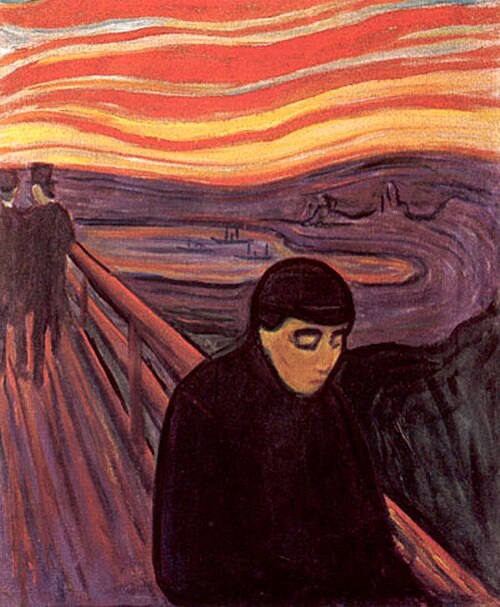
Philosopher Mara van der Lugt’s 2025 book Hopeful Pessimism challenges ideas of motivation and the role of despondency. It’s a revelation of sorts, especially for those plagued with eternal pessimism. That’s me. A relentless worrywart, down to my bones. Van der Lugt argues that it’s possible, nay encouraged, for those suffering from pessimism in a…
Amsterdam is an amphibious city. Water flows around it (the Ijsselmeer, over which most people used to come into the city), water flows through it (the Amstel river, after which it is named, and the canals dug later), and even the land on which the buildings stand was won from the watery marshes in a feat of human ingenuity. The need to work together in this communal enterprise did not only strengthen the peasants and craftspeople who had won this land themselves (instead of receiving it from a noble), but also their willingness to put up with each other regardless of differences – the first instance of the famous Amsterdam tolerance.
Amsterdam’s rise was also closely connected to the water: On the one hand, Dutch herring fishers found out about how to cure fish on the ship, enabling them to sail further and catch more instead of having to head home after the first big catch. And in the 14th century, the count of Holland decreed that all Dutch beer imports from Hamburg, then northern Europe’s brewery, must go through Amsterdam. The city thus became a trade hub, first for these staples of fish and beer, but the local merchants soon branched out to luxury goods, too, especially as the great voyages of discovery brought Europe in direct touch with south and southeast Asia as well as the newly-discovered Americas.
When the Reformation swept Europe in the 16th century, Amsterdam, unlike many other Dutch cities, did not adopt the new Protestant faith. Yet the city kept its unusual approach to differences of faith and tolerated the local Protestants. Neither Protestantism nor tolerance were acceptable to the ruling Habsburg monarch, Philip II of Spain, who had inherited the suzerainty over the Low Countries from his father, emperor Charles V. Yet while both Philip and Charles were ardent Catholics, they had a very different relationship with the Low Countries. Charles had been born and brought up there, living his happiest years not far from Amsterdam. Philip was a Spaniard in everything, regarding the Dutch with suspicion. And as they started rebelling against him – for the Protestant faith, for municipal independence from the monarch, and for the exemption of taxes funding Habsburg wars in faraway lands – he was resolved to bring them back into the fold by force.
The various factions of the Dutch struggle for independence are the player roles in Revolution: The Dutch Revolt, 1568—1648 (Francis Tresham, Phalanx Games) – Catholics, Habsburgs, Nobility, Burghers and Reformers. Amsterdam remained initially Catholic (and thus loyal to Philip), yet other concerns would be more pressing to the city than religion: When the Dutch rebels blockaded the city from the sea, thus causing the collapse of any trade profits and the food supply to the city, Amsterdam’s anti-Habsburg faction was ascendant. The city threw its lot in with the rebels in 1578. Its Catholic minority, however, would be treated as the Protestants had been before. Tolerance went both ways in Amsterdam.
Amsterdam had escaped its ruin from the naval blockade. Further south, Antwerp, the most important Dutch port, was not so fortunate. While the blockade strangled Antwerp’s trade, tens of thousands of Antwerp merchants and artisans left the city to find greener pastures elsewhere – most of them in Amsterdam. Thus, while the Dutch provinces were engulfed in warfare with the Habsburgs (which would only end with Dutch independence in 1648), the convergence of capital and know-how in Amsterdam turned the city into the commercial capital of the world.
The Center of the World
Amsterdam in the early 17th century was buzzing with commercial activity. The merchants did not only find new trade routes, they also invented new ways of doing business altogether: The Vereenigde Oostindische Compagnie (United East India Company), or VOC for short, founded in 1602, was the first chartered company in the world. Anyone could buy a share in the company and thus partake in its profits – or sell the shares to others in what would become the Amsterdam Stock Exchange (also the first of its kind in the world). Amsterdam ships carried goods all over the worlds, Amsterdam shipwrights built them, Amsterdam craftspeople produced many of the finest objects for sale, and Amsterdam painters and writers catered to the pursuits of the minds. In the mid-17th century, a staggering 30% of all the new books in the world were published in Amsterdam, taking advantage of the liberal approach to the exchange of ideas in the metropolis.
Construction boomed in Golden Age Amsterdam – the city had much outgrown its medieval limits. In an ambitious scheme to not only expand, but also re-order the city’s flow of people and goods, Amsterdam took on its characteristic form, the city center surrounded by three belts of interconnected canals (grachten).
Amsterdam’s canals and the narrow houses built along them (for taxes were paid according to the width of the building’s front) have their own board game dedicated to them: Grachtenpand (Zach Hoekstra, Wulfhorn Games).
To my knowledge, no board game portrays the construction of the grachten. That’s a shame, because the scheme that led to their creation is worthy of the most cunning table strategist: Mayor Frans Oetgens knew of the plan to expand Amsterdam and dig the canals before it was public, so he and his associates bought up vast stretches of land at bargain prices and sold them back to the city at astronomical profits.
This act of self-interested entrepreneurship embodies Amsterdam’s preoccupation towards individual gain. It speaks to Amsterdam’s character as an individualist, bourgeois city that its most recognizable sights are not palaces and cathedrals, but these canals and the private houses along them.
Another very Amsterdam trait which has stood the test of time is the love of flowers, especially tulips. Yet never was this passion greater than in the 17th century, when it intermingled with the other great passion of Amsterdammers – commerce. Unlike the controlled trade of goods and shares in Amsterdam’s port and stock exchange, the Amsterdam Tulip Bubble developed unregulatedly in taverns where buyers and sellers met over a glass of wine. The price of tulips skyrocketed in one of the first documented speculation crazes – until the bubble burst, as is the inevitable outcome of Tulip Bubble (Kouyou, Moaideas Game Design): Players want to partake in the profitable trade, yet must try to sell before the end of the mania, for all their tulips in hand will be worth nothing at game end.
The allure of 17th century Amsterdam, this great laboratory of capitalism, is so great that it has become a widespread board game setting – just behind Vikings, zombies, and trading in the Mediterranean. Even the behemoth board game franchise Ticket to Ride has an instalment set in Amsterdam. Ticket to Ride: Amsterdam (Alan R. Moon, Days of Wonder) deviates from the tried-and-true setting of trains in favor of route-building in Golden Age Amsterdam 200 years before the first rail was laid. I especially appreciate that the game sticks with the original names for places in Amsterdam, so that players who don’t speak Dutch can attempt to pronounce Korenmetershuisje (Little House of the Grain Measuring Officials) and Oost-Indisch Huis (East India House).
Finally, the great master of eurogames has also designed a Golden Age Amsterdam game: Merchants of Amsterdam (Reiner Knizia, Rio Grande Games). And despite Knizia’s reputation of producing mathematically sound, but often themeless games, it might be the one which captures Amsterdam in 17th century best: Not only is the central mechanism that of a Dutch auction (that is, an auction which starts at a very high price which continues falling until someone buys the asset in question at the price asked), but its map depicts the Amsterdam surrounded by four world regions with which the players can trade – Amsterdam, the commercial center of the world.
Amsterdam’s preeminence could not last forever. Despite its naval and commercial advantages, the Dutch Republic was a small country compared to England or France, and eventually fell to these rivals. The rampjaar (catastrophe year) of 1672, in which England challenged the Republic on the seas and France invaded the Netherlands, ended the Dutch Golden Age. Amsterdam was only saved from French occupation when the Dutch pierced the dikes and flooded a large area of their own country to prevent the French onslaught.
As the Dutch Republic shrunk in importance, so did Amsterdam. London, Paris, Vienna, and Berlin eclipsed it as centers of modernity in Europe. Even within the Netherlands, the city fell behind: Its disadvantageous geography meant that Rotterdam, situated directly on the North Sea instead of the Ijsselmeer, became the country’s premier port. Amsterdam, however, remained a center of the arts, and an iconic city of individualism and tolerance.
In the 20th century, these values brought Amsterdammers to adopt a liberal attitude toward prostitution (openly practiced around the Old Church) and drugs (marijuana is not legal, but its consumption in specialized establishments (coffeeshops) is tolerated). That openness has made Amsterdam a dream destination for those wishing to uproot traditional lifestyles (at least for a moment) – from Yoko Ono and John Lennon staging their “Bed-In” for world peace in Amsterdam to the ubiquitous bachelor party trips there. Surprisingly, not a single board game seems to be dedicated to this side of Amsterdam.
When board games are set in modern Amsterdam, they often allude to traditional Dutch themes: Gift of Tulips (Sara Perry, Weird Giraffe Games) has its players once more compete for the finest flower bouquets at the city’s annual tulip festival. Amsterdam’s rich artistic history also often features: In Masters of Crime: Shadows (Lukas Setzke/Martin Student/Verena Wiechens, KOSMOS), the players aim to conduct a painting heist, whereas in EXIT: The Game – The Hunt Through Amsterdam (Inka Brand/Markus Brand, KOSMOS), they want to recover a lost Vincent van Gogh painting. My detective instincts say that these are the same painting! Finally, Amsterdam’s slide to modern metropolis sans its erstwhile very specific features is exemplified by the game set in Amsterdam with the single highest number of ratings on BoardGameGeek: Mechanically, the crime/mystery game Shadows: Amsterdam (Mathieu Aubert, Libellud) could be set in any big city. There’s nothing Amsterdam-specific about private detectives looking for evidence and avoiding the police’s official investigation. Yet the artwork on the tiles sometimes gives a little glimpse – for example, houses along the gracht.
A good introduction on Amsterdam’s history is Shorto, Russell: Amsterdam. A History of the World’s Most Liberal City, Doubleday, New York City, NY 2013.
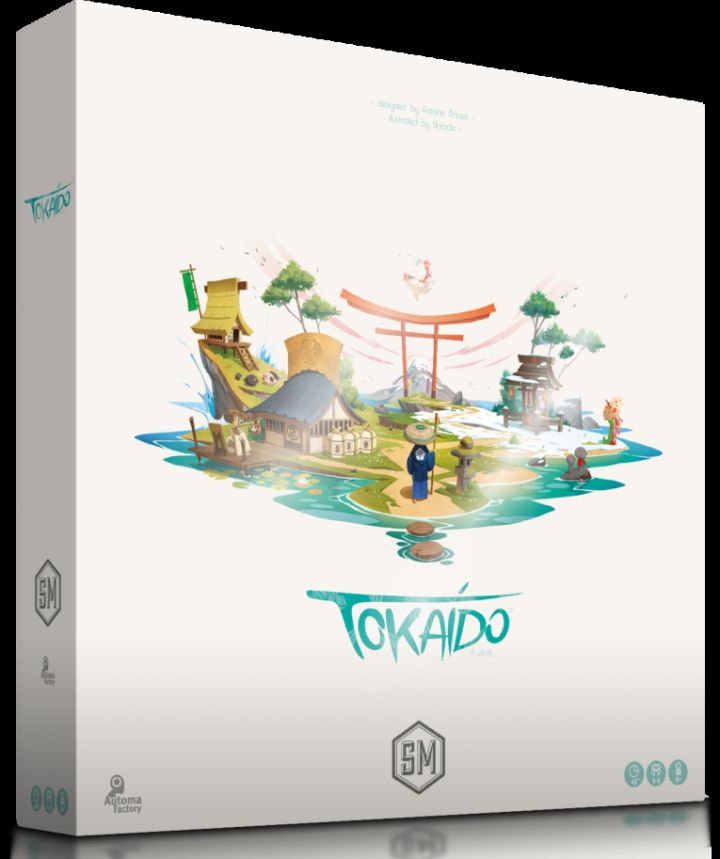
As usual with these games that Stonemaier bring into the fold this is a beautiful game. You are out exploring Japan’s East Sea Road between Kyoto and Edo, as you explore the beautiful road you will discover amazing places including hot springs, gorgeous vitas and culinary delights to explore and gain points.
The person who is furthest back near the start will always be the next to go so you open the board as you play. Each place can only be visited once unless you are playing a four or five player game then some of the locations have a round disc on their road then you can go up the road to the next open disc the point furthest from the end, you can only travel in one direction and toward the rods end. As you play you can gain points and coins, so good luck!
This is a very beautiful game that plays very easily, It also is a game that you can play quite fast 45mins plus which means that you can play this with another quick game or play it multiple times. This is a lovely game that is both beautiful and a lot of fun.
I have been asked, what are the differences between the original game and this one re-made by Stonemaier games. While the gameplay is the same, Stonemaier Games have revised the rulebook to provide more clarity. As well as producing reference cards for each players as adding some text on the cards so you don’t have to refer to the rulebook so often. They have also increased the card thickness to their standard 310gsm. Also as with other Stonemaier Games they have brought in an automa solo mode. You can order this from us at: https://www.bgextras.co.uk/other-games/other-board-games/tokaido-board-game
On October 4, 2010, I published my first post here on Boards and Bees – my overview of a then-upcoming game I was excited about, 7 Wonders. Now, 15 years and over 1200 posts later, here we are.
Seems about as good a time as any to announce my retirement. Effective immediately, Boards and Bees is done.
This blog was actually my third. The first two were OK, but I eventually found myself needing to hit the reset button and try again. This is the one that finally stuck, and it grew out of my desire to talk about board games when there weren’t many people around to talk about them with. I was still relatively new to the world of board games, having only been really interested in hobby games for about three years (my BGG birthday is August 30, 2007). I found myself fascinated by what was coming out, and found that a good way to really decide if something needed to be on my personal radar was to write about it.
I started out just writing about games I was interested in. That grew into writing reviews, and later into making lists, looking at Kickstarter, and other things. And I had a lot of fun doing it. I got overwhelmed a few times and needed a small reset to get myself going again.
And then came COVID. A lot of things changed in 2020. One big thing for me was that we had our second baby, but even before that happened, I found myself pulling back from the blog. Burnout was starting to affect me, and I started giving myself permission to take breaks. Those breaks have come more and more frequently. Eventually, I stopped taking on reviews. It was just something I wasn’t feeling passionate about anymore. I still love playing games, and playing new ones, but I’ve found myself less excited about trying to wade through the onslaught of new stuff every year, and have mostly been just enjoying playing the stuff I have.
Around mid-August of this year, I realized that I hadn’t posted in over a month. And I also realized that I didn’t really miss it. Which then led to the realization that it was probably time to hang up my spurs and ride off into the sunset on whatever metaphorical form of conveyance might apply here.
Back when I first started, video wasn’t nearly as big as it is now. YouTube itself had only been around for five years, but there were really only a few people doing videos. There was of course the godfather, Scott Nicholson and his groundbreaking series Board Games With Scott, and Tom Vasel had been transitioning out of doing written reviews into his more well-known video format for the Dice Tower (which wasn’t nearly the empire it is now). There were a few others, but now it is not only the most common format, it seems like it is the most preferred. And I understand it – videos are a great way to convey visual information about games, and see the games in action rather than just play them.
With the rise of video came the decline in readership. It used to stress me out – at my height, I was getting 100-200 views a day, and now it’s a good day if I can break 20. And I know there are other blogs out there with higher readership – I just don’t have the time or resources to make this into a destination site. It has always been a one-man operation on a free site I opened. I did eventually stop caring about it – I’m just putting my voice out there into cyberspace, and whoever stumbles upon it is welcome to peruse my content.
I have experimented with some video content in the past (in particular for Argent: The Consortium and Impulse). They were hard to do, even in the rough format that I was attempting, so I have a lot of respect for the people that can take the time to put together video content and make it look good. I’ve thought about trying some more in my retirement, possibly in a TikTok format, but who knows. I may just rest on my laurels for a while.
OK, let’s wrap this up. It’s been a genuine pleasure to write this blog for the last 15 years. I’m not removing it – it will stay here as long as WordPress leaves it up. I may even drop in every now and then to do a post. I’d still like to do my annual best new-to-me games, and I don’t think I can just quite on an 0-3 year with Kinder-Kenner-Spiel des Jahres predictions, so I may be back for that. But I wouldn’t expect much else.
If you’re interested in contacting me for whatever reason, I’ll leave the contact form open at the top of the page. Otherwise, my username is asutbone on BGG, and you’re welcome to reach out to me there. I welcome all comments, unless you’re a robot. You know who you are.
Hey, thanks so much for being there for me over the last 15 years. And I think I’ll close this out with my traditional closer from the very early years of the blog…

 Anmelden