Lese-Ansicht

Cytress Game Review

The toughest games to review are the ones that are right on the line. They are generally not bad, maybe even a hair better than that, and don’t really stand out. Often, games like this end with one or more players being asked what they thought, and those players doing an exaggerated shoulder shrug, as if to say “yeah, it was…good? Well, I mean, it was…alright? I’d play it again, but only if you wanted to. What are we playing next?”

Cytress, designed by Sean Lee and published in 2025 by Good Games, broadly fits this description. Cytress is a cyberpunk-themed, engine-building worker placement game. You’ll build an engine using cards that can be purchased at one of four locations to increase your income or make trading deals progressively sexier. You’ll place a worker—either a Leader token or one of your three cute, futuristic-looking cardboard car tokens—on a space to trigger an effect. With the car spaces, any other player can also use the action, so there’s no worry or tension tied to opponents blocking the space you want.
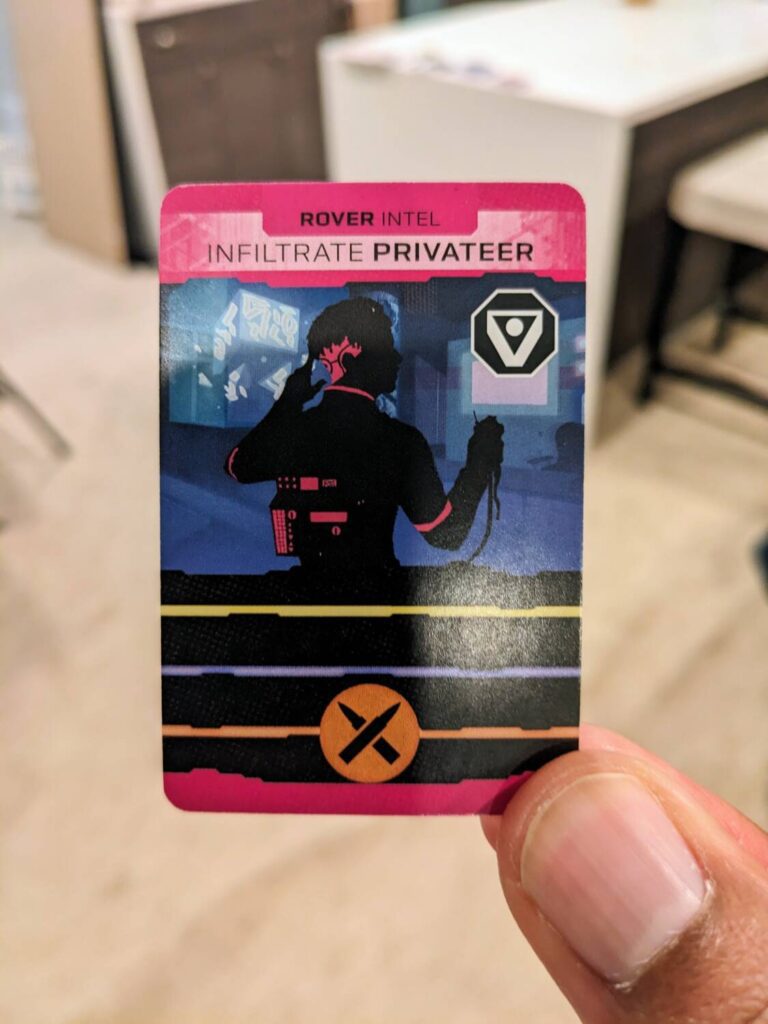
When players buy cards and add those to the engine, they also place a crew member on a mini-map, representing the area below the great city of Stratos. This placement…

The post Cytress Game Review appeared first on Meeple Mountain.
  •  

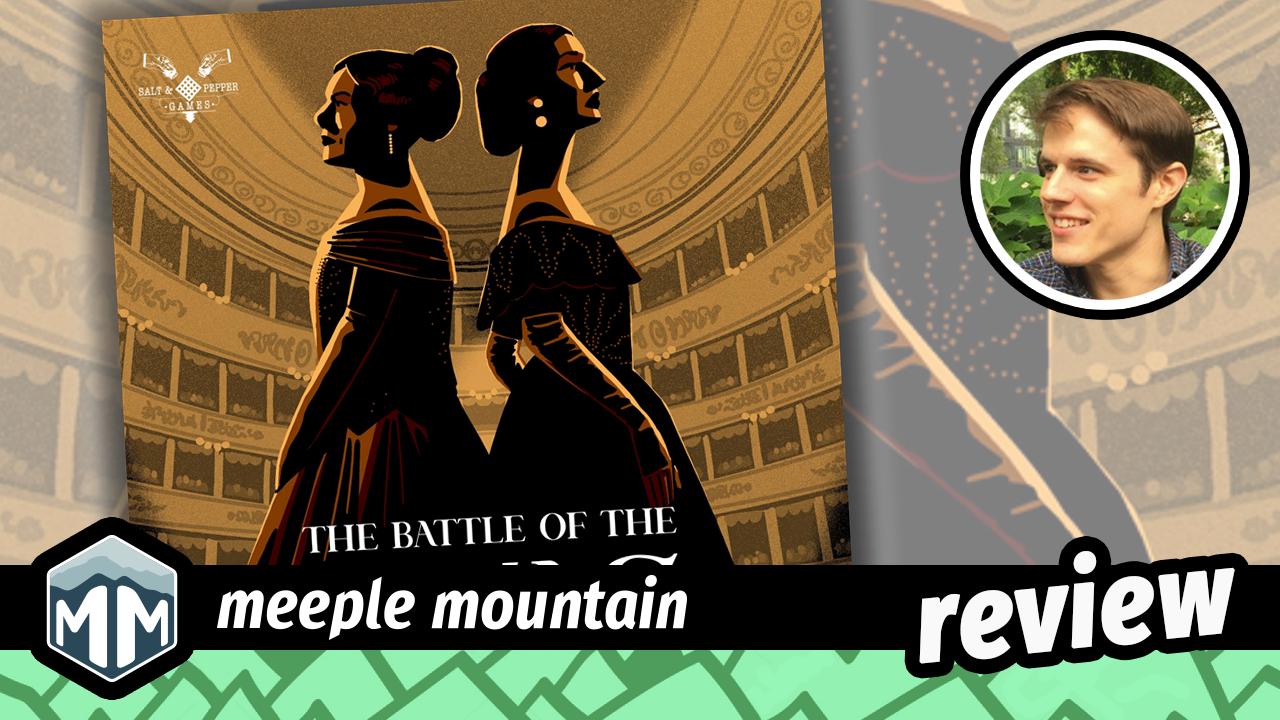
The Battle of the Divas Game Review

The history of 20th century music is full of rivalries, be they real, manufactured, or imaginary. As much as they can get in the way, they also serve an important function within the culture of popular music for both artists and audiences. The Beatles and The Rolling Stones, to say nothing of The Beatles and The Beach Boys, were pushed to ever-greater artistic heights as a result of trying to outdo one another. Blur and Oasis sold way more singles as a result of their mutual distaste than they would have otherwise.

As for the audience, rivalries can produce better music, but they also serve a social function. A rivalry makes room for partisans. “N*SYNC rules, Backstreet Boys drool”—an insane position given that the Backstreet Boys are obviously better singers and could do both party songs and ballads with equal aplomb, while N*SYNC couldn’t sing a ballad if their lives depended on it—gave identity-hungry teenagers something to cling to.

This is hardly restrained to the world of pop. Before the boy bands, before Britpop, and even before The Beatles and The Stones, there was the rivalry between Maria Callas and Renata Tebaldi, two of the great operatic divas of the 20th century. From our contemporary perspective, it’s easy to see how that played out. Ask anyone over the age…

The post The Battle of the Divas Game Review appeared first on Meeple Mountain.
  •  

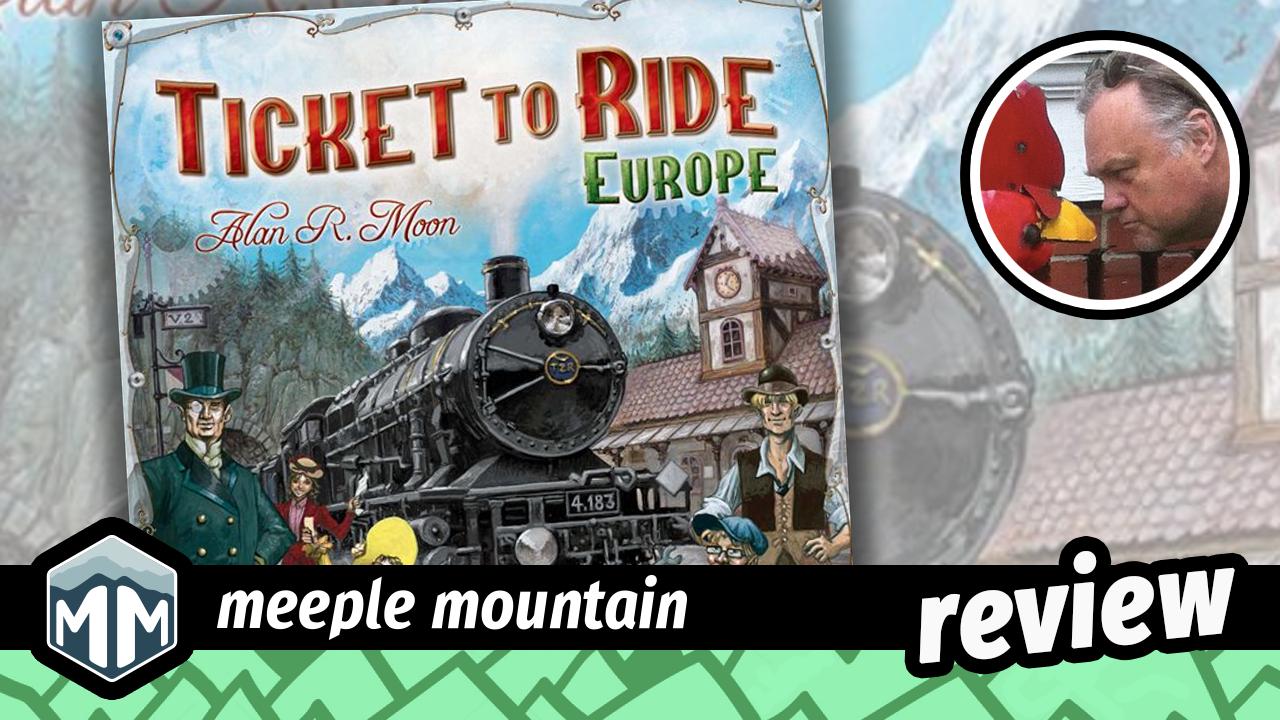
Ticket to Ride: Europe Game Review

When Ticket to Ride was released in 2004, it became popular the world over. That year, it was nominated for numerous international awards, even winning the prestigious Spiel de Jahres award. Capitalizing on the exposure, the following year designer Alan R. Moon released Ticket to Ride: Europe. By changing the map from the US to that of Europe—and introducing small but meaningful changes—Moon showed how the game’s concept could be expanded in challenging ways while still being familiar to anyone who had played the original.

As with my review of Ticket to Ride: Northern Lights,  I’m going to skip the How to Play section of my usual reviews. If you haven’t played Ticket to Ride before, check out my colleague Kevin Brantley’s great review of Ticket to Ride: Refresh to learn how.

What’s New?

The first thing my TTR-playing friends ask when they see a new version of the game hit the table is, “What’s new?!”

Ticket to Ride: Europe introduces several new elements, both physical (new pieces given to each player) and on the board (new route requirements).

Train Stations

Ticket to Ride: Europe introduces Train Stations. Ever wish you could use another player’s route to get to a city that is blocked off? With Train Stations, you can.

[caption id="attachment_330109" align="aligncenter"…

The post Ticket to Ride: Europe Game Review appeared first on Meeple Mountain.
  •  

Winnie the Pooh: Serious Detective Game Review

Yes…this is a review of a game called Winnie the Pooh: Serious Detective.

As almost anyone who remembers Winnie the Pooh books as a kid will tell you, there ain’t nothin’ serious about Winnie the Pooh. Nothing resembling detective work. Usually, the only “crime” that needed solving was on what page Winnie would be found sitting in the Hundred Acre Wood with a pot full of honey. Rabbit, Piglet, Eeyore, Owl, Kanga, Roo, and of course, Christopher Robin…check, check, check.

In other words, there shouldn’t be any mysteries at all. But when I saw that the folks at CrowD were releasing a Winnie the Pooh game FOR ADULTS, I set my sights on grabbing a copy at SPIEL Essen last fall. Because I only approached publishers for review copies on the Sunday of that show, I came up empty in Germany because CrowD had sold all copies of the game earlier that weekend. A few months later, I reached out to get a copy by mail, and one arrived a few weeks ago.

My wife and I have played—which means I have written about—dozens of “one shot” mystery/escape room-style games, so I consider myself a bit of an expert in the category. Winnie the Pooh: Serious Detective’s description lined up with my interests: three cases, each of…

The post Winnie the Pooh: Serious Detective Game Review appeared first on Meeple Mountain.
  •  

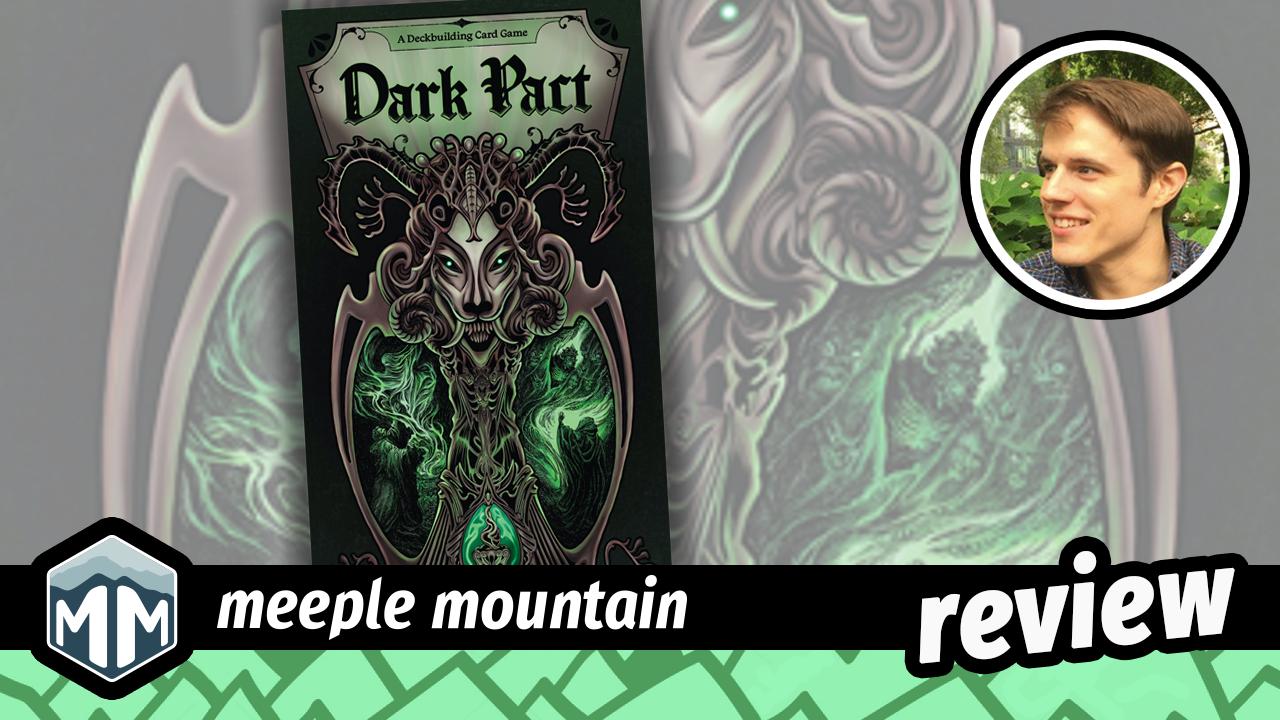
Dark Pact Game Review

About a month ago, I received a text out of the blue from a friend I hadn’t heard from in nearly two years:

“Have you played Dark Pact by Tom Lehmann? I’ve played it twice and I think it might be the greatest deck-builder.”

A grain of salt must accompany these words as they travel down your gullet. The sender of that text is an avid Lehmann-head. He loves Winter Court, a novel sentence in the English language. He is constantly trying to bust out New Frontiers at parties. He carries a complete set of Dice Realms at all times, just in case the mood strikes.

I get it. I will never play another game as much as I have already played Race for the Galaxy. It would be untrue to deny that Lehmann’s spell has won me over from time to time. I would not go so far as to call myself a disciple, though. I find most of Lehmann’s games too dry. They are mathematically precise in a way that suggests an awe-inspiring understanding of the numbers behind the fun, but they are often that at the expense of, well, the fun. It has never before occurred to me that Lehmann and Reiner Knizia can be thought of as opposite sides of the same…

The post Dark Pact Game Review appeared first on Meeple Mountain.
  •  

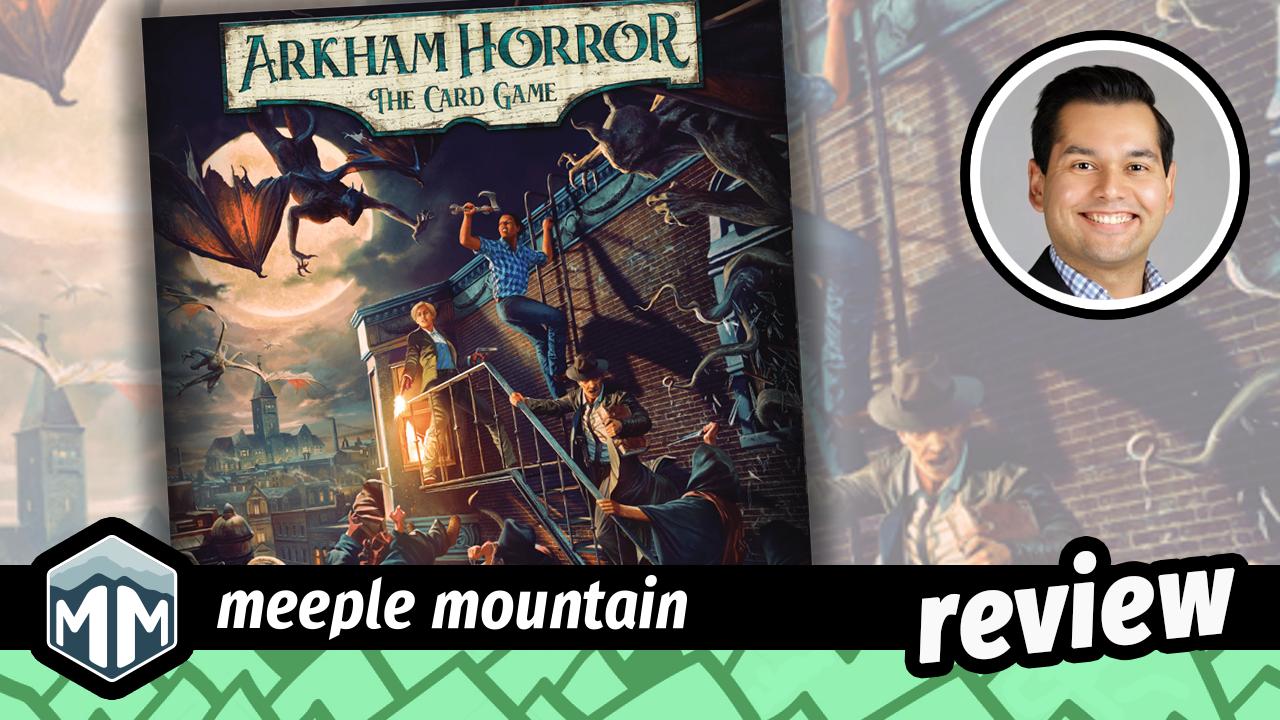
Arkham Horror: The Card Game Core Set Game Review

Crispy Core

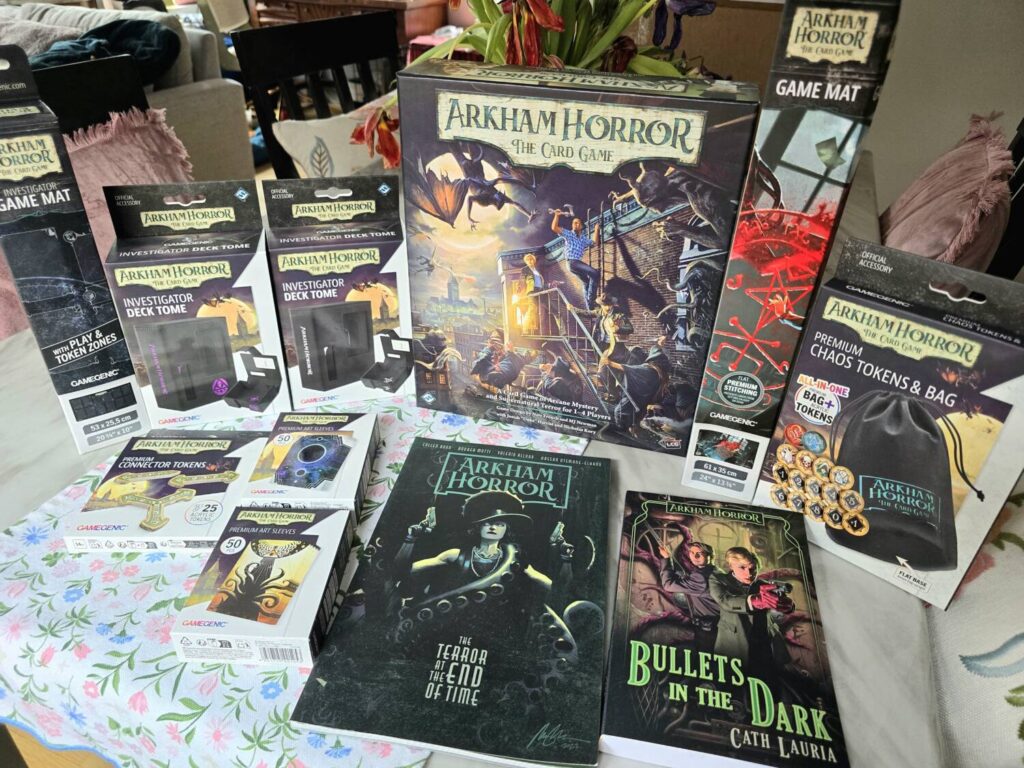
I love Arkham Horror: The Card Game. It’s probably one of my “desert island” games, thanks to the sheer amount of content and replayability. The game has evolved into an entire franchise, aptly named the “Arkham Files,” expanding into video games, novellas, tabletop RPGs, and even comic books published by powerhouse Dark Horse Comics.

Last year, the game’s storyline concluded with a great calamity in The Sinking City campaign, leading into the “soft reset” in 2026 with Chapter 2. Not only does this create a fresh launching point for a new storyline, but it also gives new players an ideal place to jump in.

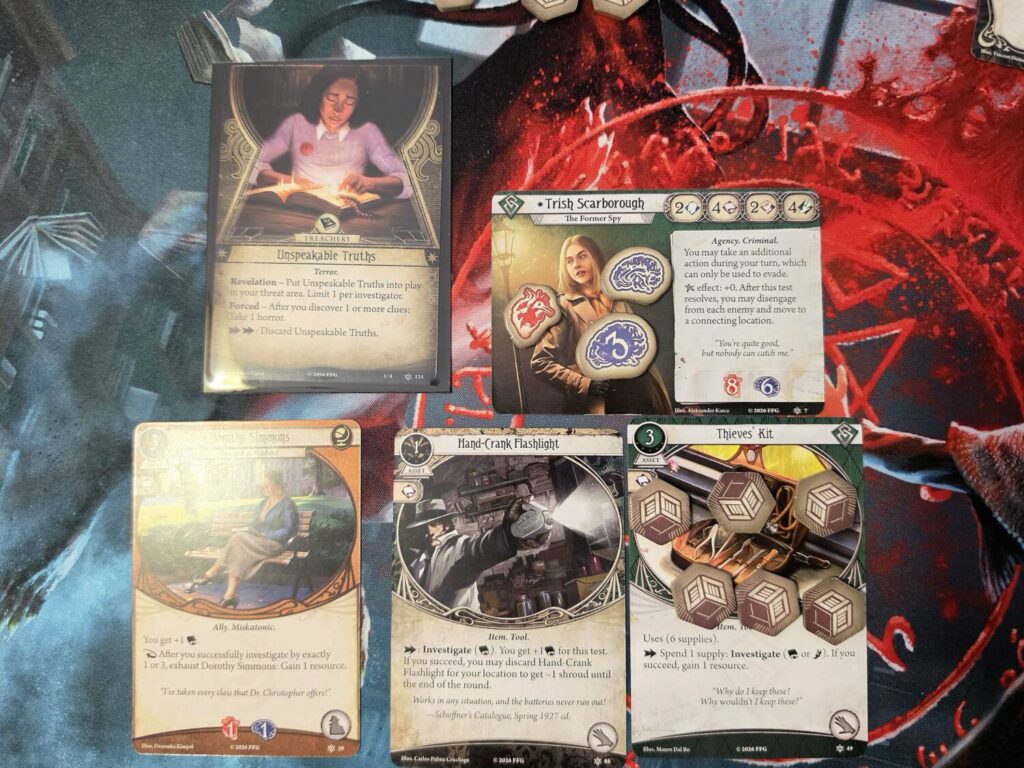
Fantasy Flight’s vision for Arkham Horror breaks down into a “legacy environment,” in which all existing and past content can be used alongside future content, and a “current environment.” The current environment has a smaller card pool, and future campaigns are structured around mechanics in that evolving meta, though what exactly that will look like, we’ll have to wait and see. Presumably, this is meant to reset deckbuilding to a more even playing field. With so much existing content, it’s easy to build an overpowered deck and breeze through what should be a challenging experience.

The post Arkham Horror: The Card Game Core Set Game Review appeared first on Meeple Mountain.
  •  

Orloj: The Prague Astronomical Clock Game Review

There was a moment late in my first game of the medium-weight strategy game Orloj: The Prague Astronomical Clock where I pretty much landed on my final thoughts about the game.

I had just taken a turn that felt pretty dope. That turn began when I took the Construction action, and spent four resources to construct the second-to-last piece of the month dial on the big clock at the center of the board. That netted me eight points, for the gold, two wood, and paint I had spent to build it. Then I placed one of my workers on the clock, and thanks to adjacency rules, scored four more points. Then I got a bonus based on the position of that completed space on an outer wheel that surrounds the clock, a track that lists bonuses on what is known as the Painter track.

That bonus gave me a free apostle. These apostle tiles are earned and placed in one of two storage slots on each player’s personal board. As a free action, I took that new apostle and placed it in a column on my personal, 12-space apostle board. It was the third apostle in one of the columns, which earned me another bonus: an Assistant tile, which went into the newly vacated storage space where that apostle…

The post Orloj: The Prague Astronomical Clock Game Review appeared first on Meeple Mountain.
  •  

Pacts Game Review

D.V.C., as wonderful and consistent and quirky a publisher as you’ll find, largely does its own design work. With the exception of 2020’s Rosetta: The Forgotten Language, all of D.V.C.’s games up till now have been credited to house designer Jasper Beatrix. In a just world, Jasper would be unable to walk down the street without being mobbed by fans, but there are two barriers to that: we certainly don’t live in a just world, and Jasper Beatrix doesn’t exist.

Not corporeally, anyway. Good ol’ J.B. is a pseudonym for a loose collective, a merry anarchic band of creatives who work together to make these wonderful games. They’re so prolific, and release games of such high quality, that the announcement of Pacts and the realization that it was not designed by Jasper Beatrix, was quite the surprise. This area-control game for two is the work of Ben Brin, a single corporeal designer.

Well. I assume.

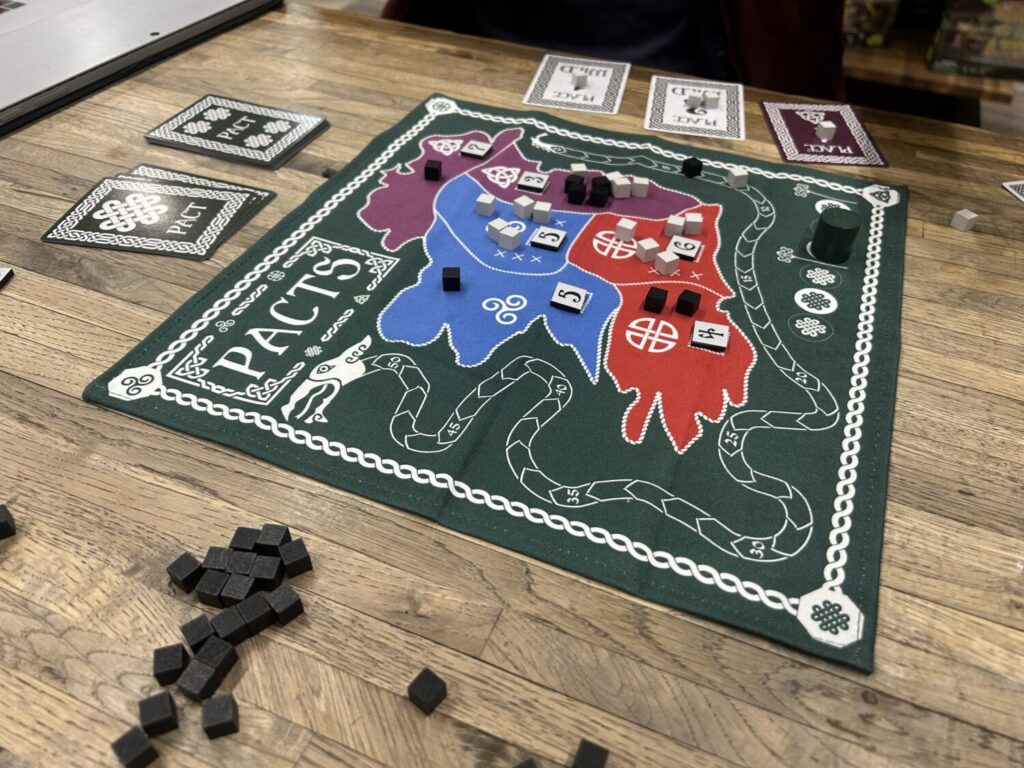
A square, green cloth board sits on a wooden table. The map, a rough outline of Ireland, is divided into six regions. Each contains a number of cubes and scoring tiles.

I Pick I Pick You Choose

Pacts is an exemplar of I Split, You Choose, a mechanism whose promise is often let down by…

The post Pacts Game Review appeared first on Meeple Mountain.
  •  

Wunderwaffen Game Review

It’s still early in 2026, but I think I’ve already played the game that will end the year with the widest array of opinions within my review crew.

Wunderwaffen was one of my targets at SPIEL Essen 2025, so I was eager to get it home and put it in front of my team. I was attracted to the game for a few reasons, chief amongst them the game’s publisher. Ares Games has done great work in steadily tight packages, from the Quartermaster General series to family-friendly fare such as TEDOKU and Builders of Sylvan Dale. Ares’ reprint of the Mega Civilization series, Mega Empires, didn’t hurt the cause.

Wunderwaffen is a fragile system, one that worked wonderfully for some players while landing badly for others. But as a very straightforward game that plays in about an hour at its full player count, it is certainly worth a look, especially for wargame lovers looking for a weeknight game they can table with both hobbyists and casual players.

Nazis, You Say?

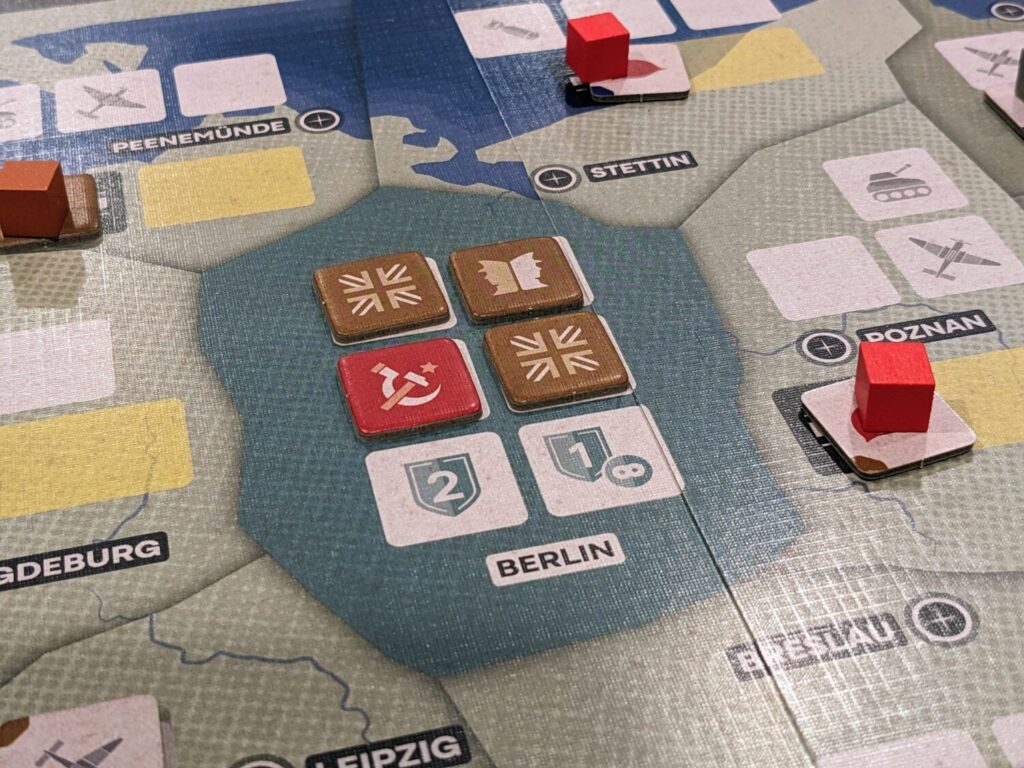
Wunderwaffen looks, on the surface, like a one-versus-all wargame for strictly two OR four players. There are four playable factions in the box: Germany, the United Kingdom, the United States, and the Soviet…

The post Wunderwaffen Game Review appeared first on Meeple Mountain.
  •  

Yotei Game Review

I think many of us in the tabletop media space have a particular set of rules when it comes to reviewing games; everyone takes a different approach.

One of my big things is to get my three, maybe four, plays of a review copy with different groups as often as I can, ideally at different player counts. This is especially true with new game properties (expansions are a little easier to cover, and usually I have superfans of a base game who are better equipped to share their thoughts on an expansion if they know the original game).

I played the upcoming Mighty Boards game Yotei (up on crowdfunding now) with three different groups: my review crew on a Monday, then three friends from my Wednesday gaming group, then my nine-year-old on Saturday. That meant three plays with three different groups spread across six days in the same week, thanks to a tighter-than-normal turnaround time to get this review up.

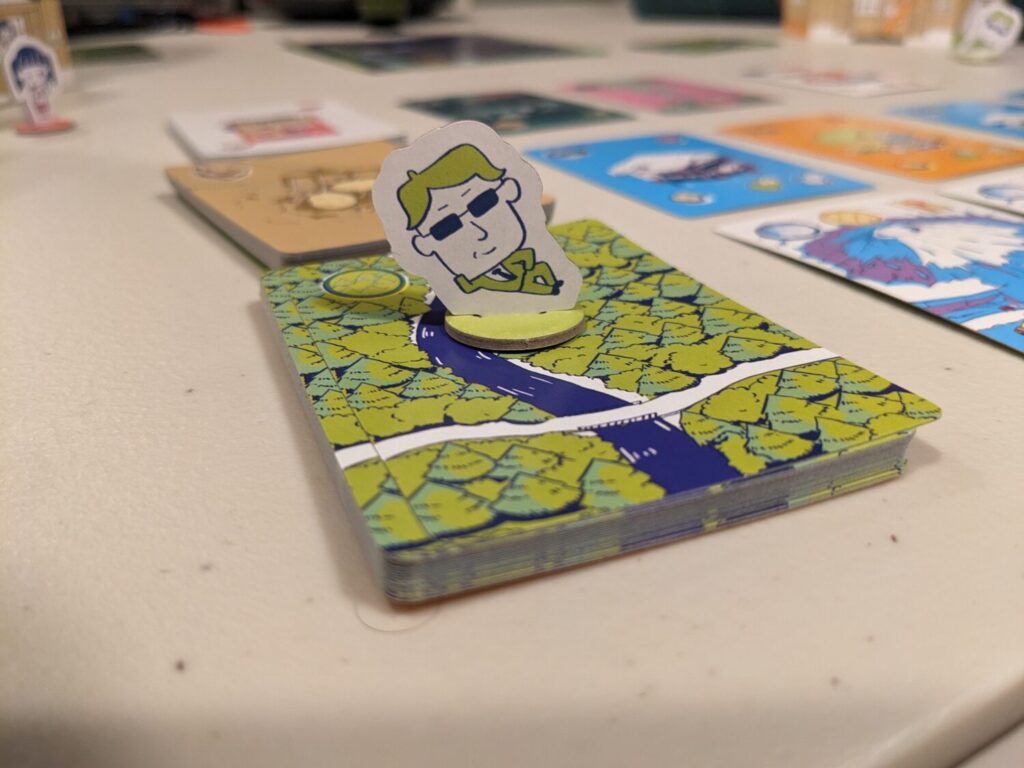
As a result, I had a range of opinions to measure against my own. Here’s the only thing everyone agreed on: the card and token illustrations by Maria Kato are absolutely gorgeous.

But after that?

Please Pass the Potatoes

Yotei is a tableau-building set collection game for 2-4…

The post Yotei Game Review appeared first on Meeple Mountain.
  •  

Ave Uwe: Yellowstone Park Game Review

From the rulebook:

“Welcome to Yellowstone Park, the home of many wild animals. Impressive geysers spray their hot fountains into the blue sky. The players go on a trip through the park, which is shown on the game board. Each player has a hand of animal cards with different colors and numbers. During the game the players try to put their cards down as skillfully as possible on the game board to avoid penalty points.”

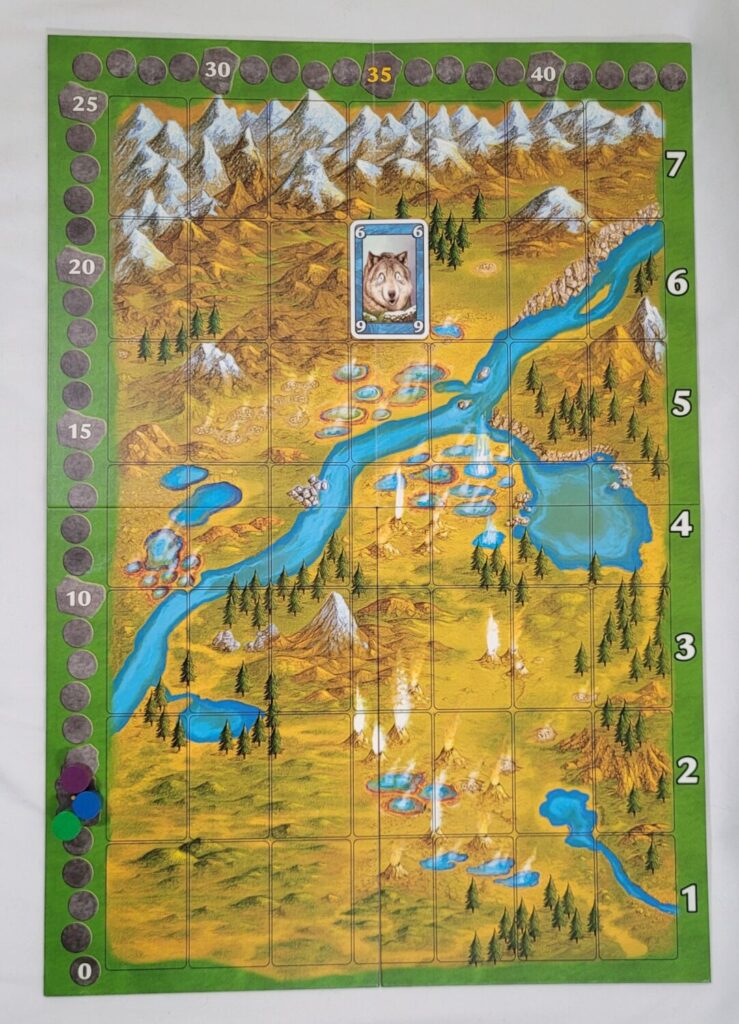
Yellowstone Park is played on a 7x7 grid laid on top of an illustrated overhead view of the titular park. The rows are numbered from 1 to 7 in ascending order, starting from the lowest row and moving upwards. There is a score track running along the left side of the grid. Each player’s score marker begins at the number 5 spot on this track.

There is also a deck of 56 Animal cards. Each card is one of four colors (red, green, yellow, blue) and one of seven numbers (1 through 7). For each number, there are two copies of that number + color pair (two copies of green 1, for instance). Every card features a cartoonish image of an animal, but these illustrations are unimportant for the purposes of the gameplay.

The post Ave Uwe: Yellowstone Park Game Review appeared first on Meeple Mountain.
  •  

The Fox in the Forest Deluxe Game Review

The Fox in the Forest predates the contemporary trick-taking craze by a few years. It was an early harbinger of what was to come, of the deluge with which we have subsequently been blessed, and it proved successful. Successful enough that now, almost a decade after its initial release, Joshua Buergel’s two-player trick-taking game is getting the Deluxe treatment.

For those who’ve never played, The Fox in the Forest distinguishes itself from the bulk of trick-takers in two ways. Way the first: all of the odd-numbered cards in this non-traditional deck have special powers that trigger when played. Normally, I try not to get bogged down in the weeds when reviewing a game, but I do think the powers here are illustrative: The 1 in each suit lets you lead the next trick even if you lose, the 3 lets you change the trump suit, the 5 lets you draw one of the cards that weren’t dealt that round before discarding any card from your hand, the 7 is worth a point for whoever wins it, the 9 is always considered a trump card, and the 11 forces your opponent’s highest card in the same suit.

If you are at all familiar with the ebb and flow of trick-taking games, you can imagine well the sorts of shenanigans…

The post The Fox in the Forest Deluxe Game Review appeared first on Meeple Mountain.
  •  

Whale Riders Game Review

Wholly Knizia

Dr. Reiner Knizia is a name synonymous with board games. Even if you haven’t heard of him, you’ve likely played one of his designs; according to Gemini, he has created more than 800 games. Whether it’s Ra, The Quest for El Dorado, Samurai, or Huang, he’s everywhere.    We even had a lovely sit-down with him recently to discuss his highly successful career.

Whale Riders excited me because it comes from a power duo: Knizia on design and Vincent Dutrait on art. Dutrait’s work has become increasingly easy to spot as I’ve gone deeper into the hobby, and here his contribution is excellent. The thematic art is rich, depicting Indigenous Arctic tribes using handsome whales and other massive sea creatures as mounts. But despite that pedigree, this is not one for the Knizia hall of fame.

Ice Race

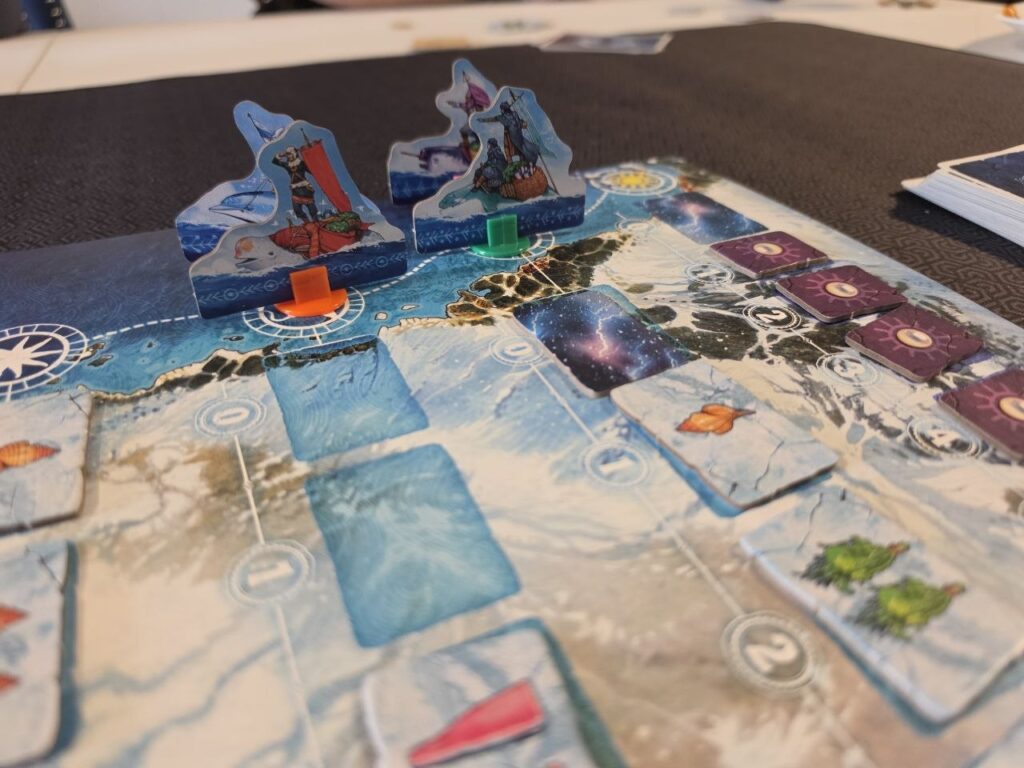
In Whale Riders, players take two of five possible actions each turn, moving between ports, buying goods, and completing contracts for money and pearls. Play continues until all the pearls have been purchased from the home area, giving the game a race-like structure from start to finish.

Goods in the market are replenished as they are bought, but new tiles can introduce storms that…

The post Whale Riders Game Review appeared first on Meeple Mountain.
  •  

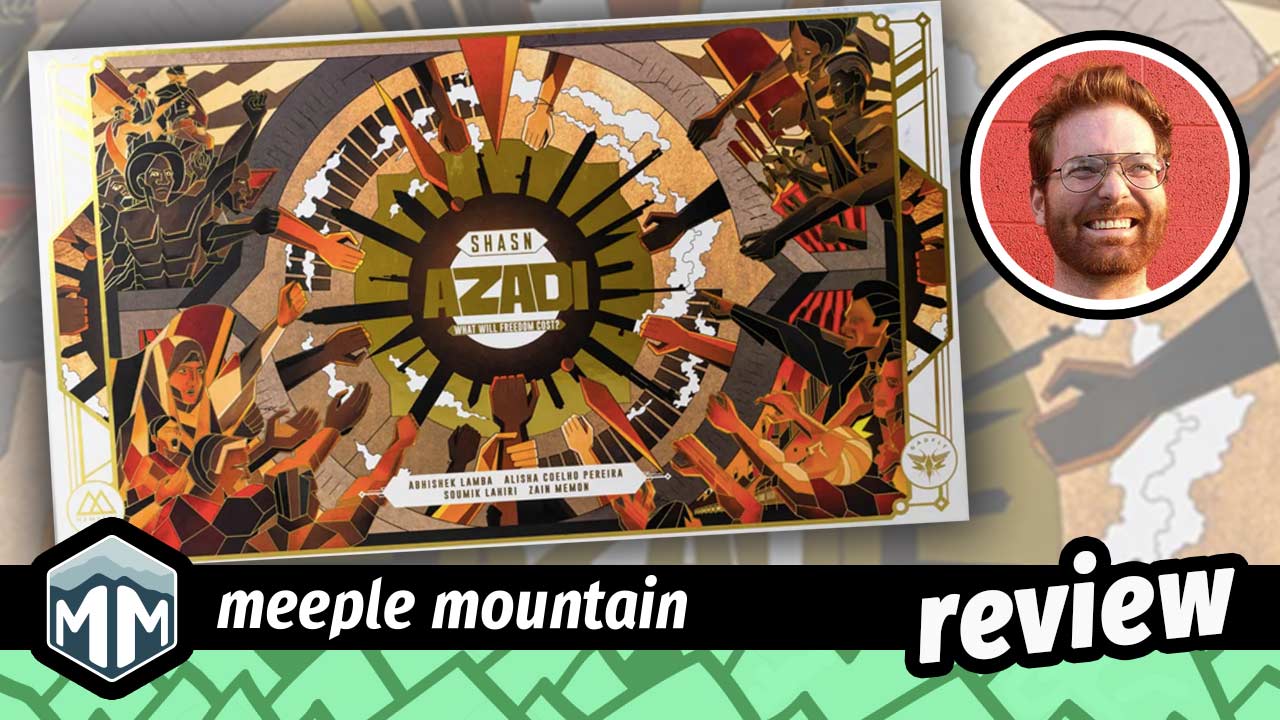
SHASN: AZADI Game Review

SHASN: AZADI is a box full of gimmicks. Those gimmicks are equal parts corny and high-minded, clever and ham-fisted. The area majority mechanism that is used to tally points is, frankly, pedestrian and simplistic. But, in spite of it all, the game is ambitious, and I admire games that are high-minded, even when that highmindedness has flaws.

Hegemony this ain’t

And that’s a good thing. AZADI is trying for something explicitly political—it is about the construction of political blocs more than it is about forcing players to accept the roles and bounds of its simulation. From where I sit, Hegemony: Lead Your Class to Victory’s conception of political economy and class is at best misguided and ignorant. AZADI doesn’t presume to gamify and fragment class struggle, casting players as some fake-o thinktank concept of the “middle class” and the “state.” Instead, players are a political ideologue constructing their own ideology out of what will best get them into the big chair. More on this in a moment.

The way you win AZADI is by forming majorities. In the version that I’m reviewing, you have a modular dual-layered map with holes in it for player pieces. Each map tile has a crosshair hole  (volatile area) and a number reading something like 11/21. Players get points for having majorities, which…

The post SHASN: AZADI Game Review appeared first on Meeple Mountain.
  •  

World Order Game Review

I played a lot of games in 2023. The best of those games, by a sizable margin, was Hegemony: Lead Your Class to Victory, designed by Vangelis Bagiartakis and Varnavas Timotheou and released by the two men under the Hegemonic Project Games banner. A bold effort in almost every way, Hegemony did an excellent job of simulating a real-world environment and mixing that with a number of different gaming systems. The end result now resides on BoardGameGeek’s top 50 all-time games and has hit my table for nearly a dozen plays; as an event game, it’s tough to beat.

Those accolades put a big target on the back of Hegemonic Project Games’ second design, World Order. Varnavas and Vangelis were kind enough to send a review copy in advance of the game’s full release, and it was pretty easy to get the members of my review crew to line up for plays.

I tempered expectations a bit here. I thought Hegemony was a classic example of “lightning in a bottle”, an asymmetric negotiation game that really did play differently from faction to faction, which landed in a January dead zone after working through a big pile of games from the year before. Could Hegemonic Project Games do it again with World Order? My main hope was that…

The post World Order Game Review appeared first on Meeple Mountain.
  •  

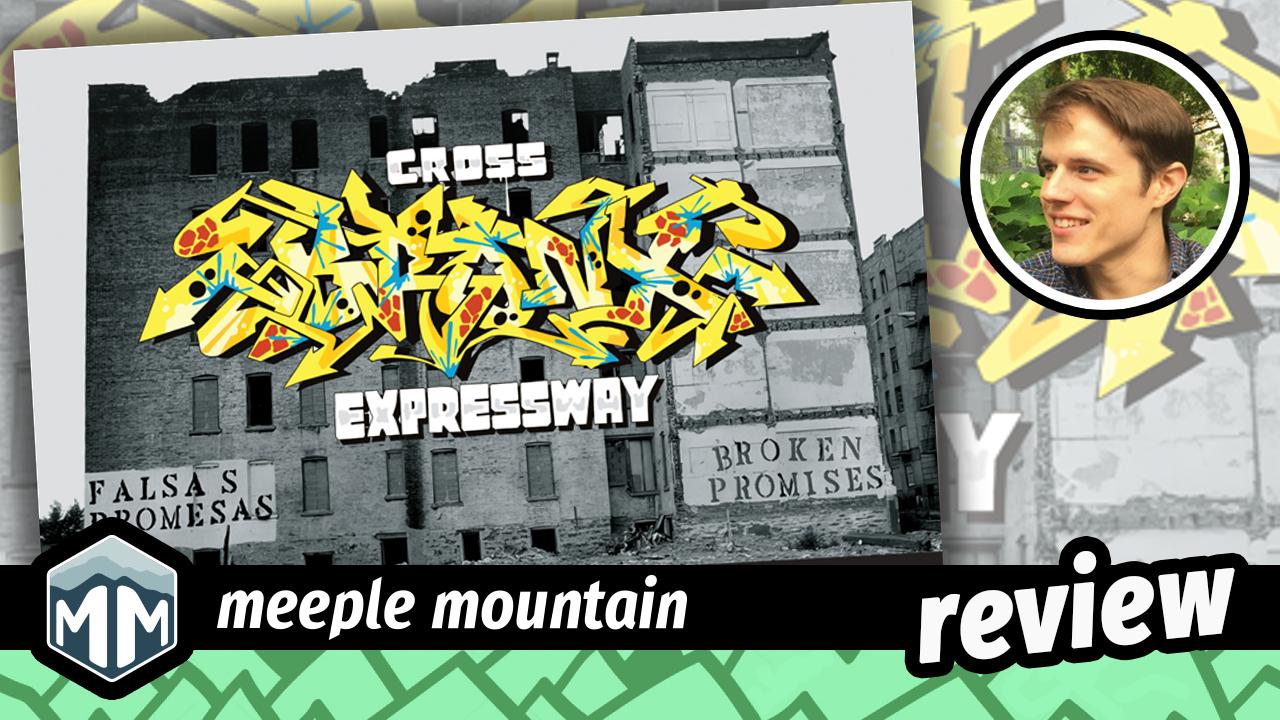
Cross Bronx Expressway Game Review

Cross Bronx Expressway, GMT’s third release in the Irregular Conflicts series, is not for the weak. It is exceptionally complicated, even by the elevated standards of a COIN title. A frequent refrain amongst the GMT faithful, and an accurate refrain at that, is that the rules aren’t all that complicated once you get over the hump of learning them. Not so here. For my first game, I gathered three of the finest gaming minds in New York City, all of whom had read the rules in advance, and it still took an hour or two to get things started. This is no doubt in part a function of the theme, the civic management of The Bronx across the latter half of the 20th century. It’s easier to keep rules in your head when they don’t use words like “coalition,” “partner organization,” and “Census Round Audit.” You may find yourself scratching your head and wondering why you didn’t go back to school to get an MB(oard game)A.

Work your way past the daunting exterior and you’ll find a game that is a fascinating mix of the exceptionally confrontational and the utterly inscrutable. Cross Bronx Expressway is a hard game to talk about as a game, in part because the gamic elements are relatively slight in view of the whole. Designer…

The post Cross Bronx Expressway Game Review appeared first on Meeple Mountain.
  •  

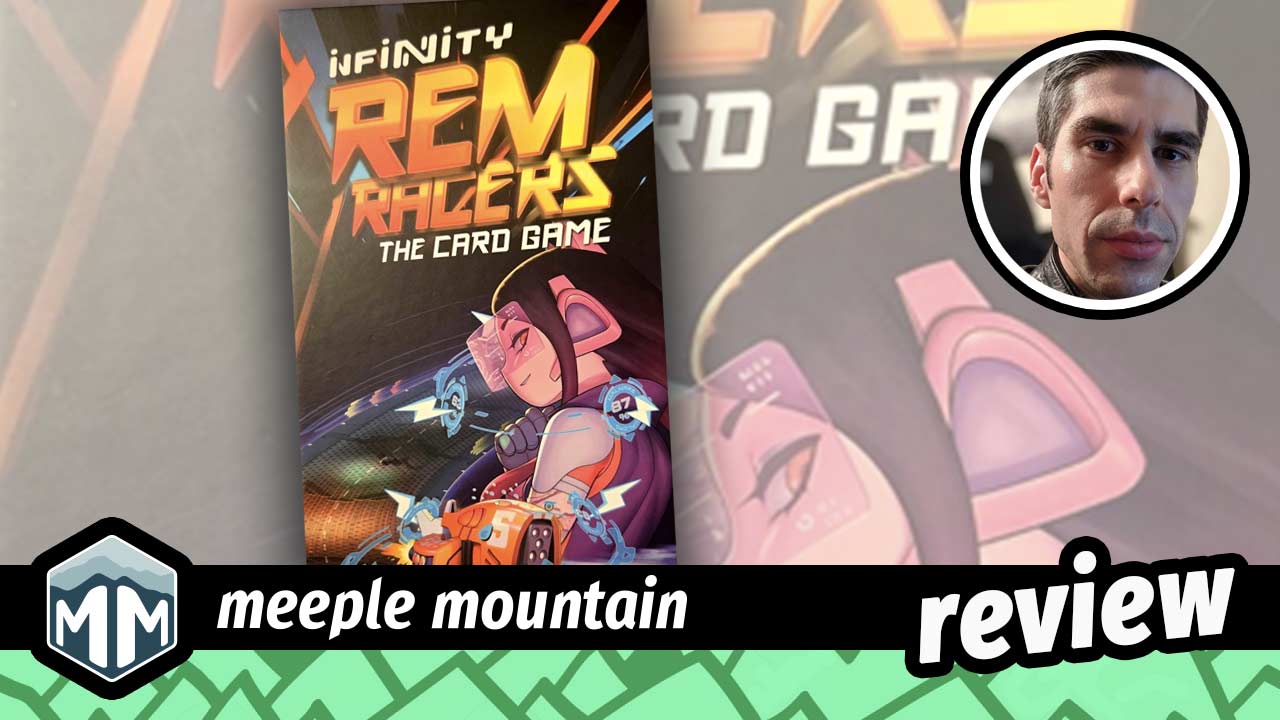
REM Racers Card Game Review

REM Racers. A name I didn't expect to hear again. Around this time last year, I reviewed the REM Racers board game, and as the name suggests, it's a racing game, a futuristic one at that. The box art is high-fidelity, the components are fantastic, and all of it would lead you to believe I'm about to gush. Instead, this was one of the least enjoyable gaming experiences I've had in a long, long time. I'm trying to be professional here.

So when they announced a card game version, I was a bit taken aback. From what I understand, the original wasn't well-received, and that usually doesn't earn you a spin-off. Then again, card games are cheap, and this one promises a runtime of roughly 20 minutes. Is it an improvement? Is it a good game? Am I going to stop asking questions? Yes.

They Did It Again

The title's a bit of a spoiler: it's a race. Everyone picks a pilot with a unique ability, and the goal is to finish first. But since there's no board or physical race track, the whole thing plays out pretty abstractly. Player positions are tracked by lining up everyone's car card in a row, first place to last. The track is represented by the "curve deck," a series of cards…

The post REM Racers Card Game Review appeared first on Meeple Mountain.
  •  

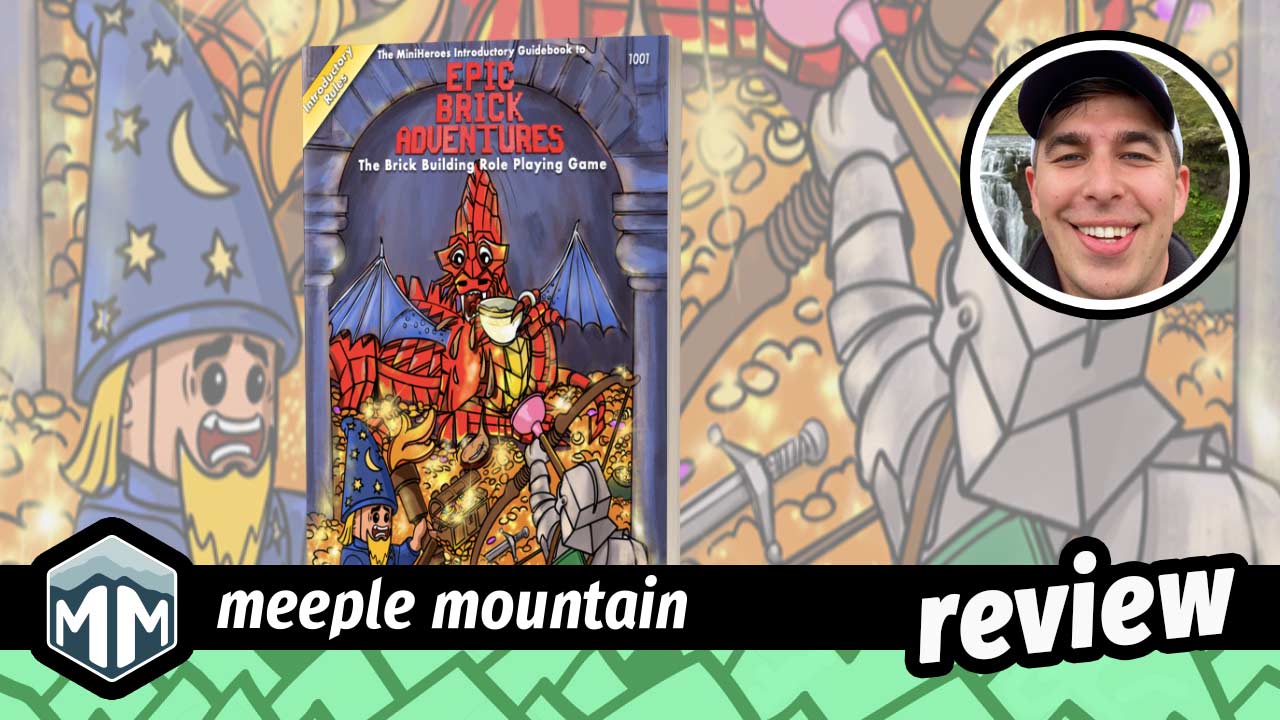
Epic Brick Adventures Game Review

Plastic bricks were a key part of my childhood. I have fond memories of tearing up my hands rummaging through a big tub of bricks that may or may not have actually held the one piece that I was searching for. Over time, my siblings and I developed amazing characters and lore of the hijinks that happened in our brick-world, leading me to naturally want to share that with my kids as they grow up. Epic Brick Adventures is designed to couple the world of bricks with the world of roleplaying games to facilitate creativity and storytelling without any age limitations. Ahead of the Kickstarter, I was able to get a look at the Introductory Guide and the Circus Catastrophe Intro Adventure to see if this game is more than just D&D with bricks.

Epic Brick Adventures: Building You Up

Epic Brick Adventures provides a rules framework for players to use their existing collections of bricks and plastic figures in a roleplaying game setting. Minifigures become MiniHeroes as a Brickmaster leads the players through an adventure of their own devising, serving as the Gamemaster (in conventional parlance).

MiniHeroes have Abilities broken out into Creative, Smarts, Willpower, Sense, Muscle, and Zip with concepts of Gusto and Clutch replacing energy and hit points respectively. Tack on an Occupation and some basic equipment…

The post Epic Brick Adventures Game Review appeared first on Meeple Mountain.
  •  

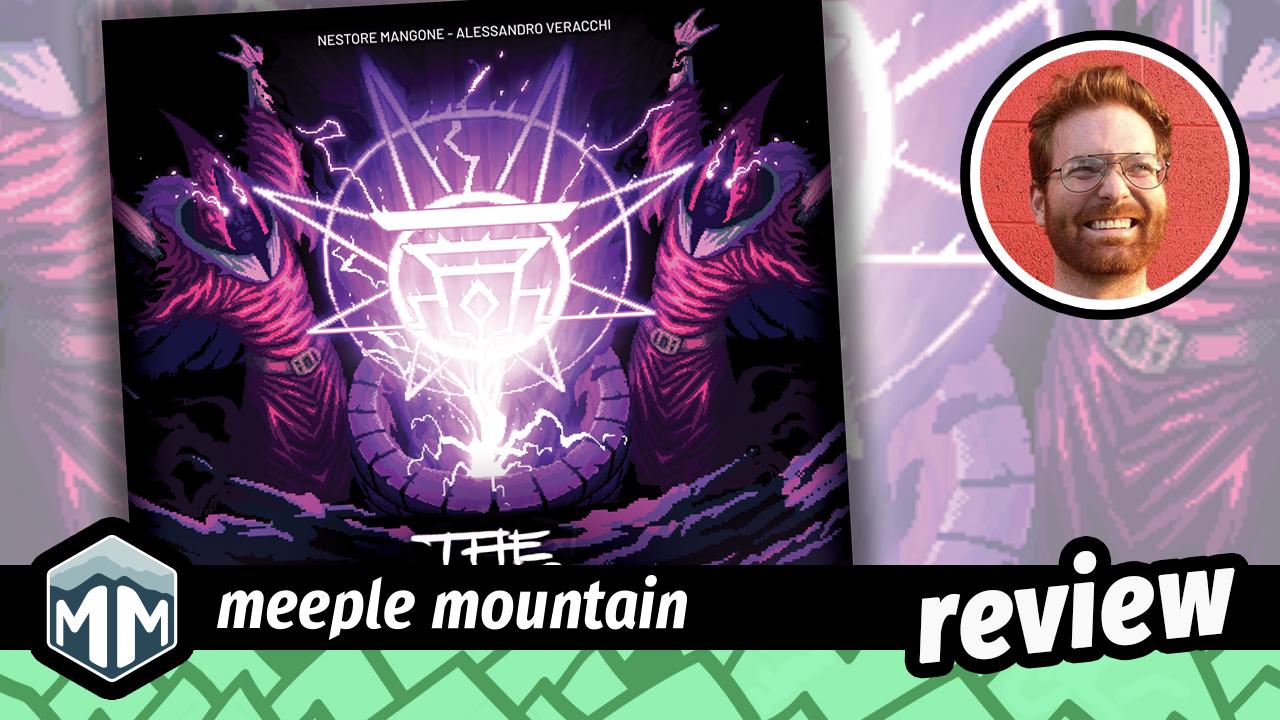
The Last Spell: The Board Game Review

The Last Spell: The Board Game is one of those rare games that I can be unapologetically negative about. Contrary to what you might think reading some of my reviews, while I can be critical, I generally try to understand what the design was attempting to accomplish and if it accomplished that goal.

The Last Spell: The Board Game successfully accomplishes the aim of adapting a video game into a board game at what appears to be a 1:1 level of fidelity. Unfortunately, because of this, there is almost zero reason to play the board game adaptation.

This game is a waste of time.

Is there a good thing, Thomas?

Well, the aesthetics are kinda cool. I guess?

The premise of the game is that some wizards cast a big spell that killed nearly everything in the world, and the remnants group together in small towns bravely defending themselves against the dying of the light or some such thing. There’s purple mist. There’s a pixel art style that is very Dark Super Nintendo. Reminds me a bit of Super Boss Monster, and the text is reasonably easy to read. The miniatures for the player heroes are cool.

Unfortunately, beyond that, everything else is a travesty.

The game is a…

The post The Last Spell: The Board Game Review appeared first on Meeple Mountain.
  •  

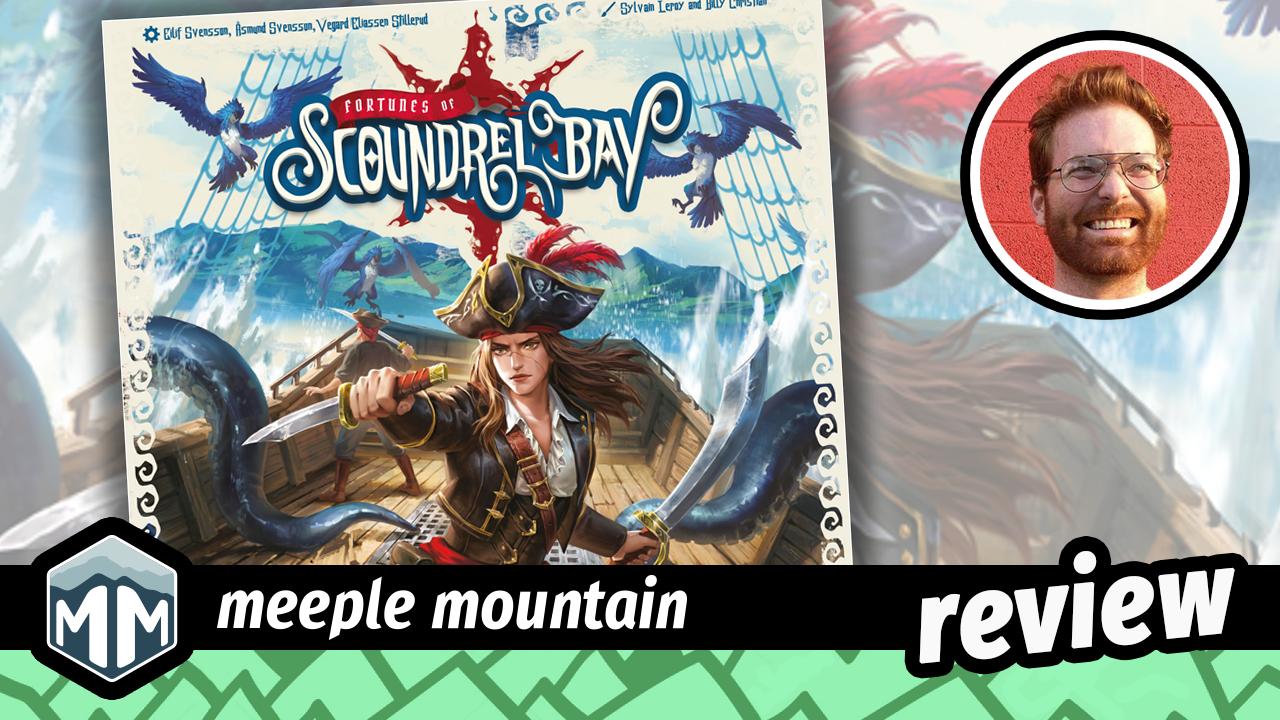
Fortunes of Scoundrel Bay Game Review

Fortunes of Scoundrel Bay has, on the surface, everything that makes me typically dismiss the latest eurogame from the assembly line: It’s clearly inspired by Alexander Pfister’s Maracaibo and Boonlake, it has questionably silly cover art, and maybe one of the most generic and forgettable “this is a pirate game” names of all time (honestly, we accidentally called it “Scoundrels of Fortune Bay, Bay of Scoundrels, Founders of Fortune Bay, etc.)

I was surprised to just have a great time with Fortunes of Scoundrel Bay (FoSB). It’s always a treat to be delighted by the mechanical flourishes in a design, and this one has plenty of thoughtful choices that come together in a surprisingly mid-weight package.

We’re pirates, yar, but we’re also homebodies

Fortunes of Scoundrel Bay has an interesting rhythm compared to many games that feature seafaring as a central theme. Instead of sail, sail, sail, you are often sailing 1 or 2 spaces, then you’re doing a bunch of different activities for several rounds, then you might sail another space. The arrangement of the board is the shape of a bay, rather than a large expanse of ocean, and this is reflected in how the game plays. You’re more of a pirate party barge than a terrifying group of cutthroats. These pirates love to hang.

The post Fortunes of Scoundrel Bay Game Review appeared first on Meeple Mountain.
  •  
❌