Lese-Ansicht

For The Gods! Game Review

They talk about iconic dynamic duos: Batman and Robin, peanut butter and jelly, Mary-Kate and Ashley Olsen, and now Trevor Benjamin and David Thompson. But hold the phone! They’re back with a third, Brett J. Gilbert, evolving their design-duo superpowers into a full-fledged trio.

Many will recognize Benjamin and Thompson from modern classics such as the Undaunted series, War Chest, and Resist!. Factor in the euro-y talents of Gilbert, whose credits include Mandala and The Guild of Merchant Explorers, and For the Gods! couldn’t hit the table fast enough.

I’ll admit, as much as I love the idea of wargames and “dudes on a map,” I’m often quite bad at them and, as a result, tend to admire them from afar.

For the Gods! is a dudes-on-a-map game, yes, but scratch beneath the surface and there’s a clever bag-building and hand-management game driving the entire experience.
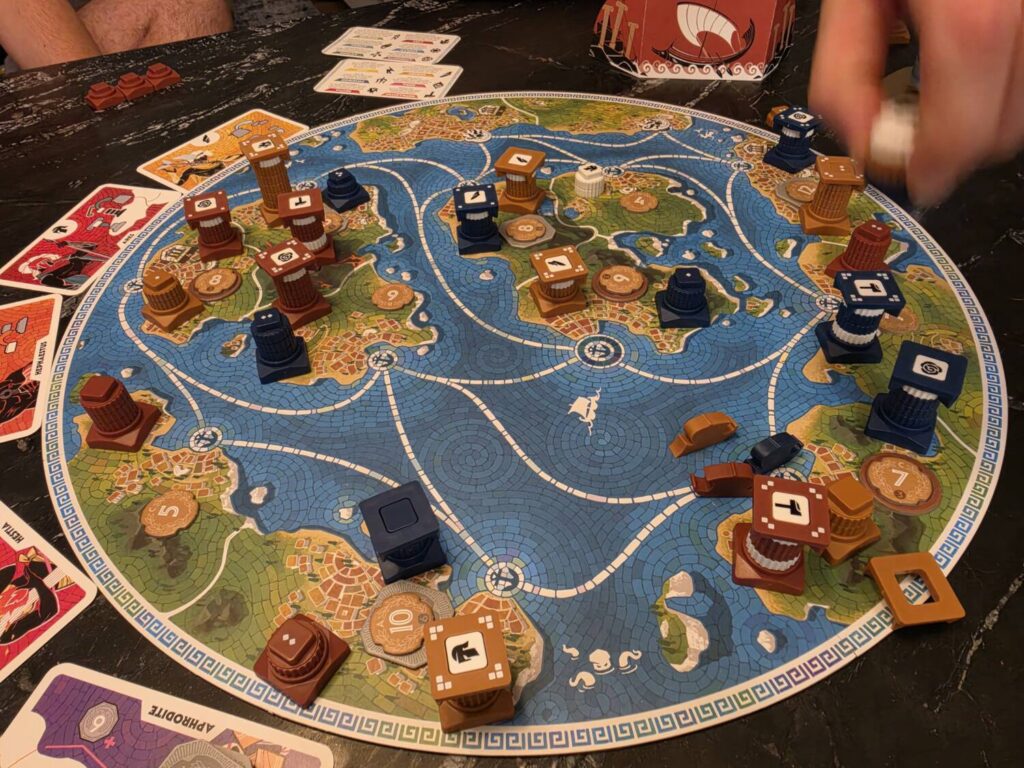
After Mighty Boards blew past its crowdfunding goal by more than tenfold, I was curious to see whether all those ingredients would come together into something worthy of Olympus.

Zeus himself would approve.

For the Gods! is an area-majority game where players sail around ancient Greece, building towering temples dedicated to the gods. Each player begins with the…

The post For The Gods! Game Review appeared first on Meeple Mountain.
  •  

Marvel Crisis Protocol – Onslaught’s Grip Tightens!

Excelsior, heroes, and welcome to a Meeple Mountain article for Marvel: Crisis Protocol! Today, we’re here to talk about the newest supervillain to join the roster: Onslaught! This big boy boasts his own personal affiliation where anyone you bring is automatically affiliated with him and uses his leadership. The model is cool, but how does it all pan out?

I want to give a quick shoutout to one of my local players, Isaiah Cooper, who excitedly agreed to paint this Onslaught for me when he arrived. I would rather put impressive painting on display for y’all than my mediocre attempts at whipping something up.

Two Minds, One Grudge

Onslaught is a character lifted straight from the comics (and for my money, likely to feature heavily in season 3 of X-Men ‘97.) He’s a fusion of Professor X and Magneto’s consciousnesses after the two of them used their powers on each other. Here in MCP, he’s the first character to carry two alter-ego tags, serving as both Charles Xavier and Max Eisenhardt. This means you can’t run either character with him, but since Onslaught has the “peerless” tag, it means you can’t run him with any other peerless characters anyway, which Magneto has.

The box is just one simple model, but don’t let that fool you. This is one of the…

The post Marvel Crisis Protocol – Onslaught’s Grip Tightens! appeared first on Meeple Mountain.

  •  

Inside The Cozy Bundle – Fiammingo Games, Strawberries, Forests, and Happiness

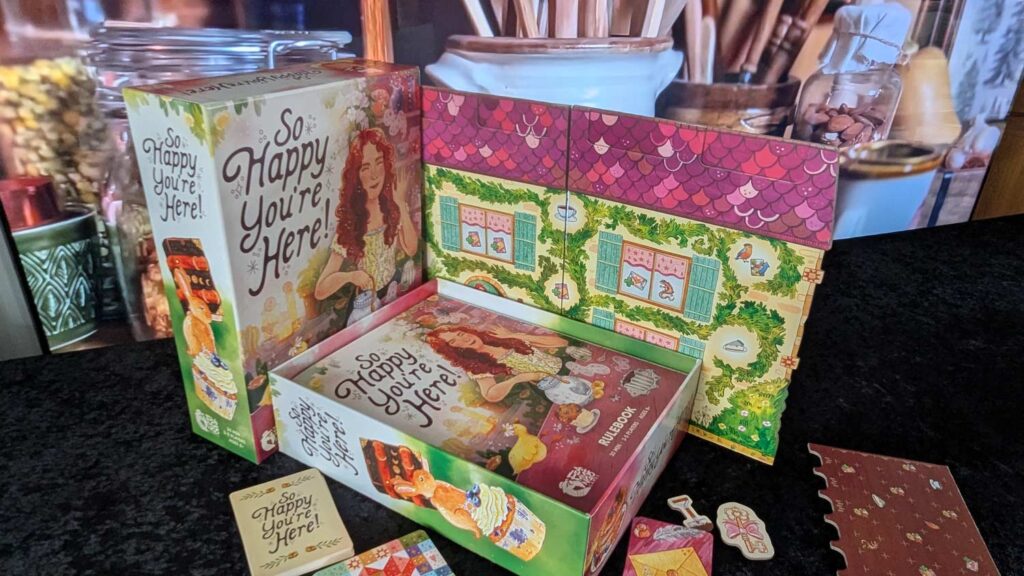
Fresh, juicy strawberries. Busy nature-loving cottage-witches. Ginger cats on rustic roofs. If any or all of these things (they could be a few of your favourite things) made you go 'ooo', then this September you're in luck, my friend. Fiammingo Games, a small Italian publisher, has taken note of the burgeoning market in cozy games and is heading to Kickstarter with something they're calling The Cozy Bundle. It's not one game, but three, launched together under a single banner. That's a whole lot o' cozy. It is, in fact, a "plump cushions and knitted throw and pet on your lap and steaming cup of tea" amount of cozy.

It's also a bold move. Most publishers save their big swings for one campaign at a time. What we have here is not a trio of vaguely-linked mini-games, but three fully developed board games with a shared aura. You’d expect them to be separate releases. Fiammingo is betting that they can convince you otherwise: that a witch's forest, a strawberry festival, and a cottage full of good intentions are stronger as a trio than as three separate entities. I sat down with the designers and artists behind all three to find out why, and to ask what "cozy gaming" actually means…

The post Inside The Cozy Bundle – Fiammingo Games, Strawberries, Forests, and Happiness appeared first on Meeple Mountain.

  •  

Haunted Lands Game Review

There’s a lot of things I want to like about Haunted Lands. I like the premise, where you’re adventurers/exorcists trying to help your little city expand out into the countryside by sending ghosts to the great beyond. There’s some mechanical flourishes that are genuinely interesting. Unfortunately, the game itself does not really rise above a rote resource-collection exercise.

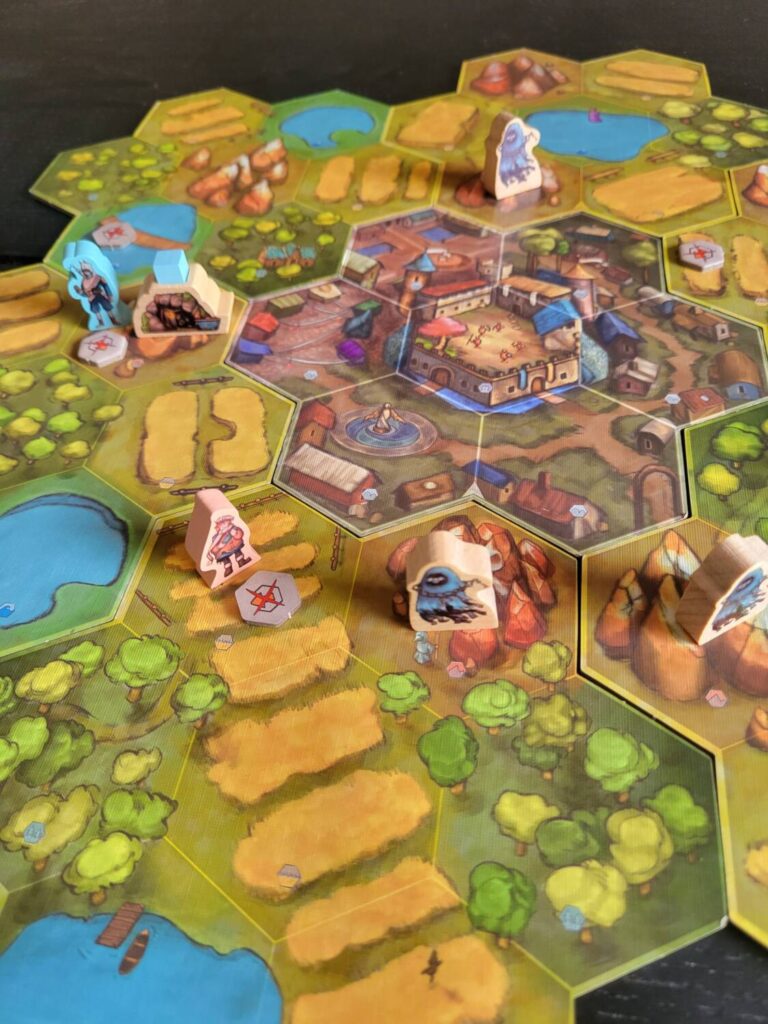
It’s important to gather wood when exorcising

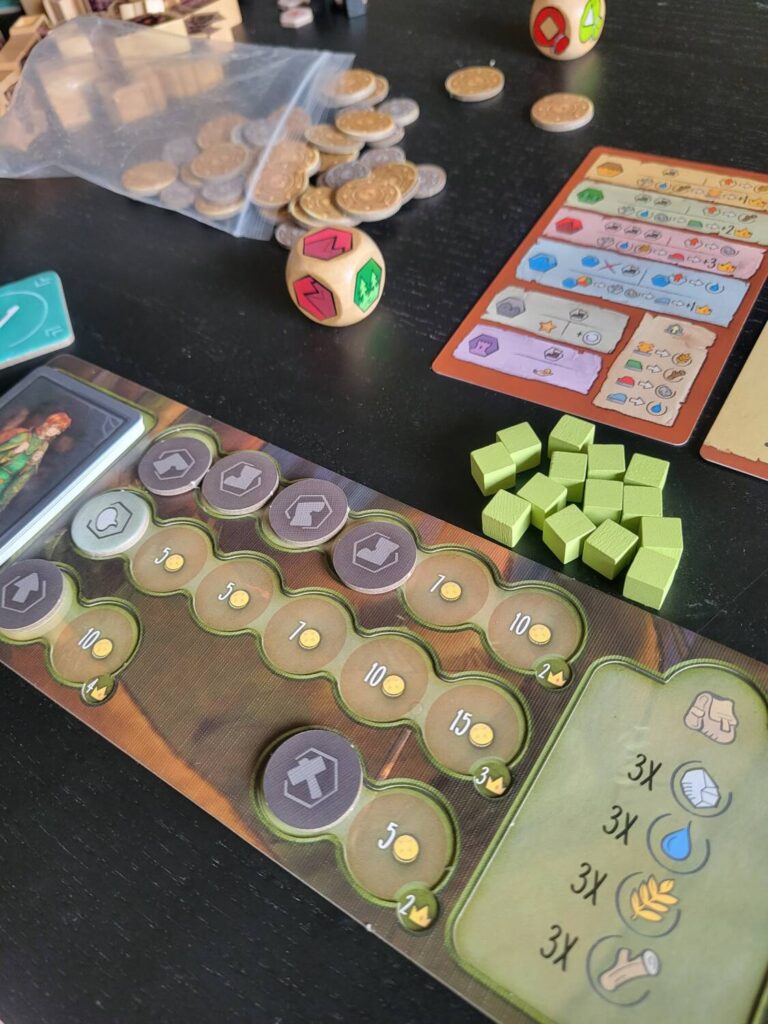
Haunted Lands is an action point game, where instead of getting a pool of action points, you have discs that correspond to different actions that you use to do various things in a sequence of your choosing. For example, you move, then gather, then build a building, move again, and finally, help a ghost.

You’re doing all this because helping the ghosts (which requires the right number of action tokens depending on how far the game has advanced), harvesting, and building buildings all give you resources, which you use to build more buildings, or sell said resources to buy upgrades. Building buildings and paying for upgrades gets you points, and in the late stages of the game, helping ghosts gives you points too.

The game forms a fairly simplistic loop. You move, making sure…

The post Haunted Lands Game Review appeared first on Meeple Mountain.
  •  

Your Friend Doesn’t Need to Become a Gamer Tonight

There is a dangerous moment in every board gamer's life when a non-gaming friend says, “Sure, I'll try one.” Remain calm. Do not make any sudden movements. And, most importantly, do not immediately disappear into the basement and return carrying a box large enough to contain a microwave.

We have been waiting for this moment. That's the problem. When you love tabletop games, introducing someone to the hobby can feel like being handed five minutes to explain your favorite band, restaurant, television series, vacation destination, and minor religion simultaneously. You want them to understand why this thing matters. You want them to experience the clever mechanisms, impossible decisions, ridiculous betrayals, dramatic reversals, and that beautiful moment three hours into a game when everyone suddenly realizes Dave has been quietly collecting sheep for reasons nobody fully understands. So we get excited. And excitement makes us terrible ambassadors. Or, at least, obviously biased ambassadors to the point of destroying our credibility.

We start explaining. “This one's actually pretty simple.” This sentence is usually followed by eighteen minutes of rules. “You have workers, except they're technically druids, and you're placing them on action spaces to collect resources so you can fulfill contracts, although they're called prophecies, and the purple resource isn't actually a…

The post Your Friend Doesn’t Need to Become a Gamer Tonight appeared first on Meeple Mountain.

  •  

Amoebunnies Game Review

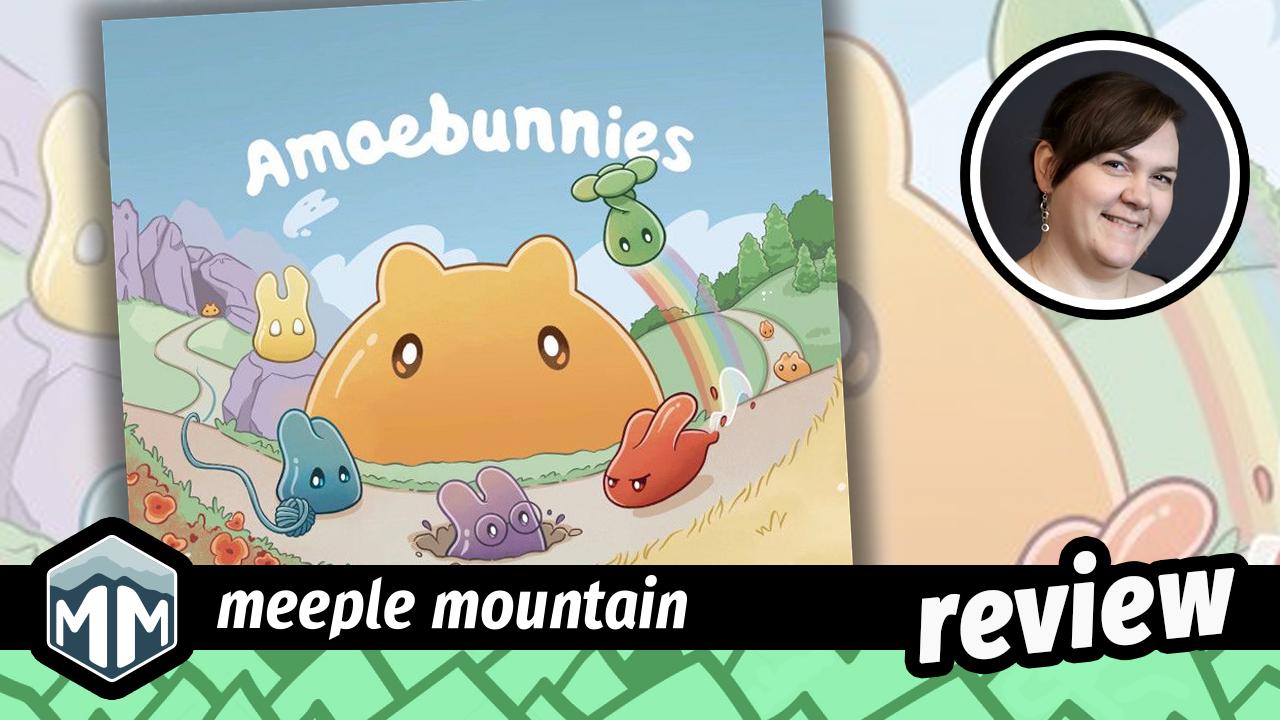
I don’t remember where I first heard about Amoebunnies, a self-published game from a designer who’s not made anything else, but I’m so glad I did. This game was attractive to me for a couple reasons: it was cute, and I needed more cute games to play with my bunny-loving seven-year-old daughter. But the thing that intrigued me most was seeing it described as “Root lite”. Was there really a game I could play with my kids that would introduce them to the world of asymmetric play that would also be fun for adults?

The story

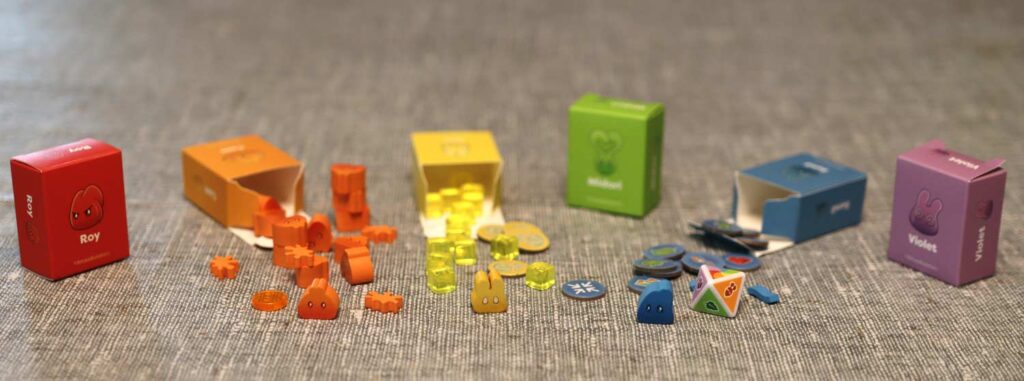
The amoebunnies have fallen from the sky and are doing different tasks on the earth. Each player begins with the same resources, but the movement rules, special abilities, and winning conditions are different for each character. The characters also have different difficulty ratings, which means you can give the easier characters to newer or younger players, and the more experienced gamers can pick a more complex character. There are movement cards, which tell you where to place characters and other bits and bobs (depending on which characters are involved), and the coveted jellies, which are like a wild card but are rare and difficult to get. The game is a race to finish your special task.

The post Amoebunnies Game Review appeared first on Meeple Mountain.
  •  

Quick Peaks – Fuji Flush, Terra Eterna, Bring Your Own Book, Beach Bandits, Stuglandet

Fuji Flush - Thomas Wells

Fuji Flush is a good time. It’s like super Uno that doesn’t fall into an infinite loop, especially at higher player counts. Basically, you play a card from your hand, and if the turn comes around to you again, and someone hasn’t “flushed” your card, you discard it. Get rid of your hand to win. Flushing is playing a higher card, but if someone plays the same card, your values are added together and you enter a sort of partnership where all same-card values are tougher to flush. 

Mainly, it’s an excuse to say flush a lot, but it’s a hoot with a larger count, and is really easy to table and play at the end of a night. 

Ease of entry?
★★★★★ - No sweat
Would I play it again?
★★★★★ - Will definitely play it again

Read more articles from Thomas Wells

Terra Eterna - Kevin Brantley

We at Meeple Mountain always enjoy the chance to cover self-published titles, as they often don’t get the opportunity to be showcased to a larger audience. Terra Eterna is one of those titles, a semi-cooperative RPG focused on exploration and character building.

Unfortunately, the game…

The post Quick Peaks – Fuji Flush, Terra Eterna, Bring Your Own Book, Beach Bandits, Stuglandet appeared first on Meeple Mountain.

  •  

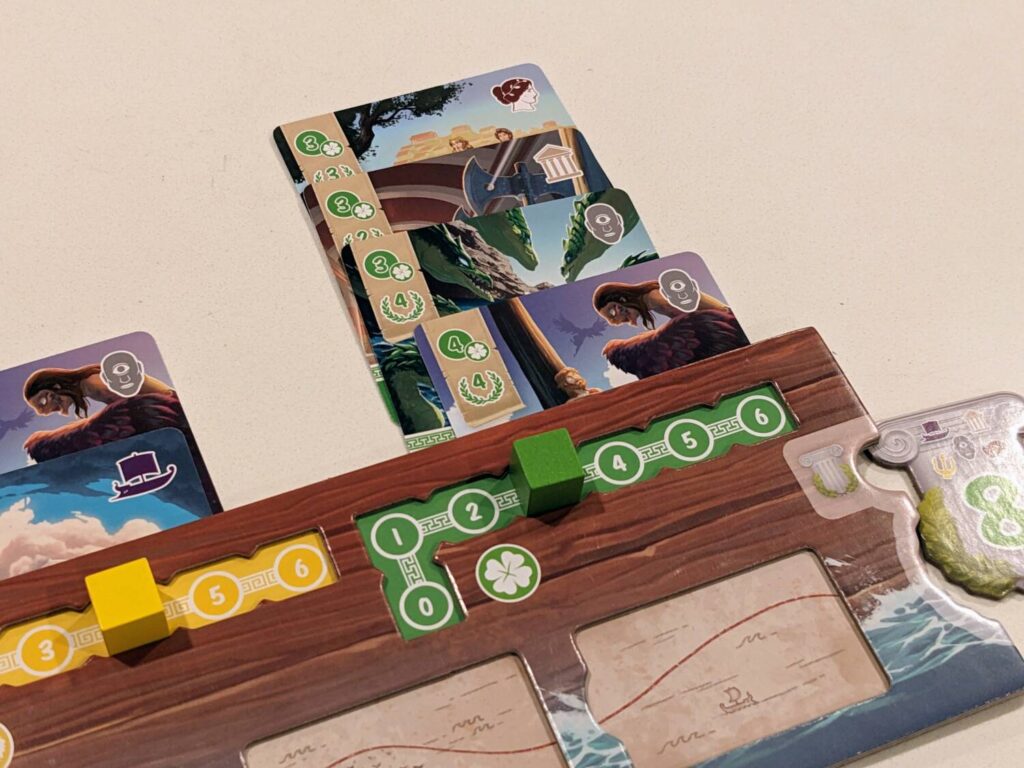
Odysseus Game Review

Let’s give credit where credit is due. If you are going to release a game in the late summer of 2026 and want to ride a wave of free marketing, you can do a LOT worse than theming your new game around anything tied to The Odyssey, Homer, The Iliad, and all things Odysseus.

So, while it is possible that Gigamic’s new, light strategy title Odysseus was always intended to be a game about the lead character from the recent Christopher Nolan / Matt Damon blockbuster film The Odyssey, let’s just agree to give everyone involved in this game’s design a round of applause for timing the release and the theme to the Universal film’s massive global box office!

Odysseus, the game, is a very quick romp through the 15 trials Odysseus (the character, also known as Ulysses, depending on your preference between the Greek and the Latin version) survived on his quest to return to Ithaca. In fact, the game is so quick that we only get 11 turns to whisk through the entire affair, and turns are so fast you might break through a game of Odysseus in 15-20 minutes!

Turns are simple. The board is a replica of Ulysses’ vessel, with spaces for 12 cards. On…

The post Odysseus Game Review appeared first on Meeple Mountain.
  •  

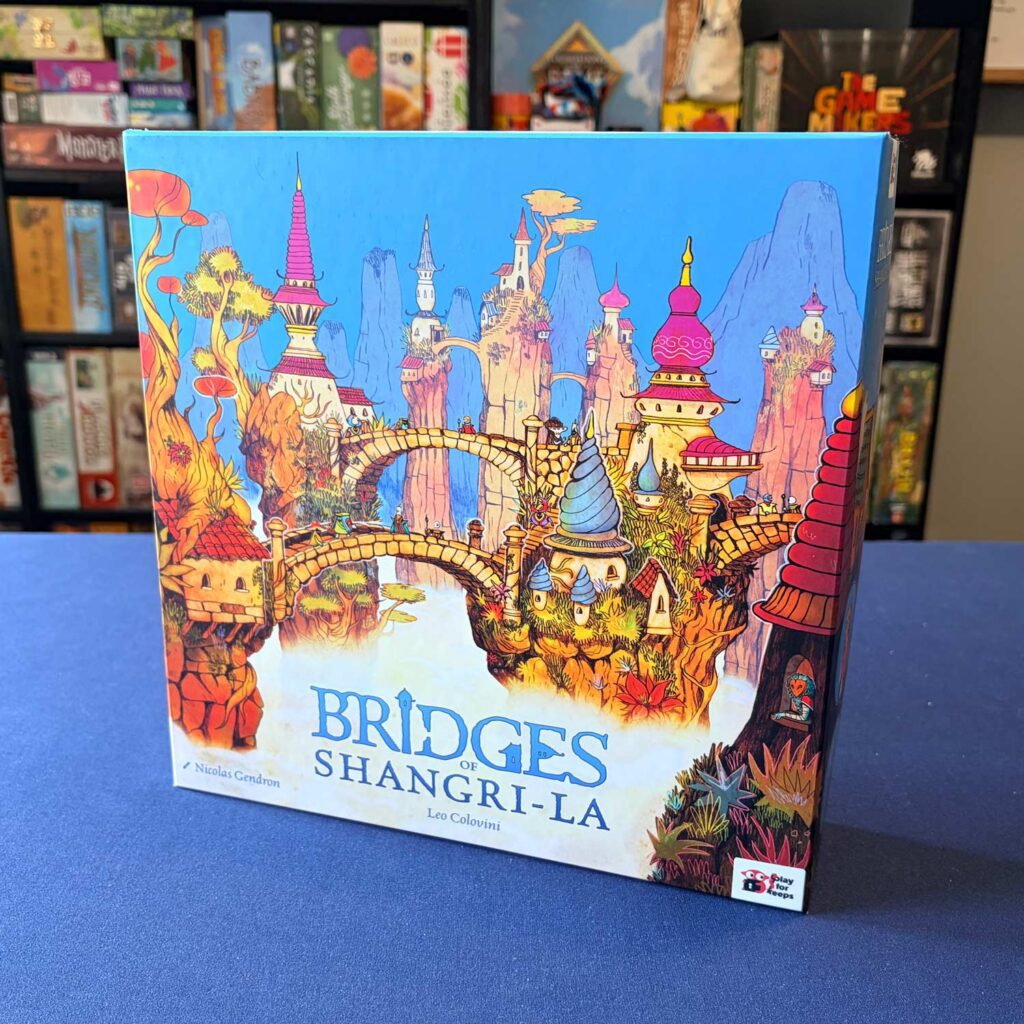
Bridges of Shangri-La Game Review

One of the great things about being part of a regular game group is being exposed to titles you might have never seen before—because your friends also love games, and no two gamers have quite the same combination of tastes. Variety is one of my defining characteristics when it comes to playing games: I’d much rather play 6 games once, than 1 game six times. So when my friend Chas said “we’re going to play Bridges of Shangri-La”, a game I’d never heard of, I enthusiastically agreed.

Bridges of Shangri-La is an area control game from 2003. Set in the forbidding Himalayas, the goal is to earn the most points by training up masters in 7 different disciplines, then have those masters send their students to neighboring villages to “spread enlightenment”. Of course this is a friendly way of saying you’re going to beat the pants off them…except in Nepalese.

Did I mention that Bridges of Shangri-La is a bit…cut-throat? But I’m getting ahead of myself.

How to play Bridges of Shangri-La

The Bridges of Shangri-La board features 13 villages in the peaks of Nepal, each connected to several other villages by tendril thin bridges. Each player begins the game with 7 tokens, in 7 different disciplines. The goal is…

The post Bridges of Shangri-La Game Review appeared first on Meeple Mountain.
  •  

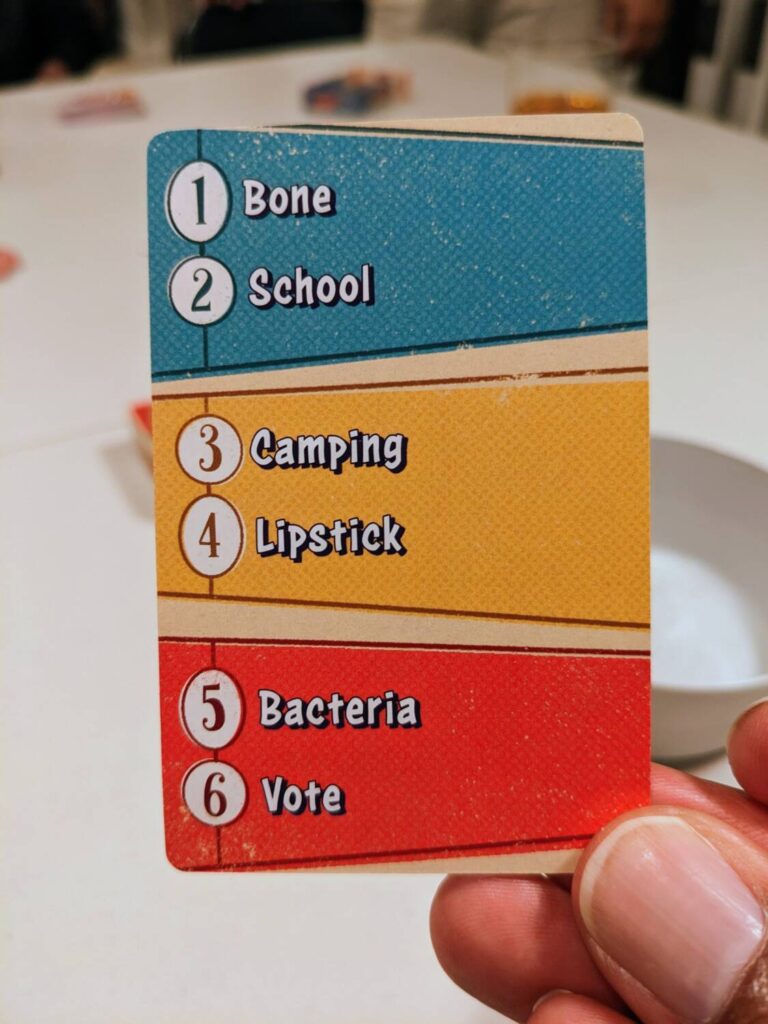
Jibber Jabble Game Review

I picked up a review copy of the new word game Jibber Jabble during my visit to Gen Con 2026. After meeting the game’s designer, Carrie Sykes, at a pre-con media event organized by the publisher, I had the chance to demo the game later that weekend before getting Jibber Jabble in front of both my review crew, a group of six at a family beach vacation a couple days later, then a group of eight during one of my weekly gaming group nights.

Here’s the synopsis: it’s hard to beat the value proposition of a collaborative word association game that plays fast for an MSRP of $9. It doesn’t land on my personal Mount Everest of word games, but everyone who played it wanted their own copy.

We Need Some Clue Words for “Statue”

Jibber Jabble is a word association game that plays in about 20 minutes, maybe a bit more with more players. Across six turns, players provide clues for a word or term, helping the active player by giving them clues for the word they cannot see (yes, this is the format for games like Just One).

So, the active player flips a card towards everyone else, then the team picks a number, from…

The post Jibber Jabble Game Review appeared first on Meeple Mountain.

  •  

Trails & Tails Game Review

At the end of the day, my review criteria is really simple: is the game fun or not?

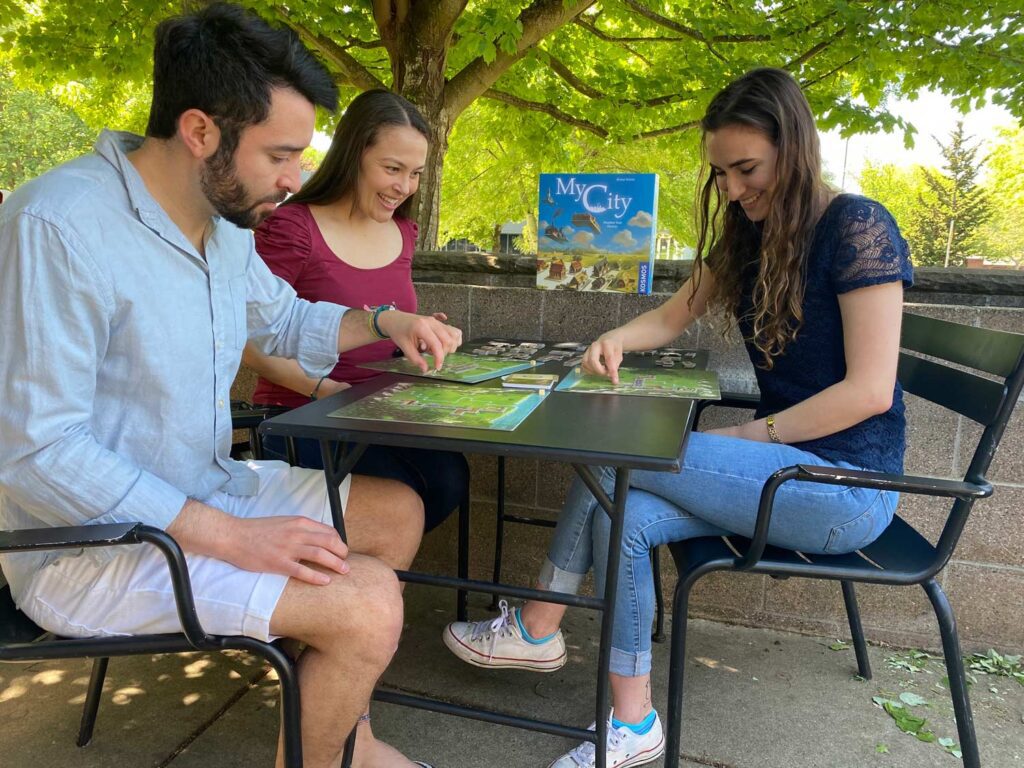
Trails & Tails is a new self-published title. (BGG does not list a designer, artist, or publishing company…only “self-published.”) It admits its hook right up front: Trails & Tails is going for a Snakes & Ladders-style gaming experience (or, if you’re a gringo like me, Chutes & Ladders), where players move their playing piece up a board all the way to the top…hopefully taking short cuts along the way to reach the top faster.

The downside of Snakes & Ladders comes when snakes appear in the space where you end your movement…because if that’s what happens, you fall backwards and/or downwards until you reach a much less desirable space lower on the board. So, keep moving forward and things will generally work out.

Trails & Tails adds spice by giving each player two starting dice, differing by player; one player gets a D4 and a D20, while another might have a D6 and a D8. In each round, players roll these dice, then get to use 1-2 dice per turn to their liking. You can add the results of two dice, move forward a number of spaces on one die, or even subtract a larger die value from a smaller one…

The post Trails & Tails Game Review appeared first on Meeple Mountain.
  •  

Bordeaux Game Review

From the rules:

“You are a winemaker in the heart of Bordeaux, guiding your vineyard from grape to glass. Every good winemaker knows time itself is an ingredient, and patience is as vital as ambition.

This philosophy shapes every decision you make in Bordeaux. Over 13 years (turns), you will assign Workers to Make Wine or Gain Resources, choosing a duration of 1, 2, or 3 years. Longer commitments mean more powerful actions, but it will take longer for that worker to be ready again.

As your wines mature, you chart a curated wine tour, connecting estates and guiding bottles into restaurants and shops where patrons can taste your craft.

When the final year has passed, your legacy is uncorked. Score points for your wines and resources, and discover which winemaker’s careful timing has produced the most celebrated vintage.”

Bordeaux defies easy categorization. There’s no card flipping, no dice rolling, no bag drawing. There’s just you, your available workers, the thing the game allows you to do, and the thing you or your opponents have decided you’ll have the ability to do. If you’re well-positioned, you may be able to do both. But chances are you’ll have to choose between one or the other. Everything you do is in the pursuit of victory points and, after 13 turns, the…

The post Bordeaux Game Review appeared first on Meeple Mountain.
  •  

Near: Echoes of Civilizations Game Review

Man, I just love a civilization game. For a power-tripping megalomaniac like myself, there’s just nothing better than taking the helm of a conglomerate of violent individuals and making bad decisions.

Near: Echoes of Civilizations has a goofy name—you really have to do some mental gymnastics for it to make sense at all. But, there’s some real fun to be had here. All the hits are here: Technology! Combat! Resource management! Points!

Actually, part of what makes Near interesting is its commitment to synthesizing the heads-down-euro-bean-counter that constitutes a lot of its bone structure with a traditional build-stuff-kill-guys game. Unlike other civ games (for example, Civilization: A New Dawn, Mosaic, or Gentes) that have tried to incorporate concepts from euro-style mechanism-fests into their design framework, Near takes a holistic approach that makes it feel complete and cohesive, rather than a cobbled together bricolage.

A novel new mechanism: “cards”

At the beginning of Near, you get dealt a starting culture card (a personal endgame scoring condition), a wonder card (an in-game scoring condition), four regular cards from one of five colors, and a starting action bonus. Your wonder gives you a starting building, and in a very Terra Mystica-style start, you place some buildings out on the board and it’s…

The post Near: Echoes of Civilizations Game Review appeared first on Meeple Mountain.
  •  

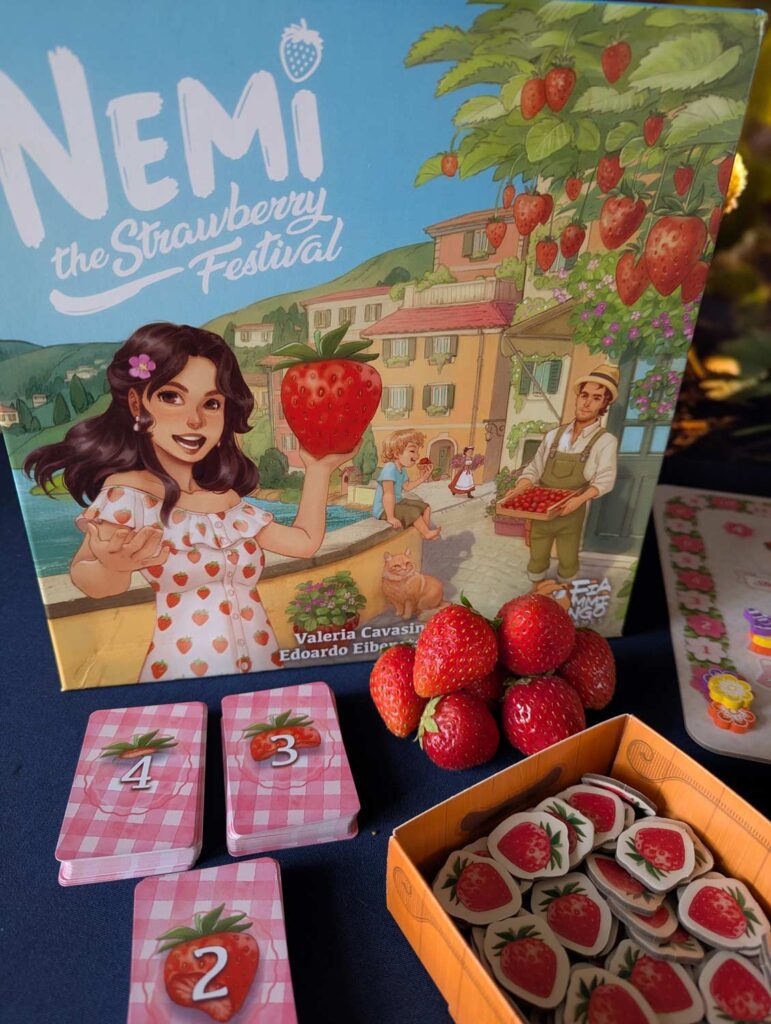
Nemi: The Strawberry Festival Game Review

We’re in the middle of a war in our garden. It’s all based around the strawberries we have foolishly attempted to grow. Those strawberries are not making it into our bowls. Someone is getting to them first. We were almost convinced it was our regular visitor, Howard the Hedgehog. There isn’t much that Howard won’t scoff. Put a net over ‘em, you say? Yeah, we did that. Then, one super early morning (deeply unusual for me) I happened to squint out of the kitchen window, and what did I spy? Why, a particularly nimble squirrel, scoffing our strawberries. The little son of a nutcracker had torn and chewed a squirrel-sized hole in the netting, and was sharing his rewards with some happy starlings. I think I’ve had two of those strawberries. Two. Not exactly a festival. Not even enough for breakfast.

So let’s head to Nemi where we can enjoy a strawberry festival! (Scout’s honor, every word of that odd little tale is true.)

In Nemi: The Strawberry Festival, players immerse themselves in the charm of an Italian summer by drafting wild strawberries, baking mouthwatering desserts, and decorating the town with vibrant garlands. Designed by Valeria Cavasin and Edoardo Eibenstein, this 2–4 player game plays over 4 rounds, featuring…

The post Nemi: The Strawberry Festival Game Review appeared first on Meeple Mountain.
  •  

Aspens Game Review

Aspens is a two-player game of arboreal expansion and domination. Each player is given a bag of trees. On a player’s turn, they will roll the game’s two dice to determine the limitations of their actions. One die controls how many trees each of the players receive from their bags, and the other controls in which direction they are able to expand their holdings. On their turn, a player may expand outwards (filling in more spaces with their own trees), bolster their current holdings (increasing their odds of receiving new trees when the dice are rolled), or some mixture of both. Their goal is to get as many of those trees onto the playing field as they can so that when final calculations are performed at the end of the game, they’ll occupy more real estate than their opponent and thereby win the game.

This, of course, is an oversimplification of the game (although, as you’ll soon see, not much of one). If you’re just interested in what I think about the game, feel free to skip ahead to the Thoughts section. Otherwise, read on as we talk about how to play Aspens.

Setup

First, assemble the game board. The board is divided into seven segments. When fully assembled, you’ll be left with a vaguely cross-shaped playing area composed…

The post Aspens Game Review appeared first on Meeple Mountain.
  •  

Playthings Game Review

It’s rare that a published game feels organic, but I guess that makes sense. Most authored works, regardless of medium, do not feel organic. The closest most games come is “intuitive,” which is not the same thing. “Intuitive” as applied to game criticism is more about the rules making sense and flowing. You use it when you’re talking about something that’s easy to teach and easy to learn and easy to play, about games that just. make. sense. In order for something to be intuitive, it has to build on what has come before, on a shared cultural reference or two.

That is not the case with “organic,” a word which I cannot say I have ever wanted to apply to a board game before. Strap in, folks. We’re developing a new theory. “Organic” can be as free-form as it wants. That’s probably a key feature, right? I mean, who tells an heirloom tomato how to grow? Nobody, that’s who.

A group of hands and arms float in space above the cloth Playthings board.

When I say Playthings is organic, I mean that it feels like something a group of Victorian children would come up with whilst whittling away the unending hours of the day. It feels improvised, even as…

The post Playthings Game Review appeared first on Meeple Mountain.
  •  

Size Wise Game Review

I’ve been struggling to poke holes in the design of the new game Size Wise, designed by Scott Brady and published by GameHead. And, here’s what I have got:

The people who made those old Tootsie Roll ads from the 1970s should feel burned that artist Serge Seidlitz made an owl for Size Wise’s box and tokens that looks a heck of a lot like the one who knows how many licks it takes to get to the Tootsie Roll center of a Tootsie Pop. Like, everyone of a certain age who has seen the rulebook and the tokens has commented that the owl looks exactly like the one from those old commercials! (I haven’t reached out to GameHead for comment…but, they know. I KNOW they know.)

Size Wise is a party game for 3-8 players that plays in about 20 minutes. I tried Size Wise three times at different player counts: four, seven, and eight players.

Everyone loved it.

Across a series of turns, players collectively flip a card from a deck, with six different items on each card numbered from 1-6. The backs of the cards are also numbered from 1-6, so when a player flips a card, they then look at the top card of the draw deck to see which number the table is forced…

The post Size Wise Game Review appeared first on Meeple Mountain.
  •  

Go! Go! Go Kart Game Review

The success of CMYK’s Hot Streak has had the intended effect. I know, because while I was at Gen Con 2026 I saw a few more betting-style party games than I had in recent years, with Underdog Games’ Dino Racer leading the way at this year’s show.

Taco Cat Games—the company formerly known as Dolphin Hat Games, before leaning into the company’s most popular title, Taco Cat Goat Cheese Pizza—is swerving left in a world where everyone else is turning right. Here’s what I mean: Taco Cat Games has been making fast, fun card games for a decade, with titles like Moose Match Mayhem! and Gimme That! leading the way with games that feature zero board and dozens of cards, dice, pencils, and yelling. But with their new release, Go! Go! Go Kart, I had a somewhat shocking conversation with Taco Cat’s CEO, Dave Campbell.

“Yeah, it’s a board game,” he told me when he handed over a review copy. “Let me know what you think; we’re really excited about it.”

After a few plays at home—including a four-player game with my two kids and one of their friends, along with the standard plays with my kids and the wife—I’m ready to see why Dave is so excited. Go! Go! Go Kart mostly avoids…

The post Go! Go! Go Kart Game Review appeared first on Meeple Mountain.
  •  

Hacienda Game Review

I don’t want to belabor the point here, but I have real questions, like this: does the new game Hacienda (based on the 2004 version of Hacienda by Wolfgang Kramer) want the leopard-looking creatures on offer here to be pumas, or jaguars?

I ask because the rulebook interchangeably uses the terms for both (they are pumas on the manual’s cover description, but jaguars on page four), and technology tells me that the two breeds of cool-looking cats are definitely different. Another theme note: Hacienda’s new theme is tied to building an eco-friendly tourist destination in the hills of Argentina. For the life of me, though, Hacienda feels like a game where I am simply placing clumps of animal tokens on a map to score adjacency bonuses and piles of cute-looking capybara packs.

Hacienda isn’t nearly as complicated as I’m making it out to be. In fact, like other Kramer games—the German legend has, as a lead or co-designer, gifted the world with titles ranging from El Grande to Tikal to Wandering Towers to my all-time favorite Kramer co-design, The Princes of FlorenceHacienda is extraordinarily simple to teach, and his work here with Daryl Andrews (Sagrada) is sleek, with a playtime that might last 30 minutes or less with lower player counts, 45 minutes with the…

The post Hacienda Game Review appeared first on Meeple Mountain.
  •  

Drillers Game Review

Sometimes you can tell where a company’s focus is in a given year.

Czech Games Edition (CGE) has a very, very large piece of chicken releasing later this year called Kingdom Come Deliverance, a $150 game so large it has 10 individual artists working on only the artwork for the 700+ cards in the box. Forget the fact that CGE’s lead designer, Vlaada Chvátil, and one of the world’s hottest designers, Tomáš Holek (SETI: Search for Extraterrestrial Intelligence, amongst many other now-published titles), are the co-designers on Kingdom Come Deliverance and there are are dozens of hours of content in that box. (I’m more shocked that a single game has TEN ARTISTS working on it!)

That means Drillers, CGE’s Gen Con release, is its other “big” release for 2026. It’s not nearly as ambitious as Kingdom Come Deliverance, but Drillers is as solid as its title is plain. Drillers is a deckbuilding game that plays in about 90 minutes even at its full player count, and it does excellent, limited work within its tidy playtime.

Dive In

Drillers accommodates 1-4 players, and is a very standard deckbuilding game. Players begin the game with a deck of nine cards—eight action cards and a “Damage” card, which essentially…

The post Drillers Game Review appeared first on Meeple Mountain.
  •  
❌