California tabletop publisher and game development studio Solis Game Studio is expanding its reach into US hobby retail through a new distribution deal with Southern Hobby, following several years of building its own catalogue through crowdfunding and direct sales.
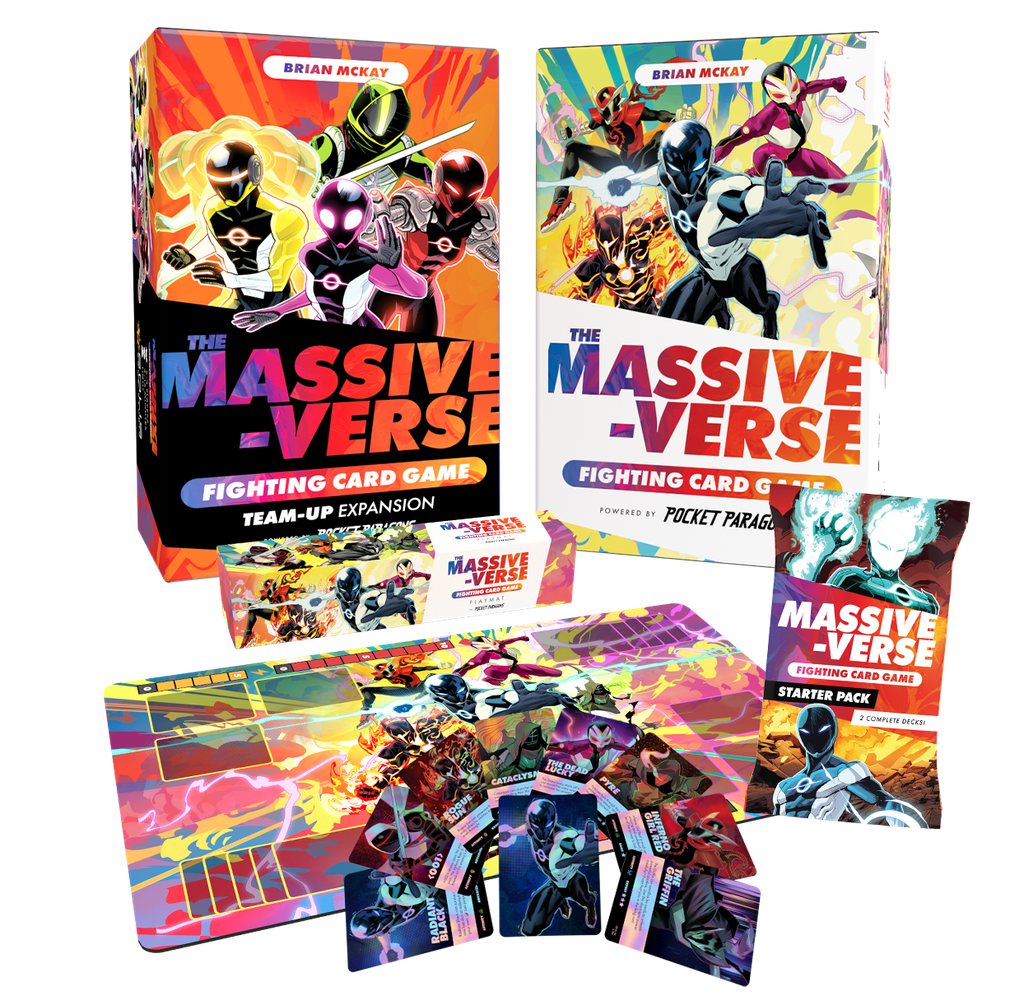
The Massive-Verse Fighting Card Game, designed by Brian McKay, from Solis Game Studio
Its contracting work has included projects such as the Cyberpunk TCG, with Solis having led game design and development of a prototype that secured licensing for a new game.
Solis also did development work on Emerson Matsuuchi-designed Metal Gear Solid: The Board Game, and last month announced it would be the developer for the official card game of battle royale video game PUBG.
The company said Southern Hobby will distribute new Solis release Six-Sided Seas, as well as Treat, Please! and The Massive-Verse Fighting Card Game, describing the deal as a “major step forward” for the business.
The publisher has previously used crowdfunding to bring several of its games to market, with its biggest success to date 2024’s licensed Massive-Verse Fighting Card Game, designed by Brian McKay, which raised just over $50,000 from about 800 backers.
Solis has also already been selling directly to retailers through its own wholesale programme.
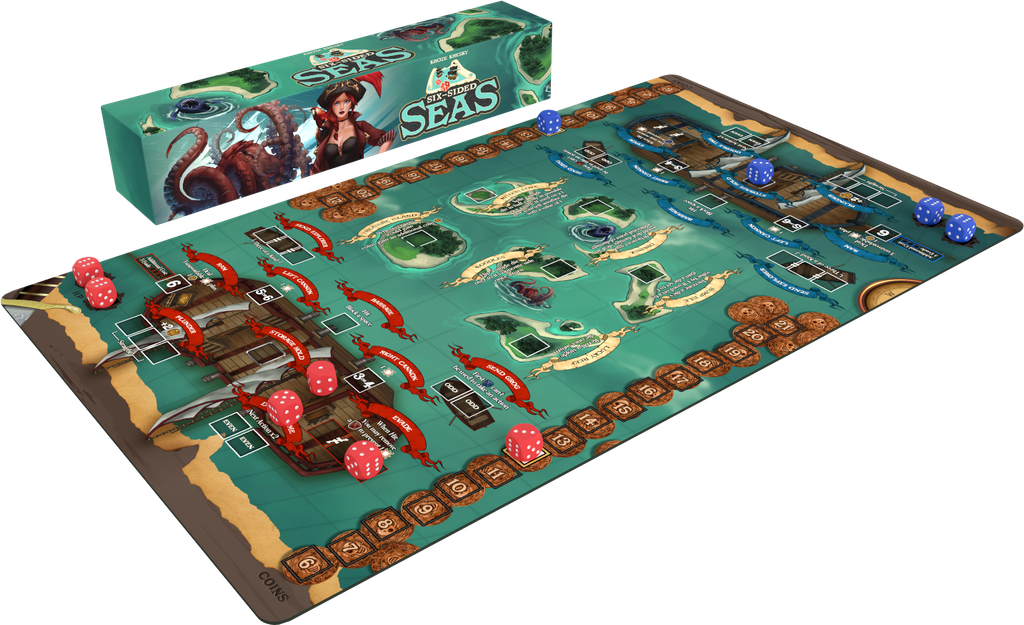
The publisher’s newest release, push-your-luck worker placement game Six-Sided Seas, will enter US distribution on October 2 with a $24.95 MSRP.
The two-player pirate game, designed by Kroze Kresky, is built around an unusual component format, consisting of 32 dice and a 14in by 24in edge-stitched playmat which is rolled inside the game’s box – allowing the title to be presented vertically, horizontally, or with a collapsible hangtab in retail.
Solis has previously said the idea grew from a visit to game stores in Thailand, where Chris Solis saw a store employee laminating a game board to protect it and began considering whether the board itself could instead be made from playmat material.
He said in the blog post, “When I returned home I issued an internal design challenge to my community. What does a game that is a playmat and single component look like?
“We explored a ton of really interesting designs and even did a limited release for one of them but none captured me like Six-Sided Seas by Kroze.”
Solis launched the game at Gen Con earlier this month, and said it sold all the copies it brought to the convention. Several of its scheduled learn-to-play sessions at Gen Con also sold out, according to the convention’s event listings.
In addition to founder and owner Chris Solis, the studio’s team includes developer Bryan McKay, business operations specialist John Brieger, graphic designer Katherine Boils, marketing manager Courtney Shernan, convention manager Sara Jordan and community manager Antonio Gil.
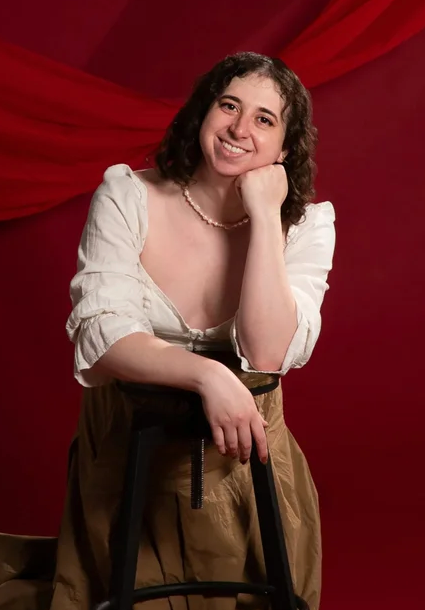
Unstable Unicorns publisher Unstable Games has launched a new studio led by rising tabletop designer Marceline Leiman, who will shape its creative direction and design every game it releases for at least the next few years.
Ordinary Magic plans to publish light strategy board and card games set within a single expanding world, with Leiman telling BoardGameWire the studio is looking to put out designs “offering whimsical, magical moments of the everyday” alongside high interaction.
The move comes nine years after Unstable Games owner TeeTurtle’s hugely successful Kickstarter campaign for light card game Unstable Unicorns, which raised more than $1.8m from over 33,000 backers – and went on to sell more than a million copies worldwide by 2023.
The success of that release led to t-shirt maker TeeTurtle creating its dedicated tabletop studio Unstable Games, which has sold millions across its debut title and follow-up releases such as Here to Slay, Happy Little Dinosaurs, Casting Shadows and Twisted Cryptids.
Her route into professional board game design began with the 2023 release of her solo mode for North Star Games titles Oceans, which led to a part-time developer position at Underdog Games, as well as client work for Office Dog, WizKids, Allplay, Button Shy Games and Maestro Media, according to her website.
But Ordinary Magic represents her first full-time job in the industry, with Leiman saying the roots of the venture going back to the period immediately following the downsizing of Underdog in April 2025, when the publisher laid off almost its entire staff as it attempted to weather the impact of US tariffs.
She told BoardGameWire that Underdog president Nick Bentley, who was also let go by the company at that time, quickly introduced her to Unstable Games, with the pair initially planning to build the new operation together.
Bentley ultimately went in another direction before that arrangement was finalised and is now director of game design at Taco Cat Games, which rebranded from Dolphin Hat Games in May to reflect the huge success of its standout title.
Leiman said, “We both were fully intending to start up a new studio within Unstable Games. The proposition was always that they were going to do sort of an incubator program, is the way that they proposed it to us.”
She added, “My role within the studio was always going to be the capacity of being a game designer. Only now with Nick no longer part of the project, it has allowed me to take more of a formal leadership role.”
Leading the line
The resulting structure puts Leiman’s work at the centre of the studio, rather than positioning Ordinary Magic as a conventional publisher or imprint sourcing games from a roster of designers.
She told BoardGameWire, “Every single game that comes out of Ordinary Magic is a design of mine. I am the designer of each of the games coming from the studio, and you should expect that at least for the next several years.
“That does not mean that you won’t ever see a game from anyone else besides me from Ordinary Magic. But think of me as the shepherd of the studio.
“I am leading the direction of the design behind Ordinary Magic and the types of games you should expect, and the feelings from the games that you should expect. But I am absolutely open to that changing; it’s not a hard rule.”
Leiman added that although she is not currently accepting game pitches, she is “always interested in learning what designers are working on, both those I am familiar with and unfamiliar with”.
She told BoardGameWire, “I love sharing ideas, and I think the spirit of design is still very much open in terms of the way I like to talk with other designers. I always want to consider whether or not in the future, an opportunity is available between Ordinary Magic and a designer looking to pitch their games.
“However, I cannot promise at this time that we are accepting any pitches that we might receive. If I were to look at any pitches, what I’ve described in the past is that Ordinary Magic is looking for games that are offering whimsical, magical moments of the everyday. Not high magic, not combative, though highly interactive.
“I think if someone wanted to pitch to me a game with a theme that was more focused on a curious bit of a real-life moment that inspired them, that would interest me more than somebody who’s coming to me with a pitch purely with a magical concept. I am much more interested in the grounded reality of this world rather than the high fantasy.”
Finding direction
Leiman said the studio’s creative direction would be to create interactive games which give “meaningful reason for other players to be at the table with you”, but added that would likely not extend to full “take-that”-style designs.
She said, “What you should expect from us is strategy-light strategy style games, sometimes card games, sometimes board games. I am also very interested in exploring the realms of cooperation as well as indirect player interaction, or both direct and indirect forms of player interaction.
“Something that you’ll find from me is that I am very interested in sort of passive aggression in games, where the decisions I am making might be to block you or to prevent you from getting something before me. A very old-school style of interaction, German old-school I think some people would think about.”
Leiman said the original plan had been to launch the games individually, but that Unstable ultimately proposed putting all three into the same campaign after their development schedules aligned – a situation which partly arose due to Leiman’s rapid work rate.
The Curious Little Bookshop || Gamefound image
She told BoardGameWire, “The method that I was taught game design was very much under the tutelage of my professors at NYU Game Center, and there we worked very much within a fast-paced work environment.
“Joining this studio very much is like returning back to that environment, which I am very comfortable being in. The way that I’ve worked within the studio is quite fast, is quite rapid, I guess, in relation to other people’s speeds.
“But for me, within a short amount of time, what I am looking to do is try out many ideas and fail with many ideas as quickly as possible, so I could find the core of what is fun, what is interesting, what is memorable about a game.
“It just so happened to align with our release schedule that I would have these three games. Our original plan was to release them one by one, but just with the way that scheduling worked out, we decided that it would be best to put our best foot forward with this new studio by showing the strength of our design, with the strength of our art, and production capabilities.”
Operationally, however, Ordinary Magic is currently far less separate from its parent studio than its distinct branding might suggest.
“The only difference between Ordinary Magic and Unstable Games in terms of operation is me,” Leiman told BoardGameWire.
She added, “Everything that you’ve come to expect from me – my work ethic, my taste, my voice – you should expect to be part of these games.
“Not to say that I don’t work with the Unstable Games team as well. We actually do cross-pollinate a lot in terms of our playtesting, in terms of our conversations, in terms of problem-solving.
“So it’s not like I’m totally in a silo or and neither are they from me. There’s definitely a lot of creative support going back and forth between the two studios. And as the studio continues to develop and grow in size, naturally Ordinary Magic will change with it.”
Speaking about the shared world envisaged by Ordinary Magic for all of its releases, Leiman told BoardGameWire, “You should not expect to see any games released from Ordinary Magic that are not part of this world.
“We’ve talked a lot about what that means in terms of building the IP, sort of what direction could it go in the future? Does it open us to different forms of media, different forms of games, or are they all going to be board games and card games?
“We’re leaving that station open right now. But we’re definitely open to exploring what it means to have this IP as we look forward to the future.
“As for recurring characters and locations, I would say keep your eyes open for the GameFound campaign, and I think you’ll be very excited to see some crossover moments between them.”
The designer of hit mass-market board game Hues and Cues has launched a new publishing initiative to tackle one of the tabletop industry’s growing challenges: promising games sitting unpublished because publisher release schedules are already full.
Scott Brady believes many outstanding games never reach players not because they lack quality, but because publishers must plan their release schedules years in advance – and with only so many publishing slots available each year, excellent games are often left waiting for an opportunity that may never come.
Brady told BoardGameWire his Proof-of-Play model will make ‘limited edition’ runs of between 1,500 and 3,000 copies for previously unpublished games, in the hope a quick burst of sales will persuade larger publishers to take a chance on them and accelerate a wider retail release.
Scott Brady’s breakout design Hues and Cues || Photo Credit: The Op Games
He said the editions sold through his company A Game Studio would be offered direct to consumers and specialty retailers through channels such as B2B wholesale marketplace Faire, allowing each title to generate real-world sales, player feedback, and retail validation before presentation to larger publishing partners.
Brady added that the full license for the games – which will mostly be mass-market-friendly family titles – would remain with A Game Studio, which will sub-license the titles to other publishers.
He said, “Our goal isn’t to compete with traditional publishers, but to support them. Publishers make difficult decisions years in advance, and that is simply the reality of today’s market.
“Proof-of-Play gives great games the opportunity to prove themselves through actual customer demand, giving publishers more confidence and less risk when considering a wider release.”
The initiative launches with two games from external designers – area control card game Lock & Chain, and number combination card game Perfect 10 – with Brady telling BoardGameWire they helped inspire the concept after struggling to find homes with publishers despite being “amazing products”. “The timing wasn’t right”, he added.
Although Brady said he had not discussed the concept with publishers before launching the initiative, he believes it reflects a process that already happens informally across the tabletop industry, in which publishers hunt for successful games with tiny distribution and then take it larger – citing Qork as one example of that approach.
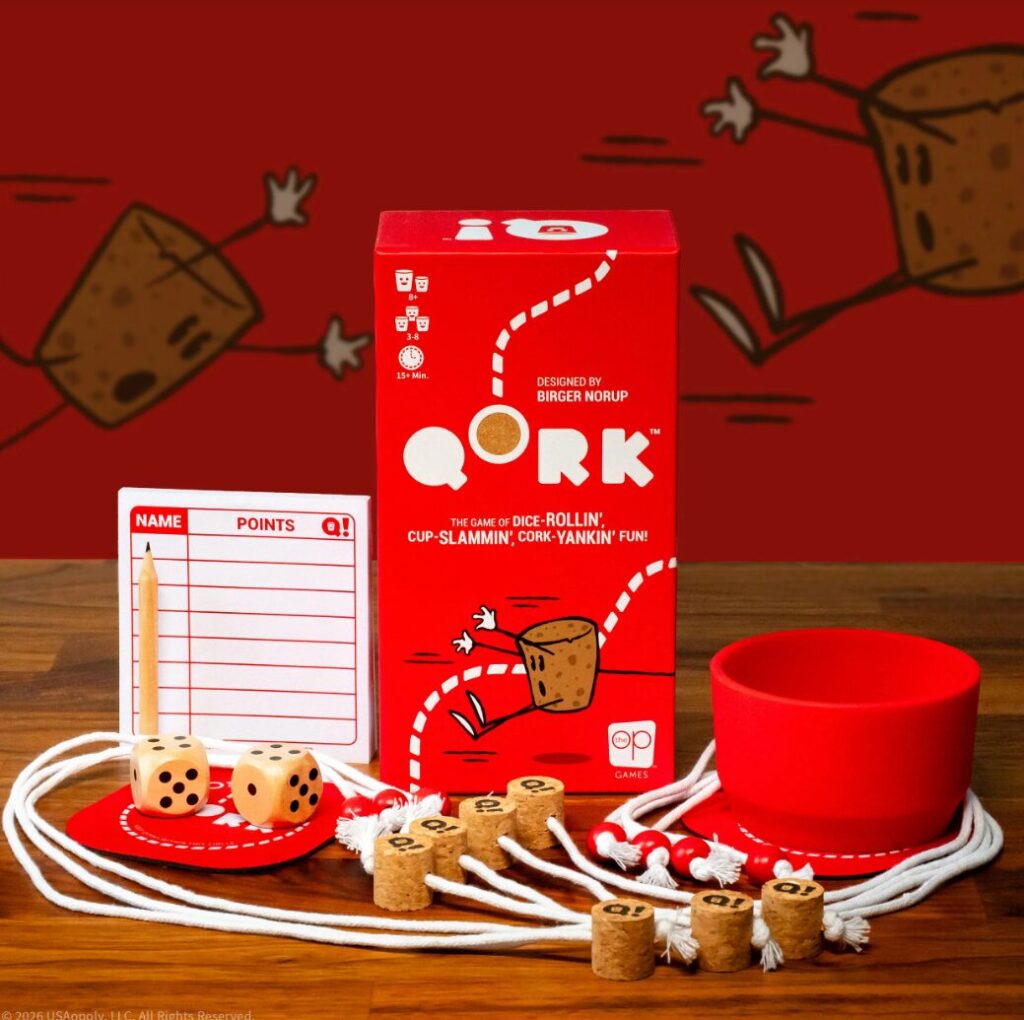
That game, which was initially self-published by designer Birger Norup as PlayProp back in 2015, was released as a Walmart exclusive by The Op in May this year – and has become something of a viral hit on social media sites such as Instragram and TikTok.
Birger Norup’s design Qork, published by The Op Games
Asked how he plans to help Proof-of-Play titles with the problem faced by publishers across the hobby – how to stand out among a vast number of releases – Brady told BoardGameWire, “I am personally staking my reputation on the games I choose to help.
“I do not need to invest in full marketing etc as the goal is to simply get the games out there and let their quality do the selling.
“By bypassing traditional distribution and relying on organic social media, my personal network and word-of-mouth, I hope this becomes a platform for many budding designers who would like to see their game on retail shelves.”
While some publishers make use of crowdfunding sites to validate demand before going into production, Brady said his model would be a better fit for the style of mass-market games he is targeting.
He said, “Crowdfunding is great for a $50-plus game looking to reach a hobby audience. This is for games with wider appeal. The games I choose will sell on their own merit and not because of crowdfunding hype.”
Brady launched his development studio A Game Studio at the start of 2024, following the 2020 release of the big-selling Hues and Cues and the success of his cat-themed abstract strategy Boop in 2022.
Brady’s own board game releases this year are set to include If Then, Wee Folk – which is co-designed by Stefano Di Maria and Rosa Linda Romano – Size Wise, Boop Shuffle and an expansion for Caution Signs, the fast-paced sketching game he co-designed with Danielle Reynolds.

 Anmelden