▪️ Panorama from Scorpion Masqué is already available now! This is a delightful tile-drafting game where you will create your landscape panorama. It uses a time track mechanic so the further you move ahead, the longer you have to wait before your next turn. For 2-4 players, this is a breezy 20-minute game.
From the newsletter:
Put your panorama together one tile at a time, making sure to line tiles up to create large areas of the same land type. At the end of the game, you’ll score points based on the number of animals and flowers in each type of terrain.
Games stay fresh and replayable through the common objectives that can be switched out for every game, such as the longest river or the sky with the fewest clouds.
This adorable game is sure to delight the entire family!
[imageid=9667654 medium rep]▪️ A recent hit at my table have been Sky 5 from Druid City Games. I am drawn to the bright, bold colors, and there is even a rainbow die included in the box. How cool! This is a push-your-luck card game for 2-6 players and plays in 15-30 minutes. This game will have a limited release at Gen Con 2026 and will be officially released later this year!
From BGG:
In Sky 5, players push their luck as they build a tableau of colorful sky cards, trying to assemble one of each of the five colors to complete a Sky 5. Each turn presents a simple but tense decision: draw a card to grow your tableau, or roll the die to try to bank the cards you already have.
Drawing cards helps you work toward the perfect five-color collection, but it comes with risk. If you reveal a color you already have, the card may end up helping your opponents instead. Rolling the die offers a chance to secure your points, but only if the result does not match any value in your tableau. If it does, you bust and lose the cards you were hoping to score.
Quick to learn and full of nail-biting decisions, Sky 5 is a lively push-your-luck game where timing is everything. Build the right collection, roll at the right moment, and bank your points before the sky turns against you.
▪️ Horrible Guild just announced The Amazing Journey for release this October with first looks at Gen Con 2026. This has a travel theme where you will move around the board and make connections and memories. This game plays 2-4 players in about 45-60 minutes.
From the newsletter:
In The Amazing Journey, you'll travel across the world optimizing routes based on which types of transportation are available on a given date in your location.
This brand new title combines easy rules with meaningful decisions, creating an experience that's accessible to new players while remaining engaging for seasoned explorers. Along the way, you'll collect memories, complete objectives, and build your own tale of discovery.
▪️ Winds of Numa Sera was announce from Good Games Publishing as releasing soon. This is a big game that plays 3-4 players and has a play time at 90-120 minutes. Seems epic!
From the newsletter:
Ethera is a continent without mercy. In this deeply asymmetric kingdom-building strategy game, you'll forge your line of succession, equip your heroes, master powerful skills, and clash with rival factions in a race to complete two of four paths to victory.
4 asymmetric factions — each plays entirely differently Build a line of succession across 3 unique heroes Deep progression: items, skills, classes & faction ability trees Multiple win conditions — no two games the same
As trading card games continue to drive growth across the tabletop industry, hobby retailers are increasingly looking beyond games themselves to the accessories that support organised play and competitive communities. In this sponsored article, TCG and board game accessories maker Sanseking explains how changing player behaviour is influencing retailers’ approach to inventory, merchandising and long-term store strategy, and why competitive accessories are becoming a more important part of the European hobby market.
A growing crossover between board gaming and trading card games is beginning to reshape hobby retail strategy across Europe according to TCG, board game, and collectible accessories maker Sanseking, with competitive accessories emerging as an increasingly important category for stores.
What was once a relatively clear divide between casual board game retail and competitive TCG communities has evolved into a far more interconnected ecosystem, the company says, where stores are expected to serve multiple types of players simultaneously.
Sanseking production manager Ding Guang
That shift is particularly visible in the accessories market according to Sanseking production manager Ding Guang, who says retailers are increasingly treating competitive sleeves and protective products as core components of long-term business planning rather than simple add-on purchases.
“Accessories used to be viewed mainly as supplementary sales,” Guang told BoardGameWire. “But competitive communities create repeat purchasing behaviour that changes how retailers think about stability, inventory, and customer retention.”
Hobby retailers now commonly operate within a mixed environment that includes casual board gamers, organised play communities built around titles such as Magic: The Gathering, Pokémon and Yu-Gi-Oh!, and players who actively move between both spaces.
That convergence has become especially visible at events such as Spiel Essen, where accessory brands increasingly exhibit alongside publishers and competitive card players mix naturally with broader tabletop audiences.
But for retailers, the two customer groups behave very differently.
Board games typically generate one-off purchases tied to seasonal launches or major releases, while competitive TCGs create recurring engagement cycles through tournaments, deck rebuilding, league play and shifting formats – and those cycles also generate consistent accessory demand.
Competitive players replace sleeves far more frequently than casual players, Sanseking points out, adding that frequent shuffling, tournament preparation, the need for consistency and sensitivity to tactile feedback all contribute to repeat purchases.
That rise in accessory demand has also been driven by the stellar growth of TCGs more generally, with long-time heavyweights such as Pokemon, Magic: The Gathering and Yu-Gi-Oh! joined more recently by a flurry of other successful entrants to the market, including One Piece, Disney Lorcana and Star Wars Unlimited.
That demand pushed the overall value of the global TCG market to $7.8bn last year according to veteran research firm BCC, which projects the segment will reach $11.8bn by 2030 with a CAGR of 7.9%.
In many European hobby stores, tournament nights now represent some of the most reliable recurring foot traffic. Players attending weekly organised play events increasingly view accessories not as optional extras, but as part of their competitive equipment.
According to Guang, that recurring demand can help retailers smooth revenue fluctuations during slower periods in the board game release calendar. But at the same time, competitive players also tend to be far more selective.
“They pay attention to things casual players may never think about,” Guang said. “Edge structure, shuffle consistency, durability over repeated use, and manufacturing consistency between batches all matter.”
The Growing Importance of Segmentation
That growing attention to performance characteristics is also pushing retailers to rethink how accessories are presented in-store, according to Sanseking.
Historically, sleeves were often treated as largely interchangeable products differentiated mainly by colour or price point.
But as organised play communities mature, stores are increasingly recognising that accessories serve multiple functional segments, ranging from casual ‘kitchen table’ play, to hobby-level regular play and competitive or sanctioned environments.
Retailers that fail to distinguish between those categories can create unnecessary friction, Sanseking says.
The company points out that a product optimized for softness and casual handling may not satisfy a competitive player seeking predictable shuffle feedback. Conversely, a structure-focused sleeve may feel unnecessarily rigid or specialized for a board gamer.
As a result, some retailers are beginning to adopt more structured merchandising approaches, using clearer pricing tiers, competitive-focused shelving, and staff recommendations tailored to different player types.
“The stores performing well are usually the ones creating clarity,” Guang said. “Not necessarily carrying the most SKUs, but helping customers understand which products fit which type of play.”
Risk, Inventory, and Shelf Strategy
From a commercial perspective, competitive accessories also offer several advantages compared to boxed games, including lower unit cost, a smaller shelf footprint, faster turnover when tied to active communities and strong repeat purchase potential.
Retailers can still perceive the category as niche, however – particularly when shelf space is limited. According to Sanseking, the most effective approach is usually a balanced one – not one that offers endless fragmentation, but a core range which covers general use, alongside clearly identified competitive-focused options for players who care about performance.
The importance of organised play also continues to shape purchasing behaviour, with competitive events a significant driver of repeat store visits, even amid wider economic pressure on hobby spending.
Within those communities, accessory choices increasingly function as part of player identity.
“Players often become loyal to specific performance characteristics rather than just aesthetics,” Guang said. “That creates opportunities for retailers to position themselves as serious competitive venues.”
Some stores are already leaning into that approach by highlighting ‘competitive-ready’ accessory sections, aligning certain products with tournament nights, and using more technical product descriptions instead of purely visual merchandising.
The growing overlap between board game audiences and competitive TCG players is also accelerating the trend, according to Sanseking’s experience of the market.
The firm said that many customers who first enter hobby stores through board games gradually become exposed to organised play environments, while competitive card players often purchase board games for more social settings.
Accessories sit directly at the centre of that crossover, with protective products one of the few categories that naturally serve both audiences while still supporting different performance tiers, it added.
For retailers, that makes accessory strategy not just an operational decision, but a bridge between communities, Sanseking says.
As Europe’s tabletop market continues to evolve, Guang believes accessories will become more strategically significant across the retail landscape.
“Players are becoming more informed about performance trade-offs, and retailers are having to serve more diverse communities across the same limited shelf space,” he said. “Clear segmentation and clear communication are becoming much more valuable.”
For brands, that means designing products with defined use cases rather than relying on broad universal claims. And for retailers, Guang argues, success may depend less on scale than structure.
“In a market where casual and competitive audiences increasingly overlap, clarity is often more important than simply offering more products.”
When Restoration Games launched the Unmatched series in 2019, the system was praised for its diverse character roster, a claim that’s stuck with it ever since. At the time of writing, there are now 75 hero decks, based on fictional characters and real people from around the world, with a Hellboy set due imminently. With an average of just over 15 new heroes released a year, we’ll hit 100 heroes before the end of 2028. The future as tabletop’s most accessible and diverse miniature fighting game looks safe, right?
Back in 2020 Kathleen Hartin wrote an article titled ‘Representation in Board Games Matters’. In the article, Kathleen highlighted a lack of representation of women in board gaming, with compelling evidence including poor representation in game covers, rulebooks, designers and reviewers.
It’s nice to think the tabletop world has moved on; whilst not perfect, things are certainly better than they were. At the time of Kathleen’s article, Unmatched felt like a sign of things to come. The then-released sets (Battle of Legends Volume One, Bruce Lee, Robin Hood vs. Bigfoot and Ingen vs. Raptors) drew on Greek, Arabian, British, Asian and North American sources and included 3 female and 5 male hero decks (plus cryptid Bigfoot, whose gender…
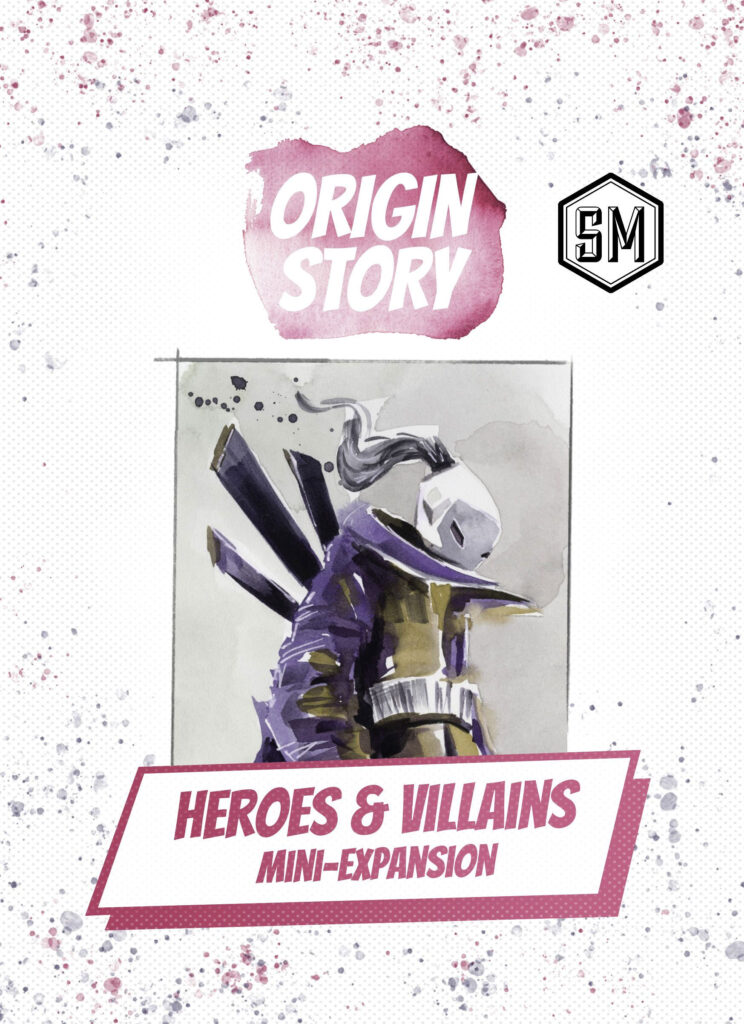
Origin Story is one of the most unique, enjoyable trick-takers I’ve ever played. However, in the base game, there were only 10 Superhero cards, making the end of the game feel predictable and quite dry. But with Origin Story: Heroes & Villains, 7 more Superhero cards and 14 brand-new Supervillain cards are added. So does […]
Recently, I saw a post on X from one of my favorite designers Mark Herman. If you have to ask who then maybe this post is not for you. But he is one of the best and most prolific designers out there with nearly 100 designs to his credit. Hands down one of the best…and an amazing guy too. In fact, some of his designs are among my favorite wargames including titles like Empire of the Sun, Churchill, Pericles, Fire in the Lake, Washington’s War, Fort Sumter, Rebel Fury and more. Mark knows wargames and he knows how to tell the story of the historical event. Just a master really. The post was Mark highlighting a written review found on Board Game Geek about his newest game in the Civil War Heritage Series called Volume II Army of the Potomac: Campaigns of 1862 & 1864.
I read the review he mentioned and it is very comprehensive and well done. But this post somewhat triggered me. Why I am not sure but it did. I am not mad about it. Not hurt. Not overly concerned. And when I say triggered a more appropriate word would be caused my thinking juices to be stirred up. But I wanted to share my thoughts and opinion on what a wargame review is but also what it is not because I believe that a lot of gamers have a very different opinion about these things than I do.
When Alexander and I get together to play a game with the intent of doing some sort of review and sharing our thoughts on the design it does take a bit of preparation and time. We have to read the rules, and believe me, this can take hours, to truly get a feel for the game, its processes and the flow. But also to get an understanding of what the designers thesis is about the conflict modeled. I think that designers create games that they agree with and believe in. Not necessarily that are 100% a true modeling of the event. Their bias is inserted into the design and there really is no way around that. And I am fine with it because I know that each story of history has 2 (or more) viewpoints and perspectives. We also have to prepare the counters, which includes clipping them, sorting them and then storing them in counter trays or baggies. We then have to set up the game, and with wargames, this can take an hour or more to make sure you have the correct units, place them in the proper hexes and then check to see if there are any errata with the setup that we will need to change. Sometimes setting up the game wears me out…but then we have to give it a play.
Also keep in mind that the majority of games that we play are big wargames. These games have multiple maps, hundreds if not thousands of counters and a ton of different scenario options to choose from. Typically, a campaign game might take dozens of hours with shorter scenarios taking 6-10 hours. These are not light games that can be played in 45-60 minutes. And because of that, the reality of playing a game multiple times just isn’t feasible. We have never posited ourselves as full and thorough multiple playthrough guys. We just don’t have the time to sink that much time and effort into 1 game. Keep in mind that we only get to play 30-40 new wargames annually, which is a lot but not necessarily a lot for someone that attempts to give a good review of a game. But we always play a game until we are comfortable with the rules, understand the flow and get into a majority of the aspects of the game so we can confidently and accurately discuss them.
So, first let’s take a look at what I think that a review is not necessarily.
What They Are Not!…
Full Exploration
First off, I don’t see a review, or at least our brand of reviews, as a total and full exploration of a game or the system. As I stated above, we play a game until we are comfortable with the rules, the mechanics, the thesis of the game and the general flow. This can mean that we play through an entire scenario or even sometimes the campaign but that is not necessarily the case. In fact, more often than not, that isn’t the case. We also play these wargames to see if we like the system. Liking the system is a very different thing from totally dissecting and examining the system for its flaws, strengths and proving or challenging its thesis. Our focus in reviews is generally pretty simple…sharing the feeling of the game, its accessibility, meaning the clarity of the rules, and then a focus on how the game plays. We don’t always cover every aspect or mechanic but try to give an overall feel for what the game is. This approach stems from our stated goal with the blog and YouTube Channel, which is to give an overall impression of the game and create an environment that makes the viewer or reader feel that they are at the table with us just discussing the game after playing.
This is a big one that we are asked about a ton with our reviews. Is the game balanced? Does each side have a real chance of winning the game? And other similar questions. The answer to this is that these games, referring to wargames, are generally a look at the history and how it played out. This means that if one side had more and better troops, they are generally going to win the game as they did historically. But a good and skilled designer, will look beyond the numbers and attempt to create some realistic and achievable victory conditions for both sides. Something that if happens, could change the course of future battles and the overall outcome of the war. There is nothing more that I dislike as much as sitting for 4 hours and getting my teeth knocked in because I really have no chance at meeting some objective to say that I won a game.
Skilled designers will attempt to create balanced wargame victory conditions by avoiding certain things, such as simple point-based kill mechanics or even reaching a particular geographically significant spot on a board. Instead, they use scenario-specific objectives and asymmetric victory conditions to ensure that each side has its own unique path to success. These rules force players to focus on historical strategy rather than just duking it out and seeing who can kill more units. But, when we play these wargames, we generally are not necessarily able to devote the time to gain a true understanding of and to uncover whether the victory conditions are balanced. We typically go off a gut feeling and observation of time and distance covered in a historical push to see if the game is reasonable to win by either side. I love Holland ’44 from GMT Games. It is one of my favorite wargames of all time and is a titanic struggle between the Allies trying to run up Hell’s Highway to reach and capture 3 bridges along the way and the German defenders who are trying to do just enough to stop their advance and hold at least 1 of the 3 bridges. I have played this game a few times and found that I have a real tough time as the Allies making the appropriate level of progress over historical results to even get to the final bridge located at Arnhem. But that doesn’t mean that the game is broken or that it is imbalanced, it means that the history is well represented here as historically the Allies failed to reach the “Bridge too Far” and had to turn back.
Expositions on Historicity
Finally, I don’t feel that reviews are about expositions of historicity. I am not a true historian. I know enough to understand the basic events of major wars such as World War I, World War II, etc. but not necessarily the full details of the battles, the maneuvers used and the outcomes. One thing that I know we are asked a lot is about the Orders of Battle (OOB’s) for these wargames. An OOB is simply the makeup of each sides troops, including their historical units, numbers of troops, type of troops and their quality generally represented with movement values, combat factors and defense factors as well as morale values. And my answer typically is that I don’t know. I ask these designers these type of questions in our Designer Interview Series but am not able to verify or check their math because I don’t have the experience or knowledge to do so. And with just a single play will be unable to comment on this aspect of the design. Remember, that wargames somewhat function as interactive experiments intended to bring history to life for key battles. History is interpretive and sometimes facts about the makeup of troops, the terrain involved or even the weather at the time of the battle is sketchy and tough to piece together. But most of these games are attempts at telling the story as accurately as possible. But, keep in mind, that a good historical simulation wargame, will attempt to challenge players with the real limits, rules, and stresses that those commanders faced. Wargames test historical ideas by turning narratives into active problems and allowing users to explore “what if” scenarios. But I cannot necessarily always comment on the plausibility of a design because I usually lack the expertise or intimate knowledge to do so.
Sometimes I know that ours will be the only review on a game. And that worries me.
I do not think that reviews are what other people believe they are. I see them as insight into a game and how it plays, what can be expected and how it feels to experience the game. Not a full and insight filled thesis paper on the historical plausibility and outcome. But I do believe that our brand of reviews is useful…at least in my humble opinion. But it sometimes does worry me that our review may be the only content out there on a particular game and I have a real fear of misrepresenting something and causing others to turn away from that game. That definitely worries me and I do make sure that I understand what it is that I am going to say about a game before I say it. But keep in mind that our reviews are our opinions and you may have a totally different take on the game. And that is fine as well because in the end your opinion is the one that matters and that will be used to make a purchase decision. Your wallet is yours to protect and I respect that.
What They Are!…
Sharings on Perspective
In the end, any review is an opinion and is something that the creator has taken the time to write down (or video) to share with others. It is about attempting to describe the experience of the game and how it plays. This does mean that each reviewer may see things differently. May focus on different aspects that spoke to them. May decide not to share each and every aspect of the game. But will focus on the experience! And then share that with us. I for one love that there are people out there that are willing and able to do these reviews. It is work and takes time. But in the end, the real treat for us as consumers of these reviews is that we get a bit of insight into the game and an understanding of what it is. This perspective is the most valuable element of a review and is worth its weight in gold. A lot of times, people consume reviews because they have already played a game, made their mind up about that game and what it is and are simply looking for someone to corroborate their feeling. They don’t really care what the person has to think and whether their stance is well reasoned and supported by evidence form the game itself. They are simply reading or watching to validate their own opinion. They want to hear their thoughts come out of someone else’s mouth.
Recently, during one of our Monthly Debrief videos, we discussed games that we disagree on. There are not many games that Alexander and I disagree on…but there are some. As a part of that discussion, we dove into our conflicting thoughts about the venerable tactical level wargame series Advanced Squad Leader. We disagree on this game. I like parts of it, and the overall experience, but Alexander does not. And that is fine. But one of our viewers told us to “put the game back on the shelf” and that listening to us was “cringe”. Well, I do agree that we are cringe but this comment proves my point. We didn’t agree with him and so we are not correct. And that is fine.
Windows into Mechanics
I think that one of the most important parts of any review though is a window into the mechanics. Does this mean a full and detailed description of each and every mechanic, how they work, why they were chosen by the designer and how they reflect history? No…absolutely not. But understanding the base mechanics of a game is critical to understanding whether the game is for you or not. If you happen to really like block wargames and are watching a review on a block wargame such as An Impossible War from Bellica 3rd Generation you would like to know how the block wargame mechanic works. If you like Chit-Pull Activation and you are consuming a review about a Chit-Pull Activation game such as with Blind Swords: Gettysburg: The First Day from Revolution Games, you want there to be some discussion about how the Chit-Pull works. A review should have at least a mention about the mechanics and what is good about their implementation.
Gauges on Complexity
Wargames are generally complex affairs. They have a lot of rules, exceptions to those rules, rules variants or optional rules and sometimes have ambiguity in their explanation of these rules. This last part is really a problem with a lot of games, wargames and other types, but a designer sometimes gets “nose blind” to their own game and takes into account a lot of assumptions about how their description and instructions for the game will be received. I like to make sure that those consuming our reviews understand how complex or difficult to learn the game rules are. I also like to focus on player aids and how they affect the learning process and play so that those who may purchase the game and attempt to give it a play can get an idea of what their learning commitment will be with the rules. And remember, complexity and rules depth doesn’t equate to a good game. If you ultimately cannot get the game played because of the learning curve or the poorly written rules, then a review will do you no good.
A Look at the Fun Factor
In the end, while I play games for many reasons, I am mainly playing a game because I want to enjoy myself. I want to have a good time with the game and its efforts to tell the story of the event and enjoy my time with my opponent. I want to be able to focus on the game and get into the strategy and not have to worry about the rules, the mechanics or the production. And a good review will provide an insight into this aspect of the game. It doesn’t take multiple plays to understand whether a game is right for you or whether it matches your tastes. You can typically see that in just a single play and that is the way we approach things. We have played a lot of games and know when a game is not for us. But, that is not always the case for others and their experience with wargames. And that is fine. But that is a key part of what a review should be.
There you have it…my thought’s on what a review is and what it is not. I know that many will not agree with these points and that is fine. These are my opinions and I have developed them over the past 40+ years of playing games and 10+ years of covering games as The Players’ Aid. What are your thoughts on what a review is? How do you think they best serve the wargaming community? What would you change about our reviews? I look forward to hearing your thoughts and opinions on this matter. Thank you.
Tabletop gaming trade organisation GAMA has opened nominations for its 2027 Power Retail Awards, inviting gamers and industry professionals from around the world to spotlight stores and cafés they believe represent the industry’s best.
The annual awards, which have now been running for 17 years, aim to act as a showcase and celebration of business practices, community-building and operational innovations that other hobby retailers can learn from.
More than 750 retailers were submitted for inclusion in last year’s awards, with nominations coming from Friendly Local Game Store (FLGS) customers before being voted on by a GAMA committee of retailers and emeritus ‘team retail’ members.
The awards cover four categories: Retailer of the Year, Innovation in Games (Retail), Outstanding Contribution to Games Industry (Retail) and Outstanding Store Design, with winners of each receiving a one year GAMA membership, recognition in its online database and in the Spring issue of its Around the Table magazine.
That prize was reduced by GAMA last year, with retailer of the year having also previously receiving $1,000 and the other category winners $500 each.
Any tabletop retail business can be nominated regardless of country or GAMA membership status, although US-based businesses have heavily dominated the awards since they were launched in 2010, picking up 50 out of the 63 wins to date.
That total does not include the 2021 Retailer of the Year award, which was presented to every GAMA retailer member at the time to recognise and celebrate them having survived the impact of the Covid-19 pandemic.
Arizona-based Silver Dragon Games scooped Retailer of the Year in the 2026 awards, adding to the Innovation In Games (Retail) and Outstanding Store Design titles it won at the same awards in 2024.
They were joined this year by Illinois-based Fantasy Books and Games, which won the Innovation in Games (Retail) award, Minnesota’s The Gamers Den, which sealed Outstanding Contribution to the Games Industry (Retail), and Wisconsin-based Oddwillow’s Game Haven, which won Outstanding Store Design.
Team Members from Oddwillow’s Game Haven, the winner of this years’ Outstanding Store Design Power Retail Award || Photo Credit: GAMA
UK retailer Eclectic Games remains the only non-US winner in the past two award cycles, having scooped Outstanding Contribution to the Games Industry in 2025, while Mexico City-based La Piramide is the only store from outside of the US, Canada or the UK to win an award, which it claimed during the inaugural contest in 2010.
Nominations are open to stores that have been operating for at least one full year, while previous winners cannot win the same category twice.
Anyone interested in nominating an outstanding hobby retailer can do so here.
Sanctuary Designer: Matthias Wigge Publisher: Capstone / Feuerland Players: 1-5 Age: 12+ Time: 40-100 mins Played twice with pre-production copy provided by publisher Played six times more with a real copy (provided by publisher) In Sanctuary, you will … Continue reading →

 Anmelden
/pic9357693.jpg)