Normale Ansicht

Designer's Diary: Wireless

19. September 2026 um 16:00

by Marco Canetta

A long time ago in a galaxy on a beach far, far away....

Actually, the beach was in Tuscany, not that far from our home, at least. It was 2010 - long enough ago that many details have faded from memory.

Stefania(Niccolini) and I had recently published African Park; we were working on The Doge Ship and Rhein River Trade; and, above all, we were brimming with enthusiasm, which had spread to the whole family. It all started when our son, during that year’s summer vacation, said to me, “Papino (more or less “Daddy” in English), why don’t you make a game about your job?”

At the time, I was working as a consultant for major mobile phone operators: base radio stations, antennas transmission patterns and gains, dBi and dBd, and electromagnetic fields were my daily bread. The idea of creating a network, with constraints on power, antenna orientation, and interference with other networks, was quite appealing. That day, instead of building sandcastles, Stefania, our son, and I started drawing hexagons on the beach (hexagons were used at that time for representing mobile phone network over maps – perfectly fitting also for a game).

It didn't take long to come up with some initial drafts: a map on which to create the network and various radiation patterns. The patterns consisted of 1, 2, or 3 cubes placed on hexagons, representing the signal intensity, which, when moving away from the antenna, naturally decreased.

The first draft was purely economic: I spend money to build the network, and I earn money based on the locations reached by my signal. An interesting optimization, but not an easy one.

Between 2010 and 2012, while we were completing our other ongoing projects, we continued to develop these ideas. To create a variety of strategies, cards like these have been introduced.

And the map looked like this.

Some “workers” were moving around on the map, identifying the locations (i.e., the hexagons) where the base radio station would be installed and from which it would then spread the signal.

It's Not Time To Make a Change…

Putting aside a prototype for a while might help you see it in a new light and spot its flaws and its potential areas for improvement. The long break due to the development of ZhanGuo allowed us to return to the game later with fresh ideas.

To offer more variety, the map became modular, with modules like this one.

(Personal note: the modularity is always great. However, cutting hexagons is somehow annoying).

In addition to the cards, which still were driving the actions in the game, patents had also been introduced, providing permanent improvements to actions.


In short, all the elements were in place, but another long break was looming on the horizon…

Video Railroad Killed the Radio Star (?)

Working on Railroad Revolution - a game that had something to do with building a network - brought the project to a halt once again. The subsequent expansion of Railroad Revolution, Railroad Evolution and other projects that had taken shape in the meantime left the Wireless prototype gathering dust on a shelf.

There was a bit of a scare with the release of Smartphone Inc., a great game that - fortunately - had a different game flow and, in some ways, a different theme. All in all, that game was not “interfering” with our project. The real interfering factor was the time. We were aware that the rapid evolution of the board gaming world would render the prototype outdated and that, if ever revived after years, the project would require complete rework.

A New Hope

Winter 2023. A quiet period. COVID has been left behind, the development of Zhanguo: The First Empire was at the end, the prototype of Kingdom Crossing was already satisfying: a good time for new ideas. Personally, I’ve always been fascinated by the colorful cards of Ticket to Ride, and I was wondering what a game might be like that used colorful cards for more complex actions (sorry, we often tend toward complexity…).

Ok, but what should I do in this game? Certainly not a railroad network, I thought.

Why not revisit some concepts from Wireless, in a totally new form and with a totally new gameplay? And in a short time, here come some dual-purpose cards…


...and a fairly detailed playerboard with a summary of the available actions.


The basic idea was: if I play several cards, I have access to stronger actions.

(Fun fact: The playerboard in the example belongs to the yellow player and features an image of Nikola Tesla. By pure coincidence, since this version of the game never left our house, the final version designed by Harald Lieske also features the same combination Tesla + yellow).

The “network” would be created by placing tokens on a modular map like this one. The number on the hexagon represented the difficulties in installing a base station there.


Rather than introducing different types of resources (both abstract and concrete, such as knowledge and experience, physicals antennas, supports and infrastructures for antennas, electrical and electronic equipment, energy, technicians, and collaborators…), we decided to condense everything into simple cards, which could eventually be combined with money.

As far as I recall, we played only a very few turns of that prototype. The generic map wasn’t helpful (too generic) and didn’t provide any direction.
We soon put together a map focused primarily on the locations (i.e. Europe and U.S.) where Marconi, Tesla, and other scientists began their research and experiments.


(I admit, we created the map by borrowing map fragments from a game I like a lot).


And the cards evolved accordingly…


I Still Haven’t Found What I’m Looking For

However, there was something about the card mechanics that didn’t quite convince us. Or, at the very least, that didn’t quite satisfy us.

The idea came to us while playing around with some $ tiles from Railroad Revolution.


What would happen if the coloured cards became simple coloured tiles, maybe in the same size of the banknote above, and if having more or fewer of them affected the cost of the action? And what if I compensated for the missing tiles with $? And, to prevent the game engine from “exploding,” how would it feel if every action taken weakened the next one? And finally, what would the game be like if I could use money as a wild card or as a filler to make up for any shortcomings?

The answers ended up on an oversized game board like this one.


Finally, the game was heading in the direction we wanted. In short, in addition to the action tiles (which temporarily had flags on the back)…


… other tiles were added that simply “filled” the spaces - the Tycoons.


The development of the playerboard and the map was quite complex and went through numerous versions, released between 2023 and 2024, again with (albeit useful) breaks related to the completion of Kingdom Crossing.

The signal tokens had also found their place and their role on the playerboard.


Finally, the Personal targets had arrived as well - especially useful in the early games (when in doubt, I’ll just grab the flags…).


All the pieces were now in place…

SPIEL Essen 2024

A game with this complexity and these dimensions certainly isn’t right for every publisher. And time at the trade show is limited. So, we had to choose our meetings carefully. By chance, Bier Pioniere caught our attention and therefore we wrote to Spielefaible. We had a cordial meeting, during which we found many points on which we were in complete agreement. And a few months later, our journey together began.

And with Spielefaible came the final major revolution: turning hexagons into rectangles meant redesigning almost the entire game. Transmission patterns, patents, objectives… A lot of game parts were affected by this change. But this change was a bold finishing touch.
We went from this:


… to this:


SPIEL Essen 2026

SPIEL Essen 2026 will be the final destination of this long journey I tried to resume here. And, even if I often used the term “I” throughout this diary, this has been a journey we took together, not only with Stefania, but also with our daughter and our son, who are not only our main playtesters but also precious help. For example, in contrast with our prototypes, rather essential, we had a nice cover image made by our daughter.


Now, all we have to do is wait a little longer to finally see the game on a (XL) table. Our son and our daughter, who are grown up now, will obviously be in Essen too.

“Papino, why don't you make a game about your job?”
Done!

Your Friend Doesn’t Need to Become a Gamer Tonight

There is a dangerous moment in every board gamer's life when a non-gaming friend says, “Sure, I'll try one.” Remain calm. Do not make any sudden movements. And, most importantly, do not immediately disappear into the basement and return carrying a box large enough to contain a microwave.

We have been waiting for this moment. That's the problem. When you love tabletop games, introducing someone to the hobby can feel like being handed five minutes to explain your favorite band, restaurant, television series, vacation destination, and minor religion simultaneously. You want them to understand why this thing matters. You want them to experience the clever mechanisms, impossible decisions, ridiculous betrayals, dramatic reversals, and that beautiful moment three hours into a game when everyone suddenly realizes Dave has been quietly collecting sheep for reasons nobody fully understands. So we get excited. And excitement makes us terrible ambassadors. Or, at least, obviously biased ambassadors to the point of destroying our credibility.

We start explaining. “This one's actually pretty simple.” This sentence is usually followed by eighteen minutes of rules. “You have workers, except they're technically druids, and you're placing them on action spaces to collect resources so you can fulfill contracts, although they're called prophecies, and the purple resource isn't actually a…

The post Your Friend Doesn’t Need to Become a Gamer Tonight appeared first on Meeple Mountain.

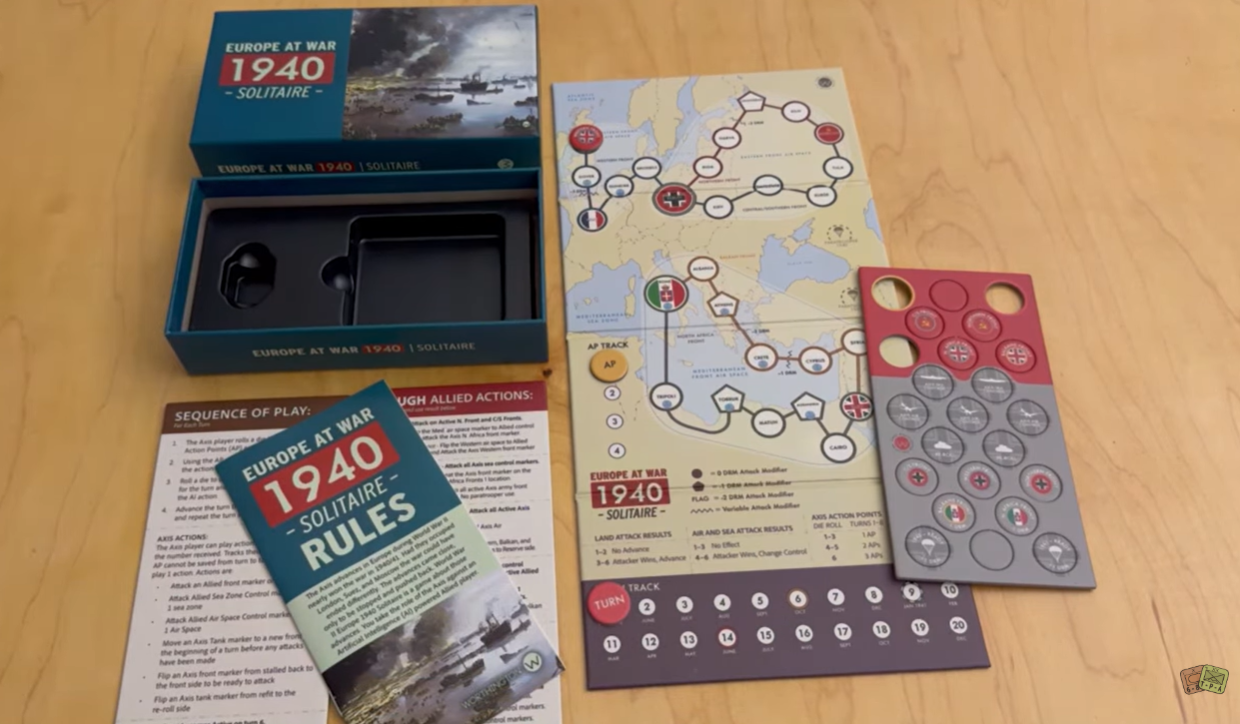
Unboxing Video: Europe at War 1940 Solitaire from Worthington Publishing

Von: Grant
19. September 2026 um 14:00

Europe at War 1940: Solitaire, the sister wargame to Pacific War 1942, places the player in the role of the Axis high command during the first 18 months of World War II and focuses on the European Theater of World War II.

The game introduces some new concepts important to the war in Europe. Each side has a limited number of tank units to add strength to some front armies. The axis has a paratrooper unit that can help with hazardous operations. Choosing when and where to place them can be a major decision. Also control of air spaces on fronts becomes an important factor. And, ports on sea zones are affected by sea zone control. Crossing bodies of waters on a front is a major effort.

As the axis do you try to take London before turning east against the Russians? Should you help out the Italians in the Balkans? Or do you turn your tanks loose in the deserts of North Africa?

-Grant

Go Big (Saturday Review)

19. September 2026 um 12:43

Three 7s have just landed on the table, worth a potential 21 points - if they survive, that is. Their owner already looks like the victory is in the bag. Yet, they're a bit too sure of themselves. Of course, somebody plays three 6s and wipes their 7s off the table and their smile off their face. Yet, the 6s are also short-lived and replaced by a triple 5. So it continues until someone lands a safe triple 1. Suddenly, everyone's supposedly enormous scores have vanished. Yet, three 1s are only 3 points. That wasn't enough. It was time to Go Big by Antony Proietti from Sinister Fish Games with art by Archie Edwards.

The post Go Big (Saturday Review) appeared first on Tabletop Games Blog.

Azure

  This is a game I have been keen to write about since I played it. In recent months, my to-do list of blog posts to write has been hovering around 15 to 20 items long. I generally write in a first-in-first-out manner, but sometimes some blog posts cut queue, for example when I write about exhibitions I attend. I have heard a little about Azure, and I thought it was just

Star Wars Deck Building Game Rebels & Empire Reinforcements Expansion

18. September 2026 um 15:39

This expansion is a great addition to the Game. This expansion adds so much to the play including a campaign mode, mission cards, reinforcements as well as adding new base cards to expand your gaming experience even more.

First up is the new mission system.  Unlike with the original game where there was a shared Galaxy Row, now there missions to complete that allow you to claim the relevant reinfroceent card and add it directly to the top of your deck.  This means you can plan around unlocking units rather than hoping for a lucky galaxy row flip.

The new Campaign Mode means that rather than just playing one game  you play five games back to back to work out the winner.  Each of the 5 parts repesent a major phase of the galactic conflict. You complete missions in each game.  Then between games you can use points from the previous mission to buy as many of the new starter cards as you can afford to replace the old ones with so that you always have 10 starter cards in play.


This adds so much to the Game and I hope that you enjoy it as much as I did.  You can order it at: https://www.bgextras.co.uk/products/star-wars-the-deck-building-game-rebel-and-empire-reinforcements-expansion

The post Star Wars Deck Building Game Rebels & Empire Reinforcements Expansion first appeared on Board Game Extras.

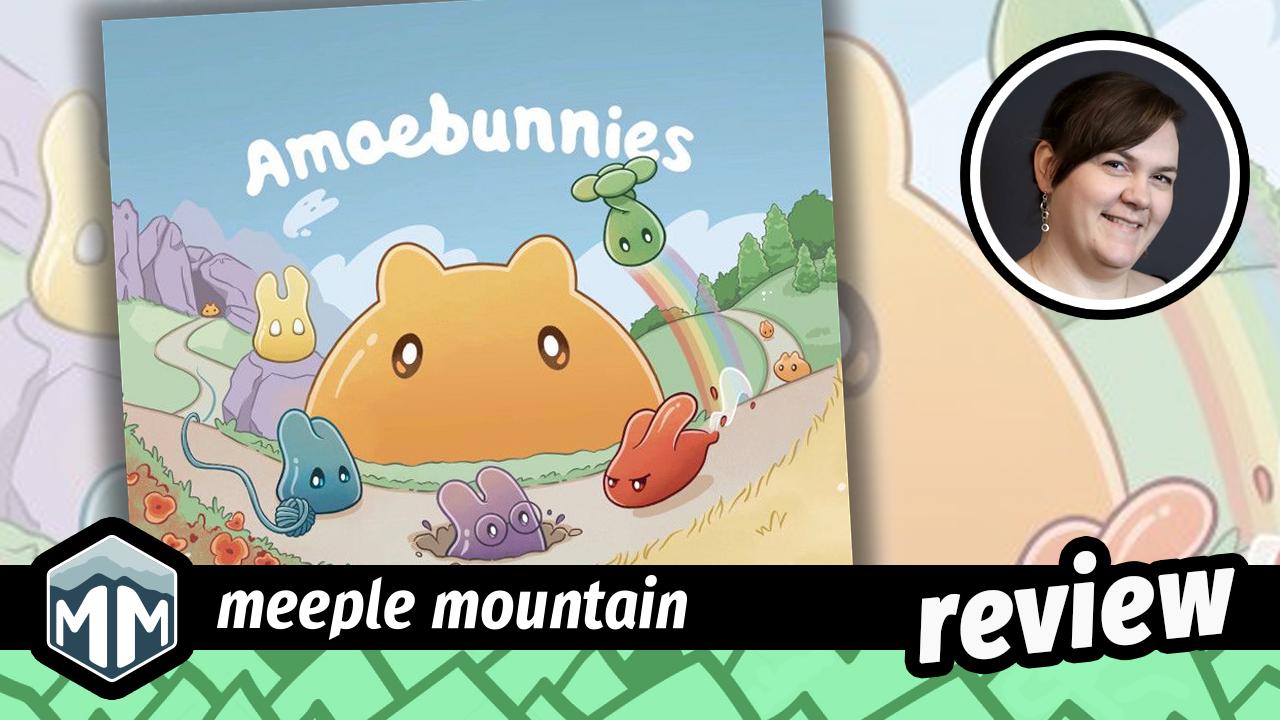
Amoebunnies Game Review

I don’t remember where I first heard about Amoebunnies, a self-published game from a designer who’s not made anything else, but I’m so glad I did. This game was attractive to me for a couple reasons: it was cute, and I needed more cute games to play with my bunny-loving seven-year-old daughter. But the thing that intrigued me most was seeing it described as “Root lite”. Was there really a game I could play with my kids that would introduce them to the world of asymmetric play that would also be fun for adults?

The story

The amoebunnies have fallen from the sky and are doing different tasks on the earth. Each player begins with the same resources, but the movement rules, special abilities, and winning conditions are different for each character. The characters also have different difficulty ratings, which means you can give the easier characters to newer or younger players, and the more experienced gamers can pick a more complex character. There are movement cards, which tell you where to place characters and other bits and bobs (depending on which characters are involved), and the coveted jellies, which are like a wild card but are rare and difficult to get. The game is a race to finish your special task.

The post Amoebunnies Game Review appeared first on Meeple Mountain.

Quick Peaks – Fuji Flush, Terra Eterna, Bring Your Own Book, Beach Bandits, Stuglandet

Fuji Flush - Thomas Wells

Fuji Flush is a good time. It’s like super Uno that doesn’t fall into an infinite loop, especially at higher player counts. Basically, you play a card from your hand, and if the turn comes around to you again, and someone hasn’t “flushed” your card, you discard it. Get rid of your hand to win. Flushing is playing a higher card, but if someone plays the same card, your values are added together and you enter a sort of partnership where all same-card values are tougher to flush. 

Mainly, it’s an excuse to say flush a lot, but it’s a hoot with a larger count, and is really easy to table and play at the end of a night. 

Ease of entry?
★★★★★ - No sweat
Would I play it again?
★★★★★ - Will definitely play it again

Read more articles from Thomas Wells

Terra Eterna - Kevin Brantley

We at Meeple Mountain always enjoy the chance to cover self-published titles, as they often don’t get the opportunity to be showcased to a larger audience. Terra Eterna is one of those titles, a semi-cooperative RPG focused on exploration and character building.

Unfortunately, the game…

The post Quick Peaks – Fuji Flush, Terra Eterna, Bring Your Own Book, Beach Bandits, Stuglandet appeared first on Meeple Mountain.

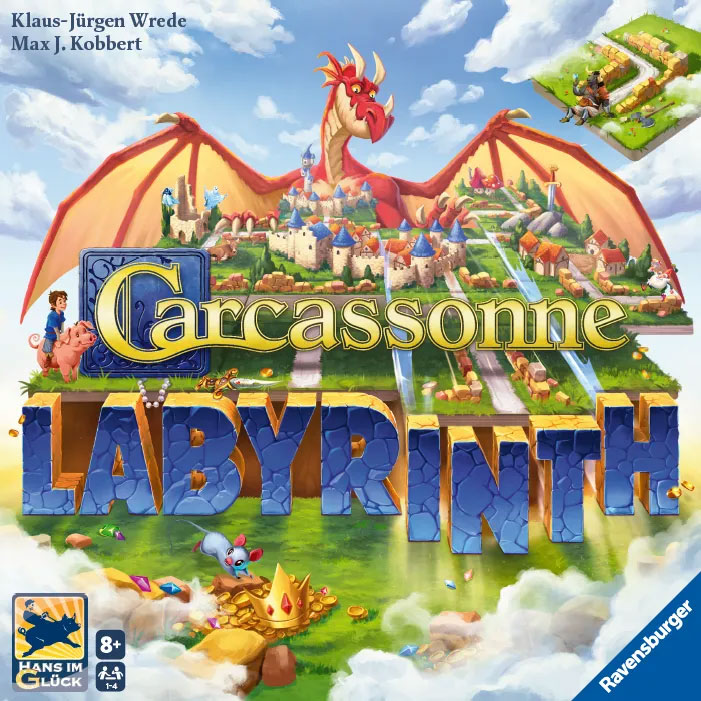
Carcassonne Labyrinth Review

18. September 2026 um 14:54
Carcassonne LabyrinthI enjoy mashups in music, pop culture, and games, so I was very excited to hear about a game that has 30 expansions (small and large), which is almost enough to make CMON say “whoa, calm down,” crossing over with one of my favorite ’80s movies: Labyrinth. I can’t wait to see how Jennifer Connelly […]

Source

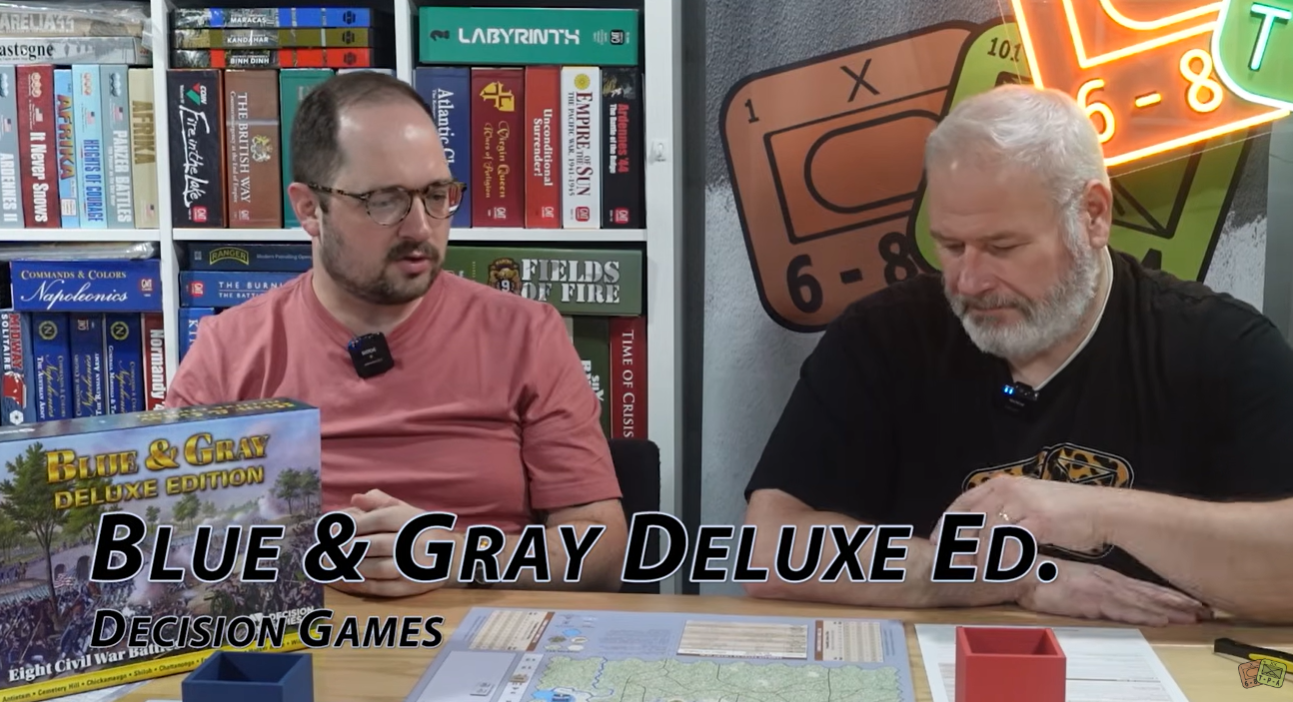
Video Review: Blue & Gray Deluxe Edition from Decision Games

Von: Grant
18. September 2026 um 14:00

The American Civil War was the bloodiest conflict and a defining event in the history of the United States. The tragedy of the conflict was amplified by the fact the battles were brutally fought with Napoleonic tactics while using new and more lethal weaponry. As a result, over the course of nearly four full years of war, roughly 700,000 Americans were wounded or killed in battle along with another 400,000 soldiers dying from disease.

Blue & Gray Deluxe Edition consists of the original eight games from the SPI Blue & Gray I & II Quadrigames. The battles depicted are among the most important of the American Civil War: Shiloh, Antietam, Fredericksburg, Chancellorsville (Hooker & Lee), Gettysburg (Cemetery Hill), Chickamauga, Chattanooga, and The Battle of the Wilderness.

The game mechanics used in this series are based on the well-received Borodino/Napoleon at Waterloo system. Terrain is a significant factor, with everything from rolling farmland to untracked wilderness represented. Battles will often see a back-and-forth struggle for control of critical terrain. Rules for night turns are also provided. A standard set of rules are used, common to all eight games, while each game also has its own set of exclusive rules, historical set-ups, and player and design notes—all from the original SPI games.

Blue & Gray Deluxe Edition features new artwork, double-sided mounted game boards, enlarged counters, player aid cards, numerous optional rules gleaned from other game editions, and new variant counters and markers for use with several variants from Moves and Strategy & Tactics magazines. Reintroduce yourself to these classic games from SPI’s golden era and refight some of the best-known battles of the American Civil War which decided the fate of a nation at war with itself.

-Grant

Zombicide

Zombicide has been around for quite some time. I have never been a zombie fan, so I never got around to trying it until recently, when I played the second edition of the game. This is a cooperative game. Every player controls two characters. You try to survive in a zombie apocalypse. The game is scenario based, and every scenario has a different set of winning conditions.

Goop vs. Goop

18. September 2026 um 00:51

ah, it's trypophobia, but nice

Board games aren’t always very good at themes. Actual themes, as in underlying messages, not “themes,” the settings that appear in a game’s artwork. One of the hobby’s essential exceptions was Sol: Last Days of a Star. Set in some distant future, players were asked to harvest their dying star’s last embers to propel an ark into the great beyond, only to realize that their efforts were hastening the same solar death they were striving to outrun. Part climate change parable, part meditation on thermodynamics, Sol was not only playable, it was a genuine effort at using gameplay to tell a worthwhile story.

Now Ryan Spangler, one of Sol’s three creators, is back with Organism. Where Sol propelled itself outward, Organism utilizes the smallest possible lens to zoom all the way down. In a way, its diminutive subject matter is even more meaningful than Sol’s space opera. I’m speaking, of course, about the building blocks of life.

I've gendered these cells because cells have a biological sex but I'm applying my encultured assumptions to them.

My goopy guys versus your goopy gals.

What are the smallest components that are necessary for something to constitute “life”? When I interviewed Spangler for Senet Magazine, that’s the question that led to Organism. Here players become… not even cells, really. Cells and their constituent components. Organelles. Nuclei and ribosomes and flagella. Grasping, uh, mouth-parts. Can you tell I was never very good at biology?

Fortunately, Organism drills down onto some simple terminology. To constitute an organism, there are three parts. These are your cellular building blocks. Without any one of them, the organism will die. With many of them, it becomes a lurching thing capable of doing more work. Maybe more importantly, it might split into two separate bodies altogether.

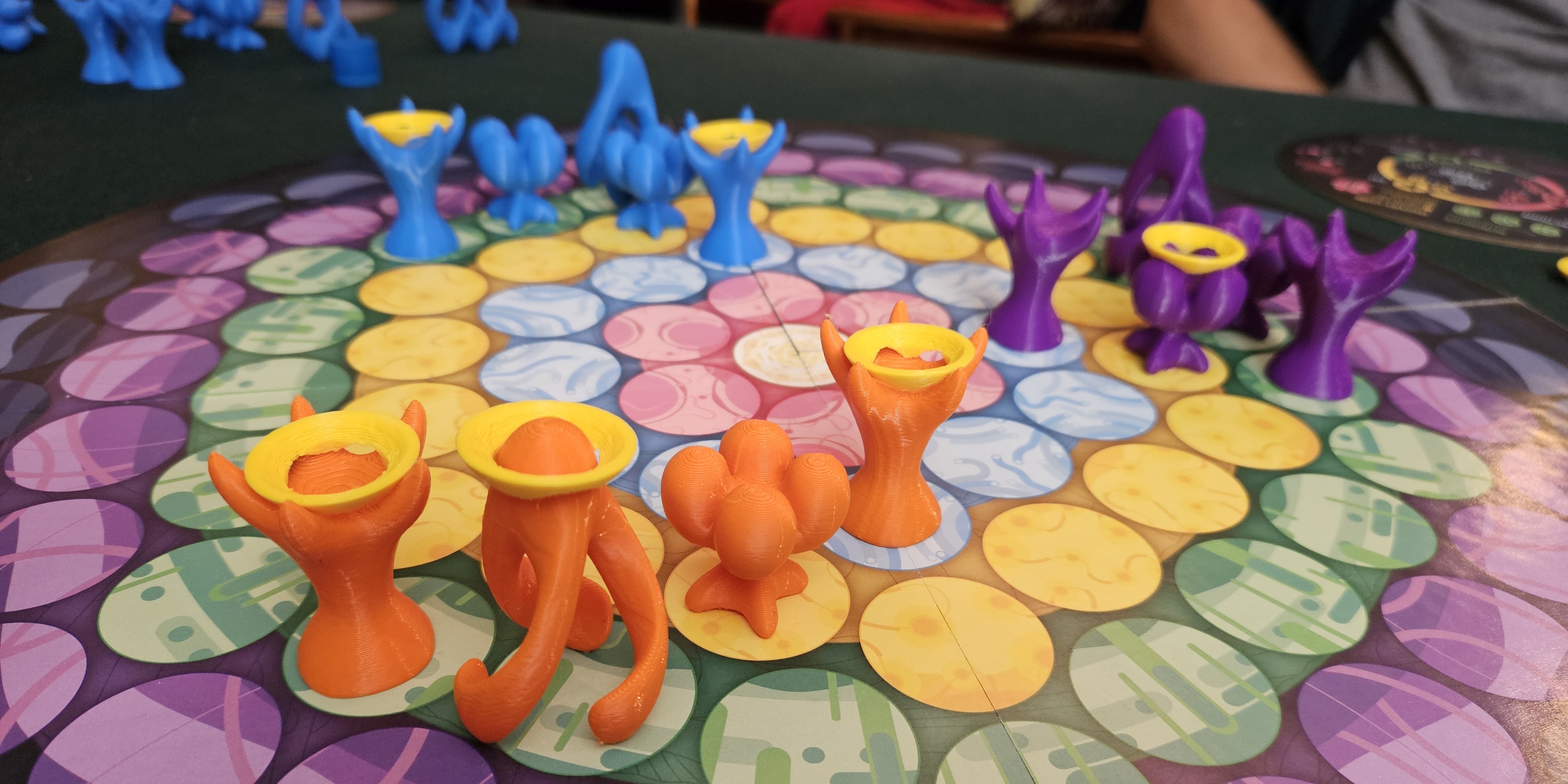
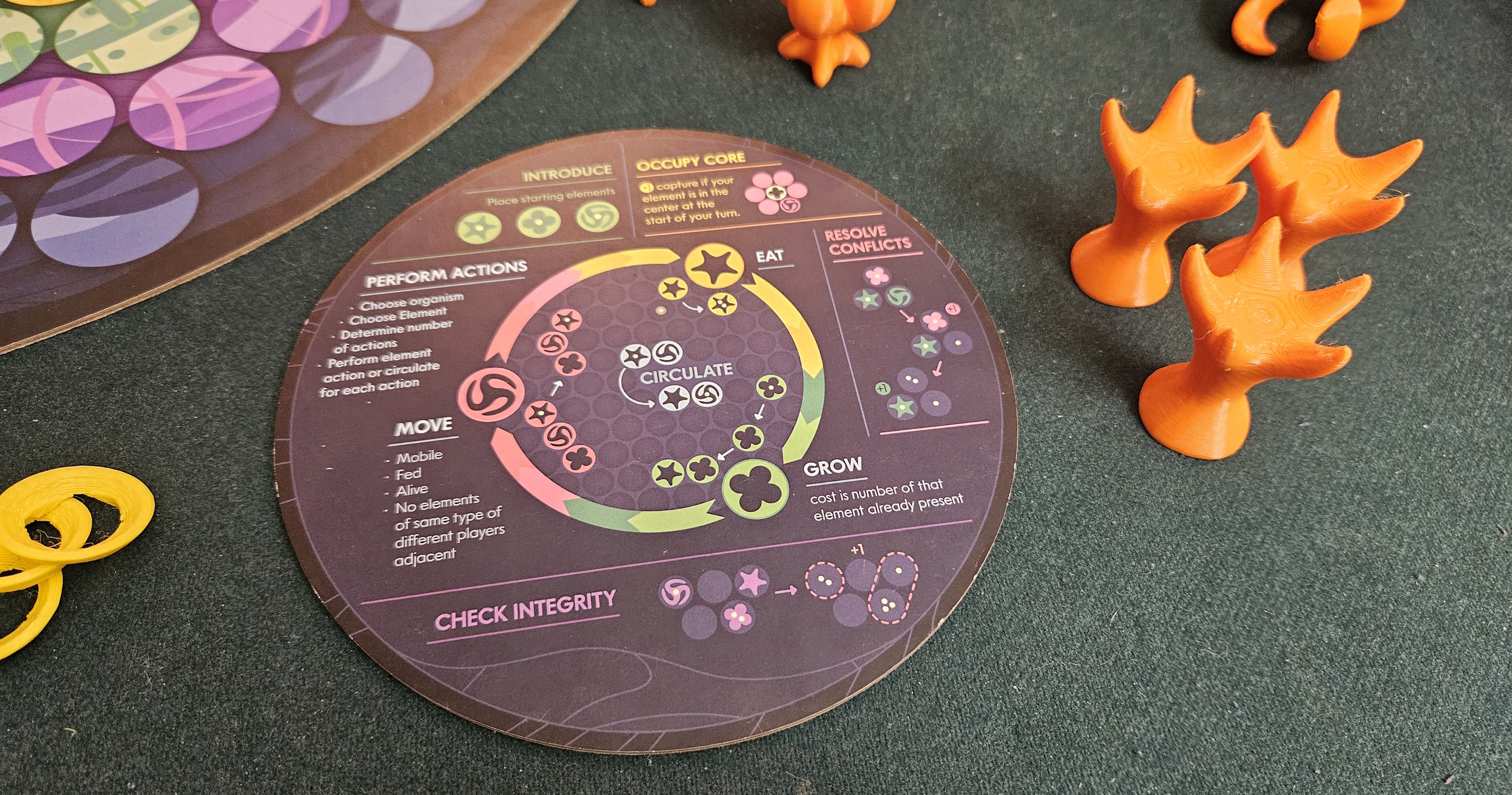
Those three building blocks are as follows. There’s the Eater, which is how your organism takes in nutrients; the Grower, which allows your organism to sprout new components; and the Mover, which allows it to shuffle around the petri dish or hydrothermal vent that is the game’s playground. At the game’s beginning, everybody begins with one of each. That’s your organism: Eater, Grower, Mover.

Mouth-parts latch onto udders, which smother legs, while legs wrap themselves around mouth-parts. Now you understand the birds and the bees.

The life cycle of life.

Turns consist of selecting a single action for your organism. (Actually, you could select a different action for each organism, but now I’m putting the flagellum before the pili.) Those actions correspond with your organelles, with the crucial detail that you get to take as many actions as you have cellular bits. Want to absorb food? Choose Eat. Now every Eater in your organism gets to chow down on ambient soup, pulling food discs into your body. Want to expand your cell? Growers spend food to add new structures in adjacent spaces. Move? Look, you know what Move does.

Except you probably don’t! Organism, it turns out, is about grappling with your own lumbering body as much as it is about the smallest possible components of life. It isn’t all elegance and skater-like gliding down there. Sometimes your body is a malformed, asymmetrical blob, only capable of pushing around its parts on one side, or maybe wedged into a corner because your limbs are tucked against the edge of the board rather than putting their best foot forward. As someone who recently had both legs fall dead asleep because I was sitting too hard on my bum — normal sitting posture, just sorta wedged into a cushion — I’m in this picture and I don’t like it.

What I’m trying to say is that turns are two things at once. There’s raw potential here. Provided you have a solid handful of Movers in your body, you can rearrange yourself quite quickly, scooting your little organs all over the place. But when those Movers are in the wrong spot or few in number, movement becomes a chore. The same goes for Eating and Growing. With enough mouths and, ahem, reproducing bits, your organism gains the advantage of scale. Without them, you might soon find yourself dead in the water.

although it's somewhat ironic that the highest spot also looks like the lowest link on the food chain

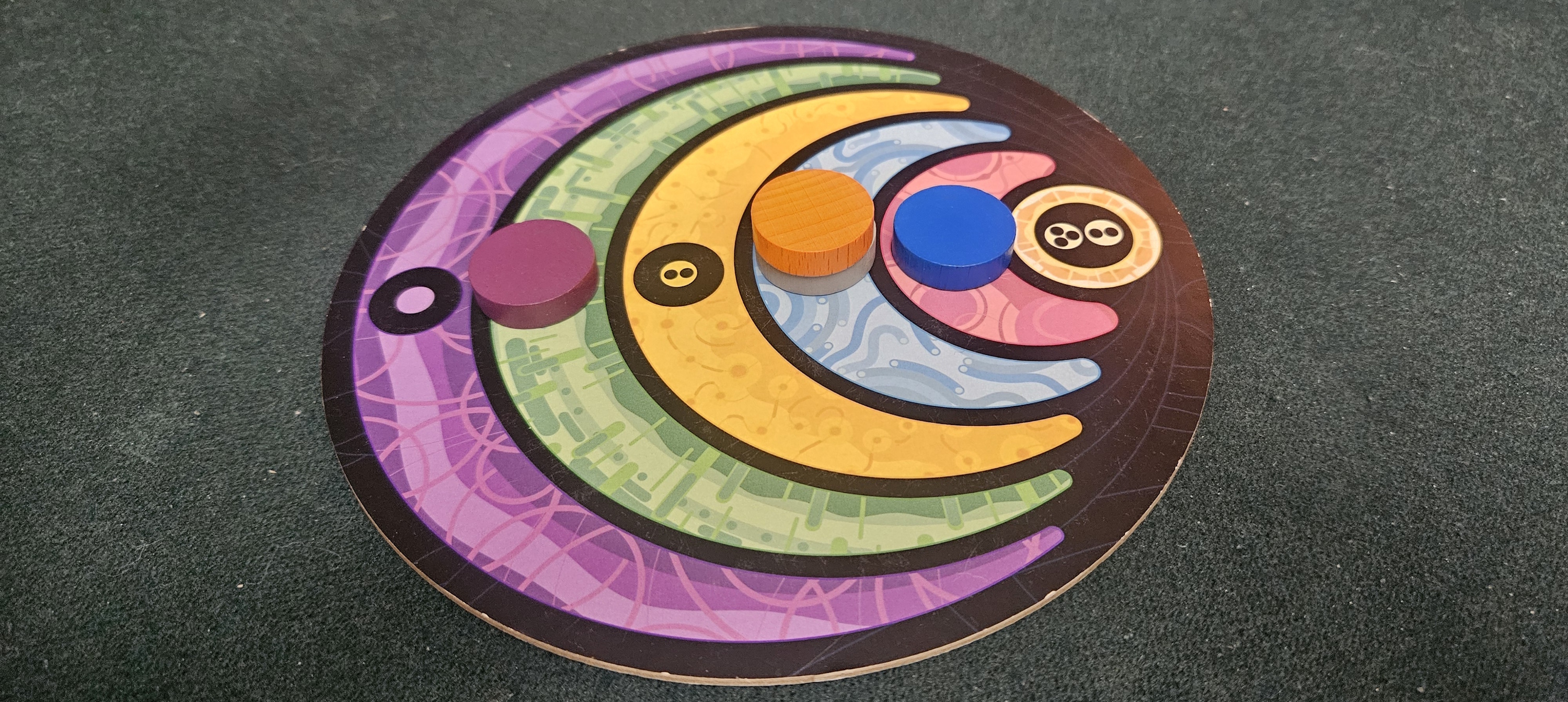
Even the scoring track is cool.

Literally dead, in fact. Organism is cutthroat. When two rival organisms move into contact with another, there’s a quick-and-dirty rock-paper-scissors check where Eaters destroy Growers, Growers smoosh Movers, and Movers circle around to strangle Eaters. This destroys the organelle on the receiving end of the circle of life and deposits an extra morsel of food in its wake. What’s more, if the recipient of this microscopic violence no longer has all the necessary components to sustain life, the whole thing is reduced to a pile of mushy calories.

And this is tied directly to how victory functions. There are two ways to win. Either you rack up five points by occupying the nutrient-dense space at the center of the board and destroying body parts — which can be done surprisingly swiftly if a surgical strike eliminates an entire hostile organism — or you outrun your rivals by dividing into three separate bodies.

These are roughly analogous to aggressive versus turtle playstyles, although the game’s open-ended nature means it’s an imperfect comparison. More often, Organism allows both approaches simultaneously. Having two bodies is better than one in terms of diversification, since now you can take two separate actions per turn. But mitosis is not a decision to undertake lightly, leaving your newly separated organisms open to attack and liable to grouse at each other for lack of sleep. [Note: Insert parenting joke.]

What this really does for Organism is make every decision matter, both in the micro sense and the larger conflict. It isn’t uncommon to look at your bloated cell and realize you optimized it poorly a half-dozen turns ago and the bill is only coming due now that you can’t figure out how to move it into battle with a rival organism without sacrificing two appendages.

Like the tumor that might or might not be in my face right now.

Mutations introduce all sorts of complications.

Speaking purely mechanically, Organism is an abstract game — obviously — but one with its own internal coherence. After that awkward learning phase, which has as much to do with the game’s novelty as anything else, one can look at the board and read the slow-motion topography of its microcosmic battleground, like skilled eyes reading tectonic plates or a football match.

And as an abstract game, it’s entirely distinct from anything else out there. Like Chess, it’s sometimes elegant and sometimes ungainly; like Go, it’s possible to read the state many turns into the future only to find oneself blindsided by a clever turn. But it’s also wholly unlike either of those benchmarks.

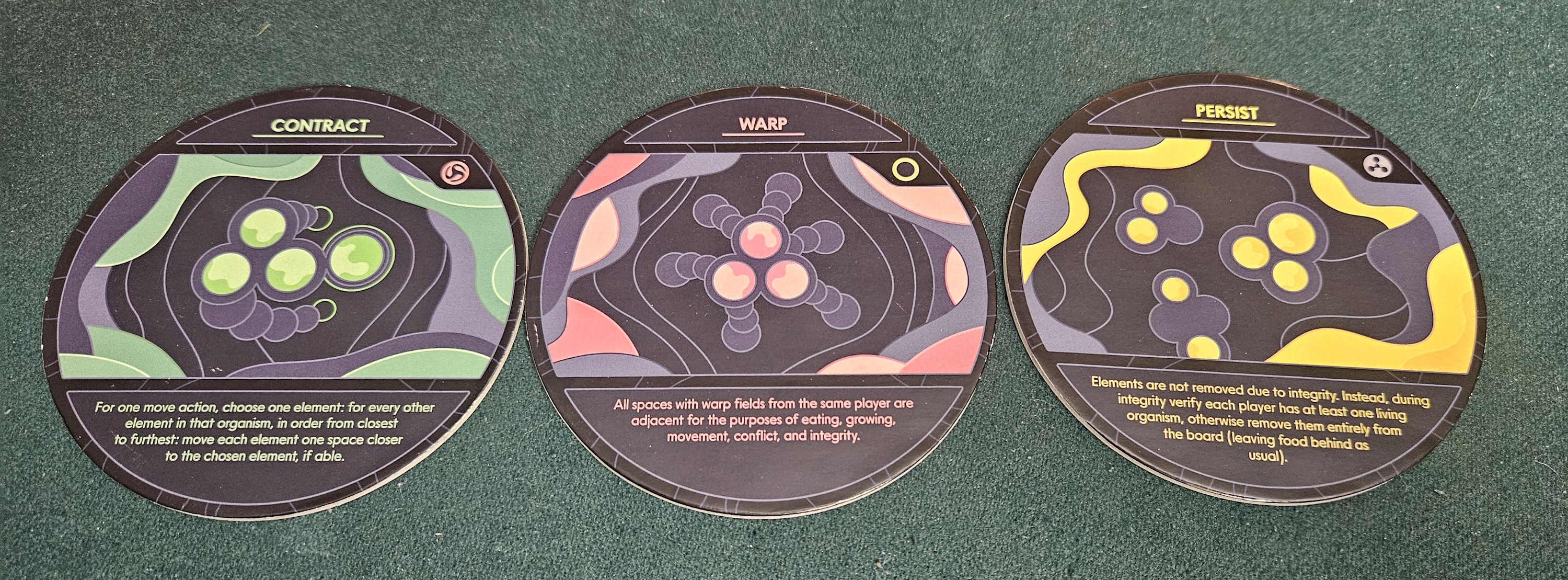
One of its biggest departures is that it’s also only a starting point. I’ve been exploring a handful of the game’s mutations, discs that introduce special rules. It’s a similar approach to what Spangler did with Sol, letting these little powers alter the progression of the game without undermining the rules wholesale. Except, well, sometimes the rules do get undermined wholesale. Such as when a mutation introduces “fields,” little discs that function as sub-systems within a cell. Some foster aggression, others lean into the optimization puzzle, and still more transform the game into something else entirely.

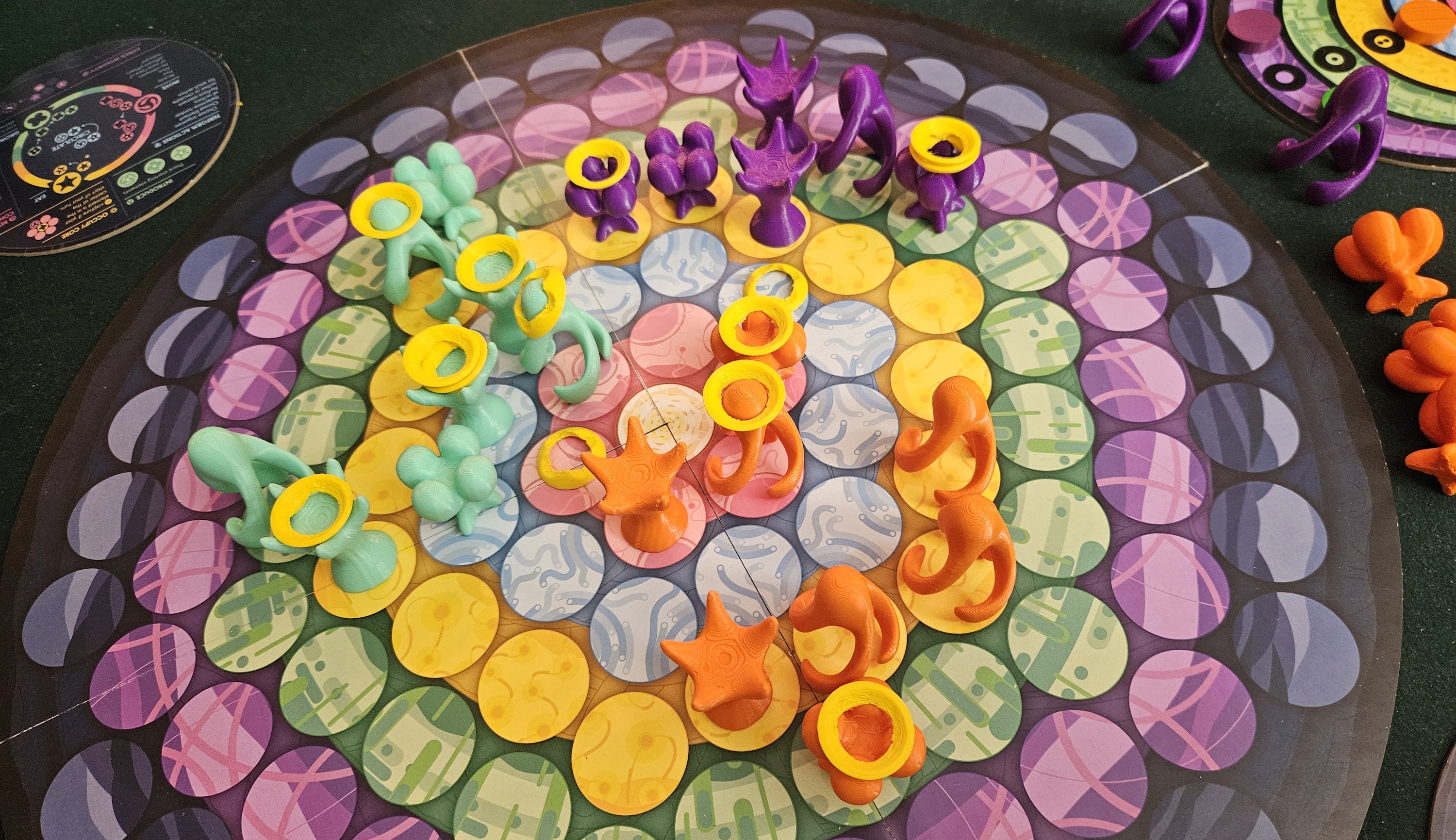
It looks a little busy from this angle, but the three-dimensionality makes it quite legible.

Under a microscope.

No matter how it transforms, though, Organism remains truly exciting. There have been some excellent games about evolution over the years, in particular the North Star titles Evolution, Oceans, and Nature. Organism takes an entirely different tack from those games’ recombinant traits. In a sense, it recalls those games but with only three cards and a whole lot of careful positioning. But there’s a certain thematic overlap, an arms race that never lets up. That it works not only with two players, but as many as six, is nothing short of astonishing. I’ve played with four, and while the session took longer than lower counts, it was a wonderful experience, full of little feints and flankings.

Anyway. That’s Organism. As a parable, its ambitions are narrower than Sol, but also given the focus of an electron microscope. I can’t wait to push around its tendrils, mouth-parts, and weird jiggling udders for years to come. It’s on Kickstarter right now.


A prototype of Organism was provided by the publisher.

(If what I’m doing at Space-Biff! is valuable to you in some way, please consider dropping by my Patreon campaign or Ko-fi. Right now, supporters can read the next installment in my series Talking About Games, this time tackling the topic of what makes a good list! Naturally, the piece includes a list.)

Marketable vs Aspirational Funding Goals

17. September 2026 um 17:59

In regards to several recent crowdfunded games that either relaunched after an initial cancellation or are struggling to move far past their funding goal, I’ve heard some concerns about trust from potential backers.

For example, if a project has a $10,000 funding goal but after the first few days they only have a few hundred backers and $13,000 in funding, is it a mark of dishonesty if they cancel the project, reconfigure, and relaunch?

Personally, I do not begrudge anyone from learning from a mistake, oversight, or shortcoming and trying to do better. Nor do I consider it dishonest to showcase a marketable funding goal…as long as the creator is transparent about their aspirational goal.

Here’s an example from a related article:

If you want to make a hypothetical game with a landed cost of $20 (manufacturing plus freight shipping) with a trusted long-time producer like Panda, you’ll have a minimum order quantity of 1,500 units (or 2,000 if plastics are involved). Ideally you’ll make more, but that’s the bare minimum you need to cover that MOQ. So that’s $30,000.

Of course, you’ll need to pay artists, graphic designers, playtesters, and proofreaders–those costs can vary greatly based on the complexity of the game and the quantity of the art. At Stonemaier Games, I would say that those costs add up to around $75,000 on average. Added to the landed costs for the 1,500-unit MOQ, that’s $105,000.

I might list the funding goal at $30,000, but somewhere else on the project page I might discuss that I’ve already invested $75,000 in the game and that the funding goal is based on the MOQ of 1,500. So there I might note that we’ll make the game if we reach the funding goal, but my hope is to eclipse $105,000, perhaps marked by a stretch goal.

A creator could also just outright say, “We chose $10,000 as a marketable funding goal, but our aspirational goal is to make at least $50,000. Reaching that aspirational goal will help us cover our sunk costs and will enable us to pay for the first printing without dipping into our savings. If the project has not reached $30,000 a few days after launch, this is a strong indicator the game and/or the campaign are missing something important, and we may consider relaunching to best serve the audience for this game.”

This is essentially what Siclen Studio announced on a recent video about their current Kickstarter, though they took it a step further: They said that as long as they stay above their $10,000 funding goal (as of this writing, the project is at $13,535), they will make the game even though they had much higher hopes for it. I admire that, though I also worry that backer accusations of dishonesty backed Siclen into this corner instead of offering them the grace to relaunch.

I understand that this is a contentious subject, and I also understand that a creator risks losing backer trust if they relaunch. However, we are talking about crowdfunding here: Nothing is etched in stone. Crowdfunding gives creators the opportunity to learn from the crowd while the product and the project are still pliable.

Also, is it not an inherently human trait to set a lower goal with the hopes of surpassing it? I can certainly relate to that.

What are your constructive thoughts about marketable vs aspirational funding goals?


Also read:

If you gain value from the 100 articles Jamey publishes on this blog each year, please consider championing this content! You can also listen to posts like this in the audio version of the blog.

❌