Anmelden
What Awaits at Bastion Indie Market?
29. Mai 2026 um 19:19
Self-publishers will feature unique creations at UK Games Expo 2026

Self-publishers will feature unique creations at UK Games Expo 2026
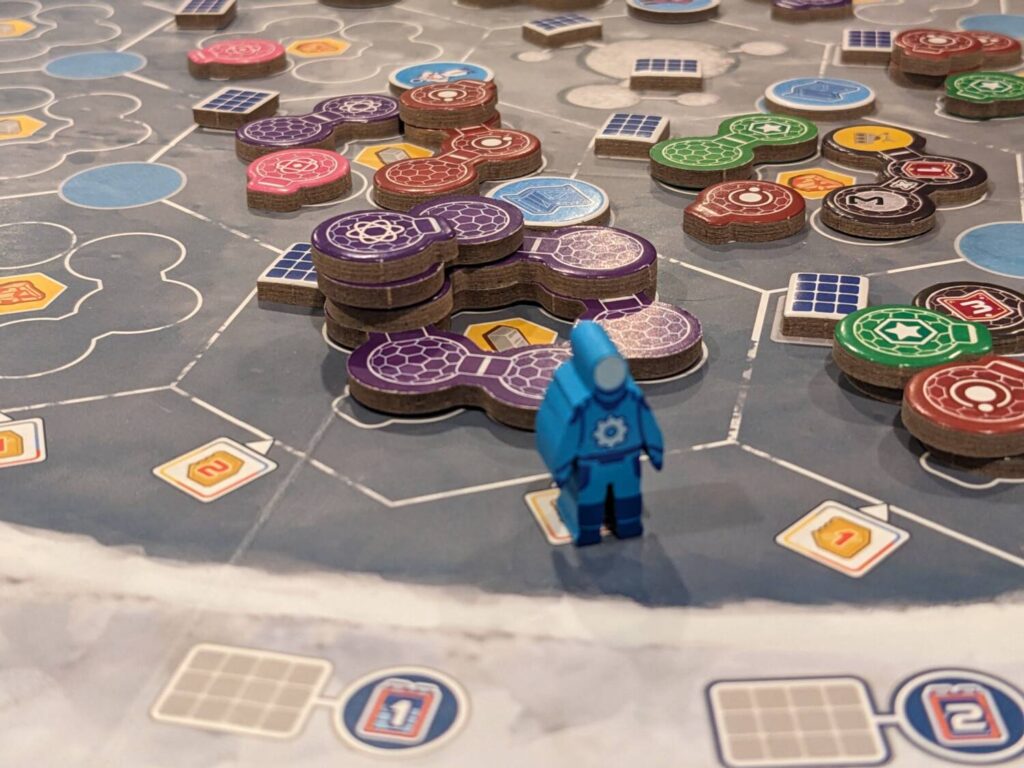
No upcoming expansion had me more excited than the arrival of Shackleton Base: Below. Within. Above., the first expansion for one of the five best games I played in 2024, Shackleton Base: A Journey to the Moon.
“Shack Town”, as it is known in my circles, has hit my tables a whole lot since the late summer of 2024, thanks to receiving an advance copy from the team at Sorry We Are French (from overseas, no less, in the Before Tariff Times). The medium-weight Euro is a crowded field, and Shackleton Base stood out because it does a lot of things right, thanks in part to the seven different corporations included in the base game.
Almost any number of extra corporations would spice up the base game for me. I’m not exhausted with any of the base game corporations yet, but the mix can always get sweeter with more set-up options that shake up the meta.
Let’s talk about the new stuff. (For anyone new to Shack Town, you can check out my review of the base game to learn more.) Also, please note: the new stuff barely—and I mean, barely—fits in the base game box, assuming you keep the cute tuckboxes that make setting up the game a cinch.
[caption id="attachment_331255" align="alignnone" width="1024"]
The post Shackleton Base: Below. Within. Above. Game Review appeared first on Meeple Mountain.
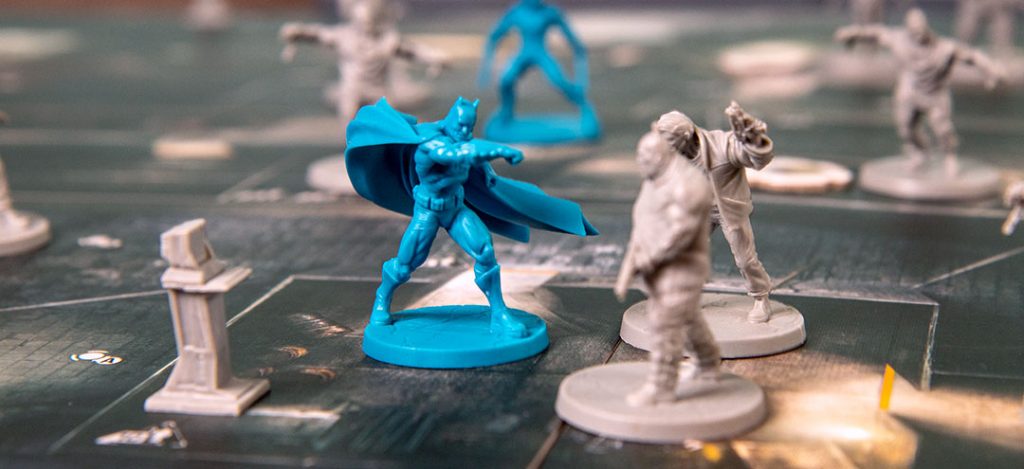
He goes by many names: The Dark Knight, The World’s Greatest Detective, The Caped Crusader, Batsy… but mostly it’s just Batman. He’s been thrilling fans since 1939 and has appeared in just about every form of media you can think of. When it comes to the tabletop realm, Batman-themed board games have been hit or […]


Three AMIGO titles have been picked up by this U.S. publisher
For a game I rarely play, I think a lot about Magic the Gathering. It’s particularly been on my mind recently due to a combination of the new Covenant podcast/livecast, the excellent Distraction Makers YouTube channel, and some correspondence with the creator of the Alkem series of gear and bags designed to hold trading card games.
Magic recently opened sales for a Secret Lair Goblin Storm Commander deck with special art by Dakota Cates. Within 34 minutes, the entire print run had sold out (I’ve only seen speculation as to the quantity made, not confirmed numbers, with estimates ranging from a few thousand to 50,000).
I can see why people are really frustrated by this. They’re passionate about a game, and they want a chance to buy that game. This is why I’m so against crowdfunding exclusives: If you’re making a game to withstand the test of time, why would you limit your ability to make and sell any portion of it to the first few people who learn about it?
However, rarity and scarcity are also core to Magic’s existence. The reason they can consistently sell 15 slim pieces of cardboard for $5 is because of the chance a card is worth a lot more than $5 on the secondary market (whether or not you actually sell that card). This is why it’s exciting to open a booster pack or even to own a limited edition goblin art pack.
I’m not justifying this model. At Stonemaier Games, we’re specifically not selling scarcity. If a product is out of stock and there appears to be demand for us to make more, we’ll happily make more. This is how we serve our customers.
What’s interesting to me is that because Magic is inherently about selling rarity and scarcity, I can see how they believe they are serving customers by making a limited quantity of Goblin Storm Secret Lair sets. I also understand that they, like any publisher, have to make production quantity decisions many months before they know how many people will actually pay for the product.
I think there may be a better way, though, even within Magic’s constraints of selling scarcity. In discussing this topic on yesterday’s livecast, @redwlfjsc shared an idea that I modified just a touch: Magic could make, say, 10,000 units of a Secret Lair and put them on their webstore for 3 weeks. If the product sells out within that time period, their order system switches to preorders for a single reprint of that Secret Lair on which they will start production after the 3-week period ends.
This is exactly what Gamefound offers with Express Crowdfunding. It serves those who want the product right away while leaving a limited door open for those who are willing to wait a bit. It respects collectors and players without losing control to bots and quick flippers.
Magic’s model is so successful that entire brands have been created specifically to serve those who play Magic and other TCGs (casually, at local game stores, and at tournaments). I heard recently from the team at Alkem Gear about their product launch Kickstarter. Our conversation led in a few different directions that you’ll see in some upcoming posts, but I wanted to briefly mention it today because it demonstrates both the value of user-focused design and that even 30-year-old games still have room to improve.
This is from Tim Heck, the founder of Alkem:
“After moving to Riverside, California, I became deeply involved in communities centered around D&D, board games, and trading card games like Magic: The Gathering and Pokémon. One thing I noticed immediately was that people were carrying thousands of dollars’ worth of cards and gear in setups that felt like an afterthought. A lot of the products marketed toward TCG players seemed to be repurposed camera bags or generic storage solutions. That was really the starting point for Alkem.
Our products are intentionally built around the way gamers actually travel and play. The backpack, for example, was designed specifically around deck box dimensions and gaming accessories. The vault section fits six deck boxes or roughly 1,200 cards, while the upper compartment can hold an additional 1,800 cards. At the same time, we didn’t want the bag to only serve card players, so the internal geometry is intentionally square and structured to also accommodate board games, D&D books, dice trays, playmats, notebooks, snacks, and other essentials people bring to game nights and conventions.”
After spending time designing flexible storage solutions like the Wingspan Nesting Box and Viticulture’s Wine Crate, I have a high level of appreciation for what Tim has created at Alkem.
Just so it’s perfectly clear, Alkem has not sponsored this post and I have no connection to them other than a pleasant and informative email conversation. I hear from creators all the time, and if they share interesting stories that are relevant to topics I’m covering, I sometimes include them in these articles.
What do you think about how a company that sells rarity and scarcity in a game like Magic can best serve customers?
If you gain value from the 100 articles Jamey publishes on this blog each year, please consider championing this content! You can also listen to posts like this in the audio version of the blog.
Every now and then, I sit down to play a game with no expectations whatsoever. I anticipate neither excitement nor despair. I am absolutely ambivalent, a perfect blank slate. I think of this as a true neutral response, but it occurs to me that I generally enjoy trying new games, so ambivalence is in fact a moderately negative response. I’ll process this on my own time.
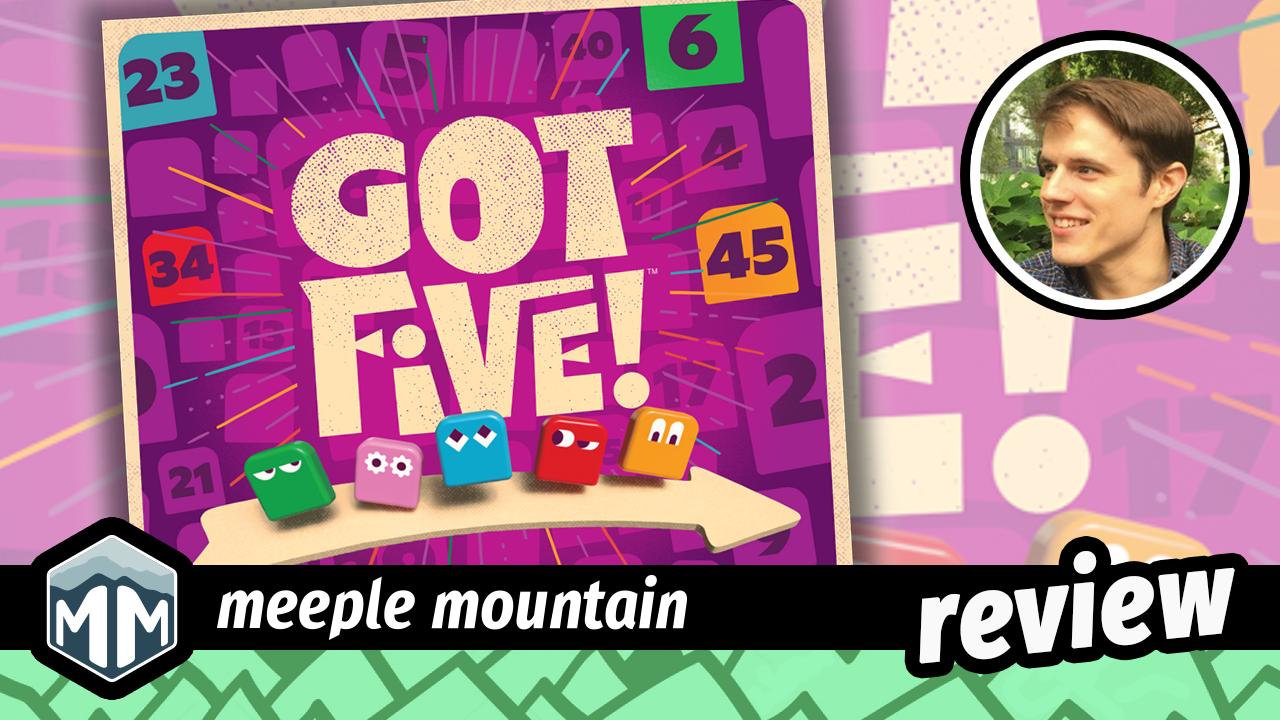
Ambivalence was very much the case with Got Five!, a deduction game from designer Yoann Levet and publisher Blue Orange. I picked up a review copy because it was the slow season, I knew it wouldn’t take long to play, and I liked the tiles. I don’t know which of the two credited artists, Mathieu Clauss and Simon Douchy, is responsible for them, but those colorful bakelite tombstones with expressive eyes are hard to resist.
Don’t be fooled. Their friendly exteriors harbor terrible secrets, by which I mean numbers between 1 and 60. If you think that doesn’t sound so bad, you probably like math. During setup, each player takes one tile in each of the five colors and stands them up so the numbers are visible to everyone else at the table. It is extremely important that you not see the numbers on your own tiles, since the goal of the game…
The post Got Five! Game Review appeared first on Meeple Mountain.
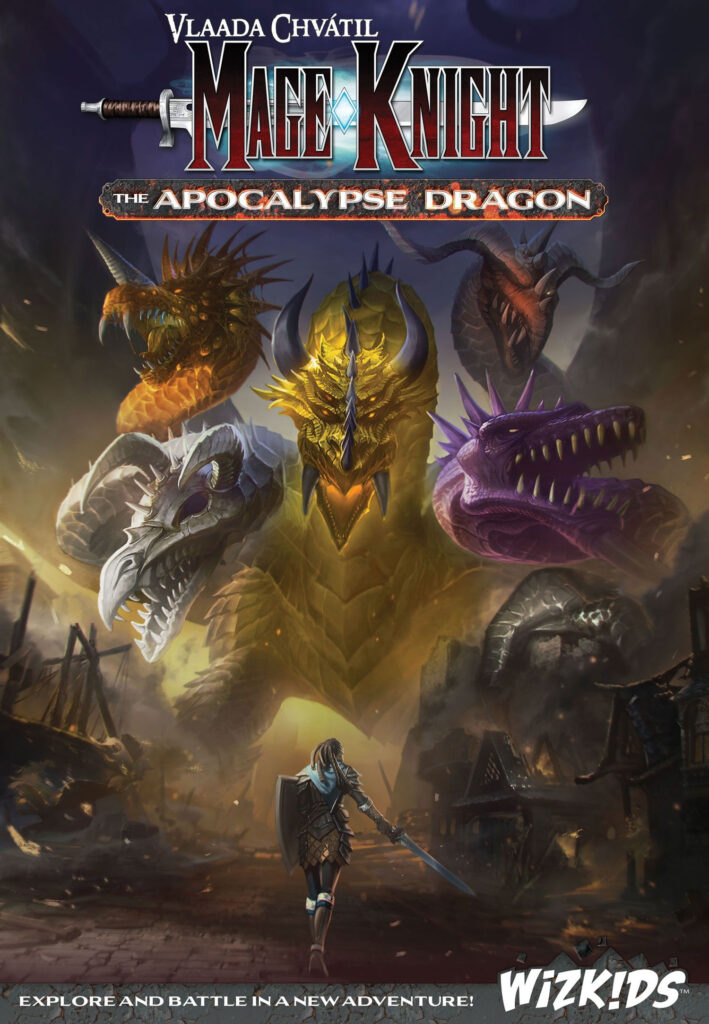
It’s been 8 years since Mage Knight Ultimate Edition was released, way back in 2018. That was supposed to be it. No more content, everything in this one enormous box. But then it just kept selling. And selling! And selling! And all that treasure awakened a terrible Draconic Power. Now the Apocalypse Dragon is wreaking […]
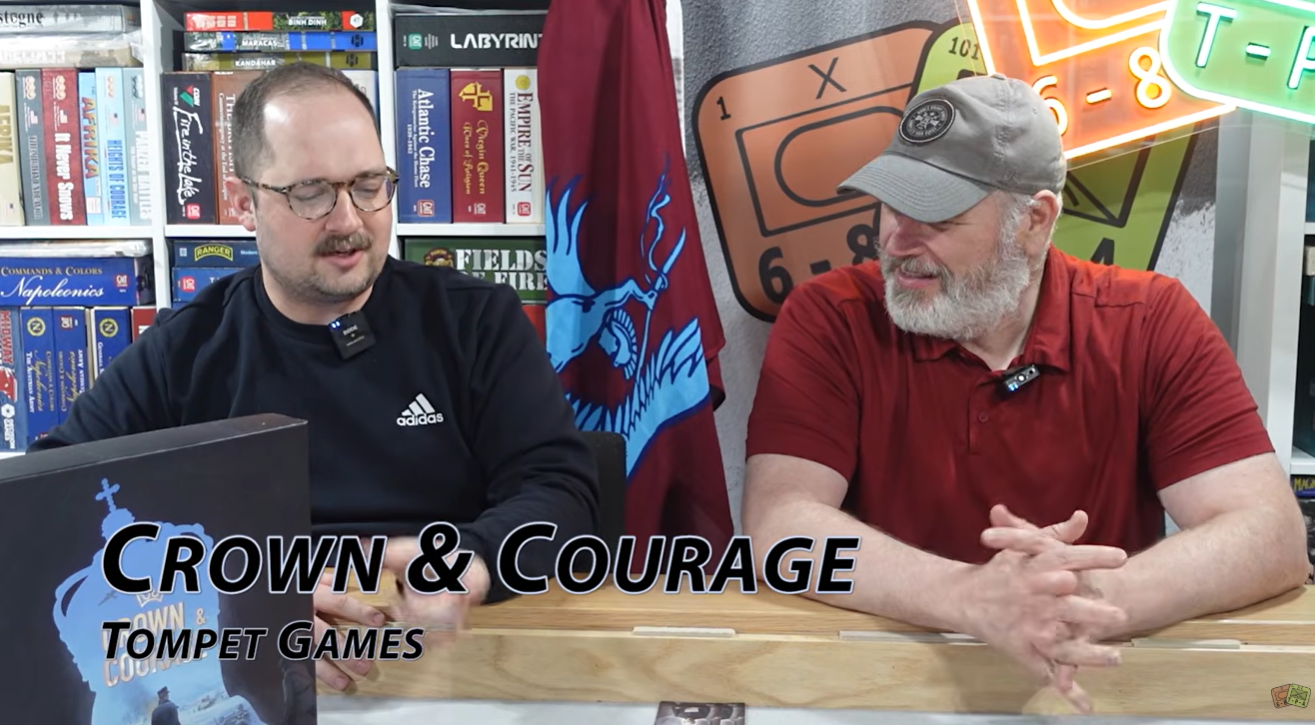
We have played 2 of Tompet Games’ previously released games with the only not having been played called Kill the King from 2016. First was Donning the Purple, which is an asymmetrical king of the hill game with a bit of worker placement that deals with the players managing the glory of wealthy and powerful Roman families, and their second game called Halls of Hegra, which is a solitaire-only wargame in the same vein as Euro-based games such as Robinson Crusoe, This War of Mine and Dead of Winter. The mechanics include worker placement, bag building, and area control/tower defense and the goal of the game is to survive wave after wave of German troops as they assault the secluded mountain fortress at Hegra.
Both of these games are excellent and they are now embarking on their fourth game called Crown & Courage that tells the story of the German invasion of Norway in 1940 and the royal family’s defiance and ultimate escape from the country to avoid capture and funding of the German war machine.
The Kickstarter campaign is set to launch on Tuesday, June 2nd and you can learn more about the project by visiting the Kickstarter game page at the following link: https://www.kickstarter.com/projects/tompet/crown-and-courage
-Grant
(Also April, which didn’t have many because …. I was busy).
Arnold Kling discusses the Moral Dyad.
Bryan Caplan wrote an RPG one-shot called “Badger and Skinny Pete,” based on the characters from Breaking Bad?! (Discovered in a profile of Dwarkesh Patel)
A thorough comment explaining why price transparency in health care is nigh impossible.
The Illuminati game in real life might be stranger than the game. Sure, the CIA controls the Orbital Mind Control Lasers, but you’ll be surprised who runs the Weather Satellites! Do Fungi control the weather?1
Every Frame a Painting (with TCM) — Ozu in Color. EFAP (With Criterion) — The Visual Comedy of Isle Of Dogs.
I played HF4A solitaire and wrote a summary on BGG. (Part 1, Part 2)
I had noticed a bunch of AI videos on Youtube (I no longer trust new channels) but it’s even hit Sumo. Spiffy calls them out. But if people think there is money to be made creating slop in such a niche product, I assume that’s another marker as to how cheap video creation (etc) has become. Incidentally, I remember that Neal Stephenson predicted that the internet would be overrun with slop in Anathem, and Fall, or Dodge in Hell2.
Corporate Sanity? Part 1 — Is Agile finally being sent to a farm upstate? (One can hope). Some signs in the Fidelity re-org.
Part 2 — Bolt CEO fires entire HR team for “creating problems that didn’t exist.” (There was one company I worked for that I considered quitting on day one, the HR dept was so messed up …. I was still considering it when the founders fired the head of HR and read the rest of them the riot act3).
A Spa …. for stuffed animals. (Stuffed animal cleaning and repair).
A Peter Watts talk from 8 years ago …. the part from 15:00ish to 24:00 ish where he talks about writing Blindsight were of particular interest if you’ve read the book (but all of it was of interest to me).
Anton Petrov covers the recent advances in Project Ceti (decoding whale language) …. including when unrelated Sperm whales were captured (video and audio) coordinating helping midwife a birth.
Philosophical ideas that were behind their time (in that, you are surprised how late it was proposed).
Japan runs out of Robot Wolves in Fight Against Bears. I await the Guillermo del Toro movie. (A decade ago, I would be awaiting eagerly, but now … eh).
I’ve never heard of Jon Peterson, but he’s an expert on the history of wargames and RPGs? An interview with him — What Playing Games can teach us about simulating the future.
In many languages, the word for “night” is the letter “N” plus the word for “Eight” (give or take).
The Modern Passport System has eliminated Fraud, Forgery …. and heroes who bend the rules to save lives.
RIP Christian Freeling (abstract game designer).
︎︎︎
Sample the wide range of creative works by these honored designers
by Steph Hodge
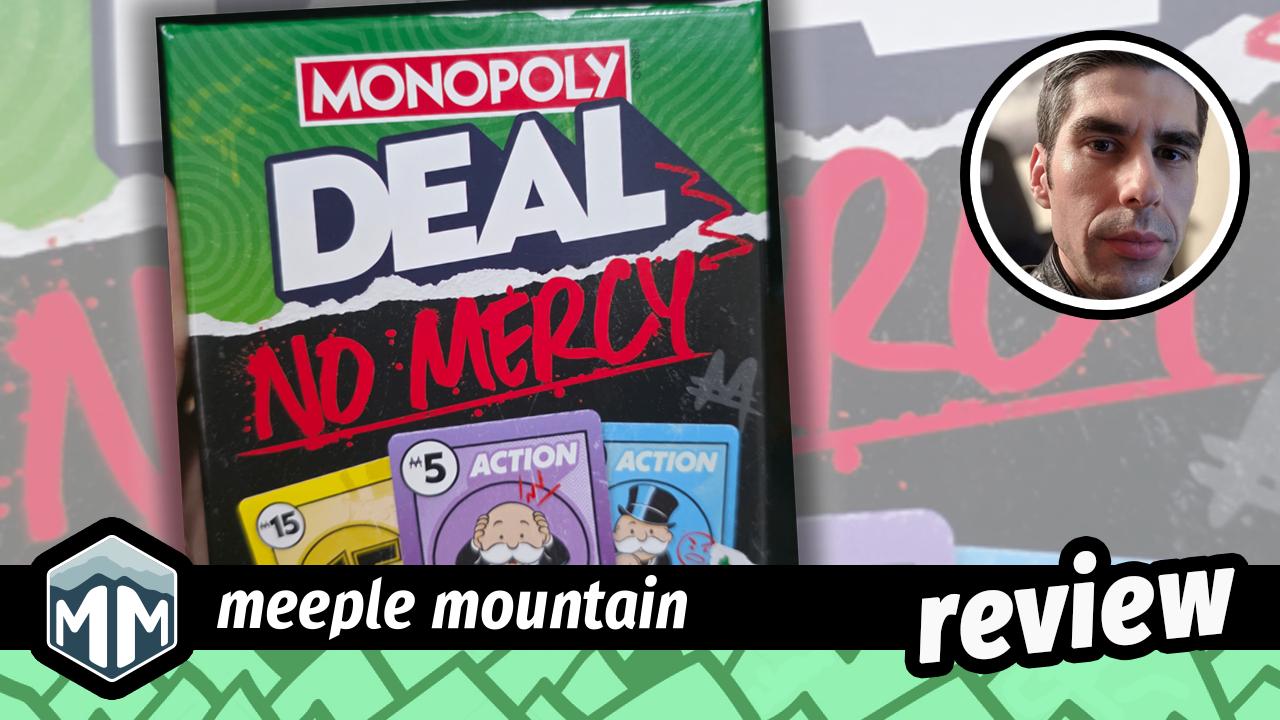
Gen Con quickly approaches, and I have already gotten a bunch of emails promoting their August and Summer releases. Here are just a handful of games coming soon!I have a secret to tell you. I like Monopoly Deal. Not love, not champion, just like. In the crowded basement of casual card games, it earns its keep. Put it this way, given the choice between Monopoly Deal, Exploding Kittens, and UNO, Deal is getting picked every time.
Yet there is a trend quietly taking over the casual card game space where publishers are releasing meaner, nastier versions of their existing games. UNO Show 'Em No Mercy, Flip 7 with a Vengeance, and now Monopoly No Mercy are all cut from the same cloth. More take-that and suffering for the people sitting across from you. Where this trend is coming from, I genuinely have no idea.
The goal hasn't changed from the original. Collect three complete property sets, build your own portfolio while raiding everyone else's, and be the first to get there. What has changed is the action cards, some of which would qualify as war crimes in certain jurisdictions, and the addition of debt chips.
Debt chips are the most radical departure from the original formula. Money flows in and out fast in Monopoly No Mercy, and there will be moments where you simply cannot cover what you owe. That is…
The post Monopoly Deal No Mercy Game Review appeared first on Meeple Mountain.
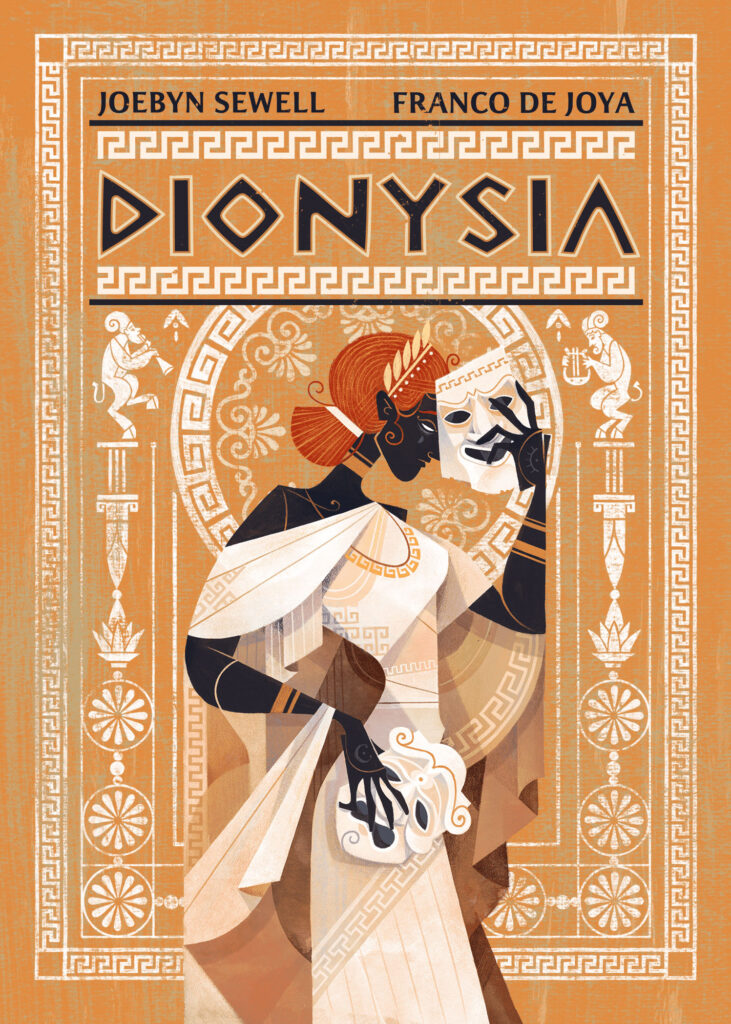
Western theater traces its roots back to Ancient Greece, with famous titles including Antigone, Medea, and Oedipus entertaining audiences with fun plotlines of suicide, infanticide, and incest/murder, respectively. We’ve come oh-so-far since then, with the likes of SpongeBob SquarePants the Musical gracing the most esteemed stages. Well, now, dear gamer, it’s your turn to create […]
An Impossible War: The First Carlist War in the North, 1834-1838 from Bellica Third Generation is a block wargame that recreates the First Carlist War in the North of Spain which was a civil war between the Carlists who supported the succession of the late king’s brother Carlos de Borbón and the progressive and centralist supporters of the regent Maria Christina acting for Isabella II of Spain who were referred to as the Liberals. The game uses blocks representing units but also includes counters and uses cards. I was able to play the game about a month or so ago with Francisco Ronco who owns the publishing company Bellica Third Generation and very much enjoyed the game and how it represented this interesting struggle.
In Action Point 1, we took a look at the Game Map, discussing the point-to-point movement configuration, the various spaces and the delineation of the Carlist versus the Liberal Zones, as well as explained the use of the Rest of Spain smaller map. In this Action Point, we will examine the units available to both sides and cover the importance of Supply.
Units
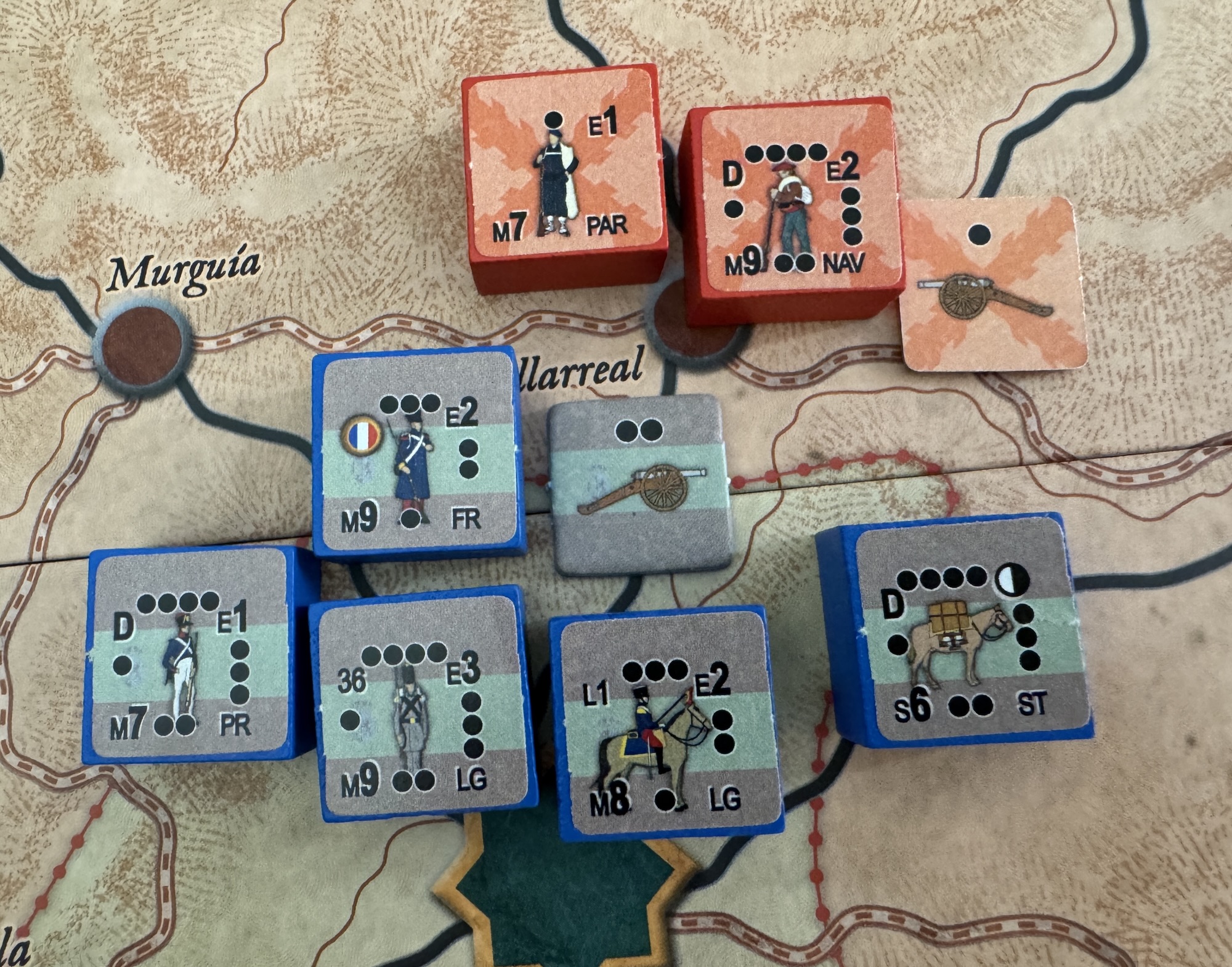
Units in the game represent Carlist (red) and Liberal (blue) armed forces, as well as the logistics needed for these troops to operate in hostile territory. Most of the units are wooden blocks including Infantry, Cavalry, and Supply Trains but there are also cardboard counters representing Artillery, both Field and Mountain, and Knapsack units, which are limited and temporary supplies that are transported by the soldiers themselves.
Let’s first take a look at the scale of the game and the units. With Infantry, a single Strength Point is roughly equivalent to a battalion consisting of between 500 to 800 fighting men. The only difference in the Infantry scale between the sides is a Carlist Partida unit, which represents a variable number of local guerilla fighters who are loosely organized in the amount of about a hundred men. For Cavalry, a Strength Point is equivalent to a squadron consisting of about 100 horsemen. For Artillery, a Strength Point is equivalent to 1 or 2 batteries made up of between 4 to 12 cannons of different calibers. The Supply units for the game are a very interesting and granular approach to supply and I very much enjoyed the juggle of keeping these units in good shape and with large moving armies. A Supply Train, which is represented by a block unit with the picture of a pack horse on it, represents a group of carts and pack animals that transport the needed supplies to keep an army in the field including food, munitions, and baggage. On a smaller scale are the Knapsacks that represents the food and munitions carried by the soldiers themselves.
As a Block Wargame, the Infantry and Cavalry Blocks used have various dots located along the edges of the blocks. Some blocks have 4 steps while others have less but usually no less than 3 steps. The exception to this general rule is the Partida units that only have 1 step. The current combat strength of the units determines how many 6-sided dice will be rolled in combat. During combat, for each hit that a unit receives, its strength is reduced by 1, which is shown by simply rotating the block 90 degrees counterclockwise. If a block is reduced below 1 strength then it will be eliminated.
Supply Train Blocks also have pips located on the block which represent the units ability to provide supply to other units. When the Supply unit provides supply to friendly units located in its space, its strength will be reduced by 1 pip by rotating the block 90 degrees counterclockwise. If the block is reduced below 1 strength then it is eliminated. No dice are rolled for a Supply Train in combat as it is solely a logistics unit rather than a combat unit. Supply Capacity is indicated on the units by the letter “S” and a number, such as S6 or S2. The number is the amount of friendly Infantry and Cavalry units that a Supply Train or Knapsack can supply during the Supply Check. A Supply Train with S6 can supply up to 6 friendly Infantry and Cavalry units in its space. A Knapsack with S2 can only supply a maximum of 2 units
Artillery counters show the current strength with the number of pips on the visible side of the counter. The strength determines how many dice are rolled in a Skirmish and how many points of Artillery it will contribute to
a Battle. Artillery units do not receive hits in combat, but they can be eliminated or captured if their side is defeated.
Now that you know the makeup of the units and the various forces represented, let’s take a very quick look at the statistics of each side’s combatants. Before we go any further, I am very hesitant to provide these details as I have gone over them about 10 times and am sure that I miscounted or left out certain units and their abilities. But, this look should give you an overall feel for the differences between the units and their general fighting abilities.
Carlist Units
The Carlist player will have access to a total of 26 units. These include 4 Cavalry, 21 Infantry, amongst this number are a total of 3 Partida units, and 1 Supply unit. The Effectiveness Rating for these units, which as described above equates to their fighting prowess with the higher the number the more likely they are to hit in combat, are shown in the below table with 5 units with an ER1 (20.0%), 16 units with an ER2 (64.0%) and just 4 units with an ER3 (16.0%). Keep in mind that Supply units do not have an ER as they are non-combatants.
Liberal Units
The Liberal player will have access to a total of 48 units. These include 10 Cavalry, 35 Infantry and 3 Supply units. The Effectiveness Rating for these units, which as described above equates to their fighting prowess with the higher the number the more likely they are to hit in combat, are shown in the below table with 12 units with an ER1 (26.6%), 29 units with an ER2 (64.4%) and just 4 units with an ER3 (8.9%). Keep in mind that Supply units do not have an ER as they are non-combatants.
By way of comparison, you can see that the Liberal Units have a slightly better average Effectiveness Rating (1.82 per unit) as compared to the Carlist Units (1.64). This difference is a bit deceiving though as the Carlist player actually has the same amount of ER3 units (4 for the Carlist player vs 4 for the Liberal player) but as a percentage of their total units they have 16.0% of their units as ER3 as compared to just 8.9% ER3 units for the Liberal player. This means that the Carlist units are a bit better and will generally have better units making up their forces than the Liberal player in any given battle.
The real comparison, and where the difference between the 2 sides stands out, is in the area of Morale. Morale is indicated by the letter “M” on the units and is shown as a number, such as M7, M8 or M9. This Morale number is the maximum result of the sum of 2d6 that gives a success in a morale roll. Each time during an activation that a unit receives 1 or more hits, it must then roll a Morale check. Morale checks are only made in Battle and never in a Skirmish, Assault, Pursuit, or Rout. If the Morale check fails, the failing unit will immediately be moved to the Demoralized Units Box. Morale is also key for Infantry that are being charged by Cavalry as they will make a Morale check and if they succeed they can initiate a counter charge. If they succeed the check then the attacking Cavalry will be spent and do no damage but if failed the attacking Cavalry unit fires and adds +1 to its Effectiveness Rating.
The Liberal player has an Average Morale value of their 45 units of 7.97 as compared to the Carlist player Average Morale value of their 25 units of 8.76. While not a huge difference, this slight edge to the Carlist player means that their units will be able to more often counter charge and stay on the battlefield as they will not break and become Demoralized as often.
Also, if you remove the 3 lowest value Carlist units, the 3 Partida units who each have a Morale Value of 7, this average becomes much higher at a 9.0 and really starts to show the significance of the Carlist advantage in Morale. In my play with Franciso Ronco, I felt like he definitely had the advantage on the battlefield, at least value wise in the area of Morale, but all it really took was for 1 of his better units to be demoralized and the odds became much more even.
The other advantage that the Carlist units hold is that they are typically fighting on their home turf and supply is much less stringent on their forces. The Liberal player must make consistent campaigns in the Carlist Zone of the board and this will require them to invest more into Supply units such as Supply Trains and Knapsacks.
I very much enjoyed the asymmetry between the Carlist and Liberal forces. It made for a very interesting tactical challenge for both sides as they have to play to their strengths and not get too overly concerned with the numbers. The Carlists will be much more mobile in their defense and look to exploit every gap in a supply line to move around and stay away from the numerically superior Liberal forces, whereas the Liberal player will have to move more methodically to take outlying towns and settlements to be able to shore up their lines and create less opportunities for end arounds by the Carlists. The disparity in the forces was a very interesting choice by the designer David Gómez Relloso and I am sure is reflective of the historical reality of the First Carlist War.
If you are interested, we posted an interview on the blog with the designer and you can read that at the following link: https://theplayersaid.com/2025/07/14/interview-with-david-gomez-relloso-designer-of-an-impossible-war-the-first-carlist-war-in-the-north-1834-1838-from-bellica-3rd-generation/
I also was able to shoot a fairly short video summary of my game play with Francisco Ronco who is the owner of Bellica Third Generation and you can watch that at the following link:
In Action Point 3, we will take a look at the Carlist Uprising Phase and what it means for the game.
-Grant
BGI 421 The One About Small Publishers Getting Tolkien Licenses
Board Games Insider – Join our Guild on Board Game Geek Guild | Like us on FB
Social media:
Ignacy Trzewiczek / Portal Games: website | FB | Twitter | Youtube
Corey Thompson / Above Board TV: website | Youtube
Stephen Buonocore / “The Podfather Of Gaming”: website | FB | Twitter | Youtube
Intro Music: Happy Rock – Bensound.com





/pic9429176.png)