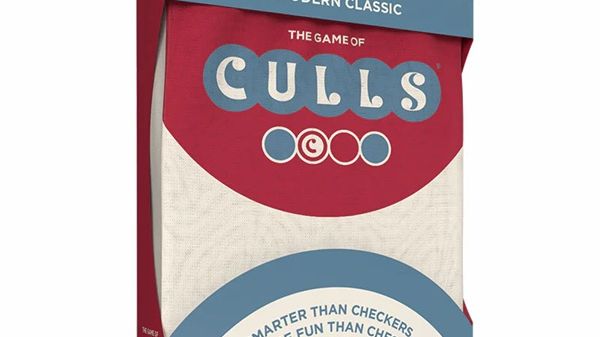
A recent episode of the Game Design Deep Dive, featuring the podcast host, Dan Bullock, in conversation with prolific board game designer of many historical and storytelling games, Cole Wehrle, got me thinking about something I had never really questioned before: who we actually are when we play board games. Player roles are often afterthoughts, taken for granted as part of the theme or setting. However, the more I thought about it, the more it became clear that they shape how we understand a game, how we make decisions, and even how they influence our emotions as we engage with what is happening on the table.
Popular game publisher CMON has been having a rough time of it post-tariff-idiocy period, forced to sell of their most profitable IPs and stop new campaigns, but to their credit they really did seem to hunker down and concentrate on getting promised crowdfunded games out to backers while slowly rebuilding the company. I think I’m even getting my Dune: Arrakis expansions soon, finally.
Metal Gear Solid: The Board Game is one of their underrated gems. I played the original computer game way, way back when, but these stealth and action mechanics are so solid, and feel so good, they could have been attached to any similar theme. The bonus for Metal Gear Solid fans is that the scenarios follow the first game’s beats so closely, which supplies a fun nostalgia hit. And like a video game, the scenarios introduce rules and new situations as you go, so you’re not overloaded from the start.
This game is nicely produced, plays smoothly (despite a long-winded and badly organised rulebook), and just works. Stealth mechanics are hard to get right sometimes, especially when you add patrolling guards and security cameras into the mix, but MGS nails it. In between there are some fun boss battling segments that use a deck of custom behaviours to give the antagonists personality. Apparently the crowd-funded version came with a comic book which fleshed out the scenarios, and it is missed here, but you can easily live without the bonus big walker miniature.
In the end, I’d trade one really solid, fun, well-designed game like this for shed-load of useless Zombicide and Marvel-themed plastic crack, but that’s just me. Definitely recommended!
This article is an attempt to starting clarifying my (evolving) thoughts about Slay the Spire II by putting them into words. There are presumably (much) better players than me, but are they writing anything? My normal answer is ‘Nope.’ but actually Youtube is awash with videos by people who monetize content, so actually there are. But you are here, so presumably you like the printed word over audiovisual.
I’ve played … a lot. Probably 200-250 hours solo1. Right now I’m at a roughly 52% solo win rate3 on the most difficult ascension level (A10) in Slay the Spire II, which is approximately where I was at on the most difficult ascension in the first game first game, but that was with Act IV, which doesn’t exist yet.
So … not great, but not terrible. Good enough to pounce on a great card/combo when it shows up; not good enough to jury-rig a win out of spare parts. (This influences my thoughts). My “micro” could be better. I often take a few extra points of damage due to negligence; which is a huge leak on my win rate; but I’ve been getting quite a few more “almost” wins, which is a good sign.4
This post is just a mish-mash of thoughts, but not really re-hashing general thoughts from the first Slay the Spire that transfer. (A few for emphasis). I was going to write some thoughts on cards/etc, but those are ever changing. For clarity, I’ll do this as bullet points.
You play three of your five cards each turn (in a simple world where everything costs one). So you’d like 1) huge attack(s), to end the fight or when you aren’t attacked 2) huge block(s), when you are being attacked 3) flexibility for the remainder (often long term scaling, covering weaknesses, etc).
You don’t care how many “cards” you convert to attack/block/whatever, you want to be able to convert your mana to attack/block/whatever efficiently. This means a “2 Mana — Block 12” card is often (much) better than a “1 Mana — Block 7/8” … you’d get more with two of the latter in your hand, but that also requires two card picks.
Realistically, early on you’ll play 2/3 mediocre attacks/blocks. Starter decks lack density.
Playing two-three cards leaves room for cards that are dead most of the time (or all of the time for curses), but solve an important fight or two.
But, Dead cards leave you vulnerable to variance, particularly multiple dead cards. If you only have three cards you can play, your only choice is the order/targets. So (some decks) may want a bigger deck, to double the staples, which creates space for more specialized cards.
Extra block survives more variance than extra attack (because if it doesn’t win right now, you take a hit). Even in Act I the elites (and some hallway fights) dish out 20+ damage a turn.
The more I play the happier I am taking two cost block cards.
This does lead to decks that block for 5 turns then get outscaled, but I lose less often that way than to being to aggressive. I still need to tune that variable.
As I get better I’m more prone to save a potion for a boss/problem floor.
I’m fine skipping elites in later acts once I’ve bottled the lightning, unless I’m just confident in the matchups. Even a good start needs to snowball.
The Act II ancients give you a lottery ticket that’s a winner, but often just a small/medium winner. The Act III Ancients usually grant a golden ticket.6 I am OK having no idea how I’m going to beat the Act III bosses if I feel confident that I can get to Act III, and let the blessing (hopefully) clarify things.
Act I
Act I is tough7. In StS 1 I’d sometimes die to an early Gremlin Nob (before the middle floor treasure) or the Act I boss; in this version I perished in Act I often — a too early elite or just damage accumulating 3-4 floors in a row. The elites hit hard. For a while I was skipping most of them, but you have to start engine building. To win you need a cornerstone: a card/relic that provides a clear direction towards victory. It may not be the best option, but a cornerstone is an understandable option.
In early games, I hit an early elite and died … then realized my deck would have lost to any of the elites. But that just delayed the loss to the Act I boss or early Act II You need to start that snowball of growth. A good deck will roll through the second half of Act I like butter. Now I prioritize hitting as many late elites as I can, or trying to highroll a gift from Neow into a deck that can hit an early one … and then decide how many elites to take. Ideally I’d fight 3-4 elites in Act I (as late as possible).
Why fight them? If you get 10 relics 7-8 of them are going to be “yeah, that’s OK” but the great ones really help and form your cornerstone. (Best get it early, then you can work on combos and covering weaknesses). Elite fights are lottery tickets, but you aren’t going to win on slow steady investments. You need to hit the lottery (rare card or relic). As you get better what counts as a hit will grow.
And it’s not like the hallway fights are cakewalks. (Moreover, there are only three elites and you won’t duplicate until you’ve seen them all, so you can often tailor your picks against them. The hallway fights have a much bigger pool to select from). Even the events are a mixed bag.
Neow’s Gifts
(I have much less experience with the new ones that just appeared a few weeks ago).
Great
Leafy Poultice is my top pick. You trim out two basic cards via transformation … and get two lottery tickets that may have downside (at worst, a do nothing curse), but usually are strict improvements. Sometimes you high roll and a solid foundation. Losing Max HP is next act’s problem (mostly).
Silver Crucible — Getting an early “Common Attack+” or “Common Block+” really helps your deck’s density and with three upgraded cards you can handle the early elites (maybe not well, but you’ll likely survive). An early upgraded uncommon (or rare) can snowball.
Cursed Pearl … sure the curse is bad (a dead card roughly every other turn at the start), but that first store will hopefully give you at least a spark to bottle, if not lightning. (Golden Pearl to a lesser extent, and these both assume an early store).
Stone Humidifier is another big deal. I know I said Max HP could be ignored for now, but Stone Humidifier can let you skip a few elites for extra rests. Each rest becomes “Upgrade a card OR take a +5HP relic when you rest” (if upgrading a card isn’t that important. Also, Miniature Camp and Waterfall Giant are in the game and a high max HP is a great way to avoid a random loss due to variance. But in the last few weeks I think I might downgrade this a notch.
Winged Boots — These let you path very aggressively into multiple elite fights where variance would likley kill you 25%+ of the time. You take the first fight, if it goes great, you take the second. If not, you jump over to a rest.
Avoid
Precarious Shears — Removes two cards (like the Poultice), but has no possible upside and 13 damage (as compared to Max HP) is a big problem right now.
Lava Rock — You need help now, not at the end of act I.
Neow’s Torment — 10 Damage and some cards back is OK, but there is almost always a better option.
Anything not listed is OK … I certainly take Lead Paperweight and Pomander often enough, I’m just not terribly psyched when doing it. I’m actually kind of fond of Neow’s Talisman, which just upgrades a strike and defend. Partially because the Spiral enchantment event shows up fairly regularly (replay one) and also because removing all your strikes and defends is much harder in this game than in the first. You are probably carrying a 1-2 of them throughout the game. The defend (in particular) can really help with the chip damage accumulating across fights.
Overgrowth vs Underdocks
This has been discussed elsewhere (Jorbs covers it in a video) so I’m not going to touch on it too much, but be aware of which elites are in the pool and which aren’t. The big “Bomb” in the Overgrowth is the Bygone Effigy, a cakewalk if you can slam out the 132 (!) damage by the end of turn 3 (or turn 4, taking a single hit). Without the Effigy, if you can just block for 15-20 a turn (and still do reasonably damage) you’ll be fine, particularly if you have some AOE damage. With the Effigy‘s high HP and massive hits, you need a damage source (or slow source). Both Byrdonis and the Phrog Parasite scale up …. Byrdonis by adding strength and the Parasite by shoving junk into your deck. So you are going to want to favor attack over defense, since long term fights don’t favor you. (Byrdonis is arguably more dangerous than the Effigy, but it’s less of a Bomb. Both are damage races; both can kill you but since Byrdonis attack each turn you probably have to eat 20 damage even if you win on turn three (just going all out) but Effigy gives you three free turns, so a one turn difference is a bigger jump.
But in the Underdocks you can focus more on block than in general. Sure, the Phantasmal Gardners grow (slowly), but they punish multiple hits (and the Skulking Colony caps damage per turn). The Terror Eel is trickier, but big block + poison will work great, unlike in the Overgrowth.
The Underdocks (literal) Bomb is Waterfall Giant, responsible for over 8% of my deaths in the game8. Impressive considering it only shows up in ~16% of the games! If your deck is a fast attack deck, you might kill it but still need to tank a hit for 30 (either having block or enough HP left), and if your deck is a big block deck, you are probably slower and will need to tank a bigger hit. The Waterfall Giant is one reason I like the Stone Humidifier. A higher Max HP means a higher current HP in your final fight, so you can eat a bigger hit. This is also true of the Act III double bosses, where you need a buffer (unless your deck is absolutely purring), but with the Giant you need it.
There are few enough runs that a single win will drive it up and then drift down, but “1 in 20” seems roughly correct. ︎
Multi-player games are a whole different thing, with a win rate around 15%. I attribute this to the fact that a) either player can “go off” and win the run more-or-less solo (or with a the partners dealing with a troublesome fight and/or providing support) and b) sometimes you die due to variance in either game, but in multiplayer you get resurrected when your partner survives the fight, a recovery not possible in solo. ︎
My win rate also crept up after the first adjustments, make to make Act I easier and Act III harder, and I think this is not variance. I have not tried the Beta branch. ︎
Cliff note’s version: 1) Improve your Worst turn, 2) Improve your Best Turn, 3) Condense your Solution, 4) Improve your initial velocity, 5) Don’t overscale, 6) Understand Short term value vs Scaling Density & 7) There is a max hand size ︎
Darv (the merchant who offers relics from the first game) complicates things because he can show up in either Act. ︎
Written before the first balance patch of ~3 weeks ago. Still true, less so. ︎
This was written a month ago, before the patch, and a) he is now slightly weaker and b) I have really focused on beating him. Now he’s back in line with the rest of the baddies. ︎
In today’s flashback post, we’ll look at articles about project videos, after campaign communication, refunds and guarantees, April Fools Day, and managing stress.
Creating a Polished Project Video (#166): For the Scythe trailer, I decided to create a professional project video. Accomplishing this included selecting a capable, professional, and communicative designer, laying out the storyboard for the video, hiring a voiceover actor, find and hiring a music composer, and finally, working with the video designer to implement any final edits. Having a professionally produced video provides an opportunity to debut your video with some fanfare, something we’ve done for every game we’ve launched since this Scythe trailer.
The 4 Questions Creators Receive After the Campaign Ends (#167): I’ve noticed a pattern in the types of questions I received after each campaign. They usually consist of 4 different questions: 1. “I forgot to add ____ to my pledge. How can I do that now?”, “I didn’t pledge on time. Can I still back the project?”, “Can I cancel my pledge?”, and “My credit card didn’t work, but I still want the reward. Can I pay some other way?” Learning to expect these questions (or possibly have them answered in your FAQ) can speed up your after-campaign communications!
How Kickstarter Refunds Work and the Results of the Between Two Cities/Treasure Chest Money-Back Guarantee (#168): To refund a backer, go to the Backer Report, search for the backer, and click “Issue a Refund.” There you can refund all or part of their pledge, and they’ll see the refund on their credit card statement a few days later. If you give the backer a full refund, they will no longer be able to comment on the project. However, unless the refund is made within the 14-day grace period after the campaign ends (when the money is on hold), you will lose the roughly 8% fee charged by Kickstarter/Stripe. So if you send a backer a full $100 refund a few months after your project is over, the backer will receive $100, but you will incur a net loss on the original pledge of about $8. As for the our money-back guarantee, I can report only 7 backers of Scythe chose to send their copy back for a refund. I share this because I know it’s scary for creators to offer a money-back guarantee. I’m not saying it’s a good fit for you in the same way that it’s a good fit for us, but it can help create certainty.
How to Have Fun with Your Backers (#169): April Fools’ Day has a long tradition in relation to Stonemaier Games. On a day full of jokes, it’s tough to take anything on the internet seriously, and the last thing I want is to confuse backers. For a company, April Fools (and any time you want to have fun with your backers) shouldn’t be about fooling your customers. Rather, it’s about having fun with them in a way that demonstrates value. So don’t take yourself too seriously, absolutely don’t confuse your backers, and find a way to highlight what you already do well. Back when this article was published, I chose to announce 24/7 customer service. ;)
My Job Is Stress Relief…and I’m Not Very Good at It (#170): Oft-cited billionaire Mark Cuban took me off guard with this unexpected quote: “One of the ways to be incredibly successful no matter what you do is to reduce the stress of those around you.” I’ve ever heard this attributed to success. And I really, really like it… I’m just not very good at it. I’m starting to see how I could improve my customer service in general by changing the focus to reducing stress. And not just customer service–this is something I can do better with my business partners, freelancers, retailers, and other companies I work with. I can have better relationships and thus make Stonemaier more successful if I’m always trying to reduce the stress of those around me, often by clearly communicating and predicting future questions.
***
If you have any questions or thoughts about these topics, feel free to share in the comments!
Everything seems to get ever bigger. Cars. Phones. Board game boxes. And the cities whose history and board games we explore are no exception: We started with Venice, moved on to Amsterdam, and today, we’re starting with New York. I say starting, because unlike the previous two cities, there is no way to do the vast number of board games set in New York’s history justice in a single post. Thus, this will be a mini-series with (tentatively) three instalments.
Names are given by people. “New York” was what the English called the settlement they took over in 1664, but the place had been inhabited by thousands of years before. While that is thus technically not the history of New York, we’ll take a short look at it.
We don’t know very much about the first humans to live in what would become New York: The indigenous people did not keep written records. Archaeology is hard to do in a place which is almost entirely covered in buildings and streets today. And the oral tradition of the Indians was largely destroyed when the westward expansion of the European colonists pushed them out of their native homes, broke up their communities, and finally confined them to reservations.
Five hundred years ago, several thousand Lenape Indians inhabited an island they called Mannahatta (“island of many hills”). They lived off slash-and-burn agriculture, hunting, and fishing. I am not aware of any board game which depicts their lives before the arrival of the first Europeans, but I think it would be a nice change of perspective while still retaining the familiar geography which draws many board gamers (of course, especially those from New York and its surroundings) to games about the city.
In 1524, Giovanni da Verrazzano, an Italian explorer employed by the king of France, sailed into what would be called New York Bay. There, he met a group of Lenape in their canoes. He called the area New Angoulême to honor the French royal house of Valois-Angoulême. For the next century, European fur traders would occasionally visit the Lenape, but not attempt to build a permanent presence.
Nieuw Amsterdam
Only in the 1620s did the Dutch, by then the premier commercial and maritime country of Europe, decide to colonize parts of North America. They resolved that this colony should include Mannahatta to take advantage of the rich beaver population whose pelts were much sought after in Europe, and put the merchant Peter Minuit in charge of the operation.
Minuit arrived on May 4, 1626. He met with some of the Lenape, and, according to his written report to Europe, purchased the southern tip of Mannahatta from them for trade goods worth 60 guilders. Even though nobody knows any details beyond Minuit’s own account, the deal is the founding story of New York. One thing that stands out about it is that it was a business transaction. Unlike other cities in North America, New York was not founded by a royal agent or religious refugees, but in the spirit and through the means of commerce (which has since remained the supreme political order and religious faith of New York). In that sense, Minuit’s purchase is either a very smart business move – after all, a large tract of land in such a prime position was surely worth more than the trade goods he handed over – or the hostile act of an unscrupulous merchant taking advantage of the less business-savvy (both actions hallmarks of New York’s commercial culture until today). Beyond the foundational myth, the transaction mostly shows different ways of thinking about land – the Lenape only accepted the right to temporarily co-use it, whereas the Europeans subscribed to the tenet of permanent, exclusive ownership.
While the Dutch colonized the whole mid-Atlantic coast of what is today the US, their settlement on Mannahatta was meant to be its center – as evidenced by its name of Nieuw Amsterdam (New Amsterdam), after the Dutch capital. Nieuw Amsterdam grew into a trading hub based on its deep natural harbor, the best on the Atlantic coast. The fur trade was soon complemented by Dutch farms which extended ever further north on Mannahatta, which triggered conflicts with the Lenape. This period is represented in New Amsterdam (Jeffrey D. Allers, White Goblin Games), which casts its players in the shoes of Dutch traders who will gather resources and expand New Amsterdam (at the expense of the Lenape).
Nieuw Amsterdam already contained the seeds of some characteristic New York traits: Its demographics diversified (Africans lived in Nieuw Amsterdam in 1626 already, an Italian followed a few years after); and the municipal council established in 1653, the first of its kind in America, was the start of the great democratic tradition of the city.
The English Colony
The Dutch colony did not last long. When the commercial and maritime rivalry with England flared up again, an English fleet seized Manhattan in 1664. To honor the heir presumptive, James, Duke of York, they renamed the city New York. The Dutch briefly recaptured the city in the next Anglo-Dutch war, but had to cede it permanently in 1674.
New York’s fine deep-water harbor was as valuable to English as it had been to Dutch traders, and the city continued to grow larger and more prosperous. When the British parliament imposed taxes on the American colonies from the 1760s on, the merchants of New York found themselves in a bind: On the one hand, like all entrepreneurs, they resented being parted from money. On the other, a rupture between Britain and its American colonies would cut off trade entirely – much worse than having to pay a moderate due. New York became thus both a hotbed of anti-British activism and one of the places in the American colonies which least wanted a war with the British motherland.
Fierier heads than those of the New Yorkers prevailed. War between Britain and the colonies erupted in 1775. Once George Washington had expelled the British from Boston in the first major action of the war, he moved his headquarters to New York. The city was thus the biggest possible prize for the British smarting from their first defeat. If they could beat the colonials there soundly, force Washington to surrender with his army, they could still quash the rebellion quickly… or so they thought. The amphibious campaign against New York would become the biggest operation of the entire War of Independence. While the British defeated Washington’s army and took the city, the wily colonial commander extricated most of his forces and lived to fight another day. The city of New York, however, would remain under British occupation for the rest of the war.
The British occupation cut New York off from its sister colonies. Many New Yorkers fled to towns which were under control of the American rebels. The loyalists left the town when Britain recognized American independence. In 1783, New York’s population had fallen by 60% compared to the pre-war number of 30,000. From then on, however, the city would know nothing but spectacular growth for over a century… but that’s a story for next time.
For a concise introduction, especially focused on local politics, see Lankevich, George J.: New York City. A Short History, New York University Press, New York City, NY/London 1998.
If you want a treatment which is both more in-depth and more journalistic (and lavishly illustrated) and don’t mind its history practically ending around 1970, see the book version of the 17-hour PBS documentary from 1999: Burns, Ric/Sanders, James/Ades, Lisa: New York. An Illustrated History, Knopf, New York City, NY 2001.
The humidity clings to your skin as neon reflections shimmer across rain-slick streets. The city is strangely alive with quiet ambition and louder dreams. Towering skylines loom above bustling districts, each corner a promise of profit, each landmark a prize waiting to be claimed. Deals are struck with uneasy confidence, plans unfold behind knowing smiles, and every move carries the weight of opportunity. In this restless urban theatre, only the sharpest minds will rise above the crowd. Welcome to Singapore Showdown by Eugene Lim from Genie Games with art by Marcus Quek.
“Someone else always has to carry on the story.” -Bilbo Baggins, The Fellowship of the Ring, J.R.R. Tolkien
Disclosure: played 6 time, beat the game in legendary
We’re both The Lord of the Rings fans (the extent of which we’ve mentioned in this other LotR game review). When we were looking for games to get at Spiel Essen ‘25 on the Spiel app, we saw that a game called The Lord of the Rings: Fate of the Fellowship was going to be available there. We found out that it’s co-op and by Matt Leacock, so we decided to add it to our list of potential buys. Unfortunately, it was already out of stock when we arrived at the publisher’s area, but the world made us feel better by allowing us to say “Hi” to Matt Leacock and get a signed poster from him.
We finally got ourselves a copy from a friendly local game store earlier this year. We were very excited. The box isn’t too big, but it has plenty of components inside. The first thing we did was to assemble the dice tower. We were thinking about how well-made the cut-outs were. It was beautiful, but when we tested it with three dice, a die got stuck inside. We followed the instructions to a T and made sure that all the parts were in place*. We checked everything, nothing wrong with the assembly, there just happened to be a shelf inside that dice could get stuck on, especially when throwing in more than two dice.
The components
We also liked the other components, especially the wooden troops; they were so cute. We also liked the wooden standees and the other wooden tokens. After checking out the components, we set up the board and assembled the Nazgûl miniatures. It was a bit frustrating because some of them didn’t fit the stands well. We were thinking about adding glue just so they wouldn’t fall off the stands (but we haven’t yet, so we just have to deal with it occasionally when we play). The game board is big and some of the cards are bigger than regular-sized cards. As such, setting it up needs a lot of space (at least 100 x 125 cm for two players).
Wooden troops (shadow troops not included)
During setup, there are two markers that players need to put on the board: the Hope marker and the Threat Rate marker. The Hope marker goes to the Hope track; this
determines how much hope the characters have left. If the marker goes down to zero, the game is lost. It’s really nice that they use the term “hope”. If the characters lose hope, the world falls apart. This is a great mechanical representation of the importance of hope in LotR. The Threat marker, on the othre hand, goes to the Threat track, which tells the player how many Shadow cards from the Shadow deck need to be drawn. The more cards you draw, the higher the likelihood that a troop will spawn, a troop will move to conquer havens, and the Nazgûl will search Frodo. Higher Threat speeds up the loss of Hope. We like how the Shadow deck works. Most Shadow cards have two different sections. The section to resolve is determined by whether the top of the deck has a banner or a flag, which we think give more variety to the game and makes it less predictable than the original Pandemic.
For the intro level, each of us must play two characters. Frodo and Sam (considered to be one character, just like Merry and Pippin) should be played in all games. For the first game, the set of characters is assigned to each player, but for subsequent games, the other three characters are determined by the randomly chosen objectives or are chosen randomly. We’ve never really been fans of not being able to choose a character freely, but we understand that it’s that way to make it more unpredictable for players to know what’s going to happen in a game session, which does increase replayability.
The number of objectives that need to be completed is based on the level of difficulty chosen. Regardless of difficulty, the ‘Destroy the One Ring’ objective is always the final objective. The other objectives, which must be fulfilled before finishing the final one, are chosen randomly. We really liked the objectives, how thematic they are and how tied the characters are to them. The objective cards made each of our games very different. LotR nerds can easily see how much they want to be loyal to the books (Legolas has brown hair in this game!) while also keeping the game’s mechanisms interesting and balanced.
On our turn, each of us can only perform five actions in total. One action must be performed by one character and four actions are performed by the other character. We liked this mechanism since it allows us to think more carefully in terms of the allocation of actions. This game doesn’t have a communication limit, so we were able to talk about strategies and help each other decide how to use our actions. There are six standard actions that almost any character can take, and characters can have additional abilities and actions on their character card. After performing their actions for the turn, the player draws two player cards.
The player card deck contains randomly selected event cards, Skies Darken cards, and region cards. The event cards allow the player to do an event any time in the game, even on another player’s turn. They serve as free actions. The Skies Darken cards increase the Threat level and can, in the wrong circumstances, even decrease the Hope level. The region cards contain symbols, which are required to perform some actions, to re-roll dice, or to remove extra troops after a battle. One interesting symbol is called Resistance, which is represented by a ring symbol. We assume it symbolizes resisting the power of the One Ring.
After finishing a Legendary game
We won the introductory game, but lost the standard game the first time. We won again and won the other difficulty levels as well. The first game was quite difficult, but it got a bit easier as we played more, even when we increased the level of difficulty. But in a way we felt that we were just lucky whenever we won because of the dice-rolling mechanism that happens (which is dependent on how low Hope is and how many Nazgûl there are in Mordor, which means that if the Hope meter is full and there are no Nazgûl in Mordor, then no roll is required) once Frodo and Sam reach Mount Doom and Frodo tries to destroy the Ring using five Resistances.
Our Final Thoughts:
Fate of the Fellowship is a really good game. One can see the amount of effort that was put into it. Despite the slightly underwhelming fulfillment we felt whenever we won, all the games that we had were fun. The different possible sets of objectives and events, and the way the Shadow cards work, made us more engaged and excited. Sometimes we would smile, thinking about how different the paths and choices our characters took were from how it happened in the books. It’s like the characters are in alternate worlds but the only thing that is necessary and can never change is the destruction of The One Ring. Even if the final objective is always the same, the variety from the objectives and the choices we made made for a very fun game each time. As they say, it’s sometimes about the journey, not the goal.
What we like:
assembly and storage of dice tower
randomized sets of objectives
theme-mechanism relationship
mechanism of the Shadow Deck
emergent story-telling
the concepts/keywords
Legolas’ hair
What we do not like:
the final dice roll (if required) sometimes doesn’t matter
some wobbly Nazgûl
What Kaysee also likes:
well-written rulebook
What Kaysee also doesn’t like:
Legendary level doesn’t feel significantly more difficult than the standard level
Winning doesn’t feel rewarding sometimes
What Max also likes:
replayability
Kaysee’s rating: 4/5
Max’s rating: 4/5
Combined rating: 4/5
*It’s not. We flipped one of the pieces, and now it’s fixed. Please see boardgamegeek.com/thread/3542211/anyone-with-problem… for more info in case you experienced something similar for more info in case you experienced something similar.
Reference:
Tolkien, J. R. R.(1991). The Fellowship of the Ring. HarperCollins.
Title: The Lord of the Rings: Fate of the Fellowship
Game Design: Matt Leacock
Illustration: Jared Blando, Cory Godbey
Publisher: Z-Man Games
I recently had an excellent, candid, meandering chat with Peter Vaughan (Cardboard Alchemy), facilitated by Will from the Hungry Gamer YouTube channel. Peter highlighted some really important reasons that publishers–even experienced publishers–consider crowdfunding, including a revelation about changes in distribution and localization.
I believe that crowdfunding remains an incredible tool for all types of publishers, especially newer creators, established publishers who are undergoing an important change, and publishers who want to offer super deluxe version priced beyond the limits of retailers. Here’s a quick checklist of considerations for new creators considering crowdfunding.
There isn’t just one way to serve customers, and I love seeing publishers trying and refining different methods to accomplish that goal, even if their methods are different than ours (we wait until our products are ready to ship before launching them on our webstore, like with the upcoming Finspan: Sharks & Reefs and Euphoria Essential, both on May 13).
Feel free to check out our 35-minute chat if this is a topic that interests you or that you’ve been debating. I’d love to hear your thoughts in the comments!
I’ll rest easier when I know they’ve reached shore
Peter checks out the packed new starter set for Dystopian Wars – Dominion of the Dragon!
Warcradle keeps hitting it out of the park with their releases and they’ve followed up the recent complete revamp of the Dystopian Wars rules with a brand new starter set packed with goodies – everything you need for two players to start playing this exceptional game of steampunk naval combat. Let’s check it out!
Making high quality tabletop gaming content at the EOG takes time and money. Please consider becoming a Patreon supporter or making a donation so I can continue this work! Thankyou!
Legacy games have probably had their golden days. They were something new that hadn't been done before in our hobby. They promised a unique experience of a game that would change as you played it. Not only that, the change would be permanent, requiring you not to only remove components, but actually destroy them, or put stickers into the rulebook, onto the main game board or otherwise apply them to make an irreversible change to the game. However, as exciting as the idea was, it never sat comfortably with me. In this article, I want to talk about this in more detail.
The Banana Ball League, which started in Savannah, is a new type of baseball where the entire focus is on entertaining fans. In fact, Fans First is the title of the book written by founder Jesse Cole, and across several examples it’s clear the extent to which he applies this ideology.
Here are my top 4 takeaways from Cole’s recent chat with Simon Sinek on the A Bit of Optimism podcast:
Every game might be someone’s first game. The Bananas have an incredibly long wait list to watch them play–over 4 million people. So when someone attends a Bananas game, there’s a good chance it is their first game. Knowing this, the Bananas approach every game like their first (and perhaps only) chance for every fan to have a great time. I think that’s a neat approach to tabletop games too: What if my game is someone’s first game? Or it ends up being the only game they play for a long time?
Fans can impact the outcome of the game. One of my favorite rules twists in Banana Ball is that if a fan catches a foul ball, it’s an out. In some ways, this is akin to crowdfunding, where backers can have a direct impact on a game’s final form. In others, it’s more like a game being a living entity that fans shape over time via fan-made content (like Wingspan’s promo birds) or lore-driven decisions (like what Thundergryph is doing with Etherstone).
The fan experience is prioritized over the sanctity of the game. I love sports, but I think sometimes long-standing, classic sports forget that they are ultimately a form of entertainment, and that means evolving with the times. A brilliant example from the Bananas is this rule: After a game reaches the 2-hour mark, no new inning can begin. This effectively puts a time limit on a sport that is notorious for dragging on, instead prioritizing the fan experience.
Look at the game through the eyes of the customer. The Bananas travel around the US to a variety of baseball stadiums, and whenever they arrive at a new place, the first thing they do is walk through the stadium and look at the field from various perspectives, including the most distant seats. They do this to see the game through the eyes of every fan, as they want to make sure they aren’t just serving those in the first few rows. I love this mentality, and it’s a great reminder for me to approach our platforms in a customer’s shoes (the content we create, our website, webstores, how our games appear at local retailers, etc).
Have you been to a Savannah Bananas game? I’m hoping to go someday, and I’d love to hear about your experience.
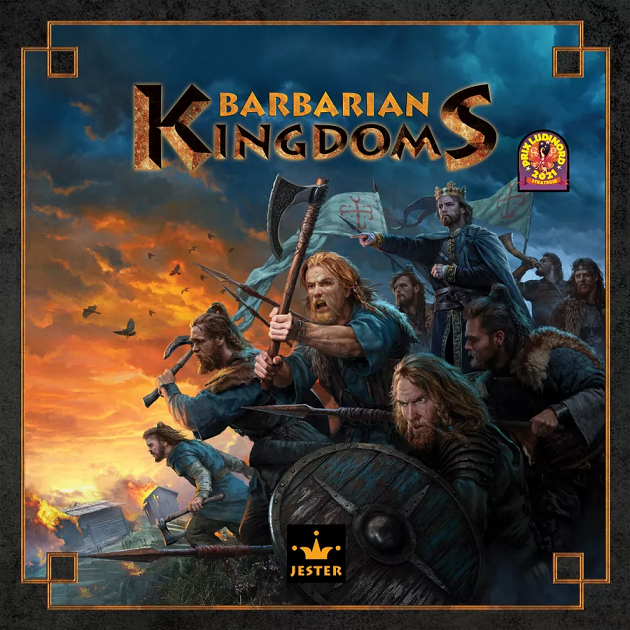
Barbarian Kingdoms is the kind of modest board game that comes in a standard sized box with a small selection of cards, a reasonable number of tokens, and a surprising absence of miniatures. While it is nearly two years old at this point, it actually appears more long in the tooth and weathered. I wouldn’t…
You've been woken from hypersleep. You're still a bit groggy, but it is clear something has happened. Something important. As the captain, you can't waste too much time. You have to get up to speed quickly. As your crewmate gives you a sitrep, it becomes clear that you have to act quickly. It's time to Escape Comics: The Alien Ship by Douglas Beech and Evan Duxbury from Jumping High Five Games with art by Maria Becvar.
“But you cannot trust us to let you face trouble alone, and go off without a word.” -Meriadoc Brandybuck, The Fellowship of the Ring, J.R.R. Tolkien
Disclosure: played more than 20 times, completed all the chapters and beat the game in endless mode
We’re both fans of The Lord of the Rings. Kaysee has seen the movies twice, has read the trilogy, and tried to learn the Elven language and their writing system. Max has seen the extended edition countless of times and has read the books even more, so it’s not surprising that we got very excited when we found out that there’s a cooperative trick-taking game based on The Fellowship of the Ring.
The box is really eye-catching. We really like its stained-glass look. It’s just so pretty that you wouldn’t hesitate to display it in your living room. And, like many other trick-taking games, it is compact (4 cm x 10.4 cm x 21.9 cm). It has three compartments inside, each has a ribbon to keep track of the chapters that you’ve finished. The components are as beautiful as the box. It only has cards, including the chapter cards, the main deck cards, the character cards, and the reference cards, and five wooden tokens.
The Components
The first setup was easy. Players only need the first chapter card, four character cards, two star tokens, the main deck, and the One Ring token. The chapter cards contain flavor texts related to the story and the chapter-specific rules players need to follow. The character cards contain character specific objectives that players need to fulfill, some chapters can modify or add objectives. There are short chapters and long chapters. Short chapters last one round, while long chapters take multiple rounds to complete. The star tokens are initially used to help players identify which characters are necessary in order to finish the chapter. For two players, three characters are selected. The deck should then be distributed as if there were three players. The hand of the “ghost player” should then be arranged in a pyramid form.
The Pyramid for two players
The player who gets the one ring card gets Frodo, the ring token and gets to choose and control the character for the pyramid. The second player chooses another card, but all starred characters must be chosen. It is not allowed for the second player to mention which character they would want to choose before the first player has chosen their second character(s). Talking about what suits you have is not allowed, but the advantage of having a pyramid character is that both players can partially see its hand. We like this mechanism, but we can imagine a scenario being impossible to complete if a specific character is the pyramid.
Frodo is the one who leads the first trick. To lead a trick means to choose any card to play, but the ring cards cannot be chosen to lead in the beginning. The next character, the one on Frodo’s left should match the suit played. If they don’t have any matching suit, they can play any card, even a ring card. After a ring card is played in this manner, the One Ring token gets flipped to its other side, indicating that ring cards may now lead tricks. Whoever plays the highest matching suit takes the trick unless the one ring card is played. The One Ring is the most powerful card in the game, as whoever plays it gets to choose whether to take the trick or not. Taking into consideration who takes the trick is crucial most of the time to complete the objectives and the chapter. We would suggest having three 6-sided dice to keep track of the number of tricks won. If neither of the players have D6s, a paper and pen would do. Take note that not all characters need to win a trick (as in the case of Pippin).
Every chapter and character has a different set of rules and objectives. Some chapters may take longer to finish than others. This is really good, as the different varieties make the game more exciting. That said, Kaysee finds the later chapters to be less exciting than the earlier and middle ones since there was tension that builds up in the middle chapters due to how the difficulty increases, but as one reaches the later chapters, there seems to be a drop in difficulty that can affect the excitement formed by the anticipation for something much more difficult.
Another thing that we both like is how the mechanics are connected to the theme. But there were a few times where some characters that could reasonably be expected to be available based on the story are in fact not. We assume it has something to do with the balancing of the game, so it’s not a huge deal for us. We also like the endless mode where the objectives may vary for each game.
The game is optimized for more than two players. To allow for a two-player game, the pyramid character was added. It works really well, but one player controlling two characters is something that we’ve both found mentally taxing at times as the decision making for the pyramid character is not shared.
Our Final Thoughts:
The Fellowship of the Ring is a beautiful co-op trick-taking game. The narrative and the theme were well integrated in the mechanics, and that’s really fun for those who like trick-taking games and The Lord of the Rings. People who aren’t fans of LotR may still like it due to the interesting changes of the mechanics in every chapter, but maybe not as much.
Although the decision making process is not equally shared for two players, we would still recommend it to two players who just want to play something less heavy and have some more relaxed evenings, especially if they are LotR fans and want to complain about how blond Legolas is in the movies and in this game.
What we like:
art style
campaign progression
connection between theme and mechanics
production quality
What we do not like:
extra cognitive load for one player
more optimized for more than two players
What Kaysee also doesn’t like:
less exciting in later chapters
What Max also doesn’t like:
the pyramid can sometimes make victory impossible
Kaysee’s rating: 4/5
Max’s rating: 4/5
Combined rating: 4/5
Reference:
Tolkien, J. R. R.(1991). The Fellowship of the Ring. HarperCollins. The Lord of the Rings: The Fellowship of the Ring – Trick Taking Game[Rulebook]. (2025). Office Dog.
Title: The Lord of the Rings: The Fellowship of the Ring – Trick-Taking Game
Game Design: Bryan Bornmueller
Illustration: Elain Ryan, Samuel Shimota
Publisher: Office Dog

 Anmelden


 ︎
︎