Normale Ansicht

Gorbachev and the Soviet Transformation (Reform in the Soviet Union, #2)

22. Februar 2026 um 17:06

Two weeks ago, we’ve looked at the first period of Soviet liberalization under Nikita Khrushchev from the 1950s on. While these reforms ended the era of Stalinist totalitarianism, they petered out when Khrushchev lost interest in them and was eventually overthrown and replaced by the more conservative Leonid Brezhnev. It would take another generation until a new Soviet leader, Mikhail Gorbachev, would undertake another broad reform program. These reforms – like last time, in the realms of domestic, foreign, and economic policy – are the subject of this article. Of course, you’ll also find a few board games in it!

Freer Press, Freer Elections

The Soviet Union’s political landscape had ossified under Brezhnev. This stagnation (or, if you want to phrase it more positively, hyperstability) also ruled out any experiments after Brezhnev’s death in 1982, and so the Politburo selected his loyal lieutenant Yuri Andropov. Unfortunately, Andropov was already 68 and severely ill then. He died in 1984, to be succeeded by another Brezhnevite stalwart, Konstantin Chernenko, who was similarly afflicted and even older (72 at his accession). Chernenko died in 1985. The rapid succession of aging Soviet leaders is poignantly captured in the contemporary joke: Margaret Thatcher calls Ronald Reagan: “It’s a pity you didn’t come to the funeral of the Soviet general secretary. Marvelous. A great spectacle. I’m totally going again next year.”

Cover of the English-language edition of Kremlin. Unfortunately, fake Cyrillic was once more irresistible, and so the R in Kremlin has been replaced with a Я (which would make the word Kyaemlin).

Another quasi-contemporary (1986) satirical take on the Soviet gerontocracy is Kremlin (Urs Hostettler, Fata Morgana): Players support the various Politburo members in the hopes of advancing those they have influence with to the top jobs, but many a hopeful candidate will die of stress and old age before realizing their ambitions.

After Chernenko’s death, even the most conservative Politburo members saw the need for a different tack: They elected Mikhail Gorbachev as their new leader in 1985, a real baby at age 54. Gorbachev’s reformist leanings were well-known, but he proceeded cautiously in his first year. As with Khrushchev, the big programmatic changes were first announced at a Party Conference of the Communist Party of the Soviet Union.

Gorbachev in Twilight Struggle (Ananda Gupta/Jason Matthews, GMT Games): The card effect can be used both defensively (shoring up the Soviet bloc in Eastern Europe) and offensively (breaking US control of Western European countries). Image ©GMT Games.

Gorbachev’s first slogan for his reforms was glasnost (openness). That included sweeping changes to Soviet citizens’ freedom of expression: Gorbachev encouraged the Soviet press to scrutinize politics instead of simply parroting the party line. Dissidents were released from prison. Even non-state-sponsored demonstrations were allowed – a powerful tool to express malcontent with the government. Of course, these reforms undermined the power base of the Communist Party – but Gorbachev hoped that he could steer the ship of state in the new environment and might even benefit from a freer populace.

Path dependence: Without The Reformer, the Glasnost event is usually not worth it – but with it, the card is a power play combining a VP payout with a massive four Ops. ©GMT Games.

Even more radical were Gorbachev’s institutional reforms, usually referred to as perestroika (restructuring): The Communist Party’s monopoly on power was cut off by establishing the Congress of People’s Deputies as an independent parliament, and while the first elections in 1989 were not fully free, it was the first time that Soviet citizens could select from several candidates in a contested election. Gorbachev himself chose to base his power no longer on his role as General Secretary of the Communist Party, and instead was elected President of the Soviet Union by the Congress of People’s Deputies in 1990.

This nascent democratization drive – eventually rather envisioned than enacted – makes for the most powerful card in the last phase (1985—1991) of the Cold-War-in-a-nutshell which is Twilight Squabble (David J. Mortimer, AEG): It’s a bit of speculation on the internal and external legitimacy and attractiveness a more democratic Soviet Union could have enjoyed.

Wouldn’t it be nice if the Russians could choose their own path forward in free and fair elections? ©AEG.

Détente, Arms Control, and Sinatra

Speaking of external legitimacy and attractiveness: Gorbachev’s policies (and he himself) would prove immensely popular in the West… after he had weathered the initial suspicion. Gorbachev began to advocate for a return to détente soon after he assumed office, but US president Ronald Reagan assumed this to be a Soviet ploy. Only after Gorbachev had met Reagan at the 1986 Reykjavík summit did the president believe Gorbachev’s intentions to be genuine.

Gorbachev (left) and Reagan (right) in front of the Höfði used for the negotiations in Reykjavík. Card “Reykjavik Summit” from Twilight Squabble, ©AEG.

In the following years, the two of them agreed on far-reaching mutual disarmament, most notably the Intermediate-Range Nuclear Forces (INF) Treaty. Gorbachev’s immutable advocacy for arms reduction is reflected in Wir sind das Volk! – 2+2 (Richard Sivel/Peer Sylvester, Histogame) as his event card cannot be used for the arms race.

There’s a lot of stuff you can do with the Gorbachev event… but buying ICBMs is none of them (icon in the top right). ©Histogame.

Besides the lofty realms of nuclear arms reduction, Gorbachev also had more grounded problems to deal with: The Soviet Union had invaded Afghanistan in 1979 to prop up the failing pro-Soviet government there and had been embroiled since then in a costly and futile counter-insurgency. As the Soviet military could not present Gorbachev with a convincing roadmap on how to win the war, he decided to pull the Soviet forces out in 1988. By that time, the unsuccessful war had undermined the Soviet government’s legitimacy which had rested on its status as a military superpower, exacerbated by the new avenues of political expression open to disaffected citizens – the mothers of Soviet soldiers who fought (or had died) in Afghanistan were among the first to form associations, to pressure the government, and to protest.

The best time to leave Afghanistan was last year. The second-best time is now. ©GMT Games.

In that sense, it is surprising that the withdrawal from Afghanistan can still net the Communist player points in 1989 (Jason Matthews/Ted Torgerson, GMT Games) – but the general principle holds true: The later the Soviets withdraw, the more their failure in Afghanistan becomes an asset to the opponents of Communist power.

Finally, Soviet power was the rock on which the Communist governments in Eastern Europe rested. Whenever they had been challenged – most importantly in Hungary in 1956 and Czechoslovakia in 1968 – Soviet tanks had quashed the dissent. This limited sovereignty within the Eastern bloc had been the central tenet of Soviet foreign policy, after 1968 named the Brezhnev Doctrine. Gorbachev adopted a new approach: He would not militarily intervene in Eastern Europe anymore. Instead, the countries of the Warsaw Pact were free to “do it their way” – thus humorously called the Sinatra Doctrine.

Contrary to popular belief, it was Frank Sinatra, not David Hasselhoff, who brought down the Berlin Wall. Card “The Sinatra Doctrine” from 1989, ©GMT Games.

Disruptive New Impulses for the Economy

Finally, Gorbachev’s reform agenda of perestroika also aimed to transform the Soviet economy. All Soviet leaders had engaged in some kind of economic reforms, so Gorbachev’s activity did not seem very surprising… until observers inside and outside of the Soviet Union realized how radically it would change the tenets of the Soviet economy, traditionally based on central planning, large state-owned companies, and very limited contacts with the outside world.

Perestroika is a boost to Communist energy… unless, of course, the Democrat draws it and plays it on the last action round of the turn. Card “Perestroika” from 1989, ©GMT Games.

First, Gorbachev gave the state-owned companies much more leeway over what to produce and how to set prices. These market incentives were supposed to improve efficiency, but clashed with the existing structures.

Undeterred, Gorbachev went a step further and loosened the restriction on private enterprises. More Soviet citizens could start their own store or workshop and offer goods and services at their own responsibility.

Then, Gorbachev allowed for joint ventures with Western companies (provided the Soviet part owned a majority share), and even let them set up dependencies in the Soviet Union – the famous first McDonald’s restaurant in the Soviet Union opened in January 1990.

The End of the Cold War and the Collapse of the Soviet Union

Gorbachev’s daring move to end hostilities with the West was an unqualified success. In late 1989, he and US president George H.W. Bush could merrily declare together that the Cold War was over.

The United States thrived in a post-Cold War world. The Soviet Union, whose raison d’être was based on its opposition to a capitalist camp, did not survive it. Card “Malta Summit” from 1989, ©GMT Games.

The consequences of Gorbachev’s foreign policy reverberated through the Eastern Bloc: The allied Communist regimes of Central and Eastern Europe were swept away in 1989.

Early in a game of 1989: The Democrat (blue) has already taken power in Poland and Hungary. It will be difficult for the Communist (red) to stop the ever-growing blue tide. From the Rally the Troops! implementation.

The Perestroika and Glasnost event in Wir sind das Volk! – 2+2 neatly shows the way in which Gorbachev’s reforms put stress on the system: On the one hand, it increases Soviet dominance and makes socialism more attractive (lower two icons). However, it also increases unrest in East Germany (fist icons).

©Histogame.

Within the Soviet Union, the political freedoms granted allowed citizens to demand more freedoms. These centrifugal effects became particularly visible as most of the non-Russian republics soon had nationalist independence movements which began to eat away the Soviet Union from its ethnic fringes. Gorbachev responded by proposing a looser federation between the Soviet Republics.

The centrifugal forces in the Soviet Union provide a flurry of victory points for the Democrat in 1989… until the backlash of the hardliners’ coup. Map detail of 1989, ©GMT Games.

The political reforms also had negative interaction with the economic reforms: On the one hand, the flurry of changes created new inefficiencies; on the other, the increased freedom of the press highlighted economic problems no matter if they were new or had existed for centuries. As Soviet economic performance thus both objectively worsened and also became more obvious to the average citizen, Gorbachev’s legitimacy eroded.

Hardliners within the Communist Party couped against Gorbachev in August 1991 to prevent the loose federation between the Soviet Republics. A coup might also spell the end for the player in the solo game Gorbachev: The Fall of Communism (R. Ben Madison, White Dog Games). It’s a States of Siege game with a twist: Whenever the marker on any of the five paths (four of which refer to various ethno-national groups in the Soviet Union, the fifth represents the Communist Party) reaches the center, the game is not lost immediately, but a coup is staged: If Gorbachev has enough elite support to weather it, he goes on to fight another day.

Five tracks of threats converge on the Moscow Coup! space in the center of the board of Gorbachev: The Fall of Communism. ©White Dog Games.

In history, that was not the case: While the coup failed, it made Gorbachev a lame duck. The supporters of reforms turned away from him and toward his erstwhile ally Boris Yeltsin (who had cut a much more dashing figure during the coup), and away from the Soviet Union and toward their respective ethno-national identities. Gorbachev resigned as president and the Soviet Union was dissolved in December 1991.

Games Referenced

Kremlin (Urs Hostettler, Fata Morgana)

Twilight Struggle (Ananda Gupta/Jason Matthews, GMT Games)

Twilight Squabble (David J. Mortimer, AEG)

Wir sind das Volk! – 2+2 (Richard Sivel/Peer Sylvester, Histogame)

1989 (Jason Matthews/Ted Torgerson, GMT Games)

Gorbachev: The Fall of Communism (R. Ben Madison, White Dog Games)

Further Reading

The most influential work on Gorbachev’s time in office and his policies remains Brown, Archie: The Gorbachev Factor, Oxford University Press, Oxford 1996.

A magisterial mosaic of Soviet social, economic, and cultural life is Schlögel, Karl: The Soviet Century. Archaeology of a Lost World, Princeton University Press, Princeton, NJ 2023.

For the age of hyperstability before Gorbachev (and the discussion if it was an age of stability or stagnation), see the essays (in German, but with English abstracts) in: Belge, Boris/Deuerlein, Martin (eds.): Goldenes Zeitalter der Stagnation? Perspektiven auf die sowjetische Ordnung der Brežnev-Ära, Mohr Siebeck, Tübingen 2014.

On the transformative last third of the 20th century in Russian history, see Kotkin, Stephen: Armageddon Averted. The Soviet Collapse, 1970-2000, Oxford University Press, Oxford 2001.

On the end of the Cold War, see Dockrill, Saki Ruth: The End of the Cold War Era. The Transformation of the Global Security Order, Hodder, London 2005.

For the Soviet intervention in Afghanistan, see Braithwaite, Rodric: Afgantsy. The Russians in Afghanistan, 1979—1989, Oxford University Press, Oxford 2011.

Monster Hand

22. Februar 2026 um 16:26

Every now and then you see a monster hand. Playing with Roxie in a special club game I pick up:

S: KQx H: QJ9x D: 9x C: K98x.

I am not against opening light, but balanced, aceless eleven counts don’t require any pushing (in second seat). It goes around to fourth seat and my partner bids Two Clubs. I have a monstrous hand opposite a two club opening, so I make a waiting Two Diamonds bid (which creates a Game Force). Partner bids Three Diamonds (a real suit). I have a real problem. I do have four hearts, and I can bid it, but I only have four hearts. I bid Three Hearts. Hopefully partner will bid 3 NT and then I can bid … I’m not sure. 6 NT should be safe, but I’d love to have 5NT as “Bid 6NT with a minimum, and 7NT with extras.” But I’d never seen used that bid in 37 years … now I’ve had two hands in under twelve months where I could use it.

Partner now bids Four No Trump. Ugh. Is that blackwood? Quantitative showing extras? I’m clearly not passing. Unfortunately in our version of Roman Key Card Blackwood my correct bid (assuming I think it’s blackwood) is Five Diamonds (showing no key cards). I’d hate for us to be on the wrong wavelength and playing in 5 Diamonds when 6 NT should be ice cold …. although it may only be cold if I’m declarer, and I wouldn’t be. (The opening lead could be a club through my king into RHO’s AQ). I wish my correct bid was five clubs, because then I’m sure I wouldn’t be passed. But I grit my teeth and bid Five Diamonds.

Partner bids Seven Hearts.

I was totally going to pull “Six” hearts to no trump, but should I pull seven? Well, now I’m sure partner must have four hearts (at least). Partner bid seven hearing I have no key cards …. so why ask at all? Partner must have AKxx(x) of hearts and a solid diamond suit. Either partner has the black aces, and I’m not sure what the point of key card was, or partner has a black suit void and was looking for the last ace to decide between hearts and no trump.

We don’t play Exclusion Key Card (the most dangerous convention), so hrm. In the end, I figure that this is a club game and any grand slam should be a 75% even when its as obvious as this. If I convert to 7NT and it’s right, I gain maybe 2 matchpoints. If we’re off an ace I give up 10-12. The only real issue is that sometimes 7NT makes when 7H is off, due to a bad trump break. But against that on a bad diamond break I may need to ruff the suit good (imagine partner with AKQxxx or AKxxxxx).

I pass, but not without some thought. If I get doubled I’ll run. (In fact, a clever expert versus another expert may double a making 7H knowing that 7N goes down … but against this pair I needn’t worry about that). LHO leads a diamond …

I’ve seen monster hands before, but Roxie puts down …. a kaiju. Calling it a monster truly understates how powerful the hand is.

S: A H: AKxx D: AKQJTxx C:A

When the opening lead doesn’t get ruffed and both follow to one round of trumps I quickly claim.

I’m still not sure what the 4N bid accomplished. Sadly with us playing 14-30 Key card, my five diamond response gives no real followup to ask for the heart queen (If we played 03-14 where five clubs shows zero, then 5 Diamonds would ask1 … In hindsight I think that perhaps Roxie should have bid 5NT which typically shows all the key cards and then see what I do. But normally the response is to show kings, and she really wants to know that I have the Q (and hopefully J) of hearts, or Q of hearts and a black king.

Roxie just decided that I was likely to have the HQ or 5+ hearts, and hope for some luck, but I think she should have bid 7NT directly … a bad heart break would doom 7H, but 7N might make if I had the diamond nine! and both black kings or a KQ pair (all of which I had).

This is one of the hand where a relay system2 (which lets you ask for Aces, then Kings, then Queens and sometimes even Jacks) would be useful, but the memory burden of that system daunts even me.

Checking the scores I am at least comforted to know that my guesses at the end were right. 7NT scored 14/15 (three tables bid it3) and 7H was 12/15, and the rest of the field were in various small slams (or 7D).

In any case, Roxie’s hand is now the new record holder. This hand was pat of TheCommonGame, which encourages clubs to all use the same hands (during the same day) so that multiple clubs can compare records (and experts who analyze the hands can share them wider) so presumably lots of people playing bridge yesterday picked up Hand #17 and went “Wow!”

Update — Apparently Schenken would handle this nicely, see comments.

  1. Which way to order them is a hot topic. Eddie Kantar’s 200+ page book on RKC goes into great detail on this, and advocates swapping them around based on if the strong or weak hand is asking, but despite being able to quickly absorb new conventions and entire systems readily, I found myself very confused on reading it and normally just play Kickback (where you bid 4 Spades to ask for aces instead of 4 NT), which alleviates the issue by ensuring you always have more space. Kickback has it’s own set of problems, but I understand them. ↩
  2. See my review of one such book. ↩
  3. My hand opened once, which I imagine made 7NT much easier to contemplate. ↩

Through Ice and Snow (Saturday Review)

21. Februar 2026 um 12:43

The sea relentlessly froze around our convoy, tightly squeezing the ships' hulls, as if it was testing our resolve. The other ships were holding formation, their tall masts and limp sails dark against the brooding grey sky. We had been entrusted with mapping new shores and documenting new species, financed by men who expected their names to be remembered forever, with ours only featuring as footnotes. Yet, our minds only thought about fuel and food, and storms that could spoil both. We each commanded our own ship, yet we were bound together by the same horizon, as we made our way Through Ice and Snow by Fernando Eduardo Sánchez from 2Tomatoes Games with art by Pedro A. Alberto and Araceli Martín.

The post Through Ice and Snow (Saturday Review) appeared first on Tabletop Games Blog.

Feb ’26 Links

20. Februar 2026 um 17:15

Nature (well, several PhDs published in nature) declares that current AI/LLM tools meet the criteria for AGI (Artificial General Intelligence). I think there are some semantic arguments, but I (basically) agree.

Is Wallace Shawn the Only Avant-Garde Artist who Gets stopped in Times Square? Contra Betteridge’s Law of Headlines, I suspect the answer is yes.

A (video) interview with Peter Jurasik on his role as Londo Mollari. And if you’ve never see it … Babylon 5 episodes are being uploaded (by the owner) to youtube.

Toddlers expect ingroup loyalty to override personal preferences when outgroups are present — Proceedings of the National Academy of Sciences. As always with psychology papers, grains of salt are in order; but the presence of “naive biology” and “naive physics” in babies well established, so “naive social structure” seems reasonable1.

Michael Rosenberg is on the short list of “best (bridge) card play technician in the world.”2 He’s been presenting some of his notes on card play and I’ve literally never heard of some of these rules, but they make total sense. There Are Many Situations. (This is deep stuff, Rosenberg says its all theoretically correct but even most of his national+ caliber partners don’t play it. I think I understand the 87xx example and some of the others).

Police Squad only had six episodes … and a one minute commercial for cider?

Your clickbait argument generation list for this month is The 25 Best Space Movies of All Time, Ranked.

What Happened to Amazon3 — How culture changes. (I heard a quote a few years ago that resonated with me. “Culture is what you let people get away with” (or “Culture is what you tolerate.” If you no longer tolerate well-intentioned failure, you won’t get innovation). After that I skimmed some of the author’s other articles and came upon an interesting and I think correct take on Iron Man — The Suit was Never the Point

How Jacques Tati developed a single gag into a running gag in ‘Playtime’ (short video essay).

Rented Virtue or, “There never was a secular alternative.”

Slay the Spire II early access trailer …. I know what I’ll be doing next month.

Lords of the Ring — A Harper’s magazine discussion of “The cultural politics of sumo wrestling”

A quick summary on the replication of psychology. (Or massive lack thereof).

  1. My oldest (not the TaoLing) was actually a test baby at Duke’s Psychology Dept. for some experiments, and so was presented with very cute “B.S.”, “M.S.”, and “Ph.D” degrees (all in “Baby Science”) which sadly did not help her resume. There is no point to this footnote, I just find it adorable. ↩
  2. Arguably, he is the entire list, although partially that’s because Bob Hamman is over 80. ↩
  3. I added this link to the list before seeing that Amazon had lost $~400M in market cap over the last week or two. ↩

Reminder: Attika is good

19. Februar 2026 um 20:26

Had a small group and so I played two games of Attika, which is an excellent two player game. Some people (not me) like it with three, but nobody (that I know) likes it at four. Reminscent of Hex or Go, a ‘connection’ abstract but you also are managing resources (cards and more importantly tempo) to try to get all your pieces down. If you make a connection its an auto win, so you mainly exploit it by threatening when it will be expensive for your opponent to block. Fast and on my fifty by fifty list.

Rating — Suggest.

Express Crowdfunding: A Backer-Focused Gamechanger from Gamefound?

19. Februar 2026 um 14:44

For the last 10+ years, Stonemaier Games has invested a lot of up-front time, resources, and love into our products, completing production before we sell to customers on our 4 regional webstores (followed by shipping soon afterwards, then a retail release a few weeks after fulfillment is complete).

This method has proven to serve our customers incredibly well, with 3 circumstantial exceptions:

  1. It’s a guessing game as to how many units we send to each of our fulfillment centers (US, Canada, Europe, and Australia/NZ/Asia), so sometimes we have sold out of a product in one region but not another. Customers then need to make a back-in-stock request and wait for the reprint (or buy from their local store, as many units are reserved for retail distribution).
  2. Even with our extensive oversight process, mistakes can slip through to the first printing of a product.
  3. Our launches primarily reach those who follow Stonemaier Games in some capacity, directly or indirectly.

With this in mind, I was both impressed and intrigued that Gamefound is introducing a new feature called Express Crowdfunding. In their words: “Instead of collecting pledges and waiting months or years to deliver, Express Crowdfunding allows creators to gather shipping details and begin fulfillment while the campaign is still live.” When the initial printing sells out, Express shifts into accepting preorders for a second printing.

I think this is fantastic, as it directly addresses what I believe is the biggest issue with modern crowdfunding: uncertainty. When a creator launches an unfinished product, they pass the burden of uncertainty onto their backers.

Express asks creators to finish and produce some quantity of their product before launching. Yes, there’s risk in that, and I understand why creators old and new have to choose how they mitigate that risk. That’s where Express shines (in principle–we won’t see it in action until Labyrinth Chronicles launches on Tuesday): You can make a smaller print run of the game up front so some customers can receive it within a few weeks of launch, then within the same campaign you can gather preorders from everyone else.

I confirmed with Marcin at Gamefound that the pre-produced games can have a variety of variants (different versions, languages, or quantities at fulfillment centers). A creator could offer a different price for a pre-produced version than a second printing if they wish, and backers can choose between the two. StretchPay doesn’t apply to the pre-produced games, and so Express may not work as well for games priced at $100+.

In my opinion, this is a strongly backer-focused option, and I’m curious which other creators will try it first. If you do, please let me know so we can talk about it.

Does this intrigue me for a future Stonemaier launch? Just a little bit, particularly for #3 on my above list. However, part of our method is that we not only get products to customers soon after launch, we also get them to retailers soon after launch fulfillment. In fact, we saw with Expeditions that it doesn’t serve retailers and their customers well when there’s a big gap between launch fulfillment and retail fulfillment.

Also, we’ve taught early adopter consumers over many years that our webstore is the place to go to get our games, and our Champion program is built around the Shopify platform. Our webstores sync up perfectly with our fulfillment centers, and we’ve invested heavily in the webstores with significant results ($5.3m in net consumer webstore sales in 2025).

So while we likely won’t try Express, I applaud the innovation.

Quick notes on other crowdfunding innovations:

  • Gamefound has also implemented Endgame, which lets backers extend a campaign as long as it continues to receive pledges. This can help with stretch goals and give more backers access to lower campaign pricing before late pledges begin. Marcin notes, “it is also just a fun experience for an engaged community,” which I can see.
  • Kickstarter offers creators the option to provide “secret rewards” as a way of showing appreciation to certain backers. I learned about this from the creator of the Sugarworks project. I can see this as a nice way to offer a lower price to people for whom you’re particularly grateful.

What do you think about Express, Endgame, and secret rewards from a backer or creator perspective?

***

Also read:

If you gain value from the 100 articles Jamey publishes on this blog each year, please consider championing this content! You can also listen to posts like this in the audio version of the blog.

Armoured Clash: Sultanate Battlegroup – Portal Sultans!

19. Februar 2026 um 05:11

I ran away from a battle. I’ve been running ever since

Peter reviews the Sultanate Faction Battlegroup for Armoured Clash by Warcradle Studios.

The final Armoured Clash faction is here, the Sultanate, and it’s certainly impressive how much Warcradle has released for this excellent epic scale game over such a short period of time.

Remember to download my Armoured Clash rules & reference before playing your own games – it’s in Tabletop Codex too!

Making high quality tabletop gaming content at the EOG takes time and money. Please consider becoming a Patreon supporter or making a donation so I can continue this work! Thankyou!

BGI 407 The One About Deep Sadness in Game Media 

Von: admin
18. Februar 2026 um 09:46

BGI 407 The One About Deep Sadness in Game Media 

Board Games InsiderJoin our Guild on Board Game Geek Guild | Like us on FB

Social media:

Ignacy Trzewiczek / Portal Games: website | FB | Twitter | Youtube

Corey Thompson / Above Board TV:  website | Youtube

Stephen Buonocore / “The Podfather Of Gaming”: website | FB | Twitter | Youtube

Intro Music: Happy Rock – Bensound.com

💾

Finding the Finish Line – fixed rounds vs end game triggers (Topic Discussion)

17. Februar 2026 um 12:43

Finding the time to play board games can be difficult. Working out which games to play in the time you've got together is often even harder. Mostly, that's down to what games players are in the mood for. Sometimes they want a very deep, thinky game that requires a lot of attention. At other times, a lighter game might be preferred. Setting can also play a role. Yet, what is often the ultimate decider is game length. Knowing when a game will end is helpful in that respect. So in this article, I want to talk about games with fixed rounds and compare them to games with endgame triggers, but no other hard limit.

The post Finding the Finish Line – fixed rounds vs end game triggers (Topic Discussion) appeared first on Tabletop Games Blog.

The Essential Human Problem Solved by Games

16. Februar 2026 um 15:28

What do Senet, Backgammon, the Royal Game of Ur, Mancala, Go, Pong, archery, running, swimming, and boxing have in common? They are some of the world’s oldest games (tabletop, digital, and sports).

I realized recently that games wouldn’t have existed across the world for thousands of years if they weren’t solving an essential problem faced by humanity. Games let us feel something important that we rarely experience on a daily basis. We are able to work because of what we gain from playing.

Here’s a list I’ve compiled of essential feelings that games let us experience. Games enable us to feel:

  • clever
  • powerful
  • creative
  • lucky
  • progress
  • control
  • safe
  • joy
  • adventurous
  • discovery
  • connection
  • potential
  • useful
  • empathy
  • masterful
  • victorious
  • acceptance
  • complete
  • unique
  • purpose
  • love

Think of a game you love and how it makes you feel. I put a photo of Tapestry here because it provides several of these essential feelings: I can feel clever when I eek out one more advance turn before a break for income. I can feel powerful when I expand my territory and ward off opponents. I can feel lucky when I roll the science die. I’m also consistently feeling a sense of progress (I’m always moving forward), control (full agency over the track I choose), and uniqueness (asymmetry).

Of course, the great thing is that no single game needs to provide all of these feelings. An adventurous or lucky game may not give me all that much control, just as a cooperative game that provides feelings of love and connection may not make me feel powerful or victorious.

Also, some of these feelings are provided by the act of gaming itself. I can feel complete in a game by maximizing a set collection mechanism, but I can also feel complete in the meta sense by collecting all expansions for a game I adore. I can feel useful by teaching a game, and I can feel masterful by honing my skills in a specific game over dozens of plays.

The more I thought about this topic, the more I realized two things:

  1. These feelings are truly important in life. I need to sometimes feel lucky. I need to feel a sense of purpose. I need to feel like I’m making progress. Think about how essential (yet rare) these feelings are in our daily lives (work, family, school, etc). Life can be really hard, and there may be long spans of time when we don’t feel unique, discovery, or control. Games aren’t a replacement for those feelings in our daily lives, but they remind us that these feelings are possible.
  2. We can create games with intention to evoke these feelings. On a purely theoretical level, I can look at any game we make and attribute at least a few of these feelings to it. I can also say that many of my games have an intended experience. But from now on, I plan to use these feelings as the foundation for every game’s design and development. Again, not every feeling for every game–some are contradictory–but I want our games to solve this problem with intention, not stumble into a solution.

I believe these are essential feelings to the human experience. While I truly hope that we all get to feel them in real life on a regular basis, I’m glad that games provide a consistent source of these feelings.

I’d love to hear your thoughts on this concept. Am I missing any essential feelings? Do you consider these feelings essential to our humanity? What’s a game you played recently that provided a few of these?

***

If you gain value from the 100 articles Jamey publishes on this blog each year, please consider championing this content! You can also listen to posts like this in the audio version of the blog.

Tranquility: The Ascent (Saturday Review)

14. Februar 2026 um 12:43

The air thins with each step, and talking becomes almost impossible without a rest. The mountain is relentless, and so are those intent on beating it. Reaching the peak requires patience and knowing which route to take and what to leave behind. No one climbs alone, and no one fails alone either. The summit awaits and promises unmatched Tranquility: The Ascent by James Emmerson from Lucky Duck Games with art by Tristam Rossin.

The post Tranquility: The Ascent (Saturday Review) appeared first on Tabletop Games Blog.

BGI 406 The Between Places

Von: admin
11. Februar 2026 um 09:03

BGI 406 The One Between Places

Board Games InsiderJoin our Guild on Board Game Geek Guild | Like us on FB

Social media:

Ignacy Trzewiczek / Portal Games: website | FB | Twitter | Youtube

Corey Thompson / Above Board TV:  website | Youtube

Stephen Buonocore / “The Podfather Of Gaming”: website | FB | Twitter | Youtube

Intro Music: Happy Rock – Bensound.com

💾

Halo: Flashpoint v2.1

10. Februar 2026 um 22:00

Now, there will be some shooting.

Remember the Reach with your Halo: Flashpoint rules & reference!

As mentioned in yesterday’s video, I’ve updated my Halo: Flashpoint rules & reference to encompass the two new expansions, Rise of the Banished and Feet First Into Hell! But if you were quick and immediately downloaded it, check again, because I discovered a keyword was missing and have updated it again to v2.1. Enjoy!

Anti-Good – there is no such thing as a good game (Topic Discussion)

10. Februar 2026 um 12:43

Let me be clear from the start: there is no such thing as a "good game". I know, it sounds controversial. After all, at the end of every year and often many times during the year, lots of people publish lists of the best games and regale you with how "good" these games are. If you're seen as the board game expert in your family circle or friendship group, you will be asked what "good game" they should buy or play next. Yet, "good" by itself is pretty meaningless - but let me explain.

The post Anti-Good – there is no such thing as a good game (Topic Discussion) appeared first on Tabletop Games Blog.

TWO New Halo: Flashpoint Expansions!

10. Februar 2026 um 09:04

Nobody asks to be a hero, it just sometimes turns out that way.

Peter unboxes two new expansions for Halo: Flashpoint by Mantic Games!

It’s great to see more stuff coming out for Mantic’s Halo: Flashpoint game, and I’m especially happy to see more aliens on the battlefield. Check out the new stuff – Rise of the Banished and Feet First Into Hell!

Making high quality tabletop gaming content at the EOG takes time and money. Please consider becoming a Patreon supporter or making a donation so I can continue this work! Thankyou!

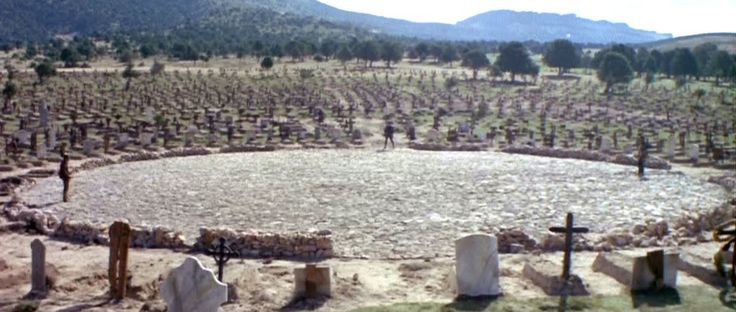
Cardboard Cinema – The Good, the Bad, and the Western Legends

09. Februar 2026 um 15:00
I remember the first time I saw The Good, the Bad, and the Ugly. I was a teen, sitting in front of a small CRT in a small living room. I was wholly unaware of what the next three hours of my life would entail. I hadn’t yet learned to trust my dad. And while…

Read more →

Khrushchev and the Pivot from Stalinism (Reform in the Soviet Union, #2)

08. Februar 2026 um 18:25

The Soviet Union was one of the great dictatorships of the 20th century. It applied an immense amount of coercion on its own citizens as well as many of its neighboring countries. Yet the almost seventy years between the Soviet Union’s founding from the ashes of the Russian Civil War in 1922 and its fragmentation into 15 nation-states in 1991 are no monolith of unfreedom. There were two distinct periods of liberalization around a generation apart from each other – one that began under General Secretary Nikita Khrushchev in the 1950s, and one that began under General Secretary Mikhail Gorbachev in the 1980s. Let’s look at them, beginning with Khrushchev’s thaw, in terms of domestic, foreign, and economic policy. The post on Gorbachev’s reforms will follow in two weeks. As always, there will be board games along the way.

Freedom of Thought, Speech, and Political Expression

Joseph Stalin’s Soviet Union curtailed its citizens’ expression dramatically. Historiography has recounted Stalin’s reign of terror in detail, yet the best-known expression of the totalitarian control to which the Soviet Union aspired from the 1930s on is George Orwell’s dystopian novel 1984: Its one-party state does not only control citizens’ access to information (they are being exposed to constant propaganda and expected to keep up with its frequently changing, often contradictory contents), but demands active participation in the daily reconstruction of the system, ranging from institutionalized “two-minute hate” against political enemies to unlimited devotion to the “Big Brother” at the top of the pyramid.

The Soviet equivalent to the “Big Brother,” of course, was Stalin who was exalted in an official cult of personality as a wise and infallible leader, working tirelessly for the security and well-being of the Soviet Union. Whatever went wrong on the Soviet Union’s inexorable march of progress was the fault of an inept underling or a shadowy enemy.

Twilight Struggle (Ananda Gupta/Jason Matthews, GMT Games) has only few events referencing domestic policy, but the paranoia on both sides has made it in as the “Red Scare/Purge” double event which can cripple an opponent’s turn. Of course, the victims of McCarthy’s persecution only lost their jobs and reputations, not their lives like the victims of Stalinist purges. ©GMT Games.

When Stalin died, his lieutenants fought briefly, but viciously over his succession. Nikita Khrushchev emerged victorious. Khrushchev had been as loyal to Stalin as his chief rivals and immediatly used Stalinist methods to depose Lavrentiy Beria, the powerful Minister of Internal Affairs (and thus chief of the domestic security services). Beria was charged with treason, put through a mock trial, and executed.

Khrushchev’s skillful power politics could also swing the other way, though. He prepared a report on Stalin’s crimes which he delivered to a stunned audience at the 20th Congress of the Communist Party of the Soviet Union on February 25, 1956. For four hours, Khrushchev detailed Stalin’s party purges, his deportation of whole peoples deemed unloyal, and, most of all, how Stalin had established a cult of personality in which he was almost worshipped like a god.

Khrushchev’s de-Stalinization drive did not stop at mere proclamations. The late 1950s and early 1960s saw a lessening of censorship: Alexander Solzhenitsyn was allowed to publish his Gulag novel One Day in the Life of Ivan Denisovitch.

There were limits, however: Criticism of Stalin’s Gulags was one thing, criticism of the October Revolution another. Boris Pasternak’s Doctor Zhivago was not published in the USSR. When Pasternak won the Nobel Prize in literature for it, he and his family were threatened by agents of the state. Cowed, Pasternak did not travel to Stockholm to accept the prize.

Still, Khrushchev’s pivot represented an important turn in the state’s relationship with violence. While Soviet citizens were still routinely surveilled and subjected to coercion, it was neither with the overwhelming force of Stalinism nor with its unpredictability. The age of escalating purges, in which the accusers of today would be the accused of tomorrow was over.

Peaceful Coexistence and Khrushchev’s Many Other Schemes

Khrushchev’s 1956 speech was meant to remain secret, known only to its direct recipients and the allied Communist governments in Eastern Europe, but a member of the Polish Communist party smuggled a copy abroad via the Israeli embassy in Warsaw. From there, it soon gained wide circulation, and while Khrushchev had intended it to be a domestic power play only (it delegitimized his rivals Georgy Malenkov and Vyacheslav Molotov), he now also reaped benefits abroad: The post-Stalinist Soviet Union was naturally a more attractive ally and role model for both the socialist movements in Europe and the decolonizing and freshly independent nations in Africa and Asia.

If you draw this card as the US player: Hold it until turn 3 and then space it. If you draw it as the USSR player: ¡Bienvenido a Sudamérica, camarada! Card De-Stalinization from Twilight Struggle. ©GMT Games.

This unintended benefit is the focus of the foreign-policy heavy Twilight Struggle‘s De-Stalinization card: The Soviet player may move up to four points of influence around on the globe. That may seem like a zero-sum game – after all, the influence is not added, but only moved. But the Soviet Union typically has a lot of spare influence in Eastern Europe after the first one or two turns, and De-Stalinization is the earliest and best way to gain access to faraway continents, chiefly South America (and, to a lesser degree, Africa).

Even before Khrushchev’s speech was leaked, his approach to foreign policy markedly differed from Stalin’s last years. When the relationship with the Soviet Union’s erstwhile allies had deteriorated after the end of World War II, Stalin had adopted a confrontational stance based on the assumption that the world was split in two hostile camps. Khrushchev, on the other hand, approached the western powers under the new motto of peaceful coexistence. Socialism and capitalism could both inhabit the same world. Of course, Khrushchev as a convinced Communist believed that his system would eventually triumph. Until then, peaceful coexistence would not only foster peace, but also make socialism more attractive, and free up resources for economic development and consumer goods (more on that below).

The economic (factory icon) and especially ideological (socialist – man with flat cap icon) bonuses are nice, but what sets the Peaceful Coexistence event in Wir sind das Volk! – 2+2 (Richard Sivél/Peer Sylvester, Histogame) apart is the ability to advance peace (dove icon) – indispensable when the world is sliding toward nuclear war!

Khrushchev was always better at initiating things than at seeing them through. Peaceful coexistence gave way to other projects – be that the support of nationalist movements in the global south or a re-newed competition with the West over Central Europe. And while Khrushchev thought that the Soviet Union and the western powers could live next to one another, that tolerance did not extend to heterodox socialist ideas within his own sphere of influence: When the Hungarian Socialist Workers’ Party announced to withdraw the country from the Warsaw Pact and hold free elections, Khrushchev had the reform movement quashed by Soviet tanks.

Let’s break with Stalin! …no, not like that! The Hungarian revolutionaries and Khrushchev would not become fast friends. Image from Days of Ire (Katalin Nimmerfroh/Dávid Turczi/Mihály Vincze, Cloud Island).

Consumer Goods, (Non-)Communal Apartments, …Corn?

The Soviet economy under Stalin had been tuned to increase heavy industrial output to achieve a fast industrialization on the one hand and provide the basis for the country’s military security. This approach was validated by the country’s survival of the Nazi invasion and its eventual military victory in 1945. The proponents of this economic policy which usually went together with ideological mobilization and a confrontational foreign policy were called to adhere to politika. Yet after Stalin’s death, the rival faction of tekhnika gained ground: Its advocates favored a less aggressive foreign policy, less ideological mobilization, and, most of all, more market elements in the economy which would then produce more consumer goods.

Khrushchev positioned himself in the middle: Heavy industry would have priority (the Soviet Union was in a nuclear arms race with the United States whose economy was around three times as large as the Soviet, after all), but more attention would be given to consumer goods than before. Soviet citizens enjoyed a limited amount of prosperity with radios, washing machines, and sometimes even cars. Khrushchev saw this also as an instrument in the systemic competition of the Cold War: Material comfort and personal lifestyles would influence people’s allegiances as much as military strength or ideological treatises.

Khrushchev’s confidence in that regard led him to agree with the United States on mutual national exhibitions which would showcase their respective country to the citizens of the other. The confidence, however, was not quite justified: The Soviet exhibition in New York aroused curiosity, but the American one in Moscow was positively overrun. It also produced one of the iconic pictures of the Cold War with Nikita Khrushchev and US Vice President Richard Nixon debating the merits of their respective systems surrounded by American household appliances – the “Kitchen Debate.”

Richard Nixon stabbing his finger at Nikita Khrushchev (and thus putting himself into the race for the 1960 presidential election). Not pictured: The hottest new kitchen gadgets from America. Card Kitchen Debates from Twilight Struggle. ©GMT Games.

Some Soviet citizens might have dreamed of living in America, but their personal lifestyles already became more akin to those of Americans under Khrushchev. Even more important than the new consumer goods were their living conditions: Housing in big Soviet cities had been dominated by kommunalkas – large apartments from pre-revolutionary times which had been split to accommodate several families, each living in a single room and sharing the kitchen and bathroom with the others. These crammed living spaces afforded their inhabitants no privacy whatsoever. Only the elites of Stalin’s Soviet Union had apartments to themselves. Khrushchev started an ambitious housing program based on prefabricated, concrete-paneled apartment buildings which allowed millions of Soviet citizens to move into an apartment just for their own family for the first time.

As with foreign policy, Khrushchev started more economic reform projects than he saw through. The ambitious “Virgin Lands” campaign which aimed at alleviating Soviet food shortages by cultivating vast swathes of Siberia and northern Kazakhstan petered out after a few years. His scheme to introduce an Iowa-style corn belt fared even worse, discrediting both corn and Khrushchev in the Soviet Union.

Khrushchev’s Ouster

The economic starts and shifts of Khrushchev’s tenure undermined his position, as did his foreign policy unpredictability ranging from arms control to confronting the United States over Cuba. Most damaging to him, however, were his constant shuffles in the Communist Party. Disaffected cadres who feared they might lose their offices overthrew Khrushchev in October 1964. They installed the less fickle Leonid Brezhnev as new General Secretary of the Communist Party of the Soviet Union. The conservative Brezhnev would tone down some of Khrushchev’s domestic reforms, resulting in a more restricted cultural and literary climate, but stuck with Khrushchev’s economic reforms and conducted foreign policy along the lines of détente with the West.

Not everything about Khrushchev was as cuddly as this bear which he received when visiting an East German electronics factory, but his rule made the Soviet Union a better place to live and furthered its international power and prestige. Image from Wir sind das Volk! – 2+2.

In the end, Khrushchev himself was one of the beneficiaries of the liberalization he had pushed: Unlike the victims of the purges of the 1930s (or even Beria), he was not subjected to a mock trial and executed. Instead, he officially resigned for health reasons and was allowed to live out his days at a comfortable dacha in the countryside.

Games Referenced

Twilight Struggle (Ananda Gupta/Jason Matthews, GMT Games)

Wir sind das Volk: 2+2 (Richard Sivél/Peer Sylvester, Histogame)

Days of Ire (Katalin Nimmerfroh/Dávid Turczi/Mihály Vincze, Cloud Island)

Further Reading

The authoritative biography remains Taubman, William: Khrushchev. The Man and His Era, Norton, New York City, NY 2004.

A magisterial mosaic of Soviet social, economic, and cultural life is Schlögel, Karl: The Soviet Century. Archaeology of a Lost World, Princeton University Press, Princeton, NJ 2023.

On the suppression of the Hungarian revolution and its impact on Soviet and western foreign policy, see Békés, Csaba: The 1956 Hungarian Revolution and World Politics, (Cold War International History Project Working Paper No. 16), Washington, D.C. 1996.

On the politika/tekhnika split, see Priestland, David: Cold War Mobilization and Domestic Politics: the Soviet Union, in: Leffler, Melvyn P./Westad, Odd Arne (eds.): The Cambridge History of the Cold War. Volume I. Origins, 5th edition, Cambridge University Press, Cambridge 2013, pp. 442-463.

Khrushchev and the Pivot from Stalinism (Reform in the Soviet Union, #1)

08. Februar 2026 um 18:25

The Soviet Union was one of the great dictatorships of the 20th century. It applied an immense amount of coercion on its own citizens as well as many of its neighboring countries. Yet the almost seventy years between the Soviet Union’s founding from the ashes of the Russian Civil War in 1922 and its fragmentation into 15 nation-states in 1991 are no monolith of unfreedom. There were two distinct periods of liberalization around a generation apart from each other – one that began under First Secretary Nikita Khrushchev in the 1950s, and one that began under General Secretary Mikhail Gorbachev in the 1980s. Let’s look at them, beginning with Khrushchev’s thaw, in terms of domestic, foreign, and economic policy. The post on Gorbachev’s reforms will follow in two weeks. As always, there will be board games along the way.

Freedom of Thought, Speech, and Political Expression

Joseph Stalin’s Soviet Union curtailed its citizens’ expression dramatically. Historiography has recounted Stalin’s reign of terror in detail, yet the best-known expression of the totalitarian control to which the Soviet Union aspired from the 1930s on is George Orwell’s dystopian novel 1984: Its one-party state does not only control citizens’ access to information (they are being exposed to constant propaganda and expected to keep up with its frequently changing, often contradictory contents), but demands active participation in the daily reconstruction of the system, ranging from institutionalized “two-minute hate” against political enemies to unlimited devotion to the “Big Brother” at the top of the pyramid.

The Soviet equivalent to the “Big Brother,” of course, was Stalin who was exalted in an official cult of personality as a wise and infallible leader, working tirelessly for the security and well-being of the Soviet Union. Whatever went wrong on the Soviet Union’s inexorable march of progress was the fault of an inept underling or a shadowy enemy.

Twilight Struggle (Ananda Gupta/Jason Matthews, GMT Games) has only few events referencing domestic policy, but the paranoia on both sides has made it in as the “Red Scare/Purge” double event which can cripple an opponent’s turn. Of course, the victims of McCarthy’s persecution only lost their jobs and reputations, not their lives like the victims of Stalinist purges. ©GMT Games.

When Stalin died, his lieutenants fought briefly, but viciously over his succession. Nikita Khrushchev emerged victorious. Khrushchev had been as loyal to Stalin as his chief rivals and immediatly used Stalinist methods to depose Lavrentiy Beria, the powerful Minister of Internal Affairs (and thus chief of the domestic security services). Beria was charged with treason, put through a mock trial, and executed.

Khrushchev’s skillful power politics could also swing the other way, though. He prepared a report on Stalin’s crimes which he delivered to a stunned audience at the 20th Congress of the Communist Party of the Soviet Union on February 25, 1956. For four hours, Khrushchev detailed Stalin’s party purges, his deportation of whole peoples deemed unloyal, and, most of all, how Stalin had established a cult of personality in which he was almost worshipped like a god.

Khrushchev’s de-Stalinization drive did not stop at mere proclamations. The late 1950s and early 1960s saw a lessening of censorship: Alexander Solzhenitsyn was allowed to publish his Gulag novel One Day in the Life of Ivan Denisovitch.

There were limits, however: Criticism of Stalin’s Gulags was one thing, criticism of the October Revolution another. Boris Pasternak’s Doctor Zhivago was not published in the USSR. When Pasternak won the Nobel Prize in literature for it, he and his family were threatened by agents of the state. Cowed, Pasternak did not travel to Stockholm to accept the prize.

Still, Khrushchev’s pivot represented an important turn in the state’s relationship with violence. While Soviet citizens were still routinely surveilled and subjected to coercion, it was neither with the overwhelming force of Stalinism nor with its unpredictability. The age of escalating purges, in which the accusers of today would be the accused of tomorrow was over.

Peaceful Coexistence and Khrushchev’s Many Other Schemes

Khrushchev’s 1956 speech was meant to remain secret, known only to its direct recipients and the allied Communist governments in Eastern Europe, but a member of the Polish Communist party smuggled a copy abroad via the Israeli embassy in Warsaw. From there, it soon gained wide circulation, and while Khrushchev had intended it to be a domestic power play only (it delegitimized his rivals Georgy Malenkov and Vyacheslav Molotov), he now also reaped benefits abroad: The post-Stalinist Soviet Union was naturally a more attractive ally and role model for both the socialist movements in Europe and the decolonizing and freshly independent nations in Africa and Asia.

If you draw this card as the US player: Hold it until turn 3 and then space it. If you draw it as the USSR player: ¡Bienvenido a Sudamérica, camarada! Card De-Stalinization from Twilight Struggle. ©GMT Games.

This unintended benefit is the focus of the foreign-policy heavy Twilight Struggle‘s De-Stalinization card: The Soviet player may move up to four points of influence around on the globe. That may seem like a zero-sum game – after all, the influence is not added, but only moved. But the Soviet Union typically has a lot of spare influence in Eastern Europe after the first one or two turns, and De-Stalinization is the earliest and best way to gain access to faraway continents, chiefly South America (and, to a lesser degree, Africa).

Even before Khrushchev’s speech was leaked, his approach to foreign policy markedly differed from Stalin’s last years. When the relationship with the Soviet Union’s erstwhile allies had deteriorated after the end of World War II, Stalin had adopted a confrontational stance based on the assumption that the world was split in two hostile camps. Khrushchev, on the other hand, approached the western powers under the new motto of peaceful coexistence. Socialism and capitalism could both inhabit the same world. Of course, Khrushchev as a convinced Communist believed that his system would eventually triumph. Until then, peaceful coexistence would not only foster peace, but also make socialism more attractive, and free up resources for economic development and consumer goods (more on that below).

The economic (factory icon) and especially ideological (socialist – man with flat cap icon) bonuses are nice, but what sets the Peaceful Coexistence event in Wir sind das Volk! – 2+2 (Richard Sivél/Peer Sylvester, Histogame) apart is the ability to advance peace (dove icon) – indispensable when the world is sliding toward nuclear war!

Khrushchev was always better at initiating things than at seeing them through. Peaceful coexistence gave way to other projects – be that the support of nationalist movements in the global south or a re-newed competition with the West over Central Europe. And while Khrushchev thought that the Soviet Union and the western powers could live next to one another, that tolerance did not extend to heterodox socialist ideas within his own sphere of influence: When the Hungarian Socialist Workers’ Party announced to withdraw the country from the Warsaw Pact and hold free elections, Khrushchev had the reform movement quashed by Soviet tanks.

Let’s break with Stalin! …no, not like that! The Hungarian revolutionaries and Khrushchev would not become fast friends. Image from Days of Ire (Katalin Nimmerfroh/Dávid Turczi/Mihály Vincze, Cloud Island).

Consumer Goods, (Non-)Communal Apartments, …Corn?

The Soviet economy under Stalin had been tuned to increase heavy industrial output to achieve a fast industrialization on the one hand and provide the basis for the country’s military security. This approach was validated by the country’s survival of the Nazi invasion and its eventual military victory in 1945. The proponents of this economic policy which usually went together with ideological mobilization and a confrontational foreign policy were called to adhere to politika. Yet after Stalin’s death, the rival faction of tekhnika gained ground: Its advocates favored a less aggressive foreign policy, less ideological mobilization, and, most of all, more market elements in the economy which would then produce more consumer goods.

Khrushchev positioned himself in the middle: Heavy industry would have priority (the Soviet Union was in a nuclear arms race with the United States whose economy was around three times as large as the Soviet, after all), but more attention would be given to consumer goods than before. Soviet citizens enjoyed a limited amount of prosperity with radios, washing machines, and sometimes even cars. Khrushchev saw this also as an instrument in the systemic competition of the Cold War: Material comfort and personal lifestyles would influence people’s allegiances as much as military strength or ideological treatises.

Khrushchev’s confidence in that regard led him to agree with the United States on mutual national exhibitions which would showcase their respective country to the citizens of the other. The confidence, however, was not quite justified: The Soviet exhibition in New York aroused curiosity, but the American one in Moscow was positively overrun. It also produced one of the iconic pictures of the Cold War with Nikita Khrushchev and US Vice President Richard Nixon debating the merits of their respective systems surrounded by American household appliances – the “Kitchen Debate.”

Richard Nixon stabbing his finger at Nikita Khrushchev (and thus putting himself into the race for the 1960 presidential election). Not pictured: The hottest new kitchen gadgets from America. Card Kitchen Debates from Twilight Struggle. ©GMT Games.

Some Soviet citizens might have dreamed of living in America, but their personal lifestyles already became more akin to those of Americans under Khrushchev. Even more important than the new consumer goods were their living conditions: Housing in big Soviet cities had been dominated by kommunalkas – large apartments from pre-revolutionary times which had been split to accommodate several families, each living in a single room and sharing the kitchen and bathroom with the others. These crammed living spaces afforded their inhabitants no privacy whatsoever. Only the elites of Stalin’s Soviet Union had apartments to themselves. Khrushchev started an ambitious housing program based on prefabricated, concrete-paneled apartment buildings which allowed millions of Soviet citizens to move into an apartment just for their own family for the first time.

As with foreign policy, Khrushchev started more economic reform projects than he saw through. The ambitious “Virgin Lands” campaign which aimed at alleviating Soviet food shortages by cultivating vast swathes of Siberia and northern Kazakhstan petered out after a few years. His scheme to introduce an Iowa-style corn belt fared even worse, discrediting both corn and Khrushchev in the Soviet Union.

Khrushchev’s Ouster

The economic starts and shifts of Khrushchev’s tenure undermined his position, as did his foreign policy unpredictability ranging from arms control to confronting the United States over Cuba. Most damaging to him, however, were his constant shuffles in the Communist Party. Disaffected cadres who feared they might lose their offices overthrew Khrushchev in October 1964. They installed the less fickle Leonid Brezhnev as new First Secretary of the Communist Party of the Soviet Union (an office soon to be re-named to General Secretary, like under Stalin). The conservative Brezhnev would tone down some of Khrushchev’s domestic reforms, resulting in a more restricted cultural and literary climate, but stuck with Khrushchev’s economic reforms and conducted foreign policy along the lines of détente with the West.

Not everything about Khrushchev was as cuddly as this bear which he received when visiting an East German electronics factory, but his rule made the Soviet Union a better place to live and furthered its international power and prestige. Image from Wir sind das Volk! – 2+2.

In the end, Khrushchev himself was one of the beneficiaries of the liberalization he had pushed: Unlike the victims of the purges of the 1930s (or even Beria), he was not subjected to a mock trial and executed. Instead, he officially resigned for health reasons and was allowed to live out his days at a comfortable dacha in the countryside.

Games Referenced

Twilight Struggle (Ananda Gupta/Jason Matthews, GMT Games)

Wir sind das Volk: 2+2 (Richard Sivél/Peer Sylvester, Histogame)

Days of Ire (Katalin Nimmerfroh/Dávid Turczi/Mihály Vincze, Cloud Island)

Further Reading

The authoritative biography remains Taubman, William: Khrushchev. The Man and His Era, Norton, New York City, NY 2004.

A magisterial mosaic of Soviet social, economic, and cultural life is Schlögel, Karl: The Soviet Century. Archaeology of a Lost World, Princeton University Press, Princeton, NJ 2023.

On the suppression of the Hungarian revolution and its impact on Soviet and western foreign policy, see Békés, Csaba: The 1956 Hungarian Revolution and World Politics, (Cold War International History Project Working Paper No. 16), Washington, D.C. 1996.

On the politika/tekhnika split, see Priestland, David: Cold War Mobilization and Domestic Politics: the Soviet Union, in: Leffler, Melvyn P./Westad, Odd Arne (eds.): The Cambridge History of the Cold War. Volume I. Origins, 5th edition, Cambridge University Press, Cambridge 2013, pp. 442-463.

❌