Normale Ansicht

Süddeutsche Spielemesse 2025

30. November 2025 um 15:52

Before the fall fair and convention circuit is coming to an end, I had the opportunity to attend Süddeutsche Spielemesse (Southern German Game Fair) in Stuttgart. As when I went last time, it was a pleasant, laid-back experience.

The game fair is part of a conglomerate of hobby and leisure related fairs which are all held over the same long weekend in neighboring fair halls. As the ticket covers all fairs, you are free to explore everything. That’s great if you go as a group or family with differing interests: Your creative-minded daughter can get all inspired at the arts & crafts fair, your animal-loving son will try to make friends with the cats, rabbits, and camels at the animal fair, your gourmet spouse samples their way through the food fair, and then everybody meets at the game fair because you all love board games. Right?

These folks will go to the board game fair later and play Camel Up.

With that setup, Süddeutsche Spielemesse’s target audience is broad, from the hobbyist to the very casual gamer. Consequently, you’ll find a lot of games outside of the hobby board game niche – from classics like chess and go over sports games to role-playing games. The exhibitors are usually either vendors (game test opportunities are rare), clubs looking for new members (like many of the role-playing clubs), or, my favorite, the big gaming island run in the middle where you can just borrow a game and play it free of charge which gives Süddeutsche Spielemesse a certain convention feel.

At this point, it is tradition that the gaming island remains open until 10pm on Friday, allowing for a beautiful evening of gaming. I met with a friend there and we played three different two-player games:

Rival Cities (Andreas Steding, Pegasus)

Northern German cities Hamburg and Altona try to outdo each other – yet while the usual victory point collecting occurs, these only matter if the game runs its full seven rounds. And it is much more likely that one of the cities will decisively outdo the other in one of the four areas of competition (alliances, ships, lawsuits, and prestige) and score an instant victory. With such a plethora of instant victory conditions, you will always feel the thrill of chasing one yourself and being threatened with another by your opponent.

Yes, that’s a concrete floor… all tables were taken already. I report that I am still young and springy enough for this kind of gaming (at least for 45 minutes).

In our game, we both started conservatively, getting a little bit of everything. Then my friend made a play for the alliances and was only one of them short of victory… but I could stave off defeat and counter-punch with ship dominance. I guess more experienced players would be at each other’s throat from the get-go which should make for exciting gaming and high replayability (at a very moderate complexity).

Solstis (Bruno Cathala/Corentin Lebral, Frosted Games)

Two players chart their path up a mountain built from a shared supply of tiles, each of which has a unique combination of a color (indicating its row) and number (indicating its file). Thus, you always know that a tile you took cannot be accessed by your opponent – and vice versa. This kind of very abstract game with almost-perfect information is usually not up my alley, and Solstis proved no different. We were both unenthused by its mix of logical planning and high randomness in the rare case of placing a nature spirit. However, each play only took 10 minutes, so we didn’t spend much time to gain the valuable knowledge of what’s not our jam.

Table time! That’s a pretty solid path up the mountain, and you can see a lot of nature spirits in the middle – but one of them (the red one) is the evil spirit of vengeance.

Agent Avenue (Christian Kudahl/Laura Kudahl, Nerdlab Games)

Maybe our highlight of the fair: Agent Avenue pits its two players against each other as retired secret agents trying to catch each other. To unveil the other’s identity, they enlist their suburban neighbors, all of which are anthropomorphic animals, from daredevil wolves over codebreaker owls to double agent vixens. The recruitment comes by “I cut, you choose” – but as one of the two cards the active player offers to their opponent is face-up, the other face-down, there is a spy-appropriate amount of bluffing and deduction. Pair this with a varied, but not overwhelming amount of instant victory/defeat conditions and card effects, and you have a light, but tense contest which resolves in no time at all (we played three times in 40 minutes).

My green figurine is being pursued by the blue one. So far, my crew of agents is decidedly sub-par – the double agent on the left is only effective when you have two of them (numbers on the left), the sentinel on the right also kicks in at two and three, whereas the daredevil in the middle will lose you the game once you collect three of them.

Any games of these that sound like your cup of tea? Have you attended any cool local conventions or fairs recently? Let me know in the comments!

BGI 396 The One About The Size Of Your Deck

26. November 2025 um 10:06

BGI 396 The One About The Size Of Your Deck

Board Games InsiderJoin our Guild on Board Game Geek Guild | Like us on FB

Social media:

Ignacy Trzewiczek / Portal Games: website | FB | Twitter | Youtube

Corey Thompson / Above Board TV:  website | Youtube

Stephen Buonocore / “The Podfather Of Gaming”: website | FB | Twitter | Youtube

Intro Music: Happy Rock – Bensound.com

💾

Caylus 1303

25. November 2025 um 16:25

Caylus was one of those games that burrowed into my head and held on for years, although it doesn’t seem like it when you search my archives. That’s because Caylus shares a problem with full information, zero luck games — the best player wins.

And I played perhaps 100 games on BrettSpeilWelt1,2. So in my FTF games I would often take a handicap of 25% (or more, with fewer players) and win. PLUS the no-luck aspect meant that games became somewhat samey.

So I switched to Caylus Magna Carta, which constrains players by their card draws. This comes close to violating my rule stating that “For any original game X,’X: the card/dice game’ is always worse.”

Caylus Magna Carta is certainly much more approachable than Caylus3. I recently acquired Caylus 1303, a re-implementation of the original. It does a number of things well:

  • Instead of having 4-6 workers and paying $$ for each placement, you have up to 15 workers but pay one worker if nobody has passed and two workers otherwise.
  • The provost resets to almost the end of the track each round, and there are only nine rounds.
  • In addition to setup buildings, a random wood and stone building start built.
  • Each player starts with a special power (drafted in reverse order on the first turn)
  • One of each building type4 is not available; but can be accessed via the favor system.
  • You do not need a building to build a monument, they are built in a special phase each turn.
  • A favor lets you a) steal a special power or b) use a building and take an unclaimed special power if one is available (three start unclaimed each game).

So Caylus 1303 is still a full information, zero luck game … but with a variable setup. I have high hopes that this will help bring it to the table. So far my first game was well received (although I forgot the initial draft of special powers).

The one issue (for some people) is that the favor system has been simplified and one of the favors is “Steal a special power.” This is a direct take-that; it’s not like Caylus had a care bear style, but the attack was more about moving the provost, which is something you can plan for. There are some powers that are much more likely to get stolen, but it would undoubtedly chafe a bit if you lost a power when they “should have” taken a different power. Still, in my first game there was no whining.

RatingEnthusiastic

  1. Still around! Who knew! ↩
  2. If you don’t know what it is, a) think of BGA and b) get off my lawn. ↩
  3. Probably they are the same in terms of rules, but by constraining options with cards you simplify the decision space for a new player. ↩
  4. Setup, Wood, Stone ↩

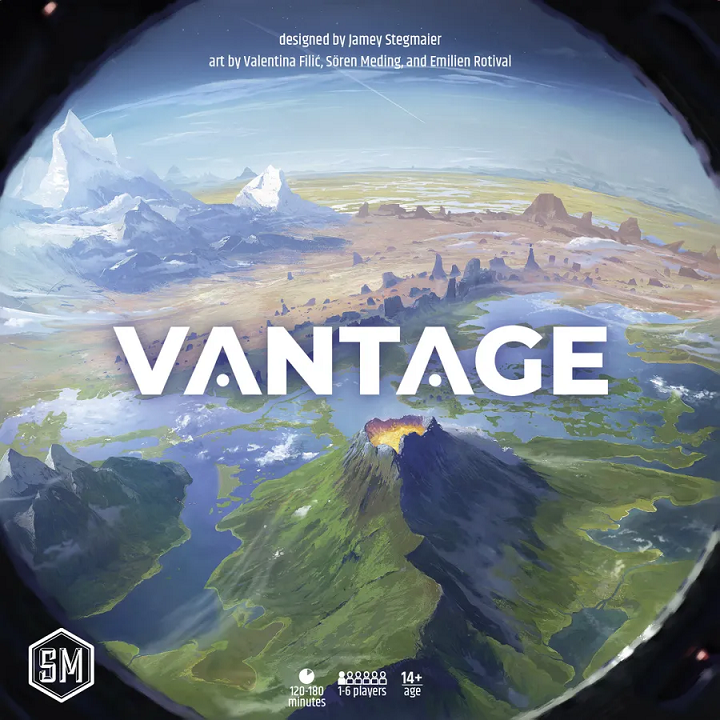
The Planet of the Elephant – A Vantage Companion Review

24. November 2025 um 15:00
Vantage has been cooking in my mental oven for half the year. I first wrote about this open world sci-fi adventure game in July, with my review appearing at entertainment site IGN. If you haven’t read that or don’t know much about this peculiar design, my apologies, but the rest of this piece may befuddle…

Read more →

BGI 395 The One Just Before BGG CON

19. November 2025 um 07:45

BGI 395

Board Games InsiderJoin our Guild on Board Game Geek Guild | Like us on FB

Social media:

Ignacy Trzewiczek / Portal Games: website | FB | Twitter | Youtube

Corey Thompson / Above Board TV:  website | Youtube

Stephen Buonocore / “The Podfather Of Gaming”: website | FB | Twitter | Youtube

Intro Music: Happy Rock – Bensound.com

💾

V6.5 Play Tagging

Von: Suzan
18. November 2025 um 16:56

Version 6.5 of the app introduces Play Tagging!

With Play tagging you can create groups of plays based on any criteria you want.

Use these play tags to filter the list of plays, the Game page, Insights and use them in Challenges!

The combined Play Stats will give an overview of stats of filtered plays, a perfect recap for a gaming weekend or series of plays.

If you have imported plays from BoardGameArena or Yucata previously, using the already created “Digital” play tag helps to view your stats just the way you want.

Use Play Tagging to:

  • Add any number of tags to your plays
  • Filter on Play tags throughout the app
  • View combined Play Stats
  • Use a “Digital” tag to filter online plays
  • Use Play tags in Challenges
  • Optionally post Play tags to BGG as comment
Example Play Stats

You can read all about Play tagging on our Tagging page. Tagging is part of the Power expansion.


Tip: “Digital” tag

You can add the “Digital” tag to any play you want, but you can also add the tag to previous plays with Multiple Select.
As an example, if you logged some plays on the location “Watergate app“:

  • Go to the “Watergate app” Location
  • Tap ‘Select‘ at the top of the screen (this is the word ‘Select’ on iOS and lines with a checkmark on Android)
  • Tap ‘All‘ at the bottom of the screen (or only select the plays you want to tag)
  • Tap ‘Edit…
  • Tap ‘Edit Tags…

Armoured Clash: Alliance Battlegroup – Vive La France!

17. November 2025 um 22:45

You supply the ink. The soldiers supply the blood.

Peter reviews the Alliance Faction Battlegroup for Armoured Clash by Warcradle Studios.

Warcradle keep releasing the cool models for Armoured Clash, and this time it’s the turn of the Latin Alliance. There’s also more great news in this video, because they’ve announced the return of Firestorm Armada, the classic spaceship combat game originally by Sparta Games.

Remember to download my Armoured Clash rules & reference before playing your own games (and recently updated) – it’s in Tabletop Codex too!

Making high quality tabletop gaming content at the EOG takes time and money. Please consider becoming a Patreon supporter or making a donation so I can continue this work! Thankyou!

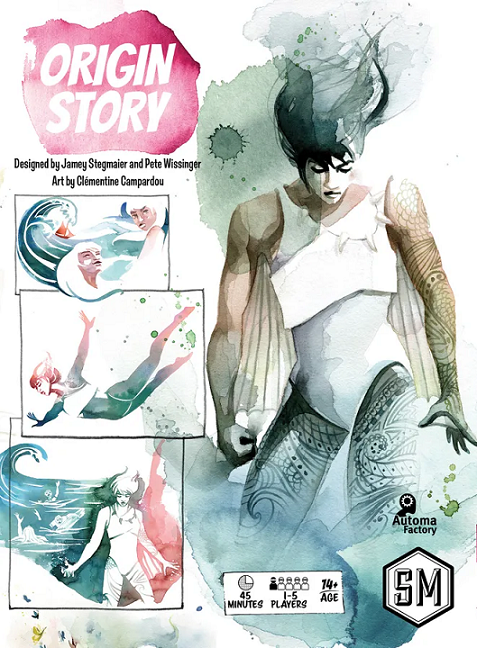
I am Watercolor Man – An Origin Story Review

17. November 2025 um 15:00
Origin stories are the worst. This is coming from a cretin who ingests superhero content via cinema as opposed to paper. I don’t want to see Thomas and Martha Wayne murdered by a low life, again. We’ve had 10 Spider-Mans in the past couple decades; I’ve already rode that ride. I would much rather watch…

Read more →

Marvel Champions Falcon Hero Pack

16. November 2025 um 17:58
The character was first introduced by no other than Stan Lee and artist Gene Colins in Captain America 117 back in Sept 1969. Otherwise known  as Samuael Thomas Wilson. Facon has mechanical wings which he uses to swoop in and help save the day. He is also an expert bird trainer with basic empathic and technopathic abilities over birds in the comics and is the Uncle of Jim Wilson friend of the Hulk’s and who was the first notable HIV positive character, who’s father would go on to join the Gama Corp. The Falcon was always a strong character who was always ready to help those who need it. With his tech, ability to fly with Tech and his excellent fighting abilities he is quite a strong character despite his having no super powers.
 
 
In the game his unique ability is being able to manipulate the top card of the encounter deck allowing players to plan ahead and make strategic choices. His “Eagle-Eyed” ability, combined with his “aerial” cards, gives him strong defensive and offensive capabilities, especially in a multiplayer setting, whihc means he is an adaptable and excellent control-focused hero. This is a strong Leadership deck with synergies built around aerial cards, as you would expect, as well as other valuable cards that can be used with other heroes.
 
Falcon is an all round character who doesn’t specialise in one area so is good to fill holes in your roster especially with a smaller team roster, but lacks a specialism to excel in a bigger team of heroes.
 
The post Marvel Champions Falcon Hero Pack first appeared on Board Game Extras.

How to Win at Imperial Struggle (Three Basic Tips, #15)

16. November 2025 um 15:48

Back to the strategy posts – this time in the tried-and-true fashion of giving three basic tips which new and intermediate players can easily remember. Today, we’re going for one of the most anticipated historical games of the last few years: Imperial Struggle (Ananda Gupta/Jason Matthews, GMT Games). Its pedigree recommended it to many gamers, but it plays very differently from its spiritual predecessor Twilight Struggle – so, mastery of the one will not help you much with the other.

Here’s how to play Imperial Struggle successfully: Get advantages, initially prioritize board position over victory points, and use initiative wisely. Let’s go!

Get Advantages

Now this may sound a bit basic. Of course you want advantages! Yet when you’re planning what to do with your investment tile, you might often be tempted by other things – shiny prestige spaces, or simply spaces with a lower cost which help you gain the majority in the region. Advantages, however, are often the better choice: A well-chosen advantage can gain you another space (or deny it to your opponent) not only once, but several times over the course of a game. If your opponent is smart, they will often try to counteract your gaining of an advantage by unflagging the space which gave you the advantage, or at least gaining a similar advantage, which means you are acting and they are reacting.

France and Britain are fighting hard for the two spaces adjacent to the Baltic Trade advantage. You can see on the French player mat in the background that France has gained the Algonquin Raids and Mediterranean Intrigue advantages.

Some of my favorite advantages: The Indian alliances with Mysore, Nizam, or the Marathas which allow you to drown your opponent in a sea of conflict markers, the Asiento advantage whose discount on fleets gains you a cheap military edge – and spaces – which can be flexibly moved around, and, best of all, Baltic Trade whose debt reduction amounts to two free wild points every turn. Get it or at least deny it to your opponent!

Board Position First, VPs Second

Advantages are long-term benefits. In the same spirit, I advise you to prioritize the long-term benefits of a sound board position over the short-term gains of winning this regional or that global demand scoring. If your board position is good – if you have the right alliances, military outposts, and advantages – you will put pressure on your opponent, win wars, gain spoils, and the VPs will come rolling in anyway.

Both players have done their homework and placed a flag on a fort (hexagonal spaces) in North America – Britain in Halifax, France in Louisbourg.

A key investment in that sense is a turn 1 fort in North America. That’s the only theater which is active in all four wars, so the fort will give you a military benefit four times (a strength point and the conquest line) in addition to controlling its surroundings (which makes unflagging harder and removing enemy conflict markers easier), and, of course, it’s a space which counts for regional scoring.

Use Initiative Wisely

If your opponent scores a few more VPs than you early on, that is not only bearable, but might even be to your advantage, as the player behind in VPs has the initiative and decides who goes first in a turn. That’s a weighty decision, as going first gives you a better choice of the investment tiles, but going last allows you to mess with your opponent’s plans and they have no chance to repair the damage before scoring.

If this were the first turn – would you choose to go first or second as the player with initiative?

My rule of thumb is: I go last, unless there’s an odd number of investment tiles with a major action in the dimension that will be crucial (early on, that’s often diplomatic), or an odd-and-low number of investment tiles that allow you to play an event.

Which strategies and tricks do you use to win at Imperial Struggle? Let me know in the comments!

BGI 394 The One About Talent, Tariffs, and Timberwolves

12. November 2025 um 15:17

BGI 394 The One About Talent, Tariffs, and Timberwolves

Board Games InsiderJoin our Guild on Board Game Geek Guild | Like us on FB

Social media:

Ignacy Trzewiczek / Portal Games: website | FB | Twitter | Youtube

Corey Thompson / Above Board TV:  website | Youtube

Stephen Buonocore / “The Podfather Of Gaming”: website | FB | Twitter | Youtube

Intro Music: Happy Rock – Bensound.com

💾

❌