So I didn’t attend TGM but I did manage to acquire a few games. TGM designers continue to astound me with clever designs for trick takers and shedders as well as capturing unusual themes. Here are some of the stand … Continue reading →
The designer of hit mass-market board game Hues and Cues has launched a new publishing initiative to tackle one of the tabletop industry’s growing challenges: promising games sitting unpublished because publisher release schedules are already full.
Scott Brady believes many outstanding games never reach players not because they lack quality, but because publishers must plan their release schedules years in advance – and with only so many publishing slots available each year, excellent games are often left waiting for an opportunity that may never come.
Brady told BoardGameWire his Proof-of-Play model will make ‘limited edition’ runs of between 1,500 and 3,000 copies for previously unpublished games, in the hope a quick burst of sales will persuade larger publishers to take a chance on them and accelerate a wider retail release.
Scott Brady’s breakout design Hues and Cues || Photo Credit: The Op Games
He said the editions sold through his company A Game Studio would be offered direct to consumers and specialty retailers through channels such as B2B wholesale marketplace Faire, allowing each title to generate real-world sales, player feedback, and retail validation before presentation to larger publishing partners.
Brady added that the full license for the games – which will mostly be mass-market-friendly family titles – would remain with A Game Studio, which will sub-license the titles to other publishers.
He said, “Our goal isn’t to compete with traditional publishers, but to support them. Publishers make difficult decisions years in advance, and that is simply the reality of today’s market.
“Proof-of-Play gives great games the opportunity to prove themselves through actual customer demand, giving publishers more confidence and less risk when considering a wider release.”
The initiative launches with two games from external designers – area control card game Lock & Chain, and number combination card game Perfect 10 – with Brady telling BoardGameWire they helped inspire the concept after struggling to find homes with publishers despite being “amazing products”. “The timing wasn’t right”, he added.
Although Brady said he had not discussed the concept with publishers before launching the initiative, he believes it reflects a process that already happens informally across the tabletop industry, in which publishers hunt for successful games with tiny distribution and then take it larger – citing Qork as one example of that approach.
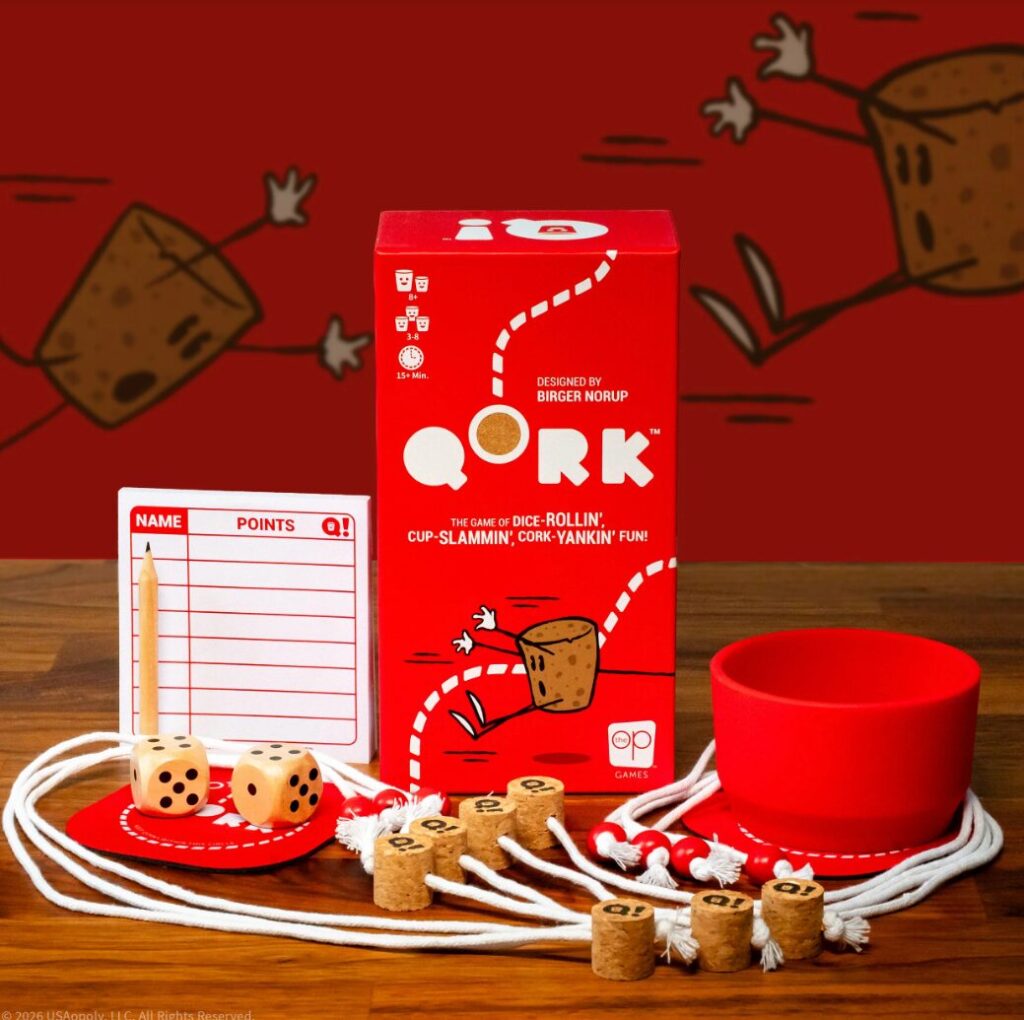
That game, which was initially self-published by designer Birger Norup as PlayProp back in 2015, was released as a Walmart exclusive by The Op in May this year – and has become something of a viral hit on social media sites such as Instragram and TikTok.
Birger Norup’s design Qork, published by The Op Games
Asked how he plans to help Proof-of-Play titles with the problem faced by publishers across the hobby – how to stand out among a vast number of releases – Brady told BoardGameWire, “I am personally staking my reputation on the games I choose to help.
“I do not need to invest in full marketing etc as the goal is to simply get the games out there and let their quality do the selling.
“By bypassing traditional distribution and relying on organic social media, my personal network and word-of-mouth, I hope this becomes a platform for many budding designers who would like to see their game on retail shelves.”
While some publishers make use of crowdfunding sites to validate demand before going into production, Brady said his model would be a better fit for the style of mass-market games he is targeting.
He said, “Crowdfunding is great for a $50-plus game looking to reach a hobby audience. This is for games with wider appeal. The games I choose will sell on their own merit and not because of crowdfunding hype.”
Brady launched his development studio A Game Studio at the start of 2024, following the 2020 release of the big-selling Hues and Cues and the success of his cat-themed abstract strategy Boop in 2022.
Brady’s own board game releases this year are set to include If Then, Wee Folk – which is co-designed by Stefano Di Maria and Rosa Linda Romano – Size Wise, Boop Shuffle and an expansion for Caution Signs, the fast-paced sketching game he co-designed with Danielle Reynolds.
Gen Con is Gen Coming, so we’re looking in our wizard’s glasses to tell you what’s what. Whether you’re going or not, you’re gonna want to know what the hot games are, and we’ve got you covered. Before we Indianapolize, we talk about Koinobori, Compania, and Mood Swings.
If you don’t want to miss an episode, please subscribe on Apple Podcasts/Google Podcasts/Stitcher/Spotify, or add our RSS feed to your favourite app. Reviews and subscriptions really help us and would be greatly appreciated! To download the episode directly, click here.
If you’d like to discuss anything in the episode, please do so in the comments below, visit our BoardGameGeek guild, join our Discord, or Facebook Group! Any feedback is also always helpful. If you’d like to show your support for the show, we also have a Patreon with some fun rewards, and a merch store!
Timecodes:
02:32 – Koinobori 09:50 – Compania 19:52 – Mood Swings 25:39 – Gen Con preview 24:57 – Prague Unseen 28:27 – Triangulation 30:24 – All Mine! 32:25 – Hell of a Deal 34:51 – Night at the Zoo 36:22 – Stonk Market 39:45 – Bullseye 41:57 – Jibber Jabble 44:38 – The Lord of the Rings: Circle of Conflict 46:05 – Revenant 48:11 – FaeKin 49:32 – Mythologies 50:18 – World Order 52:28 – Greylune 57:22 – Corps of Discovery Duo
Thank you to Heart Society for generously letting us use What’s On Your Mind, Kid? from their album Wake the Queens.
As trading card games continue to drive growth across the tabletop industry, hobby retailers are increasingly looking beyond games themselves to the accessories that support organised play and competitive communities. In this sponsored article, TCG and board game accessories maker Sanseking explains how changing player behaviour is influencing retailers’ approach to inventory, merchandising and long-term store strategy, and why competitive accessories are becoming a more important part of the European hobby market.
A growing crossover between board gaming and trading card games is beginning to reshape hobby retail strategy across Europe according to TCG, board game, and collectible accessories maker Sanseking, with competitive accessories emerging as an increasingly important category for stores.
What was once a relatively clear divide between casual board game retail and competitive TCG communities has evolved into a far more interconnected ecosystem, the company says, where stores are expected to serve multiple types of players simultaneously.
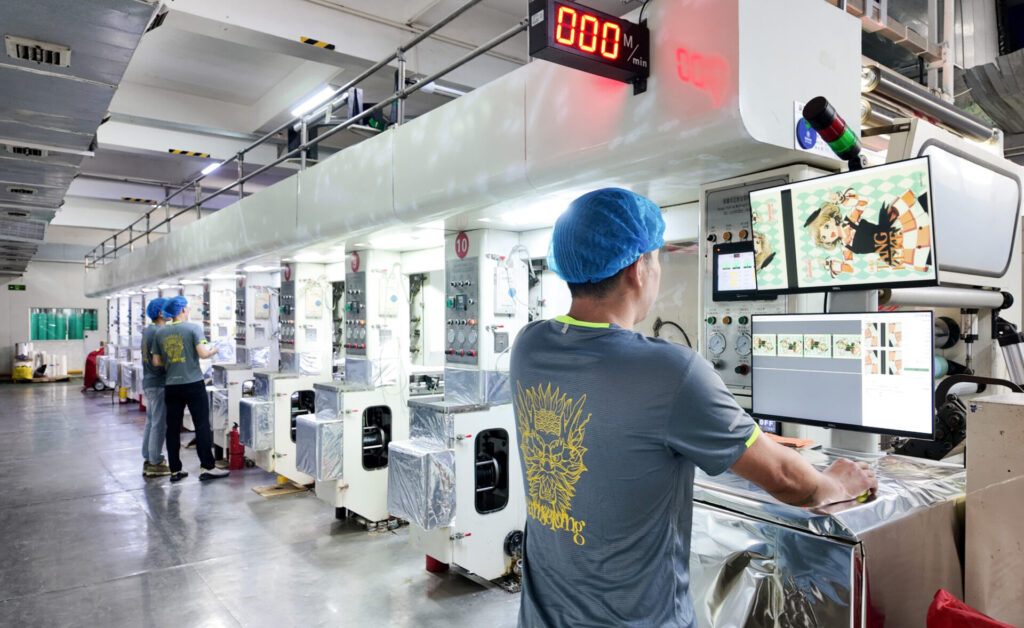
Sanseking production manager Ding Guang
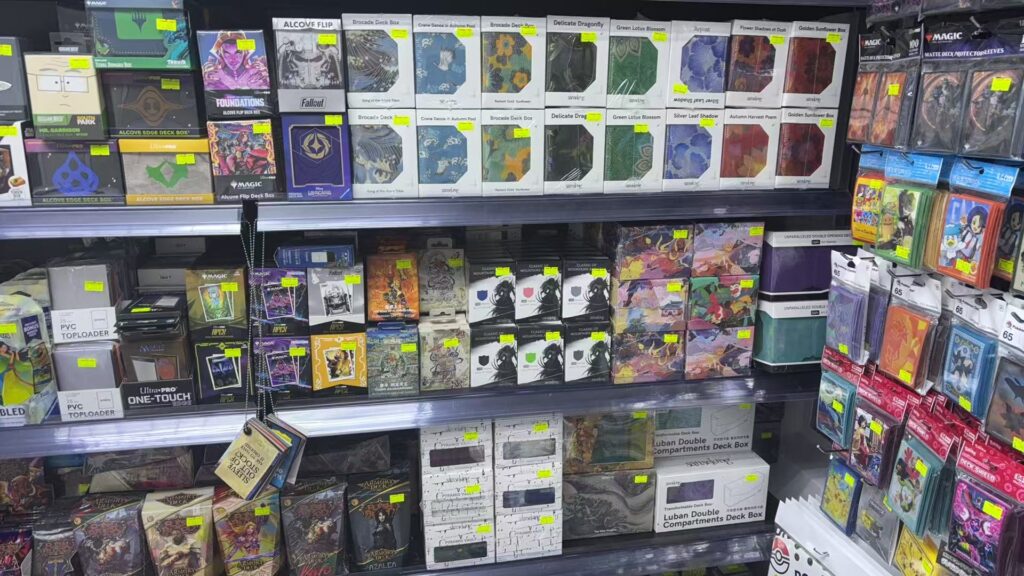
That shift is particularly visible in the accessories market according to Sanseking production manager Ding Guang, who says retailers are increasingly treating competitive sleeves and protective products as core components of long-term business planning rather than simple add-on purchases.
“Accessories used to be viewed mainly as supplementary sales,” Guang told BoardGameWire. “But competitive communities create repeat purchasing behaviour that changes how retailers think about stability, inventory, and customer retention.”
Hobby retailers now commonly operate within a mixed environment that includes casual board gamers, organised play communities built around titles such as Magic: The Gathering, Pokémon and Yu-Gi-Oh!, and players who actively move between both spaces.
That convergence has become especially visible at events such as Spiel Essen, where accessory brands increasingly exhibit alongside publishers and competitive card players mix naturally with broader tabletop audiences.
But for retailers, the two customer groups behave very differently.
Board games typically generate one-off purchases tied to seasonal launches or major releases, while competitive TCGs create recurring engagement cycles through tournaments, deck rebuilding, league play and shifting formats – and those cycles also generate consistent accessory demand.
Competitive players replace sleeves far more frequently than casual players, Sanseking points out, adding that frequent shuffling, tournament preparation, the need for consistency and sensitivity to tactile feedback all contribute to repeat purchases.
That rise in accessory demand has also been driven by the stellar growth of TCGs more generally, with long-time heavyweights such as Pokemon, Magic: The Gathering and Yu-Gi-Oh! joined more recently by a flurry of other successful entrants to the market, including One Piece, Disney Lorcana and Star Wars Unlimited.
That demand pushed the overall value of the global TCG market to $7.8bn last year according to veteran research firm BCC, which projects the segment will reach $11.8bn by 2030 with a CAGR of 7.9%.
In many European hobby stores, tournament nights now represent some of the most reliable recurring foot traffic. Players attending weekly organised play events increasingly view accessories not as optional extras, but as part of their competitive equipment.
According to Guang, that recurring demand can help retailers smooth revenue fluctuations during slower periods in the board game release calendar. But at the same time, competitive players also tend to be far more selective.
“They pay attention to things casual players may never think about,” Guang said. “Edge structure, shuffle consistency, durability over repeated use, and manufacturing consistency between batches all matter.”
The Growing Importance of Segmentation
That growing attention to performance characteristics is also pushing retailers to rethink how accessories are presented in-store, according to Sanseking.
Historically, sleeves were often treated as largely interchangeable products differentiated mainly by colour or price point.
But as organised play communities mature, stores are increasingly recognising that accessories serve multiple functional segments, ranging from casual ‘kitchen table’ play, to hobby-level regular play and competitive or sanctioned environments.
Retailers that fail to distinguish between those categories can create unnecessary friction, Sanseking says.
The company points out that a product optimized for softness and casual handling may not satisfy a competitive player seeking predictable shuffle feedback. Conversely, a structure-focused sleeve may feel unnecessarily rigid or specialized for a board gamer.
As a result, some retailers are beginning to adopt more structured merchandising approaches, using clearer pricing tiers, competitive-focused shelving, and staff recommendations tailored to different player types.
“The stores performing well are usually the ones creating clarity,” Guang said. “Not necessarily carrying the most SKUs, but helping customers understand which products fit which type of play.”
Risk, Inventory, and Shelf Strategy
From a commercial perspective, competitive accessories also offer several advantages compared to boxed games, including lower unit cost, a smaller shelf footprint, faster turnover when tied to active communities and strong repeat purchase potential.
Retailers can still perceive the category as niche, however – particularly when shelf space is limited. According to Sanseking, the most effective approach is usually a balanced one – not one that offers endless fragmentation, but a core range which covers general use, alongside clearly identified competitive-focused options for players who care about performance.
The importance of organised play also continues to shape purchasing behaviour, with competitive events a significant driver of repeat store visits, even amid wider economic pressure on hobby spending.
Within those communities, accessory choices increasingly function as part of player identity.
“Players often become loyal to specific performance characteristics rather than just aesthetics,” Guang said. “That creates opportunities for retailers to position themselves as serious competitive venues.”
Some stores are already leaning into that approach by highlighting ‘competitive-ready’ accessory sections, aligning certain products with tournament nights, and using more technical product descriptions instead of purely visual merchandising.
The growing overlap between board game audiences and competitive TCG players is also accelerating the trend, according to Sanseking’s experience of the market.
The firm said that many customers who first enter hobby stores through board games gradually become exposed to organised play environments, while competitive card players often purchase board games for more social settings.
Accessories sit directly at the centre of that crossover, with protective products one of the few categories that naturally serve both audiences while still supporting different performance tiers, it added.
For retailers, that makes accessory strategy not just an operational decision, but a bridge between communities, Sanseking says.
As Europe’s tabletop market continues to evolve, Guang believes accessories will become more strategically significant across the retail landscape.
“Players are becoming more informed about performance trade-offs, and retailers are having to serve more diverse communities across the same limited shelf space,” he said. “Clear segmentation and clear communication are becoming much more valuable.”
For brands, that means designing products with defined use cases rather than relying on broad universal claims. And for retailers, Guang argues, success may depend less on scale than structure.
“In a market where casual and competitive audiences increasingly overlap, clarity is often more important than simply offering more products.”

 Anmelden