Lese-Ansicht

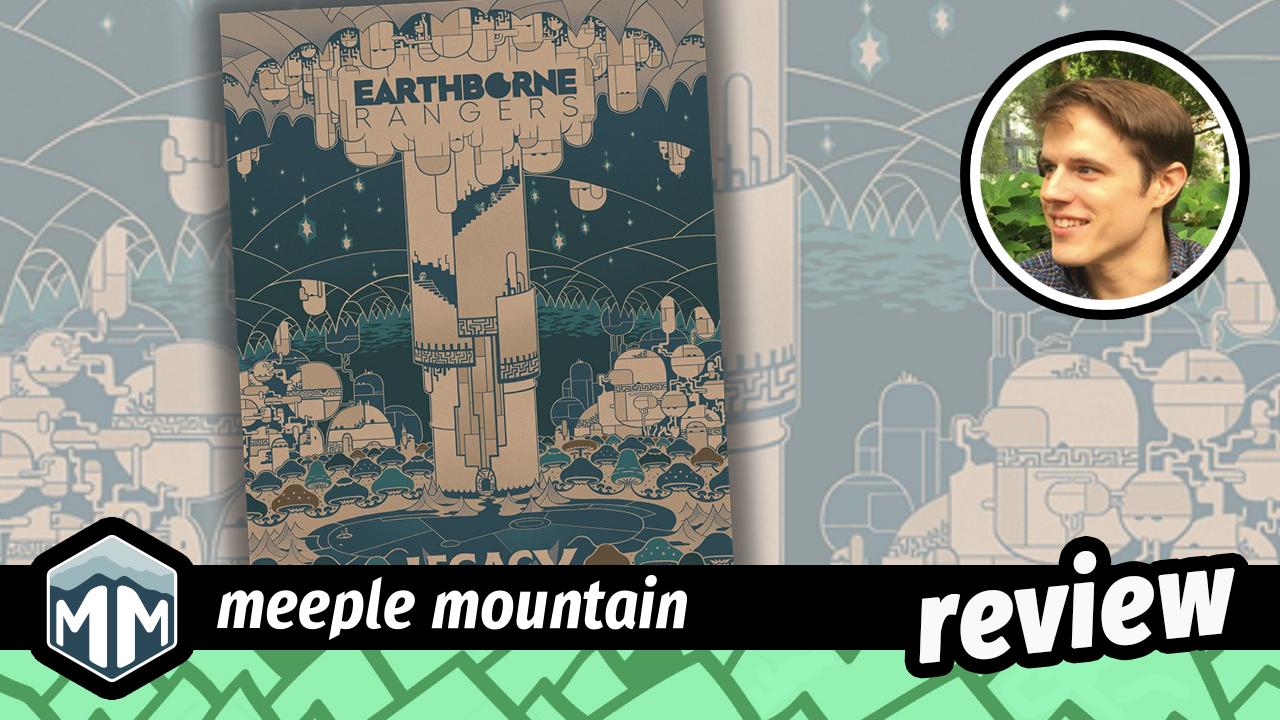
Earthborne Rangers: Legacy of the Ancestors Game Review

A new Earthborne Rangers campaign? You don’t have to tell me twice. It is hard to get me to play the same game more than a few times, but I will drop any and everything to spend more time in—or, in this case, under—the Valley.

While the base game of Earthborne Rangers—one of the greatest gaming experiences of my life, and an experience with which this review will assume you are familiar—takes place across a wide range of beautiful landscapes, Legacy of the Ancestors sends players into the depths of the Arcology, the ruins of a lost civilization that used to inhabit the Valley. This is the sensible choice, a natural development coming out of the first game. The first campaign leaves the Arcology, a consistent splash of harder sci-fi tech in a sea of solarpunk, barely explained, and the underground tunnels are as strong a contrast in setting as it’s possible to have. No more sweeping vistas for you, no no. Best you can hope for is a spot of bioluminescence.

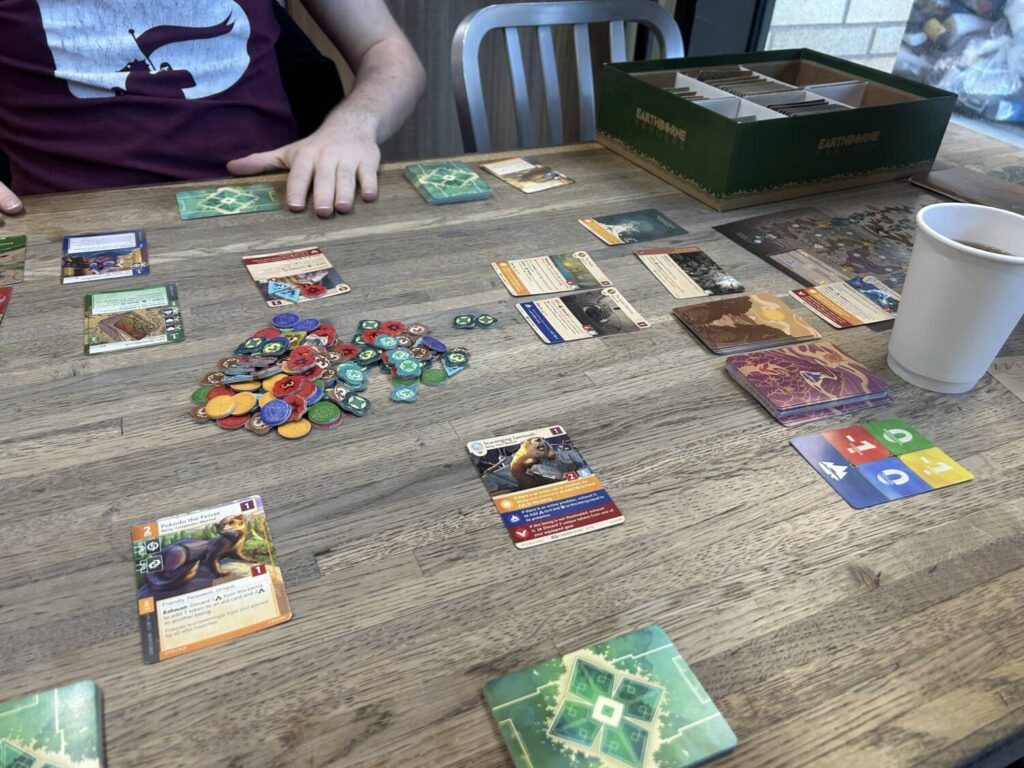
A table full of cards, cards in all directions.

“We Got Distracted by the Ooze”

The cornerstones of what make Earthborne Rangers great are still here. The caverns of the Arcology teem with life and discoveries. There…

The post Earthborne Rangers: Legacy of the Ancestors Game Review appeared first on Meeple Mountain.
  •  

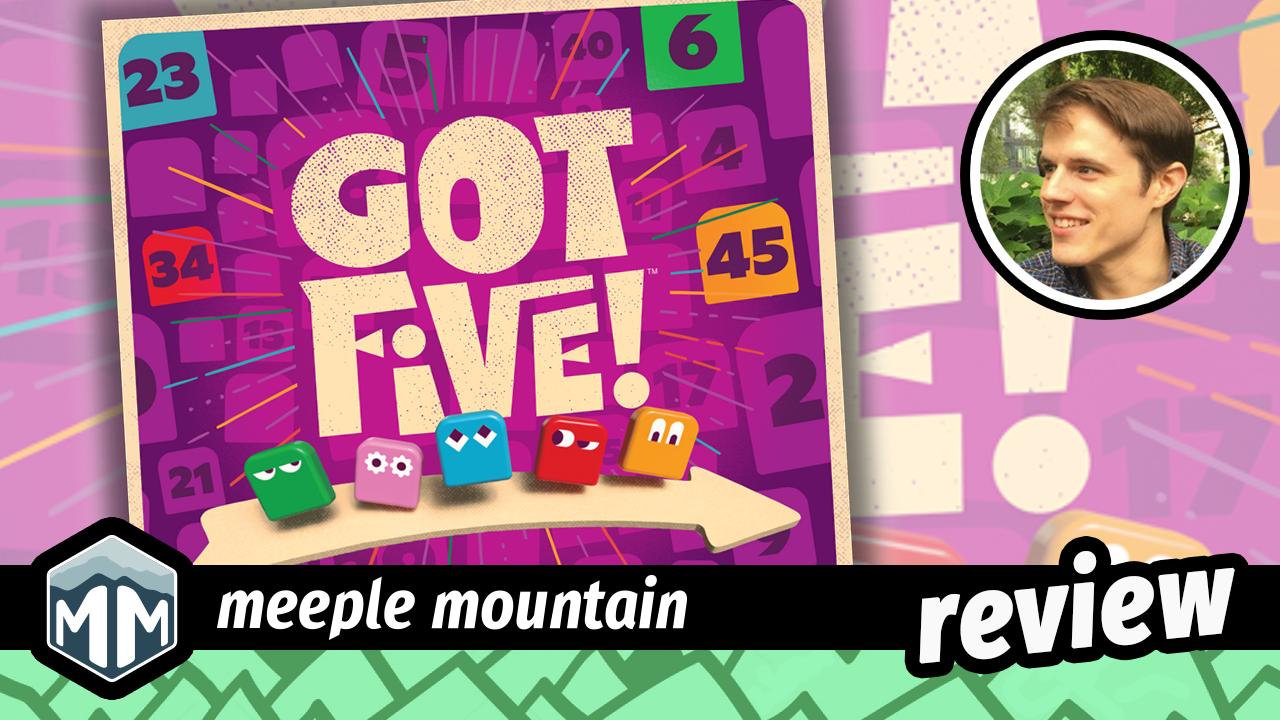
Got Five! Game Review

Every now and then, I sit down to play a game with no expectations whatsoever. I anticipate neither excitement nor despair. I am absolutely ambivalent, a perfect blank slate. I think of this as a true neutral response, but it occurs to me that I generally enjoy trying new games, so ambivalence is in fact a moderately negative response. I’ll process this on my own time.

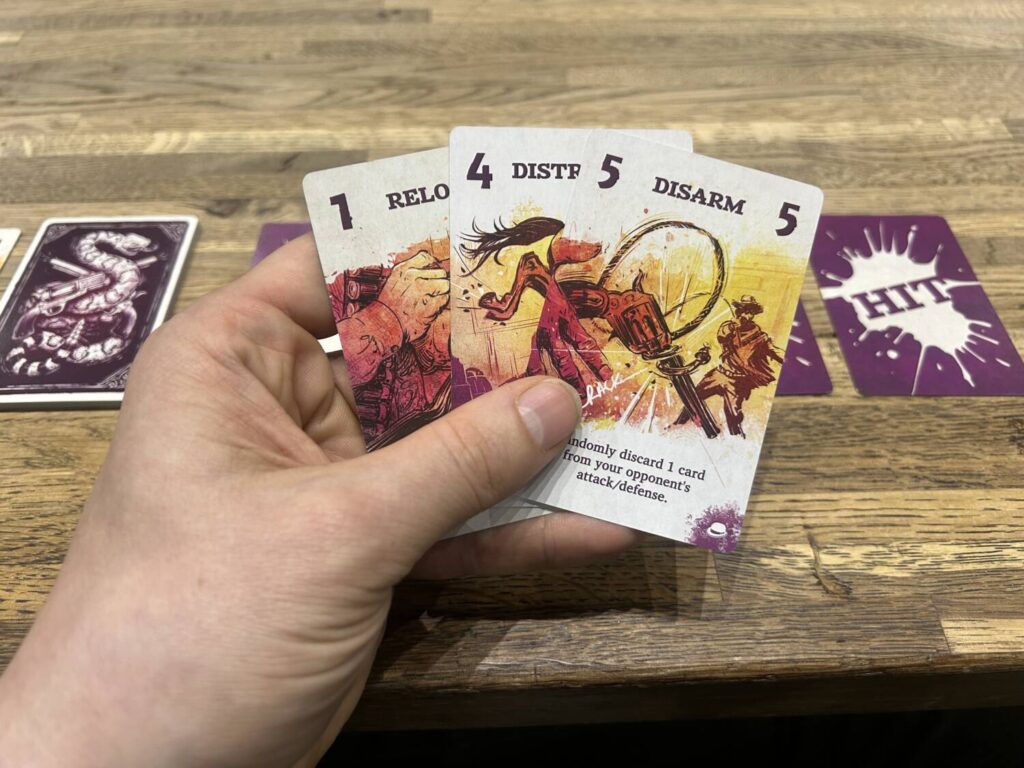
Ambivalence was very much the case with Got Five!, a deduction game from designer Yoann Levet and publisher Blue Orange. I picked up a review copy because it was the slow season, I knew it wouldn’t take long to play, and I liked the tiles. I don’t know which of the two credited artists, Mathieu Clauss and Simon Douchy, is responsible for them, but those colorful bakelite tombstones with expressive eyes are hard to resist.

Don’t be fooled. Their friendly exteriors harbor terrible secrets, by which I mean numbers between 1 and 60. If you think that doesn’t sound so bad, you probably like math. During setup, each player takes one tile in each of the five colors and stands them up so the numbers are visible to everyone else at the table. It is extremely important that you not see the numbers on your own tiles, since the goal of the game…

The post Got Five! Game Review appeared first on Meeple Mountain.
  •  

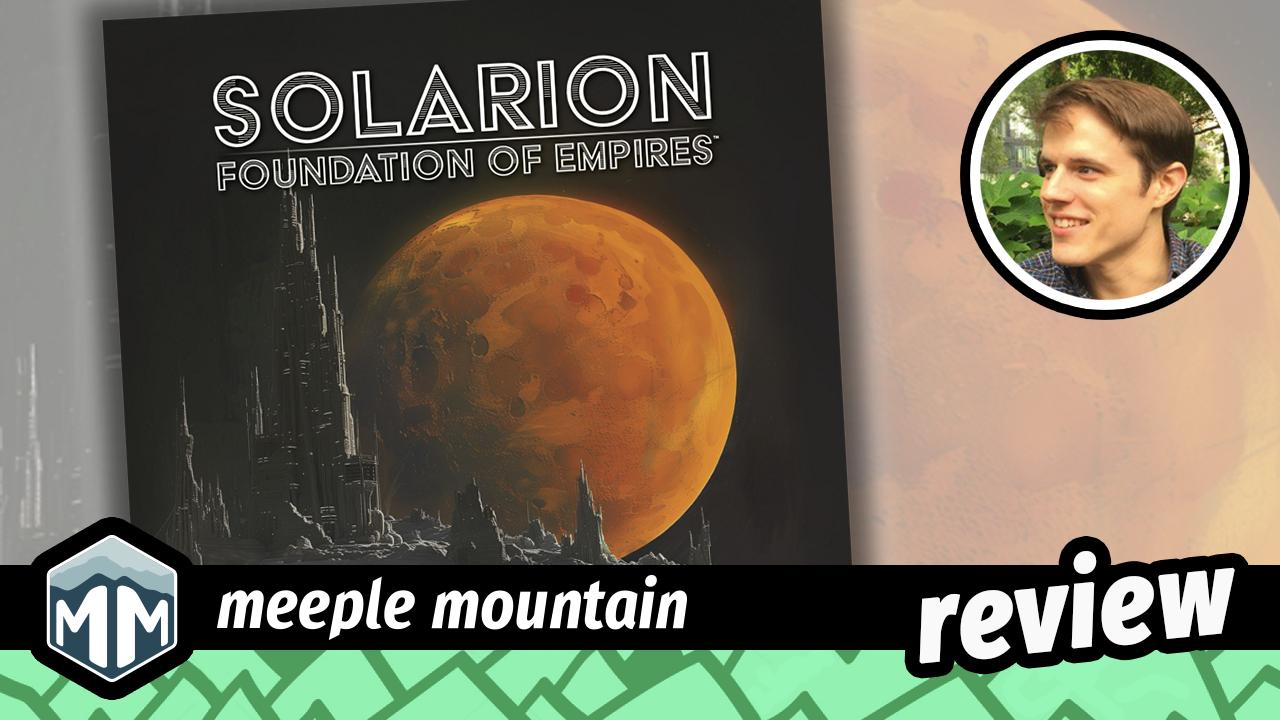
Solarion: Foundation of Empires Game Review

Several years ago, my friend Nathan introduced our group to Tyrants of the Underdark, a deck-building game that used Dungeons & Dragons lore for its setting. My initial response was dubious, as often happens with licensed product. The art, which Nathan had warned us about in advance, didn’t help. Dozens of artists are credited on the game, and many of their illustrations are not…good. The hodgepodge of styles did not promise a robust play experience.

Fortunately, first impressions can be wrong. Tyrants of the Underdark is an excellent, taut marriage of deck-building and area-control. It is wonderfully interactive, encouraging players to step on one another’s toes at every turn. The modular deck system, which changes the cards in play from game to game, ensures a good amount of variety. The game is both immediate in its pleasures and rewards deeper exploration.

Tyrants of the Underdark is exactly the kind of game that I would expect to be a cornerstone of The Hobby™. And yet. Despite the quality of its reputation amongst those who’ve played, Tyrants remains somewhat obscure. I can’t even tell if it’s currently in print or not. It is often hard to find. It begs for expansions, but it only has one, which is both long out of print and heinously expensive. For a game that threatens…

The post Solarion: Foundation of Empires Game Review appeared first on Meeple Mountain.
  •  

Counterpoint Game Review

I have never before given much thought to the ways in which music composition and game design are similar. Like all creative arts, both share the goal of trying to communicate and share an experience with their audience. As disciplines, music has notes and rhythms while game design has rules and mechanisms, but both are about taking those disparate ingredients and making them cohere into something whole, something that vibrates with inevitability.

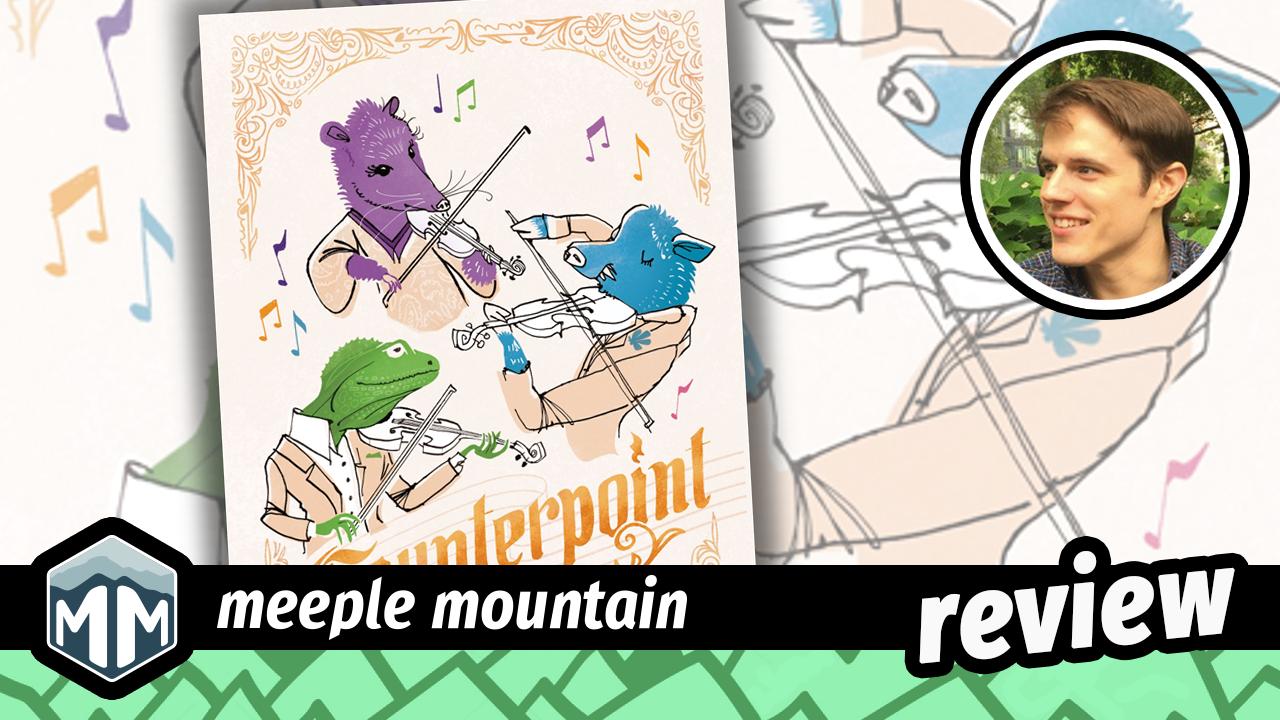
Ted Mann Schaller’s Counterpoint is a must-follow cooperative trick-taker with bidding and a trump-suit. A blessing, to live to see such times as those in which I can write that sentence and assume much of the audience will understand. Each player is a member of an animal chamber trio–to-quintet, be they an iguana violinist or an armadillo pianist. Such is the quality of Brandon Campbell's illustration work here that fights will break out over who gets to be what. The cooperative nature of the game follows the template laid out by blockbuster predecessors The Crew and The Lord of the Rings: The Fellowship of the Ring - Trick-Taking Game: over a series of performances, scenarios named after pieces in the chamber music canon, players attempt to complete certain challenges while also ensuring that everyone makes or exceeds their bid.

There are a few twists on the formula,…

The post Counterpoint Game Review appeared first on Meeple Mountain.
  •  

High Society Game Review

In the broadest possible strokes, games are created out of three or four things: what you can do, what you can’t do, what you want, and, occasionally, what you don’t want. Not every game includes something you don’t want as a category unto itself. You don’t want to end up with few resources in Catan, sure, but that’s just the inversion of what you want: resources with which to build things. I’m talking about things like running out of food in Agricola, where there is a specific punishment meted out by the rules.

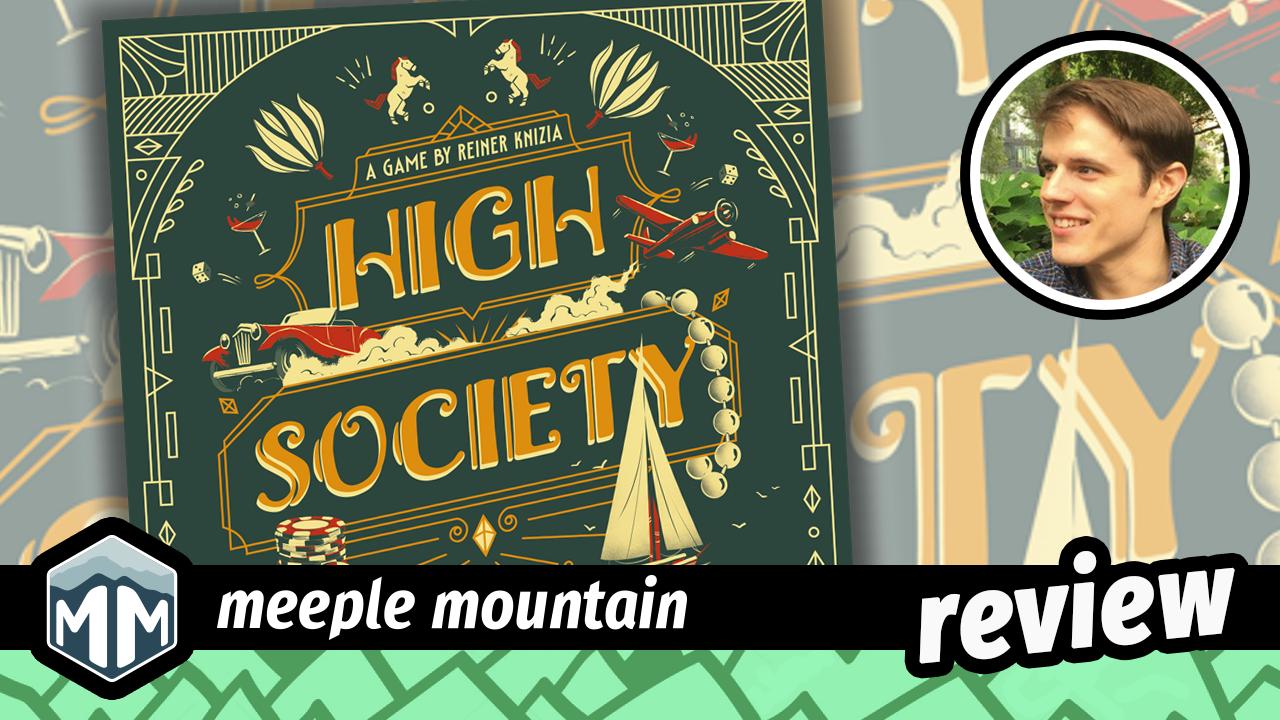
In High Society, a fabulous auction game for three-to-five players by designer Reiner Knizia and recently out in a new edition from publisher Allplay, those four categories are crystal clear. That’s never a bad thing. Many of the best games provide clear, succinct definitions for each of them. High Society is a masterpiece not only because it provides ready definitions, but they work, delightfully, at cross-purposes.

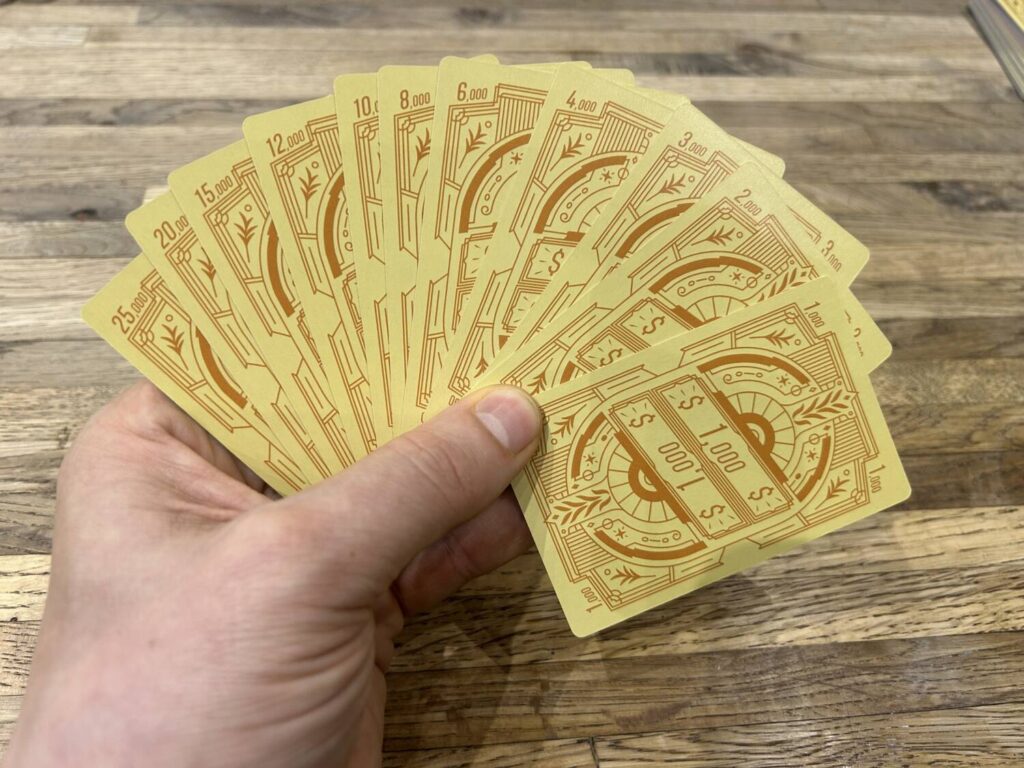
A handful of money cards.

The goal of High Society is, of course, to have the most points at the end of the game. There we have our first definition:

What do you want? To have the most points.

Points are accrued through the purchase of various cards, revealed from the…

The post High Society Game Review appeared first on Meeple Mountain.
  •  

Torchlit Game Review

Whoever walked away from a hand of trick-taking and thought, “Hey, you know what would make this better, is if we had to guess how many tricks we would win beforehand,” has my eternal gratitude. I like to think bidding came about as a party trick. “Françoise is really good at tarot, I bet he can guess exactly how many tricks he’ll win. Guess, Françoise, guess.”

However bidding started, it has long been a cornerstone of trick-taking, and is reliably my favorite way to engage with the mechanic. Card games are inherently subject to tremendous amounts of luck, of course, but bidding shifts the balance a bit closer to skill. More skill means more agency. More agency means more investment. More investment means more fun for everyone.

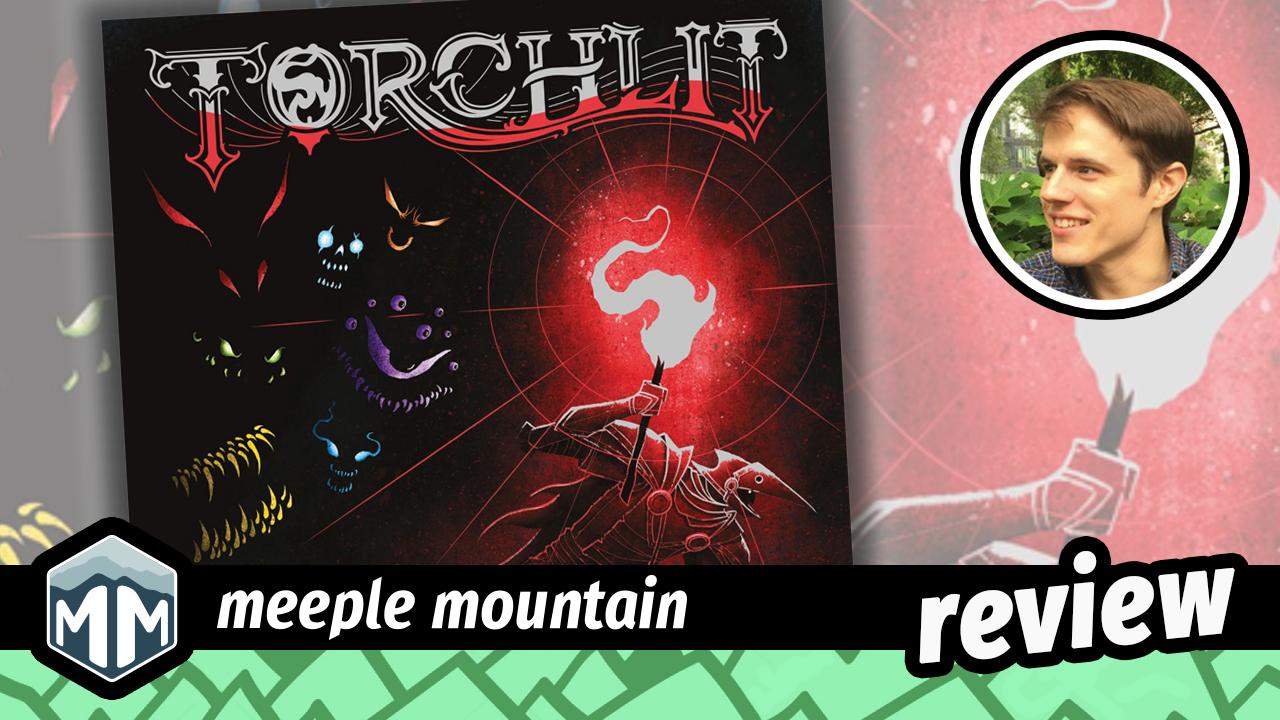
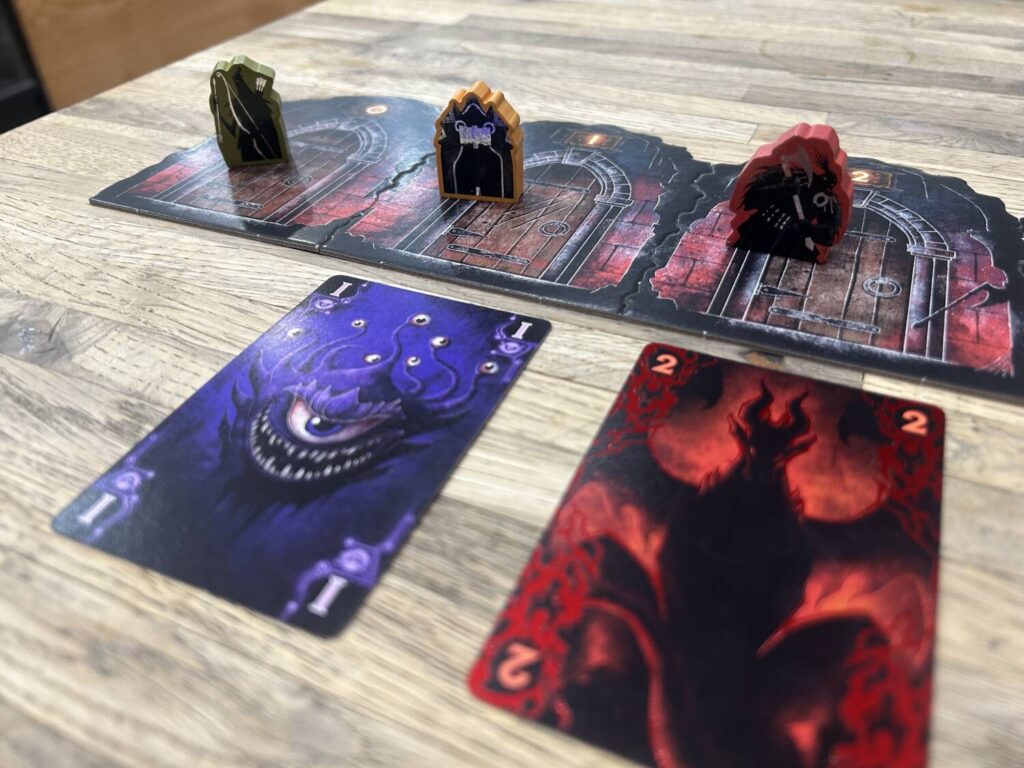
Torchlit is, above all, a bidding game, though it’s a strange one. The deck is dealt out, and every player chooses a card from their hand to put face-down on the table in front of them. The numbers on those cards, which run from 0-7, correspond to a series of dungeon door tiles placed out in the center of the table in numerical order. Whichever card you put down, the matching door is where you want to end up by the end of the hand.

A series…</p>
<p>The post <a href=Torchlit Game Review appeared first on Meeple Mountain.
  •  

The Battle of the Divas Game Review

The history of 20th century music is full of rivalries, be they real, manufactured, or imaginary. As much as they can get in the way, they also serve an important function within the culture of popular music for both artists and audiences. The Beatles and The Rolling Stones, to say nothing of The Beatles and The Beach Boys, were pushed to ever-greater artistic heights as a result of trying to outdo one another. Blur and Oasis sold way more singles as a result of their mutual distaste than they would have otherwise.

As for the audience, rivalries can produce better music, but they also serve a social function. A rivalry makes room for partisans. “N*SYNC rules, Backstreet Boys drool”—an insane position given that the Backstreet Boys are obviously better singers and could do both party songs and ballads with equal aplomb, while N*SYNC couldn’t sing a ballad if their lives depended on it—gave identity-hungry teenagers something to cling to.

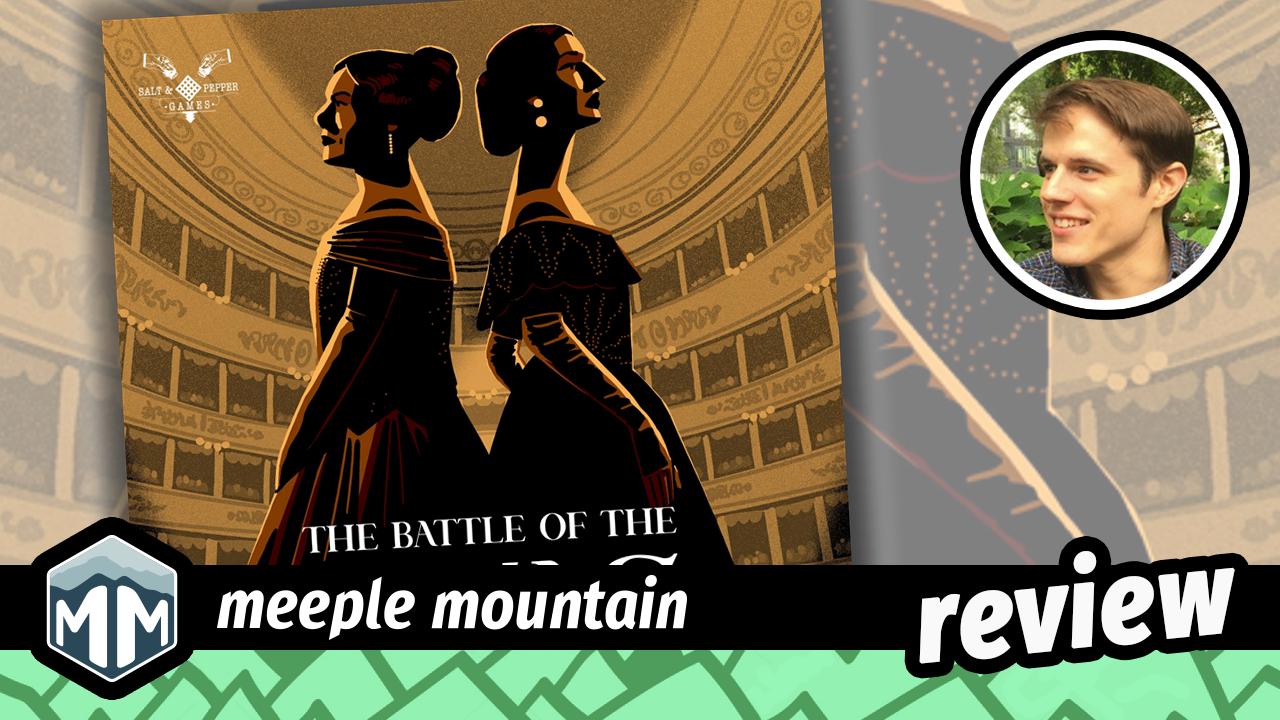
This is hardly restrained to the world of pop. Before the boy bands, before Britpop, and even before The Beatles and The Stones, there was the rivalry between Maria Callas and Renata Tebaldi, two of the great operatic divas of the 20th century. From our contemporary perspective, it’s easy to see how that played out. Ask anyone over the age…

The post The Battle of the Divas Game Review appeared first on Meeple Mountain.

  •  

Dark Pact Game Review

About a month ago, I received a text out of the blue from a friend I hadn’t heard from in nearly two years:

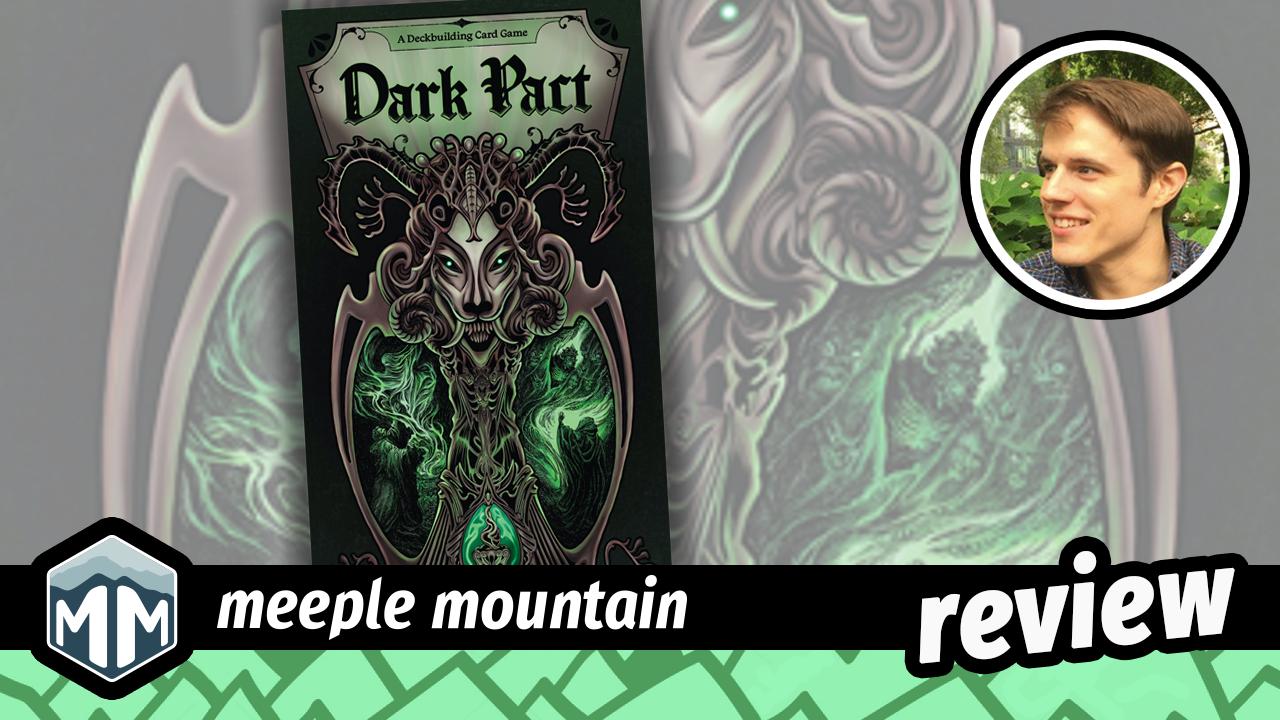
“Have you played Dark Pact by Tom Lehmann? I’ve played it twice and I think it might be the greatest deck-builder.”

A grain of salt must accompany these words as they travel down your gullet. The sender of that text is an avid Lehmann-head. He loves Winter Court, a novel sentence in the English language. He is constantly trying to bust out New Frontiers at parties. He carries a complete set of Dice Realms at all times, just in case the mood strikes.

I get it. I will never play another game as much as I have already played Race for the Galaxy. It would be untrue to deny that Lehmann’s spell has won me over from time to time. I would not go so far as to call myself a disciple, though. I find most of Lehmann’s games too dry. They are mathematically precise in a way that suggests an awe-inspiring understanding of the numbers behind the fun, but they are often that at the expense of, well, the fun. It has never before occurred to me that Lehmann and Reiner Knizia can be thought of as opposite sides of the same…

The post Dark Pact Game Review appeared first on Meeple Mountain.

  •  

Pacts Game Review

D.V.C., as wonderful and consistent and quirky a publisher as you’ll find, largely does its own design work. With the exception of 2020’s Rosetta: The Forgotten Language, all of D.V.C.’s games up till now have been credited to house designer Jasper Beatrix. In a just world, Jasper would be unable to walk down the street without being mobbed by fans, but there are two barriers to that: we certainly don’t live in a just world, and Jasper Beatrix doesn’t exist.

Not corporeally, anyway. Good ol’ J.B. is a pseudonym for a loose collective, a merry anarchic band of creatives who work together to make these wonderful games. They’re so prolific, and release games of such high quality, that the announcement of Pacts and the realization that it was not designed by Jasper Beatrix, was quite the surprise. This area-control game for two is the work of Ben Brin, a single corporeal designer.

Well. I assume.

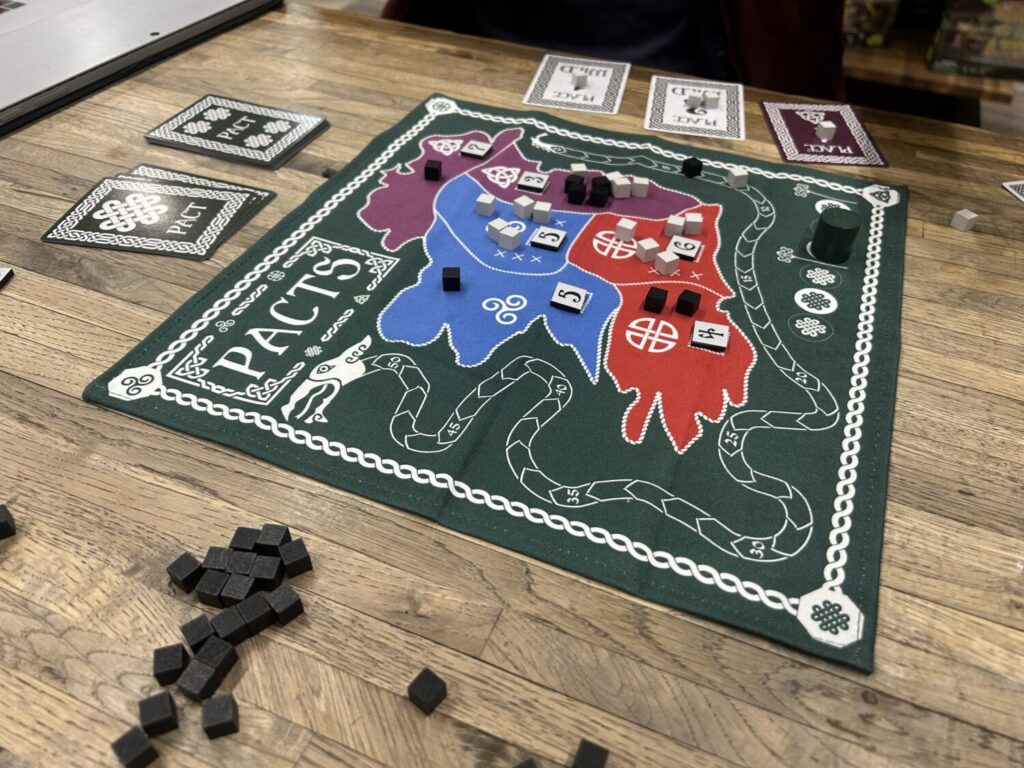
A square, green cloth board sits on a wooden table. The map, a rough outline of Ireland, is divided into six regions. Each contains a number of cubes and scoring tiles.

I Pick I Pick You Choose

Pacts is an exemplar of I Split, You Choose, a mechanism whose promise is often let down by…

The post Pacts Game Review appeared first on Meeple Mountain.

  •  

The Fox in the Forest Deluxe Game Review

The Fox in the Forest predates the contemporary trick-taking craze by a few years. It was an early harbinger of what was to come, of the deluge with which we have subsequently been blessed, and it proved successful. Successful enough that now, almost a decade after its initial release, Joshua Buergel’s two-player trick-taking game is getting the Deluxe treatment.

For those who’ve never played, The Fox in the Forest distinguishes itself from the bulk of trick-takers in two ways. Way the first: all of the odd-numbered cards in this non-traditional deck have special powers that trigger when played. Normally, I try not to get bogged down in the weeds when reviewing a game, but I do think the powers here are illustrative: The 1 in each suit lets you lead the next trick even if you lose, the 3 lets you change the trump suit, the 5 lets you draw one of the cards that weren’t dealt that round before discarding any card from your hand, the 7 is worth a point for whoever wins it, the 9 is always considered a trump card, and the 11 forces your opponent’s highest card in the same suit.

If you are at all familiar with the ebb and flow of trick-taking games, you can imagine well the sorts of shenanigans…

The post The Fox in the Forest Deluxe Game Review appeared first on Meeple Mountain.

  •  

Cross Bronx Expressway Game Review

Cross Bronx Expressway, GMT’s third release in the Irregular Conflicts series, is not for the weak. It is exceptionally complicated, even by the elevated standards of a COIN title. A frequent refrain amongst the GMT faithful, and an accurate refrain at that, is that the rules aren’t all that complicated once you get over the hump of learning them. Not so here. For my first game, I gathered three of the finest gaming minds in New York City, all of whom had read the rules in advance, and it still took an hour or two to get things started. This is no doubt in part a function of the theme, the civic management of The Bronx across the latter half of the 20th century. It’s easier to keep rules in your head when they don’t use words like “coalition,” “partner organization,” and “Census Round Audit.” You may find yourself scratching your head and wondering why you didn’t go back to school to get an MB(oard game)A.

Work your way past the daunting exterior and you’ll find a game that is a fascinating mix of the exceptionally confrontational and the utterly inscrutable. Cross Bronx Expressway is a hard game to talk about as a game, in part because the gamic elements are relatively slight in view of the whole. Designer…

The post Cross Bronx Expressway Game Review appeared first on Meeple Mountain.

  •  

The Lord of the Rings: Trick-Taking Game – The Two Towers Game Review

I struggled with The Lord of the Rings: The Fellowship of the Ring - Trick-Taking Game. For all the inventiveness on display, as passionate a love letter to trick-taking as it was, Bryan Bornmueller’s commercial triumph left me cold. Too often, I said, that cooperative card game would leave players in the lurch, handing them combinations of characters and cards that were not winnable. Unlike its close cousin The Crew, something like half the hands in TLotR:TFotR-TTG proved unwinnable from the jump, save for an act of providence. I don’t want cooperative games to be easy, but I do want continuous losing to feel like a skill issue rather than RNG.

That’s the long and the short of it, anyway. And for what it’s worth, my criticisms of The Lord of the Rings: The Two Towers - Trick-Taking Game are almost exactly the same as my criticisms of the first game. Critical decisions are made without crucial information. A lot of hands are dead from the jump and there’s nothing you can do about it. A few of the chapters here even sharpen my criticisms. It would be easy to get bogged down in an even more negative review, to dig into all the ways in which I continue to think Bornmueller’s game doesn’t work.

The Lord of the Rings: Trick-Taking Game – The Two Towers Game Review appeared first on Meeple Mountain.

  •  

Heat: Rocky Roads Expansion Review

There was a point after my first lap around the South Africa track, one of the two new tracks in Heat: Rocky Roads, when I realized that it might be my favorite track in all of Heat. Nothing else in the extended Heataverse feels quite as rewarding of great play. South Africa isn’t as punishing of poor play or bad luck as España, nor is it a source of the same adrenalized fun that comes with ripping down the straightaways in Italia or Nederlands, but a skilled player in South Africa can do some incredible things. And for the record, I came to this realization while I was getting absolutely walloped.

What is it that makes the track so good? It isn’t the gimmick. The only special rule is that any player who finishes their move on a gravel space has to pay a heat if they have one. If you’re on gravel and you don’t have any heat, it don’t hurt you none. This is a perfectly fine addition to the game, one that will occasionally make you second-guess taking advantage of an opportunity to slipstream, but it doesn’t add so much to the game that it would change the feel of an entire track.

It’s the corners. South Africa is jam-packed with delicious, surprisingly slow corners, and…

The post Heat: Rocky Roads Expansion Review appeared first on Meeple Mountain.

  •  

Quick Peaks – Aeon’s End: The New Age, Kraken Skulls!, War of the Ring: The Card Game – Fire and Swords, Lords of Vegas, The Guest

Aeon’s End: The New Age - Andrew Lynch

Indie Board & Card Games took their foot off the gas just a little with The New Age, by which I mean it isn’t nearly as punishing as War Eternal. The New Age introduced Aeon’s End’s campaign system, which would become de rigueur for their future releases, and those of us who’ve played Aeon’s End before will know that that’s a mixed blessing. The constant injection of new cards and powers is great, but the writing…well. Nobody plays Aeon’s End for the quality of the writing. You win some and you lose some. If you play Aeon’s End enough, you’ll lose quite a bit, in fact.

Ease of entry?
★★★★☆ - The odd bump or two
Would I play it again?
★★★★☆ - Would like to play it again

Read more articles from Andrew Lynch.

Kraken Skulls!  - Kevin Brantley

Kraken Skulls! puts 2–5 players at the helm of a pirate ship, chasing the most fame to become the king (or queen!) of the pirates.

Players bounce between a random selection of dice mini-games (via cards) laid out in a circle, mixed with open-water cards that house the dreadful…

The post Quick Peaks – Aeon’s End: The New Age, Kraken Skulls!, War of the Ring: The Card Game – Fire and Swords, Lords of Vegas, The Guest appeared first on Meeple Mountain.

  •  

Keep the Faith Game Review

In the midst of Suzannah Herbert’s tremendous documentary Natchez, religious fundamentalists stage a Westboro Baptist–style protest outside an LGBTQI+ event. They stand there with their signs, decrying sin and the fate of the wayward souls inside. One man reads scripture into a megaphone, citing chapter and verse to support his belief that the drag queens emceeing will go to hell.

For some reason, it struck me in that moment as particularly absurd that this man was citing documents written over 2,000 years ago to explain his beliefs now. Well, “to explain” is wrong, and I even think “to justify” wouldn’t quite get across what I felt. I believe in and understand the power of citing the Bible as a collection of parables to relay lessons, questions, universal experiences. This man was not doing that. He was quoting the best-selling book of all time as edict. Those dusty old words were why he is presently required to believe that gay people will go to hell.

To that man, and those around him, the text of the faith is the faith. It is the destination, rather than the compass. To him, the scripture can neither change nor can it be changed. It is unyielding, unsparing, unimpeachable. Some words written down over two millennia ago are to be followed to the letter…

The post Keep the Faith Game Review appeared first on Meeple Mountain.

  •  

Operation Barclay Game Review

Operation Barclay is one of the most inspired marriages of setting and mechanic that I’ve ever had the pleasure of experiencing. How did designer Maurice Suckling get the idea to pair the story of Operation Barclay, the Allied plan to feed the Axis false information about an upcoming Mediterranean invasion, with poker and a shell game? It’s such a remarkable idea, such a perfect idea. Most game designers would sacrifice body parts in exchange for an idea this good.

While the real Operation Barclay was about convincing the Axis that the Allies would invade Greece when they were in fact planning to invade Sicily, Operation Barclay the game gives us a bit more ambiguity than that. There are five possible areas of attack, stretching from Morocco-to-France and Egypt-to-Turkey. The Allied player places wooden Intelligence tokens into each of them. One lane, whichever the Allied player decides to make the Primary Offensive Sector, gets four positive Intelligence tokens and one negative. The Secondary Offensive Sector gets three of the first and two of the second, and the other three Sectors, red herrings all, get two and three.

[caption id="attachment_329516" align="alignnone" width="1024"]A board imprinted with a map of the Mediterranean, with many wooden hexes going across the Mediterranean sea from Africa to Europe. Most of the tiles…</p>
<p>The post <a href=Operation Barclay Game Review appeared first on Meeple Mountain.

  •  

Neuroshima Hex Game Review

Neuroshima Hex has known three previous editions, each ultimately widening the pool of available factions and improving on what was already a very good design. Now, on the occasion of its 20th anniversary, publisher Portal Games has rebooted the line again. Blessed are we who live to see such times. Finally, you can own a base set of Neuroshima Hex with a box that doesn’t look like absolute butt. Aesthetics was never the point of all this, but goodness.

Inside that box, you’ll find four factions’ worth of tiles with which to play this marvelous game. Do the tiles look better? Listen, there are limits to what you can manage when designing a game that has to convey a large amount of information in a small amount of space. Do the tiles look good? No. Do they look bad? No! They’re a miracle of legibility. Don’t worry about it.

The basic idea is pretty straightforward: on your turn, you draw up to three tiles, discard one, and then play, discard, or save the others. Your tiles are a mix of Troops that attack and hinder your opponent, Modules that provide buffs and debuffs to the pieces on the board, and Actions, which can do all variety of things depending on the faction. As the game progresses, the board gets…

The post Neuroshima Hex Game Review appeared first on Meeple Mountain.

  •  

Muster: Raise the Banners Game Review

Muster: Raise the Banners, from designer Spencer Lloyd Thomas and with vibrant art from Pedro R. M. Andreo, is a quick little two-player lane battler. Each turn, you play a single card to its matching lane, or discard a card onto one of the central spaces, then draw a card. The catch is that the cards have to be played in ascending order. If I play the mighty green six early in the game, I can’t play any more cards to green.

This may sound familiar to some of you. It certainly did to me. Muster draws a whole heap of inspiration from Reiner Knizia’s 1999 masterpiece Lost Cities, one of the greatest two-player games ever published. I don’t knock Muster for that, and you shouldn’t either. It adds some flair of its own, like the two-sided wild cards that can be played in conjunction with other cards, and the Rainbow cards, which can be discarded to any center slot to open up that particular lane to cards of any color.

The board, a few turns into a game. Four cards sit to the south of the board, three sit above it.

This is a great idea. It means that you never quite know when a lane is done. I…

The post Muster: Raise the Banners Game Review appeared first on Meeple Mountain.

  •  

Castle Nightingale Game Review

There’s quite a bit about Castle Nightingale to catch the attention of the discerning gamer. That box, with its palette of dark blue and warm orange, stands out on a shelf. As you get closer, the colors organize into three mangy cat ninjas and a game red panda samurai, all charmingly rendered by Vincent Dutrait. That one cat making eye contact more or less dares you not to be interested. As you pick up the box, which you inevitably will, you might notice the “B. Cathala” listed alongside co-designers Eliette and Jérémy Fraile. Only then might you notice the logo in the lower left corner.

You don’t often get to say, “Sand Castle Games has a new game out.” Prior to Castle Nightingale, you’d have said it twice. There was the 2019 release of Res Arcana, and the 2022 release of First Empires. Three games in eight or so years—I’m including production work on Res—is a slow, considered pace. And to think that people used to marvel at Days of Wonder’s approach of only one title a year.

Even if they only have a 50% hit rate, Sand Castle’s pace suggests that they only release the games they really want to release. It’s clear from their production choices that they pour all of their attention into each…

The post Castle Nightingale Game Review appeared first on Meeple Mountain.

  •  

Iello’s Traditional Games Line Game Review

Concerning Formatting

Before we begin, we should discuss formatting. Meeple Mountain’s house style is to italicize the names of games. Arcs, Catan, Kabuto Sumo: Sakura Slam. This is not contentious. They are, after all, titles of authored works, and deserve the grammatical demarcations befitting their status. When it comes to classic, authorless games such as chess and checkers, there is a schism within the church of Meeple Mountain. Some believe they should be capitalized too, but this has (as evidenced just now by my flagrant disregard for the house style) never sat well with me. Chess has no single author. “Chess” is a name, but it is not a title, and the dominant English convention is to neither italicize nor capitalize it.

The same is true of most traditional games, a number of which will be discussed in the article that follows. Cribbage, oh hell, solitaire, koi-koi, and canasta will come up, but they will only be capitalized if they happen to begin a sentence, and they will only be italicized for the purposes of emphasis. This would not be worth explaining if this article did not also cover French Tarot and scopa.

You see the issue.

“French Tarot” is generally capitalized in English in order to separate the card game (French Tarot) from the deck with which that card…

The post Iello’s Traditional Games Line Game Review appeared first on Meeple Mountain.

  •  
❌