❌

Normale Ansicht

The Life & Games of Quintus Fabius Maximus Verrucosus (Cunctator), #2

31. Mai 2026 um 17:13

Back to our board game assisted biography of Fabius Cunctator! In the first part, we’ve seen where Fabius came from, how his career was already illustrious before Hannibal’s invasion, and how he was then called to Rome’s highest emergency office – the dictatorship. Today, we’re covering the turning point of the war against Hannibal, Fabius’s later campaigns, and his final years – as always, with board games.

If you want to read more posts of this kind, I strongly recommend you subscribe to the blog – all new posts in your inbox right when they go live!

“The Man, Who by His Delaying Restored the State to Us”

After Fabius had laid down the dictatorship, the consuls returned to the traditional method of Roman warfare: Lucius Aemilius Paullus and Gaius Terentius Varro were ready to offer battle to Hannibal once more. Hannibal’s third major battle in Italy ended for the Romans even worse than the clashes at the Trebia and Lake Trasimene: At Cannae, the Roman center advanced, their wings gave way, and the entire army was caught in the double envelopment. Rome lost 50,000 soldiers in a single day, including consul Paullus.

Setup for the Cannae scenario from Commands & Colors: Ancients (Richard Borg, GMT Games): You can see Carthage’s strong forces on the wings, which would historically envelop the Romans. Image from CommandsAndColors.net.

The catastrophe at Cannae made Fabius the obvious choice to lead Rome. While he did not take any formal office immediately, his authority, encouragement, and – once more – attention to religious rites calmed the Romans and rekindled their belief in victory.

Fabius was now at the height of his political, military, and religious authority – and he used them. The Romans elected Marcus Claudius Marcellus and Lucius Postumius Albinus as consuls for 215. When the latter was killed in action before he could assume the office, the college of augurs (of which Fabius was a member) vetoed the by-election of Tiberius Sempronius Gracchus, citing religious reasons against having two plebeians as consuls. Instead, the patrician Fabius was chosen to be consul alongside Marcellus. Fabius would be co-opted into the second important priesthood, the college of pontifices, expanding his religious authority even further.

The two consuls of 215 were both seasoned commanders – just what Rome needed in such dire times. At least Fabius would have thought so. When the elections for the consuls of the year 214 were almost completed, Fabius as the presiding magistrate annulled the elections, claiming that the chosen candidates were no match for Hannibal. The elections were held again, and this time, Fabius and Marcellus were returned for another year (contrary to the Roman prohibition of consecutive terms in office).

In any case, Fabius and Marcellus worked well together. They contained Hannibal in 215 in southern Italy, allowing him no more successes in peeling off Roman allies. In 214, Marcellus went on the offensive in Sicily, while Fabius continued to shadow Hannibal’s army and punish Rome’s unfaithful allies. Their division of labor had them soon known as “the sword [Marcellus] and shield [Fabius] of Rome”. When their terms ended in 213, both of them were confirmed as pro-consular commanders.

Not Marcellus: Sword of Rome (Wray Ferrell, GMT Games) is set before the wars against Carthage. Image ©Rodger B. MacGowan.

As Hannibal’s forces dwindled away, his attempt to destroy the Roman alliance system was failing. Even those cities which had joined him were slowly retaken by the Romans. Marcellus conquered Syracuse, the biggest city on Sicily, in 212. Fabius went for a prize of similar importance, besieging Capua, the biggest Italian city after Rome. Hannibal knew he could not defeat Fabius with his shrunken army. Instead, he tried to save his last major ally by marching on Rome, hoping to lure Fabius away from Capua.

The double siege in Hannibal & Hamilcar (Mark Simonitch/Jaro Andruszkiewicz, Phalanx): I like the phlegmatic defiance of the Fabius miniature. Like a bouncer with a customer whom he knows to be difficult – and will kick out regardless.

Fabius, however, was as phlegmatic as ever and called Hannibal’s bluff by continuing to siege Capua. Rome held, Capua fell. Hannibal’s war was all but lost. The edge of the Carthaginian invasion had been blunted by Fabius’s patience and tenacity, until Rome’s almost-inexhaustible supplies of soldiers allowed it to take the initiative. Fabius’s contemporary, the poet Ennius described him as the “man, who by his delaying restored the state to us”.

The Last Campaigns

Hannibal had lost, but Rome had not yet won. The cities who had broken faith with Rome in Italy had to be re-taken. Rome still had need of Fabius. He was elected consul once more for 209, and also named princeps senatus (“first of the Senate”), an honorary title which by tradition would have been bestowed on the most senior senator who had served as censor.

Bedecked with these honors, Fabius set out against Tarentum, the last major city in Italy which still supported Hannibal, while other Roman generals kept Hannibal busy. Fabius secretly negotiated with the leaders of the city. They broke with Hannibal and opened the city gates to the Roman army – but Fabius had them slaughtered to veil that he had gained the city by treason.

Not a good time to be Tarentine. From Hannibal & Hamilcar.

Tarentum was plundered. Fabius had a colossal statue of Hercules brought to Rome and placed it next to a statue of himself on the capitol, emphasizing his connection to the divine ancestor which he claimed.

Eclipsed

Hannibal was still in Italy, but Rome was firmly on the offensive. The young Publius Cornelius Scipio invaded Spain and expelled the Carthaginians and proposed to invade the Carthaginians’ African seat of power. While Fabius still argued for a defensive strategy which would contain Hannibal, his word did not count for as much as it used to: He may have been the nominally most influential senator, but his strategy had outlived itself. It had been necessary lest Rome suffer defeat, but it could not deliver the ultimate victory.

Scipio found support in the senate and sailed to Africa. Hannibal was promptly recalled by the Carthaginians and made his way back to Africa as well. Scipio met Hannibal at Zama and defeated him in a bloody battle of attrition. Carthage sued for peace soon after. Fabius did not live to see it. He had died a few weeks before the battle of Zama.

Games Referenced

Commands & Colors: Ancients (Richard Borg, GMT Games)

Sword of Rome (Wray Ferrell, GMT Games)

Hannibal & Hamilcar (Jaro Andrusziewicz/Mark Simonitch, Phalanx)

Further Reading

Plutarch’s biography of Fabius (which prizes unity of character over historical accuracy) can be found in an English translation here.

Polybius’s Histories which deal with the rise of Rome in the Mediterranean including the Second Punic War are online in an English translation here.

Fabius has found remarkably little attention by modern biographers. If you read German, I recommend this short, but insightful piece on him: Beck, Hans: Quintus Fabius Maximus. Musterkarriere ohne Zögern [Quintus Fabius Maximus. Model Career without Delaying], in: Hölkeskamp, Karl-Joachim/Stein-Hölkeskamp, Elke: Von Romulus zu Augustus. Große Gestalten der römischen Republik [From Romulus to Augustus. Great Characters of the Roman Republic], Beck, Munich 2000.

boardgaming in photos - Risk and Race for the Galaxy

In my work as a leadership trainer, I regularly collaborate with others in the industry - fellow trainers, coaches and training providers. Being in a business community called BNI, I regularly meet fellow members of the community and we help one another in our businesses. One of my friends Captain Fuaad has developed a training game based on Risk, and he asked several of us to help him

First Tracks (Saturday Review)

30. Mai 2026 um 12:43

Snow drifted from the pine branches as the last chairlift carried us slowly, but steadily, towards the summit. As we looked back, the mountain below was being draped in silver moonlight and covered in fresh powder snow. We couldn't see it, but we knew that, back in the village, steam curled from bowls of ramen waiting for our return. Yet, nobody was ready to leave the silence of the peaks just yet. We all wanted to hit the slopes one more time before calling it a night. At the same time, we already knew what we would do tomorrow. Tomorrow, we would return to the peak and lay the First Tracks by Blake Erickson and Megan Ryan from Sayonara Ski Co.

The post First Tracks (Saturday Review) appeared first on Tabletop Games Blog.

Bahamut Dispute

Bahamut Dispute is a microgame from Japan. It is a 2 player game about two kings trying to defeat the other by setting a dragon on their opponent. The structure is simple. On your turn you draw one card, and you may play up to two cards. You need to discard only if you exceed the hand limit. You start with 4 health, and your goal is to reduce your opponent’s health to zero. So far, nothing

The Perils of Selling Scarcity: Some Recent Thoughts on Magic

28. Mai 2026 um 16:52

For a game I rarely play, I think a lot about Magic the Gathering. It’s particularly been on my mind recently due to a combination of the new Covenant podcast/livecast, the excellent Distraction Makers YouTube channel, and some correspondence with the creator of the Alkem series of gear and bags designed to hold trading card games.

Magic recently opened sales for a Secret Lair Goblin Storm Commander deck with special art by Dakota Cates. Within 34 minutes, the entire print run had sold out (I’ve only seen speculation as to the quantity made, not confirmed numbers, with estimates ranging from a few thousand to 50,000).

I can see why people are really frustrated by this. They’re passionate about a game, and they want a chance to buy that game. This is why I’m so against crowdfunding exclusives: If you’re making a game to withstand the test of time, why would you limit your ability to make and sell any portion of it to the first few people who learn about it?

However, rarity and scarcity are also core to Magic’s existence. The reason they can consistently sell 15 slim pieces of cardboard for $5 is because of the chance a card is worth a lot more than $5 on the secondary market (whether or not you actually sell that card). This is why it’s exciting to open a booster pack or even to own a limited edition goblin art pack.

I’m not justifying this model. At Stonemaier Games, we’re specifically not selling scarcity. If a product is out of stock and there appears to be demand for us to make more, we’ll happily make more. This is how we serve our customers.

What’s interesting to me is that because Magic is inherently about selling rarity and scarcity, I can see how they believe they are serving customers by making a limited quantity of Goblin Storm Secret Lair sets. I also understand that they, like any publisher, have to make production quantity decisions many months before they know how many people will actually pay for the product.

I think there may be a better way, though, even within Magic’s constraints of selling scarcity. In discussing this topic on yesterday’s livecast, @redwlfjsc shared an idea that I modified just a touch: Magic could make, say, 10,000 units of a Secret Lair and put them on their webstore for 3 weeks. If the product sells out within that time period, their order system switches to preorders for a single reprint of that Secret Lair on which they will start production after the 3-week period ends.

This is exactly what Gamefound offers with Express Crowdfunding. It serves those who want the product right away while leaving a limited door open for those who are willing to wait a bit. It respects collectors and players without losing control to bots and quick flippers.


Magic’s model is so successful that entire brands have been created specifically to serve those who play Magic and other TCGs (casually, at local game stores, and at tournaments). I heard recently from the team at Alkem Gear about their product launch Kickstarter. Our conversation led in a few different directions that you’ll see in some upcoming posts, but I wanted to briefly mention it today because it demonstrates both the value of user-focused design and that even 30-year-old games still have room to improve.

This is from Tim Heck, the founder of Alkem:

“After moving to Riverside, California, I became deeply involved in communities centered around D&D, board games, and trading card games like Magic: The Gathering and Pokémon. One thing I noticed immediately was that people were carrying thousands of dollars’ worth of cards and gear in setups that felt like an afterthought. A lot of the products marketed toward TCG players seemed to be repurposed camera bags or generic storage solutions. That was really the starting point for Alkem.

Our products are intentionally built around the way gamers actually travel and play. The backpack, for example, was designed specifically around deck box dimensions and gaming accessories. The vault section fits six deck boxes or roughly 1,200 cards, while the upper compartment can hold an additional 1,800 cards. At the same time, we didn’t want the bag to only serve card players, so the internal geometry is intentionally square and structured to also accommodate board games, D&D books, dice trays, playmats, notebooks, snacks, and other essentials people bring to game nights and conventions.”

After spending time designing flexible storage solutions like the Wingspan Nesting Box and Viticulture’s Wine Crate, I have a high level of appreciation for what Tim has created at Alkem.

Just so it’s perfectly clear, Alkem has not sponsored this post and I have no connection to them other than a pleasant and informative email conversation. I hear from creators all the time, and if they share interesting stories that are relevant to topics I’m covering, I sometimes include them in these articles.


What do you think about how a company that sells rarity and scarcity in a game like Magic can best serve customers?


If you gain value from the 100 articles Jamey publishes on this blog each year, please consider championing this content! You can also listen to posts like this in the audio version of the blog.

May ’26 Links

27. Mai 2026 um 22:33

(Also April, which didn’t have many because …. I was busy).

Arnold Kling discusses the Moral Dyad.

Bryan Caplan wrote an RPG one-shot called “Badger and Skinny Pete,” based on the characters from Breaking Bad?! (Discovered in a profile of Dwarkesh Patel)

A thorough comment explaining why price transparency in health care is nigh impossible.

The Illuminati game in real life might be stranger than the game. Sure, the CIA controls the Orbital Mind Control Lasers, but you’ll be surprised who runs the Weather Satellites! Do Fungi control the weather?1

Every Frame a Painting (with TCM) — Ozu in Color. EFAP (With Criterion) — The Visual Comedy of Isle Of Dogs.

I played HF4A solitaire and wrote a summary on BGG. (Part 1, Part 2)

I had noticed a bunch of AI videos on Youtube (I no longer trust new channels) but it’s even hit Sumo. Spiffy calls them out. But if people think there is money to be made creating slop in such a niche product, I assume that’s another marker as to how cheap video creation (etc) has become. Incidentally, I remember that Neal Stephenson predicted that the internet would be overrun with slop in Anathem, and Fall, or Dodge in Hell2.

Corporate Sanity? Part 1 — Is Agile finally being sent to a farm upstate? (One can hope). Some signs in the Fidelity re-org.

Part 2 — Bolt CEO fires entire HR team for “creating problems that didn’t exist.” (There was one company I worked for that I considered quitting on day one, the HR dept was so messed up …. I was still considering it when the founders fired the head of HR and read the rest of them the riot act3).

A Spa …. for stuffed animals. (Stuffed animal cleaning and repair).

A Peter Watts talk from 8 years ago …. the part from 15:00ish to 24:00 ish where he talks about writing Blindsight were of particular interest if you’ve read the book (but all of it was of interest to me).

Anton Petrov covers the recent advances in Project Ceti (decoding whale language) …. including when unrelated Sperm whales were captured (video and audio) coordinating helping midwife a birth.

Philosophical ideas that were behind their time (in that, you are surprised how late it was proposed).

Japan runs out of Robot Wolves in Fight Against Bears. I await the Guillermo del Toro movie. (A decade ago, I would be awaiting eagerly, but now … eh).

I’ve never heard of Jon Peterson, but he’s an expert on the history of wargames and RPGs? An interview with him — What Playing Games can teach us about simulating the future.

In many languages, the word for “night” is the letter “N” plus the word for “Eight” (give or take).

The Modern Passport System has eliminated Fraud, Forgery …. and heroes who bend the rules to save lives.

RIP Christian Freeling (abstract game designer).

  1. Obligatory link to Betteridge’s Law of Headlines ↩︎
  2. In Anathem, the IT specialists assign all data a reliability/reputation score because 99% is slop; in the latter one character builds a slop auto-generator for slander and unleashes it, specifically to force people to stop trusting anything they read. ↩︎
  3. I still quit soon after that, but that probably delayed it by at least … a week. The entire engineering department was cheered up by the news. ↩︎

BGI 421 The One About Small Publishers Getting Tolkien Licenses

Von: admin
27. Mai 2026 um 09:25

BGI 421 The One About Small Publishers Getting Tolkien Licenses

Board Games Insider – Join our Guild on Board Game Geek Guild | Like us on FB

Social media:

Ignacy Trzewiczek / Portal Games: website | FB | Twitter | Youtube

Corey Thompson / Above Board TV:  website | Youtube

Stephen Buonocore / “The Podfather Of Gaming”: website | FB | Twitter | Youtube

Intro Music: Happy Rock – Bensound.com

💾

Grimcoven: The HUGE Unboxing!

26. Mai 2026 um 23:20

A silver stake? A crucifix? What, did you think we haven’t tried everything before?

Another big unboxing! Peter checks out everything for Grimcoven, the new boss battler from Awaken Realms!

Before I say anything more, yes, someone did point out to me I pronounced ‘Grimcoven’ incorrectly throughout this entire video, and I’m deeply ashamed about it. We all make mistakes! But anyway, there’s a lot of exciting stuff to check out here, in my first video about this challenging new game from Awaken.

Grimcoven is a gorgeous looking game with enough boss battling goodness to last you many years, so let‘s get into it!

Don’t forget to download my rules & reference (and of course it’s also on Tabletop Codex), and good luck!

Making high quality tabletop gaming content at the EOG takes time and money. Please consider becoming a Patreon supporter or making a donation so I can continue this work! Thankyou!

Fifty-One

26. Mai 2026 um 15:10

My Fifty by Fifty finished a few years ago (four years late). But time marches on. So … Fifty-One. Dice Realms recently got its 25th play and picked up a few more last night, which was nice. (I honestly thought it would make the list years ago, but I’m much more of a proponent that most of the locals).

Also, the local group has switched FLGS to one of the more modern ones that has a liquor license and a kitchen. I haven’t gone much this year, but last night had a large crowd of several different groups, including quite a few couples and one adorable baby. It speaks quite well of the hobby to see such a broad cross-section of people. Now the store just needs to sell a few more copies of High Frontier 4 All (which it does have stocked!) so I can get more opponents, because that’s going to be a hard game to get fifty plays in.

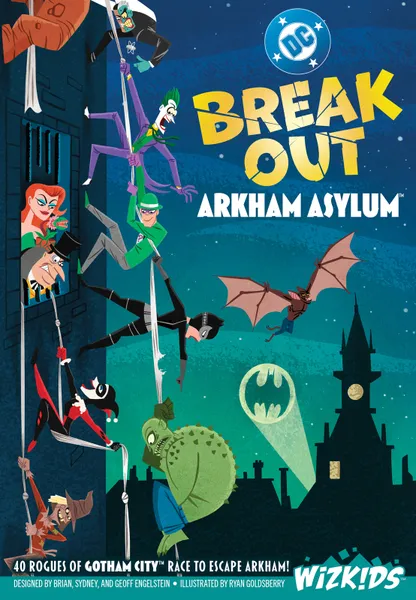
Magical Inmate – A DC Breakout: Arkham Asylum Review

26. Mai 2026 um 15:00
Geoff Engelstein was influential in bringing Takashi Ishida’s Magical Athlete to the United States in 2003. It’s unsurprising that Geoff, alongside his children Brian and Sydney, have tapped into the spirit of that phenomenal race game, pairing its traditional roll and move structure with several new flourishes. In fact, there is so much of that…

Read more →

Intentional Experience – designer intent and player experience (Topic Discussion)

26. Mai 2026 um 12:43

Designers don't like it when players criticise their board game, and the response often is that the game was intentionally designed that way. Players complain that a strategy feels unfair, a mechanism is frustrating, or a game simply isn't very clear. Designers reply that that just misses the point. Similar disagreements exist in films, novels, and art, yet board games seem to have them more often, and they are often more personal. Part of the reason may be that board games are not passive experiences. Players are not simply watching events unfold, but instead are interpreting rules and shaping the experience themselves every time the game hits the table.

The post Intentional Experience – designer intent and player experience (Topic Discussion) appeared first on Tabletop Games Blog.

Grimcoven v1

26. Mai 2026 um 05:14

There’s something down here, it’s carnivorous.

Don your black leather and grab your Grimcoven rules and reference!

Awaken Realms are now a decade old as of this writing, and their astonishing success and huge creative output has not only made them one of the best publishers in the business, but the flag bearers for huge, over-the-top productions absolutely drenched in theme and atmosphere. A gaming style I’ve had a soft spot for since I bought my first big box Games Workshop games back in the late 80s.

Grimcoven continues the tradition of wonderful excess, but there are some interesting things here that break the mould a little and tell us that the company isn’t just resting on its laurels. First, it’s a boss battler in which you play one-off games – no overarching campaign here (though you can add a little bit of character development with the Personal Stories expansion). Next, there’s something about this game system that, as I was playing, made me think of that much-used word ‘elegant’ – and I can assure you that’s not a word I use often when it comes to Awaken Realms. Unlike their usual style of dense, many-step phases that you can never remember without a reference sheet close to hand, Grimcoven actually flows smoothly and cleverly from step to step (and where it does get a bit complicated, nice little standees remind you of the sequence of steps).

I’m very happy to see Awaken step back from the long campaigns which demand a commitment of months (and often seem end up in solo play mode as a result), and move more into one-off games and more manageable campaign structures (see Lands of Evershade). Not all of us want to leave a game set up for months, or wish to devote that much extended gaming time to a single game.

Grimcoven is packed with content – there are 6 unique hunters, and each of the 6 ‘big bad’ Griefbounds have 5 scenarios of increasing difficulty (plus combinations of elite enemies and minions), plus expansions give you 2 more hunters and 2 more Griefbounds. Then, if the hunters get corrupted enough, they unlock ‘Pretenders’ – semi-Griefbounds that you can also hunt. The game plays out on modular hexagonal tiles with various terrain setups, and special cards give the terrain even more personality. The dice allocation system that powers the hunters’ actions is nothing revolutionary, but it works smoothly and efficiently here, without all the dice modifier jiggery-pokery that slowed down ISS Vanguard.

And you want the system to be smooth, because this game does not go easy on you, and you have to fully concentrate on your tactics to beat your Griefbound of choice. The game demands careful cooperation between players for success, so this is one of the most engaging cooperative combat experiences I’ve had. Also, as your hunters collect lament (the power currency of the game), you can customise your suite of abilities and gain more dice as you simultaneously become more corrupted, which gives the game a lot of forward momentum. While the difficulty can be frustrating at times, there’s a great sense of wanting to come back and try again if you lose, and there are enough interesting choices to keep you planning what you’ll try next time.

I’m highly impressed by Grimcoven so far, but I have a few more games to play yet before my full review. In the meantime, download my rules & reference (also available on Tabletop Codex) and check out my full ‘boss pledge’ unboxing video, released tomorrow!

Games that Shine in Play-and-Win

25. Mai 2026 um 17:09

My favorite way to market our products is to facilitate and encourage them to get to the table more often. Your table, my table, the tables of reviewers, ambassadors, etc–any table will do. The more our products get to the table, the more they’re exposed to people, and hopefully the more fun people can have with them.

One of my favorite ways to accomplish this goal is through play-and-win donations for game conventions and 100+ person gaming events.

Play-and-win is a convention concept where people can check out a game, play it, and then enter their name in a lottery to win that specific game at the end of the convention. If I donate a play-and-win game to a convention, it can be experienced by dozens and dozens of people in a short amount of time. Only one of those people will win it, so if other people liked the game, they’re now informed in their decision to purchase it later.

The play-and-win room at the recent Geekway to the West convention was a bustle of activity right until the end of the convention. Geekway solicited and invested in over 140 different play-and-win titles, each with multiple copies. In total, these games had nearly 15,000 reported plays over the course of 4 days.

Geekway does play-and-win exceptionally well, but they aren’t alone. There are over 250 conventions listed on the 2026 tab of the play-and-win Google Sheet I maintain, so publishers have lots of options when choosing events to target. But which games should you send to these conventions?

Geekway play-and-win coordinator Jeff Hiatt was very kind to send me the data from the Geekway 2026 play-and-win, and he gave me permission to share and analyze it. The sheet is here. I’ll focus on the first four columns, but you’re welcome to contribute your thoughts to any data in the comments.

I’ve highlighted the most-played games in blue (1-30), the highest “desire to win ratio” in yellow, and the crossovers in green.

Number of Plays

The top 5 games that were played the most were Hot Streak, Magical Athlete, Bomb Busters, Moon Colony Bloodbath, and Hummingbirds. All of the games in the top 10 were released in the last year.

For this and the other categories I’ll discuss, I’m hesitant to draw blanket conclusions or stretch to find commonalities among the top 5. For example, there are 2 racing games here, but not every racing game will garner 250+ plays at a convention.

Average Player Count

Around half of the games with the highest average player count are among those that reported high numbers of plays: Hot Streak, Magical Athlete, French Toast, Bomb Busters, Trinket Trove, and Spooktacular.

However, sorting the data this way doesn’t seem to indicate that higher player counts equate to more convention plays. I think player count flexibility is more indicative of a game’s popularity at an event like Geekway–if you grab a game off the shelf, it’s nice if you can just play it with one other person or if you can invite a few others to join too.

Desire to Win

I calculated this by dividing the number of player who wanted to win a game by the total number of plays, indicating that people had a great time with the game. The top 5 were Hot Streak, Magical Athlete, Pinched, 12 Rivers, and Spooktacular. Some games with fewer plays but a high level of desirability were Sprocketforge, Mission: Red Planet, Rebirth, and Pergola.

The main pattern I see here is great table presence, whether it’s component hooks like in 12 Rivers or Sprocketforge or eye-catching art.

Rating Delta

This is perhaps my favorite data point. Which games rate significantly higher at a convention than their BoardGameGeek rating suggests? I think this is so important to pay attention to, as the top-rated games BGG would lead us to believe that people value heavy, complex, long games over everything else. But a vast variety of games bring joy to tabletops, including lighter games.

The top 5 rating delta games were French Toast, Purrramid, Tembo, Australis, and Catan.

Granted, the boisterous environment of a convention is atypical for gaming. Some games shine at events and may not have the same luster when it’s just you and a few friends at home. Also, you might take a look at the games that actually left a worse impression at Geekway than their BGG rating would indicate. Those are the types of games a publisher might avoid contributing to play-and-win (I mostly see longer, heavier games here).

Anecdotal Analysis and Conclusions

Here I’ll look at the games with the both the most plays AND the highest desire to win ratio:

  1. Hot Streak
  2. Magical Athlete
  3. Bomb Busters
  4. Moon Colony Bloodbath
  5. Trinket Trove
  6. Formaggio
  7. Fate of the Fellowship
  8. 12 Rivers
  9. Spooktacular
  10. French Toast
  11. Sanctuary
  • ease of learning: Most of these games skew towards easy to learn and teach.
  • game length: Most of these games are played in under an hour.
  • game weight: Most of these games are on the lighter side.
  • price: Most of these games are less than $50.

Overall, the types of games I see exceling in play-and-win are those released in the last year, have player count flexibility, feature great table presence, and are on the lighter side.

Despite those patterns, I still think it’s completely fine to send a variety of games to play-and-win conventions. Take a look at the Google Sheet and you’ll see games of all shapes, sizes, weights, prices, player counts, etc. I think this speaks to the diversity of gamers at events like Geekway.

What did you learn from this data? Are there certain types of games you seek out at conventions?

***

If you gain value from the 100 articles Jamey publishes on this blog each year, please consider championing this content! You can also listen to posts like this in the audio version of the blog.

Crisps! (Saturday Review)

23. Mai 2026 um 12:43

The pub was quiet after the lunchtime rush. It was a chilly autumn afternoon, so the hearty lunch just hit the spot. Now we were sitting there, playing a card game, with a pint each by our sides. While the meal had filled us up, we still fancied something savoury. We just needed a small snack that the two of us could share. Nothing fancy. Something simple would do. Of course, it had to be Crisps! by Shreesh Bhat from Little Dog Games with art by Sai Beppu.

The post Crisps! (Saturday Review) appeared first on Tabletop Games Blog.

The Two Towers – Trick-Taking Game (2-player review)

22. Mai 2026 um 23:25

By Kaysee and Max

For the German review please visit Der Herr der Ringe: Die zwei Türme – Das Stichspiel (2-Spieler-Rezension).

Two Towers Trick Taking Game (2-player review)
“Don’t go where I can’t follow.” – Samwise Gamgee, The Two Towers, J.R.R. Tolkien

Disclosure: completed all the chapters

We had fun playing The Lord of the Rings: The Fellowship of the Ring Trick-Taking Game despite it not being optimized for two players, so we were excited to play The Lord of the Rings: The Two Towers Trick-Taking Game to see if there were any interesting mechanical changes (also we‘re LotR fans so there’s that).


The art style is very similar to the first one, but the cards are much more vivid. We also like that they used paper instead of plastic wrapper for the packaging of the tokens and the decks which makes it easier to open and better for the environment (we have a copy from the 1st printing).

packaging
paper, not plastic

The initial setup for two players is still very similar; each of us plays one character, but one of us should play an additional character whose cards are open but in a pyramid form where five of the cards are faceup and the rest are facedown. The One Ring token and the ring cards are not yet part of the setup. Instead, two new tokens and five cards are added: the titular Two Towers, as both tokens and cards and the three Orc cards. All of theses cards don’t belong to any particular suit. As such they can only be played if a player doesn’t have follow the leading suit. The towers are similar to the One Ring, they win any trick that they are played into. Unlike the One Ring the player cannot choose to lose the trick, instead if both towers are played into the same trick, they both lose. The Orc cards are the opposite of the towers and always lose. We like these new cards as they add challenge to the game since they cannot be used to lead a trick. If a player is forced to lead a trick with an Orc (e.g. because it’s their only card left), the group loses the whole chapter. If a trick contains both tower cards and an Orc card, no one wins the trick and it is set aside.


As with the first game, each chapter features a different set of characters with their own goals and rules. These tend to be slightly more complex and interesting this time around. Likewise, many chapters still feature event cards that further change the rules. Unlike the first game, there is a big change after the first ten chapters, which correspond to book three of LotR. Without spoiling too much, the deck changes to become more similar to the deck in the first game, with some significant changes. This of course makes perfect sense thematically, as the later chapters are the ones featuring Frodo, Sam and the One Ring.


We were hoping that Two Towers would be much better for two players. We found the first few chapters to be both fun and mechanically challenging even though the 2-player friendliness is just the same as the previous game, and we were ok with it (we got used to it and we accepted it) but as we stepped in to Chapter 25, that’s when we realized that the game just became worse for two players. We could imagine this chapter being a bit easier for three or four players, but with two, it wasn’t. How the pyramid works in that chapter made us feel very frustrated. We’re still trying to figure out why they made the decision for the set up of the pyramid for this chapter to be the way that it is. With many challenging games, we get that feeling of great satisfaction after beating them, but not with this one. Even though we were able to finish the chapter after a few tries, it didn’t feel satisfying or rewarding. The relief that we felt is more of us not having to be in a very frustrating situation anymore (we could’ve just stopped playing it, but it’s the completionist in us that deterred us from just moving on) than being able to succeed. While it is not as frustrating and has a regular pyramid setup, Chapter 30 also proved difficult for us, due to the specific combination of character goals and the limitations introduced by the event card for that chapter.


We still decided to finish all the chapters. Some of the mechanical changes in part 2 were a noticable improvement and made the game more fun. We also liked how the theme and the mechanisms in part 2 felt very familiar, but were still different and interesting. We also liked the last chapter a lot and how the mechanism matches the theme. It was a good ending.

Our Final Thoughts:
The Lord of the Rings: The Two Towers – Trick-Taking Game was still enjoyable for us in most parts, but there were times where we thought that we could’ve enjoyed it more if there were more of us playing it, something that also crossed our minds while playing FotR, but it did occur more frequently and strongly while playing this game. It’s unfortunate because the interactions between the mechanisms and the theme here are much more interesting than in FotR. We were hoping for it to be at least as good for two players as the previous one if not better, but it wasn’t. Still, we’re looking forward to playing The Return of the King if it comes out in the future and hoping that it will have better mechanics for two players.

What we like:

  • production quality
  • mechanical changes in each chapter
  • art style
  • better packaging
  • interaction between mechanisms and theme

What we do not like:

  • the pyramid can be frustrating
  • less optimized for two players than FotR

Kaysee’s rating: 3.5/5
Max’s rating: 3.5/5

Combined rating: 3.5/5
3.5

Reference:
Tolkien, J. R. R.(1999). The Two Towers. HarperCollins.

Title: The Lord of the Rings: The Two Towers – Trick-Taking Game
Game Design: Bryan Bornmueller
Illustration: Elain Ryan, Samuel R. Shimota
Publisher: Office Dog

The post The Two Towers – Trick-Taking Game (2-player review) appeared first on Schmeeples.

❌