Normale Ansicht

BGI 405 The One About Shifting Personnel in the Industry

04. Februar 2026 um 13:17

BGI 405 The One About Shifting Personnel in the Industry

Board Games InsiderJoin our Guild on Board Game Geek Guild | Like us on FB

Social media:

Ignacy Trzewiczek / Portal Games: website | FB | Twitter | Youtube

Corey Thompson / Above Board TV:  website | Youtube

Stephen Buonocore / “The Podfather Of Gaming”: website | FB | Twitter | Youtube

Intro Music: Happy Rock – Bensound.com

💾

Altay: Dawn of Civilization

Altay is a civilisation and 4X game built on a deck-building engine. It is played on a simple map. Each player starts with just one small village. They defeat barbarians around them and build new settlements, expanding their territory.  The map shows different terrain types. Specific terrain types that you control can help you boost your production of certain resources. Some

V6.9 More Math options in score fields

Von: Suzan
03. Februar 2026 um 14:01

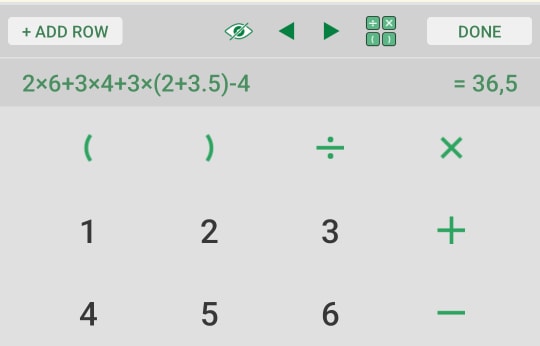
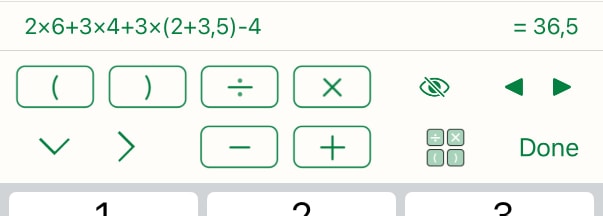
With this version it is now possible to add more calculations to score fields.

After addition and subtraction that were already possible, you can now multiply and divide.

Using the parentheses you can combine multiple of these calculations in one score field.

The entire calculation is saved in the score field, so you can always view and or edit it later!

Read more about it here: Calculations

Android math buttons
iOS math buttons

New publisher avatars

The publishers Minerva Tabletop Games and Steinbock Brettspiele have allowed us to add some of the characters in their games as avatars in the app.

The Minerva Tabletop Games avatars are from their game Crumbs! The Sandwich Filler Game with art from BG Stats avatar veteran Rory Muldoon.

The Steinbock Brettspiele avatars are from their games Der König des Waldes and Bobbidi Boom with art from respectively Roland Deaconu and Lorenzo Fornaciari.

image by Roland Deaconu
from Der König des Waldes
images by Rory Muldoon, from Crumbs! The Sandwich
Filler Game

Please see our Score sheet page here: Requesting score sheets for an update on requesting score sheets.

Designer Diary: Skybridge

03. Februar 2026 um 08:00

by Fat Francis


AUTHORS AND DESIGNERS:
Michael Rieneck
Franz Vohwinkel

Franz:
Three Illustrations with fantasy motifs for a new series of 1000-piece jigsaw puzzles.” That was the assignment that led to the creation of the Skybridge in autumn 2010.

Beyond this, there were no instructions from the publisher, so I had to come up with something. Dragons! Fantasy - there must be dragons. But what else? I wanted it to be something else than the usual fantasy cliché with sword-swinging heroes and princesses to be saved in front of a Neuschwanstein-castle backdrop. Also, instead of developing three unrelated motifs, I wanted to come up with a small, short story to connect the three puzzles.

So, what’s cool? A hollow world. Ever since Journey to the Center of the Earth, I always found hollow worlds fascinating. What else? A huge tower, like the tower of Babel. Together with dragons, this could be exciting. Why is the tower being built? Well, as always with large monumental buildings, it is built to get closer to God.

Somehow this doesn’t really work for a hollow world, because there’s just the other side of the world to be seen in the sky. The sky over Thraen is finite, not infinite like ours. There was something missing to make it worthwhile for such a tower to be built.

Then I had an idea: In the middle of the hollow world floats a small planet, a moon! And what if the roles were reversed? If not the moon was an unlivable, dry world but the hollow world that surrounds it?

People must constantly fight for their survival on the outside, while they have to watch a lush, green and fertile world above their heads? A visible, real paradise, right in front of the eyes of all humanity? Wouldn’t that be enough motivation to build a huge tower into the sky that forms a bridge between the worlds? A world-bridge? A Skybridge?

Suddenly I had found my little story for the puzzles:
Part 1 - The construction of the bridge begins;
Part 2 - The bridge is half built, gravity flips to the other side;
Part 3 - The bridge is finished, people of both worlds meet.


The completed illustrations for the three jigsaw puzzles

The puzzles were produced and published, but were, as far as I know, not a great success: The puzzle series was not continued anyway. Normally, this would have been the end of the Skybridge and its worlds - if it hadn’t been for those prints.

The publisher gave me prints of the puzzles from the manufacturer. Full-sized, stable prints on really thick cardboard, not yet cut into individual puzzle pieces. I displayed and sold them in the following time at conventions, tournaments and game events. My little story about the Skybridge made visitors curious.

“Where can I read something about it?” was a question I was often asked. I always answered with “Sorry, I’m an artist, man. I can’t write.”


LEFT: Prints for sale at Emerald City Comic Con, Seattle, 2014 / RIGHT: Gen Con, Indianapolis, 2015

But over time, it started to bother me. Was it true that I couldn’t write? After all, I hadn’t tried it since my school days. So at some point, I decided to give it a shot sometime in 2011. I couldn’t say afterwards whether the result was good or bad, but one thing became clear to me: I really enjoy writing.

In the following years, the history and worlds of Skybridge grew dramatically. It became obvious that a short story wouldn’t do the emerging, complex relationships justice. The more I explored Thraen, Beeledhans Eye and the Skybridge, the more questions had to be answered. A three-part structure again offered itself.
Part I: How did the bridge come to be built after no one had dared to do it for thousands and thousands of days?
Part II: What happens when such a bridge is built under conditions of constantly decreasing gravity that finally flips to the other side?
And, last but not least,
Part III: What happens when the Skybridge is completed and paradise suddenly becomes accessible to all of humanity?

I would be a strange game illustrator if I hadn’t asked myself whether there isn’t a game somewhere in this story. Unfortunately, there is a good reason why I became an illustrator: math and I have always been at war with each other. But game design needs mathematics for their mechanics like players need the rules to play a game. It was clear to me that I was completely unsuited to developing a game on my own.

Then at a party during SPIEL in Essen - it must have been 2013 - I met someone who knows how to make games based on given stories: Michael Rieneck. I had already illustrated games he designed, but didn’t know him well. When we started talking, I gathered all my courage and finally told him about the Skybridge. Then I asked him if he could imagine designing a game for an unreleased book...

Michael:
... These are days still remembered many years later. And by that I don’t mean anything specific, like the weather or the corresponding date. I mean the feeling that this day triggered in you. Some kind of feeling that this day would change something. And that those experiences will have an effect for a long time. How long, I couldn’t guess, then back in the fall of 2013 ...

Franz Vohwinkel just asked me if I could imagine developing a game based on a story that has been on his mind for a long time and that he intends to write a book about it. I had to sort that out for a moment and let it sink in. I have worked with book templates before and appreciate doing it very much. On one hand, books usually provide great stories and ensure that you don’t have to look for a - usually superimposed - theme for the game anymore. In addition, books offer a common thread for the development of a game right from the start.

But a book that doesn’t even exist yet? That seemed quite bizarre. But there were no doubts. When an experienced game illustrator like Franz Vohwinkel comes up with a story, then it must be something very imaginative that should give enough starting points for a game idea. I didn’t know what the book is about, but I already knew my answer: “Sure, I can imagine that.”

And so begins a long journey into a strange and epic world that has been taking an increasingly concrete form in my mind’s eye ever since that day, drawing me further and further into its spell.

I can’t remember exactly when over the years Franz told me various details of the story. But because I couldn’t read anything about it, I asked him countless questions about it while we were working together, and he patiently gave me just as many answers - a process that continues to this day. In fact, there is still a lot for me to discover in Thraen. In the beginning, it was the big topics that we discussed and that were supposed to play a role in the game. The hollow world of Thraen, Beeledhans Eye, the peoples of Thraen, the cruel queen, the Drakhes and all the Gods. And most importantly, the desire to build a Skybridge. “Great,” I thought, I had already found the game goal. I immediately felt reminded of the building of the cathedral in The Pillars of the Earth. With this, the thematic framework established quite quickly. Another one thing was clear to me from the beginning. Franz certainly would want to illustrate his story with opulent pictures. Hence, large playing cards are undoubtedly the best medium to let off steam artistically. Also, we’d need a big game board, of course.

When you accept such a big assignment, you quickly want certainty. Can I even come up with something suitable? Am I really capable of developing a good game for Skybridge that can convince the players and especially Franz? The project has taken over my mind and it keeps occupying it until I have success or I failed. After our first conversation that night, I got to work very soon and created a card-based board game in which the Skybridge is built. At that time, I knew only a few main characters from the story. Franz had already told me about some of the cities and landscapes of Thraen. I still remember vividly how strange many names seemed to me back then. Today they are familiar and it feels like I have known them forever. But I wanted to ignore all this at first and develop a good game mechanic that fits the topic and can be filled with life later. The first prototype was actually ready before Christmas. It crashed with a loud bang, not just for my test players but also for myself. The decisions were bland and the atmosphere of an epic story did not even begin to come up at the game table. Franz didn’t see this prototype or the second one, which also was a disaster.

So the start was already an utter failure. In addition, I had gained a realization during those first two attempts that initially frustrated me, but turned out to be a stroke of luck later on. Initially the players were supposed to form their own extensive card displays, which they laid out successively on each side of the game board. The space required for this reached far beyond the normal dimensions of a conventional play table. It quickly became obvious: A maximum of one row of cards could be placed on each side of the game board, nothing more, unless we use very small cards.


Example of cards displays on all sides of the game board

This didn’t seem to be a real option for this project, which was supposed to come to life through its impressive illustrations. Then I got the idea to limit the card display to a row of six cards, to make them fit comfortably to the side of a large game board. Whoever wants to play a seventh card needs to cover up one that’s already lying out. The covered card would then no longer be usable for the player. For the available space, this worked wonderfully. From this moment on, each player had six card slots available on his side, which had to be tactically used in a smart way. We already assigned a color to the cards of each ethnic group. Each group consisted of eighteen cards, which were available in separate piles on the game board. At the beginning of a turn, one player could draw an open card from one of the piles and receive a bonus from the respective people. This mechanism hasn't changed to this day. Even back then, the top cards of the piles were only refreshed at the beginning of the new round. So the starting player always had the largest selection of cards to draw from in the current round.

With the help of the cards, the actions required for the game were controlled: procurement of technical knowledge and raw materials for the construction of the Skybridge, supply of food for the population, the expansion of military power, intrigues, oracles, praying for favors from gods, usage of Drakhes and more. There were quite a few different actions on the cards. Many were tried, many more were changed or abandoned.

The space problem was solved, but the game still didn’t work. The decisions were still trivial unfortunately. It was far too easy to construct a well-functioning display. So I wanted to limit the freedom of the construction of the card display. This was when the runes were born. With their help I wanted to tie the individual cards to certain card slots. If a player wanted to play a certain card, it had to be placed on a specific card slot and cover the card that might already be there. This quickly turned out to be a step in the right direction and I asked Franz to design six runes for me that could be depicted on the cards and slots. At first there was a total of six runes, but as it turned out, the freedoms were still too great.


The original six runes

Only after we limited the slots to five - and thus also the runes - was the slot management (as I called it) challenging enough as an essential game mechanic. (By the way, the sixth rune from that time still exists - you can see it on a belt of the rebel leader Raphis and as a tattoo on the neck of Hamises).

Franz:
In the meantime, Michael and I had started working on a serious prototype for the game. The first elements we needed were, of course, icons for the actions, layouts for the playing cards, and the game board.


Michael needed more and more background information about Thraen for his work on the game. My focus during this time was therefore mainly world building. Although much of it already existed in writing, the geography of Thraen needed to be visualized. I had to create maps to fully understand the connections between the regions and their peoples.
From these maps, prototype graphics of the game board and the playing cards were then developed.


Maps of Thraen

The first playable board

Prototypes for SPIEL in 2018[

Michael:
In the meantime, I was sure I had found the core mechanism of the game. Now I got down to work on the distribution of the cards and their functions over the five runes. For this I was in a lively back and forth with Franz about what could be included in each stack of faction cards. “Metal and Drakhes are only available for the Utreng, salt comes only from the cities of Shenna” is an example of the kind of information that I received from him. One can easily imagine that thematic correctness and game developing necessity did not always go hand in hand. We had to make compromises, but by that time I had long fallen to my own “Skybridge fever” and I no longer wanted things in the game to be completely different from the written story. It was a challenging puzzle that we had to solve together, but we managed to distribute the actions coherently and meaningfully among the now 100+ cards.

Meanwhile, Franz had made a breathtaking three-dimensional skybridge that was enthroned in the center of our game board. It looked absolutely gorgeous and I still have the picture of it close to my heart.


Cardboard prototype version of a 3D Skybridge

By that time, I had no more doubts that we’d find a publisher for Skybridge. What a painful misconception! Many days, weeks, months and even years of work were already spent on the project. Not only in terms of the development of the game design itself, but also in terms of the design of the prototypes, which, thanks to Franz, presented themselves differently than those I usually create. Should all of it have been in vain? For a brief period of time, we even played around with the idea of running a Kickstarter campaign. But in the end, the project seemed too big for us—we had no experience in this area. As difficult as this was for us, we had to admit that we would probably not be able to capture the history of the Skybridge in a board game and convince other decision-makers. At this point, the chapter “Skybridge board game” looked like it had finally reached its end.
Then the Vohwinkels decided to move from Seattle to Eckernförde at the beginning of 2020 - which happens to be about a 15 minute car drive from my home.

Franz:
After presenting the first prototypes to various publishers, it became clear to us that we still had a long way to go with the second prototype: Most important steps were moving the card slots from the game board to individual player boards and to disconnect the skybridge and the group of central draw piles into two separate game boards. With this new flexible version, Skybridge was now adaptable to a wider range of table sizes.
We also streamlined the gameplay and its essential mechanisms to make Skybridge less complex and more accessible.


Streamlined prototype versions of the game board, player board, and Skybridge

Michael:
Instead of communicating across the Atlantic, we were suddenly able to work collaboratively at the same table and try out new ideas together in smaller steps.

But what was left of our game, after all? Our “old” Skybridge was too bulky and overloaded, too confusing and long-winded for most publishers. There was so much criticism, I hardly remember it all. Still, we wanted to use the luxury of simply being able to meet every week in person to make one last attempt. For a start, we subjected our prototypes to a radical cure. Game board reimagined, event cards forgone, 3D bridge removed, development tracks eliminated. All that and much more. We streamlined the game significantly. As it turned out, we were really lucky. Maybe it was the luck of the skilled, but still, I consider us lucky: The new, stripped down game still worked. In fact, we instantly liked the new version much better than the previous version. It is actually rather rare that such drastic changes immediately work well.


But, surprisingly, so it happened. The flow of the game was better, the playing time was significantly reduced, somehow everything seemed to be more precise, more to the point. Suddenly we were hopeful again and we got to work - now in Eckernförde - with renewed verve. We had the new player boards and smaller, more functional game boards. This made the handling of the components much more pleasant and feel less rigid. We played countless times to further balance the game and test the new individual abilities for the players. Expanding these asymmetric player skills was an important step for us, to give the game the greatest possible variance.

Franz:
The large card size had been planned from the beginning, but until this point we used the regular trading card size, because it was more convenient for the creation of the prototypes. Now the time had come to convert all the cards to the large format. At the same time, the old placeholder-graphics on the cards - which showed just early sketches for the maps of Thraen - were abandoned in favor of mock-up sketches that showed people, landscapes and cities.


Example of original prototype cards next to expanded illustrations

Michael:
When we presented the new version, it seemed like we were actually on the right track. But despite intensive work on the game, this version also turned out to be a fallacy in the end. And so, at the end of 2022, we again reached the point to put Skybridge with a heavy heart into the drawer of failed projects. By now, we were mentally too deeply involved in our game for another complete restart - we were still convinced that our game was the best it could ever be.

Franz:
The second version of Skybridge also did not find approval from the editors. Our Skybridge board game project was thus over for the time being. Looking back, I can’t say whether I felt more disappointment about our failure or relief that the ordeal was finally over.

In my free time, I concentrated all my energy on the novel, which had grown to a considerable size in the meantime.

Michael:
And then luck struck again. This time it did not come from ourselves, but it came to us from the outside. I can’t remember the context and on which occasion it happened, but Peter Eggert asked me about our game -it was the beginning of 2023. He wanted to know what actually became of the game I and Franz had been working on.

I always had the different versions with me for testing at a game event of Inka and Markus Brand in Lieberhausen. That’s where Peter had seen the various prototypes in the years before.

“Unfortunately nothing,” I had to tell him. “Then bring it to Lieberhausen again,” he suggested. I brought it along in consultation with Franz and I played the game several times with Peter and his team. It actually went well. Or, as Peter usually phrases it: “That’s pretty good, but it can be even better.” He could actually imagine publishing the game after editorial processing at Deep Print Games. And just like that, hope and enthusiasm for the project were back again and we got to work with Deep Prints editor Moritz Bornkast. One thing was particularly important to Peter: He thought the game needed a little more complexity. He envisioned a third strategic level in addition to building the bridge and worship the gods. The resistance against the rebels and the simultaneous expansion of one’s own military power should become significantly more important to achieve this. The implementation of this third branch of strategy was once again a lengthy process. Not least because it made profound changes in the cards necessary. The new rebel game plan was created, which led to new garrisons and a new function on the cards. Other elements had to give way. Once again, thematic and mechanical adjustments to the many cards were necessary. In the end, it was worth it.


Franz:
When Peter Eggert from Deep Print Games appeared out of nowhere and expressed interest in Skybridge to Michael, I was extremely skeptical at first. I just couldn’t imagine that a solution could be coming to us and our game so easily and unexpected.
At the moment of signing the contract, the hobby of “Skybridge” instantly became a huge pile of work. It had suddenly become clear to me, that my imagined worlds would indeed be published after such a long time. I immediately started to feverishly turn the images in my head into pictures for the game.

In order to be able to really dive deep into the project, I stopped accepting any commissioned work since then and I solely focused on Skybridge.

Michael:
While Franz devoted himself to his artistic work around the clock, for me the most wonderful time began. I worked with Moritz fine-tuning the content for the last time. A few details here and there – there wasn’t much more to do for me. I don’t know how other authors feel, but for me, these are the best moments in a project. The moments when you see your game idea take shape with your own eyes for the first time and its full creative power unfold. I got to see new images from Franz every week, one more beautiful than the other. Places and people, all of which had existed only in my imagination, suddenly became visible, as if a thick veil of fog had been lifted step by step. It felt a bit like I was meeting old friends again after a long time and I was traveling to forgotten places of longing with them ...

Whatever happens, however the game continues its journey, it has a special place in my heart and I’m utterly happy and grateful that I don’t have to get it out of my drawer when I want to play it.

Epic Warpath v1

02. Februar 2026 um 23:03

Never set foot on the wrong side of history.

Conquer worlds with your Epic Warpath rules & reference!

It’s been a bumper time for fans of epic scale wargaming lately, and Mantic Games has got in on the act by Kickstarting an entire range – 8 factions – for their own epic system, Epic Warpath. I received the starter set, a couple of large resin models, and some epic scale building sets for review, and as I write the painting is finally done and I played my first game last week – and had a blast!

The rules are a nice mixture between old and new, using the command dice system from Deadzone and the order tokens pioneered in GW’s original Adeptus Titanicus and still used in their recent epic scale game Legions Imperialis. Order and combat tokens do a very nice job of tracking each unit’s current status during the game, so you can see what’s going on at a glance, and the combat system is straightforward and effective. It wasn’t long before the rules began to recede into the background during our first game and we could concentrate on what was happening on the table. The order of the rules in the book is a bit clunky however, and I’ve tried to improve comprehension with my rules & reference. Stayed tuned for a battle report video as soon as I get an opportunity!

The miniatures look great and there’s a minimum of fiddly construction, which is good to see. For me the big draw here over GW’s offering is the variety and distinctness of the available factions – and the fact they’re all available up front. While GW seems obsessed with their Horus Heresy, Mantic is having fun putting space rats, dwarves, zombies and weird aliens together on the tabletop, and to me that’s far more enjoyable than civil war amongst space marines.

To see what you get in the starter set, check out my unboxing. More to come!

Results of the Stonemaier Company Retreat

02. Februar 2026 um 20:16

Last year around this time, a coworker shared that they would feel valued by a Stonemaier company retreat. After asking other coworkers about the idea and hearing that they were supportive of it, I started the year-long process of planning the trip, which culminated in roughly 3 days in Phoenix last week.

The main feature of the retreat was that it was the first time all 8 of us have ever been in the same place at the same time, as we all work well from home in Missouri, Oregon, Florida, Nevada, and Minnesota. My happy place is at my desk at work, but I was happy to serve my coworkers by arranging and participating in this trip.

Details about exactly how the trip worked are in the article I wrote in June. Basically, I found a location (Phoenix) that met the environmental preferences of all coworkers and was within a direct flight for almost all of us, and I found a rental property where we could all have our own rooms to meet privacy, introversion, and sleeping needs. The trip was only for Stonemaier employees, and the focus was on each other and Stonemaier Games (opposed to nearly everything else we do, which is focused on our customers). The trip was during the week, as it was a work trip–I wanted everyone to be able to return home for a weekend with their families and friends.

Two things that evolved after I wrote that article in June are as follows:

  • Food: I heard some good advice about food planning–make it easy for everyone–that I took to heart. For breakfast, we picked up a few basic items from the grocery store on the first day. For lunch, I researched nearby restaurants from which we could order delivery or pickup. For dinner, I made reservations at a few local places that met everyone’s dietary preferences.
  • Schedule: I heard some other good advice about having some sort of structure to each day, shared in advance so everyone has a clear vision and can plan accordingly. Here’s how it looked:
    • casual breakfast individually at the house
    • mornings are free time to do anything you want in and out of the house: work, sightsee, meet outside the house with local friends, relax, etc.
    • order in together for lunch
    • stay at the house for the afternoon (not necessarily for anything in particular, but just to create the potential of working together if there are things to playtest, discuss, or just play for fun)
    • go out together for dinner
    • play games together, hang out at night, and/or have quiet time

The only last-minute changes involved (a) those of us in St. Louis getting a huge snowstorm just before the trip, resulting in a longer flight and a much later arrival than planned on Tuesday and (b) we rented an 8-passenger van rather than taking rideshares around the city.

Before the trip, I printed/assembled a bunch of prototypes and packed them along with a submission and some pre-production copies. We spent the majority of the two afternoons (plus one evening) playtesting and discussing these games.

My coworkers shared a wealth of feedback for me to consider and implement, which was as helpful as it was exhausting (if you’ve ever run a playtest of one game for a few hours, you know how much mental and emotional energy it requires–this was six games over a total of at least fifteen hours). This resulted in me returning from the trip with a staggering amount of work. Their feedback was great, though, so I’m navigating how to better include coworkers in the playtesting and product design process in a more spaced-out, remote, and independent way.

I think my favorite couple of hours during the retreat happened on the last night after the final playtest session. We were tired enough to go to bed, but instead we drifted one by one into the living room and talked. Just 8 people hanging out, joking, sharing, opining, etc. It was really nice to have that idle time with such delightful folks.

I’m sharing all this partially to close the loop I opened in June’s article and partially to offer an alternative template to traditional corporate conferences filled with speeches and teambuilding activities and intense meetings. We essentially just got together in a nice place and worked/playtested for a few days.

Would I do it again? I’m not sure. I’m definitely not looking to add another job to my job, and this was no small effort for me to plan, coordinate, and execute; I also returned with far more work than when I arrived. I think we work well remotely (in fact, in many ways this was a reminder of why I prefer to work from home, especially as an introvert), and much of the product design discussions can happen virtually on a rolling basis. Three of my coworkers are here in St. Louis and already participate in playtesting (though I could do a better job of inviting them more often). The idle time was intangibly important, though, so every few years I think it would be nice to get together for that purpose, even if it’s just a quiet evening before Design Day when most people are in St. Louis anyway.

I’m curious to hear your reactions, thoughts, and questions to this style of work retreat–feel free to share in the comments!

***

If you gain value from the 100 articles Jamey publishes on this blog each year, please consider championing this content! You can also listen to posts like this in the audio version of the blog.

boardgaming in photos: Clans of Caledonia, Hanamikoji, Molly House, Caylus, Regicide

I took a screenshot of my list of games in progress at BoardGameArena.com. Just a snapshot of a moment in time. I spend much time in front of my computer, both for work and leisure, and I always have a browser tab with BGA open. Whenever it is my turn for one of the games I'm playing, a tiny triangle is animated at the tab. When I notice it I happily click to take my turn. I recently

A chat with Eric Lang

 31 Jan 2026. Eric Lang (Blood Rage, Rising Sun, Ankh, Chaos in the Old World) was in town. He has been staying in Malaysia on and off for many years, and is now planning to spend more time living in Kuala Lumpur. He wants to get to know the local designer community and the local boardgame community. Aaron arranged two meet-up sessions for game designers and other industry players to get to

Captain Tsubasa

Captain Tsubasa is a 2 player game based on the manga and anime of the same name. This Japanese manga and anime from the 1980’s is hugely popular not only in Japan but also around the world. It is about football (soccer). In the game you play a football match between two key teams in the story, Nankatsu and Toho. This is a card game, and you will see many characters from the series. If

Jan ’26 Links

30. Januar 2026 um 01:53

Five Ideas You Can’t Unsee — I don’t know, I’ve forgotten most of them several times.

SETI @ Home has now finished its analysis after 27 years. (Video from Anton).

Zoning does more harm than good.

A quick video showing a game (that I’ve never heard of, probably educational) being assembled at the factory.

International Go is struggling for the usual reasons, but also because China, Japan and Korea can’t agree on the rules (and ended up agreeing to use the U.S. rules as a compromise).

Works in Progresses Top 10 Articles of last year — Includes an article on the Hanseatic Shipping League, which I’ve played three or four games revolving around.

52 Things I Learned in 2025 Lists (Kent Hendricks)

Jorbs makes a humorous PSA — Do Not Play Slay The Spire.

Hasbro is being sued for printing too many Magic cards.

The RPG industry is like a water pipe. (I’m linking this to a post that simply quotes a facebook post, because I don’t use facebook).

Feral Historian — Is the Matrix a Right-Wing story?

Veritaserum on The Expert Myth — This contains a lot of stuff I’ve encountered, but is well done.1

  1. In fact I hadn’t seen the Red/Green Button example, although I described something very similar in DMPOR. ↩

Jan ’26 Links

30. Januar 2026 um 01:53

Five Ideas You Can’t Unsee — I don’t know, I’ve forgotten most of them several times.

SETI @ Home has now finished its analysis after 27 years. (Video from Anton).

Zoning does more harm than good.

A quick video showing a game (that I’ve never heard of, probably educational) being assembled at the factory.

International Go is struggling for the usual reasons, but also because China, Japan and Korea can’t agree on the rules (and ended up agreeing to use the U.S. rules as a compromise).

Works in Progresses Top 10 Articles of last year — Includes an article on the Hanseatic Shipping League, which I’ve played three or four games revolving around.

52 Things I Learned in 2025 Lists (Kent Hendricks)

Jorbs makes a humorous PSA — Do Not Play Slay The Spire.

Hasbro is being sued for printing too many Magic cards.

The RPG industry is like a water pipe. (I’m linking this to a post that simply quotes a facebook post, because I don’t use facebook).

Feral Historian — Is the Matrix a Right-Wing story?

Veritaserum on The Expert Myth — This contains a lot of stuff I’ve encountered, but is well done.1

  1. In fact I hadn’t seen the Red/Green Button example, although I described something very similar in DMPOR. ↩

We Stand with Our Community

29. Januar 2026 um 18:44

A few months ago, my coworker, Alex, moved from St. Louis to Minneapolis. This week I spent some time with him in person for the first time since the move, and we had a long chat about the horrifying recent/ongoing events in his new city.

If you haven’t followed the news, the quick version is that there are thousands of masked, armed men patrolling the streets, breaking into homes, and committing acts of violence with no accountability from the federal government. In the face of such danger and oppression, the people of Minneapolis/St. Paul have joined together to say in their words and actions that this isn’t right. They are taking care of each other. They are being good neighbors to each other.

Alex described the incredible sense of community that has emerged from the peaceful protests in Minneapolis. He also spoke of the small businesses who have spoke up against ICE without fear of retribution (or maybe some with fear–this is a scary situation) and how their words have power.

We see the tremendous weight of grief, anger, and fear that so many are carrying right now. No one should have to live with constant fear. Everyone deserves to feel safe, valued, and to be treated with dignity.

Stonemaier Games wholeheartedly supports the voices demanding an end to violence, calling for accountability, for true racial justice and equality, and for simple kindness and decency. We truly admire the power and necessity of peaceful protest. The care that Minnesotans (and so many others) are showing for one another by standing together, listening, helping, and protecting their communities, demonstrates incredible strength, compassion, and resilience.

Kindness matters. Especially during times like these.

As a company, and simply as people, we believe deeply in our shared humanity. Healing can only happen when we listen with empathy, acknowledge pain honestly, and hold space for one another.

While the path to change often feels slow, we hold onto hope. Hope that accountability, deeper understanding, and meaningful progress will emerge from moments like this. Your quiet determination should inspire us all. Please, look out for each other. We are not all the same, but we are undeniably stronger together.

Stonemaier Games stands with Inside Up Games in supporting organizations doing vital work on the ground. Groups like Monarca MN and MIRAC (Minnesota Immigrant Rights Action Committee) focus on protecting, supporting, and caring for communities who are often the most vulnerable during difficult times, both in Minnesota and other places where these incursions are happening.

https://monarcamn.org/about

https://www.miracmn.com/

You are not alone. We see you, we support you, and we are sending care and solidarity from Missouri, Nevada, Florida, Oregon, and from within Minneapolis.

–Jamey, Alan, Susannah, Dave, Joe, Christine, Erica, and Alex

BGI 404 PREDICTIONS 2026!

28. Januar 2026 um 08:10

BGI 404 PREDICTIONS 2026!

Board Games InsiderJoin our Guild on Board Game Geek Guild | Like us on FB

Social media:

Ignacy Trzewiczek / Portal Games: website | FB | Twitter | Youtube

Corey Thompson / Above Board TV:  website | Youtube

Stephen Buonocore / “The Podfather Of Gaming”: website | FB | Twitter | Youtube

Intro Music: Happy Rock – Bensound.com

💾

Steam Sale on Boardgame implementations

27. Januar 2026 um 20:32

Steam is having a sale on board games, and I’m debating whether to buy any. I’ve mainly not been too happy with board games on steam (see Mr. President and Space Corp), but for the price of a decent lunch having a game I might spend 20-100 hours on seems reasonable, so I’m considering getting one or two.

Also, GMT has announced a digital version of Space Empires 4x (dropping in June) That could be excellent as the real problems with the game were the accounting (and related errors) and digging up a bunch of counters without revealing what you were buying … both of which should be easily fixed by being on a computer.

Update — Still on the fence for videogames, but after watching the Heavy Cardboard playthrough of Stellar Ventures, I decided to back it.

Steam Sale on Boardgame implementations

27. Januar 2026 um 20:32

Steam is having a sale on board games, and I’m debating whether to buy any. I’ve mainly not been too happy with board games on steam (see Mr. President and Space Corp), but for the price of a decent lunch having a game I might spend 20-100 hours on seems reasonable, so I’m considering getting one or two.

Also, GMT has announced a digital version of Space Empires 4x (dropping in June) That could be excellent as the real problems with the game were the accounting (and related errors) and digging up a bunch of counters without revealing what you were buying … both of which should be easily fixed by being on a computer.

Update — Still on the fence for videogames, but after watching the Heavy Cardboard playthrough of Stellar Ventures, I decided to back it.

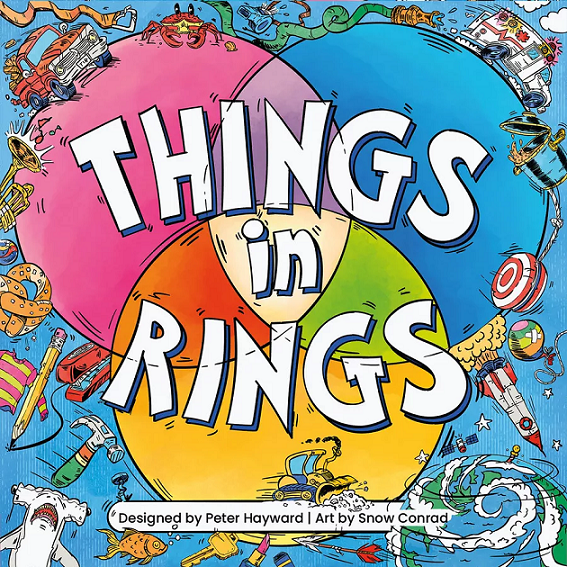
Venndo – A Things in Rings Review

27. Januar 2026 um 15:00
“Think left and think right and think low and think high. Oh, the things you can think up if you only try.” Party games often get short shrift. But it’s a difficult genre for innovative work. The majority of titles in this category are word games springing off the popularity of Codenames, or selection and…

Read more →

For the Love of the Game

26. Januar 2026 um 16:22

Over the weekend I was printing and cutting some game prototypes, and I put the latest season finale of Welcome to Wrexham on in the background. I didn’t expect the confluence of those two activities to bring me to tears.

In this episode, the Wrexham football team is preparing for a game at the end of the season that will decide whether they are promoted to the second-highest level of English football. The team’s co-owner, Rob McElhenney, gives a speech inspired by a text conversation he had with some unnamed, highly successful athletes.

Here’s most of McElhenney’s speech, almost verbatim (thanks to this transcript). Also, if you have Hulu, I highly recommend watching the speech, as it’s brilliantly edited in a way that splices footage of the final game with the players during their childhood days.

“I want you to picture a time in your life. Maybe you’re eight, maybe you’re nine, maybe you’re ten, maybe you’re six, maybe you’re 12, but you’re out there and you’re playing football. You’re just kicking the ball around. You’re playing with your friends, your dad, your mom, your sisters, your brothers, your buddies. You’re just playing football.

And it’s fun. And you fell in love with that feeling.

Of course you’re grateful for the support that you’ve had along the way, your family, your friends, and everyone, but you’ve already honored that. From this point, the only person you owe something to is that ten-year-old kid who fell in love with football, who could not wait to be in the position that you’re in right now!

The point is, there is a moment or a series of moments in which you were in love with this game, and that is all that matters. I want you to go out there and play like you’re ten years old and have the time of your lives because I promise you that is the only thing you will remember.”

I’m watching this speech unfold while cutting and sorting prototype cards, something I also did as a 10-year-old. I played and created games then purely for the fun of it. Now I’m very fortunate to run a tabletop publishing company as my job, but sometimes I need the reminder that I do this for the love of games.

I also played soccer as my primary sport from a young age up until college, and I still occasionally play pickup games. Even though I never played at a high level, there was definitely a tonal difference between playing for fun with my friends and starting for my high school team. To practice for hours every day can feel like work, even though it’s a game.

So as I listened to McElhenney’s rousing speech, I found myself in tears. I was transported back to those days when there was no marketing and metrics and planning and budgeting and customer service and project management and proofreading. It was just me sitting on the floor in my bedroom, drawing maps, cutting cards, and writing rules. It was just me juggling the soccer ball outside at sunset with my late father.

This isn’t to bemoan any of the business aspects of my job. I genuinely enjoy them, and I appreciate the variety they offer. I like that game design is only a small part of my job.

But with all the complications we make for ourselves and that come with being adults, the speech was a helpful reminder that there is a child in all of us who once did it for the love of the game. It’s worth honoring that child by seeking and spreading joy.

This may not resonate with your career compared to your childhood passions, but perhaps you can still relate to the concept of doing something purely for the love of it you first discovered when you were young. What does this speech make you think about?

***

If you gain value from the 100 articles Jamey publishes on this blog each year, please consider championing this content! You can also listen to posts like this in the audio version of the blog.

Immersive Imperial Struggle Playlist (Board Game Playlists, #2)

25. Januar 2026 um 16:46

You love board games. You probably also like music. Let’s combine the two into an immersive playlist for Imperial Struggle (Ananda Gupta/Jason Matthews, GMT Games). Have it gently play in the background during your next session of Imperial Struggle for the full period immersion!

First things first: Here’s the playlist!

Before we dive into the content of the playlist, some general observations:

  • Of course, there was no music recording in age of Imperial Struggle, so all the songs in the playlist have been recorded in the 20th or 21st century.
  • The playlist is only 1:45 hours long, so you might need to listen to it several times during your game… unless France stomps over Britain in the first turns.
  • The playlist is thematically sorted. That helps you find similar songs, but makes for somewhat monotonous listening (until you come to the next group of songs). I therefore recommend you turn shuffle on.

Now, what awaits you in the playlist?

#1-3: Religious (classical) music

Imperial Struggle begins after the age of the great confessional wars in Europe, but religion still played an important role in people’s lives, from the lowliest peasants all the way up to kings. Their week culminated in a Sunday service and their year was interspersed with religious events. Composers wrote pieces specifically for a religious holiday (like Bach’s “Christmas Oratorio” from which #2 is taken), or were dedicated to comprehensive religious teaching (like Händel’s “Messiah”, premiering on Easter 1742 in Dublin, from which #3 is taken).

#4-12: Secular (classical) music

The Baroque saw music as universal. Religious and secular followed the same conventions, and thus the same composers wrote pieces for the church and for worldly courts, like Baroque grandmaster Johann Sebastian Bach (Toccata and Fugue in D minor, #4 and Cello Suite No. 1 in G Major, #6) or Georg Friedrich Händel (Sarabande from Suite No. 11, #5). The classical (in the narrower sense) music from the mid-18th century on left this universal view behind. Composers now focused on either one or the other, with most of them following the more fashionable and more lucrative secular path.

Some composed for a court whose lavish entertainments always required music (like the 1773 wedding of the French prince Charles Philippe, the later king Charles X, for which François Francœur arranged the music from which #9 is taken – thus the title Symphonie du Festin Royal (Symphony of the Royal Feast)). Others became freelance musicians (like Mozart, who could (for some years) live of the proceeds of his concerts and operas, #10-12).

#13-16: Folk songs

Not everyone went to a church where the latest compositions were played on Sundays, and of course most people were far removed from attending any court festivities, let alone royal weddings. But people made and listened to music. The easiest, most affordable way to do so was to sing. The 18th century is rich with folk songs, some originally written at the time (like Frère Jacques (“Brother James”), #15 or “Ye Jacobites by Name”, #16), others older, but first put down to paper at the time (Au Claire De La Lune (“By the Light of the Moon”, #13, and Over the Hills, and Far Away (#14)).

#17-23: Patriotic songs

We’ve heard in #16 already how political events seeped into popular songs. Others were written specifically to rouse patriotic feeling, an emotion which came into its own in the 18th century: “Rule, Britannia” (#17) expressed confidence and pride in the Royal Navy to protect British freedoms, “The British Grenadiers” (#18) praised the courage of their counterpart by land.

That these songs could be re-interpreted and turned against their original intent shows “Free America” (#19), written in 1770, which uses the same tune as “The British Grenadiers”, but its lyrics extol America’s freedom (which turned out to be freedom from Britain).

Finally, national anthems also came first into existence in the 18th century: Brits sang “God Save the King/Queen” (#22 – I took the liberty of choosing a not-quite-traditional version). France only got its first anthem (La Marseillaise, #23) with the French Revolution which bookends Imperial Struggle… at least until Ananda Gupta and Jason Matthews get around to do a Revolutionary and Napoleonic Wars expansion!

Thanks to Jason for suggesting songs #5, #14, and #21!

If you like immersive playlists, I’ve done one for Weimar: The Fight for Democracy (Matthias Cramer, Capstone Games/Skellig Games/Spielworxx)!

If you want to dive a bit deeper into the times of Imperial Struggle, here’s a book recommendation.

And if you’re looking for strategic direction in Imperial Struggle, I’ve also got you covered.

What’s your favorite song from this playlist? Let me know in the comments!

Immersive Imperial Struggle Playlist (Board Game Playlists, #2)

25. Januar 2026 um 16:46

You love board games. You probably also like music. Let’s combine the two into an immersive playlist for Imperial Struggle (Ananda Gupta/Jason Matthews, GMT Games). Have it gently play in the background during your next session of Imperial Struggle for the full period immersion!

First things first: Here’s the playlist!

Before we dive into the content of the playlist, some general observations:

  • Of course, there was no music recording in age of Imperial Struggle, so all the songs in the playlist have been recorded in the 20th or 21st century.
  • The playlist is only 1:45 hours long, so you might need to listen to it several times during your game… unless France stomps over Britain in the first turns.
  • The playlist is thematically sorted. That helps you find similar songs, but makes for somewhat monotonous listening (until you come to the next group of songs). I therefore recommend you turn shuffle on.

Now, what awaits you in the playlist?

#1-3: Religious (classical) music

Imperial Struggle begins after the age of the great confessional wars in Europe, but religion still played an important role in people’s lives, from the lowliest peasants all the way up to kings. Their week culminated in a Sunday service and their year was interspersed with religious events. Composers wrote pieces specifically for a religious holiday (like Bach’s “Christmas Oratorio” from which #2 is taken), or were dedicated to comprehensive religious teaching (like Händel’s “Messiah”, premiering on Easter 1742 in Dublin, from which #3 is taken).

#4-12: Secular (classical) music

The Baroque saw music as universal. Religious and secular followed the same conventions, and thus the same composers wrote pieces for the church and for worldly courts, like Baroque grandmaster Johann Sebastian Bach (Toccata and Fugue in D minor, #4 and Cello Suite No. 1 in G Major, #6) or Georg Friedrich Händel (Sarabande from Suite No. 11, #5). The classical (in the narrower sense) music from the mid-18th century on left this universal view behind. Composers now focused on either one or the other, with most of them following the more fashionable and more lucrative secular path.

Some composed for a court whose lavish entertainments always required music (like the 1773 wedding of the French prince Charles Philippe, the later king Charles X, for which François Francœur arranged the music from which #9 is taken – thus the title Symphonie du Festin Royal (Symphony of the Royal Feast)). Others became freelance musicians (like Mozart, who could (for some years) live of the proceeds of his concerts and operas, #10-12).

#13-16: Folk songs

Not everyone went to a church where the latest compositions were played on Sundays, and of course most people were far removed from attending any court festivities, let alone royal weddings. But people made and listened to music. The easiest, most affordable way to do so was to sing. The 18th century is rich with folk songs, some originally written at the time (like Frère Jacques (“Brother James”), #15 or “Ye Jacobites by Name”, #16), others older, but first put down to paper at the time (Au Claire De La Lune (“By the Light of the Moon”, #13, and Over the Hills, and Far Away (#14)).

#17-23: Patriotic songs

We’ve heard in #16 already how political events seeped into popular songs. Others were written specifically to rouse patriotic feeling, an emotion which came into its own in the 18th century: “Rule, Britannia” (#17) expressed confidence and pride in the Royal Navy to protect British freedoms, “The British Grenadiers” (#18) praised the courage of their counterpart by land.

That these songs could be re-interpreted and turned against their original intent shows “Free America” (#19), written in 1770, which uses the same tune as “The British Grenadiers”, but its lyrics extol America’s freedom (which turned out to be freedom from Britain).

Finally, national anthems also came first into existence in the 18th century: Brits sang “God Save the King/Queen” (#22 – I took the liberty of choosing a not-quite-traditional version). France only got its first anthem (La Marseillaise, #23) with the French Revolution which bookends Imperial Struggle… at least until Ananda Gupta and Jason Matthews get around to do a Revolutionary and Napoleonic Wars expansion!

Thanks to Jason for suggesting songs #5, #14, and #21!

If you like immersive playlists, I’ve done one for Weimar: The Fight for Democracy (Matthias Cramer, Capstone Games/Skellig Games/Spielworxx)!

If you want to dive a bit deeper into the times of Imperial Struggle, here’s a book recommendation.

And if you’re looking for strategic direction in Imperial Struggle, I’ve also got you covered.

What’s your favorite song from this playlist? Let me know in the comments!

❌