Despite being a huge aficionado of horror cinema, I got around very late to watching The Texas Chainsaw Massacre – too late really, as unfortunately the transgressive, dangerous aura it had when I was young had long rubbed off by that time. This can happen as I finally get around to watching a few films that were once deemed ‘video nasties’, long past the cultural zeitgeist they were born in.
A lot of people would consider it their favourite horror film however, though my taste runs to the fantastical rather than slashers. Be that as it may, this board game version by the sadly defunct Prospero Hall studio could become a tabletop favourite. It’s a tight, lean, enjoyable horror romp in the old Sawyer house that nails its theme and provides lots of (nervous) laughs and tension alike.
One player plays the unhinged Sawyer family, the others the ‘trespassers’ – the clueless young people who stumble across the house and quickly learn the error of their ways. Most actions as a trespasser carry the risk of generating noise tokens that you may have to hand over to the Sawyer player as fear tokens, who can use them to power their actions. Not an original mechanic – The World of SMOG does something similar – but it works perfectly here.
The Sawyer player starts with just one character, but as the panic meter (a big cardboard chainsaw) increases, more characters emerge, culminating in the appearance of good ol’ Leatherface himself. At which point the trespassers are really in trouble. And while the trespassers can quite easily be killed (a clever system of drawing 4 different injury cards), attacking the Sawyers only reduces their number of actions. Everything reinforces the cat-and-mouse feel of the gameplay, as the trespassers uncover horror tokens throughout the house and can briefly hide in rooms for a brief respite from pursuit. The basic rules system is enhanced by several scenarios with different goals, plus a very simple legacy system that adds item cards left behind by previously killed trespassers to the common item card pool.
Unusually, there are no win conditions as such – the goal is simply to survive, which is thematic and all, but raises questions if one player is playing 2 trespassers, and 1 escapes – is that a win, or do you keep playing? One of the game designers told me players can come up with their own ideas about success, and that the goal was to make a game that felt like a horror movie. Which is fine, though this is still a game … anyway, it’s a small issue. There are also some omissions in the rulebook, but all that is fixed in my summary.
Overwhelmingly however, this is a huge success and a fitting swan song for the creative people at Prospero Hall, all of whom, I hope, are still gainfully employed in making more games that blend theme and gameplay with such success.
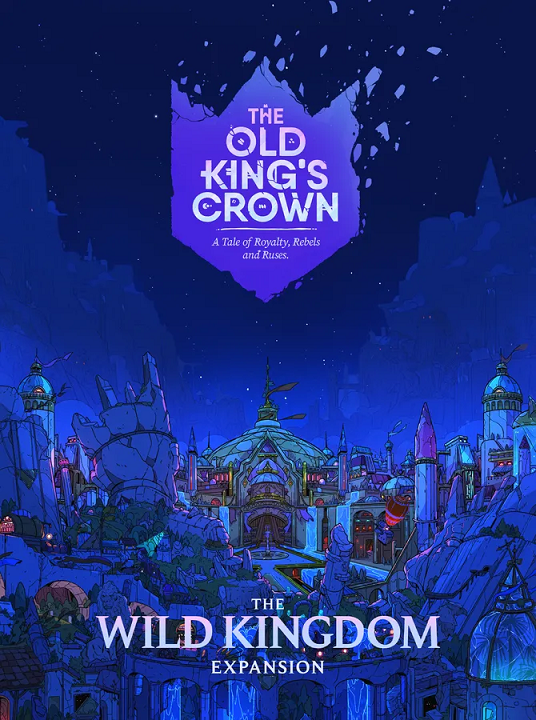
Five months have passed since my original review of The Old King’s Crown. While the outside has grown colder and darker with winter, the inside is a different story. My appreciation for Pablo Clark’s ambitious game of throne-seeking has ignited. It’s stuck with me, claiming a seat in my top 10 of the year and…
The sun rises over the misty fields near Nagashino, glinting off armour and steel. The Takeda banners flap in the wind, a warning to the Tokugawa warriors holding the hilltops. Every decision counts, every step could tip the balance of power. As the leader of your clan, Takeda, you are seeking to reclaim glory and lead your samurai through the chaos. Now is the time to win this sandwich chess, this Hasami Shogi from Lemery Games.
This game was brought to my attention by a great review on Charlie Theel’s Player Elimination website, and as usual, Charlie didn’t steer me wrong (well, there was that Fate of the Fellowship review, but there’s always an exception to the rule). City of the Great Machine is one of those rare games I like so much in which mechanics and theme are inextricably intertwined.
It’s a one-vs-many struggle set in a steampunk city dominated by a mechanical overlord – sort of George Orwell meets H. G. Wells. Players are Revolutionaries trying to inspire citizens to riot against oppression; the Great Machine has time on its side and a legion of automata to quell the dissent.
City of the Great Machine blends hidden movement, resource management, and asymmetric gameplay in a wonderfully thematic package – and it can also be played solo or co-operatively. It’s a stunning production with an excellent artwork, a well-written rulebook and comprehensive support material, and some very nice miniatures as a bonus. I enjoyed this at 2 players, but I’m very much looking forward to to playing this at a higher player count so players can scheme amongst themselves in the presence of the Great Machine (the rulebook expressly tells you to refer to players as Revolutionaries or the Great Machine, in one of many thematic touches). And, dare I say it, its theme of revolution against autocratic technology is more relevant than the glossy layer of steampunk initially leads you to believe.
There’s a wealth of strategic material in the rulebooks, but this summary distills the rules into an easily digestible few sheets. And of course, it’s available on my app, Tabletop Codex!
Happy new year, everybody! I hope it will bring you much joy. I also hope it will bring you board games (which is basically the same thing). The question is, however: Which games? – Here are a few 2026 releases which look most intriguing to me. Long-time readers of this blog will notice that this year’s list is a bit longer than usual – there are just so many fascinating games scheduled for release this year!
As always, don’t take this as a shopping list (neither for you nor for me). Your taste in games and your discretion how many new games you want to chase decide what will end up in your shelf (and, hopefully, on your table)!
After that reminder, on to the games. As all of them are set in human history, they are ordered from most ancient to most recent.
Once the greatest Roman politician-generals outgrew to confines of the republican power-sharing agreement, the Republic was bound to fall. Yet it was not predestined that it would fall to Caesar. In fact, two of his associates/rivals, Pompey and Crassus, might as well have taken the diadem… if they had played their cards better.
Triumvir casts its players as the three mightiest power brokers of the last years of the Roman Republic. They will attempt to parlay their wealth, popularity, and military force into political success (in an adaptation of the negotiation mechanic from Engelstein’s and Herman’s previous cooperation Versailles 1919). Whoever settles the issues in the senate in their favor and deals best with the challenges in the rebellious provinces is poised to become the First Man in Rome…forever.
I have a fondness for the early modern period, this time when so many old certainties in Europe were shattered by revolutionary new developments – from the printing press over the discovery of America to the Reformation.
Neither King Nor God focuses on the struggle over military, religious, and commercial supremacy in Western Europe, with the Pope, the Holy Roman Emperor, and the Kings of England and France as the four protagonists. The players will send their courtiers to the big cities of Europe. These courtiers range from merchants over generals to assassins, each with their own action, forming a neat stack in each city. Once all courtiers are placed, each city’s courtier stack is resolved top to bottom – so, the last courtier placed is the first one to resolve! There are a lot of tactical considerations involved in which courtier you’d like to trigger early or late, and as they are placed face-down, also a good deal of bluffing.
I had the opportunity to play Neither King Nor God at last year’s SPIEL in Essen. Our Holy Roman Emperor attempted to spread Protestantism in Germany and waged war against the Pope for control of Venice, while France and England expanded their commercial networks on the continent and clashed over Normandy. Everyone had a great time!
The limited pilot edition of Neither King Nor God can be ordered for € 69.00 and will be shipping in mid- or late January. Sound of Drums aims to have the full epic edition ready for SPIEL in October 2026.
The European revolutions of 1848/49 are generally considered failures. After all, the ancient régimes had returned to power everywhere but in France, and even there the Second Republic was soon overthrown by Louis-Napoleon Bonaparte. Yet for months it looked like all of Europe could shed the old order in favor of liberalism, nation-states, and maybe even – gasp! – democracy. And even when the revolutionaries were defeated, they had changed the way the game was played: From then on, politics was conducted in public, with parliaments, parties, and newspapers, and the forces of liberalism and nationalism had to be taken into consideration by even the most conservative of monarchical governments.
Despite the impact of the revolutions, barely any games have covered them. Jules Félisaz’s 1848 seeks to rectify that in an ambitious manner, covering the political, military, intellectual, and social dimensions of the revolutions in all of Europe. Félisaz relies on a mix of tried-and-true CDG mechanics – the “mandatory opponent events” from Twilight Struggle, the spatial layout of societal groups from 1989, and the escalation through decks from Paths of Glory, adding its own twists where appropriate (for example, overlapping scoring regions based on nationality (German, Polish, Italian…) and empire (Russian, Prussian, Austrian).
Let us not say there are only wargames on this list. Look, here’s a peace game!
Making peace is generally a complex business, and so it was in the case of the Russo-Japanese War (1904/05): The Japanese, emboldened by their military success on land and sea, demanded a large financial indemnity as well as the cession of Sakhalin. The Russian tsar refused to consider either. Yet with revolution rampant in Russia and the Japanese government close to financial collapse, both sides needed to end the war. Their delegates at the US-mediated peace conference of Portsmouth had to figure out how to balance peace, national interest, and saving face.
In the classic two-player mode, the opponent players represent the delegates of Japan and Russia at Portsmouth who negotiate over Japan’s demands. Their hands of cards represent diplomatic approaches – listening or emphasizing, acquiescing or threatening. More aggressive stances are more likely to carry the day on any given issue, but the more lopsided a round of negotiations is, the more tensions will rise on the side of the loser. If they are pushed too hard, they will resort to war – and the other side will bear the blame for not being ready to compromise.
Other player counts see US president Theodore Roosevelt join as either as a third player or the solo role. In either case, Roosevelt is an “honest broker” whose goal it is to find an equitable resolution to the conflict.
Peace 1905 awaits its Kickstarter campaign in the second quarter of 2026. The game will be released in late 2026.
Hammer and sickle are, of course, the symbols of communism. Yet ideology aside, they speak of the material basis of modern societies – the food that everyone needs to eat, and the industrial production that is required for everything from building houses to waging war.
This economy underlies Hammer and Sickle, a multiplayer treatment of the Russian Civil War after the October Revolution: The industrial cities (mostly in the north and west of the collapsing Russian empire), marked by hammers, produce Firepower – provided that their workers are fed with Food (from the sickle-marked rural provinces in the south). Otherwise, the workers start to rebel.
The result is a delicate balance between Food and Firepower, exacerbated by the factions’ asymmetries: The Bolsheviks, for example, have easy access to a lot of hammers, but might find themselves short of sickles; but the opposite might be true for the White Army operating from the south. In addition to the game’s (loose) two alliances of Revolutionaries (Bolsheviks and Anarchists) and Counter-Revolutionaries (White Army and New Nations), new alignments might develop…
Alex Knight has shown his ability to turn a complex political-military struggle into a compelling board game with the Spanish Civil War in the intriguing Land and Freedom. I’m sure he’ll do the same with Hammer and Sickle.
You can pre-order Hammer and Sickle at the P500 price of $62.00 (regular price: $97.00). Release is expected not before the third quarter of 2026… which might turn into 2027, but I wanted to include the game here anyway because it just seems so fascinating.
Matthias Cramer has got the range. He has designed great epics like Weimar: The Fight for Democracy, but he is also a master of the short form. His Watergate is a knife fight in a phone booth… and Lenin’s Legacy promises to be cut from the same cloth.
Vladimir Ilyich Lenin was the dominant figure of the new Bolshevik government of Russia, but his health started to fail him soon after the October Revolution. Behind the scenes, his lieutenants jockeyed for position to succeed him – and the two likeliest candidates were Leon Trotsky and Joseph Stalin. While they differed in their politics – Trotsky wanted to advance the “world revolution”, Stalin advocated for “socialism in one country” – and their power bases – Trotsky was the creator of the Red Army, Stalin controlled the Communist Party – they had one thing in common: Their drive to take power.
Lenin’s Legacy lets its players fill their shoes and struggle over the army, the party, and the regions and politicians of the Soviet Union in a card-driven game with a twist: Almost all cards are selected from an open market. The players hold only one card each… but they can gamble on playing the opponent’s card (without knowing what it is)!
Many of the games in this post are very zoomed-out, grand strategic affairs. The counters you push move armies, the cards you play shake nations. Yet there is also something very charming about games operating on the micro level, and you get exactly that with Night Witches.
You are on the Eastern Front of World War II, serving in the all-women 588th Night Bomber Regiment of the Soviet Air Forces. You have no more than two biplanes at your command in every mission… and they are old, slow, and vulnerable. Still, your goal is to harass the invading German forces with these low-flying, hard-to-detect, and hard-to-engage craft every night, do damage as much damage as you can (or, at least, wear the enemy out with constant nocturnal attacks), and make it back safe.
You can play each mission separately or in a ten-mission campaign which allows you to carry over upgrades, and either solo or as a two-player cooperative effort.
Night Witches awaits its Kickstarter campaign in the second quarter of 2026. The game will be released in late 2026.
This game has been long in the making. I’ve referenced it as ready for pre-order eight years ago, and have been intrigued by its premise since then. The Berlin Airlift was the largest airborne logistics operation ever, and for it to render the Berlin Blockade (on the ground) void, hundreds of planes had to arrive every day in Berlin with fuel, food, spare parts, and medical supplies, notwithstanding the limited infrastructure, the often rough weather, and every so often, Soviet interference.
This immense logistical task fell to the US Air Force and the Royal Air Force, each of which is represented by two “squadrons” (players) in the game. The players strive to contribute the most to the effort with their squadron, but their internal competition sometimes has to take the backseat when a joint effort is required to confront Soviet interference or keep the morale of the Berlin population up.
John Poniske’s original design has been taken on by Terry Simo. The Berlin Airlift is now ready for production. It can still be pre-ordered here at the reduced price of $55.00 (later MSRP estimated $75.00). Publication is expected for the third quarter of 2026.
And which 2026 games look most exciting to you? Let me know in the comments!
Happy new year, everybody! I hope it will bring you much joy. I also hope it will bring you board games (which is basically the same thing). The question is, however: Which games? – Here are a few 2026 releases which look most intriguing to me. Long-time readers of this blog will notice that this year’s list is a bit longer than usual – there are just so many fascinating games scheduled for release this year!
As always, don’t take this as a shopping list (neither for you nor for me). Your taste in games and your discretion how many new games you want to chase decide what will end up in your shelf (and, hopefully, on your table)!
After that reminder, on to the games. As all of them are set in human history, they are ordered from most ancient to most recent.
Once the greatest Roman politician-generals outgrew to confines of the republican power-sharing agreement, the Republic was bound to fall. Yet it was not predestined that it would fall to Caesar. In fact, two of his associates/rivals, Pompey and Crassus, might as well have taken the diadem… if they had played their cards better.
Triumvir casts its players as the three mightiest power brokers of the last years of the Roman Republic. They will attempt to parlay their wealth, popularity, and military force into political success (in an adaptation of the negotiation mechanic from Engelstein’s and Herman’s previous cooperation Versailles 1919). Whoever settles the issues in the senate in their favor and deals best with the challenges in the rebellious provinces is poised to become the First Man in Rome…forever.
I have a fondness for the early modern period, this time when so many old certainties in Europe were shattered by revolutionary new developments – from the printing press over the discovery of America to the Reformation.
Neither King Nor God focuses on the struggle over military, religious, and commercial supremacy in Western Europe, with the Pope, the Holy Roman Emperor, and the Kings of England and France as the four protagonists. The players will send their courtiers to the big cities of Europe. These courtiers range from merchants over generals to assassins, each with their own action, forming a neat stack in each city. Once all courtiers are placed, each city’s courtier stack is resolved top to bottom – so, the last courtier placed is the first one to resolve! There are a lot of tactical considerations involved in which courtier you’d like to trigger early or late, and as they are placed face-down, also a good deal of bluffing.
I had the opportunity to play Neither King Nor God at last year’s SPIEL in Essen. Our Holy Roman Emperor attempted to spread Protestantism in Germany and waged war against the Pope for control of Venice, while France and England expanded their commercial networks on the continent and clashed over Normandy. Everyone had a great time!
The limited pilot edition of Neither King Nor God can be ordered for € 69.00 and will be shipping in mid- or late January. Sound of Drums aims to have the full epic edition ready for SPIEL in October 2026.
The European revolutions of 1848/49 are generally considered failures. After all, the ancient régimes had returned to power everywhere but in France, and even there the Second Republic was soon overthrown by Louis-Napoleon Bonaparte. Yet for months it looked like all of Europe could shed the old order in favor of liberalism, nation-states, and maybe even – gasp! – democracy. And even when the revolutionaries were defeated, they had changed the way the game was played: From then on, politics was conducted in public, with parliaments, parties, and newspapers, and the forces of liberalism and nationalism had to be taken into consideration by even the most conservative of monarchical governments.
Despite the impact of the revolutions, barely any games have covered them. Jules Félisaz’s 1848 seeks to rectify that in an ambitious manner, covering the political, military, intellectual, and social dimensions of the revolutions in all of Europe. Félisaz relies on a mix of tried-and-true CDG mechanics – the “mandatory opponent events” from Twilight Struggle, the spatial layout of societal groups from 1989, and the escalation through decks from Paths of Glory, adding its own twists where appropriate (for example, overlapping scoring regions based on nationality (German, Polish, Italian…) and empire (Russian, Prussian, Austrian).
Let us not say there are only wargames on this list. Look, here’s a peace game!
Making peace is generally a complex business, and so it was in the case of the Russo-Japanese War (1904/05): The Japanese, emboldened by their military success on land and sea, demanded a large financial indemnity as well as the cession of Sakhalin. The Russian tsar refused to consider either. Yet with revolution rampant in Russia and the Japanese government close to financial collapse, both sides needed to end the war. Their delegates at the US-mediated peace conference of Portsmouth had to figure out how to balance peace, national interest, and saving face.
In the classic two-player mode, the opponent players represent the delegates of Japan and Russia at Portsmouth who negotiate over Japan’s demands. Their hands of cards represent diplomatic approaches – listening or emphasizing, acquiescing or threatening. More aggressive stances are more likely to carry the day on any given issue, but the more lopsided a round of negotiations is, the more tensions will rise on the side of the loser. If they are pushed too hard, they will resort to war – and the other side will bear the blame for not being ready to compromise.
Other player counts see US president Theodore Roosevelt join as either as a third player or the solo role. In either case, Roosevelt is an “honest broker” whose goal it is to find an equitable resolution to the conflict.
Peace 1905 awaits its Kickstarter campaign in the second quarter of 2026. The game will be released in late 2026.
Hammer and sickle are, of course, the symbols of communism. Yet ideology aside, they speak of the material basis of modern societies – the food that everyone needs to eat, and the industrial production that is required for everything from building houses to waging war.
This economy underlies Hammer and Sickle, a multiplayer treatment of the Russian Civil War after the October Revolution: The industrial cities (mostly in the north and west of the collapsing Russian empire), marked by hammers, produce Firepower – provided that their workers are fed with Food (from the sickle-marked rural provinces in the south). Otherwise, the workers start to rebel.
The result is a delicate balance between Food and Firepower, exacerbated by the factions’ asymmetries: The Bolsheviks, for example, have easy access to a lot of hammers, but might find themselves short of sickles; but the opposite might be true for the White Army operating from the south. In addition to the game’s (loose) two alliances of Revolutionaries (Bolsheviks and Anarchists) and Counter-Revolutionaries (White Army and New Nations), new alignments might develop…
Alex Knight has shown his ability to turn a complex political-military struggle into a compelling board game with the Spanish Civil War in the intriguing Land and Freedom. I’m sure he’ll do the same with Hammer and Sickle.
You can pre-order Hammer and Sickle at the P500 price of $62.00 (regular price: $97.00). Release is expected not before the third quarter of 2026… which might turn into 2027, but I wanted to include the game here anyway because it just seems so fascinating.
Matthias Cramer has got the range. He has designed great epics like Weimar: The Fight for Democracy, but he is also a master of the short form. His Watergate is a knife fight in a phone booth… and Lenin’s Legacy promises to be cut from the same cloth.
Vladimir Ilyich Lenin was the dominant figure of the new Bolshevik government of Russia, but his health started to fail him soon after the October Revolution. Behind the scenes, his lieutenants jockeyed for position to succeed him – and the two likeliest candidates were Leon Trotsky and Joseph Stalin. While they differed in their politics – Trotsky wanted to advance the “world revolution”, Stalin advocated for “socialism in one country” – and their power bases – Trotsky was the creator of the Red Army, Stalin controlled the Communist Party – they had one thing in common: Their drive to take power.
Lenin’s Legacy lets its players fill their shoes and struggle over the army, the party, and the regions and politicians of the Soviet Union in a card-driven game with a twist: Almost all cards are selected from an open market. The players hold only one card each… but they can gamble on playing the opponent’s card (without knowing what it is)!
Many of the games in this post are very zoomed-out, grand strategic affairs. The counters you push move armies, the cards you play shake nations. Yet there is also something very charming about games operating on the micro level, and you get exactly that with Night Witches.
You are on the Eastern Front of World War II, serving in the all-women 588th Night Bomber Regiment of the Soviet Air Forces. You have no more than two biplanes at your command in every mission… and they are old, slow, and vulnerable. Still, your goal is to harass the invading German forces with these low-flying, hard-to-detect, and hard-to-engage craft every night, do damage as much damage as you can (or, at least, wear the enemy out with constant nocturnal attacks), and make it back safe.
You can play each mission separately or in a ten-mission campaign which allows you to carry over upgrades, and either solo or as a two-player cooperative effort.
Night Witches awaits its Kickstarter campaign in the second quarter of 2026. The game will be released in late 2026.
This game has been long in the making. I’ve referenced it as ready for pre-order eight years ago, and have been intrigued by its premise since then. The Berlin Airlift was the largest airborne logistics operation ever, and for it to render the Berlin Blockade (on the ground) void, hundreds of planes had to arrive every day in Berlin with fuel, food, spare parts, and medical supplies, notwithstanding the limited infrastructure, the often rough weather, and every so often, Soviet interference.
This immense logistical task fell to the US Air Force and the Royal Air Force, each of which is represented by two “squadrons” (players) in the game. The players strive to contribute the most to the effort with their squadron, but their internal competition sometimes has to take the backseat when a joint effort is required to confront Soviet interference or keep the morale of the Berlin population up.
John Poniske’s original design has been taken on by Terry Simo. The Berlin Airlift is now ready for production. It can still be pre-ordered here at the reduced price of $55.00 (later MSRP estimated $75.00). Publication is expected for the third quarter of 2026.
And which 2026 games look most exciting to you? Let me know in the comments!
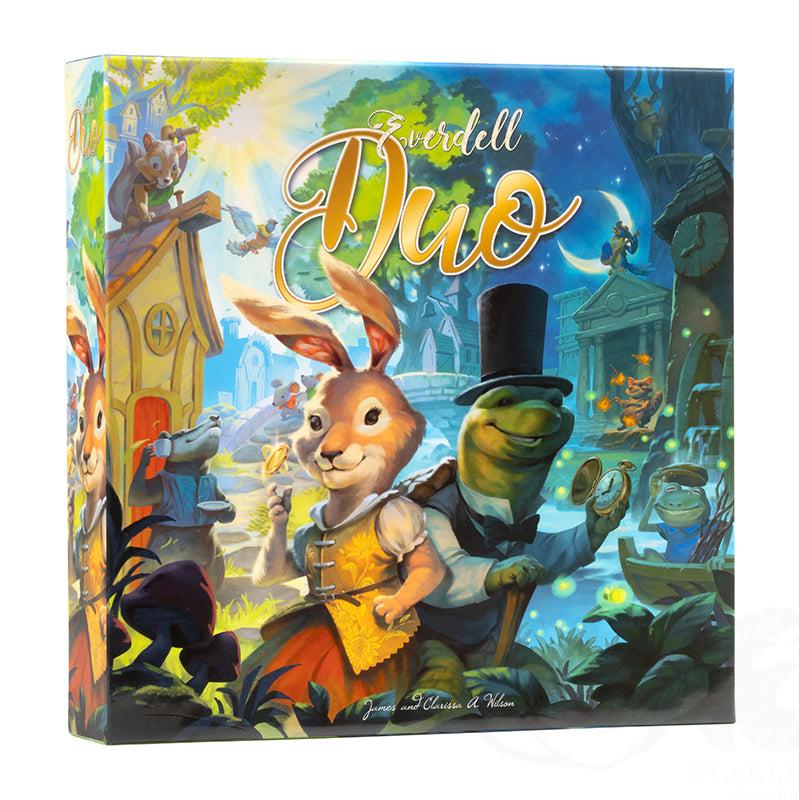
This is the 2 player game from one of my favourite games, Everdell is such a fun game with so many enjoyable characters and such a lovely town that you can build and explore and enjoy to your hearts content.
This is such a fun version of the game that takes so much less time to play yet doesn’t lack any of the fun of the original game If you are looking for a two player that will give you a lot of joy this is it and once you have played it , it can leave you so much more time to play again or play until another player turns up.
I was pleasantly surprised how much fun this game was and am very glad to have it in my collection. This is as much of a complex game to enjoy just a bit simpler to play. Using your critters to build your town to make the most points and win the game. In this case the critters are hares and tortoises, so you must ask yourselves are you slow and steady or likely to end up in a hedge somewhere wandering what happened.
After realising that they had not only inadvertently brought an alien lifeform onto their freighter, but that the alien was a vicious and terrifying predator, the crew had only one choice. Armed with whatever they could find on their commercial vessel, they started sweeping the ship one section at a time. Yet, their fear and terror led to rash decisions, which meant a crew member got sucked out into the vacuum, and another was blown up by a hastily made explosive device. To the crew, it was life and death, but to the alien, it was all a game, and This Game is Killer: Alien on Board by Ivan Turner from Smirk & Dagger Games with art by Grafit Studio.
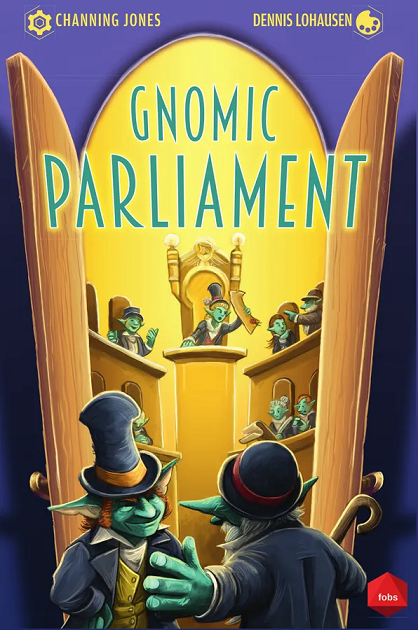
Fobs Games put Tiefe Taschen out in the world back in 2016. It’s one of my favorite designs, uniquely presenting a tense affair of dynamic negotiation. It’s worthy of the word “brilliant”. By this virtue alone, I was interested in Gnomic Parliament. It’s the German publisher’s second release, arriving at the end of 2025. I…
Any man who must say “I am the king” is no true king.
Peter checks out Kings of War for the first time with the new 4th Edition!
It’s a brand new year – the 14th! – for the Esoteric Order of Gamers, and I’m kicking it off with a new project – Kings of War by Mantic Games! Will this be your new favourite game of fantasy battles? Stick with me over the coming weeks as I unbox, build, paint and play (and of course, make a rules summary for) this rank and flank fantasy tabletop miniatures game.
Making high quality tabletop gaming content at the EOG takes time and money. Please consider becoming a Patreon supporter or making a donation so I can continue this work! Thankyou!
Step into the role of a United States Postal Inspector and work your way through three cases of increasing difficulty, each inspired by a real-life crime.
Another year has passed, and it's once more time to announce the winner of Tabletop Games Blog's highly sought-after and extremely prestigious Top Table Award of 2025. The top slot for this year will join the hall of fame alongside previous years' board games that made it to the number 1 spot on the podium. The winner of the 2025 award will be in the company of Charms, Enemy Anemone, Pax Pamir: Second Edition and others.
Why, hello there. How have you been? It’s been a few months. I’m doing well, enjoying my retirement from the blogosphere. I’m not really back, I just wanted to pop in and give my annual recap of all the new-to-me games played in 2025. Plus, I’ll be picking the winner of the prestigious Spiel des Jesse award at the end. Thanks for joining me!
We’ll start with the new-to-me games. I’ll be providing a rating for each on my patented Yeah-Meh-Bleah scale (which, for legal reasons, I probably should let you know is NOT actually patented).
12 Days: A card game based around the 12 Days of Christmas song. It’s interesting, but becomes very much about luck in the end. The art is nice. RATING: Meh+.
12 Patrols: A print-and-play game that really ends up being a puzzle as to how to place your pieces in order to satisfy demands. It’s a very pretty game, and an interesting concept, but luck is definitely a factor and can frustrate the experience. RATING: Meh+.
14ers: A card game about climbing the highest peaks in Colorado. Actually, it’s more a game about upgrading your hiker, but summiting those peaks gets you actions to add using an interesting tuck mechanism. I’ve only played it online so far, but enjoyed it. RATING: Yeah.
Abstract: A print-and-play game where you’re rolling dice and arranging colors to create your art. There’s variable scoring conditions from game to game. I only played solo, but you can compete for the highest score, even though there’s no competition. Not bad. RATING: Meh+.
Ambagibus: A print-and-play tile placement game where’s you’re basically building a maze. It’s a puzzle, but there’s not a lot to it. You need a lot of luck to win. RATING: Meh.
Bag of Chips: A light speculation game that comes packaged in a chip bag. It’s kind of silly, but good enough for what it is. RATING: Meh.
Beer and Pretzels: A super light tossing game where you’re just trying to score points by getting your stuff in a circle to show their numbers. Not really desperate to try again. RATING: Meh-.
Bites: Another speculation game where you’re trying to collect items you think will score the most points. Beautiful production, and a pretty good game that I was unaware of before trying it. RATING: Yeah.
Bring Your Own Book: Players try to find lines in their own books to fit a certain prompt. It’s a concept that is more interesting than, say, Apples to Apples, but still has the shortcomings of being a subjective judging game. Still, one of the better ones of that genre. RATING: Meh-.
Call To Adventure: Epic Origins: An adventure game where you’re throwing runestones to get the symbols you need for success. It’s a very interesting game. I’ve only played one game of the campaign so far, but enjoying it. RATING: Yeah.
Canvas: A card-crafting style game where you’re creating art by putting transparent cards into sleeves. There’s drafting, there’s variable scoring conditions, and there’s the puzzle of trying to make your art worth more. It’s really good. RATING: Yeah!
Clank! In! Space!: I love the original Clank, but this was my first time trying the space version. It was a lot of fun, and I like the modular system in place. I wish I had gotten to play more during the year. RATING: Yeah!
CuBirds: This is a game I had played online, but I don’t think I ever really got it until playing it in person. It’s an interesting set collection game with an interesting draft system. I like it, and my wife loves it (possibly because she beats me all the time). RATING: Yeah.
Daybreak: A cooperative game that won the 2024 Kinderspiel des Jahres. It’s all about trying to combat climate change. There’s a lot going on, and you’ve really got to communicate with your fellow players. I only played solo, but it would be good to play with others. RATING: Yeah!
Deadly Doodles: Basically a flip and write game where you’re making a path through a dungeon, trying to kill monsters and collect treasure. I was expecting something very different than what I got – the only “doodling” was drawing lines through the dungeon. In the end, it felt like a weak imitation of Railroad Ink. RATING: Meh.
Earth: With the buzz around this, I was expecting something I liked more. In the end, I thought it was more bloated than in needed to be. It’s got fairly simple mechanisms, but just so many moving parts that I wasn’t crazy about it. Also, didn’t like the solo mode – it felt rushed. RATING: Meh+.
Everdell: Finally increased my Geek Cred by playing this game. It’s good – I liked the system of taking things at your own pace and deciding when to recall your workers. As cool as the tree looks, I can see that thing being very annoying. RATING: Yeah.
Evergreen: From the designer of Photosynthesis, which is a game I disliked. And even though this is another tree game using a similar sun mechanism, I liked this one a lot more. Not quite as mean. RATING: Yeah.
Faraway: A reverse scoring game where you’re going on a journey, then coming back to fulfill quests with things you have collected. It works really well, I wish I had gotten to play more. RATING: Yeah!
Flamecraft: Dragons! The shops worked very well, but it felt like the game had a few too many parts for what was essentially a recipe fulfillment game. RATING: Yeah.
Flyin’ Goblin: It was fun to catapult goblins. However, the game didn’t quite work for me. Part of the problem was probably that we got an important rule wrong, but I still don’t think it was quite my game. RATING: Meh.
Gloomhaven: Buttons and Bugs: I still haven’t played the original Gloomhaven, but did play this tiny version for one player because my local library has a copy. It was fun, very small, but good. I’ll need to check it out again sometimes. RATING: Yeah.
Green Team Wins: My mom always wants to be green, so we got her a copy of this for her birthday. I’m not much of a party game guy, but this one does the “game” part pretty well. RATING: Yeah.
The Guild of Merchant Explorers: This game is VERY BEIGE. But I really liked it. It’s another one I got from the library, and has some really clever mechanisms. It’s almost, but not quite, multiplayer solitaire. RATING: Yeah!
Home Alone: It’s a one vs. all game, and works pretty well thematically. It seems pretty heavily weighted towards Kevin, which makes sense, but can be frustrating. RATING: Meh+.
Imperial Settlers: Got this in a math trade. I’ve only played solo so far, but I’ve enjoyed what I have played. It’s not terribly complicated once you figure out the basic mechanisms. My biggest problem with the game is that the text on the cards is very small. RATING: Yeah.
LANTERN: Another print-and-play. There are some very interesting things going on here, and it was surprisingly strategic for a quick dice-roller. RATING: Yeah.
The Lord of the Rings: Duel for Middle-Earth: This LOTR themed version of 7 Wonders Duel is really good, the components are just weaker than I was hoping for. RATING: Yeah!
Make That Most Magnificent Thing: A kid’s game about building contraptions. Actually, I shouldn’t say game – it’s an exercise in creativity, but there’s not really any game in there. You’re just grabbing pieces, putting something together, showing it off, then arbitrarily assigning ribbons that don’t count for points and maybe don’t carry over from round to round? The rules are very vague. RATING: Bleah as a game, meh as an activity.
Meadow: A drafting game about building up your meadow. I really enjoyed it – there are clever mechanisms, nice art, and a pretty good solo mode. RATING: Yeah!
Monumental: A big, beautiful civilization-themed deck-building game with a modular board. There’s a lot to do on a turn, which can lead to a lot of downtime. Many moving parts, but overall enjoyable. RATING: Yeah.
Mountain Goats: I had played this previously on yucata.de, but had my first physical play, so I’m counting it. It’s a very simple push-your-luck kind of game with dice and goat. It’s fun. RATING: Yeah.
Noodle Knockout!: This is my son’s game. It’s got a good dexterity element to it, but not much game. RATING: Bleah.
Oh My Pigeons!: This is really not my kind of game. Too much take that, too random. The pigeons are cute and the game is quick, but that’s about it. RATING: Bleah!
River Valley Glassworks: A pretty set collection game with glass floating down a river. The scoring concepts are a little tough to get your head around, but it’s fun. RATING: Yeah.
So Clover! I’m still not one for party games, but this was good. The deduction here is excellent. I’d classify it as more of an activity than a game, but it’s solid. RATING: Yeah.
Spots: Probably my biggest surprise of the year. This is a dice rolling recipe fulfillment style game where you’re just trying to fill in the spots on your dogs. Different actions every game, and it produced one of the best in-jokes my family has had this year (Doog is Doog). RATING: Yeah!
Super Mega Lucky Box: Basically Bingo with more strategy. There’s not much else to say for it – I like it more than Bingo. RATING: Yeah.
Switchbacks: A small and light placement game where you’re just trying to get numbers in a row. It’s fairly simple, and a good quick game. RATING: Yeah.
Tales of the Arthurian Knights: This updated version of Tales of the Arabian Knights moves the system to the Arthurian legend. It’s much more forgiving than the original with longer stories. It also has a cooperative mode, which is exclusively how we play it. RATING: Yeah!
That’s Not a Hat: A party game that’s about memory. It’s very simple, and I can see how people who like party games might like it. Not for me. RATING: Bleah.
Tiny Epic Galaxies: This is only the second Tiny Epic game I’ve tried, and I was able to check this one out from the library. I’ve only done the solo mode, and I liked it, though it took me a bit to get my head around the rules. RATING: Yeah.
Trailblazers: Another library game that’s about building trails. It’s very puzzly and takes some luck to get to your goals. My wife really disliked it, but I enjoyed it. RATING: Yeah.
Trogdor!! Probably my second biggest surprise this year. I am very familiar with Homestar Runner and TROGDOR!!, but had never had a chance to play this game before. It was honestly kind of a dumb game, but fun. There’s a lot of luck involved. RATING: Yeah.
Urbion: Never played the original game, but the second edition is out now and I enjoyed it. It’s a game about balance, and very well implemented. RATING: Yeah!
We’re Doomed: A game about trying to escape the end of the world. I will say this game was pretty funny, but in the end, it’s just too mean and lucky for me. RATING: Bleah.
Wingspan Asia: A 1-2 player version of Wingspan. It adds an interesting new layer to the system with the duet board. My biggest complaint is that there weren’t enough eggs. Only played once, I need to explore some more. RATING: Yeah.
Wordsnap: Scrabble, but with interlocking tiles and no board. It’s a good puzzle for people who like word puzzle, but I don’t know that it adds too much more to the genre other than the components. RATING: Meh.
And now, on to the nominees for this year’s Spiel des Jesse. Long time fans may know the criteria already, but here it is again for anyone new to this space: any game is eligible for the award if I played it for the first time during 2025, and as long as I played it at least twice. This cuts out a few games that probably would have made the nomination list, including Daybreak, River Valley Glassworks, and Everdell, among others. From the games that were eligible, here’s my shortlist:
Canvas (2021; designed by Jeff Chin and Andrew Nerger; published by Road to Infamy Games)
The Guild of Merchant Explorers (2022; designed by Matthew Dunstan and Brett J. Gilbert; published by AEG)
The Lord of the Rings: Duel for Middle-Earth (2024; designed by Antoine Bauza and Bruno Cathala; published by Repos Production)
Meadow (2021; designed by Klemens Kalicki; published by Rebel Studio)
Spots (2022; designed by Alex Hague, Jon Perry, and Justin Vickers; published by CMYK)
Tales of the Arthurian Knights (2024; designed by Eric Goldberg and Andrew Parks; published by WizKids)
This was a tough year to decide – all of these are great games, but I don’t know how much any one of them stood out over the others. Still, there can only be one, and I think that this year it will be…
image by BGG user Asia_Rebel
I really like the drafting in Meadow, and the way the cards interact to form new combos and scoring opportunities. It’s a beautiful game, plays well multiplayer and solo, and I like it a lot. So, that’s my pick, and it joins Argent: The Consortium (2014), Colt Express (2015), Burgle Bros (2016), Clank! (2017), Azul (2018), Rhino Hero Super Battle (2019), Roll Player (2020), The Isle of Cats (2021), Mandala (2022), Fantasy Realms (2023), and Lost Ruins of Arnak (2024) in the exclusive club of previous Spiel des Jesse winners.
Time to crawl back into my hole. Thanks for joining me for this annual recap. Right now, I plan to come back in June or July to do my annual Spiel des Jahres picks, but who knows. Thanks for reading!
Why, hello there. How have you been? It’s been a few months. I’m doing well, enjoying my retirement from the blogosphere. I’m not really back, I just wanted to pop in and give my annual recap of all the new-to-me games played in 2025. Plus, I’ll be picking the winner of the prestigious Spiel des Jesse award at the end. Thanks for joining me!
We’ll start with the new-to-me games. I’ll be providing a rating for each on my patented Yeah-Meh-Bleah scale (which, for legal reasons, I probably should let you know is NOT actually patented).
12 Days: A card game based around the 12 Days of Christmas song. It’s interesting, but becomes very much about luck in the end. The art is nice. RATING: Meh+.
12 Patrols: A print-and-play game that really ends up being a puzzle as to how to place your pieces in order to satisfy demands. It’s a very pretty game, and an interesting concept, but luck is definitely a factor and can frustrate the experience. RATING: Meh+.
14ers: A card game about climbing the highest peaks in Colorado. Actually, it’s more a game about upgrading your hiker, but summiting those peaks gets you actions to add using an interesting tuck mechanism. I’ve only played it online so far, but enjoyed it. RATING: Yeah.
Abstract: A print-and-play game where you’re rolling dice and arranging colors to create your art. There’s variable scoring conditions from game to game. I only played solo, but you can compete for the highest score, even though there’s no competition. Not bad. RATING: Meh+.
Ambagibus: A print-and-play tile placement game where’s you’re basically building a maze. It’s a puzzle, but there’s not a lot to it. You need a lot of luck to win. RATING: Meh.
Bag of Chips: A light speculation game that comes packaged in a chip bag. It’s kind of silly, but good enough for what it is. RATING: Meh.
Beer and Pretzels: A super light tossing game where you’re just trying to score points by getting your stuff in a circle to show their numbers. Not really desperate to try again. RATING: Meh-.
Bites: Another speculation game where you’re trying to collect items you think will score the most points. Beautiful production, and a pretty good game that I was unaware of before trying it. RATING: Yeah.
Bring Your Own Book: Players try to find lines in their own books to fit a certain prompt. It’s a concept that is more interesting than, say, Apples to Apples, but still has the shortcomings of being a subjective judging game. Still, one of the better ones of that genre. RATING: Meh-.
Call To Adventure: Epic Origins: An adventure game where you’re throwing runestones to get the symbols you need for success. It’s a very interesting game. I’ve only played one game of the campaign so far, but enjoying it. RATING: Yeah.
Canvas: A card-crafting style game where you’re creating art by putting transparent cards into sleeves. There’s drafting, there’s variable scoring conditions, and there’s the puzzle of trying to make your art worth more. It’s really good. RATING: Yeah!
Clank! In! Space!: I love the original Clank, but this was my first time trying the space version. It was a lot of fun, and I like the modular system in place. I wish I had gotten to play more during the year. RATING: Yeah!
CuBirds: This is a game I had played online, but I don’t think I ever really got it until playing it in person. It’s an interesting set collection game with an interesting draft system. I like it, and my wife loves it (possibly because she beats me all the time). RATING: Yeah.
Daybreak: A cooperative game that won the 2024 Kinderspiel des Jahres. It’s all about trying to combat climate change. There’s a lot going on, and you’ve really got to communicate with your fellow players. I only played solo, but it would be good to play with others. RATING: Yeah!
Deadly Doodles: Basically a flip and write game where you’re making a path through a dungeon, trying to kill monsters and collect treasure. I was expecting something very different than what I got – the only “doodling” was drawing lines through the dungeon. In the end, it felt like a weak imitation of Railroad Ink. RATING: Meh.
Earth: With the buzz around this, I was expecting something I liked more. In the end, I thought it was more bloated than in needed to be. It’s got fairly simple mechanisms, but just so many moving parts that I wasn’t crazy about it. Also, didn’t like the solo mode – it felt rushed. RATING: Meh+.
Everdell: Finally increased my Geek Cred by playing this game. It’s good – I liked the system of taking things at your own pace and deciding when to recall your workers. As cool as the tree looks, I can see that thing being very annoying. RATING: Yeah.
Evergreen: From the designer of Photosynthesis, which is a game I disliked. And even though this is another tree game using a similar sun mechanism, I liked this one a lot more. Not quite as mean. RATING: Yeah.
Faraway: A reverse scoring game where you’re going on a journey, then coming back to fulfill quests with things you have collected. It works really well, I wish I had gotten to play more. RATING: Yeah!
Flamecraft: Dragons! The shops worked very well, but it felt like the game had a few too many parts for what was essentially a recipe fulfillment game. RATING: Yeah.
Flyin’ Goblin: It was fun to catapult goblins. However, the game didn’t quite work for me. Part of the problem was probably that we got an important rule wrong, but I still don’t think it was quite my game. RATING: Meh.
Gloomhaven: Buttons and Bugs: I still haven’t played the original Gloomhaven, but did play this tiny version for one player because my local library has a copy. It was fun, very small, but good. I’ll need to check it out again sometimes. RATING: Yeah.
Green Team Wins: My mom always wants to be green, so we got her a copy of this for her birthday. I’m not much of a party game guy, but this one does the “game” part pretty well. RATING: Yeah.
The Guild of Merchant Explorers: This game is VERY BEIGE. But I really liked it. It’s another one I got from the library, and has some really clever mechanisms. It’s almost, but not quite, multiplayer solitaire. RATING: Yeah!
Home Alone: It’s a one vs. all game, and works pretty well thematically. It seems pretty heavily weighted towards Kevin, which makes sense, but can be frustrating. RATING: Meh+.
Imperial Settlers: Got this in a math trade. I’ve only played solo so far, but I’ve enjoyed what I have played. It’s not terribly complicated once you figure out the basic mechanisms. My biggest problem with the game is that the text on the cards is very small. RATING: Yeah.
LANTERN: Another print-and-play. There are some very interesting things going on here, and it was surprisingly strategic for a quick dice-roller. RATING: Yeah.
The Lord of the Rings: Duel for Middle-Earth: This LOTR themed version of 7 Wonders Duel is really good, the components are just weaker than I was hoping for. RATING: Yeah!
Make That Most Magnificent Thing: A kid’s game about building contraptions. Actually, I shouldn’t say game – it’s an exercise in creativity, but there’s not really any game in there. You’re just grabbing pieces, putting something together, showing it off, then arbitrarily assigning ribbons that don’t count for points and maybe don’t carry over from round to round? The rules are very vague. RATING: Bleah as a game, meh as an activity.
Meadow: A drafting game about building up your meadow. I really enjoyed it – there are clever mechanisms, nice art, and a pretty good solo mode. RATING: Yeah!
Monumental: A big, beautiful civilization-themed deck-building game with a modular board. There’s a lot to do on a turn, which can lead to a lot of downtime. Many moving parts, but overall enjoyable. RATING: Yeah.
Mountain Goats: I had played this previously on yucata.de, but had my first physical play, so I’m counting it. It’s a very simple push-your-luck kind of game with dice and goat. It’s fun. RATING: Yeah.
Noodle Knockout!: This is my son’s game. It’s got a good dexterity element to it, but not much game. RATING: Bleah.
Oh My Pigeons!: This is really not my kind of game. Too much take that, too random. The pigeons are cute and the game is quick, but that’s about it. RATING: Bleah!
River Valley Glassworks: A pretty set collection game with glass floating down a river. The scoring concepts are a little tough to get your head around, but it’s fun. RATING: Yeah.
So Clover! I’m still not one for party games, but this was good. The deduction here is excellent. I’d classify it as more of an activity than a game, but it’s solid. RATING: Yeah.
Spots: Probably my biggest surprise of the year. This is a dice rolling recipe fulfillment style game where you’re just trying to fill in the spots on your dogs. Different actions every game, and it produced one of the best in-jokes my family has had this year (Doog is Doog). RATING: Yeah!
Super Mega Lucky Box: Basically Bingo with more strategy. There’s not much else to say for it – I like it more than Bingo. RATING: Yeah.
Switchbacks: A small and light placement game where you’re just trying to get numbers in a row. It’s fairly simple, and a good quick game. RATING: Yeah.
Tales of the Arthurian Knights: This updated version of Tales of the Arabian Knights moves the system to the Arthurian legend. It’s much more forgiving than the original with longer stories. It also has a cooperative mode, which is exclusively how we play it. RATING: Yeah!
That’s Not a Hat: A party game that’s about memory. It’s very simple, and I can see how people who like party games might like it. Not for me. RATING: Bleah.
Tiny Epic Galaxies: This is only the second Tiny Epic game I’ve tried, and I was able to check this one out from the library. I’ve only done the solo mode, and I liked it, though it took me a bit to get my head around the rules. RATING: Yeah.
Trailblazers: Another library game that’s about building trails. It’s very puzzly and takes some luck to get to your goals. My wife really disliked it, but I enjoyed it. RATING: Yeah.
Trogdor!! Probably my second biggest surprise this year. I am very familiar with Homestar Runner and TROGDOR!!, but had never had a chance to play this game before. It was honestly kind of a dumb game, but fun. There’s a lot of luck involved. RATING: Yeah.
Urbion: Never played the original game, but the second edition is out now and I enjoyed it. It’s a game about balance, and very well implemented. RATING: Yeah!
We’re Doomed: A game about trying to escape the end of the world. I will say this game was pretty funny, but in the end, it’s just too mean and lucky for me. RATING: Bleah.
Wingspan Asia: A 1-2 player version of Wingspan. It adds an interesting new layer to the system with the duet board. My biggest complaint is that there weren’t enough eggs. Only played once, I need to explore some more. RATING: Yeah.
Wordsnap: Scrabble, but with interlocking tiles and no board. It’s a good puzzle for people who like word puzzle, but I don’t know that it adds too much more to the genre other than the components. RATING: Meh.
And now, on to the nominees for this year’s Spiel des Jesse. Long time fans may know the criteria already, but here it is again for anyone new to this space: any game is eligible for the award if I played it for the first time during 2025, and as long as I played it at least twice. This cuts out a few games that probably would have made the nomination list, including Daybreak, River Valley Glassworks, and Everdell, among others. From the games that were eligible, here’s my shortlist:
Canvas (2021; designed by Jeff Chin and Andrew Nerger; published by Road to Infamy Games)
The Guild of Merchant Explorers (2022; designed by Matthew Dunstan and Brett J. Gilbert; published by AEG)
The Lord of the Rings: Duel for Middle-Earth (2024; designed by Antoine Bauza and Bruno Cathala; published by Repos Production)
Meadow (2021; designed by Klemens Kalicki; published by Rebel Studio)
Spots (2022; designed by Alex Hague, Jon Perry, and Justin Vickers; published by CMYK)
Tales of the Arthurian Knights (2024; designed by Eric Goldberg and Andrew Parks; published by WizKids)
This was a tough year to decide – all of these are great games, but I don’t know how much any one of them stood out over the others. Still, there can only be one, and I think that this year it will be…
image by BGG user Asia_Rebel
I really like the drafting in Meadow, and the way the cards interact to form new combos and scoring opportunities. It’s a beautiful game, plays well multiplayer and solo, and I like it a lot. So, that’s my pick, and it joins Argent: The Consortium (2014), Colt Express (2015), Burgle Bros (2016), Clank! (2017), Azul (2018), Rhino Hero Super Battle (2019), Roll Player (2020), The Isle of Cats (2021), Mandala (2022), Fantasy Realms (2023), and Lost Ruins of Arnak (2024) in the exclusive club of previous Spiel des Jesse winners.
Time to crawl back into my hole. Thanks for joining me for this annual recap. Right now, I plan to come back in June or July to do my annual Spiel des Jahres picks, but who knows. Thanks for reading!
The overall blog statistics are pretty meaningless – both last year and this year are skewed by WordPress sending my Farewell 2024 – Historical Fiction! post out to a bajillion people (from Dec 26 to Jan 8), which makes it easily the most popular post of each year (providing more than a fourth of my total views this year). If you factor that out, 2025 has been a good year on the blog, but slightly behind the (organic) record of 2023.
The posts doing particularly well have been the usual suspects, that is, the Most Anticipated Historical Board Games post in January, and the evergreen strategy posts for several games published over the last year. It was nice to see that a few of my research-intensive posts in the American Revolution and the Wallenstein series also did well.
Most of my readers come from the United States (also skewed by the Historical Fiction anomaly, but not entirely), as well as other Anglophone (UK, Canada, Australia) or European (Germany, the Netherlands, Spain, and France) countries. Especially the Dutch have made a leap up… maybe because of my post on the history of Amsterdam? Welkom, anyway.
New arrivals in the top 10 of the countries from which most views stem are Sweden and Poland in a joint Baltic effort.
If you compare views with population numbers, there are possibly no more loyal readers of this blog than the fine people of Ireland, closely followed by Hong Kong, whose views eclipse those of huge countries like Japan, Brazil, or India. The Irish have been devoted to history, board games, and history in board games for some years now, for which I am grateful. The Hongkongers are new in their excitement for the blog – welcome! If you are from Hong Kong, leave a comment below!
I can only speculate what brought people to this blog (but maybe you can enlighten me with a comment, especially if read this blog, but don’t comment often or ever). Here is, however, what I think was the finest which I published this year – as per usual, with six instead of three entries, and without crowning a winner. Let’s go!
Most of the history articles on this blog are about what people in the past did – the politicians, merchants, soldiers of times past. Yet I also like to dwell on what they thought, and thus I’m very happy to have written this post on the political philosophy of the American Revolution, its core value of liberty, and the promise and limitation of that idea. It was also an opportunity to engage with the still-compelling documents of the Revolution – Common Sense and the Declaration of Independence.
It’s been a wild year politically. Almost forgotten by now is the Great Tariff Rollercoaster of April 2025, in which the American federal government announced tariffs on imports from almost all other countries and then engaged in a flurry of raising, lowering, and holding off on them that made everyone’s head spin. By now, the 145% tariff on Chinese goods imported by US buyers is long gone, but at the time it seemed like an existential threat to US board game companies manufacturing their games in China (so, almost all of them), and given that the current US administration will still be in office for another three years, one worth revisiting.
This blog often gives me the opportunity to learn about new subjects. Wallenstein was one of them. I approached the post about his life with not more than a general knowledge about his role in the Thirty Years’ War… and then was sucked into a research rabbit hole in which I read over 2,000 pages about the guy. The result is a four-part series and the longest, most detailed board game assisted biography I have ever written about anyone.
…and this blog also allows me to re-visit topics and games with which I have engaged for years (and sometimes decades) now. Frederick II of Prussia is such a person, and Friedrich (Richard Sivél, Histogame) such a game. Reflecting on their insights on Frederick’s campaigns, the command and control exercised, and Frederick’s psychology was a delight.
Amsterdam is one of the iconic cities of the world. It is a symbol of art, commerce, and progress, and unique in its canal-structured urban layout. Unsurprisingly, these characteristics have also inspired board game designers. I have told Amsterdam’s 750-year history through the lens of the many board games set in Amsterdam – which gives a glimpse into what the city stands for in the popular imagination. As both this and my earlier Venice post were so much fun to write, I should do more city histories!
One of my brighter new ideas was to link historical board games to period music. Of course, that works particularly well from the 20th century on – the age of the music record. I started with an immersive playlist for your next game of Weimar (Matthias Cramer, Capstone Games/Skellig Games/Spielworxx), full of everything that was hot at the time – from traditional songs to jazz, from movie tunes to workers’ songs. It will surely not remain the only such playlist.
And thus concludes the year 2025 on this blog. I hope you had as much fun reading it as I had writing.
I wish you all an excellent year 2026, full of joy, health, and success!
The overall blog statistics are pretty meaningless – both last year and this year are skewed by WordPress sending my Farewell 2024 – Historical Fiction! post out to a bajillion people (from Dec 26 to Jan 8), which makes it easily the most popular post of each year (providing more than a fourth of my total views this year). If you factor that out, 2025 has been a good year on the blog, but slightly behind the (organic) record of 2023.
The posts doing particularly well have been the usual suspects, that is, the Most Anticipated Historical Board Games post in January, and the evergreen strategy posts for several games published over the last year. It was nice to see that a few of my research-intensive posts in the American Revolution and the Wallenstein series also did well.
Most of my readers come from the United States (also skewed by the Historical Fiction anomaly, but not entirely), as well as other Anglophone (UK, Canada, Australia) or European (Germany, the Netherlands, Spain, and France) countries. Especially the Dutch have made a leap up… maybe because of my post on the history of Amsterdam? Welkom, anyway.
New arrivals in the top 10 of the countries from which most views stem are Sweden and Poland in a joint Baltic effort.
If you compare views with population numbers, there are possibly no more loyal readers of this blog than the fine people of Ireland, closely followed by Hong Kong, whose views eclipse those of huge countries like Japan, Brazil, or India. The Irish have been devoted to history, board games, and history in board games for some years now, for which I am grateful. The Hongkongers are new in their excitement for the blog – welcome! If you are from Hong Kong, leave a comment below!
I can only speculate what brought people to this blog (but maybe you can enlighten me with a comment, especially if read this blog, but don’t comment often or ever). Here is, however, what I think was the finest which I published this year – as per usual, with six instead of three entries, and without crowning a winner. Let’s go!
Most of the history articles on this blog are about what people in the past did – the politicians, merchants, soldiers of times past. Yet I also like to dwell on what they thought, and thus I’m very happy to have written this post on the political philosophy of the American Revolution, its core value of liberty, and the promise and limitation of that idea. It was also an opportunity to engage with the still-compelling documents of the Revolution – Common Sense and the Declaration of Independence.
It’s been a wild year politically. Almost forgotten by now is the Great Tariff Rollercoaster of April 2025, in which the American federal government announced tariffs on imports from almost all other countries and then engaged in a flurry of raising, lowering, and holding off on them that made everyone’s head spin. By now, the 145% tariff on Chinese goods imported by US buyers is long gone, but at the time it seemed like an existential threat to US board game companies manufacturing their games in China (so, almost all of them), and given that the current US administration will still be in office for another three years, one worth revisiting.
This blog often gives me the opportunity to learn about new subjects. Wallenstein was one of them. I approached the post about his life with not more than a general knowledge about his role in the Thirty Years’ War… and then was sucked into a research rabbit hole in which I read over 2,000 pages about the guy. The result is a four-part series and the longest, most detailed board game assisted biography I have ever written about anyone.
…and this blog also allows me to re-visit topics and games with which I have engaged for years (and sometimes decades) now. Frederick II of Prussia is such a person, and Friedrich (Richard Sivél, Histogame) such a game. Reflecting on their insights on Frederick’s campaigns, the command and control exercised, and Frederick’s psychology was a delight.
Amsterdam is one of the iconic cities of the world. It is a symbol of art, commerce, and progress, and unique in its canal-structured urban layout. Unsurprisingly, these characteristics have also inspired board game designers. I have told Amsterdam’s 750-year history through the lens of the many board games set in Amsterdam – which gives a glimpse into what the city stands for in the popular imagination. As both this and my earlier Venice post were so much fun to write, I should do more city histories!
One of my brighter new ideas was to link historical board games to period music. Of course, that works particularly well from the 20th century on – the age of the music record. I started with an immersive playlist for your next game of Weimar (Matthias Cramer, Capstone Games/Skellig Games/Spielworxx), full of everything that was hot at the time – from traditional songs to jazz, from movie tunes to workers’ songs. It will surely not remain the only such playlist.
And thus concludes the year 2025 on this blog. I hope you had as much fun reading it as I had writing.
I wish you all an excellent year 2026, full of joy, health, and success!

 Anmelden