The Power expansion combines the previous two expansions: Deep Stats and Tagging into one.
This gives us the ability to create new features that use parts of both these older expansions. A new feature like this will come to the app soon!
What will happen for you?
If you already own the Deep Stats and/or Tagging expansion, you will automatically get the Power expansion, including all features. This can only add options, nothing will be removed.
Gladly this is it’s own version of 7 Wonders with the right feel but with Dice to kick it all off. Each player has a map where they can build their Wonder, each of which has a few differences to their playability. You play for victory points as you build your wonder. You also have a pencil and eraser to help keep your playable dice scores etc. You all start with seven coins and will use them to make up any shortfalls during your game and when the dice are revealed during each round they may have a cost for their use. You start with seven dice in the shaker dice box and as you play, the players change three of them, the grey ones with the wood, stone etc on them are swapped for the black, purple and white dice, so don’t wait around or you are really stuffed with your choice. As you use the dice they stay in play as another player may use them as well. the ability to play Seven Wonders in this way is an eye opener, as it does have a different feel and play to both Seven Wonders proper and Duel,
There are two ways to look at Kingdoms Forlorn: Dragons, Devils and Kings. You can either view this unbelievably massive box as a vast world waiting to be explored and conquered, one of untold treasures and tragic stories. Or it can be seen as a crushing boulder whose massive weight embodies headache, labor, and anxiety.…
Dice Words Designer: Tim Phillips Publisher: Thames & Kosmos Players: 2-4 Age: 8+ Time: 30 min Amazon affiliate link: https://amzn.to/4mN6gbM Played with review copy provided by publisher In Dice Words, each player begins by choosing a set of seven letter … Continue reading →
Epic Warpath by Mantic Games is here. Peter unboxes the starter set – and more!
For fans of epic-scale wargaming (like me), there’s been a surfeit of riches lately. First Legions Imperialis by Games Workshop, then Armoured Clash by Warcradle, and now Epic Warpath by Mantic Games. If you like huge armies and tiny soldiers, you’re in heaven!
Check out this unboxing of the starter set, building kits and extra resin figures. And stay tuned for my rules & reference for the game, coming soon – not to mention more coverage!
Making high quality tabletop gaming content at the EOG takes time and money. Please consider becoming a Patreon supporter or making a donation so I can continue this work! Thankyou!
Once more, the SPIEL fair at Essen has come to an end. It’s been a few intense days of looking, meeting, and, of course, playing – for me and 200,000+ other attendees. Even though the fair has expanded to another hall now, tickets for the busiest days (Friday and Saturday) were sold out a week before the event, and I also had the impression that more of the games sold out (at least that was my experience at several booths). Thus, I went home with zero purchases – which is fine! I travelled with a light suitcase on my way back, and I’ll be able to catch up on purchases via the usual local and online vendors.
Something you cannot catch up on, however, is meeting the people who mean something to you. I’ve always enjoyed going to the fair with a friend or two, and over the years, my SPIEL schedule has been enriched by more and more meetings with my fellow friends of board games and history whom I’ve met over the internet. In that regard, this year’s SPIEL has been exceptional: Not only have I gotten to dinner with my Boardgame Historian colleagues (a great way to start off the fair experience with some sparkling conversations on history in board games from a research and museum perspective) and to play a few games with Michal from The Boardgames Chronicle (more on that below) – both are almost traditions by this time – but I (and Michal) also got to meet Grant and Alexander from The Players’ Aid on their very first trip to SPIEL! I think that we all had a blast, and many plans to meet again are already in the making… and maybe play more games together!
Speaking of games: I’ve gotten around to play a grand total of 13 during the two days of the fair (ranging from very short demos to full games). Here are my highlights:
Bohemians had attracted my attention with its beautiful artwork and its intriguing fin de siècle Paris art scene setting. After giving it a test drive at SPIEL (with Michal, my friend A., and another fairgoer), I can also attest that it has sound mechanics (a mix of long-term deckbuilding and short-term pattern building from the cards in your hand):
You arrange your day as an aspiring artist with activities like “Wander the streets aimlessly” or “Practice a new technique.” The activity cards have symbols on the left and right, which, if matching, give you inspiration. You can imagine that there are some power combos – for example “Get in the mood for composing” and “Compose without stopping” have four matching symbols!
It gets even better if you acquire more inspirational activities (by spending inspiration) or if you don’t do activities alone, but have a muse with you (also to be gotten into your hand by spending inspiration).
In the end, your goal is to make artistic achievements which range from “A mildly positive review in the local newspaper” over “Your family’s quiet acceptance of your new life” to “Establishment dismayed by your work” which – you guessed it – are also acquired by spending inspiration.
A good day as an artist: I got six inspiration from matching symbols on the card edges, two because the color of the card for morning and night matches that on the player board (orange and blue), and another three from the bonus of the “Go from café to café” activity. That’s 11 inspiration, enough for an artistic achievement (above the player board). Unfortunately, not working also meant I gained another hardship – like the previously-acquired drinking habit above the player board whose negative effect (drawing another hardship!) I staved off by playing enough expression icons.
As you need quite a lot of inspiration for the achievements (and they get ever more “expensive” as the game progresses), you’ll probably have to arrange for artistic activities in all four slots of the day… which means you cannot work, another (much less exciting) way to spend your time. Every player has a disreputable profession (street musician, beggar, journalist…) which they can use instead of an activity – and, if they do not, they will gain a hardship card into their deck. You know, all the bad things in life that only orderly labor keeps at bay. Abject poverty. Shame. Syphilis.
Ideally, activities, muses, achievements, and hardships come together narratively. For example, I had a great day in which my activities linked up and I could meet with not one, but two muses right after another! That gave so much inspiration that I gained an achievement… but as I hadn’t worked, I gained a hardship – hypersexuality! Apparently, I had frolicked a bit too much with the muses.
Bohemians is a nice light deck-builder which should work especially nicely for casual audiences. I had a very good start at the fair with it and have acquired it since.
And now for something completely different! Neither King Nor God takes players to the European power struggle in the Age of Reformation. Four of them will fill the shoes of England, France, the Holy Roman Empire, and the Papacy in their quest to spread their trade, conquer new territories, and convert cities to their religion. For this task, they send out courtiers to the great cities of Europe. As the courtiers are placed face down, you know where your rivals sent one to, but not what kind of courtier it is – a merchant to plop down trade barrels, a general to move armies, an assassin to murder or a traitor to take over another courtier?
As the courtier stacks in cities will be resolved only when all courtiers have been placed (top to bottom – so the courtier placed last goes first), there’s a lot of tactical finesse in placement: Do you go where everyone seems to go to partake in the bonanza or do you try to carve out your own little domain in less popular cities? Will you place your merchant first so that he’s on the bottom of a stack and will resolve after any general who could raid his trade barrel placement or do you place him last so he can go before anyone tries to murder him?
Strasbourg, the place to be: No fewer than eight courtiers have assembled there. Nearby Colonia is only visited by a single Papal courtier.
That makes for very little downtime and great mirth both in assembling and resolving those courtier stacks. Given that everyone’s victory conditions are secret (to be drawn randomly at the start of the game), there is a lot of guessing and bluffing. However, if no one has fulfilled their victory condition by the time the plague hits Europe, different victory conditions will apply.
The game at setup: Soon, the empty regions of Europe will be filled by the all-important trade barrels on which the income of the great powers depends.
Despite its length (three to four hours for a full game), the game plays briskly from the first turn on. And while it is involved, it’s not a complicated game – in fact, as the friendly Sound of Drums guy who had explained the game to the group before us had to demo a game at another table, we successfully self-taught the game from the rulebook!
Neither King Nor God is a pilot for a bigger five-player version that is to be published next year.
I’d been eyeing Verdun for some time now, but never got around to play it. Good thing I could remedy that at SPIEL! As Michal and I randomly bumped into each other at the DDP booth, we could try the game together (each accompanied by a team mate).
Verdun is one of the many “trick-takers with a twist” that are released these days – and definitely one of the better ones! Two or four players (in teams of two) fight the World War I battle of Verdun. Whoever has the initiative selects an objective to attack. If their side – Germany or France – wins the trick by at least the (hidden) strength of the objective, they’ll gain the objective and its victory points. As all players draw from a shared deck of cards, that means that anyone will have both German and French cards in their hand.
That leads to all sides of interesting decisions: If you’re defending as France, are you going to play a French card to try and win the trick? Or are you playing a German one to get rid of it, either hoping that you’ll win anyway, or that the Germans win by so much that another German card doesn’t do them any good?
It gets even trickier when you consider that all cards have skull icons on them, indicating how many negative points they’ll confer on their respective side if they end up in the casualty pile. After every trick, one card per side (sometimes more) ends up as a casualty. If you can sneak in a skull-heavy card of the opponent side, that might undo all the points they’ll gain from winning the objective.
I, as one of the German players, have just played a strong French card in the hopes of poisoning their victory with high casualties (skulls on the left of the card).
Consequently, scores will likely be negative in the end. Maybe you’ll win a few objectives, maybe not. But certainly, you will have suffered appalling losses. The question is not if you’ll win big, but if your enemy is losing even more painfully than you. The grim logic of the war of attrition on the Western Front.
Our short test game also showed the importance of keeping initiative, so you can attack and at least have the chance to win objectives and offset some of the losses: In the end, France had gained two objectives (Germany none), which, as losses were pretty evenly spread, was enough for victory (-7 to -13).
Verdun is testament to what relatively simple games can do, and how games which stray far from wargame standards (hexes, counters, combat resolution tables…) can capture the essence of a conflict just as well.
Self-balancing dragonflies (in Vietnamese: Chuồn Chuồn), often made out of bamboo, are popular toys in Vietnam. They have now made their way to the board gaming world in this charming, gorgeous game.
Players will attempt to attract dragonflies of varying sizes and colors to their bamboo trees to match the patterns on their objective cards – for example, to have a small yellow dragonfly on the highest bamboo, a large purple one on the middle, and a small blue one on the lowest. As everyone takes dragonflies from the same pool and there’s only one in each size/color combination, you will soon run out of dragonflies and will have to use the magic cards at your disposal to re-arrange the flies, shake them off someone’s tree, etc.
Look at those dragonflies!
I found the game enjoyable and its production values outstanding. The finely crafted dragonflies are guaranteed to catch the eyes of observers, which makes the game also great for introducing new players to board gaming (everyone likes pretty things, and everyone likes to place self-balancing dragonflies!).
As I started the fair with a game about aspiring artists, it was most fitting to end it with another about this subject. The single-minded pursuit of artistic achievements which was abuzz in fin de siècle Paris has by 1977 given way to the much wider notion of… victory points! These you may get for a variety of pursuits and objectives, from perfecting your musical skills over becoming addicted to drugs candy to going to bed early.
Rock Hard: 1977 is a worker placement game, just that you only have one worker – yourself, the aspiring rockstar. You’ll divide your activities between day (say, practicing your craft or giving a radio interview), evening (playing gigs), and night (hanging out with the cool kids at the club). Every once in a while, you’ll also have to work your square job as a veterinary assistant, truck driver or what have you. Unlike in Bohemians, that is not a moral corrective on your life, but fulfils the simple economic need of making some money with which you rent those rehearsal studios, pay for your demo tape recording, or buy drugs candy.
Benji “Bam Bam” Bernstein dreams of being a rockstar. So far, he knows two songs.
Ideally, your skills will improve, you’ll play at ever greater venues, and your royalties will cover the cost of your rockstar needs. We didn’t get quite that far at the fair – I had to catch a train and another of my fellow players a pre-scheduled game. Until then, we had only dipped our feet in the waters of musical glory, but it was a very thematic affair!
Rock Hard: 1977 has been released in English last year already (by Devir), but the fair showed off the new German edition.
What do you think of these games? Anything up your alley? And if you’ve been to SPIEL or would have liked to go – what are your highlights?
This is a very interesting game, from Stonemaier Games, that was an eye opener for all of those that played the game with me. Do you remember the books from the late 70’s the own adventure ones that were still popular until the 90’s, The ones that you had to chose what to do from a sedate walk to explore or you try a fast run away to escape or several other options, That is basically what this game is. You work co-operatively to try to first survive and then you try to escape together. Let me start more from the beginning of the story.
There is little that the game inventor wanted you to know about this game as it is meant to be an adventure. In fact they said that if you have a part of the story that does not match with you all, that you should discuss it among yourselves and see what feels right. Here is the basics of the game start. You are travelling through space and there was an accident, You are one of the survivors who grabbed an escape pod each of you has landed at a different location. You each roll two skill dice and depending on your roll you work out where you have landed, there is a chart to work this out. You receive a card for your location then you can choose one of the options on the card in front of you. As you can’t see each others location views but can talk over radio you can describe your view but cannot show each other your cards. You can explain what you are seeing on your card and the choices you have, you just can’t show your card to anyone else. You can order this at: https://www.bgextras.co.uk/other-games/vantage/vantage
I will say that there are bonus skill tokens you can gain I can recommend getting the wooden replacements for the skill tokens as they are more solid than the cardboard ones and it is the same for the packs of metal coins you can get to replace the cardboard ones with as the clink of metal is so much better when counting out coins. There is also a dual-layered playing mat pack that does make this game that much more compact and I highly recommend them as they are all of higher quality and beautiful for the game feel as they give you the perfect holder for the eight cards that you collect and put around your character card that are also contained in the dual layered boards. You can order these at: https://www.bgextras.co.uk/other-games/vantage
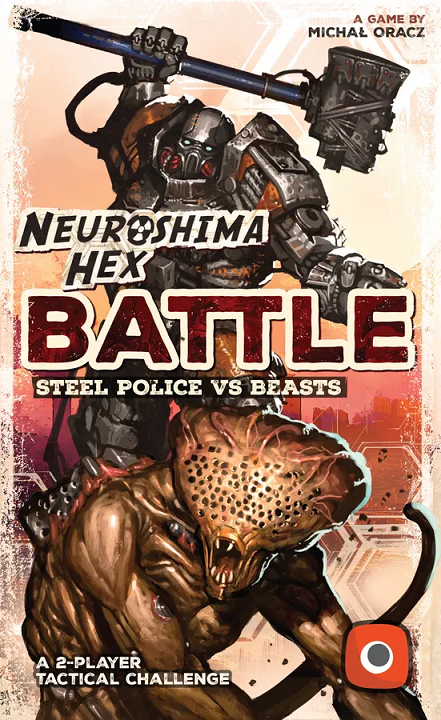
In another life, I was infatuated with Neuroshima Hex. Almost exactly 10 years ago, I wrote this soliloquy at Fortress Ameritrash extolling the virtues of Michal Oracz’s design. The game was already nearly a decade old at that time. This thing is grizzled as hell. The truth is I no longer play Neuroshima Hex. While…
For the fourth time we have awarded our annual Most Popular New Game Award. This year the award went to Johan Benvenuto for his game Harmonies!
This year the award could not be handed over at Spiel, so it was send to the designer in France.
Congratulations to the winner Harmonies, designer Johan Benvenuto, and the whole team behind creating this game!
Harmonies box with the BG Stats award and a golden BG Stats button
How is the winner of the Award determined?
Games that are released in 2024 are eligible. The popularity of the game is determined as follows: we looked at the unique users that logged at least one play of a game between 7 October 2024 and August 2025. The new game that was logged by the most unique users, Harmonies in this case, won. This means it doesn’t matter how many times a user played the game, or how many people were in the game.
You say „board game fair“, I say “SPIEL” at Essen. It’s the Mecca for the tabletop gaming faithful. Four days of playing, trying, and buying. 200,000+ visitors. I’ve been therea few timesover the last yearsfor two days each and found it an intensive board game experience. I’m looking forward to going again this year!
As always, this is not meant as a „must buy“ list or whatever other consumptionist term some people use. It is likely that I will buy only one or two of these games. Why? Because I have quite some good games already, and I like to make them count before I plunge into new adventures. Generally, there are no musts in buying. And there are no musts in attending board game fairs or conventions – obviously those can come as pretty big expenses for travel and accommodation. Bottom line: No musts. You do you.
One note beforehand: Board gaming is getting ever more international, and this list shows it: The six designers come from six different countries, and, for the first time in the nine years I’ve been making this list, none of them is from Germany or the United States.
Without further ado, on to the games! They are sorted by location on the fairgrounds.
1-6 players, 60-150 minutes, for sale, MSRP: 50.00 €
Many games have great nations compete on the global stage. Yet Limit is different. Few games of this kind have a robust section of domestic affairs beyond the usual political-economic-military competition. Fewer dare to zoom out so much that the game spans not years, but generations over two centuries. And barely any are based on a model that neither promises eternal improvement for everyone nor zero-sum competition between the powers, but rather the limits of industrial development. If you think you have heard of the latter before: Yes, this game is based on the World3 model of the Club of Rome’s The Limits to Growth. All of these uncommon features combine into a game which I expect to feel unique.
Designer Alexandre Poyé will be at the booth to teach the game (not all around the clock, but you have a reasonable chance to meet him there).
Archaeology is a popular setting for board games, and I’m here for it. While I love the civilizations of the ancient Mediterranean as much as the next person, I’m happy to see games shedding light on less-known cultures – like the Marajoara from the Amazonian island of Marajó (in modern-day Brazil), famous for their distinctive style of pottery. You will excavate, restore, and display vases while maintaining the finances of your museum. Mechanically, the game combines inspiration from (peg) solitaire with dice movement. I would have loved the game to lean a bit harder on the unique visual style of the Marajoara pottery (mostly limited to the cover art and the large vases), but I’ll take what I can get!
3-6 players, 45-60 minutes, for sale, MSRP: 35.00 €
If your main takeaway from watching Conclave was how exciting it would be to elect a pope, Pako Gradaille has you covered. Habemus Papam puts you in the Roman curia at the time of a papal election which you aim to influence according to your public (an old pope! An innovator! Someone from the New World!) and private (finish the election early! Have a pope who is exactly like yourself!) goals. You will expend your curial influence to advance the cause of candidates whom you like (or hamper those you don’t), but conserving influence is also valuable in its own right. Whoever balances their competing interests best takes the victory. Sacramental wine and vapes are not included in the box.
1-4 players, 45-60 minutes, for sale, MSRP: 35.00 €
We turn from the wealth and austerity of the Catholic Church to the poverty and indulgence of fin de siècle Parisian artists! You chase the inspiration for artistic achievements by living life to the fullest, crafting exquisite days by skillfully combining activities as varied as wandering aimlessly through the city, discussing philosophy, meeting a muse, or losing yourself in your work. Speaking of work: You’ll have to do some of that, too – mean labor to support yourself lest you avoid the hardships which come with the life of a free spirit (which range from poor hygiene over abject poverty to syphilis). Bohemians is a mechanically light, but thematically rich deck-builder, and, as befits a game about artists, is strictly gorgeous.
2 players, 90-150 minutes, for sale, MSRP: 69.00 €
In 1920, the old world of European empires had been shattered. What the new world would look like was still up for contention, as in this struggle of two nascent states: On the one hand, new nation-states came into being – like the (Second) Polish Republic, the first independent and united Polish state in over a century. On the other hand, ideology transcended nations, and the Soviet Republics (of which the Soviet Union would spring soon after) were emboldened by their success in the Russian Civil War against the old monarchist forces. As Poland reached for the east, the World Revolution got ready to spring to the industrial centers of western Europe. The two sides were to clash in one of the most mobile conflicts in history.
1920: Nest of Eagles is a re-implementation of Rok 1920 (published in 1995 by Encore) which has received the typical Phalanx treatment of pairing wargame mechanics with euro production quality.
I’m a sucker for a Faustian bargain… literarily speaking, I mean. My soul is still mine. Why would you even ask me that? – Anyway, Faust vs Mephisto takes the man and his devil and puts them on even ground (maybe like in the Study II scene of Goethe’s Faust): Mephisto tries to dominate by winning all tricks in a given round – or tempt Faust by winning none of them. Anything in between is a success for Faust. If Mephisto manages to pull it off twice in four rounds, he wins, otherwise Faust has proven that “A good man, through obscurest aspirations // Has still an instinct of the one true way.” Faust vs Mephisto seems like a snappy little card game to play before or after a more involved game – or whenever you have a little bit of spare time with a fellow gamer.
What are the games you are anticipating most eagerly? Let me know in the comments!
Is Batman a better superhero than Superman? And where does Green Lantern fall in that lineup? Which card will win the trick when there are truffle mushrooms and Agatha Christie on the table?
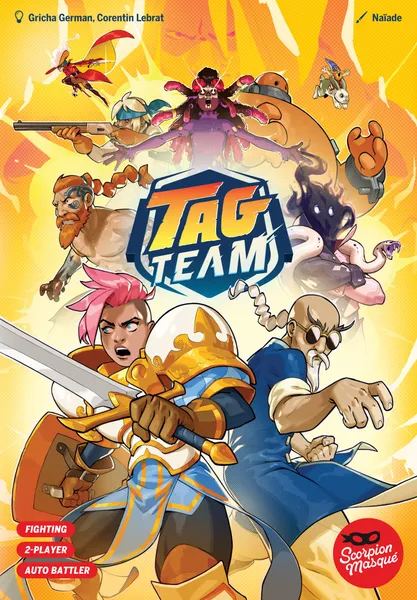
I’m a child of the 90s, so when I hear the words tag team, I think of the Bushwhackers, Harlem Heat, and the Outsiders. Gricha German and Corentin Labrat’s Tag Team isn’t that. Well, maybe it sort of is. Instead of prescribed duos, each player slams together two distinct fighters to form an impromptu team…

 Anmelden