Lese-Ansicht

Quick Peaks – The Game Makers, If Then, Blorp!, Civolution (with Acceptance Letter), Wondrous Creatures

The Game Makers - Andy Matthews

Even in this age of elaborately produced games, The Game Makers from Bezier Games stands out from the crowd. A “game about making board games”, the team behind this title spent years working on the production, acquiring licenses, and working with Panda Manufacturing, to bring this to tables all over the world. Our man Kevin Brantley had the chance to talk with Bezier Games about this game at Origins 2025 and Gen Con 2025, and even got to sit in on a full play through last year.

The Game Makers features a nearly 12” square cube chock full of wooden components (3 different sizes of meeples, wooden trees), dice in three sizes, plastic buildings, double layer player boards, magnetic wheels, miniature forklifts, and SO MANY CARDS. And all of it is crammed into the box in a very well thought out series of stacked inserts.

How does it play? Quite well actually. 

While there’s a lot going on, the main gameplay loop is not only fairly simple, but also simultaneous. Everything starts with the center rondel in which players send their forklifts out to collect resources. Every resource in the game can be used to either improve your personal factory, or to…

The post Quick Peaks – The Game Makers, If Then, Blorp!, Civolution (with Acceptance Letter), Wondrous Creatures appeared first on Meeple Mountain.

  •  

Pax Hispanica Game Review

I gotta say: I love it when a rulebook uses terms like “midlife crisis”, “murder”, “tax revolt”, “mutiny”, “apostasy”, and “voodoo”...and that was all before I found out I needed to rise from the ranks of teenage piracy during the Anglo-Spanish War all the way through the 30 Years’ War!

Pax Hispanica (2025, Ion Game Design) has a lot going for it. That starts with being a game that creates some drama thanks to a rich backstory. I’m not a theme-first gamer, so usually, I read the flavor text in a manual’s introduction before getting back to the task of shuffling resources around a board or drawing a bunch of cards that don’t mean anything or gathering my income and launching into a new round of taking actions. Story, schmory.

But Pax Hispanica—somehow this is my third foray into Pax games in the last two months!!!—forces a player to accept a few difficult facts. The first is that slave labor in the 17th century was a real thing. No getting around it. That means rounds of Pax Hispanica—each lasting four years—start with a rough truth: your faction, be it the Spanish, French, Dutch, English, or Courish forces under your control, need to ensure that vacant colonies on the map…

The post Pax Hispanica Game Review appeared first on Meeple Mountain.
  •  

Quick Peaks – Pirates of Maracaibo: Bermuda Triangle, Kittens in Space, Haunted Mouse, Trans-Siberian Railroad, Dirt & Dust

Pirates of Maracaibo: Bermuda Triangle - Justin Bell

I stand by my 2024 review of the Pirates of Maracaibo base game: I think it is designer Alexander Pfister’s best work, a co-design with Ralph Bienert and Ryan Hendrickson based on Pfister’s 2019 release Maracaibo that completely eliminated the older original from my collection. It’s a race that shears off all the loose ends of Maracaibo, with better card play (the entire map is actually a series of cards), simpler combat, a more comprehensive use of the Exploration board, and a shorter playtime. It was one of the top 10 games I played that year, and I’ve played it more than 15 times in person and more than 100 times on Board Game Arena.

Pirates of Maracaibo: Commanders has a “raison d’etre”: Euro players like to have their asymmetric powers, so Commanders very much as a reason to exist. Pirates of Maracaibo: Bermuda Triangle is the latest expansion, but it is very much a mini expansion. There is a small deck of cards that can be integrated into the decks of the base game, there’s a single solo card, and there’s a single location card (the Kraken) that may or may not add a little flair…

The post Quick Peaks – Pirates of Maracaibo: Bermuda Triangle, Kittens in Space, Haunted Mouse, Trans-Siberian Railroad, Dirt & Dust appeared first on Meeple Mountain.

  •  

Nucleum: Gibraltar Game Review

This is my fourth Nucleum article.

If you’ve followed my thoughts on the three other Nucleum products I’ve covered—the base game, Nucleum: Australia, and Nucleum: Energy Research Institute–it’s pretty clear that I think Nucleum is the second-best route/network building gaming system in my collection after the Brass games.

And, in a world where I already love Nucleum, Nucleum: Gibraltar might be the system’s best content. It combines the things I love about the base game, adds juicy new building tiles to the mix alongside new contracts and special powers, and then does what I didn’t think would be possible: Gibraltar’s map is the best combination of Nucluem’s design powers all in one place.

“I think this is the best map now,” said two players who joined me for separate plays, players who have extensive experience with both the base map as well as Australia. I was pretty sure that was my feeling as well after my first play, but winner’s bias set in and I wanted to try again to make sure that’s where I really landed.

The answer? Yep. Nucleum: Gibraltar is the system’s best map!

The Middle is a Warzone

There are three new elements on display in Nucleum: Gibraltar: the new map,…

The post Nucleum: Gibraltar Game Review appeared first on Meeple Mountain.
  •  

Entropy Game Review

Normally, when I’m sitting in meetings with our publishing partners at shows like Gen Con or SPIEL Essen, I ask about the games that are on the horizon. And, normally, we buzz through that part of the conversation with ease, since there’s not much in the way of real, earth-shattering news: another expansion for that popular title from a year or two ago is underway, or a new animal-themed trick-taker is set to hit the following summer. My brain says “ho, hum” and I quietly move through my meeting schedule.

But during the Board&Dice meeting at SPIEL last fall, it was hard to believe how many perfect-for-Justin products I saw on their 2026 dance card. Nucleum: Gibraltar, with the game’s third map and more goodies in a game system that I have fallen for over the last couple years. The crowdfunding campaign for The Voyages of Marco Polo, a classic game I’ll be backing whenever the project goes live. One of the designers of the Rats of Wistar-adjacent game ANTS, Andrea Robbiani, had a new title on the way called Maestro.

Board&Dice shared one other 2026 release. That game was Entropy, a new strategy title co-designed by three of the foremost game designers of our time: Tommaso Battista, Simone Luciani, and Nestore Mangone. Between the three…

The post Entropy Game Review appeared first on Meeple Mountain.
  •  

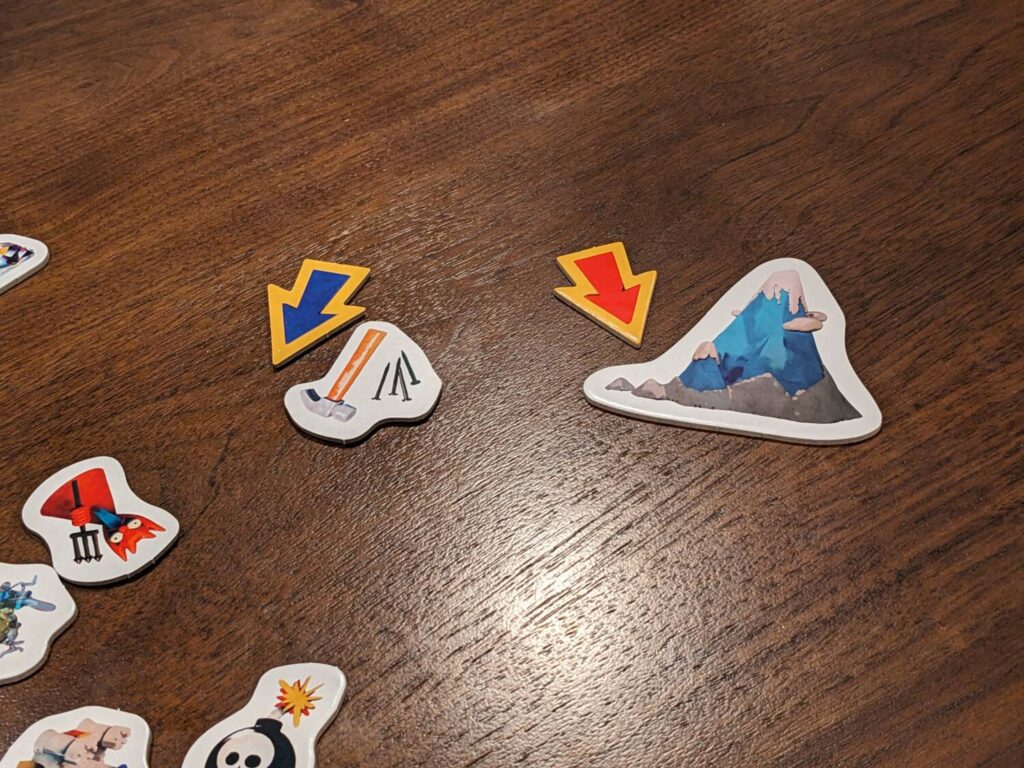
Dr. Finn’s Book of Solo Strategy and Word Games Game Review

Thanks to my side gig writing a weekly column for BoardGameGeek, I recently got a note from Steve Finn, the designer of Biblios as well as the co-designer of Cities and Cities USA. Steve saw that I do a ton of business travel, so he was kind enough to send a review copy of his recent release Dr. Finn’s Book of Solo Strategy and Word Games.

The book really is a book—it’s basically a workbook that includes eight titles, each of which features a short rules write-up along with worksheets to play each game eight times. In that way, this book has 64 total plays available, and for this review, I tried four of the games twice each.

The setup is very simple: you have to be able to read basic English, possess a pen or a pencil, and have access to as many as four normal six-sided dice. If you don’t like to read, Steve’s got you covered—each game’s rules include a QR code that links to a teach video for each of the eight games. And if you don’t have dice, Steve STILL has you covered, with an online dice simulator that takes care of the die rolls for you.

Some thoughts on those individual games are below, as well as a few closing…

The post Dr. Finn’s Book of Solo Strategy and Word Games Game Review appeared first on Meeple Mountain.
  •  

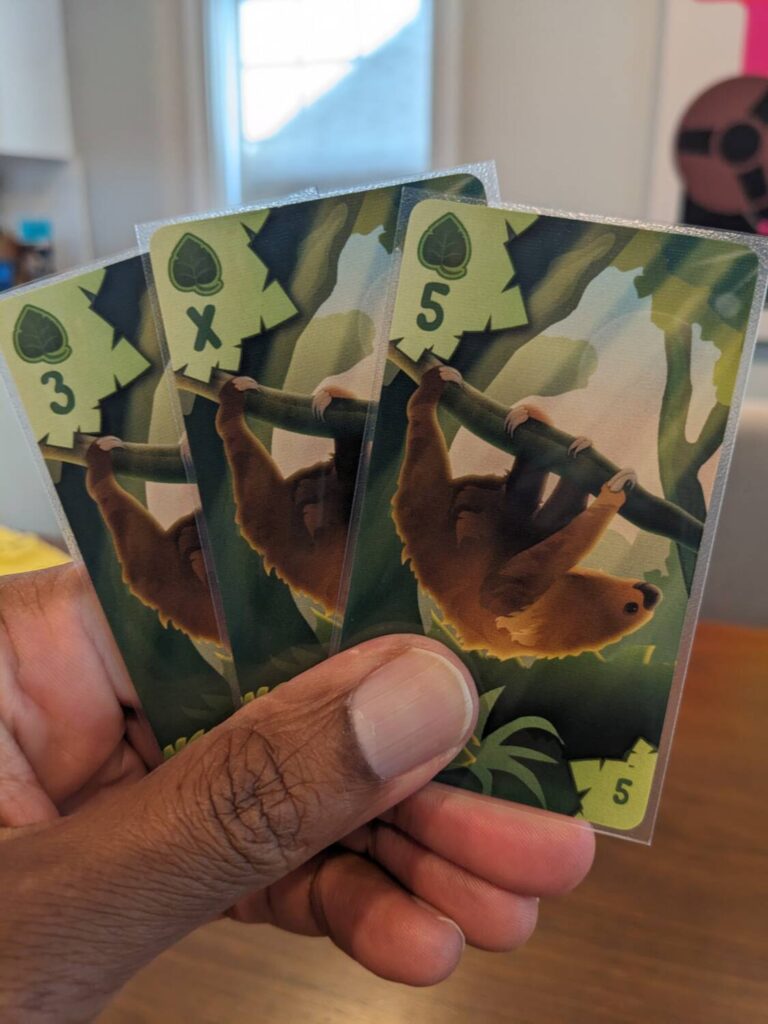
Thunder Road: Ignition Game Review

Thunder Road: Ignition is Restoration Games’ attempt to streamline the production, ruleset, and gameplay of Thunder Road: Vendetta, itself an update of the 1980s Milton Bradley game Thunder Road, designed by Jim Keifer.

I’m on record here at Meeple Mountain as saying that Thunder Road: Vendetta is perfect in every single way save for one: the game runs about 30 minutes too long, and it does that pretty consistently regardless of player count. It’s gorgeous, it’s hilarious, it is a great design, and it has almost unlimited amounts of content in its deluxe Maximum Chrome version. Between that version, and the expansion Carnival of Chaos, there might not be a better “beer and pretzels” laugher in my collection.

When Thunder Road: Ignition arrived, I immediately set it up and waited for my nine-year-old to come home. He’s loved Thunder Road: Vendetta for a couple years now, and I was sure he would want to play Thunder Road: Ignition. He saw the cover artwork (once again brought to you by Marie Bergeron) and smiled that big smile. He was home. Then he asked a simple question, which I think defines the break point of where we landed on Thunder Road: Ignition.

“Where are the choppers?”

Son, There…

The post Thunder Road: Ignition Game Review appeared first on Meeple Mountain.
  •  

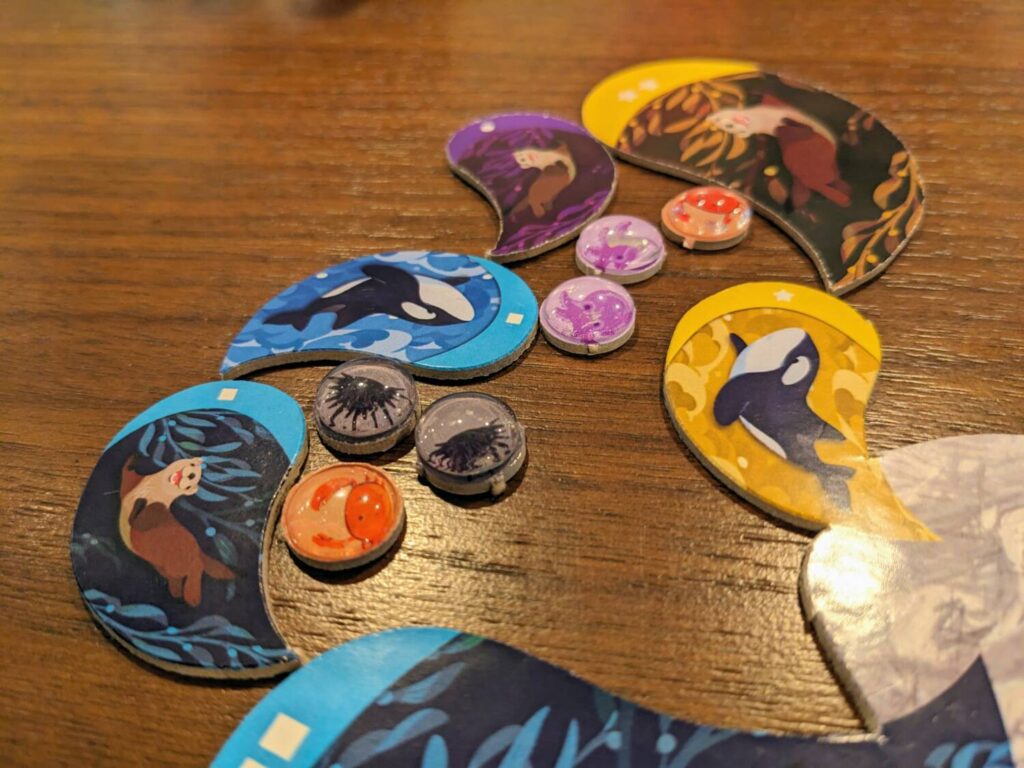
Berlin 1960 Game Review

It was easily the most shocking designer news I heard at last year’s SPIEL Essen event.

The designers of Devir’s new hidden role game, Berlin 1960—complete with cover art that made it look like a movie thriller combined with a wargame—were Flaminia Brasini & Virginio Gigli, co-designers of modern classics such as Coimbra and Lorenzo il Magnifico, some of the best medium-weight Euros of the last 20 years.

“The Lorenzo folks did a hidden role game?” I thought when I heard the overview. “This might be the biggest surprise of 2026!”

Berlin 1960 arrived at my house a few weeks ago, and I waited patiently for a game night when I had enough players to get a play rolling. That is a key component of this review…because the more players you can find, the better your experience will be. I’d frame it this way: Berlin 1960 is an eight-player game with variants that accommodate 4-7 players.

You should play this game at its maximum player count of eight…and, you should not play it with many less.


Gunshot Wound

Berlin 1960 is a hidden role game for 4-8 players. Players are individually assigned a role as a spymaster for either the KGB or the CIA, so…

The post Berlin 1960 Game Review appeared first on Meeple Mountain.
  •  

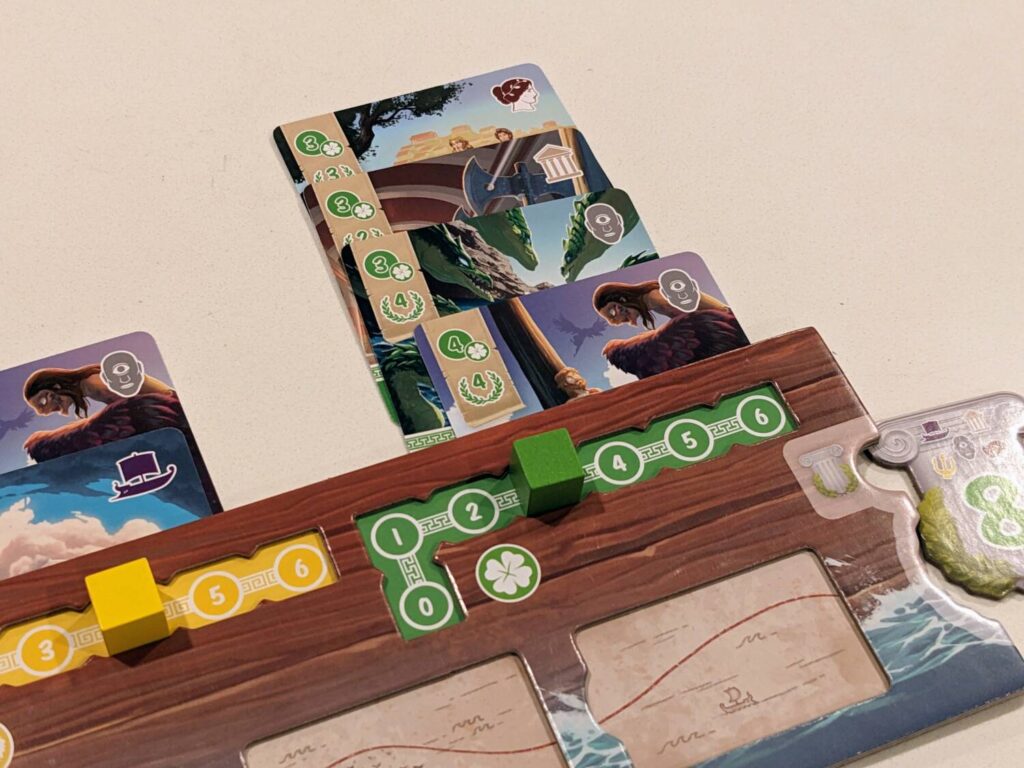
Masters of Crime: Mosquito Game Review

Yeah…we’re back on track.

After a so-so run with Masters of Crime: Incognito—the fourth game in the KOSMOS one-shot mystery game series—I waited a few months before attacking the fifth game, Masters of Crime: Mosquito. My wife and I carved out a Friday night, grabbed a laptop, and sent the kids off to bed early. Would Masters of Crime continue a downward trend with Mosquito, or would the road to recovery be lined with gold?

I’m happy to report—so, so happy to report—that Masters of Crime: Mosquito sits comfortably alongside the other three exceptional MoC titles, Vendetta, Rapture, and Shadows. And, like Shadows, Mosquito has an ace up its sleeve, by serving as both a murder mystery AND an adventure game by extending into two solid halves that features plenty of puzzles in a wide range of difficulties alongside a story that riffs on many great films of the last 30-40 years.

KOSMOS now sells all five of these titles as a five-pack. While Incognito is a bump in the road, it’s still worth buying all five of these titles at once if you are new to the series. Masters of Crime is the best one-shot cooperative mystery series on the market.

I’ll share a few thoughts below in this spoiler-free review.

Masters of Crime: Mosquito Game Review appeared first on Meeple Mountain.
  •  

Nippon: Zaibatsu Game Review

Ever since I slept on Bestiary of Sigillum: Collector’s Edition a couple years ago, I decided that CrowD Games should be closer to the top of my list of favorite publishers. As a result, I’ve spent a lot of time with their catalog over the last two years, playing through every single game the team at CrowD would send my way.

With very limited exceptions, CrowD has always delivered the goods…and with the recent fulfillment of the medium weight strategy title Nippon: Zaibatsu (based on the 2015 game Nippon), I’m ready to shout it to the masses: people should be following CrowD’s every move.

About a year ago (around the time that the original Zaibatsu campaign went up on crowdfunding platforms), I began playing Nippon on Board Game Arena, mainly to see if this was the kind of game I wanted to back when the campaign for Nippon: Zaibatsu went live. I liked what I saw out of the 2015 original, enough to put down some money for a copy of Zaibatsu.

Then, life punched me in the gut. I was laid off from my full-time job, and I shut down any talk of backing not only this game, but buying any board games for a few…

The post Nippon: Zaibatsu Game Review appeared first on Meeple Mountain.
  •  

Nippon: Genro Game Review

Nippon: Zaibatsu—2026’s updated version of the 2015 original, Nippon—is so hot in my gaming circles that I had the chance to play the base game three times over the course of a week, and it seemed like the game was popping up at game nights all over Chicago for the first couple months after it hit the market.

After drafting my initial review of the game, I learned that the game’s first expansion, Nippon: Genro, is hitting crowdfunding in late June of this year. A couple prototypes were floating around the US, so I reached out to CrowD Games to see if I could grab a pre-production copy to play for about a week, and I’m excited to share that CrowD obliged.

Nippon: Zaibatsu is a relatively easy game to learn, but it is a very difficult game to play well. By that, I mean that the game’s high volume of timing decisions make for a tricky gaming affair, and I’m surprised how often I had a plan to get all my ducks in a row during each play only to have an opponent snipe end-game turn order, or mid-game area control elements, or the perfect worker color for my consolidation plans just before I could.

Nippon: Zaibatsu may come across as a cutthroat area majority experience. Moving…

The post Nippon: Genro Game Review appeared first on Meeple Mountain.
  •  

Tundra Game Review

I picked up a review copy of the medium-weight, engine-building title Tundra, designed by Luc Rémond and David Simiand. Rémond is best known for one of the most popular two-player-only designs of the last 10 years, Sky Team. That, alone, made Tundra an instant “yes” when I had the chance to grab a copy during my visit with the Hobby World team at SPIEL Essen last year.

Tundra gives it to you straight. Over the course of four rounds, players take on the roles of estate managers in the fantasy world of Tundra, using workers and towers to gather resources to score the most points. Tundra, the game, begins every round with each player using the same set of die results across four dice—rolled by that round’s first player—before players use one die per turn to activate a space on one of their four action boards, known as “Order” boards.

These Order boards are not unique across the player pool, so each board does the same thing for each individual player…at least, when play begins. The tasks are very vanilla—gather one or more of the game’s three resources (firewood, peat, and rock), build towers and workers, move around a grid-based map of tiles that offer more chances for more resource gathering, or upgrade the Order boards to…

The post Tundra Game Review appeared first on Meeple Mountain.
  •  

Circadia Game Review

Hisashi Hayashi is the designer of a quick new card game called Circadia. I was initially interested because Hayashi has done some great work for the Bell household, namely in the form of Yokohama and Railway Boom, the latter of which was on my list of the top 10 games of 2025.

As you may know, lots of publishers are pushing out new card games, for the reasons one might expect: this is a much cheaper way to get a game to market, and it could satisfy the needs of many types of players in an environment where players are apparently spending less on their games.

Enter Circadia. There’s a theme loosely tied to Dreaming Paths, Spirit Creatures, and becoming the “Keeper of the Eternal Cycle” for the person lucky enough to win the game.

The reality is that Circadia is much, much simpler than even the loose framework. Setup only takes three steps. Players manage a hand of cards (never more than eight), trying to build up sets of cards across three types of Spirit Creatures: bear, axolotl, and goose.

Sets are played from hand based on the value of the cards, so a player who wants to play twos can play any card with…

The post Circadia Game Review appeared first on Meeple Mountain.
  •  

City of the Great Machine Game Review

From time to time, I use my meetings with publishers at conventions to intentionally pick up older games from their catalog. I usually need them for the new tabletop release doldrums of spring. That’s because publishers hit all of us hard with new titles in “Convention Season”, which for my money starts at Gen Con, peaks at SPIEL Essen, and stays warm through PAX Unplugged. (Shows like UK Games Expo and the Tokyo Game Market have new releases, but the noise level is a bit more muted.)

At last year’s Gen Con, I picked up a couple games from the team at CrowD, including City of the Great Machine, released in 2023. I had heard good things about it, and I liked the idea of its “one versus many” gameplay. Spring has arrived, and I pushed City of the Great Machine to the table for a couple plays.

My Spidey Sense was on point. City of the Great Machine—at least, its multiplayer version—rocks. (Solo is another story, which we’ll get to.)

Steampunk, Anyone?

City of the Great Machine, depending on player choices and headcount, is a hand management, hidden movement game for 1-4 players. It can be played solo, cooperatively with up to three players, or competitively with…

The post City of the Great Machine Game Review appeared first on Meeple Mountain.

  •  

Whistle Mountain Game Review

Whistle Mountain (2020, Bezier Games) looks like it should be the direct sequel, or maybe the spiritual successor, to Whistle Stop, an earlier release that focused on a Euro-style train game complete with powers, shares, goods delivery, and a race to go west as quickly as possible.

Whistle Mountain is not that, at all. Designed by the same person who designed Whistle Stop, Scott Caputo, as well as designer Luke Laurie (Andromeda’s Edge, Cryo), Whistle Mountain is a somewhat themeless tile placement game with triggering effects that align with a worker placement mechanic, as players compete for the most points by placing…wait for it…hot air balloons on a map full of scaffolding tiles while trying to evacuate construction workers from both a barracks location and a whirlpool.

Honestly, I don’t get the theme behind this one at all. Luckily, the gameplay is so good that you won’t bother to realize that saving the lives of your construction workers is the main trigger for the endgame!

Total Recall

Whistle Mountain is a tile-laying, worker placement, Euro-style adventure game for 2-4 players that runs about two hours at the highest player counts.

Whistle Mountain takes place in a future state “years…since your successful foray across the great America…

The post Whistle Mountain Game Review appeared first on Meeple Mountain.

  •  

Rebuilding Chicago Game Review

I’m not quite sure what to make of the new game Rebuilding Chicago, the second game in a series from the team at WizKids that began with the 2023 release Rebuilding Seattle. Like the first game (which I have not played), Rebuilding Chicago puts players in the shoes of local officials tasked with rebuilding a major city after a tragic event—here, the Great Chicago Fire of 1871.

Except…well, it’s not really about that at all. Rebuilding Chicago is a three-round tile-laying affair that takes place in three specific years: 1893, 1933, and 2016. I get the first two, since those are tied to the two World Fairs hosted by the city and they are widely celebrated as years when Chicago celebrated itself for rebuilding large parts of the city’s infrastructure. But 2016? That’s when the Chicago Riverwalk opened.

The Riverwalk is a blast. I’m just not sure I would call it a major rebuilding event across the city’s previous 125 years.

I’ve lived in Chicago since 2012, in a suburb just west of the city limits. When I first saw the round structure for Rebuilding Chicago, I kind of laughed. I wasn’t sure what the designer of the game, Quinn Brander, was going for with the Chicago framing. (Brander…

The post Rebuilding Chicago Game Review appeared first on Meeple Mountain.

  •  

Schlock!: B-Movie Magnate Game Review

The prototype for the upcoming game Schlock!: B-Movie Magnate (designed by Rob van Zyl and Simon Weinberg, and published by Pleasant Company Games) made the rounds on our Slack’s review copy channel without being picked up. I waited until other Meeple Mountain contributors had first-crack at this game before raising my hand. I think I’m the biggest movie nerd on the team, but still, maybe someone else wanted to talk shop and play a game that leaned into something they love more than I do.

But no one bit. I received a copy of Schlock! a few weeks before the game’s crowdfunding campaign, but I couldn’t finish three plays before the campaign launched. That’s because I was only able to initially do a solo play and a two-player game of Schlock!, and the rules are a little different with three or four players.

Now that I’ve finished a third play, with four players, I’m ready to share my story. Schlock! has the look and feel of a word game I can get behind. But the production value of this prototype’s high notes are balanced with a game that simply comes down to matching colors to achieve victory. I wish more of the game’s theme pushed into the game’s win conditions.

The post Schlock!: B-Movie Magnate Game Review appeared first on Meeple Mountain.

  •  

Shackleton Base: Below. Within. Above. Game Review

No upcoming expansion had me more excited than the arrival of Shackleton Base: Below. Within. Above., the first expansion for one of the five best games I played in 2024, Shackleton Base: A Journey to the Moon.

“Shack Town”, as it is known in my circles, has hit my tables a whole lot since the late summer of 2024, thanks to receiving an advance copy from the team at Sorry We Are French (from overseas, no less, in the Before Tariff Times). The medium-weight Euro is a crowded field, and Shackleton Base stood out because it does a lot of things right, thanks in part to the seven different corporations included in the base game.

Almost any number of extra corporations would spice up the base game for me. I’m not exhausted with any of the base game corporations yet, but the mix can always get sweeter with more set-up options that shake up the meta.

Let’s talk about the new stuff. (For anyone new to Shack Town, you can check out my review of the base game to learn more.) Also, please note: the new stuff barely—and I mean, barely—fits in the base game box, assuming you keep the cute tuckboxes that make setting up the game a cinch.

[caption id="attachment_331255" align="alignnone" width="1024"]

The post Shackleton Base: Below. Within. Above. Game Review appeared first on Meeple Mountain.

  •  

The Dusty Euro Series: Thebes

The guys in my Wednesday gaming group started a push to play more of the old, dust-covered games at the bottom and backs of our respective game closet shelves. The premise was simple: let’s try to remember why we keep all these old games when all we ever play now are the newest, shiniest things in shrink.

Right on the spot, the Dusty Euro Series was born, and I’ve enlisted multiple game groups to help me lead the charge on covering older games.

In order to share some of these experiences, I’ll be writing a piece from time to time about a game that is at least 10 years old that we haven’t already reviewed here at Meeple Mountain. In that way, these articles are not reviews. These pieces will not include a detailed rules explanation or a broad introduction to each game. All you get is what you need: my brief thoughts on what I think about each game right now, based on one or two fresh plays.

Thebes: What Is It?

Thebes is a press-your-luck set collection game featuring rondel-style movement mechanics for 2-4 players. In the vein of Raiders of the Lost Ark, or any board game that features “competitive archaeology”, players…

The post The Dusty Euro Series: Thebes appeared first on Meeple Mountain.

  •  

Tricky Treats Game Review

Here’s something spooky: I don’t own any Halloween-themed board games…not a single one. Now, I’m excited to say that I own one I’ll keep handy for at least the next few pumpkin seasons.

Tricky Treats, a family-weight title published by Cranio Creations last year, hit my table for a couple plays recently. Although I picked this up in Germany right before Halloween, other, buzzier titles hit my table first, so I didn’t play Tricky Treats this past Halloween and let the game sit for a while.

After breaking the game out with my family, then with my review crew, I’m a bit surprised that Tricky Treats is not getting more buzz. The game is a solid family title, with a fun gimmick that reminded both myself and other players of another recent title featuring transparent cards.

Do You Have 20 Minutes?

Tricky Treats is a set collection, card drafting game for 2-4 players that plays in about 30 minutes, longer if you are playing with my nine-year-old, who loves to take his sweet time as he makes his way through each turn of any game, not just this one.

Players manage a small posse of five kids getting ready for Halloween. There’s a grid of nine “treat” houses where…

The post Tricky Treats Game Review appeared first on Meeple Mountain.

  •  
❌