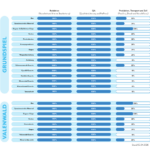
Alle Daten sind abgegeben. Chip Theory Games hat die Gazetten, Rulebook und Tutorialheft bereits gesichtet und wir haben die Updates dazu eingearbeitet. Viele Dinge sind im Eproof schon abgesegnet (in der Tabelle 50%), bei anderen warten wir noch auf die Eproofs (in der Tabelle 25%).
Jetzt kommen wir in die Zeit geringfügigerer Updates, da wir nach dem Eproof erstmal auf das MPC warten.
Oh man, oh man, it’s time that we ask you (yes, you) to tell us (yes, us) what your favourite games are, because for one time a year, it doesn’t matter what we think about games, but you better be ready to tell us what you think about games. A lot of you did, so here it is, the listener top 20! Before we ask you to do all the work, we talk about Emberheart, Gods & Mortals, and Feya’s Swamp.
If you don’t want to miss an episode, please subscribe on Apple Podcasts/Google Podcasts/Stitcher/Spotify, or add our RSS feed to your favourite app. Reviews and subscriptions really help us and would be greatly appreciated! To download the episode directly, click here.
If you’d like to discuss anything in the episode, please do so in the comments below, visit our BoardGameGeek guild, join our Discord, or Facebook Group! Any feedback is also always helpful. If you’d like to show your support for the show, we also have a Patreon with some fun rewards, and a merch store!
Timecodes:
01:30 – Emberheart 14:11 – Gods & Mortals 23:46 – Feya’s Swamp 33:38 – Listener Top 20 37:14 – A Feast for Odin 37:55 – Agricola 38:32 – Terraforming Mars 39:17 – Guards of Atlantis II 40:09 – Concordia 42:05 – Tigris & Euphrates 43:16 – Blood on the Clocktower 44:00 – El Grande 44:47 – The Castles of Burgundy 46:12 – Inis 47:38 – Race for the Galaxy 48:06 – Arcs 49:08 – Ark Nova 49:30 – Root 50:06 – Innovation 51:11 – Spirit Island 52:05 – Ra 52:51 – Brass: Birmingham 53:26 – Dune: Imperium 54:04 – Hansa Teutonica
Thank you to Heart Society for generously letting us use What’s On Your Mind, Kid? from their album Wake the Queens.
If you don’t want to miss an episode, please subscribe on Apple Podcasts/Google Podcasts/Stitcher/Spotify, or add our RSS feed to your favourite app. Reviews and subscriptions really help us and would be greatly appreciated! To download the episode directly, click here.
If you’d like to discuss anything in the episode, please do so in the comments below, visit our BoardGameGeek guild, join our Discord, or Facebook Group! Any feedback is also always helpful. If you’d like to show your support for the show, we also have a Patreon with some fun rewards, and a merch store!
Timecodes:
01:30 – Emberheart 14:11 – Gods & Mortals 23:46 – Feya’s Swamp 33:38 – Listener Top 20 37:14 – A Feast for Odin 37:55 – Agricola 38:32 – Terraforming Mars 39:17 – Guards of Atlantis II 40:09 – Concordia 42:05 – Tigris & Euphrates 43:16 – Blood on the Clocktower 44:00 – El Grande 44:47 – The Castles of Burgundy 46:12 – Inis 47:38 – Race for the Galaxy 48:06 – Arcs 49:08 – Ark Nova 49:30 – Root 50:06 – Innovation 51:11 – Spirit Island 52:05 – Ra 52:51 – Brass: Birmingham 53:26 – Dune: Imperium 54:04 – Hansa Teutonica
Thank you to Heart Society for generously letting us use What’s On Your Mind, Kid? from their album Wake the Queens.
Beiseite mit dem Kleingartenbesteck. Wer 2023 bei BONSAI noch mit dem Schäufelchen hantierte, braucht in KOI einen Bagger. Statt Miniatur-Botanik im Topf steht Gartenlandschaftsbau auf dem Programm. Ich fand BONSAI zwar nur nett, aber die durchsichtigen Acryl-KOI-Plättchen sahen auf dem Tisch so hübsch aus, dass ich den Garten unbedingt einmal umgraben wollte.
Seit dieser Woche befinden sich alle Files im Approval! Das heißt: Wir warten jetzt auf die Freigabe durch unseren Partner und bessern gegebenenfalls nach, wo es nötig ist. Gleichzeitig haben wir für erste Files bereits E-Proofs erhalten und gesichtet – ein notwendiger letzter Freigabeschritt unsererseits, damit diese Komponenten in die Produktion gehen können.
Aufnahme: 26.12.2025 Sendedatum: 15.01.2026 Themen 00:00:00 Intro & Begrüßung 00:02:20 Geschichte von Textura 00:29:50 Aus Textura wird Link-15 01:04.20 Blick in die Zukunft: Was noch kommt oder kommen könnte… 01:25:01 […]
Long-time readers of this blog know my infatuation with Colleen McCullough’s Masters of Rome series. I have been reading the series since 2018 at the appropriately epic pace of one book per year (and last year, I skipped). Masters of Rome reading was always a highlight of my literary year – the high drama, the broad historical canvas painted with a myriad of characters, events, and microplots, and, most of all, McCullough’s readiness to engage the ancients on their own terms, with ever so many pages dedicated to this legislation or that campaign.
McCullough had planned to end the series after the sixth instalment (The October Horse, which covers the years 44 to 42 BCE). Only her fans’ pleas convinced her to write Antony and Cleopatra. Maybe that shows a little bit – the book takes a long time (say, the first 200 pages) to hit its stride, and never quite reaches the heights of previous instalments. Yet that mostly shows how good these books were (peaking with novel #5, Caesar), as this conclusion to the drama of the late Roman Republic was still one of my favorite historical novels in 2025.
Clarissa Oakes (Patrick O’Brian)
I’m continuing my re-read of the Aubrey-Maturin series, that delightful panorama of life at sea (and land!) during the Napoleonic Wars. Among the Aubrey-Maturin novels which I read this year, my favorite was #15 – Clarissa Oakes.
Jack Aubrey and Stephen Maturin want just one thing: Leave New South Wales and its mixture of brutal government (instigating clashes between the officers and men) and anti-Irish fervor (which gets Stephen into trouble). However, when the ship is out at sea, they realize that one of the younger officers has smuggled out a convict from the penal colony – an enigmatic young woman, who is bound to attract the attention of several of the men. No other book in the series makes so good on the premise of the characters being confined to a small ship, unable to avoid each other. And Clarissa, the escapee, is not just a plot device, but a complex and compelling character in her own right.
And my favorite historical novel of this year was…
A Gentleman in Moscow (Amor Towles)
„Where is it now?“, asks the poem which kicks off the book – “it” being purpose. Having been written after the failed Russian revolution of 1905, the poem is widely seen as a call to action and inspires Russia’s revolutionaries… and thus they do not sentence the aristocratic author Count Alexander Rostov to death when he returns to Russia after the October Revolution. Under house arrest at the Hotel Metropol in Moscow, he will spend the next thirty years rethinking and rediscovering his purpose. It will not count as a spoiler that he finds it in putting his abilities to good use and connecting with his fellow human beings – of course he does. Yet the point of the book is not the goal, but the winding way there, told with grace, nuance, and originality.
While the ending might be a bit kitschy, the unique protagonist, the cast of intriguing side characters and the delightful prose made this my favorite historical fiction read of the year.
Have you read any of these books – and, if so, what did you think? And what were your favorite historical novels of the year? Let me know in the comments!
Long-time readers of this blog know my infatuation with Colleen McCullough’s Masters of Rome series. I have been reading the series since 2018 at the appropriately epic pace of one book per year (and last year, I skipped). Masters of Rome reading was always a highlight of my literary year – the high drama, the broad historical canvas painted with a myriad of characters, events, and microplots, and, most of all, McCullough’s readiness to engage the ancients on their own terms, with ever so many pages dedicated to this legislation or that campaign.
McCullough had planned to end the series after the sixth instalment (The October Horse, which covers the years 44 to 42 BCE). Only her fans’ pleas convinced her to write Antony and Cleopatra. Maybe that shows a little bit – the book takes a long time (say, the first 200 pages) to hit its stride, and never quite reaches the heights of previous instalments. Yet that mostly shows how good these books were (peaking with novel #5, Caesar), as this conclusion to the drama of the late Roman Republic was still one of my favorite historical novels in 2025.
Clarissa Oakes (Patrick O’Brian)
I’m continuing my re-read of the Aubrey-Maturin series, that delightful panorama of life at sea (and land!) during the Napoleonic Wars. Among the Aubrey-Maturin novels which I read this year, my favorite was #15 – Clarissa Oakes.
Jack Aubrey and Stephen Maturin want just one thing: Leave New South Wales and its mixture of brutal government (instigating clashes between the officers and men) and anti-Irish fervor (which gets Stephen into trouble). However, when the ship is out at sea, they realize that one of the younger officers has smuggled out a convict from the penal colony – an enigmatic young woman, who is bound to attract the attention of several of the men. No other book in the series makes so good on the premise of the characters being confined to a small ship, unable to avoid each other. And Clarissa, the escapee, is not just a plot device, but a complex and compelling character in her own right.
And my favorite historical novel of this year was…
A Gentleman in Moscow (Amor Towles)
„Where is it now?“, asks the poem which kicks off the book – “it” being purpose. Having been written after the failed Russian revolution of 1905, the poem is widely seen as a call to action and inspires Russia’s revolutionaries… and thus they do not sentence the aristocratic author Count Alexander Rostov to death when he returns to Russia after the October Revolution. Under house arrest at the Hotel Metropol in Moscow, he will spend the next thirty years rethinking and rediscovering his purpose. It will not count as a spoiler that he finds it in putting his abilities to good use and connecting with his fellow human beings – of course he does. Yet the point of the book is not the goal, but the winding way there, told with grace, nuance, and originality.
While the ending might be a bit kitschy, the unique protagonist, the cast of intriguing side characters and the delightful prose made this my favorite historical fiction read of the year.
Have you read any of these books – and, if so, what did you think? And what were your favorite historical novels of the year? Let me know in the comments!
As the year comes to a close, I’ll do my usual end-of-year posts: My personal top three in a range of categories. As tradition commands, we’ll begin with the games that I played for the first time this year. Here are the best three.
I’m not much of a Formula 1 fan – from my point of view, nothing much happens during the races (after the start, that is), and in many years, even the championship as such is a bore because one driver/car combo is just too dominant. (This year has been excitingly different in that regard.)
In the box: Another close finish!
Heat, however, takes just the exciting parts of racing and puts them together in an enthralling package of evocative mechanisms – downshifting before corners (and upshifting afterward), and the delicate balance of how to deal with the psychological stress on the driver and the physical stress on the car (the eponymous heat). And as the main planning phase is done simultaneously, there’s minimal downtime even with the full six players.
I’m excited to learn new things from and with games. One topic I knew next to nothing about is the 14th century in India. That, however, has changed a bit now due to Vijayanagara, a COIN-lite treatment of the collapse of the Delhi Sultanate’s hegemony under the challenge of invasion from the north (Timur’s Mongols) and centrifugal forces in the south (the nascent Bahmani Kingdom and Vijayanagara Empire). Every game of Vijayanagara tells a variation of that story.
The Delhi Sultanate (black) is under heavy pressure from the Vijayanagara Empire (yellow) and the Bahmani Kingdom (turquoise). From the implementation on Rally the Troops!
Chaos – some games hate it, others, like Time of Crisis, embrace it. Whoever wants to be Roman emperor in the tumultuous third century must be prepared to deal with a whole whirlwind of challenges: Angry mobs want to drag your governors into the gutter, Barbarian tribes stand ready to cross the border into your provinces, and, worst of all, the rest of the Roman elite wants to be emperor, too, and will gleefully take whatever you possess.
Red has declared himself emperor! Yet Yellow runs a compact dominion in the east, ready to move into Italy or break away from the empire. From the implementation on Rally the Troops!
I have been thwarted in my imperial aspirations by my fellow bloggers Alexander and Grant from The Players’ Aid as well as Dave and Michal, and have been loving every minute of it. Time of Crisis has been my most-played game overall this year (with 14 individual plays of it), and rightly takes the crown in this category.
What were your favorite new-to-me games this year? Let me know in the comments!
As the year comes to a close, I’ll do my usual end-of-year posts: My personal top three in a range of categories. As tradition commands, we’ll begin with the games that I played for the first time this year. Here are the best three.
I’m not much of a Formula 1 fan – from my point of view, nothing much happens during the races (after the start, that is), and in many years, even the championship as such is a bore because one driver/car combo is just too dominant. (This year has been excitingly different in that regard.)
In the box: Another close finish!
Heat, however, takes just the exciting parts of racing and puts them together in an enthralling package of evocative mechanisms – downshifting before corners (and upshifting afterward), and the delicate balance of how to deal with the psychological stress on the driver and the physical stress on the car (the eponymous heat). And as the main planning phase is done simultaneously, there’s minimal downtime even with the full six players.
I’m excited to learn new things from and with games. One topic I knew next to nothing about is the 14th century in India. That, however, has changed a bit now due to Vijayanagara, a COIN-lite treatment of the collapse of the Delhi Sultanate’s hegemony under the challenge of invasion from the north (Timur’s Mongols) and centrifugal forces in the south (the nascent Bahmani Kingdom and Vijayanagara Empire). Every game of Vijayanagara tells a variation of that story.
The Delhi Sultanate (black) is under heavy pressure from the Vijayanagara Empire (yellow) and the Bahmani Kingdom (turquoise). From the implementation on Rally the Troops!
Chaos – some games hate it, others, like Time of Crisis, embrace it. Whoever wants to be Roman emperor in the tumultuous third century must be prepared to deal with a whole whirlwind of challenges: Angry mobs want to drag your governors into the gutter, Barbarian tribes stand ready to cross the border into your provinces, and, worst of all, the rest of the Roman elite wants to be emperor, too, and will gleefully take whatever you possess.
Red has declared himself emperor! Yet Yellow runs a compact dominion in the east, ready to move into Italy or break away from the empire. From the implementation on Rally the Troops!
I have been thwarted in my imperial aspirations by my fellow bloggers Alexander and Grant from The Players’ Aid as well as Dave and Michal, and have been loving every minute of it. Time of Crisis has been my most-played game overall this year (with 14 individual plays of it), and rightly takes the crown in this category.
What were your favorite new-to-me games this year? Let me know in the comments!
In dieser Kategorie gibt es Aktuelles der drei Kategorien Mäh! (News), Herde (Neuzugänge) und Grasen (Ersteindrücke). Diesen Monat mit der SPIEL'25, aktuellen Auszeichnungen, The Druids of Edora, Thebai, Pulitzer, Waldland und Star Wars - Battle of Hoth .

 Anmelden