
Normale Ansicht

Rattlesnake Game Review

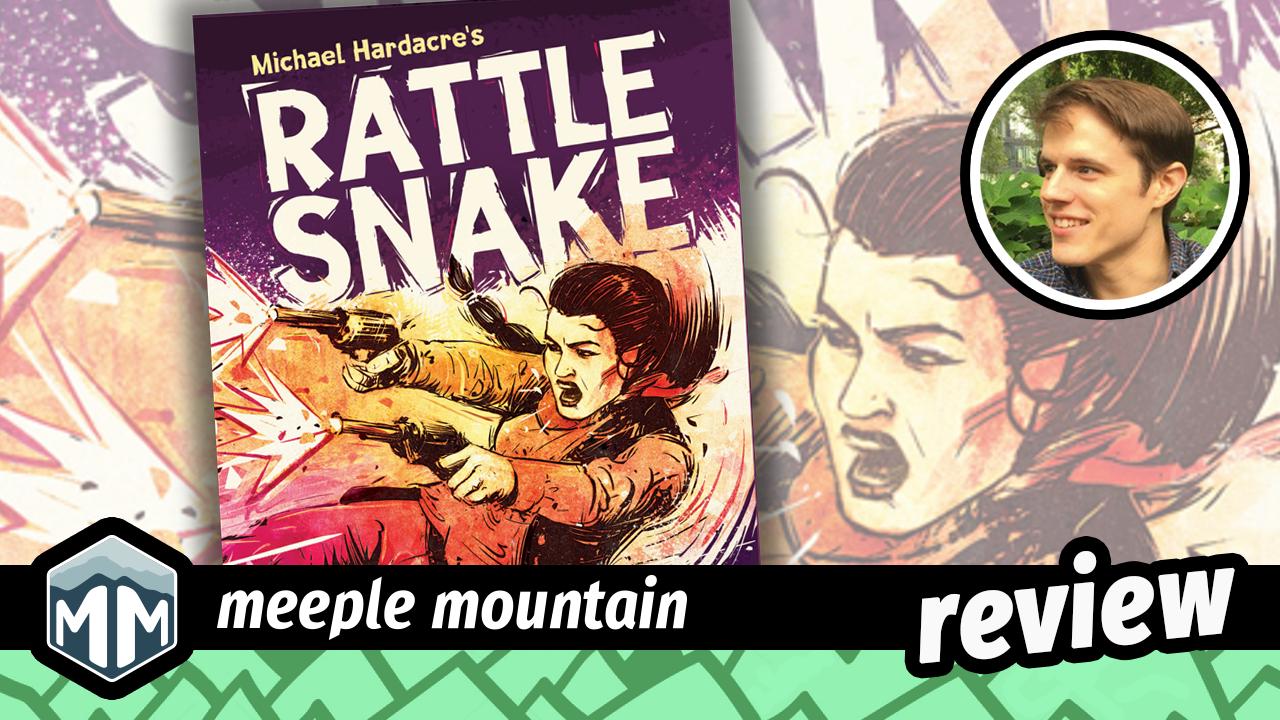
Michael Hardacre’s Rattlesnake, a two-player card game about a gun fight in the wicky-wicky-wild Wild West, is a fabulous marriage of setting and mechanisms. This thing is lean, mean, and jumpy. More sting than a scorpion and more bite than a…well, you know. It is tense enough that the components list should include brow sweat. And it’s so small! For form factor, this no-frills set of cards—with a gun token for flavor—is my favorite thing to come along since High Tide. There’s nothing quite like a big game in a small box.

The goal of the game is simple enough: kill your opponent. Well, I shouldn’t say “kill.” Pokémon has taught us that death isn’t always the end result of [checks notes] running out of health. Strictly speaking, your goal is to hit your opponent four times. Death is not the dictated outcome. Maybe all those hits grazed you. Maybe they missed organs. Maybe your opponent rushes you off to a hospital, where the gangrene can do its slow, ante-antibacterial work. I’m not a historian.

A hand holding three cards, numbered 1, 4, and 5. Each card has an illustration across the center, with several lines of text at the bottom.

The post Rattlesnake Game Review appeared first on Meeple Mountain.
LUZ Game Review

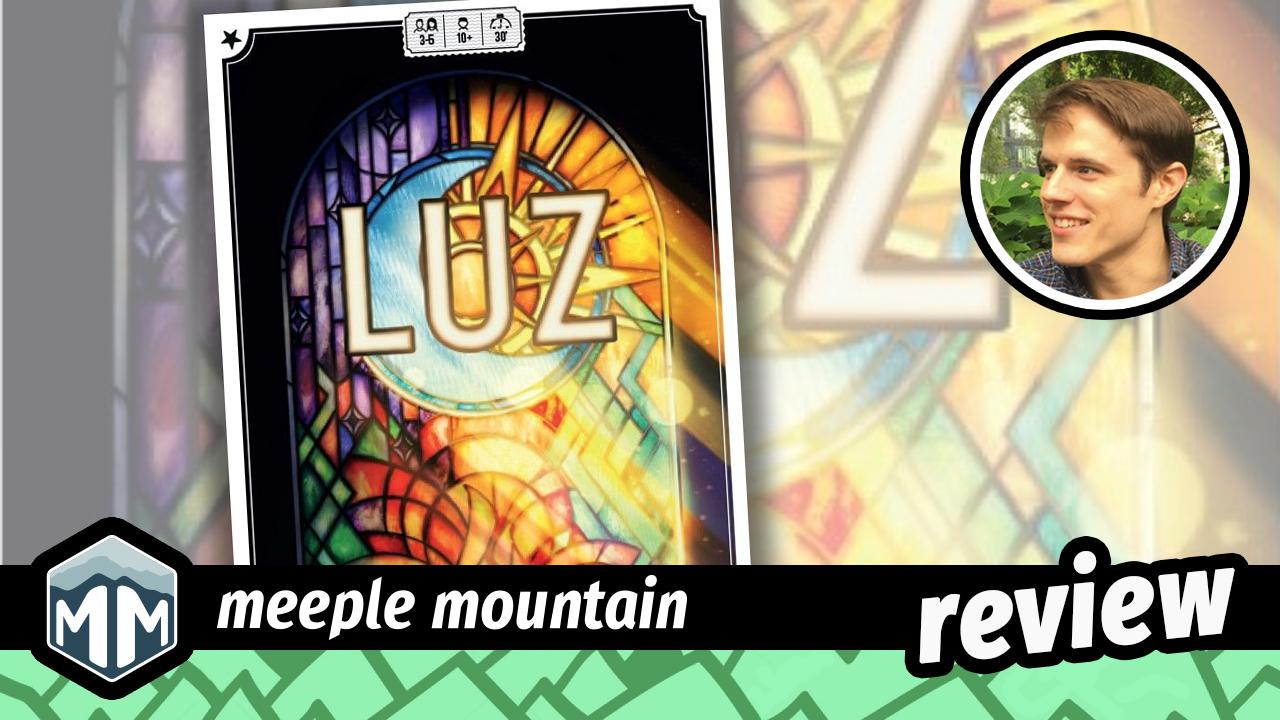
With a title like LUZ, Spanish and Portuguese for “light,” you’d expect this Taiki Shinzawa trick-taking game to have a bit more clarity. Silly you. Silly me! LUZ is a game of shadows and half-knowns, a trick-taker that casts a shadow of uncertainty.

Given that Shinzawa is responsible for the likes of Ghosts of Christmas, a trick-taker in which you play three or four must-follow tricks at the same time while the trump suit shifts with player behavior, I should clarify that LUZ isn’t that opaque. It’s all relative. If Ghosts of Christmas is a few standard deviations outside the mean, LUZ is safely within the bell part of the curve.

This is a must-follow trick-taking game where players bid before the hand begins. You have the choice of making an exact bid, which requires you to hit the nail squarely on the head in order to score, or a more forgiving bid that gives you one trick’s worth of wiggle room in exchange for scoring half the points. Higher risk, higher reward.

This doesn’t sound so different from whist, other than the room for some wiggle in your wager. The opacity comes from the last two rules: the back of each card indicates what suit that card belongs to, and you never know the values of your…

The post LUZ Game Review appeared first on Meeple Mountain.
Root: The Homeland Expansion Game Review

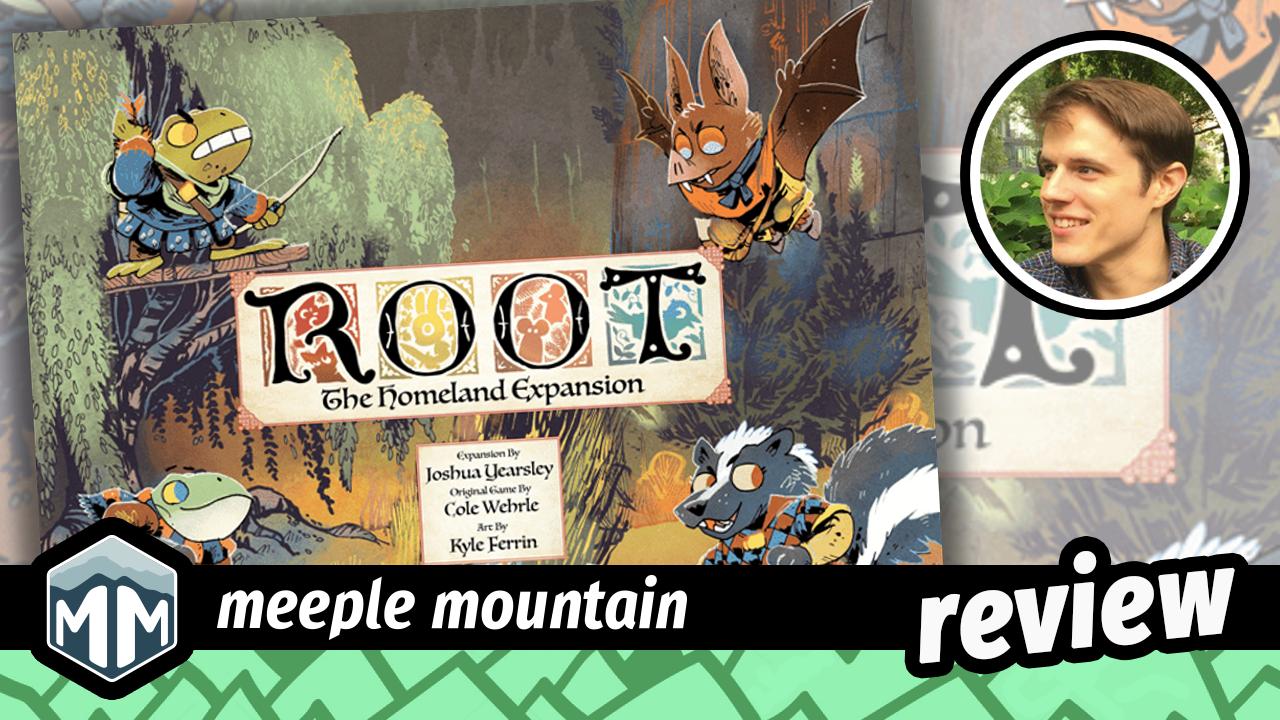
I have played my fair share of Root games, lord knows. I have no official play count. I respect the impulse of those who track their plays, but board games are one area of my life where I don’t do that sort of thing. Some back-of-the-envelope math tells me I have played well over 50 games of Cole Wehrle’s juggernaut since I first bought a copy back in the summer COVID lull of 2020. It quickly became, and has remained, one of my favorite board games.

Root’s status as a personal all-timer has never been threatened, but I have found myself moving away from it over the last few years. Since the release of The Marauders Expansion in 2022—an expansion of which I am very fond—I’ve found myself less and less interested in playing. This has nothing to do with the quality of the game. It hasn’t worn on me, nor has it grown tired. If anything, the fact that I haven’t played Root as much as I used to is Root’s fault; it offered early instruction in the idea of board games as strange and ungainly, and I’ve spent the last few years eager to explore new designs, new spaces, and tracking down new experiences. Root became the kind of game I would happily play if suggested,…

The post Root: The Homeland Expansion Game Review appeared first on Meeple Mountain.
Thief’s Market Game Review

There are times, engaging with this hobby of games, when one is confronted with the very real possibility, regardless of one’s self-esteem, that one is in fact stumbling through this harrowing and at times magnificent experience we call life with a dearth of cognitive capacity.

Put another way, there are games that make you wonder, “Am I a dumdum?”

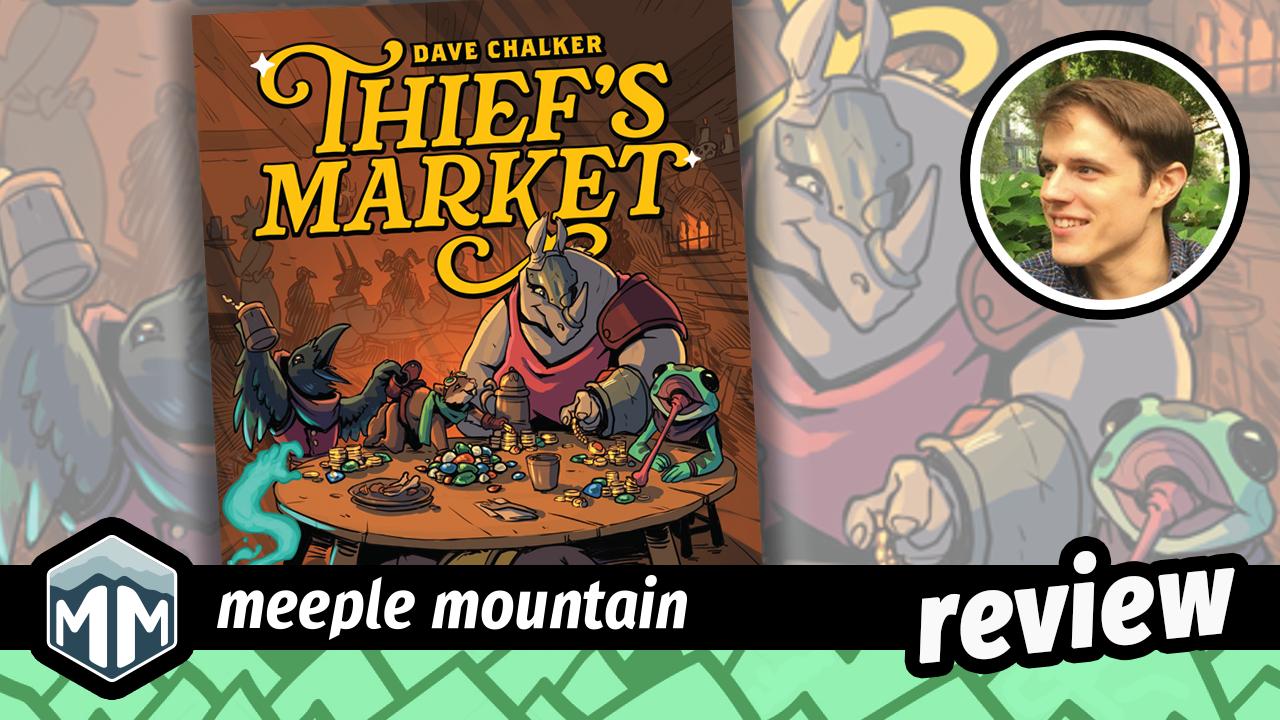
A table with two rows of cards, a large number of purple wooden owl tokens, and a large pile of dice.Thief’s Market, from publisher PickPocket Games and designer Dave Chalker, is just such a game. This is surprising for a few reasons, not least of which is because Thief’s Market is, mechanically, a breeze. It’s a challenge to think of something simpler without tipping over into party games. Each round is divided into two phases: grab some loot, then spend said loot on resource conversion powers and points until someone wins. This is not, in theory, the stuff analytical types tend to lose much sleep over.

The starting player rolls all the dice, which are then placed in the middle of the table along with the first player token. Players take turns drafting dice by either staking a claim from that middle or picking the pocket of a fellow player. If…

The post Thief’s Market Game Review appeared first on Meeple Mountain.
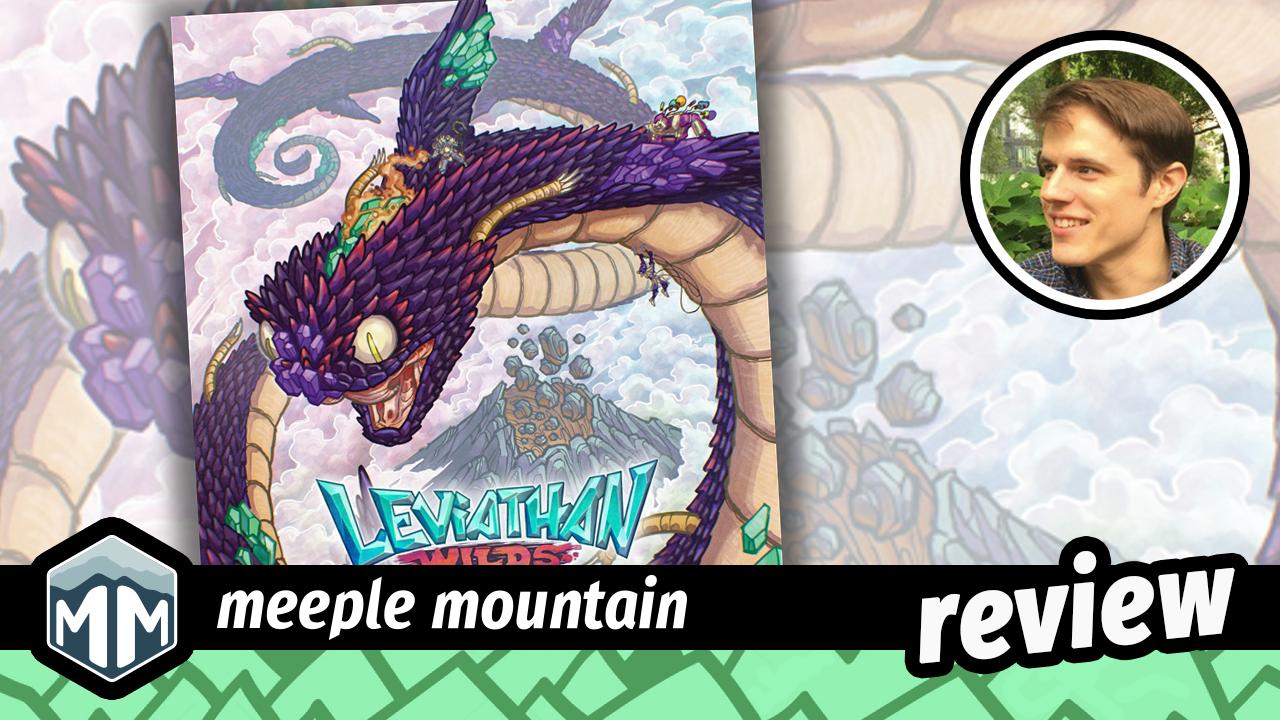
Leviathan Wilds: Shattered Peak Expansion Review

Part of the fun of engaging with a system built around different characters, classes, species, or any other mode of substantive differentiation, is finding the build that’s right for you. Everyone who likes Root has a favorite faction, everyone who plays Magic has a favorite color, and the wonderful thing is that these preferences are almost always deeper than mechanics. If you’re lucky, if everything clicks, your chosen avatar feels ‌like an extension of yourself. There is something about playing as the Lizard Cult that elicits a deeper joy for me. Am I going to win? Probably not, but boy I’m going to have a great time. Blue may leave me with no friends, but I’m enjoying myself.

Leviathan Wilds has been my favorite cooperative game for a while now, and while I was equally fulsome in my praise of the first expansion, it is only now with second expansion Shattered Peak that I can say I have found the Class for me. The Geomancer, one of three new Classes that join three new Climbers and eleven new Leviathans in this box, feels like home. All the builds in Leviathan Wilds are about running around and smashing infectious crystals, but the Geomancer is the first to mess with those troublesome fungal blooms. He can manipulate their values…

The post Leviathan Wilds: Shattered Peak Expansion Review appeared first on Meeple Mountain.
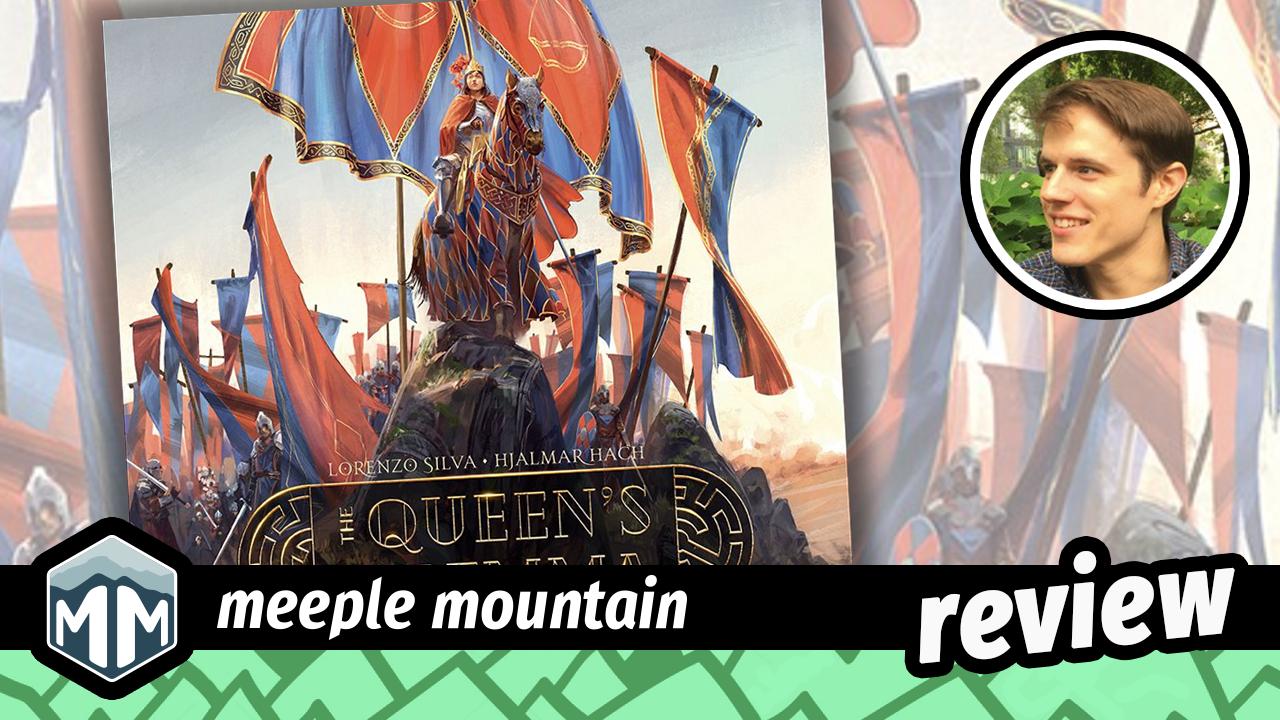
The Queen’s Dilemma Game Review

We did it.

On June 4th, 2026, despite the considerable difficulty of coordinating regular play sessions with a group of six, I was part of a group that successfully completed a campaign of The Queen’s Dilemma. For 15 sessions over the course of about three months, we were the six nobles ruling in the queen’s stead. For 30-35 hours, we dealt with famine, a new religion, an influx of migrants, a religious schism, and put the matter to a vote.

It was time well spent. I was hanging out with five of my friends, doing what we do best: cracking jokes and selling one another up the river. It was easy to forget sometimes that we were playing a game. The Queen’s Dilemma, like The King’s Dilemma before it, is deeply social. The game melts away while you’re playing. That’s key to its magic. All games exist to engender some sort of social dynamic, but the more involved a game is, the more the game itself tends to insist on its own presence. You can’t play Agricola and forget there’s a rulebook. The Queen’s Dilemma is the world’s most involved party game; it wants to vanish. You spend so much of each session staring into the eyes of the other players and asking them what they’re thinking that you…

The post The Queen’s Dilemma Game Review appeared first on Meeple Mountain.
Inkwell Game Review

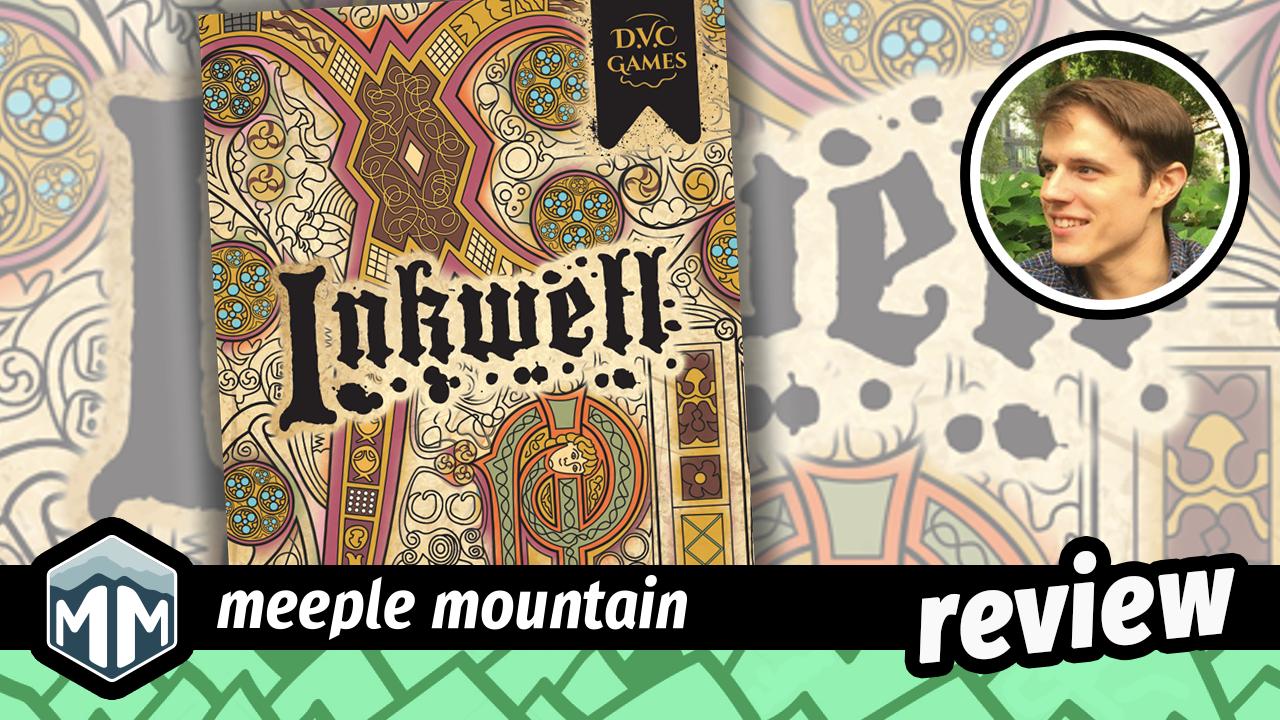
Inkwell, designed by Jasper Beatrix, Lewis Graye, and Joey Palluconi, and published by DVC Games, is a beautiful object. There are a handful of games centered around illuminated manuscripts, an aesthetic for which I will always be a sucker, and this is far and away the most pleasing. The title, in gold foil over a detailed illumination, is a feast for the eyes. The components in the box are no less filling, though I wish I could extend the compliment beyond the aesthetics. Inkwell is, I think, three games all at once, and it doesn’t quite succeed as any of them.

The most obvious reference point, the one I’ve seen repeated the most in BGG reviews and on social media, is Azul. While I understand the point of comparison, the games don’t really have much in common at all. You choose your bits from a public central board and put them in matching slots within your own private sphere, but that’s about it. The specifics are so different that they undermine any meaningful commonality. You could describe the games as similar, but you’d be doing both Inkwell and Azul a disservice.

When choosing ink from an inkwell, you take all the cubes, regardless of color, and add them to accommodating spots on your board. Your choices change what’s…

The post Inkwell Game Review appeared first on Meeple Mountain.
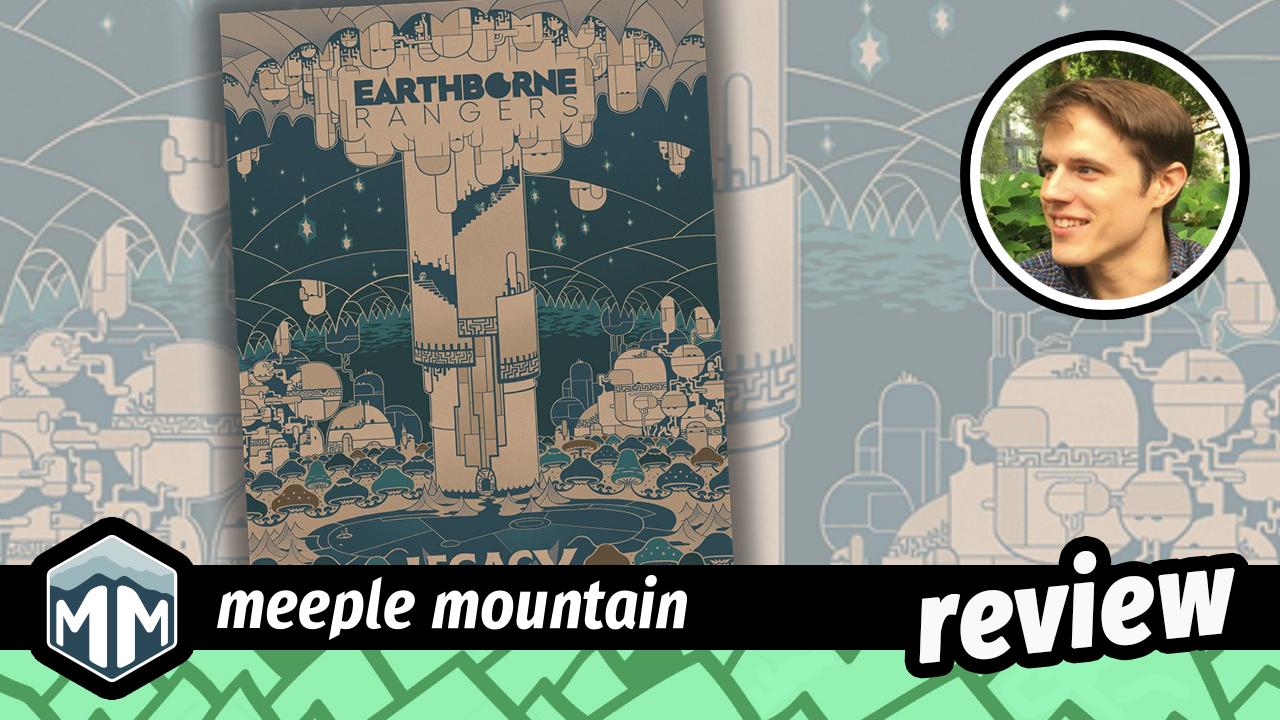
Earthborne Rangers: Legacy of the Ancestors Game Review

A new Earthborne Rangers campaign? You don’t have to tell me twice. It is hard to get me to play the same game more than a few times, but I will drop any and everything to spend more time in—or, in this case, under—the Valley.

While the base game of Earthborne Rangers—one of the greatest gaming experiences of my life, and an experience with which this review will assume you are familiar—takes place across a wide range of beautiful landscapes, Legacy of the Ancestors sends players into the depths of the Arcology, the ruins of a lost civilization that used to inhabit the Valley. This is the sensible choice, a natural development coming out of the first game. The first campaign leaves the Arcology, a consistent splash of harder sci-fi tech in a sea of solarpunk, barely explained, and the underground tunnels are as strong a contrast in setting as it’s possible to have. No more sweeping vistas for you, no no. Best you can hope for is a spot of bioluminescence.

A table full of cards, cards in all directions.

“We Got Distracted by the Ooze”

The cornerstones of what make Earthborne Rangers great are still here. The caverns of the Arcology teem with life and discoveries. There…

The post Earthborne Rangers: Legacy of the Ancestors Game Review appeared first on Meeple Mountain.
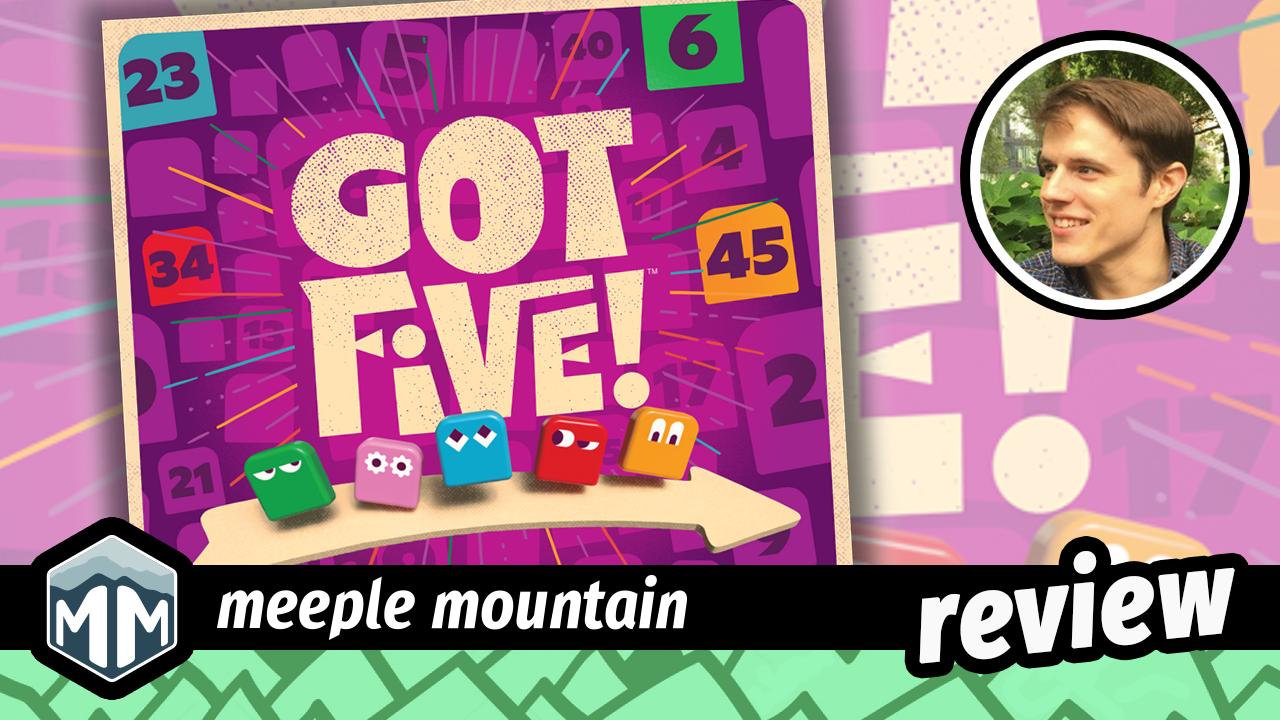
Got Five! Game Review

Every now and then, I sit down to play a game with no expectations whatsoever. I anticipate neither excitement nor despair. I am absolutely ambivalent, a perfect blank slate. I think of this as a true neutral response, but it occurs to me that I generally enjoy trying new games, so ambivalence is in fact a moderately negative response. I’ll process this on my own time.

Ambivalence was very much the case with Got Five!, a deduction game from designer Yoann Levet and publisher Blue Orange. I picked up a review copy because it was the slow season, I knew it wouldn’t take long to play, and I liked the tiles. I don’t know which of the two credited artists, Mathieu Clauss and Simon Douchy, is responsible for them, but those colorful bakelite tombstones with expressive eyes are hard to resist.

Don’t be fooled. Their friendly exteriors harbor terrible secrets, by which I mean numbers between 1 and 60. If you think that doesn’t sound so bad, you probably like math. During setup, each player takes one tile in each of the five colors and stands them up so the numbers are visible to everyone else at the table. It is extremely important that you not see the numbers on your own tiles, since the goal of the game…

The post Got Five! Game Review appeared first on Meeple Mountain.
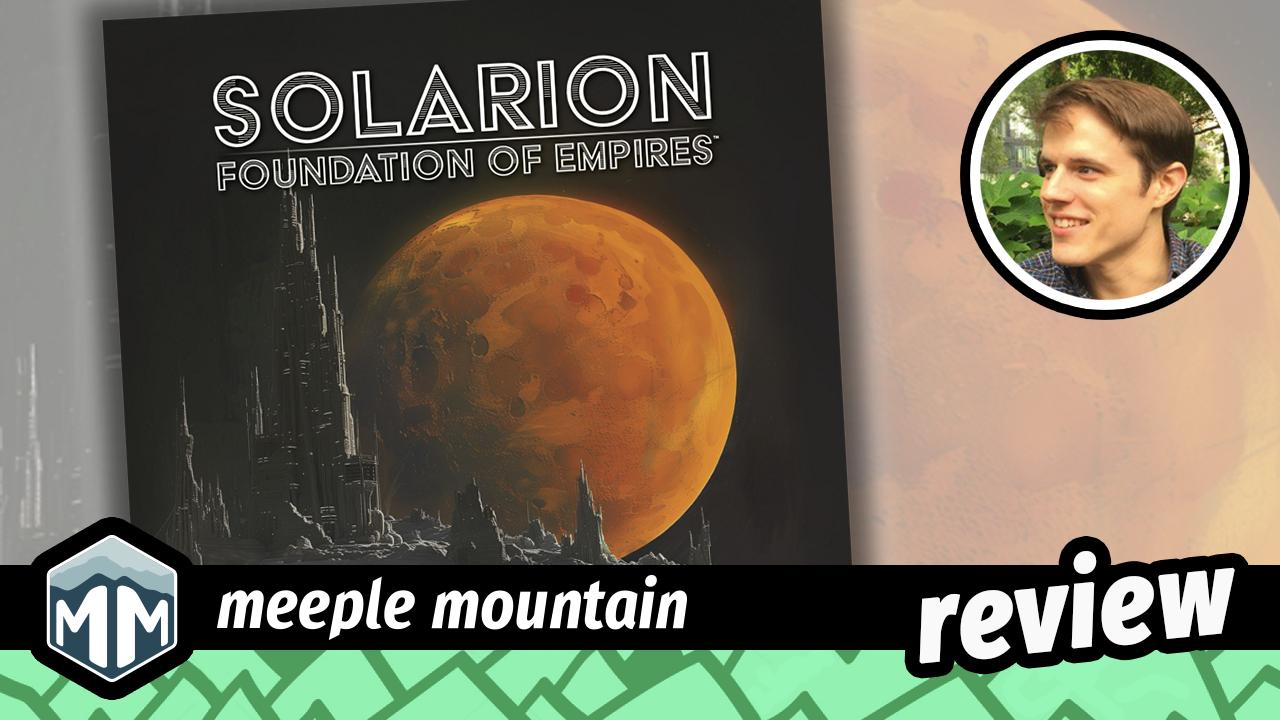
Solarion: Foundation of Empires Game Review

Several years ago, my friend Nathan introduced our group to Tyrants of the Underdark, a deck-building game that used Dungeons & Dragons lore for its setting. My initial response was dubious, as often happens with licensed product. The art, which Nathan had warned us about in advance, didn’t help. Dozens of artists are credited on the game, and many of their illustrations are not…good. The hodgepodge of styles did not promise a robust play experience.

Fortunately, first impressions can be wrong. Tyrants of the Underdark is an excellent, taut marriage of deck-building and area-control. It is wonderfully interactive, encouraging players to step on one another’s toes at every turn. The modular deck system, which changes the cards in play from game to game, ensures a good amount of variety. The game is both immediate in its pleasures and rewards deeper exploration.

Tyrants of the Underdark is exactly the kind of game that I would expect to be a cornerstone of The Hobby™. And yet. Despite the quality of its reputation amongst those who’ve played, Tyrants remains somewhat obscure. I can’t even tell if it’s currently in print or not. It is often hard to find. It begs for expansions, but it only has one, which is both long out of print and heinously expensive. For a game that threatens…

The post Solarion: Foundation of Empires Game Review appeared first on Meeple Mountain.
Counterpoint Game Review

I have never before given much thought to the ways in which music composition and game design are similar. Like all creative arts, both share the goal of trying to communicate and share an experience with their audience. As disciplines, music has notes and rhythms while game design has rules and mechanisms, but both are about taking those disparate ingredients and making them cohere into something whole, something that vibrates with inevitability.

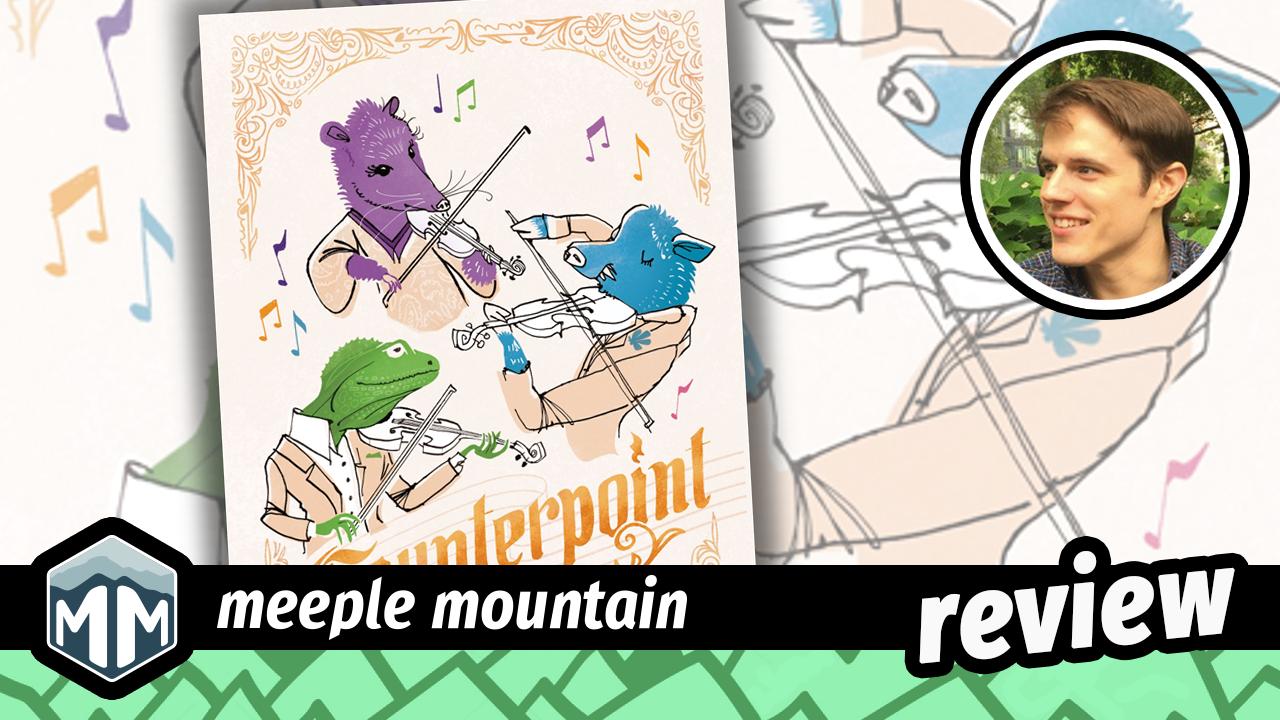
Ted Mann Schaller’s Counterpoint is a must-follow cooperative trick-taker with bidding and a trump-suit. A blessing, to live to see such times as those in which I can write that sentence and assume much of the audience will understand. Each player is a member of an animal chamber trio–to-quintet, be they an iguana violinist or an armadillo pianist. Such is the quality of Brandon Campbell's illustration work here that fights will break out over who gets to be what. The cooperative nature of the game follows the template laid out by blockbuster predecessors The Crew and The Lord of the Rings: The Fellowship of the Ring - Trick-Taking Game: over a series of performances, scenarios named after pieces in the chamber music canon, players attempt to complete certain challenges while also ensuring that everyone makes or exceeds their bid.

There are a few twists on the formula,…

The post Counterpoint Game Review appeared first on Meeple Mountain.
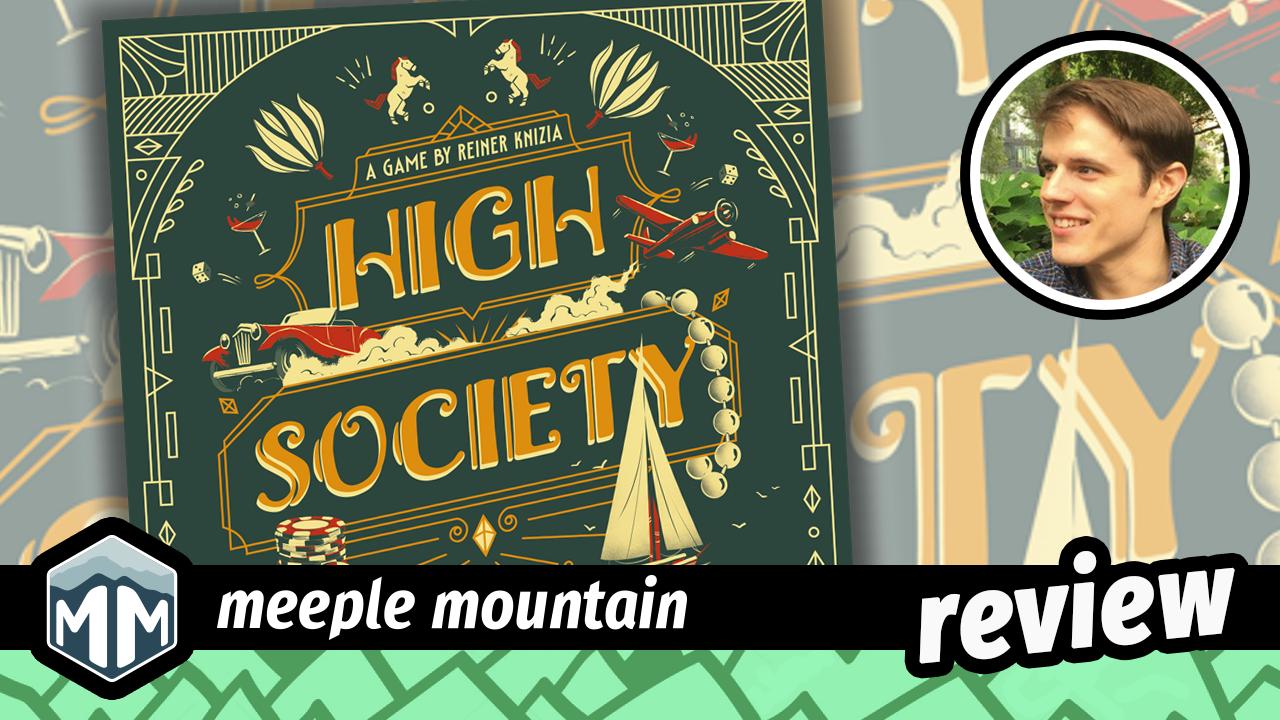
High Society Game Review

In the broadest possible strokes, games are created out of three or four things: what you can do, what you can’t do, what you want, and, occasionally, what you don’t want. Not every game includes something you don’t want as a category unto itself. You don’t want to end up with few resources in Catan, sure, but that’s just the inversion of what you want: resources with which to build things. I’m talking about things like running out of food in Agricola, where there is a specific punishment meted out by the rules.

In High Society, a fabulous auction game for three-to-five players by designer Reiner Knizia and recently out in a new edition from publisher Allplay, those four categories are crystal clear. That’s never a bad thing. Many of the best games provide clear, succinct definitions for each of them. High Society is a masterpiece not only because it provides ready definitions, but they work, delightfully, at cross-purposes.

A handful of money cards.

The goal of High Society is, of course, to have the most points at the end of the game. There we have our first definition:

What do you want? To have the most points.

Points are accrued through the purchase of various cards, revealed from the…

The post High Society Game Review appeared first on Meeple Mountain.
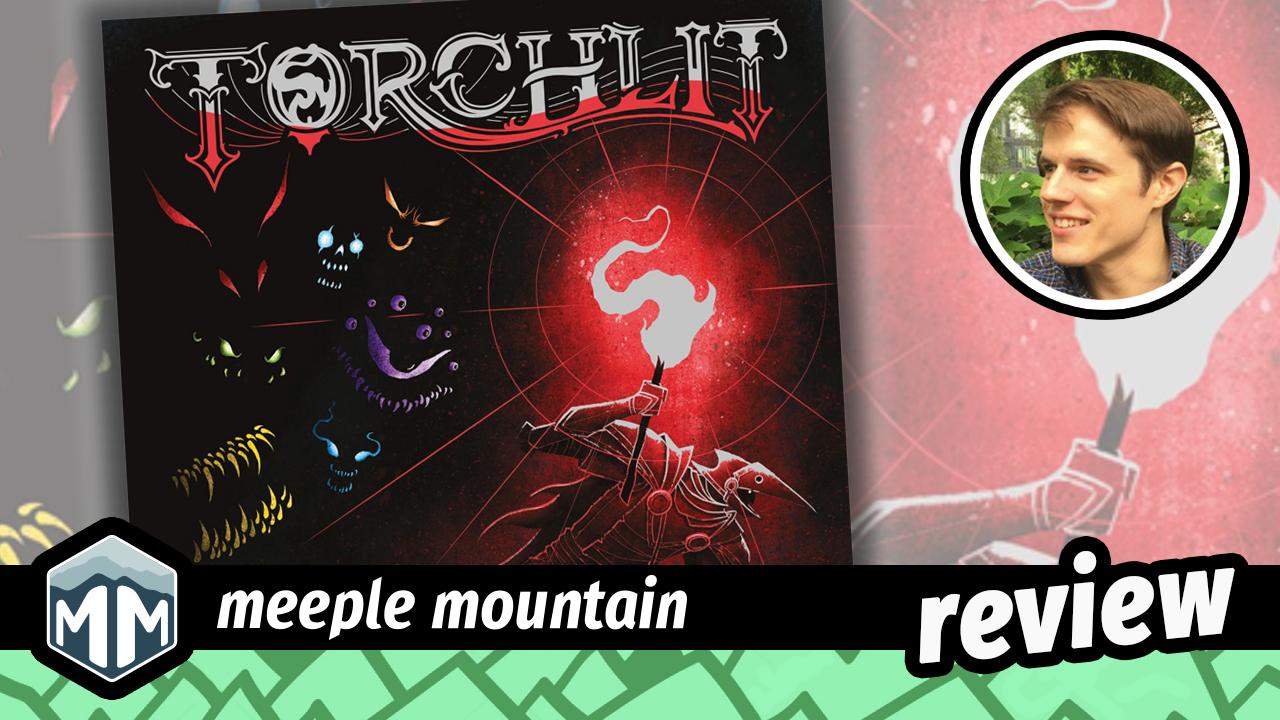
Torchlit Game Review

Whoever walked away from a hand of trick-taking and thought, “Hey, you know what would make this better, is if we had to guess how many tricks we would win beforehand,” has my eternal gratitude. I like to think bidding came about as a party trick. “Françoise is really good at tarot, I bet he can guess exactly how many tricks he’ll win. Guess, Françoise, guess.”

However bidding started, it has long been a cornerstone of trick-taking, and is reliably my favorite way to engage with the mechanic. Card games are inherently subject to tremendous amounts of luck, of course, but bidding shifts the balance a bit closer to skill. More skill means more agency. More agency means more investment. More investment means more fun for everyone.

Torchlit is, above all, a bidding game, though it’s a strange one. The deck is dealt out, and every player chooses a card from their hand to put face-down on the table in front of them. The numbers on those cards, which run from 0-7, correspond to a series of dungeon door tiles placed out in the center of the table in numerical order. Whichever card you put down, the matching door is where you want to end up by the end of the hand.

A series…</p>
<p>The post <a href=Torchlit Game Review appeared first on Meeple Mountain.
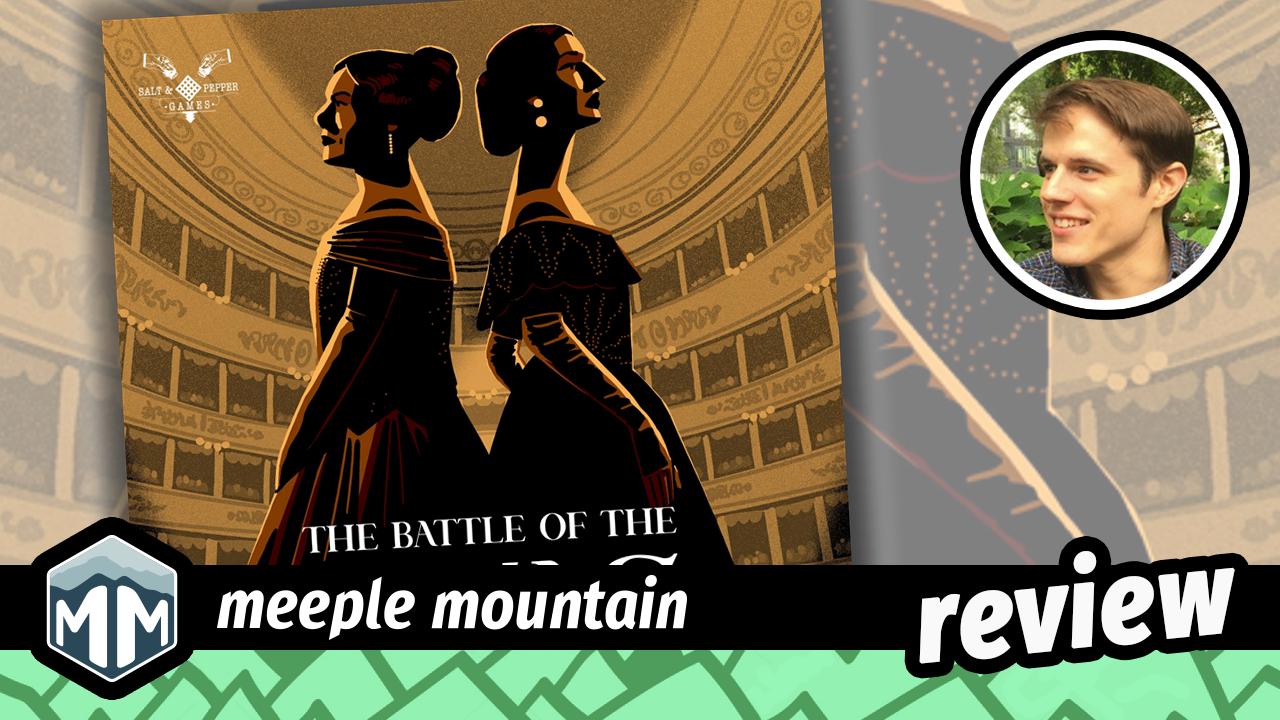
The Battle of the Divas Game Review

The history of 20th century music is full of rivalries, be they real, manufactured, or imaginary. As much as they can get in the way, they also serve an important function within the culture of popular music for both artists and audiences. The Beatles and The Rolling Stones, to say nothing of The Beatles and The Beach Boys, were pushed to ever-greater artistic heights as a result of trying to outdo one another. Blur and Oasis sold way more singles as a result of their mutual distaste than they would have otherwise.

As for the audience, rivalries can produce better music, but they also serve a social function. A rivalry makes room for partisans. “N*SYNC rules, Backstreet Boys drool”—an insane position given that the Backstreet Boys are obviously better singers and could do both party songs and ballads with equal aplomb, while N*SYNC couldn’t sing a ballad if their lives depended on it—gave identity-hungry teenagers something to cling to.

This is hardly restrained to the world of pop. Before the boy bands, before Britpop, and even before The Beatles and The Stones, there was the rivalry between Maria Callas and Renata Tebaldi, two of the great operatic divas of the 20th century. From our contemporary perspective, it’s easy to see how that played out. Ask anyone over the age…

The post The Battle of the Divas Game Review appeared first on Meeple Mountain.
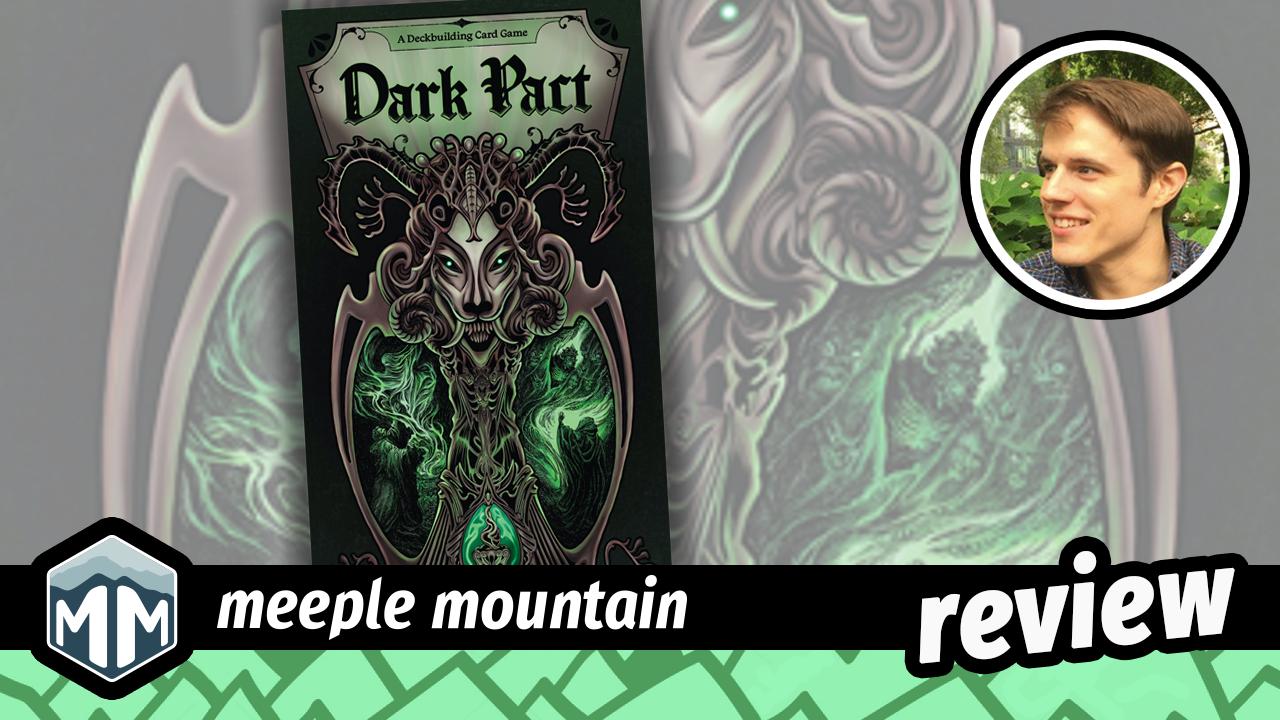
Dark Pact Game Review

About a month ago, I received a text out of the blue from a friend I hadn’t heard from in nearly two years:

“Have you played Dark Pact by Tom Lehmann? I’ve played it twice and I think it might be the greatest deck-builder.”

A grain of salt must accompany these words as they travel down your gullet. The sender of that text is an avid Lehmann-head. He loves Winter Court, a novel sentence in the English language. He is constantly trying to bust out New Frontiers at parties. He carries a complete set of Dice Realms at all times, just in case the mood strikes.

I get it. I will never play another game as much as I have already played Race for the Galaxy. It would be untrue to deny that Lehmann’s spell has won me over from time to time. I would not go so far as to call myself a disciple, though. I find most of Lehmann’s games too dry. They are mathematically precise in a way that suggests an awe-inspiring understanding of the numbers behind the fun, but they are often that at the expense of, well, the fun. It has never before occurred to me that Lehmann and Reiner Knizia can be thought of as opposite sides of the same…

The post Dark Pact Game Review appeared first on Meeple Mountain.
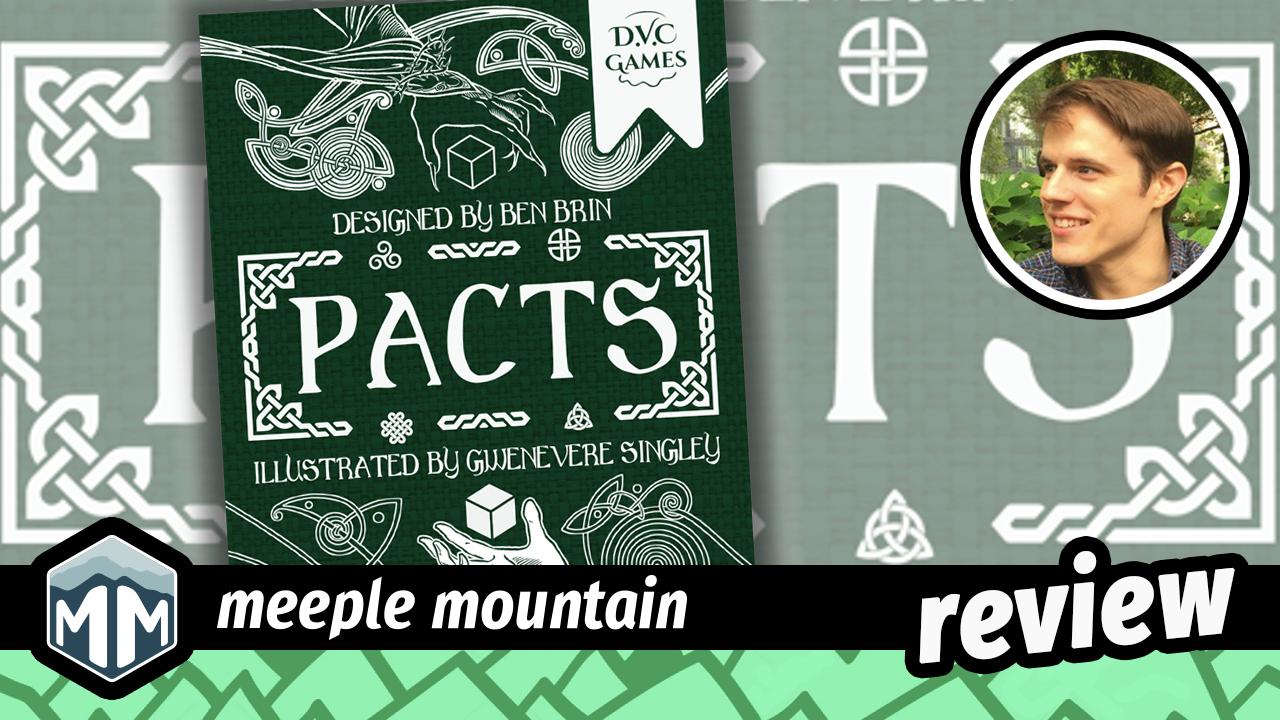
Pacts Game Review

D.V.C., as wonderful and consistent and quirky a publisher as you’ll find, largely does its own design work. With the exception of 2020’s Rosetta: The Forgotten Language, all of D.V.C.’s games up till now have been credited to house designer Jasper Beatrix. In a just world, Jasper would be unable to walk down the street without being mobbed by fans, but there are two barriers to that: we certainly don’t live in a just world, and Jasper Beatrix doesn’t exist.

Not corporeally, anyway. Good ol’ J.B. is a pseudonym for a loose collective, a merry anarchic band of creatives who work together to make these wonderful games. They’re so prolific, and release games of such high quality, that the announcement of Pacts and the realization that it was not designed by Jasper Beatrix, was quite the surprise. This area-control game for two is the work of Ben Brin, a single corporeal designer.

Well. I assume.

A square, green cloth board sits on a wooden table. The map, a rough outline of Ireland, is divided into six regions. Each contains a number of cubes and scoring tiles.

I Pick I Pick You Choose

Pacts is an exemplar of I Split, You Choose, a mechanism whose promise is often let down by…

The post Pacts Game Review appeared first on Meeple Mountain.
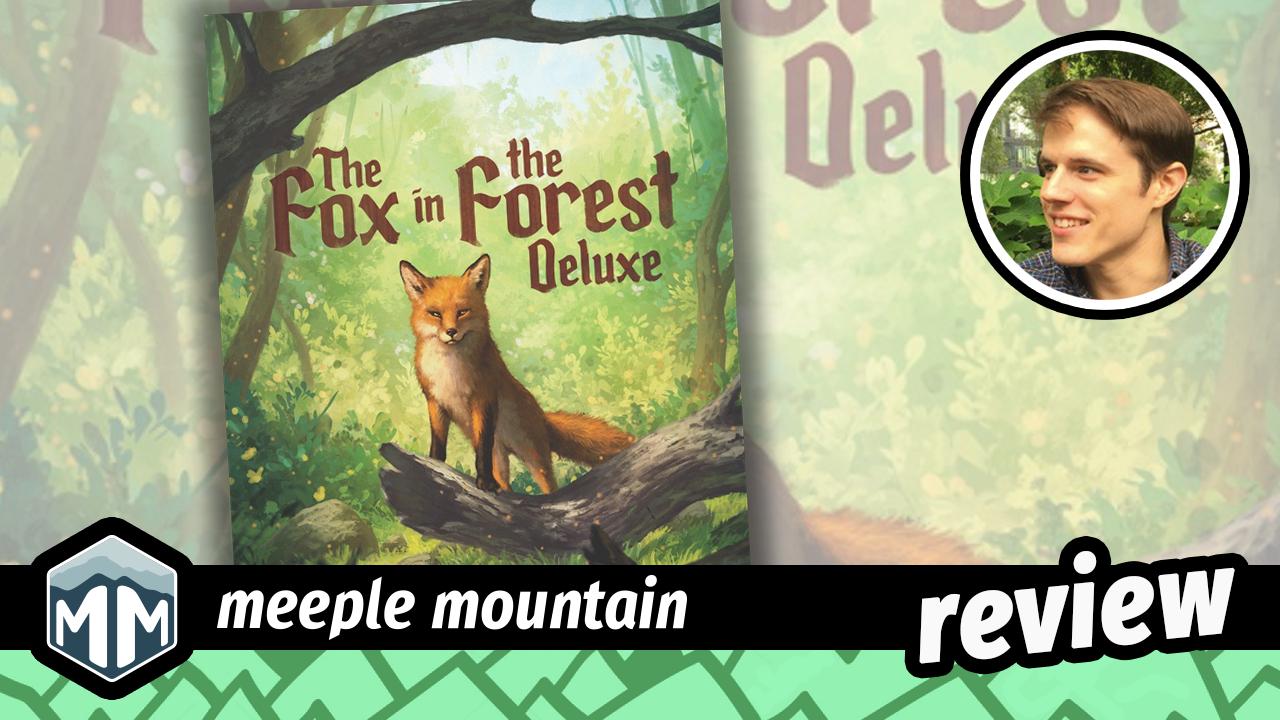
The Fox in the Forest Deluxe Game Review

The Fox in the Forest predates the contemporary trick-taking craze by a few years. It was an early harbinger of what was to come, of the deluge with which we have subsequently been blessed, and it proved successful. Successful enough that now, almost a decade after its initial release, Joshua Buergel’s two-player trick-taking game is getting the Deluxe treatment.

For those who’ve never played, The Fox in the Forest distinguishes itself from the bulk of trick-takers in two ways. Way the first: all of the odd-numbered cards in this non-traditional deck have special powers that trigger when played. Normally, I try not to get bogged down in the weeds when reviewing a game, but I do think the powers here are illustrative: The 1 in each suit lets you lead the next trick even if you lose, the 3 lets you change the trump suit, the 5 lets you draw one of the cards that weren’t dealt that round before discarding any card from your hand, the 7 is worth a point for whoever wins it, the 9 is always considered a trump card, and the 11 forces your opponent’s highest card in the same suit.

If you are at all familiar with the ebb and flow of trick-taking games, you can imagine well the sorts of shenanigans…

The post The Fox in the Forest Deluxe Game Review appeared first on Meeple Mountain.
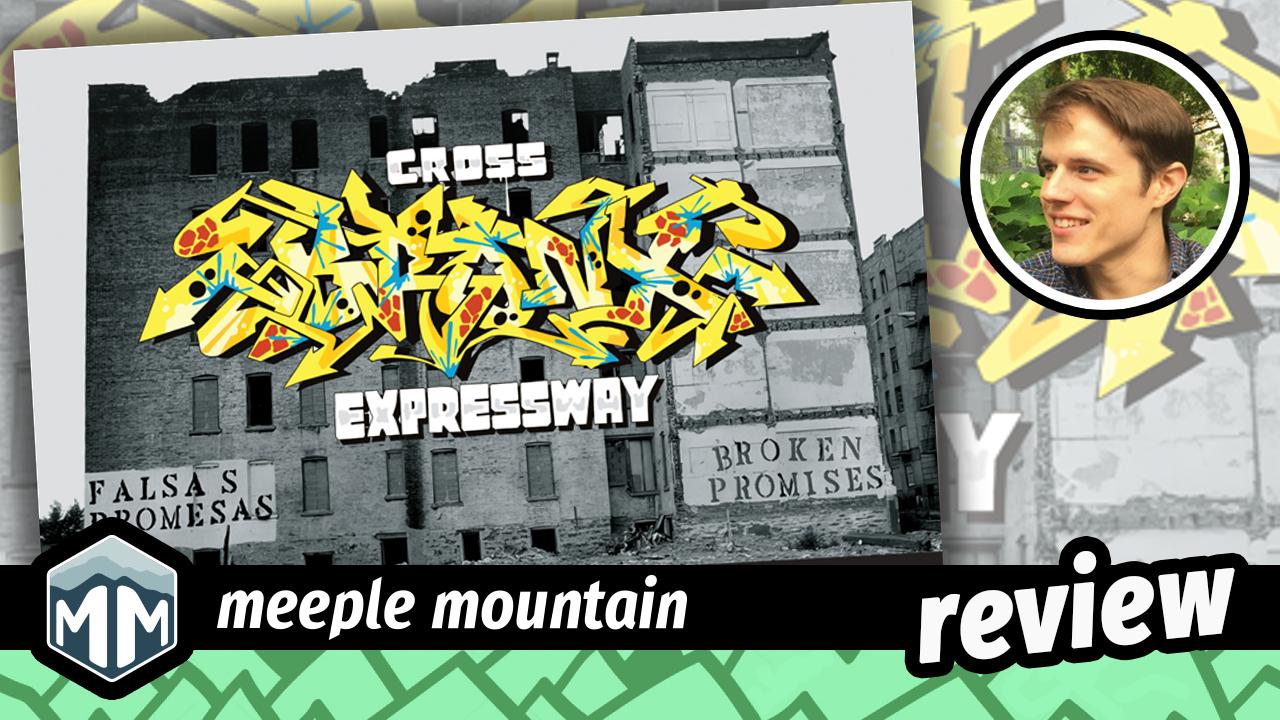
Cross Bronx Expressway Game Review

Cross Bronx Expressway, GMT’s third release in the Irregular Conflicts series, is not for the weak. It is exceptionally complicated, even by the elevated standards of a COIN title. A frequent refrain amongst the GMT faithful, and an accurate refrain at that, is that the rules aren’t all that complicated once you get over the hump of learning them. Not so here. For my first game, I gathered three of the finest gaming minds in New York City, all of whom had read the rules in advance, and it still took an hour or two to get things started. This is no doubt in part a function of the theme, the civic management of The Bronx across the latter half of the 20th century. It’s easier to keep rules in your head when they don’t use words like “coalition,” “partner organization,” and “Census Round Audit.” You may find yourself scratching your head and wondering why you didn’t go back to school to get an MB(oard game)A.

Work your way past the daunting exterior and you’ll find a game that is a fascinating mix of the exceptionally confrontational and the utterly inscrutable. Cross Bronx Expressway is a hard game to talk about as a game, in part because the gamic elements are relatively slight in view of the whole. Designer…

The post Cross Bronx Expressway Game Review appeared first on Meeple Mountain.

❌