❌

Normale Ansicht

Published — 25. September 2026 ⏭ Meeple Mountain | The summit of board gaming

Quick Peaks – Rebuilding Chicago, Dragonarium, Shape it, My Island, Las Vegas

Rebuilding Chicago - Thomas Wells

I’m not that crazy about polyomino games, but Rebuilding Chicago is the kind of thing I like—razor sharp. I think that that sharpness decreases at lower player counts, but at four players, our game was over in 20 minutes with a point spread of 50. The schtick of this one is that you can either lay the polyominos in your little city board or activate an event that affects everyone. So, you’re constantly seeing how little you can do to edge out opponents, and they’re doing the same with you. Multiple times during our game, an event resolution would result in someone scoring 15-20 points, with someone else getting nothing. It’s got an enormous amount of variability, and for my money, I’d happily polyomino Chicago any time.

Ease of entry?
★★★★☆ - The odd bump or two
Would I play it again?
★★★★☆ - Would like to play it again

Read more articles from Thomas Wells

Dragonarium  - Kevin Brantley

This cute, cozy title comes from Wonderful World Board Games, a publisher that infuses Taiwanese culture and heritage into many of its games.

Dragonarium has players drafting polyomino tiles to create same-colored habitats, though doing…

The post Quick Peaks – Rebuilding Chicago, Dragonarium, Shape it, My Island, Las Vegas appeared first on Meeple Mountain.
Published — 20. September 2026 ⏭ Meeple Mountain | The summit of board gaming

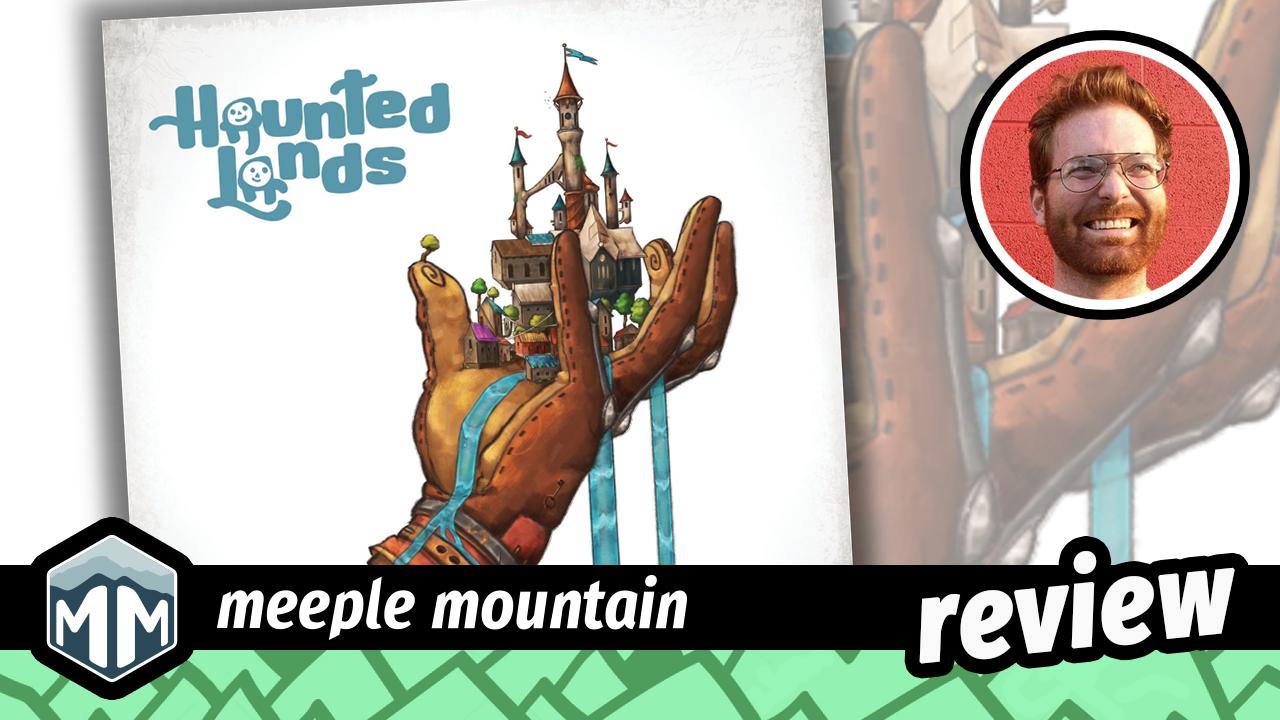
Haunted Lands Game Review

There’s a lot of things I want to like about Haunted Lands. I like the premise, where you’re adventurers/exorcists trying to help your little city expand out into the countryside by sending ghosts to the great beyond. There’s some mechanical flourishes that are genuinely interesting. Unfortunately, the game itself does not really rise above a rote resource-collection exercise.

It’s important to gather wood when exorcising

Haunted Lands is an action point game, where instead of getting a pool of action points, you have discs that correspond to different actions that you use to do various things in a sequence of your choosing. For example, you move, then gather, then build a building, move again, and finally, help a ghost.

You’re doing all this because helping the ghosts (which requires the right number of action tokens depending on how far the game has advanced), harvesting, and building buildings all give you resources, which you use to build more buildings, or sell said resources to buy upgrades. Building buildings and paying for upgrades gets you points, and in the late stages of the game, helping ghosts gives you points too.

The game forms a fairly simplistic loop. You move, making sure…

The post Haunted Lands Game Review appeared first on Meeple Mountain.
Published — 18. September 2026 ⏭ Meeple Mountain | The summit of board gaming

Quick Peaks – Fuji Flush, Terra Eterna, Bring Your Own Book, Beach Bandits, Stuglandet

Fuji Flush - Thomas Wells

Fuji Flush is a good time. It’s like super Uno that doesn’t fall into an infinite loop, especially at higher player counts. Basically, you play a card from your hand, and if the turn comes around to you again, and someone hasn’t “flushed” your card, you discard it. Get rid of your hand to win. Flushing is playing a higher card, but if someone plays the same card, your values are added together and you enter a sort of partnership where all same-card values are tougher to flush. 

Mainly, it’s an excuse to say flush a lot, but it’s a hoot with a larger count, and is really easy to table and play at the end of a night. 

Ease of entry?
★★★★★ - No sweat
Would I play it again?
★★★★★ - Will definitely play it again

Read more articles from Thomas Wells

Terra Eterna - Kevin Brantley

We at Meeple Mountain always enjoy the chance to cover self-published titles, as they often don’t get the opportunity to be showcased to a larger audience. Terra Eterna is one of those titles, a semi-cooperative RPG focused on exploration and character building.

Unfortunately, the game…

The post Quick Peaks – Fuji Flush, Terra Eterna, Bring Your Own Book, Beach Bandits, Stuglandet appeared first on Meeple Mountain.
Published — 13. September 2026 ⏭ Meeple Mountain | The summit of board gaming

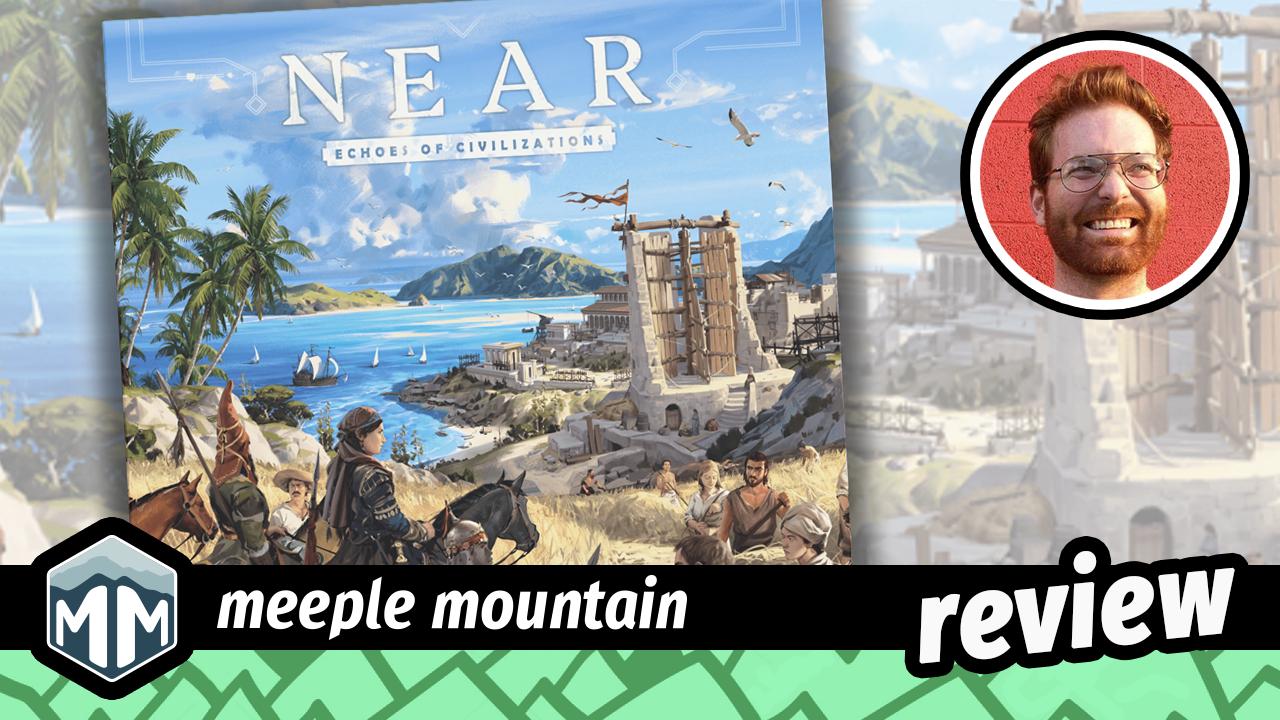
Near: Echoes of Civilizations Game Review

Man, I just love a civilization game. For a power-tripping megalomaniac like myself, there’s just nothing better than taking the helm of a conglomerate of violent individuals and making bad decisions.

Near: Echoes of Civilizations has a goofy name—you really have to do some mental gymnastics for it to make sense at all. But, there’s some real fun to be had here. All the hits are here: Technology! Combat! Resource management! Points!

Actually, part of what makes Near interesting is its commitment to synthesizing the heads-down-euro-bean-counter that constitutes a lot of its bone structure with a traditional build-stuff-kill-guys game. Unlike other civ games (for example, Civilization: A New Dawn, Mosaic, or Gentes) that have tried to incorporate concepts from euro-style mechanism-fests into their design framework, Near takes a holistic approach that makes it feel complete and cohesive, rather than a cobbled together bricolage.

A novel new mechanism: “cards”

At the beginning of Near, you get dealt a starting culture card (a personal endgame scoring condition), a wonder card (an in-game scoring condition), four regular cards from one of five colors, and a starting action bonus. Your wonder gives you a starting building, and in a very Terra Mystica-style start, you place some buildings out on the board and it’s…

The post Near: Echoes of Civilizations Game Review appeared first on Meeple Mountain.
Published — 17. August 2026 ⏭ Meeple Mountain | The summit of board gaming

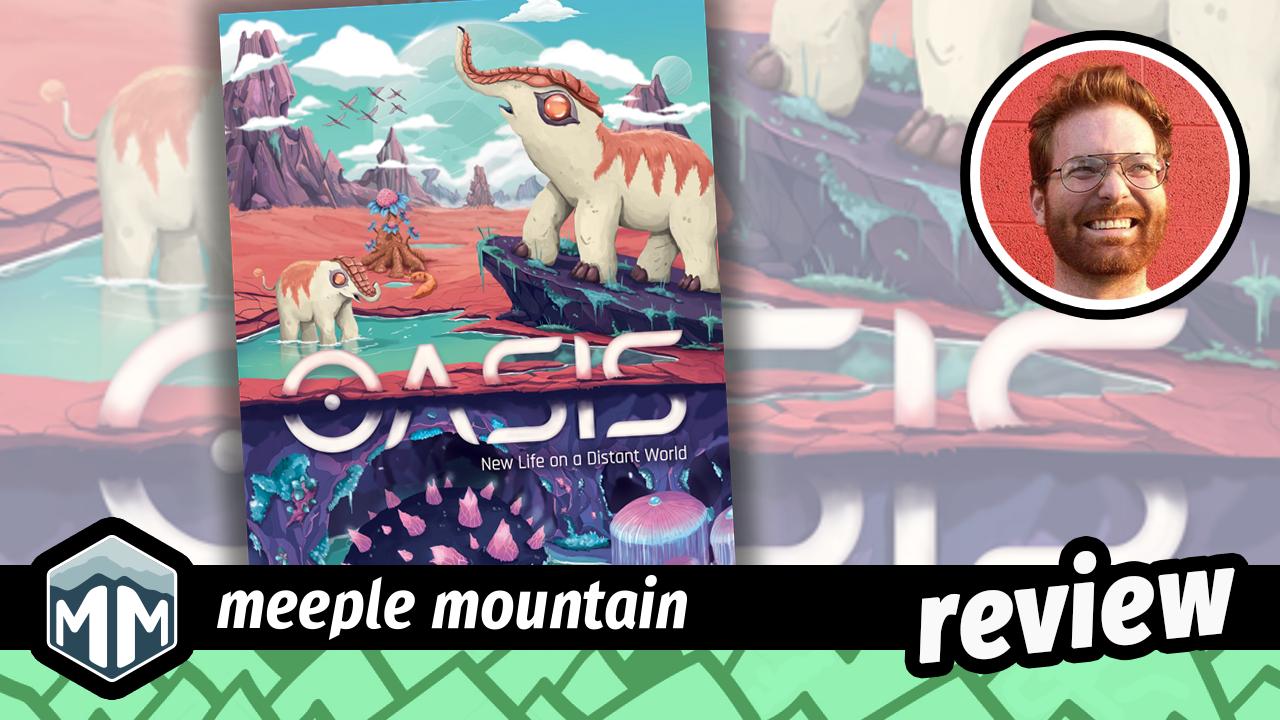
Oasis: New Life on a Distant World Game Review

My view of criticism is that, when done well, it is generative and contextualizing to the form it critiques. Having the privilege of reviewing and analyzing games comes with a degree of responsibility. Don’t misunderstand me—there is zero responsibility to a corporation, a designer, and anyone else who has made the business of games their business. My responsibility is to the mysterious and magical mental maneuver that allows a game to become more than pieces and rules and become something that facilitates agreement between people. Lofty, I know.

In my mind, players of games are akin to guests. Sure, a guest can be a big ol’ jerk, but when you’re playing a game, you’re stepping into an experience that is supposed to connect you to other people, to new ideas, interesting decisions, new concepts. You’re not a line item in a budget spreadsheet.

This perspective, coupled with some professional jealousy (I think I have some really cool game designs of my own that are worth sharing) can lead me to be seemingly harsh about a game that another critic might deem “acceptable” or “fine.” But I’m not that other critic. Enormous amounts of resources go into the creation of a mass market game, and when the product is derivative…

The post Oasis: New Life on a Distant World Game Review appeared first on Meeple Mountain.
Published — 10. August 2026 ⏭ Meeple Mountain | The summit of board gaming

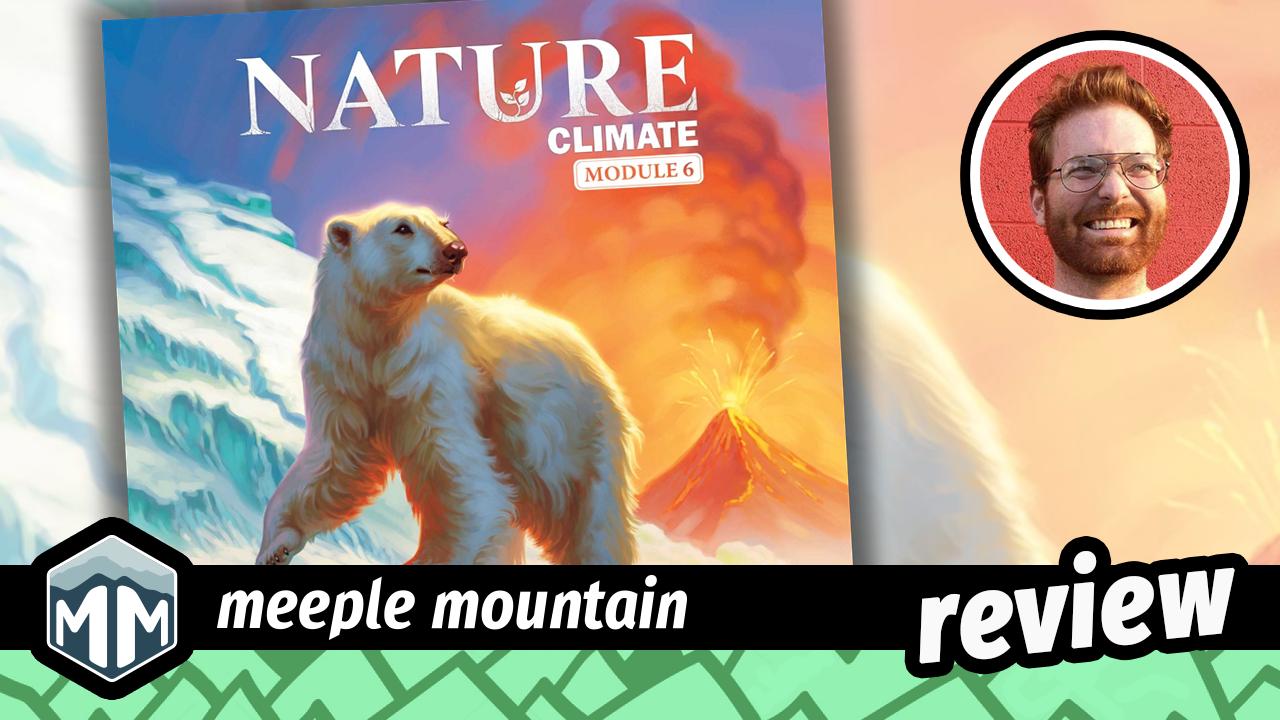
Nature: Climate Game Review

I’m going to hop into this review and almost completely agree with Andrew’s review of Nature. I don’t have that much to add to his assessment. I’ve played Evolution, Oceans, and now this, and I like what this series does mechanically, I think it provides a sharp, competitive experience that scales well with player count, and offers the possibility of drama without requiring players to understand a billion card interactions to jump in and start kicking each other in the teeth.

I’ll cover what the upcoming Climate module adds to the experience, and then I’ll play around in my ivory tower and conclude with some thoughts about edutainment products. I’m going to assume you have a sense of how the game works.

Get cooked (or frozen)

The Climate module for Nature adds variability to the amount of food that appears each round. Because of the game’s modeling of timescale, it’s doing big chunks of time between each round, so you have some pairing of the setting of the game with a mechanism. When the climate tracker moves toward an ice age or a scorching age, there will be less food available for everyone to compete over, and there is a new survival mechanism that every player will…

The post Nature: Climate Game Review appeared first on Meeple Mountain.
Published — 05. August 2026 ⏭ Meeple Mountain | The summit of board gaming

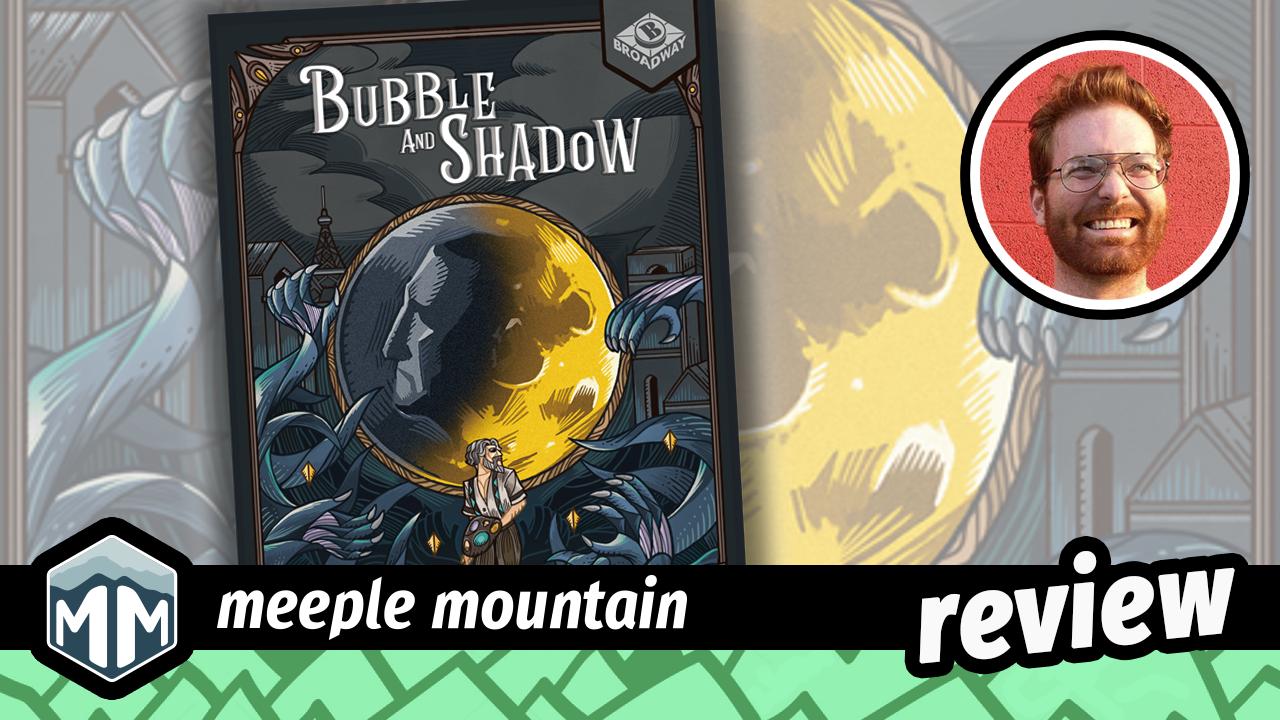
Bubble and Shadow Game Review

I reviewed Snake Charmers awhile ago, and I found that experience punchy and delightful. Now, I’m feasting my eyes on Bubble and Shadow, a game that is prettier, slightly more complicated, and ultimately, flatter.

The game has lofty ambition, noting as its inspiration W. Somerset Maugham’s The Moon and Sixpence, but I’m not sure if any of that translates. I’ve only read Of Human Bondage, and I ~think~ the aforementioned story is a fictionalized account of Paul Gauguin’s life or something, but I couldn’t for the life of me find how this game was related, other than it having really cool paintings on the cards.

Anyway, the objective of the game is to collect the right distribution of three types of wooden token: If you have the most purple tokens (bubbles), you’ll be eliminated from the scoring consideration at the end of the round. Then, if you have the fewest gray (coins) you score a point and are removed from the scoring. Finally, the player with the most yellow (moons) gets three points, and second most gets two points. You play three rounds, and if someone gets to five-plus points before that at the end of a round, the game ends and the player with the most points wins.

But how do you acquire these tokens?

At the…

The post Bubble and Shadow Game Review appeared first on Meeple Mountain.

Published — 09. Juli 2026 ⏭ Meeple Mountain | The summit of board gaming

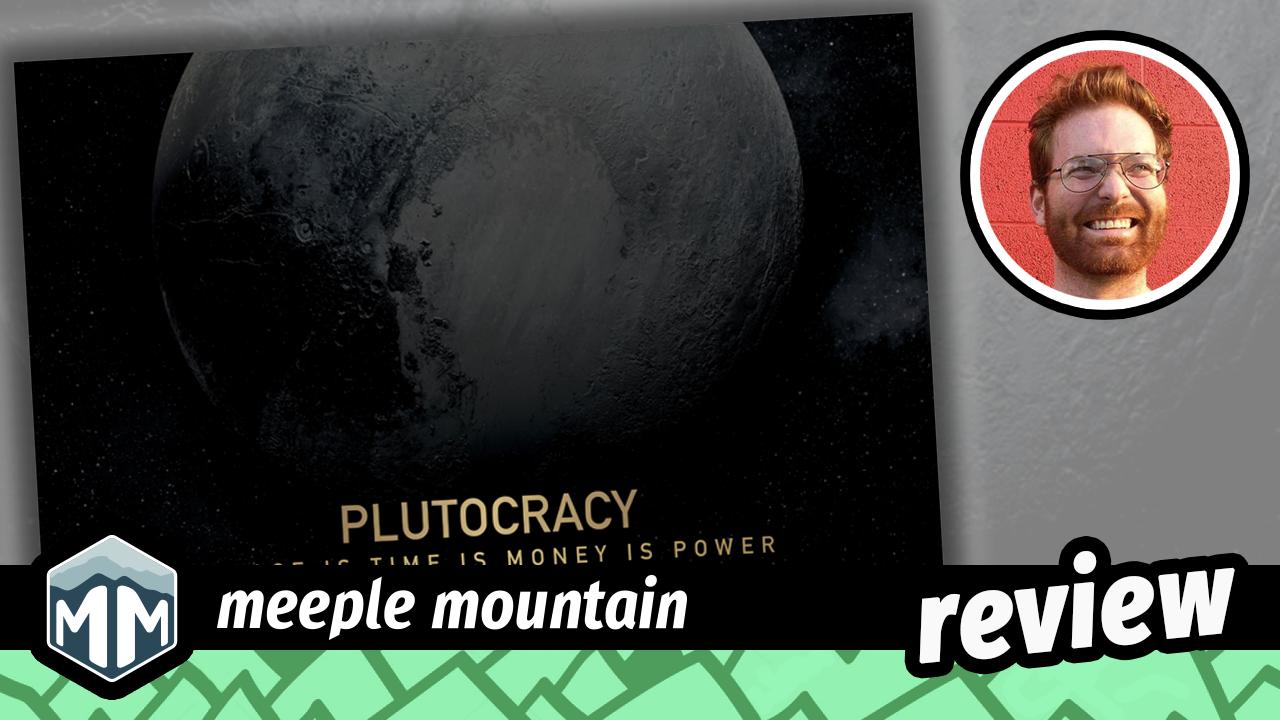
Plutocracy Game Review

My friend Joe and I share an interest in logistics games that feature planetary rotation. I’m not sure exactly why he’s into it, but I like it for the interesting questions that emerge from having to plot movement in two dimensions: distance and time.

Plutocracy got me excited because it puts landing on moving planets front and center. Unfortunately, while many of the mechanisms within the game are clever, the process of playing the game is frustratingly obvious. It puts you in the unenviable position of both having to do a significant amount of analysis and then discover that the analysis you did wasn’t really worth it.

As the world(s) turn

The object of Plutocracy is to turn money into majority points. You fly your ship around a truncated map of the solar system (sans Mercury, Venus, and if you’re not a hater, Pluto) buying and selling various goods. Each planet buys one type of good and sells one type of good. When you buy, supply price goes up 1, when you sell, demand price goes down 1. The objective is to buy low and sell high, and also land on planets where you can turn money into planetary council seats, which gain you points in the “Plutocratic Council” when scoring happens 3 times during the game.

The post Plutocracy Game Review appeared first on Meeple Mountain.

Published — 02. Juni 2026 ⏭ Meeple Mountain | The summit of board gaming

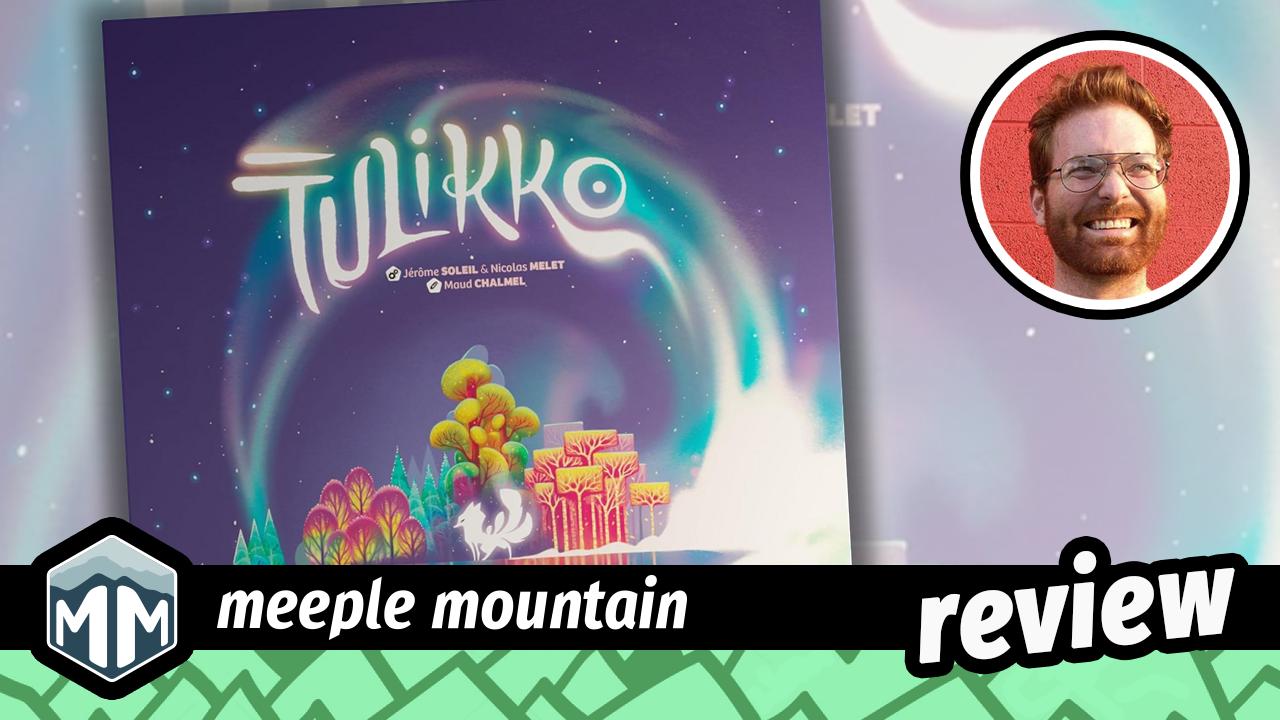
Tulikko Game Review

Games like Tulikko are challenging to review because they are generic. Games like this embody much of what a particular genre of game attempts to do; and it’s very similar to a lot of other games of that genre. It’s another personal board tile placement puzzle. I don’t know if that’s bad or good anymore.

Tiles, but make them slide

Tulikko is a game of acquiring tiles and placing them on a grid on your player board. The tiles come in four colors, and you’re trying to place them on your player grid in specific configurations that are governed by the randomly determined objectives for each game. There are three cards that change each game. One type has you trying to make specific patterns of colors on your board, another has you making specific shapes, and a third has you making patterns using special wooden river pieces—I’ll cover those in a moment. The other scoring options are part of each game and reward you for covering one of four symbol types on your player board and/or placing enough tiles (3, 4 if you’re slow) of one of the four colors.

How do you get the tiles? Well, you put a tile that you draw from your personal pile of…

The post Tulikko Game Review appeared first on Meeple Mountain.

Published — 26. Mai 2026 ⏭ Meeple Mountain | The summit of board gaming

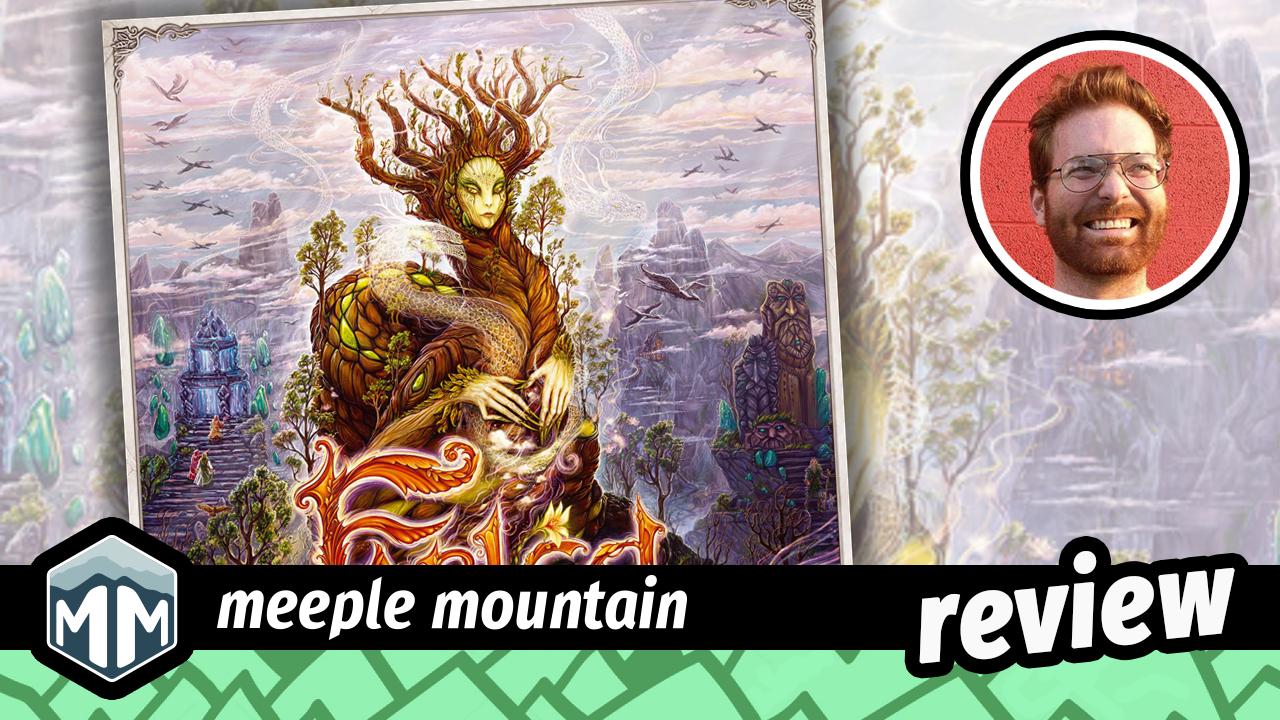
Fabled: The Spirit Lands Game Review

Rarely, I come across a game whose aesthetics overpower my critical sense. Fabled: The Spirit Lands is one of those games. It also makes moving up tracks not look and feel like moving up tracks, which is high praise from a curmudgeon like myself.

Bookington Bear

The object of Fabled: The Spirit Lands is to collect the most red books by the time the game ends. There are several scenarios that alter this formula, but ultimately, it’s a Knizian affair, where if there’s a tie for the red books, you go to the green books, then the blue books, and finally the crummy yellow books.

You can think of the books as cubes of four colors, and what you’re doing throughout most of the game is turning the books from one color to another color. It’s resource conversion at its most basic–two yellow books become a blue, two blues become a green, and two greens become a red.

The game operates with a simple formula, but it has some interesting quirks. Let’s talk tracks.

Take a hike

The game doesn’t call the map cards tracks, but tracks are what you have to work with as a player, so I’m going with it. At the beginning of the game, each…

The post Fabled: The Spirit Lands Game Review appeared first on Meeple Mountain.

❌