Normale Ansicht

For the Love of the Game

26. Januar 2026 um 16:22

Over the weekend I was printing and cutting some game prototypes, and I put the latest season finale of Welcome to Wrexham on in the background. I didn’t expect the confluence of those two activities to bring me to tears.

In this episode, the Wrexham football team is preparing for a game at the end of the season that will decide whether they are promoted to the second-highest level of English football. The team’s co-owner, Rob McElhenney, gives a speech inspired by a text conversation he had with some unnamed, highly successful athletes.

Here’s most of McElhenney’s speech, almost verbatim (thanks to this transcript). Also, if you have Hulu, I highly recommend watching the speech, as it’s brilliantly edited in a way that splices footage of the final game with the players during their childhood days.

“I want you to picture a time in your life. Maybe you’re eight, maybe you’re nine, maybe you’re ten, maybe you’re six, maybe you’re 12, but you’re out there and you’re playing football. You’re just kicking the ball around. You’re playing with your friends, your dad, your mom, your sisters, your brothers, your buddies. You’re just playing football.

And it’s fun. And you fell in love with that feeling.

Of course you’re grateful for the support that you’ve had along the way, your family, your friends, and everyone, but you’ve already honored that. From this point, the only person you owe something to is that ten-year-old kid who fell in love with football, who could not wait to be in the position that you’re in right now!

The point is, there is a moment or a series of moments in which you were in love with this game, and that is all that matters. I want you to go out there and play like you’re ten years old and have the time of your lives because I promise you that is the only thing you will remember.”

I’m watching this speech unfold while cutting and sorting prototype cards, something I also did as a 10-year-old. I played and created games then purely for the fun of it. Now I’m very fortunate to run a tabletop publishing company as my job, but sometimes I need the reminder that I do this for the love of games.

I also played soccer as my primary sport from a young age up until college, and I still occasionally play pickup games. Even though I never played at a high level, there was definitely a tonal difference between playing for fun with my friends and starting for my high school team. To practice for hours every day can feel like work, even though it’s a game.

So as I listened to McElhenney’s rousing speech, I found myself in tears. I was transported back to those days when there was no marketing and metrics and planning and budgeting and customer service and project management and proofreading. It was just me sitting on the floor in my bedroom, drawing maps, cutting cards, and writing rules. It was just me juggling the soccer ball outside at sunset with my late father.

This isn’t to bemoan any of the business aspects of my job. I genuinely enjoy them, and I appreciate the variety they offer. I like that game design is only a small part of my job.

But with all the complications we make for ourselves and that come with being adults, the speech was a helpful reminder that there is a child in all of us who once did it for the love of the game. It’s worth honoring that child by seeking and spreading joy.

This may not resonate with your career compared to your childhood passions, but perhaps you can still relate to the concept of doing something purely for the love of it you first discovered when you were young. What does this speech make you think about?

***

If you gain value from the 100 articles Jamey publishes on this blog each year, please consider championing this content! You can also listen to posts like this in the audio version of the blog.

Immersive Imperial Struggle Playlist (Board Game Playlists, #2)

25. Januar 2026 um 16:46

You love board games. You probably also like music. Let’s combine the two into an immersive playlist for Imperial Struggle (Ananda Gupta/Jason Matthews, GMT Games). Have it gently play in the background during your next session of Imperial Struggle for the full period immersion!

First things first: Here’s the playlist!

Before we dive into the content of the playlist, some general observations:

  • Of course, there was no music recording in age of Imperial Struggle, so all the songs in the playlist have been recorded in the 20th or 21st century.
  • The playlist is only 1:45 hours long, so you might need to listen to it several times during your game… unless France stomps over Britain in the first turns.
  • The playlist is thematically sorted. That helps you find similar songs, but makes for somewhat monotonous listening (until you come to the next group of songs). I therefore recommend you turn shuffle on.

Now, what awaits you in the playlist?

#1-3: Religious (classical) music

Imperial Struggle begins after the age of the great confessional wars in Europe, but religion still played an important role in people’s lives, from the lowliest peasants all the way up to kings. Their week culminated in a Sunday service and their year was interspersed with religious events. Composers wrote pieces specifically for a religious holiday (like Bach’s “Christmas Oratorio” from which #2 is taken), or were dedicated to comprehensive religious teaching (like Händel’s “Messiah”, premiering on Easter 1742 in Dublin, from which #3 is taken).

#4-12: Secular (classical) music

The Baroque saw music as universal. Religious and secular followed the same conventions, and thus the same composers wrote pieces for the church and for worldly courts, like Baroque grandmaster Johann Sebastian Bach (Toccata and Fugue in D minor, #4 and Cello Suite No. 1 in G Major, #6) or Georg Friedrich Händel (Sarabande from Suite No. 11, #5). The classical (in the narrower sense) music from the mid-18th century on left this universal view behind. Composers now focused on either one or the other, with most of them following the more fashionable and more lucrative secular path.

Some composed for a court whose lavish entertainments always required music (like the 1773 wedding of the French prince Charles Philippe, the later king Charles X, for which François Francœur arranged the music from which #9 is taken – thus the title Symphonie du Festin Royal (Symphony of the Royal Feast)). Others became freelance musicians (like Mozart, who could (for some years) live of the proceeds of his concerts and operas, #10-12).

#13-16: Folk songs

Not everyone went to a church where the latest compositions were played on Sundays, and of course most people were far removed from attending any court festivities, let alone royal weddings. But people made and listened to music. The easiest, most affordable way to do so was to sing. The 18th century is rich with folk songs, some originally written at the time (like Frère Jacques (“Brother James”), #15 or “Ye Jacobites by Name”, #16), others older, but first put down to paper at the time (Au Claire De La Lune (“By the Light of the Moon”, #13, and Over the Hills, and Far Away (#14)).

#17-23: Patriotic songs

We’ve heard in #16 already how political events seeped into popular songs. Others were written specifically to rouse patriotic feeling, an emotion which came into its own in the 18th century: “Rule, Britannia” (#17) expressed confidence and pride in the Royal Navy to protect British freedoms, “The British Grenadiers” (#18) praised the courage of their counterpart by land.

That these songs could be re-interpreted and turned against their original intent shows “Free America” (#19), written in 1770, which uses the same tune as “The British Grenadiers”, but its lyrics extol America’s freedom (which turned out to be freedom from Britain).

Finally, national anthems also came first into existence in the 18th century: Brits sang “God Save the King/Queen” (#22 – I took the liberty of choosing a not-quite-traditional version). France only got its first anthem (La Marseillaise, #23) with the French Revolution which bookends Imperial Struggle… at least until Ananda Gupta and Jason Matthews get around to do a Revolutionary and Napoleonic Wars expansion!

Thanks to Jason for suggesting songs #5, #14, and #21!

If you like immersive playlists, I’ve done one for Weimar: The Fight for Democracy (Matthias Cramer, Capstone Games/Skellig Games/Spielworxx)!

If you want to dive a bit deeper into the times of Imperial Struggle, here’s a book recommendation.

And if you’re looking for strategic direction in Imperial Struggle, I’ve also got you covered.

What’s your favorite song from this playlist? Let me know in the comments!

Immersive Imperial Struggle Playlist (Board Game Playlists, #2)

25. Januar 2026 um 16:46

You love board games. You probably also like music. Let’s combine the two into an immersive playlist for Imperial Struggle (Ananda Gupta/Jason Matthews, GMT Games). Have it gently play in the background during your next session of Imperial Struggle for the full period immersion!

First things first: Here’s the playlist!

Before we dive into the content of the playlist, some general observations:

  • Of course, there was no music recording in age of Imperial Struggle, so all the songs in the playlist have been recorded in the 20th or 21st century.
  • The playlist is only 1:45 hours long, so you might need to listen to it several times during your game… unless France stomps over Britain in the first turns.
  • The playlist is thematically sorted. That helps you find similar songs, but makes for somewhat monotonous listening (until you come to the next group of songs). I therefore recommend you turn shuffle on.

Now, what awaits you in the playlist?

#1-3: Religious (classical) music

Imperial Struggle begins after the age of the great confessional wars in Europe, but religion still played an important role in people’s lives, from the lowliest peasants all the way up to kings. Their week culminated in a Sunday service and their year was interspersed with religious events. Composers wrote pieces specifically for a religious holiday (like Bach’s “Christmas Oratorio” from which #2 is taken), or were dedicated to comprehensive religious teaching (like Händel’s “Messiah”, premiering on Easter 1742 in Dublin, from which #3 is taken).

#4-12: Secular (classical) music

The Baroque saw music as universal. Religious and secular followed the same conventions, and thus the same composers wrote pieces for the church and for worldly courts, like Baroque grandmaster Johann Sebastian Bach (Toccata and Fugue in D minor, #4 and Cello Suite No. 1 in G Major, #6) or Georg Friedrich Händel (Sarabande from Suite No. 11, #5). The classical (in the narrower sense) music from the mid-18th century on left this universal view behind. Composers now focused on either one or the other, with most of them following the more fashionable and more lucrative secular path.

Some composed for a court whose lavish entertainments always required music (like the 1773 wedding of the French prince Charles Philippe, the later king Charles X, for which François Francœur arranged the music from which #9 is taken – thus the title Symphonie du Festin Royal (Symphony of the Royal Feast)). Others became freelance musicians (like Mozart, who could (for some years) live of the proceeds of his concerts and operas, #10-12).

#13-16: Folk songs

Not everyone went to a church where the latest compositions were played on Sundays, and of course most people were far removed from attending any court festivities, let alone royal weddings. But people made and listened to music. The easiest, most affordable way to do so was to sing. The 18th century is rich with folk songs, some originally written at the time (like Frère Jacques (“Brother James”), #15 or “Ye Jacobites by Name”, #16), others older, but first put down to paper at the time (Au Claire De La Lune (“By the Light of the Moon”, #13, and Over the Hills, and Far Away (#14)).

#17-23: Patriotic songs

We’ve heard in #16 already how political events seeped into popular songs. Others were written specifically to rouse patriotic feeling, an emotion which came into its own in the 18th century: “Rule, Britannia” (#17) expressed confidence and pride in the Royal Navy to protect British freedoms, “The British Grenadiers” (#18) praised the courage of their counterpart by land.

That these songs could be re-interpreted and turned against their original intent shows “Free America” (#19), written in 1770, which uses the same tune as “The British Grenadiers”, but its lyrics extol America’s freedom (which turned out to be freedom from Britain).

Finally, national anthems also came first into existence in the 18th century: Brits sang “God Save the King/Queen” (#22 – I took the liberty of choosing a not-quite-traditional version). France only got its first anthem (La Marseillaise, #23) with the French Revolution which bookends Imperial Struggle… at least until Ananda Gupta and Jason Matthews get around to do a Revolutionary and Napoleonic Wars expansion!

Thanks to Jason for suggesting songs #5, #14, and #21!

If you like immersive playlists, I’ve done one for Weimar: The Fight for Democracy (Matthias Cramer, Capstone Games/Skellig Games/Spielworxx)!

If you want to dive a bit deeper into the times of Imperial Struggle, here’s a book recommendation.

And if you’re looking for strategic direction in Imperial Struggle, I’ve also got you covered.

What’s your favorite song from this playlist? Let me know in the comments!

FlingCon Notes

24. Januar 2026 um 22:50

I mean, if a game convention is going to be literally two miles from my house, there is a fifty-fifty chance I will go1.

Games Played

Games of Note

I saw many new games, but I suspect that most (or all) of them are easily skippable. It did warm my heart to see a bunch of “Play this new game, let us know what you think, and you might win a copy” going unplayed, because they didn’t seem any good at a glance.

However, one game that did catch my eye is Giants Moving Tiny Furniture, which has a bunch of small cute furniture and you (and team-mates) have to move around on top of the box. I only watched ten seconds, but it seemed like a delightful idea, sort of like a pop-art Jenga. From glancing at the BGG page, after I left, it sounds like Welcome to the Dungeon (which I haven’t played but picked up a copy at the bazaar) where there are things to do and you bid on less and less time (etc) to finish it.

Oh, and you have to use only your pinky? In teams?

I arguably could have played more games, but 2 days is enough for me.

Update — More Thoughts

There were quite a few new “ginormous overproduced games” being played. (At least) one of which was being promoted by the creator/designer/publisher, but they just all gave off the feel of “You wouldn’t look at this twice if it was cardboard chits, and it you shouldn’t look at it twice just because it doesn’t.” There were a number of boxes that looked to be a cubic foot (roughly). Just hulking square boxes taking up space.

Amusingly, one of those was … Food Chain Magnate Deluxe Edition! But that box at least still has the retro 50s artwork that might make people take a second glance instead of “Pew Pew Space-ships!” or whatever. I keep saying I need to put FCM back into my bag (although the new Indonesia is getting good reps this last month), but I’m happy with the old edition, which takes half the space even if I bring the expansion box.

Speaking of “Cool!” (that is in fact, not). The organizers piped in “Geek Music” to the venue. By which I mean …. Movie Themes. Oh, its the Imperial March! Lord of the Rings! Harry Potter! Superman! I may be in the minority, but I hate that. The music is fine, but two days of that got old quick. If people want music, they’ll bring it themselves.

It would be rude if I took out my air pods and played X music on speakers because I thought it better fit the mood (whatever that was), unless I asked everyone. Normally I would have just moved away to a quiet area, but the open gaming was pretty much right up against the speakers. The local game store also does it, and I get it for a game store, where most people are wandering in and spending a few minutes browsing (or playing games for a few hours)23, but for two days it gets old fast.

  1. I skipped the last one, but went to this one. ↩
  2. I believe that I read somewhere (probably in Why we Buy by Paco Underhill), that piped in music does lead to more sales, and stores often carefully curate their sounds. So that makes sense even if I personally hate it. But a convention is a pre-sale buy a ticket thing. ↩
  3. Although now that I realize that Underhill makes his living on consulting for this kind of stuff (coupled with the replicability study in psychology) I wonder if that is in fact true, but I suspect enough companies have A/B tested the hell out of that to verify it. ↩

FlingCon Notes

24. Januar 2026 um 22:50

I mean, if a game convention is going to be literally two miles from my house, there is a fifty-fifty chance I will go1.

Games Played

Games of Note

I saw many new games, but I suspect that most (or all) of them are easily skippable. It did warm my heart to see a bunch of “Play this new game, let us know what you think, and you might win a copy” going unplayed, because they didn’t seem any good at a glance.

However, one game that did catch my eye is Giants Moving Tiny Furniture, which has a bunch of small cute furniture and you (and team-mates) have to move around on top of the box. I only watched ten seconds, but it seemed like a delightful idea, sort of like a pop-art Jenga. From glancing at the BGG page, after I left, it sounds like Welcome to the Dungeon (which I haven’t played but picked up a copy at the bazaar) where there are things to do and you bid on less and less time (etc) to finish it.

Oh, and you have to use only your pinky? In teams?

I arguably could have played more games, but 2 days is enough for me.

Update — More Thoughts

There were quite a few new “ginormous overproduced games” being played. (At least) one of which was being promoted by the creator/designer/publisher, but they just all gave off the feel of “You wouldn’t look at this twice if it was cardboard chits, and it you shouldn’t look at it twice just because it doesn’t.” There were a number of boxes that looked to be a cubic foot (roughly). Just hulking square boxes taking up space.

Amusingly, one of those was … Food Chain Magnate Deluxe Edition! But that box at least still has the retro 50s artwork that might make people take a second glance instead of “Pew Pew Space-ships!” or whatever. I keep saying I need to put FCM back into my bag (although the new Indonesia is getting good reps this last month), but I’m happy with the old edition, which takes half the space even if I bring the expansion box.

Speaking of “Cool!” (that is in fact, not). The organizers piped in “Geek Music” to the venue. By which I mean …. Movie Themes. Oh, its the Imperial March! Lord of the Rings! Harry Potter! Superman! I may be in the minority, but I hate that. The music is fine, but two days of that got old quick. If people want music, they’ll bring it themselves.

It would be rude if I took out my air pods and played X music on speakers because I thought it better fit the mood (whatever that was), unless I asked everyone. Normally I would have just moved away to a quiet area, but the open gaming was pretty much right up against the speakers. The local game store also does it, and I get it for a game store, where most people are wandering in and spending a few minutes browsing (or playing games for a few hours)23, but for two days it gets old fast.

  1. I skipped the last one, but went to this one. ↩
  2. I believe that I read somewhere (probably in Why we Buy by Paco Underhill), that piped in music does lead to more sales, and stores often carefully curate their sounds. So that makes sense even if I personally hate it. But a convention is a pre-sale buy a ticket thing. ↩
  3. Although now that I realize that Underhill makes his living on consulting for this kind of stuff (coupled with the replicability study in psychology) I wonder if that is in fact true, but I suspect enough companies have A/B tested the hell out of that to verify it. ↩

Tokaido Duo

23. Januar 2026 um 17:16

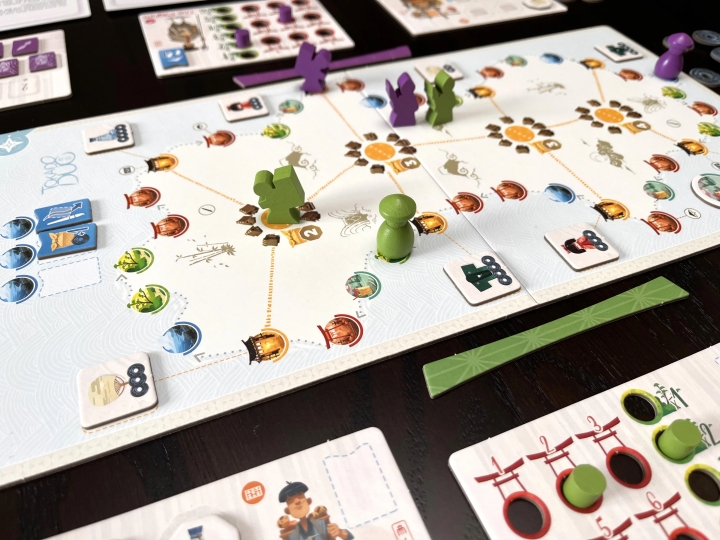
This is an interesting game set on the island of Shikoku, this is a more little bit more complex game than the original Tokaido but it is actually still a fun light game. This has a more in depth map than the original game has and the complexity is in how you use the extra two figures you each have to get the most out of your play. As I have stated unlike the original game each player has three tokens to move and play (a pilgrim an artist4 and a merchant) and a number of zones to do so, they include four mountain towns while the outer zones include temples, gardens, seashores, coastal towns and hot springs.


The aim of the game is points collecting. You collect points in a number of ways and work out at the games end who has won. As in the original you can’t land on an already occupied space so that can be annoying!


This is a great game that you can play against an opponent, or as with most Stonemaier Games you can also play against the solo option. You can order it at: https://www.bgextras.co.uk/other-games/other-board-games/tokaido-duo

If you want to upgrade the coins, then you could use these metal one-unit coins used in Scythe: https://www.bgextras.co.uk/scythe/scythe-promos-and-extras/scythe-promo-16-25-metal-1-coins

The post Tokaido Duo first appeared on Board Game Extras.

The Bloody Inn v1

23. Januar 2026 um 03:57

They ate him! Can you believe that? They ate him!

Survive the night with your The Bloody Inn rules summary!

If there’s one thing that attracts me to a new game it’s a distinctive theme. Based on the true story of L’Auberge rouge (The Red Inn), where in 1831 the inn’s owners were guillotined for multiple murders, not to mention other dark deeds, The Bloody Inn is a great game that mixes dark humour with European gothic.

Definitely not the same old themes here then! Players are family members competing to make the most francs by hosting guests at the inn – though it’s far more profitable to just murder the guests and bury them somewhere in the yard. And you will have to bury them, because leaving bodies around is a sure way to get nabbed by any police that show up at the inn, though you can always bribe the local gravedigger to get rid of the evidence at the last minute.

There’s a lot going on here for a card game, but thankfully the cards fulfill multiple roles. You’ll discard cards to pay for accomplices, all of which have particular specialisations – bribing other characters, murdering guests, building annexes to bury the corpses under, and burying the corpses. But you’ll have to keep paying them to keep using them (though a couple of peasants will work for free, they’re discarded at the end of each round). To juggle this bunch of actions efficiently you’ll need to plan ahead, because you only get a stingy two actions per round. And this is where the real challenge kicks, in, because getting the cards to help you do those actions cheaply and actually doing the actions, is a tricky balancing act. On top of that, there are only so many francs you can accumulate before you’ll have to pass a turn and launder some of it into 10-franc cheques.

The Bloody Inn is one of those games where you always forget the rules each time you play it, so this rules summary should prove very handy for picking it up again quickly. But it’s always an entertaining game and its dark theme is played completely for laughs, like a 1970s comedy horror film. It’s all enhanced even further by the addition of The Carnies expansion which adds three modules to the game, including a bunch of disreputable folk from a travelling carnival.

Available Now: Wingspan and Viticulture Expansions

22. Januar 2026 um 16:13

Yesterday was our biggest launch day since Wyrmspan (just barely edging out Vantage’s first 24 hours), and the combination of Wingspan Americas and Viticulture: Bordeaux will soon start to ship to customers worldwide. The webstore launch discounts are available through Sunday.

Across our 5 webstores (US, Canada, Europe, Australia/NZ/Asia, and US retail), we’ve sold 14,692 copies of Wingspan Americas (along with 618 sets of vision-friendly cards) and 4,794 copies of Viticulture: Bordeaux in the last 24 hours, and our fulfillment centers are ready to ship them to Champions starting early next week.

One of the reasons I share these numbers is because they’re a good reminder that early adopters–whom we greatly appreciate–can be just the tip of the iceberg. Our forecasts for the first printing of these expansions (numbers determined from past data and distributor estimates) resulted in us making 100,000 Wingspan Americas and 25,000 Viticulture: Bordeaux to cover demand in the first half of 2026.

Ultimately, it isn’t sales numbers that determine the success of a Stonemaier game or expansion: All that matters to us is that we make something that brings joy to your tabletop. I love what designer Elizabeth Hargrave created with the new hummingbird mechanism in Americas, and I had so much fun reimagining the Viticulture board in Bordeaux with an “expert” upgrade for each action across 4 seasons of worker placement.

I truly hope you have fun with these expansions, whether you order from our webstore to receive them over the next few weeks or if you pick up a copy from your favorite retailer in early March!

The slides shown in the following infographics are also found individually (larger text) on Instagram.

***

If you gain value from the 100 articles Jamey publishes on this blog each year, please consider championing this content! You can also listen to posts like this in the audio version of the blog.

BGI 403 The One That is Not About A PipeBGI 403

21. Januar 2026 um 13:23

BGI 403 The One That is Not About A Pipe

Board Games InsiderJoin our Guild on Board Game Geek Guild | Like us on FB

Social media:

Ignacy Trzewiczek / Portal Games: website | FB | Twitter | Youtube

Corey Thompson / Above Board TV:  website | Youtube

Stephen Buonocore / “The Podfather Of Gaming”: website | FB | Twitter | Youtube

Intro Music: Happy Rock – Bensound.com

💾

The Texas Chainsaw Massacre: Slaughterhouse v1

21. Januar 2026 um 02:31

That’s the last goddamn hitchhiker I ever pick up.

Escape the farmhouse with your The Texas Chainsaw Massacre: Slaughterhouse rules summary!

Despite being a huge aficionado of horror cinema, I got around very late to watching The Texas Chainsaw Massacre – too late really, as unfortunately the transgressive, dangerous aura it had when I was young had long rubbed off by that time. This can happen as I finally get around to watching a few films that were once deemed ‘video nasties’, long past the cultural zeitgeist they were born in.

A lot of people would consider it their favourite horror film however, though my taste runs to the fantastical rather than slashers. Be that as it may, this board game version by the sadly defunct Prospero Hall studio could become a tabletop favourite. It’s a tight, lean, enjoyable horror romp in the old Sawyer house that nails its theme and provides lots of (nervous) laughs and tension alike.

One player plays the unhinged Sawyer family, the others the ‘trespassers’ – the clueless young people who stumble across the house and quickly learn the error of their ways. Most actions as a trespasser carry the risk of generating noise tokens that you may have to hand over to the Sawyer player as fear tokens, who can use them to power their actions. Not an original mechanic – The World of SMOG does something similar – but it works perfectly here.

The Sawyer player starts with just one character, but as the panic meter (a big cardboard chainsaw) increases, more characters emerge, culminating in the appearance of good ol’ Leatherface himself. At which point the trespassers are really in trouble. And while the trespassers can quite easily be killed (a clever system of drawing 4 different injury cards), attacking the Sawyers only reduces their number of actions. Everything reinforces the cat-and-mouse feel of the gameplay, as the trespassers uncover horror tokens throughout the house and can briefly hide in rooms for a brief respite from pursuit. The basic rules system is enhanced by several scenarios with different goals, plus a very simple legacy system that adds item cards left behind by previously killed trespassers to the common item card pool.

Unusually, there are no win conditions as such – the goal is simply to survive, which is thematic and all, but raises questions if one player is playing 2 trespassers, and 1 escapes – is that a win, or do you keep playing? One of the game designers told me players can come up with their own ideas about success, and that the goal was to make a game that felt like a horror movie. Which is fine, though this is still a game … anyway, it’s a small issue. There are also some omissions in the rulebook, but all that is fixed in my summary.

Overwhelmingly however, this is a huge success and a fitting swan song for the creative people at Prospero Hall, all of whom, I hope, are still gainfully employed in making more games that blend theme and gameplay with such success.

State of the Channel (2026)

19. Januar 2026 um 21:48

I write these articles and create videos in the hopes of adding value to readers, creators, designers, gamers, and entrepreneurs, so as we begin 2026, I thought it might be a good time to check in with you to see if I’m accomplishing those goals and how I can do better.

Stonemaier Games is a tabletop game publisher, first and foremost. We create (and reprint) games in the hopes of bringing joy to your tabletop. But I believe that the power of games extends beyond the tabletop. That’s community, and that’s why I devote some time to these articles and videos each week.

Plus, one of the amazing things about community is that it’s an opportunity for me to learn from you. Each of these articles and videos is a forum for discussion, and I appreciate you for joining the conversation. I also really appreciate the Champions whose annual $15 contribution directly supports the creation of 100+ articles per year and 300+ videos.

Website

I write 2 articles per week (Monday and Thursday), with the actual writing happening almost always on the same day that I post. Over the last few years my articles have focused primarily on the marketing and entrepreneurship of tabletop games, highlighting examples from Stonemaier Games and other publishers. I occasionally feature guest posts and interviews if someone has insights that I haven’t previously shared. Also, after most articles I record an audio version for those who prefer listening over reading.

These articles aren’t about game design (I reserve that topic for videos), and they’re less about crowdfunding than 10 years ago (I still pay attention to crowdfunding through the lens of a backer and creator, but my last project as a creator was in 2015). I’d also like to do a better job of linking new articles in relevant groups (e.g., on the Entrepreneurship & Marketing page) to help someone who wants to learn about a specific topic.

Revenue: There are no ads on the website, though this is the Stonemaier Games website, so it is a discovery tool for our games. Shopify’s analytics indicate that $1.6 million of our webstore sales over the last 12 months are attributed to this website, though not necessarily related to the blog.

Stats: While my motivation for writing these articles isn’t likes and views, I wouldn’t keep writing if people stopped reading. Views per article seem to vary widely from 300 or so to 15,000+, with most of the conversation happening on the Facebook page crossposts.

YouTube

I record on average 6 videos per week, with most of the actual filming happening on Tuesday using StreamYard, a Blue Yeti mic, and a Logitech Brio 4K webcam. The most consistent YouTube videos I film are “my favorite mechanism” about a game I recently played, top 10 lists, the weekly livecast, and the Positively Board Gaming podcast. Most videos are unedited; my coworker Joe adds a quick bumper at the beginning and text on the top 10 videos.

I also sometimes talk about expansions, digital games, the design process, games I’m excited to play again, and insights about Stonemaier game/product design. Every month I stream a Rolling Realms playthrough, and now each week I also feature a sponsored playthrough by another content creator. While it’s mostly me talking at the camera, I include other perspectives in the form of panelists on top 10 videos and lots of audience participation on the livecast.

Some notable updates to the channel in 2025/2026 were me adding relevant end-screen links and using premiere links a little more often for livecasts. I generally don’t like the premiere feature–if I see a video in my feed, I want the option to watch it now–but I think it works well for the participatory nature of livecasts.

I’m not a reviewer, so I do not accept free review copies of games. I’m always working on being more precise, eloquent, and succinct in my videos, including examples and inviting conversation.

Revenue: Prior to 2025, I had turned off all monetization options on our channel. However, after the channel was briefly hacked last year, I heard the advice that YouTube might be more responsive to situations like that if they had some vested interest in the form of paid advertising. So I turned on monetization, adding an ad at the beginning of top 10 videos and sometimes linking to our webstore on relevant videos. After doing this for 6 months, we’ve received just over $1,000 in ad revenue (total).

Stats: As I mentioned above, my motivation for any video isn’t likes or views; it’s to create something I enjoy making and is true to me while hopefully adding value to you. Views vary widely depending on the type of video; the least-viewed videos are watched around 400 times, while the most-watched videos might have upwards of 20,000 views. Overall, the channel currently has around 56,000 subscribers.

***

I’d love to hear your thoughts about what you’d like me to keep doing in these articles and on the videos, along with anything you’d like to me improve or try. I make this content for you, so your feedback really is important to me.

***

Also read/watch:

If you gain value from the 100 articles Jamey publishes on this blog each year, please consider championing this content! You can also listen to posts like this in the audio version of the blog.

BGG HoF ’26

19. Januar 2026 um 19:10

Oh, right.

Day One’s entry is For Sale …. um, ok. It’s a fine game and all that; but I have no idea why it is a game that “made meaningful contributions to the board game hobby in the areas of innovation, artistry, and impact.”

Day Two is Puerto Rico … OK, this is the “We didn’t put this in the initial class for the reasons you expect, but we are putting it in” day.

Day Three is Memoir ’44 … I prefer Battle Cry, but I understand honoring the much bigger seller.

Day Four is Love Letter … I like Love Letter and I think it’s a good game. I think it’s a bit wild that a small game from 15 years ago is in before …. lots of other games.

I’ll update this post as I notice the games this week (assuming I do).

BGG HoF ’26

19. Januar 2026 um 19:10

Oh, right.

Day One’s entry is For Sale …. um, ok. It’s a fine game and all that; but I have no idea why it is a game that “made meaningful contributions to the board game hobby in the areas of innovation, artistry, and impact.”

Day Two is Puerto Rico … OK, this is the “We didn’t put this in the initial class for the reasons you expect, but we are putting it in” day.

Day Three is Memoir ’44 … I prefer Battle Cry, but I understand honoring the much bigger seller.

Day Four is Love Letter … I like Love Letter and I think it’s a good game. I think it’s a bit wild that a small game from 15 years ago is in before …. lots of other games.

I’ll update this post as I notice the games this week (assuming I do).

Navigating the Wild Kingdom

19. Januar 2026 um 17:03
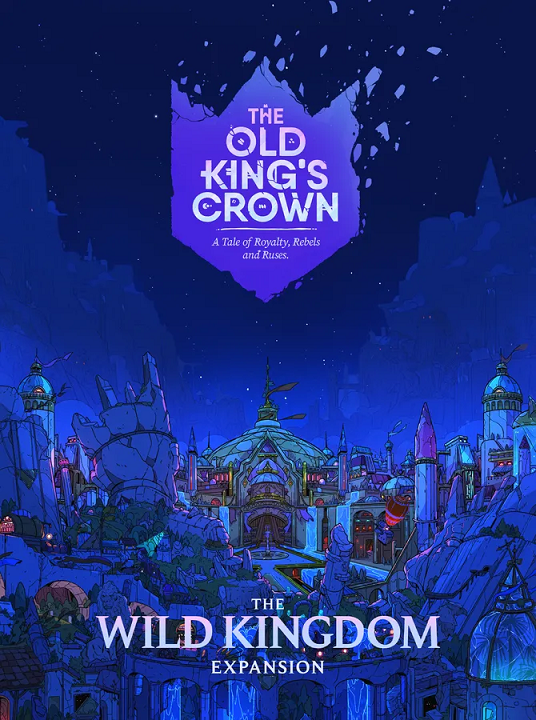
Five months have passed since my original review of The Old King’s Crown. While the outside has grown colder and darker with winter, the inside is a different story. My appreciation for Pablo Clark’s ambitious game of throne-seeking has ignited. It’s stuck with me, claiming a seat in my top 10 of the year and…

Read more →

Working with Localization Partners in 2026

15. Januar 2026 um 20:13

Our mission is to bring joy to tabletops worldwide. Approximately 20% of the world speaks English, so if Stonemaier Games only published products in that language, we would miss out on serving on 80% of potential tabletops. We currently work with 40+ other publishers around the world to accomplish that goal, amounting to around 13% of our annual revenue.

Specifically, my coworker, Susannah, coordinates with those publishers (aka localization partners). For example, when the Viticulture: Bordeaux Expansion English files were approved by our manufacturer in mid-2025, Susannah shared the source files for translation and the  price per unit at different quantities with our localization partners. For any who decided to participate, Susannah kept them (and me) up to date with any potential revisions found during the translation process.

Important: Every localization partner is a publisher, completely independent from Stonemaier Games. Any information about localized games is for localization partners to share when they’re ready. You’re always welcome to express interest in any Stonemaier product with our localization partner for your preferred language.

I last wrote in detail about localization in 2016. The original article is still relevant, hence why I haven’t updated it, but today I’ll outline the process we’ve refined over the years. This is not the only way to coordinate localization; it’s just what we’ve found works well for Stonemaier Games and our partners. This is roughly in chronological order:

  1. I don’t try to make our games language independent (i.e., all icons), as I find that a complex mesh of icons almost always impedes accessibility, limits the scope of creative abilities, and decreases thematic flavor. I greatly prefer a mix of icons and text. As an unintended side effect, some amount of language dependence increases the appeal for localization partners.
  2. Late in the development process, Susannah pitches the product to localization partners in confidentiality so they can discuss if they want to join the first printing. Sometimes they ask to see prototype files, which I provide. We typically work with the same partners for each language to build trust and communication through consistency; it’s only if a partner continually doesn’t serve us or their customers that we look for someone new.
  3. When the English first printing is in production, we get a quote from Panda for a batch of smaller quantities (1000-4000 units) to calculate localization partner prices. Typically they amount to a roughly 70% discount on MSRP (enough for us to cover manufacturing costs and make a small profit).
  4. To ensure that partners receive the most printer-ready versions of the product, we wait until Panda has created the digital proofs and we’ve approved them before sending the source files for translation to partners. Each localization partner handles their own translation and proofreading. They typically have 2-3 months to provide printer-ready files (PDFs created from the InDesign source files) to join the first localized print run. Sometimes translators find mistakes that we missed, typically in time for us to update the English files; Susannah communicates those revisions to all active translators and I answer rule questions.
  5. Each partner uploads their final files to Panda’s file management system and goes through Panda’s pre-press checks. If they don’t finalize and approve the files by the deadline provided, they must wait for the next printing.
  6. Localization partners pay us 50% before production begins; they pay us the other 50% when their products are ready to ship from Panda a few months later. Each localization partner coordinates and pays for their own freight shipping, which may include language-independent add-ons like upgraded tokens. It’s very rare that a partner doesn’t make the second payment; if that happens, we don’t release the products to them. We rarely have written contracts with localization partners.
  7. We provide an announcement schedule and marketing materials to localization partners (including photos of the English version). If we commission a teaser trailer video, we provide a version to partners without a voiceover so they can post it in their language. Some partners tell us it’s okay to list their name on the product page for our website upon the initial announcement; others wait until later.

Again, this is just one way to do things. If you’re a newer publisher who is starting to hear from potential localization partners, I recommend looking at their portfolio of other localized games. Ask for data, talk to their customers, and do your research–their work is a reflection of you. You can also consider working with companies that publish in multiple languages (e.g., Publishing Technology Solutions).

Likewise, if a publisher contacts you to consider localization of their game, feel free to ask anything you want. Request the rules, playtest files, and any available data (e.g., crowdfunding results). Keep a close eye on any early red flags in communication.

I invite any other publishers to share their localization methods in the comments–I like hearing different perspectives. If you have any questions, please share them in the comments as well.

***

Bordeaux will be available on the Stonemaier Games webstores in English along with Wingspan Americas on Wednesday, January 21, with shipping throughout February. You can sign up for a notification here: https://stonemaiergames.com/games/viticulture/newsletter/

***

If you gain value from the 100 articles Jamey publishes on this blog each year, please consider championing this content! You can also listen to posts like this in the audio version of the blog.
BGI 402 The One about 2026

14. Januar 2026 um 12:41

BGI 402 The one about 2026

Board Games InsiderJoin our Guild on Board Game Geek Guild | Like us on FB

Social media:

Ignacy Trzewiczek / Portal Games: website | FB | Twitter | Youtube

Corey Thompson / Above Board TV:  website | Youtube

Stephen Buonocore / “The Podfather Of Gaming”: website | FB | Twitter | Youtube

Intro Music: Happy Rock – Bensound.com

💾

City of the Great Machine v1

12. Januar 2026 um 22:19

I can remake you, just as I was remade.

Control the city with your City of the Great Machine rules & reference!

This game was brought to my attention by a great review on Charlie Theel’s Player Elimination website, and as usual, Charlie didn’t steer me wrong (well, there was that Fate of the Fellowship review, but there’s always an exception to the rule). City of the Great Machine is one of those rare games I like so much in which mechanics and theme are inextricably intertwined.

It’s a one-vs-many struggle set in a steampunk city dominated by a mechanical overlord – sort of George Orwell meets H. G. Wells. Players are Revolutionaries trying to inspire citizens to riot against oppression; the Great Machine has time on its side and a legion of automata to quell the dissent.

City of the Great Machine blends hidden movement, resource management, and asymmetric gameplay in a wonderfully thematic package – and it can also be played solo or co-operatively. It’s a stunning production with an excellent artwork, a well-written rulebook and comprehensive support material, and some very nice miniatures as a bonus. I enjoyed this at 2 players, but I’m very much looking forward to to playing this at a higher player count so players can scheme amongst themselves in the presence of the Great Machine (the rulebook expressly tells you to refer to players as Revolutionaries or the Great Machine, in one of many thematic touches). And, dare I say it, its theme of revolution against autocratic technology is more relevant than the glossy layer of steampunk initially leads you to believe.

There’s a wealth of strategic material in the rulebooks, but this summary distills the rules into an easily digestible few sheets. And of course, it’s available on my app, Tabletop Codex!

The Current State of Play-and-Win (2026)

12. Januar 2026 um 17:53

I just spent a delightful weekend at Geekway Mini here in St. Louis playing tabletop games–including several play-and-win games–with a variety of wonderful people. Among some new-to-me favorites, I also taught and played Origin Story, Viticulture with the new expansion board (subscribe here for more info), and an epic 7-player game of Scythe on a friend’s stunning custom board.

With many game conventions big and small happening around the world in 2026, I thought this might be a good opportunity to shine the spotlight on the amazing play-and-win system that originated with Geekway many years ago. Also, tickets for the bigger version of Geekway will be available starting this Friday–I’d love to play a game there with you in May if you decide to attend!

***

My favorite way to market our products is to facilitate and encourage them to get to the table more often. Your table, my table, the tables of reviewers, ambassadors, etc–any table will do. The more our products get to the table, the more they’re exposed to people, and hopefully the more fun people can have with them.

This is a big part of the reason why we support our products with reprints, expansions, and ongoing reviews, as well as focusing on accessibility (Watch It Played videos, ability to teach to new players on the fly instead of frontloading rules, etc). Our goal is to bring joy to tabletops worldwide, but a key element is that our games must actually get to the table.

One of my favorite ways to accomplish this goal is through play-and-win donations for game conventions and 100+ person events.

Play-and-win is a convention concept where people can check out a game, play it, and then enter their name in a lottery to win that specific game at the end of the convention. If I donate a play-and-win game to a convention, it can be experienced by dozens and dozens of people in a short amount of time. Only one of those people will win it, so if other people liked the game, they’re now informed in their decision to purchase it later.

I’ve been talking about play-and-win on this blog for a while after discovering it at St. Louis’ own Geekway to the West (which I’m attending again this year–I highly recommend it), and I’ll post those links at the bottom of this entry. Stonemaier Games sends dozens of games each month to support conventions around the world.

Today I’m going to focus on the play-and-win Google Doc that I created and maintain, as well as my current approaches to maximizing the potential of play-and-win for publishers, conventions, and gamers.

Publishers

If you’re a publisher who likes the play-and-win system, but you don’t like getting solicitations from hundreds of conventions, the Google Doc is for you. You can simply enter your information on this tab, which communicates to the participating conventions that you’re in the know and don’t need to be contacted individually.

As a publisher myself, my process for sending out play-and-win games is that I have a calendar alert late each month to remind me to check the Google Doc for conventions happening 2-3 months in the future. For example, today (mid-January) I’m looking at conventions happening in March and April. Conventions have told me that this advance notice is really helpful, particularly so the coordinators can tell vendors which games are coming in time for them to stock up via distributors.

The number of games I send to a convention depends on the size of the event. Sometimes the play-and-win coordinators enter their information on the Google Doc and forget about it, so I help to remind them of what the package is by including the words “play-and-win” as part of the address label.

I try to keep our ambassadors informed about the various conventions that feature our play-and-win games. If any of them attend those conventions, they can make sure to drop by from time to time to see if players have questions. Otherwise, you don’t need to be worried about having teachers present–people who use play-and-win are usually comfortable to learn the game from the rulebook, and random fans of the game often stop by to help out.

Last, while we donate our games to play-and-win sections for free, it’s perfectly reasonable for you to offer a convention a discount instead of a free game. This can actually be helpful to the convention, as it lets them buy exactly what they think will be the most exciting for their attendees (instead of letting you choose).

Conventions

If you’re completely new to play-and-win, read this blog entry about the core details (or these instructions on the Geekway website). Then take note of the following:

  • Please enter your convention on the Google Doc (use open rows at the bottom of each month or insert a new row). In doing so, you’re committing to use any contributed games for play-and-win, and you’re committing to actually having a play-and-win section with at least a dozen total games (even if it means allocating part of your convention budget towards buying games specifically for this purpose). You can now indicate if you prefer different games or multiple copies of the same game.
  • In filling out the Google Doc, there’s no need to contact publishers–particularly publishers on this tab–to solicit donations. You will either receive games 30-45 days before your event…or you won’t, in which case you have plenty of time to purchase games to fill your play-and-win section.
  • At least several weeks before the convention, tell vendors which games were donated for play-and-win so they can stock those games at the event. The play-and-win section should close (and winners announced) before the vendors close their booths.
  • When you receive the games, prepare them to be played (i.e., punch the punchboards, open shrinkwrapped decks of cards, sort tokens, etc). This serves the attendees hoping to show up and start playing.
  • It never hurts to follow up with a publisher after a convention to let them know how their games did in the play-and-win section (number of plays and ratings from participants). I understand that this is extra work, and I won’t ever hold it against a convention for not doing so, but it’s really nice when conventions do this.
  • I recommend only letting each person win at most 1 game for the entire event–that way you spread out the prizes among the most people. Also, instead of interrupting the event to announce the winners, simply post them at a few key places around the convention hall or on an online forum designated for attendees to check.

There are other tips from specific conventions on this tab of the play-and-win Google Doc.

Gamers

If you like the idea of play-and-win, feel free to check out the conventions listed on the Google Doc. You might discover a nearby game convention that you haven’t heard of.

If you’re new to game conventions, you might be pleasantly surprised by them–especially the type of convention where you just play lots of games for a few days. I’m an introvert who does not get excited about big events, but my experience at Geekway is consistently amazing. I really appreciate people who have invited me to join their game or when someone teaches a new-to-me game, and I’ve tried to be just as welcoming to others. If you attend Geekway in May and you see me, please say hi–I’d love to play a game with you!

***

What are your thoughts on play-and-win?

Also see:

If you gain value from the 100 articles Jamey publishes on this blog each year, please consider championing this content! You can also listen to posts like this in the audio version of the blog.

❌