
❌

Lese-Ansicht

Timespan Game Review

Here’s the fun thing about tabletop criticism: you can’t blame a game for doing the things that its designers say it is trying to do.

Here’s what I mean. If you read the BGG Designer Diary from the people behind Timespan—the newest title from Alion by Dr. Ø, the people who gave us last year’s Euro strategy title Recall—you know that Timespan is both a peaceful, simultaneous play-driven civilization game, and not a new game from the folks at Stonemaier.

That cuts a few things off at the knees. If I read a single review of Timespan that starts with “I can’t believe how little interaction there is in Timespan”, I will immediately write that person off. The back of the box literally references the following words: “peaceful”, “simultaneous”, “short.” There’s a solo mode…in a civ game.

Again: Timespan is a civ game with a solo mode. That should tell you where we are at…and, if you like the idea of a civ game where everyone in multiplayer is playing at the same time, and the game can be knocked out in less than 90 minutes (all seven of my plays clocked under that timeframe), do I have a game for you!
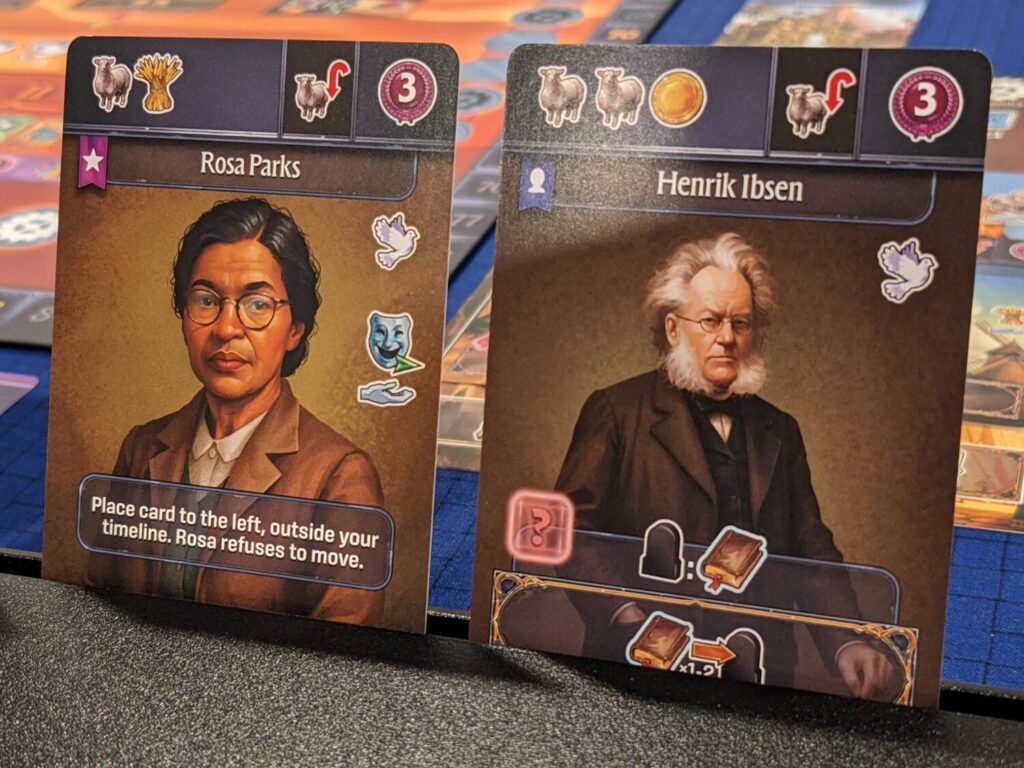
Uh, What Now?

Timespan is…

The post Timespan Game Review appeared first on Meeple Mountain.
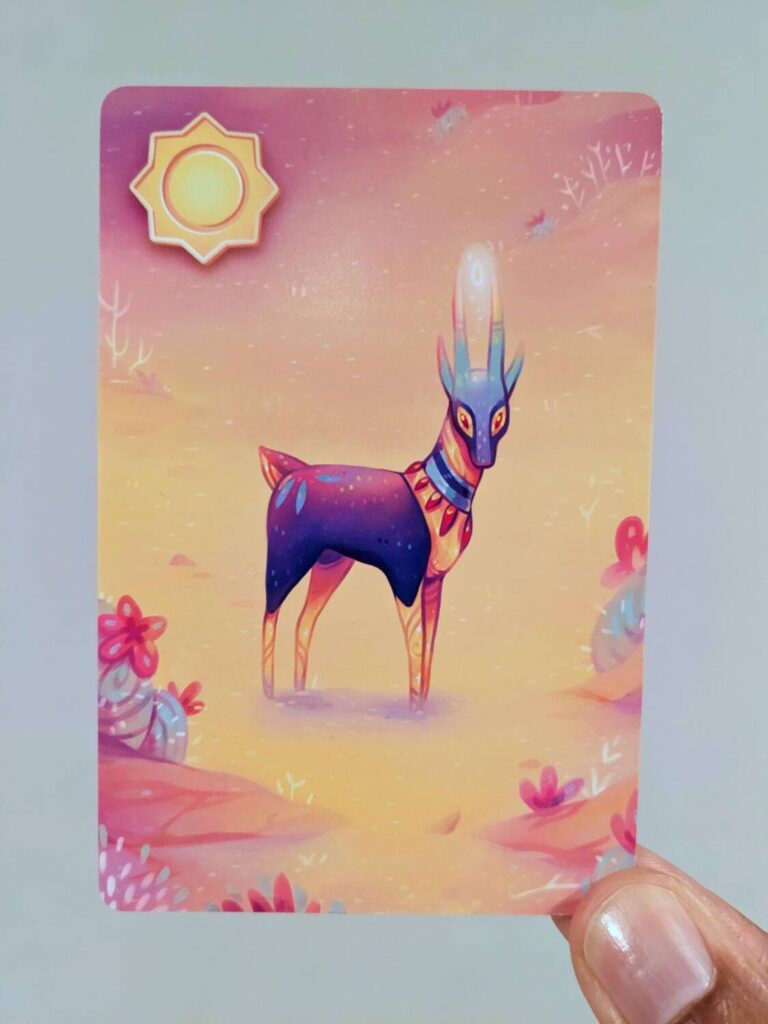
  •  

Hell of a Deal Game Review

Gosh, poker is hot right now. It’s not animal characters hot, and it’s not trick-taking games hot, but it’s still pretty hot.

It’s so hot, that it is hot as hell…and, Hell of a Deal (2026, Smirk & Dagger Games) was so hot that it was the rare Gen Con title that sold out not once, but twice during the same show.

Poker-themed board games? The Gang was on my top ten list of 2024, and it is still in the rotation during my Wednesday night game action with friends in Chicago. When I need a taste of solo or two-player co-op, Ace of Spades still lands. I could play Balatro on my Xbox if I really want, and at a game night a couple weeks ago, that same Wednesday group decided to just straight up play Texas Hold ‘Em with real money, not just the facade of poker chips standing in for cash.

As I strolled the expo hall at this year’s show, Smirk & Dagger’s Gen Con booth was packed throughout the show. I spoke with Smirk & Dagger’s owner, Curt Covert, late in the show and he was able to throw a review copy of Hell of a Deal my way. After doing a four-player demo, I got to work with plays…

The post Hell of a Deal Game Review appeared first on Meeple Mountain.
  •  

Encyclopedia of Monsters Game Review

One of my big things as a reviewer is actually not tied to total play count, although I try to get three, maybe four plays in with a game before I pass judgment on a game’s quality.

The thing I prioritize more than anything else: getting as many plays in with the same game at different player counts. If a game says that it accommodates 2-4 players, I try my best to play at two, three, and four players. (If a game says it plays 1-4 players, I try my best to get in plays at all four counts, but a game typically plays almost the same way at one player as it does with two, since the solo usually mimics a two-player experience.)

Encyclopedia of Monsters is a new family memory game for 2-4 players. Designed by a pool of the same people who designed my game of the year pick for 2024—Dead Cells: The Rogue-Lite Board Game—I had Encyclopedia of Monsters on my radar as soon as the team at publisher Scorpion Masqué showed me a mockup at SPIEL Essen last fall.

Encyclopedia of Monsters is a fully resettable campaign memory game, spread across five volumes (here known as continents) and three chapters (countries) per volume. That means you have 15 short games included in…

The post Encyclopedia of Monsters Game Review appeared first on Meeple Mountain.
  •  

Mooki Island Game Review

After doing two plays of the 2025 family-weight card title Mooki Island (one play with my 12-year-old, then a play with my 9-year-old), I’m very sure of one thing: the artwork is the main reason for checking out the title.

That’s because the game itself is barely a game at all. The box hints at this as well, given that it believes it is “perfect for ages 4-10”; now that I’ve done plays, I absolutely recommend Mooki Island for a four- or five-year old child to play with an adult.

Here’s the entire game: a deck of 36 double-sided tarot cards is shuffled and split in half, creating two draw piles. There are five suits of Mookies (Sun, Moon, Fossil, Leaf, and Seashell), and there are also seven spiders in the deck. There are also five “legendary” mookies in the deck, one per suit, for the 72 total options spread across the deck.

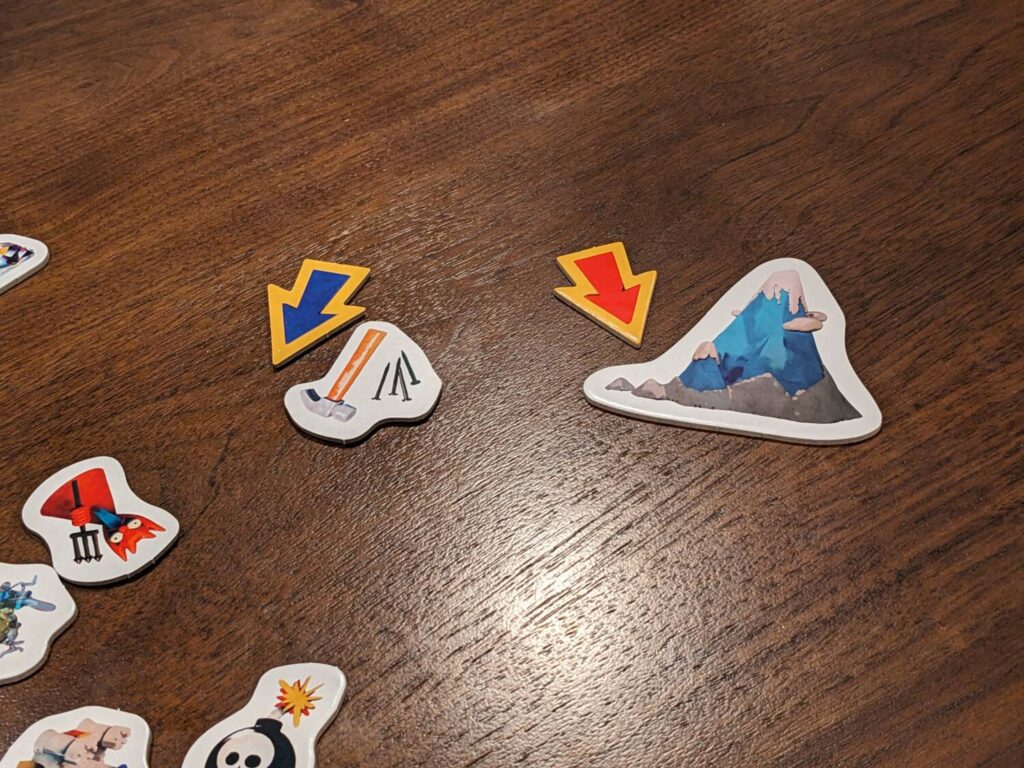
On a turn, a player takes one of the two face-up cards, looks at both sides, then decides how to place it into their single personal scoring pile. If a spider is drawn and played, it must be played on an…

The post Mooki Island Game Review appeared first on Meeple Mountain.
  •  

The Quarterly Board Meeting—Summer 2026

The team at Board gave us the chance to cover their initial push late last year, and now that the platform is pushing out a new game every month, it’s been much easier to get my kids to join me at the table to check out the new wares. (If you’ve never heard of Board or need a quick overview of its features, check out our product review of the Board electronic device.)

Now that Board is fully up and running, new games are coming to market every month. We asked the Board team if we could continue covering new content, and they have been kind enough to oblige. Luckily, I have two children (ages 12 and 9) who loved the initial batch of games and are constantly looking for new ways to engage with the platform.

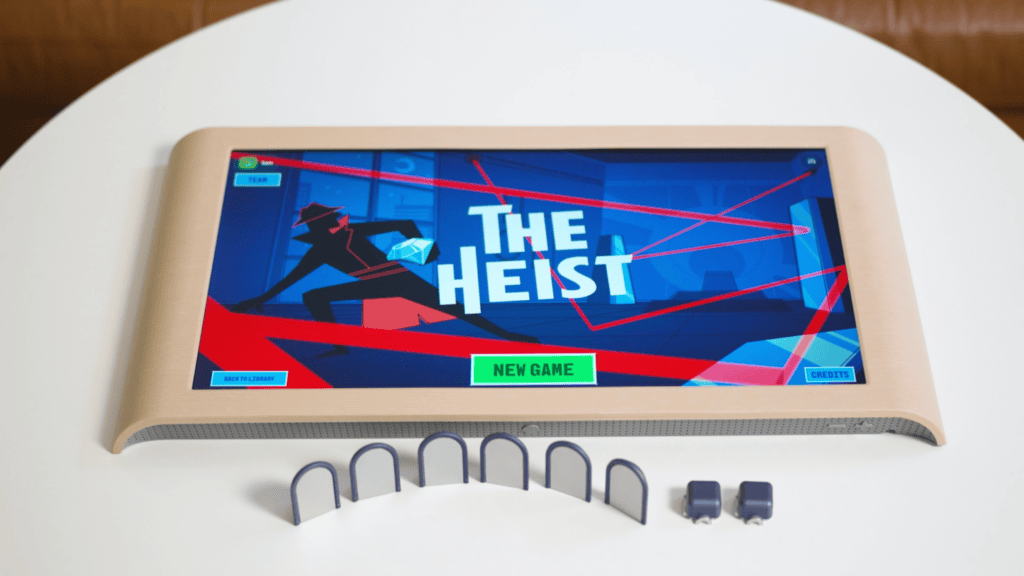
Once a quarter, I’ll offer thoughts on the newest batch of releases—both community-designed games as well as centralized releases from the Board development team, using a review style similar to our regular Quick Peaks coverage. Enjoy! (All images here were provided by the Board marketing team.)

The Heist

After spending almost two months playing Board regularly on our living room table over the previous holiday season, the lack of new…

The post The Quarterly Board Meeting—Summer 2026 appeared first on Meeple Mountain.
  •  

Mind Sweeper Game Review

There’s a level of chaos that appears when a player’s turn is up in the new word-association party game Mind Sweeper (2026, Floodgate).

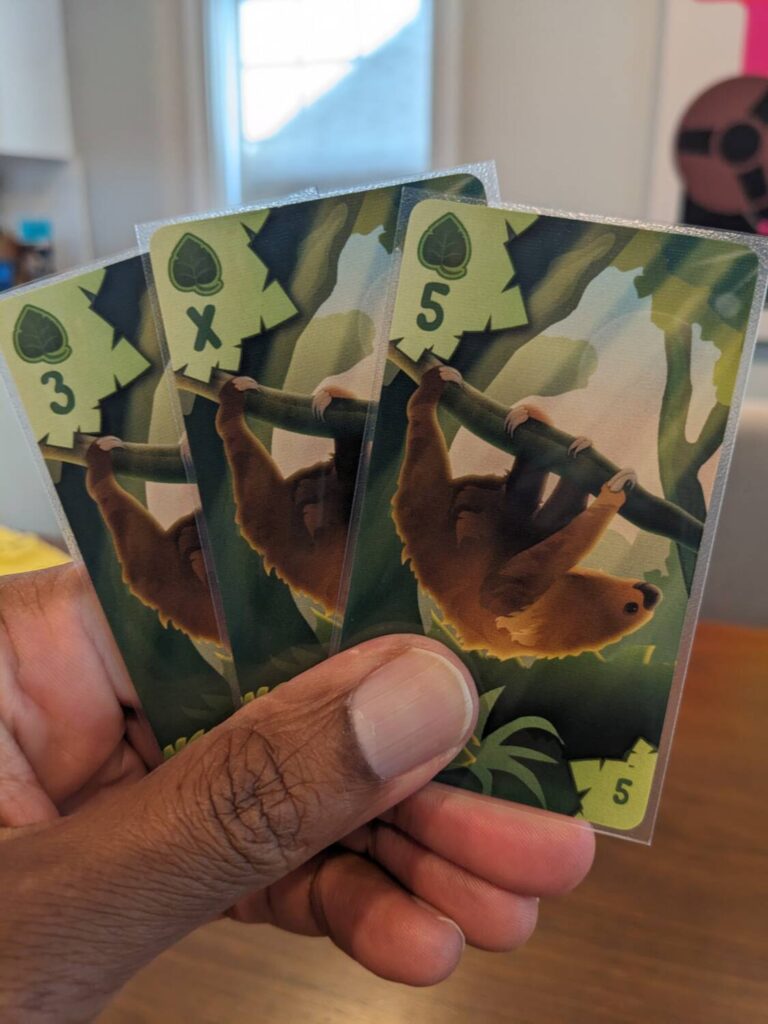
You see, players are staring at a table that has like 50 small cardboard tokens scattered here and there, from easy visuals (like one of those Egyptian-style pyramids, or a sword, or an apple) to some that are a bit opaque, like a single exclamation point. The active player is dealt a card with six words, and separately a number token forcing the player to illustrate a specific word (using those tokens) over the next 60 seconds.

Get your team to guess what the word is, and you score the card. Players can shout anything as soon as the timer starts, adding to the chaos. If they don’t get the word in those 60 seconds, the active player flips the word card in view of all players, then the team gets 60 more seconds to guess which of the six words was the original answer.

Across 10 word cards, you’re looking at a 15-20 minute experience, in a cooperative, high-score challenge that pushes players to get as many of the 10 words right as they can.

The keys here is twofold. Each card’s clue words are…

The post Mind Sweeper Game Review appeared first on Meeple Mountain.
  •  

Surplus of Sloths Game Review

Surplus of Sloths (2026, Weird Giraffe Games) isn’t bad.

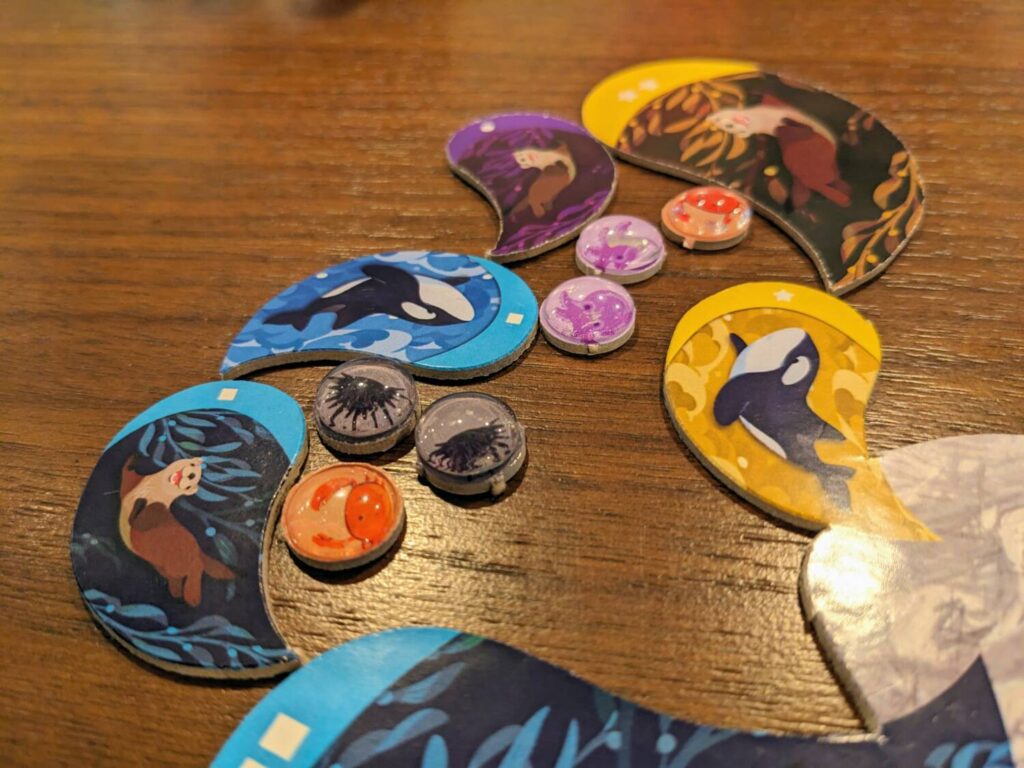
It’s a card drafting game where players try to build a hand of ascending card runs across five different suits of sloths. A market wipe mechanic pushes one leftover market card into a “surplus net” after each round, and players can view and gauge whether it is worth trying to score a suit at the end of the game.

I just gave you 75% of the rules, and designer Charlie McCarron (Skyrockets, the Kites riff I quite enjoyed) has given us a game so quick that my 12-year-old and I played it twice within a 15-minute stretch. Even winning one of those two games didn’t impress the 12-year-old, who shrugged their shoulders before admitting that the game was “only OK” before heading off to their room.

You’re right; that’s not an endorsement. My review crew joined me for a four-player game the following day, and the winner of that game also shrugged their shoulders and landed in the same rating range I landed on for this review.

Surplus of Sloths isn’t bad because its scoring mechanic is interesting. In an ideal world, you want to build up a run of three, four, maybe even five low cards of…

The post Surplus of Sloths Game Review appeared first on Meeple Mountain.
  •  

Effervescent Game Review

One of my favorite things about the games released under Carla and Nick Kopp’s Weird Giraffe banner: the games are often legitimately weird.

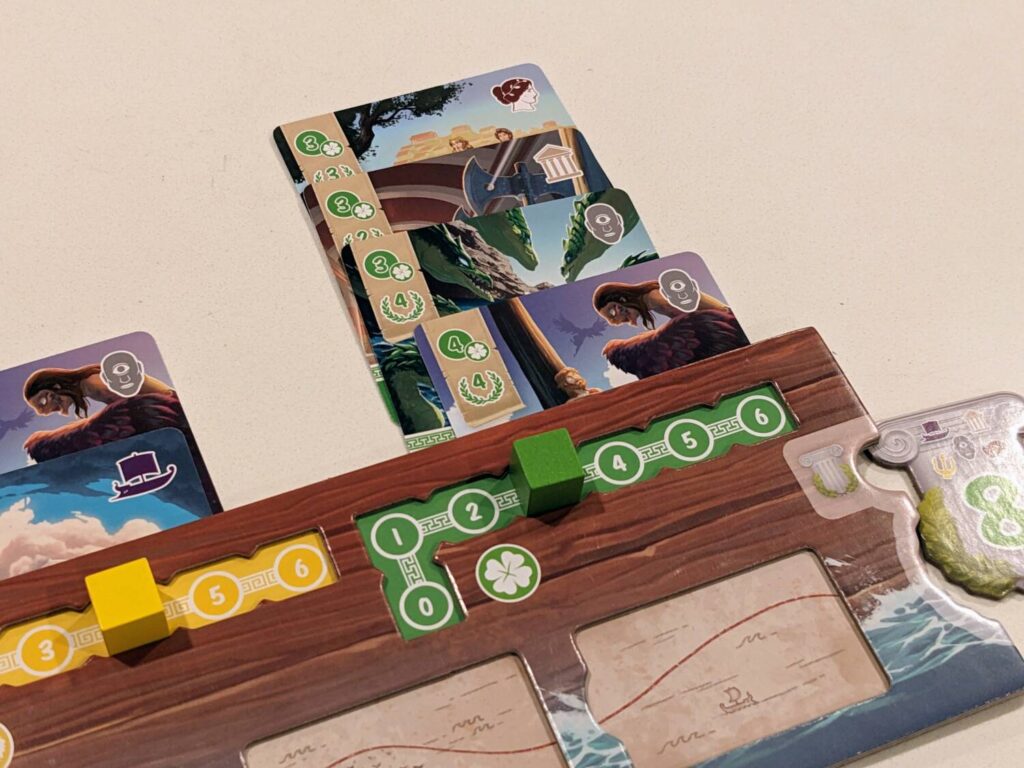
Here’s what I mean. I was explaining the rules to my wife and nine-year-old for our first play of Effervescent (a Carla design currently on crowdfunding, set for release in 2027), and when I tried to explain the main concept of placing sea-based creature tiles in such a way that the tail of a newly-placed tile must touch the head of a previously-placed animal tile, my wife openly balked.

“So, like, this way?” She used a large whale tile as an example.

“Well, sort of,” I began. “Each tile has a head area, a distinct tail point…then, every other part of the tile is a ‘side.’”

“Seems kind of weird,” she said. And our first play went that way, as players took tiles in one of three sizes to create scoring patterns that would trigger with a mix of scoring sequences, tied to “Drift” cards and Harmony cards, the latter of which were established before the game as public milestones that are always available to score.

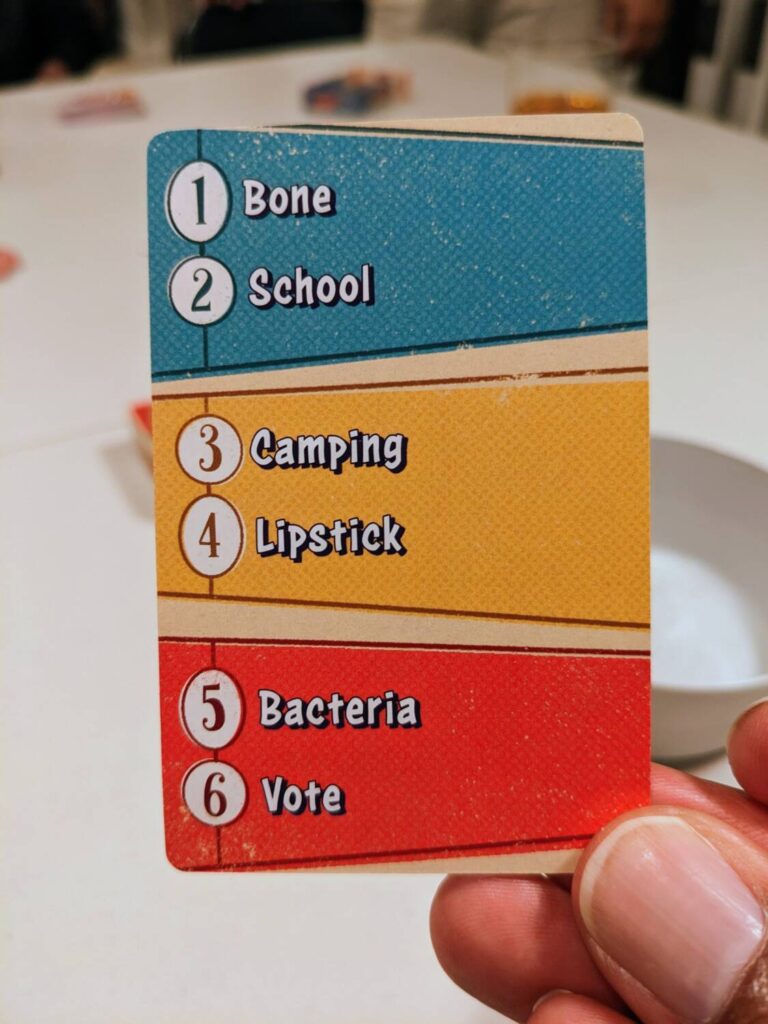
Turns are simple. Place a tile, and if a placed tile meets a Drift card scoring condition, a player puts…

The post Effervescent Game Review appeared first on Meeple Mountain.
  •  

Odysseus Game Review

Let’s give credit where credit is due. If you are going to release a game in the late summer of 2026 and want to ride a wave of free marketing, you can do a LOT worse than theming your new game around anything tied to The Odyssey, Homer, The Iliad, and all things Odysseus.

So, while it is possible that Gigamic’s new, light strategy title Odysseus was always intended to be a game about the lead character from the recent Christopher Nolan / Matt Damon blockbuster film The Odyssey, let’s just agree to give everyone involved in this game’s design a round of applause for timing the release and the theme to the Universal film’s massive global box office!

Odysseus, the game, is a very quick romp through the 15 trials Odysseus (the character, also known as Ulysses, depending on your preference between the Greek and the Latin version) survived on his quest to return to Ithaca. In fact, the game is so quick that we only get 11 turns to whisk through the entire affair, and turns are so fast you might break through a game of Odysseus in 15-20 minutes!

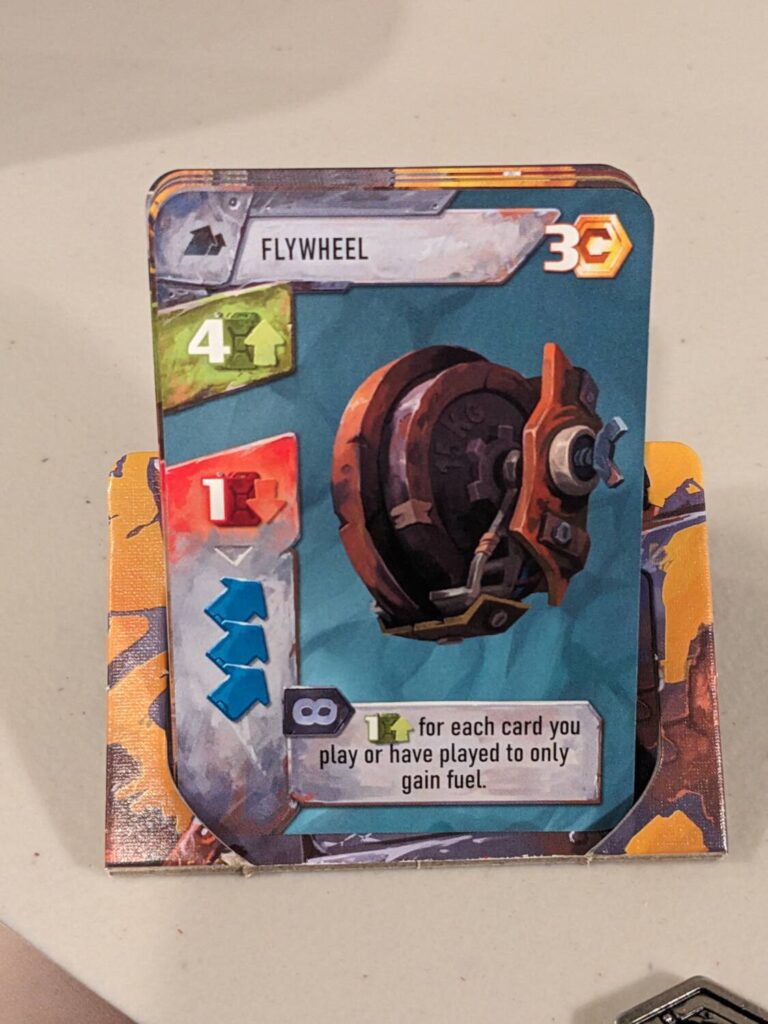
Turns are simple. The board is a replica of Ulysses’ vessel, with spaces for 12 cards. On…

The post Odysseus Game Review appeared first on Meeple Mountain.
  •  

Jibber Jabble Game Review

I picked up a review copy of the new word game Jibber Jabble during my visit to Gen Con 2026. After meeting the game’s designer, Carrie Sykes, at a pre-con media event organized by the publisher, I had the chance to demo the game later that weekend before getting Jibber Jabble in front of both my review crew, a group of six at a family beach vacation a couple days later, then a group of eight during one of my weekly gaming group nights.

Here’s the synopsis: it’s hard to beat the value proposition of a collaborative word association game that plays fast for an MSRP of $9. It doesn’t land on my personal Mount Everest of word games, but everyone who played it wanted their own copy.

We Need Some Clue Words for “Statue”

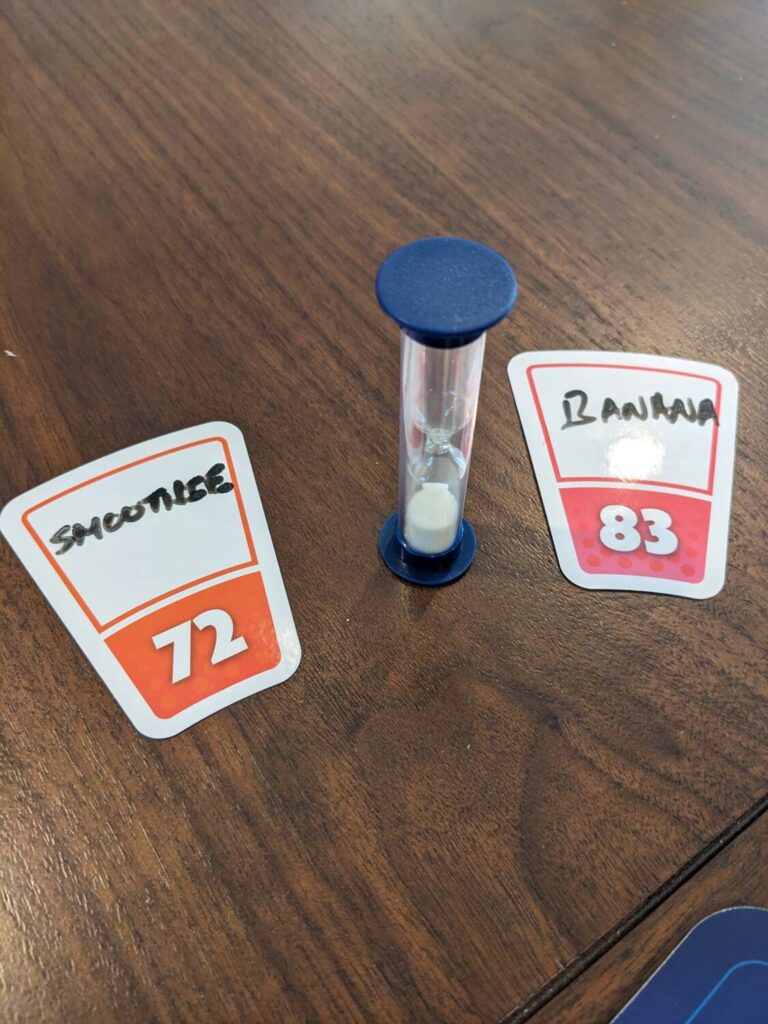
Jibber Jabble is a word association game that plays in about 20 minutes, maybe a bit more with more players. Across six turns, players provide clues for a word or term, helping the active player by giving them clues for the word they cannot see (yes, this is the format for games like Just One).

So, the active player flips a card towards everyone else, then the team picks a number, from…

The post Jibber Jabble Game Review appeared first on Meeple Mountain.
  •  

Trails & Tails Game Review

At the end of the day, my review criteria is really simple: is the game fun or not?

Trails & Tails is a new self-published title. (BGG does not list a designer, artist, or publishing company…only “self-published.”) It admits its hook right up front: Trails & Tails is going for a Snakes & Ladders-style gaming experience (or, if you’re a gringo like me, Chutes & Ladders), where players move their playing piece up a board all the way to the top…hopefully taking short cuts along the way to reach the top faster.

The downside of Snakes & Ladders comes when snakes appear in the space where you end your movement…because if that’s what happens, you fall backwards and/or downwards until you reach a much less desirable space lower on the board. So, keep moving forward and things will generally work out.

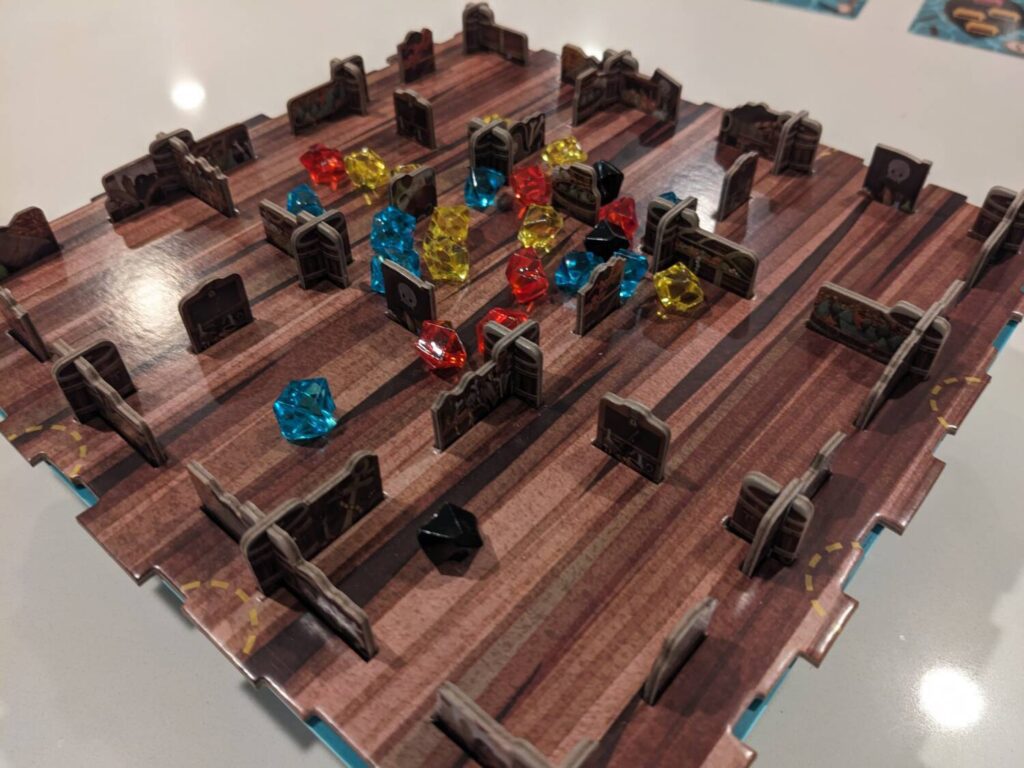
Trails & Tails adds spice by giving each player two starting dice, differing by player; one player gets a D4 and a D20, while another might have a D6 and a D8. In each round, players roll these dice, then get to use 1-2 dice per turn to their liking. You can add the results of two dice, move forward a number of spaces on one die, or even subtract a larger die value from a smaller one…

The post Trails & Tails Game Review appeared first on Meeple Mountain.
  •  

Size Wise Game Review

I’ve been struggling to poke holes in the design of the new game Size Wise, designed by Scott Brady and published by GameHead. And, here’s what I have got:

The people who made those old Tootsie Roll ads from the 1970s should feel burned that artist Serge Seidlitz made an owl for Size Wise’s box and tokens that looks a heck of a lot like the one who knows how many licks it takes to get to the Tootsie Roll center of a Tootsie Pop. Like, everyone of a certain age who has seen the rulebook and the tokens has commented that the owl looks exactly like the one from those old commercials! (I haven’t reached out to GameHead for comment…but, they know. I KNOW they know.)

Size Wise is a party game for 3-8 players that plays in about 20 minutes. I tried Size Wise three times at different player counts: four, seven, and eight players.

Everyone loved it.

Across a series of turns, players collectively flip a card from a deck, with six different items on each card numbered from 1-6. The backs of the cards are also numbered from 1-6, so when a player flips a card, they then look at the top card of the draw deck to see which number the table is forced…

The post Size Wise Game Review appeared first on Meeple Mountain.

  •  

Go! Go! Go Kart Game Review

The success of CMYK’s Hot Streak has had the intended effect. I know, because while I was at Gen Con 2026 I saw a few more betting-style party games than I had in recent years, with Underdog Games’ Dino Racer leading the way at this year’s show.

Taco Cat Games—the company formerly known as Dolphin Hat Games, before leaning into the company’s most popular title, Taco Cat Goat Cheese Pizza—is swerving left in a world where everyone else is turning right. Here’s what I mean: Taco Cat Games has been making fast, fun card games for a decade, with titles like Moose Match Mayhem! and Gimme That! leading the way with games that feature zero board and dozens of cards, dice, pencils, and yelling. But with their new release, Go! Go! Go Kart, I had a somewhat shocking conversation with Taco Cat’s CEO, Dave Campbell.

“Yeah, it’s a board game,” he told me when he handed over a review copy. “Let me know what you think; we’re really excited about it.”

After a few plays at home—including a four-player game with my two kids and one of their friends, along with the standard plays with my kids and the wife—I’m ready to see why Dave is so excited. Go! Go! Go Kart mostly avoids…

The post Go! Go! Go Kart Game Review appeared first on Meeple Mountain.

  •  

Hacienda Game Review

I don’t want to belabor the point here, but I have real questions, like this: does the new game Hacienda (based on the 2004 version of Hacienda by Wolfgang Kramer) want the leopard-looking creatures on offer here to be pumas, or jaguars?

I ask because the rulebook interchangeably uses the terms for both (they are pumas on the manual’s cover description, but jaguars on page four), and technology tells me that the two breeds of cool-looking cats are definitely different. Another theme note: Hacienda’s new theme is tied to building an eco-friendly tourist destination in the hills of Argentina. For the life of me, though, Hacienda feels like a game where I am simply placing clumps of animal tokens on a map to score adjacency bonuses and piles of cute-looking capybara packs.

Hacienda isn’t nearly as complicated as I’m making it out to be. In fact, like other Kramer games—the German legend has, as a lead or co-designer, gifted the world with titles ranging from El Grande to Tikal to Wandering Towers to my all-time favorite Kramer co-design, The Princes of Florence—Hacienda is extraordinarily simple to teach, and his work here with Daryl Andrews (Sagrada) is sleek, with a playtime that might last 30 minutes or less with lower player counts, 45 minutes with the…

The post Hacienda Game Review appeared first on Meeple Mountain.

  •  

Drillers Game Review

Sometimes you can tell where a company’s focus is in a given year.

Czech Games Edition (CGE) has a very, very large piece of chicken releasing later this year called Kingdom Come Deliverance, a $150 game so large it has 10 individual artists working on only the artwork for the 700+ cards in the box. Forget the fact that CGE’s lead designer, Vlaada Chvátil, and one of the world’s hottest designers, Tomáš Holek (SETI: Search for Extraterrestrial Intelligence, amongst many other now-published titles), are the co-designers on Kingdom Come Deliverance and there are are dozens of hours of content in that box. (I’m more shocked that a single game has TEN ARTISTS working on it!)

That means Drillers, CGE’s Gen Con release, is its other “big” release for 2026. It’s not nearly as ambitious as Kingdom Come Deliverance, but Drillers is as solid as its title is plain. Drillers is a deckbuilding game that plays in about 90 minutes even at its full player count, and it does excellent, limited work within its tidy playtime.

Dive In

Drillers accommodates 1-4 players, and is a very standard deckbuilding game. Players begin the game with a deck of nine cards—eight action cards and a “Damage” card, which essentially…

The post Drillers Game Review appeared first on Meeple Mountain.

  •  

Computer Junkyard Game Review

I’ve had a tough tabletop gaming year. More and more, it seems like bad games—truly awful tabletop experiences—are seeking me out, not the other way around.

Computer Junkyard is a new game from a new publisher, Dream Egg Games. Designers Allan Pincus and Jared Pincus have created a title that is supposed to be about building a computer from spare parts bought at a local junkyard…or, maybe from stolen parts instead. It’s a simple race game with no other win conditions: the first player to build a computer out of the parts needed to make a working device wins.

Here was the first sign of trouble: the solo/single player game. To learn the game, I did a play using the single player rules at the back of the rulebook. The goal? Time yourself and build a working computer using the requirements shown on the player aid—your mainframe needs things like a power source, a CD-ROM drive, a monitor, etc.—and a certain number of components unique to the software, like a certain number of RAM and HDD components added through a databus on your computer’s chassis, a board where you can lock puzzle pieces together for your rig.

In solo, this is how things work: draw tiles out of a bag until you find everything you need to complete the…

The post Computer Junkyard Game Review appeared first on Meeple Mountain.

  •  

Rush Hour Duel Game Review

The new Rush Hour puzzle entry, Rush Hour Duel, arrived at my doorstep recently. I know that, because I got a confirmation by e-mail that a package had just arrived. A couple hours later, I came up from my office cave in the basement to find that the game had not only arrived, but had already been opened and played three times by my wife and 12-year-old.

Yes, friends…Rush Hour Duel was reviewed before I could even open the box myself. This has never happened before, across more than 500 review copies received since I arrived here at Meeple Mountain.

“Dad, we got a new Rush Hour Duel game, and it’s great! I beat Mom three times,” said the 12-year-old when I came upstairs.

“Well, that is a review sample that came from the publisher.”

“Really? OK. Still, it’s great, I’m glad you picked it up.” Then they ran upstairs to slip into another evening activity.

I looked around, shocked, as if someone had just made off with my wallet. Those guys got Rush Hour Duel to the table before I could, I thought. What kind of respect is that?

For the uninitiated, Rush Hour is a game series from the Ravensburger toy puzzle arm known as ThinkFun. If you have kids and regularly visit your local Target, there’s…

The post Rush Hour Duel Game Review appeared first on Meeple Mountain.

  •  

One Round? Game Review

Devir sent a copy of their new party game, One Round?, and I’ll admit that the first pass of the rules didn’t get me all hot and bothered.

In fact, even when I taught the game to three different groups over the course of a week, all of those players also looked at me suspiciously as I finished the teach. “Another word game, eh?” was the response of my wife; One Round? didn’t look like much when I whipped it out for these audiences.

But across three plays (at two, three, and four players), I’m surprised to say that One Round? earned its street cred thanks to a setup that differentiates itself just enough from some of the heavyweights in the genre. If you can find a copy for the right price, I highly recommend adding this to your party game collection.

It’s So Just a Single-Clue Code Word Game

There’s no getting around it: the word association game space is really jammed right now.

If you’ve been in “The Hobby” for the last 10+ years, you’ve already got copies of some, if not all, of the following games in your house: Codenames, So Clover, Just One, Wavelength, Letter Jam, Decrypto, Phantom…

The post One Round? Game Review appeared first on Meeple Mountain.

  •  

Ipso Game Review

I appreciate that the game Ipso (2026, Gigamic) reveals itself immediately…because it is not great.

That’s not to say that it’s a complete negative, though. A deck of 90 cards, spread across five suits (and, importantly, NOT in numerical order) is used to seed the play area. Each player gets 14 cards dealt face down, which are then used to build a pyramid. A 15th card, represented by a single, bright, very large star, sits at the top of this pyramid. A market of two cards from the deck is built in the center of the play area, then the game begins.

On a turn, players select one of the two face-up market cards to replace one of their face down pyramid cards. That replaced card is never technically owned by the pyramid’s owner; it is simply moved, face-up, into the market, so that the next player always has two cards to choose from.

Choose your face-up card wisely, because scoring is tied to three simple elements. The first is the easiest: at the end of the game, only rows that feature cards in ascending order will score any points. Second, if the row is eligible to score, each card is worth a single point, but if the entire row is made up of only one color, each card…

The post Ipso Game Review appeared first on Meeple Mountain.

  •  

Rocking Raft Game Review

“I wish we still had our copy of Flotsam Float.”

This was the response from one of my kids after my third and final review play of the new family-weight title from our friends at Horrible Guild, Rocking Raft. Flotsam Float—a game so nice we actually reviewed it twice—was a big hit at my house for a couple years, in part because it was so much fun to stack things on raft and play through one of the best dexterity challenge games I’ve had the chance to review here at Meeple Mountain.

Both my kids and I thought that Rocking Raft might recreate some of that fantastic Flotsam Float magic. Sadly, we were wrong.

Gemboree

Rocking Raft is a dexterity-based order fulfillment game for 2-4 players that plays in 10-20 minutes. For this review, I played Rocking Raft once at four players with my review group, then twice with my 12-year-old, the latter because our two games took about 15 minutes in total.

The raft in question is a 3x3 grid of space on a square cardboard raft, supported by a plastic base with four flat edges. It stands comfortably in the middle of any play area. In the grid, a number of small gems in four…

The post Rocking Raft Game Review appeared first on Meeple Mountain.

  •  
❌