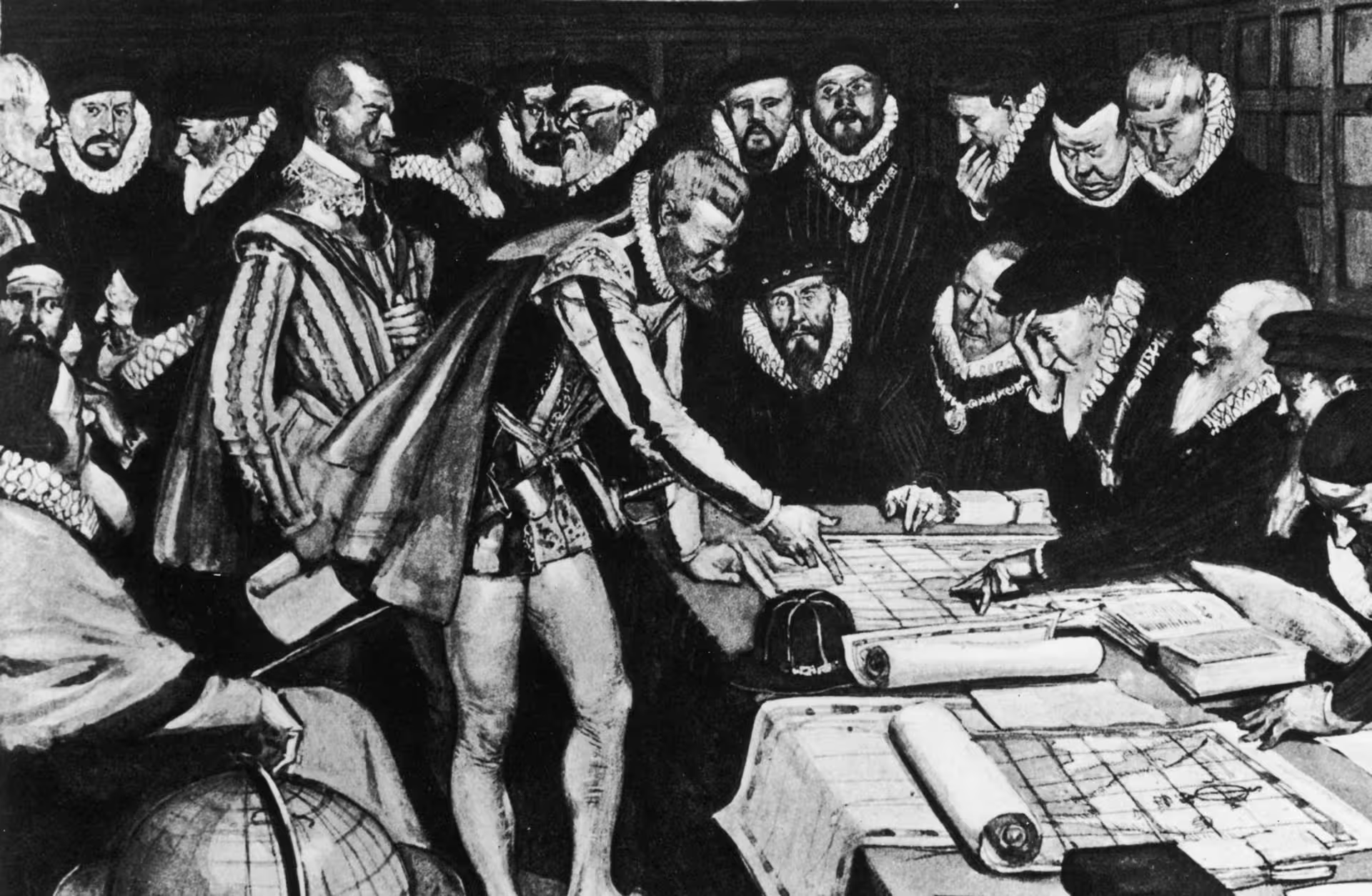
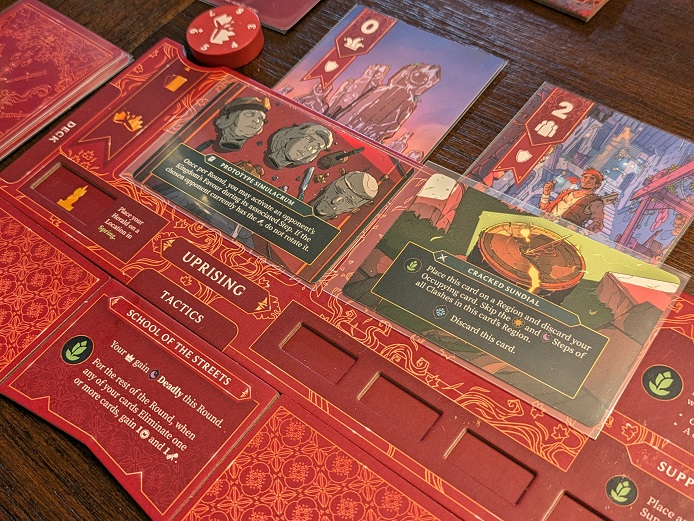
It’s 1710 and the world is in turmoil. Maybe. I’m not sure, as the Company and the state of its affairs are sprawled out on a massive table on one end of the room, and I’m at the other surrounded by my peers. My family. Good Hastings men and women. It’s loud and chaotic. I…
And, we’re back! Here with another edition of Off the Shelf, let’s look today at
image by BGG user Camdin
FUSE is a 2015 game designed by Kane Klenko and published by Renegade Games. It’s for 1-5 players, and is a real-time dice-rolling game where you are trying to defuse bombs in your spaceship within ten minutes. There are several games in the FUSE family now – along with the original, which got a new edition in 2019, there’s Flatline (2017 – this one is about saving patients injured in the original game’s attack) and FUSE Countdown (2023 – this one adds new stuff to the FUSE system, including multi-colored dice and roles).
At the start of the game, each player gets two cards (four in the solo game). You’ll then deal cards into a deck based on the number of players and desired level of difficulty, and shuffle them. Deal out five face-up cards, and then add six bomb cards to the deck.
collage of images by BGG user Scott Gaeta
There are no turns in this game. You start a ten minute timer (and Renegade has one on their app that will mock you throughout play) and start drawing dice – one per player in a 3-5 player game, four with two players, three in solo play. These are rolled, and each player will take one (two with two players, all in solo play). The chosen die (or dice) must be placed on a valid spot on a card. Most spots either have a specific number, a specific color, or both. Some have number or color of your choice, but these usually have to be identical (or not) to something else on the card. Sometimes you just need to place dice on the card, but other times you need to stack them into columns or a pyramid.
If you cannot place a die, you must roll it, then you must remove another placed die that matches the number or color of the rolled die. Once everyone is done, unused and discarded dice go back in the bag and you do it again.
When a card is completed, it is set aside into a score pile and you take a new one from the array in the center of the table. This card is immediately replaced with the top card of the deck. If it’s a bomb card, all players must discard a die that matches the number or color of the bomb card. The card then goes into the score pile and is replaced.
The game ends in two ways – either all cards are removed from the center of the table (deck is empty, all face-up cards are taken), or you run out of time and blow up. Either way, you score the points from your defused cards, two points per bomb card, ten points if you won, and one point per 10 seconds left on the clock. This is just for reference purposes to see how well you succeeded – you win if all bombs get defused.
image by BGG user LaborLawLarry
I got my copy in 2016, winning it in some Twitter contest that I don’t remember. According to my logs, I’ve played it 53 times since then, most of which were solo. In fact, I’ve only played a couple of times with multiple people, and neither of them were terribly successful. There were too many times when players started bickering over dice they needed when someone else also needed them, and that wasted too much time. That led me to the conclusion that I much prefer it as a solo game, where I get to make my own decisions and am not beholden to others. Though I would like to try two players sometime.
The game is played in real-time, which is a turnoff for some people. It is highly stressful, as you only have 10 minutes to complete your bombs. And if you’re not rolling well, it can be pretty frustrating. But that’s part of what I really like about it – I think the tension works really well, and it ends up feeling like a really quickly played puzzle.
I happen to really enjoy real-time games. But I know there are a lot of people who don’t – the tension of not being able to pause and think can be highly stressful. For me, it works well. I love thinky games where I need to consider my options and make a reasonably educated move. But I also like chaos, and nothing says chaos like “you only have ten minutes before your ship explodes.”
The cards are pretty well laid out. The patterns are pretty easy to identify, and the dice fit in all the squares on the page. I do really like the 3-dimensional patterns as well as the 2-dimensional ones, because you have to be thinking about what has to come first. The bomb cards add an extra wrinkle to the game, and while it’s a sigh of relief when one comes up and you have nothing that matches, it’s pretty frustrating to discard something when they do.
Overall, the game is pretty high on the luck factor. You have to draw the right dice, roll well, and complete whatever challenges the game throws at you. You can try to strategize what bombs you want in front of you, maybe having a mix of easier and more complex patterns, but if only one or the other is coming out, you’ve got to deal with it. I personally love the 6-point bombs, as they always stack and are just a lot of fun to complete overall.
So, yeah, this is a favorite game of mine to play solo. I’m doing it as part of my 10×10 this year (ten games ten times each in a year), and have been enjoying it. I’ve lost more than I’ve won, but I always have a good time. I’ve currently got it at #5 for my Off the Shelf rankings.
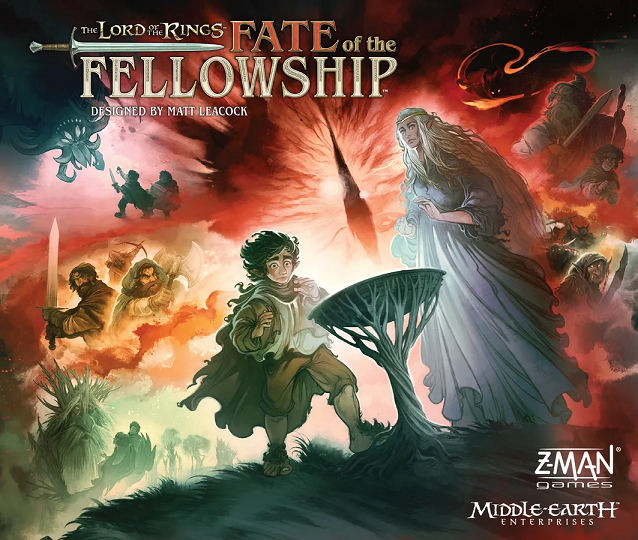
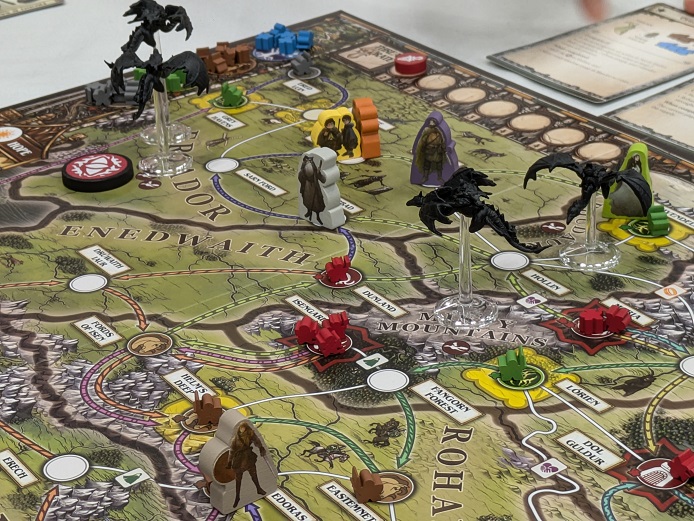
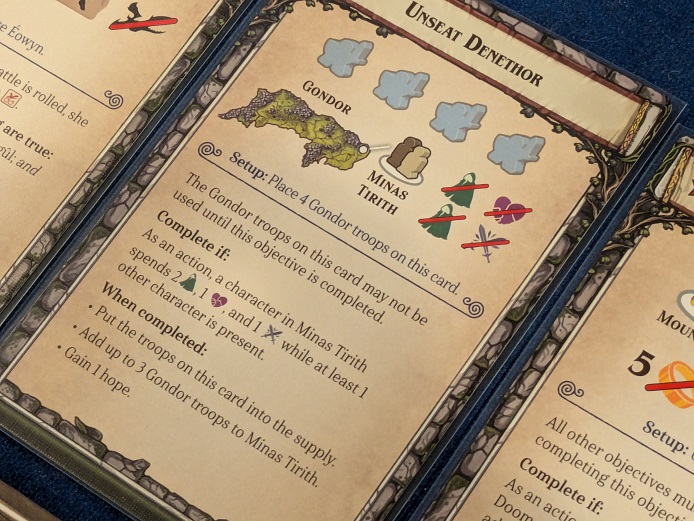
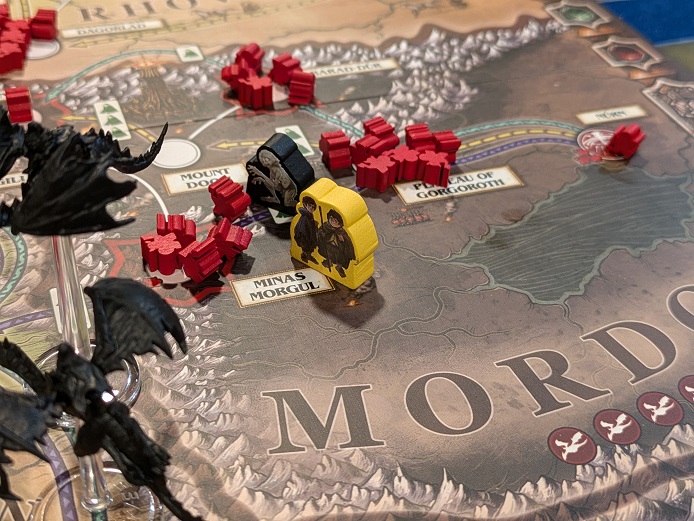
Somewhere, Matt Leacock is walking around, chained to a big goose as gold as the sun. For the love of God, someone let this man design something other than Pandemic. Not today. While not betrayed on the cover, The Lord of the Rings: Fate of the Fellowship is described as a Pandemic System game. And…
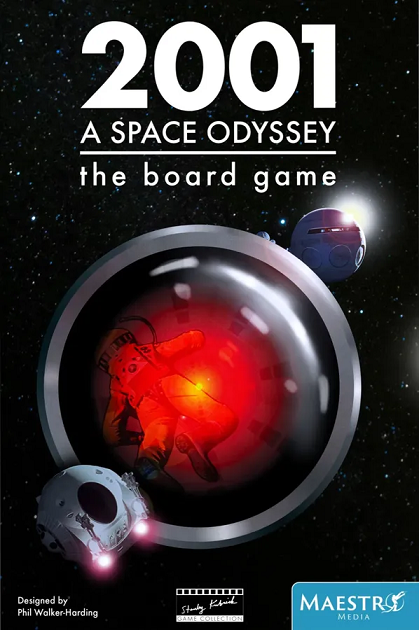
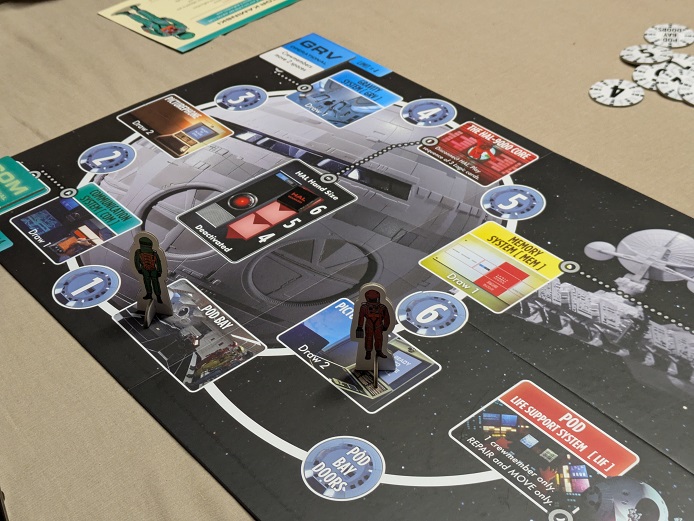
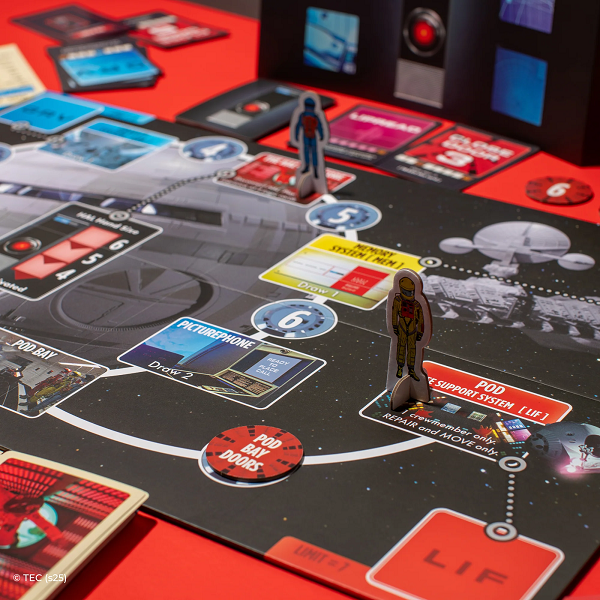
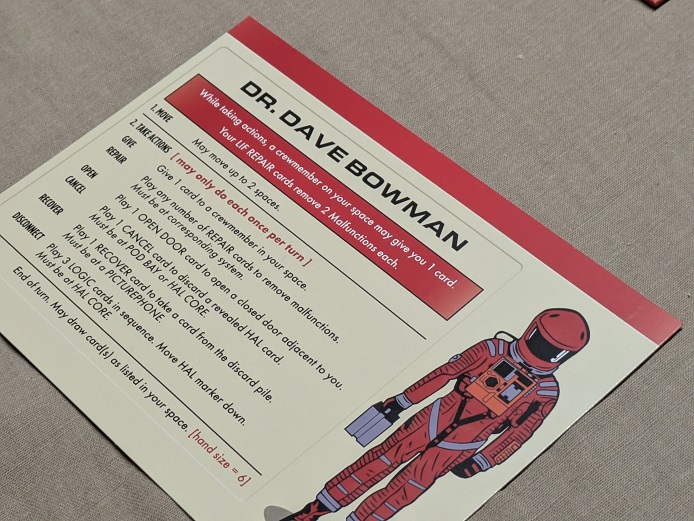
Prospero Hall is back. I’m sorry, that’s a lie. 2001: A Space Odyssey the Board Game is not a Prospero Hall title. It’s a Phil Walker-Harding design courtesy of Maestro Media. This fits right alongside quirky board game cuts like The Warriors, Fast & the Furious: Highway Heist, and Rear Window. I almost don’t trust…
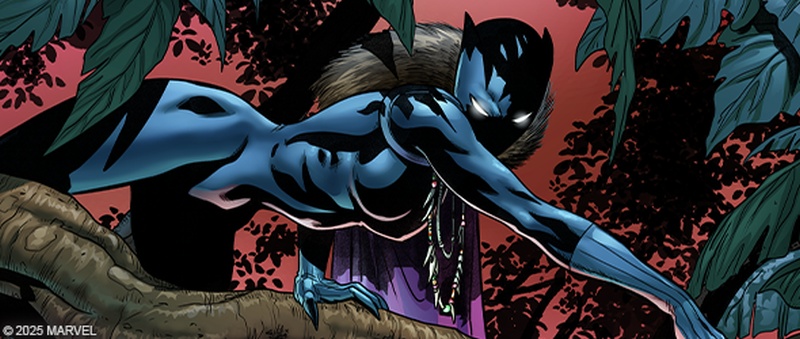
First a bit of background on Black Panther, Shuri, she is a princess of Wakanda and was the young sister of T’challa. The Black Panther Name was carried by the Males of the family until the death of her Brother, when with reluctance she took it on. Shuri rediscovered the the plant that gave the user the powers of Black Panther and then took it. she gained more abilities including Super-Strength, Speed, and Agility which she combined with her amazing Scientific Mind and fighting abilities to become a mighty hero.She fought the loss of her Father her Brother and then her Mother to try and keep her anger in check and to stop her heroine self from becoming a monster. She has great leadership abilities, amazing science knowledge and is a mighty fighter.
So how does she play in the game? In her Alter-Ego form, Shuri can exhaust herself to search her deck or discard pile for any “Black Panther” or “Tech” upgrade and play it, reducing its cost by 2. Allowing her to quickly get her core upgrades into play, as well as any other valuable Tech cards in her Justice deck. While in her hero identity she has four “Black Panther” upgrades. These cards, such as Kimoyo Beads and Spider Bites, are a central part of her hero identity, which she can make use of after a basic power.
Her game is more about a consistent, tactical approach as opposed to her brother who in the core game is more about explosive, single-turn damage .
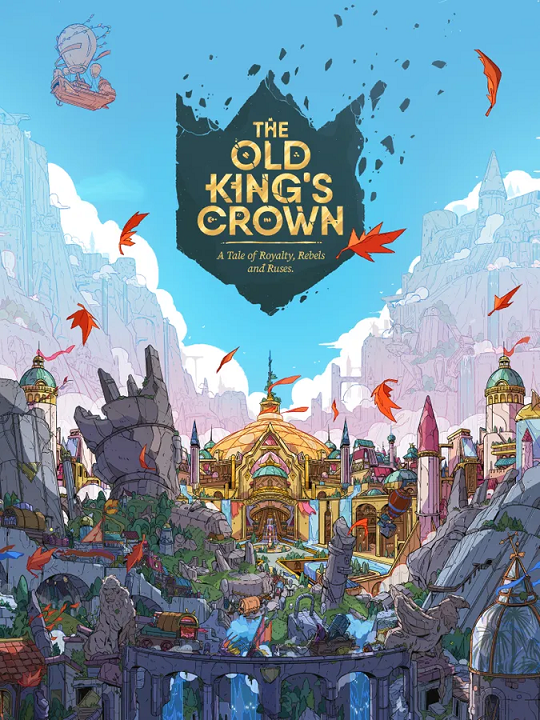
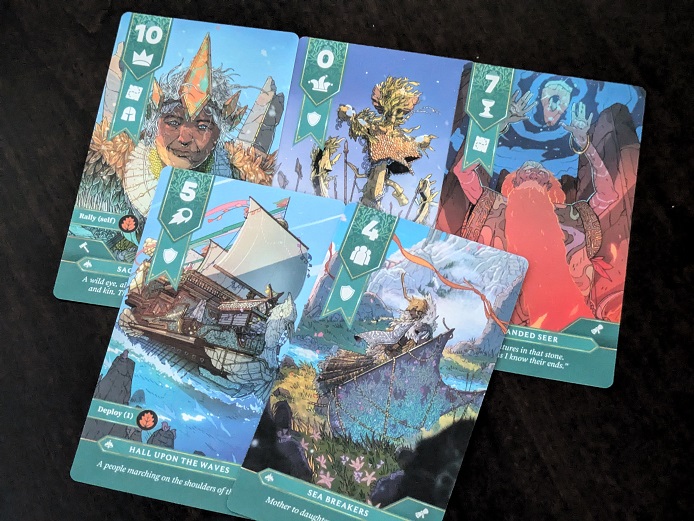
The Old King’s Crown is beautiful. It’s a lavishly illustrated craft with peerless style. This charisma reverberates in the game’s excellent writing, with passages leaping from the page in order to set the scene of a King Lear-like situation with a vacant throne. Expectedly, the gears of the work are likewise dashing, powering the entity…
In this new version of the app there are more Avatar options, more Avatar settings and more Avatars!
Changing multiple Avatars
You can now use Multiple Select to set Illustrations, Background colours and Shapes for multiple selected Players. This makes it even easier to visually create a group of Players!
Avatar Settings
It is now possible to:
Choose to set a random color for default Avatars: when no Avatar is assigned, the background colour of the default Avatar will be random.
Choose where you want to see Avatars: Overview, Plays list, Play overview and Edit Play screen.
Choose the default Avatar import settings: this will be used whenever you import Plays (can always be changed on the Import matching screen).
Read more about Avatars and all options here: Avatars
More Avatars
Illustrator Annika was so generous to create another illustration!
You can now use her chameleon to create even more Avatars.
Her range of pöppels is also expanded with 5 new colours!
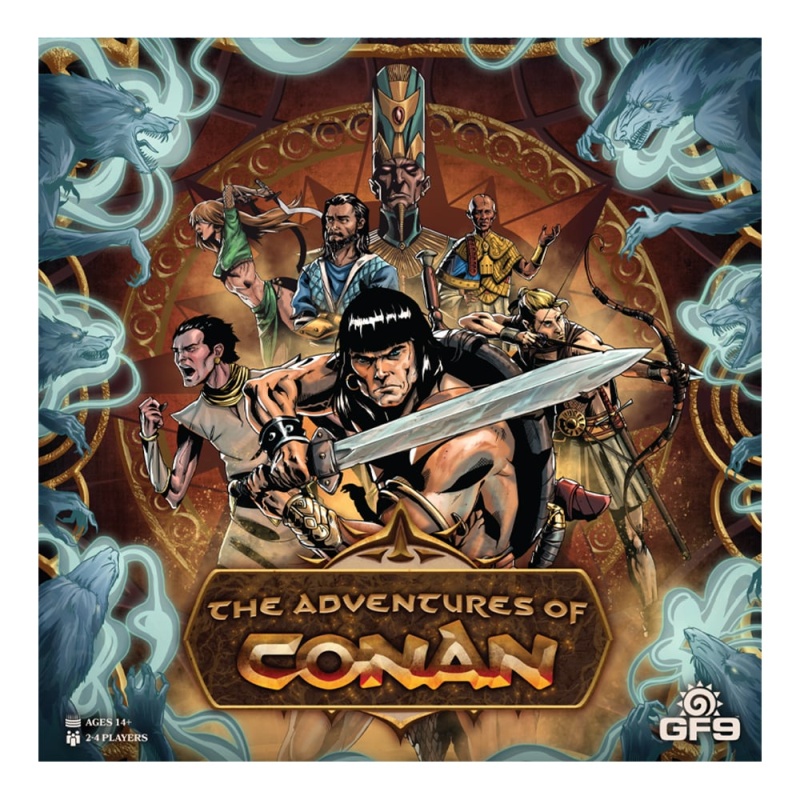
The Adventures of Conan expansions pack contains two expansions Queen of the Black Coast and Nemedian Chronicles
Queen of the Black Coast.
In this expansion there is so much added for your fun that will just lift your gaming experience hugely. In this expansion is added The Black Coast map for your game and five new realms, It also adds more allies, foes and another version of Conan to spice up your game even more. There is also added even more events, plots and scenarios.
This will open so much more to your gaming fun as you can now play as a new character while exploring new places and opening new plots and scenarios.
This expansion adds so much more playability for future games as well as so much more to do in the now.
Nemedian Chronicles
This expansion adds new scenarios with new ways to play, special encounter cards even more plots, you get Crom a new character this means he can take over and control Conan during the game, there is a set of characters put aside and if someone else takes over Conan that player must choose onr of the rogue characters and take that over with all the benefits that comes with that character. You also have new event cards that play slightly differently so that will also shake up your game a lot.
There is also now a bazar to buy special effects to add to your character and this will change how they interact with each other.
Another great expansion. At this moment both of these expansion are in one amazing box. A highly recommended expansion which will add so much to your game!
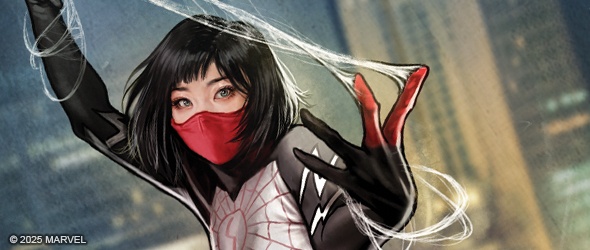
First a bit of background on Silk, she is quite a new Superhero as she first appeared on 1st April 2014 in the amazing Spiderman. She is of Korean American descent and was a love interest of Spider-Mans, her full name is Cindy Moon and she was bitten by the same Spider that had bitten Peter Parker. Her abilities are Superhuman strength, Speed, Agility, Equilibrium, Reflexes. Stamina and Durability. She also has the ability o stick to solid surfaces, she has organic web generation, precog silk-sense, she is an expert in hand to hand combat and has an Eidetic memory.She was a member of Spider-Army, Web-Warriors and the Agents of Atlas. She briefly took on the name Spider-Woman during the spider verse story line of 2022-2023.
So how does she play in the game? Her best ability is her tuck mechanic that lets her defuse dangeours encounter cards allowing her to turn them into a future card draw in her alter ego, this gives better control of the encounter deck espeically in a solo game. She has a strong defense allowing her to take damage which is useful whether playing solo or multiplayer where someone needs to take the hits. In a multi player deck with other web warriors she can share the benefit of those cards like Web of Life and Destiny. Her main disadvantage is her low damage output which especially in solo can mean she struggles against bosses.
This is a game where each player has a sheet which says how they can win. The first player play as Conan. The next player chooses a foe to play, the next player chooses an ally to play and if you have a fourth player they choose another Foe to play. Each player has their own aims and objectives for the game which makes for an interesting time. Each round plays with small combats and other exciting parts of the exploring then we see if there is a bigger fight to happen between Conan and the board and maybe a second fight as well. If Conan does not loses one or both of his fights then the third player has a chance to save the day, depending on the results bonus points go out to the players and you go on to round two.
As you go through each of the rounds the game opens up and you get more and more fun from the playing of it. On your sheet for your player it tells you what you need to achieve to win the game for your character, so good luck and enjoy yourselves! This is a complex yet fun game that is not going to be every-ones cup of tea, (I recommend giving it a go) yet it if you like this sort of game then you will love the complexities that come with exploring this realm adds to your life. I would highly recommend this great game! Espeically if you enjoyed the Dark Horse Comics line of Conan titles where the characters, adventures and art are taken from.
It’s that time of year again – time for the des Jahres awards! These are a set of awards given to the German game of the year. The Spiel des Jahres (family game of the year) has been around since 1978, with the Kinderspiel (childrens game) being officially added as an award in 2001, and the Kennerspiel (connoisseur’s game) being introduced in 2011. Despite being only one of a myriad of awards out there, these tend to be the most like the Oscars and get the most scrutiny from the hobby game community. Every year since this blog started, I’ve done an annual rundown of the titles nominated and given my predictions, and I’m 22-16 overall with my picks. Last year, I broke my three year streak of getting all three winners correct as I only got the Kinderspiel right, so let’s see if we can get back on track this year.
I’m 6-4 overall with my Kinderpiel picks, which I only started picking in 2015. And here is how I’ve done over the years:
2015: Spinderella (correct)
2016: My First Stone Age (I picked Leo)
2017: Ice Cool (correct)
2018: Dragon’s Breath (I picked Panic Mansion)
2019: Valley of the Vikings (I picked Go Gecko Go)
2020: Hedgehog Roll (I picked Foto Fish)
2021: Dragomino (correct)
2022: Magic Mountain (correct)
2023: Mysterium Kids (correct)
2024: Magic Keys (correct)
You’ll notice that I have gotten the Kinderspiel winner correct the last four years in a row. We’ll see if we can keep that streak up this year. Without further ado, here are the nominees!
image by BGG user Purple
Cascadia Junior (Fertessa Alysse/Randy Flynn, Flatout/AEG) is a kids version of 2022 Spiel des Jahres winner Cascadia. In the game, you’ll be drawing double hex tiles and adding them to your habitat. If you ever create a group of three animal icons, you’ll cover them up and draw a matching animal token, placing it on a panorama board (but not looking at it). Once everyone has placed 10 tiles, the game ends, and you collect habitat tokens for having groups of 3-5 and 6+ identical terrain groupings. You’ll then reveal all your tokens, add up the scores, and see who won.
It’s certainly not unheard of for the kids version of a game to win Kinderspiel – My First Stone Age and Mysterium Kids have both done it. And plenty have also gotten nominations – Taco Kitten Pizza got a nod last year. This one looks like an interesting distillation of the Cascadia rules, though I’m really not a fan of the hidden-from-everyone-including-the-player scoring. Still, it doesn’t look bad.
image by BGG user KushTheGoddess
Le Clan des Souris (aka Die Mäusebande, Christoph Lauras, Débacle Jeux/Game Factory) is a game about collecting teeth, because apparently other cultures use a Tooth Mouse instead of a Tooth Fairy. A 3×3 (or, in a more advanced game, 4×4) grid is laid out, and players have to find animals on the tiles to collect their teeth. Before time runs out, as tracked by moons, players need to find different sizes of animals to collect their teeth. In the advanced game, there are monsters to be beaten, stuff to beat those monsters, and other bonuses/obstacles to discover.
This game is only available in French and German, but it seems like a fairly simple memory game. Memory games don’t tend to do well in Kinderspiel voting, but I have enjoyed seeing the different ways the mechanism is explored over the years. The three sizes of animals look like it really throws a wrench in just straight memorization. It looks fun.
image by BGG user W Eric Martin
Topp die Torte! (Wolfgang Warsch, Schmidt Spiele) is a game about building cakes. Each player starts the game with a unique base layer with a number of colored bars. You’ll also get a stack of 7 layers from which you’ll draw two. From those two, you’ll choose one to add to your cake, and you’ll pass the other. If the colored bars line between the tile you placed and the tile below it, you gain gems of those colors based on symbols present on the bars. Gems are placed in jars, which (when full) get you coins with points on them. After everyone has placed seven layers on their cake, the game ends, and the player with the most points wins.
This is a spatial game, where players really have to visualize where the layers will line up so they can get maximum gems. There is some luck in what you draw, as well as points from the coins. But the draft becomes the most important, as you have to pick both what you’re going to keep as well as what your neighbor will get. It looks like a pretty cool game.
My predictions for the winners are at the bottom of the post, but for now, let’s get to the granddaddy of them all, the Spiel des Jahres.
I’m 8-6 Spiel in my predictions for the Spiel des Jahres. Here’s how I’ve done over the years.
2011: Qwirkle (I picked Forbidden Island)
2012: Kingdom Builder (I picked Eselsbrücke)
2013: Hanabi (correct)
2014: Camel Up (I picked Splendor)
2015: Colt Express (correct)
2016: Codenames (I picked Imhotep)
2017: Kingdomino (correct)
2018: Azul (correct)
2019: Just One (correct)
2020: Pictures (I picked My City)
2021: MicroMacro Crime City (correct)
2022: Cascadia (correct)
2023: Dorfromantik (correct)
2024: Sky Team (I picked Captain Flip)
Captain Flip was the one pick I made last year where I was pretty certain I was correct, and then the jury went against tradition and picked the heaviest game nominated. I haven’t gotten to play Sky Team yet, and while I do think it looks very good, it’s still a surprise that a two-player game got picked for family game of the year. Anyway, I’m going to try to get back on the horse this year with my pick. Here are the nominees.
image by BGG user Quokkova
Bomb Busters (Hisashi Hayashi, Pegasus Spiele) is a cooperative game about being part of a bomb disposal squad. Each player has a rack of wires, and other players have to logically figure out what you have. On your turn, you can either do a solo cut, where you reveal two of your wires that have the same number, or a dual cut, where you ask another player if a particular wire is a number that matches one of yours. If they do, you both reveal. If not, you’re one step closer to blowing up. There’s equipment you can use to make your life easier, but the main goal is to find all the wire pairs before the bomb detonates.
This game kind of gives me Hanabi vibes as players are trying to logically figure out which stuff to reveal without having it all blow up in their faces. It also gives me a little bit of The Crew, as there are a ton of missions in the box to keep things interesting. And it looks like a pretty good logic puzzle style game with a slightly more intense theme than the cover art would suggest.
image by BGG user Mrmarshmallow
Flip 7 (Eric Olsen, KOSMOS/The Op) is a push-your-luck card game where you’re trying to score points by taking unique cards. In a round, players will take turns deciding if they want to hit and take another card, or if they want to stop and just take their points. If they hit and get a number (0-12) that they do not have, they are safe. If they get a repeat number, they bust and are out of the round. There are also special action and modifier cards that could come up. When someone gets to 200 points, the player with the most points at the end of that round wins.
This is a pretty light card game that seems like a lot of fun. I thoroughly enjoy light push-your-luck games, and this looks like a good one. It bills itself as “THE GREATEST CARD GAME OF ALL TIME” right on the cover, which is kind of off-putting to me, even if it is just a joke. However, the game does look fun and it’s one I’d like to try.
image by BGG user frechverlag
Krakel Orakel (Die 7 Bazis, frechverlag) is a party style drawing game where players are trying to get their fellow players to guess a drawing. The trick is, you’re drawing on a board that has a bunch of scribbles already printed on it, and you have to use those lines. Each player gets a word, then has two minutes to make their drawing on their board. Once everyone is done, the words get mixed with some dummies from the deck, and each player gets to vote on one word they think was not drawn by another player. If players can survive four rounds without losing too many points, they win.
I’m not a party game fan, and I don’t think this one would make a convert of me. I think it has a clever twist with the preprinted lines, but at the same time, I can see that being really frustrating and limiting for some people. Sculptors like to talk about seeing their sculpture in the medium before they start, and that’s something I think you’d have to do here. It looks like an interesting twist on drawing games, but it’s not one that I’m personally interested in trying out.
Before we get to my pick, let’s look at the Kennerspiel des Jahres.
I’m 8-6 in my picks for the Kennerspiel, which is awarded to a slightly heavier game each year. It’s typically not a heavy game, more like a next step up from the SdJ. Here’s how I’ve done:
2011: 7 Wonders (correct)
2012: Village (correct)
2013: Legend of Andor (I picked Bruges)
2014: Istanbul (I picked Rococo)
2015: Broom Service (correct)
2016: Isle of Skye (I picked Pandemic Legacy)
2017: EXIT: The Game (I picked Raiders of the North Sea)
2018: The Quacks of Quedlinburg (I picked Heaven & Ale)
2019: Wingspan (correct)
2020: The Crew (correct)
2021: Paleo (correct)
2022: Living Forest (correct)
2023: Challengers (correct)
2024: Daybreak (I picked Guild of Merchant Explorers)
I had gotten five in a row correct before I talked myself out of picking Daybreak last year. I have played both that and Guild of Merchant Explorers this year, and like them both. But it was indeed a case of the jury defying tradition again and picking a heavier game than they usually do. Still, I’m going to try to get to 6 out of the last 7 with this year’s pick. Here are the nominees.
image by BGG user DWPtoronto
Endeavor: Deep Sea (Carl de Visser/Jarratt Gray, Burnt Island Games/Grand Gamers Guild) is the latest game in the Endeavor line. The original Endeavor came out in 2009, and was a game of exploration and economics. The 2018 reprint (subtitled Age of Sail) updated the game and brought a whole new set of fans to the system. This sequel is about underwater exploration, and while it has similar mechanisms, it is a different game. Players will be performing actions on different tiles that will make up the modular board. These include diving, traveling, using sonar, and research. The game has a conservationist bent to it, and the goal is to score the most points as you explore and understand the deep sea better.
I’m not getting into all the mechanisms of the game because there are a lot of moving parts, and I’m trying to keep this at least relatively brief. But, it looks like a good sequel to Endeavor (I’ve played the original, but not the reprint) that takes the system in a different direction. I’d imagine that the third game might head to outer space, but who knows. I think this looks like a lot of fun, with my only hesitation being that I think it might have just a few too many moving parts for the Kennerspiel this year.
image by BGG user Mattintheweb
Faraway (Johannes Goupy/Corentin Lebrat, KOSMOS) is a game about taking a journey and completing quests. In each round, players will simultaneously add a card to their journey rows. Starting with the player who played the lowest number, they will then draft a new card to their hand. After eight rounds, players will score their journey. This is done by flipping all the cards face down, then revealing them one by one, starting from the end (i.e. the last card they played). Cards have different scoring conditions, including different symbols to collect and colors needed, and you can only score cards that have been revealed. So the first card you play won’t get scored until the end, while the last card you played will score before anything else has been flipped. The player with the highest score wins.
Faraway is the only nominee from any of the categories that I have played. It’s a very interesting game that takes a little thinking to get your head around the concept. There’s a lot of thinking in the game, especially at the start as you figure out your strategy going forward. It can run long with higher player counts (my first game was with six players who kept getting very distracted), but it shouldn’t take too long once people understand the flow. I like it, and I think it’s a good nominee for this award.
image by BGG user GigamicTeam
Looot (Charles Chevallier/Laurent Escoffier, Gigamic/Game Factory) is a Viking themed game where you’re pillaging the land to build up your own community. Players are placing Vikings on a shared board to collect resources and building to put on their own board. The different buildings have different rules for capture. There are also different Longships you can get that will give you more points, and these have resource requirements to make them operational, and will lose you points if not completed. In the end, when all Vikings have been placed, the player who has the most points wins.
Looot seems like a pretty interesting puzzly game, as you’re trying to figure out the best way to get resources and buildings. That you’re picking up stuff from a shared board is interesting, especially that your Vikings don’t have to be adjacent to your own Vikings, which means you need to b mindful of what others need and try not to make it too easy for them. It seems like a pretty good game that, due to the title, I might have skipped over looking at had it not been for the nomination.
OK, it’s time for my picks. For the Kinderspiel, I’ve been waffling between two choices. My general guiding principle is to pick the one with the dexterity element, but none of these have one. Memory games don’t tend to do well in voting, so I’m not going with Les Clans des Souris. That leaves Cascadia Jr and and Topp die Torte. After much deliberation, I’m going with…
This is a weird pick for me because I think it’s the game that I personally would be least interested in. However, at the same time, it’s the one that feels the most like a Kinderspiel winner. Topp die Torte looks really cool and interesting, but I can also see it being super frustrating for kids. I mentioned that memory games don’t tend to do well in KidJ voting, but Les Clans des Souris does have a great concept and looks like a pretty solid game. Cascadia Jr, despite having more randomness in the scoring than I would like, does have that light puzzle feel, nice art, and a panorama where you can build your own nature scenes. Also, it’s based on a popular board game IP, and those games do have a history of doing well (just since I’ve been doing my predictions, My First Stone Age, Dragomino, and Mysterium Kids have all won). So, I think it’ll be Cascadia Jr, though I’d be happy seeing either of the other two win.
On to my Spiel des Jahres prediction, and this is another one where I went back and forth between my choices. Ultimately, I think I’m going with
It was between this and Bomb Busters for me. Krakel Orakel seems like this year’s weird pick – the one that is interesting because it’s so quirky, but ultimately doesn’t have a shot. I ended up going with Flip 7 because I think it’s an easily accessible game that will really reach a lot of people who might not be that into gaming. While I think Bomb Busters looks great, I think the theme is probably going to turn a lot of people off. It coming the year after “avoiding a plane crash” was the theme probably doesn’t help. While Flip 7 does seem very small and simple for an SdJ winner, that’s my choice, and I’m sticking with it.
Time for the Kennerspiel prediction, and while I’m not 100% confident in my pick, I arrived at this decision quicker than the others. I’m going with
Faraway seems like the kind of game the jury will go for. Simple rules, the twist on scoring, and a fairly compact game make it seem like the clear frontrunner. Endeavor: Deep Sea and Looot seem like very good games, but just with a lot of moving pieces that might be kind of intimidating. I have played Faraway and haven’t played the other two, so maybe that’s my bias showing, but I’ll go with Faraway as this year’s Kennerspiel winner. If it doesn’t win, I think Looot would be my second choice, but I’m sticking with Faraway.
So, there’s my predictions. The award winners will be announced on Sunday at 6pm German time (GMT+2), so we’ll see if I managed to get it right this year. Thanks for reading!
EDIT: Well, that didn’t go well. For the first time since 2016, I’m 0-3. Topp die Torte won the Kinderspiel, giving Wolfgang Warsch his second dJ award – he’s now one step closer to the career Grand Slam, just need an SdJ. Bomb Busters won the SdJ, meaning that a cooperative game has now won 5 of the last 7 years. Endeavor: Deep Sea won the Kennerspiel, which was a surprise for me because I thought it would be a little too heavy. Between that and Daybreak last year, it seems the jury might be moving in a little bit of a heavier direction with these picks. Anyway, not a good year for me, so we’ll see if I can do better next time.
We are really excited to introduce Avatars in BG Stats!
Avatars offer a way, in just three steps, to easily and quickly create a beautiful picture to use as your player icon.
Multiple talented artists created sets of illustrations you can use together with a background colour and a shape to create a unique Avatar for you and other Players in the app.
The Illustrations you can choose from are created by the following 5 talented artists:
Select your own Avatar, (optionally) receive your friends Avatars when they share plays, or create sets of Avatars with the same background colour or shape for different game groups!
With 50 illustrations, 450+ colours and more than 25 shapes you can make each players avatar unique!
Select illustration
Select background colour
Select shape
Receiving Avatars
On the Matching screen, when you import a play file / QR code, you can choose which avatars to import, so you can use a players own chosen avatar in your app. Or you can keep the avatar you’ve chosen for that player yourself!
Avatars on the Plays list
On the plays list there is an option to show avatars for all players, or just the winner(s).
Plays list
Plays list: options to show Board/variants
On the Plays list it is now possible to show board/variants for plays. Just like expansions, you can now toggle “Display board/variants” in the gear menu at the top right of the list.
Hungarian
We are very proud that thanks to the hard work of our wonderful volunteers Hungarian becomes the 16th language in BG Stats!
Languages already available are: Chinese (simplified), Czech, Dutch, English, Finnish, French, German, Icelandic, Italian, Korean, Polish, Portuguese, Spanish, Swedish and Ukrainian!
Activating a different language in the app Go to Settings –> App Settings –> Language
We are very grateful for all our translators for not only translating the app, but also for their continued support with translating new features!

 Anmelden