Normale Ansicht

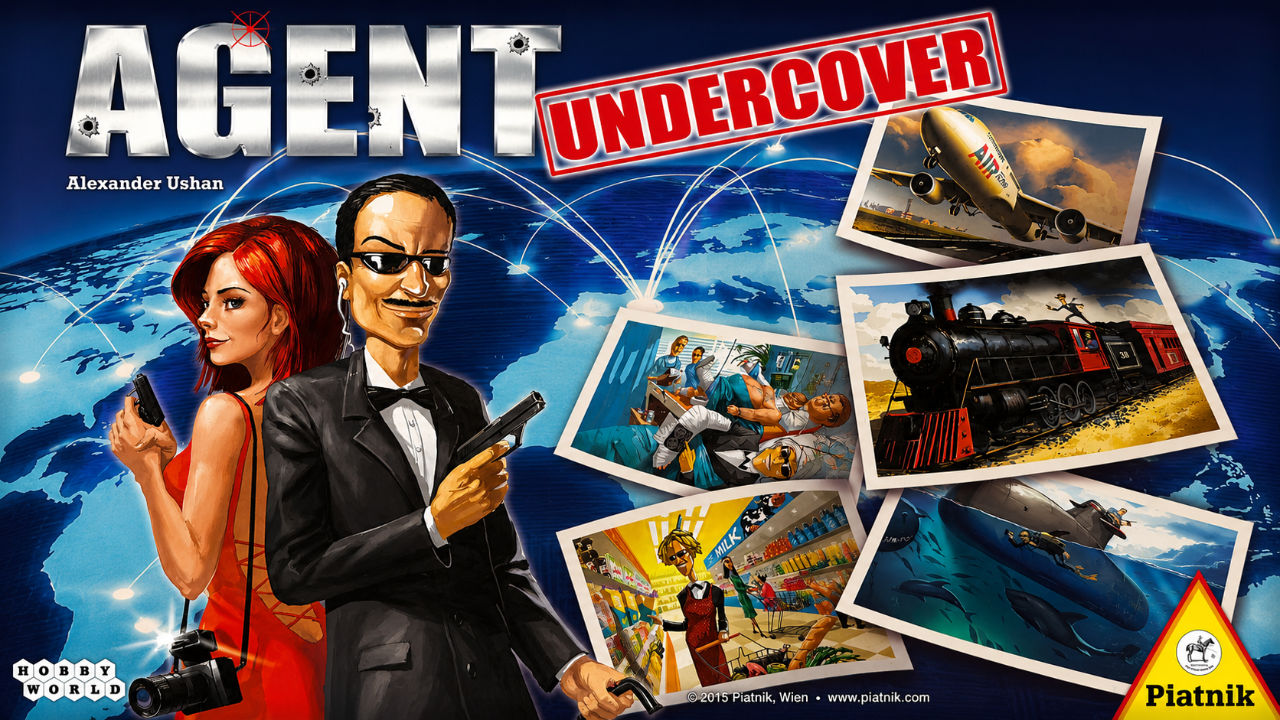
Agent Undercover

Von: ferengi
17. August 2026 um 08:45

Wo bin ich?

Komplexe Deduktionsspiele wie Blood on the Bloodtower haben eine Einsteigerproblem. Die Regeln sind schnell erklärt, aber die Rollen und Beziehungen untereinander erschließen sich erst nach ein paar Spielen. Auch dieses Agentenspiel hat prinzipiell diese Hürde.

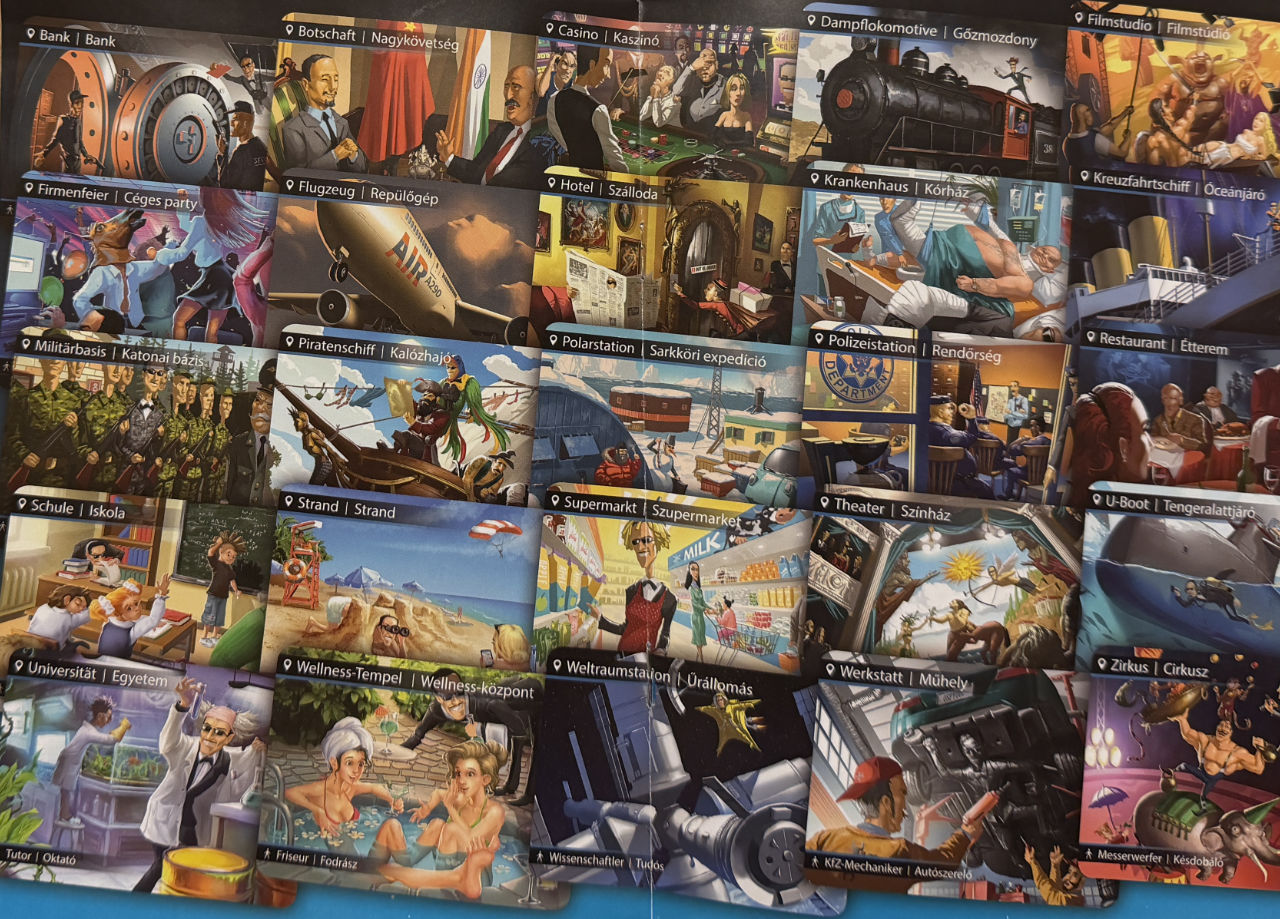
Dabei sind die Regeln sehr simpel: Das Spiel besteht aus 25 Kartensets mit Rollen in einer Location. Ein Set wird ausgewählt, so dass niemand den Ort sieht. Nun werden die Rollen verteilt und jeder sieht, wo er sich befindet und was er dort macht. Auch hat jeder Spieler eine Übersichtskarte, welche 25 Orte es gibt.

Nun stellt der Startspieler jemanden eine Frage wie „Welche Art Kleidung trägst Du hier meistens?“. Die Frage bekam ich gleich in meinem ersten Spiel und auf meiner Karte stand gar kein Ort, sondern dass ich der gesuchte Agent bin. Aber wo sind wir alle und was zieht man hier an? Sind wir im U-Boot, in der Polarstation, im Kaufhaus ??? Also weicht man aus mit „eine dem Ort angemessene Kleidung“. Puh, nun bin ich sicher verdächtig, denn das war ja keine Antwort. Aber antwortet man zu konkret, dann weiß der Agent ja wo wir sind.
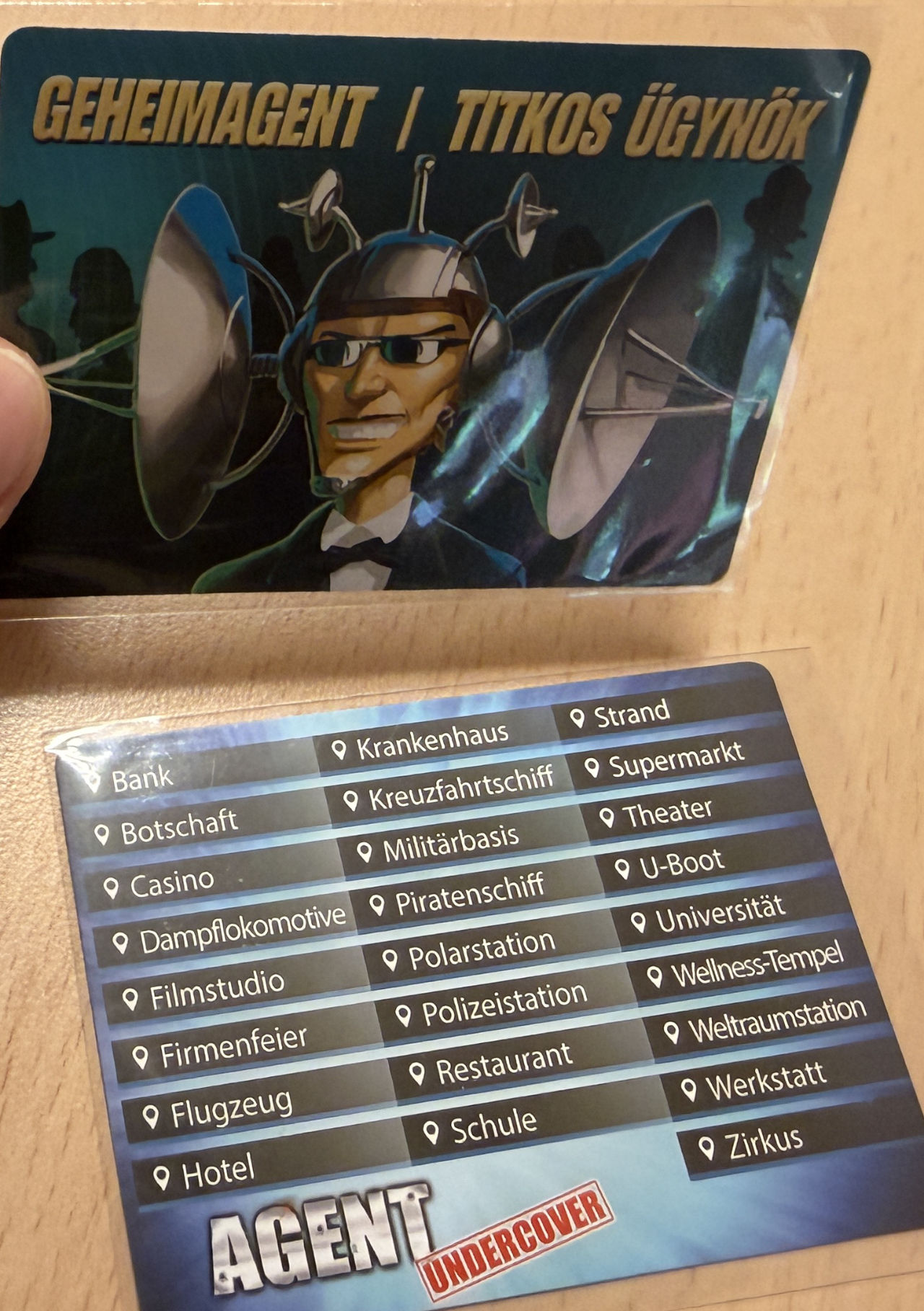
Uups, wo sind wir denn? Bei den anderen steht auf der Karte ein Ort und eine Rolle.

Nun nun bin ich Fragesteller und und frage jemand anderes, wann er denn heute aufgestanden ist. Macht die Frage zu dem Ort Sinn? Welche Frage kann man sonst stellen, wenn man nicht weiß wo man ist?

Beendet ist das Spiel, wenn der Agent auflöst und sagt wo wir alle sind. Gewinnen kann er auch, wenn er in einer Abstimmung einstimmig überführt wurde und erst dann den Ort sagt. Oder wie in meinem ersten Spiel mit etwas Glück: Ein anderer Spieler war noch verdächtiger und nach einiger Zeit haben wir ihn einstimmig überführt. Dumm nur für die anderen, dass ich es war. Und dann erfuhr ich auch, dass wir im Casino sind.
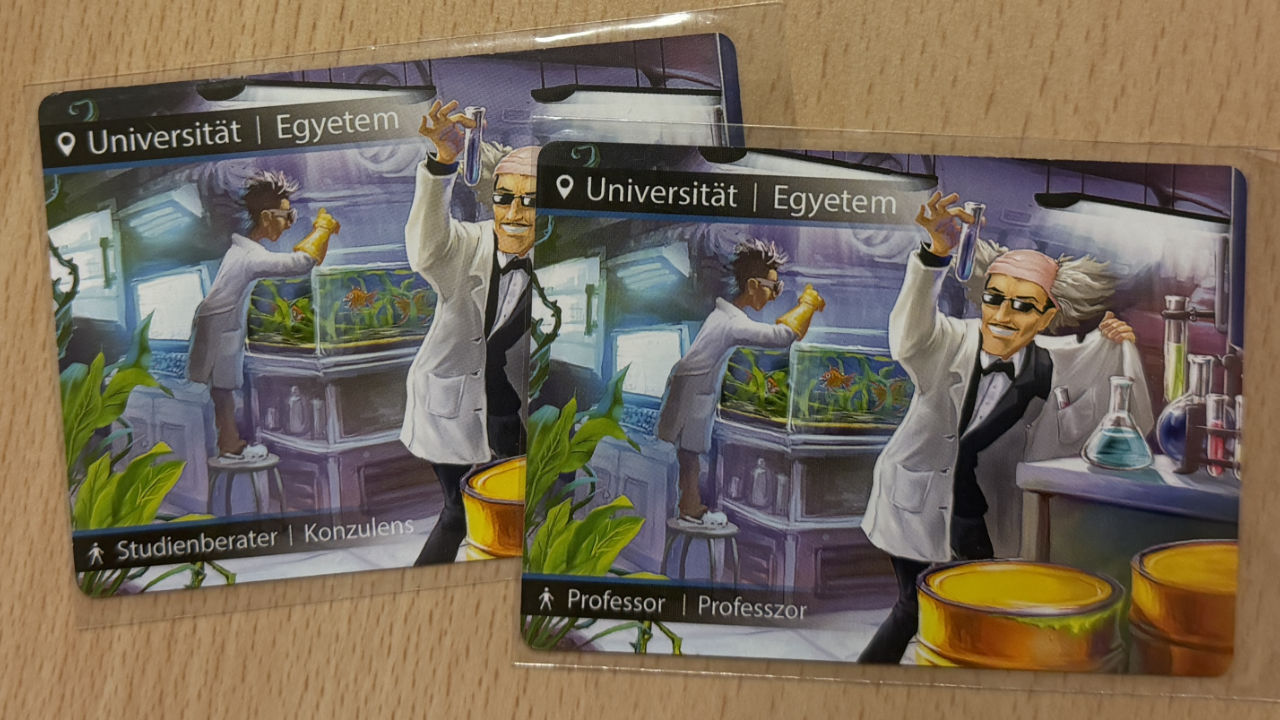
Als Professor in einer Universität fragte ich meinen Hauptverdächtigen, wieviele Orte dieser Art es noch in Hamburg gibt. Er dachte, dass wir im Restaurant sind und antwortete mehrere hundert. Und dann war er schnell enttarnt.
Die Übersichtskarte ist gut, denn eine der Karten mit einer Rolle zu dem Ort haben die Spieler. Aber wer da draufguckt, ist verdächtig.

Fazit:

Vor dem ersten Spiel muss jeder sich die Zeit bekommen und die 25 Orte ansehen. Denn wenn jemand im Spiel immer auf die Ortskarte guckt, ist dies sehr verdächtig. Auch benötigt die Fragestellung und Antwort Übung. Denn wenn aus Frage oder Antwort zu viele Hinweise hervorgehen, dann weiß der Agent schnell wo wir sind. So fragte einer, wie groß sein Team wäre und es gab die Antwort, dass er mit seinem Rang ein kleines Team führt. Und so vermutete ich, dass wir wohl in der Militärbasis sind.

Man muss solche Spiele mögen und geschickte Fragen stellen und beantworten können. Ich liebe solche Spiele, da es immer zu besonderen Momenten kommt und man im Nachgang über Situationen im Spiel spricht. 5-6 Spieler sollten schon dabei sein. Die Spielzeit kann man auch einschränken, indem man einen Timer auf 10 Minuten stellt. Ich war zufälligerweise häufiger Agent und habe dann immer etwas länger bei meinen Fragen überlegt, da die Uhr ja für mich tickt. Hat keiner gemerkt. Ich freue mich auf die nächste Runde.

Stubenscore: 7,7 / 10


AGENT UNDERCOVER
BoardGameGeek

Spieledatenbank Luding

Brettspiel (getestet)

History Behind the Cards – A Look at Checkpoint Charlie from GMT Games – Card #1: Cousins Operation

Von: Grant
25. Juni 2026 um 14:00

I love a different style and focus of wargame. A game that takes a look at an important but somewhat obscure or rarely addressed historical topic, such as espionage or intelligence, and creates a gaming experience tailored around the events to highlight and evoke the difficulties and tension that would have been present. In January 2026, GMT Games announced such a game in Checkpoint Charlie, which is a solo or cooperative game focused on SIS espionage missions in Berlin in the 1960’s designed by Russell Brown. We have posted an interview with Russel and it was very well received and he has now agreed to create a series of History Behind the Cards to highlight the events of the 1960’s Cold War struggle in West Germany but also to share aspects about the game play and how it models the history.

*Note: The cards highlighted in this series and their event text, as well as any pictures used showing any of the various components, are still in the design and development process and as such event effects and text might still change prior to final development and publication. Also the art and layout of the cards are only for playtest purposes at this point and the game will enter the art department as it nears publication.

History Behind the Cards – Checkpoint Charlie from GMT Games – Card #1: Cousins Operation

The British SIS wasn’t the only intelligence agency operating in Berlin in the 1960’s, not by a longshot. The Potsdam Agreement of 1945 had divided Germany into allied occupation zones, with West Berlin itself divided into British, French and American sectors for administration and military presence, but those boundaries in no way restricted the activities of intelligence organizations in the city. The US Central Intelligence Agency had the largest presence.

The remarkably close relationship between US and British intelligence was formalized in 1946 under the British-US Communications Intelligence Agreement (BRUSA). It became the UKUSA agreement in 1955, including Canada, New Zealand and Australia (the “Five Eyes”), and still stands today. The term “cousins” was used within the British and American intelligence communities to refer to their counterparts from the other agencies, in reference to their longstanding Special Relationship. There were notable examples of not just coordination, but cooperation among the agencies, like Operation Gold – a joint operation in the 1950’s to tunnel beneath the city and tap into the landline communication of the Soviet Army headquarters in Berlin.

This relationship was formalized in the rules of a much earlier version of Checkpoint Charlie, with a specific step in the turn sequence when SIS assets could call upon the CIA for assistance, though with increased risk of detection. However, even with liaison officers and daily intelligence briefings between the two agencies, it was impossible to inform the other service of every aspect of day-to-day activities, let alone coordinate at a task level, so I removed that interaction.

This card represents a CIA operation in one of the locations in the city that has come to the attention of the KGB and was unknown to SIS case officers. This card places a marker that makes it more difficult for SIS assets to operate in the location, as indicated by the negative detection save modifier, and also draws a KGB Agent closer to that location.

In the next article in this series, we will take a look at the Cuban Missile Crisis and how the status of Berlin, even though it is located halfway around the world, effected things on the world stage.

In my opinion, this game looks extremely interesting and I am very much excited to learn more about it. I am appreciative to Russell and his efforts to bring us these cards and to write these entries to share with our readers. I am also very glad that this topic is being covered in a game and look forward to playing this one day soon.

We published an interview with the designer Russell Brown on the blog and you can read that at the following link: https://theplayersaid.com/2026/02/23/interview-with-russell-brown-designer-of-checkpoint-charlie-from-gmt-games/

If you are interested in Checkpoint Charlie, you can pre-order a copy for $48.00 from the GMT Games website at the following link: https://www.gmtgames.com/p-1211-checkpoint-charlie.aspx

-Grant

❌