 Anmelden
"No One Looks at You The Way I Do (When You're Eating)" by My Dog & Dream Track ✨
16. April 2026 um 22:25

Our prompt for this 💎?
“A song by a dog that’s watching its owner eat.”
Genre: Old School R&B
Mood: Soulful




At this point, it doesn’t seem far-fetched to crown Josh Wood the king of tableau-builders. Yes, yes, like a trampler of horse glue I’m invoking Santa Monica yet again, but the more relevant touchstone today is Let’s Go! To Japan, a lovely, if flawed, game about planning a vacation to Tokyo and Kyoto.
Let’s Go! To France is Wood’s follow-up to that latter title. It tackles every single one of my reservations with that game, and then goes on to produce one of the most delightful, evocative, and grounded tableau-builders I’ve ever played. Maybe it helps that I’ve actually been to France. More likely, it’s that Wood knows precisely what he’s doing with every mechanism, component, and locale.
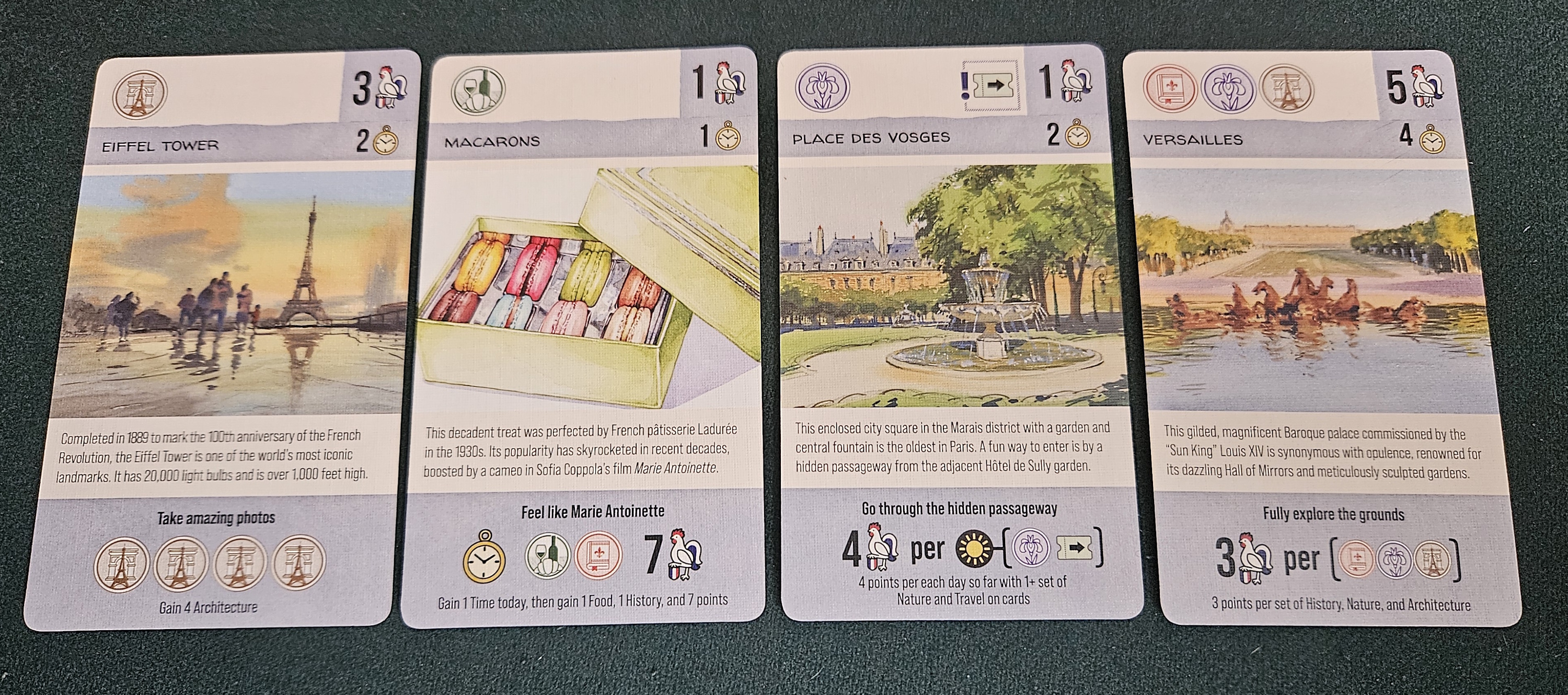
I can even pronounce some of these words.
It’s going to be hard to not turn this into a comparative review with Let’s Go! To Japan, so let’s open with the basics. Let’s Go! To France is a game about planning and executing a trip. Not just any trip. A two-week trip to Paris and some portion of wider France, undertaken day by day and hour by hour.
For all that, there’s an elegance to the whole thing. Turns are presented as simple drafts. You receive some cards. One or two of them will get scheduled into your itinerary. The rest are passed around the table. The cards each present a different activity in Paris: visiting a museum, snacking on delicacies, touring a park, shopping at an open-air market, finding an overlooked nook that you’ll boast about to friends for years to come.
Each card has four main components. Victory points — self-explanatory — some icons that increase the appeal of your trip on a numbered track, the amount of time required to fully visit that card, and lastly a scoring opportunity that will only trigger if this is the final event scheduled on any given day. Your objective is largely about optimizing scoring. To offer but one example, visiting the National Archives earns three points for every history icon you placed on that day. That’s a tremendous opportunity if you’ve arranged a day full of tours, but is easily dismissed if you’re planning on shopping or eating instead.
Those other considerations are no slouches, either. It’s possible to absolutely cram a day with activities, but your energy level will suffer, possibly resulting in subtracted points. There are also ideal conditions for each day, earning little bonuses for visiting the park when it’s clear outside or stuffing yourself with pastries on what I imagine is your cheat day. And if nothing appeals, Wood returns with a trick he deployed to great effect previously, letting any card flip to its reverse side to become a generic “Explore the City” activity.
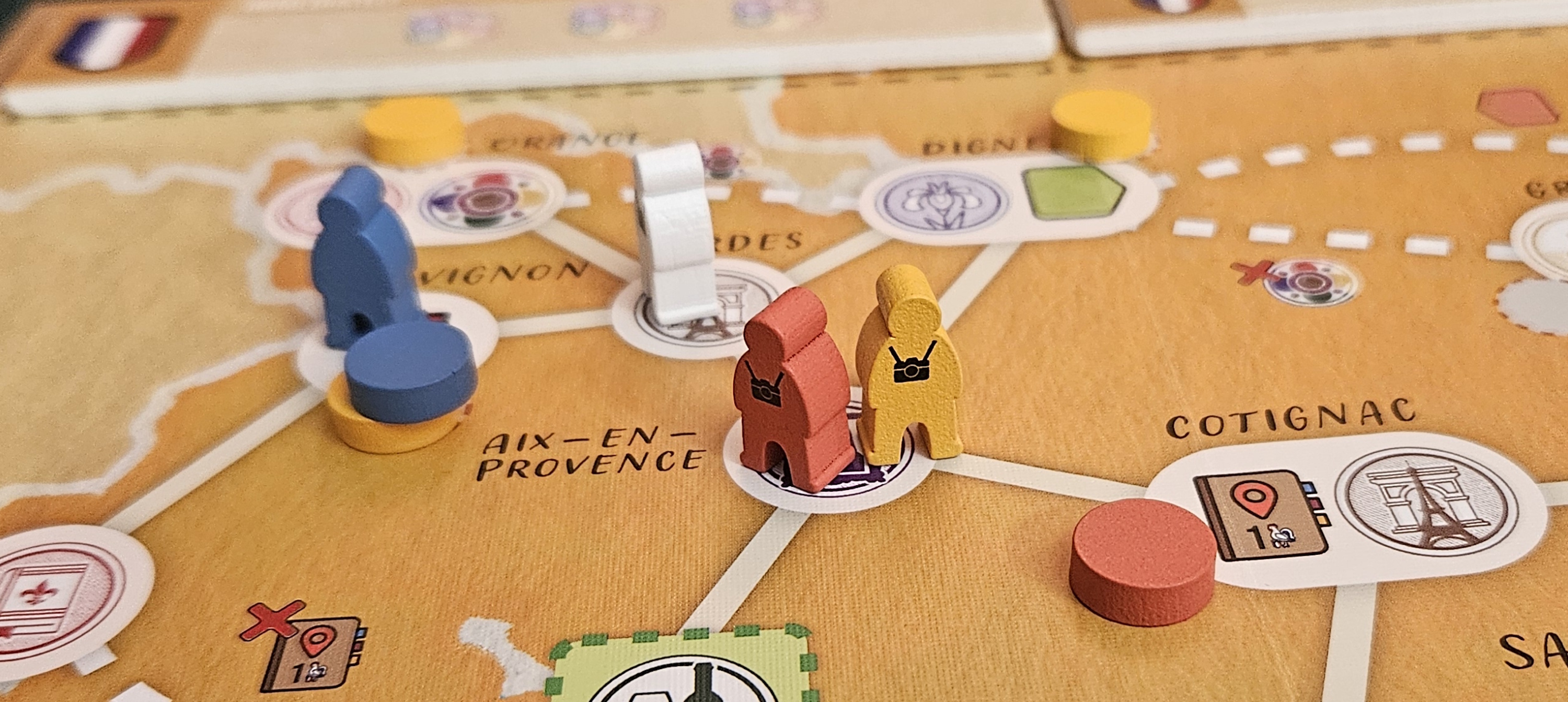
Spending a week in the country before heading to Paris.
If you’ve played Let’s Go! To Japan, this likely sounds familiar. Indeed, nearly everything here resembles Wood’s previous title, but has become the beneficiary of little tweaks that mark this as the far superior outing.
For instance, there’s the way those Explore the City activities are handled. Previously, exploring Tokyo or Kyoto resulted in your tableau receiving a random card during scoring. This could make or break your day, interjecting some randomness into what was otherwise a carefully structured experience. Here, exploring the city is its own pleasure; one doesn’t need to stumble upon a museum or garden to justify their time spent in Paris. This keeps your tableau in check and feels more appreciative of what makes such a trip worthwhile. Just being here is enough.
Similarly, the ideal conditions for each day are now portrayed as guidelines rather than dictates. It’s worth assigning activities to the corresponding days, but this is only mildly beneficial, and only the first two times you do it. Beyond that, you’re free to schedule your days as you see fit, without worrying that you’re missing out on another drizzle of points. It’s a small thing — basically, you’re earning a benefit just a little earlier than in the previous game — but it goes a long way toward letting you shape your own trip rather than ensuring there’s a history day, a food day, an architecture day, and so forth.
![Wait a minute, how dare you name a place Les Invalides? That should be reserved for hospitals and... [touches earpiece] it's a what? Ahem. Never mind.](https://spacebiff.com/wp-content/uploads/2026/04/4.-flex.jpg "Wait a minute, how dare you name a place Les Invalides? That should be reserved for hospitals and... [touches earpiece] it's a what? Ahem. Never mind.")
The tableaux here are much more flexible than those in Let’s Go! To Japan.
At times, there’s a sense of vague translocation. You are, in effect, planning Schrödinger’s Vacation, the cards signifying events in both past and future. But it’s a mild discombobulation at worst, one that lasts maybe five minutes before everything snaps into place. The overall process is much smoother than the previous game’s swapping between cities, and provides ancillary benefits to the game’s usual procession of daily scores.
You might, for example, begin your week in Paris already tuckered out from your time in the Loire Valley, prompting you to take it easy for a couple of days or chow down on some crepes for a sugar rush. Or perhaps you’ll arrive already enculturated by old architecture, letting you take advantage of a daily highlight that requires a certain number of icons before awarding big points. Where previously these objectives would only pay out in the later portion of your trip, it’s now possible to assemble a more robust tableau, one that feels rewarding from start to finish.
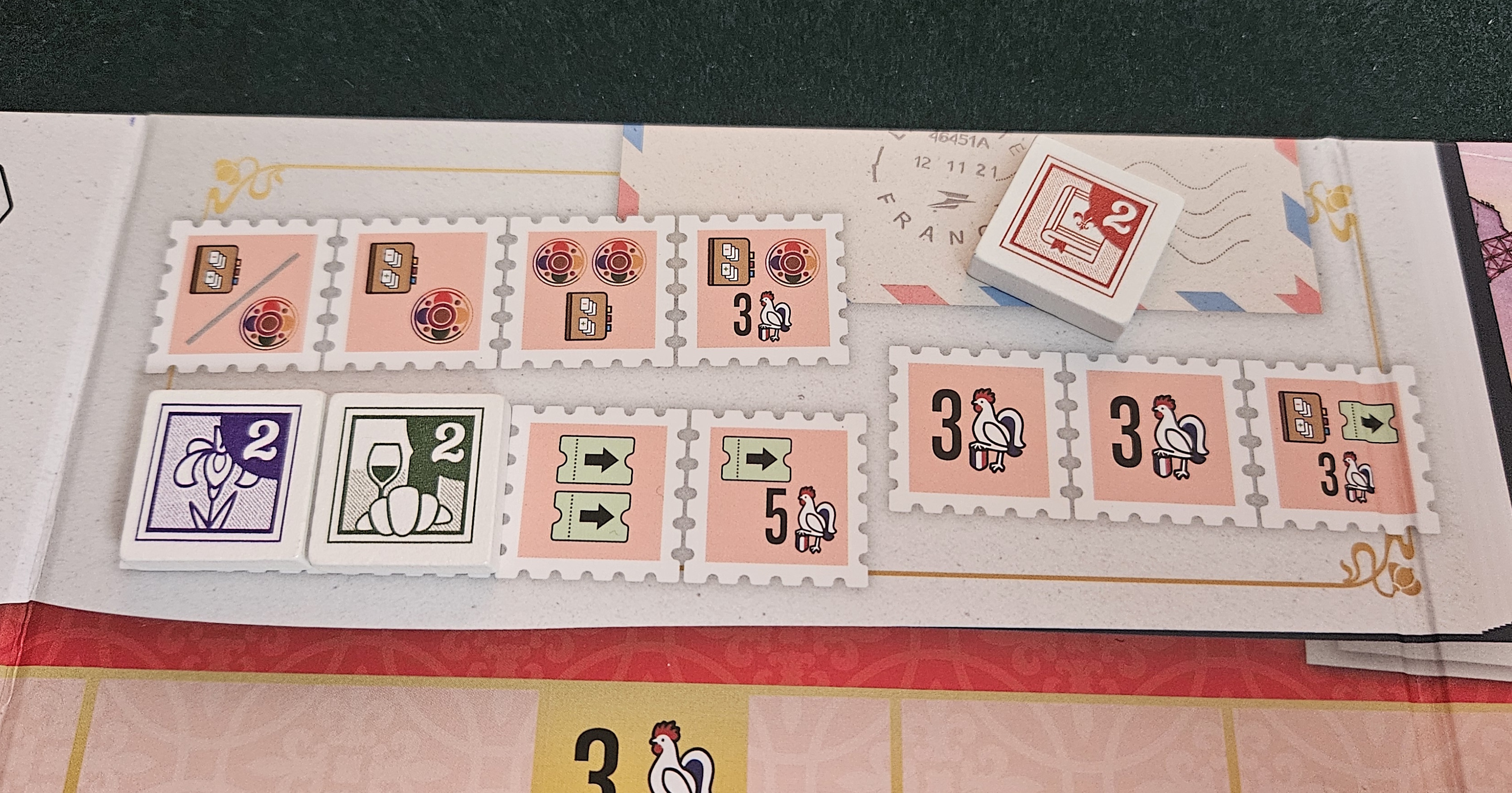
I appreciate a bonus.
As before, scoring is an active portion of the game, an event in and of itself where players walk through their trip one day at a time, tallying points and keeping track of their relative energy levels. This helps to digest the game’s point-salad fiber, but it plays an even more important role in contextualizing Paris as a geographic space with its own character and identity.
I’ve often praised Santa Monica as an ideal tableau-builder for the way it asks players to not only create a space, but also to inhabit it, to move around in it, to poke around its nooks and crannies. With Let’s Go! To France, Wood replicates the trick, albeit via an entirely distinct set of mechanisms and representations. This is Paris as a location out of time, the city that is at once a tourist trap and timeless. Around every corner there’s something new to see, some fragment of history that has been improbably preserved across the ages.
And that sense is communicated above the table as well. As one friend put it, you could take the deck to Paris as a reminder sheet of everything there is to see and experience. Playing this game, we found ourselves discussing the spots we’d seen and those we hope to see some day yet to come. The overlooked garden with the hidden entrance, where one friend drank wine and conversed with a farmer. The museum that sparked my imagination more than any other I’d ever walked. The sheer looming size of something. The joy of ducking into a random cafe and having one of the finest meals of your life.
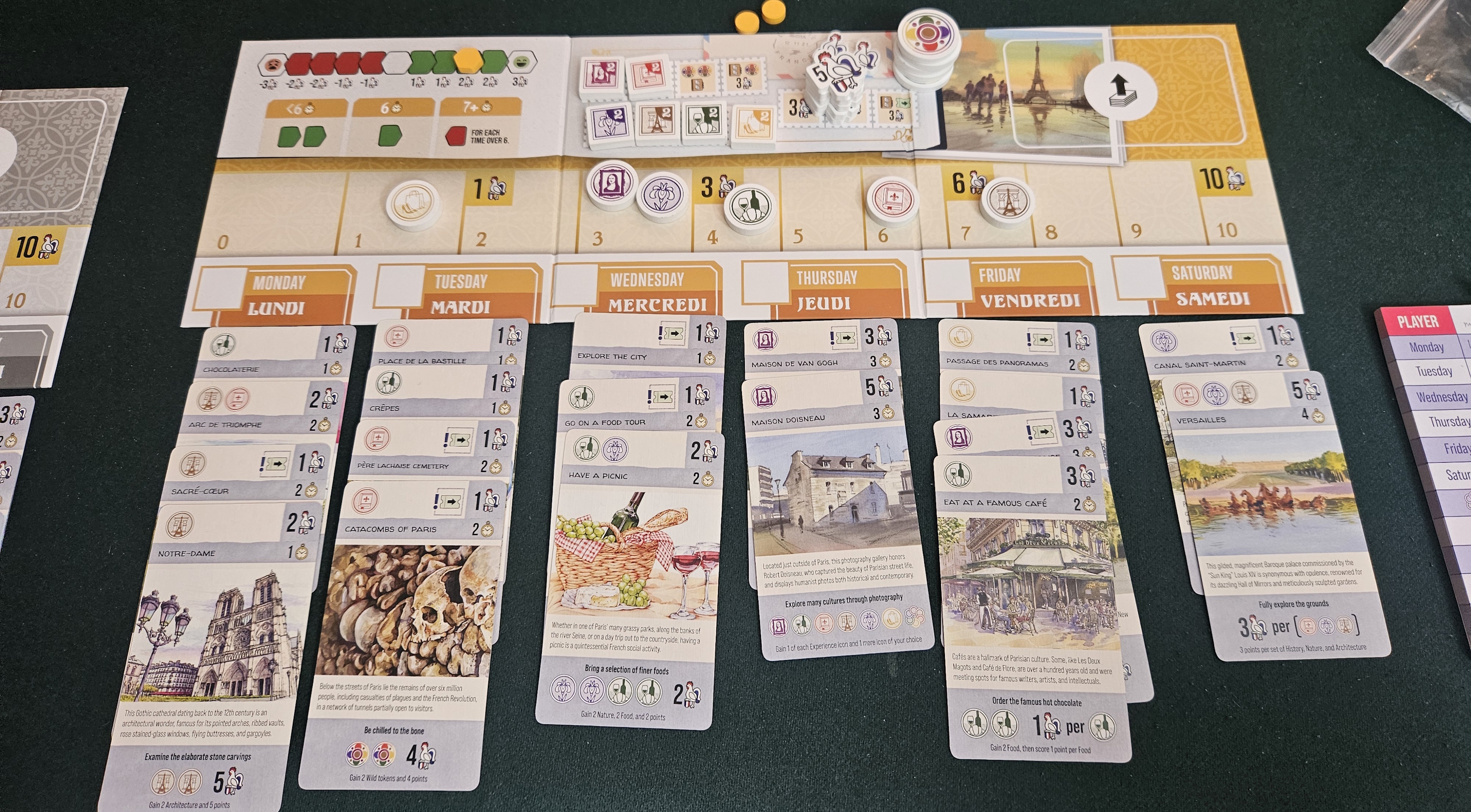
I’d do that.
The effect is magical. In a sense, Wood has created a transposition of his own, a game at once past and future, both reminiscence and future itinerary.
He’s also crafted a game that’s nearly without parallel. That its best comparisons are Wood’s own past creations is a testament to his skill with this particular medium, but also to the city he’s chosen for us to experience all over again. In improving on its predecessor in nearly every way, Let’s Go! To France deserves its peculiar punctuation. Let’s go, indeed.
A prototype copy of Let’s Go! To France was temporarily provided by the publisher.
(If what I’m doing at Space-Biff! is valuable to you in some way, please consider dropping by my Patreon campaign or Ko-fi. Right now, supporters can read my first-quarter update of 2026: the best board games, movies, books, and more!)


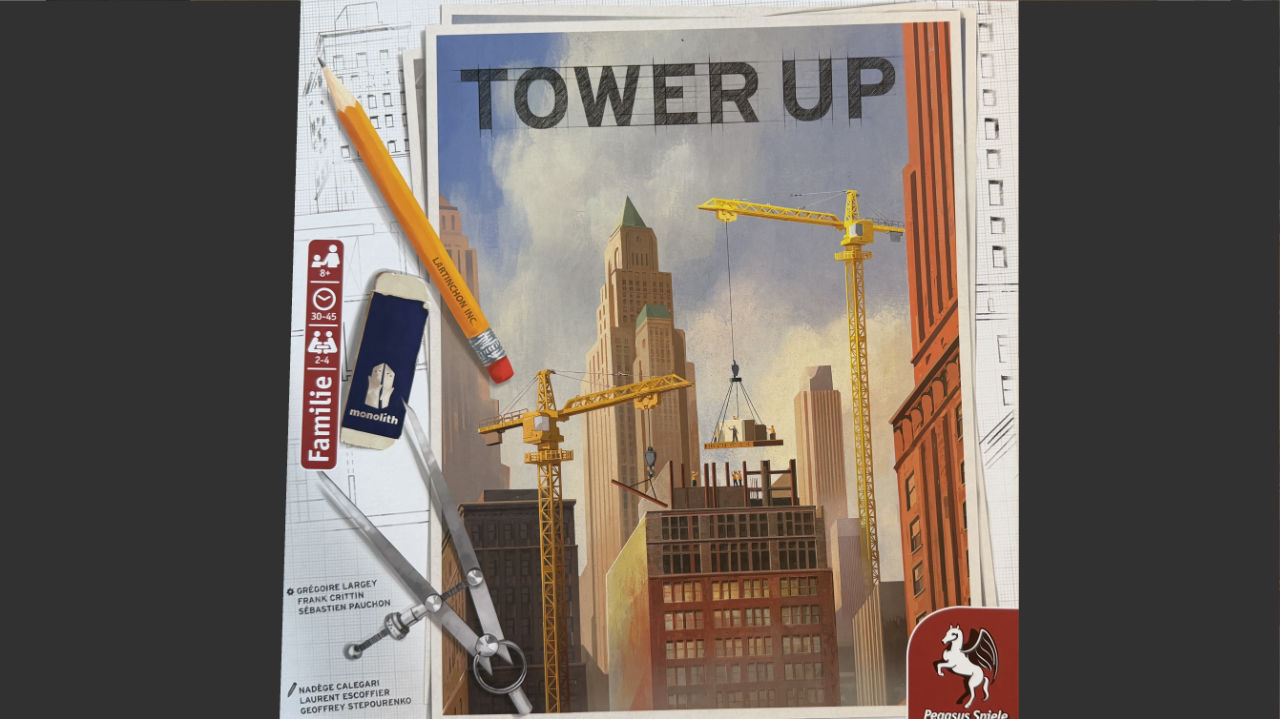
Realistische Stadtplanung?
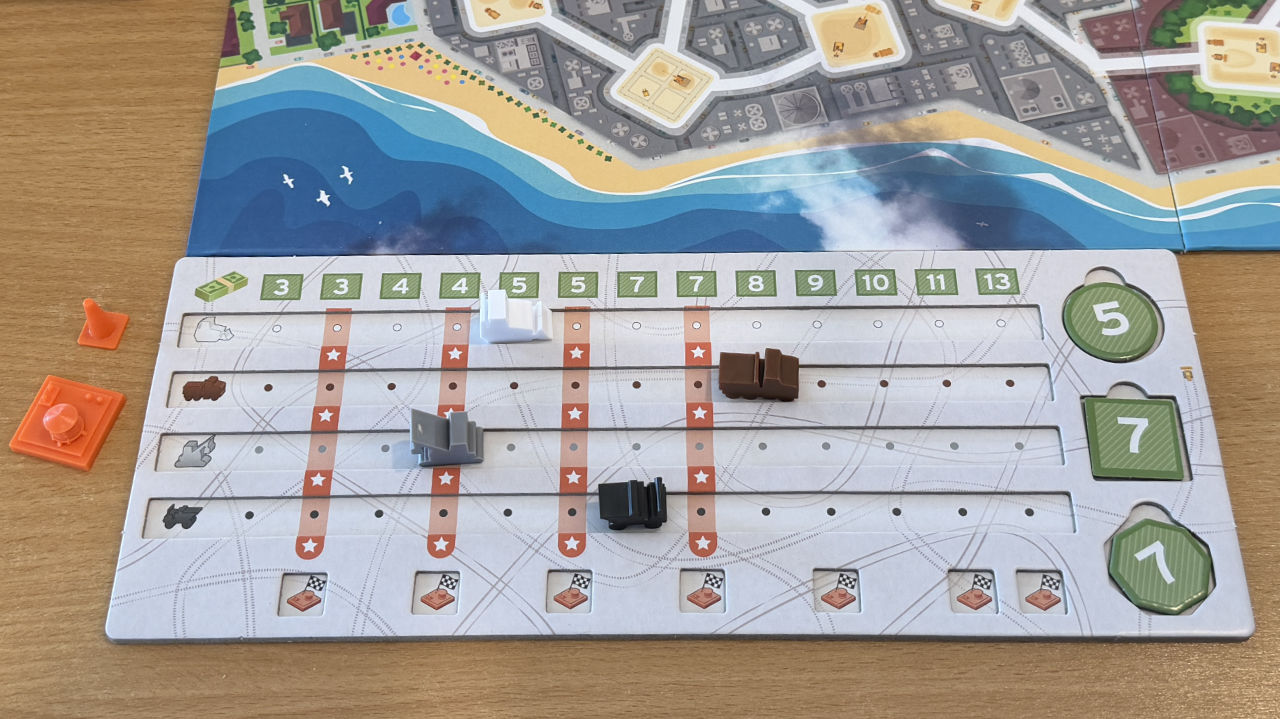
Es ist auch mal schön, Spiele mit einfachen Regeln zu konsumieren. Wir haben Bauklötze in vier Farben und können auf unserem Stadtplan
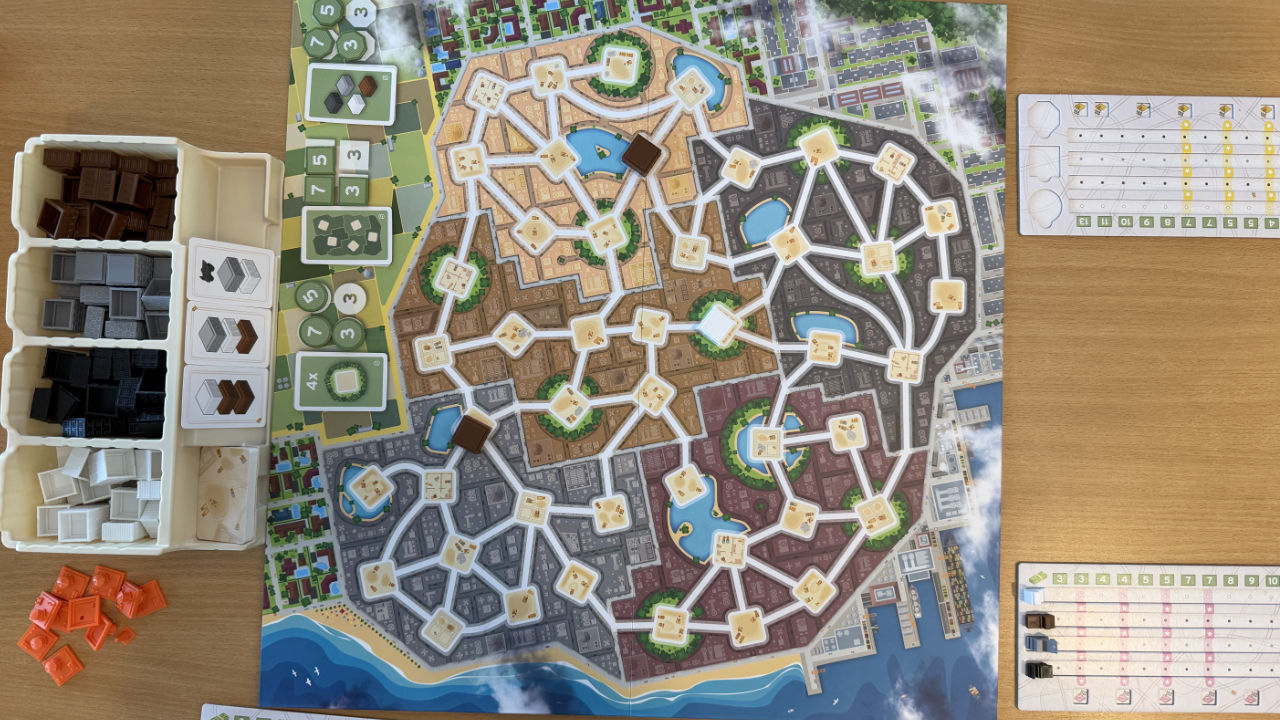
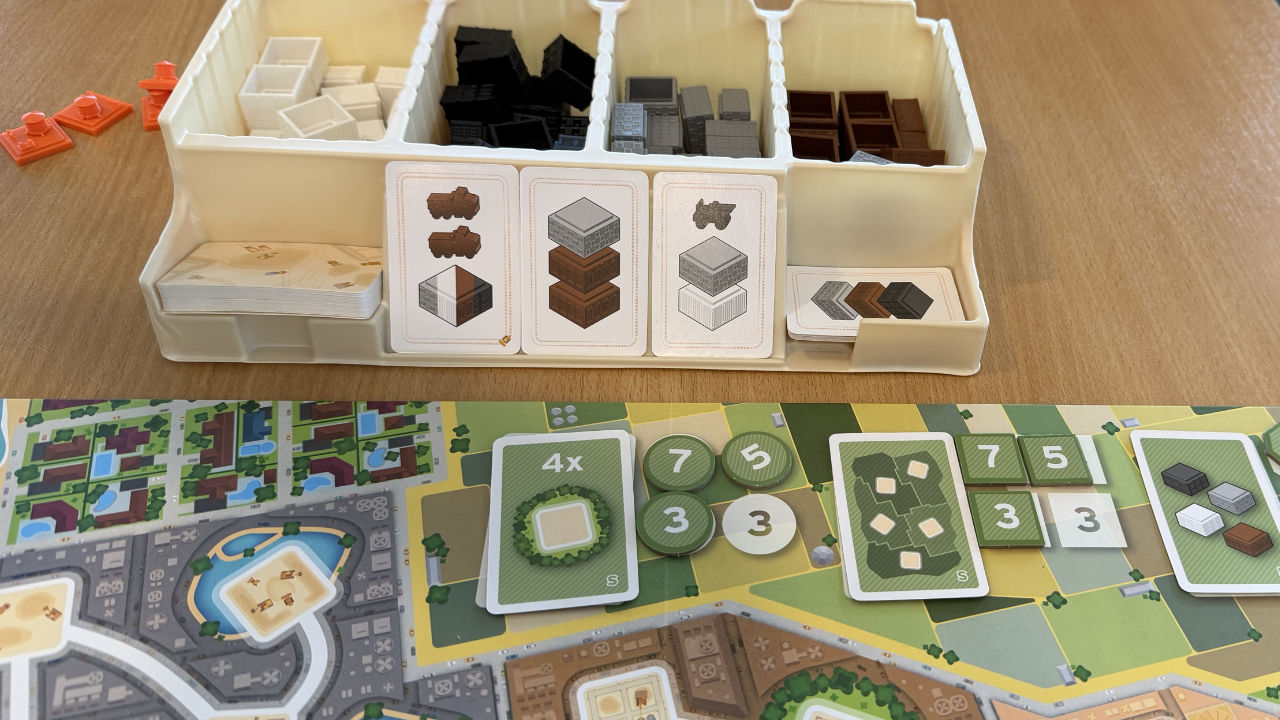
Regeln zum Bauklötzesetzen:
Unter bestimmten Bedingungen erhält man einen Extrazug und man achtet auf die Aufträge für Sonderpunkte. Diese gibt es z.B. wenn man in jedem der sechs Bezirke an einem Haus mit einem Dachteil beteiligt ist, welches aber auch schon überbaut sein kann.
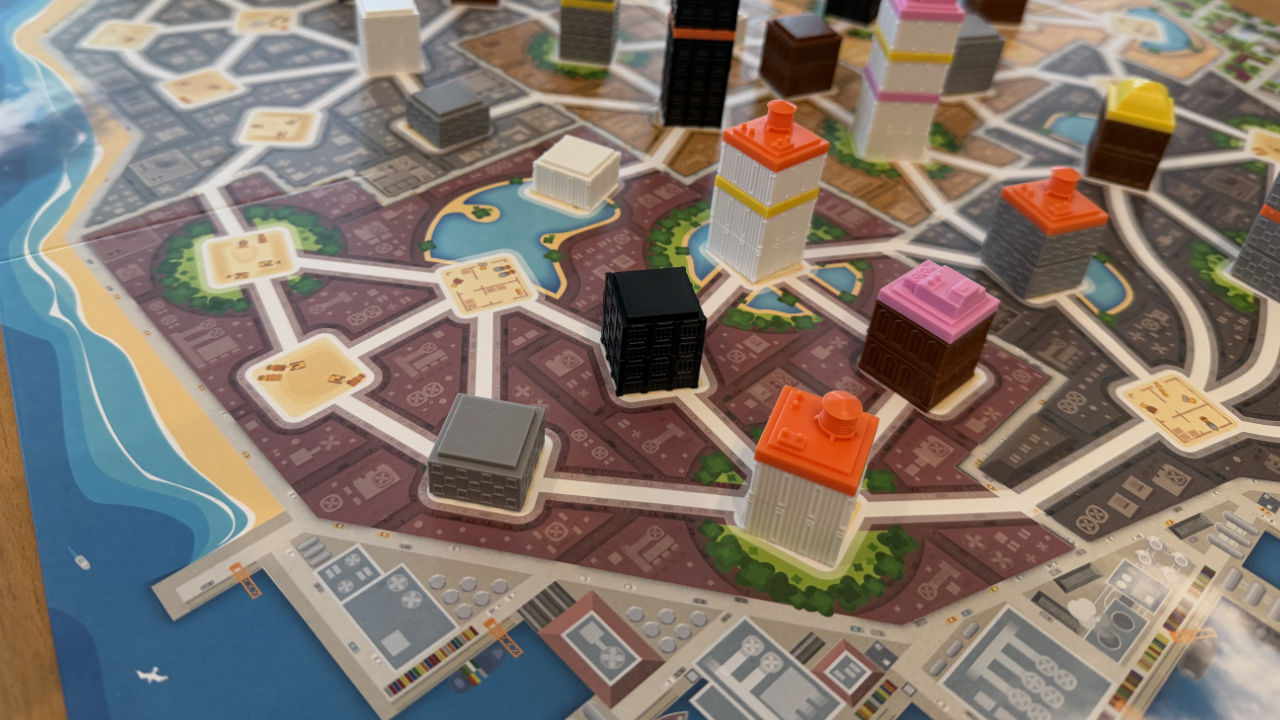
Fazit:
Das Material ist nicht schön. Die Plastikaufbewahrung ist im Neuzustand schon nicht passend für die Karten und optisch ist es auch kein Hingucker. So hat man Material vor 40 Jahren gemacht. Aber spielerisch bietet es viel Interaktion und man beobachtet die Taktik der Mitspieler schon bei deren Auswahl, welche Bauklotzfarbe sie sammeln. Die Regeln sind in 5 Minuten erklärt, ein Spiel dauert keine Stunde. Ich wäre jetzt trotzdem nicht bei einer Deluxe-Kickstarter-Kampagne dabei, aber würde es auch gern Wiederspielen.
Stubenscore: 7,4 / 10
Brettspiel (getestet)
After playing 18CZ (again!), I was trying to pin down why I thought it was “OK” and not “Great.” Why does 1822 PNW make me want to get it back to the table, while CZ is merely a “Yeah, sure.” (I mean it’s still a positive feeling, but more “indifferent plus” than “suggest” or “enthusiastic“) and I think this comes down to one thing that I have touched upon a few times over the years, but bears repeating.
Entanglement — The (Not So) Secret Sauce
By their nature 18xx games are more entangled than most business games. In typical games, each player controls their own (single) corporation. What is good for the company is good for the player, and vice versa. In 18xx, a player can juggle multiple (competing) interests; it can be great to trash a company under your control (shifting its assets to a ‘better’ company).
This brings up the Principal-Agent Problem , but also Implicit Collusion because there might be other shareholders and they will want to know if the company is going to pay out or with-hold, and if it will be headed for a glorious future or Chapter 11.
It can be impossible to state the “right” play is for a company merely by looking at the board. You need to understand the stock split dynamics. Does the president own 60% (and 40% is in the IPO/Bank). Or is it a 40%/30%/30% (in a three player game). Treating those situations identically is a recipe for disaster.
So — The board position is entangled with the players’ stakes. That’s the “hook” of 18xx.
(Acquire also does this, and is rightly acknowledged as one of the greatest games of last century1. Its board play is much simpler, the stock entanglement does the heavy lifting. In Chicago Express the entire game play revolves around implicit collusion — getting the incentives right so that others make plays to your benefit)
Of course there are levels of entanglement, and ripples to the chaos.
How many companies (and which ones) will open?
If the same companies open in the same order every game, the game will likely start to feel the same (although various splits of minors still have interest)2. Varying how many companies (and which) provides variety because the “train rush” is triggered by that one additional company operating. In many games, there might be “semi-permanent” trains. If X companies open, they last. The X+1st company opens and they rust.
Some games (like the ’22 family) randomize the order that some companies show up in, this forces each play into a new line but also means that the number of viable companies might change, which has implications on the train rush.
More subtlety, 1846 achieves the same effect by having some dubious companies that frankly aren’t great. Is it worthwhile to open a second company? Uh, sometimes. For a long time the fact’ that the game’46 had mediocre companies puzzled me, but borderline companies are a ticking time bomb. If the incentives are right, someone will open them just to watch the world burn trains rust. The fact that their ROI isn’t great is borderline.
Thinking about this with 18CZ; I suspect that it does do better at this that I thought … but three players is not its sweet spot3. The train limit is a bit too generous at that count (at least in our meta). Again compare this against ’46, where the number of companies (and trains) varies based on player count to keep things tight.
How entangled is the board?
The game board should be small enough so that each company’s track plays have ripple effects.
The game that best exemplifies this is, naturally, Go. There are “joseki” — opening lines that theoritically should provide roughly equal chances for either side … in that particular corner. Professional players spend an inordinate amount of time on the first 20-30 moves (out of 150-250 ish) because the corners influence each other and the josekis will combine. Joseki A (in the NW corner) may be great if Joseki B is in the NE corner, but terrible if Joseki C is in the NE corner.
So you want to leave things in flux and arrange joseki(s) that work together in your favor.4
In our last few games of CZ, Eastern Side of the Board never impacted the Western Side … everyone met up at Prague, which held enough token slots that most companies could get through, and the ones that didn’t at the end had their runs on the appropriate side. Sure, there was jockeying between companies on each side, but the corners never impacted each other. (Again, might be a problem that is solved at more players).
Which is not to demand that “every company cares about every other company,” but there should be some tension and chokepoints; companies fighting to place track or station tiles. For example, ’46 has Chicago (and Toledo, and Indianapolis). PNW has Seattle and Portland literally fighting over growth.
CZ (at least with three) felt like it had walled off suburbs. My branch in the SE eventually merged with the NW companies (and the Northerner), but it was a minor event. Like finding a run worth an extra few dollars in share. A rounding error, not a bomb.
(1862 almost achieves “every company really cares about every other company”; because of merger opportunities but also because the board is so tight and different company charters will have very different track preferences).
And even companies far apart and destined to ne’er meet; they might compete over tiles. Every 18xx player knows the sinking feeling when you discover a needed tile is missing.56
What doesn’t interest me
Hunting out the extra dollar and operations minutiae all the time. (Hunting out extra money in the opening is the entire point of compound interest). Yes, sometimes that extra dollar really matters. A few bucks might make the difference between buying another certificate. In that case, the extra few dollars is a “bomb7” (a big deal).
Token wars, snatching up the right train, ownership battles, dumping companies … those are always bombs. If the few extra dollars is a bomb only 1% of the time, it can be simplified away. But I’ve learned that in order to entangle the board (and stock) you have to have the possibility of not entangling it. Sometimes even great games can have a relatively dull run.
There are other things that don’t interest me. (I’m no longer fond of the ’30 family’s script of “first company low, second company saves first.” Nothing wrong with that play … but I’ve seen it enough). But in general I’m looking for a reason to play an 18xx title and most of them give me plenty.
︎︎︎︎︎︎︎
Ambie and Crystal discuss a couple games they played recently, including Until Proven Guilty: Thirst for Justice and Taskmaster: The Escape Room. Then we talk about what's been going on the last few weeks since Dice Tower West - Ambie's trip to Taiwan and what board games she saw there, and what Crystal was able to play after she recovered from being sick. Nominate us for a Golden Geek Award here!
0:00-Intro
0:39-Announcements
2:00-Recent Games - Until Proven Guilty: Thirst for Justice
6:42-Taskmaster: The Escape Room
12:45-Taiwan & Stuff
28:09-Outro
29:22-Bloopers
Support us directly at https://ko-fi.com/boardgameblitz
Or shop at our merch store or our Amazon Storefront
This episode was sponsored by Grey Fox Games. Use the code "BLITZ2026" to get 10% off your entire cart.
For the full show notes visit our site at http://www.boardgameblitz.com/posts/435


