
Normale Ansicht

Published — 16. September 2026 Meeple Mountain | The summit of board gaming

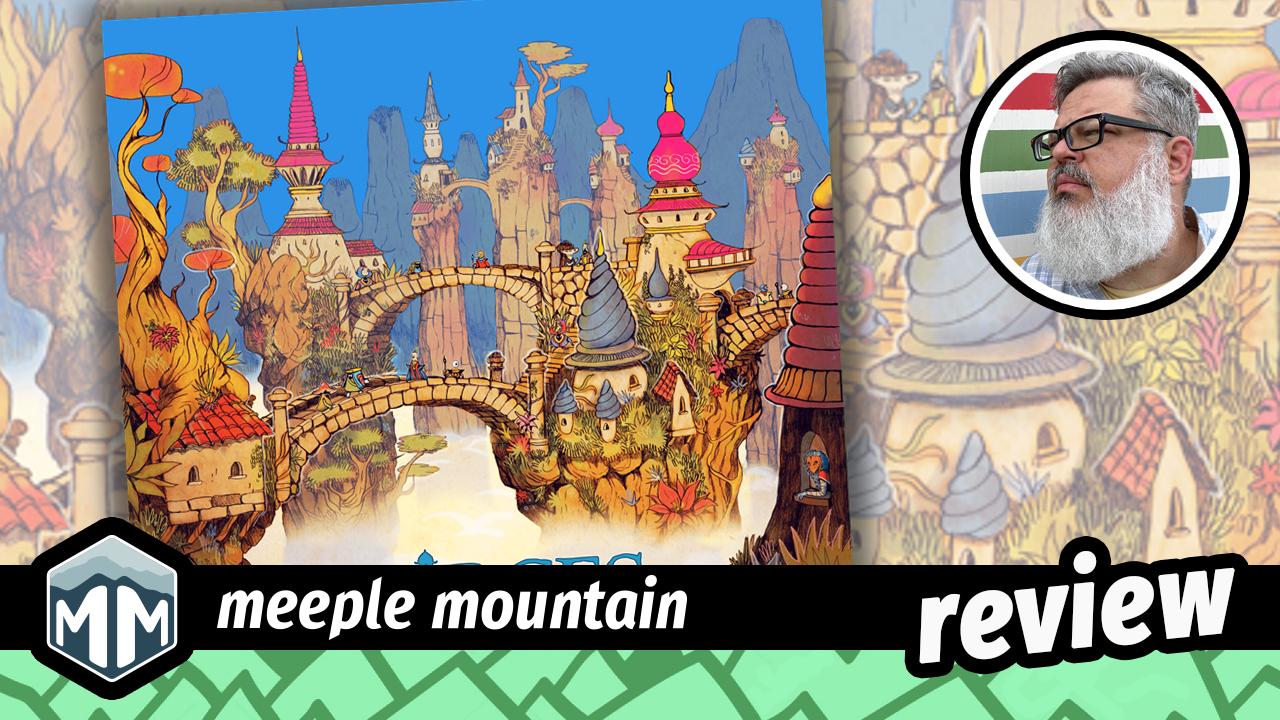
Bridges of Shangri-La Game Review

One of the great things about being part of a regular game group is being exposed to titles you might have never seen before—because your friends also love games, and no two gamers have quite the same combination of tastes. Variety is one of my defining characteristics when it comes to playing games: I’d much rather play 6 games once, than 1 game six times. So when my friend Chas said “we’re going to play Bridges of Shangri-La”, a game I’d never heard of, I enthusiastically agreed.

Bridges of Shangri-La is an area control game from 2003. Set in the forbidding Himalayas, the goal is to earn the most points by training up masters in 7 different disciplines, then have those masters send their students to neighboring villages to “spread enlightenment”. Of course this is a friendly way of saying you’re going to beat the pants off them…except in Nepalese.

Did I mention that Bridges of Shangri-La is a bit…cut-throat? But I’m getting ahead of myself.

How to play Bridges of Shangri-La

The Bridges of Shangri-La board features 13 villages in the peaks of Nepal, each connected to several other villages by tendril thin bridges. Each player begins the game with 7 tokens, in 7 different disciplines. The goal is…

The post Bridges of Shangri-La Game Review appeared first on Meeple Mountain.
Published — 15. September 2026 Meeple Mountain | The summit of board gaming

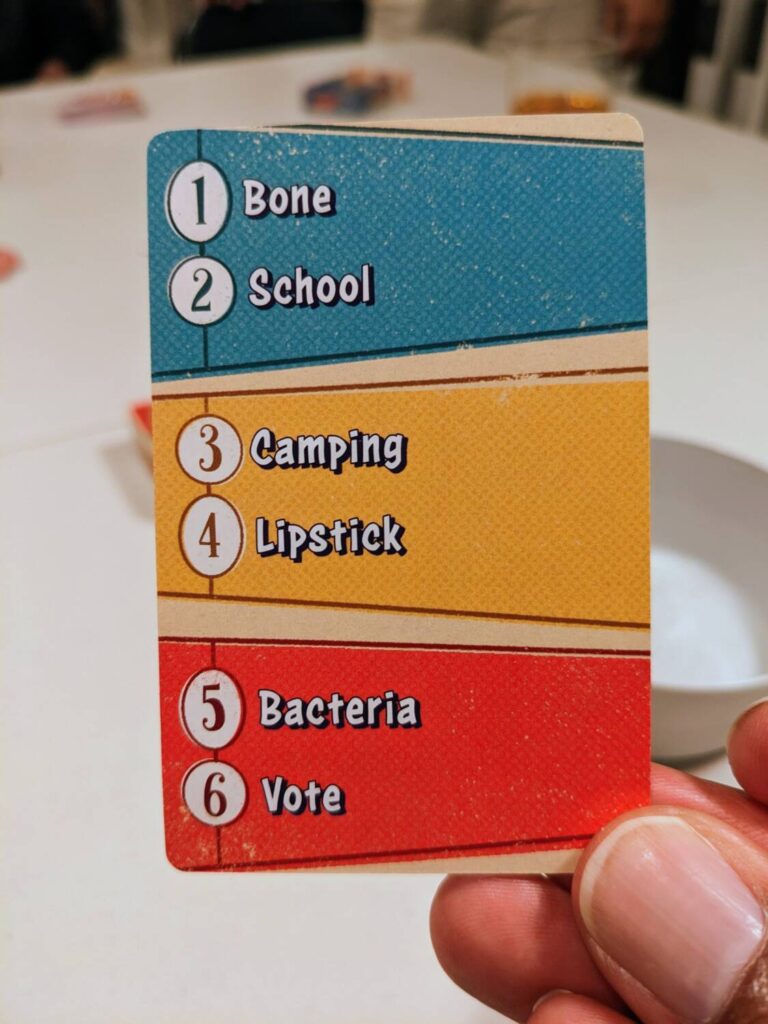
Jibber Jabble Game Review

I picked up a review copy of the new word game Jibber Jabble during my visit to Gen Con 2026. After meeting the game’s designer, Carrie Sykes, at a pre-con media event organized by the publisher, I had the chance to demo the game later that weekend before getting Jibber Jabble in front of both my review crew, a group of six at a family beach vacation a couple days later, then a group of eight during one of my weekly gaming group nights.

Here’s the synopsis: it’s hard to beat the value proposition of a collaborative word association game that plays fast for an MSRP of $9. It doesn’t land on my personal Mount Everest of word games, but everyone who played it wanted their own copy.

We Need Some Clue Words for “Statue”

Jibber Jabble is a word association game that plays in about 20 minutes, maybe a bit more with more players. Across six turns, players provide clues for a word or term, helping the active player by giving them clues for the word they cannot see (yes, this is the format for games like Just One).

So, the active player flips a card towards everyone else, then the team picks a number, from…

The post Jibber Jabble Game Review appeared first on Meeple Mountain.
Trails & Tails Game Review

At the end of the day, my review criteria is really simple: is the game fun or not?

Trails & Tails is a new self-published title. (BGG does not list a designer, artist, or publishing company…only “self-published.”) It admits its hook right up front: Trails & Tails is going for a Snakes & Ladders-style gaming experience (or, if you’re a gringo like me, Chutes & Ladders), where players move their playing piece up a board all the way to the top…hopefully taking short cuts along the way to reach the top faster.

The downside of Snakes & Ladders comes when snakes appear in the space where you end your movement…because if that’s what happens, you fall backwards and/or downwards until you reach a much less desirable space lower on the board. So, keep moving forward and things will generally work out.

Trails & Tails adds spice by giving each player two starting dice, differing by player; one player gets a D4 and a D20, while another might have a D6 and a D8. In each round, players roll these dice, then get to use 1-2 dice per turn to their liking. You can add the results of two dice, move forward a number of spaces on one die, or even subtract a larger die value from a smaller one…

The post Trails & Tails Game Review appeared first on Meeple Mountain.
Published — 14. September 2026 Meeple Mountain | The summit of board gaming

Bordeaux Game Review

From the rules:

“You are a winemaker in the heart of Bordeaux, guiding your vineyard from grape to glass. Every good winemaker knows time itself is an ingredient, and patience is as vital as ambition.

This philosophy shapes every decision you make in Bordeaux. Over 13 years (turns), you will assign Workers to Make Wine or Gain Resources, choosing a duration of 1, 2, or 3 years. Longer commitments mean more powerful actions, but it will take longer for that worker to be ready again.

As your wines mature, you chart a curated wine tour, connecting estates and guiding bottles into restaurants and shops where patrons can taste your craft.

When the final year has passed, your legacy is uncorked. Score points for your wines and resources, and discover which winemaker’s careful timing has produced the most celebrated vintage.”

Bordeaux defies easy categorization. There’s no card flipping, no dice rolling, no bag drawing. There’s just you, your available workers, the thing the game allows you to do, and the thing you or your opponents have decided you’ll have the ability to do. If you’re well-positioned, you may be able to do both. But chances are you’ll have to choose between one or the other. Everything you do is in the pursuit of victory points and, after 13 turns, the…

The post Bordeaux Game Review appeared first on Meeple Mountain.
Published — 13. September 2026 Meeple Mountain | The summit of board gaming

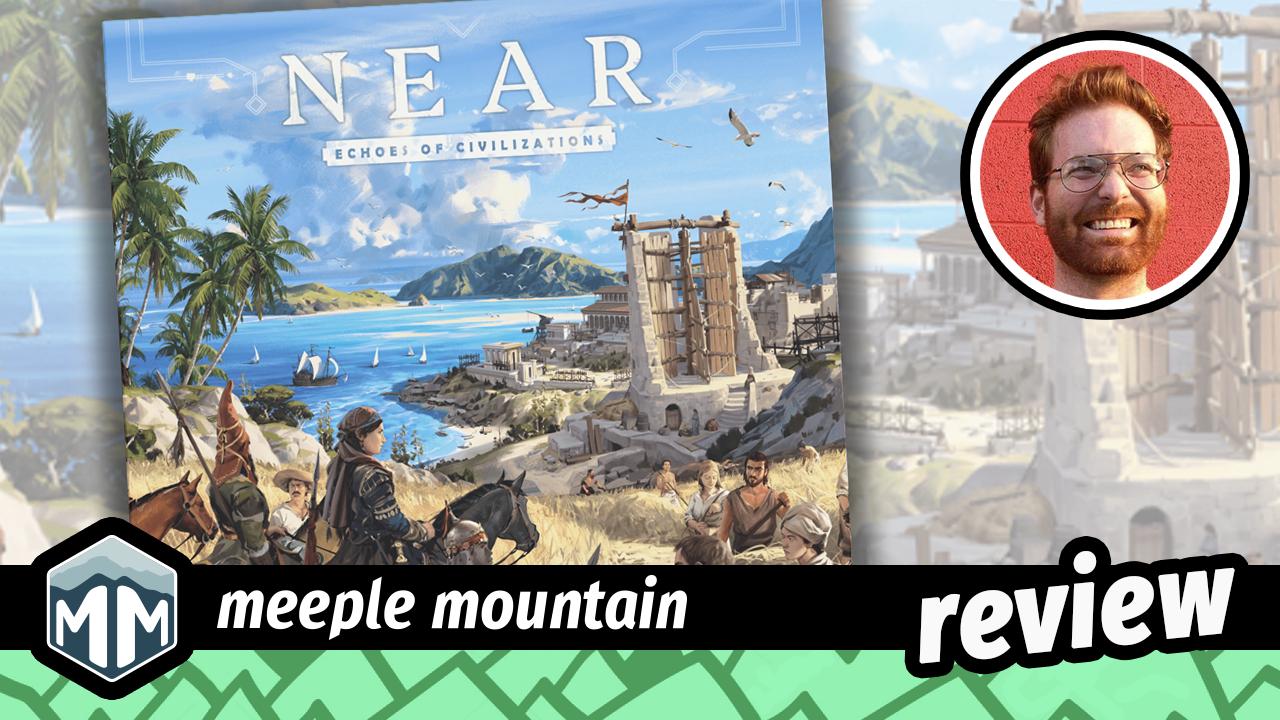
Near: Echoes of Civilizations Game Review

Man, I just love a civilization game. For a power-tripping megalomaniac like myself, there’s just nothing better than taking the helm of a conglomerate of violent individuals and making bad decisions.

Near: Echoes of Civilizations has a goofy name—you really have to do some mental gymnastics for it to make sense at all. But, there’s some real fun to be had here. All the hits are here: Technology! Combat! Resource management! Points!

Actually, part of what makes Near interesting is its commitment to synthesizing the heads-down-euro-bean-counter that constitutes a lot of its bone structure with a traditional build-stuff-kill-guys game. Unlike other civ games (for example, Civilization: A New Dawn, Mosaic, or Gentes) that have tried to incorporate concepts from euro-style mechanism-fests into their design framework, Near takes a holistic approach that makes it feel complete and cohesive, rather than a cobbled together bricolage.

A novel new mechanism: “cards”

At the beginning of Near, you get dealt a starting culture card (a personal endgame scoring condition), a wonder card (an in-game scoring condition), four regular cards from one of five colors, and a starting action bonus. Your wonder gives you a starting building, and in a very Terra Mystica-style start, you place some buildings out on the board and it’s…

The post Near: Echoes of Civilizations Game Review appeared first on Meeple Mountain.
Published — 12. September 2026 Meeple Mountain | The summit of board gaming

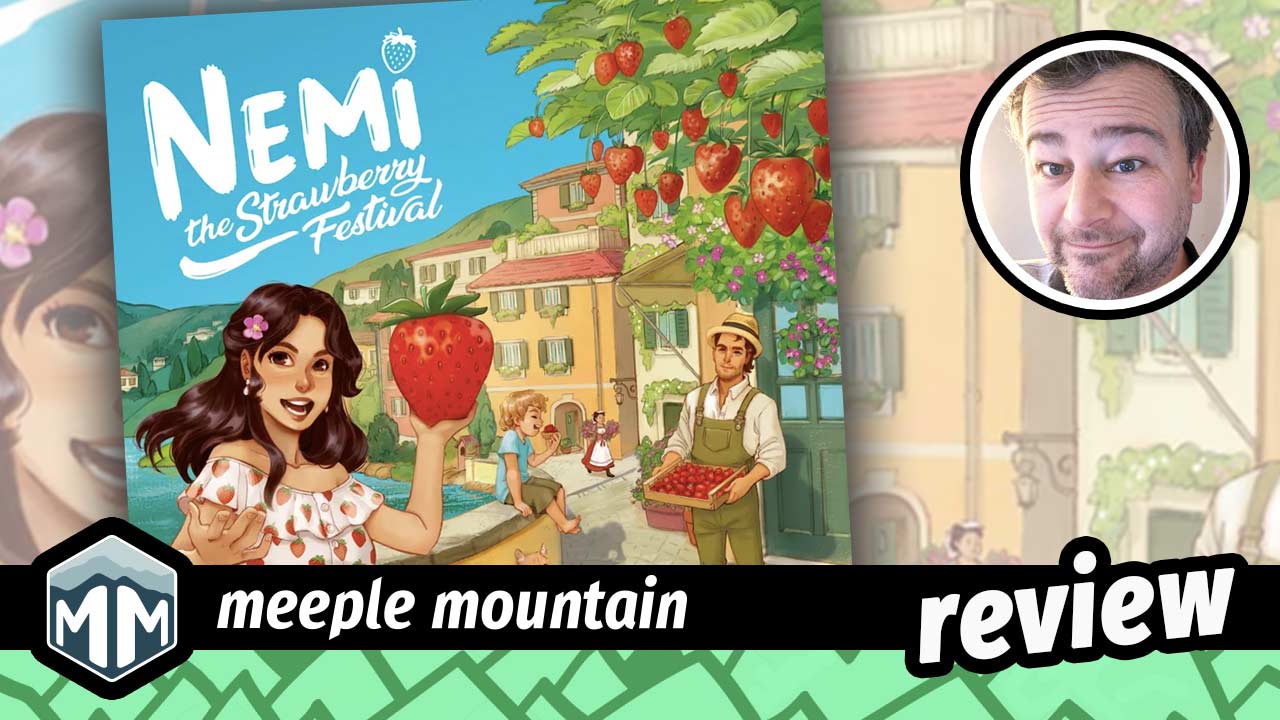
Nemi: The Strawberry Festival Game Review

We’re in the middle of a war in our garden. It’s all based around the strawberries we have foolishly attempted to grow. Those strawberries are not making it into our bowls. Someone is getting to them first. We were almost convinced it was our regular visitor, Howard the Hedgehog. There isn’t much that Howard won’t scoff. Put a net over ‘em, you say? Yeah, we did that. Then, one super early morning (deeply unusual for me) I happened to squint out of the kitchen window, and what did I spy? Why, a particularly nimble squirrel, scoffing our strawberries. The little son of a nutcracker had torn and chewed a squirrel-sized hole in the netting, and was sharing his rewards with some happy starlings. I think I’ve had two of those strawberries. Two. Not exactly a festival. Not even enough for breakfast.

So let’s head to Nemi where we can enjoy a strawberry festival! (Scout’s honor, every word of that odd little tale is true.)

In Nemi: The Strawberry Festival, players immerse themselves in the charm of an Italian summer by drafting wild strawberries, baking mouthwatering desserts, and decorating the town with vibrant garlands. Designed by Valeria Cavasin and Edoardo Eibenstein, this 2–4 player game plays over 4 rounds, featuring…

The post Nemi: The Strawberry Festival Game Review appeared first on Meeple Mountain.
Published — 11. September 2026 Meeple Mountain | The summit of board gaming

Aspens Game Review

Aspens is a two-player game of arboreal expansion and domination. Each player is given a bag of trees. On a player’s turn, they will roll the game’s two dice to determine the limitations of their actions. One die controls how many trees each of the players receive from their bags, and the other controls in which direction they are able to expand their holdings. On their turn, a player may expand outwards (filling in more spaces with their own trees), bolster their current holdings (increasing their odds of receiving new trees when the dice are rolled), or some mixture of both. Their goal is to get as many of those trees onto the playing field as they can so that when final calculations are performed at the end of the game, they’ll occupy more real estate than their opponent and thereby win the game.

This, of course, is an oversimplification of the game (although, as you’ll soon see, not much of one). If you’re just interested in what I think about the game, feel free to skip ahead to the Thoughts section. Otherwise, read on as we talk about how to play Aspens.

Setup

First, assemble the game board. The board is divided into seven segments. When fully assembled, you’ll be left with a vaguely cross-shaped playing area composed…

The post Aspens Game Review appeared first on Meeple Mountain.
Published — 10. September 2026 Meeple Mountain | The summit of board gaming

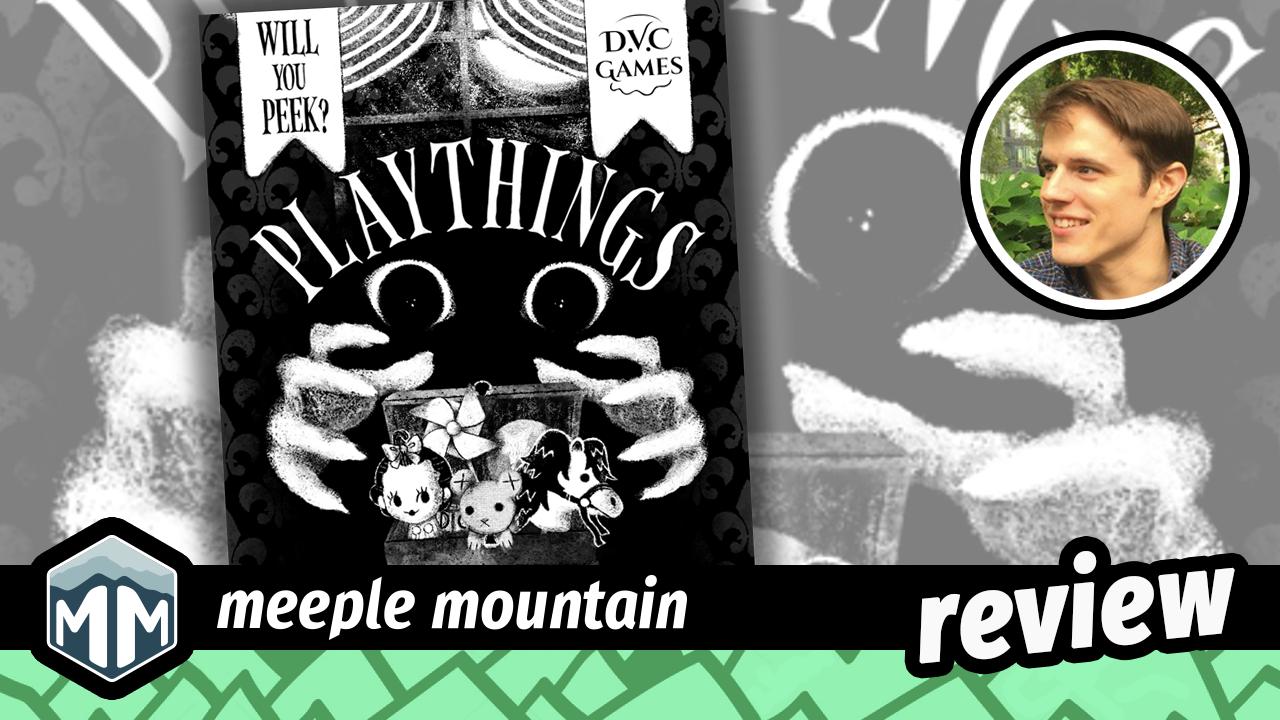
Playthings Game Review

It’s rare that a published game feels organic, but I guess that makes sense. Most authored works, regardless of medium, do not feel organic. The closest most games come is “intuitive,” which is not the same thing. “Intuitive” as applied to game criticism is more about the rules making sense and flowing. You use it when you’re talking about something that’s easy to teach and easy to learn and easy to play, about games that just. make. sense. In order for something to be intuitive, it has to build on what has come before, on a shared cultural reference or two.

That is not the case with “organic,” a word which I cannot say I have ever wanted to apply to a board game before. Strap in, folks. We’re developing a new theory. “Organic” can be as free-form as it wants. That’s probably a key feature, right? I mean, who tells an heirloom tomato how to grow? Nobody, that’s who.

A group of hands and arms float in space above the cloth Playthings board.

When I say Playthings is organic, I mean that it feels like something a group of Victorian children would come up with whilst whittling away the unending hours of the day. It feels improvised, even as…

The post Playthings Game Review appeared first on Meeple Mountain.
Published — 09. September 2026 Meeple Mountain | The summit of board gaming

Size Wise Game Review

I’ve been struggling to poke holes in the design of the new game Size Wise, designed by Scott Brady and published by GameHead. And, here’s what I have got:

The people who made those old Tootsie Roll ads from the 1970s should feel burned that artist Serge Seidlitz made an owl for Size Wise’s box and tokens that looks a heck of a lot like the one who knows how many licks it takes to get to the Tootsie Roll center of a Tootsie Pop. Like, everyone of a certain age who has seen the rulebook and the tokens has commented that the owl looks exactly like the one from those old commercials! (I haven’t reached out to GameHead for comment…but, they know. I KNOW they know.)

Size Wise is a party game for 3-8 players that plays in about 20 minutes. I tried Size Wise three times at different player counts: four, seven, and eight players.

Everyone loved it.

Across a series of turns, players collectively flip a card from a deck, with six different items on each card numbered from 1-6. The backs of the cards are also numbered from 1-6, so when a player flips a card, they then look at the top card of the draw deck to see which number the table is forced…

The post Size Wise Game Review appeared first on Meeple Mountain.
Go! Go! Go Kart Game Review

The success of CMYK’s Hot Streak has had the intended effect. I know, because while I was at Gen Con 2026 I saw a few more betting-style party games than I had in recent years, with Underdog Games’ Dino Racer leading the way at this year’s show.

Taco Cat Games—the company formerly known as Dolphin Hat Games, before leaning into the company’s most popular title, Taco Cat Goat Cheese Pizza—is swerving left in a world where everyone else is turning right. Here’s what I mean: Taco Cat Games has been making fast, fun card games for a decade, with titles like Moose Match Mayhem! and Gimme That! leading the way with games that feature zero board and dozens of cards, dice, pencils, and yelling. But with their new release, Go! Go! Go Kart, I had a somewhat shocking conversation with Taco Cat’s CEO, Dave Campbell.

“Yeah, it’s a board game,” he told me when he handed over a review copy. “Let me know what you think; we’re really excited about it.”

After a few plays at home—including a four-player game with my two kids and one of their friends, along with the standard plays with my kids and the wife—I’m ready to see why Dave is so excited. Go! Go! Go Kart mostly avoids…

The post Go! Go! Go Kart Game Review appeared first on Meeple Mountain.
Published — 08. September 2026 Meeple Mountain | The summit of board gaming

Hacienda Game Review

I don’t want to belabor the point here, but I have real questions, like this: does the new game Hacienda (based on the 2004 version of Hacienda by Wolfgang Kramer) want the leopard-looking creatures on offer here to be pumas, or jaguars?

I ask because the rulebook interchangeably uses the terms for both (they are pumas on the manual’s cover description, but jaguars on page four), and technology tells me that the two breeds of cool-looking cats are definitely different. Another theme note: Hacienda’s new theme is tied to building an eco-friendly tourist destination in the hills of Argentina. For the life of me, though, Hacienda feels like a game where I am simply placing clumps of animal tokens on a map to score adjacency bonuses and piles of cute-looking capybara packs.

Hacienda isn’t nearly as complicated as I’m making it out to be. In fact, like other Kramer games—the German legend has, as a lead or co-designer, gifted the world with titles ranging from El Grande to Tikal to Wandering Towers to my all-time favorite Kramer co-design, The Princes of FlorenceHacienda is extraordinarily simple to teach, and his work here with Daryl Andrews (Sagrada) is sleek, with a playtime that might last 30 minutes or less with lower player counts, 45 minutes with the…

The post Hacienda Game Review appeared first on Meeple Mountain.
Drillers Game Review

Sometimes you can tell where a company’s focus is in a given year.

Czech Games Edition (CGE) has a very, very large piece of chicken releasing later this year called Kingdom Come Deliverance, a $150 game so large it has 10 individual artists working on only the artwork for the 700+ cards in the box. Forget the fact that CGE’s lead designer, Vlaada Chvátil, and one of the world’s hottest designers, Tomáš Holek (SETI: Search for Extraterrestrial Intelligence, amongst many other now-published titles), are the co-designers on Kingdom Come Deliverance and there are are dozens of hours of content in that box. (I’m more shocked that a single game has TEN ARTISTS working on it!)

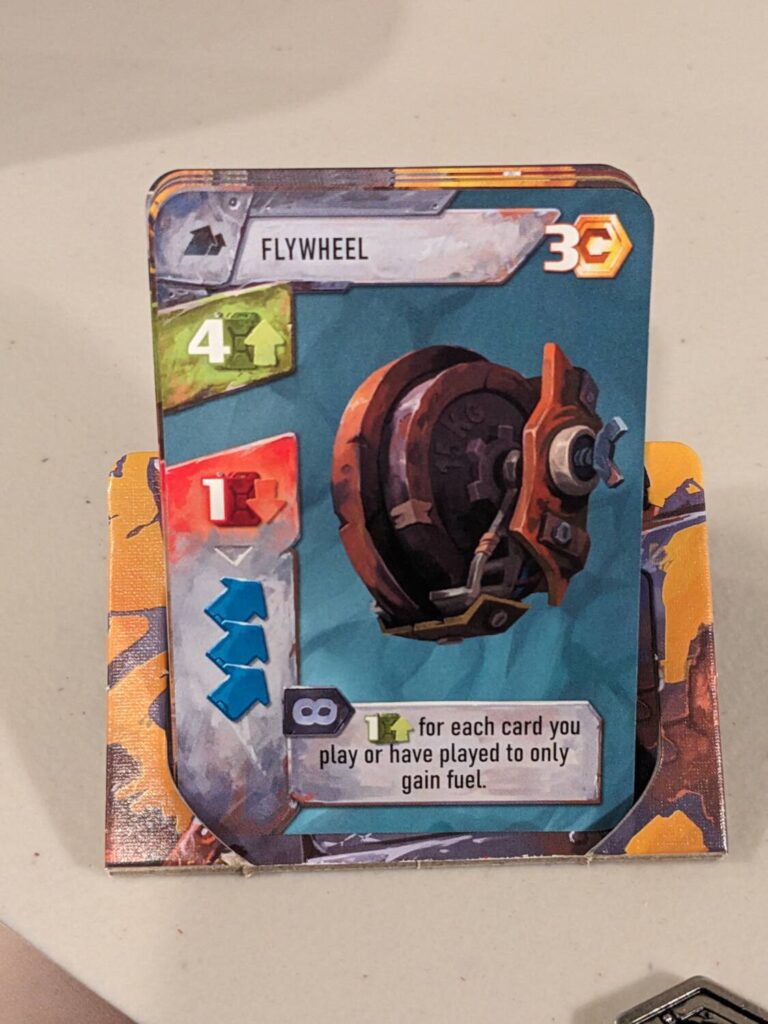
That means Drillers, CGE’s Gen Con release, is its other “big” release for 2026. It’s not nearly as ambitious as Kingdom Come Deliverance, but Drillers is as solid as its title is plain. Drillers is a deckbuilding game that plays in about 90 minutes even at its full player count, and it does excellent, limited work within its tidy playtime.

Dive In

Drillers accommodates 1-4 players, and is a very standard deckbuilding game. Players begin the game with a deck of nine cards—eight action cards and a “Damage” card, which essentially…

The post Drillers Game Review appeared first on Meeple Mountain.

Published — 07. September 2026 Meeple Mountain | The summit of board gaming

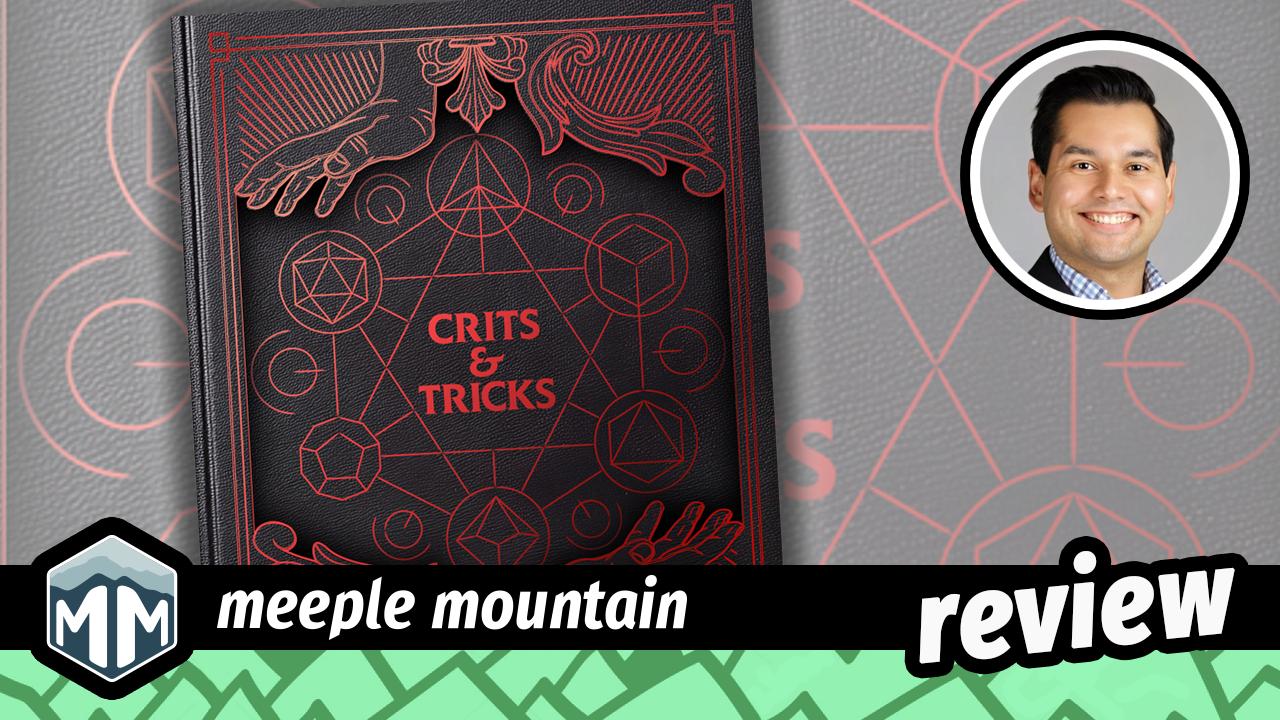
Crits & Tricks Game Review

Taking Tricks!

Some readers may know that I wasn’t into trick-taking games at all a couple of years back. Since then, though, trick-taking has become the trend for small-box games, and somewhere along the way I developed a love for them. Whether or not I’m actually good at them is a different story.

The downside is that the seemingly endless wave of releases has started to oversaturate the genre, making it rarer to find one that brings something unique to the table. But when games like Rowdy Partners, Tricky Kids, and Rebel Princess offer something different, my head turns.

I had a chance to demo Crits & Tricks at Gen Con this year, and at first glance, I thought it was an RPG card game. Laid out in front of me were full sets of dice, from d4s to d20s and everything in between. Move over to the cards, and they stand out with fantasy artwork featuring bards, barbarians, and other adventuring types.

Wait a minute, these cards don’t have any values? Are you sure this is a trick-taking game?

Just wait and see.

Dice & Quests

Crits & Tricks plays over three rounds, and whoever collects the most loot wins. The deck is made up of different hero classes, such as wizards and rogues, that…

The post Crits & Tricks Game Review appeared first on Meeple Mountain.

Published — 06. September 2026 Meeple Mountain | The summit of board gaming

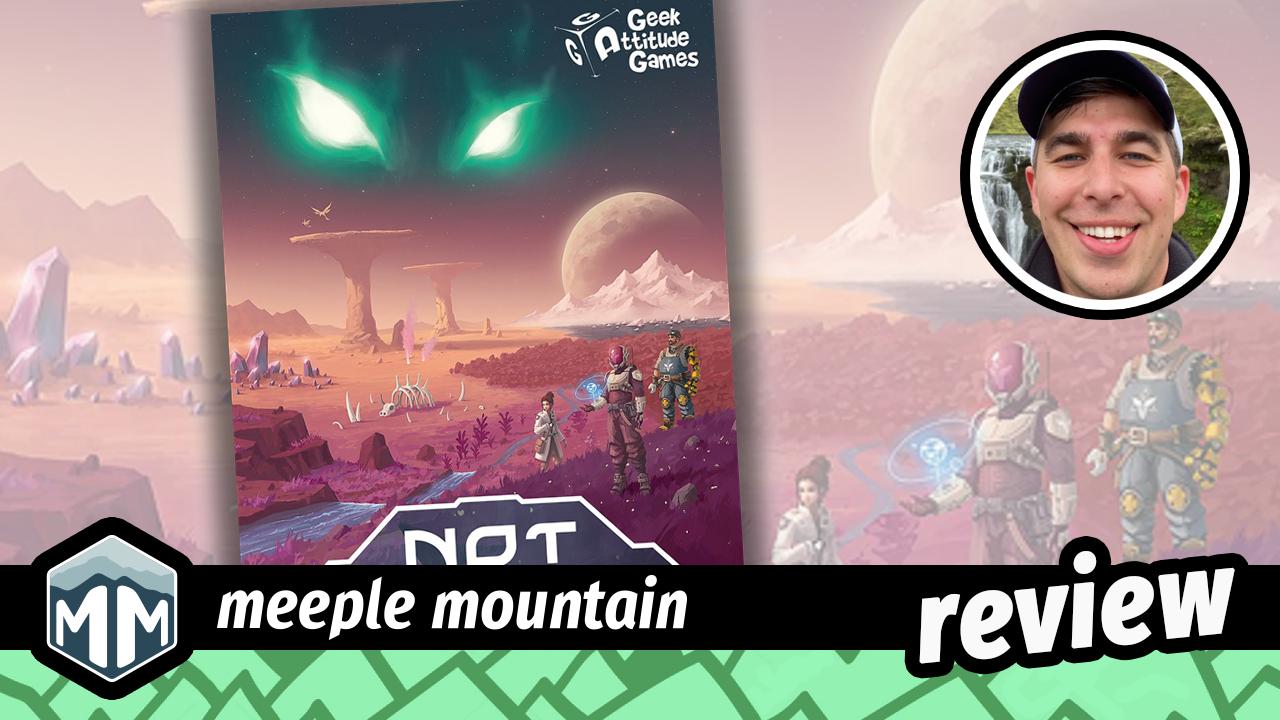
Not Alone: Remastered Edition Game Review

Gen Con 2026 must have been the convention of "alien on the loose" games, because I seemed to be playing them constantly. In fact, in one night we went from This Game Is Killer: Alien on Board to This Game Is Killer: Frozen Horror to Not Alone: Remastered Edition. While the latter is a slightly different flavor, the asymmetry of the Not Alone: Remastered Edition puts one player in the driver's seat of the alien threat while the others try to outlive, outlast, and outsmart them.

Not Alone: Remastered Edition: Hide and Seek

Having never played the original Not Alone, my thoughts are solely based on my experiences with this improved version. In Not Alone: Remastered Edition, the players have evacuated their ship, landing on a mysterious planet called Artemia where it quickly becomes apparent that they are…not alone. Insert DiCaprio meme here. They become the Hunted in a race for survival against one of the other players who assumes the role of the Creature, whose goal is to stymie their efforts.

[caption id="attachment_333875" align="alignnone" width="1024"] Hunted players receive a character card with a unique Skill[/caption]

The main tracker board is set up in the center of the playing area, with the Hunted's Rescue counter on one end and…

The post Not Alone: Remastered Edition Game Review appeared first on Meeple Mountain.

Computer Junkyard Game Review

I’ve had a tough tabletop gaming year. More and more, it seems like bad games—truly awful tabletop experiences—are seeking me out, not the other way around.

Computer Junkyard is a new game from a new publisher, Dream Egg Games. Designers Allan Pincus and Jared Pincus have created a title that is supposed to be about building a computer from spare parts bought at a local junkyard…or, maybe from stolen parts instead. It’s a simple race game with no other win conditions: the first player to build a computer out of the parts needed to make a working device wins.

Here was the first sign of trouble: the solo/single player game. To learn the game, I did a play using the single player rules at the back of the rulebook. The goal? Time yourself and build a working computer using the requirements shown on the player aid—your mainframe needs things like a power source, a CD-ROM drive, a monitor, etc.—and a certain number of components unique to the software, like a certain number of RAM and HDD components added through a databus on your computer’s chassis, a board where you can lock puzzle pieces together for your rig.

In solo, this is how things work: draw tiles out of a bag until you find everything you need to complete the…

The post Computer Junkyard Game Review appeared first on Meeple Mountain.

Published — 05. September 2026 Meeple Mountain | The summit of board gaming

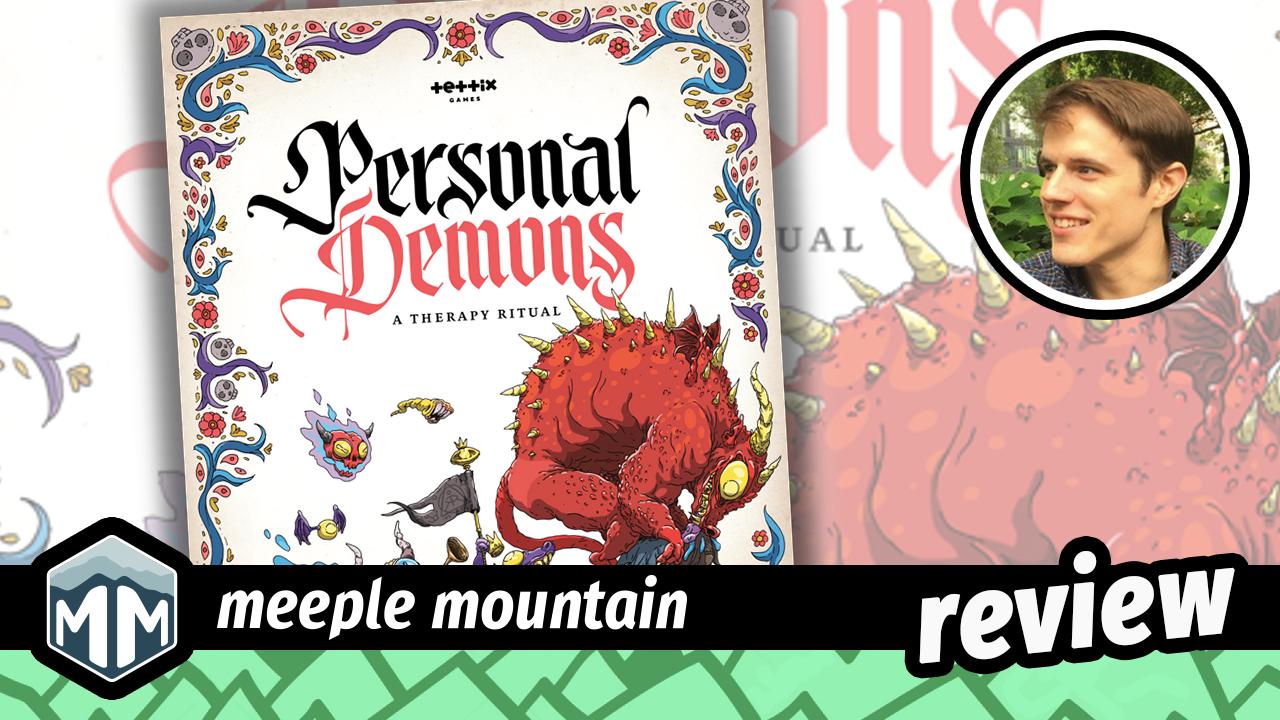
Personal Demons Game Review

When I first got into hobby gaming, Sushi Go was a hot new release, and it became a quick favorite. In the subsequent decade and change, I and millions of others have spent hours planning the perfect sushi plate. The game for which Philip Walker-Harding will be remembered is an easy game to love, especially for individuals to whom the frontiers of modern gaming are all but unknown. Sushi Go is just hooky enough to get people in, but simple enough that they can chat, smack-talk, and perform. Though I and many other hobbyists feel that we have moved beyond that game, it remains a dominant commercial force for a reason.

Be honest with me, my fellow hobbyists; don’t you miss it? Don’t you find yourself wishing you could get that same early buzz back, to revisit the times when something as simple as Sushi Go could set your brain alight? I do. I loved loving Sushi Go. I loved having that quick and reliable source of dopamine.

Personal Demons, from designer Judson Cowan of Deep Regrets fame, won’t quite take you back to those days, but it’ll get you close. The frictionless drafting of Sushi Go and its numerous imitators has been swapped out for something a little grittier, something gnarlier. Or maybe that’s just the illustrations?

The post Personal Demons Game Review appeared first on Meeple Mountain.

Published — 04. September 2026 Meeple Mountain | The summit of board gaming

Rush Hour Duel Game Review

The new Rush Hour puzzle entry, Rush Hour Duel, arrived at my doorstep recently. I know that, because I got a confirmation by e-mail that a package had just arrived. A couple hours later, I came up from my office cave in the basement to find that the game had not only arrived, but had already been opened and played three times by my wife and 12-year-old.

Yes, friends…Rush Hour Duel was reviewed before I could even open the box myself. This has never happened before, across more than 500 review copies received since I arrived here at Meeple Mountain.

“Dad, we got a new Rush Hour Duel game, and it’s great! I beat Mom three times,” said the 12-year-old when I came upstairs.

“Well, that is a review sample that came from the publisher.”

“Really? OK. Still, it’s great, I’m glad you picked it up.” Then they ran upstairs to slip into another evening activity.

I looked around, shocked, as if someone had just made off with my wallet. Those guys got Rush Hour Duel to the table before I could, I thought. What kind of respect is that?

For the uninitiated, Rush Hour is a game series from the Ravensburger toy puzzle arm known as ThinkFun. If you have kids and regularly visit your local Target, there’s…

The post Rush Hour Duel Game Review appeared first on Meeple Mountain.

Quick Peaks – Revenant, Dino Racer, Thiefdom, Container, Four Gardens: The God’s Caprice

Revenant  - Thomas Wells

I’m a big fan of euros with a little bit of investment/stock game flair. Revenant seemed like a slam dunk. A Battlestar Galactica-esque (TV show, not board game) flotilla of ships flying through space, trying to survive whilst arguing ideology? Boom! Shared board space that is growing and shrinking as you play? Awesome! Tons of interesting and oblique powers? Yeah!

Each subsequent play of Revenant got me less excited to try again. I was teaching the game each time, and while the core systems are well-designed, the sheer volume of iconography and rules grit that gets granularly layered over each game system results in a near-impenetrable miasma of choices. Just during setup you have to parse icons on 8 different cards and determine how they’ll interact with your choices. On top of this, as the game goes on, player engines become more and more elaborate, and even at 3 players, turns can really drag. I just got tired of pulling the thing out to teach it. My running theory of Mindclash Games’s output is that they take a simple concept and layer so much procedural busywork over top that it gives the impression of complexity, rather than actually requiring complex thinking. Most of the decisions in the game…

The post Quick Peaks – Revenant, Dino Racer, Thiefdom, Container, Four Gardens: The God’s Caprice appeared first on Meeple Mountain.

Published — 03. September 2026 Meeple Mountain | The summit of board gaming

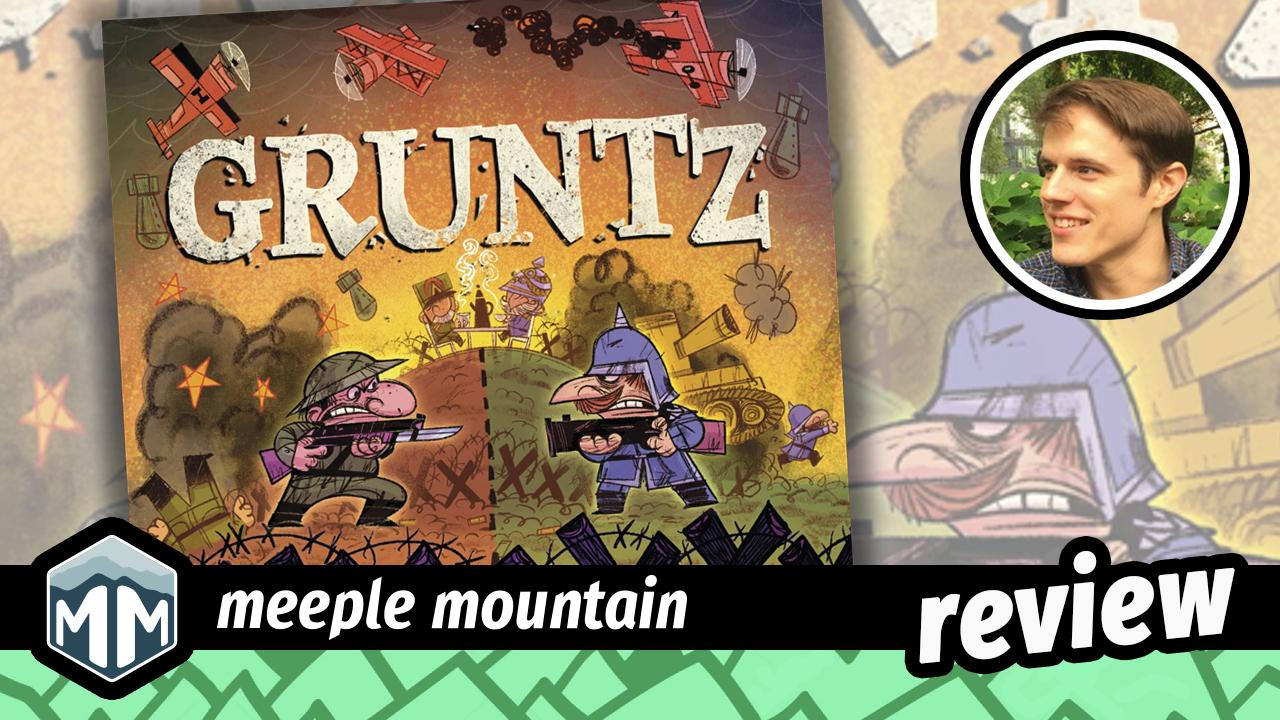
Gruntz Game Review

I didn’t quite know what to expect when I sat down with Gruntz, a small-box game for two from designer Carter Scott and publisher Allplay. I generally try to go into games as blind as possible so my expectations don’t affect my response, but I had gotten the idea somewhere that Gruntz would be a spiritual cousin to Warhammer 40k or Kill Team rather than in the lineage of chess. I was ready for something messier, muckier. Gruntz, it turns out, is dazzlingly clear and transparent.

You and your opponent take turns moving units and adding units, in that order, with the goal of controlling the three indicated spaces in the middle of the board. Controlling two at the end of your turn nets you a point. Controlling all three, should you be able to manage it, nets you two. In a brisk race to three points, either is a significant gain.

Units come in a variety of shapes and sizes, each with different capabilities. In order to capture those center spaces, you have to use your Gruntz and your Captain, humble units that can only move one space at a time and are defenseless in the face of enemy attacks. The vehicles, Tanks and Trucks and two types of airplanes, present a veritable rainbow of options.

The bulk…

The post Gruntz Game Review appeared first on Meeple Mountain.

Published — 02. September 2026 Meeple Mountain | The summit of board gaming

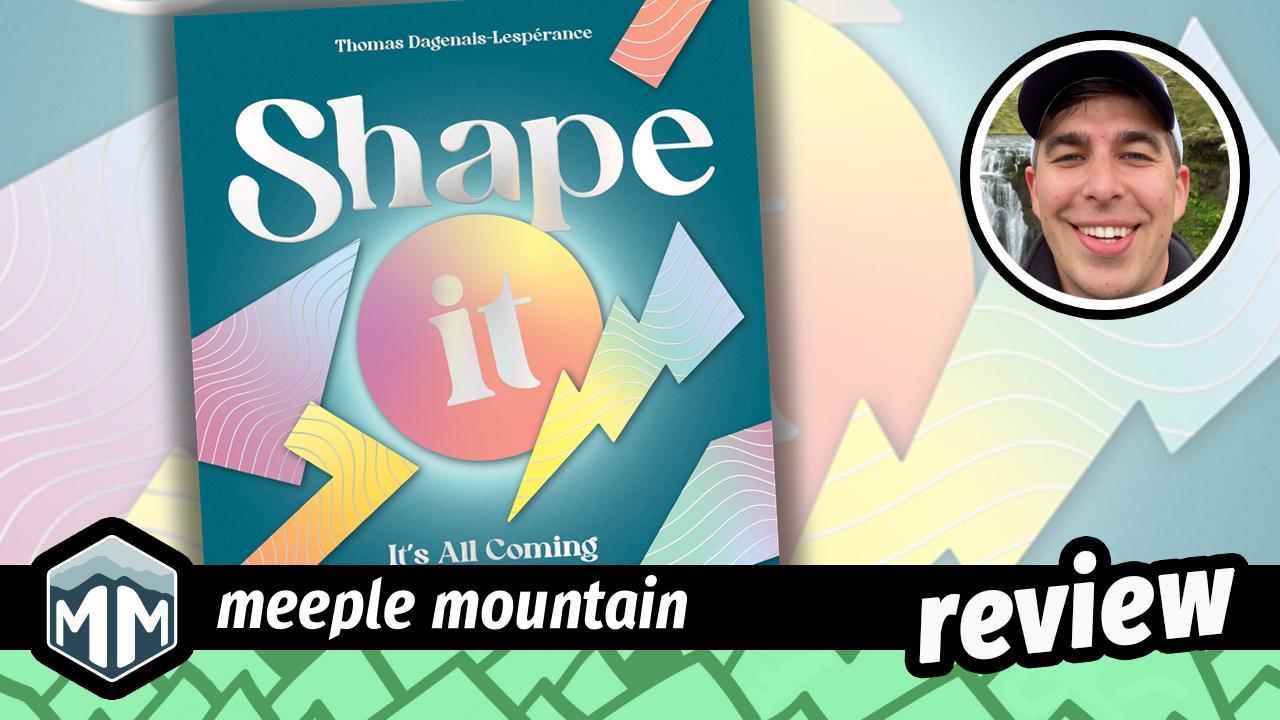
Shape It Game Review

Cooperative games where the players can't discuss strategy aren't anything new, but they only work if everyone figuratively signs the social contract to make it work. In Shape it, published by Randolph, players move cardboard shapes around the table in hopes of everybody seeing the same artistic vision. Without speaking about the look you're going for, this can be a Herculean feat. But does it shape up to be a game worth bringing to the table? Let's find out.

Shape It: Taking Shape

In Shape it, players move seven abstract shapes to communicate a concept listed on one of the Word cards laid out on the table. The trick is that all the words could be correct; it's a matter of unified consensus among the group. If everybody can collectively earn 5 cards for guessing the same Word card before flipping the third Life/Failure token, they win!

To set up the game, players arrange 7 shapes in a circle in the center of the playing area. Starting with the green deck, 5 Word cards are drawn and laid out to form the starting Word pool from which inspiration will be drawn.

Every round, players may move a single shape. Pieces can be placed on top of other pieces or rotated around, but pieces that are underneath other pieces are…

The post Shape It Game Review appeared first on Meeple Mountain.

❌