 Anmelden
Be the First To Solve Real-Time Puzzles in Smart Smack
13. April 2026 um 18:33

How quickly can you solve each puzzle? Race to answer the questions before your opponents, but be careful — three wrong answers and you’re out of the game.

How quickly can you solve each puzzle? Race to answer the questions before your opponents, but be careful — three wrong answers and you’re out of the game.
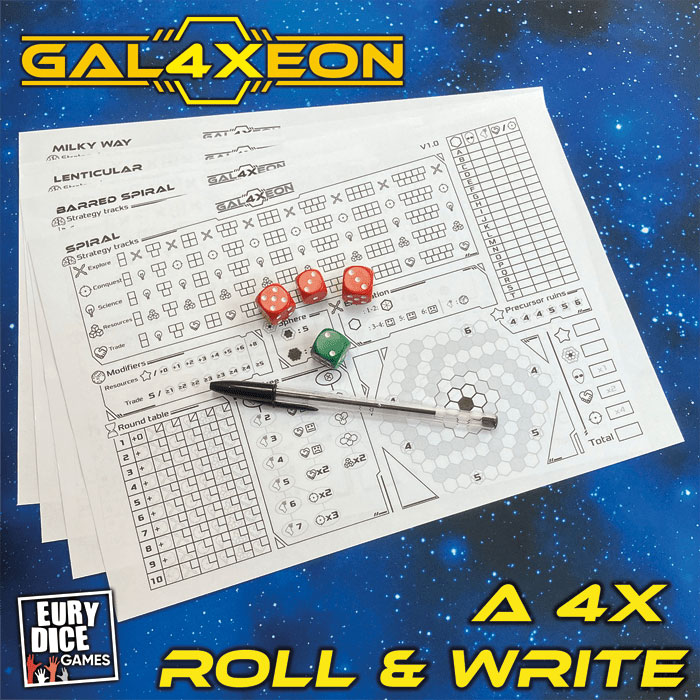
A lot of work goes into establishing yourself in space. You need to explore the vast expanse before you. Suss out the friendliness level of the aliens. Doesn’t hurt to figure out how powerful their military is, too, you know, just in case. Research some new tech to make all that other stuff easier. You […]
Ever since I started using Kickstarter as a tabletop games backer 16 years ago, I’ve supported the inclusion of both a standard edition and a deluxe (or all-in) edition. But I’m starting to wonder if that reward strategy is still relevant in 2026.
Here’s how I described these two reward type in a 2013 article:
An anchor price establishes a base price for your product so your backers have something to compare the price of the other reward levels. It offers quantitative context, and it’s low enough that it gets people in the door.
The premium option is the opposite of the anchor price. It is a separate reward that is tantalizingly close to the anchor price, but SO much better. It should give people a truly compelling reason to upgrade, or simply an outlet to spend more on the project if they want to reach stretch goals.
This system only works if the publisher garners enough interest from backers in both versions of the game, as manufacturing minimum order quantities (MOQs) typically start at 1,000 or 1,500 units.
In recent years, I’ve noticed that the ratio of standard to deluxe/all-in has shifted considerably. I’m not a typical backer, as I almost always choose the standard version of a game, so it’s apparent on nearly every project I back that far more backers are choosing the premium option.
Here are a few examples of projects I’m currently backing or following:
I very much do not want crowdfunding to only attract those with deep pockets, so I’m not advocating that creators ignore price accessibility altogether. I also understand that backers have changed over the years: There are much bigger pricing gaps between current reward levels than there were 10 years ago.
Though I’m also looking out for publishers: As I mentioned above, if a publisher plans to make two completely different versions of the same game but they only have 100 backers for the standard version, they need to invest in at least another unsold 900 units of that version to reach the MOQ. That’s a big risk.
There are a few possible alternatives:
What do you think about these strategies as we look at backer behavior and publisher viability in 2026? What options do you like to see when you consider a tabletop crowdfunding project?
***
Also read:
If you gain value from the 100 articles Jamey publishes on this blog each year, please consider championing this content! You can also listen to posts like this in the audio version of the blog.
Designer of Spiel, Piratenbillard, Volta, and 100+ more games
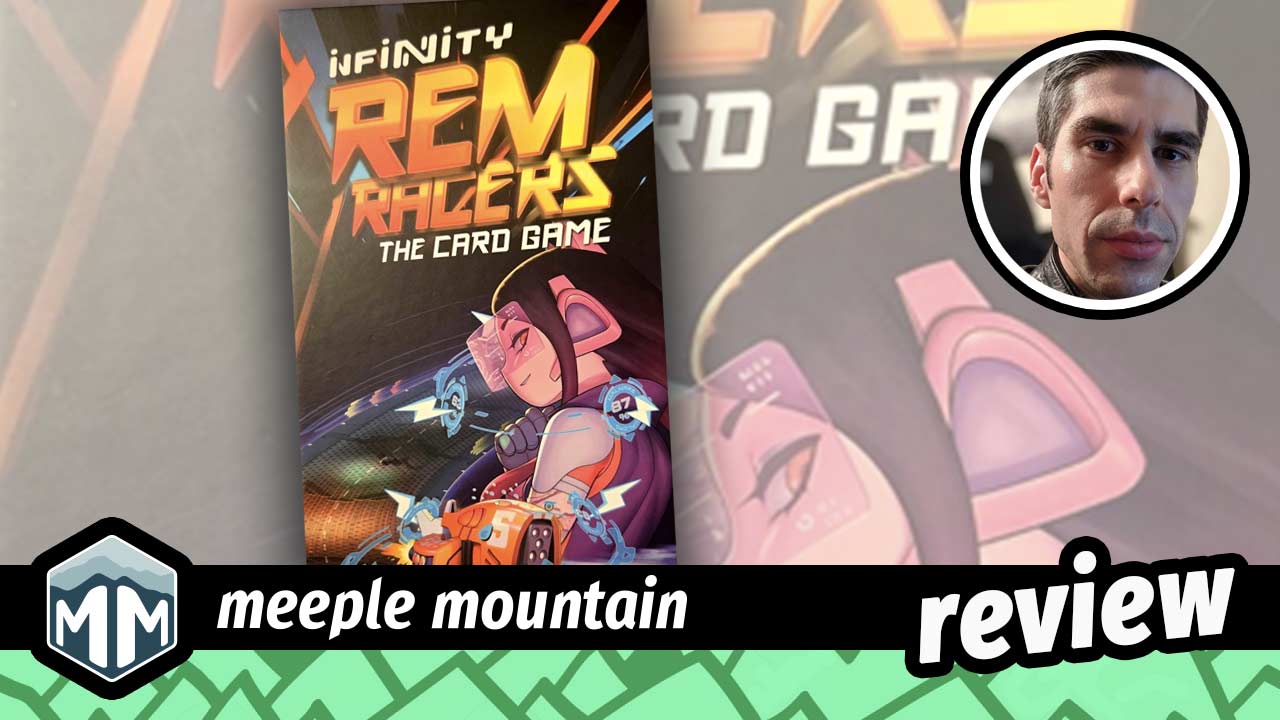
REM Racers. A name I didn't expect to hear again. Around this time last year, I reviewed the REM Racers board game, and as the name suggests, it's a racing game, a futuristic one at that. The box art is high-fidelity, the components are fantastic, and all of it would lead you to believe I'm about to gush. Instead, this was one of the least enjoyable gaming experiences I've had in a long, long time. I'm trying to be professional here.
So when they announced a card game version, I was a bit taken aback. From what I understand, the original wasn't well-received, and that usually doesn't earn you a spin-off. Then again, card games are cheap, and this one promises a runtime of roughly 20 minutes. Is it an improvement? Is it a good game? Am I going to stop asking questions? Yes.
The title's a bit of a spoiler: it's a race. Everyone picks a pilot with a unique ability, and the goal is to finish first. But since there's no board or physical race track, the whole thing plays out pretty abstractly. Player positions are tracked by lining up everyone's car card in a row, first place to last. The track is represented by the "curve deck," a series of cards…
The post REM Racers Card Game Review appeared first on Meeple Mountain.
Welcome to this week’s batch of crowdfunding campaigns. We have a variety of offerings here, so we hope you will find something that catches your eye. Also, if you want to chat with the BGQ team, join our Discord Server where we talk about games, movies, sports, and other fun stuff. Or, if Facebook is […]


A few years ago, I played and very much enjoyed a cool little solitaire WWII card-driven game called Campaign: Fall Blau from Catastrophe Games and designer Martin Melbardis where the player attempted to breach the Soviet defenses on the East Front in the pivotal German summer campaign of 1942. The game system is very playable and simple, but has some strategic depth to it as the player has to make a lot of choices about what to go after, how to manage their scarce resources (fuel) and what generals to use to take advantage of their special abilities to amass enough VP to claim victory over the Soviet Union. They now have the counter punch of that game in a new entry in the series called Campaign: Operation Bagration and it is currently being offered on Kickstarter.
If you are interested in Campaign: Operation Bagration, you can back the project on the Kickstarter page at the following link: https://www.kickstarter.com/projects/campaign-fall-blau/campaign-bagration
Grant: Welcome back to the blog Martin. What is your current game Campaign: Operation Bagration?
Martin: Thanks for having me back! Campaign: Operation Bagration is the long-awaited successor to my very first published game, Campaign: Fall Blau and tells the story of the Soviet offensive in 1944 to take back the occupied center of Russia gained by the Germans during Operation Barbarossa and is based on the successful Campaign: Fall Blau game system.
Grant: What was your design goal with the game?
Martin: My design goal for Campaign: Operation Bagration was to switch perspectives to the Soviet side using my tried-and-tested Campaign Game System. I wanted players to take command of the Soviets during one of the most devastating offensives of the war….Operation Bagration, which tore through German Army Group Center in 1944. From a design standpoint, I found it very rewarding to adapt new game mechanics and ideas to fit this pivotal WWII Campaign on the Eastern Front, while keeping the core of the system intact.
Grant: What are the hallmarks of this solitaire Campaign Series?
Martin: I’d say a minimalist approach to wargaming. Very streamlined, using only cards, dice, and cubes, with a 6–7 page rulebook. These are light solitaire wargames designed to be fast and furious with no extra fat or bloat, especially when compared to more traditional hex-and-counter wargames that can take hours to play.
Grant: As a follow up to Campaign: Fall Blau, what do you believe you have improved in the gaming experience?
Martin: While the system as a whole is more or less exactly the same as Fall Blau, I injected some new ideas into the experience to better reflect the historical realities of this campaign. The core game, such as defeating Campaign Cards, the Order system and how Generals work, will remain familiar to players of Fall Blau, but the feel is distinctly different.
Grant: What elements from Operation Bagration did you need to model in the design?
Martin: Operation Bagration was a completely different beast to tackle than Fall Blau. In addition to taking control of the Soviet army this time around, the mountainous regions of the Caucasus region have been replaced with the swamps of Belorussia and Poland. You’re also facing a much weaker and mostly static German Army Group Center, desperately trying to rebuild a frontline and stop the Soviet advance from swarming into their rear echelons. This is represented by the new “Rebuild Frontlines” rule, which replaces the old “Local Counter-Attacks” rule from Fall Blau. In Bagration, counter-attacks are now only triggered by Event Cards representing Panzer Divisions trying to blunt the Soviet offensive. In fact, the entire Event Deck has been changed to reflect the research I did on Operation Bagration with all sorts of cool ideas popping up on how to reflect the history, units and tactics of this Campaign.
Grant: As a solitaire game, what type of experience does the game create?
Martin: The game system prides itself on being fast, easy to learn but hard to master. It creates a very similar experience to Fall Blau such as tough decisions weighing the player down each turn on how to best use your limited Orders and finding the right balance between Attacking, Advancing, or stopping for Logistics to catch up.
Grant: What is the goal of the player?
Martin: The goal is to capture enough Campaign Cards before the game ends and earn enough Victory Points from those Campaign Cards to reach the victory or even the Brilliant Victory threshold.
Grant: How does the player go about choosing and managing their Generals?
Martin: Each game starts with the player choosing three Soviet Generals. All of these generals are historically accurate, with options such as Bagramyan, Konev, Rokossovsky, and a few others. Each General has the generic “Hero of the Soviet Union” special ability plus one unique ability. Additionally, each General leads a certain type of army: either a Tank army or a regular Infantry army. Tank armies have fewer manpower cubes but benefit from added mobility, which helps them bring more Campaign Cards to the frontline when using the Advance Order. Infantry armies, on the other hand, have more “meat” and thus more manpower cubes to absorb losses. Each General also has a set number of cubes representing their starting strength in manpower and available forces. Managing your Generals comes down to picking a balanced mixture and using each general’s individual strengths (number of cubes and abilities) to maximum effect.
Grant: What unique abilities do the different Generals possess?
Martin: As mentioned, each General has the “Hero of the Soviet Union” special ability, which allows you to discard a red cube to re-roll a single die. This represents the Soviet ability to historically take massive casualties and still push on. On top of that, each General also has a unique ability reflecting their historical traits. For example, General Bagramyan is an offensive-minded General, while Rokossovsky was known to always plan two steps ahead and this is represented by his ability to draw extra cards from the Event Deck.
Grant: What type of events does the Event Deck contain?
Martin: In addition to the Campaign Cards, the Event Deck is really where the historical aspects of the Bagration Campaign really come to life. I made sure to only include Soviet and German units and tactics that were instrumental to the Bagration campaign. The Event Deck contains mostly cards that help you during the game, such as attached Soviet units like the 3rd Guards Cavalry Corps, which can help you exploit the flanks of the German frontline by removing adjacent defenses, or the 4th Tank Army, which grants extra attack dice when attacking a Campaign Card. These cards not only add flavor to the game but also a strong sense of historical flavor.
Grant: What are the different type of German effects included in the Event Deck?
Martin: The Event Deck also contains cards that hurt the player, such as German Panzer divisions that trigger a counter-attack when drawn, or German reinforcement cards that add additional German cubes to active Campaign Cards on the frontlines. In addition, things like German bombers or bad weather can and will slow your progress.
Grant: What Actions/Orders are available to the player?
Martin: There are three available Orders each turn, and you may perform one per General. The Advance Order (costs 1 supply) brings unlocked Campaign Cards to the frontline. Once a card is on the frontline, an Attack Order (also costs supplies) can be used to attack and remove any cubes (representing German formations or defenses) on that card in order to capture it and gain the VP listed on the card. Finally, the Logistics Order adds supplies and reinforces a General with a cube to replace losses.
Grant: How do they manage their Supplies? How can they obtain additional fuel?
Martin: As mentioned, each Advance and Attack Order costs supplies, and the Logistics Order replenishes supplies as well as lost manpower cubes from attacking. Finding the right balance and knowing when to rest using a Logistics Order instead of Attacking or Advancing is very important. However, resting too long will slow your progress, as the clock is always counting down. A General who uses the Logistics Order adds two supplies to your shared supply pool and adds a single manpower cube to their card.
Grant: How do they manage to defeat the various Campaign Cards?
Martin: After using the Advance Order to bring an unlocked Campaign Card to the frontline in front of a General’s Card, that Campaign Card then immediately deploys a number of grey cubes (listed on the card) onto itself. The card is now available to be attacked using the Attack Order. When you attack, you pay supplies then calculate the number of cubes on the attacking General’s Card and roll that many dice. You need rolls of 4+ to remove a single white (defense) or grey (German units) cube from the Campaign Card. Some Campaign Cards such as fortress cities (Festerplatz) or swamps reduce the attack dice by -1. Rolls of 1–2 result in your General losing a manpower cube (red cube). Once all German cubes are removed from the Campaign Card, it is considered captured and removed from the frontline, and you gain the Victory Points listed on the card. Capturing Campaign Cards also unlocks additional Campaign Cards.
Grant: How do the German forces fight back?
Martin: This time around, the Germans are much more static than in Fall Blau, which better reflects the historical situation in 1944. While you may still lose manpower cubes through bad rolls on Attack Orders, counter-attacks are now only triggered through Event Cards. A Panzer Division drawn as an event will immediately counter-attack by deploying to the frontline and attacking the General directly in front of it. There’s also the Operation Doppelkopf Event Card, which is placed near the end of the Event Deck during setup and represents a large German offensive action late in Operation Bagration, designed to blunt Soviet momentum.
Grant: What strategy should the player use to do well?
Martin: Pick a good, balanced mixture of Generals and learn when to attack versus when to build up supplies and manpower through the Logistics Order. Using Generals with Tank Army abilities to bring multiple Campaign Cards to the frontlines helps a lot but too many Tank Generals will lower your overall manpower total. Also, optimize your use of Event Cards to either prioritize Attacks or to regain manpower cubes. Overall, calculated risk management is the single most important factor in the game.
Grant: What different options are built in to make the game more of a challenge?
Martin: The game is already pretty challenging, but we are also currently planning on developing a Hard-Mode for the Kickstarter that adds 4–5 additional very difficult Event Cards to the deck for those players who love challenges or are even simply masochists.
Grant: What are you most pleased about with the design?
Martin: I’m pleased with the way I’ve adapted the old Fall Blau Game System to incorporate new game mechanics and Events to reflect the different historical aspects of Bagrations’ unique Campaign. Such things such as the German’s use of blocking detachments to try to stop the Soviet steamroller with whatever they could (represented by the rebuilding the frontline mechanic), and the use of Festerplatze or Fortress cities in Belorussia to hold at all cost. Added to this is the liberal use of Soviet tactics such as mine sweeping tanks, the massive God of War bombardment to signal the start of Bagration, Maskirovka deception techniques and American lend-lease trucks to help the Offensive are all well-represented in the game through the Event Deck.
Grant: What has been the response of playtesters?
Martin: Early on, I got some great and positive responses from playtesters when I initially designed the game. Later, I handed off playtesting and development to Catastrophe Games, who further developed the game and ran additional playtests. I’ve heard good things from them as well.
Grant: What other historical campaigns might the series delve into?
Martin: Next up, I am planning to adapt the series to either the North African or the Pacific Theaters in WWII. I also strangely find that representing the Japanese early-war successes against the Allies in the Philippines, Hong Kong, Indonesia and Singapore a very interesting twist and is a subject rarely touched upon in wargaming. This could also be a good option in the future but who really knows where my creativity can take me?
Grant: What other designs are you currently working on?
Martin: As always, I am continuing to design lighter Print & Play wargames with my own independent company, Solo Wargame. I usually release a new wargame every two months or so on Kickstarter and want to continue that trend with a WWII wargame about commanding a Soviet battalion during the Battle of Stalingrad in 1942. I also plan to release a new version of my continuing series on WW2 Roll & Write games, this time focusing on the Torch landings in North Africa in 1942–43 with new ideas about convoy interdiction, diplomacy with the Vichy government and eventually pushing the Germans all the way to Tunisia. Like most other creatives, I honestly have way too many ideas and too little time!
Thanks so much once again for having me on!
If you are interested in learning more about the Campaign Series and how it works, you can watch my preview video for the Campaign: Fall Blau Kickstarter from 2022 at the following link:
If you are interested in Campaign: Operation Bagration, you can back the project on the Kickstarter page at the following link: https://www.kickstarter.com/projects/campaign-fall-blau/campaign-bagration
-Grant
by Justin Bell
Yep, I get it—two new interview series across back-to-back weeks! (Don’t worry, I’ll be back to sharing random musings with next week’s column.)

/pic9519263.jpg)